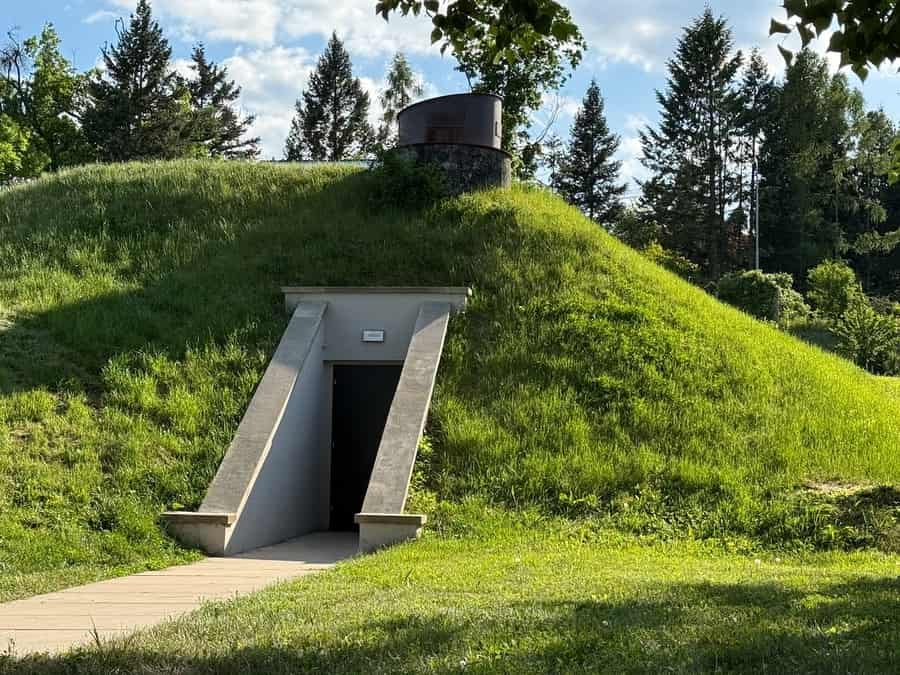
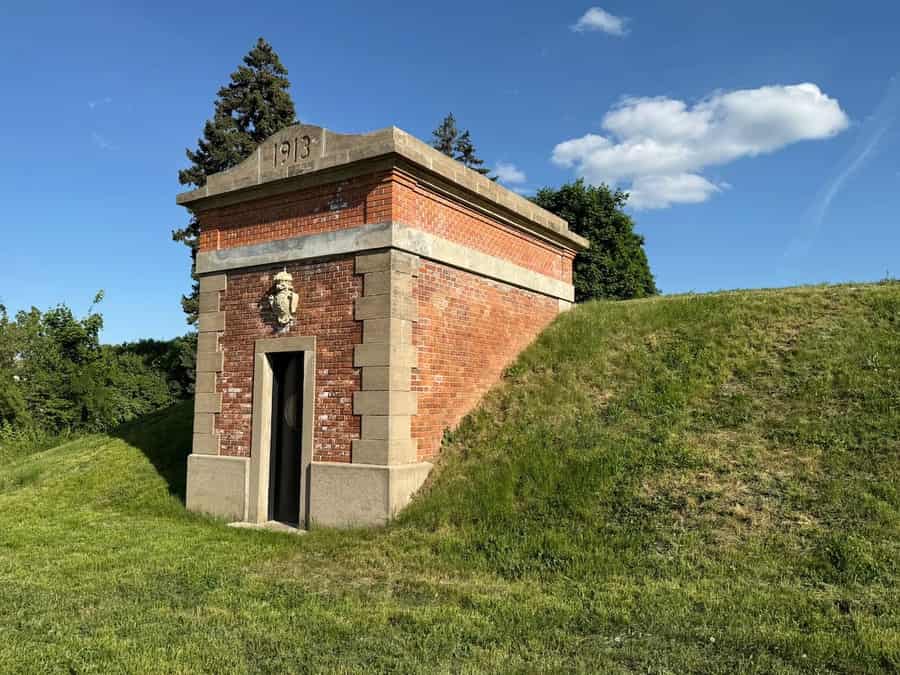
The Žlutý Kopec water reservoirs sit beneath a quiet park on a hillside in Staré Brno, three vast underground tanks built between 1874 and 1917 as part of Brno’s first modern piped water supply. The earliest, brick-built reservoir dates from 1874 and was designed by the English engineer Thomas Docwry, who also planned the wider waterworks scheme; a second brick reservoir followed in 1894 to a design by the Brno engineer Emil Procházka, and a third, built in concrete and divided into twin tanks, was added shortly after 1910. Between them the reservoirs held Brno’s drinking water, drawn originally from the river Svratka, until they were finally taken out of supply on 18 March 1997, their low elevation having made them obsolete for the modern network.
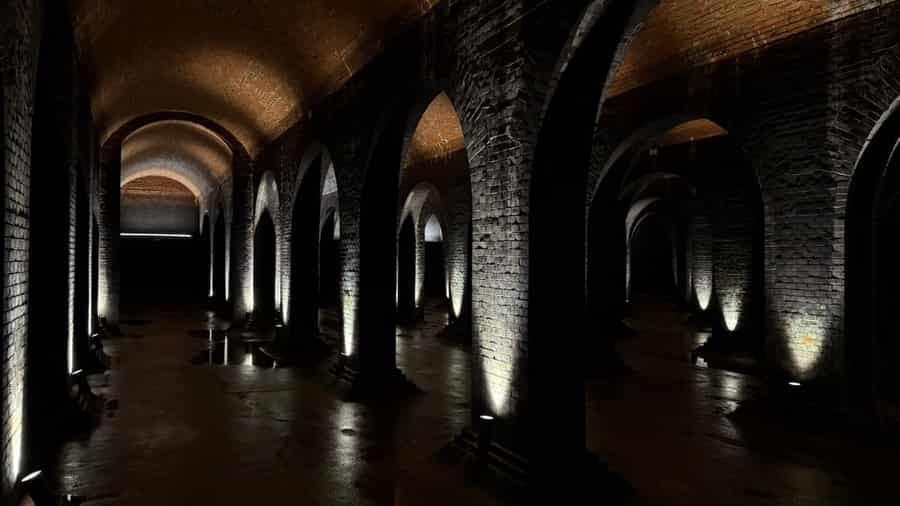
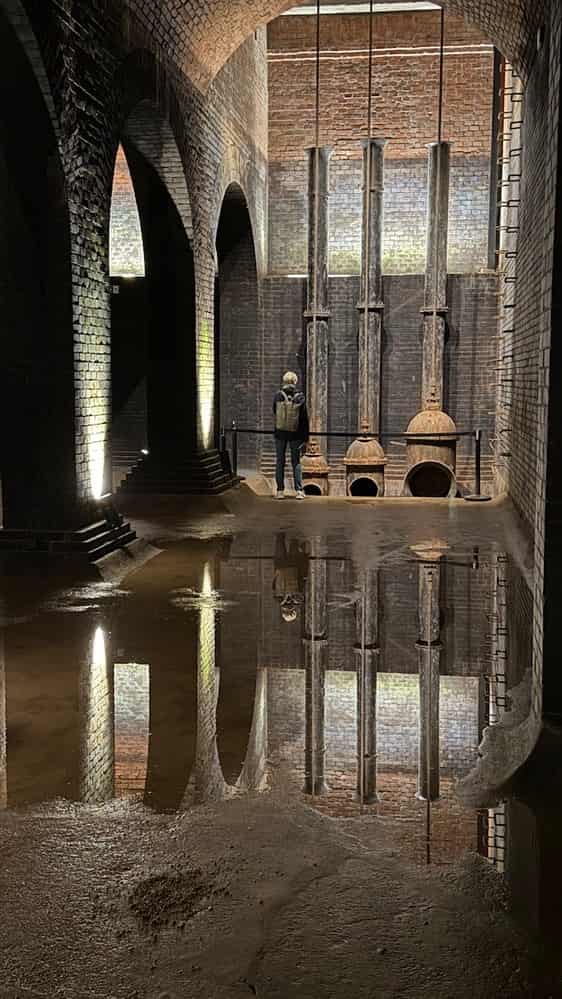
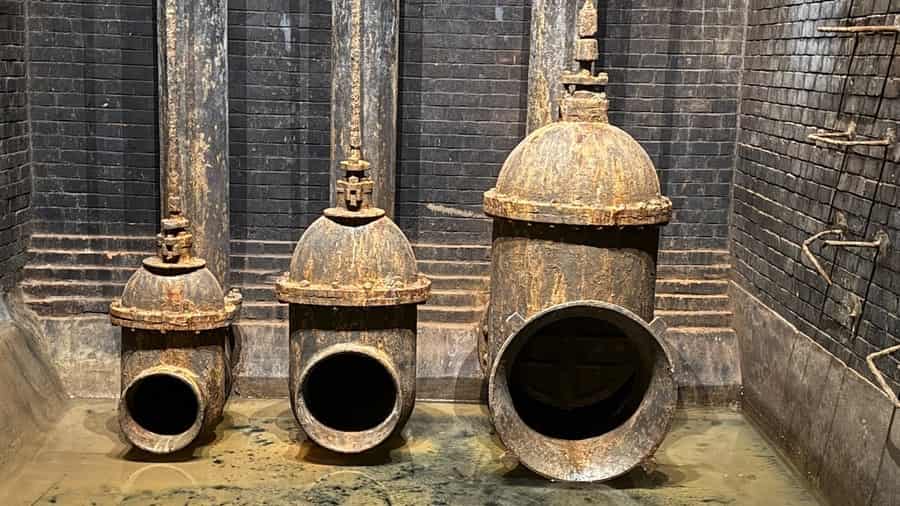
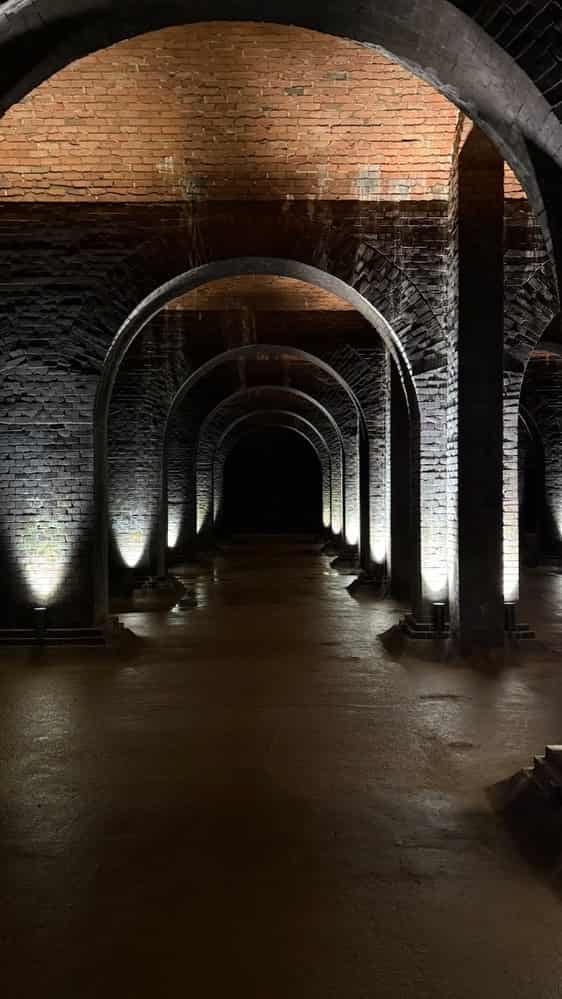
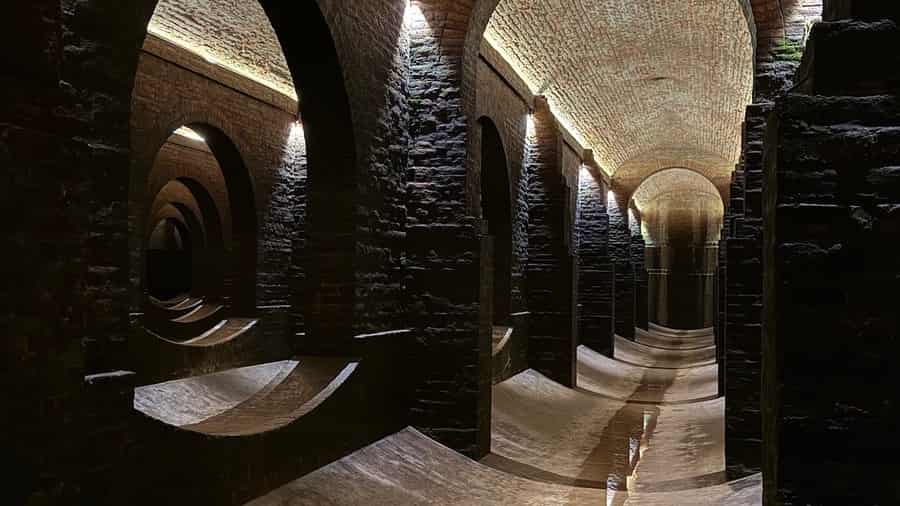
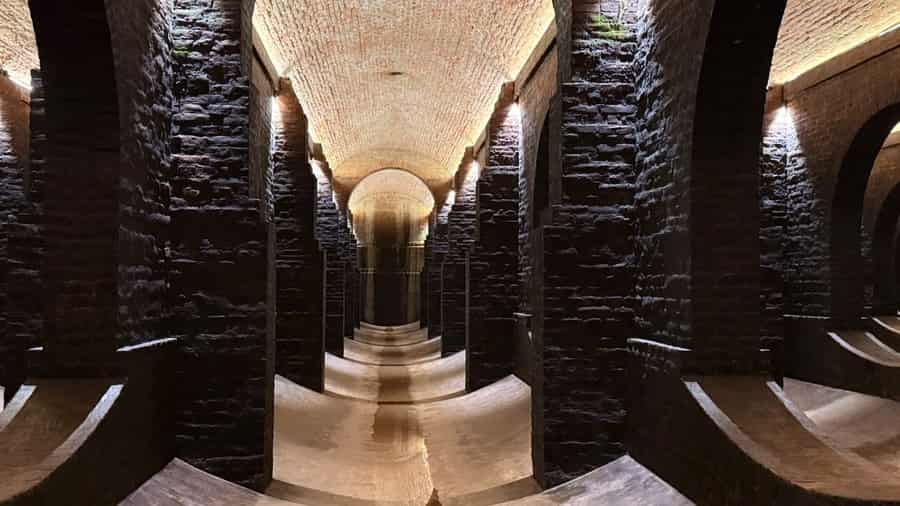
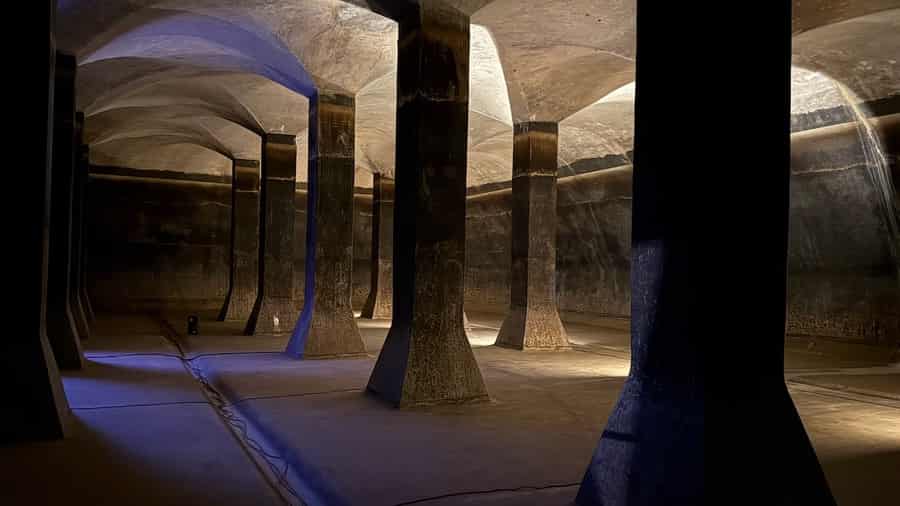
What makes the site remarkable is less its engineering history than the spaces themselves. The 1874 reservoir is laid out as a nine-aisled hall, its shallow brick vaults carried on parallel walls pierced by tall, round-arched openings, an effect closer to a crypt or basilica than a piece of municipal plumbing. The 1894 reservoir is simpler in structure but no less striking: a forest of some seventy slender columns rises from its concrete floor, each linked by semicircular arches supporting the barrel-vaulted roof above. The youngest, twin-chambered reservoir rests on a still denser array of 87 concrete pillars, and a prism-shaped valve chamber set into its embankment connects the two tanks, joined by an elegant spiral steel staircase. Stripped of water and left in near-darkness but for careful modern lighting, the combination of repetition, scale and echo gives all three an eerie, almost otherworldly atmosphere that visitors and local media alike have taken to describing as a set of “underground cathedrals” — the vaulted brick aisles in particular have drawn comparisons to a lost, half-mythical civilisation, and the acoustics alone are worth the visit.
The reservoirs were declared a cultural monument in 2019, and an entrance was built the same year, allowing the first, limited access to the earliest reservoir from July 2020. A full restoration followed between 2021 and 2023, led by architects David Prudík and Tomáš Jiránek at a cost of some 150 million Czech crowns, which cleaned and conserved the historic structures, added new entrances and escape stairs, and gave each reservoir its own distinct lighting scheme — the first lit from above through hidden LED strips, the second from below through channels cut into the floor, the third combining exposed and concealed fittings between its pillars. The surrounding grounds were relaid as a deliberately understated park, its geometry echoing the buried structures beneath. The complete site, all three reservoirs together with a visitor centre and the revitalised park, opened fully to the public in March 2024.
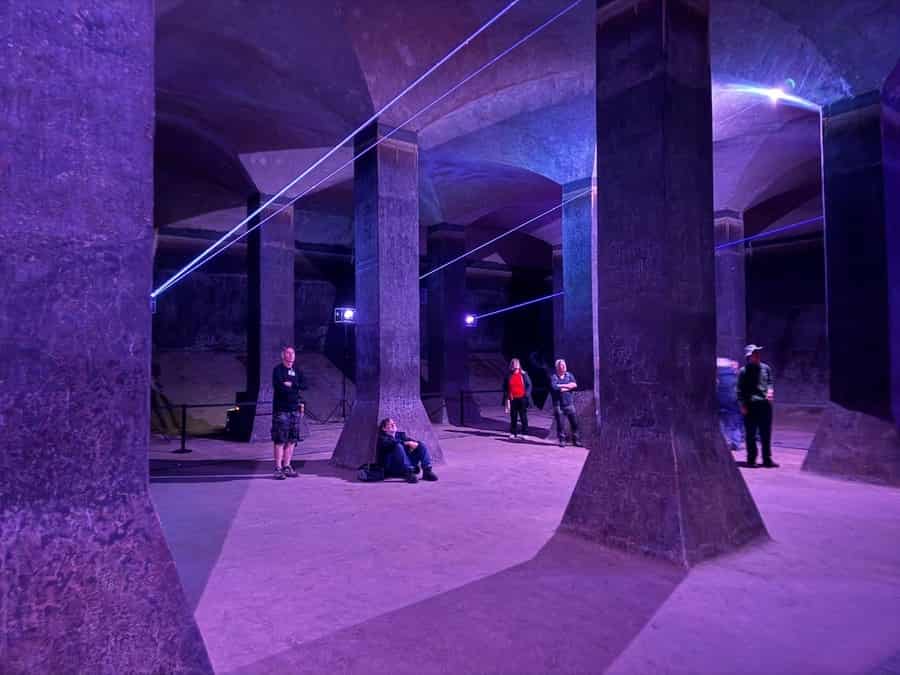
Since reopening, the reservoirs have also become a venue in their own right, hosting concerts, performances and site-specific artworks under a programme known as WatertanksArt (#VodojeMyArt), run by Brno’s tourist information organisation with local and international artists. The two brick reservoirs have shown work from the PROTOTYP festival, while the concrete reservoir has hosted “Critical Level”, an audiovisual installation by Jiří Suchánek and Petr Bradáček built around water as a theme, alongside large-scale light projections that transform the columned spaces for the duration of each event.
Further Information Žlutý Kopec Water Reservoirs, Brno