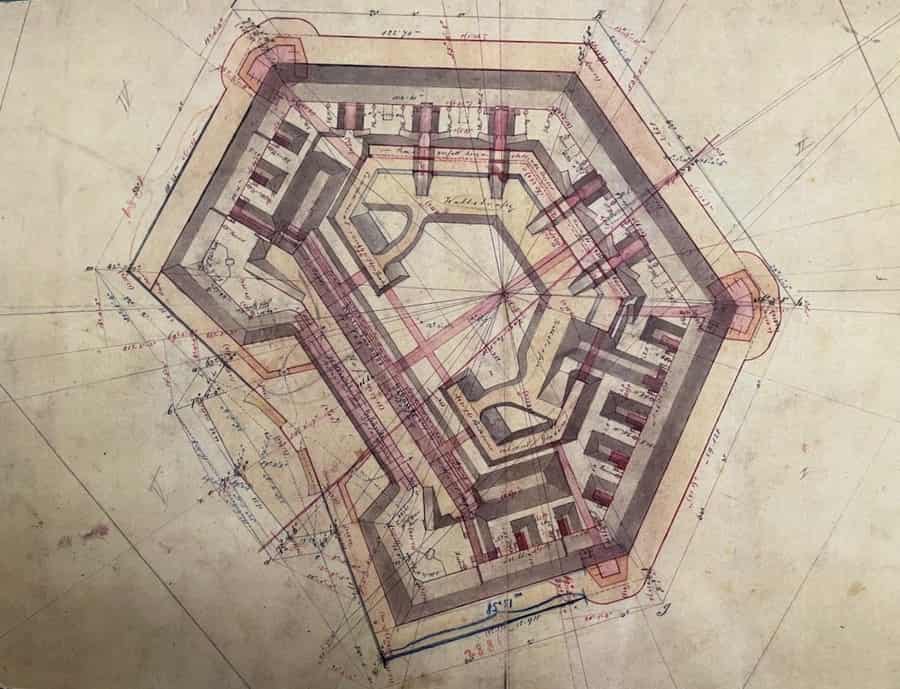
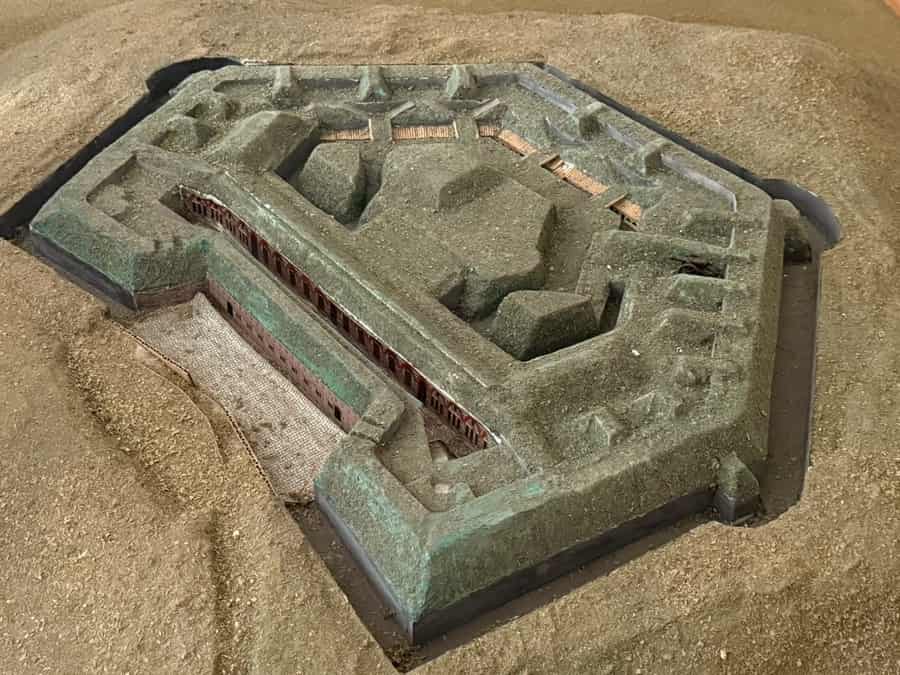
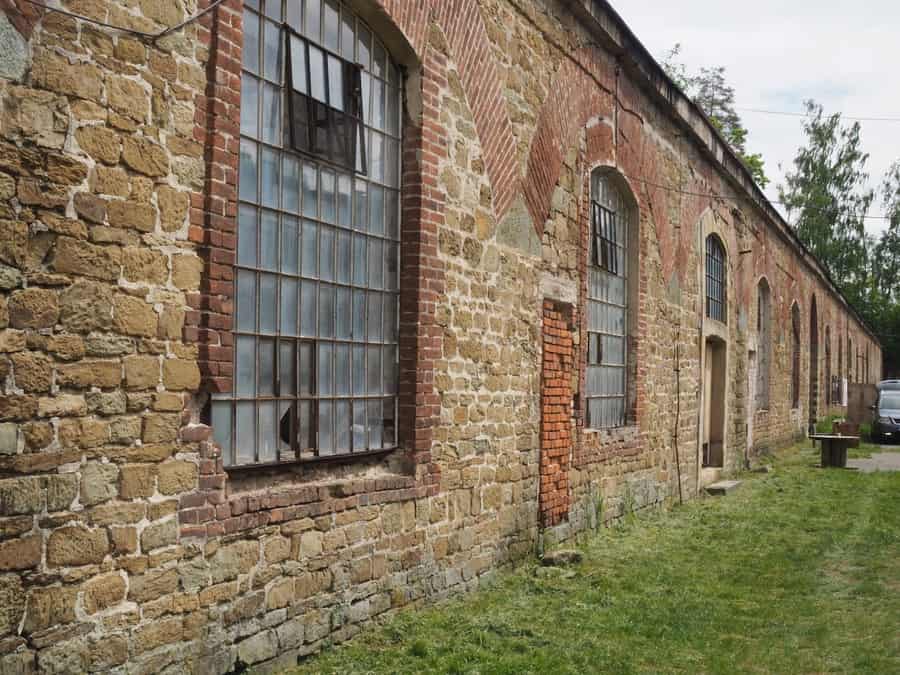
Fort Radíkov (also known as Fort II Radíkov) stands on high ground above Olomouc and is the only fort of its kind to survive intact in the Czech Republic. It formed part of a nineteenth-century plan to strengthen the Imperial-Royal Fortress of Olomouc with a ring of outlying forts. The scheme called for four forts on the high ground around Svatý Kopeček — Toveř, Radíkov, Lošov and Droždín — together with two artillery batteries, but only Radíkov was built, between 1871 and 1876, to a design by Captain Karl von Peche of the Austrian Ministry of War’s engineering department. It was serviceable within three years, though finishing work continued until 1882.
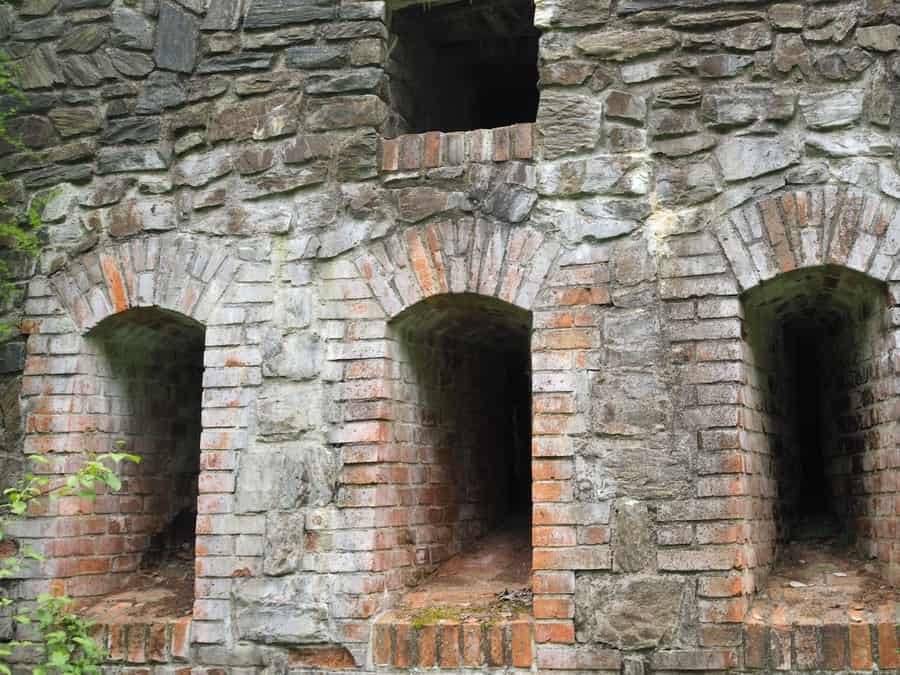
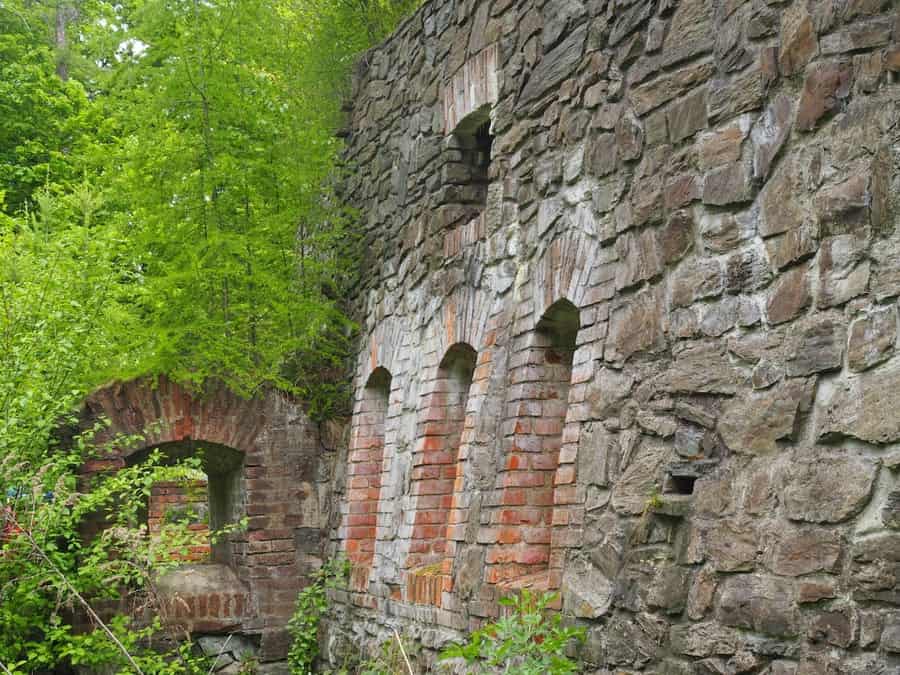
The fort takes the form of an irregular hexagon, similar in plan to a lunette, and covers around 6 hectares of the hillside. Its layout combines an open perimeter rampart, where guns stood in barbette positions and hollow traverses, with a rear section of two long single-storey casemate barracks — known in period documents as the “Parados” and “Gorge” buildings — designed to house a garrison of 11 officers and 800 men. A dry ditch cut into the rock, up to 20 metres deep, surrounded the fort and was defended by three caponiers reached through internal passages. At full strength the fort could mount up to 26 guns on the rampart and a further 10 in the caponiers, though it was never garrisoned or used in earnest. Much of the excavation was carried out as a training exercise for army engineer units rather than by civilian contractors, cutting galleries through the hillside’s hard, feldspar-rich stone with dynamite and gunpowder. A military hospital and two wells, dug in 1875 in nearby Samotíšky, also served the fort; the wells are still in working order.
Improving relations between Austria-Hungary and Prussia meant the fort was never needed for its intended purpose, and Olomouc’s fortress status was formally abolished in 1886. The fort was sold into private ownership in 1894 and gradually fell into disrepair, at one point being used to manufacture fireworks. After the Second World War it passed to the state and served as an army warehouse, and from the 1960s it was used to store paint, varnish and other flammable goods. Following the fall of communism it was privatised again, and since 2006 has been owned and maintained by the civic association Fort Radíkov, which opens the site for tours at weekends over the summer season.
Further Information: Pevnost Radíkov Fort Radíkov II