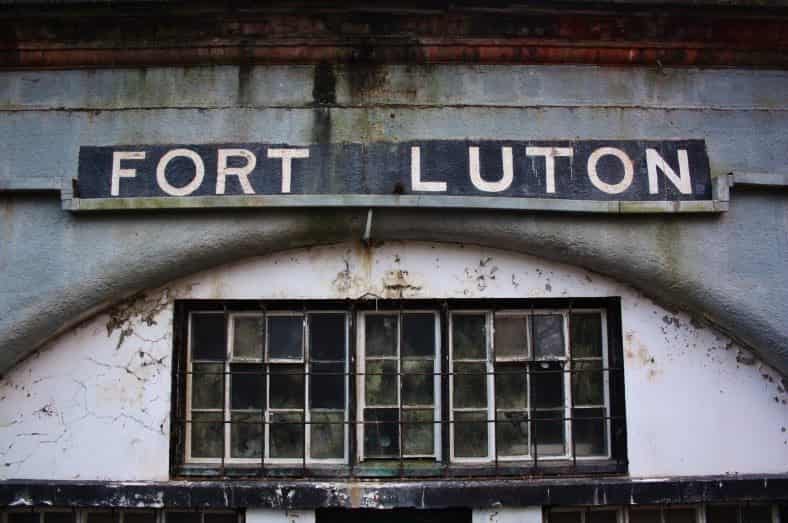
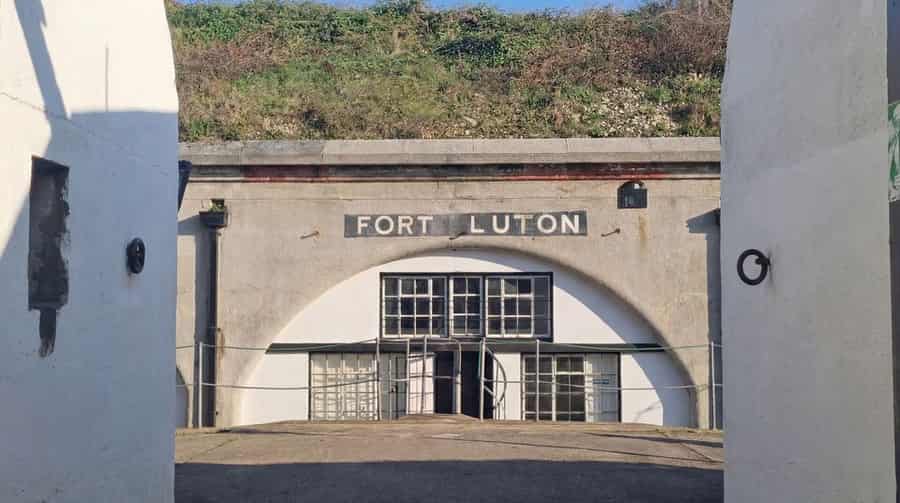
Fort Luton was constructed between 1876 and 1892 on the southern approaches to Chatham, the smallest of the five late-Victorian land-front forts thrown up to defend the Naval Dockyard against overland assault. Its construction was prompted by the 1859 Royal Commission on the Defences of the United Kingdom, itself convened in response to anxieties over a possible French attack. Parliament repeatedly delayed funding, and the fort was subject to various economies and deletions from its original specification — the planned under-bridge caponier was never begun, and a well was dropped from the plans, necessitating a four-inch water main to be laid all the way from the neighbouring Fort Horsted. Despite these compromises, what emerged was a compact but well-considered defensive work.
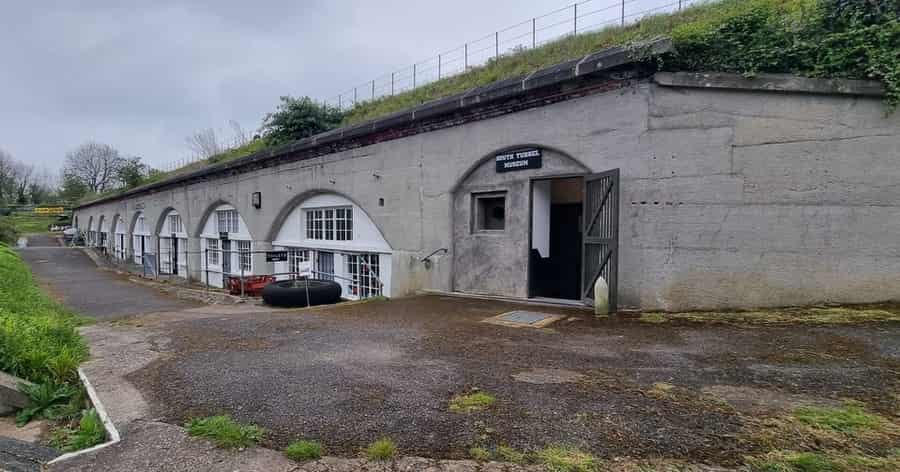
The underground fabric of the fort is particularly noteworthy. Beneath the frontal rampart wall lie four ammunition stores, originally served by lifts to raise ordnance to the gun positions above. At the gorge, eight casemated barrack rooms are constructed of concrete and covered by a substantial earth traverse, with tunnels at each end of the range connecting back to the forward magazine complex. This subterranean arrangement, typical of the late-Victorian polygonal fort, meant that the garrison could move between bombproof accommodation and fighting positions without exposure to plunging fire — a design philosophy that would prove its worth in both World Wars. The drawbridge installed in 1892 is a rare rolling type and is possibly the only surviving example of its kind in the United Kingdom.
The fort’s underground spaces received their most significant operational role in the Second World War. In 1938 the site was converted into the Gun Operations Room for the Thames and Medway Gun Defended Area, opening in August 1939 just as war became inevitable. The existing casemates and tunnels were adapted to serve as a command and control facility coordinating anti-aircraft gun batteries across the region — a role for which the fort’s buried construction made it naturally well suited. The Siege Trials of the Edwardian period had also left their mark underground: during the 1907 trials, which were the largest in scope ever held at Chatham, the defending forces drove a substantial tunnel outwards from the ditch floor to counter the attacking party’s sap works. This tunnel was subsequently left open after the trials concluded.
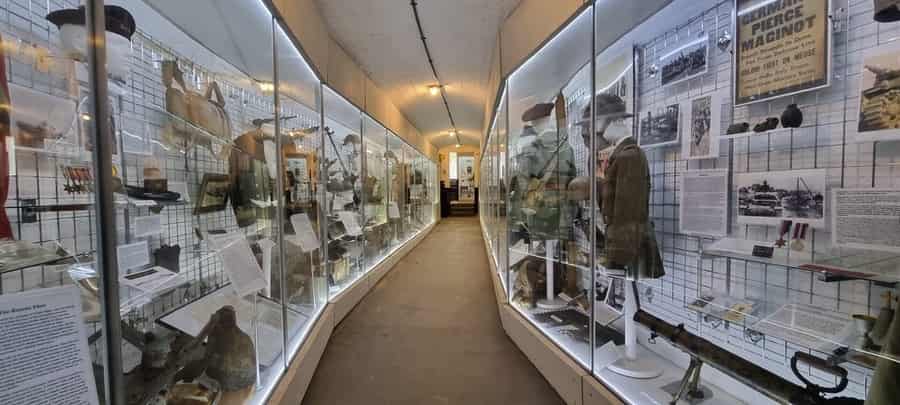
Following its disposal to Kent County Council in the early 1960s — who were primarily interested in the land for a new secondary school — the fort fell into abandonment and the dry ditch became an illegal dumping ground. A brief period as a private museum in the 1990s offered some respite, but it was not until new ownership took over in 2012, forming a community interest company, that serious restoration work began. Today the underground tunnels house two museums, and the subterranean circuit of the fort — its casemated barracks, ammunition passages and wartime operations rooms — can once again be explored by visitors, offering a rare opportunity to walk through a largely intact example of late-Victorian military engineering that saw active use across two world conflicts.
NB: The site is only open for visitors on selected dates.
Further information: Fort Luton Website