|
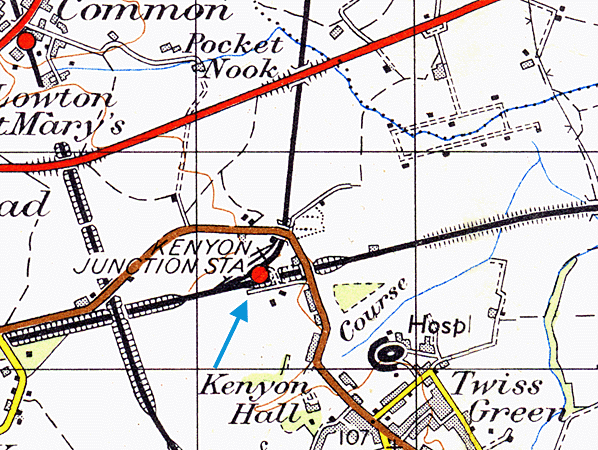
Notes: Kenyon Junction station was originally known at Bolton Junction being renamed Kenyon Junction in June1843. It was one of the original passenger stations of George Stephenson's 1830 Liverpool and Manchester Railway, the world's first railway to cater for passengers as one of its primary functions. It was also arguably the worlds first inter city railway. It was first recorded in the timetable for the line from the 1st March 1831. At first the station would have served trains running between Liverpool and Manchester.
Kenyon was to become an important junction very soon after opening. Even before Kenyon opened the Bolton & Leigh Railway had opened a line from Bolton to Chequerbent which had also been engineered by George Stephenson and was in fact the North West's first public railway.. A year later in 1829 the line was extended south to Leigh. An extension to Kenyon was opened by
the Kenyon & Leigh Junction Railway in 1831. The line made an end-on connection with the Bolton & Leigh Railway at Twist Lane, Leigh and formed a junction with the Liverpool & Manchester Railway at Kenyon Station. This was the world's first railway junction between two (nominally) independent railway companies.
Through traffic commenced over the route from Bolton to Kenyon on 3rd January 1831 but the first recorded passenger service was a 'Gentleman's' race special to Newton Races on 2nd June 1831.Thereafter passenger trains to Liverpool began on 13th June 1831 taking 1hr
40mins for the 28.5 miles to Liverpool.
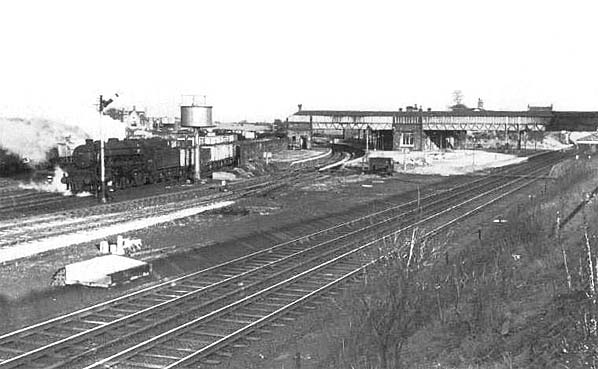
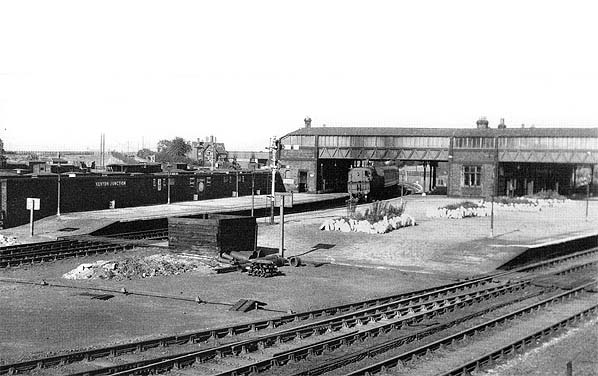
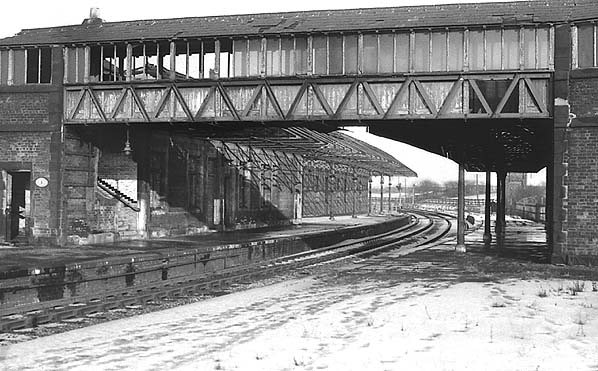
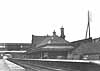
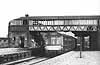
Over the years the station developed into a substantial four platform affair with buildings provided on each platform. The main buildings being situated on the Liverpool bound platform of the 1830 line. Two straight platform faces served the Liverpool and Manchester line whilst two curved platform faces served the Bolton line. Effectively the Manchester Bound platform on the main line and the Liverpool Bound platform on the Bolton Line formed a very wide island platform that narrowed as it got closer to the junction situated to the west of the station. The platforms where connected by a covered footbridge.
By 1864 the LNWR had taken over both lines and with the construction of a line from the Bolton line a few miles north of Kenyon to Tyldesley via Leigh a loop line had been created giving an alternative route from Manchester to Kenyon Junction. Passenger Services started to use this route from 1.9.1864. Substantial goods facilities and sidings developed around the station. The station was often the winner of the Liverpool District 'Best Kept Station' award.
Kenyon Junction was located in a remote area of little population and over the years this did not change. It's main reason for being was to act as an interchange. It remained busy throughout the 19th century and into the second half of the 20th. The first passenger service to be withdrawn was
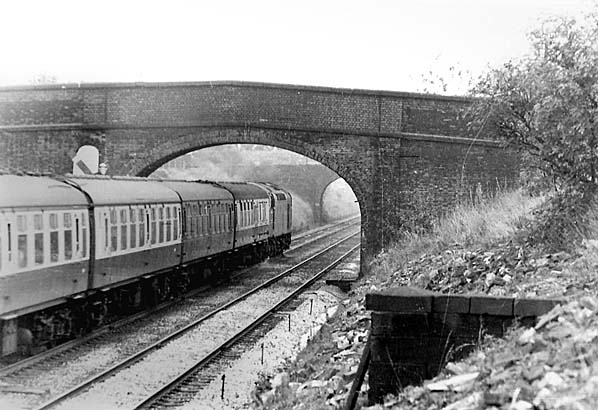
the Bolton service which ended on the 27th March 1954. The last service was the 10.35 pm from Bolton Great Moor Street. In 1961 all passenger services were withdrawn. Interesting many Liverpool to Manchester Exchange services continued to pass through the Bolton line platforms using the Leigh loop instead of the more direct route along the original 1830 line. This situation did not last however when passenger services via Leigh ceased on 3rd May 1969. The line closed completely shortly after and was lifted bringing an end to the historical junction.
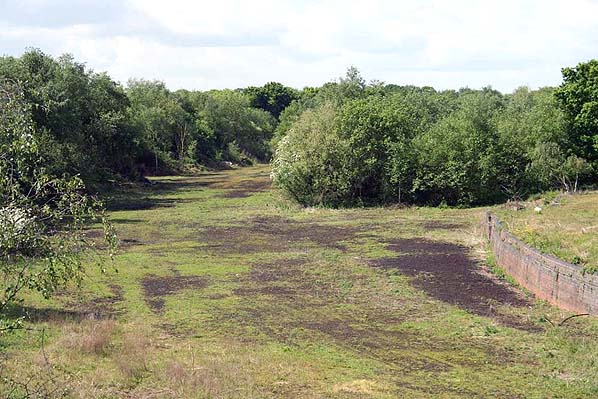
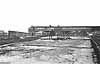
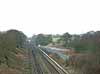
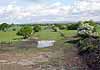
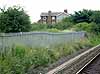
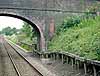
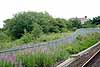
The station stood in a derelict state for some years after closure but certainly by the 1970's it had been completely demolished and today there is nothing much to show it ever existed. The wide trackbed which would have accommodated the extensive sidings can still be seen and the busy Liverpool to Manchester line is still very active serving numerous goods and passenger services.
In 2000 there was a proposal to reopen Kenyon Junction to provide
park and ride facilities for the Xanadu real snow centre and
associated retail development. Following a public enquiry the
Secretary of State refused to grant permission for the developments
at Xanadu
and Kenyon Junction in August 2001.
To see the other
stations on the Bolton Great Moor Street - Kenyon Junction line
click on the station name: Pennington,
West Leigh, Atherleigh,
Atherton Bag Lane,
Chequerbent 1st,
Chequerbent 2nd,
Daubhill 1st, Rumworth
& Daubhill & Bolton
Great Moor Street
To see the closed
stations on the Liverpool & Manchester Railway click on
the station name: Liverpool
Crown Street, Huyton
Quarry, Lea Green,
Collins Green,
Parkside 1st, Parkside
2nd, Glazebury and
Bury Lane, Flow
Moss, Astley, Lambs
Cottage, Barton
Moss 1st, Barton
Moss 2nd, Weaste,
Seedley, Cross
Lane, Ordsall
Lane, Manchester
Liverpool Road
|

 Home Page