
Station Name: DUNGENESS
|
| Date opened: | 1.4.1883 |
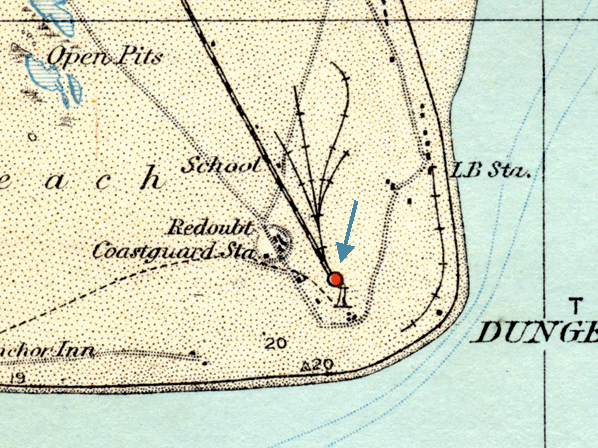
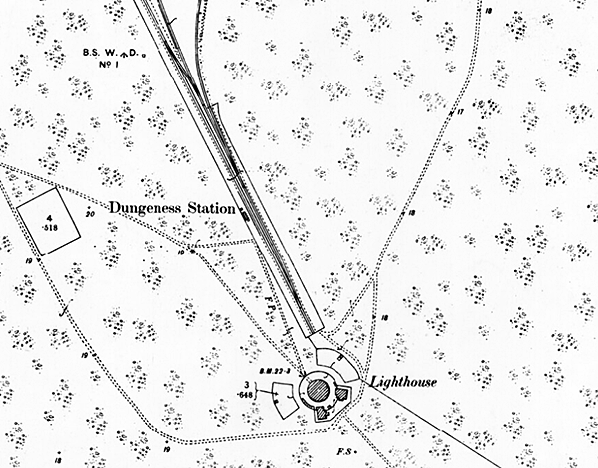
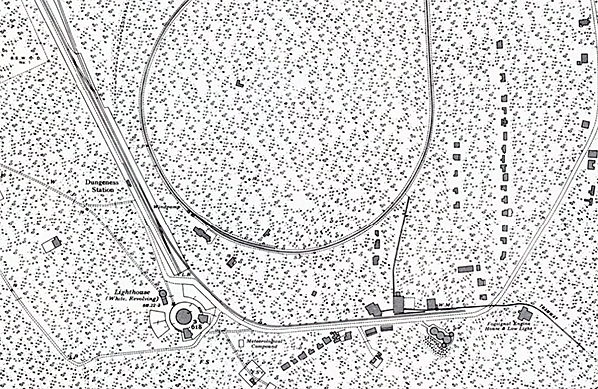
| Location: | Immediately north of Dungeness old lighthouse at the end of Dungeness Road. |
| Company on opening: | Lydd Railway |
| Date closed to passengers: | 4.7.1937 |
| Date closed completely: | May 1953 |
| Company on closing: | Southern Railway |
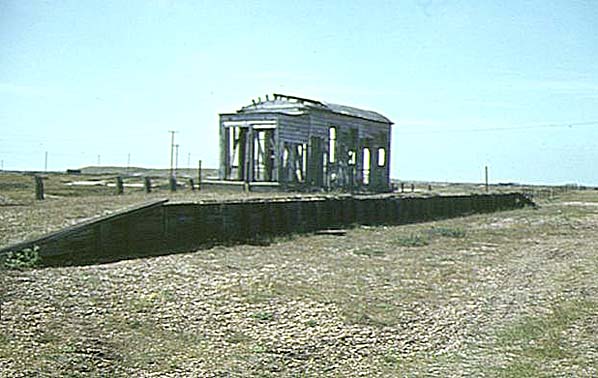
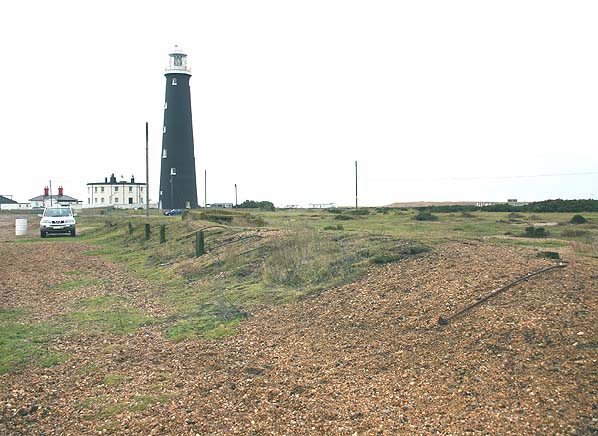
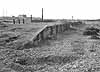
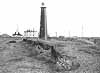
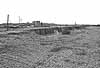
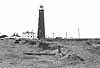
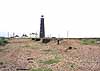
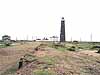
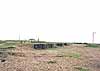
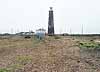
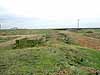
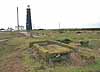
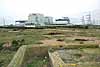
| Present state: | The clinker and timber platform is still partially extant although very very degraded after years of coastal erosion leaving little more than a mound with a few upright timbers along the platform edge. The concrete base of the station building can still be seen. The gallery of pictures shows the gradual erosion of the station between 1960 - 2006 |
| County: | Kent |
| OS Grid Ref: | TR088171 |
| Date of visit: | May 1969, November 1982, April 1995 and 3.1.2006 |
|
Notes: Dungeness is the most southerly point in Kent and the branch line terminated at the foot of the beach lighthouse. The single platform was of clinker constructions faced with old wooden sleepers along the edge face of the platform. There was a weatherboarded building incorporating a ticket office, waiting room, ladies room and toilets. Eventually a new ticket office was provided in a small wooden hut alongside and the waiting room enlarged.. The track layout consisted of a run-around loop for the engine and two sidings, the 'Admiralty Siding' serving the Admiralty signal station and a private siding serving ballast pits.
Might be worth mentioning that The climax of the 1950 film ‘The Dark Mann' takes place at Dungeness SR and RHDR stations. Some still from the film can be seen here. BRIEF HISTORY OF THE NEW ROMNEY
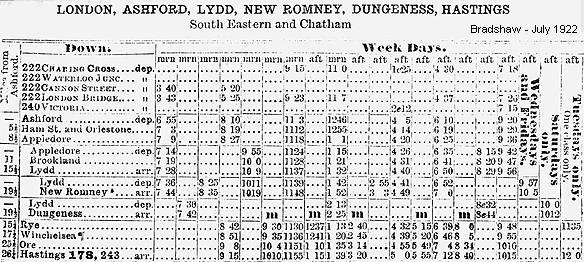
& DUNGENESS BRANCH LINES 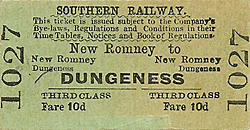 The line opened to passengers between Appledore and Lydd on
7 December 1881, with freight services to Dungeness, until that
too opened to passengers on April 1883. The only intermediate
station was at Brookland. Although nominally independent, the
service was provided by the South Eastern Railway and many of
the Lydd Railway Company directors prominent in the SER.
The line had 12 level crossings in its 8 mile length. The line opened to passengers between Appledore and Lydd on
7 December 1881, with freight services to Dungeness, until that
too opened to passengers on April 1883. The only intermediate
station was at Brookland. Although nominally independent, the
service was provided by the South Eastern Railway and many of
the Lydd Railway Company directors prominent in the SER.
The line had 12 level crossings in its 8 mile length.
The New Romney line opened on 19 June 1884 and some unusual workings were introduced with two branches being worked by one locomotive requiring some trains serving Dungeness to reverse back to Lydd Town before proceeding on to New Romney. This procedure was greatly simplified when push-pull trains were introduced. 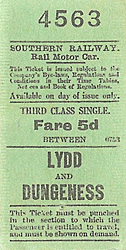 In 1895 the local company was absorbed into the South Eastern
Railway. With the Dungeness port scheme abandoned, the SER obtained
powers in 1900 to extend their line to Hythe but this was never
built. In 1895 the local company was absorbed into the South Eastern
Railway. With the Dungeness port scheme abandoned, the SER obtained
powers in 1900 to extend their line to Hythe but this was never
built.
Kitson steam railcars were introduced onto the line in 1906/7 and with the development of military ranges and a large army camp at Lydd, the line was well used until the end of WW1. Passenger numbers were now in decline although agricultural freight, including Romney Marsh sheep remained profitable. By the 1920's New Romney was served by 9 trains a day while Dungeness was relegated to 3. With the increase in pleasure traffic in the 1930's and new residential and proposed holiday camp development along the coast, the Southern Railway received powers under the 1935 Southern Railway Act to realign the New Romney branch with a new junction one mile to the southeast with two new halts at Lydd-on-Sea and Greatstone-on-Sea; the new line opened on 4 July 1937. At the same time the station at Lydd was renamed Lydd Town and passenger services to Dungeness was withdrawn, although the freight service was retained.
Nationalisation in 1948 initially brought few changes but with competition from busses and the popularity of the motor car in the 1950's traffic continued to decline and economies were inevitable including the withdrawal of the Dungeness freight service in 1952 and the removal of the passing loop at Lydd-on-Sea. 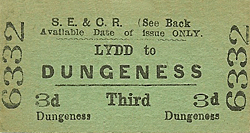 In the early 1960's the line received a new use with the opening
of Dungeness Nuclear Power Station in 1965. The passenger service
was improved with steam being replaced by two-car diesel-electrics
providing 11 trains a day in 1962; with most running through
to Ashford. This new prosperity was not to last however and
both the Ashford - Hastings line and with it the New Romney
branch were proposed for closure in the 1963 Beeching
Report. In the early 1960's the line received a new use with the opening
of Dungeness Nuclear Power Station in 1965. The passenger service
was improved with steam being replaced by two-car diesel-electrics
providing 11 trains a day in 1962; with most running through
to Ashford. This new prosperity was not to last however and
both the Ashford - Hastings line and with it the New Romney
branch were proposed for closure in the 1963 Beeching
Report. The goods services to New Romney was withdrawn in 1964 but the threat of closure was suspended until 1966 when the Minister of Transport announced that the passenger service on the New Romney branch would cease on 6th March 1967. The Ashford - Hastings line was however reprieved although some sections were eventually singled.
Further reading: The
New Romney Branch Line by Peter Harding. Published by the
author in 1983 ISBN : 0952345889 Web sites: Railways in Kent, Southern E Group and KARE for pictures of nuclear waste trains To see the other stations on the New Romney and Dungeness branches click on the station name: Appledore, Brookland Halt, Lydd Town, Lydd-on-Sea Halt, Greatstone-on-Sea Halt & New Romney & Littlestone-on-Sea |
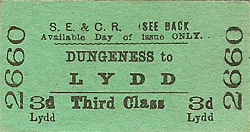 With the opening of the new alignment along the coat to New
Romney in 1937, the passenger service was withdrawn from Dungeness
with Lydd-on-Sea providing a replacement for passengers albeit
1 1/2 miles away. The freight service was retained until 1953.
A short section of the branch was reinstated in the early 1960's
to serve Dungeness Power Station
With the opening of the new alignment along the coat to New
Romney in 1937, the passenger service was withdrawn from Dungeness
with Lydd-on-Sea providing a replacement for passengers albeit
1 1/2 miles away. The freight service was retained until 1953.
A short section of the branch was reinstated in the early 1960's
to serve Dungeness Power Station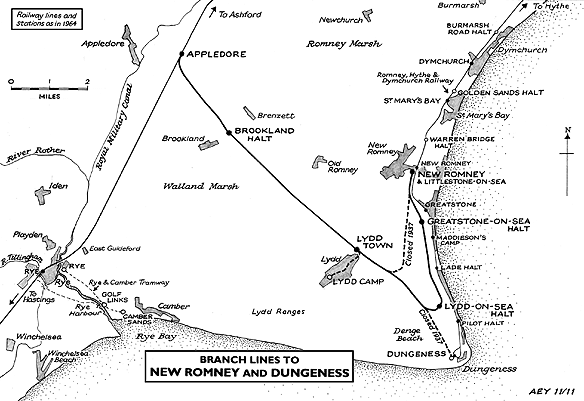
 Goods services to Lydd continued until 1971 and the line was
still in use for the removal of ballast aggregates and waste
from Dungeness B nuclear power station. All track beyond Romney
Junction has been lifted. The only passenger movements since
closure have been occasional troop trains and railtours, the
most recent being the
Goods services to Lydd continued until 1971 and the line was
still in use for the removal of ballast aggregates and waste
from Dungeness B nuclear power station. All track beyond Romney
Junction has been lifted. The only passenger movements since
closure have been occasional troop trains and railtours, the
most recent being the old3.jpg)
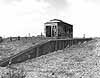
old2.jpg) Dungeness Station
in August 1905 - the small hut to the right of the station building
is the new ticket office. After this was added the waiting room was
enlarged
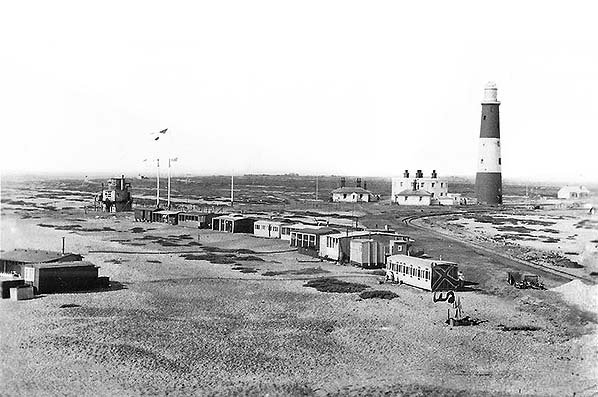
Dungeness Station
in August 1905 - the small hut to the right of the station building
is the new ticket office. After this was added the waiting room was
enlargedCopyright photo from John Alsop collection
old4.jpg)
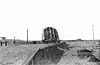
A post grouping view of Dungeness station.
|
 Home
Page
Home
Page
| Last updated: Thursday, 26-Jul-2018 08:23:27 CEST |
© 1998-2018 Disused Stations |