THE CENTRAL LONDON RAILWAY OPENS
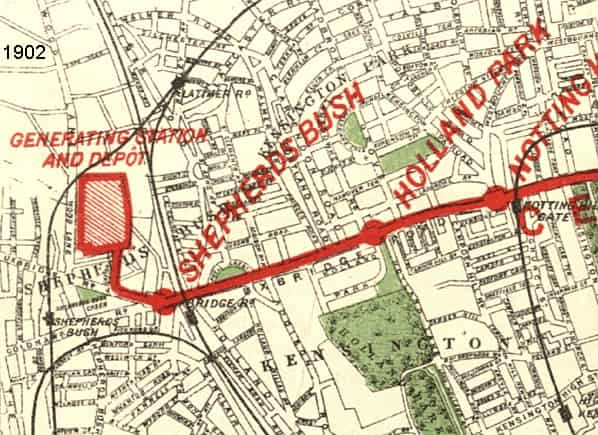
The Central London Railway was incorporated in 1891 as a line between Shepherd’s Bush and Cornhill, but a further Act in 1892 authorised an alternative terminus at Bank with a later extension to Liverpool Street. The time for completion had to be extended twice, first to 1894 but with work not starting until April 1896 this was further extended to 1899.
Due to ongoing negotiations with the Great Eastern about the siting of the Liverpool Street terminus, work on the twin track tunnels was concentrated between Shepherds Bush and Bank. At Shepherds Bush, the eastbound track continued for a short distance to a reversing siding while the westbound track came to the surface on a steeply graded curving track to reach the company’s new depot, repair shops and power station on a 20 acre site at Wood Lane. The depot was also served by a single track spur from the West London Railway which was used to bring coal to the power station.
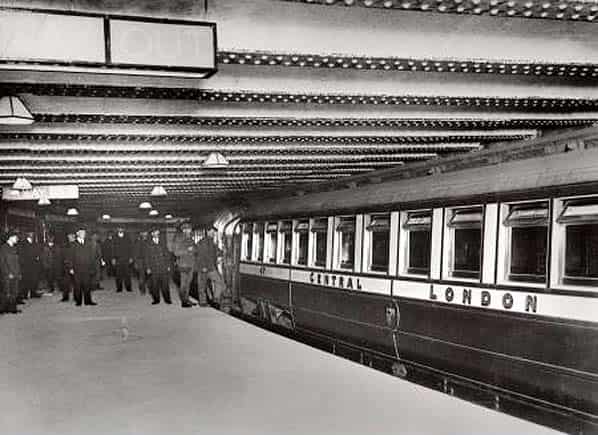
The line was formally opened by the Prince of Wales with a ceremony at Bank Station on 27th June 1900, a month before public traffic began to use the railway on 30th July.
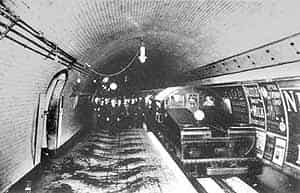
All the stations were provided with two platforms, 325 feet in length, reached by electric lifts from the distinctive station buildings designed by the architect Harry Bell Measures; many of which survive. The railway was initially operated by 28 electric locomotives built by GEC in America. They were imported in kit form and assembled at the Wood Lane works. The passenger stock comprised bogie coaches with two guards and manned gated platforms at each end for passengers to join and alight.
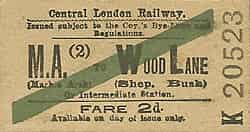
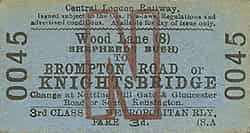
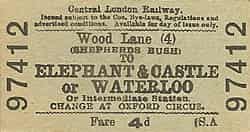
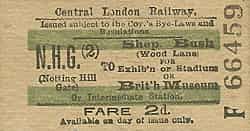
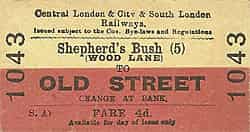
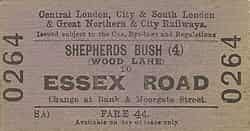
The line was quickly nicknamed ‘The Twopenny Tube’ as the company initially charged a flat fare of 2d between any two stations whatever the distance. From the first of July 1907 this was increased to 3p for passengers travelling eight stations or more with 1d fares being introduced in 1909 for short distances.
THE FRANCO-BRITISH EXHIBITION
In 1905 the French Chamber of Commerce proposed holding a Franco-British Exhibition in London to promote the industrial achievements of both countries. It was to be a very opulent affair housed in a spectacular setting, built on 140 acres of former farm land on the west side of Wood Lane.
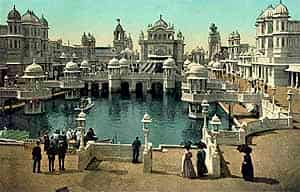
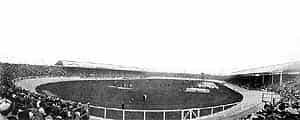
The plan got the Royal seal of approval and work started in January 1907 with contractors working round the clock to complete the exhibition site within a year. The majority of exhibition buildings were constructed on an impressive scale and set amongst specially laid-out gardens and waterways. Most of the buildings featured highly ornamented plastered exteriors which were weather-proofed with white paint and the site quickly became known locally as the ‘White City’. The exhibition area also included a large stadium to accommodate 150,000 spectators and was built to host the 1908 Olympic Games.
The closest existing stations were Shepherds Bush on the Central London Railway and the adjacent Uxbridge Road on the West London Line. Both stations fronted onto Uxbridge Road and were nearly half a mile away from the exhibition site by road. To overcome this an exhibition entrance was built between the two stations from where a raised arcaded walkway incorporating exhibition halls was built 30' above railway owned land linking the two stations with the exhibition site. (Much of this walkway still survived until recent years until it swept away during the construction of the Westfield shopping development.)
THE CENTRAL LONDON RAILWAY IS EXTENDED TO WOOD LANE
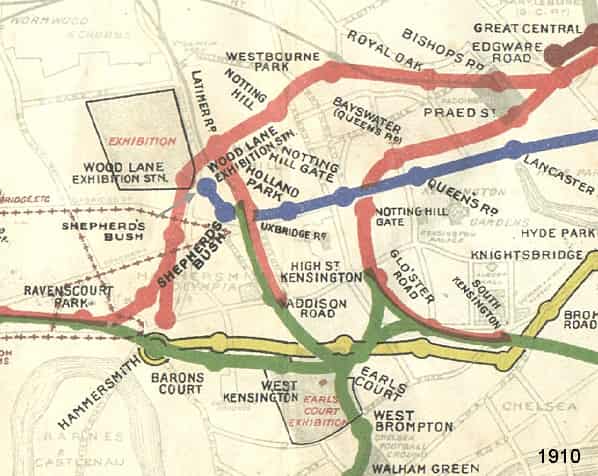
It was soon clear that the walkway would not be adequate and in July 1907 the Central London Railway received parliamentary consent to extend northwards from its Shepherds Bush terminus to a new station at Wood Lane. The station was to be sited on a single-track loop in the northwest corner of their depot.
Westbound trains would continue north from Shepherds Bush using the steeply inclined depot line, coming to the surface alongside the depot. A loop-line was built through the new station and back into a tunnel for the return journey to Shepherds Bush.
Progress on the new station was slow as the Board of Trade were unhappy with some aspects for the submitted plans due to the high volume of passenger traffic expected. One of the concerns was the lack of shelter but the CLR pointed out that the existing raised walkway would pass over the station providing adequate shelter in bad weather. After satisfying the Board of Trade on all points, construction moved ahead rapidly and the new station was ready for inspection on 9th May 1908 opening to the public on 14th May to coincide with the opening of the Franco-British exhibition by the Prince of Wales. 123,000 visitors passed through the turnstiles on the first day, many of them travelling by train.
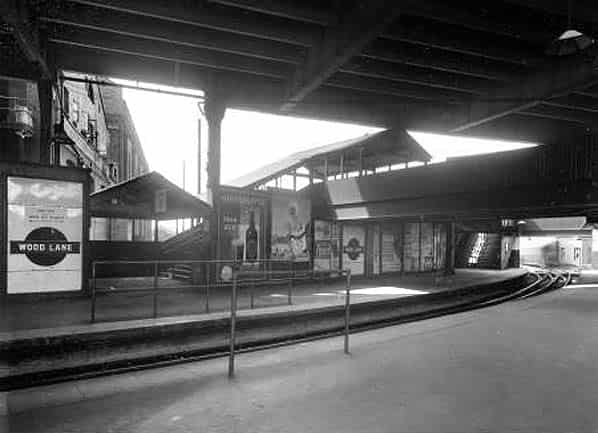
Although the station was only on a single-track loop, it was provided with two platforms, No 1 on the inside of the curve for alighting passengers and No. 2 for boarding passengers. The station entrance was on the east side of Wood Lane with passengers entering the station at the north end of the building and leaving at the south end.
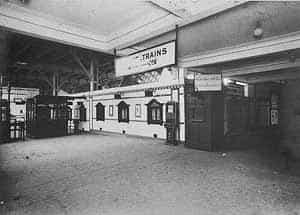
The station was provided with a large concourse from where a staircase took passengers up to the raised walkway which was carried on a bridge over Wood Lane and into the exhibition. At the back of the concourse there was a porter’s room. The booking office was in a direct line with the entrance and was equipped with eight ticket windows. Of these, two were at the front, and the remainder were in groups of three positioned either side. To left and right of this were a pair slopes towards the ticket barriers which also gave access to the station toilets.
The Station Master’s office was situated between the two barriers and adjoined the east end of the ladies' room. From the south-western end of No. 1 platform, a flight of stairs led onto a covered footbridge over the line and towards the station exit. This could also be accessed from the other platform by means of steps and a slope. A ticket office for the exhibition was also provided alongside the stairs to the raised walkway.
The Franco-British Exhibition was a complete success and by the time it closed on 31st October 1908 a total of 8,400,000 people passed through the turnstiles. The ‘White City’ continued to host annual large exhibitions until the outbreak of war in 1914 when it was handed over to the government who used it for a variety of functions including army training and aircraft construction. It was finally vacated by the military in the early 1920s and put up for auction on 7th November 1922.
Some of the buildings on 50 acres of the site were demolished to make way for flats in 1936 while other buildings were again used by the government during WW2. The remainder of the site was cleared in the late 1950’s to make way for the construction of the BBC Television centre which was built in 1960. The stadium fell into disuse after the Olympic Games but was eventually take over by the Greyhound Association in 1927 closing in 1984; it was demolished the following year.
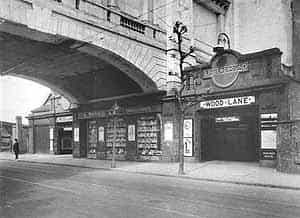
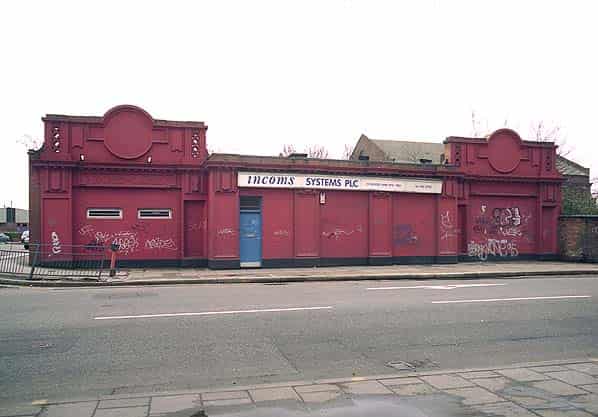
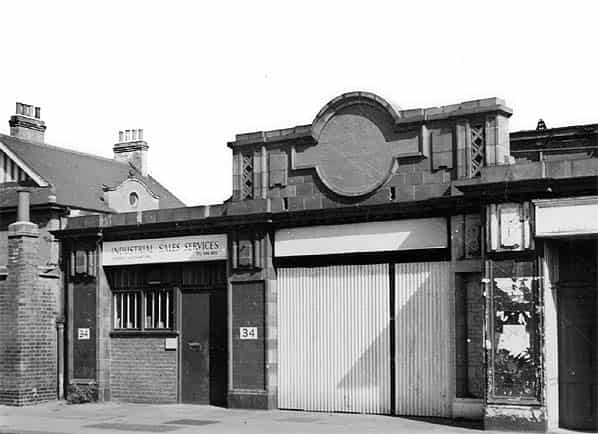
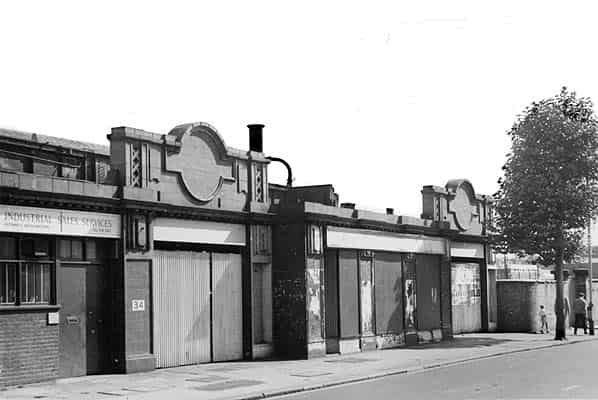
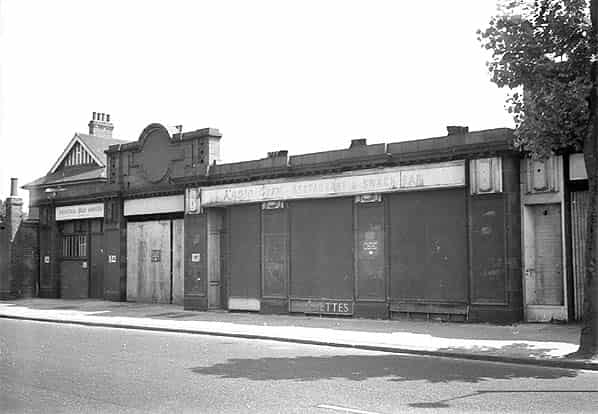
From 1st January 1913, the Central London Railway was absorbed into the Underground Group and the new management soon set about making improvements. These included the installation of automatic signalling and the replacement of some earlier track work. At Wood Lane, Harry Measure’s original frontage was removed around 1915 and replaced by a new design from Stanley Heaps. Heaps had worked on the various Yerkes' projects as Leslie Green’s assistant and was appointed architect to the London Electric Railway in 1910. The new frontage projected slightly further onto the pavement and was finished in brown tiling. The original station gated entrance and exit were retained.
NEW UNDERGROUND PLATFORMS AT WOOD LANE
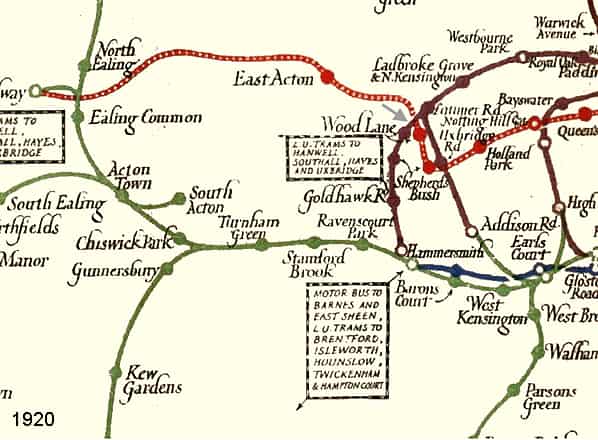
The Ealing & Shepherds Bush Railway had been authorised under the 1905 Great Western Act and the Central London Act of 1911 and was eventually built jointly by the Underground Group and the GWR. It ran from a new terminus at Ealing Broadway adjacent to the existing GWR station running east from a junction with the West London Railway at Viaduct Junction and the Central London Railway at Wood Lane. Only the short section in the immediate vicinity of Wood Lane was built by the Underground Group.
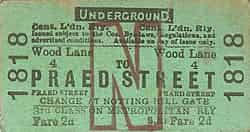
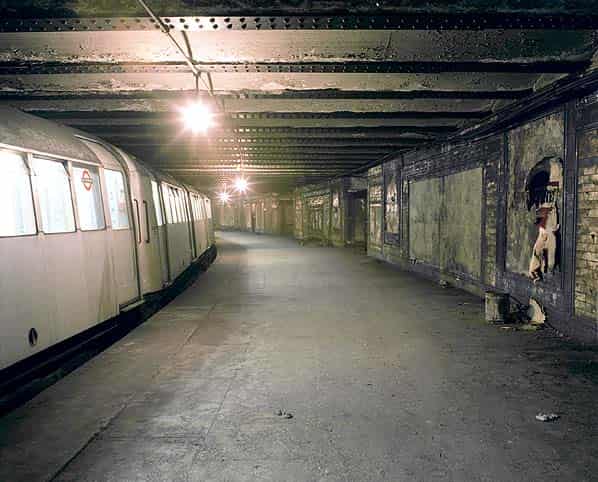
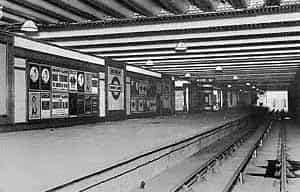
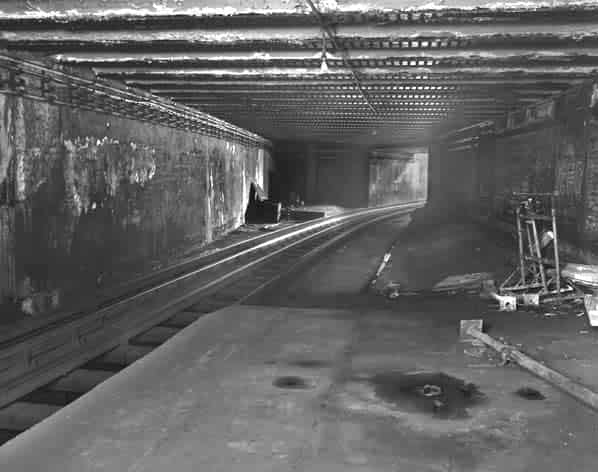
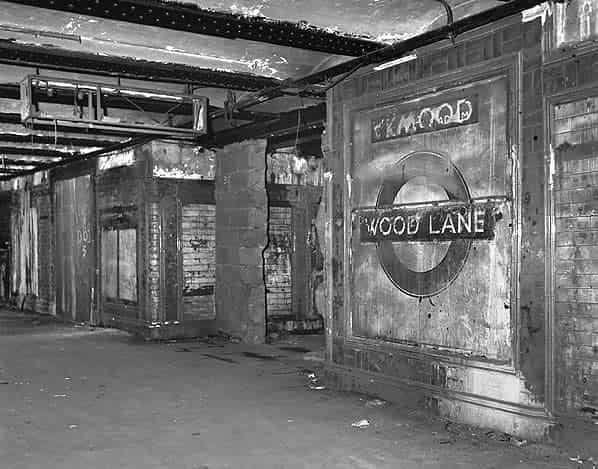
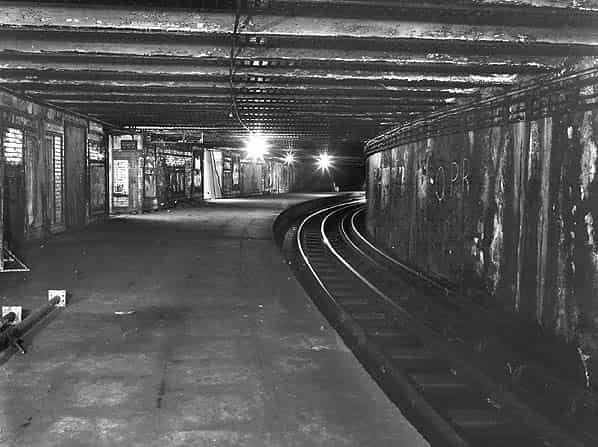
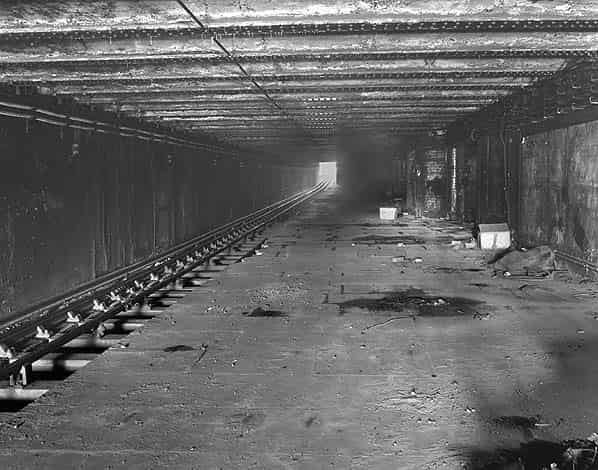
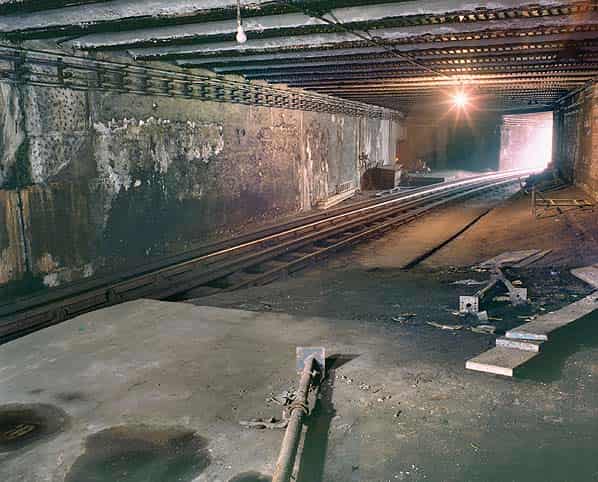
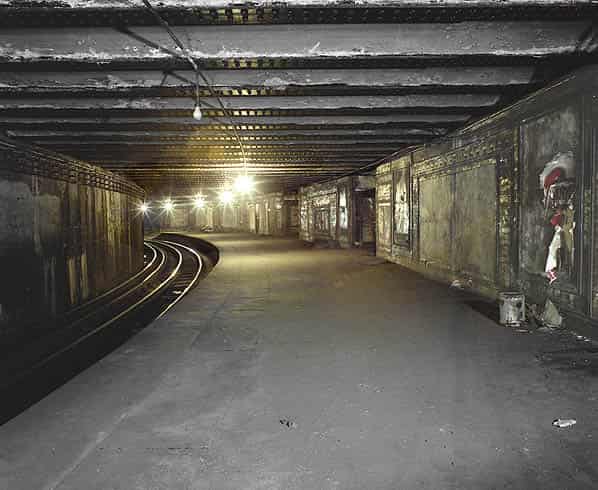
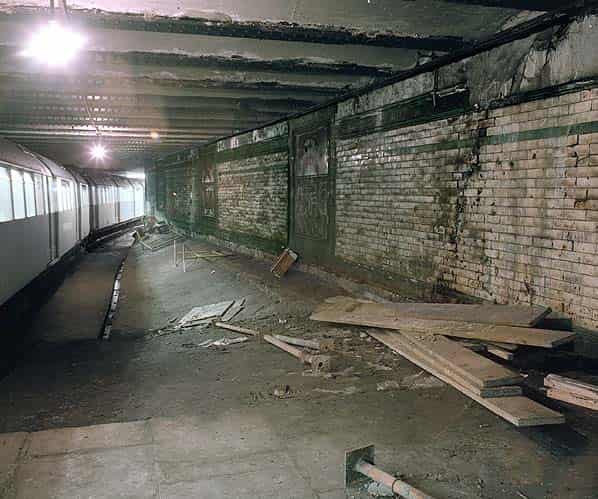
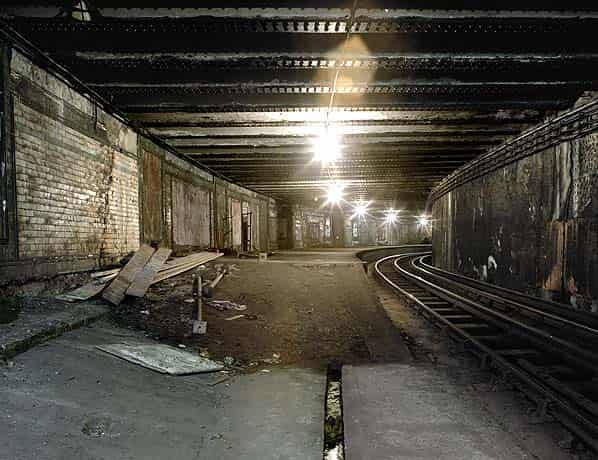
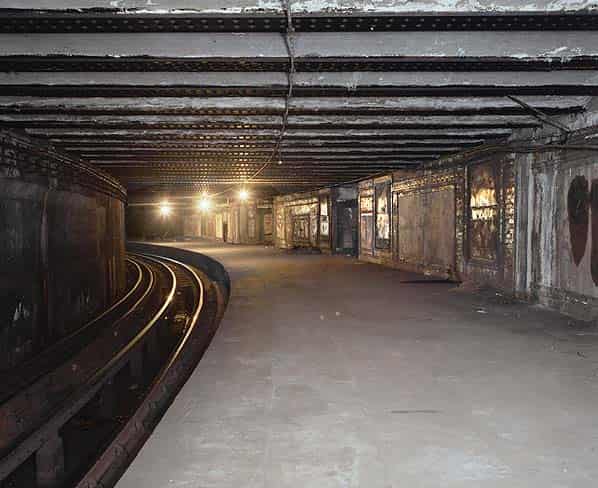
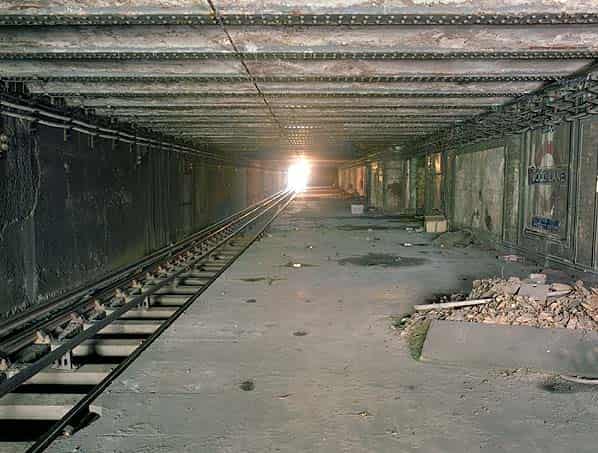
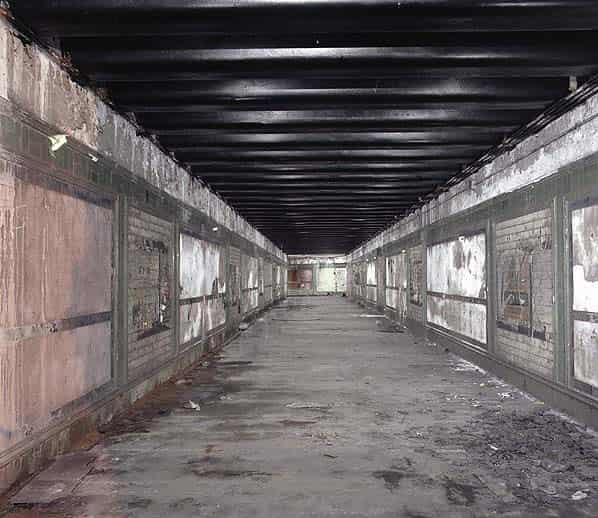
A freight service between the Great Western at Ealing and the West London line started on 16th April 1917, but a passenger service onto the CLR was delayed while conductor rails were laid and new platforms were built at Wood Lane. Two additional 300' long platform were added below ground, constructed by cut and cover.
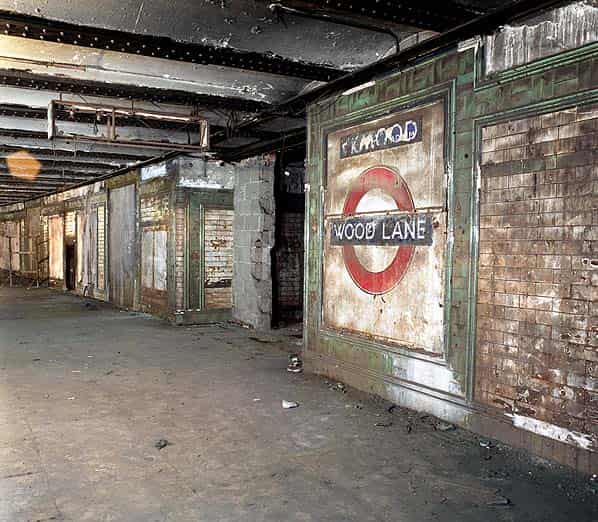
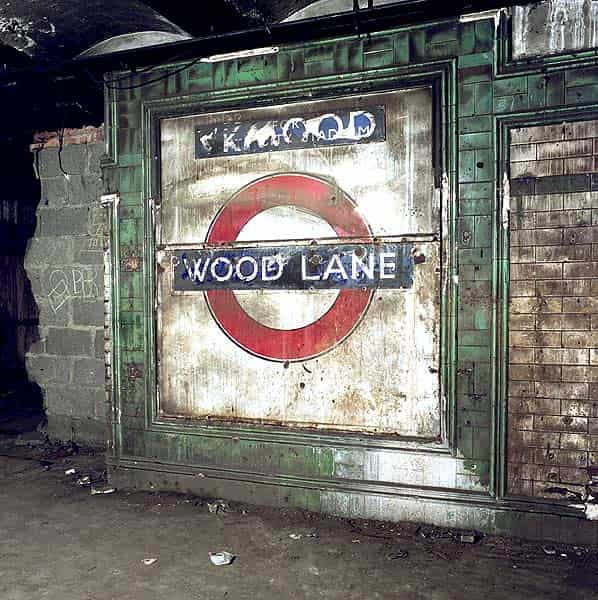
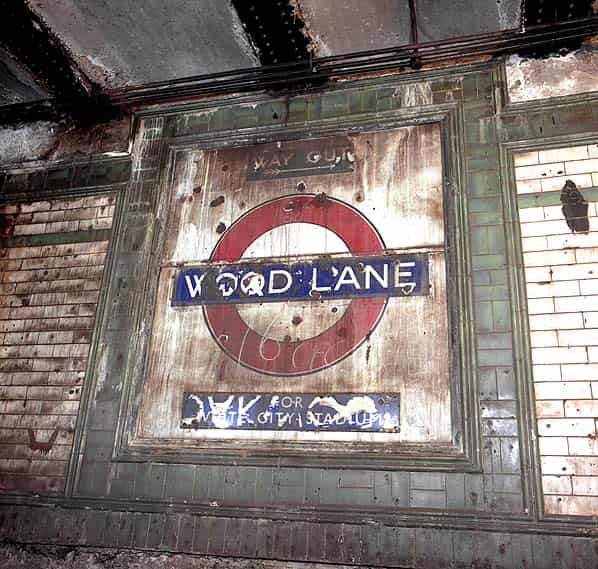
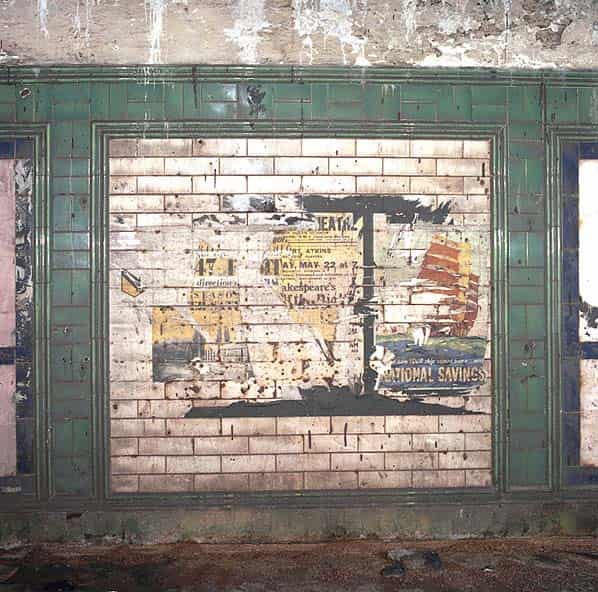
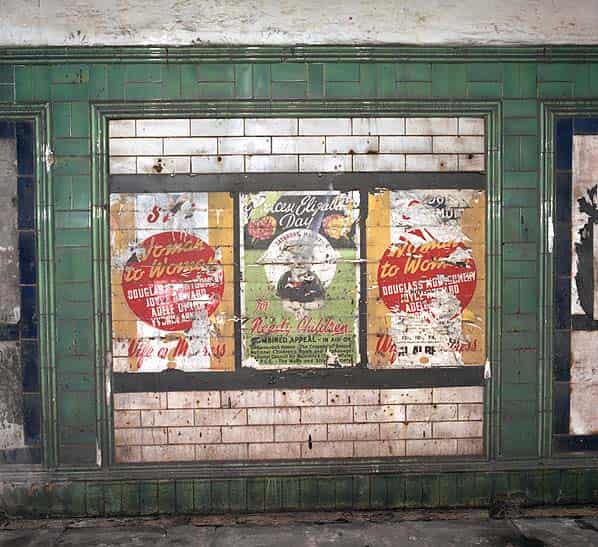
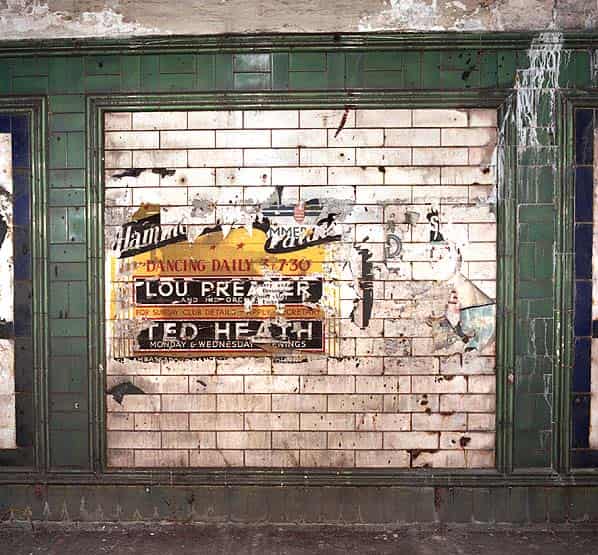
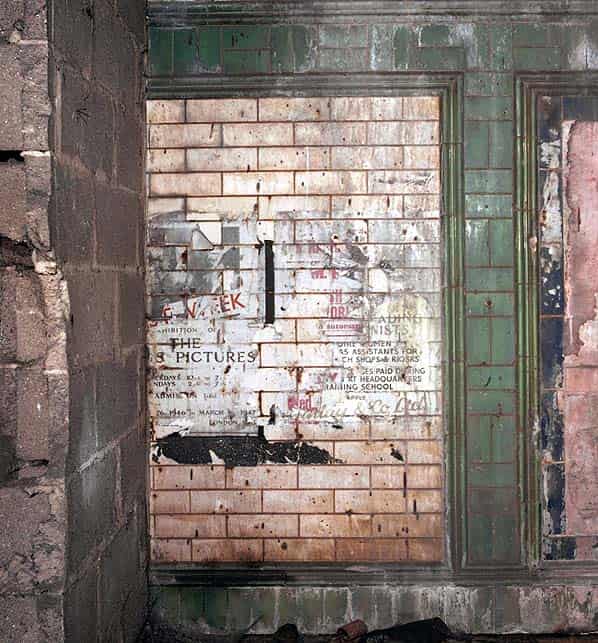
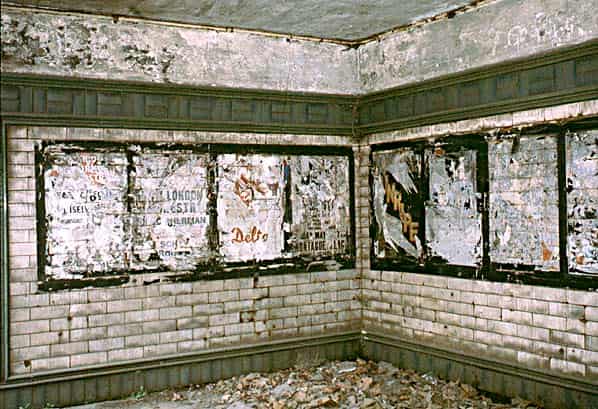
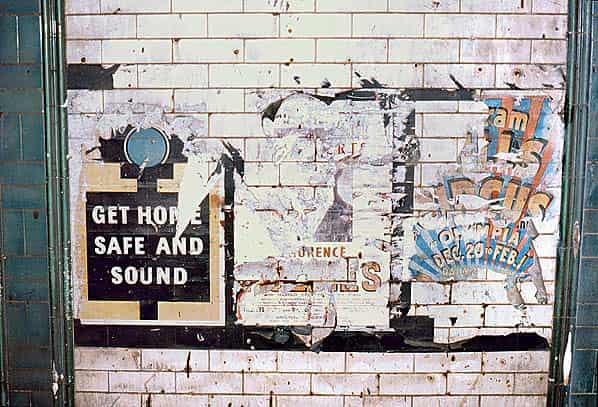
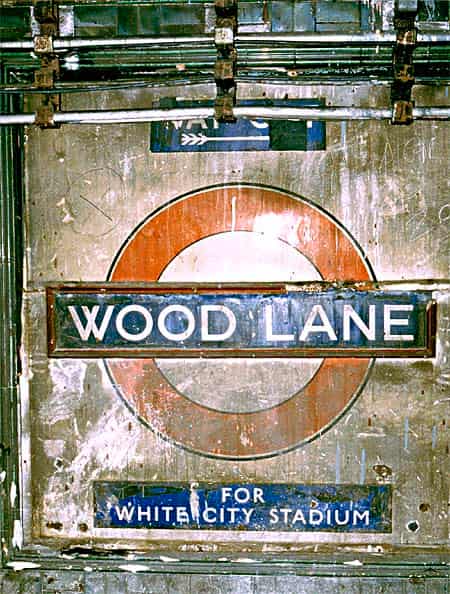
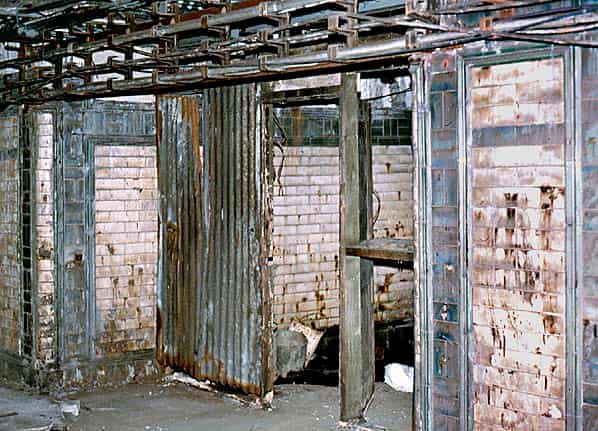
The station walls were largely tiled in white, with panels for nameboards and posters outlined in green and black. The same colour scheme was used on the concourse, which was redesigned with greater use being made of the available space. Booking facilities were improved and extra toilets for both ladies and gentlemen were added. The two new platforms were linked to the concourse by separate entrance and exit stairways, although from the outset it was felt that under normal conditions each side would require only one of these to be in regular use.
To the east of the depot, a new junction was built taking westbound trains on to the extension through Platform 4. A second junction was added at the west side of the loop with the eastbound track running into a new tunnel and through Platform 3. This unusual configuration meant that the standard left-hand running was not possible through Wood Lane and a flyover was built north of the station to return the track to normal sides.
The new line was ready for inspection on 25th July 1920 and opened on 3rd August. In 1927 the White City Stadium was refurbished for greyhound and motor-cycle racing and further changes were made at Wood Lane station to cater for the additional passenger traffic. The old booking office was removed and replaced by passimeters, which had electrically operated machines, capable of issuing 20,000 tickets an hour and speeding up passenger flow.
In order that trains on the loop could enter the depot, Platform 1 was shorter than Platform 2 and couldn’t accommodate 7 car trains, so passengers had to use Platform 2; this became more of a problem following the introduction of sliding door stock.
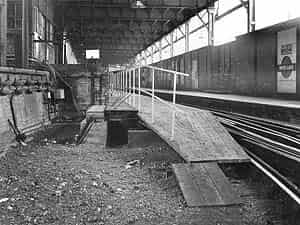
To overcome this, an extension to Platform 1 was required. This would be difficult to achieve because of the points serving the line into the depot. The solution was a moveable section of platform built of wood on a steel frame, which could be swung out of the way allowing trains to enter or leave the depot. This extension was approved and came into use in May 1928. There were about 30 daily train movements in and out of the depot and the swivelling platform might be operated up to one hundred and twenty times within twenty-four hours. The movable platform was a complete success and remained in used until the station closed. Once Platform 1 had been extended, Platform 2 was no longer required and stopped handling regular passenger traffic.
The New Works Plan of 1935 included a vast modernisation programme for the former Central London Railway. It was to be extended at both ends and from 28th August 1937 it was officially renamed ‘The Central Line’.
WOOD LANE CLOSES
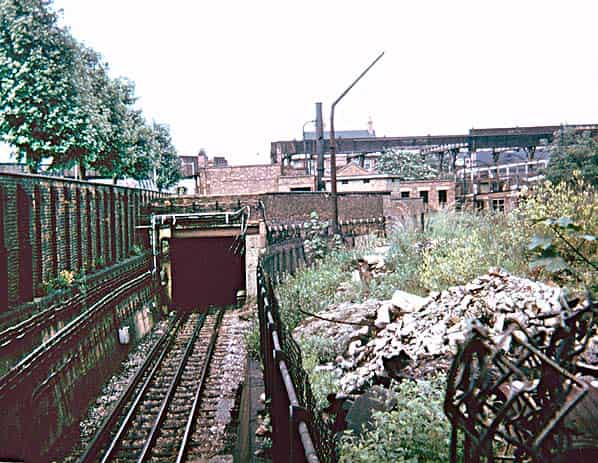
Although the movable platform proved workable it was not the ideal solution and the station was still unable to take trains longer than 7 cars in the high level platforms. In 1938 the LPTB obtained consent to resite the station 350 yards to the north. Although the new station, to be named White City, should have been in service by 1940 but it was delayed by the war and work finally started on 6th May 1946. To enable its construction, the cutting needed to be widened and the westbound line was re-routed through a new 220yd covered way. The new station was sited almost opposite the stadium, 350 yards north of its predecessor; it opened on the 23rd November 1947. Wood Lane closed after the last train the previous day.
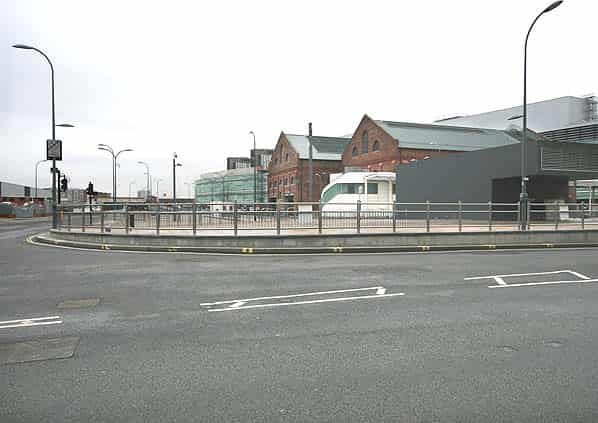
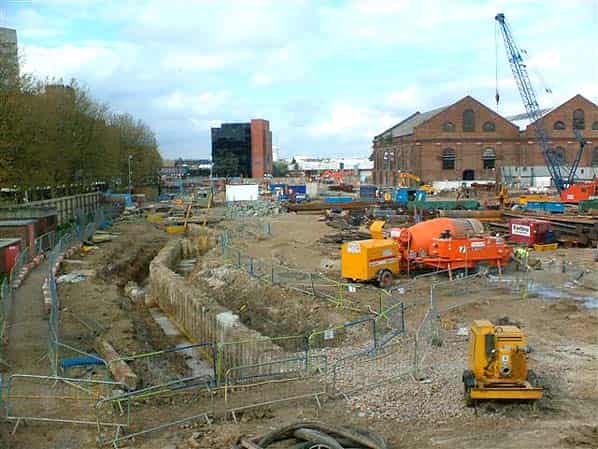
Trains continued to pass through the low level platforms until 1948. After that date a new westbound tunnel, was brought into use with the abandoned Platform 4 being retained, with a slightly truncated platform, on the line into the depot. Eastbound trains continue to run through Platform 3 until it was demolished in 2005 during the construction of a bus station for the new Westfield shopping centre and observant passengers were able to make out the station tiling and the LT roundels.
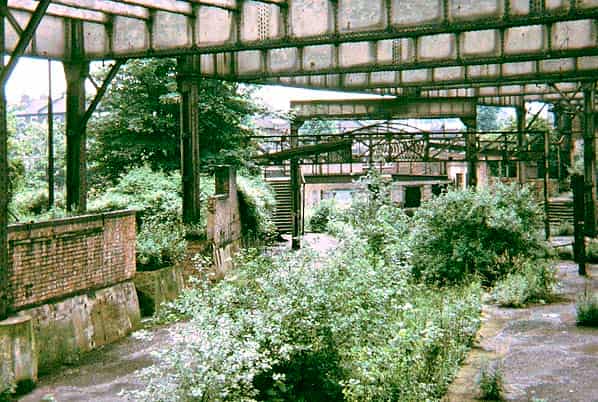
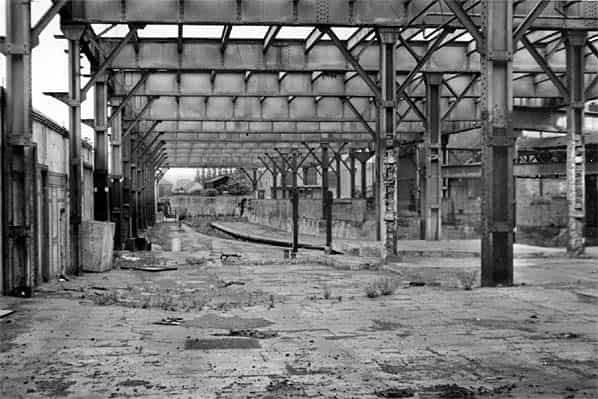
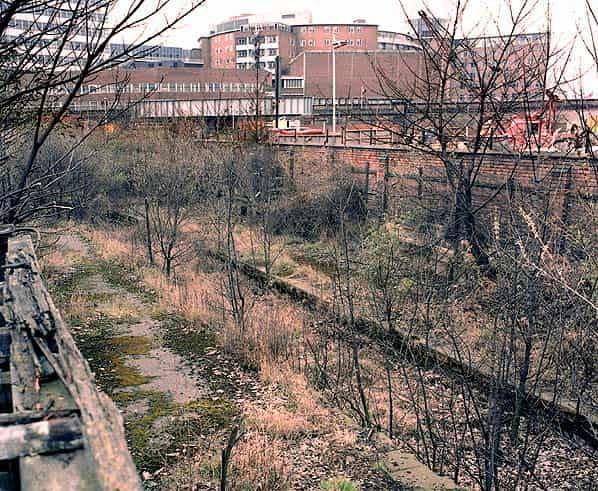
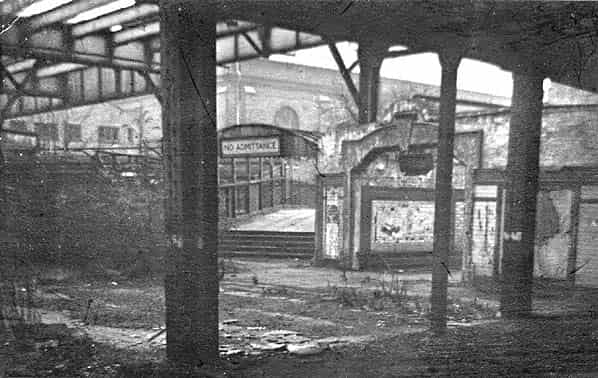
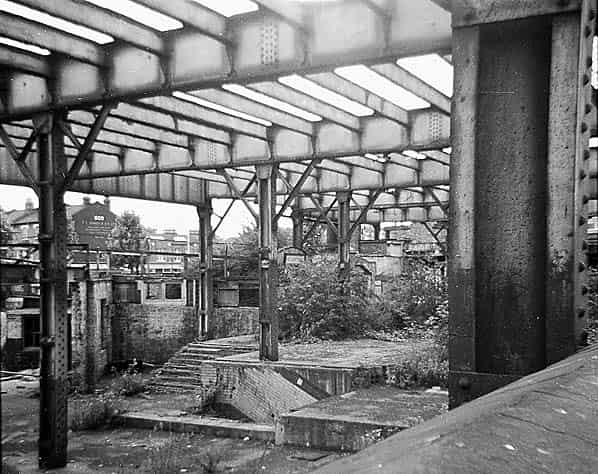
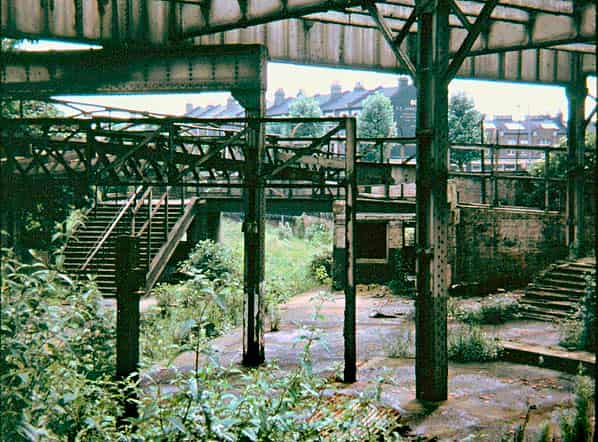
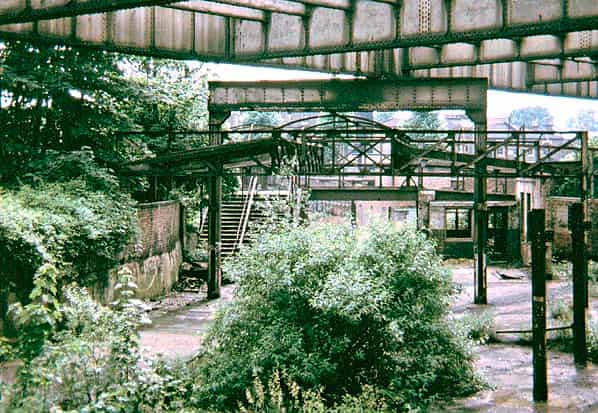
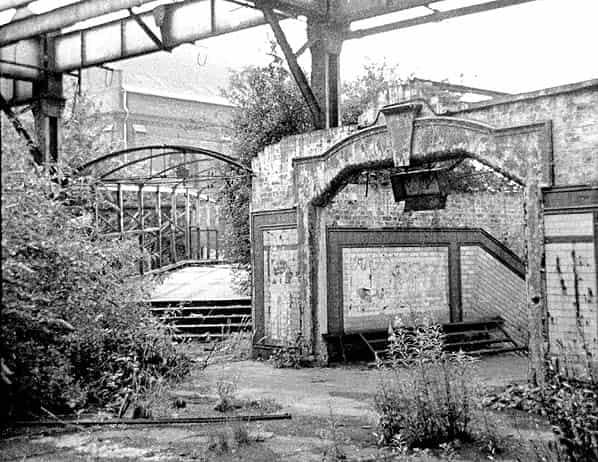
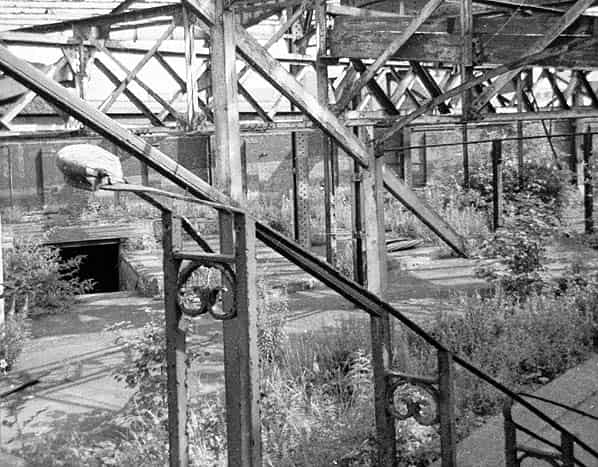
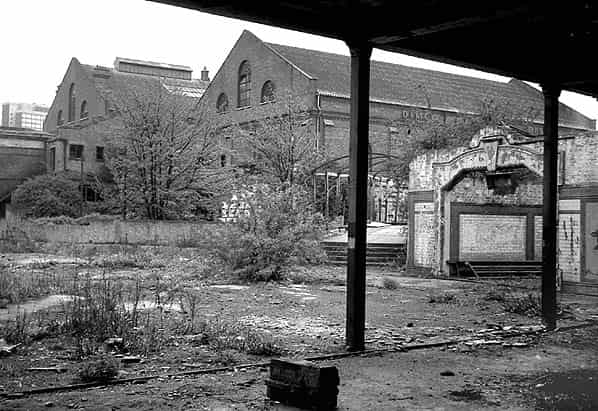
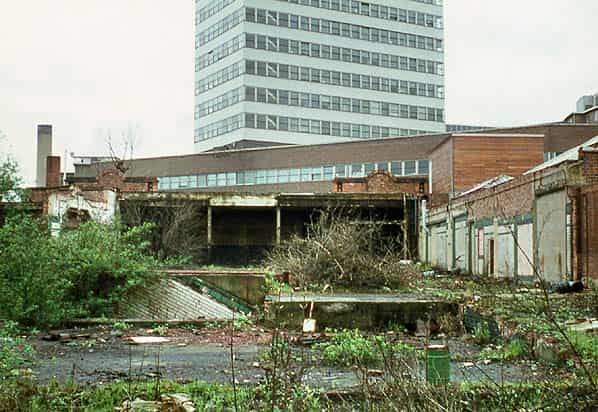
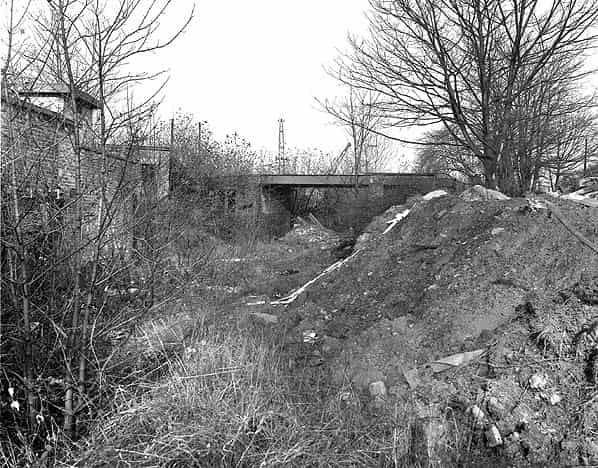
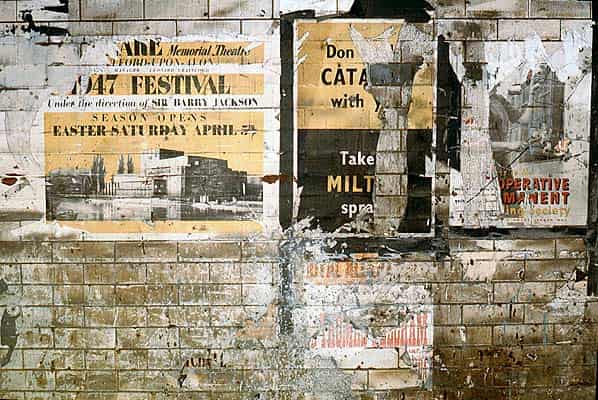
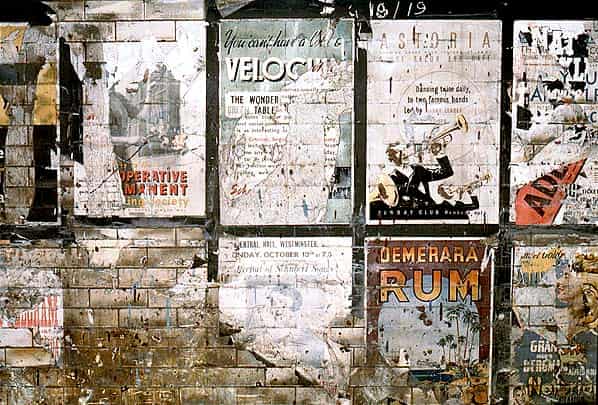
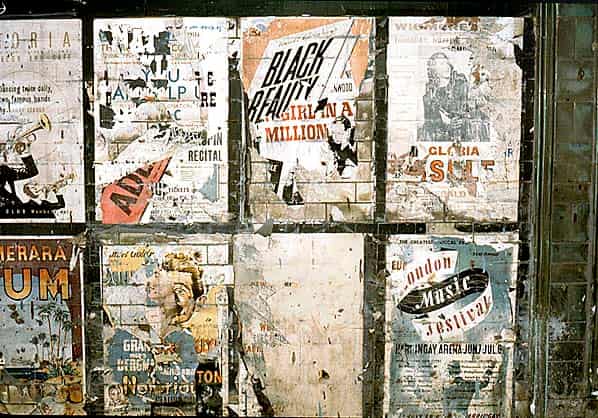
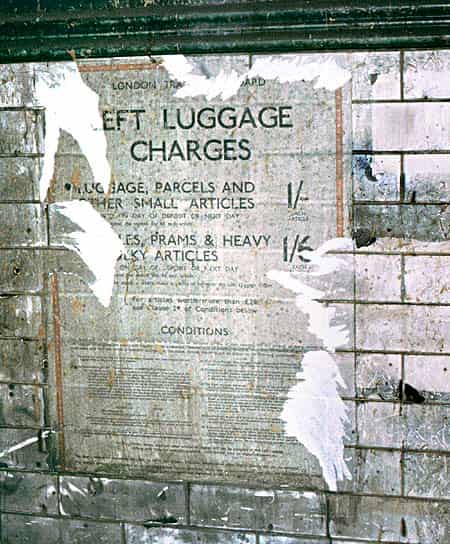
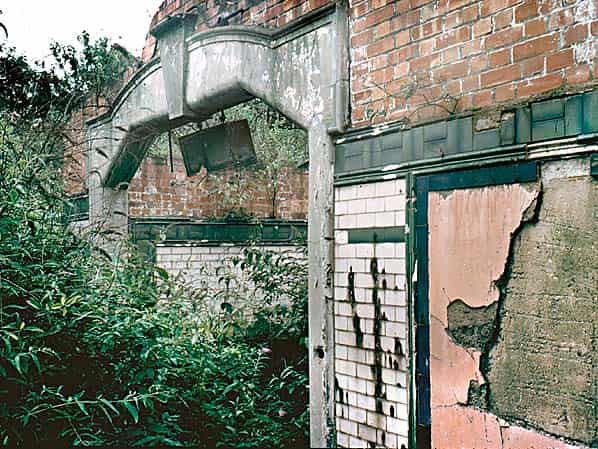
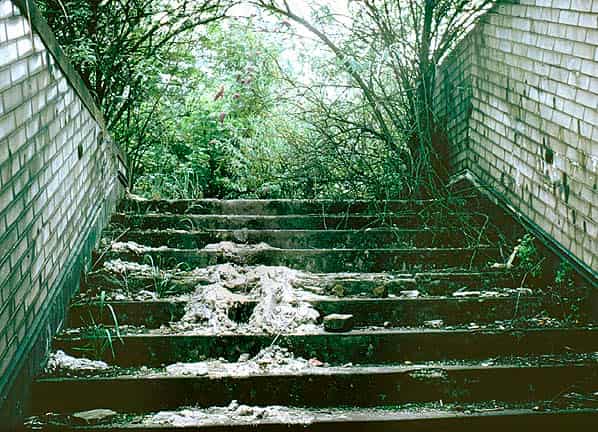
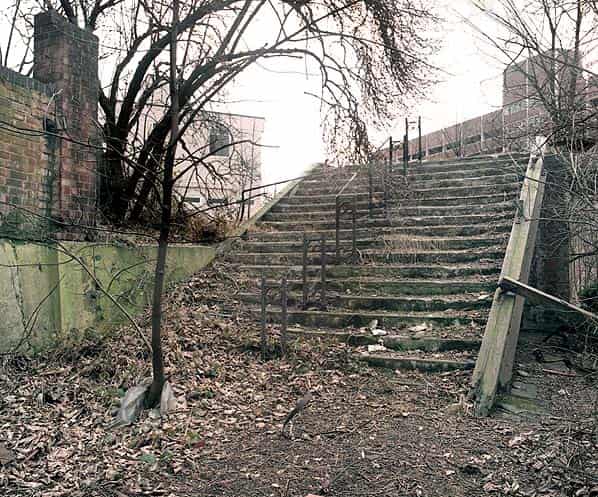
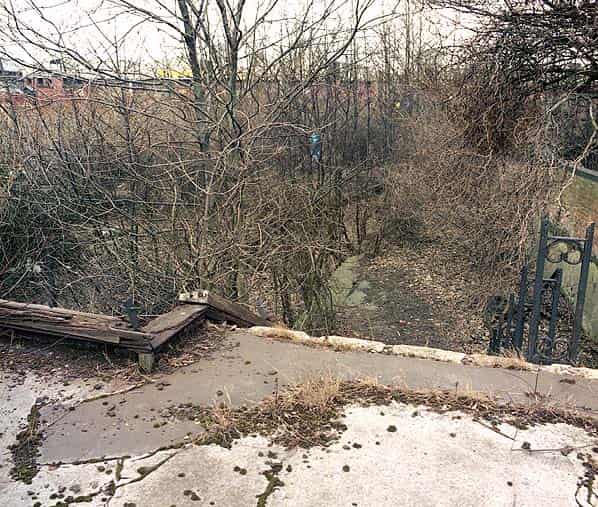
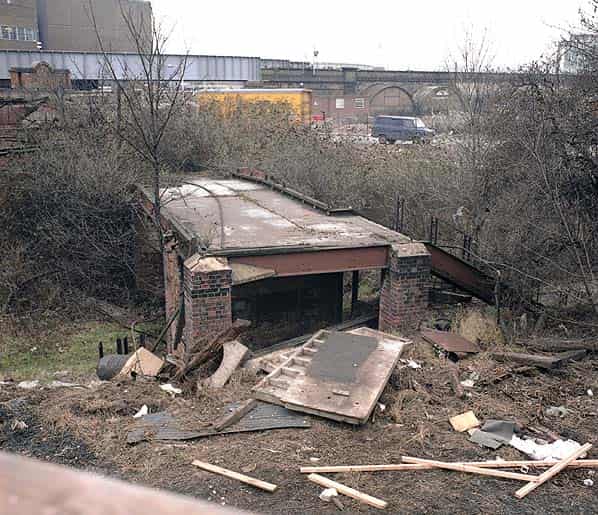
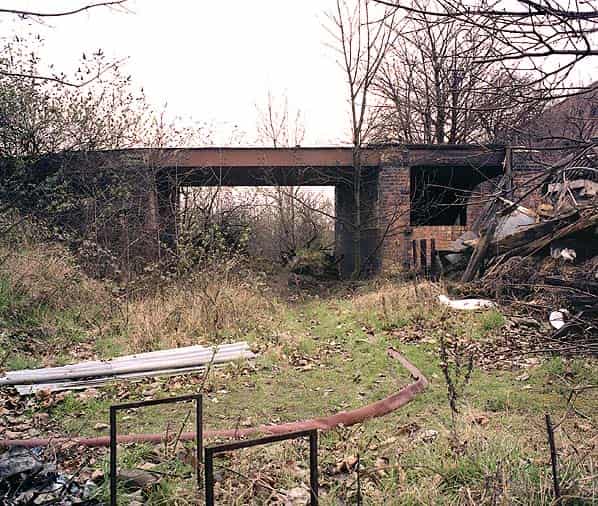
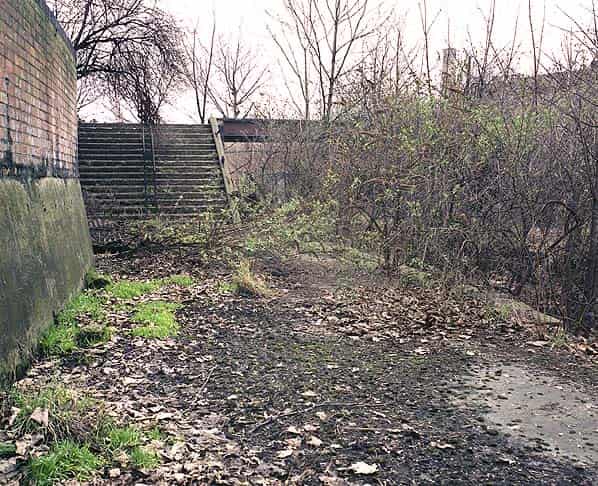
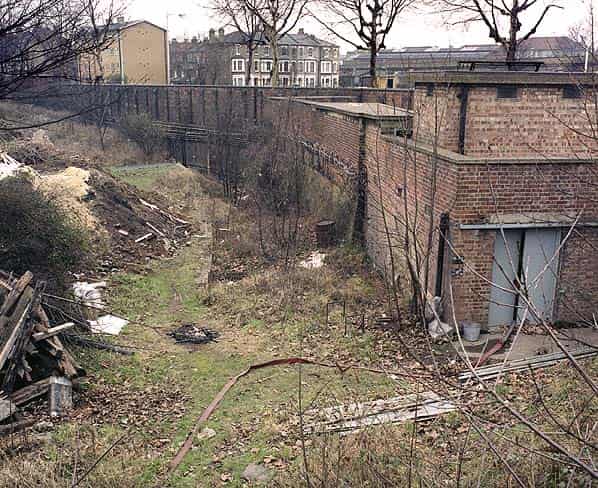
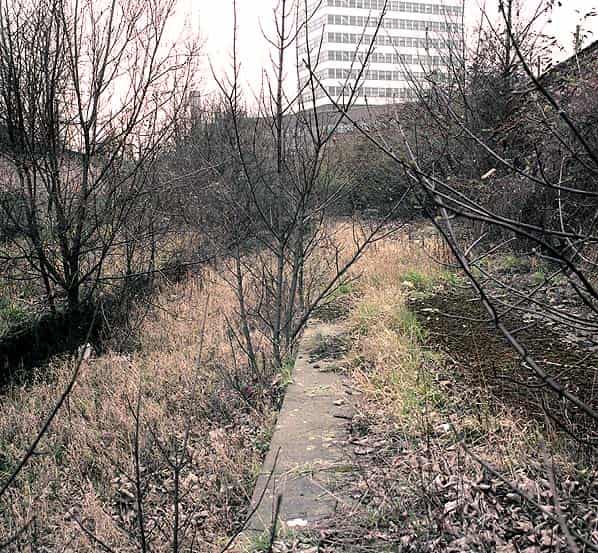
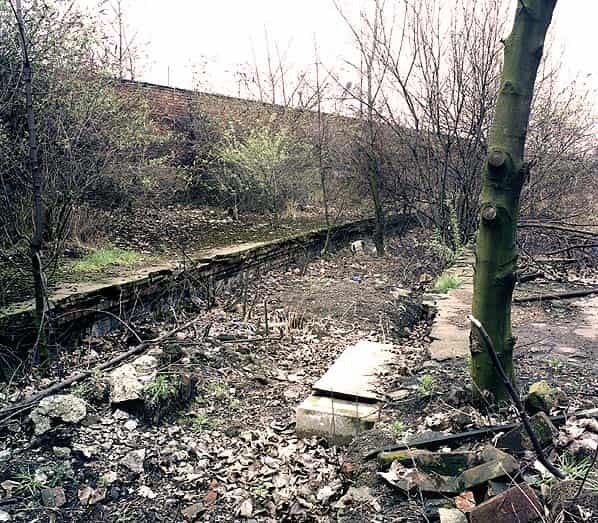
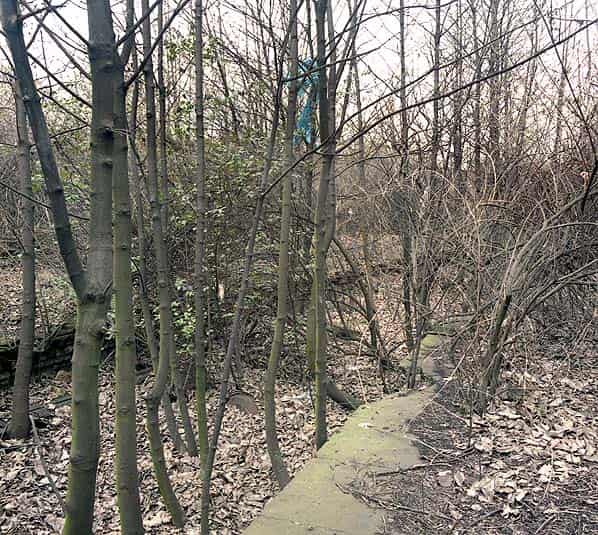
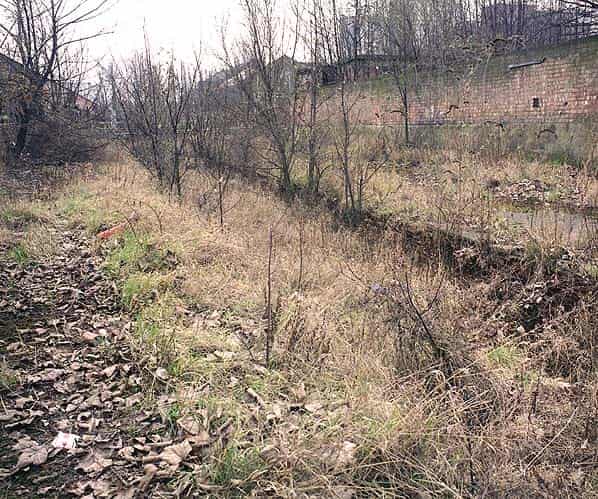
The track through Platforms 1 & 2 was lifted in the 1950’s and the bridge over Wood Lane and the western part of the walkway crossing over the station was demolished. The track bed was then returned to nature with impenetrable undergrowth. The ironwork that supported the arcaded walkway survived into the late 1960s but had been demolished by 1970. The footbridge over the platforms was demolished in the 1980s and the stairways down to the lower platforms were blocked to deter vandals and trespass. At street level the entrance building was used by a number of retail outlets but eventually became derelict and the entrances were bricked up for a few years but it was later renovated as office accommodation as seen in the picture below.
REDEVELOPMENT
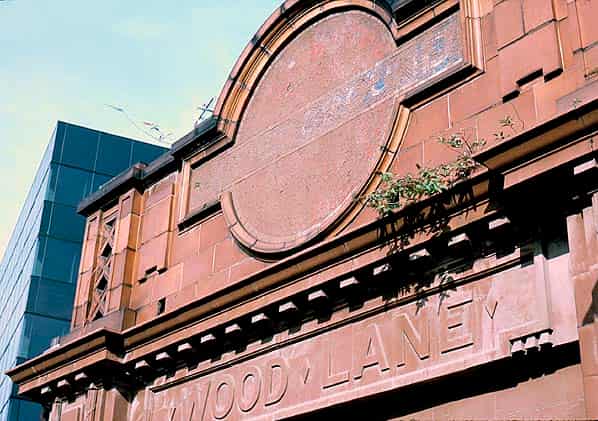
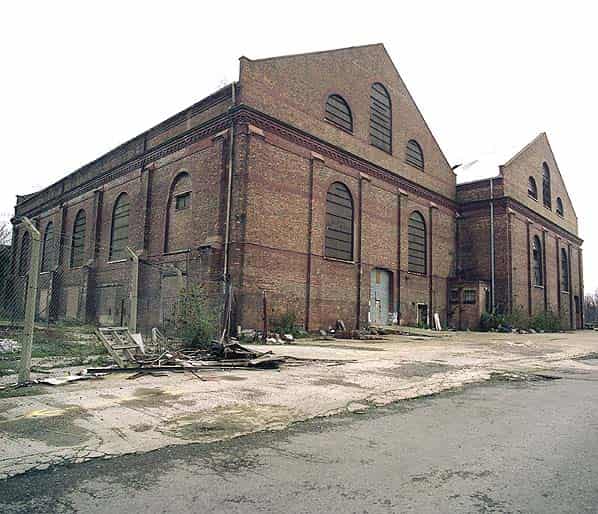
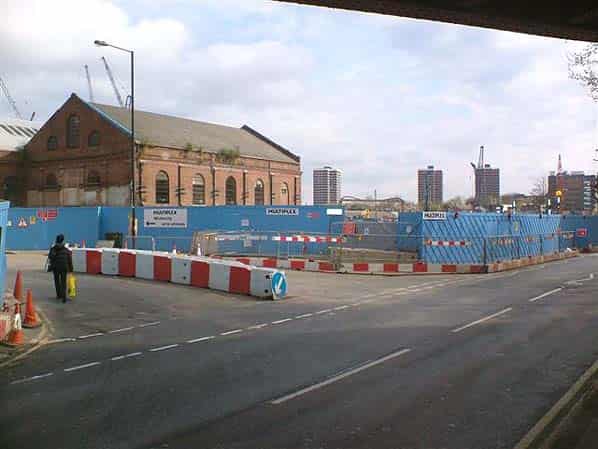
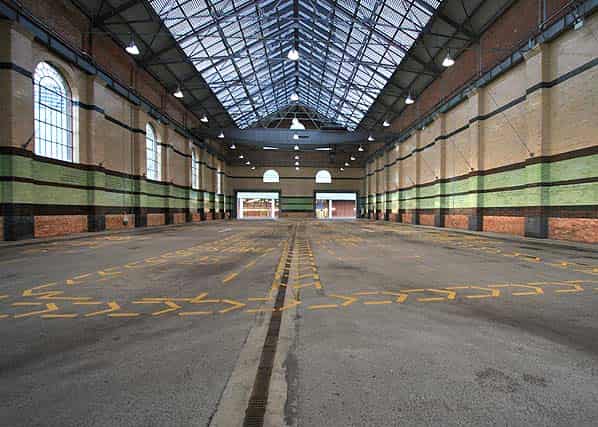
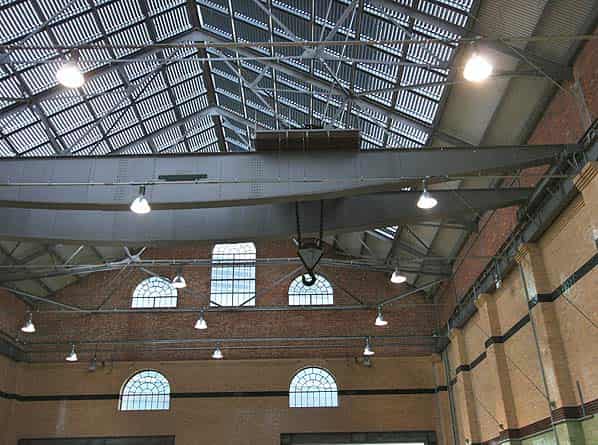
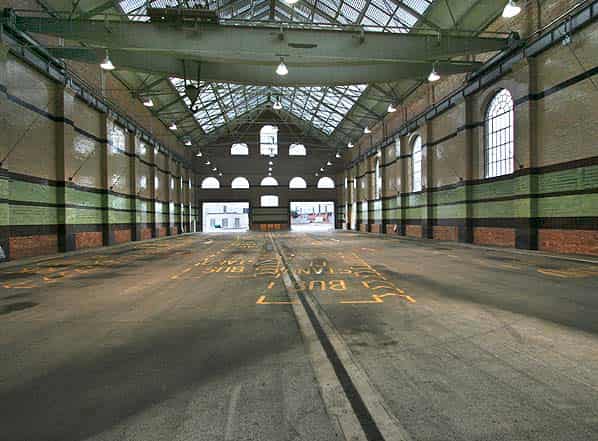
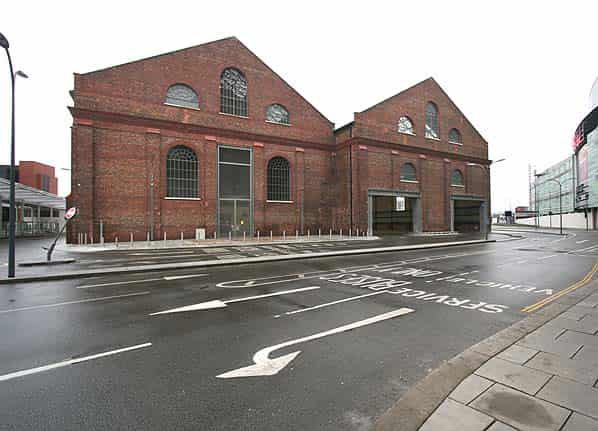
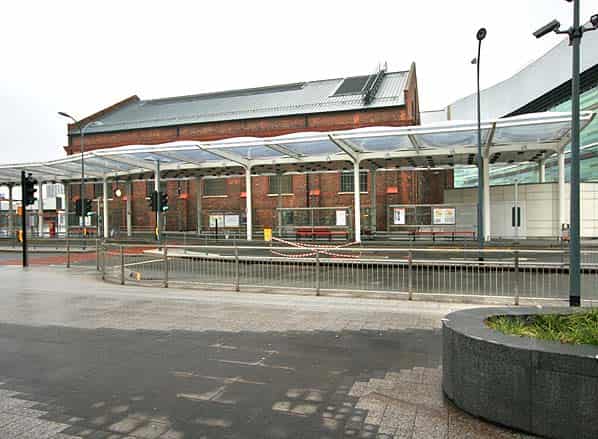
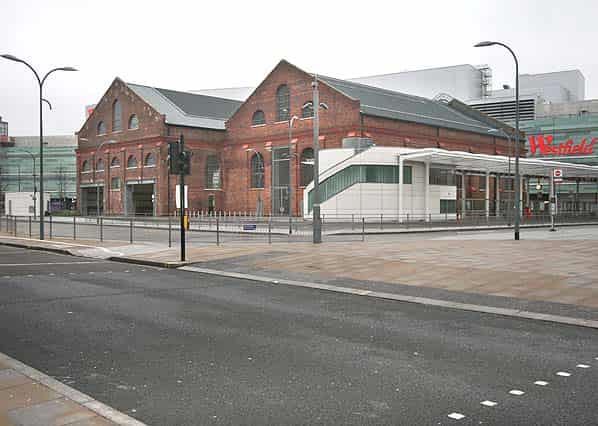
In 1994 it was announced that a shopping centre and bus station was to be built on the site and Heaps' street level building was due for demolition in the summer of 1996. This was delayed and demolition eventually started in the autumn of 2003; all four platforms and station frontage were all cleared away during the construction of the bus station and widening of Wood Lane; a new depot was built completely below ground under the shopping centre. One section of the frontage including the mosaic Underground Group bullseyes and the station name in relief lettering has been dismantled for display at the LT museum. The former power station and boilerhouse which are listed buildings have been retained and restored as part of the new development.
A new Wood Lane station opened on the adacent Hammersmith and City line on 12th October 2008 to serve the Westfield Shopping centre. The new station is on the site of the H & Cs closed White City station. White City were intended to be temporary and to be closed after the exhibition but it remaibned open, eventually closing on 31 October 1914, shortly after the outbreak of World War I. The station was brought back into use on 5 May 1920, but was open only when an exhibition was being staged. Following a fire, in which one of the wooden platforms was destroyed, the station closed on 24 October 1959. The station at viaduct level was demolished completely although he original ticket office at ground level still remained.
Sources:
- London Railway Record Vol. 10 & 11.
- London Transport Museum
- Wikipedia