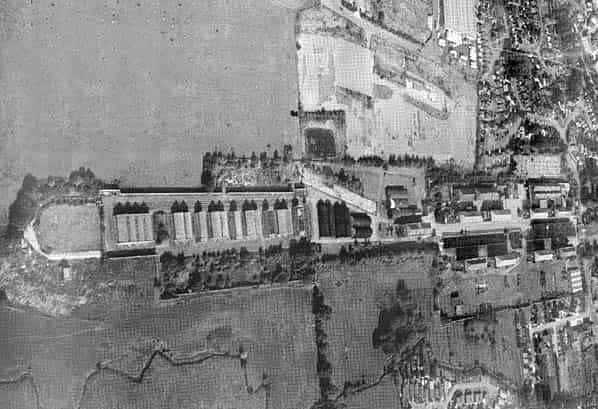
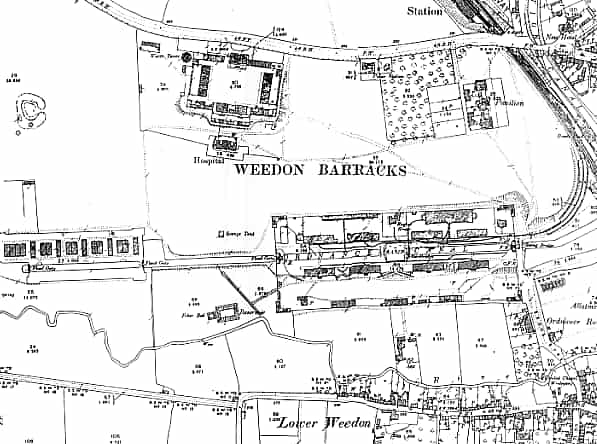
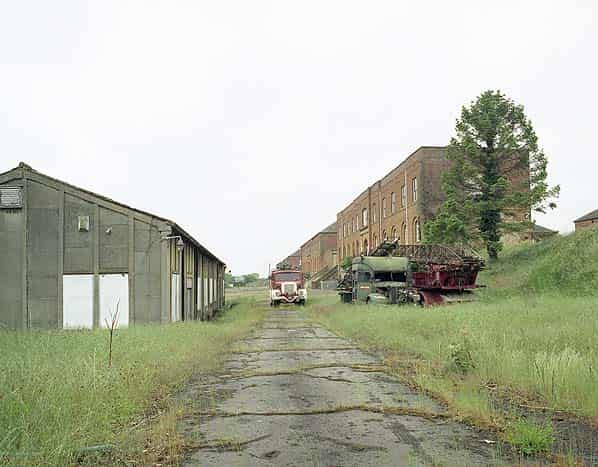
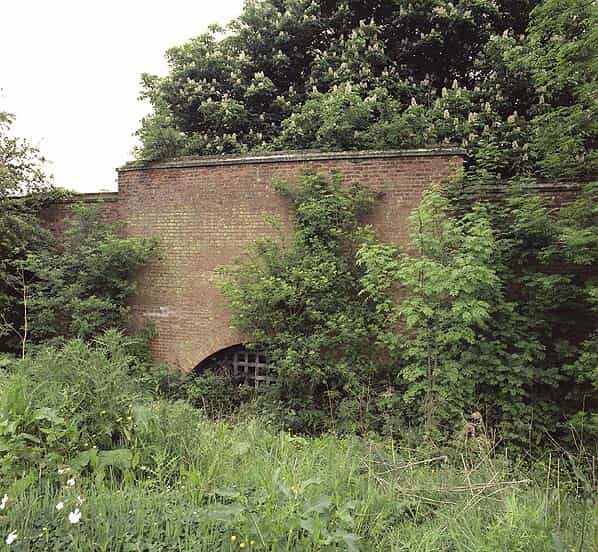
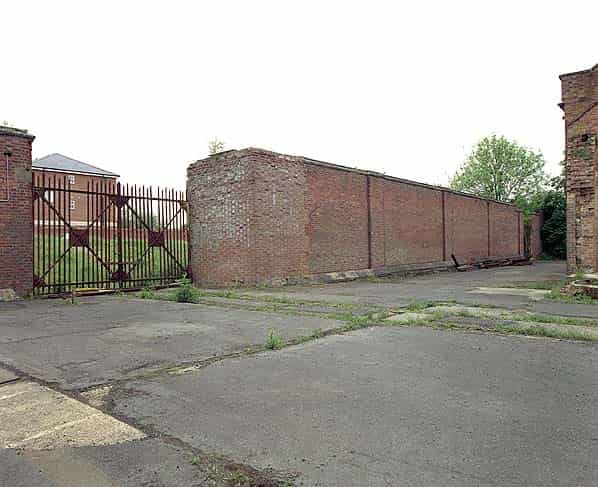
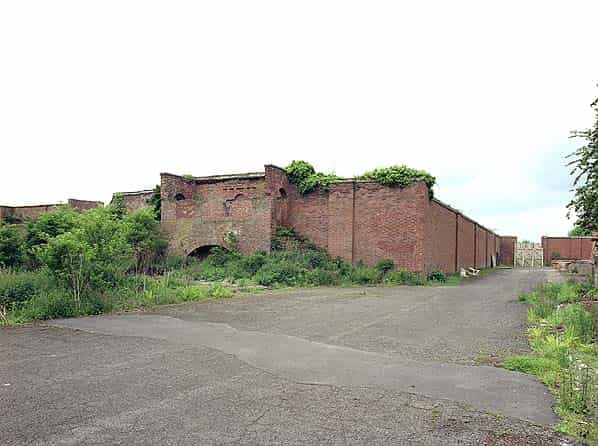
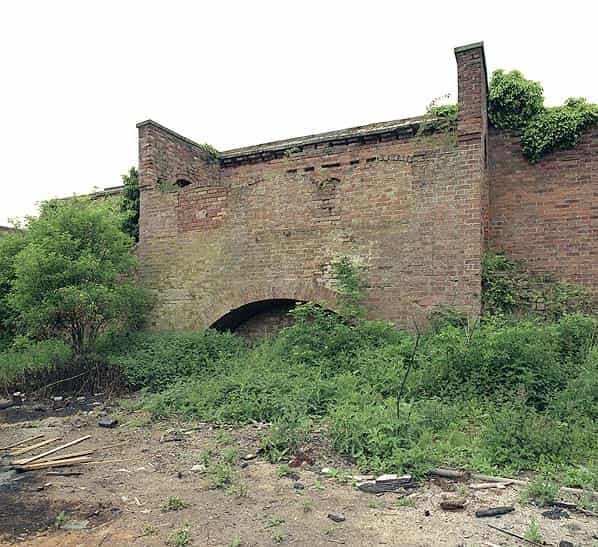
An act of Parliament was passed in 1803 for the purchase of 53 acres in Weedon, Northamptonshire, ‘for erecting buildings thereon for the service of His Majesty’s Ordnance’; subsequent purchases later increased the estate to about 150 acres. The Royal Military Depot as it became known, stretched out along the Nene valley above the village of Lower Weedon, with a barracks for 500 men overlooking the depot to the north, close to the Coventry Road.
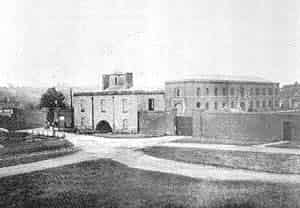
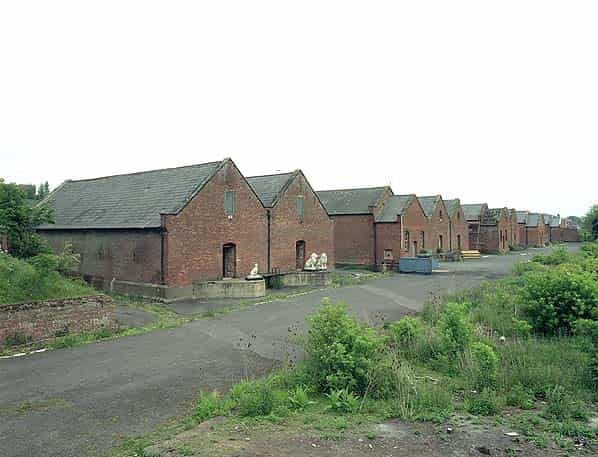
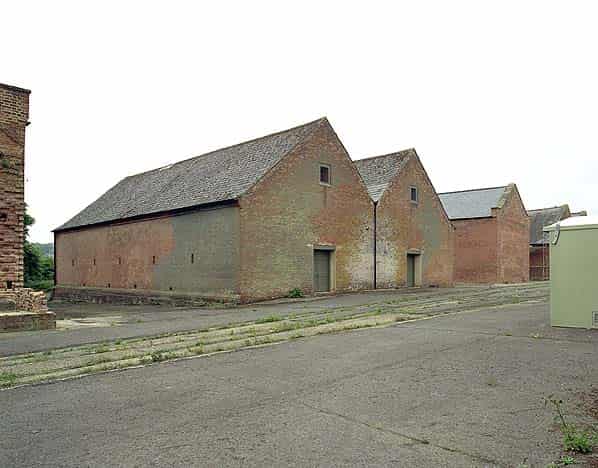
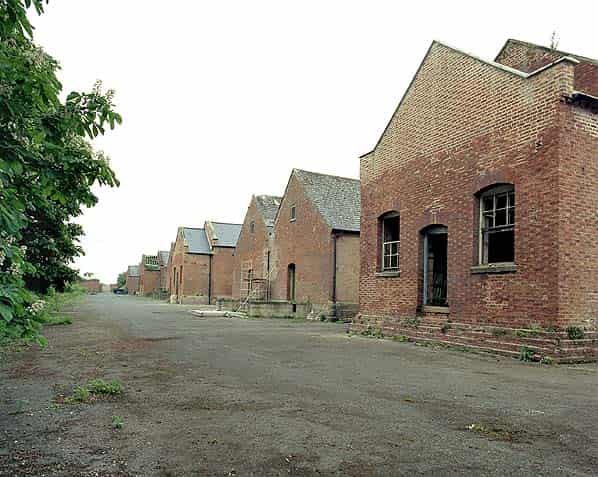
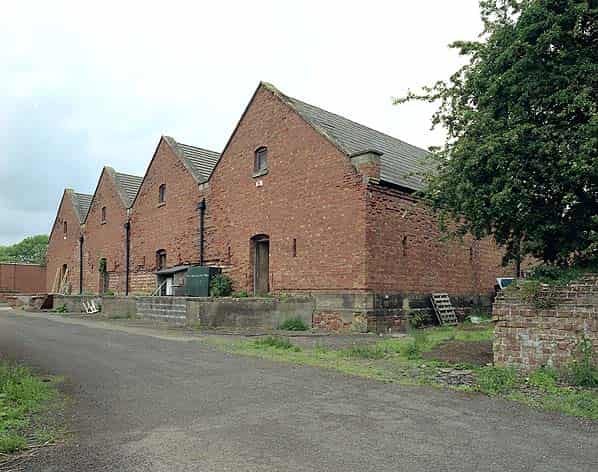
Initially the depot had eight storehouses and four magazines. The storehouses were of brick construction and faced with stone, each of two storeys and 160 feet long by 35 feet wide, divided into four rooms. One of the buildings was, at a later date, converted into a Military prison with three storeys and containing 121 cells. The adjoining building was used as the hospital and one of the adjacent buildings housed a chapel. The eight buildings cover a distance of approximately a quarter of a mile with the magazine buildings some three hundred yards to the west in a separate walled enclosure. The depot was used for the storage and issue of small arms and ordnance as early as 1809.
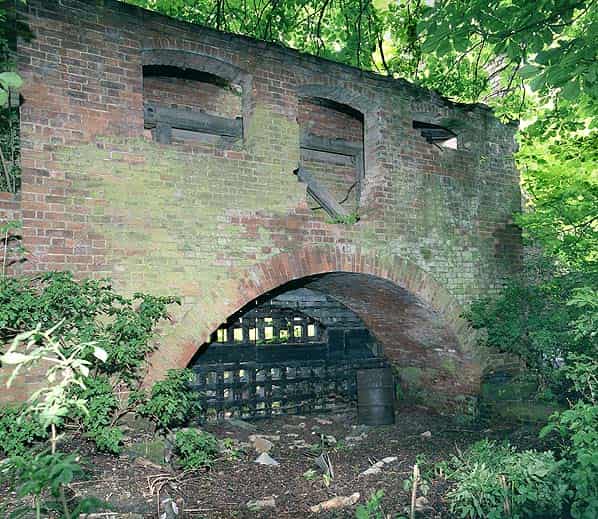
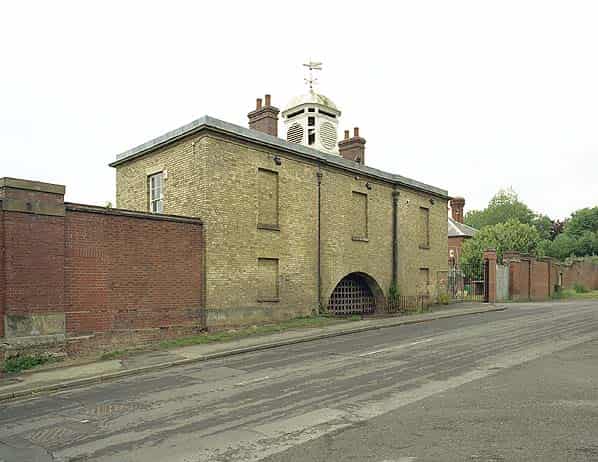
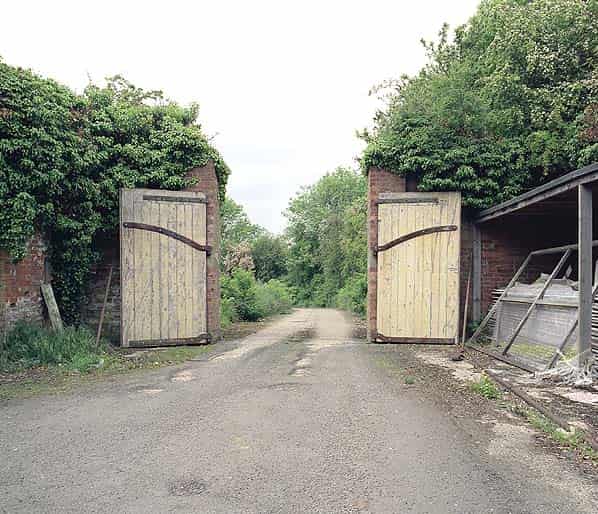
In order to move goods quickly into the depot, a canal cut from the nearby Grand Junction Canal, which formed the eastern boundary of the estate, was constructed between the two rows of storehouses. At each end of the main enclosure, two lodges built over the canal, each equipped with a moveable portcullis. These lodges are each surmounted by cupolas, that on the East Lodge containing a clock which still chimes and keeps perfect time. The canal cut continued into the magazine passing through a further smaller building and portcullis.
At the western end of the there is a fourth portcullis leading to a barge turning area outside the perimeter wall. Barges were also able to turn in a canal basin within the magazine enclosure but this was infilled in 1915
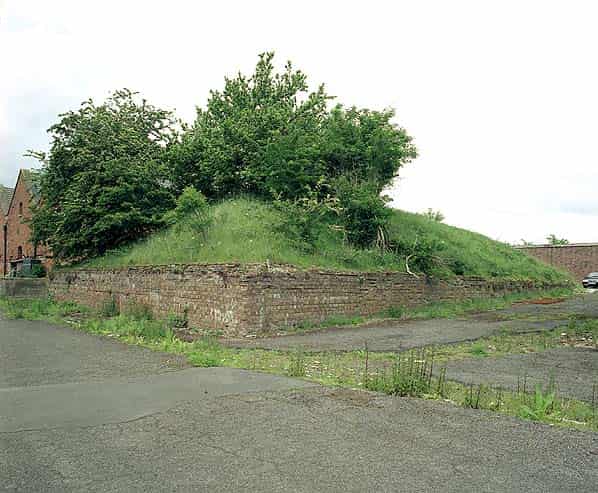
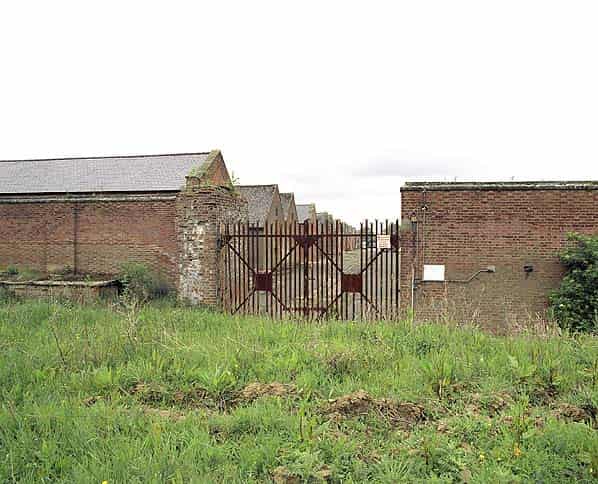
The depot is surrounded by a high wall, at each corner of which are bastions, obviously built as lookouts for sentry purposes with patrol walks along the top. These bastions were adapted during the 2nd World War for machine gun posts to be used against air attack.
There is little recorded history of the depot between 1810 and 1858 although it is known that it functioned as a General Stores and Clothing Depot before 1858. Some troops were quartered in the depot as well as the barracks up to the time of the Crimea War.
The magazines which were built at the same time as the depot consists of brick buildings with very thick walls and a small high window at each end. Each block of buildings that was used to store gunpowder was separated from the next by a wide earth bank. Over 1000 tons of gunpowder was stored in the magazine at any one time.
Gunpowder was delivered to Weedon by barge, where it was packed into barrels and boxes and re-issued. The coming of the railway brought a standard gauge rail connection into the depot but it also posed a problem as the new main line ran between the depot and the Grand Junction Canal, severing the branch canal into the depot. To overcome this, a portion of the line had to be bodily removed, fish plates, rails and chains; to allow the barges to pass into the depot. This was made more dangerous by the fact that this was one of the busiest stretches of line in England with hundreds of trains passing through at speed during the day and sharp curves leading away from it in both directions.
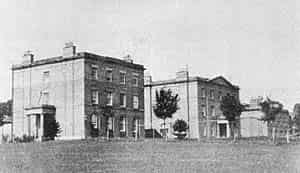
Three spacious white brick buildings, later known as the Pavilion, were built at the same time as the depot, they were for the Governor and two Principal Officers, but were later earmarked to be used as a residence for King George III should the threatened Napoleonic invasion take place.
The Main Ordnance Office was built in 1885 to conform with the other buildings on the site.
In March 1889 one of the buildings used as a Small Arms Store was destroyed by fire. A large brick receiving shed complete with railway lines and turntable inside was built just after this period for the storage of wagons.
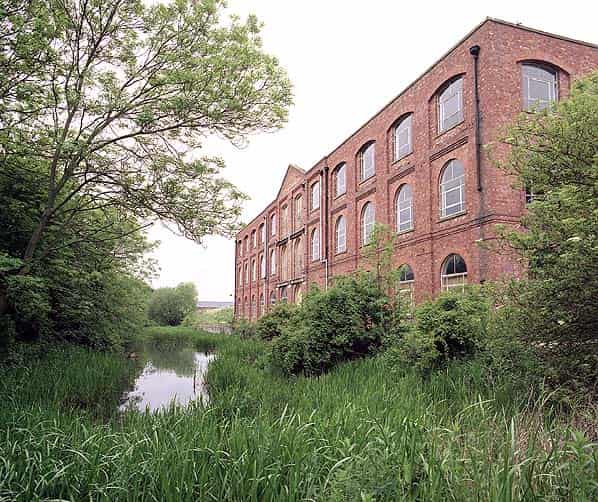
During the South African War (1899-1902), the strain on the Clothing Depot at Pimlico in London was very great and to alleviate this, another large three storey brick building was erected in 1902 alongside the canal, between the depot and magazine. This played a very important part in the first World War, when a large proportion of Kitchener’s Army was clothed from here. During this period three large corrugated iron sheds were erected to augment the accommodation. The clothing depot remained in use until 1921 when, owing to the space being required for the storage of small arms, the buildings were taken over for this purpose and the stocks of clothing were transferred to Chilwell. One of the sheds was destroyed by fire in 1950, the other two have only recently been demolished when a new housing estate between the magazine and the main depot was built; the clothing depot still stands and is currently being renovated.
In 1903 additional workshop accommodation was needed and a large three storey brick building was erected. This housed the REME Workshop, Carpenters Shop and Preservation Plant. In 1925 the Machine Gun Section from Woolwich Arsenal was moved to Weedon
The Chief Ordnance Officer’s quarters known as ‘Ordnance House’ was built in 1926 on a hill to the north east of the depot and three other quarters were built for officers close by.
In 1930 the Army Bicycle Section was transferred from Didcot to Weedon and the depot became the Central Ordnance Depot for small arms, machine guns and bicycles.
From 1922 the barracks formed the home of the Army Equitation School, the Pavilion being the Officers Mess and quarters. Five new stables were erected in the field to the east of the barracks. Some of the finest horses in the Army were stabled here at that time; and so Weedon carried on until 1938.
Just before the 2nd World War, improvements were made to the internal rail network to facilitate the loading of stores into railway trucks. The depot lines were reconstructed and a large reinforced concrete platform with a roof was built in 1939; this was wide enough to permit vehicles to run up the ramps at each end to unload into railway trucks and take loads from them. With the increased amount of traffic during the war this proved to be invaluable.
The depot had been paved with granite ‘setts’ which had been prepared and laid by prison labour. In 1939 a start was made to take up all these ‘setts’ and lay gravel concrete making a level surface to facilitate the operation of vehicles.
In 1940 it was decided that the magazines should once more function for the storage of ammunition, vastly different from the gunpowder for which they were built; the magazine becoming an Intermediate Ammunition Depot. An access road from the north which had long been disused had to be resurfaced and an ‘in’ and ‘out’ entrance provided at the west end of the enclosure. The magazine functioned as an Intermediate Ammunition Depot until 1942 holding bulk ammunition for issue to heavy anti-aircraft sites and equipment ammunition magazines (EAM). After 1942 ths function was transferred elsewhere and the buildings reverted to storehouses.
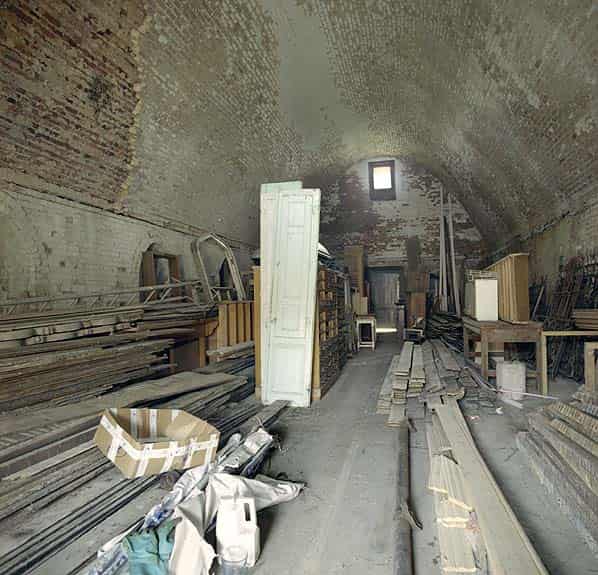
The Second World War brought with it a great influx of clerical work and the existing office accommodation was quickly found inadequate. In 1941 a new office block was built at the south east corner of the main gate. This housed the majority of the clerical staff throughout the war and for some years afterwards. A brick built decontamination centre was also erected on the south side of the depot and the casemates under several of the storage buildings were adapted as air raid shelters. Two external surface air raid shelters were added at the eastern end of the magazine, outside the perimeter wall.
The barracks were taken over with an ordnance store located in the Equitation School stables. The Royal Army Ordnance Corps also occupied the barracks and had quarters at a hutted camp near Watling Street.
The influx of weapons and stores was so great during this period that several relief depots were opened in the vicinity and during 1942, Old Dalby became a shadow depot of Weedon and it’s of interest that after the Battle of Alamein in October 1942 until November 1943 Weedon and its shadow depot issued approximately 3,500,000 weapons. Weedon reached its peak of activity in the early months of 1944 when ‘Landing Reserves’ and ‘Beach Maintenance Packs’ were prepared in readiness for ‘D’ Day.
During 1944 heavy stock transfers to the Central Ordnance Depot (COD) at Bicester were taking place. The role of COD Bicester at that time was to maintain 21 Army Group and immediately after ‘D’ Day, Bicester took over the issue of small arms. In 1945 the Small Arms Provision Branch (P6) was moved from Weedon to Bicester and Weedon became 99 Ordnance Sub Depot. Under this designation the Depot functioned until 1952. P6 had, however, been moved back to Weedon in 1947.
After the war, huge quantities of small arms and machine guns were returned to the depot and the major function was as ‘returned stores’. Soon the quantities became so great that an ex Ministry of Food depot at Barby, 12 miles north of Weedon, was taken over and became a Sub Depot of Weedon until it was closed in 1959.
In 1952 Weedon once again became a COD under the direct control of War Office and from 1952 to 1957 it played its part in the re-equipping of the new Army with modern weapons. In October 1957 P6 was transferred to Technical Stores Organization at Donnington and Weedon became a bulk holding depot. Donnington took over all detail issues, Weedon making bulk issues. Weedon’s title then became Technical Stores Sub Depot, this later being changed to Technical Stores Depot.
The decision to close Weedon and transfer stores to Donnington was announced in January 1961 and the depot finally closed on 28th February 1965.
Following the departure of the Royal Army Ordnance Corps, Weedon Depot was occupied by Government departments for a further eighteen years. Some of the buildings were used as a supplies store by the Ministry of Public Buildings and Works dispatching furniture and equipment to embassies overseas. Other buildings were used by the Home Office as a transport store.
The surrounding areas of the Military Estate were offered for sale by auction in 1969 in five lots, but none reached their reserve. Subsequently parcels of land were sold individually for redevelopment.
The upper barracks and surrounding area became Cavalry Hill Industrial Estate and the Pavilion and gardens became Regents Park housing estate. The land between the infilled canal arm and dismantled branch railway is now an engineering works. Other areas form a recreation ground and more housing.
In 1983 the Property Services Agency announced that they were looking for a developer for the Depot and Magazine enclosures. The depot and magazine was sold to ‘Thirty Eight Antiques’; their workshops were moved into the depot and other buildings were rented to a variety of companies. In 1995 the depot area was again sold to Cavalry Centre Limited, the current owners, the land between the depot and magazine was purchased by a housing developer and a new housing complex now occupies the site.
Sources:
- Weedon Royal Ordnance Depot revisited published by the Weedon Bec History Society ISBN 0-9528726-0-9