With the approach of war with Germany the threat of an air attack on British cities by the German Luftwaffe was quickly recognised, to counter the effect of this, a mass evacuation scheme was put in place in 1938 and activated once Britain declared war on in September 1939.
This scheme involved relocating up to 1.5 million people from cities to the relative safety of small towns and villages well away from the main target areas; among those evacuated were school children and their teachers. Once the children had been dispersed across the country, inner city school buildings were then available for other uses as part of the war effort with approximately 66% of schools being allocated for civil defence purposes.
Following this mass evacuation, the expected immediate air attacks didn’t take place and we entered a period of ‘phony war’. After several months without the expected bombing raids people began to wonder if the evacuation had been unnecessary. The government warned families that it was still unsafe for the children to return home but before long many families started to bring their children back to the cities once they heard that not all the children has been well received and well treated in their new homes. By January 1940 nearly half of the school children that had been evacuated had returned home.
Within months of returning from the country, the German heavy bombing offense began in earnest during the summer of 1940.
Having come back to the towns and cities the evacuees had no schools to go to as the buildings had been put to other uses. With children roaming the streets, hooliganism and vandalism was rife. As well as losing their education, children from the poorer families also lost their free milk and school dinners. Medical inspections in schools also ended with the result of a dramatic increase in the number of children suffering from scabies and head lice.
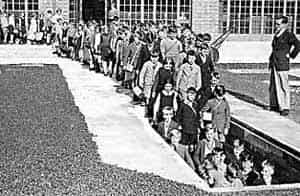
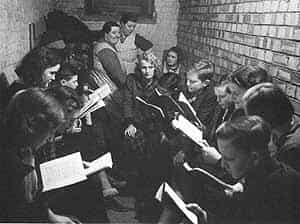
It was soon apparent to the government that some schools would have to be reopened. Some had reopened as early as November 1939 to accommodate those children that hadn’t been evacuated. Schools were only re-opened once adequate air raid shelters had been provided but in many cases these were very basic consisting of little more than reinforced rooms within the school or a basement. The government issued guidelines in 1939 producing the circular ‘Air Raid Precautions in Schools.’
This recommended ‘during times of danger children should not be assembled in groups of more than fifty in any one protected room or compartment.’
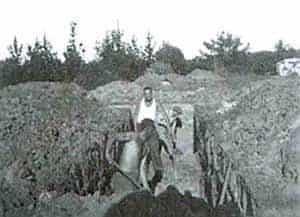
It went on to recommend that trench shelters should be constructed away from but within easy reach of school buildings. The board’s guidelines recommended that the trenches should have secure roofs giving them ‘immunity from splinters, anti-aircraft shell fragments and machine gun fire’ but there were no specific guidelines regarding the method of construction or the materials to be used with the trenches being lined with brick, corrugated metal sheeting or concrete.
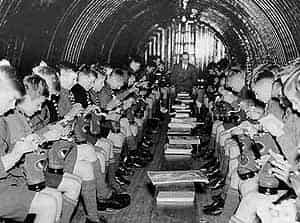
It was suggested however that the shelters should have sloping floors with a sump at one end adding that ‘provision must be made for pumping or bailing out this sump should it flood. Flooring should be of wooden duckboards or of cinders or ballast. Seating was to be arranged so that children sat along one or both the walls of the shelter on wooden benches, each child allowed 28 inches.
Gangways should be a minimum of 24 inches for a double row of seating and 18 for a single row.
The height of the shelter was to be at least 72 inches. Finally, each shelter was to possess a gas curtain over its entrance making the interiors ‘reasonably gas proof’. While shallow trench shelters would give protection from blast and those built away from the school building would also offer protection if the school building collapsed, they would however offer little or no protection in the event of a ‘direct hit’
In Tonbridge, Slade Primary School was considered particularly vulnerable as it was located close to the town centre and was over flown by German bombers en route to London.
The school had no playing fields but rather than build less secure surface shelters three large trench shelters were built beneath the playground. Most schools had a number of small trench shelters, each consisting of a single trench about thirty feet in length that could accommodate up to 50 people. A typical example of this kind of shelter can be found at Whitgift School in Croydon where a number of similar shelters are known to have been built in the playing fields surrounding the school.
The three shelters at Slade School are much larger than the Whitgift shelters with a complex arrangement of underground passages linking several entrances and are clearly far too large for what was, in 1940, a fairly small primary school. The shelters would have been able to accommodate perhaps up to 500 people and it has been suggested that they may also have been used in part for public sheltering.
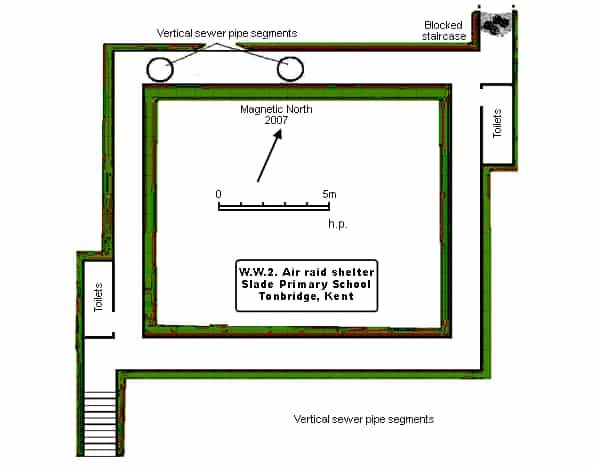
After the war two of the shelters were sealed while the third (No. 1) remained accessible and was occasionally used by the school children, in recent years it has provided a convenient route for water pipes during refurbishment of the schools heating system, two sets of large vertical sewer pipe segments have also been inserted in one of the passages and filled with concrete. These do not reach the roof and have been built there as additional support in the event of eventual subsidence.
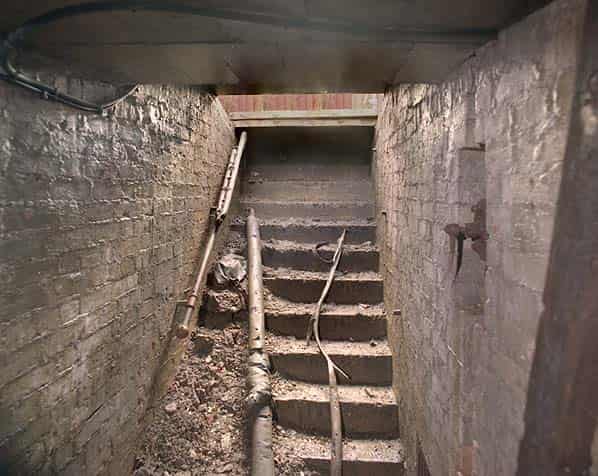
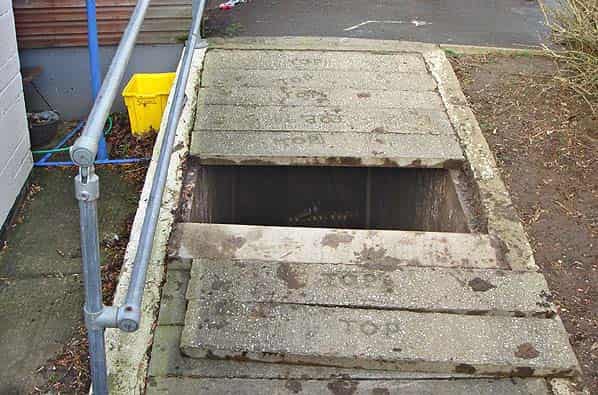
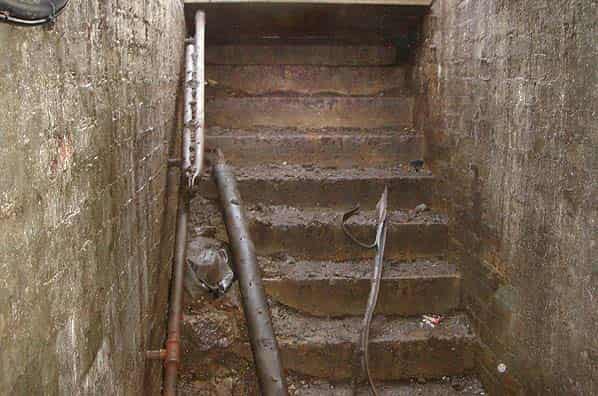
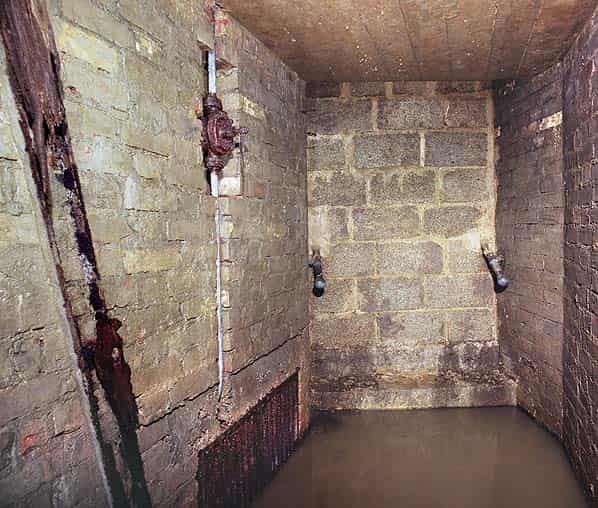
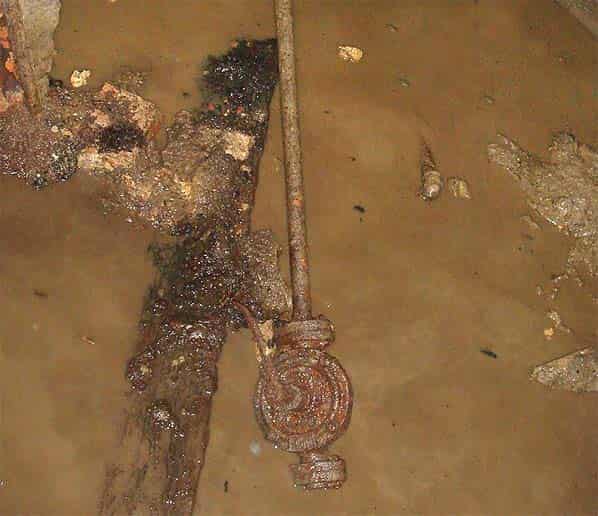
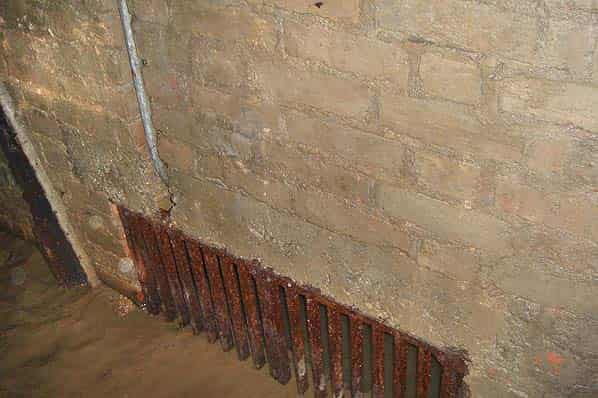
One original entrance stairway has been retained in the south west corner of the shelter in the middle of a path adjacent to the school building. The entrance has been covered with concrete slabs which now form part of the path. A hand rail is still fixed to the brick wall at one side of the stairs; this has a hinged section allowing it to be extended above ground level when required. The metal supports for a second hand rail on the opposite wall are still there although the rail has been removed. At the bottom of the stairs there is a metal grill in the wall at floor level allowing water from the sloping tunnels to flow into a sump, a hand operated pump for removing the water is still in place half way up the wall. Beyond the pump two metal channels are fixed to the wall at an angle these originally supported wooden shuttering giving limited gas protection, some of the wood remains in situ. Beyond this point the tunnel enters the rectangular shelter where there was further wooden shuttering at right angles to the first.
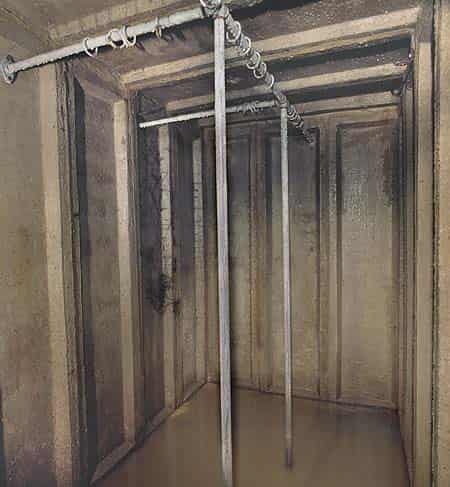
Adjacent to the entrance there is a toilet recess consisting of three cubicles with a framework of metal rails that would have supported curtains for privacy. This entrance arrangement of sump pump, gas shutters and toilet recess is repeated at all the entrances into the two accessible shelters at Slade School.
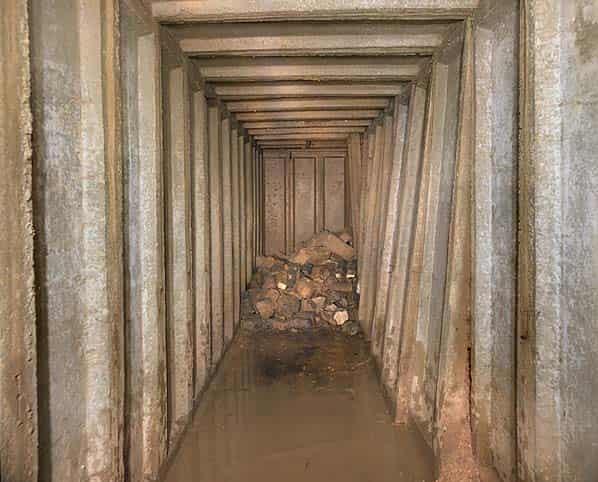
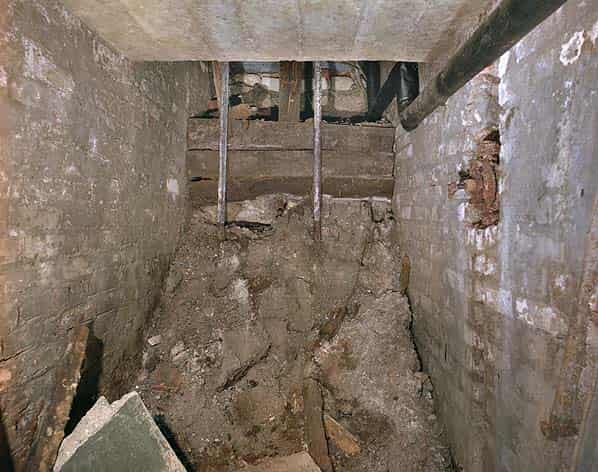
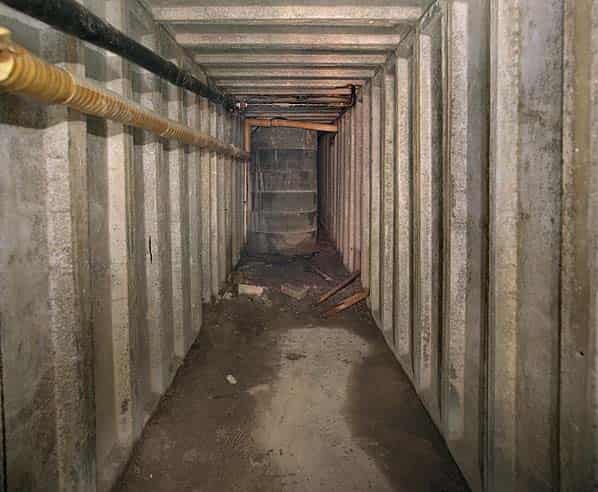
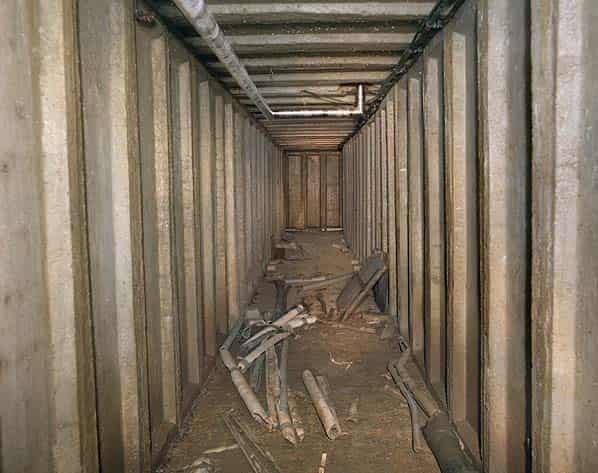
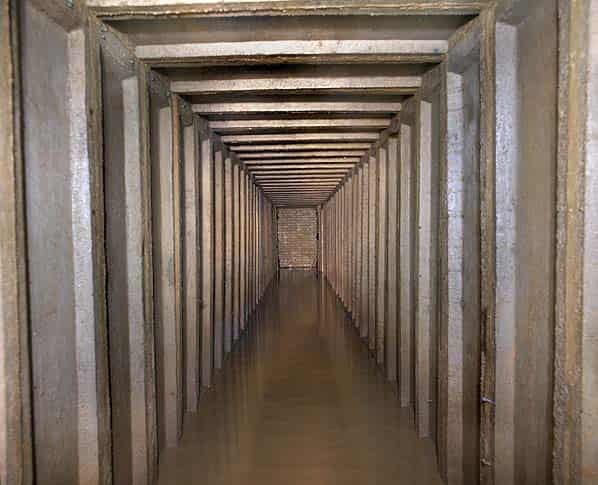
The shelter has four passages laid out in a rectangle and is approximately 18 meters by 15 metres in size. The stairway and entrance area is brick lined while the shelter tunnels and toilet recesses are lined with vertical concrete panels. There is some water at the entrance but the tunnels are generally dry and strewn with debris. A second entrance is located in the north east corner of the shelter but a half height wall has been built across the bottom of the stairs and the stairwell has been partially backfilled. Part of one handrail and the sump pump are still in place.
A number of heating pipes are fixed to the wall and the two vertical sewer segments block the northern passage although thin people can squeeze past them.
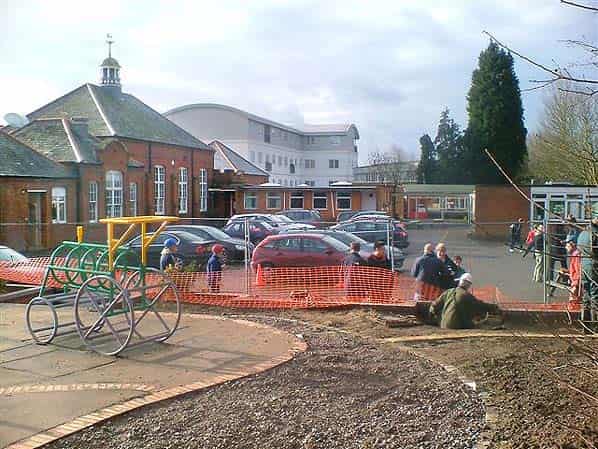
When built the shelter was under open ground but is now beneath the south end of the playground and a prefabricated school office building.
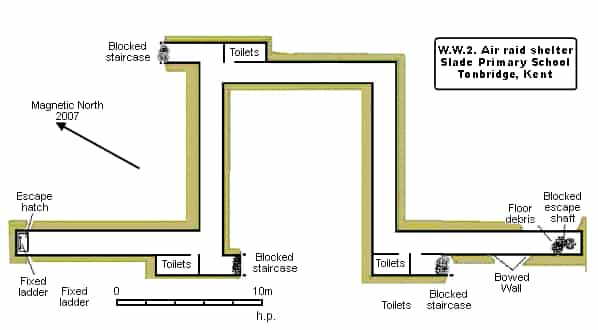
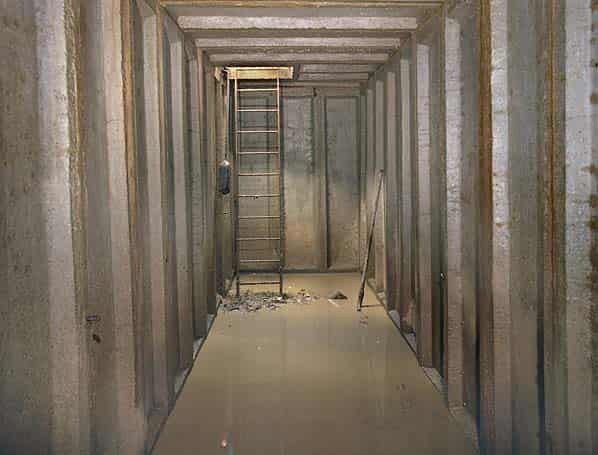
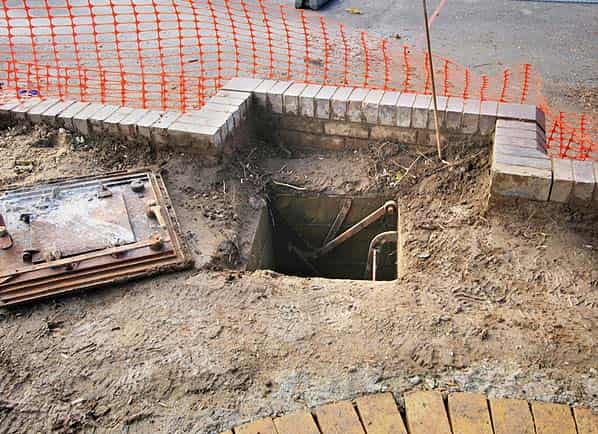
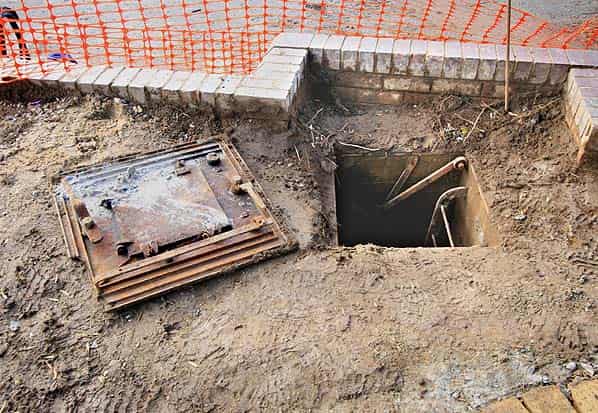
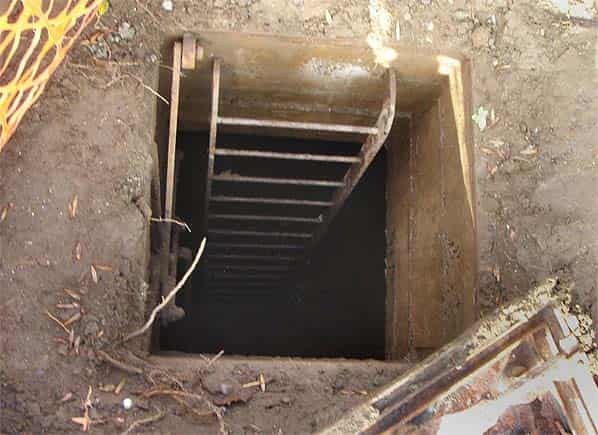
An entrance to a second shelter (No. 2) has recently been uncovered during preparations for building work at the school. This shelter is bigger with a different tunnel layout with three entrance stairways and two emergency escape hatches. The current entrance is through one of these hatches on grass to the north of the playground. The metal hatch was originally hinged but has now become detached, although the counterbalance mechanism is still fixed to the wall along side the vertical iron ladder.
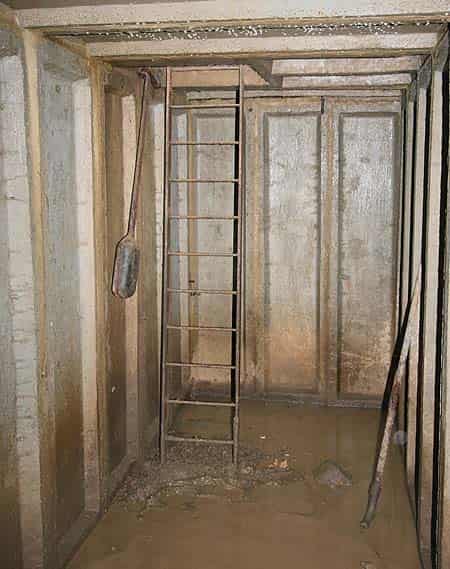
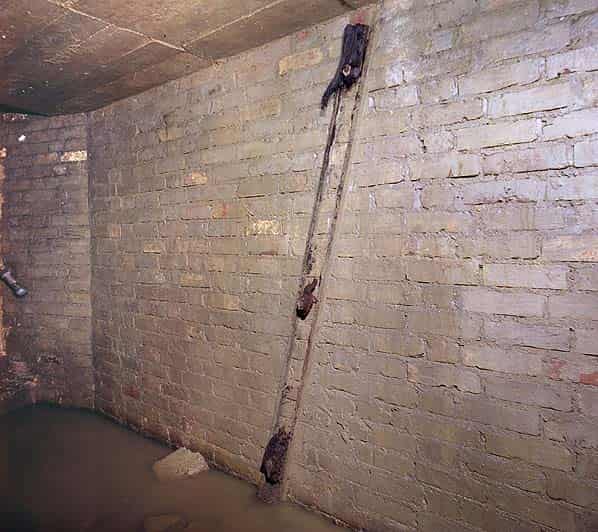
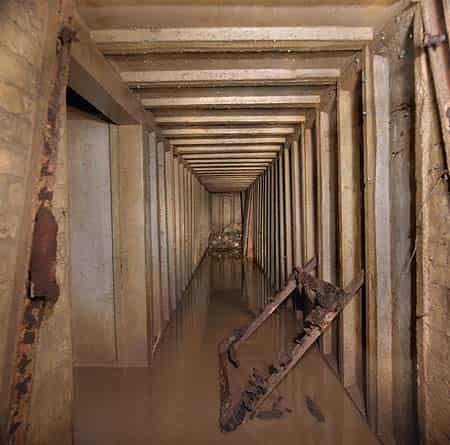
At the bottom of the ladder the tunnel runs south for 12 metres to a blocked entrance stairway with a toilet recess and sump pump. A wall has been built across the bottom of the stairs with the ends of the two handrails protruding from the wall. At this point the tunnel turns to the left (east) running for a further 12 metres to a similarly blocked entrance where the tunnels turns to the right (south), after a further 12 metres it turns to the left to a third similarly blocked entrance where it turns to the left (south) ending after 12 meters at a second emergency escape hatch. The hatch and ladder have been removed with a concrete slab covering the hole in the tunnel roof; there is a pile of rubble at the base of the shaft. Just before the escape shaft, two of the concrete panels on the right hand (west) wall have come away at the bottom with the panels leaning slightly into the tunnel.
There is about 6 inches of water on the floor throughout the tunnels and evidence of electrical fittings on the walls throughout the shelter indicating that the tunnel was lit when in use.
This shelter lies entirely beneath the school playground and apart from the two bowed wall panels is in good condition with no debris on the floor. There is no evidence of later use and no graffiti apart from a roughly drawn boat. A wooden framework is leaning against the wall close to one of the entrances; this was probably part of the wooden shuttering used to provide a gas seal at the entrances. This shelter has now been resealed with no further access possible and it will be affected by ongoing building work. On the surface there is no evidence of any of the other entrances which were presumably lost when the playground was resurfaced.
Although the position of the third shelter is known there is no access to it and no evidence of the location of the entrances.
Sources:
- Slade Primary School
- 20th Century Defences in Britain ISBN 1 872414 57 5 published by Council For British Archaeology