After WW1 the Ordnance industry in Britain was gradually dismantled with only a handful of facilities remaining in production by the late 1930’s. However with the threat of war, rapid rearmament took place from 1938 with 44 Royal Ordnance factories being built consisting of three main types:
- Explosives: For the manufacture of all explosives
- Engineering: For the manufacture of guns, tanks and ammunition
- Filling factories where the ammunition manufactured in 2 was filled with the explosives from 1. The filled ammunition would then be stored and issued from magazines on the sites.
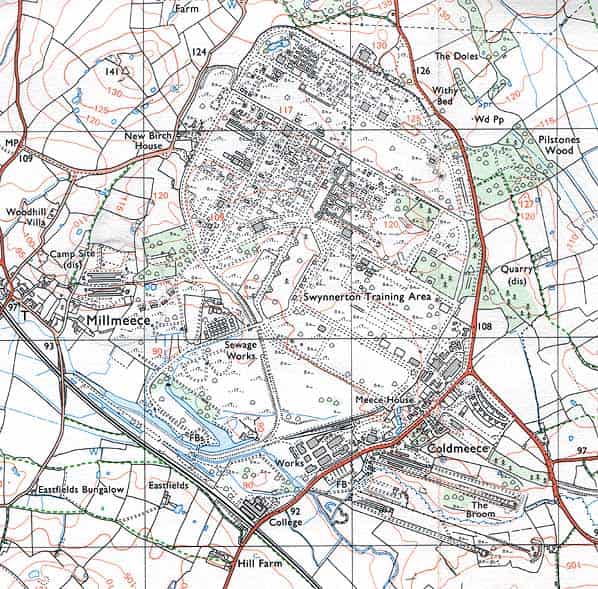
ROF Swynnerton became filling factory No. 5, one of 18 similar facilities.
Construction commenced in 1939 with production starting in the summer of 1940 and by early 1941 5000 people were employed there. By the summer this had increased to 15,000 reaching a peak of 18,000 in the summer of 1942.
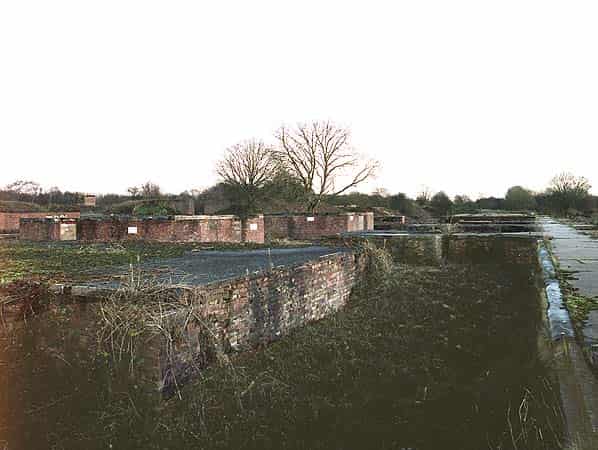
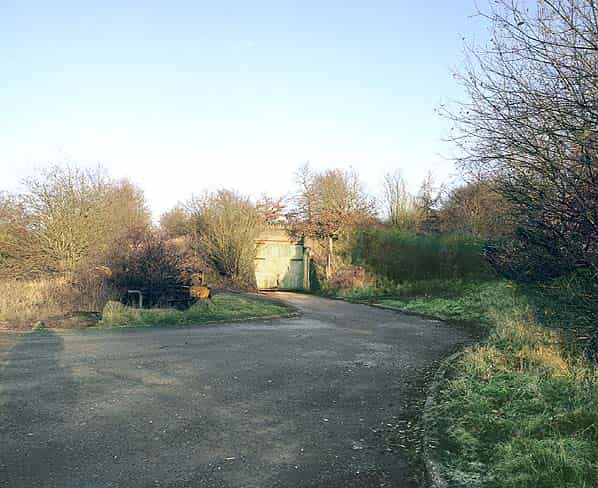
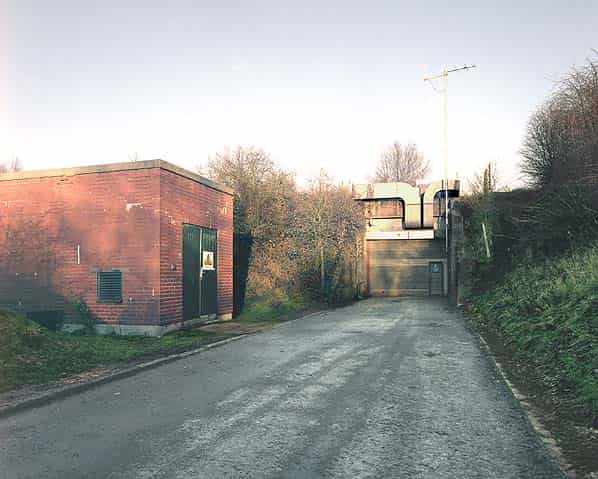
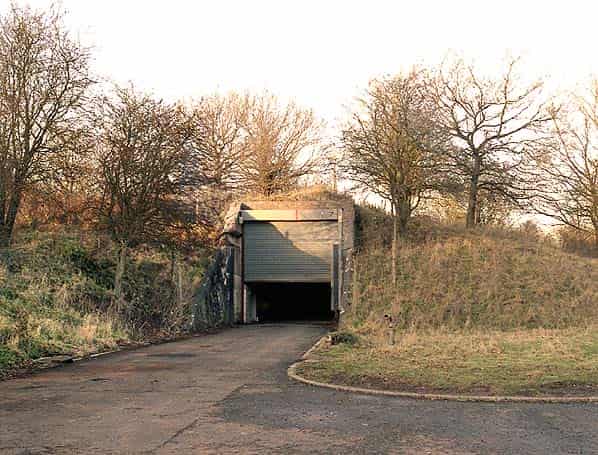
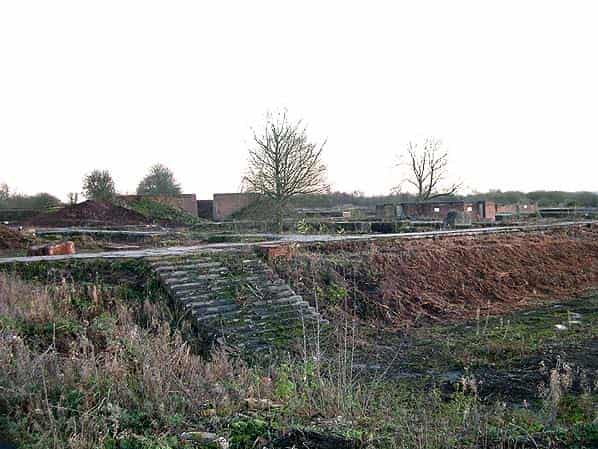
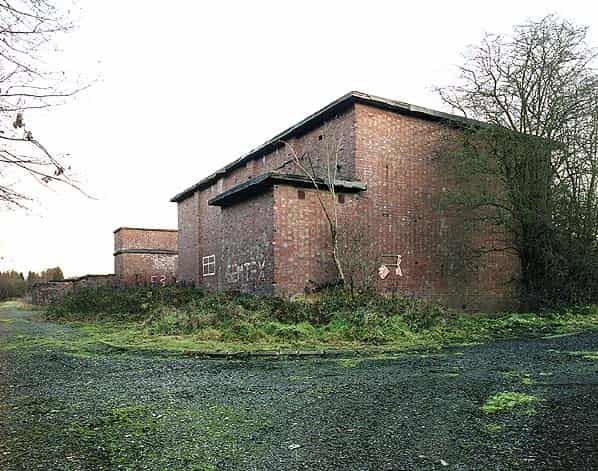
The prime function of the factory was the filling of shells and other armaments, the filled product being stored in nine semi-sunken earth covered magazines. Filling was undertaken in lightly constructed ‘laboratories’ within earth revetments. If one building was destroyed the revetments were designed to contain the blast without affecting adjacent buildings; these revetted laboratories were dispersed over several areas. A number of decontamination centres were also built around the factory for use in the event of a German gas attack.
There was also a burning ground to the north of the site where life-expired or sub-standard explosives could be safely destroyed.
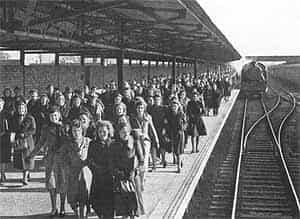
Some of the workforce was housed in seven hostels built in the vicinity of the factory but the numbers employed were so large that many people were recruited in the pottery towns around Stoke on Trent and brought to the factory each day by special trains.
The first of these staff trains ran on 4th March 1940 to a purpose built island platform at Badnell Wharf where there was a connection into the factory from the former LNWR main line between Crewe and Stafford. As the factory continued to expand the number of passengers presented a major obstacle to the smooth running of the main line. To overcome this a new line was constructed from a junction (Swynnerton Junction) on the North Staffs Railway’s Stone - Norton Bridge line running one mile to a new station at Coldmeece, a hamlet on the south east side of the factory.
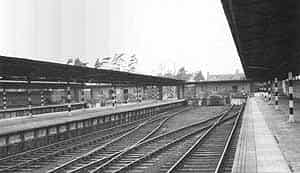
Construction of the new line started in spring 1941; it was originally planned as a single track branch with one platform at Coldmeece but with the rapid increase in production at ROF Swynnerton this was quickly upgraded to a double track line running into a four platform station. Each platform was 900 feet in length and able to accommodate two trains at the same time; this quickly proved necessary. The first train into the new station ran on 5th August 1941.
The station was substantially built in brick and concrete with corrugated iron canopies with air raid shelters constructed on either side and a footbridge linking the platforms to the shelters.
By the time the station was complete ROF Swynnerton was working round the clock on a three shift system (07.00 - 15.00, 15.00 - 22.00 and 22.00 - 07.00) and the workers trains were timed to fit this shift pattern. The station never appeared on a public timetable and the factory is not shown on Ordnance Survey maps until 1962.
As well as the regular workforce Coldmeece also dealt with a number of special trains conveying American Airforce personnel who were temporarily accommodated in one of the factory hostels. Coldmeece only carried passenger traffic, all goods traffic still entering the site from the main line junction at Badnall Wharf.
A construction camp on the west side of the factory built by the Ministry of Supply during the construction was commissioned as HMS Fledgling on 15.4.1943 as an independent annex of HMS Daedalus II in Newcastle under Lyme. Here WRNS’s were trained as aircraft mechanics in the airframe, engines, electrical and ordnance disciplines. Initially the access was only through the Royal Ordnance Factory until a new entrance was made on the west side. HMS Fledgling was decommissioned at the end of the war on 21.1.1946 and an EVT (Evocational Training) facility, HMS Cabbala was set up training released servicemen for the return to civilian life. This was decommissioned in February 1948.
At some unspecified time a proofing range was provided alongside Coldmeece Station, no further information on this facility has been seen.
ROF Swynnerton remained operational after the war although on a reduced scale with single day shift working being introduced from 6th May 1946. Saturday working ceased from 16th June 1947. By 1955 the workforce had been reduced to just over 3000 but this dropped to 2000 by the summer of 1957 and by the following March it had dwindled to 700. As only a few dozen traveled by train the railway service was withdrawn with the last train running on 27th June 1958. Production at ROF Swynnerton ceased later that year and the factory was closed and placed on care and maintenance. In 1960 there was a plan for part of the factory to be taken over by the British Motor Corporation but nothing came of the proposal and the site was subsequently handed over to the army and it became the Swynnerton Training area, a role it continues to fulfill today.
The Coldmeece branch line was formally closed on 1st March 1964 although the track had been lifted the previous year. Today all trace of Coldmeece station has been obliterated although the course of the line can still be traced south of Yarnfield with bridge abutments still visible where a line crossed a minor road in the village.
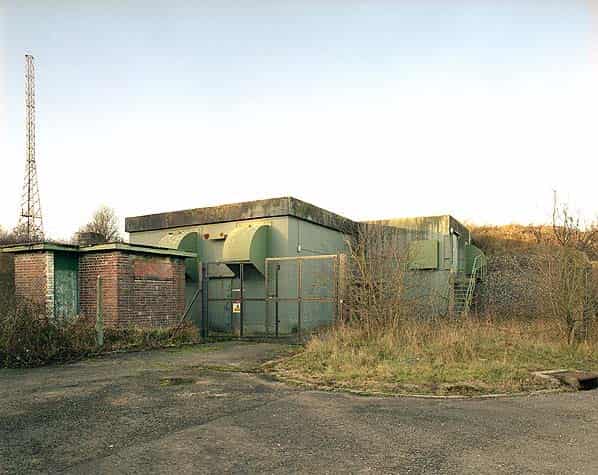
In 1962 two of the magazines were refurbished as the civil defence Group Control for North Staffordshire and Stoke County Borough Control.
In 1964 Group Controls were abolished and the bunker became the Staffordshire County Control and County Training Centre. In 1967 the County Control was relocated to the basement of the county buildings in Stafford (completed 1969) and after 1968 the bunker was put on care and maintenance although the rest of the site was still owned by the MOD and in use as an army training area.
In the early 1980’s the bunker was reactivated as SRHQ 9.1 and in 1988 was refitted as RGHQ 9.1 serving the eastern part of the West Midlands, finally closing in 1992. It was sold back to the army who have been unable to use it on health and safety grounds as it had remained empty and was believed to have toxic gasses including methane. Although there have been a number of open days at the training area the bunker has always remained strictly out of bounds.
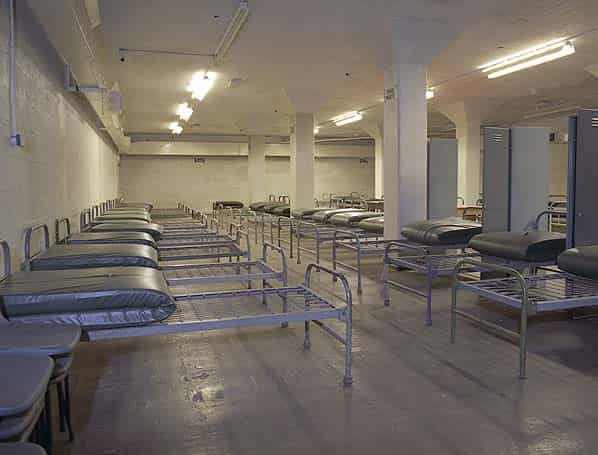
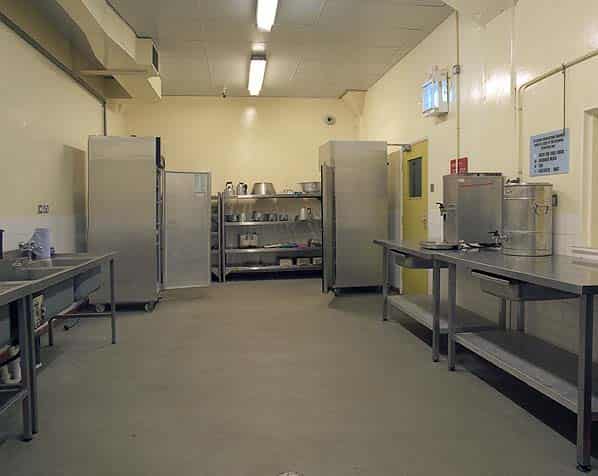
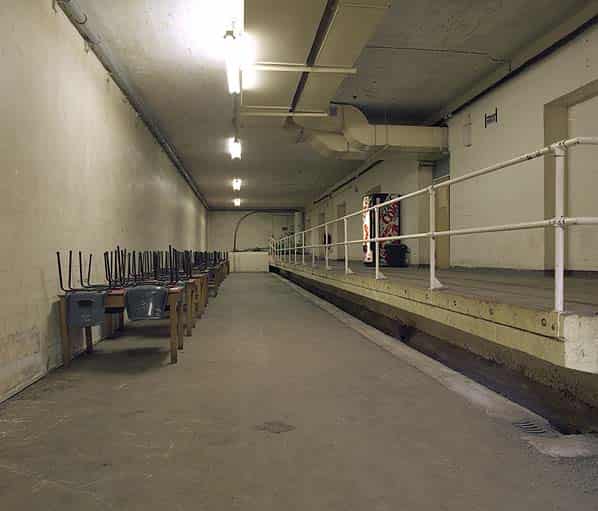
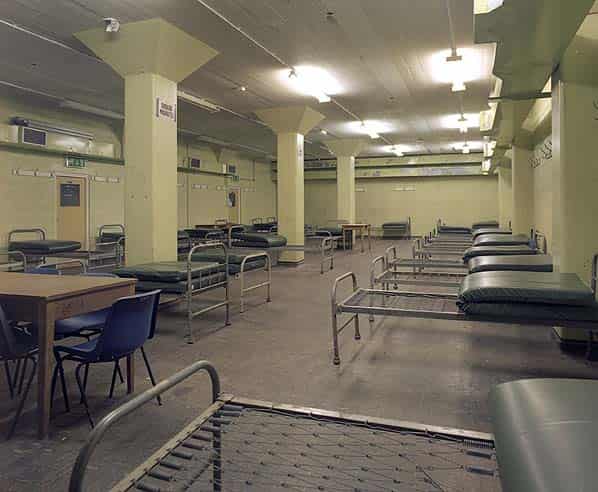
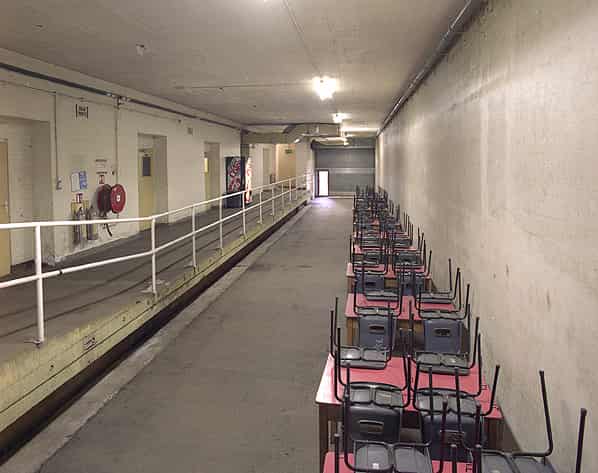
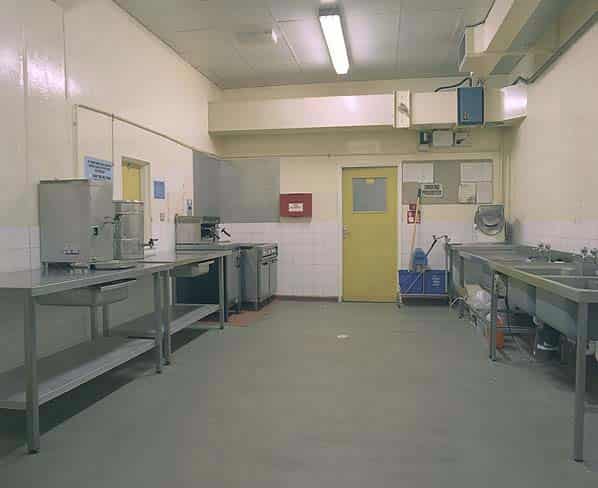
A third magazine (No. 6) was also converted in the 1960’s for use as accommodation for visiting troops. It still fulfills this function today and consists of two large dormitories, smaller officers' dormitory, kitchen, canteen toilets and a recreation room. The railway loading bay and platform has been retained largely unaltered with all the new rooms constructed within the storage area. No. 7 magazine has had new roller shutters fitted but apart from that it remains largely unaltered; it is lit but is presently unused. No. 4 magazine still has its original doors and is completely unaltered but No. 1 magazine has been demolished.
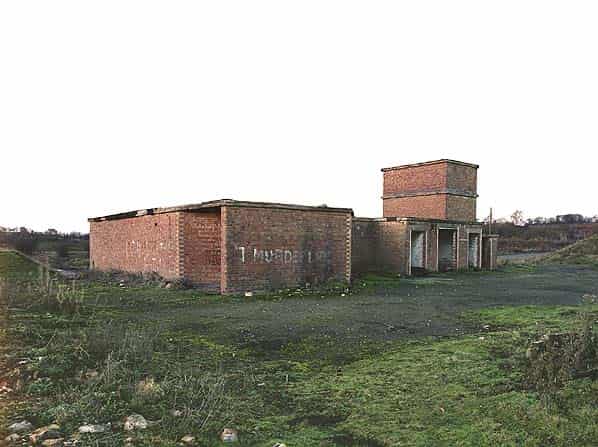
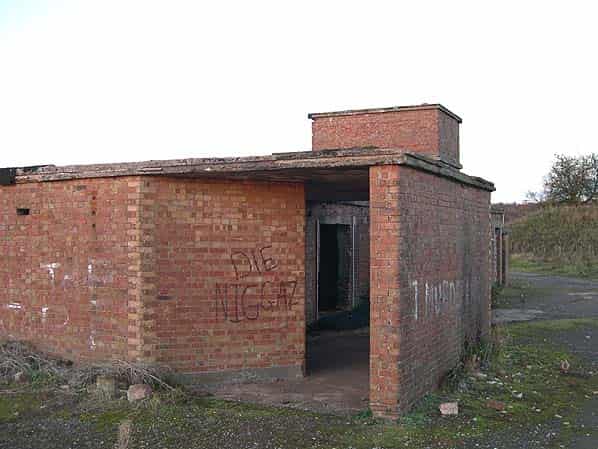
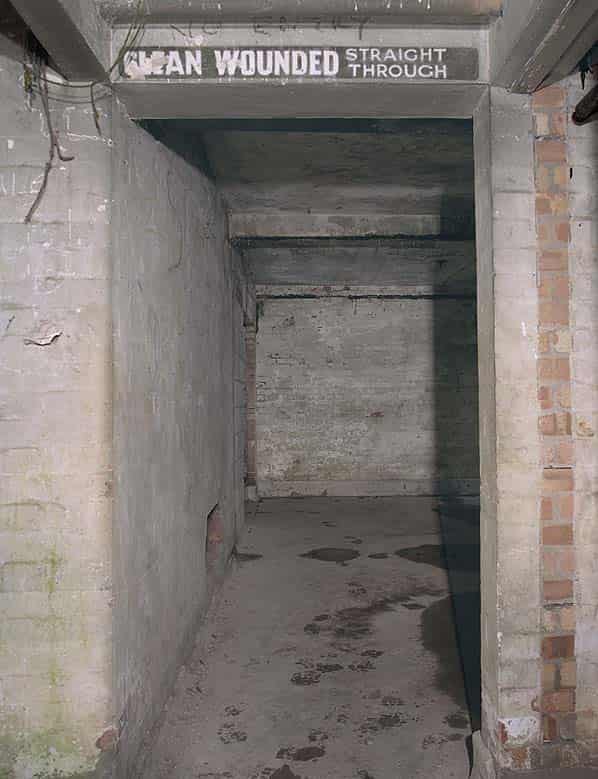
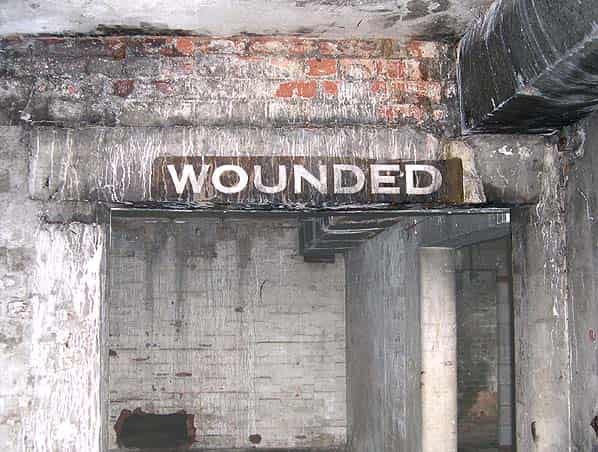
Although the training area is in regular use those buildings that are not in danger of collapsing have been retained although many of the filling buildings have been removed because of the light construction leaving only the revetments. Many of the decontamination buildings are still standing although most are sealed as they now provide hibernacula for bats. One building is however open and accessible.
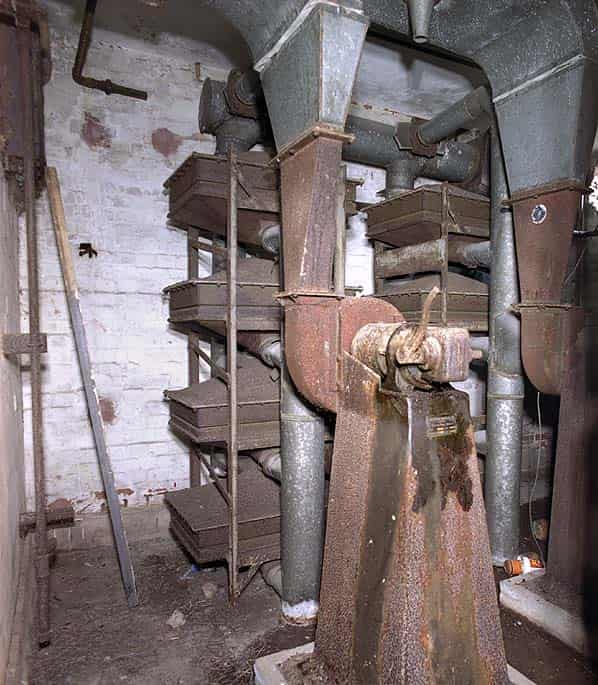
It still retains ventilation plant made by Sutcliffe & Speakman consisting of filters, a fan and ventilation trunking. There is still some WW2 lettering above the doorways with one room labeled ‘clean wounded straight through’. This refers to workers wounded during an air attack but not contaminated by gas. Another room is just labeled ‘wounded’.
There is littler evidence of the once extensive network of standard gauge railway lines that ran through the base and into all the magazines. Most of the magazine still retain their loading bays although in the RGHQ one of the bays has been infilled (No. 5 magazines) and in No 3 the bay has been divided into a number of rooms, in one room a section of the platform has been utilized as a work bench. In those magazines that have not been converted for later use, the railway track is still embedded in the concrete floor.
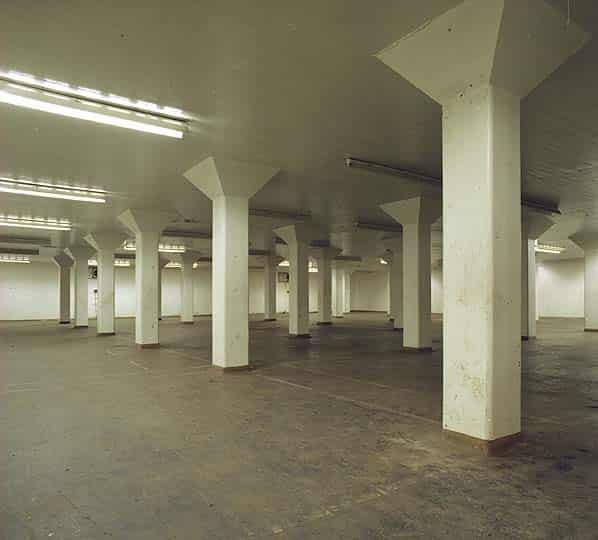
Each of the magazines has a storage area of approximately 500 square feet with concrete supporting pillars arranged in five lines of six pillars. These pillars have all been retained in those magazines that have been converted for other uses.
The accommodation hostels, which were all names after naval officers are all still standing with the exception of Duncan Hall. Raleigh Hall is a trading estate, Drake Hall is a prison, Beatty Hall and Howard Hall are a BT training college. Frobisher Hall was demolished shortly after WW2; Nelson Hall was occupied by US servicemen immediately after the war but it too has now been demolished.
Sources:
- Bob Jenner
- Railway Bylines magazine April 2001
- Railway World magazine December 1960