No sooner had the First World War ended than the Government started to worry about what might happen if there was another war. From 1924 Britain had committees of officials examining ARP questions and this examination intensified after Hitler came to power in Germany in 1933 and as the conviction grew, based on experience of the Spanish Civil War where the view was that the bomber would ‘always get through’. It was assumed, naturally enough, that the main target for enemy air raids would be central London.
It was decided early in 1936 to appoint a Minister for the Coordination of Defence and to launch an expanded five-year programme of rearmament. France ratified a bilateral pact with Soviet Russia and on 7 March Hitler sent his troops into the Rhineland in defiance of the Versailles and Locarno treaties. The Cabinet now called for contingency plans to be devised for coping with a potentially dangerous situation and among new sub-committees set up under the Committee of Imperial Defence was one on ‘the location and accommodation of staffs of Government Departments on the outbreak of war’.
Chaired by Sir Warren Fisher (Head of the Civil Service), the 5-man sub-committee reported early in 1937 with a suggestion that an alternative centre of government should be planned in the London area where Ministers and possibly Parliament could be relocated if Whitehall were to become untenable. After endorsement by the Cabinet in February 1937, this work was further developed in great secrecy by a new 5-man sub-committee under Sir James Rae and resulted in two alternative schemes, one of which was for accommodating not only civil servants but also Ministers and Parliament in London’s northwest suburbs; if however, this short retreat were to prove insufficient, a further withdrawal should be made to prepared accommodation in the western counties.
For the ‘fighting’ Departments work on bombproof underground citadels was to be continued, including one for the Admiralty at Oxgate in Cricklewood and one for the Air Ministry at Harrow
When this suburban scheme was examined further in the autumn of 1938, after the Munich crisis, it was decided that the construction of four underground citadels would go ahead: one each for the three Services and a fourth which became the bombproof Emergency War Headquarters at Dollis Hill.
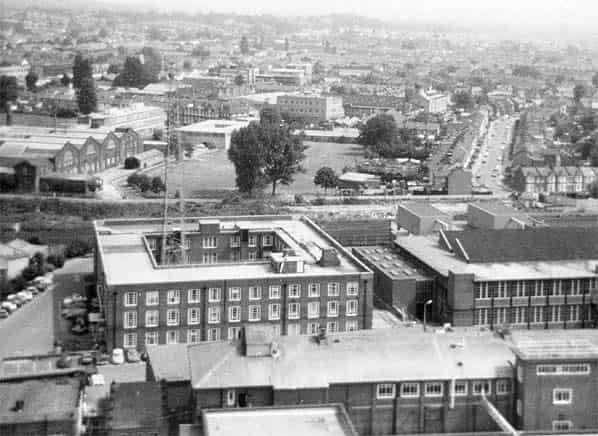
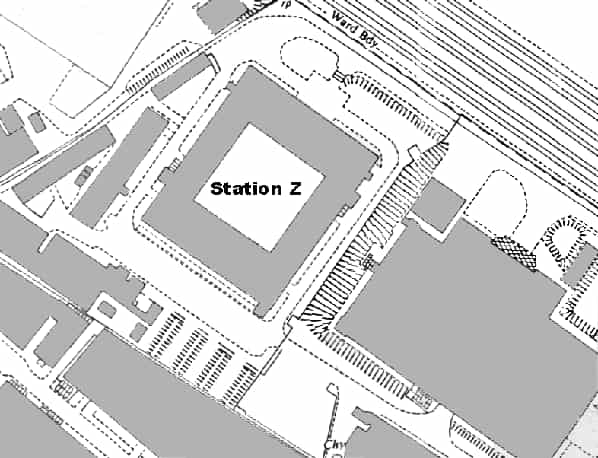
The Emergency War Headquarters (Paddock) and the Air Ministry and Admiralty Citadels were built as planned but that for the army at Kneller Hall in Twickenham was abandoned before work started. As with Paddock and the Admiralty Citadel at Oxgate the chosen site was within an existing government facility, HM Stationery Office where a vacant plot of land was selected.
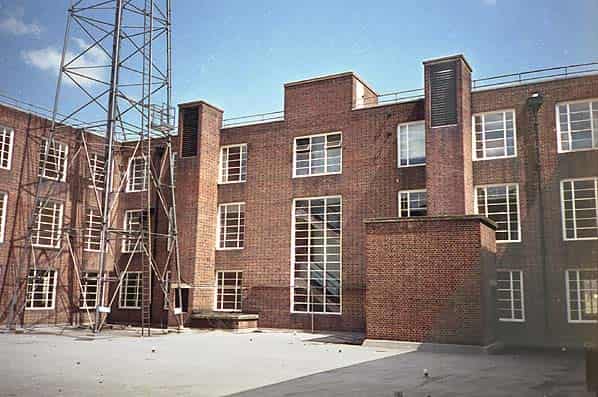
In line with the original 1938 plan the Air Ministry citadel consisted of a three storey above ground surface block with an inner court yard. Below this was a basement roofed over by 3½ feet of reinforced concrete and below it a sub-basement protected by another 6 feet of concrete (probably in two layers); with comparable protection at the sides, the sub-basement was considered to be entirely bombproof. The building was almost identical to the Admiralty citadel in Oxgate Lane, Cricklewood.
The new Air Ministry site was ready for occupation by October 1940 as detailed in a minute sent to the Deputy Under Secretary of State for Air on 11.10.1940 (National Archive ref: Air 19/190)
“The Air Ministry Citadel is situated at the rear of HM Stationery Office premises (HMSO Printing Works) Headstone Drive, Wealdstone, Middlesex. It is known for the sake of anonymity as Z or the Stationery Office Annexe.
If a move to Z were ordered the whole of the staff of the Air Ministry Whitehall would be involved but those divisions in the (Air Ministry) Kingsway Area would not be affected.
The Whitehall Group comprises: Secretary of State (for Air), Under Secretary of State, Permanent Under Secretary and part of the departments of the Permanent Under Secretary, the Chief of the Air Staff and the department of the Chief of the Air Staff (i.e. Directorate of Signals, Directorate of Intelligence, Directorate of Operations (Home), Directorate of Operations Naval Co-operation, Directorate of Operations (Overseas), Directorate of Plans, Directorate of Public Relations, Directorate of Operations Requirements and Directorate of Ground Defence.”
(They would all be relocating from the new protected Government Office in Whitehall adjacent to the cabinet war room.)
“Communications: The Air ministry Citadel may be obtained on the telephone from the Cabinet Offices in Richmond Terrace or Paddock by the following means
i) On the Federal system by asking for Station Z ii) On the normal ‘black’ line system by asking for Federal Exchange and the proceeding as at i iii) On the ‘green’ line system by asking for Station Z iv) On the public telephone system by ringing Harrow 4269
In addition there is a direct tie line from Richmond Terrace to Z on the ‘black’ tie line system
A small Insurance Party is in permanent occupation of the citadel. Apart from police and guards the sections actually manned and operating are: War Room, Telephone Exchange, Teleprinter and Communications
The Air Ministry citadel is ready for immediate occupation. Rooms have been furnished and allocated to staff, telephone and teleprinters have been installed and telephone directories prepared. The war room records are maintained up to date and domestic services are arranged.”
Another National Archive file (Air 20/2893) relates to the Locations of the Air Intelligence branch. AI 1 (Intelligence Civil Clerical Staff Administrative Section) goes part to Whitehall and part to Harrow and AI 1 (A) Intelligence RAF Staff Administrative Section go to Harrow.
Other departments relocating to Harrow include: AI 1 (G) Technical Intelligence & Crashed Enemy Aircraft examination section. (HQ is at Harrow with a regional organisation covering the rest of the UK, Northern Ireland and the Middle East.), AI 1S Security Section, AI 1 T Translation Section and ADI Supply of maps to the RAF.
After WW2 the Air Ministry continued to occupy 28 office sites in UK, notably in London these included the steel framed building at the Marsham Street rotunda site. Station Z still housed some Air Ministry departments and was still earmarked as a wartime dispersal for administration staff until 1955.
By 1955 some of the Air Ministry’s accommodation problems had been resolved and the building was vacated by peacetime staff although the site remained available as possible wartime office accommodation although this may not have included the bunker.
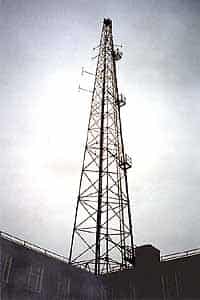
In 1955 the Home Office Directorate of Telecommunications moved into the surface offices which became their headquarters for the maintenance of the Home Office radio network for civil defence, the police and the fire service. It also ran the Hilltop Radio system (as detailed by Duncan Campbell in War Plan UK). For this service large steel lattice radio mast was erected in the courtyard. It was also the regional depot for Civil Defence Region 5 until that was divided up in late 1950’s.
In 1966 the underground accommodation was designated as a short term location for Sub Regional Control 6.2 covering Berkshire, Buckinghamshire, north and west London. The longer term plan was to upgrade the old RSG at Warren Row. By 1971 this function had disappeared following the reduction in planned SRC’s and the disbanding of Civil Defence in 1968. No work had been carried out at the site in connection with this proposed use.
By 1980 it once again acted as the Region 5 radio depot, as that region had been reformed in 1971. This function was retained until c.1992 when the site was vacated by Home Office. It then became a store for the adjoining HMSO print works.
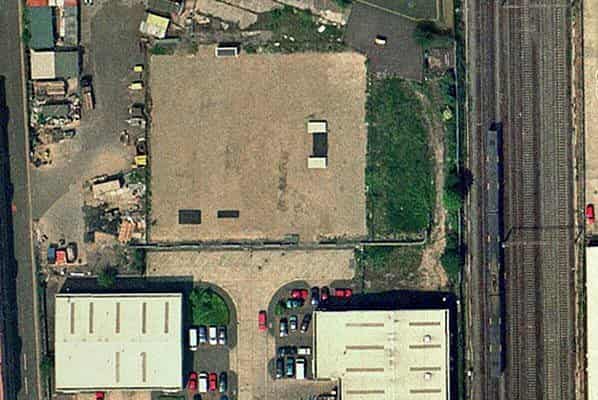
Once the HMSO works closed, Kodak brought the site for expansion of their large adjoining complex and the surface office block was demolished in 1996.
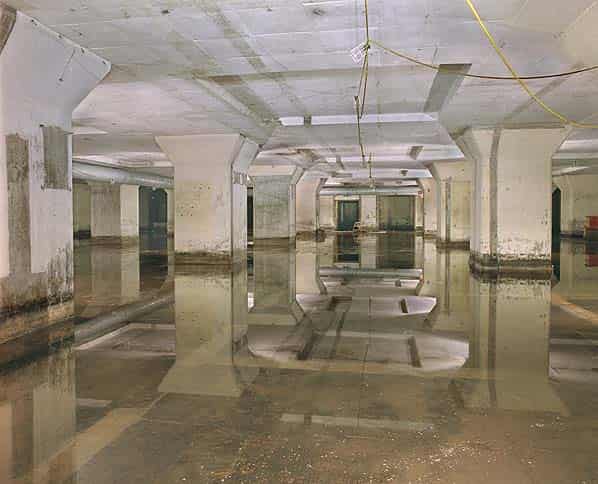
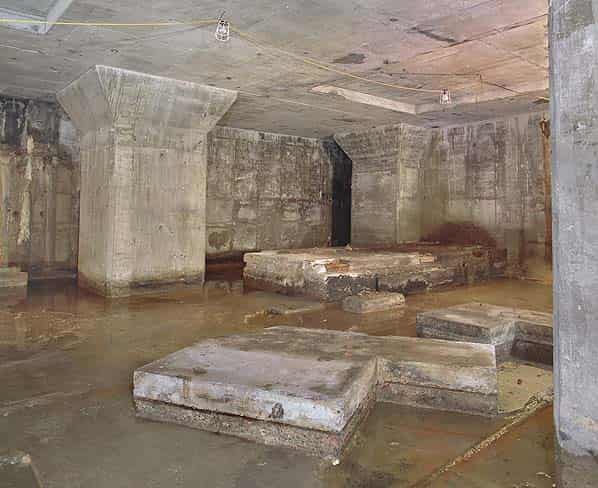
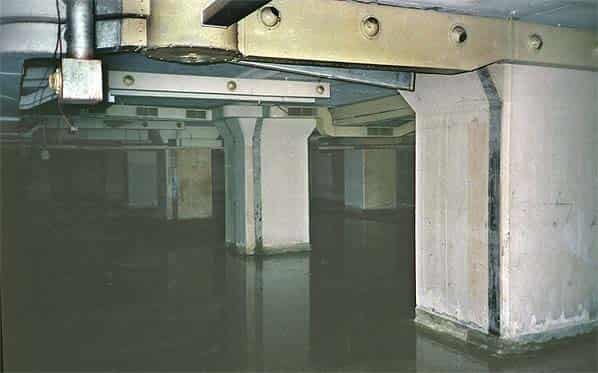
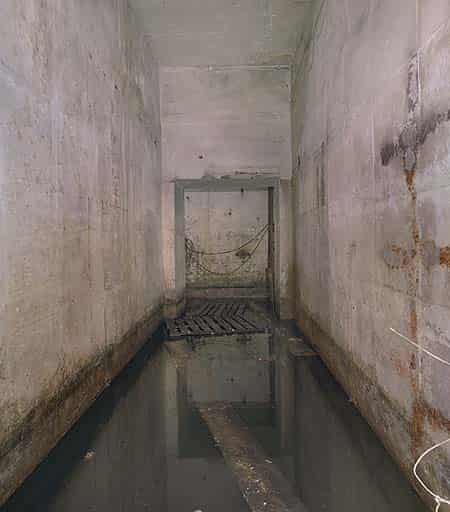
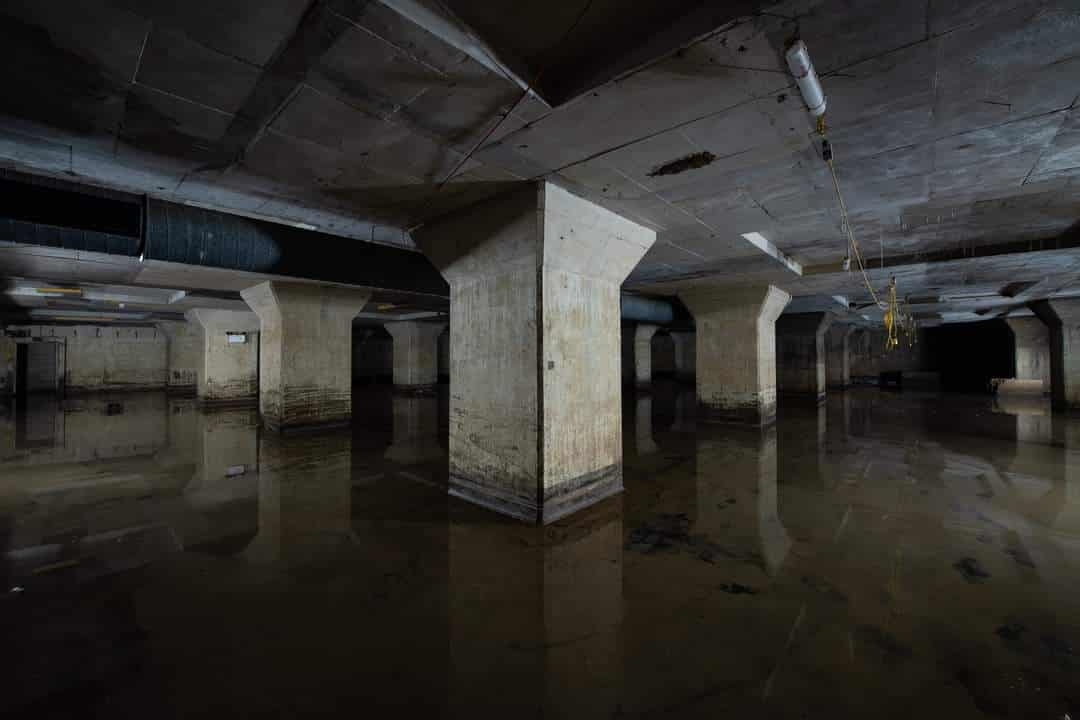
Access to the bunker was maintained via one of the emergency exits but the bunker was allowed to flood. Until recently, the sub-basement was flooded to a depth of several feet but the water has now been pumped out with only a little standing water remaining. The pumps are still in place to ensure that the flooding does not reoccur and new ventilation trunking has been installed to ensure a supply of fresh air throughout the bunker. Kodak has no planned use for the site.
STATION Z TODAY
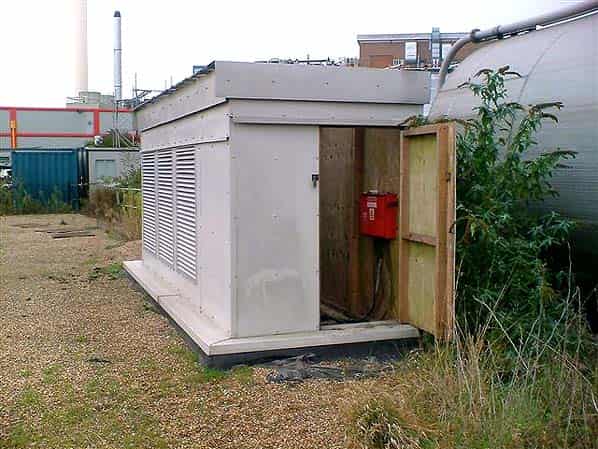
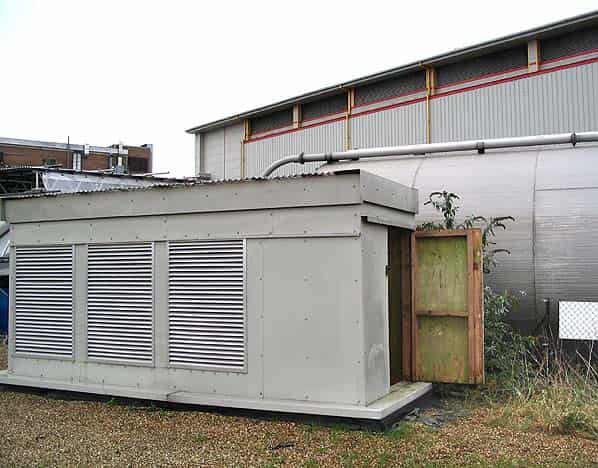
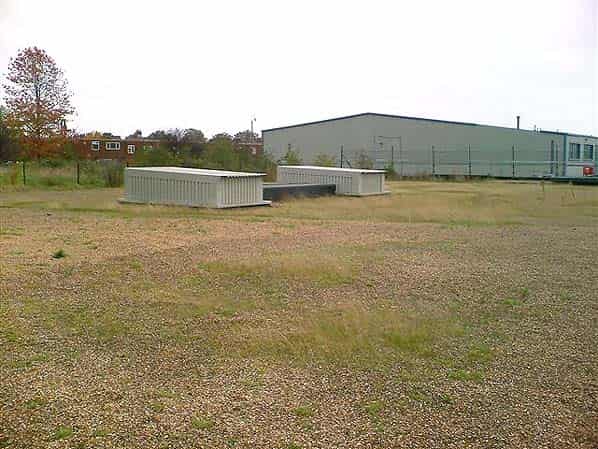
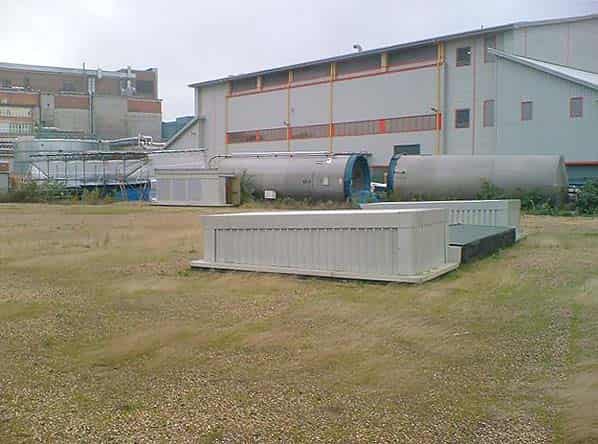
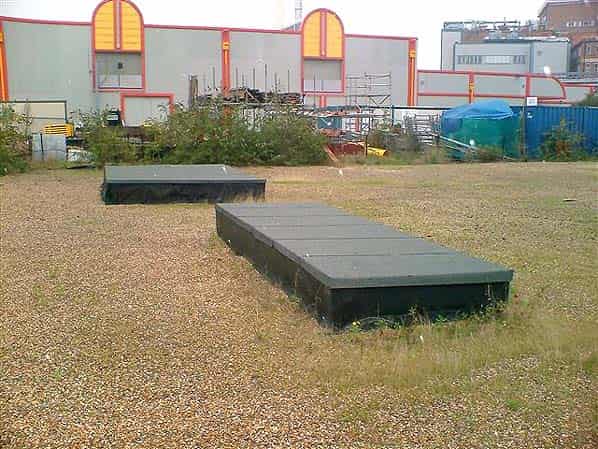
The thee storey surface building has been demolished; the only indications of anything below ground are a small prefabricated metal entrance hut over the top of the northern emergency staircase, two ventilator outlets with an emergency escape hatch between (this was formerly the plant access point) and the concrete caps of the lift shaft and the other emergency exit.
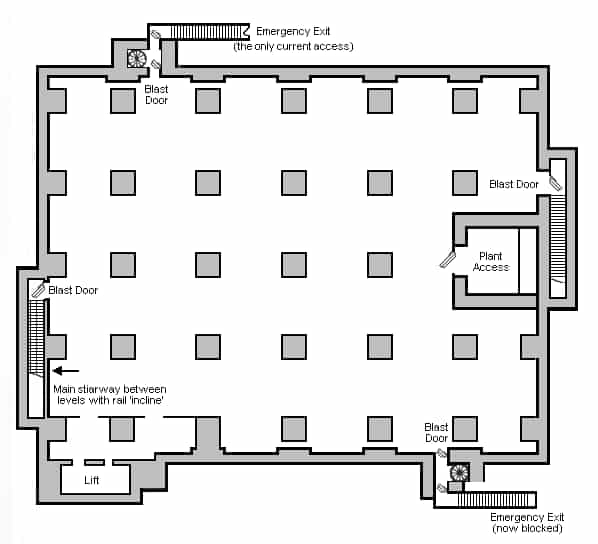
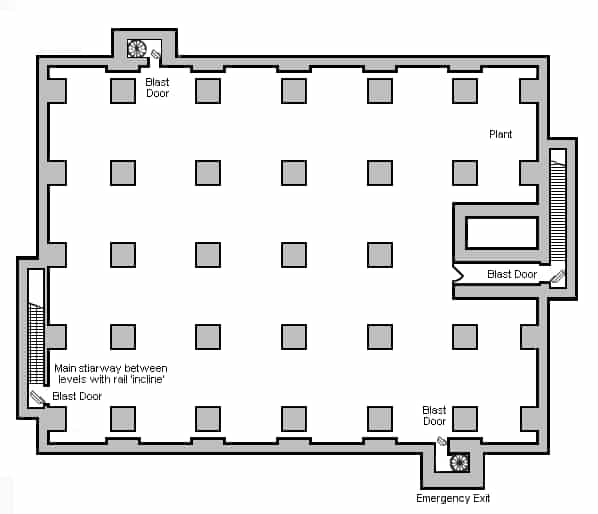
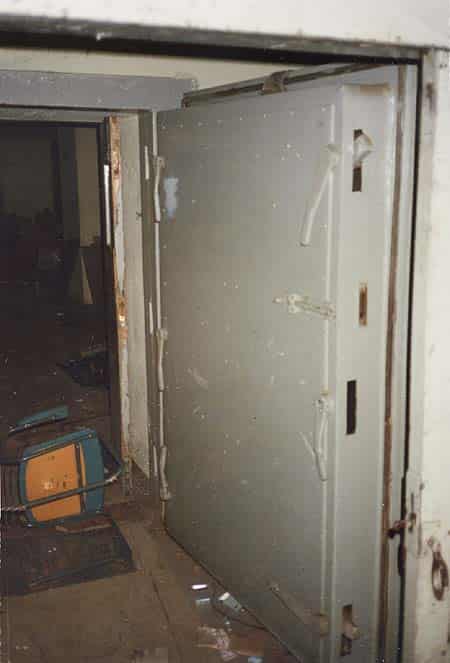
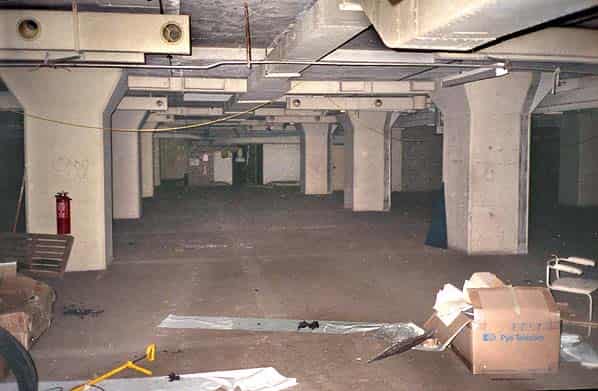
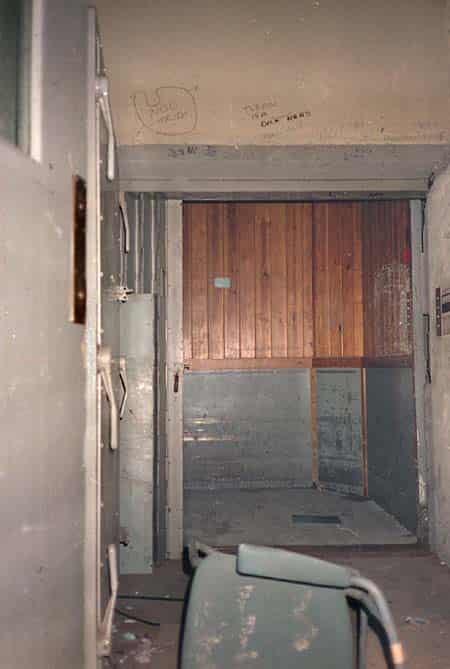
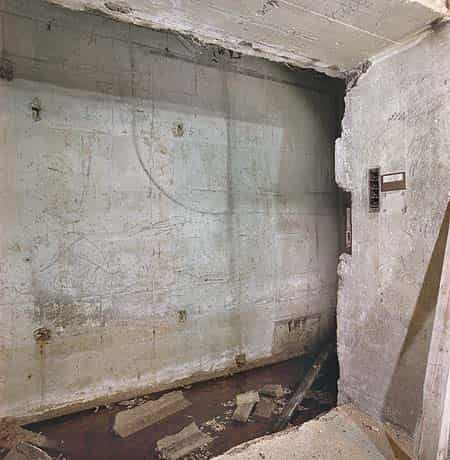
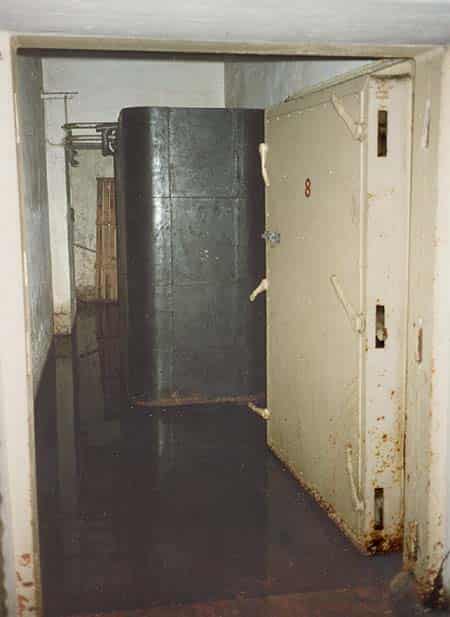
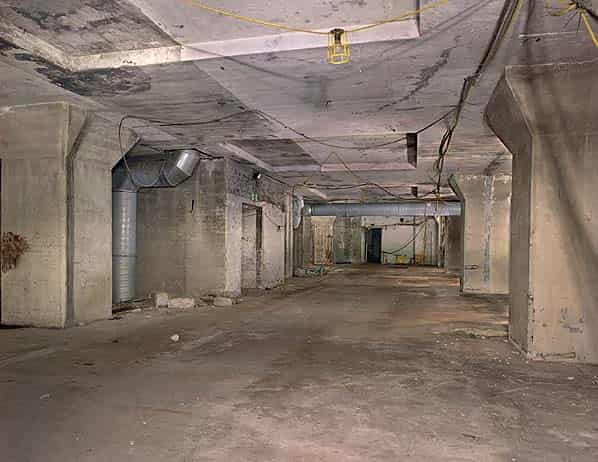
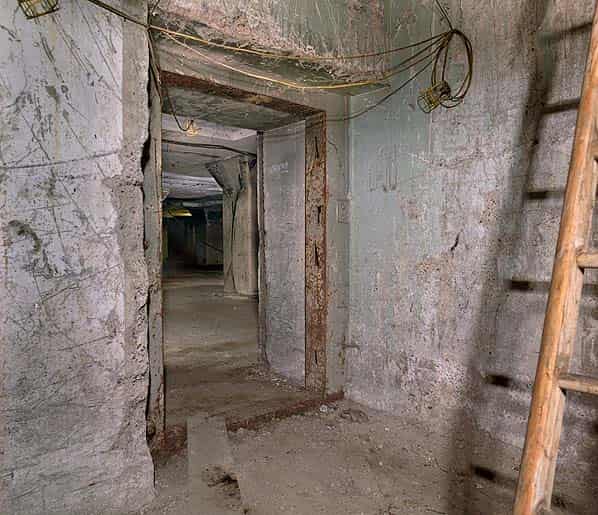
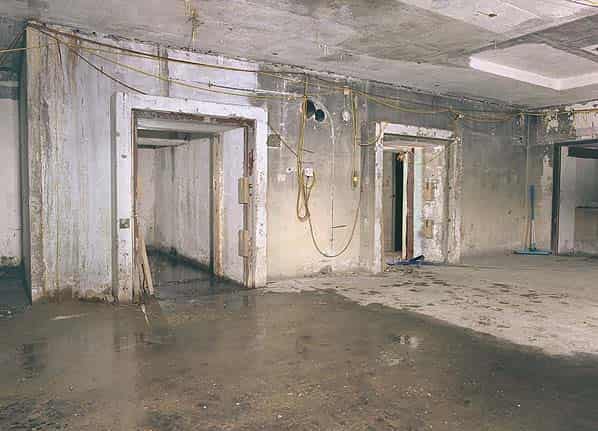
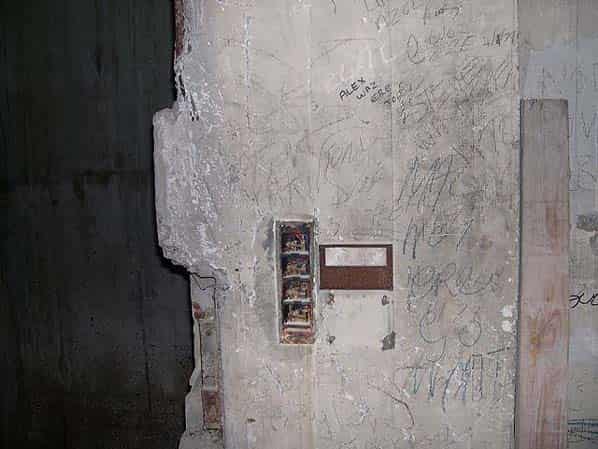
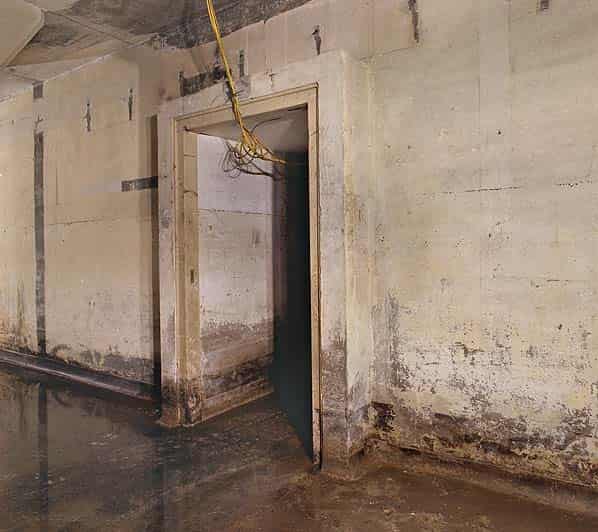
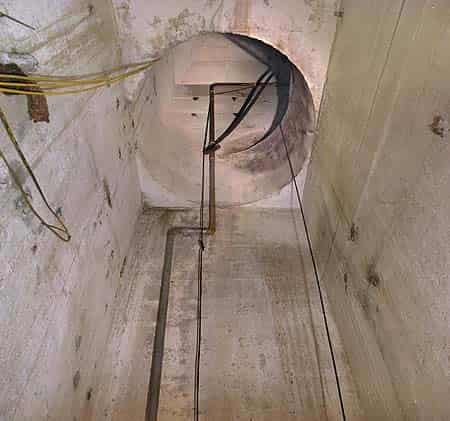
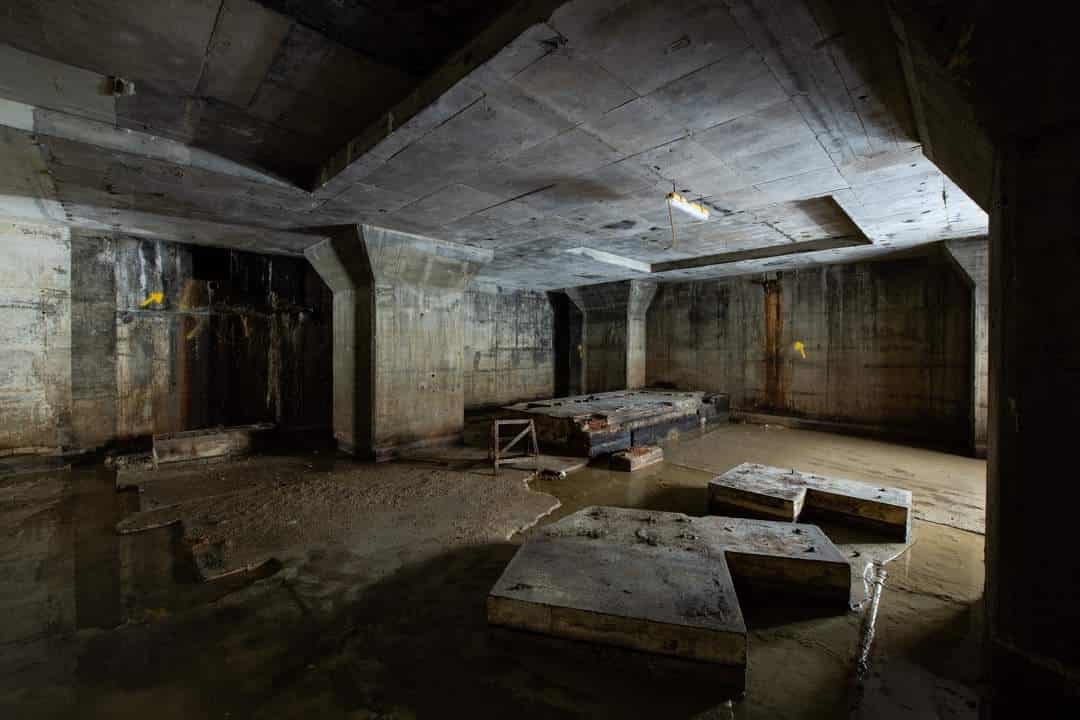
The upper basement level has been stripped of all original fixtures and fittings including all internal partition walls leaving one large ‘open plan’ room with 25 supporting pillars evenly spaced in five lines. On the east side the original plant entrance, loading bay and east stairway are enclosed within a walled area. The stairs have been removed and the main plant access hatch has been slabbed over but a personnel access hatch has been retained and there is a wooden ladder against the wall if access is required, this now acts as an emergency exit from the bunker. Originally there would have been heavy blast doors at all entrance and exit points but these have also been removed although the 8" thick steel door frames are still in place to indicate their position and size. The basement was originally served by a lift from the upper floors, the lift shaft is still there but the lift and all the lift machinery has been removed.
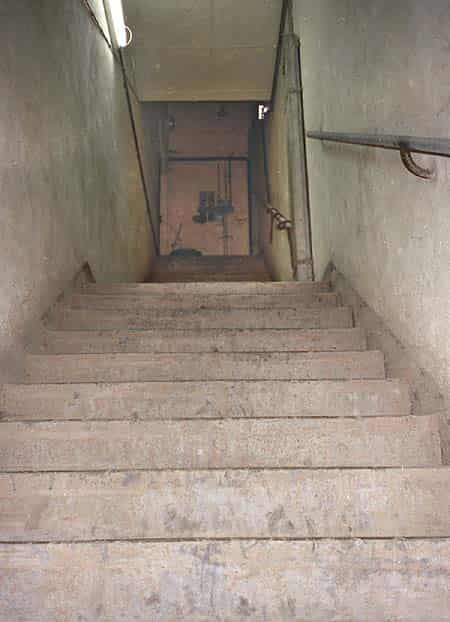
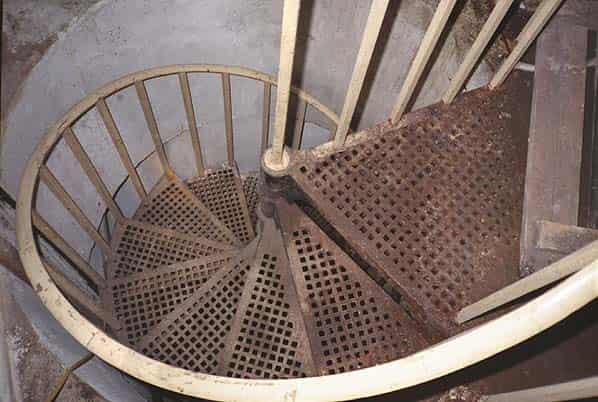
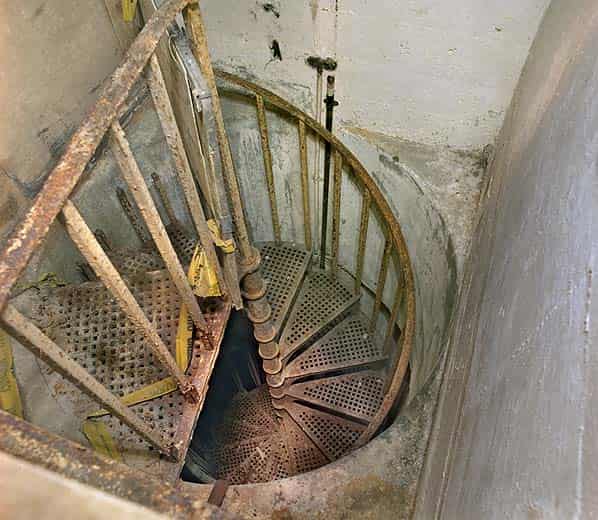
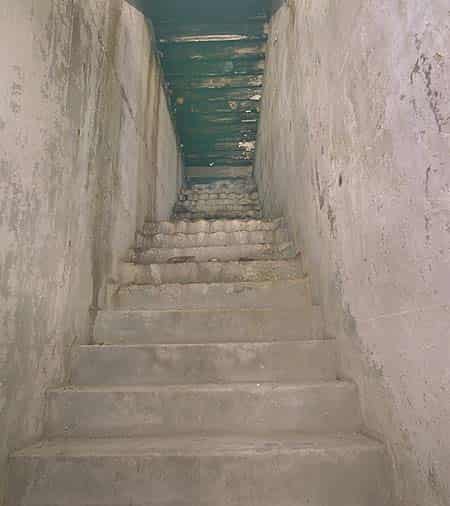
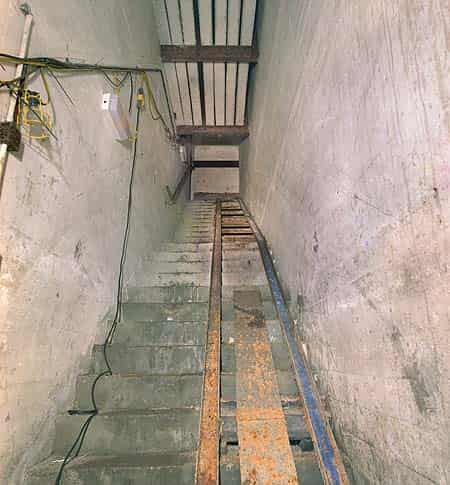
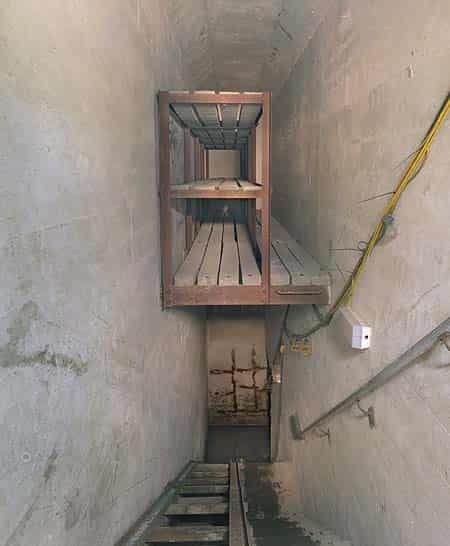
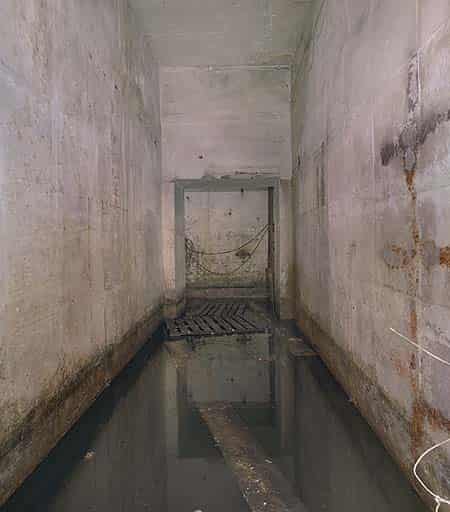
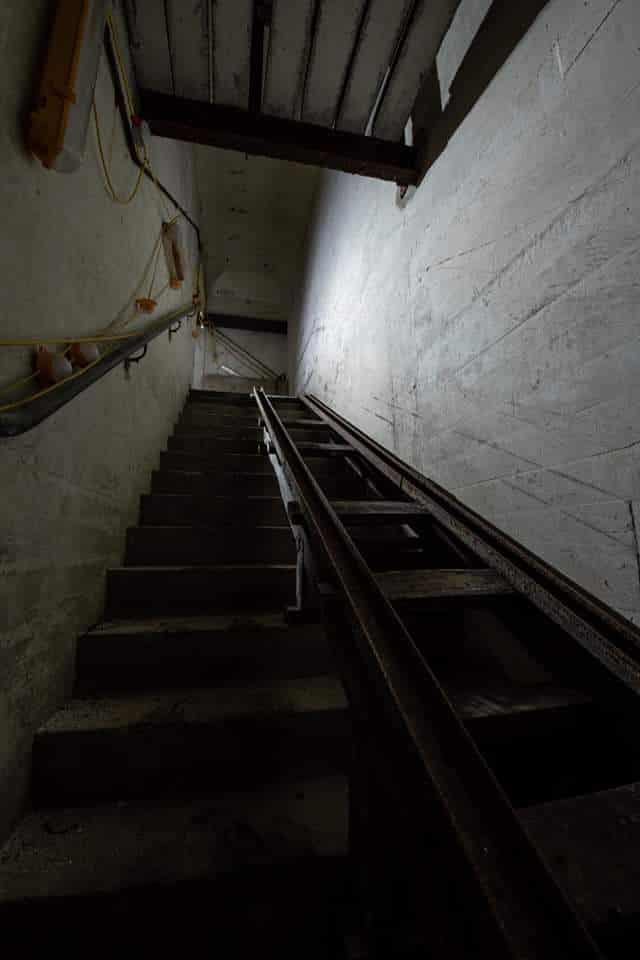
There are four stairways down to the protected lower level or sub-basement. Two of these are wide concrete stairways with door frames at the bottom where the blast doors have been removed. There were originally two spiral staircases which acted as the emergency exits; narrow blast doors at the bottom giving access to the sub-basement. One of these spirals has now been removed and the adjacent stairs up to the surface have been blocked at ground level. The other spiral, at the bottom of the present access stairs, is blocked off and out of use. On the west stairway there are two rails mounted on the steps, these were used for moving a wheeled cart between levels. The cart can still be found in the upper basement, it is unclear if this is an original feature or was added post war.
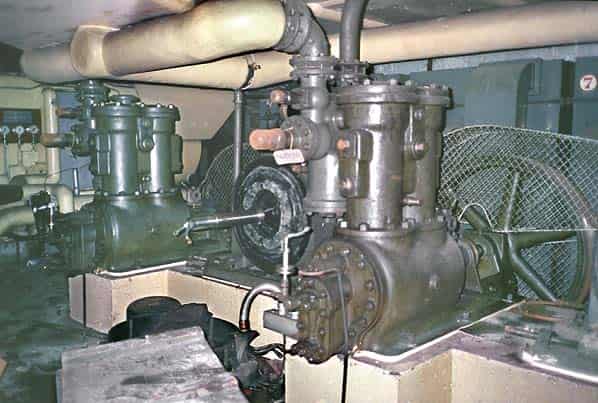
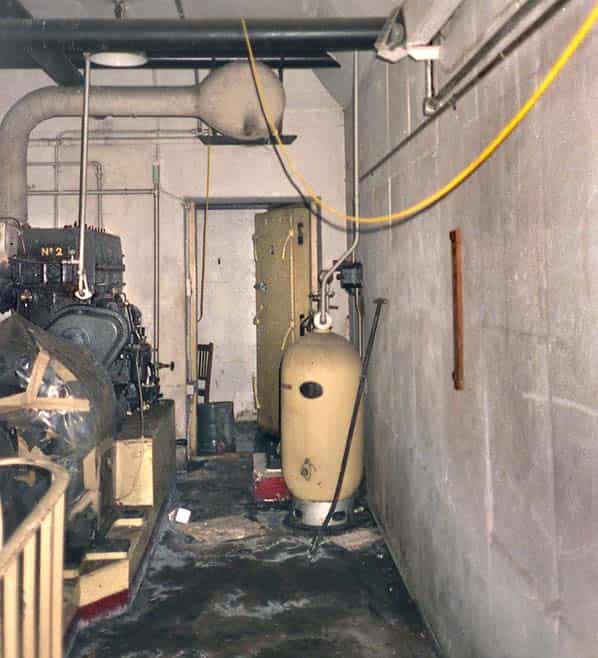
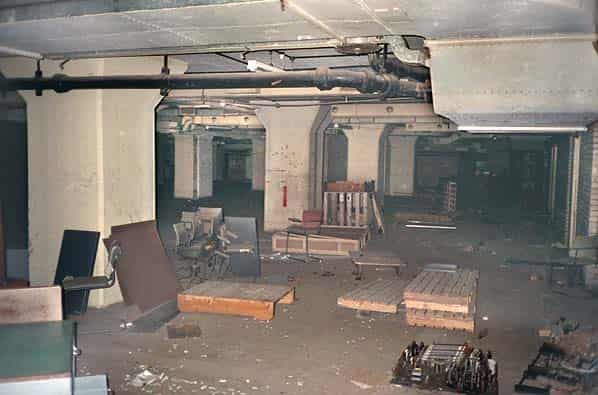
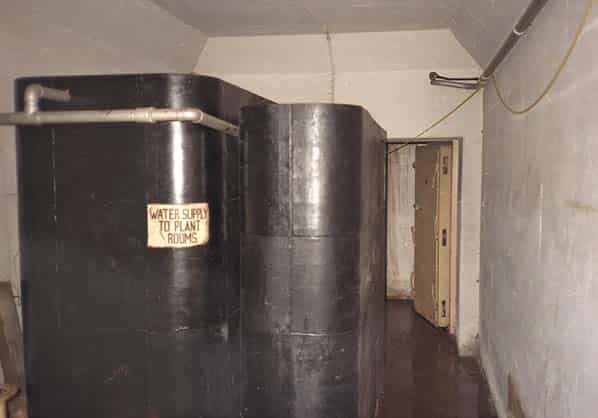
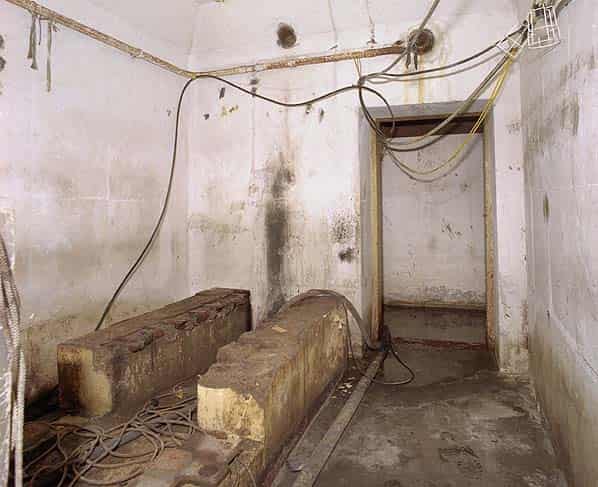
The sub basement is similar to the basement with 25 pillars directly beneath those in the basement. Again all internal partition walls have been removed with the exception of a small block extending into the room from the east wall. Here there is one separate room and an adjacent short corridor leading to the east stairs. A number of concrete plinths in the north east corner indicated where the ventilation plant was sited. The standby generator was in the corridor leading to the emergency exit stairs on the north side of the bunker, adjacent to the existing spiral stairs. Although the generator has gone the substantial concrete engine bed is still there.
Sources:
- Bob Jenner
- Keith Ward
- Ken Valentine (Willesden at War Volume 2) ISBN 0 9514258 6 2
- National Archive files: Air 19/190 & Air 20/2893