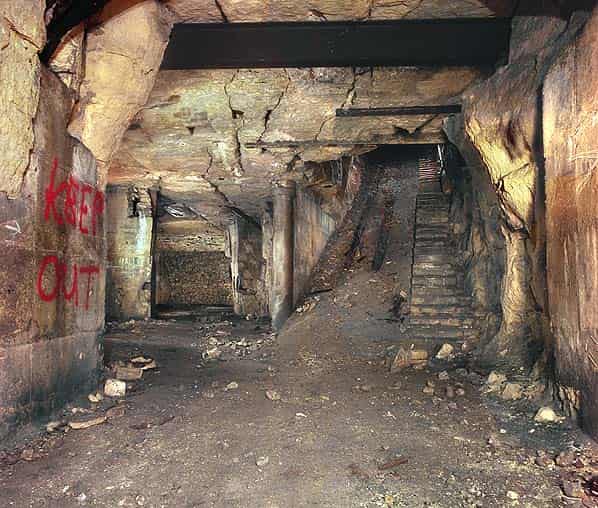
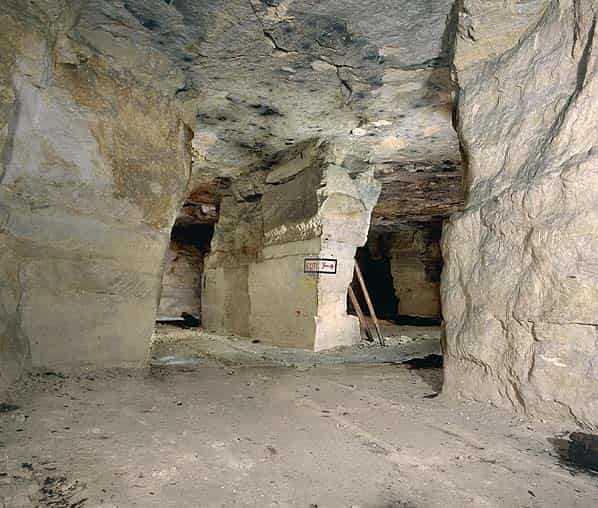
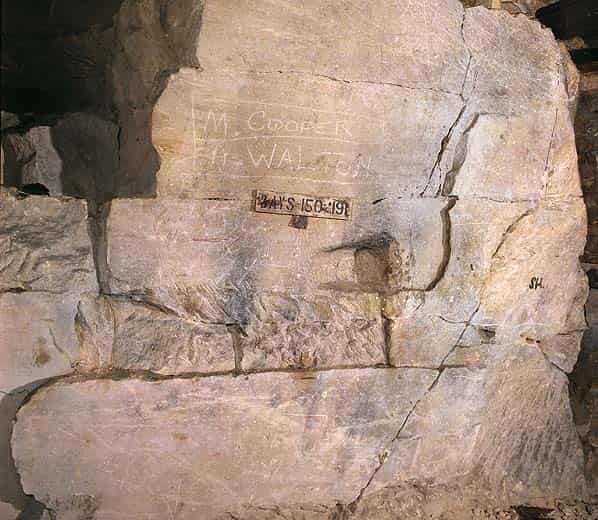
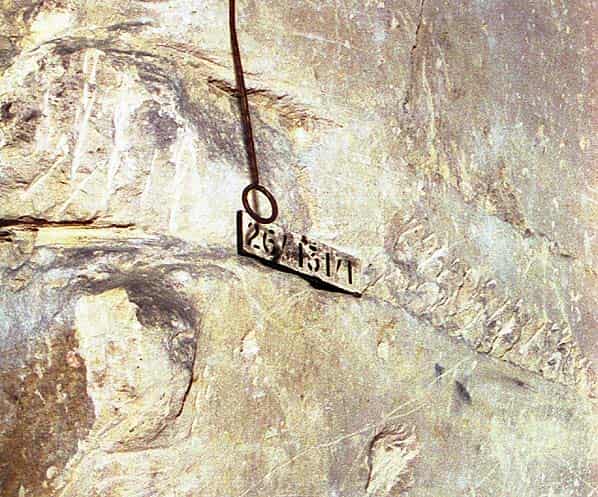
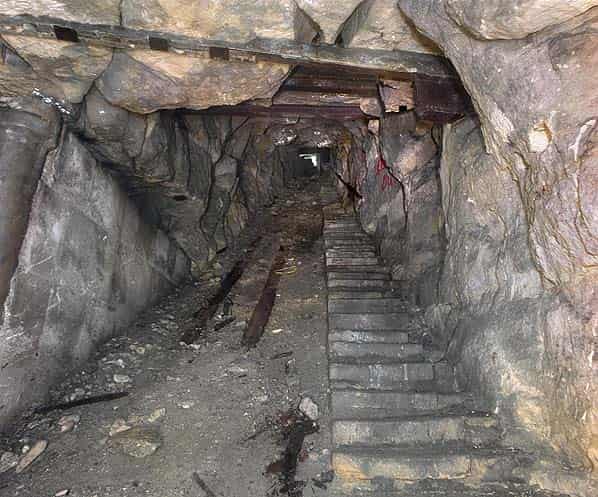
Ridge Quarry, a small underground Bath-stone quarry at The Ridge near Corsham in Wiltshire was taken over in 1915 for TNT and cordite storage. It was abandoned shortly after the war but subsequently was to figure as a key progenitor of the vast schemes undertaken at Corsham in preparation for the Second World War.
A number of underground sites were examined during 1929 and 1930 with a view to converting them for underground munitions storage. All the sites considered were all found to be gravely deficient regarding either size, safety, means of access, or proximity to nearest services.
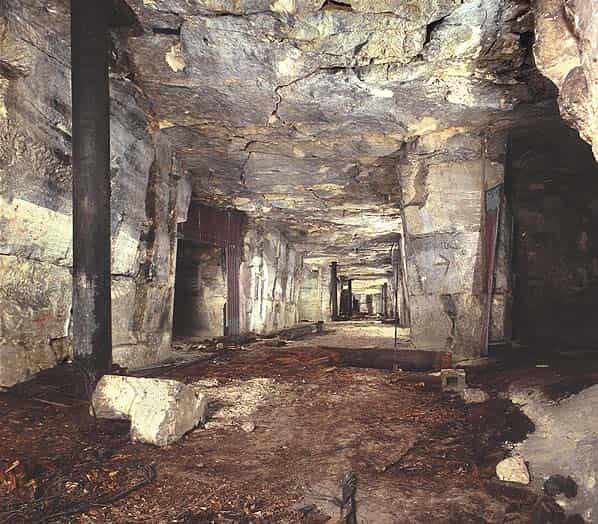
By 23 May, 1930 a short list of five possible sites had been drawn up: Chislehurst Caves, slate mines in the vicinity of Blaenau Ffestiniog, Scout Quarry in Rossendale, Meadowbank salt mine in Cheshire, and Ridge Quarry near Corsham. After careful consideration Ridge Quarry was chosen specifically for further investigation as it offered 12 acres of storage space half of which had been cleared and converted by the Ministry of Munitions for explosive storage during the 1914-18 war. A quarry tramway connected the mine with the GWR main line at Corsham station where there was siding accommodation for twenty one trucks in a loading platform specially adapted for ammunition wagons. Two foot gauge track existed in a good part of the workings serving raised stacking platforms, and a steam winding engine capable of lifting six tons was still in place at the top of the main entrance shaft.
In November 1934 War Office officials returned to Ridge Quarry and nearby Tunnel Quarry for a more thorough inspection. The initial impression was favourable. During subsequent discussions it was agreed that the quarries at Corsham could accommodate filled shell and bulk explosives, the location being well situated to supply the new filling factory under construction near Hereford. Tunnel Quarry offered over forty-five acres of storage space, as opposed to a mere six acres at Ridge, and had the major advantage of being connected directly to the GWR main line by a branch entering a side tunnel at the eastern portal of Box tunnel. Outline Treasury approval was granted for the purchase of both Ridge and Tunnel for £35,000. Later Eastlays and Monkton Farleigh quarries were also purchased.
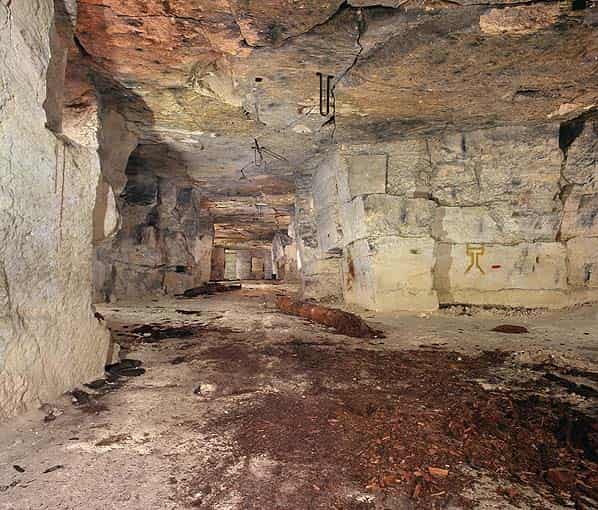
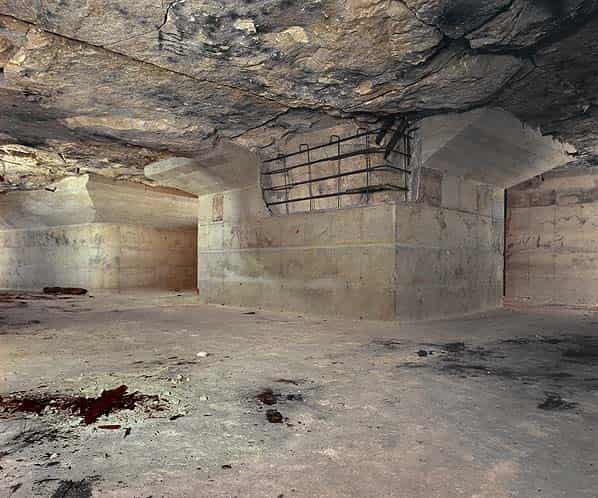
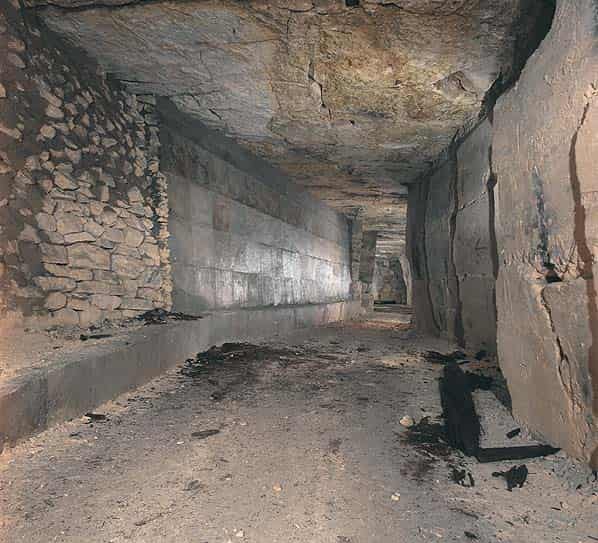
Conversion of Ridge Quarry posed few problems as virtually all the clearing work had been done by the Ministry of munitions during the first World War. The gross area of the usable part amounted to nine and a half acres of which 3 and a half acres consisted of support pillars, leaving six acres for storage.
Once sufficient manpower had been mobilized, construction began simultaneously at Ridge, Eastlays and Tunnel Quarry in July, 1936. Efforts were made to maintain an air of secrecy about the works there, and by way of subterfuge it was let slip that the Ministry of Food was building an emergency food dump. The need for underground storage had become so great that it was made clear that Ridge Quarry must be ready to receive stocks of explosives by the end of December 1936 and the quarry was brought into commission in a very unfinished state to store ammunition and explosives for the RAF and Ministry of Supply.
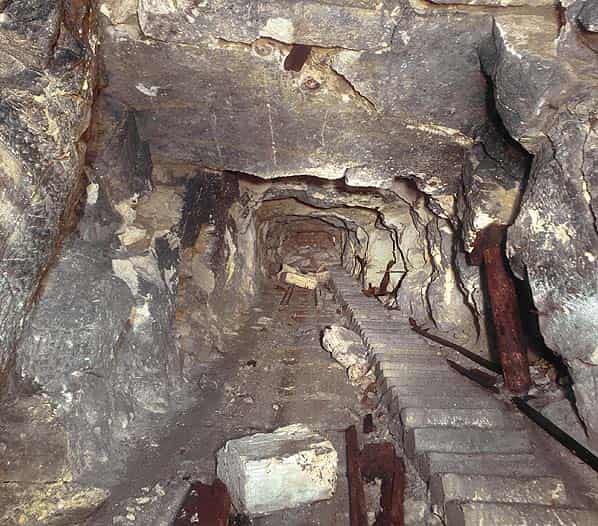
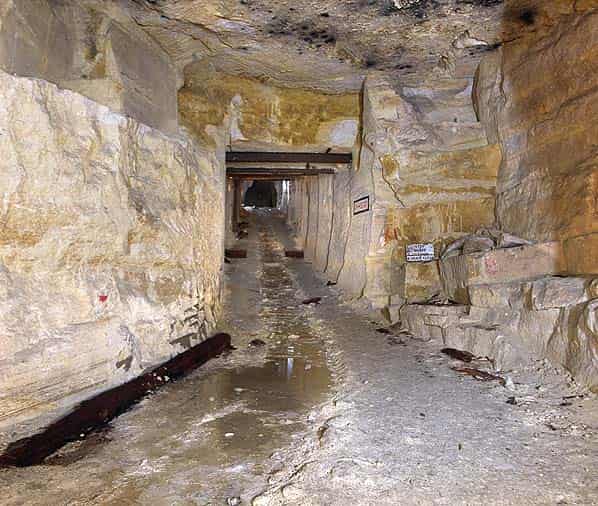
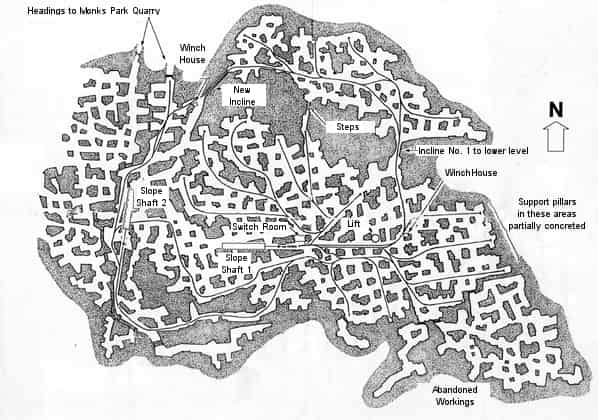
The mine had altered little since being vacated by the Ministry of Munitions in 1922, but it still proved necessary to remove a total of 96,000 tons of stone debris to provide sufficient storage space. All the raised stacking areas constructed in the Great War were removed and the floors rolled and levelled. The already comprehensive two foot gauge railway system was extended to serve all the storage bays, and the existing steam winch at the head of the access shaft was overhauled. Because the 1:3 gradient put a considerable load on the winding plant a standby electric hauling engine was installed in case of a breakdown of the primary set.
At the bottom of the main slope shaft the rails served a primary reception and marshalling area. Nearby an old vertical ventilation shaft was adapted for winding by the installation of a pair of counterbalanced electric lifts running in wooden guides. This was a primitive affair with a poor loading capacity, capable of handling only one third of the throughput of the slope shaft.
Underground, the mine is crossed by a major slip-fault, with the result that one half of the workings is about 20 feet lower than the other. Two sloping haulageways were driven to connect the upper and lower sections; to enable wagons to be drawn up these inclines two steam winches were installed, adapted to operate on compressed air supplied by compressors housed on the surface. Generally, however, loaded trucks were manoeuvred manually throughout the level areas of the quarry.
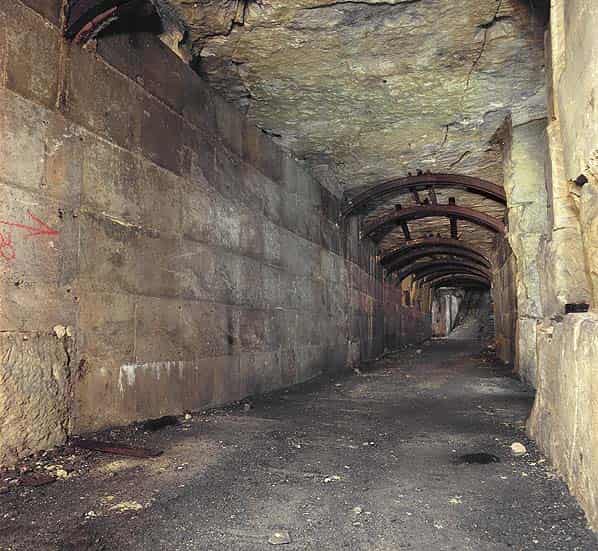
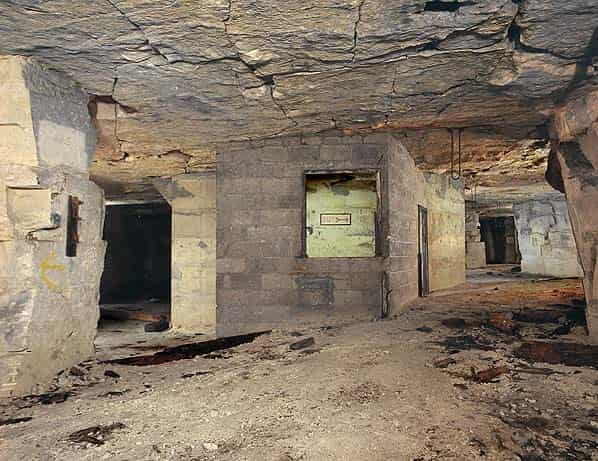
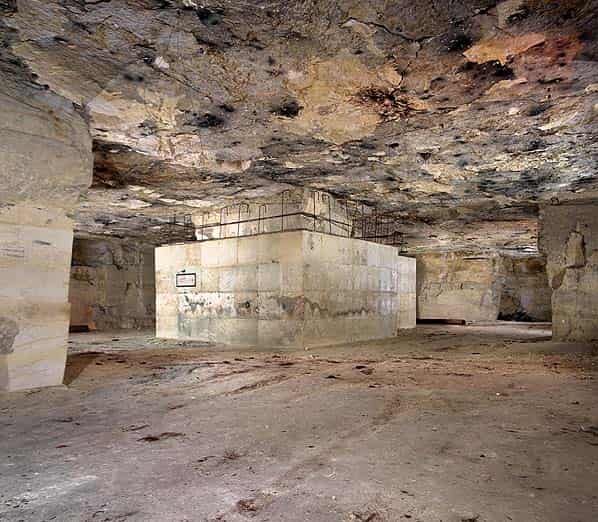
Some months after stacking had begun a construction programme was initiated, designed to produce a layout of storage areas more regular than the random pattern of existing pillars. It was planned to reinforce the stone pillars by corseting them with concrete, making them rectangular in section with straight haulageways between. Concreting began early in 1938 on fifteen pillars and a length of perimeter wall in the south east corner of the quarry, but this operation was permanently suspended a few months later. The cost of the work and the quantity of materials consumed were much greater than anticipated and were out of proportion with the benefits obtained. The unfinished concrete reinforcing can still be seen in varying degrees of completion in the quarry today and illustrates the constructional techniques used in the larger and more sophisticated of the Corsham depots.
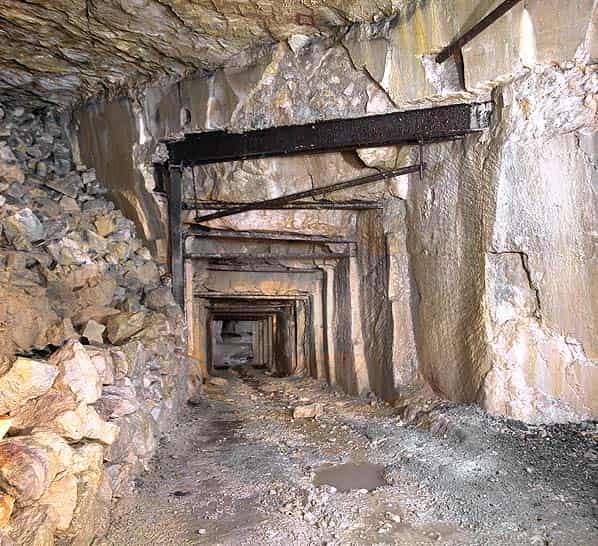
A second slope shaft, the steeply graded West Ridge incline, was reopened on 12 February 1942, to improve access to the lower level of the mine and provide space for a further 1,500 tons of bombs. The underground access tunnel linking this shaft to the new storage bays passed through an area of treacherous roof formation that required substantial support to ensure safety.
Unlike the three other quarries that comprised the Corsham CAD, Ridge was never reclassified as permanent storage, and no further development was done underground after 1942. Surface buildings at Ridge were minimal. In line with War Office practice the first buildings to be erected were twenty seven wooden huts to house military police personnel, built in two groups on open land between the quarry shafts and the lane to Corsham. The vertical lift shaft with its associated winding gear and compressor house was immediately between the two groups of police huts. The No.2 loading bay was the most substantial and is the only major building still surviving.
Although War Office property, Ridge quarry was allocated to the RAF in November 1936 for the storage of bombs and bulk explosives. It was designated a sub unit of the Altrincham small-arms depot.
Stacking and loading of bombs was carried out by a team of thirty civilian gangers, employed by the RAOC but under direct control of the RAF. The total capacity of Ridge Quarry was 13,000 tons, of which the RAF at first required about 5,000 tons to store 500 lb and 250 lb General Purpose (GP) bombs. By the outbreak of war RAF stocks at Ridge had expanded to 11,569 tons, including 4,000 tons of bulk TNT. At that time the RAOC retained a small area to store 2,000 tons of bulk explosive for Army use.
During the early months of the war Ridge Quarry was used as a temporary holding point for bulk explosives and as a long term store for obsolete GP bombs returned from various active airfields via the Pulham depot.
January, 1940, saw a reorganization of No.42 Group, resulting in the recently opened Chilmark reserve depot becoming parent to Ridge Quarry, which was re-designated No.11 MSU. Conditions underground were becoming congested due to the large influx of obsolete material which was accumulating with no immediate prospect of disposal; a problem made more acute by the RAOC insistence that they be allowed to store rather more than the agreed amount of Army TNT in the quarry. The situation eased at the beginning of May when calling forward instructions were received for a shipment of 5000 250 lb GP bombs destined for No.4 Base Ammunition Depot in the Middle East. The whole of this consignment was despatched from Ridge, where labourers were employed on overtime breaking down stacks and placing bombs on end beside the narrow gauge railway ready for loading.
Large issues continued throughout July and the early part of August, the space vacated being filled by huge quantities of imported TNT from the United States and Canada, and eight tons of French manufacture and dubious nature hurriedly recovered from the continent.
The spring of 1941 saw increasing deliveries of munitions from the United States under the terms of the Lend Lease Act of 11 March. Turnover of bombs at Ridge Quarry increased dramatically and a two shift system was introduced in an effort to increase the daily rate to 400 tons.
In preparation for the expected German invasion Ridge received 3,000 hand grenades from Tunnel Quarry on 22 August for issue to airfields and depots in the south west within the next few days. Delivery also began at this time of tens of thousands of rounds for the Smith gun which came into service as a Home Guard and RAF airfield defence weapon by June, 1941.
During the early months of 1944 stock levels increased at Ridge to a peak of 31,563 tons, and in March preparations for the invasion of Europe began. During April and May the RAF dropped more than 200,000 tons of bombs as a direct preliminary to Operation ‘Overlord’. The contribution to this effort made by Ridge Quarry amounted to 7,744 tons in April and a massive 14,294 tons in May.
The end of the war in Europe saw vast surpluses of ammunition accumulated by all three services. By May 1945, Maintenance Command estimated that it would have to find storage for 15,000 tons of new bombs every week for the next three months, emanating from existing contracts with the Ordnance Factories. The Command also faced the tasks of de-stocking operational airfields of redundant explosives and absorbing the estimated 100,000 tons of bombs in unprotected roadside storage.
In June Ridge Quarry reported a vacant capacity of 15,000 tons, but 42 Group had reservations about using the Corsham depots due to the fact that they were only really suitable for bombs of 500 lb or less and that the inclined shafts limited turnover to a maximum of 400 tons per day. The limited potential of Ridge Quarry for storage over extended peacetime periods, deficient as it was in ventilation or air-conditioning equipment, had been questioned a year earlier following an inspection by the Air Ministry Director General of Equipment. Noting the poor condition there of a large stock of bulk TNT packed in wooden cases, he commented that:
“Storage conditions at that unit appear to be unsuitable for the prolonged storage of wooden items. Destruction of 2,000 boxes was recently recommended in view of an advanced state of decomposition due to wet-rot peculiar to the storage conditions at Corsham.”
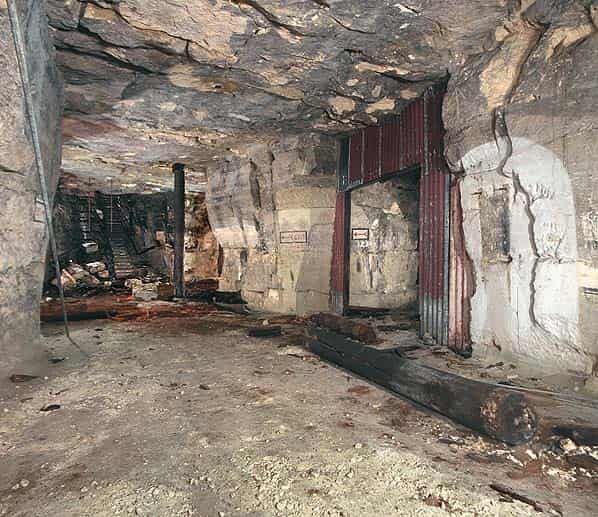
In February, 1945, a further inspection revealed that 6000 500 lb bombs of US manufacture stored in the lower section of Ridge were in a very unstable condition and that the wooden dunnage upon which they were stacked was rotting away. It was feared that the dunnage could collapse and initiate an explosion. The most dangerous of these bombs were removed.
The remaining stock of 7,249 tons of High Explosive bombs, together with a small inventory of non-explosive items such as bomb-tails, parachutes and packing cases, was finally struck off charge at Ridge Quarry and transferred to Chilmark on 4 January, 1949. The RAF did, however, maintain an interest in the quarry throughout the early 1950s during the evolution of its future weapons policy. For a while it was thought that an increased storage requirement for conventional ammunition would be needed, and in October 1950, it was suggested that Ridge should be retained temporarily as the best subsidiary underground site until a viable alternative could be found.
By 1955 the centre of gravity of British defence policy had shifted toward the nuclear deterrent and large stocks of conventional weapons were seen as a luxury which the exchequer could not bear. The coming of new ‘V’ bomber force and the apparent death knell of the conventional High Explosive bomb, occurred on 11 October, 1956, with the successful drop from a Valiant of the first British built atomic bomb. The run down of the large reserve depots paralleled these developments; the tunnels at Harpur Hill were emptied of HE bombs late in 1949, all functional stock was removed from Llanberis by March, 1955, and Fauld ceased holding High Explosives in 1958. Only Chilmark was retained, as a reserve depot for the replenishment of overseas stock. Ridge quarry was finally abandoned by the RAF in 1955.
The Army presence remained at Ridge until 1964 after which the site reverted to care and maintenance under the Ministry of Works and Buildings. This state of limbo continued for ten years until 1975 when Ridge Quarry was re-purchased by the Neston Estate. All the surface buildings were demolished except for the No.2 shaft transit shed, which has found a new agricultural use. Debris from surface demolition was bulldozed into the lift shaft and No.1 slope shaft which are now both completely blocked, although No.2 shaft is still accessible.
There is a link underground (currently blocked) to the adjacent Monks Park Quarry. Monks Park is divided into two sections, one part is still a working stone quarry while the other part was once a Royal Navy storage depot but is now occupied by Leafield Engineering who make components for the defence industry and commercial users.
Sources:
- ‘Secret Underground Cities’ by N. J. McCamley ISBN 0 85052 585 3
- Nick McCamley’s website