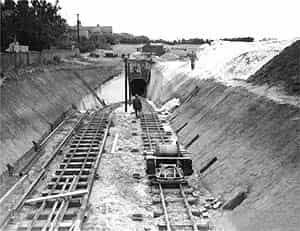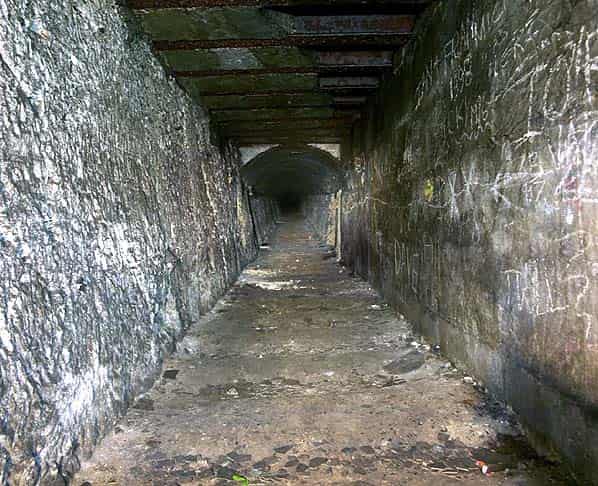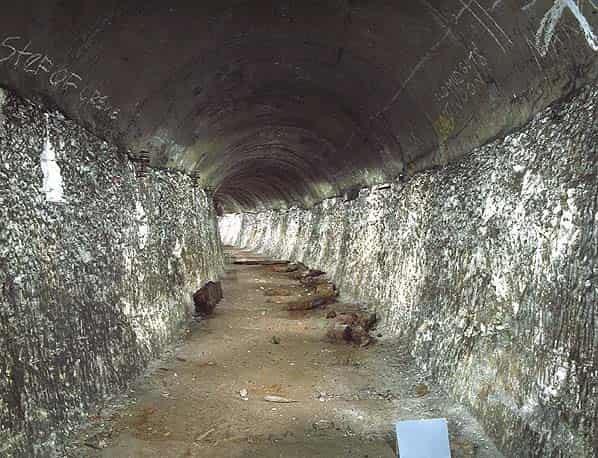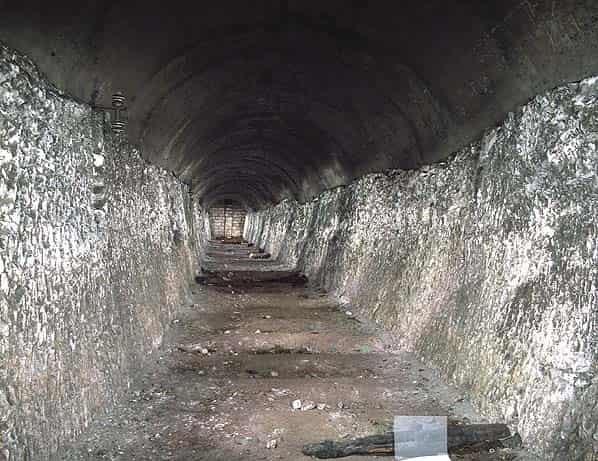
The London Chatham & Dover Railway Company opened their extension from Margate to a terminus at Ramsgate Harbour in 1863. The last section of the line ran in a 1124 yard tunnel from Dumpton Park to the terminus on the seafront, close to the harbour. In 1926, Southern Railway built a link from their line at Dumpton Park to the former South Eastern Railway station at Ramsgate Town, a mile inland. The link was built because of cramped conditions at the terminus and the steep gradient which caused some difficulty for steam locomotives. The Harbour Station and the tunnel were closed from 2nd July that year.
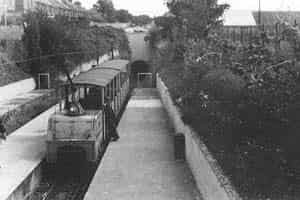
While the track was soon lifted, the station building, purchased by the Town Corporation, was leased to Thanet Amusements Ltd. who built their Pleasureland Amusement Park. Having opened a fun fair and zoo, the company was keen to utilise the former railway tunnel and after considering a number of possible proposals decided on a narrow gauge ‘scenic’ railway running from the southern tunnel portal where they built ‘Beach Station’, to a new terminus at ‘Hereson Road’ a few minutes walk from the Southern Railway’s Dumpton Park Station.
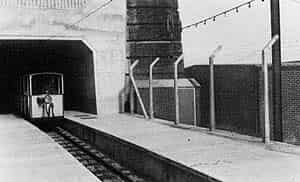
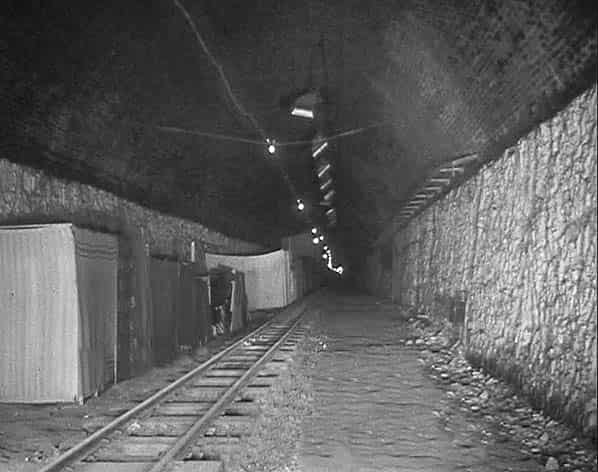
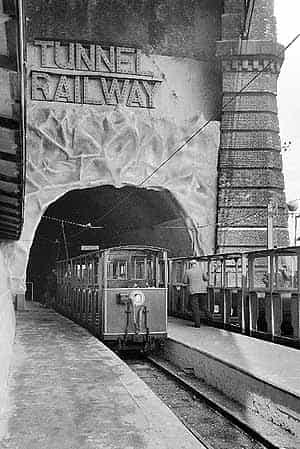
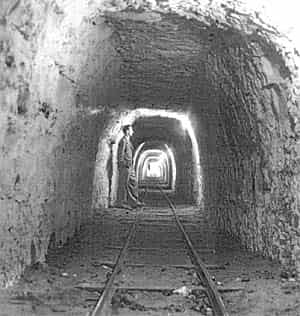
The scenic railway utilised the first 800 yards of the railway tunnel from where a new 300 yard narrow gauge (8' X 6') spur tunnel was constructed. The spur curved to the northwest at a gradient of 1 in 15, emerging into the new station at Hereson Road. The contract for the work was awarded to Holborn Construction who in 1936 built a single track line with a passing loop just short of the spur junction, and three tracks serving two wooden platforms at each station
The ‘World Scenic Railway’ as it was called, opened for business on August Bank Holiday 1936. Each carriage was fitted spotlights to illuminate tableaux on the tunnel walls.
At the outbreak of war in September 1939 the railway ceased operations. Deep level shelters were not practicable in many areas but as Ramsgate was built on beds of upper chalk, tunneling would prove an easy and cheap task requiring no propping.
The town’s borough engineer and surveyor R.D. Brimmell conceived and planned a scheme for tunneling galleries out of the chalk. This was similar to the only other known network of deep shelters in Barcelona that Spain built during the Spanish civil war.
Following Hitler’s seizure of Austria in 1938 Brimmell put his proposals before the town council for submission to the Home Office for approval. The plan was rejected on the grounds that it was “premature”. Following Munich, the council approached the Home Office a second time but were again turned down. In the spring of 1939 when Hitler walked into Czechoslovakia, the council made a third appeal to the Home Office who relented and excavations began. By the outbreak of war, work was nearing completion on what was to become one of the most extensive network of deep air-raid shelters anywhere in the country. Plans were soon in hand to incorporate both the standard gauge and narrow gauge tunnels in to the shelter network. The tunnels would be linked to a further 3.25 miles of new tunnels skirting the town in a semi-circular route.
The contract for this immense undertaking was awarded to Francois Cementation Co. Ltd., at a cost of £40,383 with an additional £13,481 for seating, lighting, chemical toilets and the costs of converting the existing tunnels.
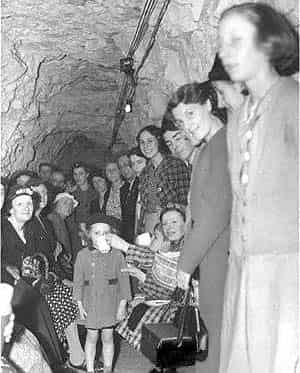
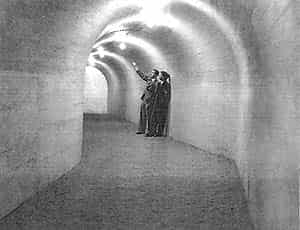
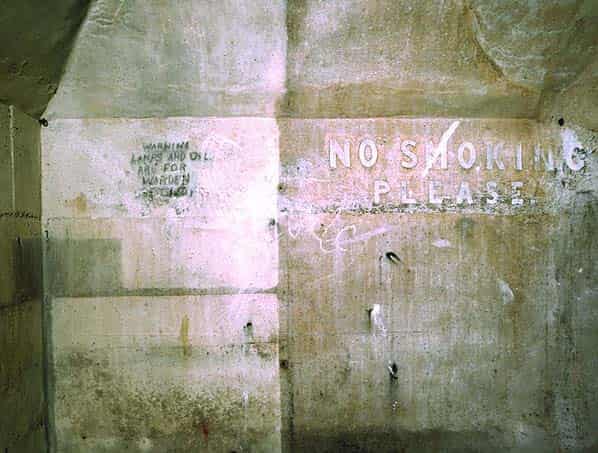
Work proceeded night and day and the first section of the network between West Harbour and Queen Street was opened by the Duke of Kent on 1st June 1939 with the contract due to be completed by the end of that year. As each new section of tunnel was opened it received it’s allocation of local people with strict regulations enforced; smoking was forbidden and pets and prams were not allowed underground. The first section opened had batteries and a generator but the rest of the tunnels had to rely on the town supply, which was at times erratic. Eventually the council provided 200 hurricane lamps. There was also a system of loudspeakers to relay wireless programmes and announcements.
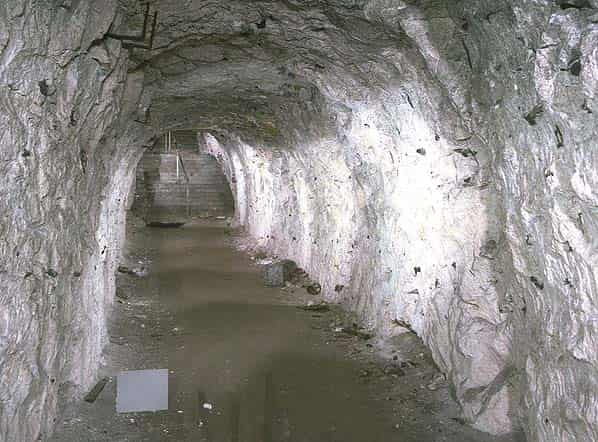
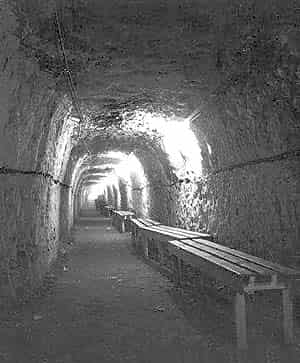
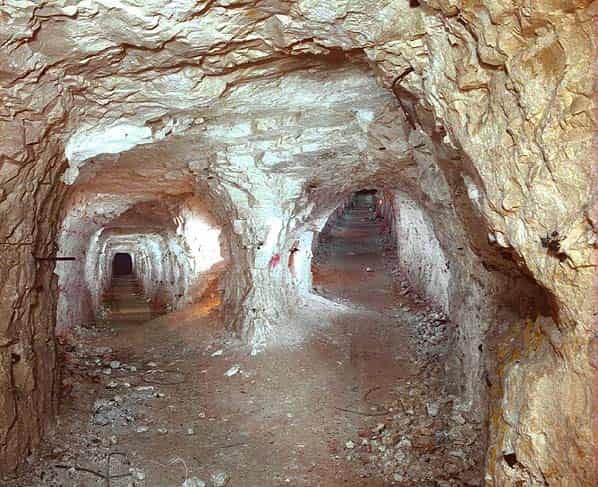
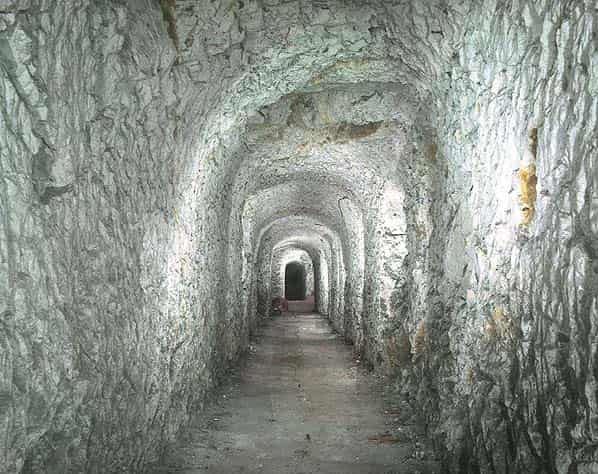
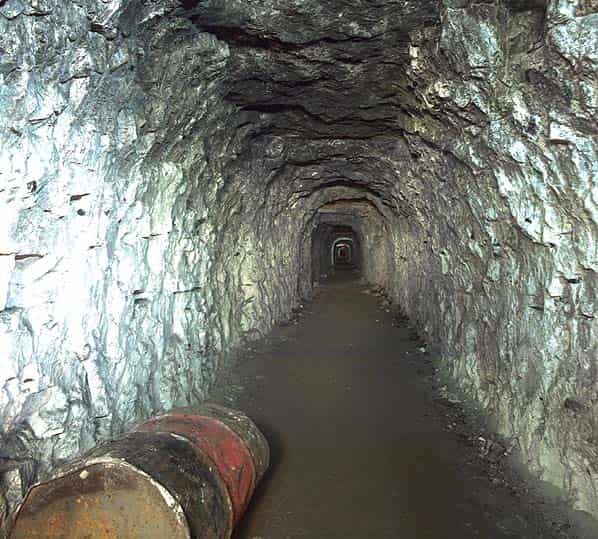
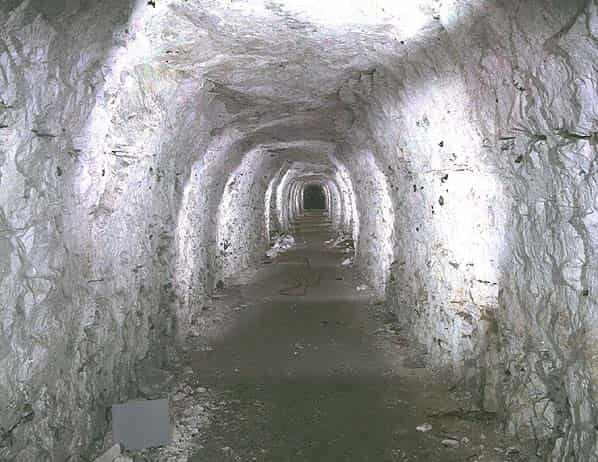
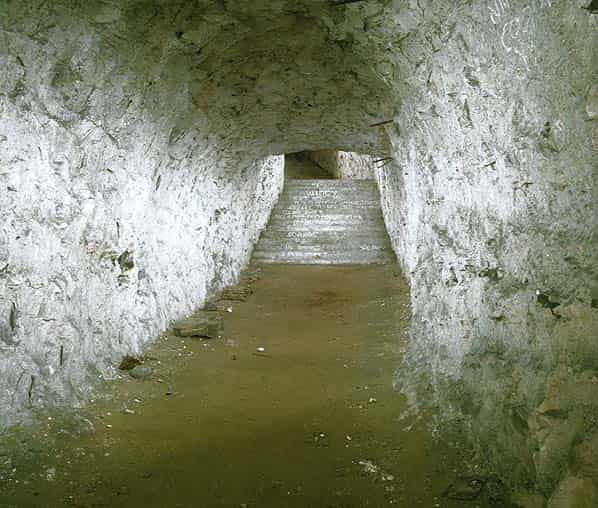
The tunnels ran at a depth of 50 to 90 feet, following the line of existing roads wherever possible. For most of its length they were unsupported and un-lined but the entrance tunnels close to the surface and a few short sections through unstable ground were lined with reinforced concrete. For most of their length the new tunnels were 6' wide by 7' high with toilet recesses fitted with curtains at 75 foot intervals and a first aid post every 1000 feet.
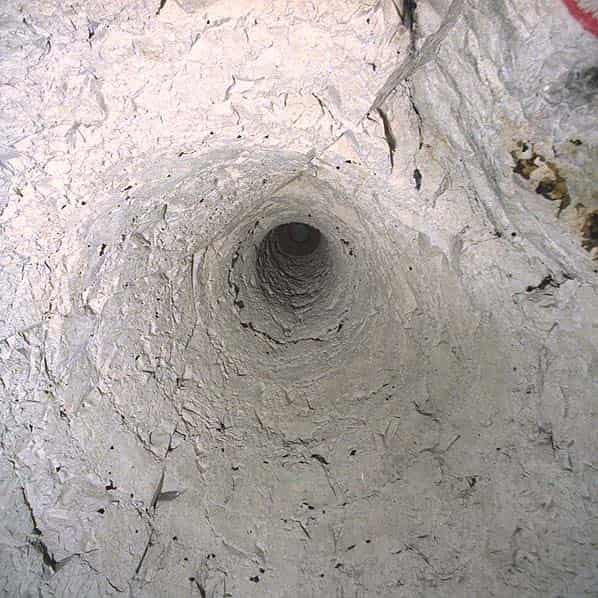
There were ten ventilation shafts throughout the system with manhole covers (still visible) in the roads above. There was seating for 35,000 but the shelter was expected to hold 60,000 without difficulty.
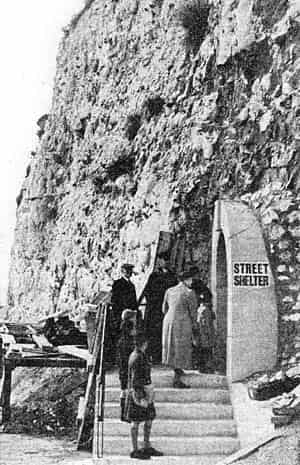
There were numerous spur tunnels serving 10 entrances located mainly in public parks and open spaces, (one of them at Vale Square was filled in before the shelter opened as the area was well served by two other entrances) with an 11th entrance in the hospital as a quick route for taking patients down from the wards and casualties up into the hospital.
It was said that nowhere in the town was more than 5 minutes walk from one of the entrances. Each entrance was fitted with a steel gas tight door and these were closed in rotation to help ventilate the tunnels. In fact with two open ends to the railway tunnel and ten ventilations shafts the flow of air was too great at times and had to be controlled with regulators.
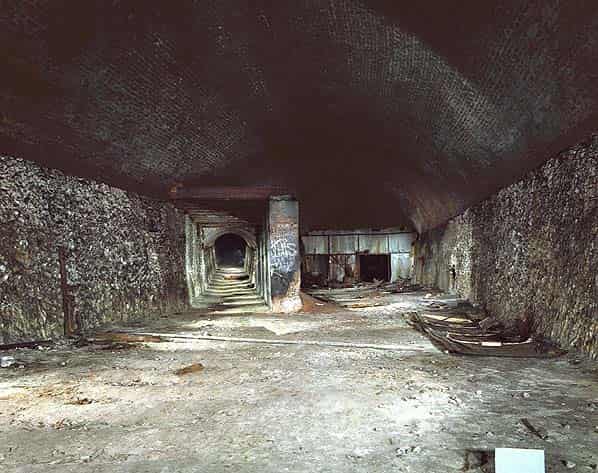
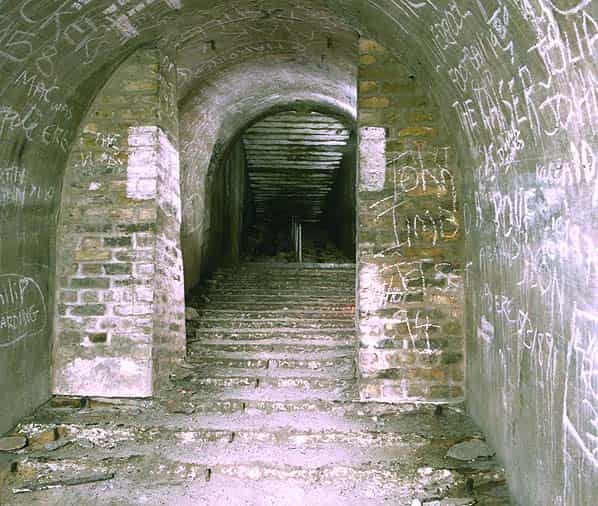
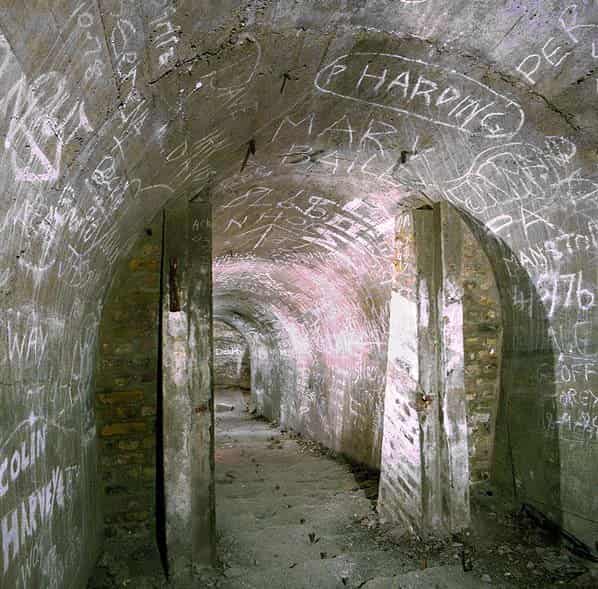
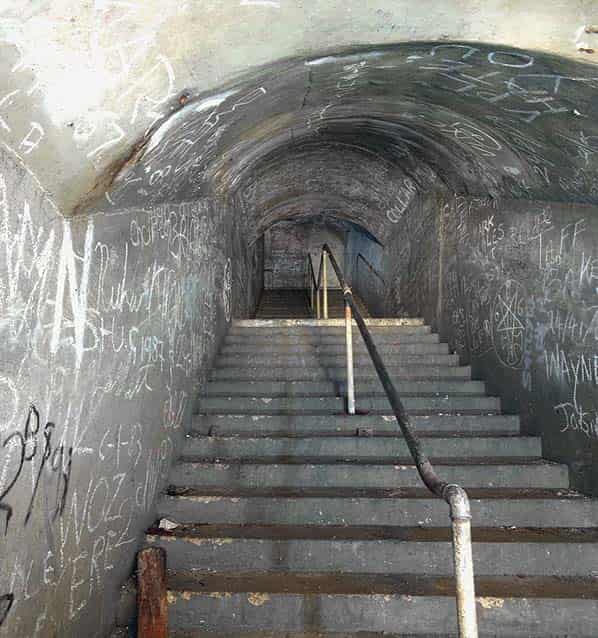
As well as an entrance at both ends of the railway tunnel and at Hereson Road Station, three further entrances were constructed from the east wall of the standard gauge tunnel, one serving the Synagogue and Dumpton Park Drive and a double entrance serving The Esplanade (now Marina Esplanade) at sea level and Victoria Parade 40 feet above the Esplanade (accessed by steps).
These entrances were served by a network of narrow tunnels one of which broke through into the bottom of an old chalk mine or chalk well.
The shelter was quick to prove its worth as Ramsgate saw regular air raids. During one such raid, Ramsgate received a famous visitor, Prime Minister Winston Churchill, who was visiting the town at the time.
On hearing the sirens he was ushered to the Queen Street entrance but as he was about to enter, the Mayor noticed he had just lit one of his legendary cigars. The Mayor tactfully pointed out that smoking was not allowed underground and Mr. Churchill is reported to have said, “There goes a good ‘un”, as he threw it to the ground.
After the war most of the entrances were sealed but in 1946 the Scenic Railway restarted its seasonal service running daily from Whitsun Bank Holiday until the end of September.
A landslip at the southern terminus kept the line closed in 1957. The tunnel portal was rebuilt and at the same time the original 3 wooden platforms were removed from both stations and replaced by 2 concrete platforms, reducing the line to single track throughout. The only major incident during its 29 year history occurred on 1st July 1965 when a southbound train crashed into the buffers at Beach Station.
Five passengers were slightly injured and the driver was taken to hospital. This marked the end of the railway; the new owners closed the service at the end of the 1965 season.
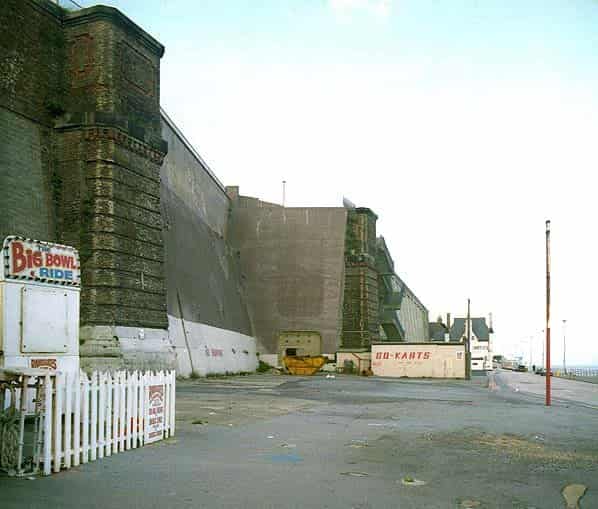
The sunken Hereson Road station was in-filled along with the tunnel portal and a garage now occupies the site. A section of one of the concrete platforms at Beach Station still exists just inside the tunnel portal.
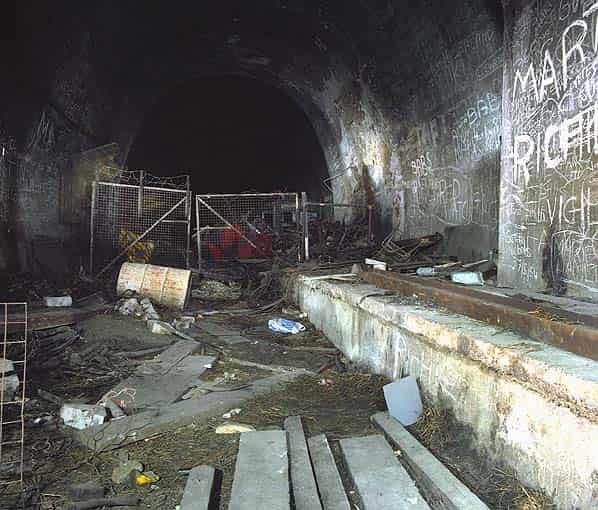
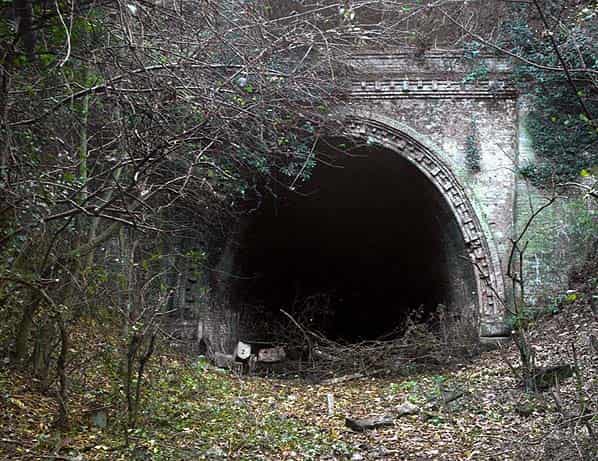
The gate was eventually welded shut in the 1980’s. In 1996 the entrance was rebuilt and a new lockable door installed. The local authority strictly controls access at this point. The north portal of the standard gauge tunnel remained open and accessible until the late 1980’s when it was fitted with a grille. This didn’t deter vandals who were able to cut an opening to gain entry, so in 2000 metal plates were welded across the grille preventing further access.
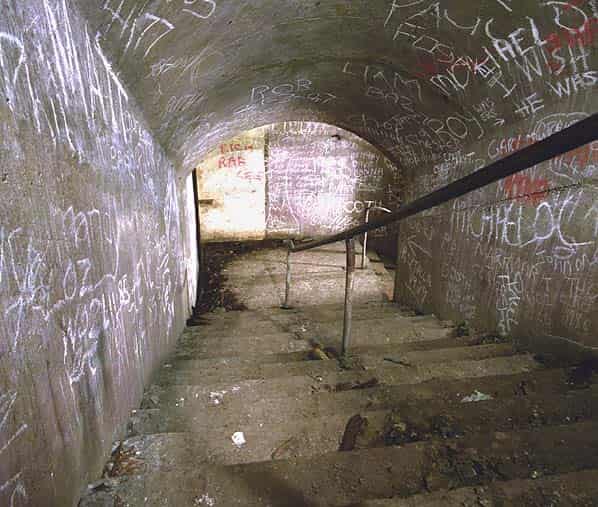
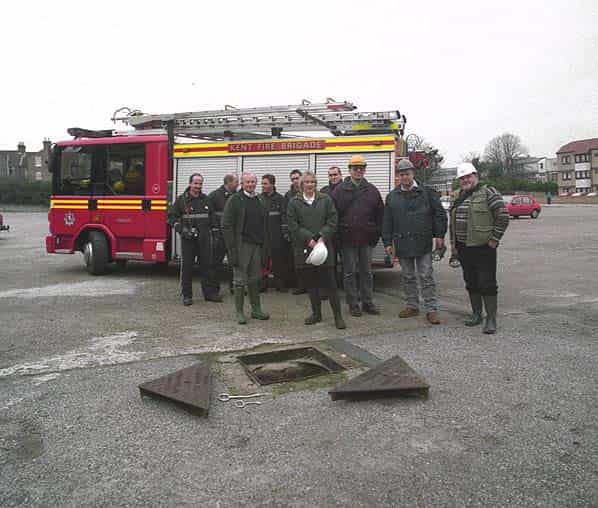
Most of the entrances to the shelter tunnels have been back-filled and there is little evidence today to show where they were. Cannon Road car park has been retained by the council as an access point into the system. The original entrance stairway has been slabbed over and tarmaced and access is now through a locked manhole with a short ladder.
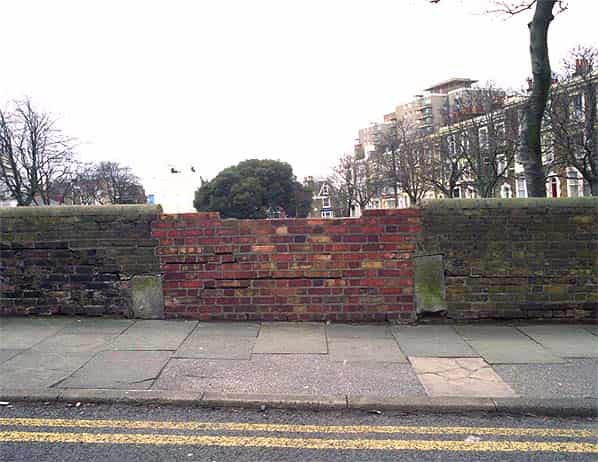
Several other entrances have left some evidence above ground; the two in Ellington Park can be identified by a discolouring in the grass, Townley Castle is visible as a raised area of concrete slabs in the car park, St. Luke’s Recreation Ground is clearly visible with concrete slabs covering the top of the stairs, and at Arklow Square a change in the brick work in the wall around the square is the site of the entrance.
The West Cliff Harbour entrance has been sealed with concrete blocks and the Esplanade entrance can be seen as a bricked up archway between two houses.
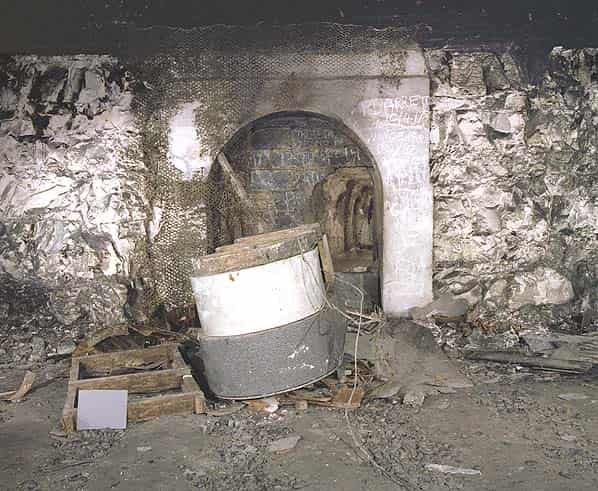
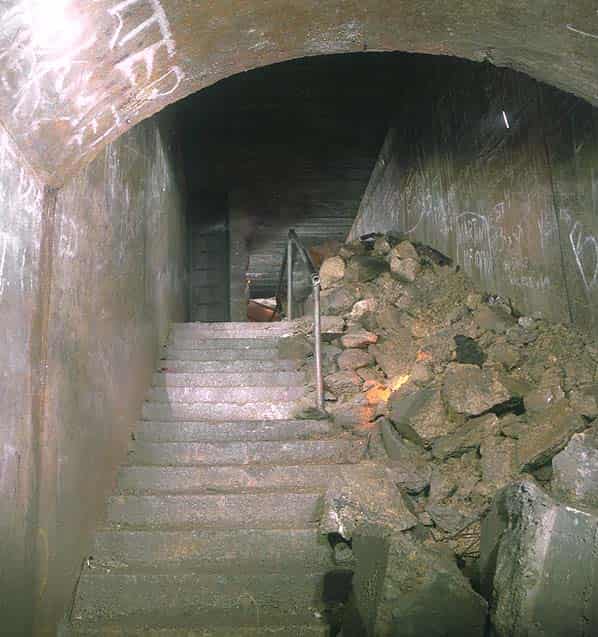
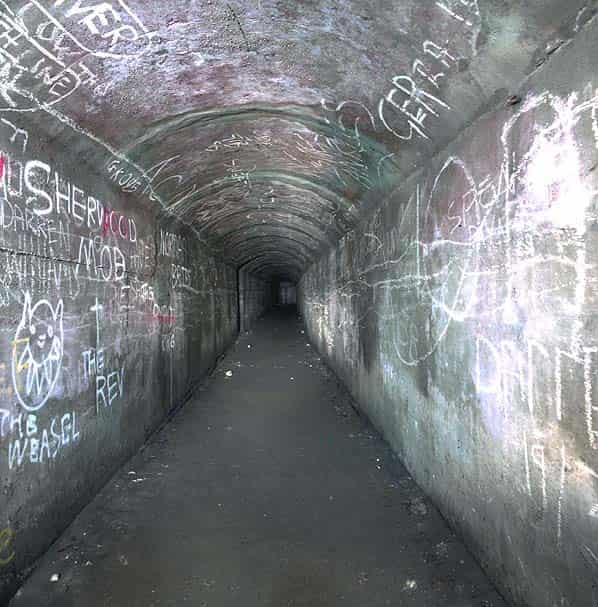
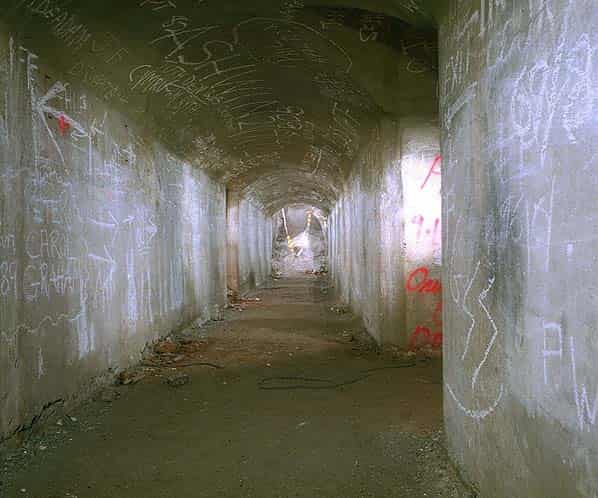
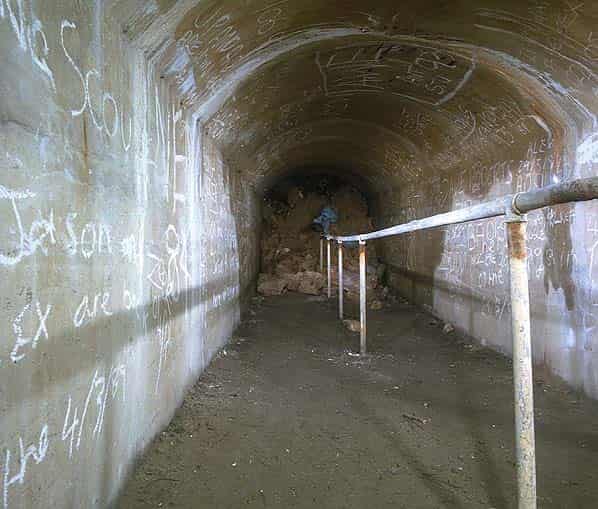
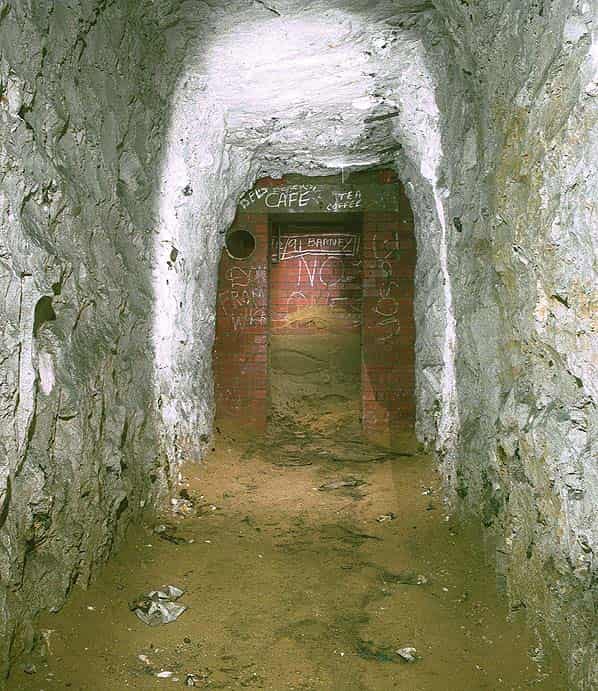
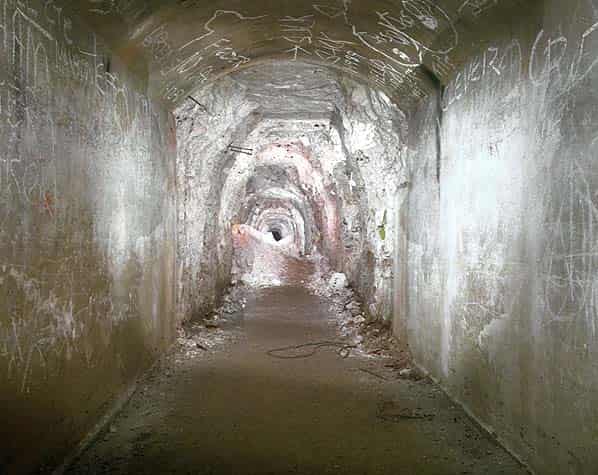
Below ground, the network of tunnels are largely intact though only now accessible with permission. The standard gauge railway tunnel is in good condition as is the narrow gauge spur tunnel which ends at a brick wall. Beyond this is the infill from the Hereson Road station site. Just south of the junction, worn narrow steps climb up to the former Dumpton Park Drive entrance which has been slabbed across at the top of the steps.
Close to the junction with the newer shelter tunnels is the network of narrow tunnels leading to the Esplanade and Victoria Parade entrances. There is a blockage before the start of the steps up to Victoria Parade.
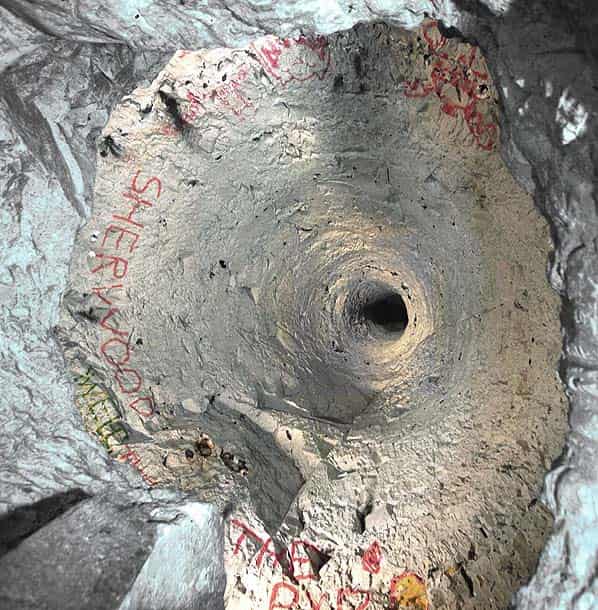
It is still possible to climb up onto the original floor of the chalk well, which consists of a conical chamber 12 feet across and 30 feet high. What appears to be a wooden cap can be seen in the shaft at roof level.
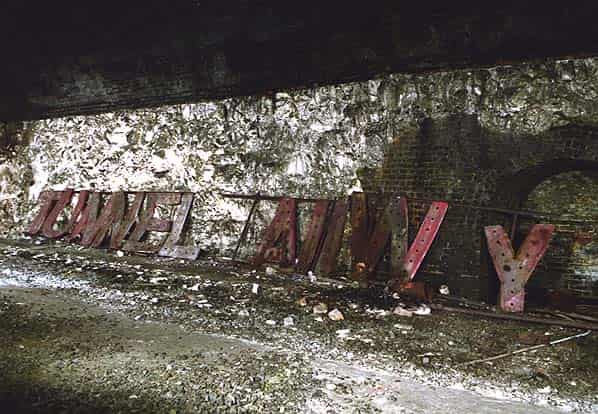
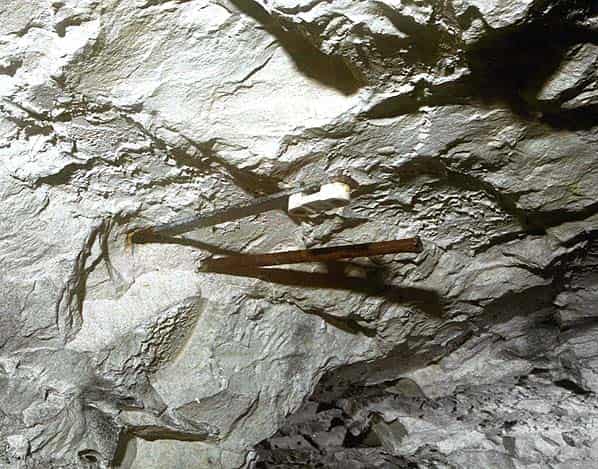
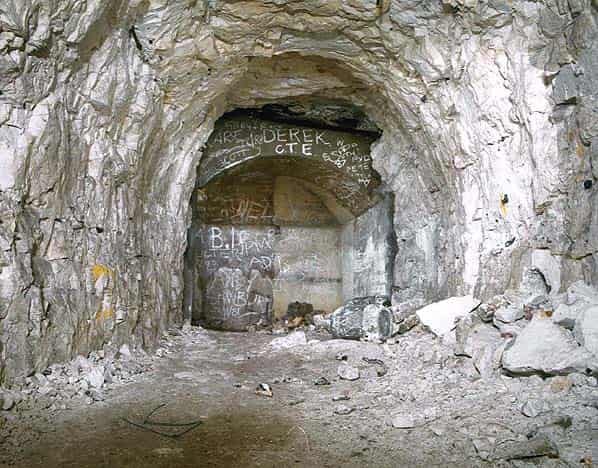
Close to the southern portal the letters for ‘Tunnel Railway’ which were once mounted above the portal, are leaning against one wall. The shelter tunnels are in good condition as far as the branch to St. Luke’s Recreation Ground with one short section lined in concrete through unstable ground. Beyond this point there has been a roof fall that totally blocks the passage and further progress. The remains of electrical fittings are visible in the tunnel roof and remnants of curtains can be seen across some of the toilet recesses.
Beyond the blockage are two smaller falls that can be climbed over but BEWARE if you should find your way into the tunnels as there is bad air between these falls and the total blockage. This area should NOT be entered. The branch tunnel to St. Georges School passes through unstable ground and is lined with concrete. The Townley Castle entrance has not been backfilled, only slabbed over and it’s still possible to see daylight through the cracks between the slabs.
Beyond the inclined passage up to the Cannon Road Car Park entrance there is a T-junction and beyond this point progress is difficult and soon becomes impossible. A sewer pipe runs the length of the section from Ellington Park to the Harbour. It is possible to crawl along the top of the sewer pipe for a short distance towards Ellington Park and two small rooms can be reached on the south side of the tunnel but beyond these it is too tight to make further progress. The final section is the best preserved of all with painted signs and notices remaining on the walls and a white brick lined room is accessible below the hospital. Beyond the Hospital/ Queen Street Junction the sewer pipe again halts progress. There is a major collapse under Liverpool Lawn.
The future of the tunnels seems secure although it is unclear if they will ever be put to any other use.
Thanet District Council have had grand plans to open up at least part of the network as a tourist attraction and in 1996 held a series of meetings and a tunnel visit with members of Subterranea Britannica and the Defence of Britain Project to discuss various possibilities for future development. The idea seems to have been shelved, at least for the time being, and this unique 4 mile network of railway and shelter tunnels lies abandoned and forgotten.
Currently five carriages from the Ramsgate Tunnel Railway are stll in use on the narrow gauge steam railway at Hollycombe