Following the development of radar at Orfordness and at the Bawdsey Research Station in Suffolk during the mid 1930’s, the Air Ministry established a programme of building radar stations around the British coast to provide warning of air attack on Great Britain. A survey was undertaken in 1938 to assess the suitability of the local terrain for Air Defence Radar operations with the first of these new stations coming on line by the end of the year. This network formed the basis of a chain of radar stations called CHAIN HOME (CH).
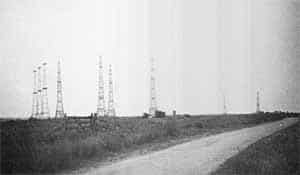
These stations consisted of two main types; East Coast stations and West Coast stations. The East Coast stations were similar in design to the experimental station set up at Bawdsey in 1936. In their final form these stations were designed to have equipment housed in protected buildings with transmitter aerials suspended from 350' steel towers and receiver aerials mounted on 240' timber towers.
The West Coast stations differed in layout and relied on dispersal instead of protected buildings for defence. Thus the West Coast stations had two transmitter and receiver blocks with duplicate equipment in each. Transmitter aerials were mounted on 325' guyed steel masts with the receiver aerial mounted on 240' timber towers.
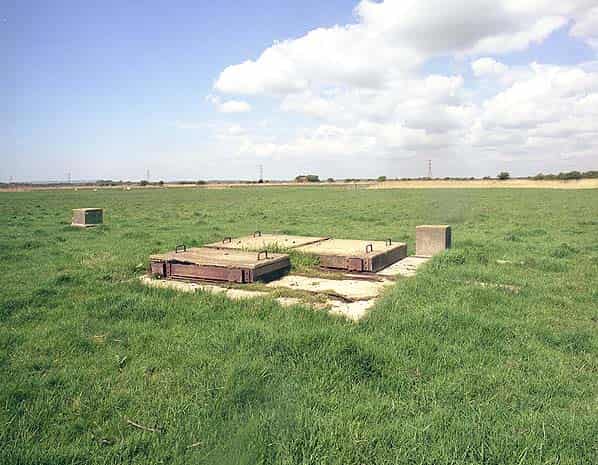
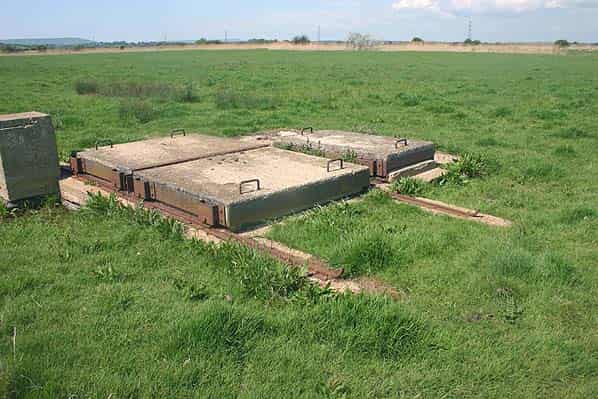
The majority of Chain Home stations were also provided with reserve equipment, either buried or remote. Buried reserves consisted of underground transmitter and receiver blocks, each with three entrance hatches (two for plant and one for personnel) set on steel rollers. Nearby were the emergency exit hatch, ventilation shafts and 120' wooden tower carrying the aerials. On some stations the transmitter and receiver buried reserves were together on an adjoining site (often the next field).At others the two buried reserves were separate but located close to their respective above ground building. Many of the West Coast stations had remote reserves some distance from the main station but utilising similar above ground transmitter and receiver blocks.
Most stations were powered from the National Grid but they were also provided with generators to cover interruptions in the mains electricity supply. These were located in another protected building known as a stand-by set house. These were similar in design to the transmitter and receiver block although smaller and were of brick construction and surrounded by a traverse (earth banks) for blast protection.
The East Coast Chain Home station at Pevensey was built in 1939. It was originally intended to build the station at Fairlight, east of Hastings but the local landowner objected, considering the aerial masts to be unsightly. In order to provide the same coverage as the proposed station at Fairlight two new stations were required one at Rye and the other at Pevensey. Pevensey was the worst site in the southern group as the whole area was flooded and the buildings were sited in silt subsoil and continuous pumping was needed during the construction. Pevensey faced south (line of shoot) for attack across France from Germany. It was in the right position for the Battle of Britain.
As East Coast stations have only one channel, emergency mobile radars (MRU’s) were positioned near each Chain Home station. That for Pevensey was at Chilley Farm to the south west.
As first built, RAF Pevensey covered a considerable area of the Pevensey Levels, now Pylon Farm, but the transmitters and receivers were housed in sandbagged wooden huts with 90' guyed wooden masts and a mobile generator. This was known as an advanced Chain Home prior to the building of a permanent station.
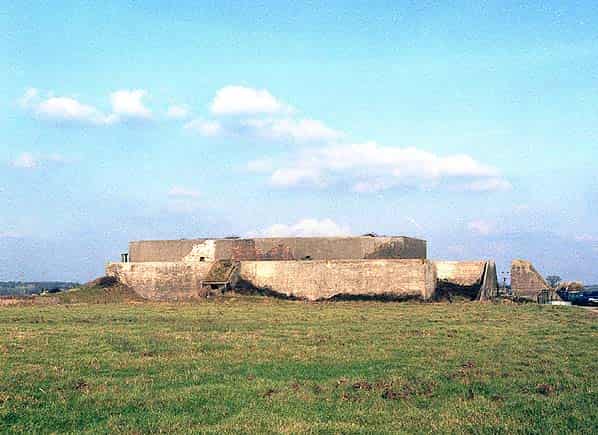
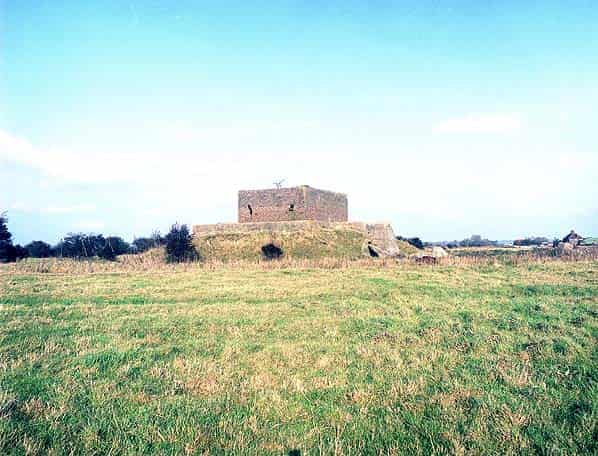
Upon completion of the standard East Coast station, the operations blocks gave a much higher level of protection against attack. These were of brick, built on the surface but surrounded with a traverse and topped with a six foot thick shingle filled concrete sandwich roof. Shortly after completion the blast from a German bomb dislodged several tons of shingle, some of it falling into the receiver building; the damaged ceiling is still clearly visible today.
RAF Pevensey was one of the original 20 Air Ministry Experimental Stations. As originally planned there should have been four 360 foot steel transmitter towers spaced 180ft apart and four 240ft wooden receiver towers in a rhombic pattern set at a distance from the transmitters.
At Pevensey however there were originally four transmitter towers but No. 1 tower was later dismantled and re-erected in the far north. This was because of the urgency involved in the Chain Home programme, the ‘state of the art’ of prewar radio technology and the shortage of steel. It was originally planned that each station would operate on four spot frequencies in the 50-20 MHz range, (6-15 metre wave length), with the transmitting aerials suspended between the platforms at 50, 200 and 350 feet.
However, it was soon found that the radiation pattern was not as good as it theoretically should have been and to overcome the difficulty, a larger curtain array of dipoles and reflectors, suspended on high tensile steel cables slung between towers, was the answer. At the same time it was decided that four frequencies per station would lead to delays and was, in any event, unduly optimistic of achievement. The number of frequencies was reduced to two in the 30-22 MHz range, (10 -13.5 metre bands). As two suspended arrays could be supported between three towers, (the middle one being common to both arrays), those stations still under construction would have one tower deleted from the original plan even if four bases had been cast.
Chain Home was at the forefront of a reporting network resulting in warning data being forwarded to the Fighter Command filter room at Bentley Priory where it was analysed and displayed on the Fighter Command operations table. The information was then told to the Fighter Group HQ’s from where the controller allocated the raids to be intercepted from sector airfields and controlled by the sector operations centre during the day and the fledgling GCI radar stations during darkness. The new GCI station, RAF Wartling, built on the opposite side of the road to RAF Pevensey is an example of this, becoming operational during the early years of WW2.
RAF Pevensey was short lived and by December 1945 the station was described as ‘caretaking’ (Air 25/686 Appendix A) with its future also listed as ‘caretaking’. As the station was not required for the post war rotor radar programme both RAF Pevensey and RAF Rye were offered for sale by public auction in Battle (Sussex) in November 1958. The inventory of buildings and equipment offered for sale at the two sites was listed as ‘Brick sectional timber and handcraft buildings, 6 350 foot steel towers, 2 water towers and the contents of the buildings including 2 Mirrlees 102 hp diesel engines, electrical equipment and all fittings, steel and timber doors and windows, air ventilation systems, fuel and water tanks, sewage pumps, electric motors, tubular wall heaters, RSJ’s, baths, sinks and power cables’.
RAF PEVENSEY TODAY
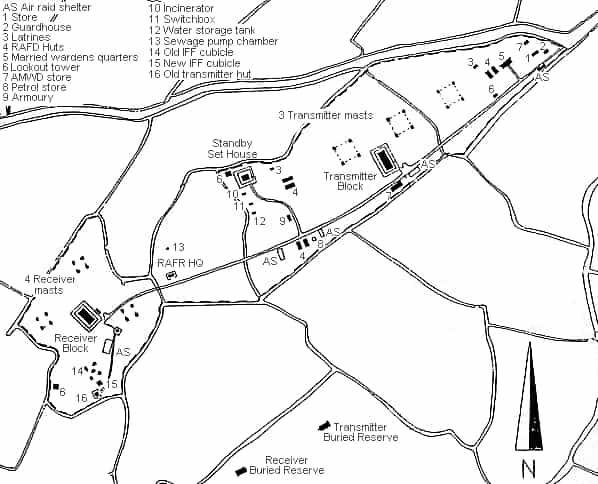
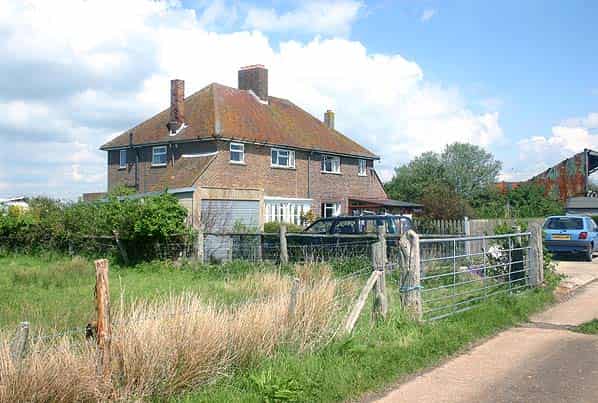
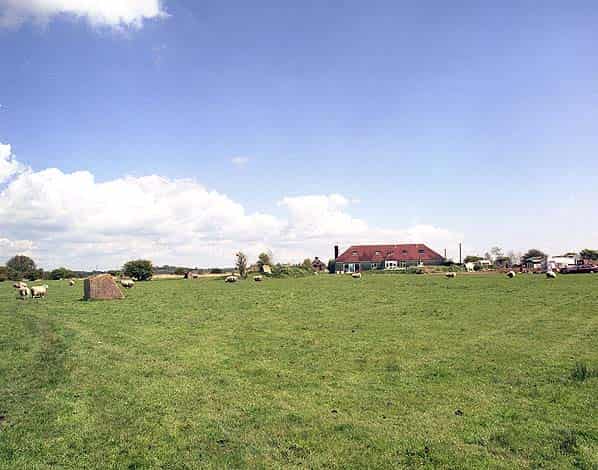
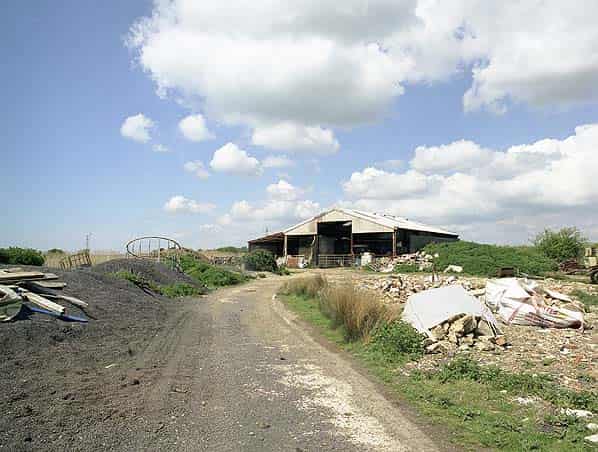
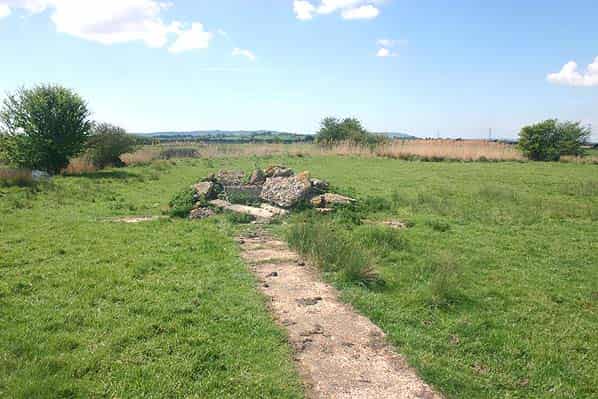
RAF Pevensey is located on Manxey Level, a part of the Pevensey Levels, half a mile to the west of the Pevensey to Wartlng Road. The site is entered at the end of a dead end public road. The original gate posts still stand and just inside the gate there is an air raid shelter on the left hand side of the road and the two Air Ministry wardens houses on the right hand side of the road; these are now renamed Pylons Cottages. After 200 yards Pylons Farm house stands on the right hand side of the road. The farm house is a modern bungalow standing on the site of the transmitter block which was demolished in December 1987. A concrete guying anchorage point can be seen in the field beyond the farm house. It is unclear what purpose this served as the transmitter towers were not guyed.
The original concrete road continues in a south westerly direction towards the receiver block which can be seen in the distance. After a further 100 yards a road turns off to the east, opposite this junction there is another air raid shelter on the south side of the road, the front has been removed and it is now used as a store.
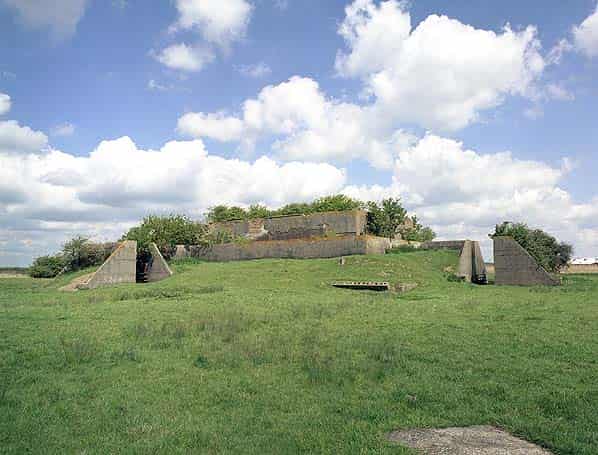
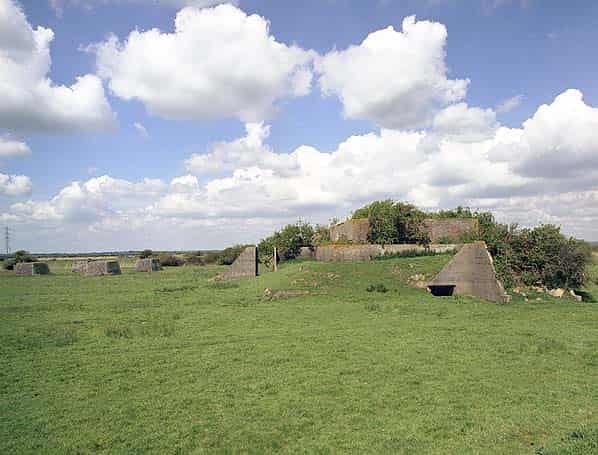
Turning right at the junction the stand-by set house is reached after 100 yards. When visited in 1987 this was still standing and in good condition but today it has changed out of all recognition. The brick built stand-by set house has been demolished leaving the blast walls that surrounded the building. The southern wall has been removed to create an open front and a new hipped roof was added in 2003. The earth banks surrounding the blast walls have also been largely removed. The building is now used as a farm machinery store.
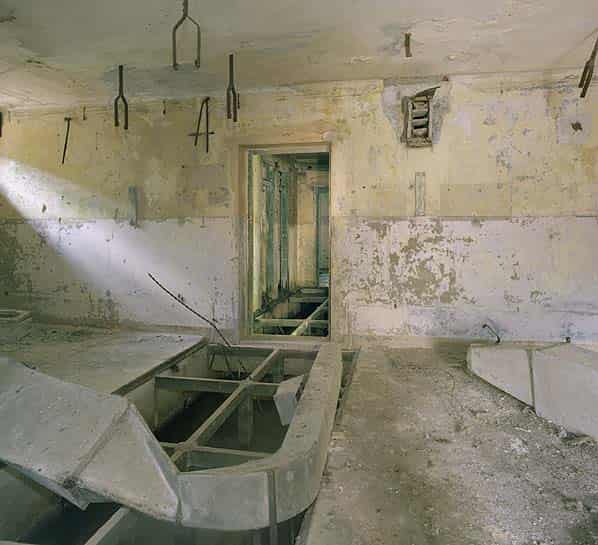
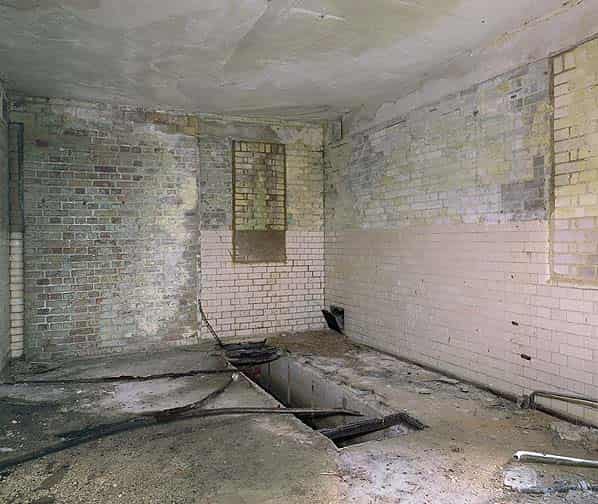
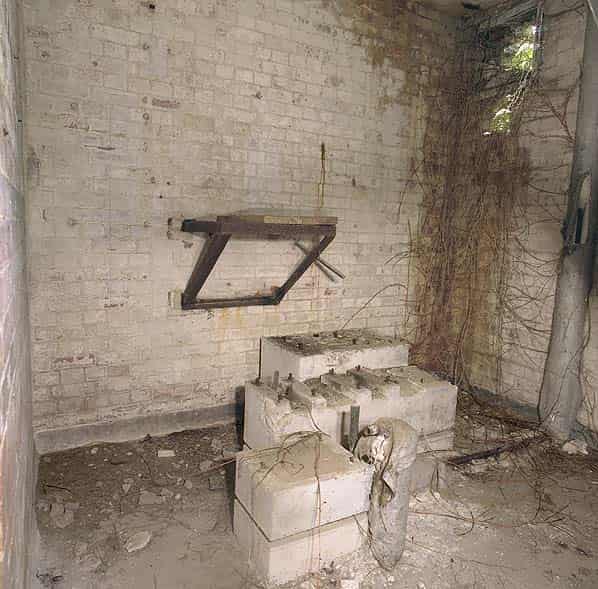
The main spine road carries on in a south westerly direction passing another air raid shelter on the left and the foundations of other buildings on the right. After a further 150 yards the receiver block is reached. This is the only one of the three protected blocks still standing in anything like its original condition. The block still retains its earth traverse with two ways through to a ring path around the outside of the brick building. Inside the building the partition walls are still in place maintaining the original room layout although all the rooms have been stripped of any original fittings. The floorboards in the main spine corridor have also been removed making access through the difficult as the underfloor area is flooded.
The main tiled receiver room is at the north west end of the building, this has a long rectangular open cable duct in the floor. The ventilation plant room has a number of small concrete beds. There is ventilation trunking in the building with some sections of it lying on the floor. On the south side of the building there is a Stanton air raid shelter which is flooded.
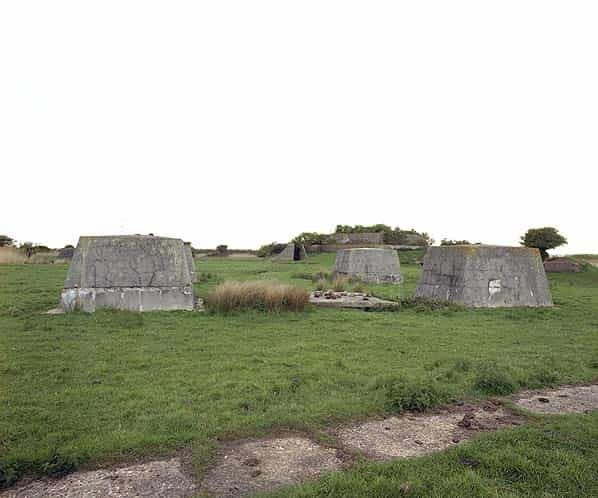
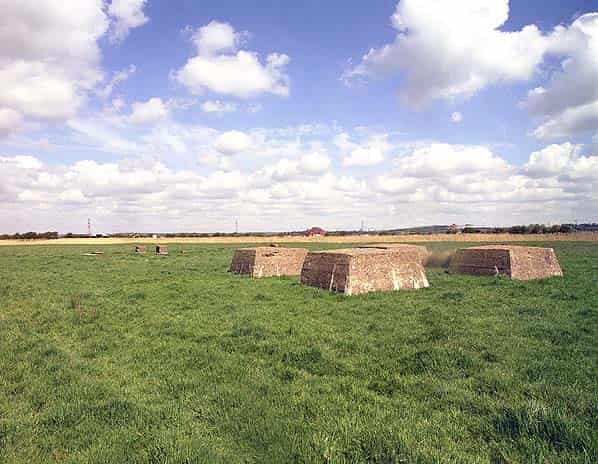
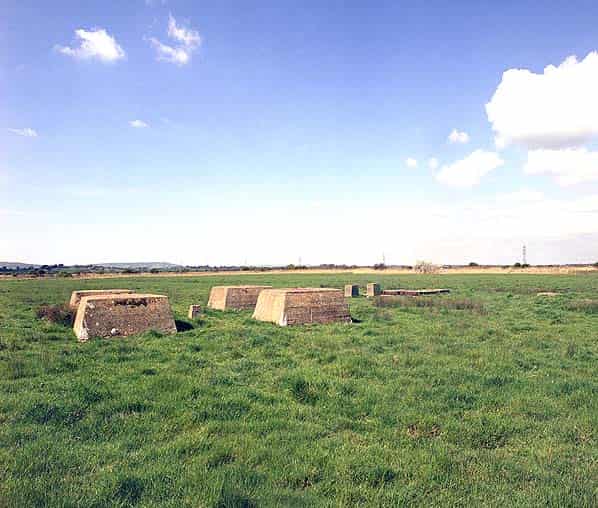
The four receiver tower bases are arranged in a rhombic pattern around the operations block, each of them consisting of four large concrete bases each supporting one leg of the tower. Underneath the southern tower are the collapsed remains of the original IFF hut. A concrete path runs south from the operations block to the collapsed remains of the later IFF hut.
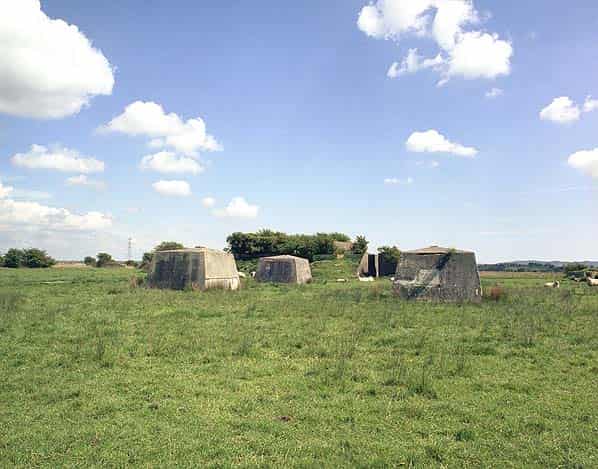
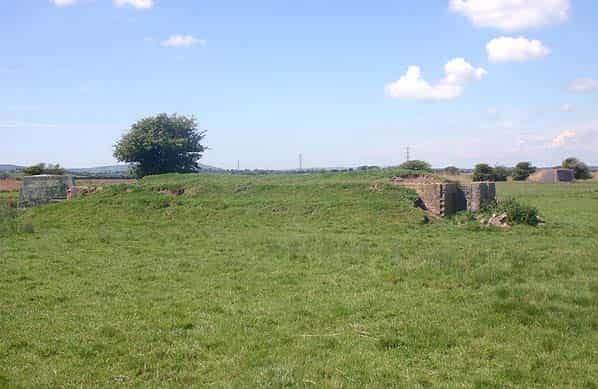
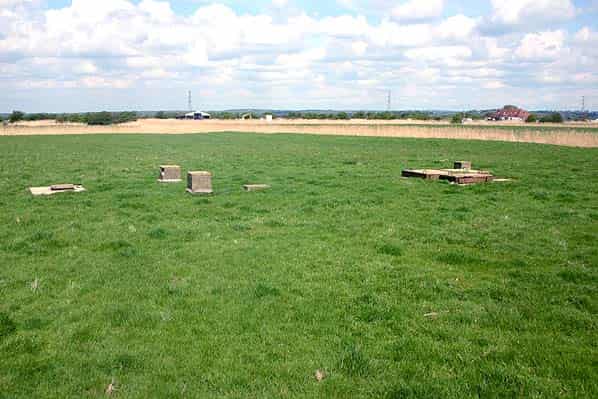
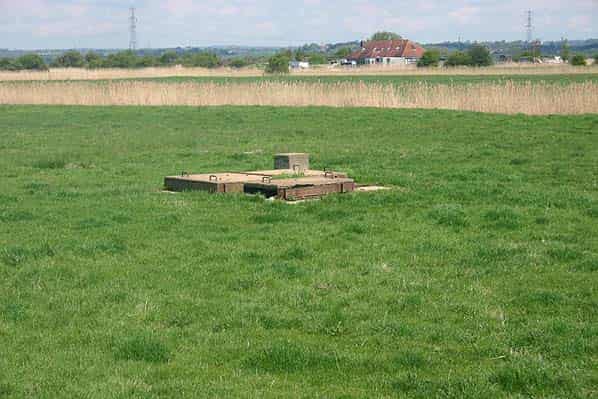
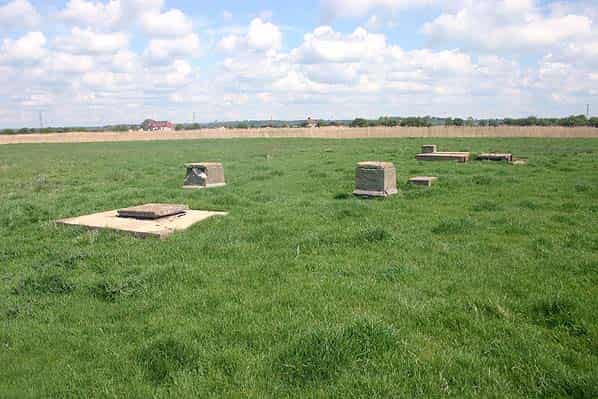
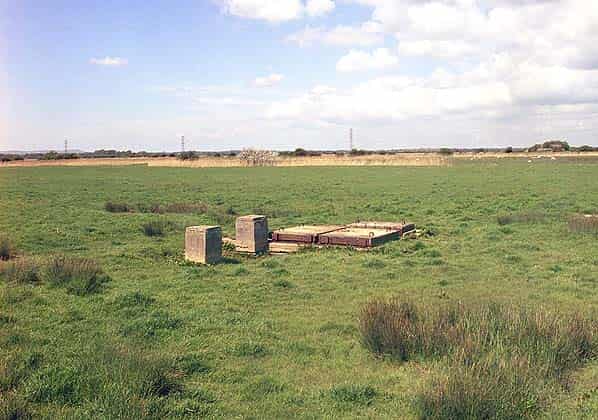
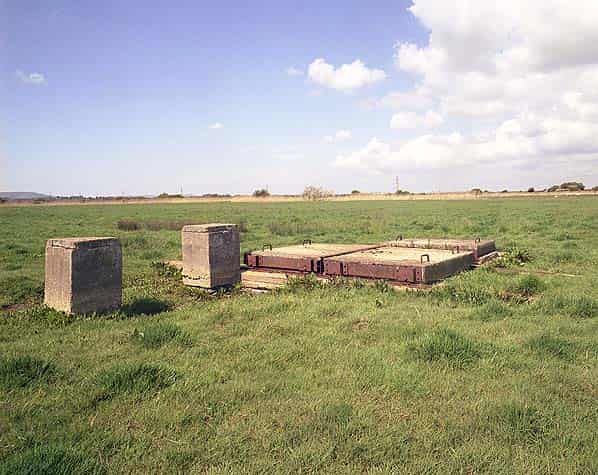
The two buried reserves are 75 yards apart in a field 150 yards to the south of the main spine road. The transmitter buried reserve to the east has four concrete bases for the transmitter tower.
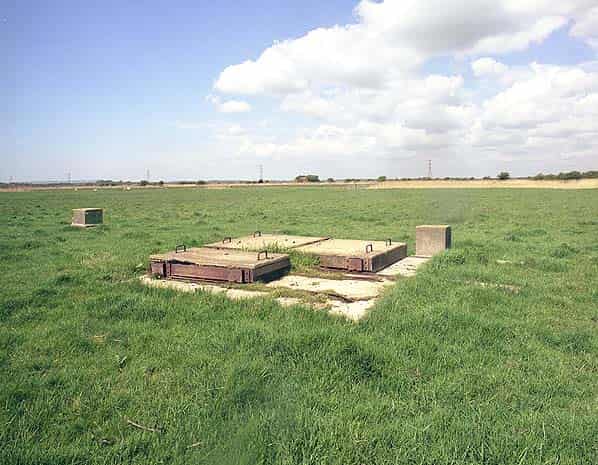
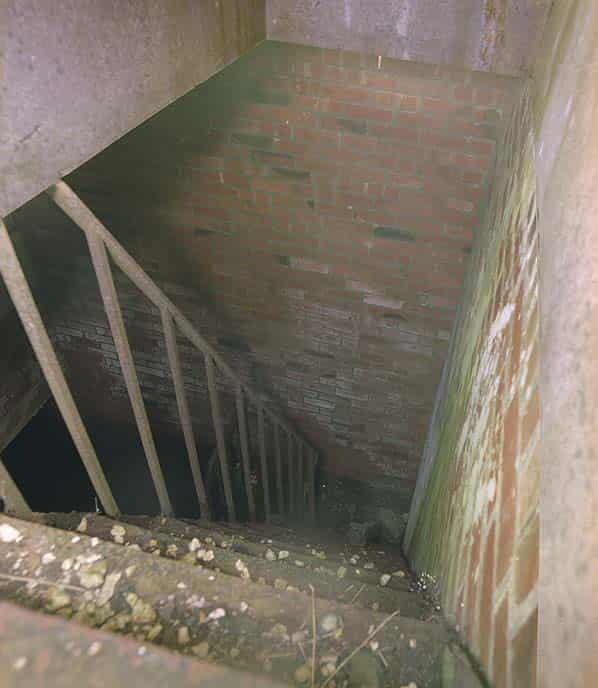
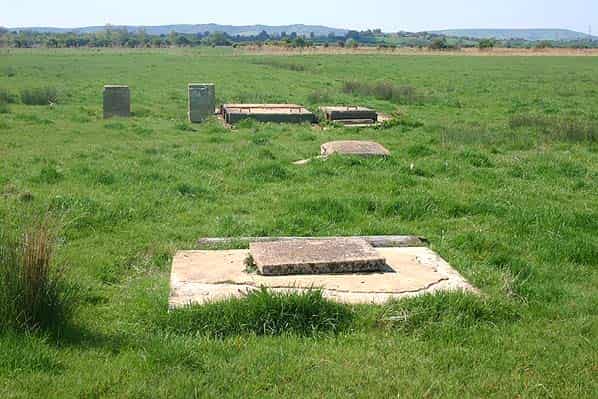
Close by are the three concrete hatches mounted on rollers flush with the ground. The larger pair were for plant and the smaller hatch which opens on to a steel stairway was for personnel. None of the hatches will now move but there is sufficient space to see through and the bunker is flooded just below the middle landing on the stairway. When visited in 1987 it was possible to open the hatch and descend the ladder down to the floodwater. Close by there are the remains of two ventilator towers and the hatch for the emergency exit. This has been capped with a concrete block.
The receiver buried reserve to the west leaves identical remains but is flooded to within a couple of inches of the surface.
A number of concrete foundations from other buildings can be seen scattered around the site.
Sources:
- Bob Jenner
- A Sussex Sunset by Peter Longstaff-Tyrrell ISBN 0 9521297 0 1 published by Gote House Publishing
- 20th Century Defences in Britain ISBN 1 872414 57 5 published by Council For British Archaeology