In the 1930’s there were several schemes to provide protected accommodation for central government and the armed services away from Whitehall in the event of a devastating attack on central London. Several locations were proposed including sites in the West Midland and Wiltshire but as war was approaching in 1939 the government became committed to the North-West London Suburbs Scheme which included the building of three subterranean reserve war rooms for the military and the government.
The Air Ministry was to have a bomb-proof citadel at Harrow Weald (Station Z) and the Admiralty at Oxgate in the far north of Willesden. The War Office’s citadel at Kneller Hall, Twickenham, could not be protected securely enough to be bomb-proof so a third bunker was proposed at Dollis Hill which later became known as Paddock and also housed the stand-by cabinet war room.
Since 1923, the Admiralty had occupied a naval charts establishment on a site close to the Edgware Road between Humber Road and Oxgate Lane, about 500 yards south of Staples Corner. When, in 1937, a plan had to be formed for creating a bomb-proof Admiralty citadel in the north-west suburbs, it was thought that this site (known as Admiralty Chart Factory, Cricklewood) could be ‘innocently enlarged’ in peacetime by using the oblong acre of vacant land which lay between the factory and Oxgate Lane, fronting the Edgware Road for some 70 yards and Oxgate Lane for nearly 50 yards. The building work could be done ‘without giving rise to suspicion’ while an aerial survey of the district made for the Office of Works by the Air Ministry showed that in this part of London it would be difficult for enemy bombers to pick out individual targets. The Office of Works nevertheless suggested that two landmarks in the vicinity, both easily recognisable from the air, might need to be concealed. It was suggested that the Welsh Harp should be drained and the marshalling yards of the L.M.S. railway’s Brent sidings could be disguised by painting white lines across them to suggest roads. Neither of these steps was in fact taken.
In May 1937 experts from the Office of Works and the Admiralty visited the Oxgate Lane site to assess possibilities, after which an Office of Works architect, C. J. Mole, produced a design for a three storey building above ground, plus an upper basement and a specially protected lower basement; this later influenced the design of the citadel at Dollis Hill. As building operations, which started in late 1937, were expected to take two years to complete, it was arranged in mid 1938 that the Post Office Research Station in Brook Road, Dollis Hill should be designated as the Admiralty’s temporary reserve accommodation for use in an emergency, with space for the First Lord of the Admiralty, the First Sea Lord, the permanent secretary, the parliamentary secretary and the deputy chief of the naval staff. This was the situation at the time of Munich.
The Admiralty retained a reservation on this accommodation at the research station until December 1939, when they were able to occupy the Oxgate citadel with a small party of naval and civilian staff ensuring that, if Whitehall became unusable, essential naval operations could be directed for the time being from this secure alternative base. The three storey surface building now numbered 403 - 405 Edgware Road was completed a year later.
Because this was a sort of insurance policy, the staff who went to Oxgate were known within the Admiralty as the ‘insurance party’ and the Citadel acquired the code-name IP.
At first the ‘insurance party’ included one naval captain and seven naval commanders with a substantial staff. To support this nucleus, if the need were to arise, staff of lesser importance were to have been accommodated in evacuated schools in the neighbourhood like Mora Road council school in Cricklewood near Gladstone Park (capacity about 240) and Braintcroft school in Warren Road Neasden (capacity about 200) but it seems that in the event these schools, though requisitioned by the Office of Works on the outbreak of war after evacuation, were not in fact used for this purpose.
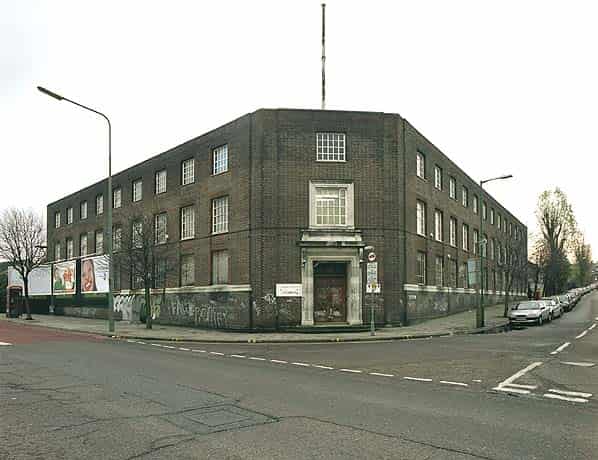
The superstructure of the IP building (known as The New Building to distinguish it from the original chart factory) was evidently completed in 1940 because the main entrance at the corner of Oxgate Lane and Edgware Road displays to this day the royal monogram GR VI with a crown and the date 1940, all in ‘gold’ metal, above the door - just as if this was a run-of-the-mill government building with nothing to hide. But the curious may have wondered why the entry for the chart factory which had been appearing regularly in Kelly’s street directory for about sixteen years was suddenly excluded in 1941, leaving a blank space. Another precaution for the sake of concealment was that all personal correspondence emanating from IP employees was taken down by courier to the Admiralty in Whitehall and posted from there.
It would have been surprising if there had not been considerable contact between IP and Paddock which was less than a mile from Oxgate. In January 1940 the commandant-designate of Paddock , which was still far from finished, was taken down to Oxgate to see what his own citadel might look like when completed. Later, the workers at both citadels were to be close neighbours in the flats of Neville’s Court.
The Admiralty was the first Department to move into Neville’s Court, taking four flats in late August 1939. A large corner flat on the second floor was taken for the First Lord of the Admiralty. Two flats were specially strengthened and knocked into one for Winston Churchill.
By March 1941 Paddock was almost in eclipse and the greater part of Neville’s Court had been de-requisitioned. But in June 1941 the Admiralty still held sixteen flats which were not relinquished until January 1945.
Admiralty officers who occupied flats in Neville’s Court were accustomed to walk down to sleep in the total security of the Oxgate citadel. One frosty evening in February 1942 Rear-Admiral Taylor, who was sharing Flat 11 with Vice-Admiral Blake, was nearing the end of this ten minute journey when he slipped on a patch of ice in Humber Road and suffered a fractured shoulder, which had to be treated in St Andrew’s Hospital nearby.
The New Building in Oxgate Lane (IP) continued to operate continuously into 1943, when it was described as the Admiralty’s stand-by in case the new Whitehall citadel got blitzed. But it had ceased to be operational by the end of 1944. After the war it was occupied for many years by the Health and Safety Executive but is now in private hands.
OXGATE CITADEL TODAY
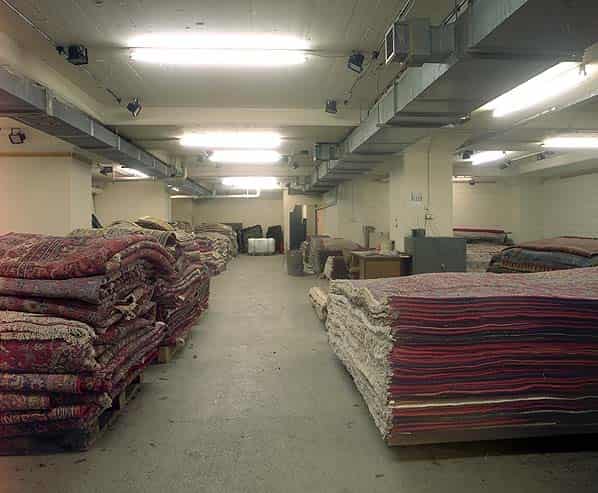
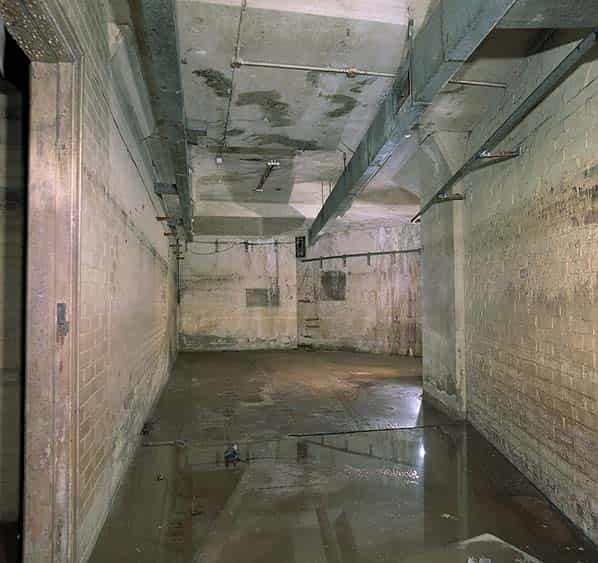
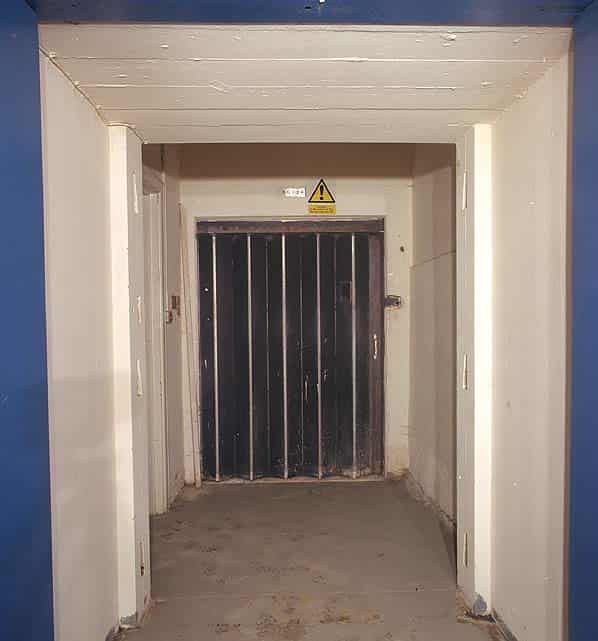
The upper basement level has for some years been used as a carpet warehouse. It has been divided in to two unequal areas and is now occupied by two different companies. There is little evidence of the buildings former use at this level apart from ventilation trunking which still remains in situ suspended from the ceiling. There are a number of modern steel doors separating the two large rooms from the main corridor and two emergency exits. The basement was originally served by a lift from the upper floors, this is still in place although now out of use, the lift machinery can also still be seen in a room adjacent to the lift shaft.
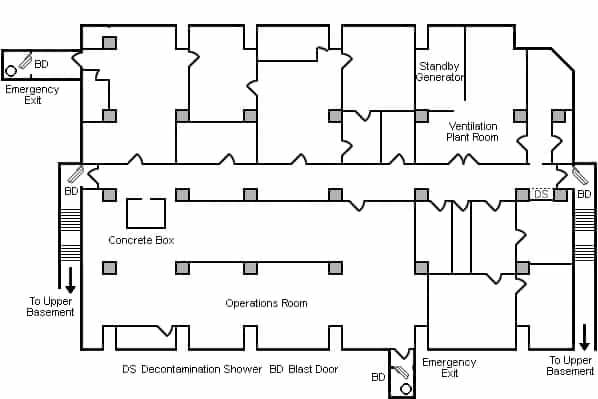
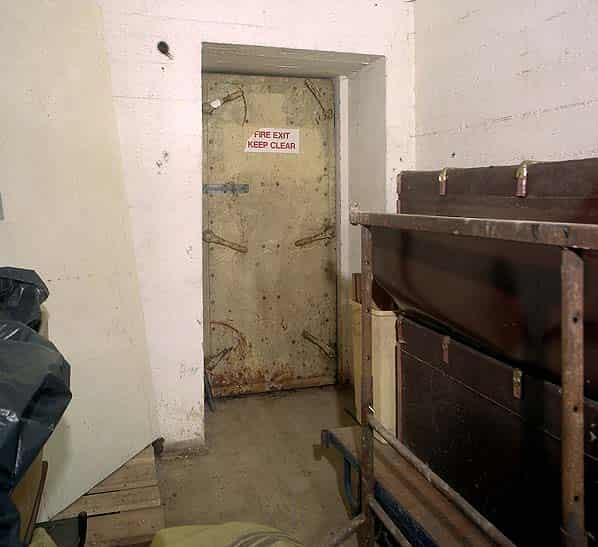
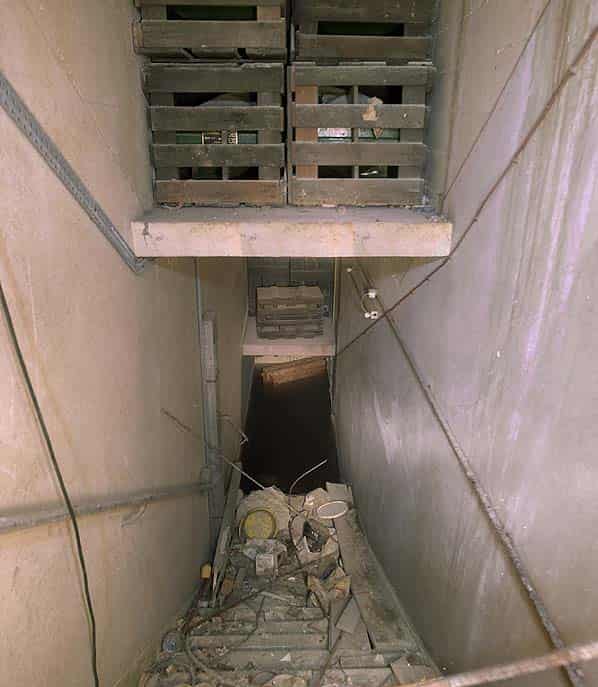
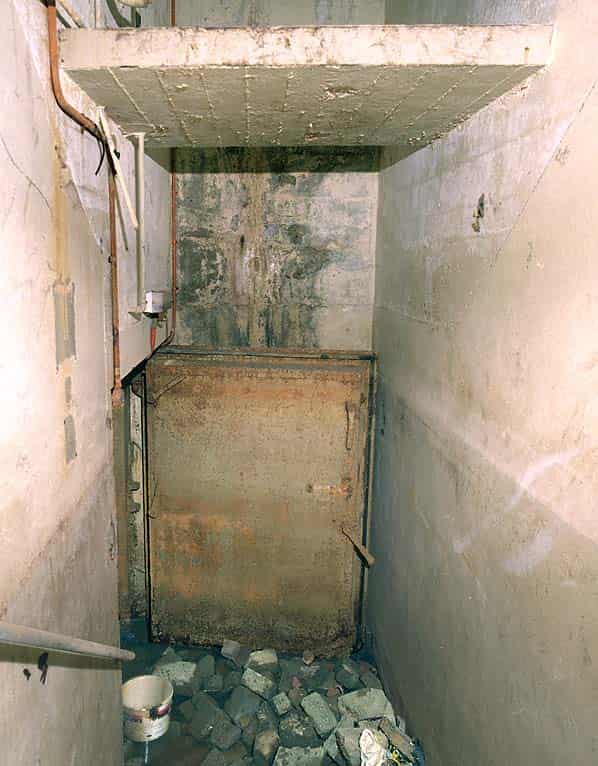
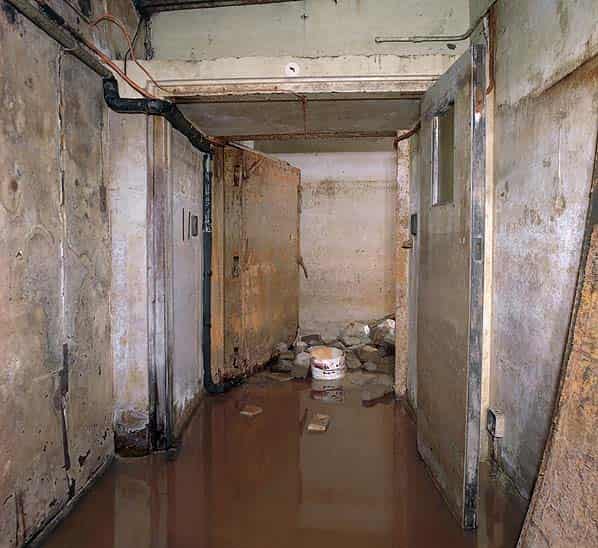
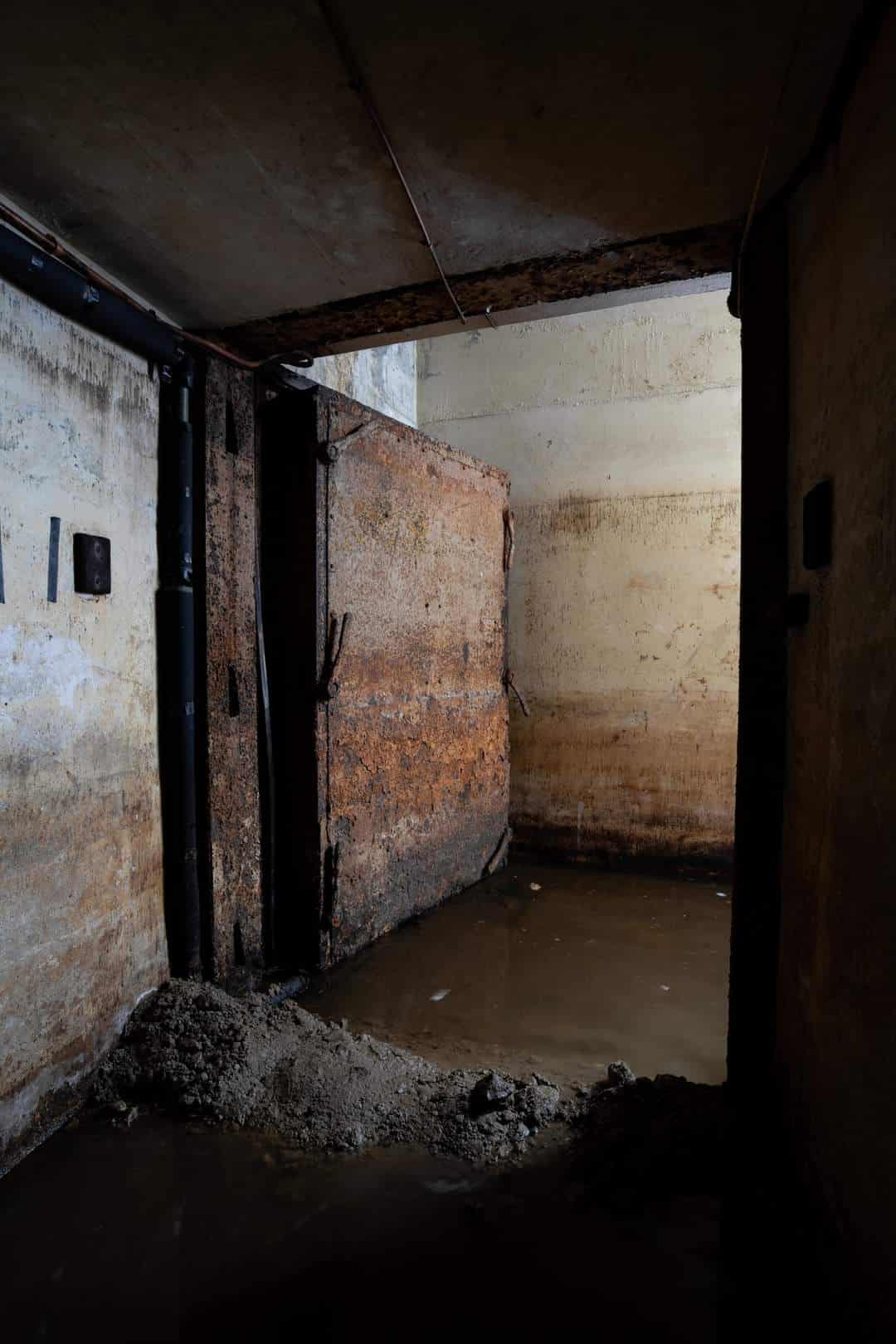
There are four stairways down to the protected lower level or sub-basement. Two of these are wide concrete stairways which give access to either end of the main east - west spine corridor where heavy steel blast doors still remain in place. There are shelves above the two stairways, one of these is stacked with wooden crates containing unused filters; these have the makers name Sutcliffe & Speakman and are dated 1939.
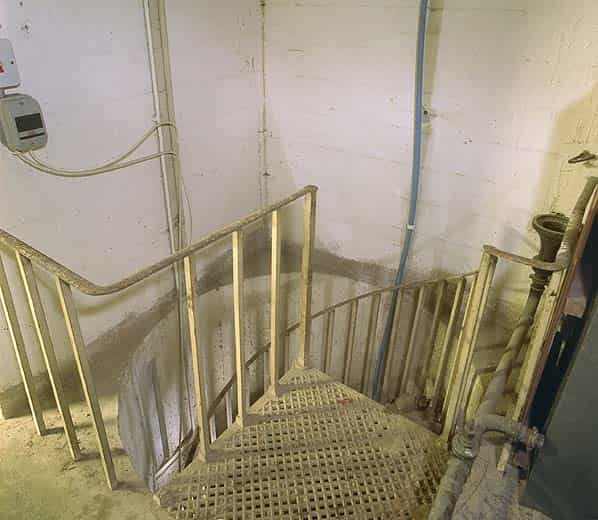
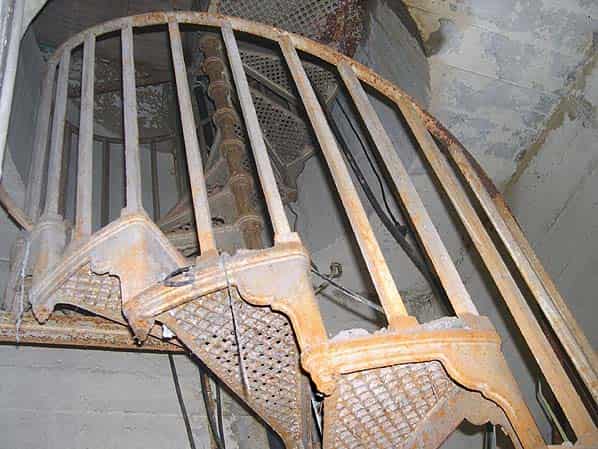
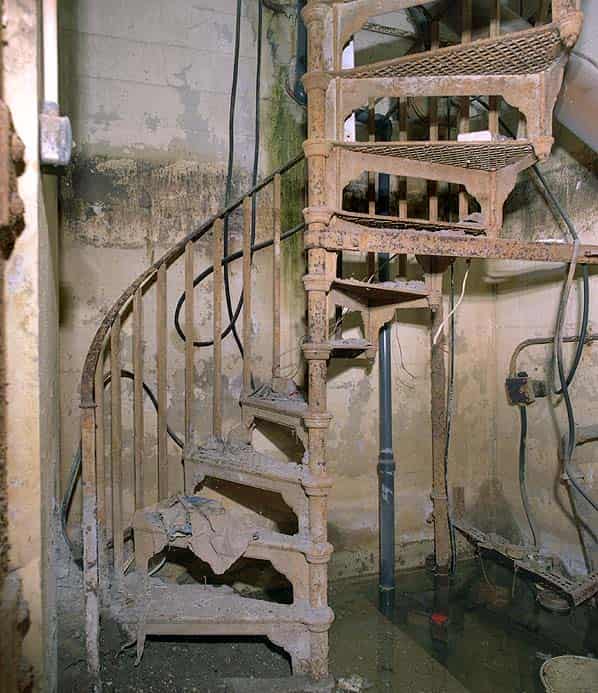
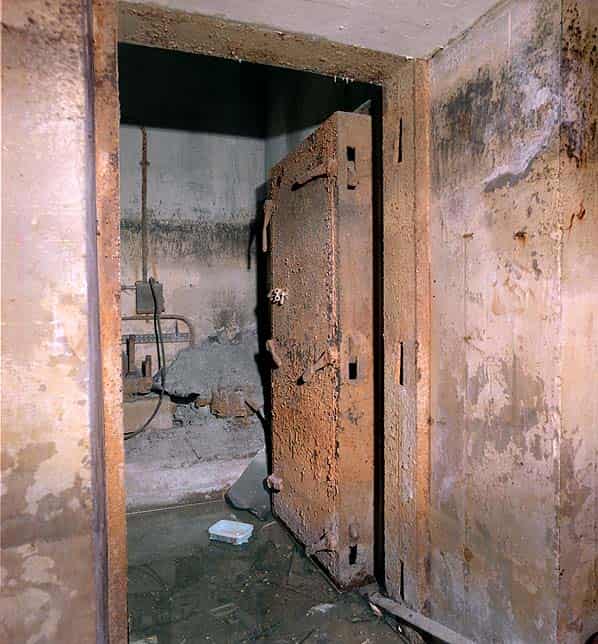
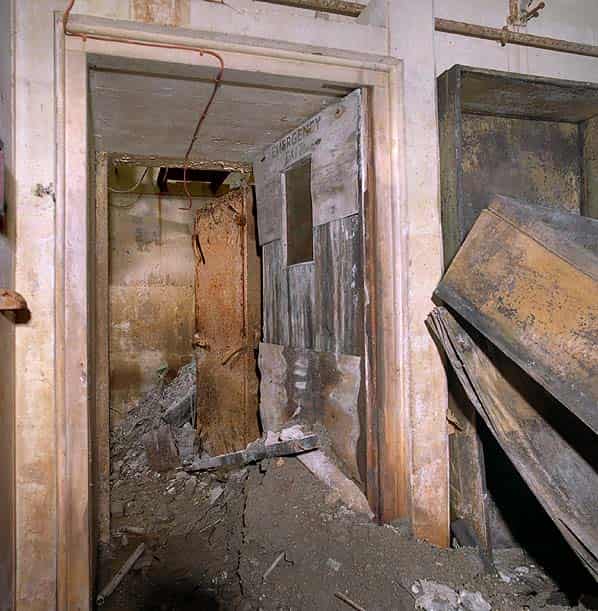
There are also two spiral staircases which acted as the emergency exits; these lead down to narrower blast doors. At the top of one of the spirals there is a further steel gas tight door and beyond that a ladder up to the surface. The second spiral opens directly into the inner courtyard above where the stair well is partly covered over with a steel sheet.
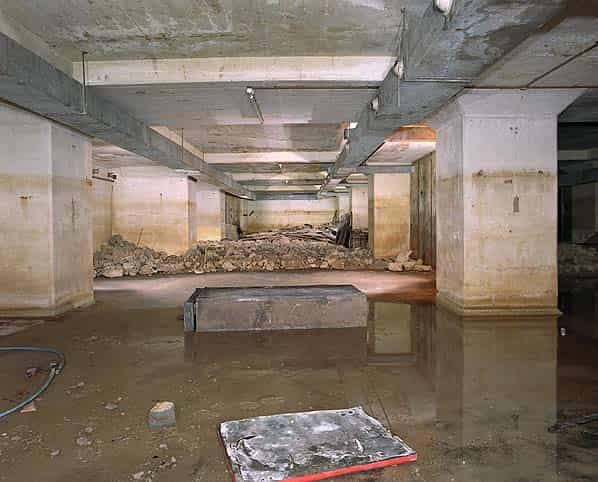
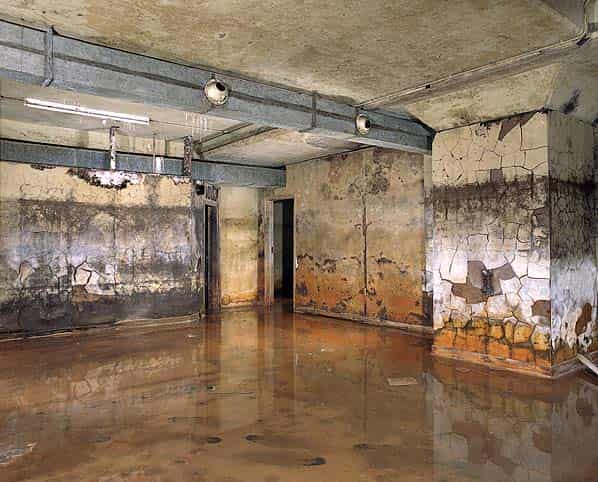
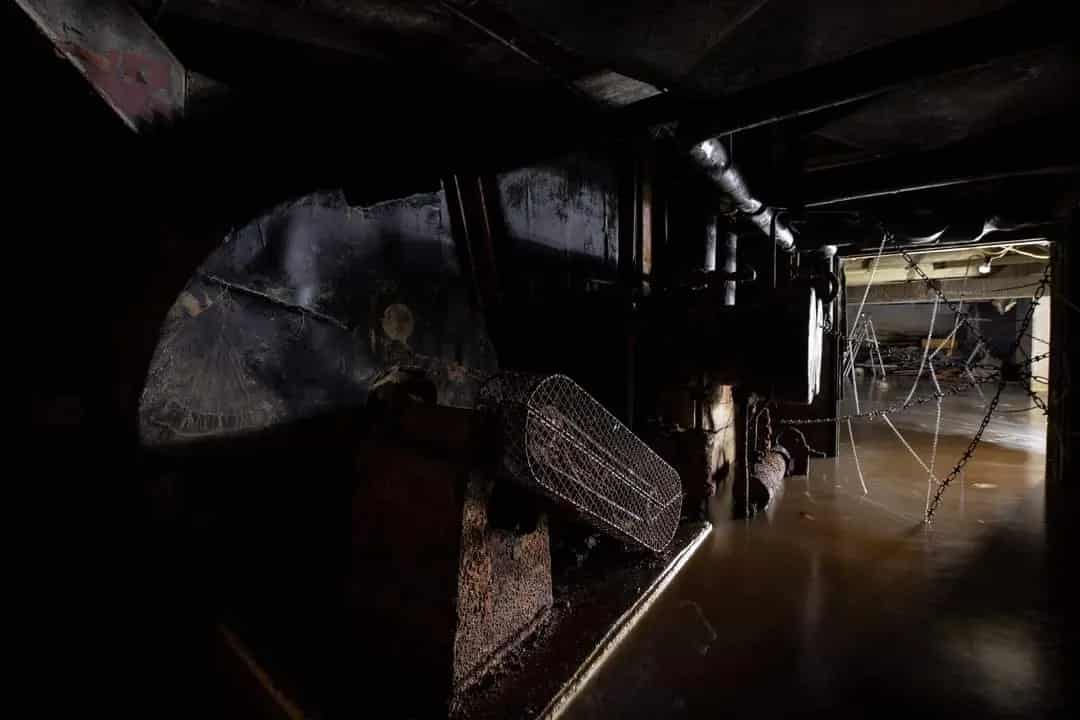
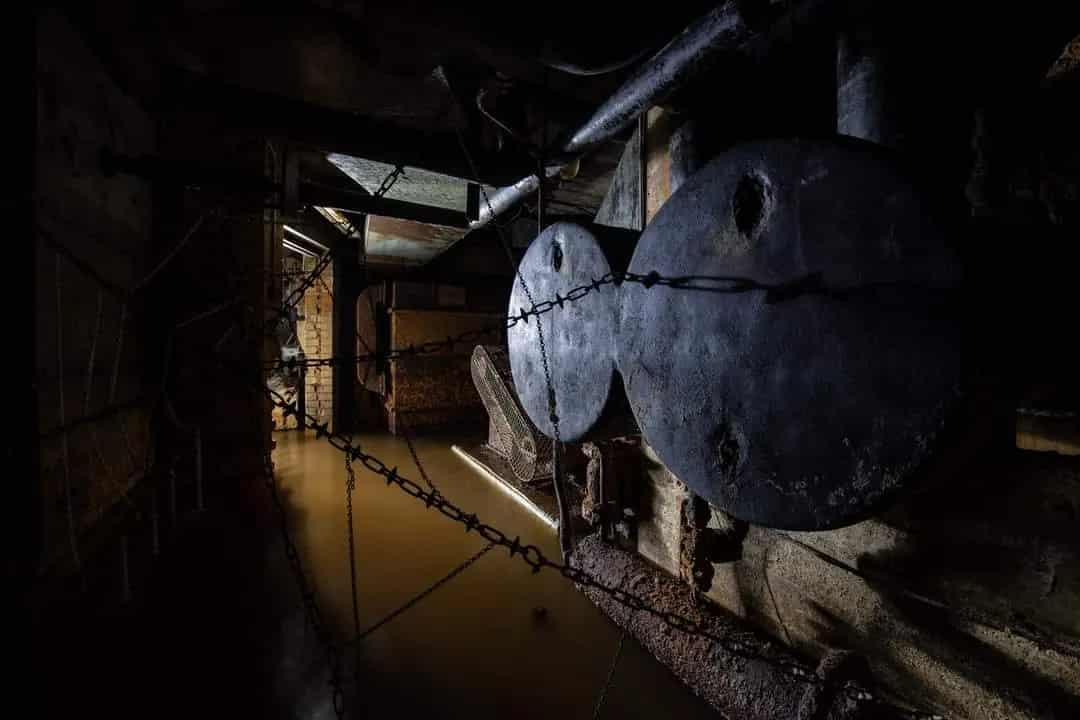
When the building was first occupied by the carpet companies the basement was partially flooded and the sub-basement was completely flooded to the roof. The bunker was pumped dry but quickly began to flood again, settling at a level one foot below ceiling level in the sub-basement. This was the state of the bunker at the time of the first Sub Brit visit in April 2001. On this occasion it was possible to descend part way down the stairways to a point where the water level could be seen a few inches from the top of the lower blast doors.
In late 2002 the water level began to rise. This wasn’t noticed by the two tenants occupying the basement until it reached the top of the stairways. At this point it was necessary to take immediate action to stop the water flowing into the basement and damaging the many carpets that were stored there.
The bunker was again pumped completely dry and drainage contractors were brought in to trace the source of the water ingress; it was traced to a broken pipe in the street which was repaired. Pumps were installed in the sub-basement which can be automatically switched on when water level in the sumps rise.
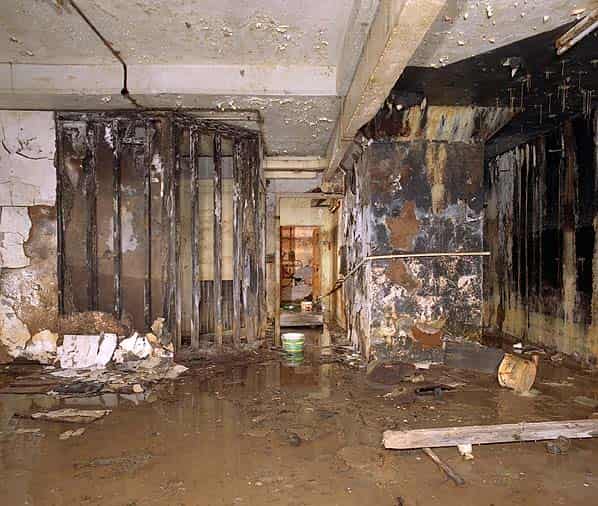
The bunker is still damp with some standing water on the floor in places and at one point close to the northern emergency exit water is still flowing down the wall.
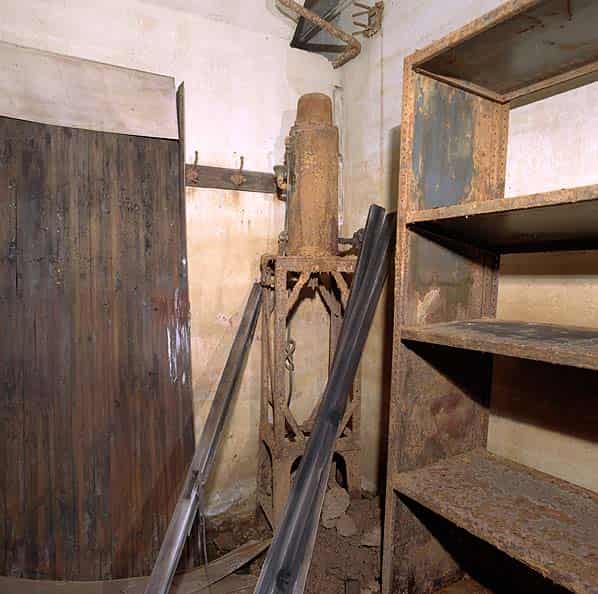
Although it has been underwater for many years the partition walls are all still intact. The floors are strewn with rubbish and the remains of old furniture but it’s impossible to tell whether this dates from the war or from the buildings later use by the Heath and Safety Executive. As much of this is Dexion style shelving it is assumed to be of a later date.
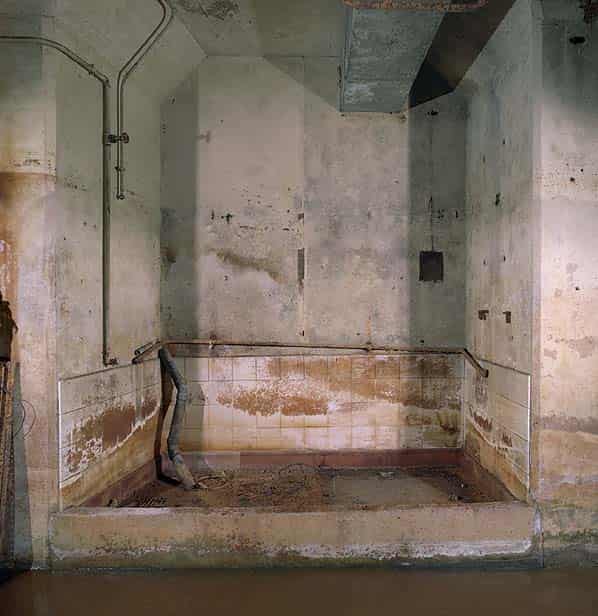
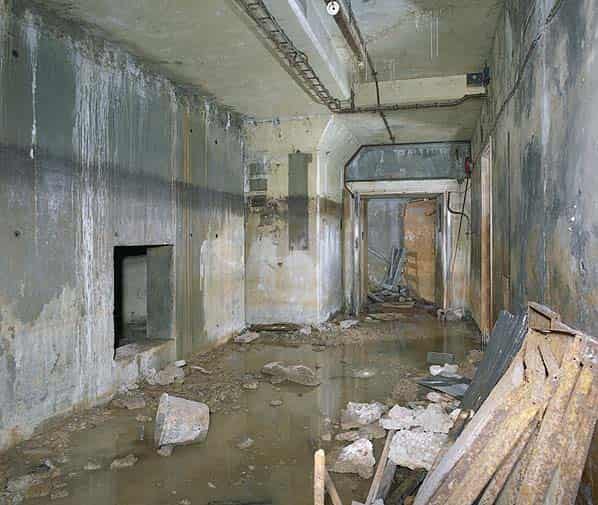
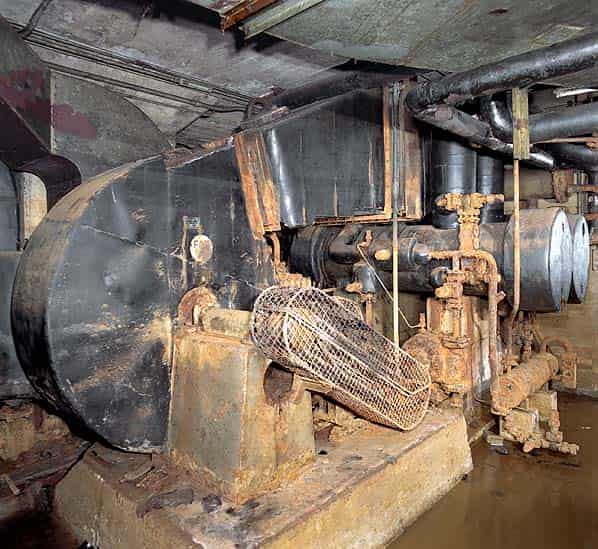
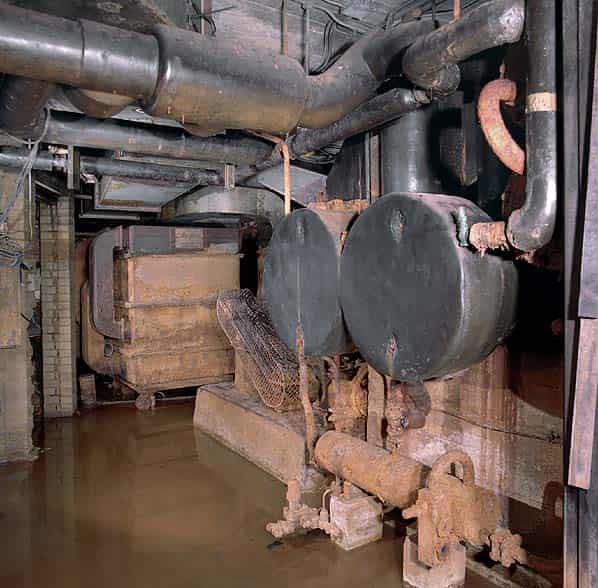
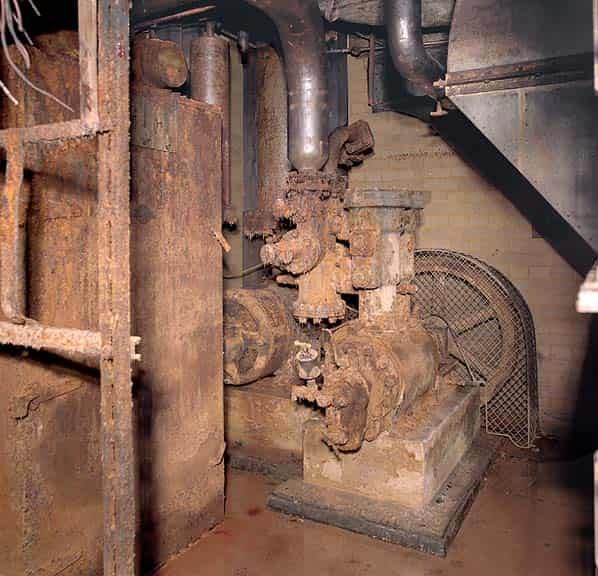
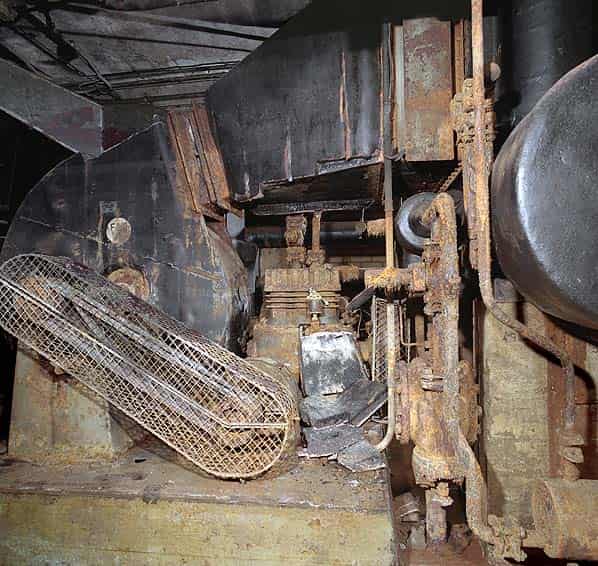
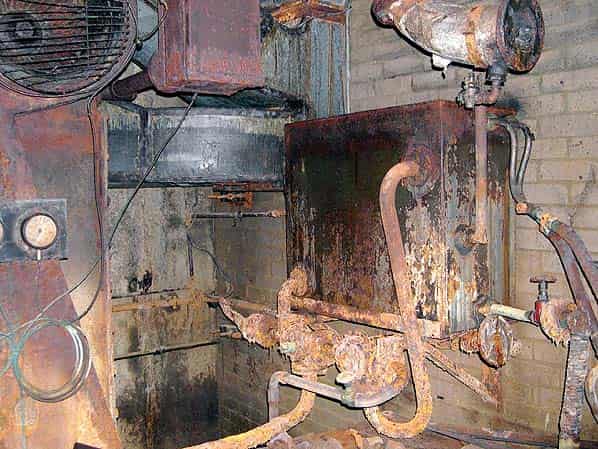
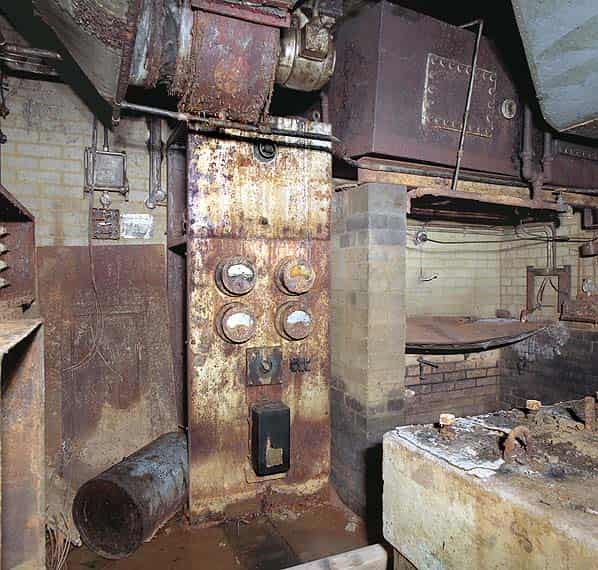
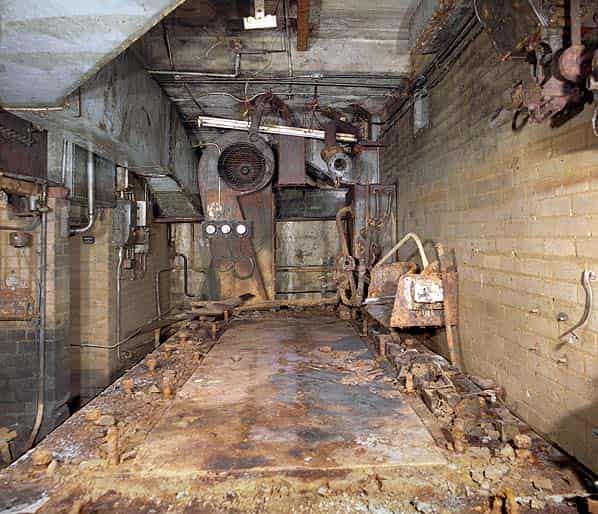
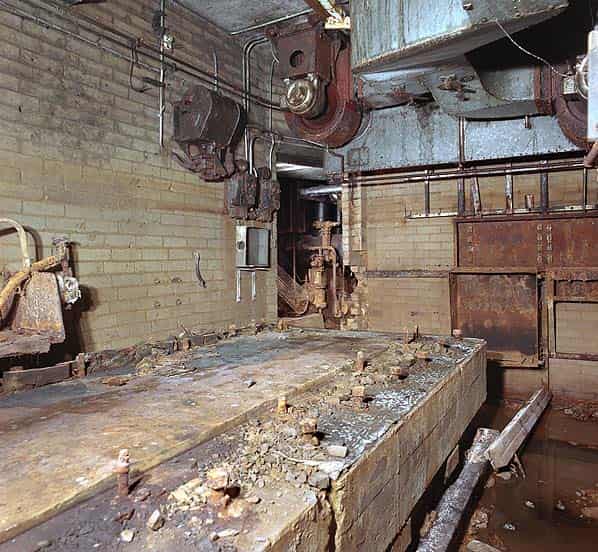
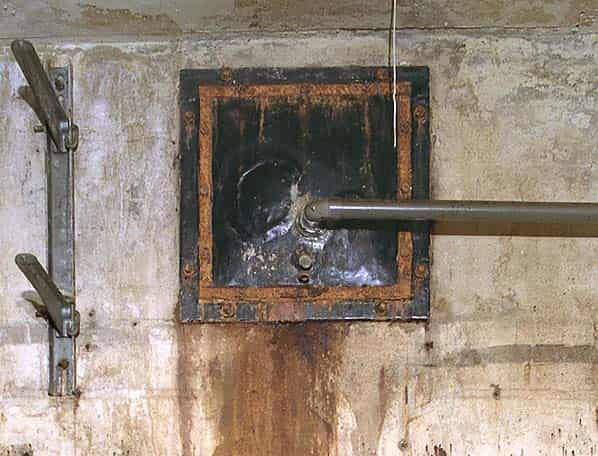
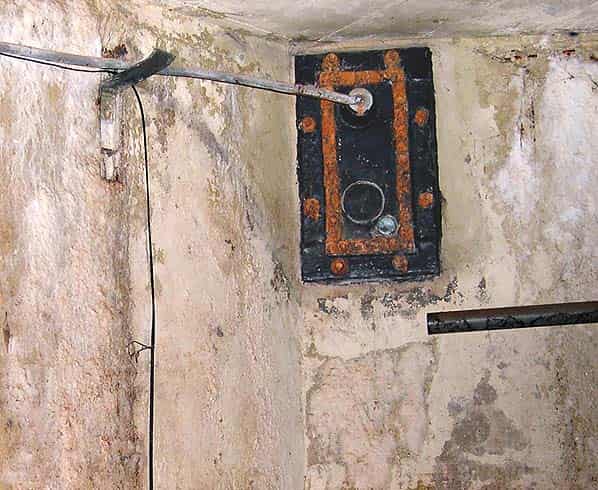
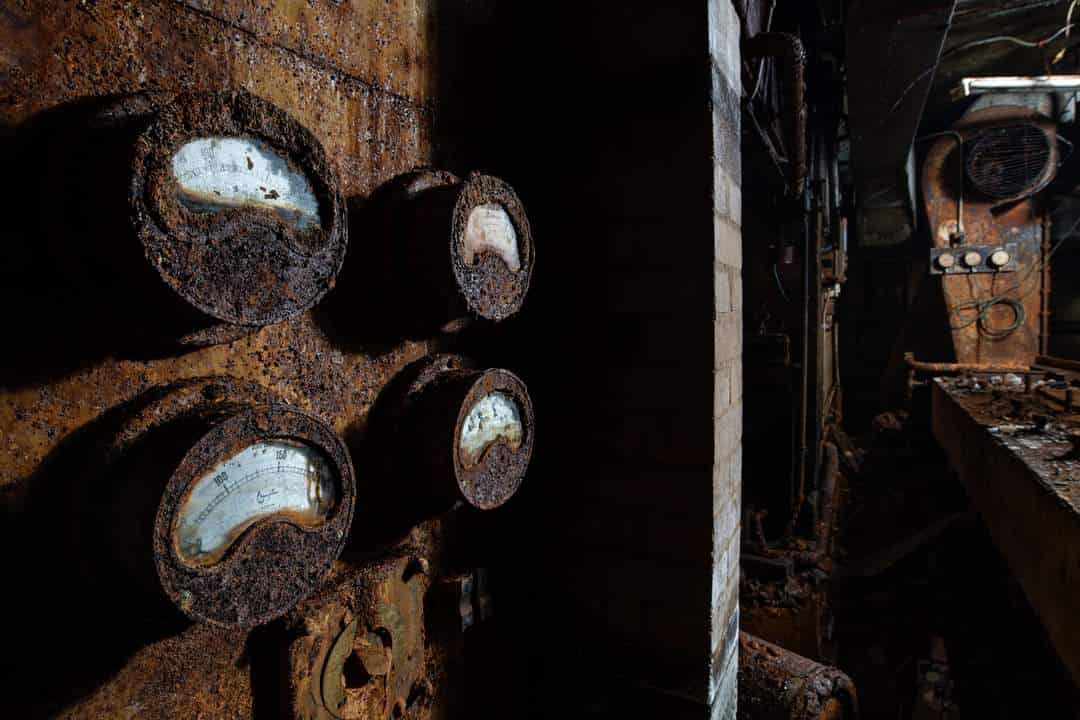
Apart from the ventilation trunking that runs along the main spine corridor and into all the rooms there is little other evidence of the bunkers WW2 use as most of the rooms have been stripped of any original fittings. The plant room however is largely intact with most of the original plant still in place although now very rusty. The standby generator has gone although a large concrete engine bed indicates its position. Everything else is still there including fans, filtration plant, compressors, pumps, switchgear and floor standing electrical cabinets. In the spine corridor there is a communal decontamination shower set into a recess between two supporting pillars. This has tiled walls and water pipes still in place and appears to have always been open to the corridor with no evidence of curtains or screens for privacy. Two rooms still have heavy duty electrical cables coming into the building with bitumen panels where they pass through the outer wall of the bunker.
There are a number of small rooms on the east side of the spine corridor and at the south end of the west side. The rest of the west side consists of one large room with five concrete pillars in a line in the centre of the room for added strength. There is a partition wall linking three of the pillars. This must have been the ‘operation room’ with a message hatch linking with one of the adjacent rooms to the south. One of the two emergency exit blast doors can be found in the south west corner of the room where it is still possible to make out the words ‘Emergency Exit’ on the wall. The room has a large amount of builders rubble and rotting timber on the floor which must have been dumped there at some stage as it doesn’t appear to have come from anywhere in the sub basement.
In the north east corner of the room there is what can only be described as a large concrete box, approximately 12 feet long and 8 feet wide. The east wall of the box also forms part of the west wall of the spine corridor where there is a low opening into the box. The opening never appears to have had a door and the purpose of the structure is unknown. It has suggested that it might have been added strengthening but as it stops a few inches below the ceiling this seems unlikely.
Oxgate is not yet a ‘listed’ or even a ‘locally listed’ building, probably because its notable contribution to WW2 history is almost unknown.