THE CHARING CROSS & HAMPSTEAD RAILWAY
Royal Assent for the construction of the CCE&HR had been granted under the 1893 Charing Cross, Euston and Hampstead Railway Act, but this only authorised an underground railway as far north as Hampstead. Financing difficulties meant that work hadn’t started by the beginning of the twentieth century and the company was bought out by a syndicate led by American financier Charles Tyson Yerkes in 1900.
Following the purchase, plans were revised to continue the route northwards under Hampstead Heath to Golders Green where a depot could be provided and where open farmland offered the opportunity for property development. The new proposals met with strong opposition from residents of Hampstead and users of the heath who feared that the construction of tunnels would detrimentally affect the heath’s ecology. The Metropolitan Borough of Hampstead also initially objected, but relented and parliamentary approval was granted for the extended route in the Charing Cross, Euston and Hampstead Railway Act of 1903.
One of the conditions for construction of the extended route was the provision of an intermediate station at North End, which would have been located on the north side of Hampstead Way, opposite Wylde’s farmhouse. The station would have served a new residential development being planned to the north of the heath but this was scuppered by social reformer Henrietta Barnett who conceived the idea of the model housing development of Hampstead Garden Suburb in 1904. She instigated the purchase of the land for an extension to Hampstead Heath. This extension is an open space to the northwest of the main heath; it was created out of farmland, and its origins can still be seen in the form of old field boundaries, hedgerows and trees.
There was also much local opposition to the proposed station from the influential upper classes who lived on the heath; they didn’t want the ‘common folk’ invading ‘their’ area at weekends by tube.
WORK ON NORTH END STATION STARTS
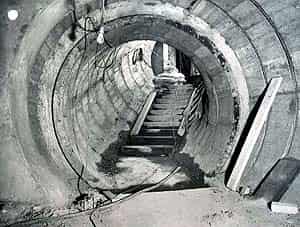
Tunnelling for the CCE&HR had begun in 1903 and initially plans for the construction of North End station continued at track level where the larger diameter station tunnels and low-level subways were excavated. It soon became apparent however that the abandoning of the proposed residential development would significantly reduce the number of passengers using the station. Work on the station was stopped in 1906 before the lift shafts were sunk and before any work on a surface building was started. Services began on the CCE&HR on 22 June 1907, running through the unfinished station.
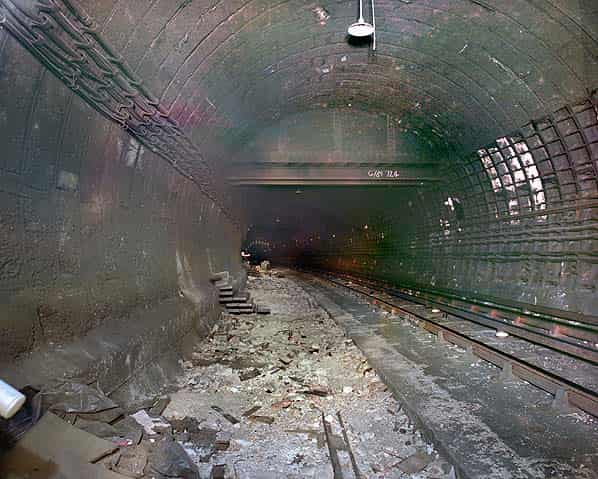
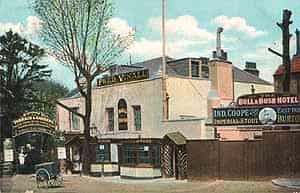
Although the official name of the station would have been North End, it was referred to by railway staff as ‘Bull & Bush’ after the nearby well-known public house. Track- level construction included cross-passageways between the two station tunnels, platforms and two stairways up to subways that would have served both sides of a lower lift landing. The platform edges were removed in about 1933 to reduce maintenance and the platforms were later removed altogether, probably during World War II. During the war the unfinished and unlined subways were used to store archives with access only available from the cabs of passing trains.
UNDERGROUND CONTROL CENTRE
Since the formation of the London Passenger Transport Board (LPTB) in 1933, the operational control centre of the underground network had been in offices above Leicester Square station (still used today as administration offices for the Northern Line management team). Leicester Square was the base for the traffic controllers for all tube lines, each in separate offices. The main controller for the entire network was based at 55 Broadway above St. James’s Park station.
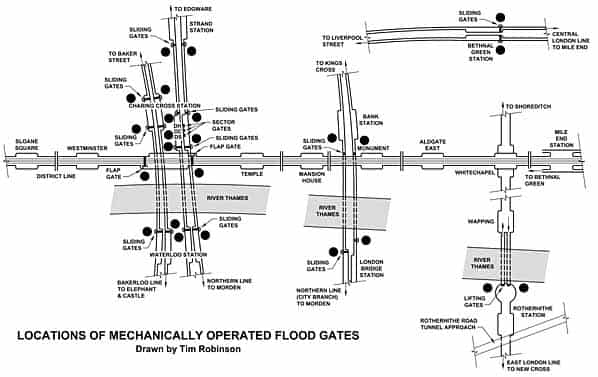
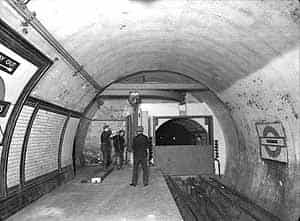
During WW2, some of the station tunnels at Leicester Square station were adapted as emergency offices for the line controllers. A new control room was also established to operate floodgates which had been installed in tunnels near the Thames to stop water ingress if a bomb breached a tunnel. (At Balham station a bomb penetrated almost to platform level). Following WW2 the tunnels at Leicester Square were returned to their original use.
In 1953 with the re-establishment of a national civil defence network, steps were taken to keep the tube running in the event of a nuclear strike. The buzz words at that time were “due functioning” which basically meant continuing public services for as long as possible during and after a Hiroshima-sized atomic bomb (12.5 kiloton) had been dropped on the capital. This also applied to British Railways and the major utilities of electricity and water. A plan was formulated to build a bomb-proof centre for traffic control staff and administration, incorporating a central floodgate control room controlling all the gates on the network (there were also local control panels adjoining the gates).
This project was under the banner of the ‘Special Works’ programme which also involved refurbishing the floodgates and installing new ones at strategic locations. The other project was the installation of a crossover at King’s Cross so that if the new floodgate at Russell Square was closed, the Piccadilly line could still operate between King’s Cross and Cockfosters. The plan was to operate the tube right up to and immediately after an attack. The whole ‘Special Works’ programme was given a high degree of secrecy.
NORTH ENDS NEW ROLE
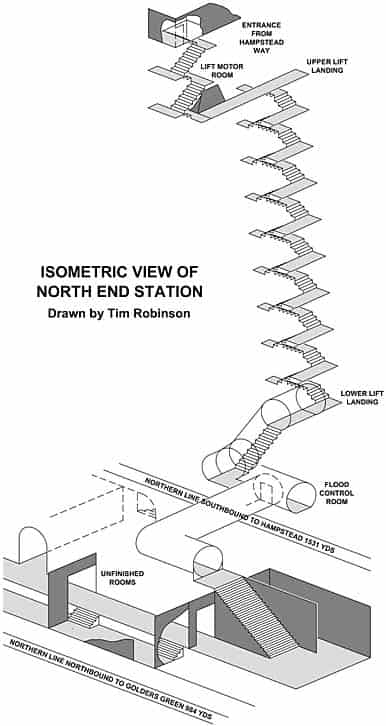
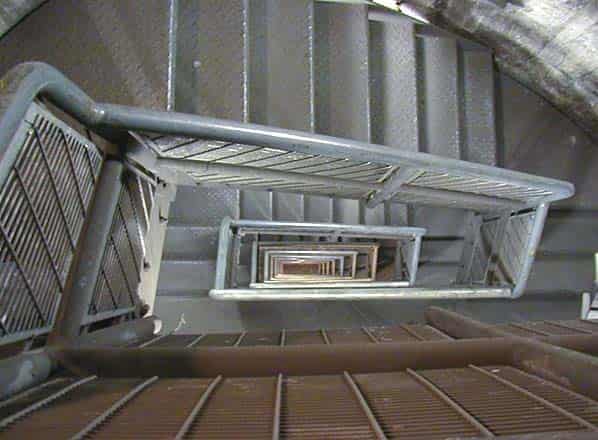
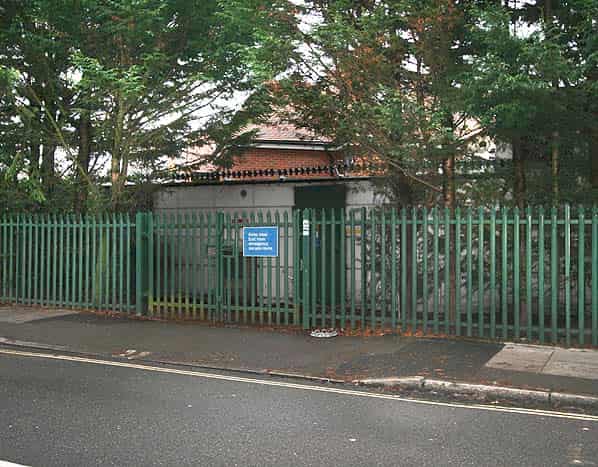
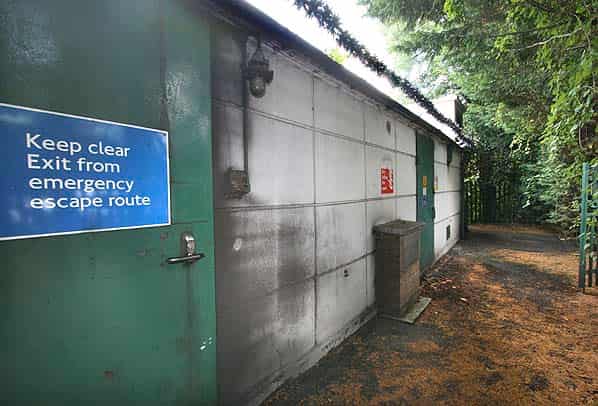
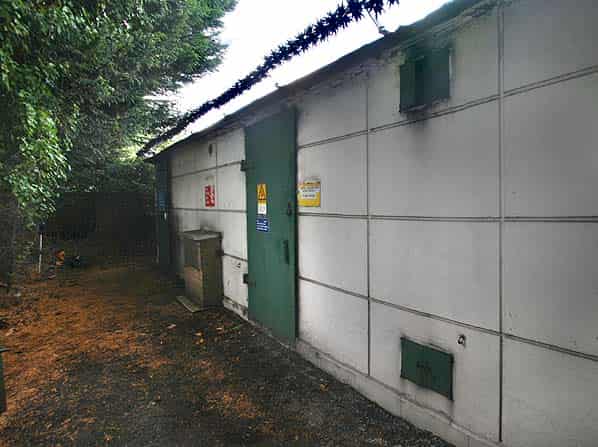
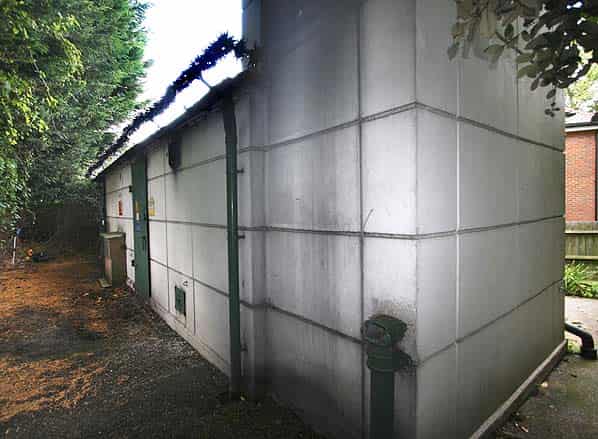
The chosen site for the main control centre was to be at the deepest point on the underground system at the uncompleted North End station sited deep under Hampstead. The original planned site of North End station entrance building had been sold for residential development in 1927 and work started in 1954 at an adjacent site in the quiet Hampstead Way on London Transport property adjoining the LT-owned Manor House Hospital (now demolished). This involved building a small entrance blockhouse from where stairs led down to a new 33-metre shaft which was sunk down to the unfinished station subways; a low capacity lift was installed in the shaft together with a spiral staircase.
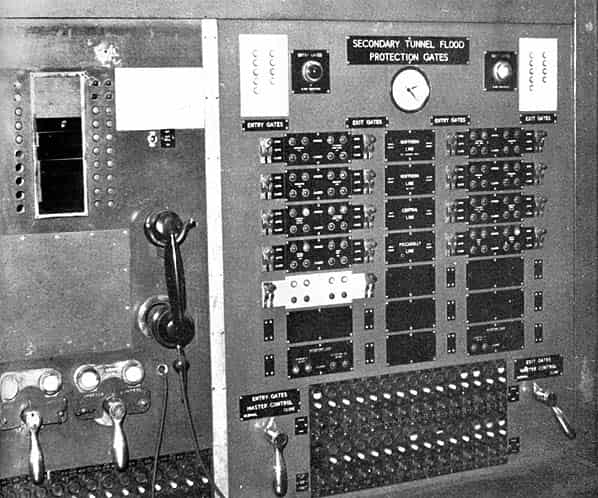
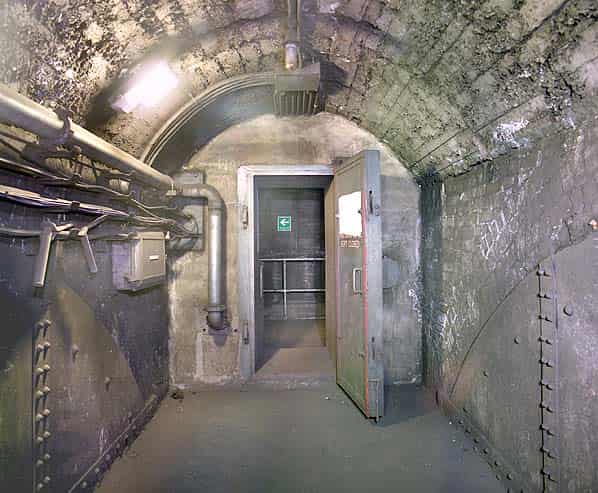
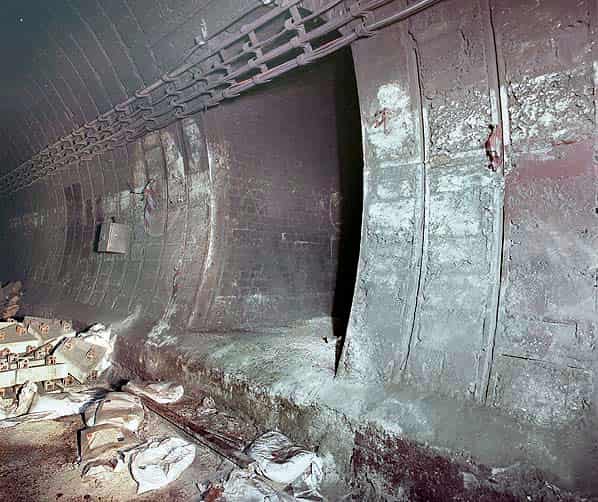
At platform level on the northbound platform area, a number of rooms were to be built, and at the first-floor level where the lower lift landings were originally to be sited a central two-level control room for the flood gates was constructed. The floodgate control room made use of a short existing tunnel where the control panel was installed and a lower floor was excavated for use as a battery room. In the subway between the control centre and the Northern Line a heavy steel blast door was fitted to seal the tube lines off from the control centre.
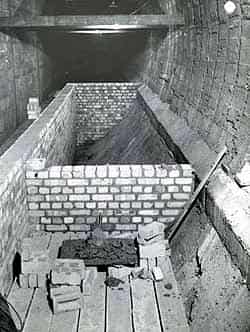
At platform level the brick shell of the offices was completed on the northbound platform. However in 1955 work was stopped following the nationwide cancelling of all civil defence control schemes when it was realised that with the immense power of the H-bomb there would be little left to control. The new floodgates and associated control room opened in 1956 but no staff accommodation was provided apart from a toilet. Plans for ‘due functioning’ controlled from the site - now actually called ‘Bull & Bush’ - were scrapped. No plans were made for control of the tube after attack apart from accessing what remained of the network and ‘see what can be done.
INTO DISUSE
The control room was maintained until 1984 when the opening of the Thames Barrier eliminated the threat of a tidal surge flooding London; by that time civil defence was a low priority. As late as 1991 the supervisor at Hampstead Station had to check the phones and equipment once a month - however the 1990 appendix to the rule book on flooding makes no mention of site and is a little vague on whether floodgates are in or out of use.
Between 1956 and 1984, the control room would only have been manned in emergency as all floodgates had local control panels for the use of maintenance engineers. The control room was abandoned and the floodgates were not maintained but they remained intact as it would not have been cost-effective to scrap them. It is likely that civil defence exercises would have seen use of the control room as LT maintained a substantial civil defence unit until all such industrial units were abolished in 1968.
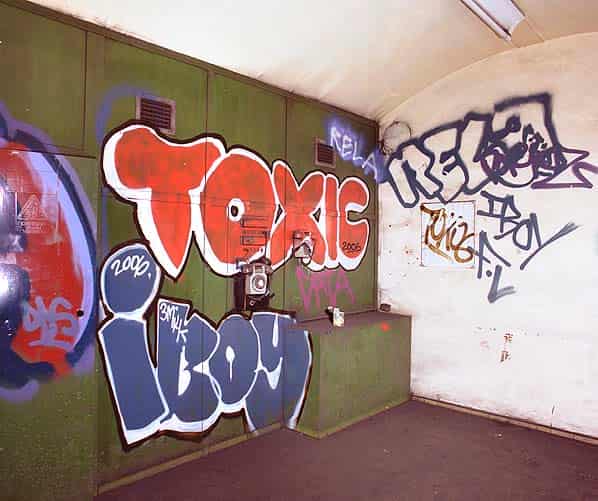
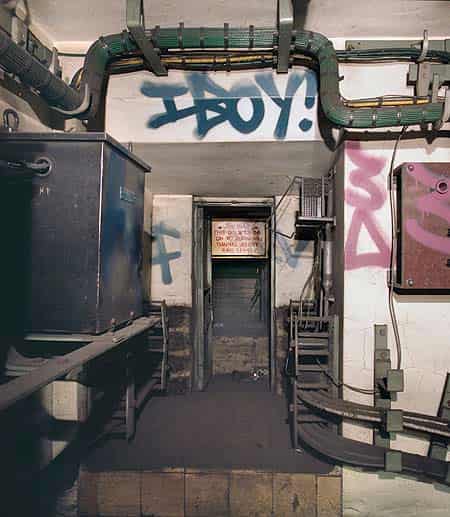
Since the control centre was abandoned at the end of the Cold War it has remained largely intact, although in recent years it has suffered some vandalism and graffiti. This largely happened at Christmas time when the Underground network closes down and intruders were able to walk 900 metres down the running tunnels from Golders Green station. Security and surveillance have now been upgraded to avoid a repetition.
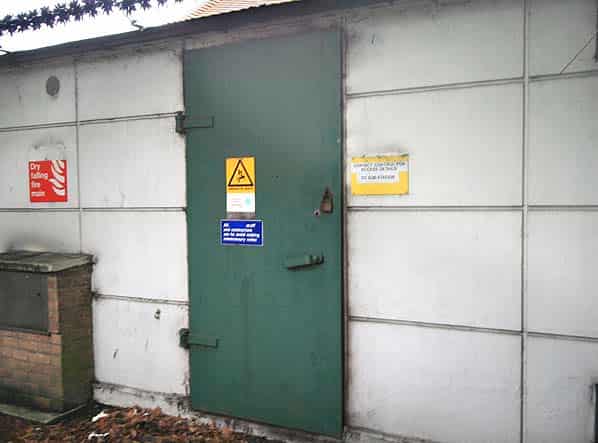
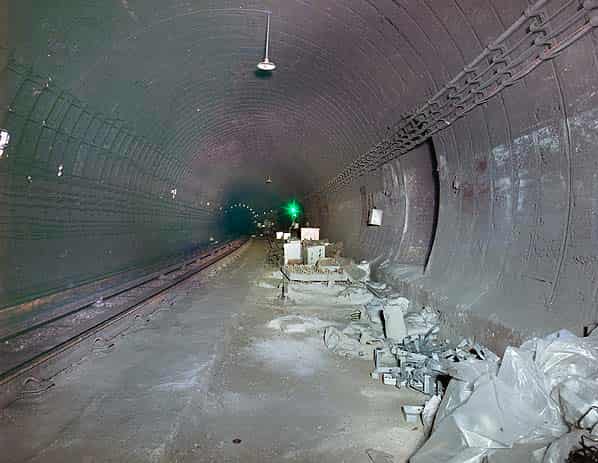
Today the platform area is used for the storage of permanent-way materials and the stairs and the inconspicuous access blockhouse on Hampstead Way are retained for emergency egress from the Northern Line.
SUB BRIT VISIT TO NORTH END & THE FLOODGATE CONTROL CENTRE
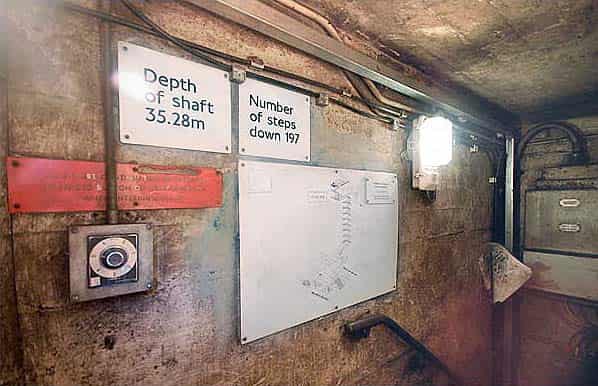
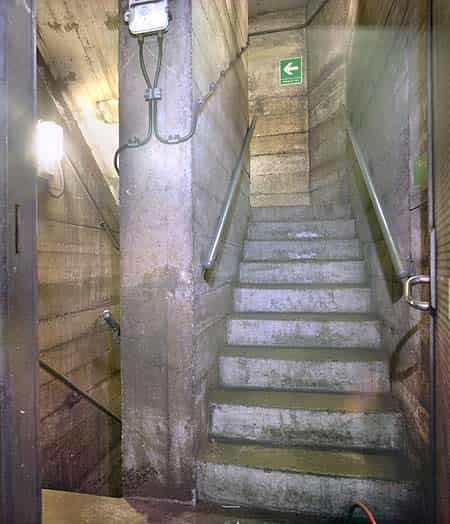
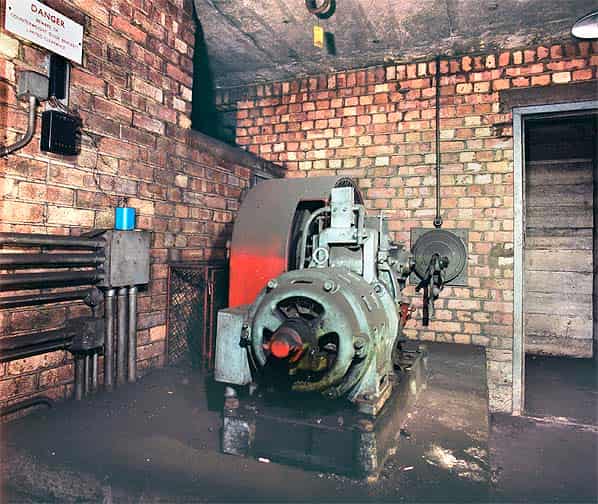
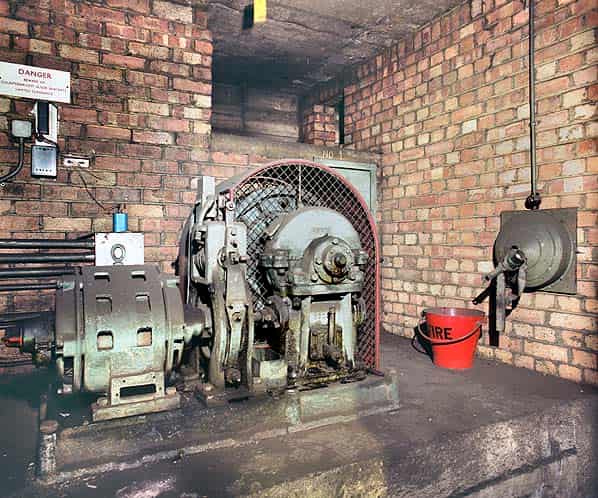
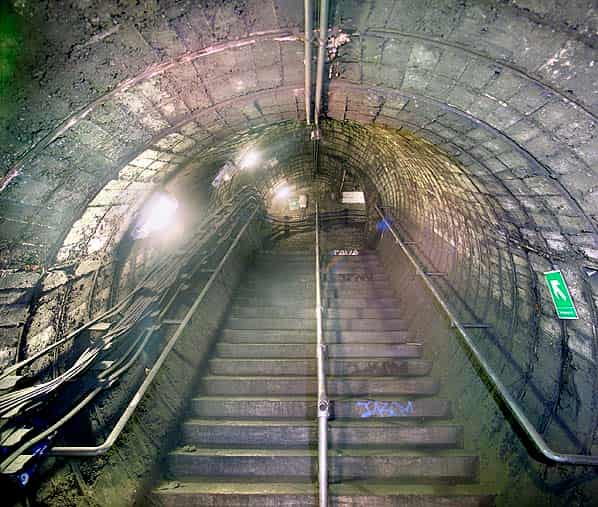
Once inside the blockhouse, our guide rang the supervisor at Golders Green to tell him that we were going down to the platform level - the idea was that the supervisor would tell passing drivers that they might catch a glimpse of orange-jacketed people, but that didn’t go to plan as he forgot to tell the drivers. Just inside the entrance, there is a cutaway plan of the station showing the escape route and warning visitors that the shaft is 35.28 metres deep with 197 steps to the bottom. We then descended a narrow concrete stairway to a landing with a small plant room for the lift motor and a glass fronted switch cabinet; from there a door led to another empty room.
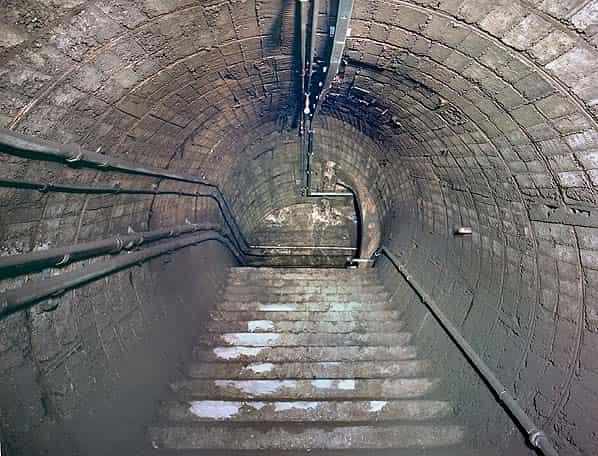
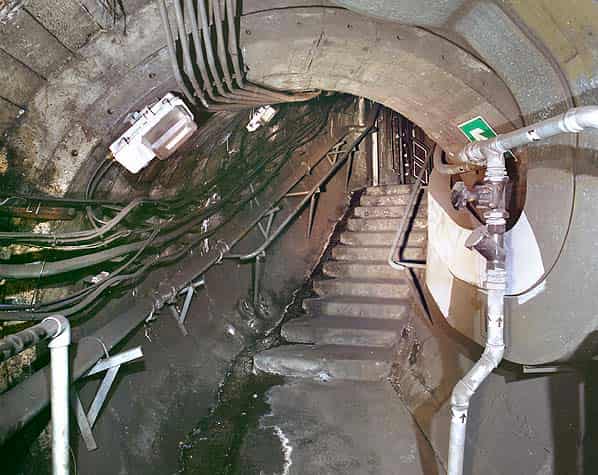
The concrete steps continued down to the upper lift landing. The lift was decommissioned many years ago and the power to it has been disconnected. From here a metal spiral staircase descends to the unfinished North End station. The spiral stairs finish at a lower lift landing from where a further flight of concrete steps leads to a junction. At this point we were in the original Charing Cross, Euston and Hampstead Railway station subways but still twenty feet above track level.
THE FLOODGATE CONTROL ROOM TODAY
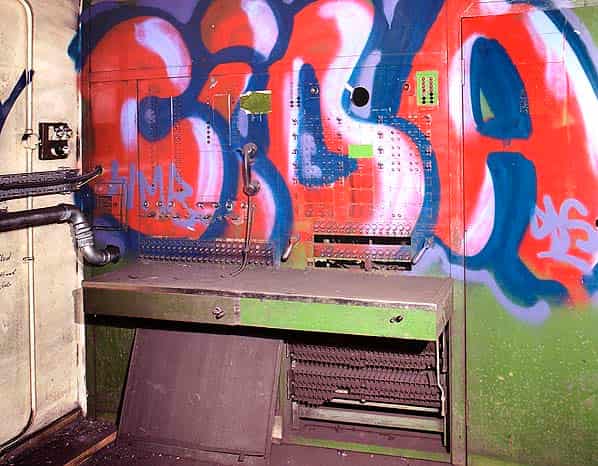
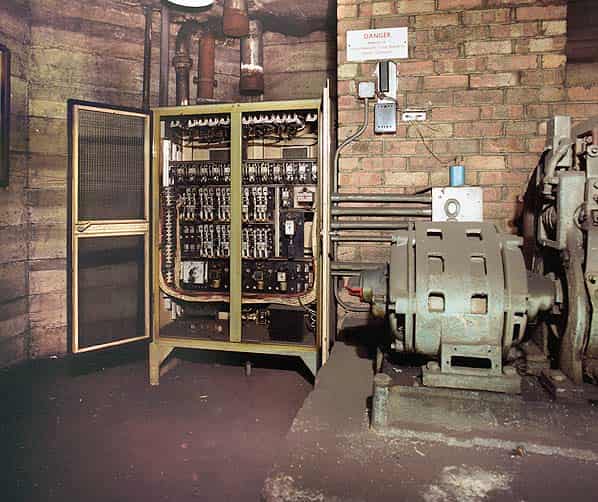
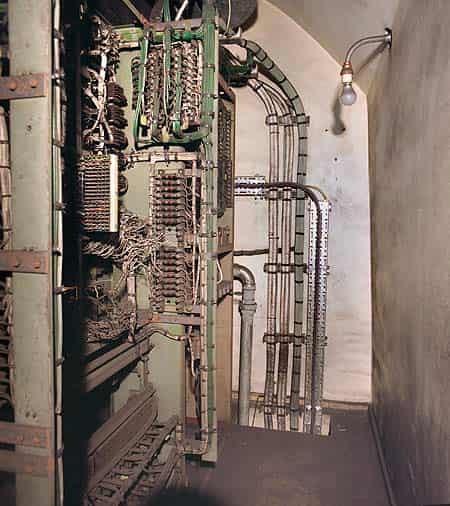
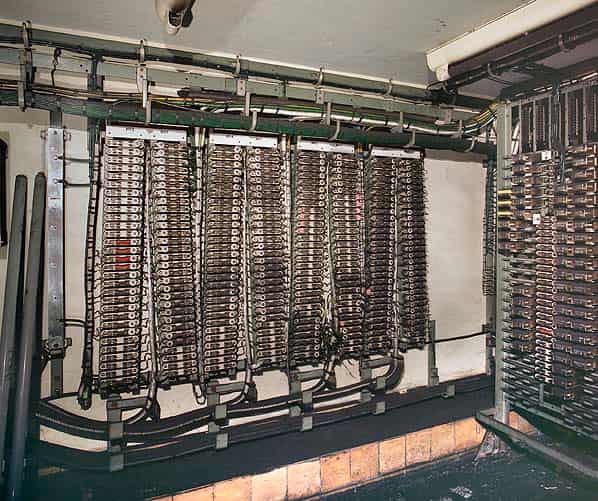
Straight ahead leads through a door into the floodgate control room. The room has been sub-divided longitudinally with metal panelling boxing in a mass of wiring and relays. The main control panel on the left has seating for two operators at a metal table in front of the panel; there is a telephone handset hanging on the panel.
Most of the switches for operating the floodgates are still in place but it is now very difficult to read any of the labels as the whole panel has been painted in a variety of vivid colours by graffiti artists. On the right hand side there are two 1980s-style telephones fixed to the panel. In the middle of the panel a metal door gives access to a ladder down to the battery room below.
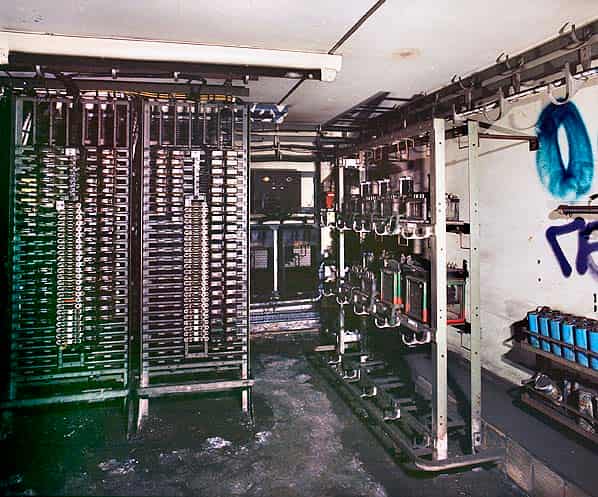
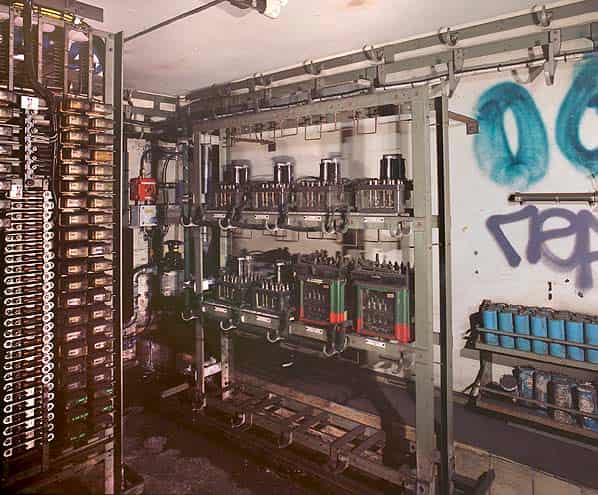
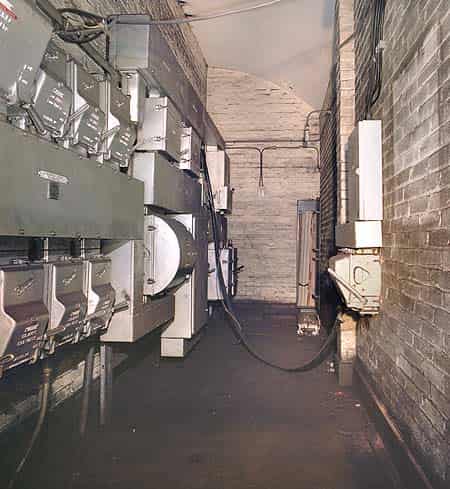
The flood control room itself is located in a section of original station subway but the lower room is a 1950s excavation. The batteries and racks of electrical switchgear are still in place and some circuits in the room appear to be live. In a small alcove there is a step up to a door with a notice on it that reads “DANGER This door opens onto the running tunnel above rail level.”
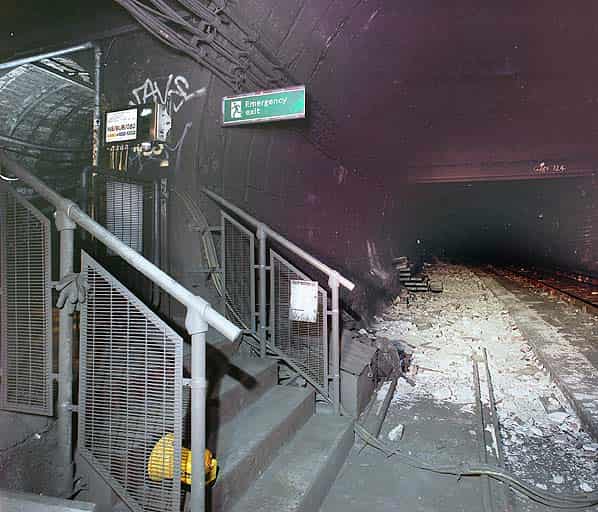
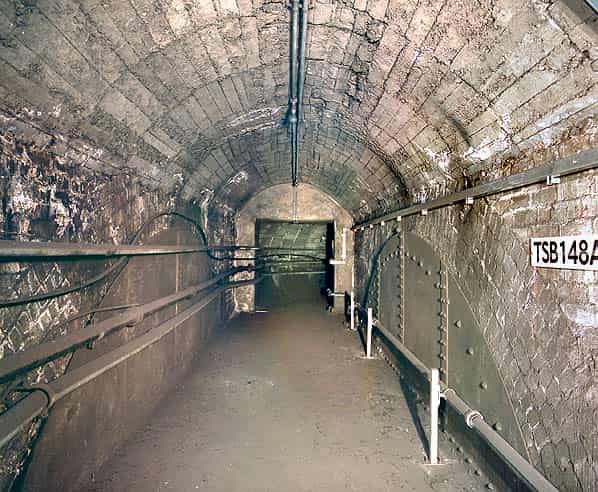
Back at the junction at the bottom of the stairs there is as substantial steel blast door. Passing through that, the subway crosses the southbound track in the form of a bridge recessed into the roof of the running tunnel and then turns to the left and down a flight of stairs to one of the cross-passages between the two platforms. To the left steps lead down to track level on the northbound line.
DOWN TO PLATFORM LEVEL
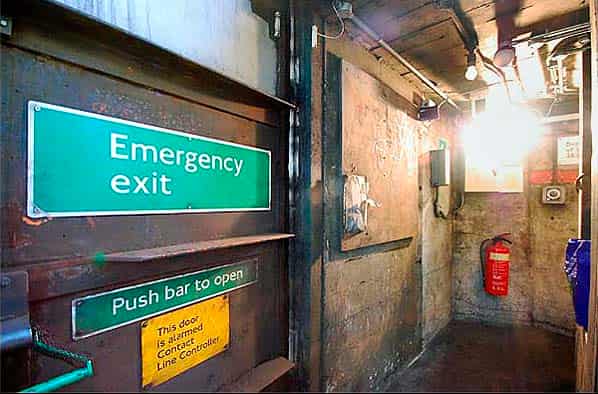
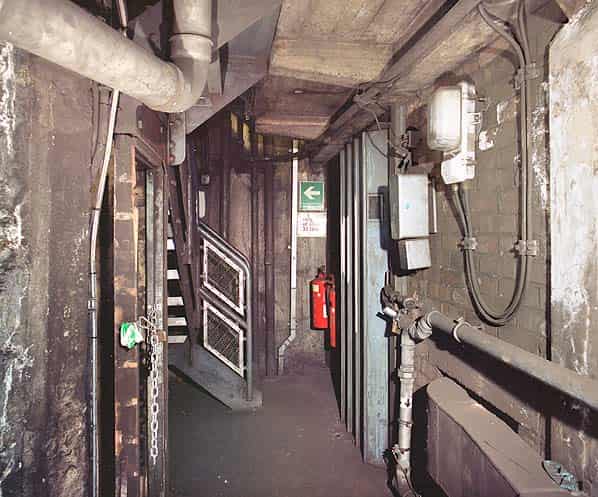
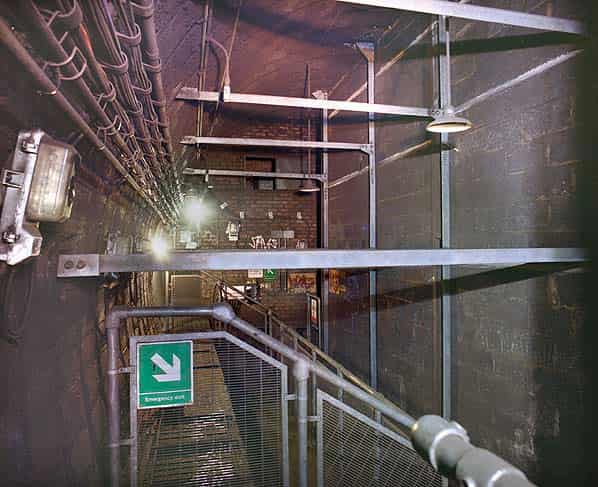
The steps are there for emergency egress if passengers have to detrain between Golders Green and Hampstead. There is a sign on the wall indicating that it is an ‘emergency exit’; from here the route up to the surface is well lit and signed. Apart from some permanent-way material under covers the platform area is completely clear and there is some evidence of the now removed platform. There is a modern switch room at the southern end of the southbound platform space.
Turning right at the bottom of the stairs a series of partially built brick rooms is still be seen at the south end of the northbound platform area. A brick wall has been built up to roof level for about forty feet but only one room was actually built and this contains a sink which still has running water and a toilet. A safe walkway with railings and steps has been constructed through this area in recent years to allow detraining passengers to reach the emergency exit from the platform area at the end of the wall.
At this point there is another cross-passage with another flight of steps that would have led up to the other side of the lift landing. As this isn’t an emergency escape route, the steps and the upper-level subway are unlit and unused and there is no handrail on the stairs.
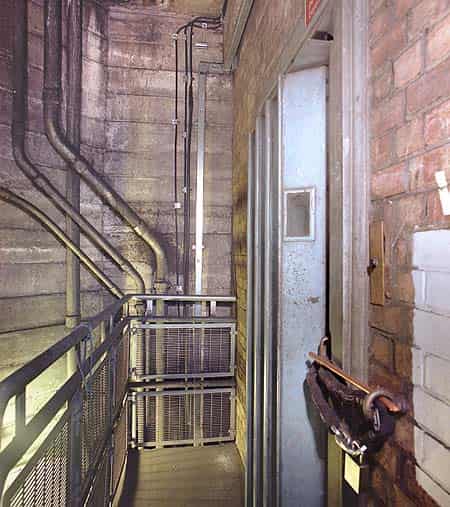
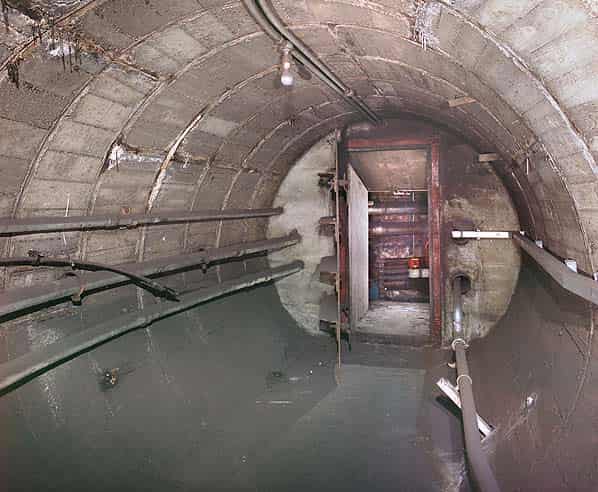
At the top of the steps, the subway turns to the right and once again crosses the southbound line on a bridge and then turns to the right again where a metal door opens into the bottom of a shaft; it is assumed that this is the bottom of the 1954 shaft. The shaft is roofed over about eight feet up and there is a ladder on the wall up to a trapdoor in the ceiling; unfortunately we didn’t have time to investigate this.
We were unable to access the other cross-passages as this would have involved walking alongside the track. The platform tunnels, stairs and subways are clearly unfinished and have never been tiled.
TIME FOR A DRINK
It was now time to return to the surface from what would have been the deepest station on the underground network. It seemed fitting that we should end our morning with a pint or so at the nearby Old Bull & Bush, the pub that gave the station its nickname.
It was a warm and pleasant day and we were able to sit outside which was lucky for, as usual, some of us were blacker than others! I’m sure the landlord wouldn’t have welcomed us inside and even some of the other customers seemed to give us a wide berth. Nevertheless, conversation was lively after such an excellent excursion.
Sources:
- Various files in the National Archive
- London Transport Museum (the two 1956 pictures))
- Abandoned Stations on London’s Underground by J E Connor - Pub. Connor & Butler 2008 ISBN 978 0 947699 41 4
- War Plan UK by Duncan Campbell Pub, Burnett Books Ltd. 1982 ISBN 0 09 150670 0
- Wikipedia