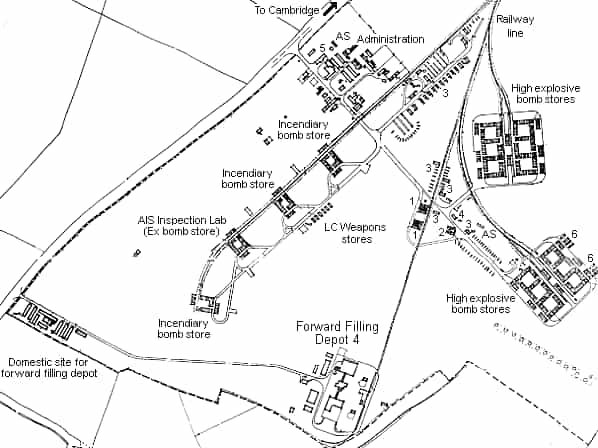
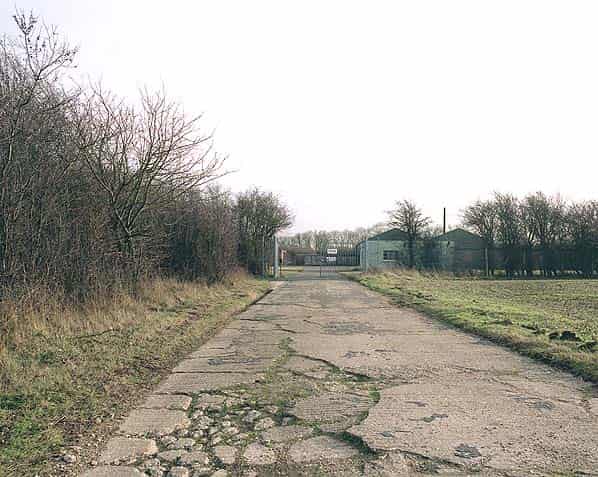
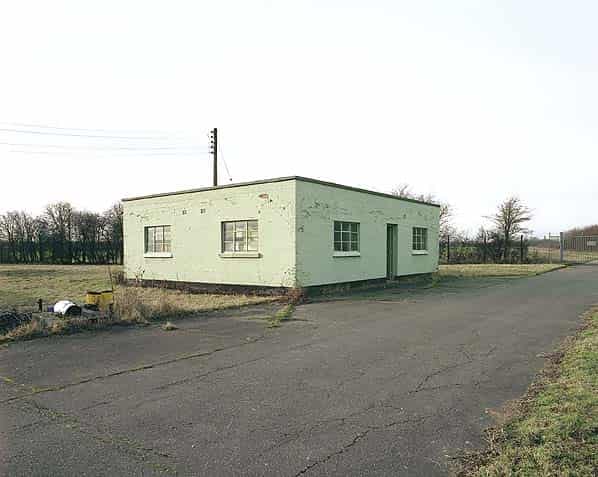
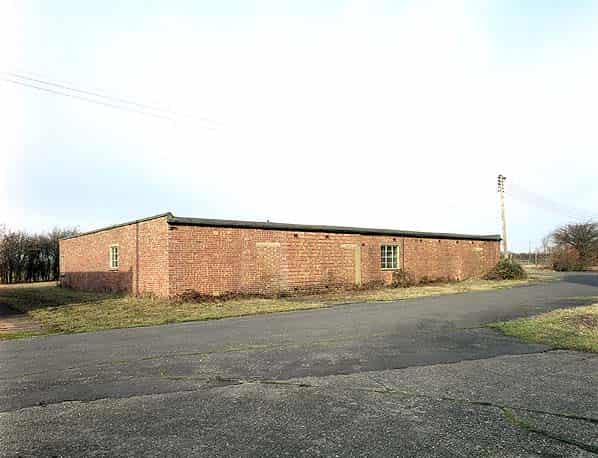
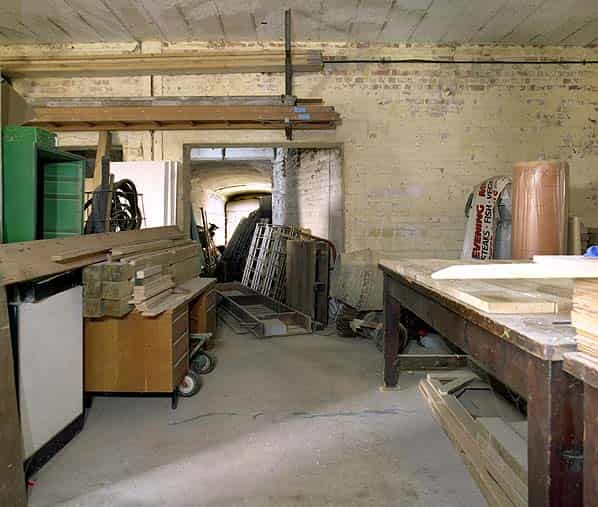
Lords Bridge Forward Filling Depot is located in the south east corner of what was the Lords Bridge Air Ammunition Park, a forward ammunition depot for the RAF which opened on the 16th November 1939. The ammunition park comprised of a series of revetted magazines for the storage of high explosive and incendiary bombs. The forward filling depot, which opened in 1944, was a bulk storage and charging facility for filling 65lb light case bombs with mustard gas. After closure in 1957 the ammunition park was sold to Cambridge University where the Cavendish Laboratory established the Mullard Radio Astronomy Observatory (MRAO). This was sponsored by Mullard Ltd. and supported by the Particle Physics & Astronomy Research Council. The work of the MRAO was recognised by the award of the 1974 Nobel Prize for physics to Professor Ryle and Professor Hewish.
Initially the University didn’t use the forward filling depot which, in 1993, was being used as a proving ground for fireworks. The RAF had retained the area around the bulk storage tanks. This was finally handed over to the Defence Land Agents in July 1997 once the storage tanks and been excavated and infilled and the site had been thoroughly decontaminated and the land was gifted to the University. The whole site, including Lords Bridge Station and a section of the Bedford - Cambridge railway line (closed on 1st January 1968) on the northern perimeter has now been incorporated into the observatory.
The chemical name for mustard gas is dichlorodiethyl sulphide. At normal temperature it is a liquid, rather like diesel oil in appearance with a smell similar to garlic. It was used as a war gas because it is a ‘vesicant’ which means that contact with the liquid or vapor will cause blisters on the skin similar to third degree burns and if inhaled will cause serious damage to the lungs which will almost inevitable cause death. Its value in conflict was due to the fact that it does not decompose and will remain active in the ground or on materials it has contaminated for many days, in fact months or even years. This makes it completely different from the effects of chlorine or phosgene which, as gasses, are readily dissipated in the atmosphere.
It is comparatively easy to manufacture given a supply of raw materials which are mostly readily available chemicals and there are really only two effective ways of decontaminating material or ground; one is by the application of bleaching powder and the other by burning.
There are two types of mustard gas, Runcol (HT) which is produced by the method used by the Germans in WW1 by reacting thiodiglycol (known as ‘Syrup’ during the war) with hydrochloric acid and Pyro (HS) which is produced by combining ethylene with sulphur dichloride. Runcol was more expensive to manufacture and was not suitable for tropical storage.
Chemical warfare was developed in Germany in 1915 but the allies were quick to respond with their own production and in the later years of WW1 mustard was used by both sides. Although chemical weapons were banned by the Geneva Protocols of the 1920’s this did not stop their use by the Japanese in 1931 and the Italians in 1935 and even Churchill supported their deployment during WW2. With the coming of the war it was decided that the manufacture of chemical weapons should once again be undertaken to act as a deterrent as Germany would almost certainly be producing them.
Mustard gas was produced by ICI from 1938 at their Randle plant on Wigg Island near Runcorn in Cheshire and initially weapons were filled or ‘charged’ at Randle. It soon became clear that a safe storage facility was required for these weapons and in 1939 work started building the Valley Works at Rhydymwyn in North Wales.
In 1941 it was proposed that five forward filling depots (FFD) should be constructed and they were ready for use by 1944, the layout of these five depots is very similar. The five depots were:
- FFD 1 Little Heath, Suffolk - Under the control of 94 Maintenance Unit
- FFD 2 Melchbourne/Riseley, Bedfordshire - American FFD - Station 572
- FFD 3 Norton Disney, Lincolnshire - Under the control of 93 Maintenance Unit
- FFD 4 Lords Bridge, Cambridgeshire - Under the control of 95 Maintenance Unit
- FFD 5 West Cottingwith/Escrick, Yorkshire - Under the control of 80 Sub Maintenance Unit
Construction of Forward Filling Depot 4 (Lords Bridge) began in March 1943 under the code name ‘Bridge’; the work was completed in April 1944 although the first mustard had arrived on the site in January. It was intended to fill 65lb LC (light case) bombs with liquid mustard vesicant at a rate of one per minute.
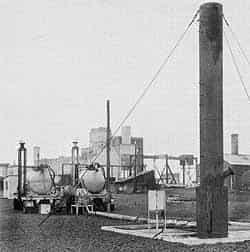
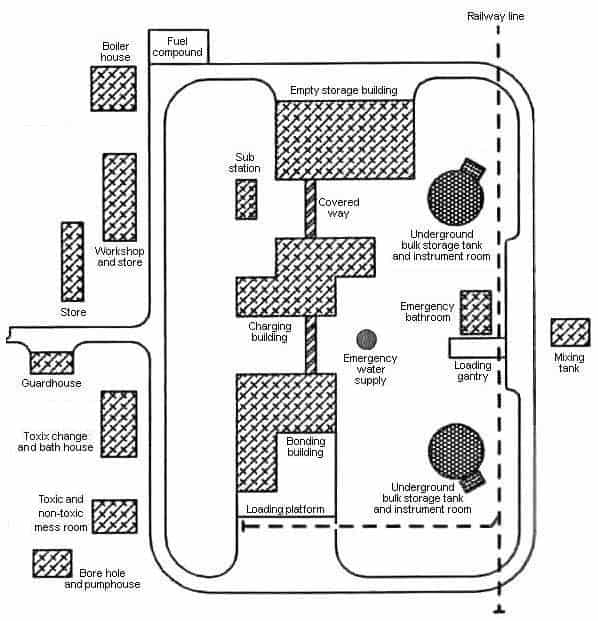
Two concrete underground tanks or pots (designated J & K) were installed to store the liquid. These tanks were lead lined and oil heated and stored 250 tons of each of the two mustard variants, Runcol HT/Y3 and Pyro HBD/Y25. The pots were each 25 feet in diameter, 25 feet deep, with 18-inch concrete lids. Each had an instrument room to one side. The major buildings on the site comprised storage sheds for empty cases, a bonding building and a charging building where the cases were filled; these buildings were linked together by covered ways. The depot was linked by rail to the London & North Western railway line from Bedford to Cambridge with a junction on the east side of Lords Bridge Station. The short spur ran through the air ammunition park terminating at an external loading dock alongside the bonding building.
No munitions were filled at the site after 1945. Throughout the war some tens of kilotons of chemical bombs had been filled and stored and there were still large quantities of bulk mustard gas in store at the forward filling depots. The stocks of the extremely fragile 65lb LC mustard bombs had reached such proportions in March 1945 that a special unit was formed at Melchbourne Park FFD for decanting leaky mustard bombs. Leakers from all the FFD’s were sent to this site for disposal.
One airman based at 95 Maintenance Unit remembers destroying piles of mustard gas bombs at Orwell Grange, a satellite of Lords Bridge, by pouring petrol on to the bombs, adding a few incendiaries for good measure and then firing several hundred rounds from a sten gun to start the bombs leaking and ignite the fire. Later the entire pile was covered with copious quantities of bleaching powder.
It was eventually decided to decant agent out of all the 65 lb LC bombs and the spray tanks into storage tanks and dispose of the munitions by incineration followed by dumping. Mustard was decanted out of the pots into three trains carrying five ton road/rail tankers for transport to Randal for filling into 1000 lb aircraft bombs. The first train carried 124 tons and the second 126 tons of either Y3 or Y25 and the third train of 25 tankers presumably holding 5 tons each of Y25.
At the end of 1954, it was decided by the Government and Ministry of Supply that all stocks of mustard gas and other poison gases would be destroyed but the American solution of dumping at sea would not be used by us. Up to then the method used by the RAF had been to burn such material in the open on concrete pads in remote sites such as Harpur Hill in Derbyshire and Bowes Moor in Yorkshire. This was a most unsatisfactory method as large volumes of smoke were produced, and not all the mustard was consumed. Some remained as vapour distributed to the atmosphere and there was contamination of the concrete and surrounding ground.
At 09.55 on 11th January 1955 there was a serious explosion at Lord’s Bridge. The 130 tons of Runcol (Y23) in K tank had been diluted with benzine to make it more effective by penetrating the skin but this also made it highly explosive. For some unknown reason, an aircraftman had been using an oxy-acetylene torch in the vicinity with the result that there had been a tremendous explosion followed by a fire. The area was immediately evacuated and RAF personnel arrived to fight the fire which was brought under control and extinguished by 10.20. A black cloud of smoke and mustard gas vapour was distributed over the countryside.
‘K’ pot was found to be completely shattered; the top had burst and was hurled to one side. 20 tons of mustard was lost although no signs of contamination were found around the tank or in the nearby streams or water bore hole. Meticulous safety precautions were then observed - the remaining liquid in the pot was protected by a thick layer of foam and was inspected at regular intervals day and night until it could be transferred into ‘J’ pot. The damaged pot was then capped with a raft of concrete and soil. Just under three tons of mustard was taken to Porton Down where it was destroyed and the remainder was taken to Randel in March 1955 where a test rig had been set up to burn the remainder of the mustard from Lords Bridge.
A Royal Air Force fireman, Corporal John Saunders, was later decorated with the George Medal for his courage in fighting the fire.
Having donned his anti-gas equipment and in spite of the risk of poisonous fumes from the blaze, he stood his ground on the edge of the crater, personally directing a stream of foam on to the remains of ‘K’ tank for 30 minutes until the flames were subdued. His citation recorded that he “undoubtedly prevented what may have been a major disaster from the spread of toxic vapour over a wide area”.
The site commander, Flight Lieutenant Edward Campbell, was awarded the MBE (military division) for his “high degree of courage” and valour in directing his men and searching for survivors. It was due in part to his action that there were no injuries to either service personnel or civilians.
Once all the mustard had been removed the site was decontaminated in March 1957 by treating the entire area with bleach and harrowing surrounding areas to a depth of 18", watering in bleach in layers. Metal and tools were cleaned with carbon tetrachloride, cement and stone with bleach and water. The depot was then sold to Cambridge University although the area surrounding the site of the pots remained in RAF hands and ‘J’ pot was not collapsed and filled with debris, sand and clay until 1991. As the contents were not fully checked at this time, both pots were fully excavated and all the residual contamination removed in 1996.
THE SITE DESCRIBED
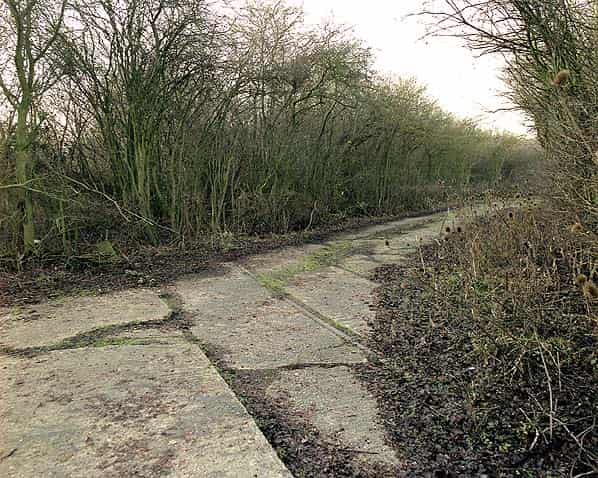
The original entrance to the depot was from the A603 road along a concrete road running parallel to the southern boundary of the ammunition park. The domestic camp was on the north side of this road at its junction with the A603. This consisted of a picket post, accommodation blocks for airmen, sergeants and officers, canteen and ablutions block. This site was leveled during the construction of the MRAO One Mile telescope which involves movable dishes on a mile length of rail track.
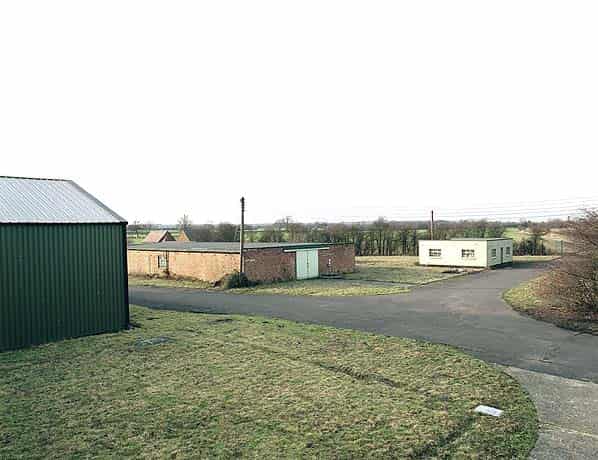
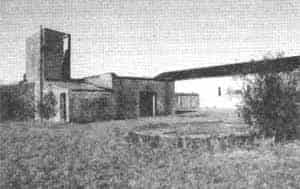
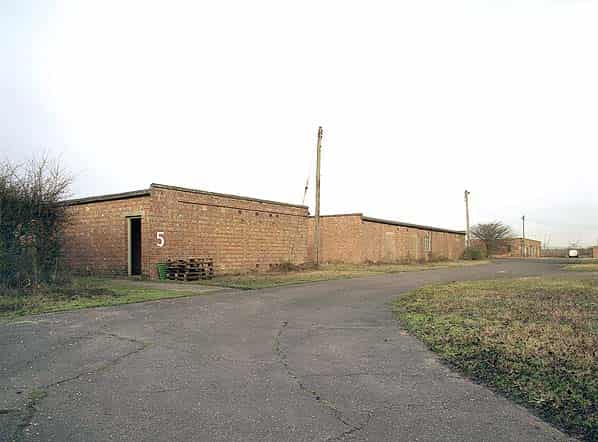
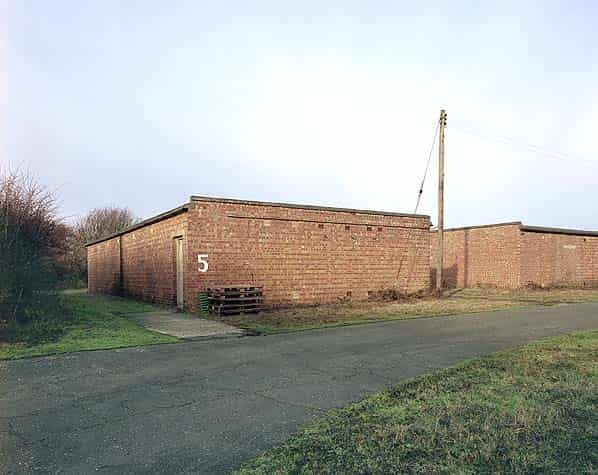
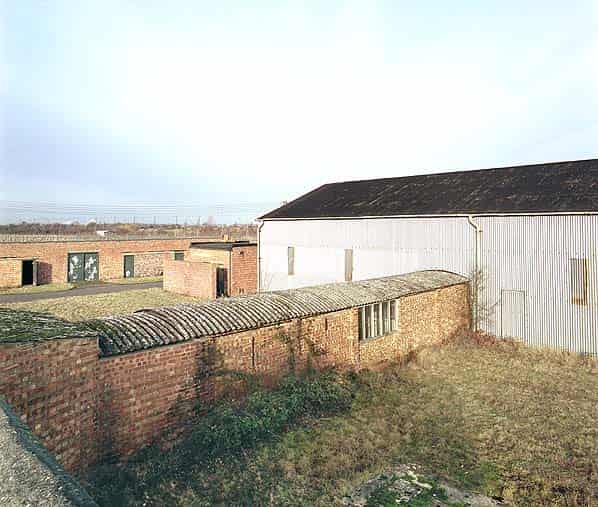
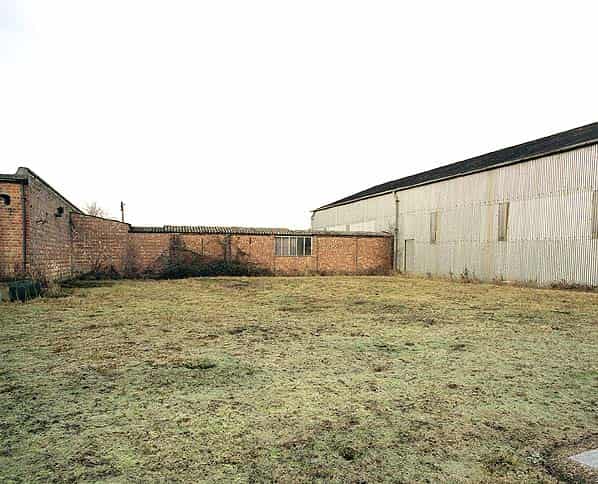
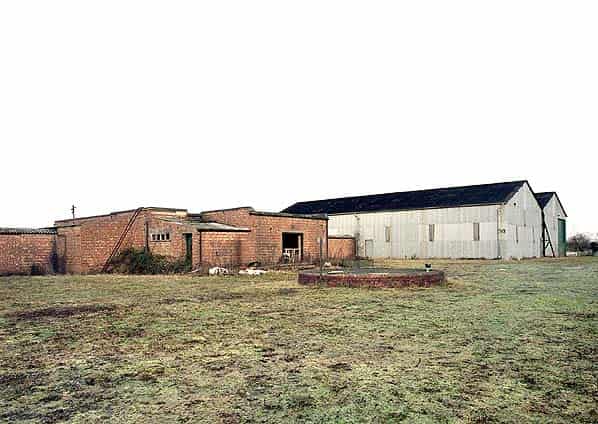
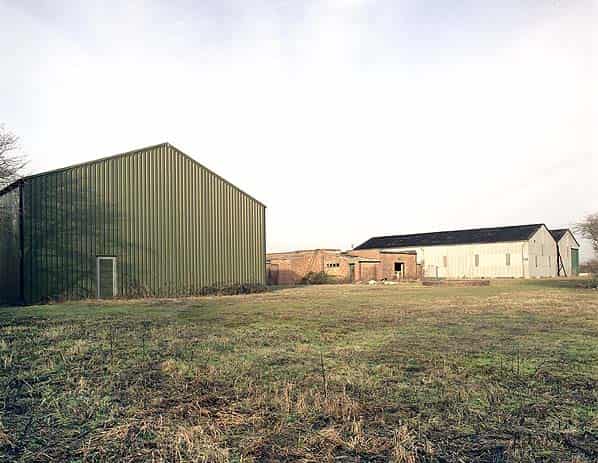
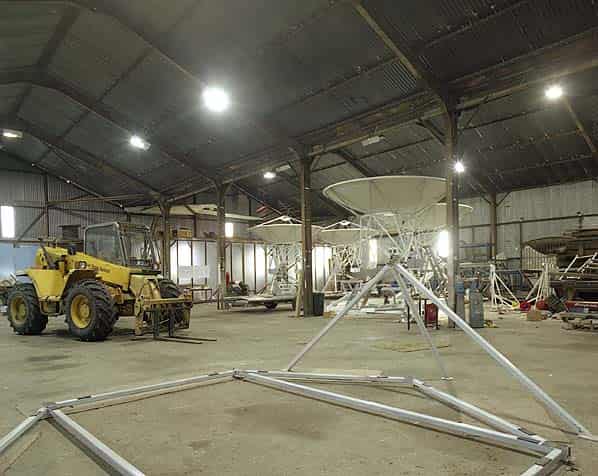
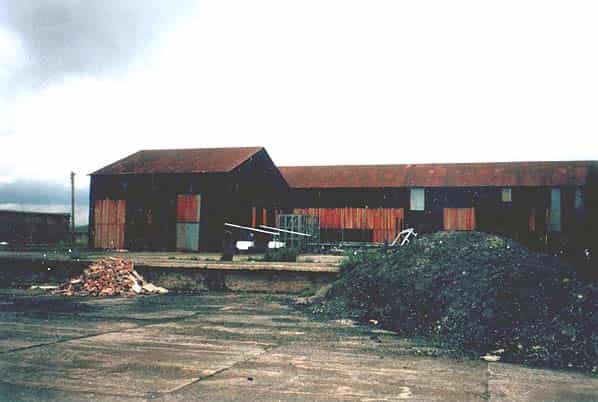
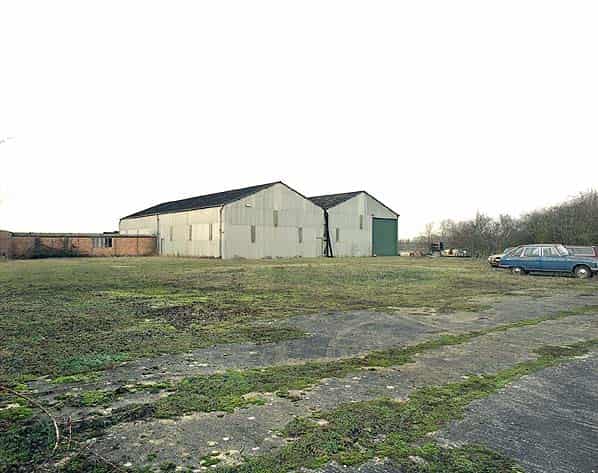
The FFD is at the end of the 500 yards road. Most of the buildings are used by Mullard for storage and the empty storage shed is used for the construction of new dishes for the radio telescopes. The original chain link fence still surrounds the site, once through the gate there is a substantial guardhouse and office block on the right, originally there was a store opposite but this has been demolished. Just beyond the guardhouse there is a ‘T’ junction. The brick built charging building is straight ahead. This has been re-roofed in recent years and a small brick building on the roof with a water tank on top of it as been removed. All original internal fittings have been stripped out but the covered ways linking to the empty storage shed to the north and the bonding shed to the south have both been retained although that to the south has been blocked at either end. The two bay empty storage building still retains its original corrugate metal cladding although it is now a little shabby. The ‘L’ shaped bonding building has been re-clad in recent years. At some FFD’s this building has an internal rail loading bay but at Lords Bridge this is external with a platform on the south side of the building.
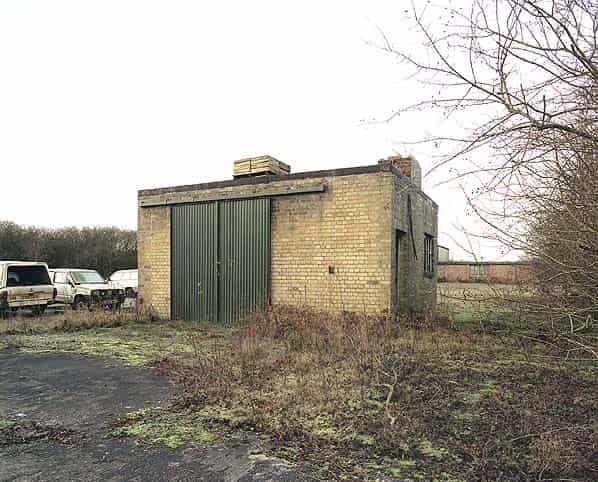
On the west side of the empty storage shed there is a single storey brick built workshop with three unconnected identical rooms, the adjacent boiler house has now been demolished. At the south west corner of the empty storage shed is the sub station with a blast wall in front of the entrance. This is still in use.
There are a further two single storey brick buildings on the west side of the bonding building. The larger is the toxic change bath house where the workforce would have changed their clothes and bathed at the end of each shift. The smaller building is the toxic and non toxic mess room; this is divided into two sections each with its own entrance.
The storage pots were located on the east side of the site and their position is clearly visible as a large depression in the ground. The standard gauge railway line entered the site on the north east side and ran along the eastern perimeter fence past the two storage pots. There is still a short section of track embedded in the road on the south east side of the site.
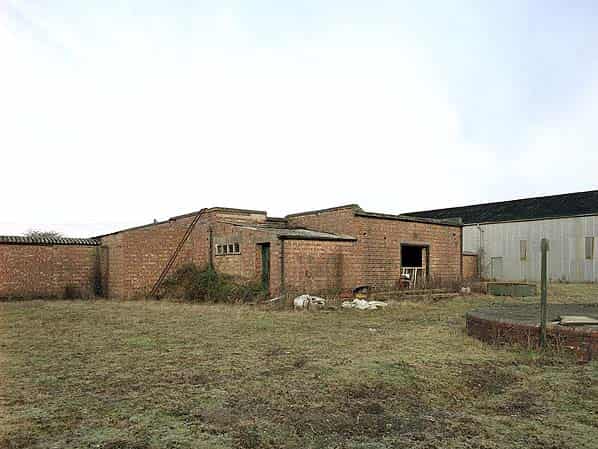
There is a small single storey brick building located between the two pots. This is divided into two sections. One half of the building was a chemical store, the other half was an emergency bathroom for decontamination if there was an accident at one of the pots. This is the only building on the site that is disused, empty and open.
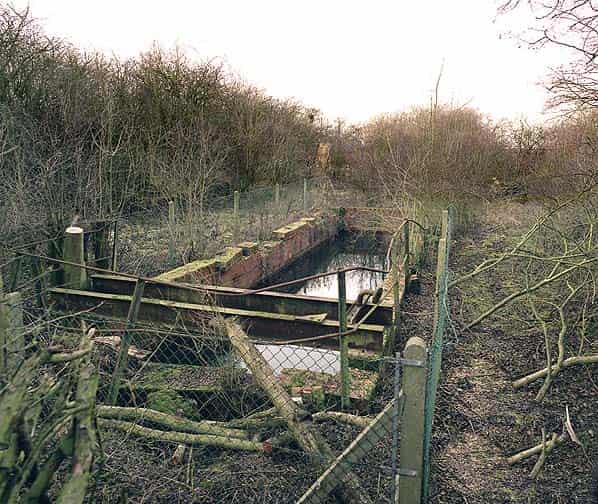
In the undergrowth outside the eastern perimeter fence is the mixing tank which resembles a sewage filter bed. It is unclear exactly what purpose this served but a plan of the Norton Disney FFD shows a network of pipes running to this tank which appears to be a collecting tank for contaminated wash water. There is still evidence of a pipe running towards the tank from the charging building.
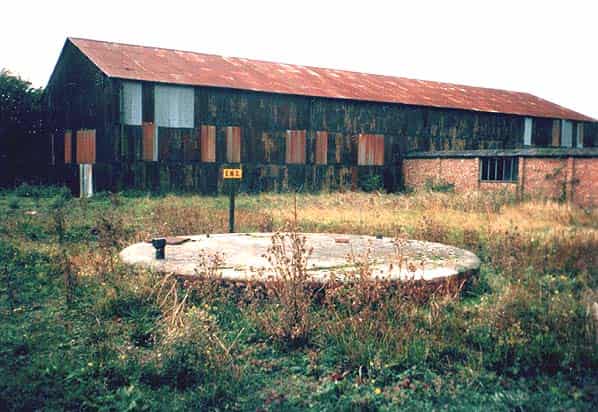
On the east side of the charging building there is a low circular concrete platform, this is the top of the emergency water supply tank.
The original pump house over the well has been demolished and two new buildings have been constructed on the site. This is now operated as a pumping station by Anglia Water and is within its own secure compound.
Sources:
- Bob Jenner
- After the Battle No. 79 (1993) No 79, Pages 12 - 33 ‘Poison Gas manufacture in the UK’
- Operational record book for 95 Maintenance Unit, RAF
- Declaration for chemical weapns production facilities (UK Government report - United Kingdom of Great Britain and Northern Ireland declaration of past activities realting to its former offensive chemical weapons programme)
- Airfield Review - Journal of the Airfield Research Group ‘The supply of explosives and ammunition to the RAF Part 3’