Lords Bridge Air Ammunition Park opened on 16th November 1939 as a forward storage facility for between 750 - 1250 tons of high explosive and incendiary bombs for 2 & 3 Bomber Groups in East Anglia. It supplied 3 sub depots at Meldreth, Riseley and Bourn as well as bomb dumps at airfields within 2 and 3 Groups. The depot was administered by 95 Maintenance Unit RAF which came under the control of RAF Bassingbourn.
Lords Bridge held one week’s supply of ammunition and was itself supplied by the Central Ammunition Depot at Fauld in Staffordshire which maintained supplies of 15 - 20,000 tons.
In 1942 the ammunition park was taken over by the US Army Air Force and on 27th May 2,000lb and 4,000lb bombs were returned to the central depot to make way for USAAF supplies.
On the 16th October 1942 there was a proposal to build a forward filling depot on the site for filling 65lb LC (light case) bombs with mustard gas. Construction of Forward Filling Depot 4 (Lords Bridge) began in the south east corner of the Ammunition Park in March 1943 and the work was completed in April 1944.
After the war the ammunition park remained operational although 95 Maintenance Unit was disbanded on 25th January 1948 to be reformed on 1st October 1949 with a new headquarters at Ridgewell.
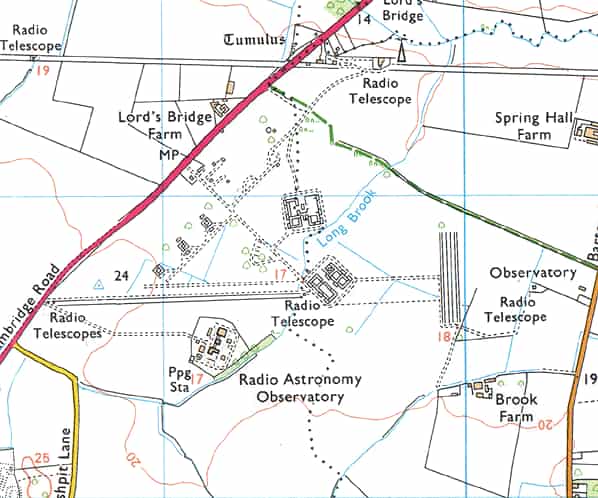
Lords Bridge was transferred to 217 Maintenance Unit at Cardington on 14th February 1955 and in 1957 the depot was closed and the site was sold to Cambridge University where the Cavendish Laboratory established the Mullard Radio Astronomy Observatory (MRAO). This was sponsored by Mullard Ltd. and supported by the Particle Physics & Astronomy Research Council. The work of the MRAO was recognised by the award of the 1974 Nobel Prize for physics to Professor Ryle and Professor Hewish.
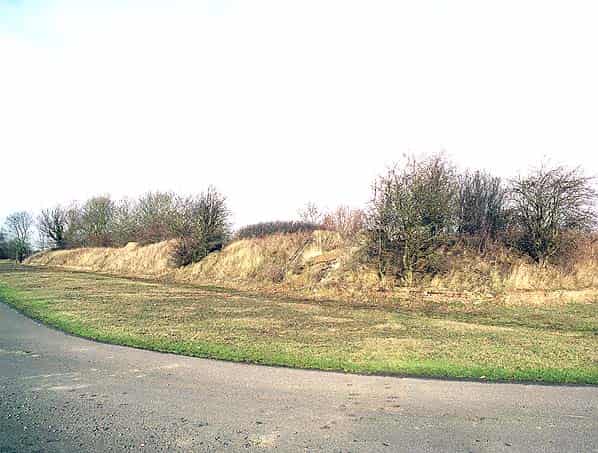
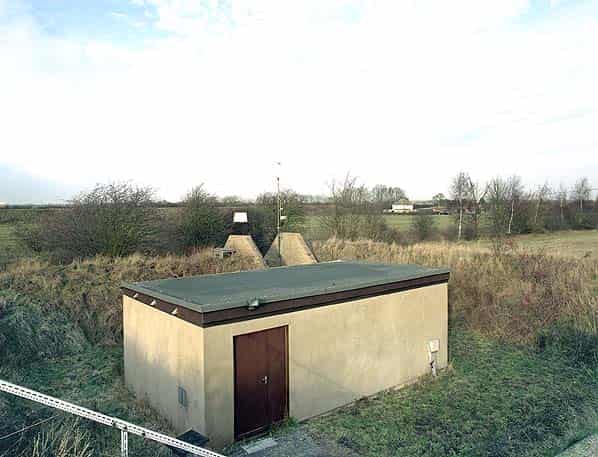
The ammunition park comprised of two blocks of six revetted magazines for the storage of high explosive bombs and four individual revetted magazines for the storage of incendiary bombs. Each of the magazines consisted of a lightly built magazine building surrounded by ten foot high earth revetments with access to the magazine through a concrete lined arch on one side of the revetment. There were also numerous pyrotechnic and light case weapons stores located around the depot.
The depot was served by a spur from the Bedford - Cambridge railway line just east of Lords Bridge Station with branches to the three sets of magazines and to the forward filling depot. The administration and domestic site was located on the south side of Cambridge Road.
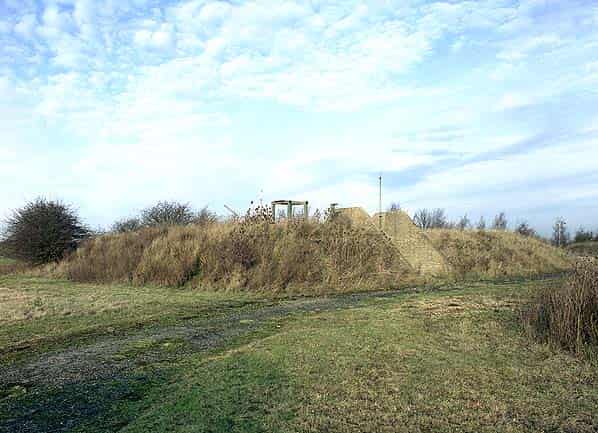
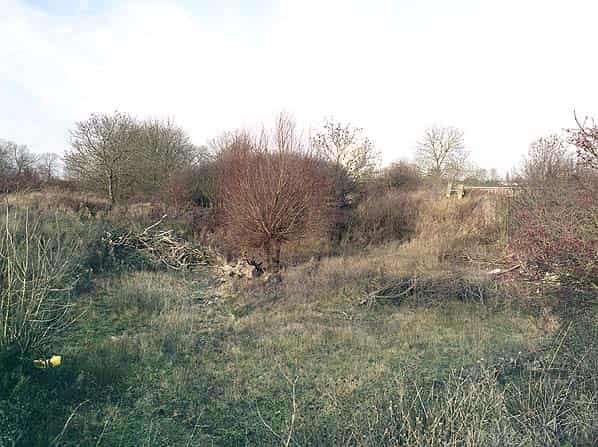
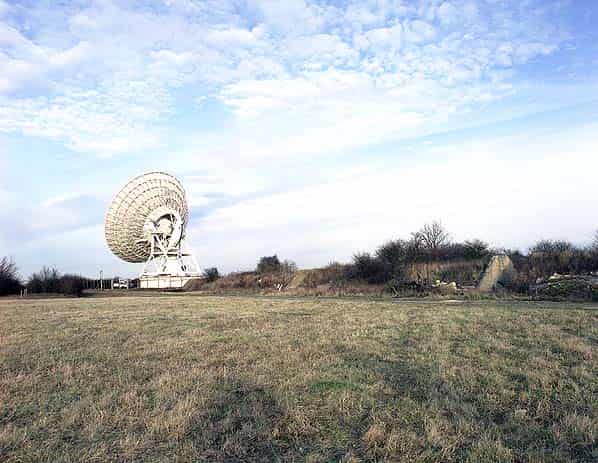
Today the entire site including the forward filling depot, Lords Bridge Station and a section of the Bedford - Cambridge railway line (closed on 1st January 1968) has been incorporated into the Mullard Radio Astronomy Observatory. The earth revetments are still extant although most of the magazine buildings have been demolished and the areas within the revetments are now overgrown.
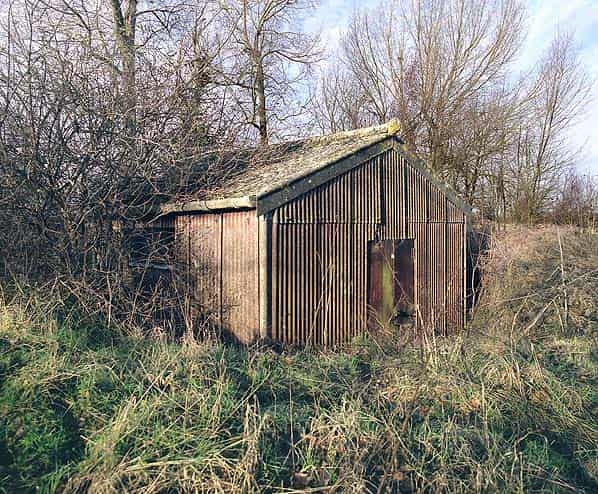
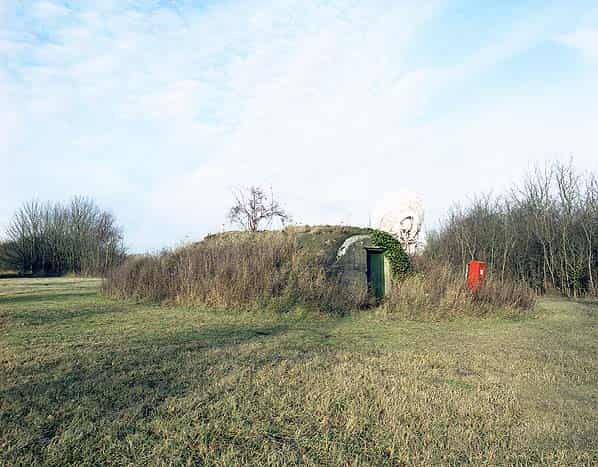
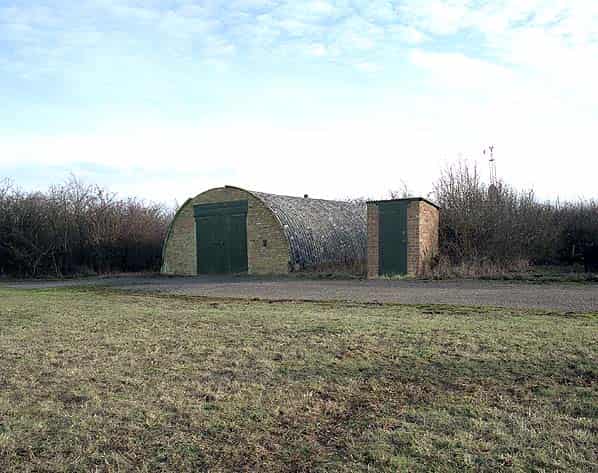
One of the incendiary magazines has been retained and renovated as a store and the western incendiary revetment now houses the Cosmic Anisotropy (CAT) Telescope. A revetted component store with corrugated asbestos cladding still stands in a wooded area to the west of the high explosive magazines. A large earth and grass covered ‘bunker’ also stands to the east of the high explosive magazines. Its unclear what its original use was but it has now been renovated for use by the observatory.
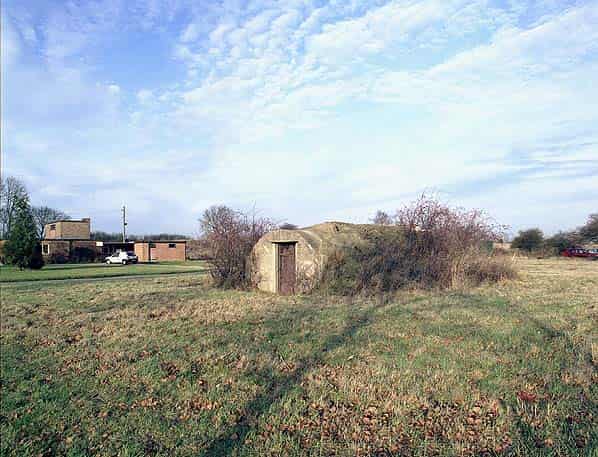
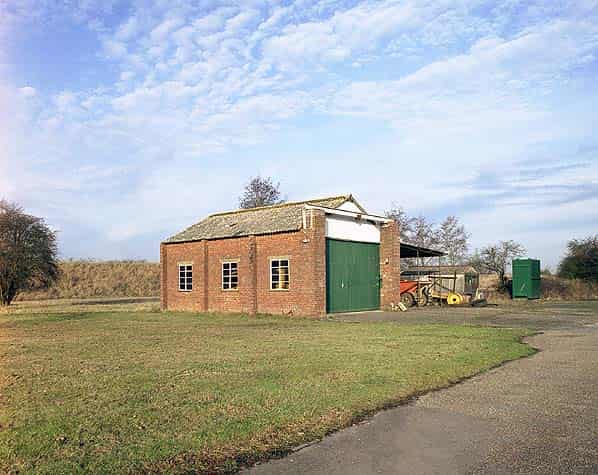
Two small mounded air raid shelters survive, one to the west of the northern high explosive magazine complex near Jodrell Bank’s 32 metre Merlin Telescope. The other is on the north side of the road running through the domestic site. Most of the buildings within the domestic and administration area have been demolished with the exception of the large brick built decontamination building close to the entrance to the site and the MT shed nearby.
The forward filling depot is still largely intact but its domestic quarters were demolished during the construction of the 1 mile telescope.
Sources:
- Bob Jenner
- Operational record book for 95 Maintenance Unit, RAF