The forts on Hoo & Darnet Islands in the Medway estuary were built on the recommendations of a Royal Commission in 1859. The Commission was appointed because of the political situation in Europe in the late 1850s. The countries of Europe were engaged in a feverish bout of pact signing, with each country anxious to secure as many allies as possible.
France had been using the latest designs in powerful new rifle-barrelled artillery (RML’s) and had equipped her navy with modern ‘iron-clad’ warships. At this time France was the only country other than Britain, engaged in expanding her territories. The recently opened Suez Canal opened up the possibilities of France expanding her colonies much more easily in the ‘Far East’. Fears were voiced over France’s expected ability to blockade the Mediterranean whereby any Franco-British conflict in the east, particularly India, would leave Britain having to supply her garrisons via the Cape Route, thus seriously affecting the possible outcome.
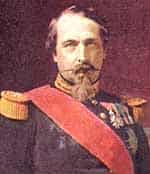
Tension was heightened when, in January 1858, Napoleon III survived an attempt on his life by an Italian named Orsini, who was angry at the apparent failure of Napoleon III to press for the reunification of Italy at a conference in Paris, where the support of France would have helped his cause. Britain was known to be sympathetic to his cause.
The situation became tenser when Austrian forces, inexplicably attacked French forces supporting the Piedmontese in Italy. Rumours in Britain at this time spoke of the whole of Europe at war and an invasion of Britain imminent, with a force being assembled in France
The British government decided to act and set up a Royal Commission to “consider the defences of the United Kingdom”. The Commission acted quickly and reported back the following year, 1860, with comprehensive suggestions for the improvement of the country’s defences. Among these suggestions were plans to improve the defences of the Medway area. An extract from the commissioners' Report of 1860 reads (after describing the geographical importance of the area) “These circumstances combined with the growing importance of Chatham and the fact that it is our great Naval Establishment in the Eastern part of England have led us to the conclusion that there are abundant reasons for adding very considerably to the existing fortifications”.
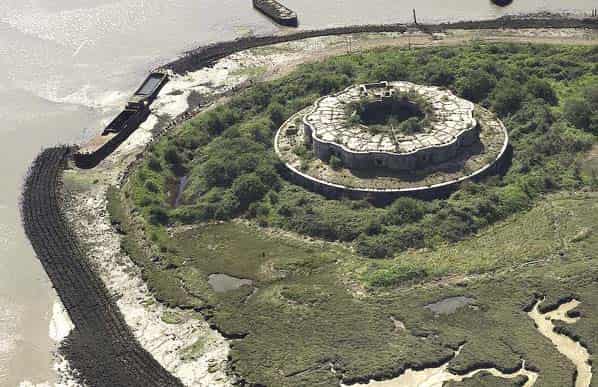
The commission covered all aspects of defence for the area and among their proposals was a suggestion for the placing of two identical forts on the Medway Islands of Burntwick and Oakham Ness. The forts were to be placed on either side of the main Medway channel, the idea being to control the channel with a boom between the two islands, whilst defending the approaches by means of two powerful batteries of guns. The forts were to be circular in design with two tiers of guns with a third, lower tier for the magazines.
The total cost of the Royal Commission’s proposals for the Chatham area were estimated at £11,000,000, but after economies and cuts to the programme, the eventual cost was c £7,500,000.
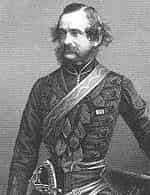
This is on the authority of General Linthorne Simmonds in a letter to ‘The Times’ in January 1884. Once voted, the money' was put at the disposal of The Inspectorate of Fortifications to carry out the proposals. The Inspector General at that time, was Sir John Burgoyne, but the credit must go to Major William Jervois (later Sir W. F. Drummond Jervois) of the Royal Engineers for persuading the Commission to spend the major proportion of funds available on permanent fortifications, rather than on increasing the power of the Navy and the building of temporary earthen batteries. Major Jervois R.E. was a brilliant planner and gave the task of designing the forts in the Medway area to one of his talented deputies, Captain Siborne R.E.
There seemed to be no problems with the chosen sites, especially as there was an 18th century battery at Oakham Ness, but surveyors were to find both sites unsuitable for such heavy structures - the ground being too soft to bear the enormous weights of the forts and their guns (a seven-inch gun weighed nearly nine tons); alternative sites had to be found. A new survey was commissioned to assess the only other comparable sites, the islands of Hoo and Darnet where the earlier batteries of Hoo Ness and Pinnams were located. The survey was carried out and borings were taken to a depth of 18 feet at Hoo and 28 feet at Darnet. Hoo was shown to have a subsoil of sand and clay, but the boring at Darnet showed a composition of different layers of soil, sand and thin layers of peat.
In October 1861 an experimental pile was driven at Darnet to a depth of 50 feet. It was noted that little resistance was met by the pile whilst at Hoo several blows were sometimes needed to drive the pile only a single inch. However it was decided that if the depth of foundations at Hoo were altered from eight to ten feet and at Darnet from eight to fifteen feet, the sites would be able to bear the weight of the new forts
When building restarted the design had been altered to accommodate the different soil conditions. One of the changes called for the magazines to be placed nearer the outside wall instead of the centre as was originally planned, as it was thought that this would spread the load more evenly. Unfortunately this caused even greater problems, for when the building had reached eleven feet at Hoo and between eight and nine feet at Darnet, cracks began to appear in the masonry. The cracks at Hoo continued until further measures were taken. These included the pouring of 3,500 tons of ballast into the centre of the fort (where the magazines were to have been placed). The forts were then surrounded by concrete skirts, which were to serve two purposes; firstly a glacis was formed (a defensive slope); secondly, the concrete skirt stopped the surrounding soil from being pushed up by the weight of the structures.
Drainage was yet another problem, as was shown dramatically when a well was sunk into the concrete of Hoo Fort. The concrete was still saturated and was so porous that the well had to be pumped continuously at the rate of 4,500 gallons an hour for a considerable time. To counter this it was decided to drain the land with a siphon arrangement of pipes and wells. This apparatus was kept in use for several years until the ground had dried out.
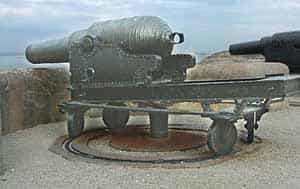
In 1867 a revised plan for the forts was approved. Instead of the planned three-tiered buildings, the forts were to be limited to two tiers. Each fort was to have eleven guns, whereas the original design had planned for twenty-five. The new armament was to be eleven 9-inch rifled-muzzle loading (RML) guns at Hoo with eight 9-inch RML’s and three 7-inch RML’s at Darnet - half the number of the original plan, yet the fire-power in terms of accuracy, rate of fire and weight of shot was superior. The forts were commissioned in 1871
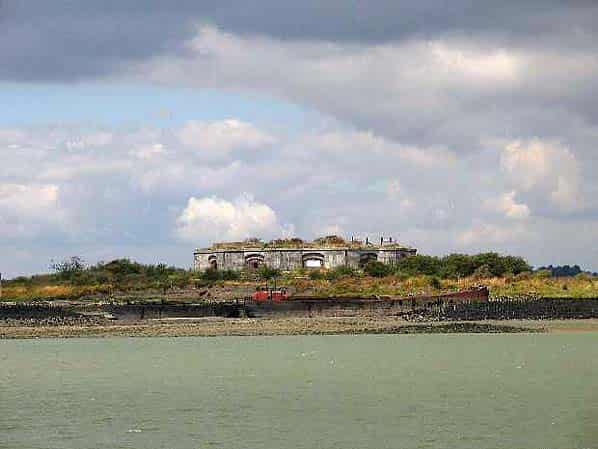
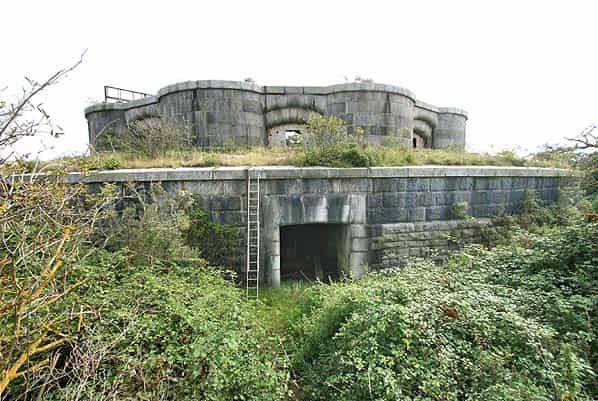
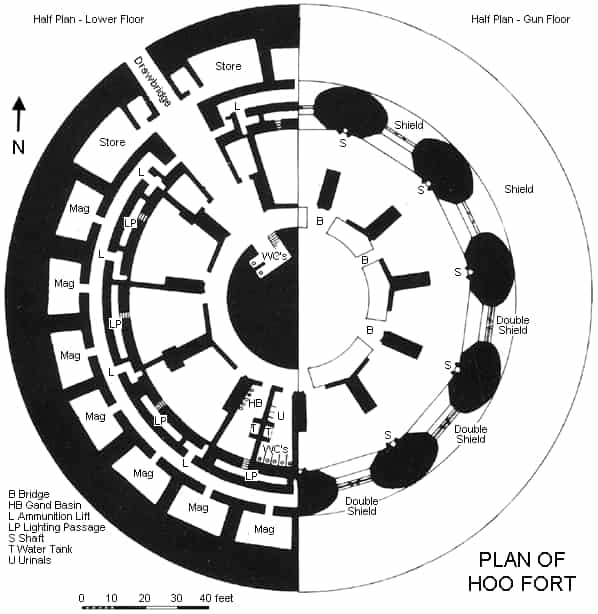
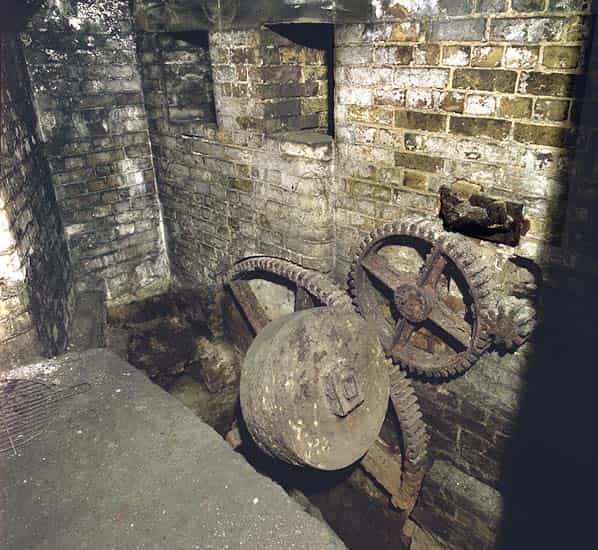
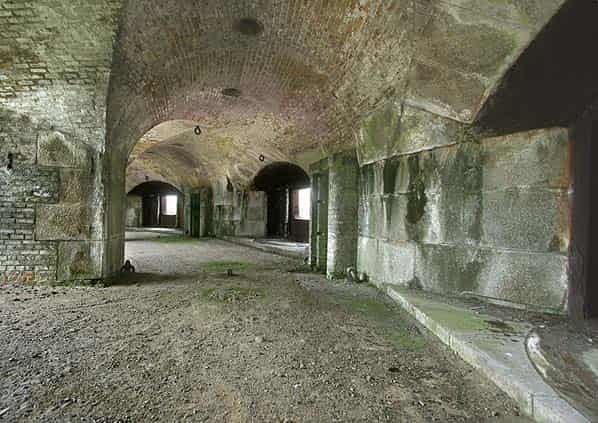
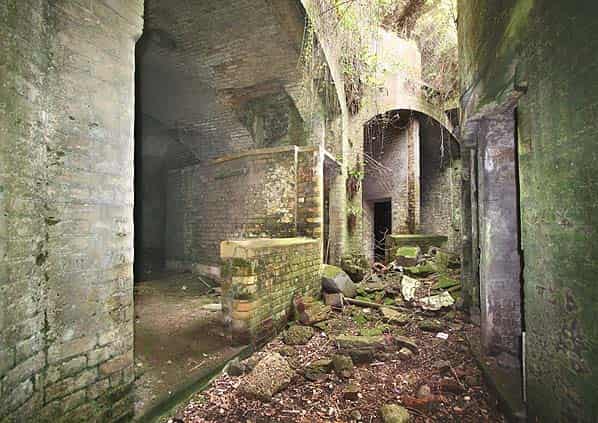
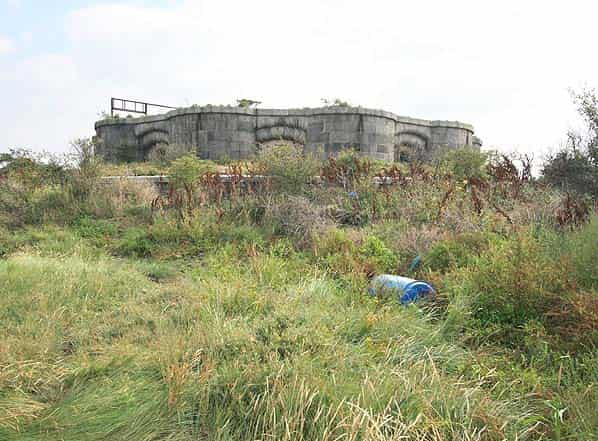
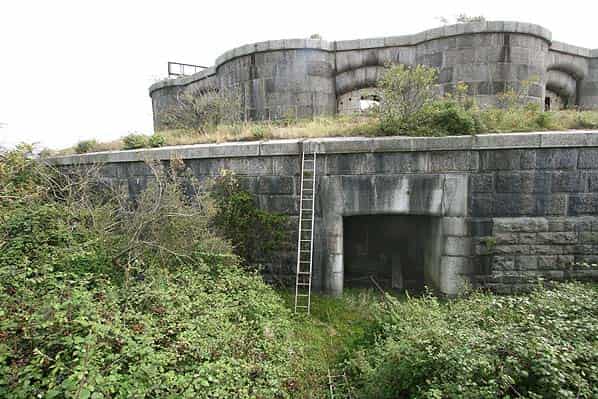
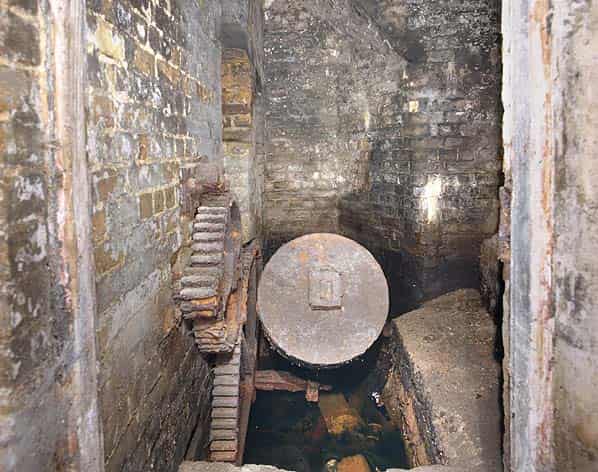
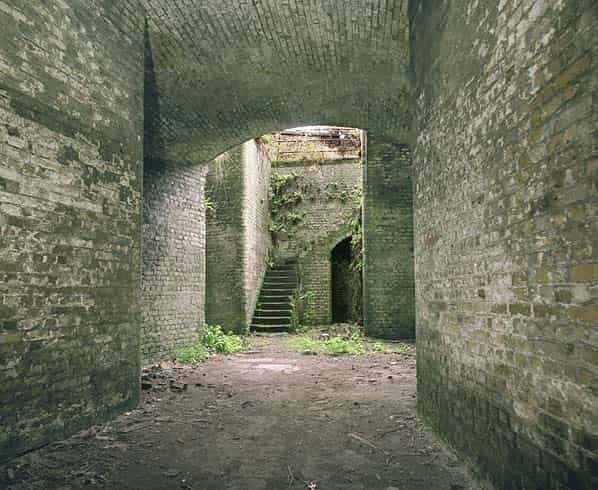
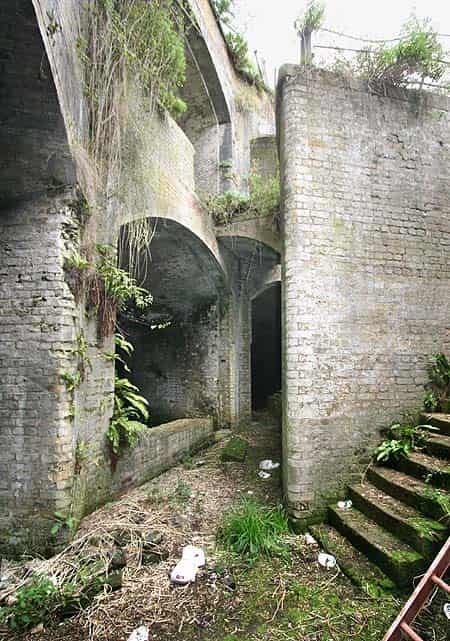
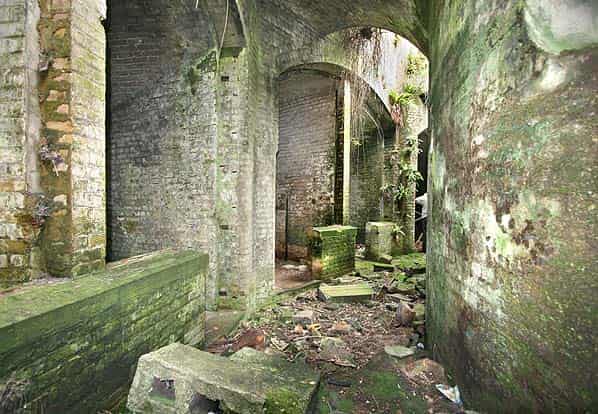
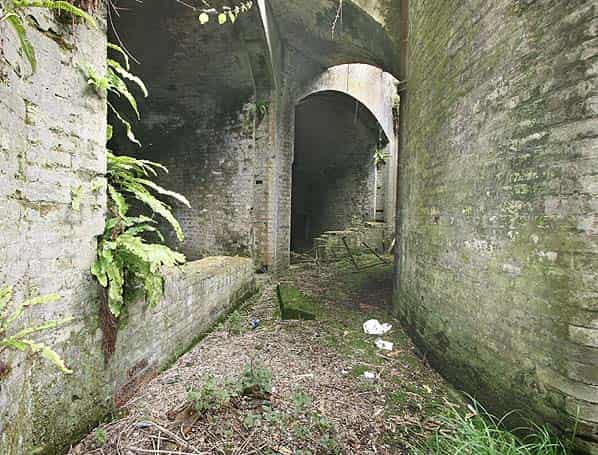
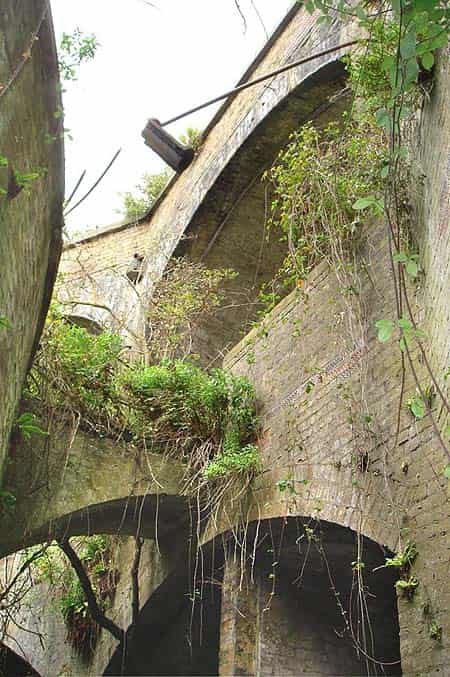
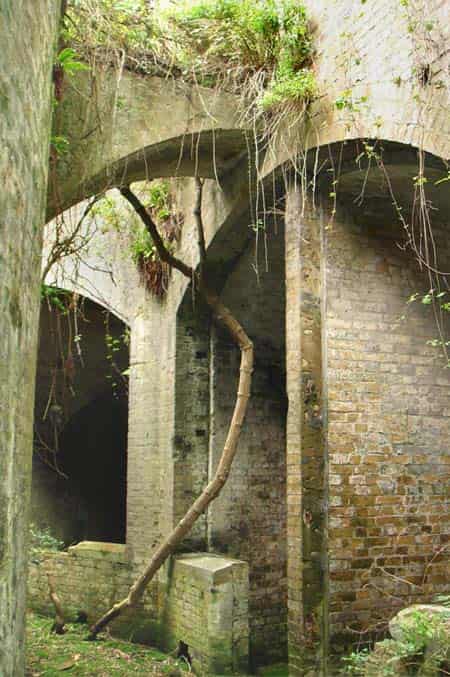
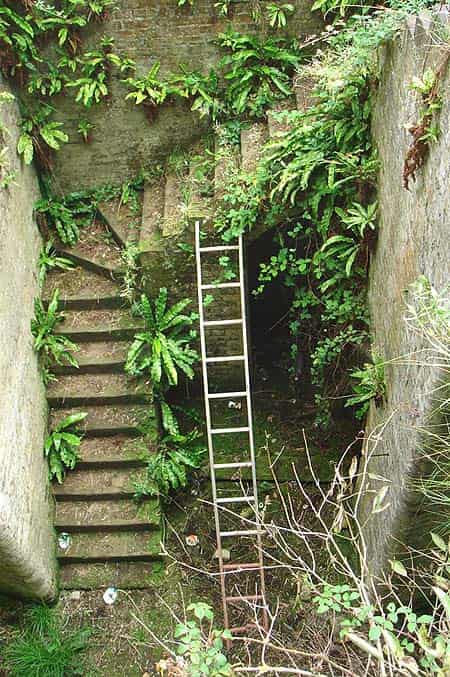
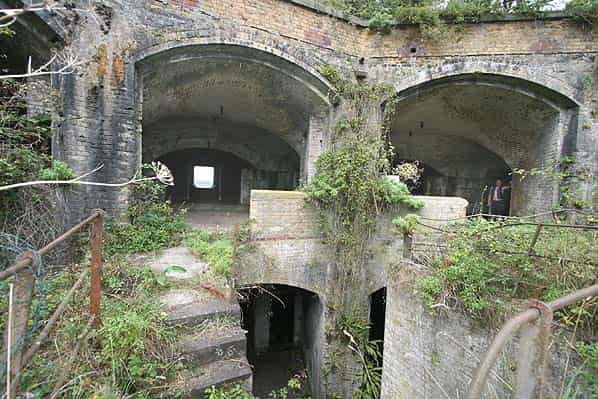
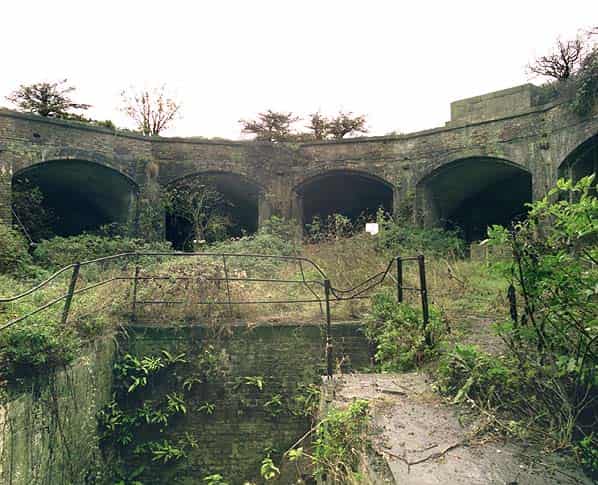
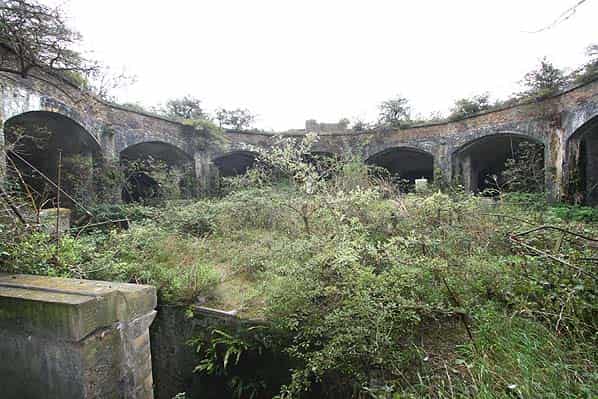
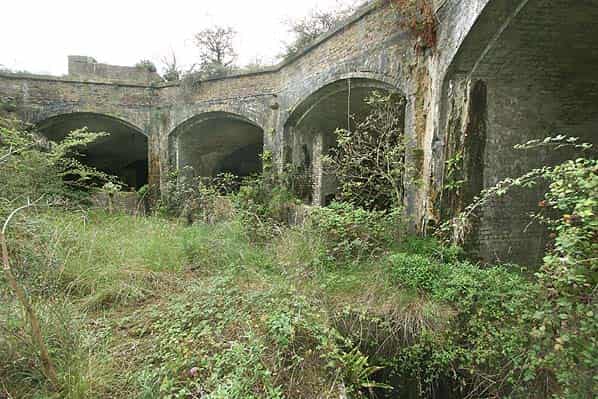
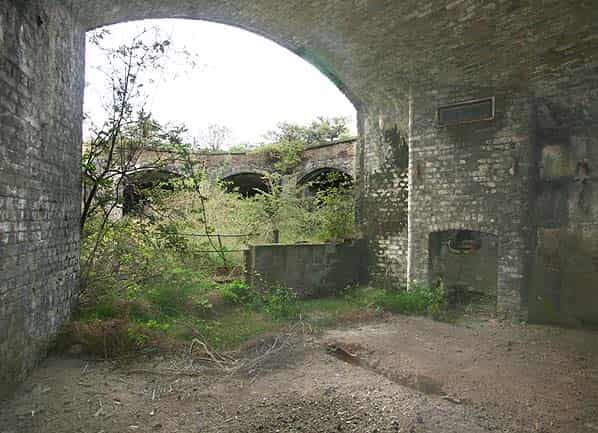
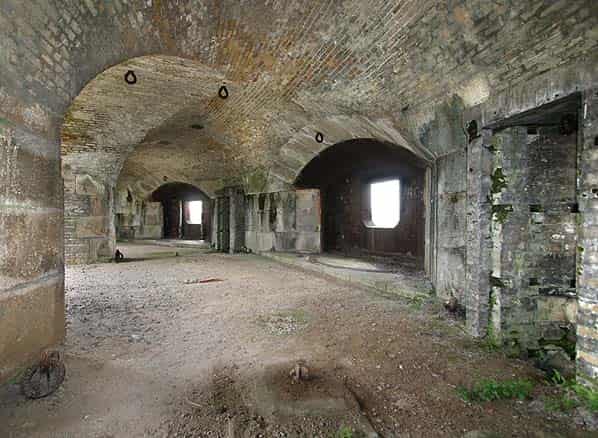
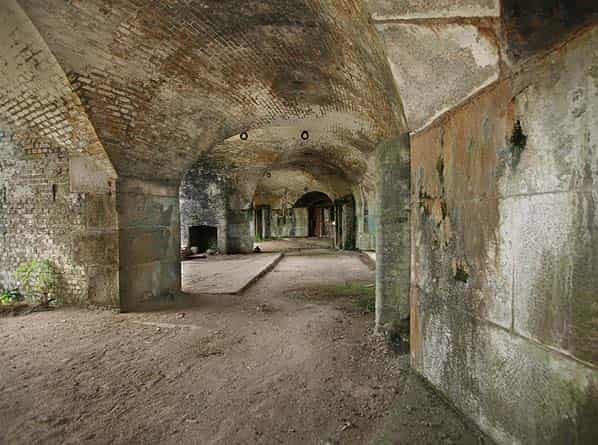
The structures can be divided into three main parts: the lower floor housing the accommodation casemates; the upper floor carrying the guns (with the gun casemates doubling as extra accommodation in an emergency), the third part, in the centre of the fort being a structure shaped like a drum. This drum carried a stairway from ground level to the gun floor, the space between the drum and the guns being spanned by narrow bridges. This part of the building was also used as the parade ground. Entry to the fort is through a gateway over a drawbridge covering a pit between two sets of gates. This area is also covered by two musket loopholes on either side. At Hoo a geared winding device with counterweights was employed to lift the drawbridge.
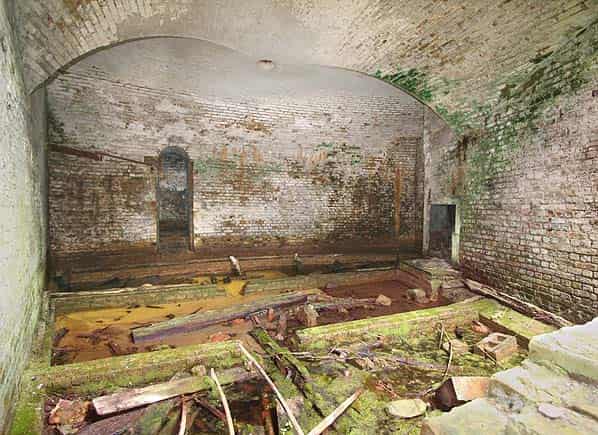
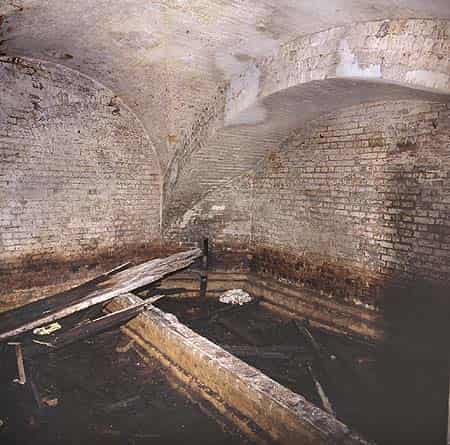
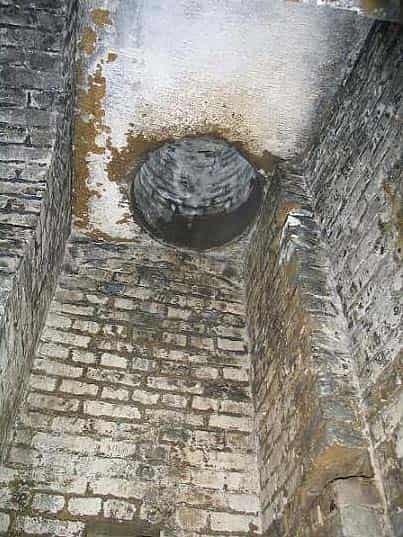
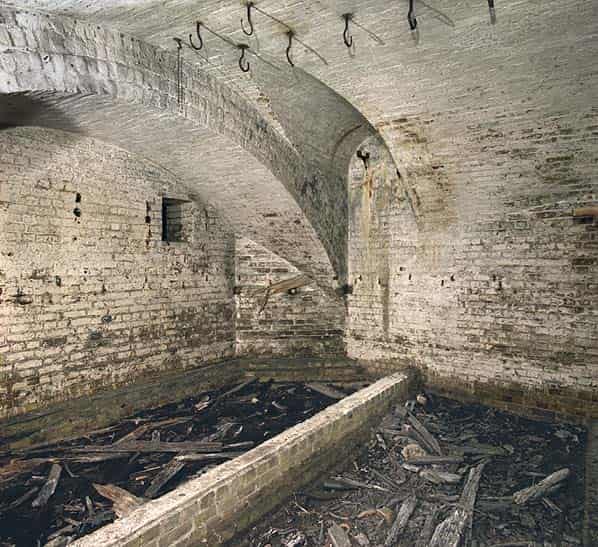
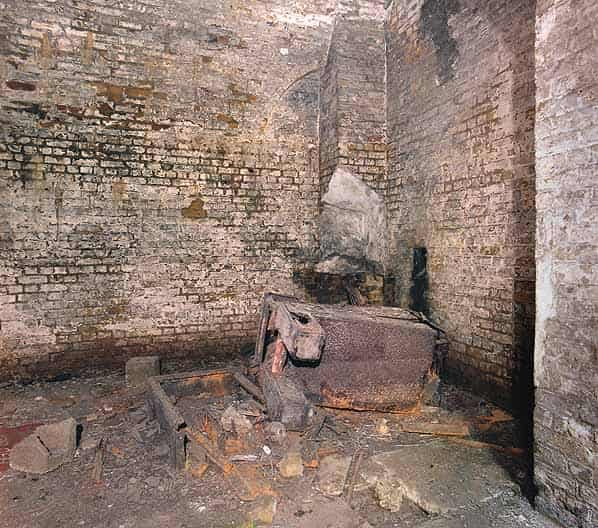
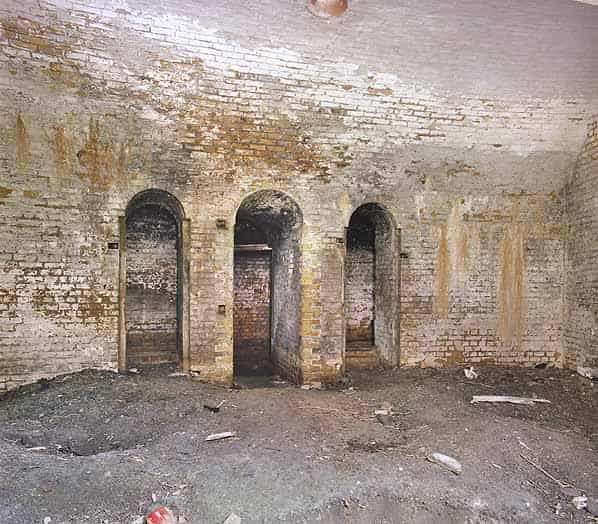
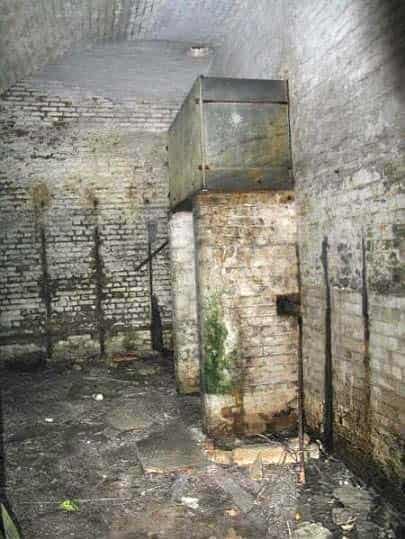
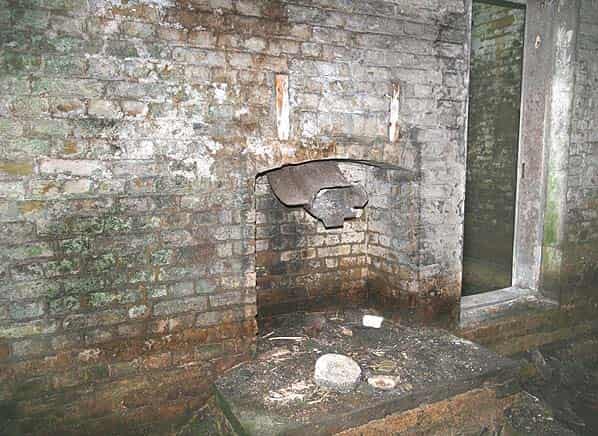
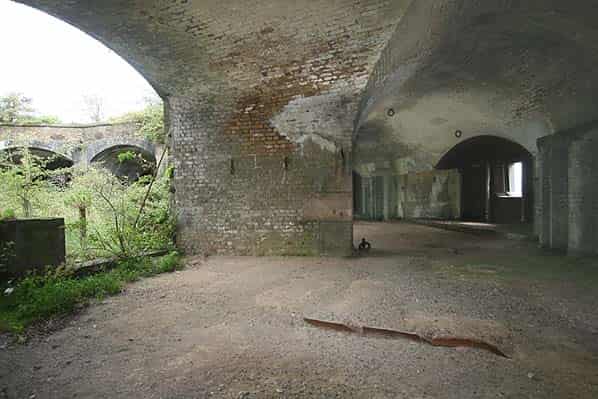
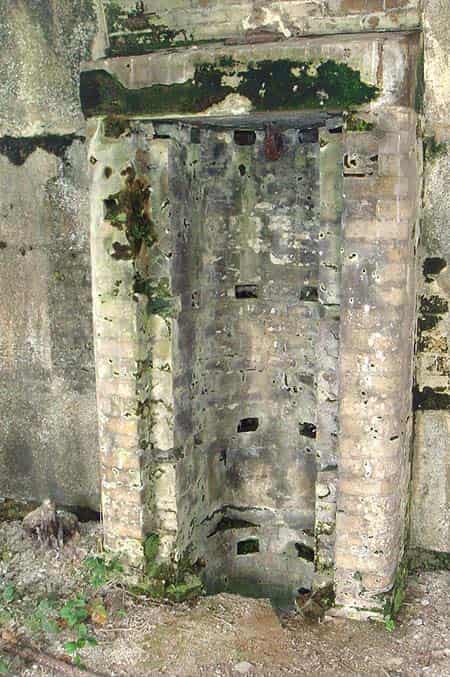
The accommodation casemates seem to have been quite spacious, for although the forts were designed for a garrison of 100 men each, there seems little likelihood that there would have been more than 25 to 30 men in peace-time. The accommodation casemates all have fireplaces with a grille set high in the wall for heat to be convected from around the fire. The latrines are still well preserved, being served with rainwater, collected from the roof via ducts and gutters leading to two large water tanks in the central drum of the building, the material used in the making of the latrines was thick slate - there is still a well-preserved slate bath in position at Hoo. One of the casemates has a large stove in place of the fire and this room was probably the messroom, another casemate contains handbasins and ovens.
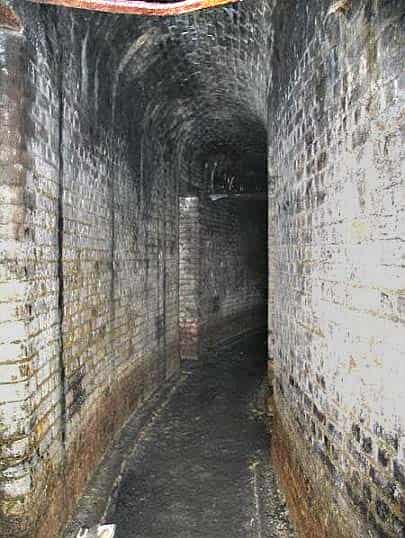
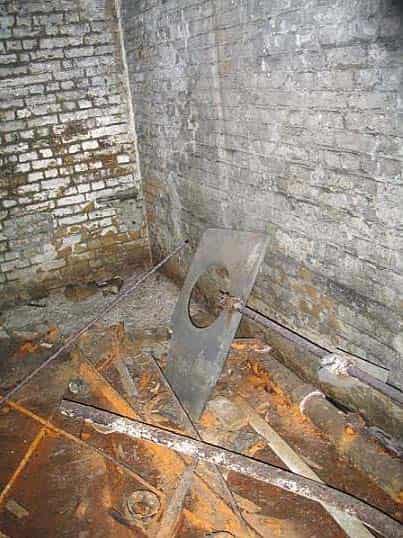
The ammunition was divided and stored in two different sets of rooms. Guns number 2-8 had one room each for shells and one room each for cartridges; whilst guns 9 and 10 shared facilities, as did guns 1 and 11 - though these store rooms were for the landward-facing guns. The cartridges and shells were brought together in a small room opposite the magazines and these were pulled up by means of a hoist to the gun floor. The magazines were lit in an unusual way, to ensure that no naked flame came into contact with the stored ammunition; each magazine has its own independent lighting passage, a small wooden-floored lighting room parallel to the ammunition passage which joined all the magazines. From the lighting room the ammunition shafts at each end could be lit from a glass sealed alcove in the wall. The magazine was lit by a lantern on a trolley and with the aid of a winching mechanism; the trolley was guided along the top of the ammunition passage into a glass fronted alcove in the magazine. The rail above the top of the passage was sealed in a zinc casing. The fumes from the lanterns were withdrawn from the alcoves by means of a flue set into the alcove ceiling which came out in the lighting room.
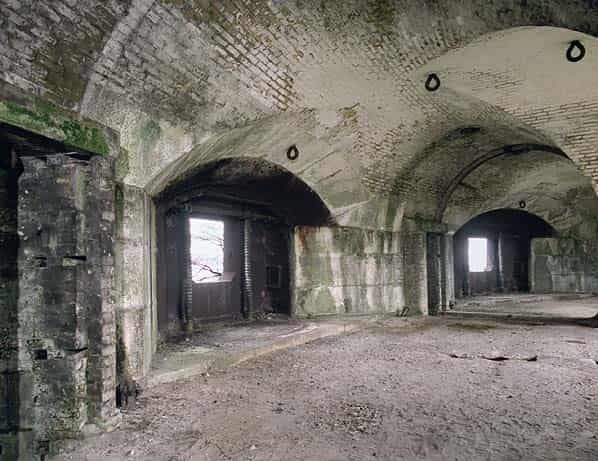
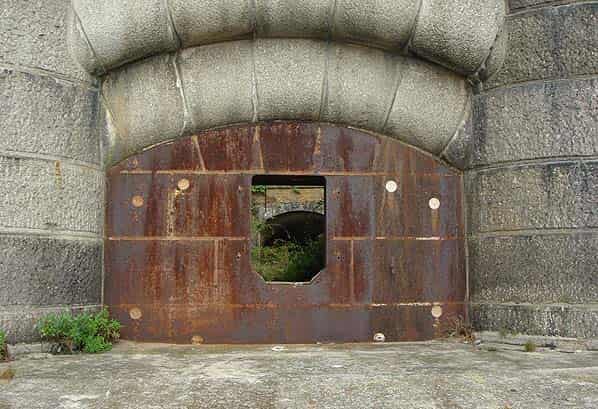
To protect the gunners, a shield (designed and developed by Captain Inglis and Lieutenant English, both of The Royal Engineers), was placed over each embrasure; the gun firing through an aperture - a direct imitation on land of a battleship’s armour. The shields were made up of ‘alternate layers of five-inch wrought-iron plates and five inches of wood. The usual thickness was made up of three layers of iron with two intermediate layers of wood.
These alternate layers of wood and iron resisted penetration much better than a single thickness of ten or fifteen inches of iron - the wood also lessened the effects of shock on the mountings, thus enabling the shields to remain in position even after a direct hit. The gunners were further protected by a curtain of woven rope called a mantlet, this stopped splinters from the shield injuring the gun crew should it receive a hit. The shields were set into arches in the outer granite wall - these arches are known as ‘casemate arches’. Those shields facing the main channel are much thicker than those which face landward.
The total cost of both forts was £171,936, far exceeding the original budget of £100,000. The increase was largely due to the difficulties in preparing adequate foundations and the extra expense (£30,900) of providing the shields. In trying to assess the capabilities of the forts, one must realise that when they were built, Europe was in a state of turmoil and any addition to Britain’s defences would have been beneficial. Britain’s ability to survive the period from 1859 to 1914 without an invasion attempt was due partly to the inaction of the French and partly to the deterrent value of the fortifications. This deterrent value completely justified the Commissioners’ recommendations for the construction of the forts.
Although only a few guns could be brought to fire at a ship at any one time, the penetrative power of a 9-inch R.M.L was such as would force an enemy to think twice about an attack. The forts practised gunnery for many years (one of the guns cracked in its casemates and this was reported in ‘The Chatham Observer’ on the 25th January, 1879); The forts were disarmed and abandoned before the First World War, The Royal Artillery Corps Care and Maintenance Unit looked after the sites until about 1920. In 1930 experiments were carried out at Hoo Fort, and to a lesser extent at Darnet Fort, to ascertain the likely damage to underground magazines caused by accidental explosion of stored cordite. The accommodation casemates were used for the above ground experiments whilst the magazines were used for the below ground experiments. Some damage was recorded and the final test caused the collapse of the magazine roof.
In the two World Wars the forts were used as observation posts, and platforms were built on top in the form of brick pillboxes which are still in existence but at Hoo there is no longer any access to the top of the fort. Hoo island remained in MOD hands for many years but is now owned by Medway Ports.
Sources:
- Medway’s Island Forts by R. Crowdy published by Medway Military Research Group