Following the development of radar at Orfordness and at the Bawdsey Research Station in Suffolk during the mid 1930’s, the Air Ministry established a programme of building radar stations around the British coast to provide warning of air attack on Great Britain. A survey was undertaken in 1938 to assess the suitability of the local terrain for Air Defence Radar operations with the first of these new stations coming on line by the end of the year. This network formed the basis of a chain of radar stations called CHAIN HOME (CH).
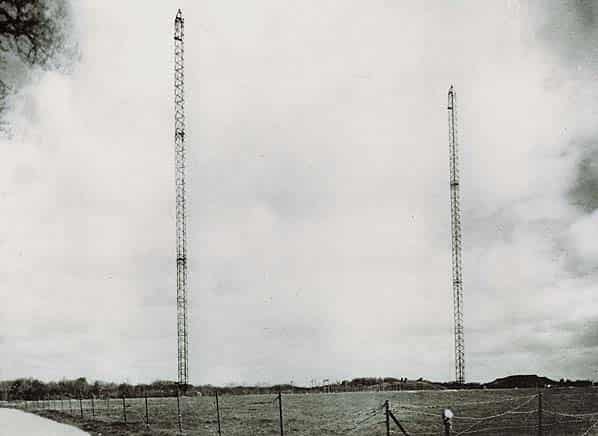
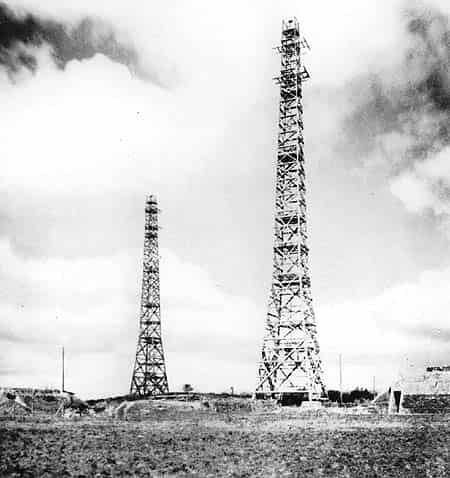
These stations consisted of two main types; East Coast stations and West Coast stations. The East Coast stations were similar in design to the experimental station set up at Bawdsey in 1936. In their final form these stations were designed to have equipment housed in protected buildings with transmitter aerials suspended from 350' steel towers and receiver aerials mounted on 240' timber towers.
The West Coast stations differed in layout and relied on dispersal instead of protected buildings for defence. Thus the West Coast stations had two transmitter and receiver blocks with duplicate equipment in each. Transmitter aerials were mounted on 325' steel masts with the receiver aerial mounted on 240' timber towers.
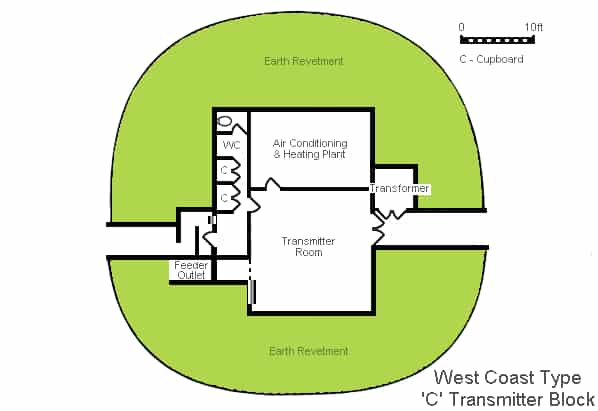
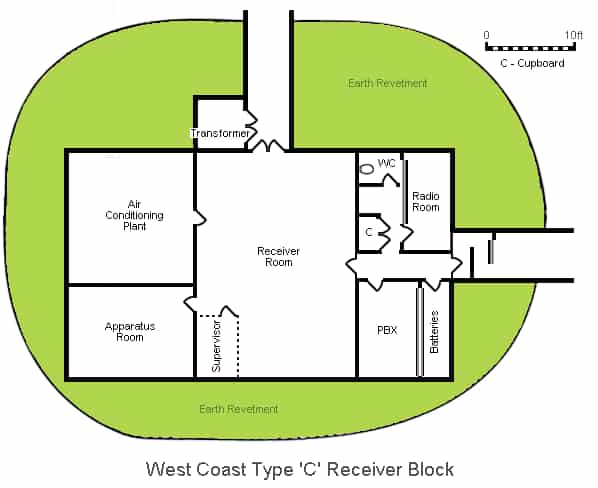
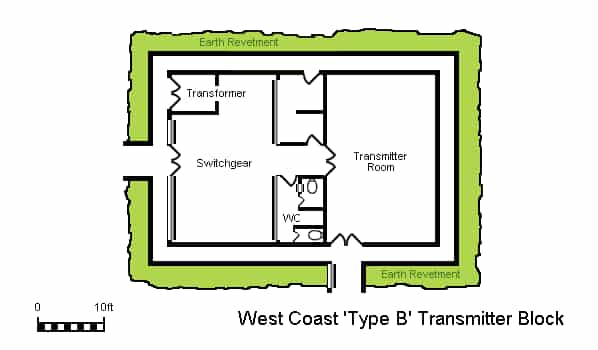
The west coast stations used ‘Type B’ or ‘Type C’ blocks (or a mixture of both). The ‘Type B’ blocks lacked a protected roof whilst the ‘Type C’ blocks were usually completely earth covered for protection. The majority of Chain Home stations were also provided with reserve equipment either buried (completely underground) or remotely sited.
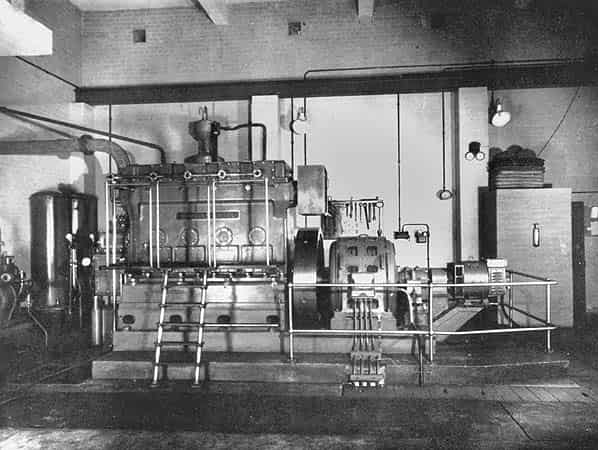
Most stations were powered from the National Grid but they were also provided with generators to cover interruptions in the mains electricity supply. These were located in another protected building known as a stand-by set house. These were similar in design to the transmitter and receiver block although smaller and were of brick construction and surrounded by a traverse (earth banks) for blast protection.
By the outbreak of war in September 1939 twenty ‘East Coast’ Chain Home stations were already operating along Britain’s coastline, most of them on the east and south coast facing France, Belgium, Holland and Norway. Construction was also well under way on the ‘West Coast’ stations that could cover the equally important areas to the west with stations in Northern Ireland the Isle of Man and Wales.
Radar sites were chosen based on specific criteria. The land had to be well back from the coast to be clear of a possible attack from German shipping. A smooth slope between the station and the sea was required to provide good height finding and range finding abilities. The chosen sites also had to be accessible to heavy engineering works with ground suitable for carrying the heavy steel masts. The Hayscastle Cross site was owned by Mr. Philips; a local farmer and was requisitioned by the Air Ministry under wartime legislation.
In July 1940 Germany had already overrun France and was already launching attacks against Britain from the French channel coast. Several attacks took place that month off the Pembrokeshire coast on local shipping and on Carew Airfield and the oil storage depots at Pembroke often with fatal results. In addition U-boats were causing havoc to our supply lines from America being directed to them by long range German aircraft.
As part of a solution to this problem and pending the construction of a full West Coast CH station at Hayscastle Cross an Advanced Chain Home station was put in place. ACH stations were mobile units utilising telescopic wooden masts and temporary wooden hutting. The construction of the ACH at Hayscastle Cross was delayed due to the shortage of labour and materials with only one mast half built by the time the hut was complete.
The ‘line of shoot’, i.e. the direction the station radiated its signal, was to the north west covering St. George’s Channel between Wales and Southern Ireland. Other radar stations were soon operating at Pembrokeshire at Warren near Castlemartin and Folly near Nolton to counteract low flying aircraft and ships. Chain Home Low (CHL) and Chain Home Extra Low (CHEL) were also built at St. David’s, Strumble Head, St. Twynnells (near Warren), Old Castle Head (near Manorbier) and Kete (near Dale). Chain Home Low was originally designed by army scientists for use in plotting shipping for coastal batteries and was adapted by the Air Ministry to locate low flying aircraft, a task in which Chain Home performed relatively poorly. CHEL stations gave further improved sea level coverage.
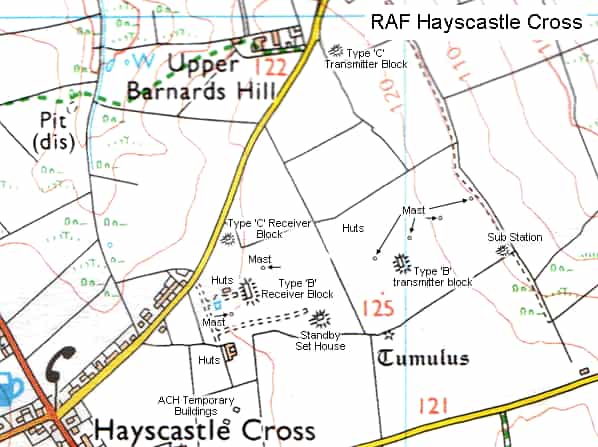
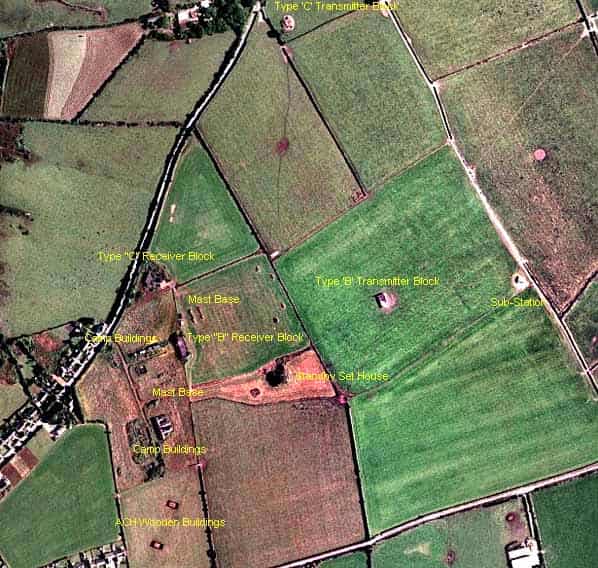
Once completed the Hayscastle Cross station had two 240ft wooden receiving towers with a curtain array rigged between the two towers and four 325ft guyed steel transmitting masts. The station had four technical blocks comprising ‘Type B’ transmitter and receiver blocks (1 of each) and ‘Type C’ transmitter and receiver blocks (1 of each). There were no remote reserve blocks at Hayscastle Cross with the two ‘Type C’ blocks acting as reserve. A mobile radar unit (MRU) convoy was available to provide reserve cover if the station went off air but its location is not recorded. The station was designated Chain Home No 68 and was under the Technical Control 78 Wing at RAF Ashburton in Devon. The operational control was 10 Group with its HQ at RAF Box.
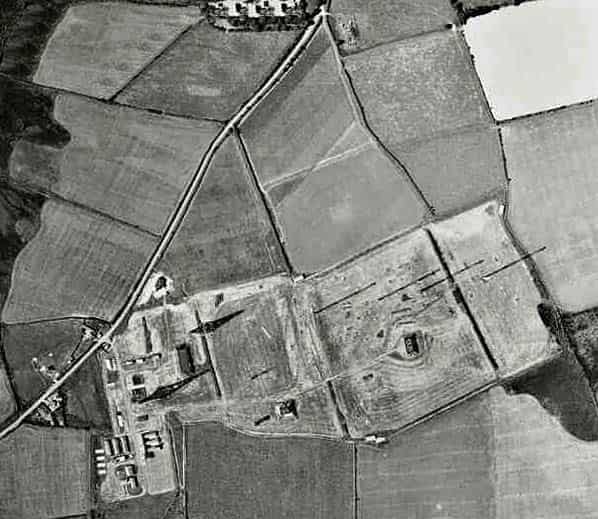
The two transmitter and receiver blocks and the standby set house were widely dispersed to avoid all the operational buildings being hit during an air attack. Pembrokeshire was considered a ‘back door’ to gain access to Britain and it was therefore of particular importance to defend the station against hostile invaders. Not only did Hayscastle Cross provide early warning of enemy aircraft in the Southern Irish Sea area but it also plotted the increasing number of Allied aircraft operating from local airfields. These were engaged either on training and operational sorties or departing or returning from deep penetration flights over the North Atlantic and Bay of Biscay in the battle against the U-boats.
By May 1944 as the German bomber threat receded and because of the high cost and manpower required to keep the Chain Home network operating the stations underwent a rapid contraction. When the European war ended in July 1945, most of the Chain Home stations closed and were reduced to care and maintenance status. By 1947 the only radar cover left in the UK was between Bempton along the east and south coast to West Prawle in Devon via Dover. RAF Hayscastle Cross was reduced to care and maintenance status from 1st June 1946.
On 1st December 1947 the station was transferred from Northern to Southern Signals Area. In 1949 a CFP Combined filter plot had been established at RAF Folly linking the remaining operational South Wales radar stations to the Sector Operations Room, Western Sector at Poltimore Exeter. On 30th September 1950 the station was transferred from Southern Signals Area to Pembroke Dock Coastal Command for parenting. On 15th August 1950 the station was transferred from Southern Signals Area to Radio Navigational Aids Wing.
In the early 1950’s, RAF Hayscastle Cross was one of 15 stations selected under the ROTOR programme as a ‘west coast Readiness Chain Home’ together with a further 13 Chain Home operational stations. The existing Type 1 radar was re-engineered, as part of the first phase of the rotor programme (CodeCHX) to provide early warning cover with re-engineered Type 7 as the control radar at Ripperston GCI station. A skeleton crew was retained and the station could be brought into operation at short notice. In 1950 it was proposed to upgrade Ripperston Happidrome with new air conditioning and blast walls around it. At Folly and Hayscastle new camps were proposed.
On 1st November 1951 the station was renamed 392 Signals Unit. In 1954 St Twynells Rotor GCI replaced Ripperston. It had been proposed to site a Type 54 remotely at Hayscastle Cross, Folly or Rhossili but in event it was placed on main site at St. Twynnells; the new camps were not built with only some minor upgrading of technical equipment. The CFP and Western Sector closed in 1953 control and plot passing to the new SOC at RAF Box under the Rotor Plan. The stations use as part of the Rotor programme was short lived and with the introduction of Type 80 radar in 1955 RAF Hayscastle Cross quickly became redundant because the control version of the Type 80 had twice the range of the Chain Home early warning radar; Hayscastle Cross was retained on care and maintenance for a further five years.
On 15th July 1956, 392 Signals Unit was parented by RAF Folly (another ‘west coast Readiness Chain Home’ station within the ROTOR programme), 4 miles SSW from Hayscastle Cross and on 13th November 1956 the site was transferred from No. 11 Group Fighter Command to No. 90 Group. By 7.12.1956 the station was still parented by RAF Folly but was described as inactive. On 1st May 1958 parenting was transferred to a Care and Maintenance Party Pembroke Dock in No. 19 Group Coastal Command. Shortly afterwards the steel transmitter masts were dismantled and shipped to Trincomalee and eastern province of Ceylon (Sri-Lanka) where they were re-erected. The remnants of the steel guy lines that supported the masts were buried under earth banks.
On 1st January 1959 parenting was again transferred to RAF Aberporth No. 12 Group Coastal Command. On 20th July 1960 RAF Hayscastle Cross was placed on a disposal list of Air Ministry assets. The land was sold to local farmers and was returned to agriculture.
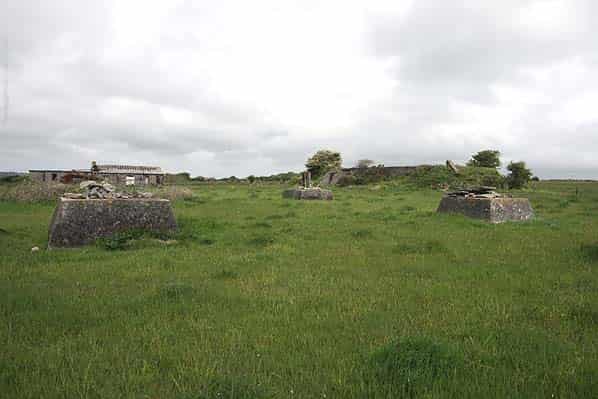
All of the transmitter mast foundation blocks were demolished by the new landowners but the bases for the two wooden receiver towers still remain. The two transmitter and receiver blocks, standby set house, sub-station and some of the hutting was also retained.
RAF HAYSCASTLE CROSS TODAY
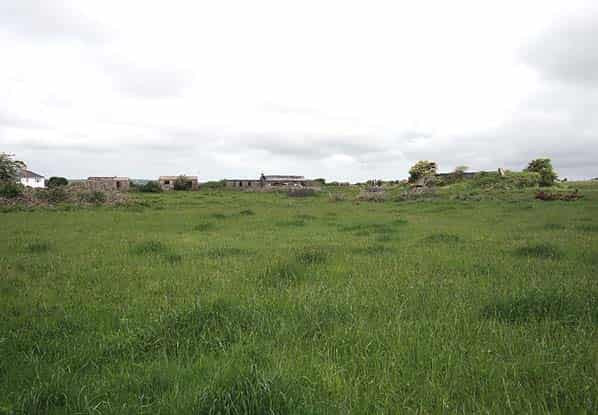
The remaining buildings are on two farms between two un-named minor roads running east from to the B4330 close to the centre of Hayscastle Cross village.
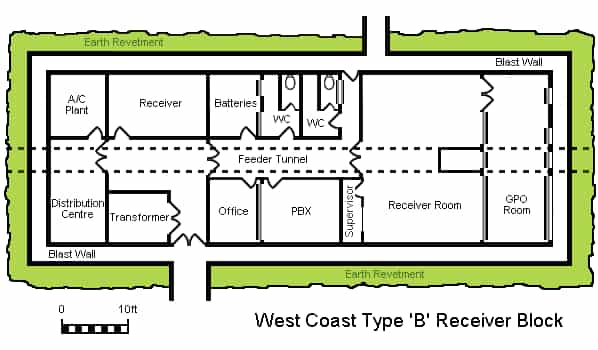
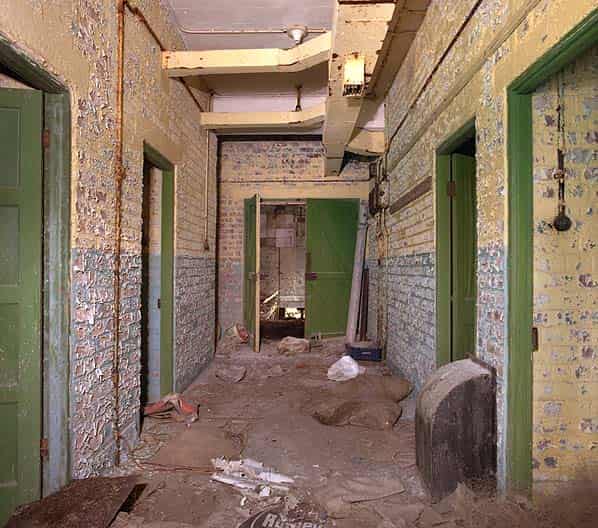
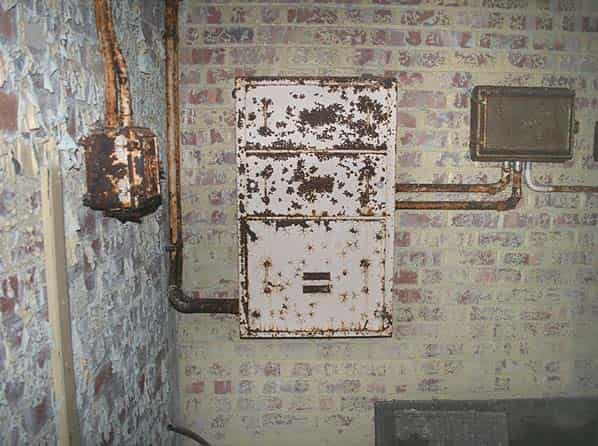
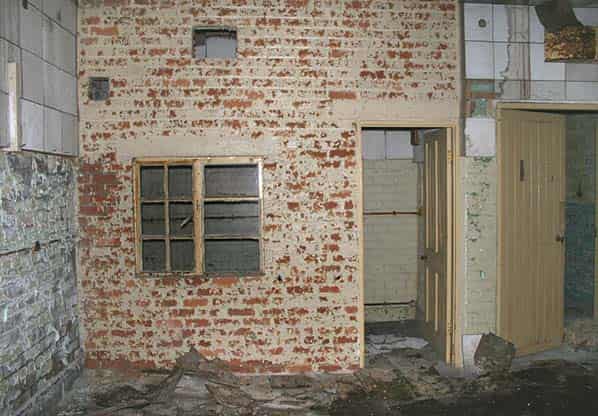
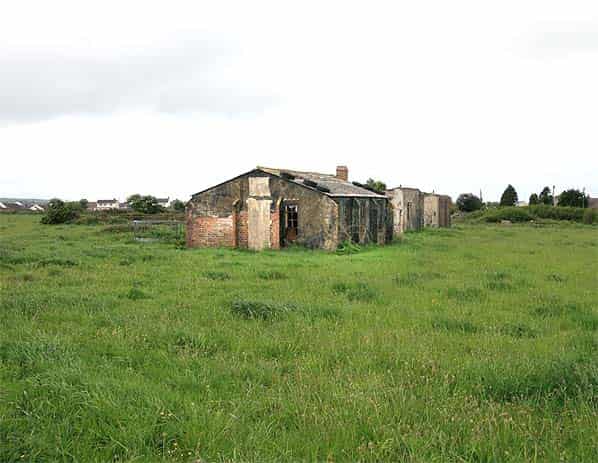
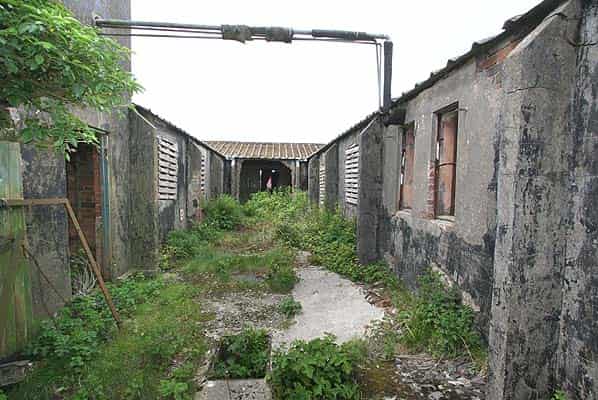
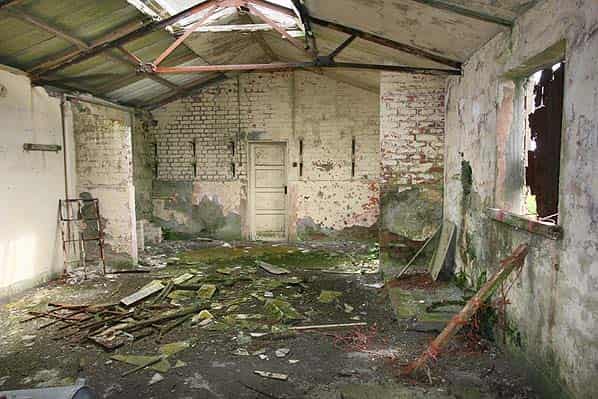
The ‘Type B’ receiver block is derelict and unused; both walkways through the earth revetment are open with a rough wire fence to prevent animals enter the building. There is a blast wall and an open walkway around the building for additional protection. Within the building, all the partition walls remain intact as do most of the wooden doors and the building still retains its original colours with the walls painted cream and blue and the woodwork light green. Once inside the main entrance, the first room on the left is the transformer room. This has a louvred double door for ventilation and still retains a red sign on the door which says ‘Danger High Voltage - Transformer No. 4’; the doors cannot be opened. Beyond this room is the main spine corridor.
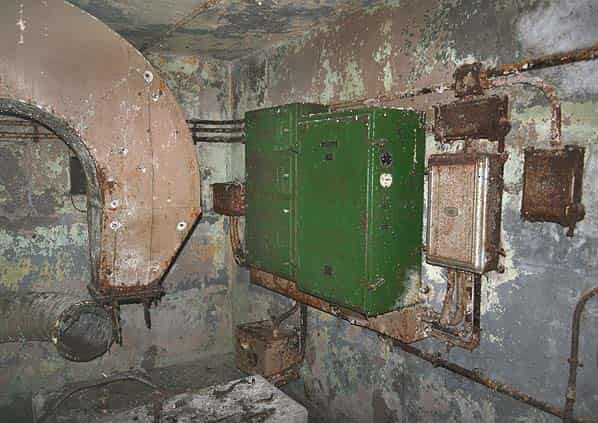
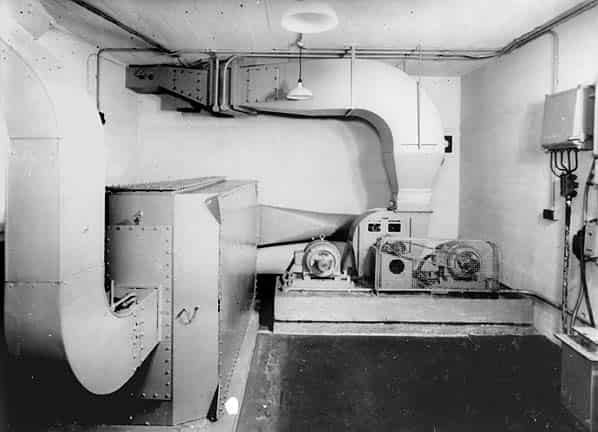
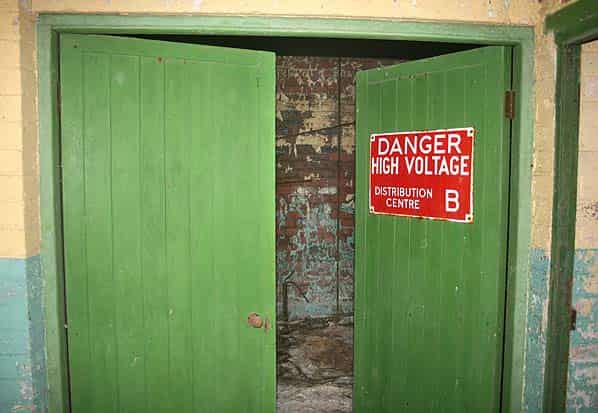
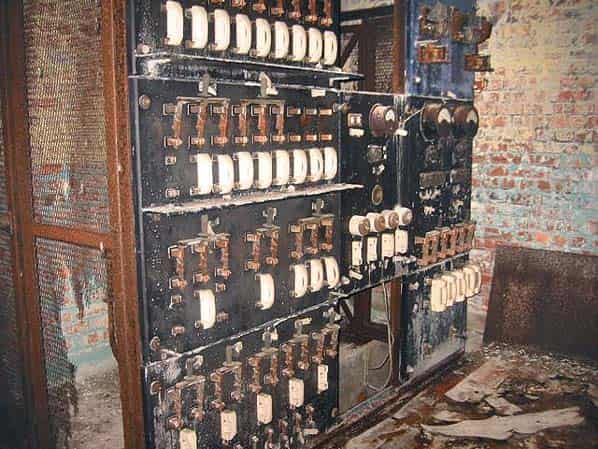
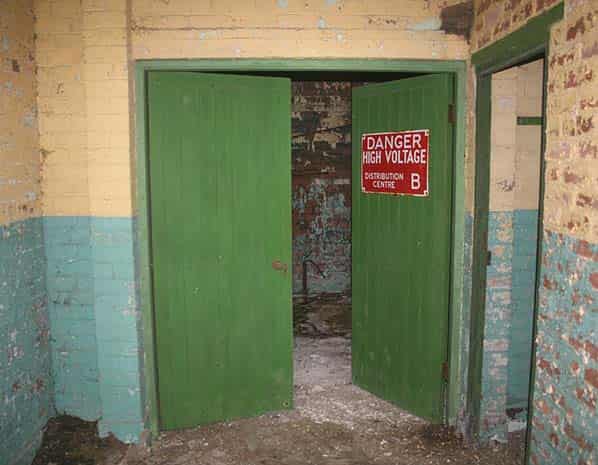
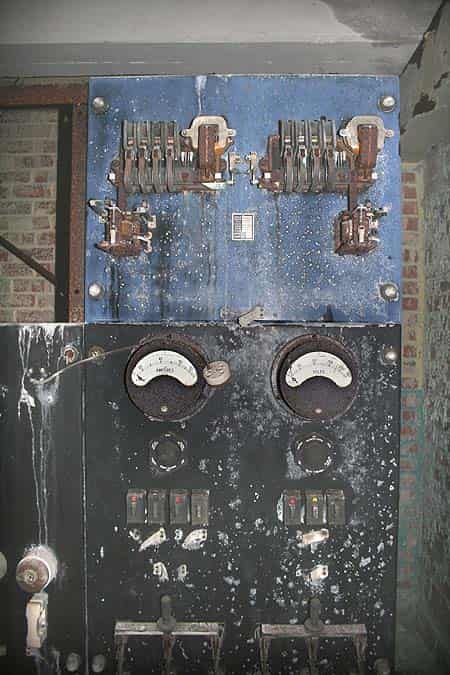
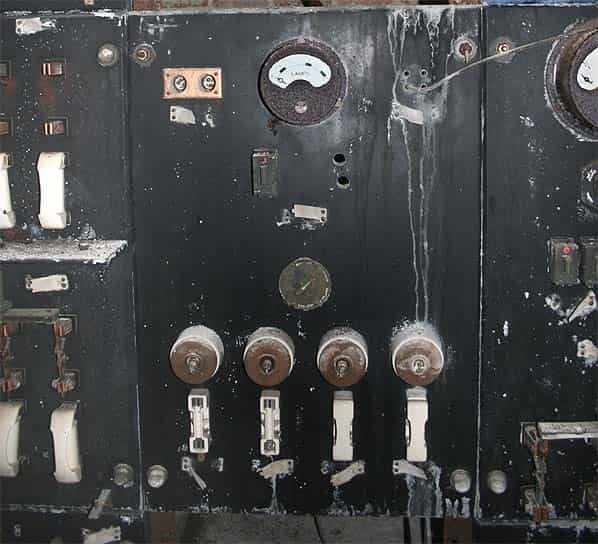
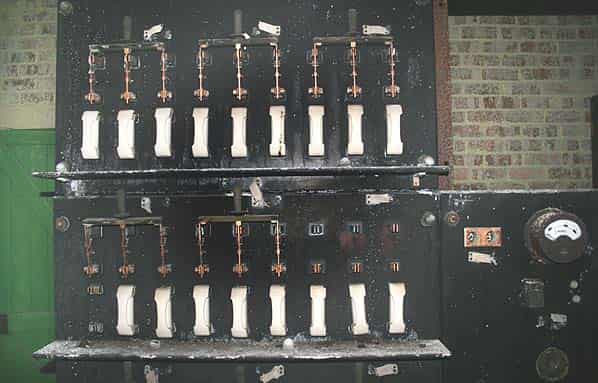
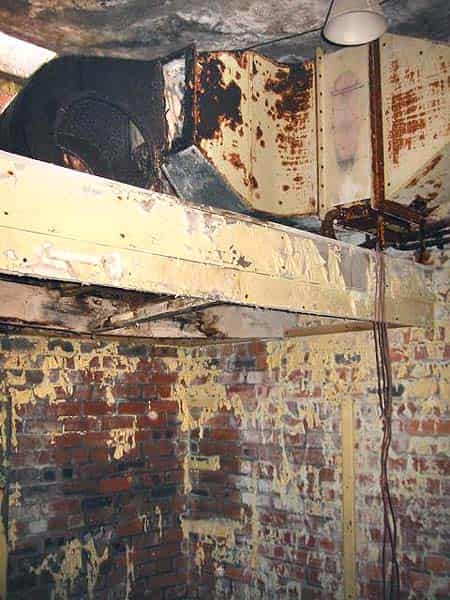
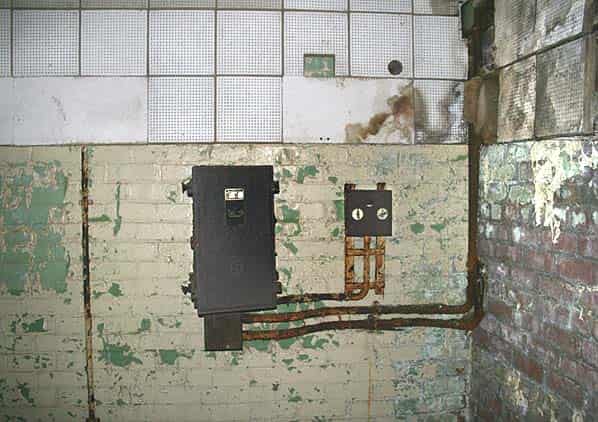
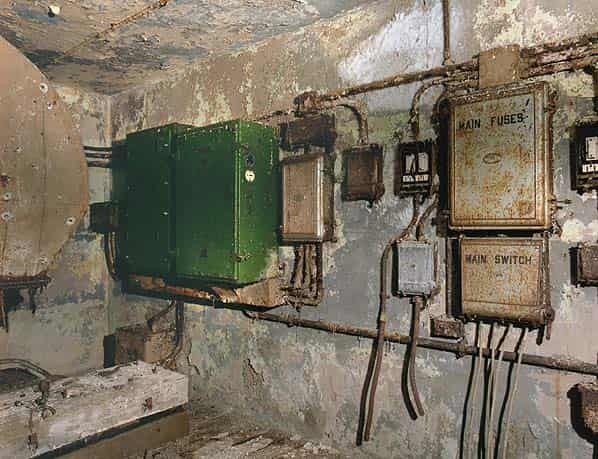
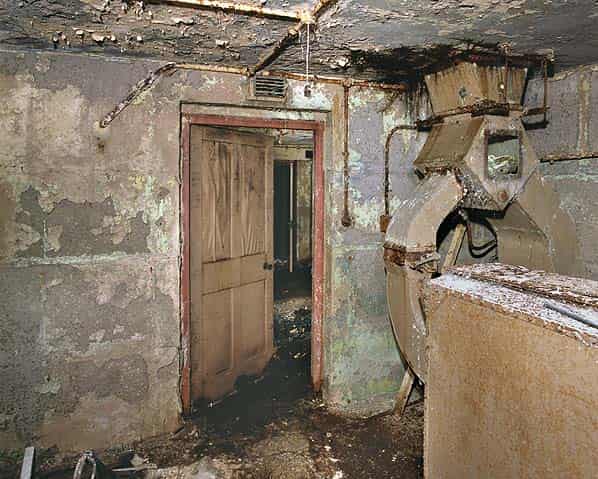
To the left at one end of the building a further set of double doors lead into the power distribution centre. There is another red sign on the door which says ‘Danger High Voltage - Distribution Centre B’. Inside the room the receiver power distribution equipment is still in place consisting of three floor standing electrical cabinets. Externally they appear complete with dials, knobs, switches and fuses still in place but much of the inside has been ripped out. The adjacent air conditioning plant room has a high level platform with the remains of the air conditioning plant, a fan housing was still in place in 2004 but this has now gone. Some switchgear remains on one wall.
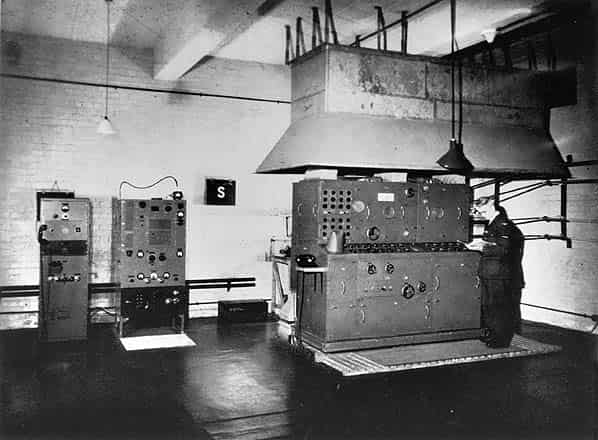
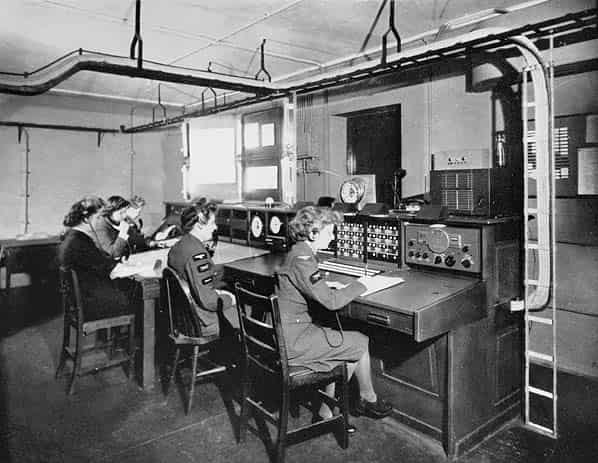
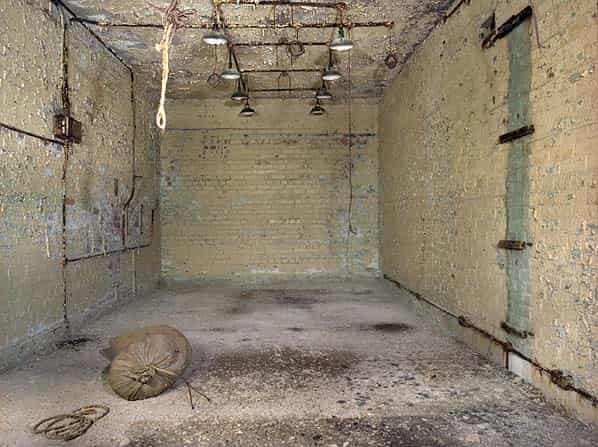
At the opposite end of the building is the large receiver room. This still has acoustic tiles around the walls and a supervisor’s cabin with a glass window looking into the room. An open pit in the centre of the room is for incoming cables feeding a duplicate pair of Chain Home RF8 (originally RF5) receivers. Throughout the building ventilation trunking, electric light fittings and some of the electric cabling is still in place.
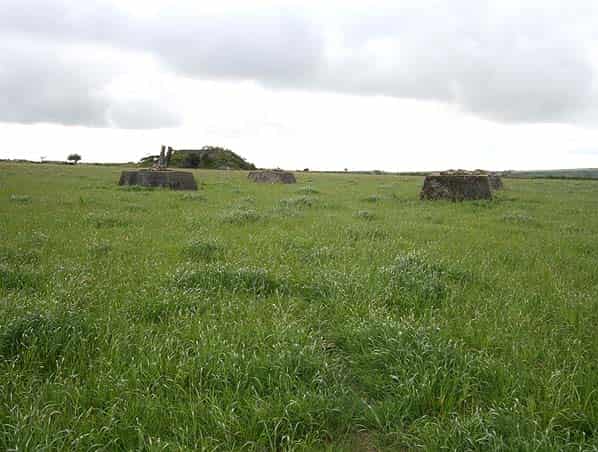
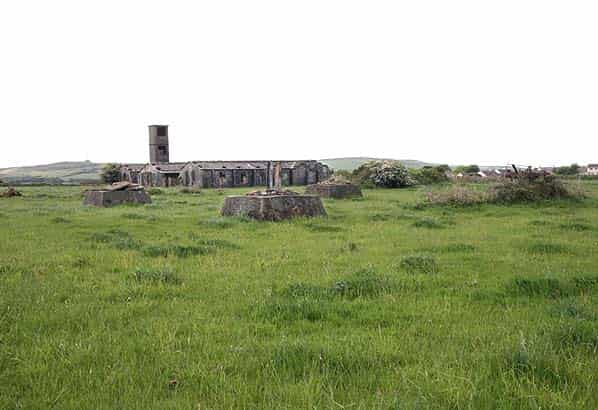
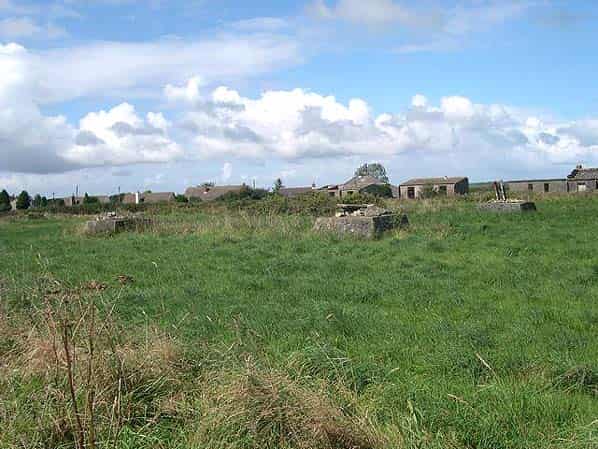
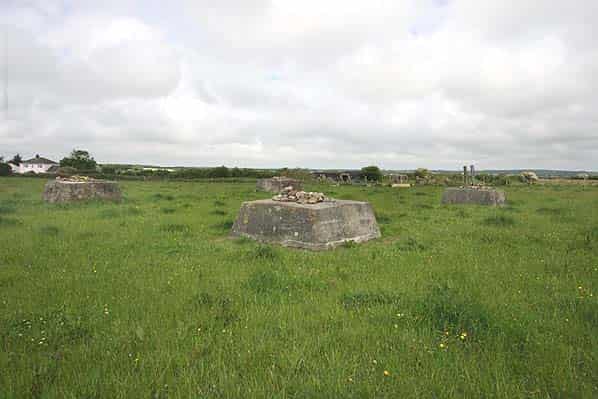
The concrete bases for the two wooden receiver towers can be seen in the field on either side of the building, each consisting of four large concrete blocks to support the wooden legs of the tower.
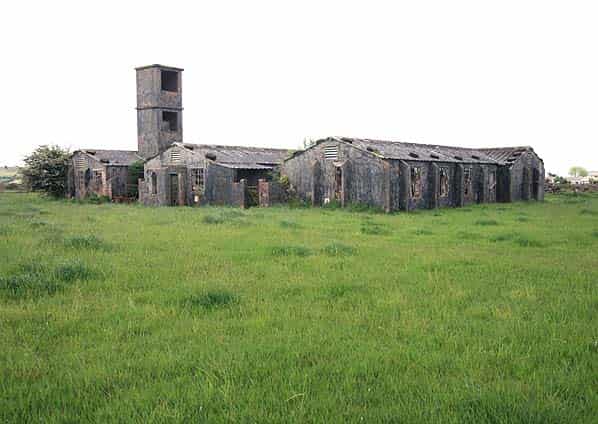
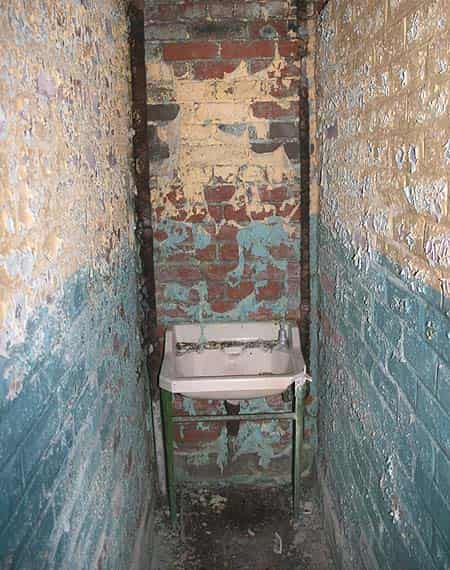
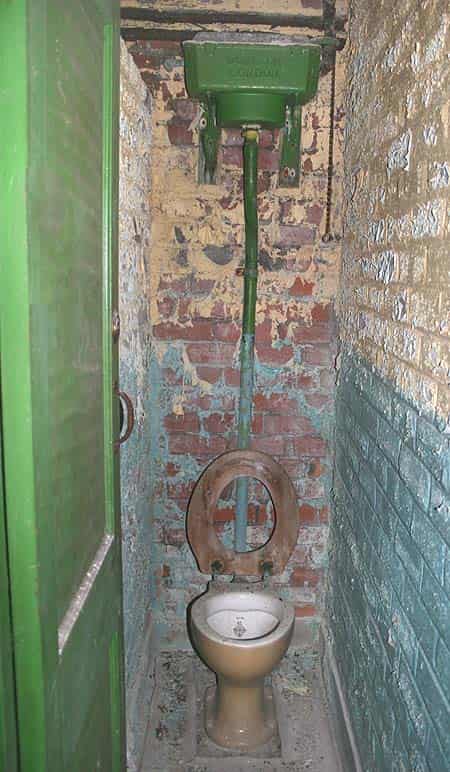
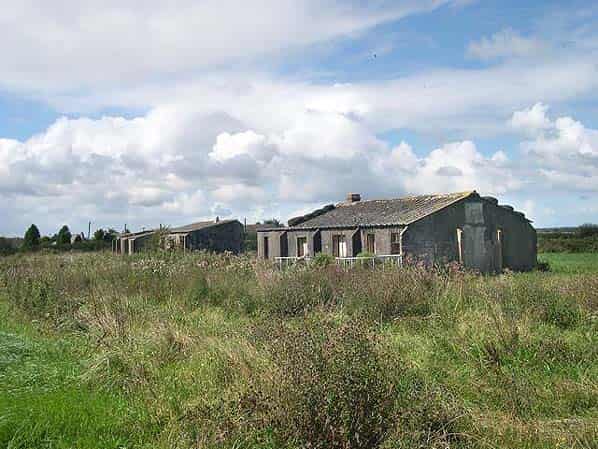
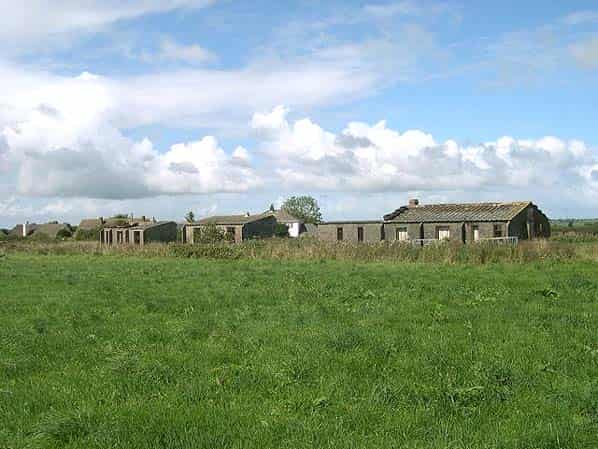
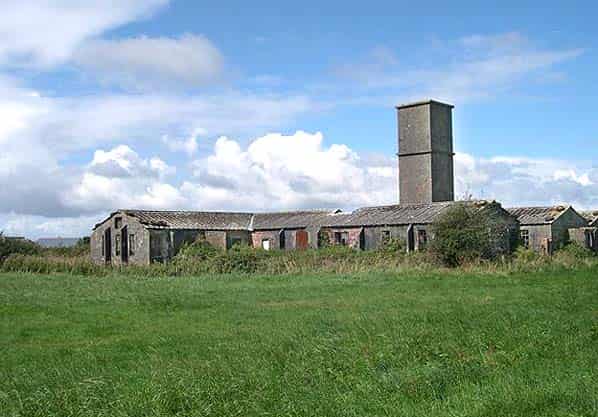
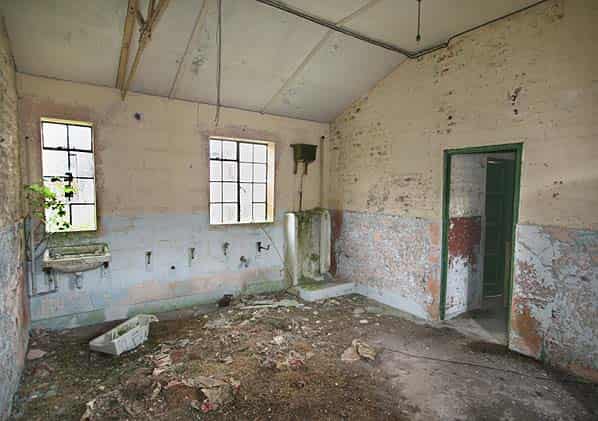
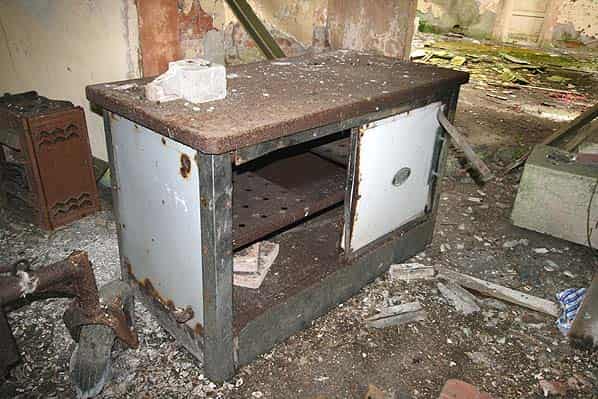
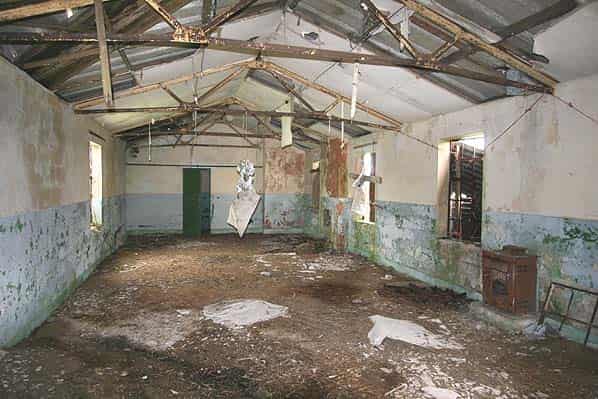
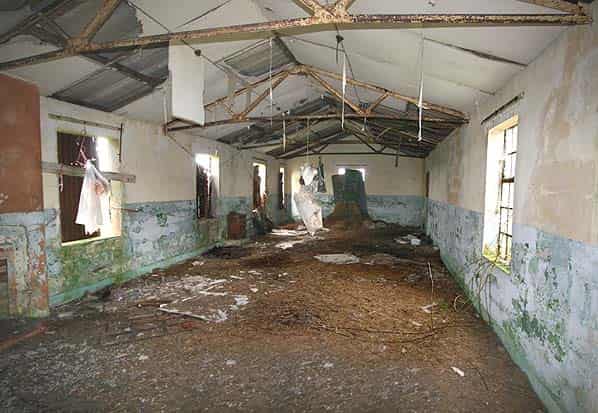
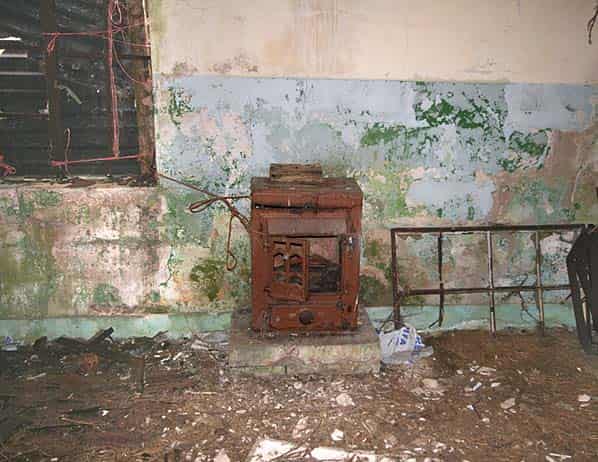
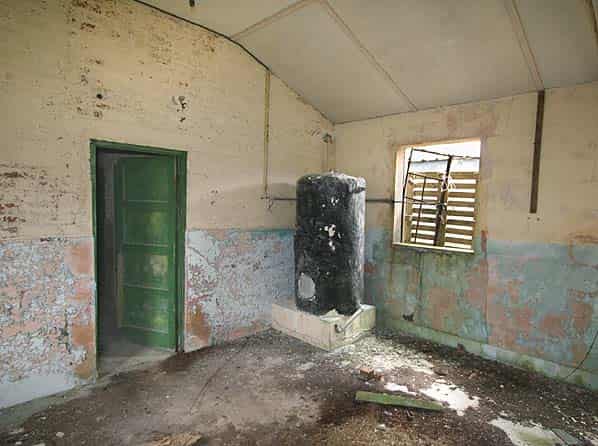
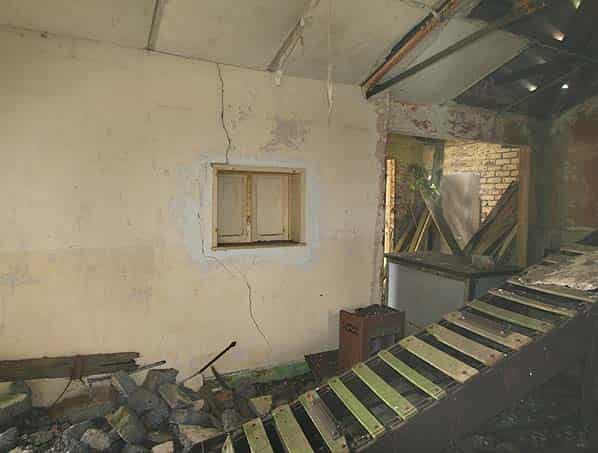
Close by, there are three interlinked huts one with a water tower. These were messing and ablutions buildings. The buildings are derelict with wire preventing entry by animals. One room was clearly a dining room with a serving hatch into the adjacent kitchen which still retains its hot cupboard although now moved from its original position; other rooms contain urinals, WC’s, wash basins and a water tank. A second line of three huts stands close to the blocks; a further two huts have been demolished since 2004.
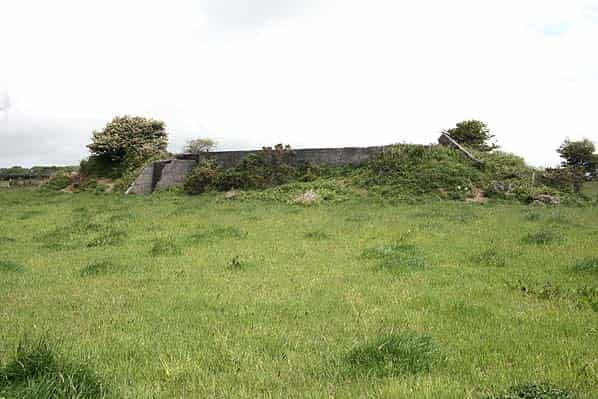
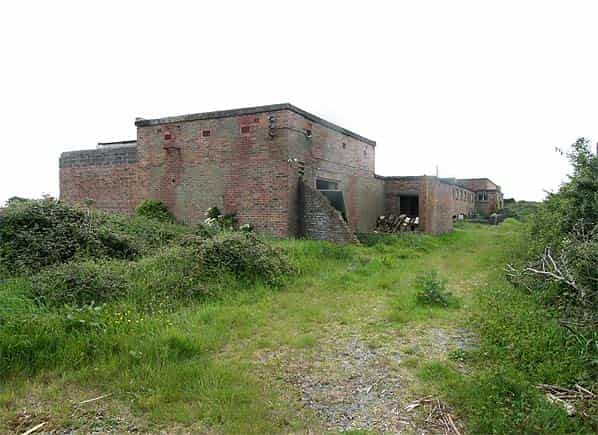
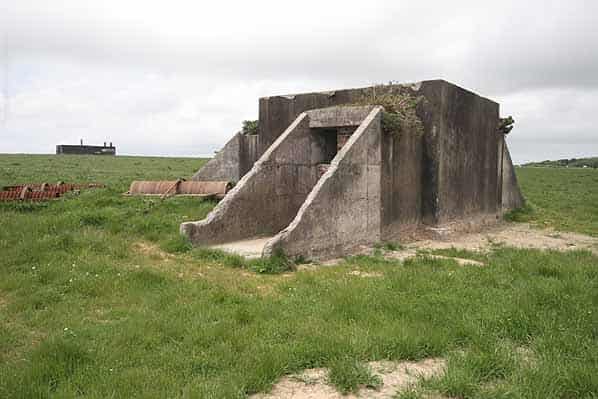
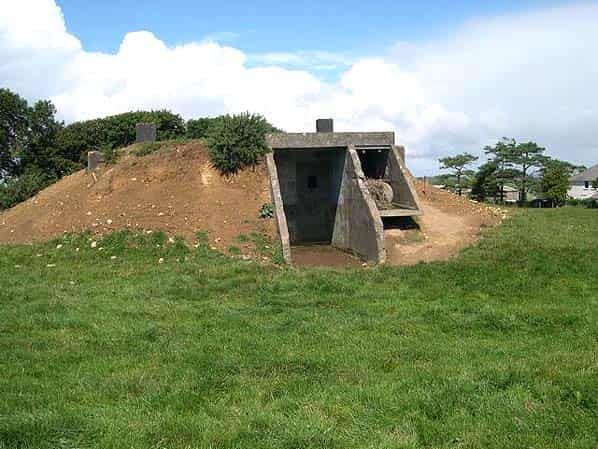
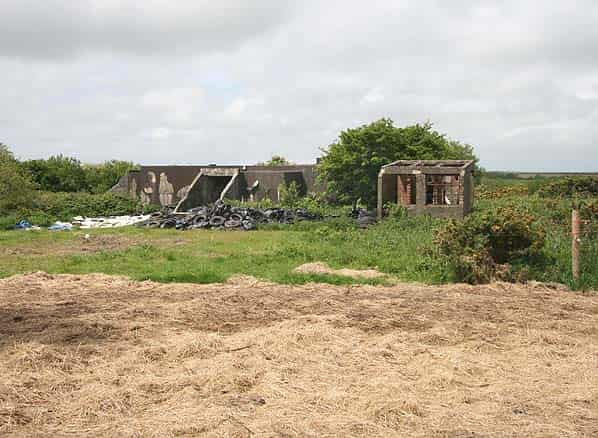
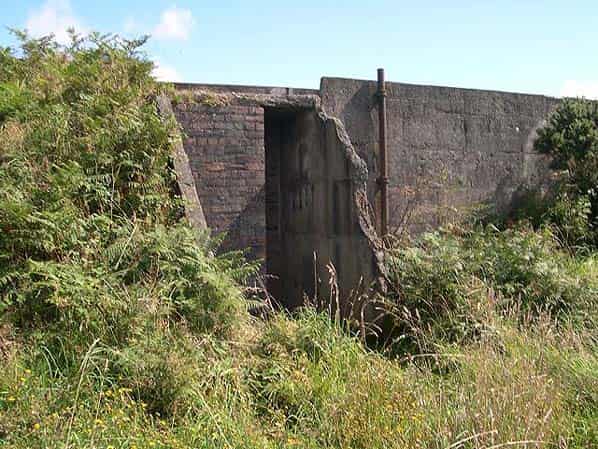
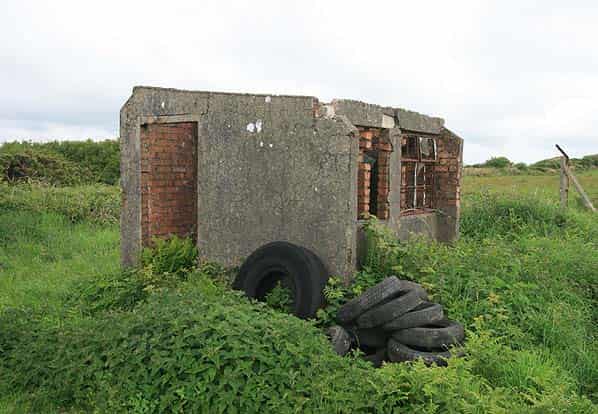
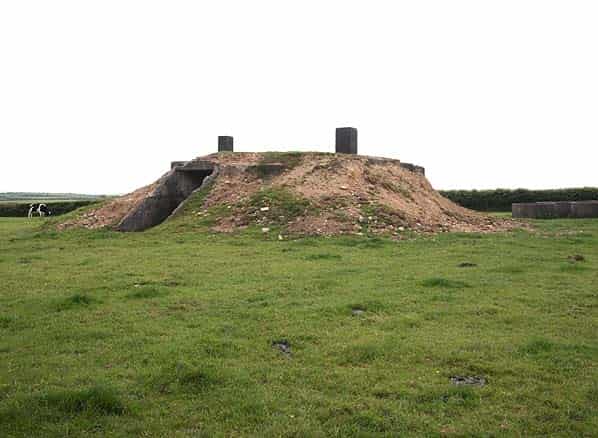
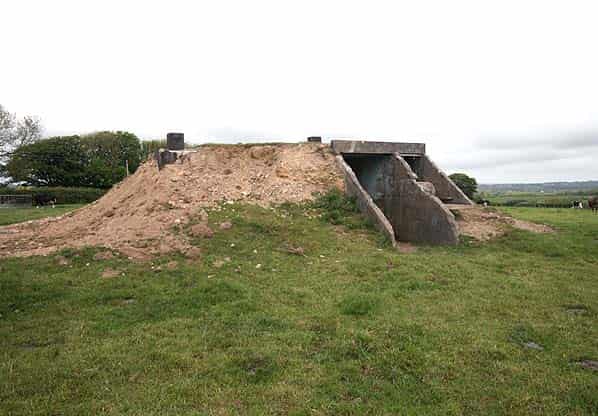
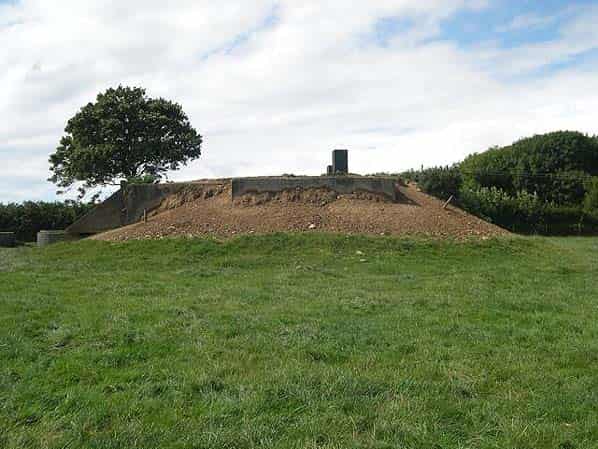
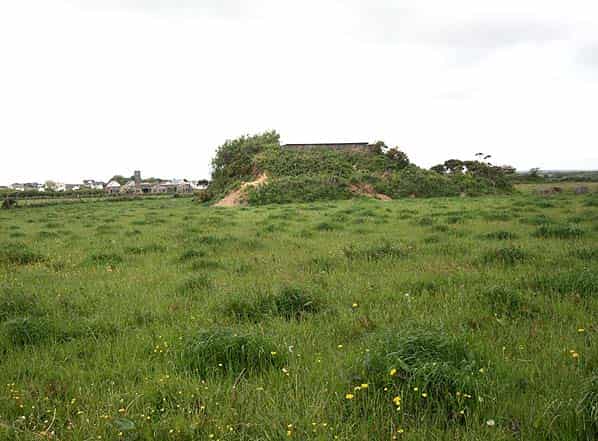
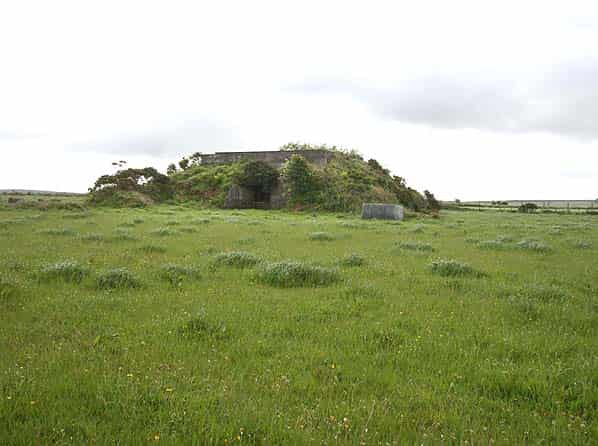
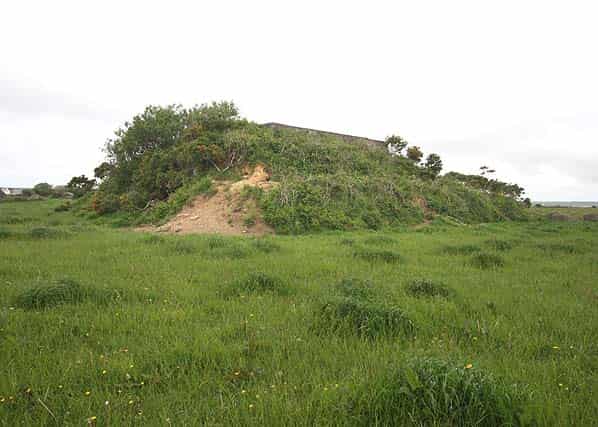
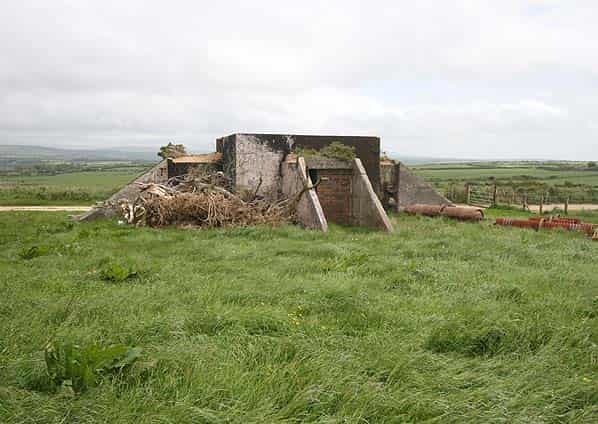
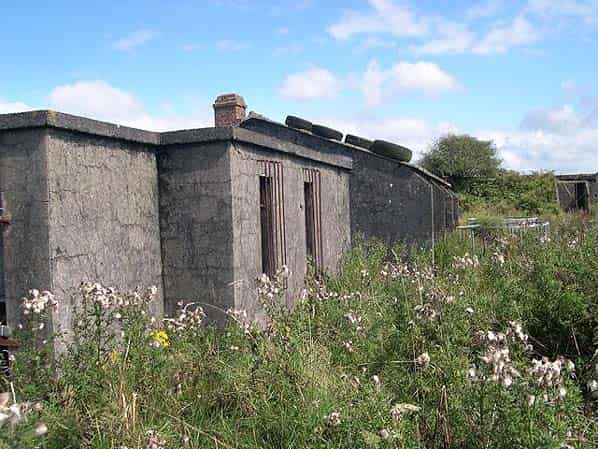
To the north of the receiver block, but in the same field the ‘Type C’ receiver block stands close to the road. This was originally completely covered in earth although some of the earth has now fallen away or been removed.
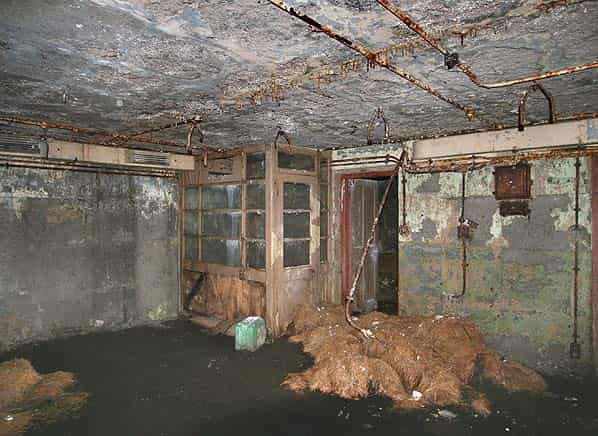
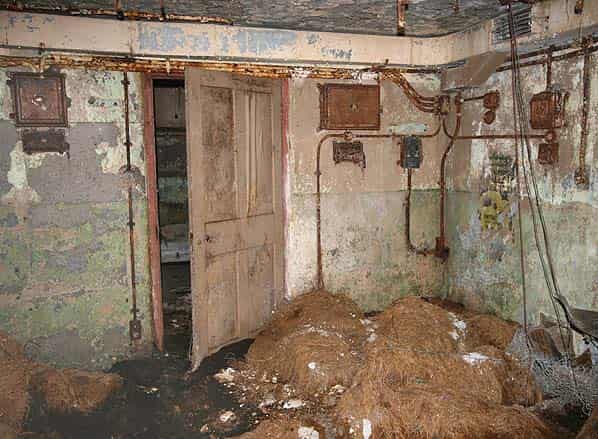
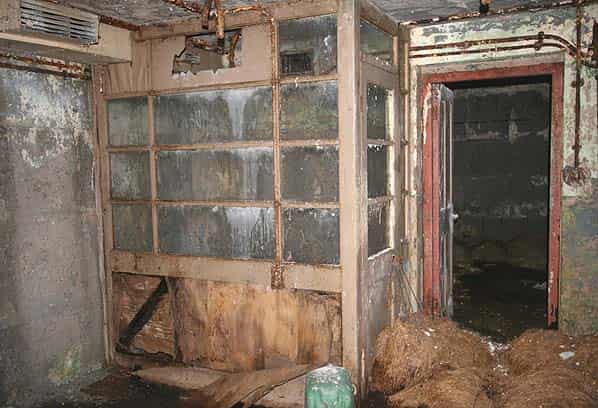
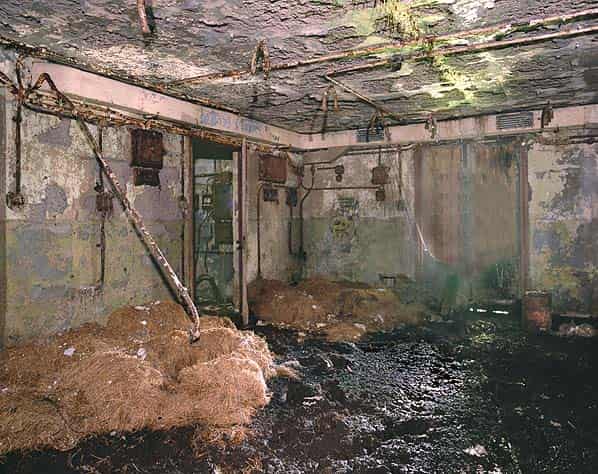
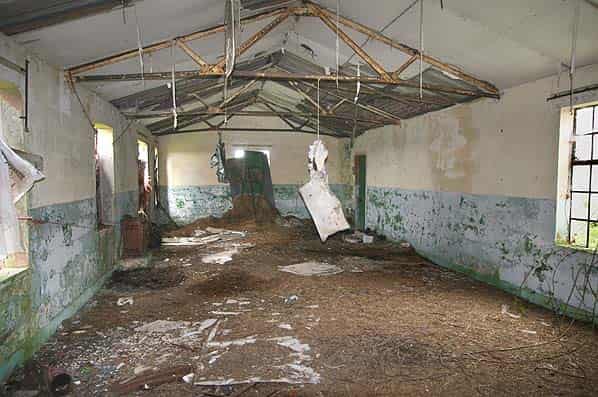
The main entrance into the building is sealed but the secondary entrance is open although blocked with old tyres to stop animals getting in; in the past the building has clearly been used as an animal shelter with straw still covering the floor but it is now derelict.
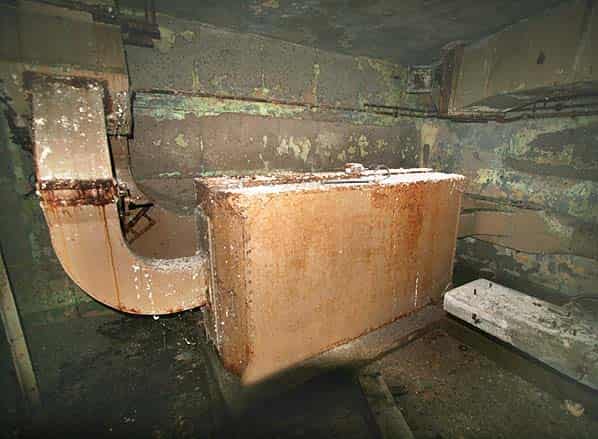
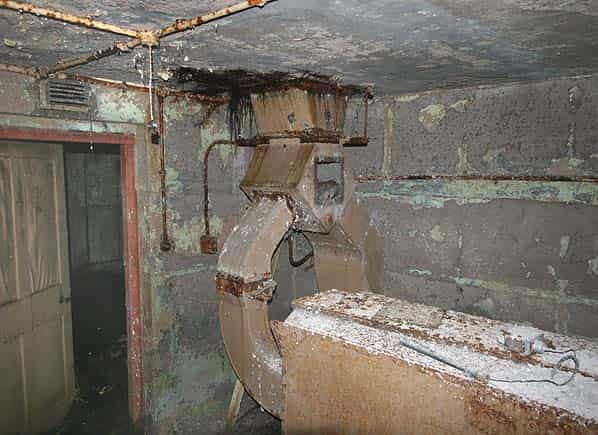
The building still retains all its original partition walls, wooden doors and ventilation trunking. In one corner of the room there is a small glass panelled supervisor’s cabin, this rarely survives in buildings of this type. In an adjacent room the ventilation and air conditioning plant is largely intact including the Porton filter unit and electrical switchgear although the fan and motors have been removd with only their concrete plinth remaining.
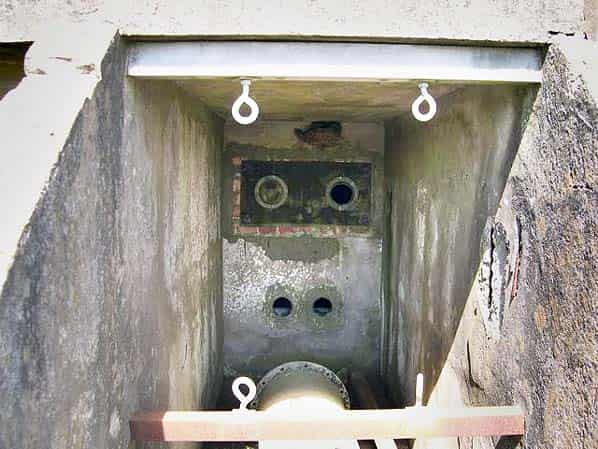
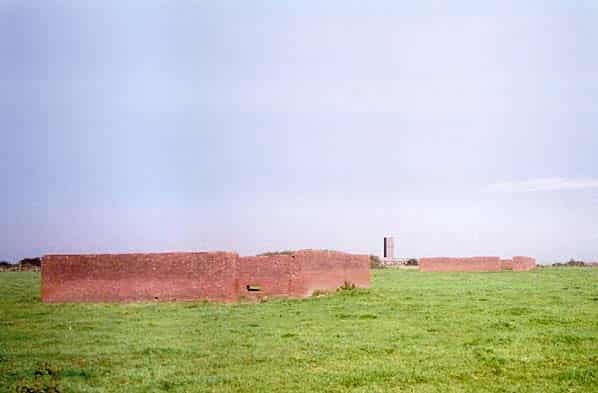
To the east of the receiver block is the standby set house. Like the receiver blocks this consists of a brick building surrounded by a blast wall with earth revetments. The walkway through the revetment is blocked by a wooden fence to prevent access by animals and the doors into the building are secured. There is a ladder across two corners of the open walkway giving access to the top of the revetment.
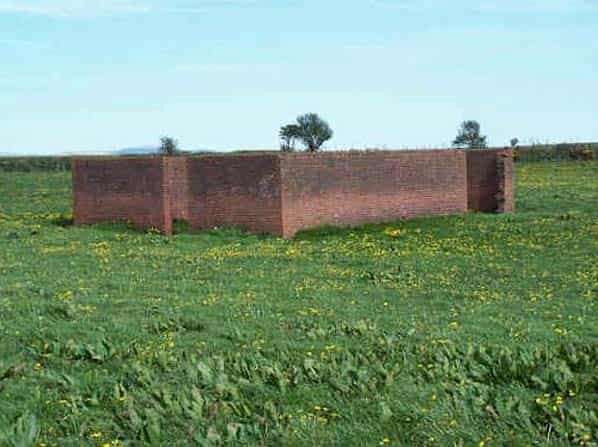
In a different field to the south of the receiver block are the remains of the two ACH buildings. These consisted of wooden huts which have now gone surround by a rectangular 7' high blast wall which are still standing.
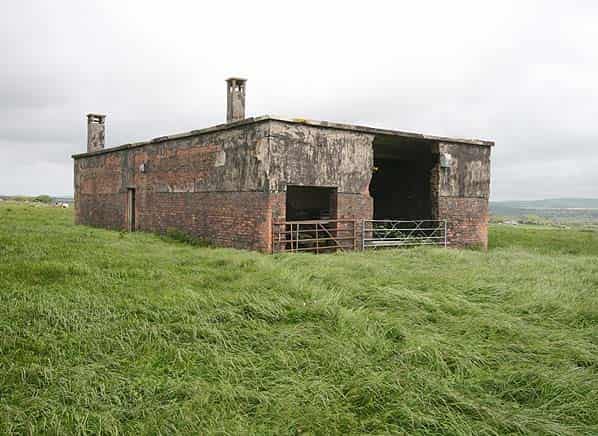
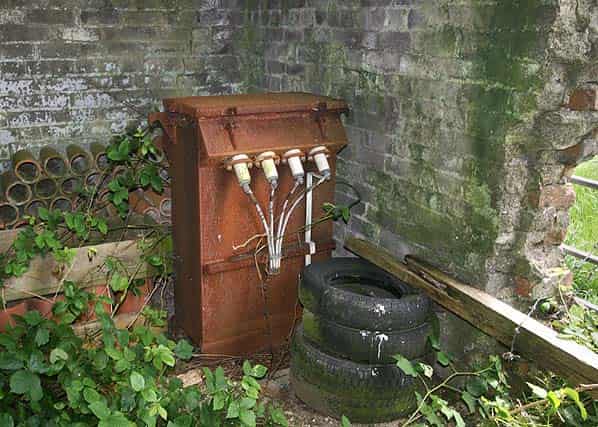
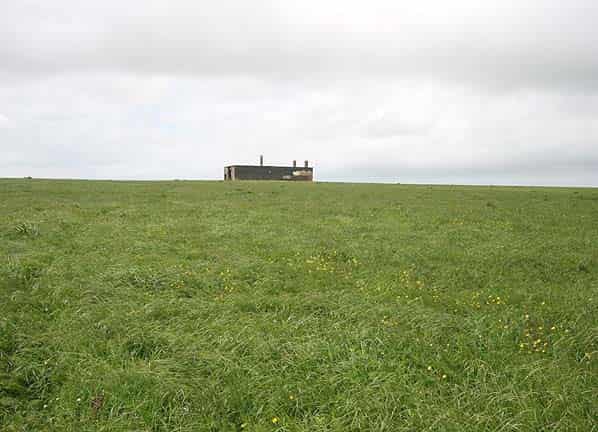
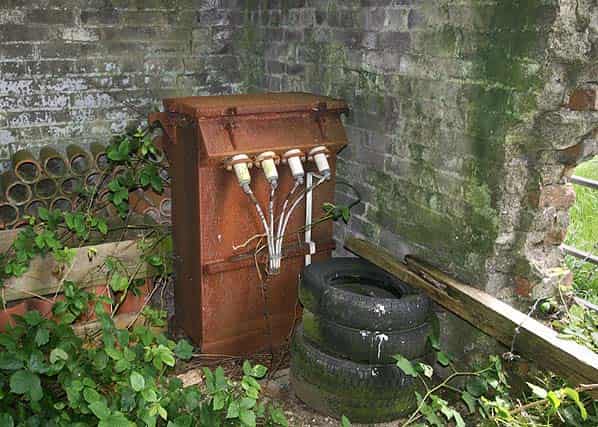
The remaining blocks are on a different farm to the east. The ‘Type C’ transmitter block stands close to the road. Both the main and secondary entrances have padlocked doors and access was not possible. The ‘Type B’ transmitter block stands in the middle of a field. The outer blast wall and earth revetments have been removed to reveal the brick transmitter building complete with three brick ventilation stacks. Part of the south end wall has been removed to allow access for farm machinery. Some of the internal partition walls remain but the building has largely been stripped of original fittings and is now used for farm storage. A small transformer still sits in one corner of the building.
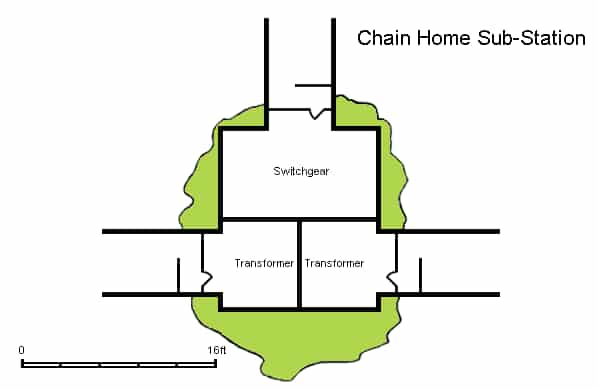
The sub station stands on a field boundary to the south east of the transmitter block. Again this has been stripped of all the earth cover. The building had three entrances on three sides, two into transformer rooms and one into the main switchgear room. All three entrances have been blocked with a brick wall.
Sources:
- Bob Jenner
- Keith Ward
- Mike Flude
- Len Thomas
- Various PRO files including Avia7/324 1941 and Avia7/518