The chemical name for mustard gas is dichlorodiethyl sulphide. At normal temperature it is a liquid, rather like diesel oil in appearance with a smell similar to garlic. It was used as a war gas because it is a ‘vesicant’ which means that contact with the liquid or vapor will cause blisters on the skin similar to third degree burns and if inhaled will cause serious damage to the lungs which will almost inevitable cause death. Its value in conflict was due to the fact that it does not decompose and will remain active in the ground or on materials it has contaminated for many days, in fact months or even years. This makes it completely different from the effects of chlorine or phosgene which, as gasses, are readily dissipated in the atmosphere.
It is comparatively easy to manufacture given a supply of raw materials which are mostly readily available chemicals and there are really only two effective ways of decontaminating; one is by the application of bleaching powder and the other by burning.
There are two types of mustard gas, Runcol (HT) which is produced by the method used by the Germans in WW1 by reacting thiodiglycol (known as ‘Syrup’ during the war) with hydrochloric acid and Pyro (HS) which is produced by combining ethylene with sulphur dichloride. Runcol was more expensive to manufacture and was not suitable for tropical storage.
Chemical warfare was developed in Germany in 1915 but the allies were quick to respond with their own production and in the later years of WW1 mustard was used by both sides. Although chemical weapons were banned by the Geneva Protocols of the 1920’s this did not stop their use by the Japanese in 1931 and the Italians in 1935 and even Churchill supported their deployment. With the coming of WW2 it was decided that the manufacture of chemical weapons should once again be undertaken to act as a deterrent as Germany would almost certainly be producing them.
Mustard gas was produced by ICI from 1938 at their Randle plant on Wigg Island near Runcorn in Cheshire and initially weapons were filled or ‘charged’ at Randle. It soon became clear that a safe storage facility was required for these weapons and in 1939 work started building the Valley Works at Rhydymwyn in North Wales.
In 1941 it was proposed that five forward filling depots (FFD) should be constructed and they were ready for use by 1944. The five depots were:
- FFD 1, Little Heath, Suffolk - under the control of 94 Maintenance Unit
- FFD 2, Melchbourne/Riseley, Bedfordshire - American FFD - Station 572
- FFD 3, Norton Disney, Lincolnshire - under the control of 93 Maintenance Unit
- FFD 4, Lords Bridge, Cambridgeshire - under the control of 95 Maintenance Unit
- FFD 5, Escrick, Yorkshire - under the control of 80 Sub Maintenance Unit
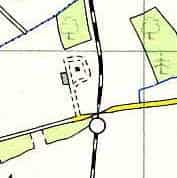
The layout of the five FFD’s is similar, the major buildings being storage sheds for empty cases, a bonding building, a charging building(s) where the cases were filled; these buildings were linked together by covered ways . There were also underground storage tanks knows as ‘pots’ where the chemical agent was stored; at Eskrick there were two of them. The bonding shed was served by a short spur from the York - Selby Railway Line which had been closed to passengers on 1st September 1926. The line remained open for freight until 1968.
The Forward Filling Depot at Eskrick was under the control of 80 Sub Maintenance Unit. FFD 5 is sometimes referred to as West Cottingwith.
No munitions were filled at Eskrick after 1945 and during the 1950’s all the chemical agent was decanted out of the storage pots and returned to Randle by rail for destruction although the site wasn’t finally declared safe until the 1990’s. Prior to that bomb disposal experts were forced to flee after discovering a cache of the live bombs - some of which were leaking - during a routine investigation Escrick.
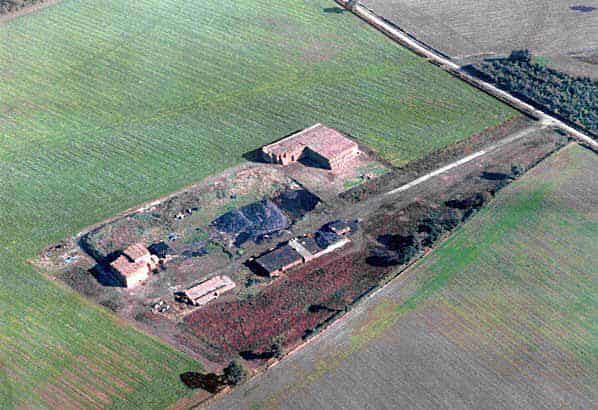
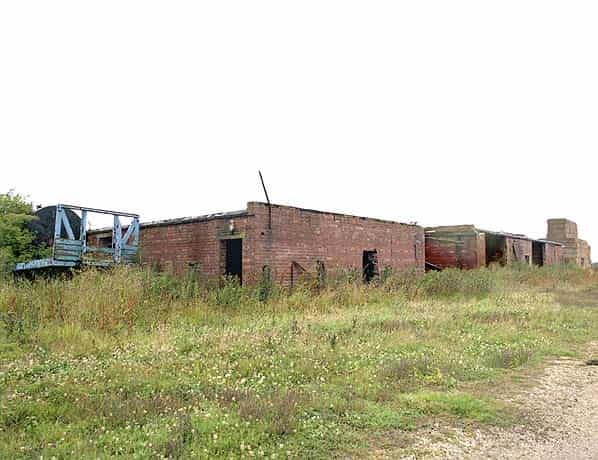
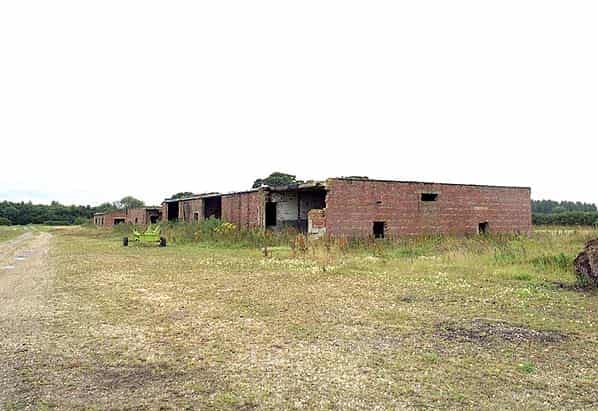
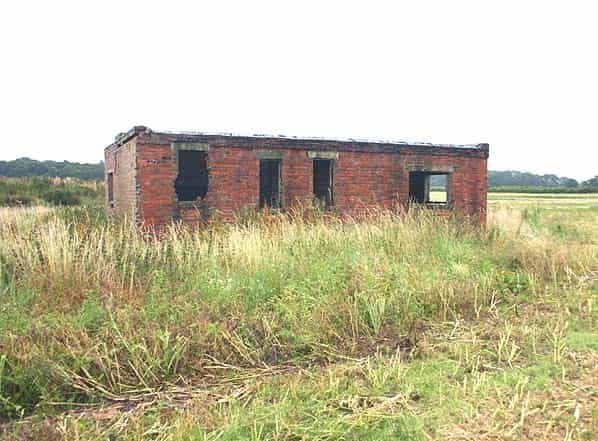
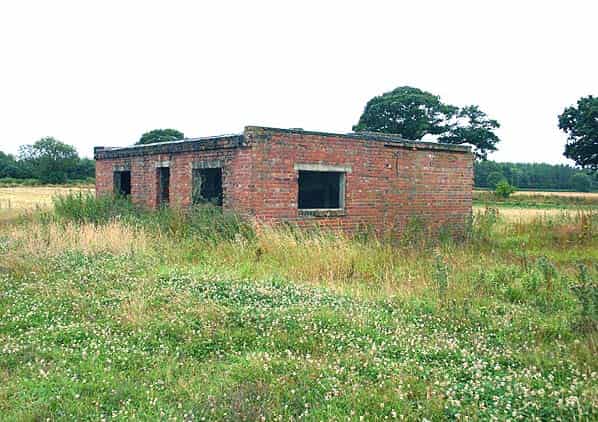
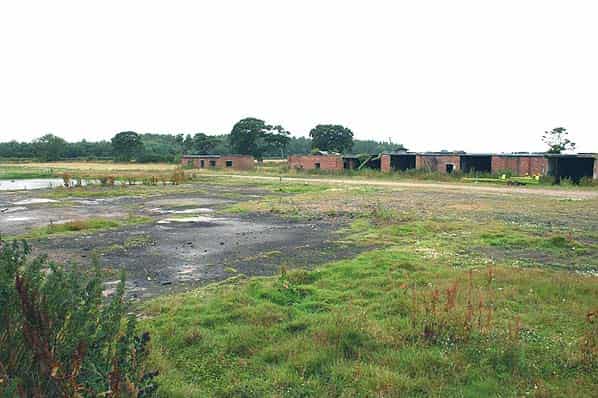
Today only three buildings remain on the site, these are the personnel decontamination and changing room, the toxic and non-toxic mess rooms and the guardroom/office. The three buildings have been put to farm use and apart from the office they are now in a dilapidated state.
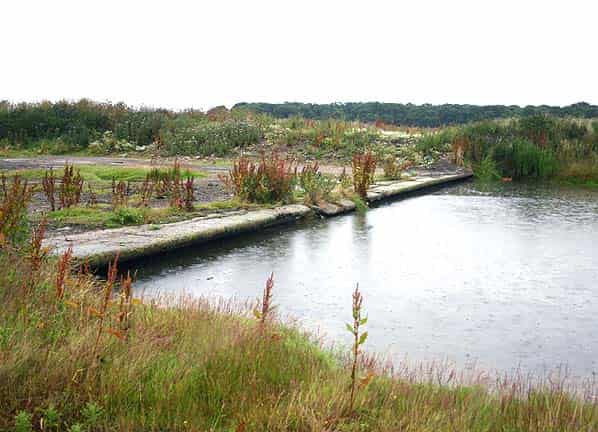
The concrete base for the empty storage building and the bonding building can also still be identified and the railway loading dock on one side of the bonding building is still extant although here is no trace of the spur from the York - Selby railway line and the line itself has left no trace other than as a crop mark on aerial photographs.
Sources:
- Bob Jenner