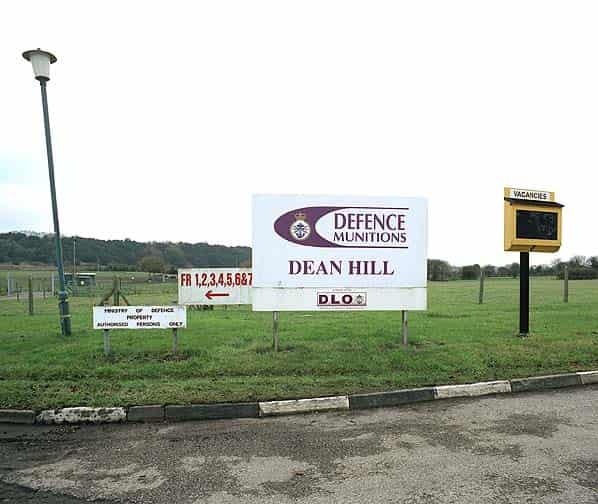
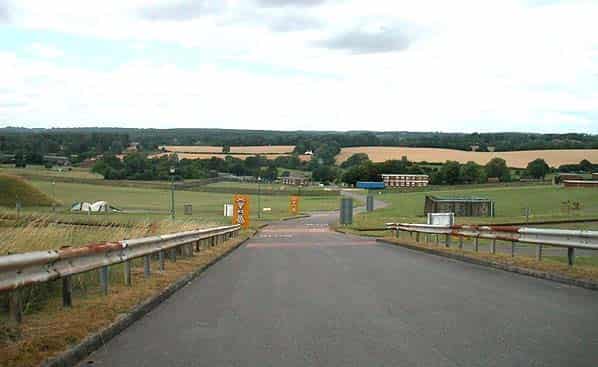
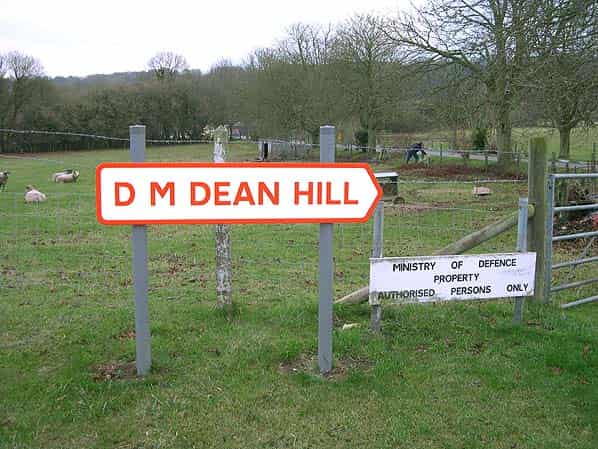
The Dean Hill Royal Naval Armament Depot (RNAD) was opened in 1941 for the storage, inspection and maintenance of naval armaments. Munitions would be sent from Dean Hill to the forward RNAD’s at Priddy’s Hard (now a museum) and Gosport from where they would be issued to ships.
The primary task of the depot has always been the storage of munitions in a series of 24 underground magazines excavated in the chalk hillside ‘Dean Hill’, at the rear (south) of the 583 acre depot at West Dean near Salisbury in Wiltshire. There have never been any explosives manufacturing on the site.
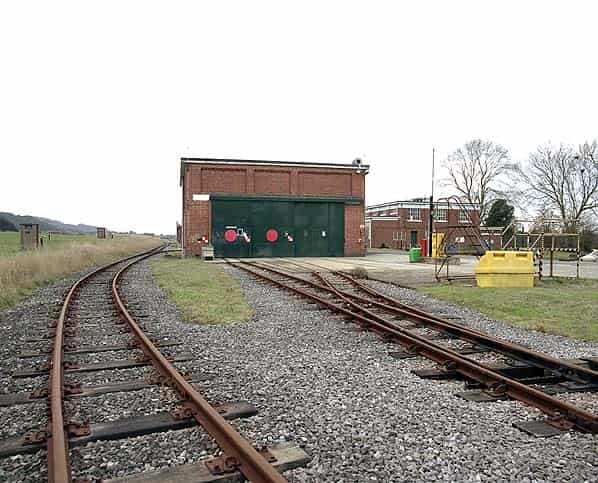
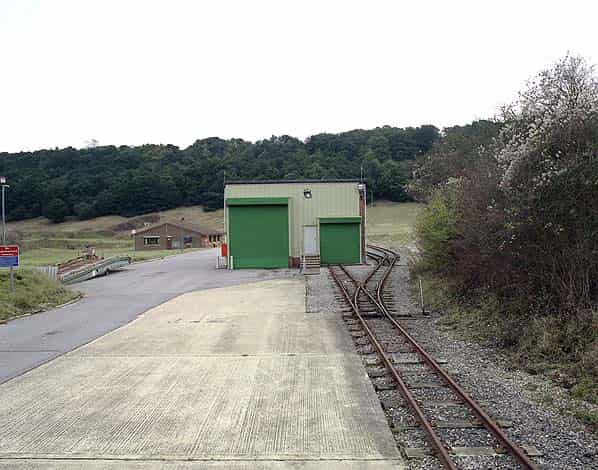
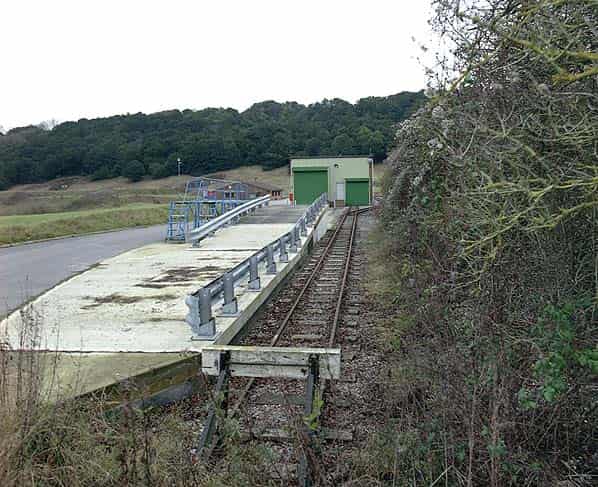
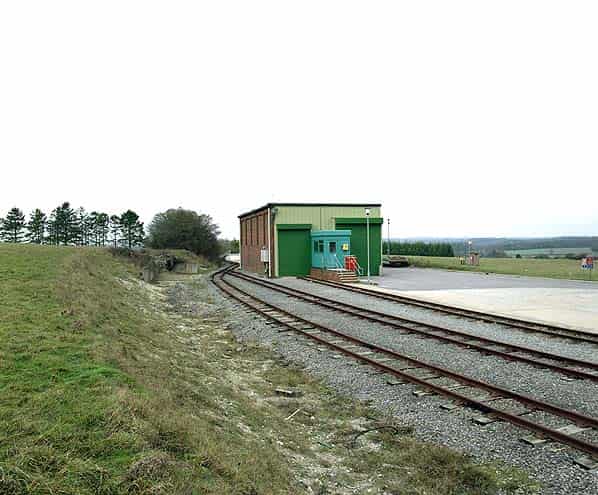
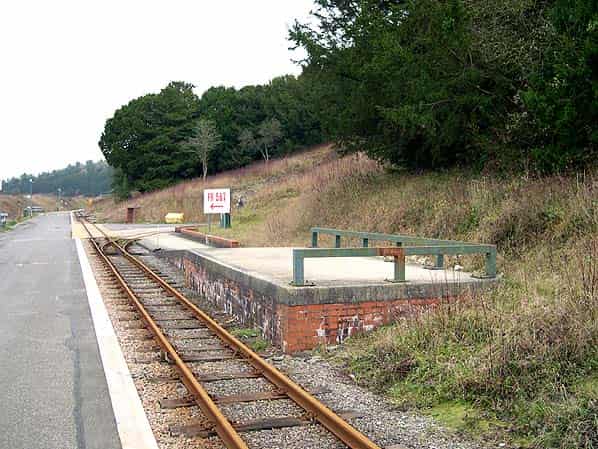
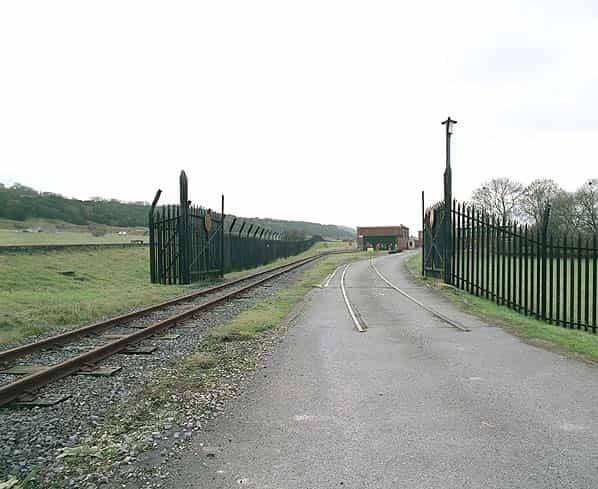
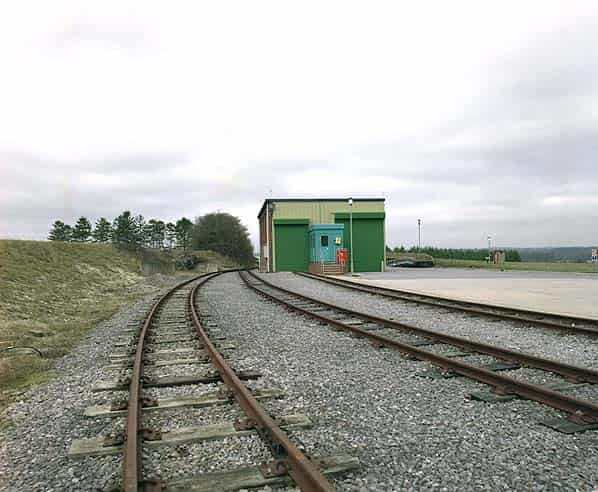
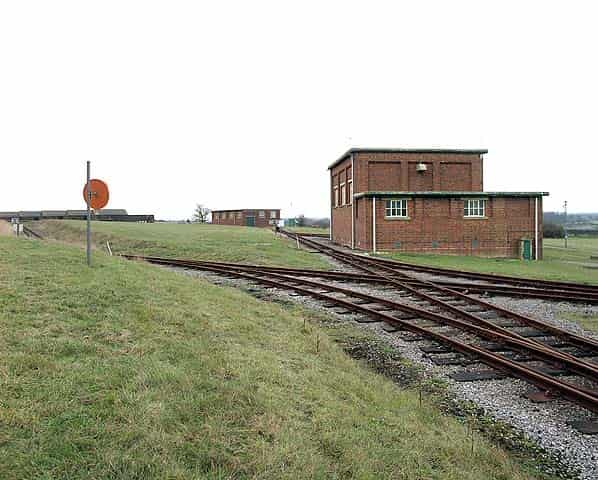
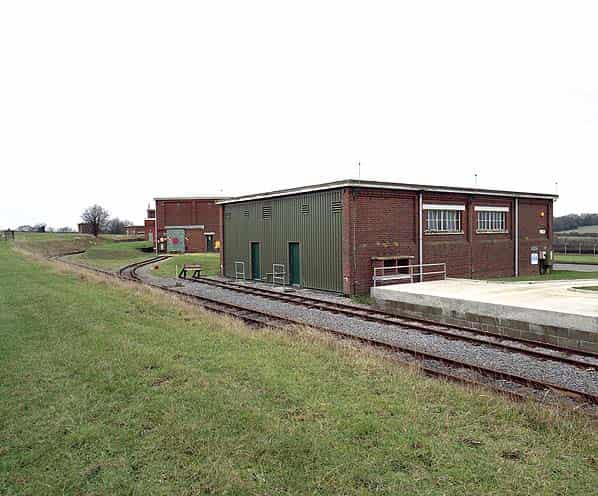
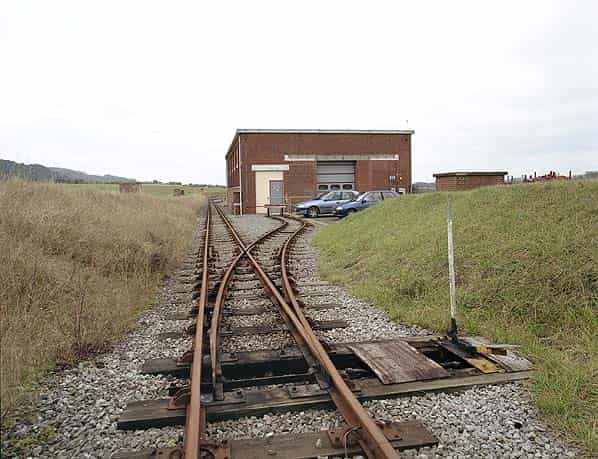
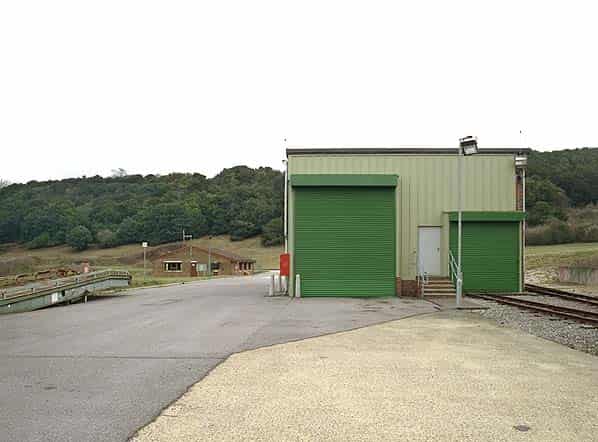
There was a standard gauge connection to the Southampton - Salisbury railway line west of Dean Station with a substantial marshalling yard and two transfer sheds for transferring munitions to the extensive 2' 6" gauge railway network that serviced all the magazines and workshops around the dispersed site. The connection to the main line was severed in 1988 with the entire standard gauge track including the marshalling yard being lifted by the mid 1990’s.
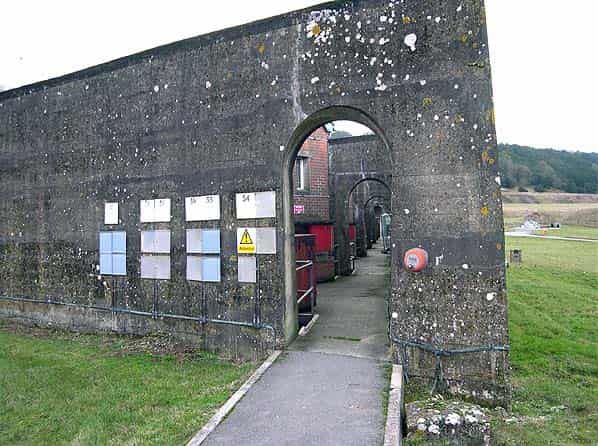
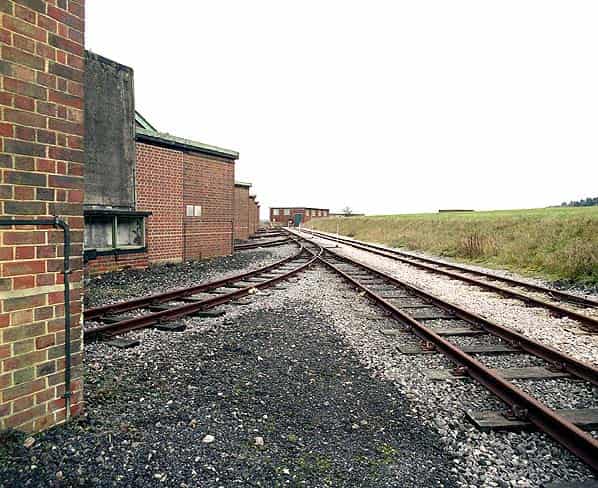
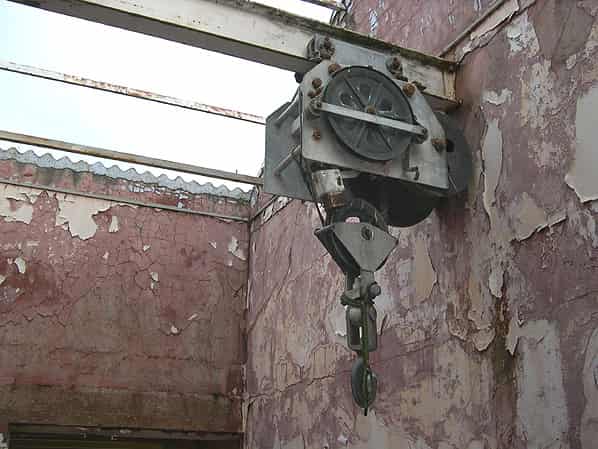
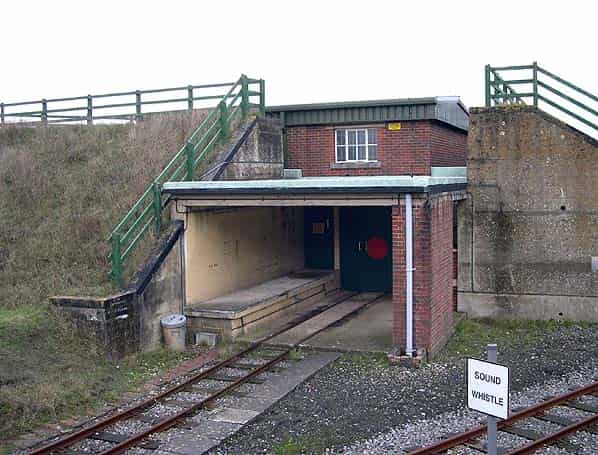
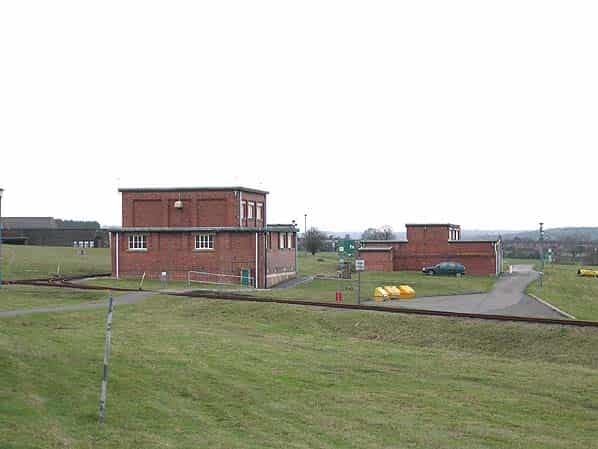
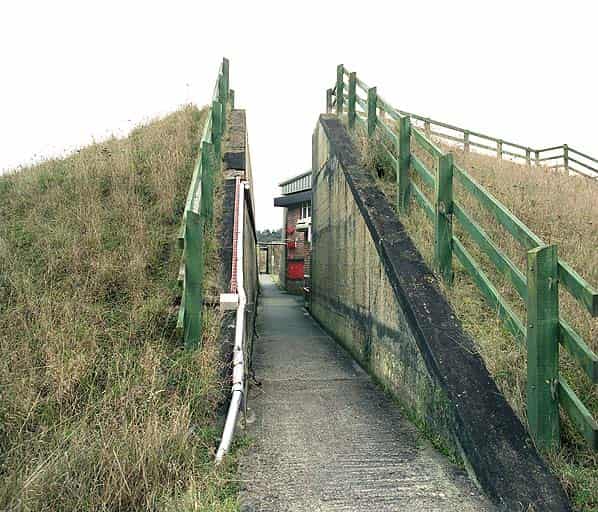
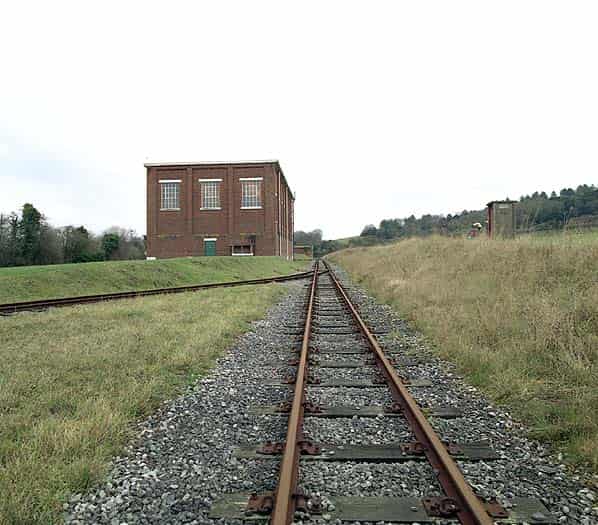
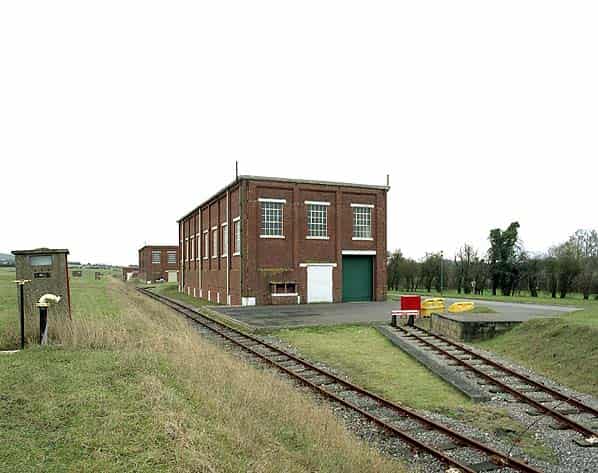
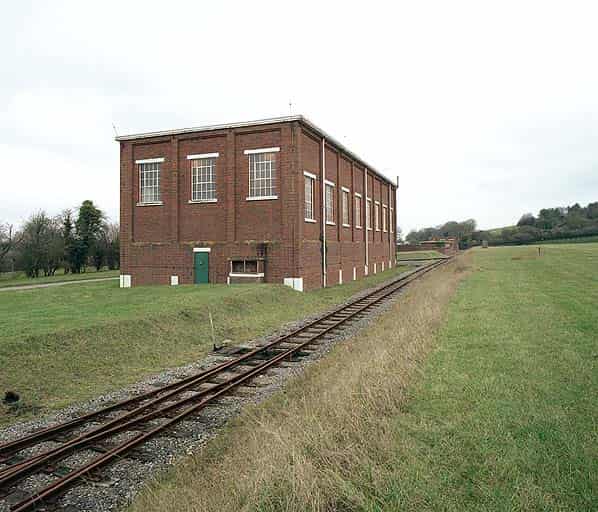
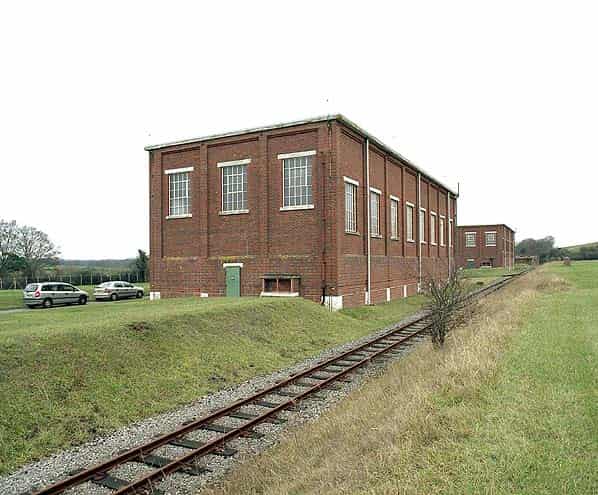
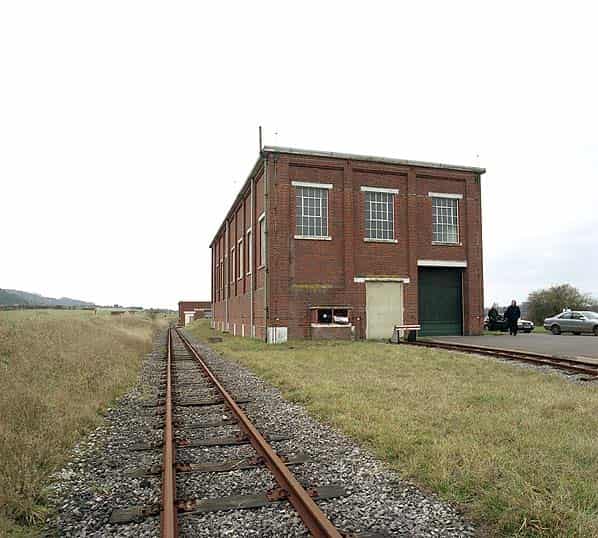
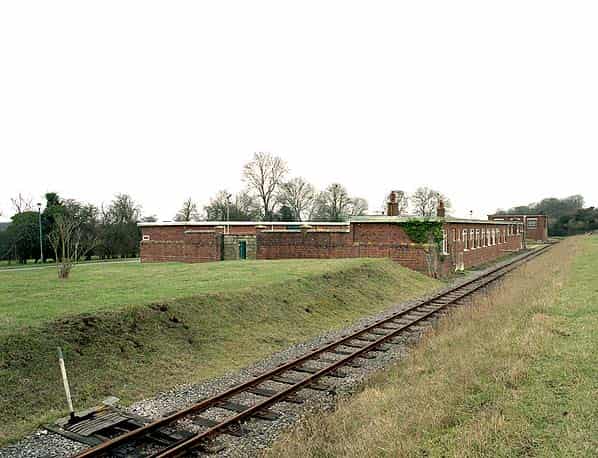
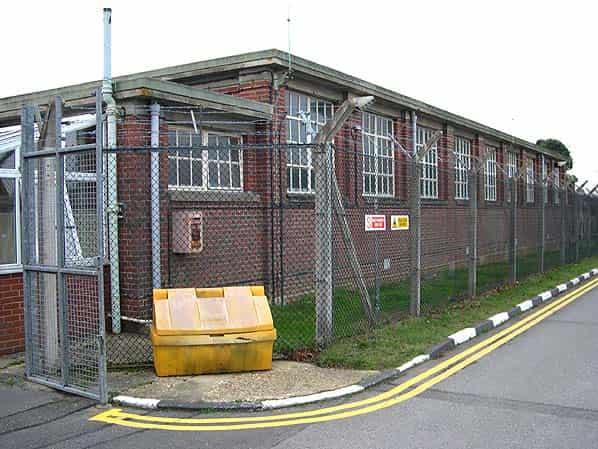
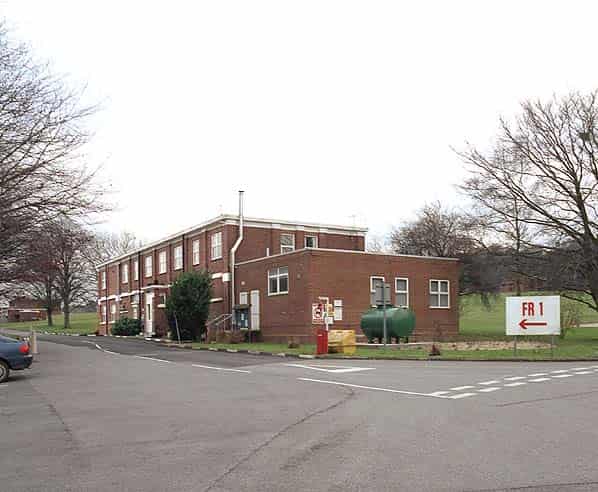
As well as storage, a major function of the depot was the inspection, maintenance and repair of munitions. This was carried out in a series of light and heavy traverse laboratories located towards the middle of the site. General inspection and examination of armaments returned from sea or after long term storage took place in the light traverse laboratories. These consisted of a series of brick buildings surrounded by concrete traverses that would have limited the damage caused by an explosion to one building. The buildings were in a single block each with its own narrow gauge railway siding and loading platform. Each of the buildings were fitted with overhead gantry cranes for moving munitions around. At the rear (north) of the block a passage or ‘clean way’ ran through the traverses giving access to each of the buildings.
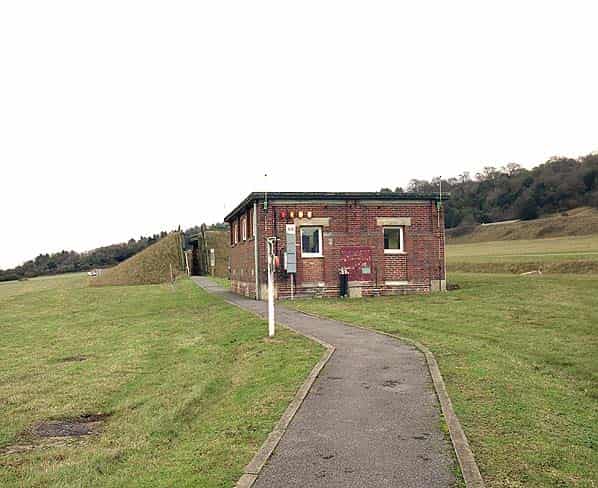
Repair and refurbishment took place in the heavy traverse laboratories. These buildings were more substantially protected with the buildings mounded over with earth. To facilitate safe handling of explosives the arrangements were similar to explosives magazines with a ‘shifting lobby’ where workers could change into safe magazine clothes, safe lighting and a ‘clean way’ through the traverses at the rear of the laboratories. There was a facility for dismantling unusable munitions and for steaming out explosives.
It’s unlikely that nuclear weapons were ever stored long term at Dean Hill; the depot was however used for overnight stabling of nuclear materials and weapons. Nuclear bombs were manufactured at Aldermaston & Burghfield with plutonium and other nuclear materials coming from the MOD reactors at Calder Hall and Chapelcross. This was processed at Sellafield and moved by road to Aldermarston. The completed weapons were then transported in convoys to specials munitions depots across the country. In southern England there was only one such depot, RNAD Frater near Gosport. (Now Defence Munitions Gosport). Nuclear depth charges used by the Royal Navy are stored there.
These convoys always travel in daylight accompanied by a police escort and two vans full of armed Royal Marine commandos with a fire engine and communications vehicle traveling half a mile behind. If delayed the convoys normally stop over night at a suitably equipped military base. In Southern England this was RNAD Dean Hill. No 1 magazine was refurbished for this purpose and enclosed within a secure compound with a small observation ‘tower’ with a searchlight alongside the magazine. There was also a protected accommodation block within the compound which was totally self sufficient including its own ventilation plant and stand-by generator.
In January 1987 a 20-ton lorry believed to be carrying nuclear weapons slid off an icy country road and overturned near the depot.
During later years munitions stored at Dean Hill represented less than 4% of munitions stored for the three services at depots around the country. Although initially opened as a storage facility for the Navy the depot was also shared by the other services. Before closure was announced, only 48% of munitions stored were held in support of the Navy with 52% in support of the RAF.
One building close to the centre of the site was used for the maintenance of the Paveway III laser-guided bomb (LGB). Paveway was the most successful air-to-ground weapon system employed during the first Gulf War. Over half of all air-to-ground precision guided weapons expended were Paveways. They were used to destroy the full spectrum of targets including aircraft shelters, runways, command bunkers and SCUD missile launchers. Paveway LGB’s refurbished at Dean Hill were used by Tornado aircraft from RAF Marham.
An internal rationalisation study, known as Defence Munitions Rationalisation Study 2 (DMRS 2), started in 2001, and examined the best utilisation of Defence Munitions (DM) facilities throughout the United Kingdom. An earlier study (DMRS 1) had already recommended two other site closures at DM Welford in Berkshire and DM Smalmstown near Carlisle in 2000.
Even after the impact of the closure of the Welford and Smalmstown sites had been taken into account, DMRS 2 confirmed that spare capacity remained in DM’s explosives storage and processing capacity.
The DMRS 2 team examined munitions storage, processing and supply issues. Most of DM’s eight principal depots cover a variety of these outputs. The study drew these elements together to determine how the necessary capacity could most efficiently be retained. Taking all of these elements into account, it was concluded that only the capacity and facilities provided by the DM Depot at Dean Hill, near to West Dean village in south Wiltshire, was not critical to the delivery of DM’s outputs and closure was announced with an estimated saving of £2,083 million once all one-off expenditure is taken into account.
The other Defence Munitions depots are required either for the volume of explosives storage and processing capacity they offer and/or have specialised (often unique) facilities to outload and issue munitions to customers.
All eight Defence Munitions depots were included in the review. Apart from DM Dean Hill, these are DM Beith in Ayrshire, DM Crombie in Fife, DM Glen Douglas in Dunbartonshire, DM Gosport in Hampshire, DM Kineton in Warwickshire, DM Longtown in Cumbria and DM Plymouth in Devon.
Closure is scheduled to take place on 1st April 2004 when the MOD police will hand the site over to a private security firm pending sale. The last munitions left the depot in September 2003 and after that date parties were invited to submit ‘expressions of interest’. Several public viewing days were held towards the end of 2003 which included an introductory audio visual presentation followed by a tour of the depot in convoy stopping at several points of interest including two of the underground magazines.
As well as the depot, the MOD also owns all the surrounding farm land. Dean Hill itself is wooded and comprises 15% of the total area. This area has been designated a site of special scientific interest (SSSI) and the woodland is now protected.
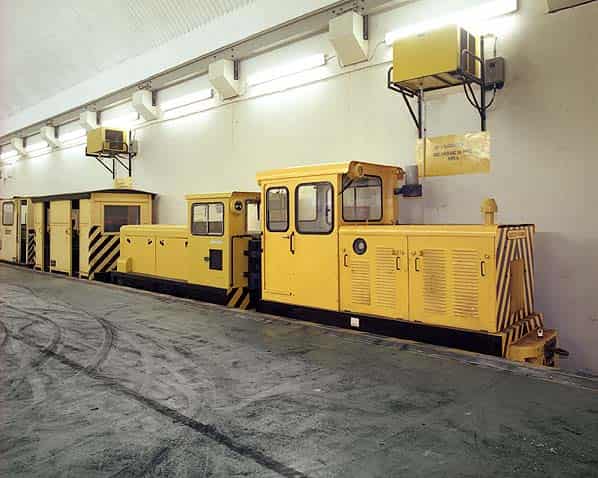
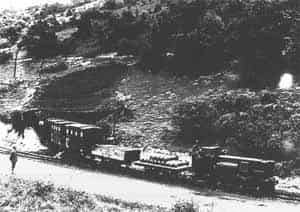
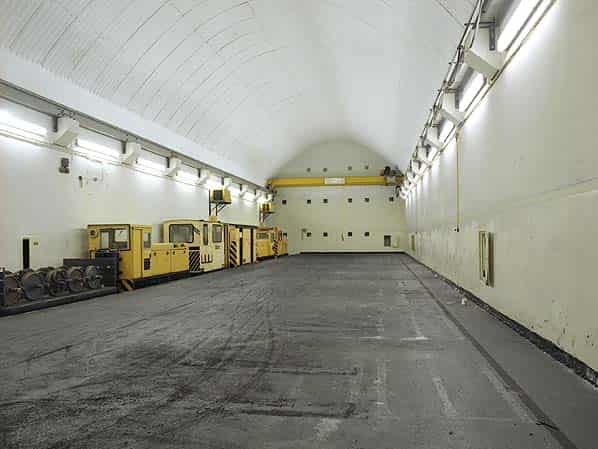
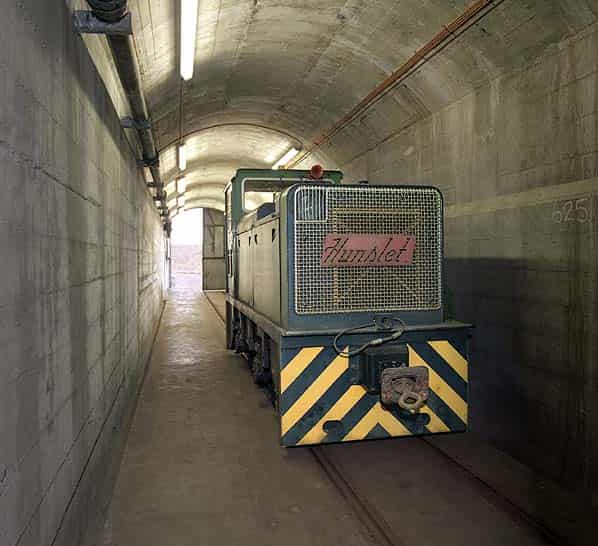
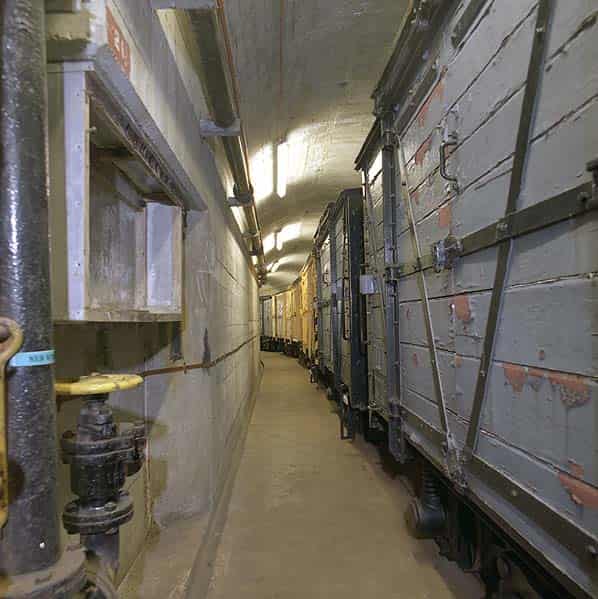
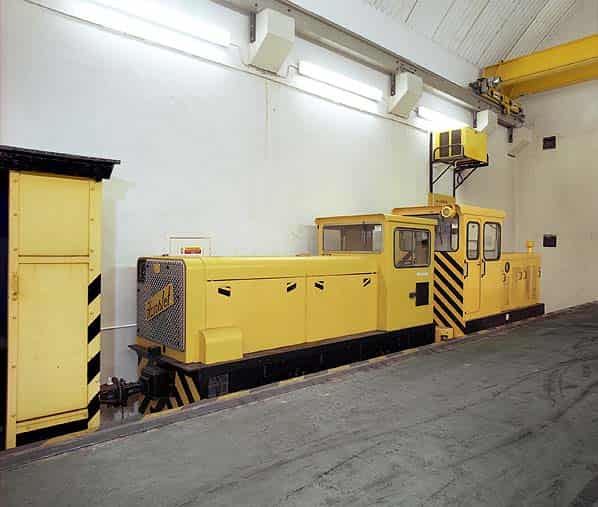
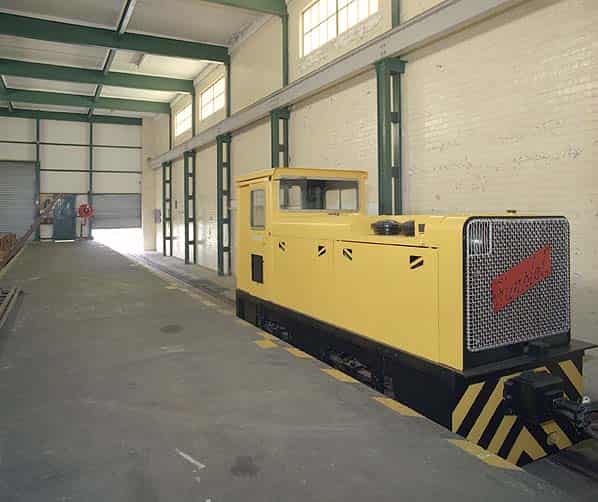
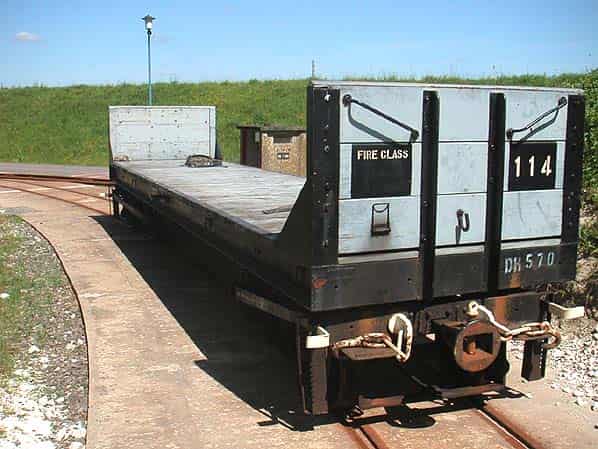
Shortly before closure was announced the entire stock of the narrow gauge railway network was refurbished and repainted, this included Hunslet, Hudswell-Clarke and Baguley Drewry (one named Lady Diana Spencer) diesel locomotives, passenger cars, flatbed and boxcar wagons. All the rolling stock is still in excellent condition. The bulk of the fleet remains in storage in the underground magazines and the surviving rail transit shed. It is proposed to include the two Hudson Clarke 0-4-0 locomotives in the depot sale which will be sold with a fully functioning railway network, the rest of the railway stock of 170 vehicles of various types will be sold separately by government surplus dealers Ramco of Lincolnshire. The depot and all the buildings are being sold by Drivers Jonas Chartered Surveyors on behalf of Defence Estates. In recent years the facility has been known as Defence Munitions Dean Hill. Land outside the perimeter fence will be offered to existing tenants while the depot itself will be sold on the open market.
THE SITE DESCRIBED
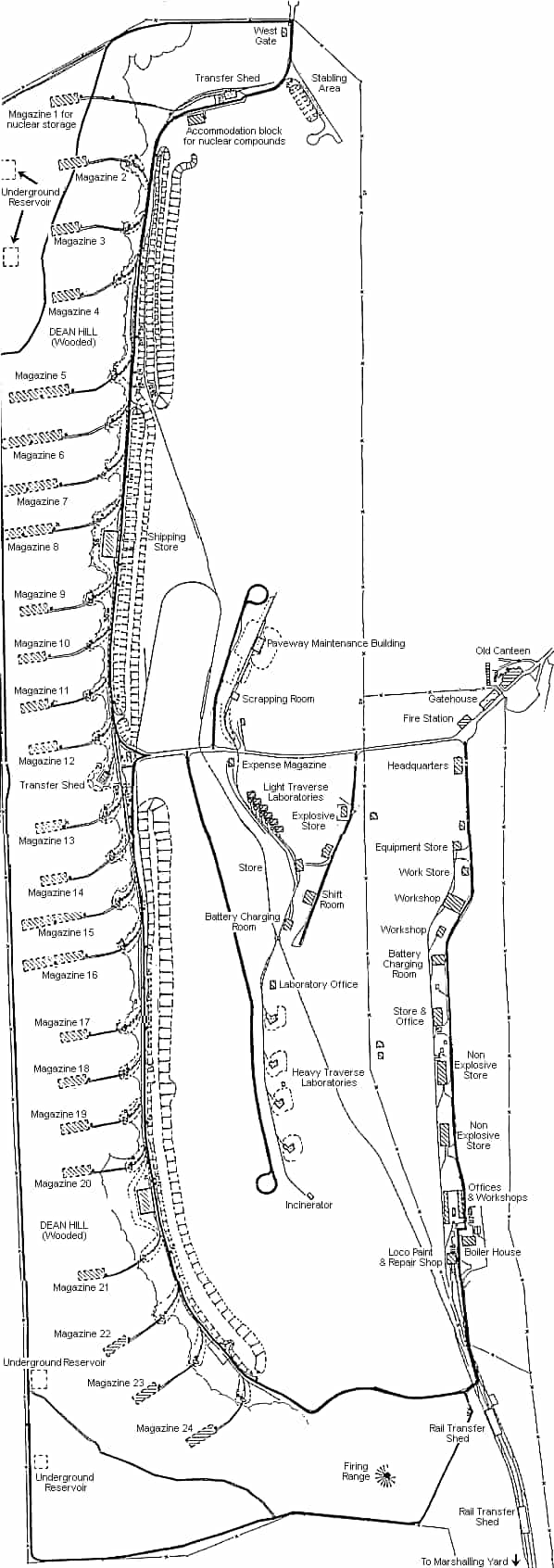
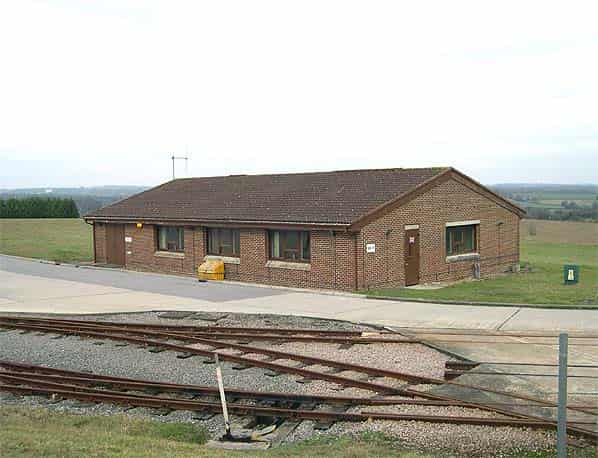
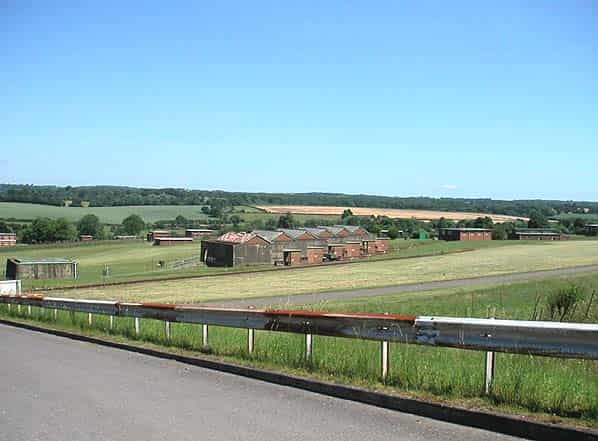
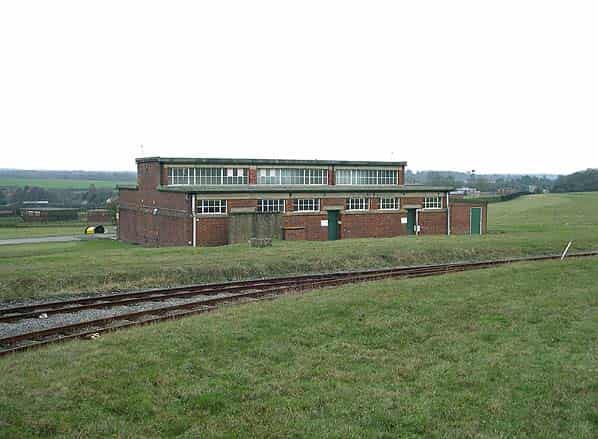
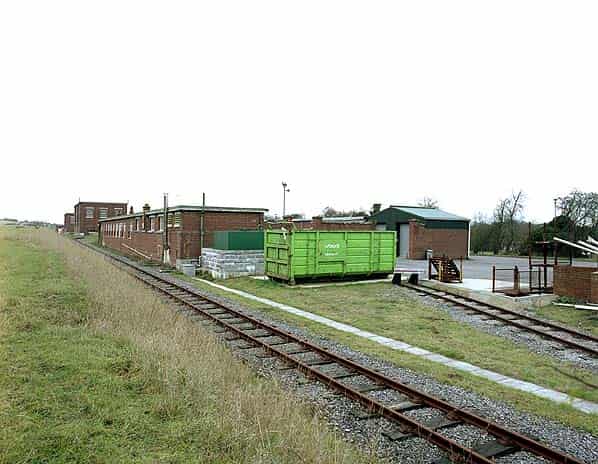
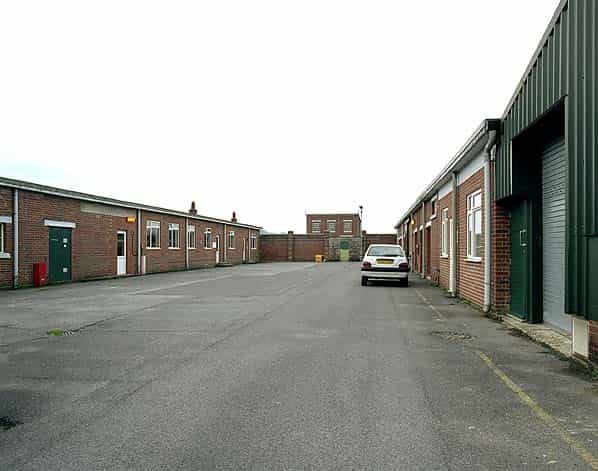
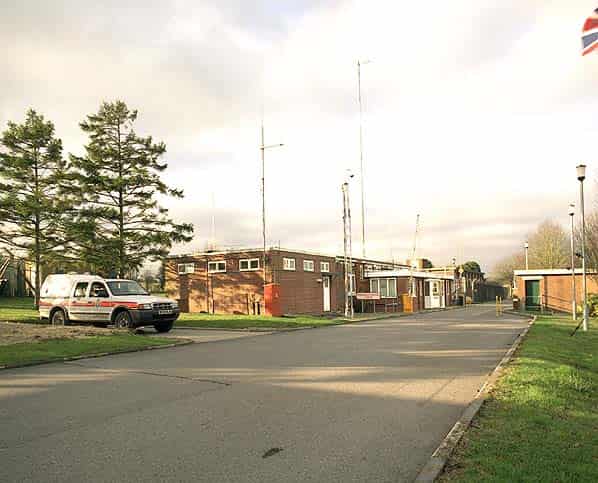
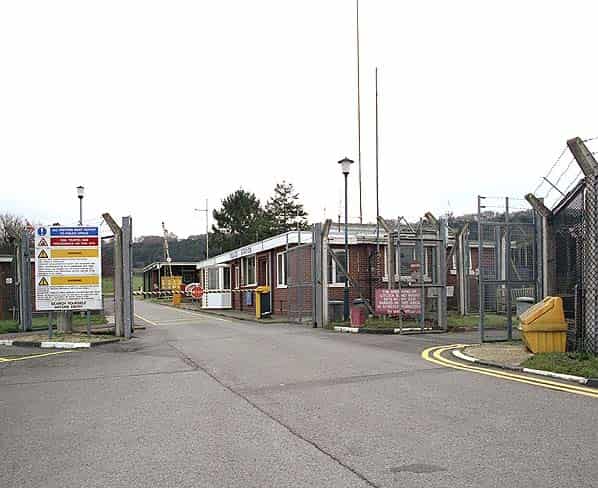
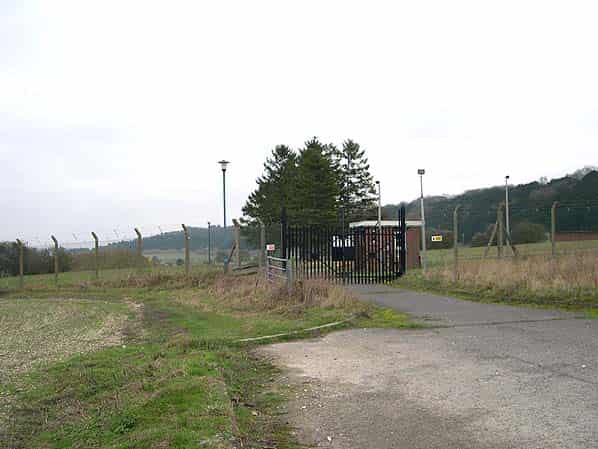
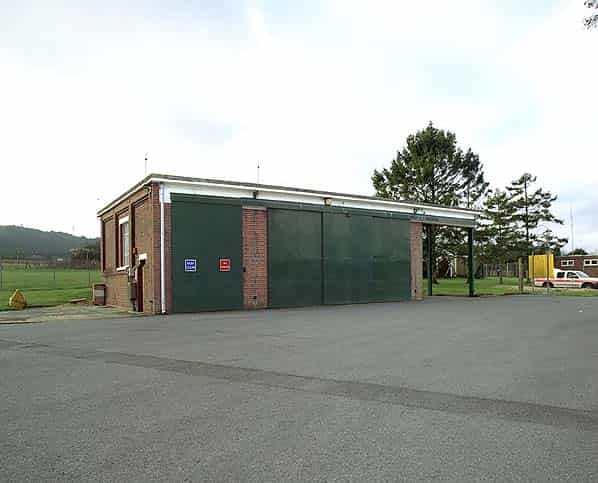
When visited in December 2003 the site was in care and maintenance pending sale. The depot was still manned by a permanent staff of 12 including Ministry of Defence Police manning the gatehouse. Prior to the depot being placed on care and maintenance there were 57 Defence Munitions civilian staff and 21 MOD Police. The site has been well maintained with the grass regularly mown. Apart from the eastern rail transfer shed which was demolished a few years ago most of the 150 plus buildings on the site are still standing; most are of brick, some with additional concrete blast protection. The police guardhouse is located just inside the main entrance with the old canteen outside the perimeter fence by the gate. The fire station is located alongside the gatehouse. The road splits at this point with one road running along the northern perimeter and another road running due south towards the laboratories and the magazines. Most of the buildings along the southern perimeter are workshops and storage buildings. The narrow gauge railway runs along the south side of the buildings with a short spur to each of the buildings. Originally the line would have run into the buildings but the lines now stop short of the buildings with a buffer stop. The openings into the buildings have been largely blocked.
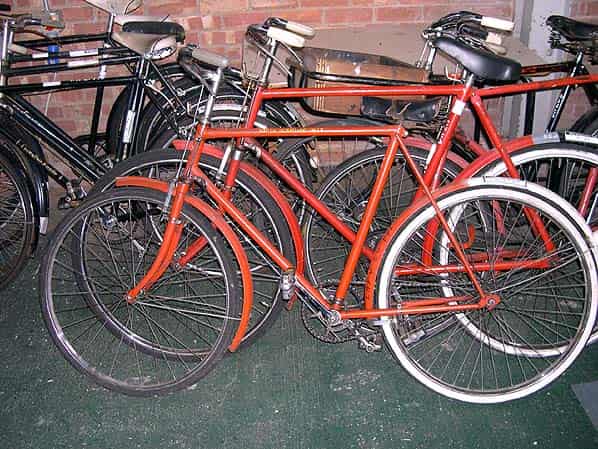
The large brick built workshops have internal gantry cranes for the easy movement of heavy munitions. One of the stores houses a selection of bicycles one of which is labeled ‘rapid response unit’! Towards the north east corner of the site there is a two bay narrow gauge locomotive paint and repair shop and alongside it the boiler house. Beyond this is the only remaining section of standard gauge track embedded in the concrete where it passes through an internal security gate. Once through the gate the road turns to the right and branches, one branch running around the north (entrance) side of the magazines. The other road climbs steeply up to the top of Dean Hill where it runs along the southern perimeter fence passing four underground reservoirs, two at each end of the site.
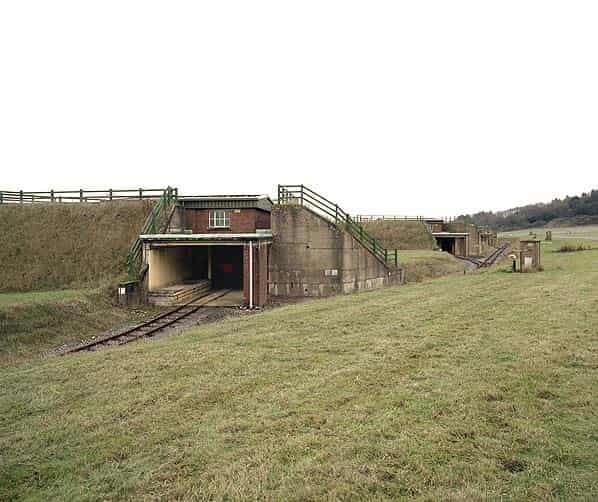
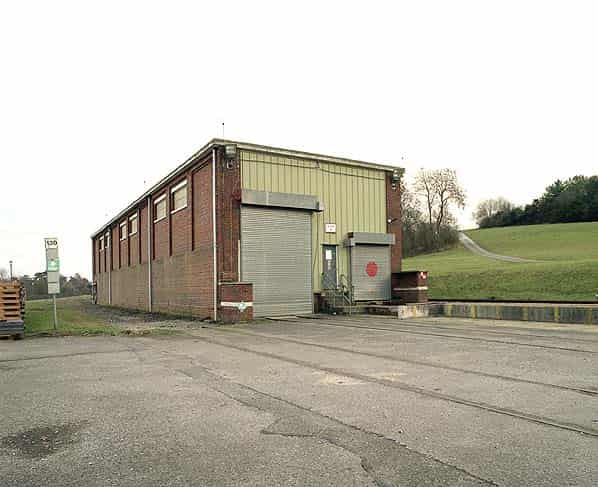
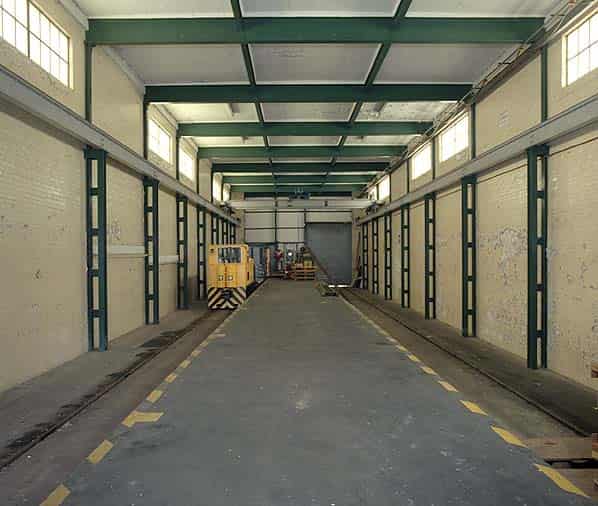
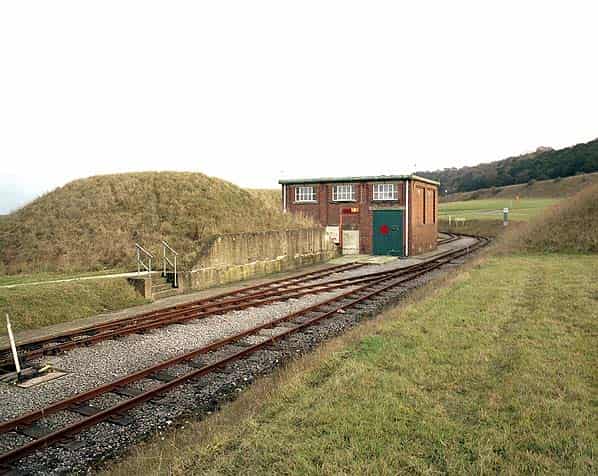
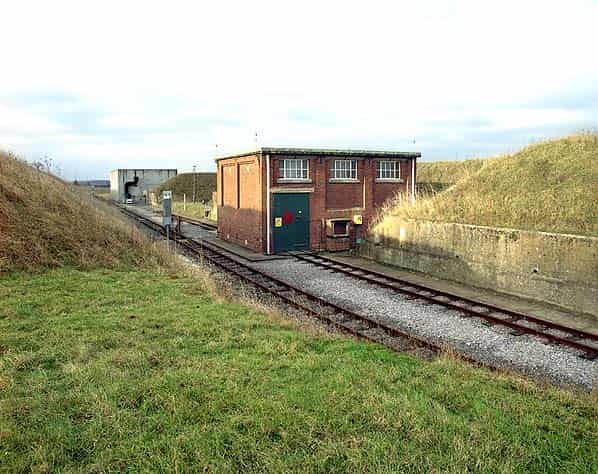
At the road junction both the standard and narrow gauge railway lines continued eastwards into the two rail transfer sheds. Beyond the now demolished eastern shed, the narrow gauge line terminates at a siding while the standard gauge line passed out through the perimeter fence to the marshaling yard and the connection with the main line. The remaining transfer shed has an internal platform running the length of the building with standard gauge track still in situ on the north side and narrow gauge track on the south side. There is an overhead gantry crane for moving munitions around the building.
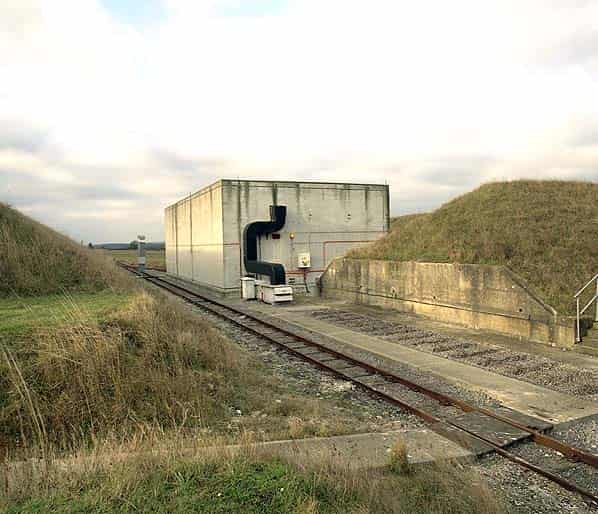
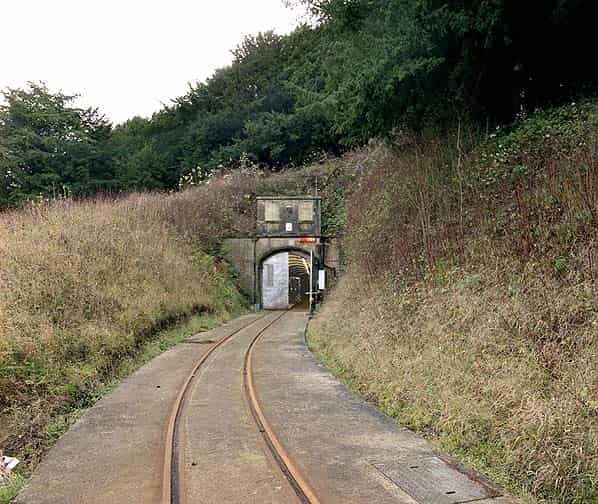
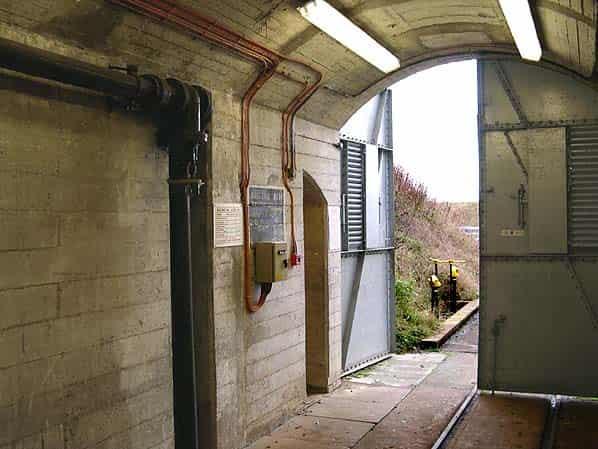
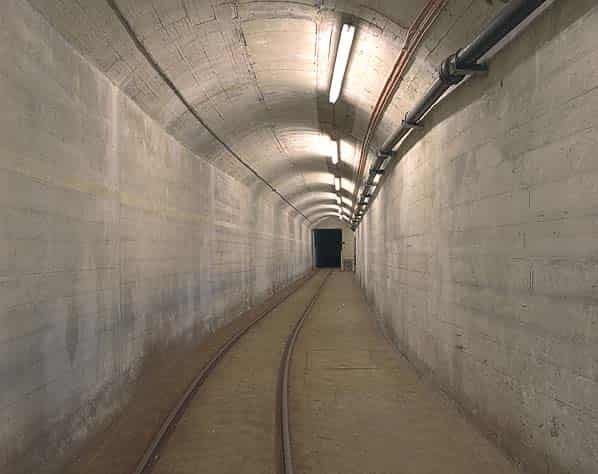
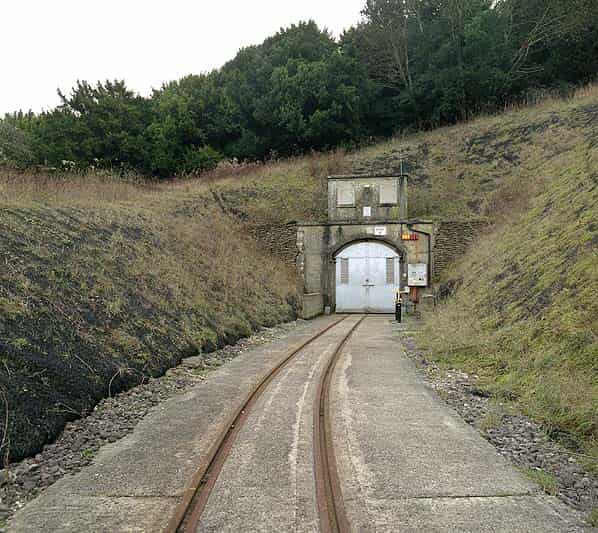
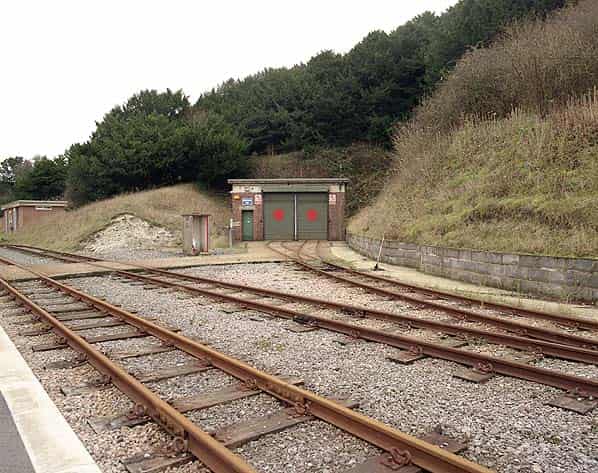
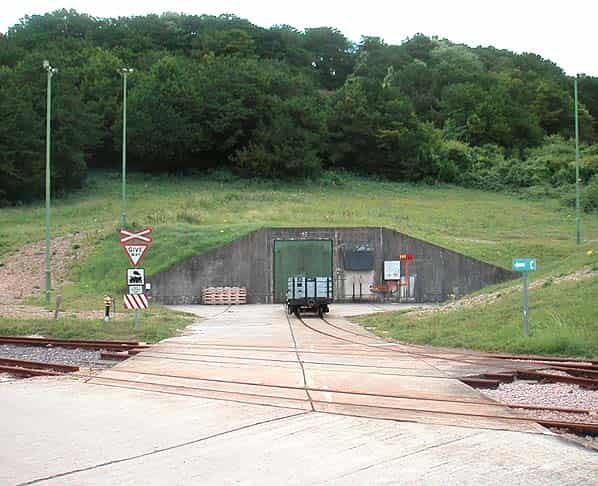
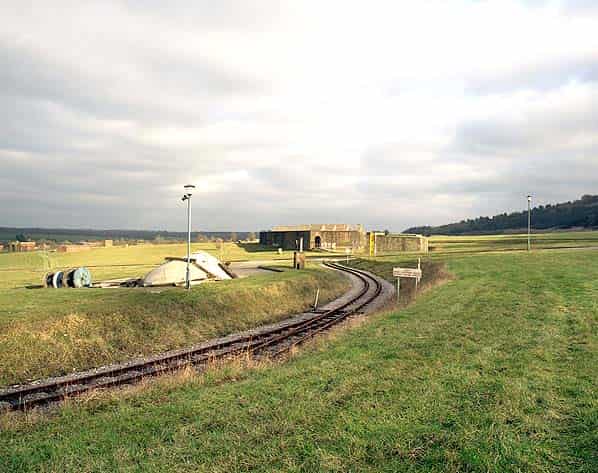
The magazines are all excavated into the north slope of Dean Hill, each with a short curved access spur from the narrow gauge railway line that runs along the northern side of hill. Each of the magazines has twin outward opening doors with three red lights and three yellow lights mounted to one side.
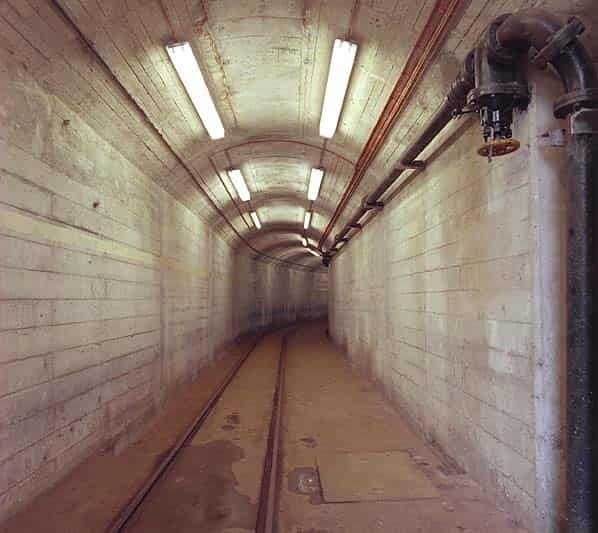
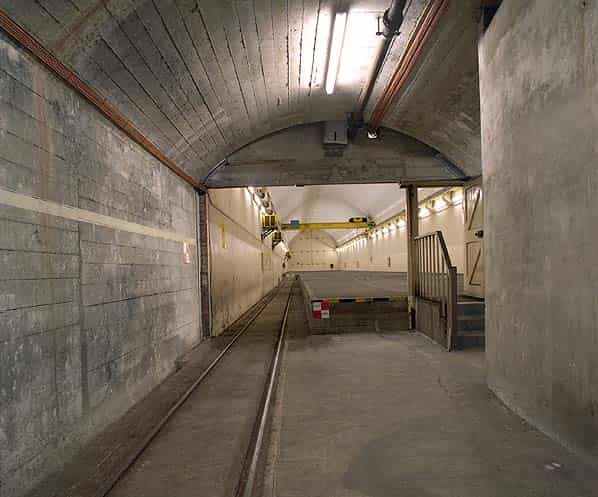
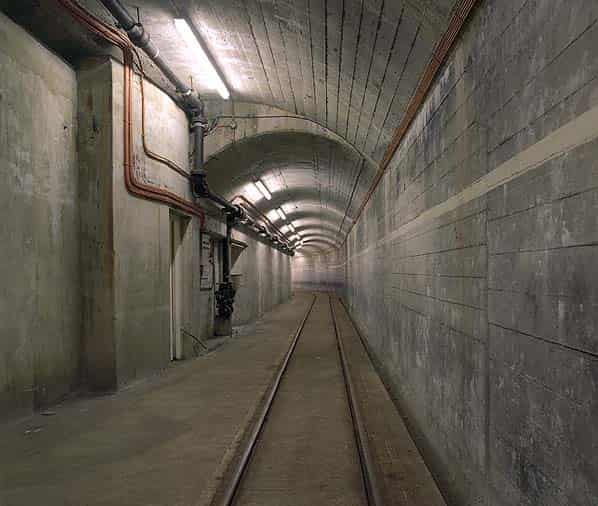
The yellow lights indicate that the magazine lighting is on while the red lights indicate that the dehumidifiers are on. The entrance tunnels curve to the right in 21 magazines (tunnels curve to the left in the three westernmost magazines) before entering the storage chamber. At the entrance to each storage chamber there is a door to the right into a shifting lobby consisting of two rooms where workers could change into safe magazine clothes, there is also a telephone on the wall and another door out onto the platform.
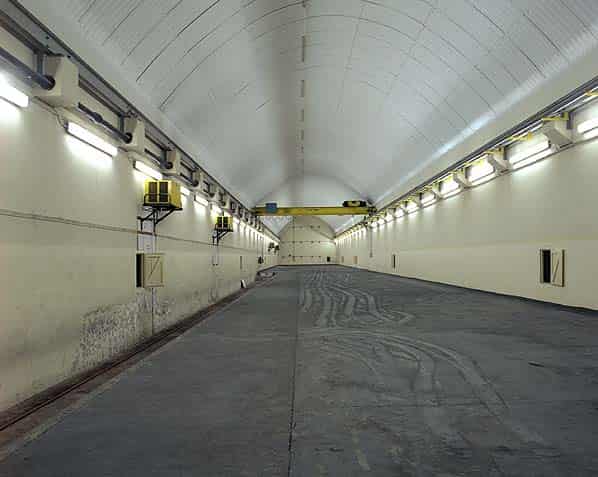
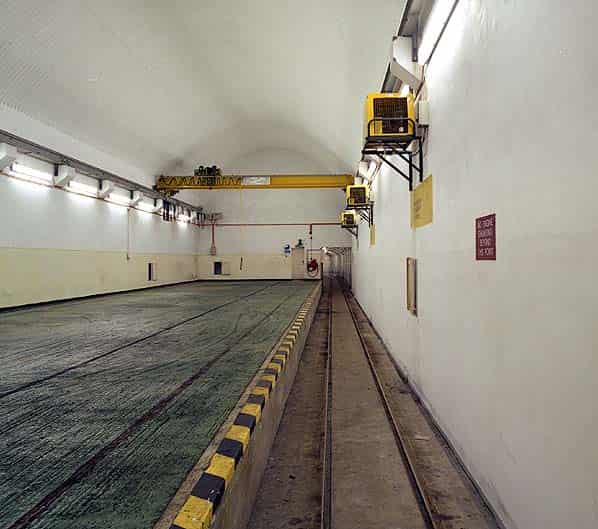
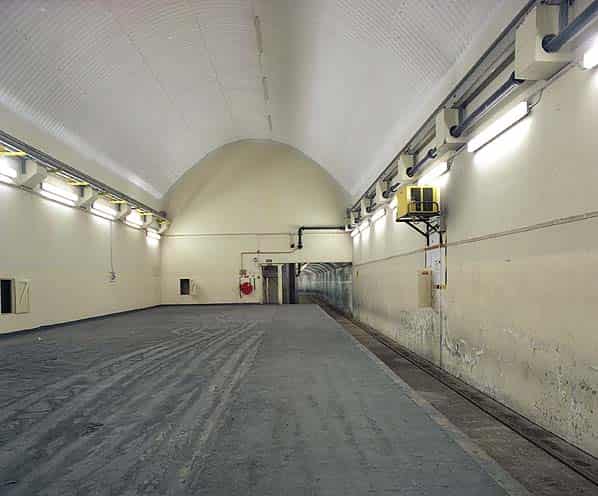
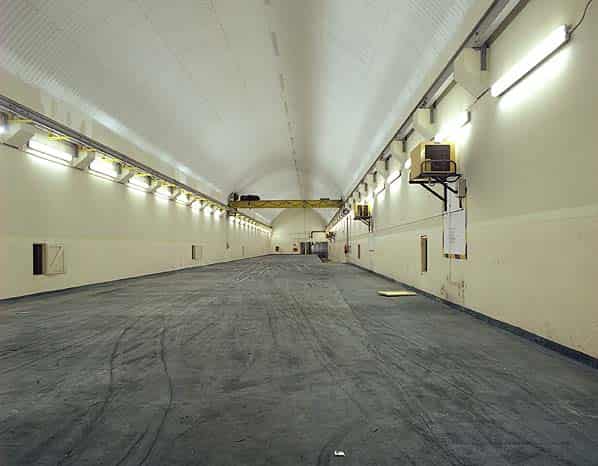
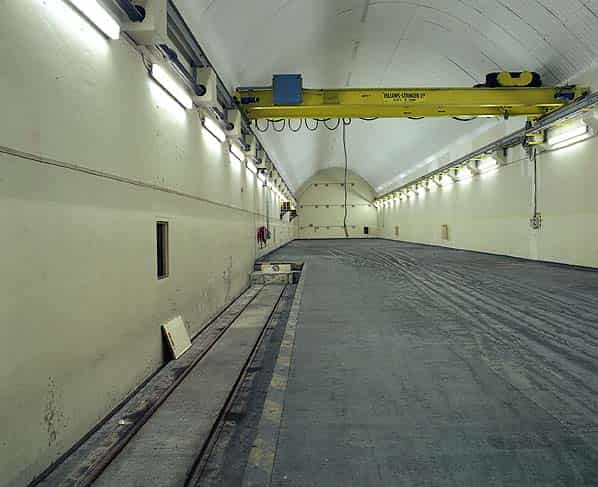
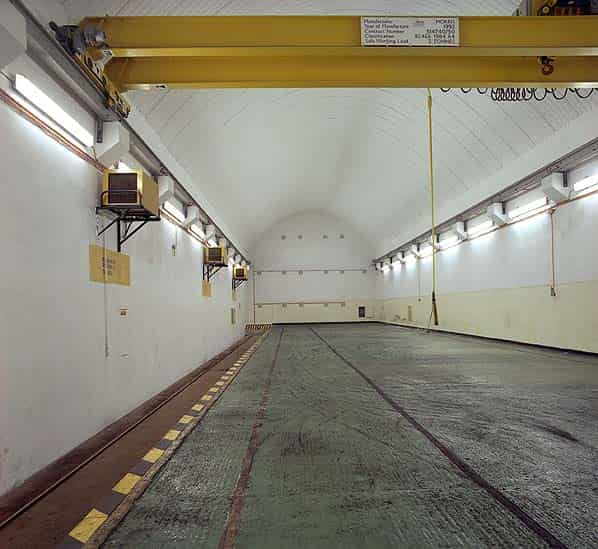
The storage chambers come in two sizes. In eighteen magazines they are approximately 31 metres in length with an area of 334 square metres. The remaining six magazines are approximately 71 metres in length with an area of 753 square metres. Each chamber is approximately 10 metres high with concrete side and end walls and a curved corrugated metal roof.
Each magazine is built within an outer chamber with doorways in each wall giving access to the narrow area between the inner and outer walls. There is fluorescent lighting along both side walls with a dehumidifier mounted high on one wall. In the shorter magazines the railway runs the entire length of the magazine with the raised storage area to one side. In the longer magazines, the railway runs half the length of the magazine. Originally the longer magazines had a double track but one track has been removed and the track bed brought up to platform level.
The entrance to No 1 magazine at the western end of the site has been rebuilt to accommodate nuclear weapons which were occasionally stored overnight en route to RNAD Frater. There is now a large area of hard standing in front of the magazine and the hillside around the entrance has been reinforced with extra concrete. A small armoured watchtower, similar to the observation area of an airfield control tower has been provided alongside with a rotating searchlight on top of it. At the back of the hard standing there is a single level accommodation block for housing the drivers and troops that accompanied the nuclear convoy. This whole area was enclosed within its own security fence which has now been removed.
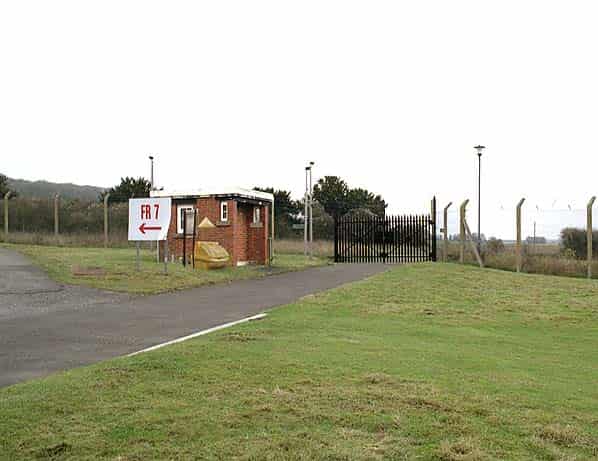
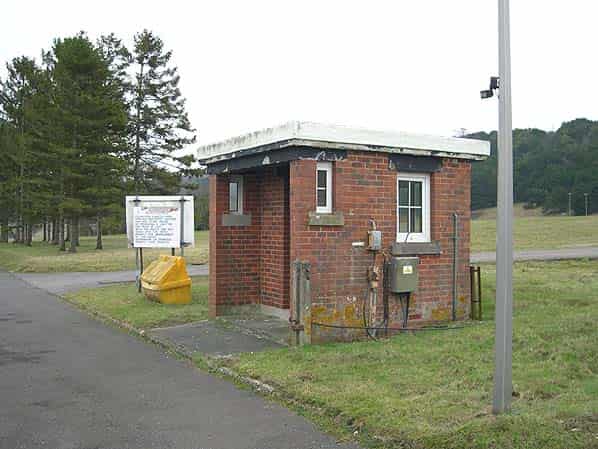
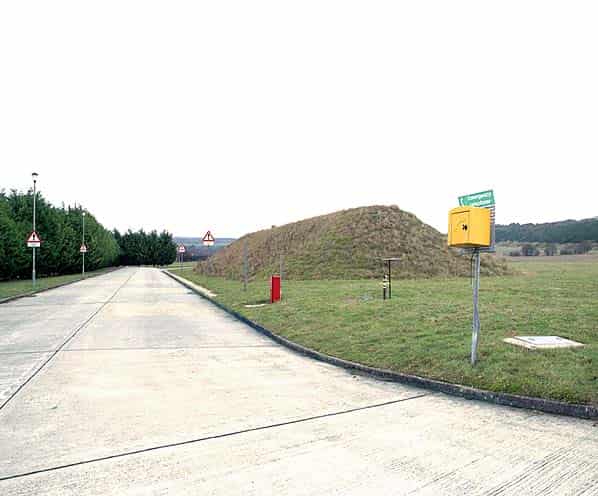
Beyond No. 1 magazine the road and tramway curve round to the north where there is a rail/road transfer shed and an external rail loading platform close to the west gate where there is a second small police post. There is also a temporary floodlit stabling area close to the gate with a 3 metre high grassed earth bank for blast protection.
A road runs south from the main entrance to a point midway along the line of magazines. Half way along this road there is a crossroad, to the east are the light and heavy traverse laboratories and to the west the Paveway maintenance building and a munitions scrapping building. The Paveway building is surrounded by grassed earth banks and is the only building on the site that is built entirely of reinforced concrete covering an area of 195 square feet. It is windowless with ventilation trunking protruding from one end. In the disposal documents it is described as a ‘paint shop’ which may be a later use for the building. It is the most substantially built surface structure on the site.
Back at the crossroad there is a small expense magazine surrounded by a concrete blast wall and to the east of that the block of six light traverse laboratories. Beyond these are the heavy traverse laboratories. There are four of these, each about 50 yards from any other building and each other.
There are a number of pillboxes in the fields surrounding the outer perimeter fence.
Sources:
- Bob Jenner
- Keith Ward
- Dangerous Energy by Wayne Cocroft ISBN 1-85074-718-0