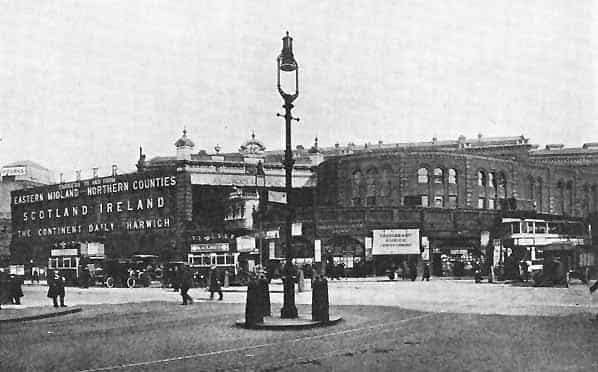
An Act of Parliament passed in 1836 authorised the building of the Eastern Counties Railway between London and Great Yarmouth. The London section of the line opened in June 1839 from a temporary terminus at Mile End to a temporary station at Romford. The following summer it was extended to a permanent terminus at Shoreditch which opened on 1st July 1840. The railway was also extended into East Anglia, reaching Colchester in March 1843. Shoreditch Station was renamed Bishopsgate on the 27th July 1846.
The company never reached its Great Yarmouth destination; the Eastern Counties merged with other lines to form the Great Eastern Railway in 1862. Initially the Great Eastern used Fenchurch Street as its City terminus but this lacked the capacity to deal with increasing suburban traffic so a new city site was selected adjacent to the North London Railway’s Broad Street Station facing on to Liverpool Street. In order to reach the new terminus a new line diverged on the north side of the viaduct into Bishopsgate curving round under Bishopsgate and into the new terminus at Liverpool Street.
To accommodate Bishopsgate’s passengers, new low level platforms were constructed at Bishopsgate, one underneath the existing station and the other on the south side of the old terminus. Bishopsgate Low Level as it was known opened on 4th November 1872
When platforms 1 to 10 at Liverpool Street station (West Side and Main Line) were brought into use on 2nd February 1874, Bishopsgate became redundant as a passenger terminus. The station was closed on 1st November 1875 although some trains continued to use it until 1879, at the same time Bishopsgate Low Level Station was renamed Bishopsgate.
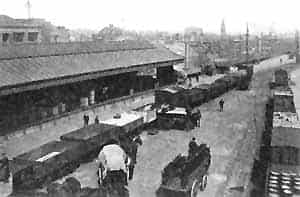
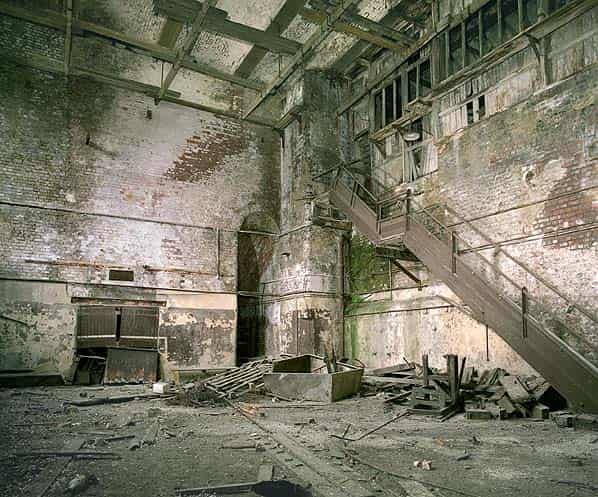
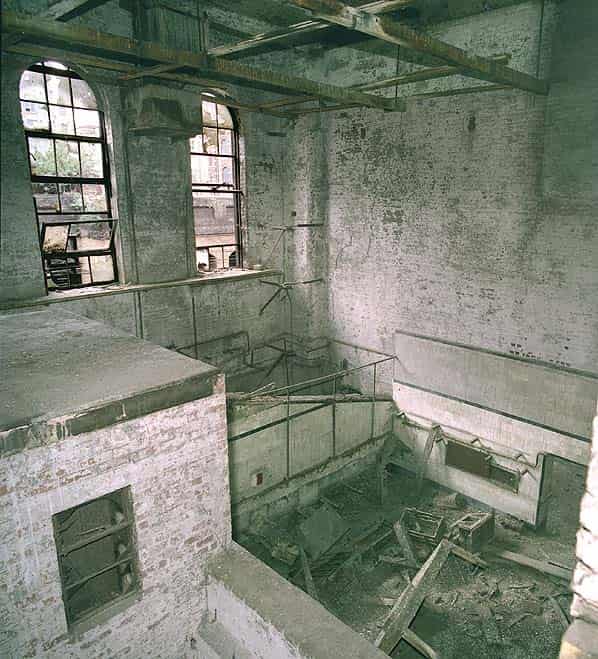
Work immediately started on rebuilding and extending Bishopsgate as a massive goods station to supplement the earlier Brick Lane Goods Station (later renamed Spitalfields Goods Station); and together they were to become one of the largest in London handling the majority of the goods traffic to and from the east of England. The new station was available for goods traffic from 1881. Over the years many alterations and additions to the building were made with little evidence remaining of its former use as a passenger station.
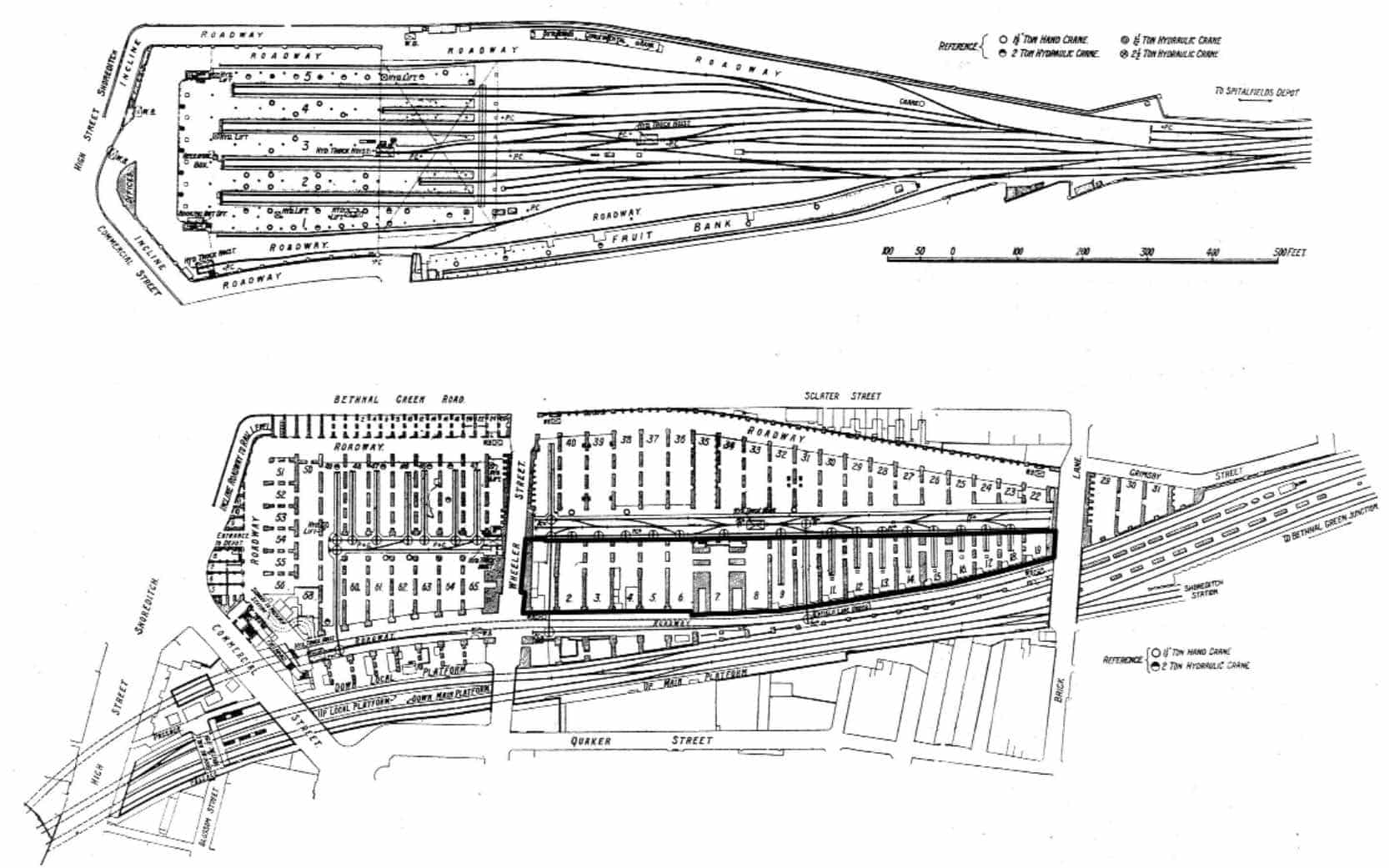
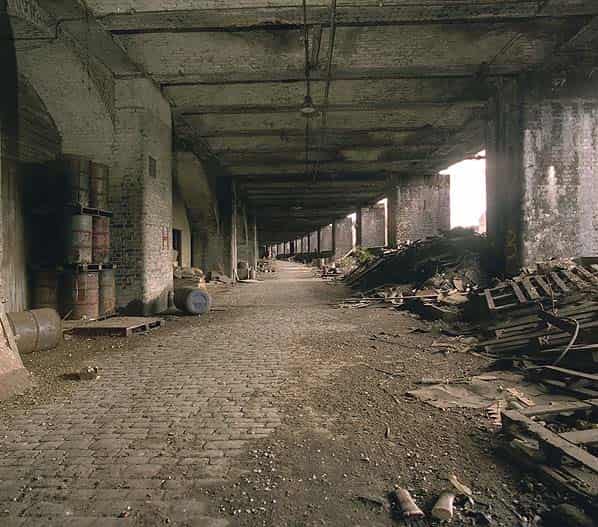
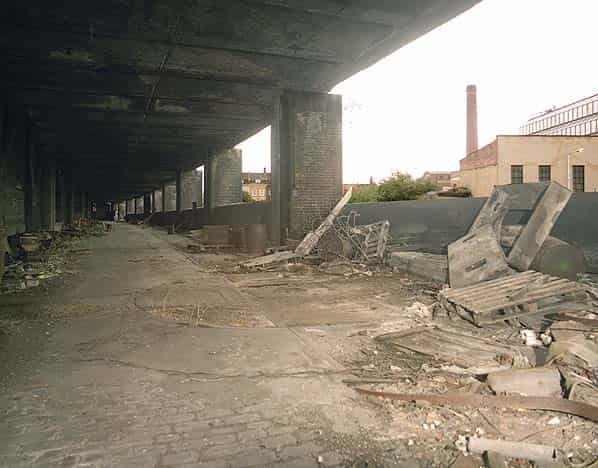
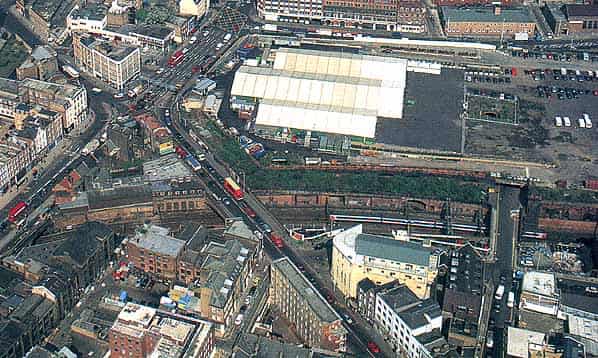
The goods station (or goodsyards as it was often known) was on three levels, two having road access and served by railway tracks with the third upper level warehouse.
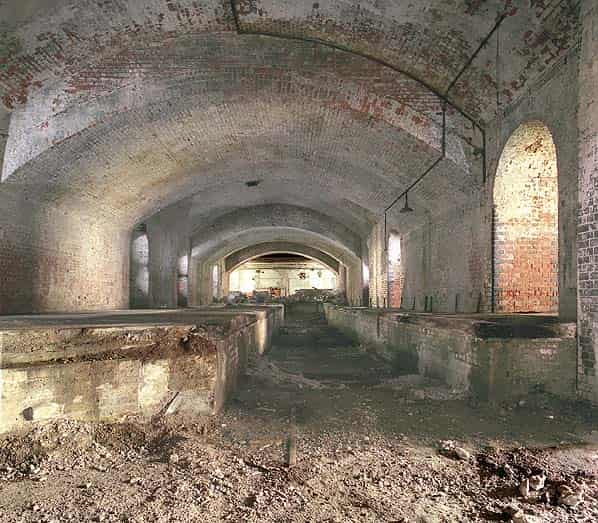
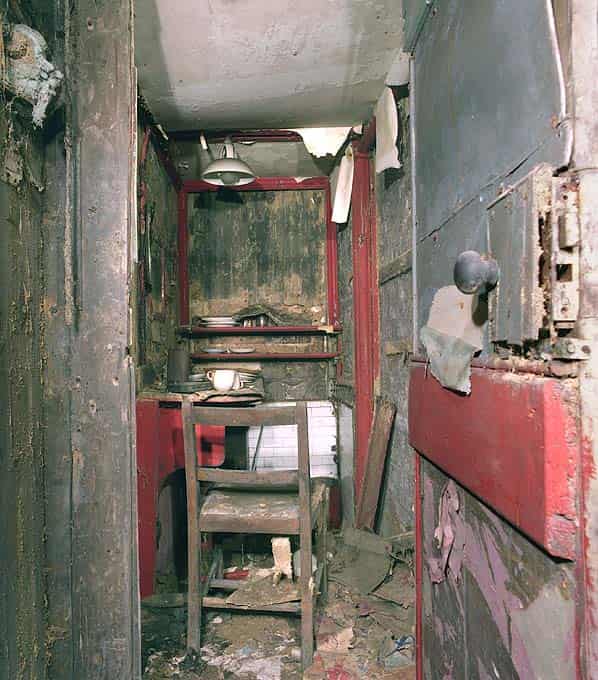
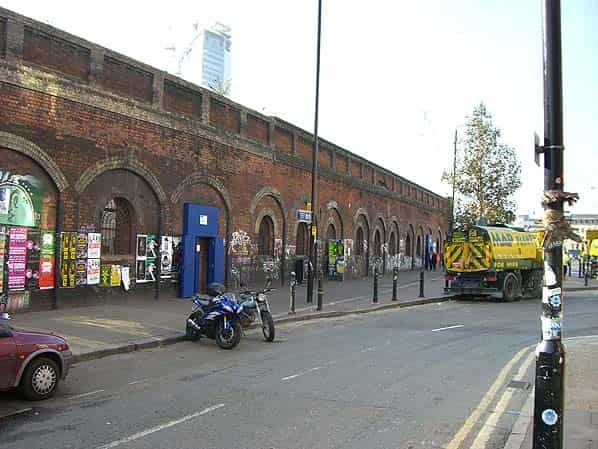
The street-level offices and rest rooms were located in the arches carrying the upper rail level and warehouse structures.
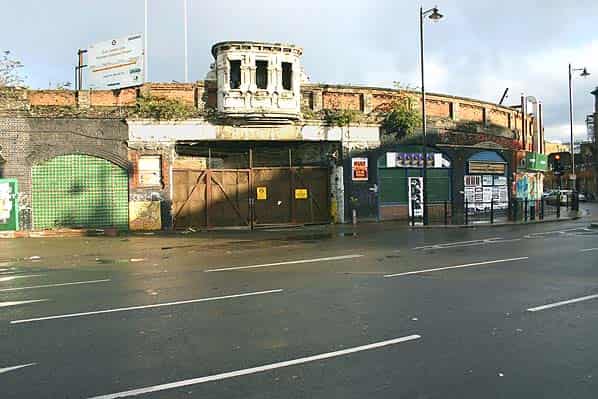
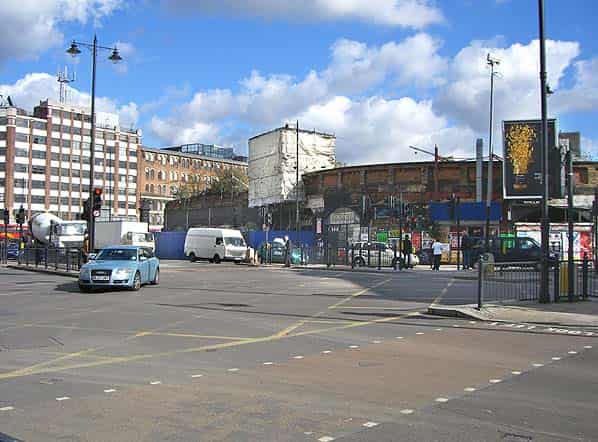
Eight road entrances were provided, the main entrance was at the corner of Shoreditch High Street and Commercial Street, there were four entrances in Wheler Street which passed transversely under the station and two in Brick Lane at the eastern end.
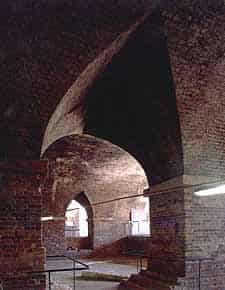
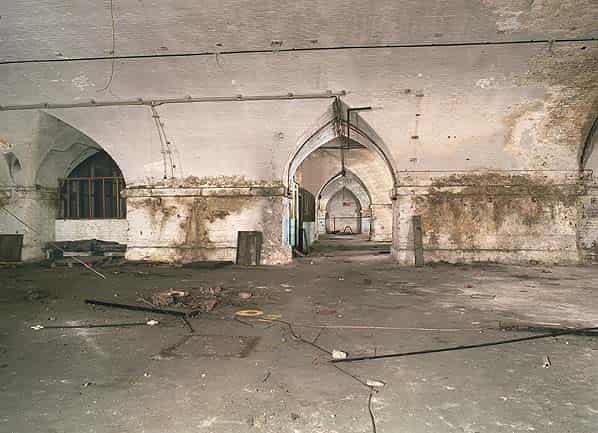
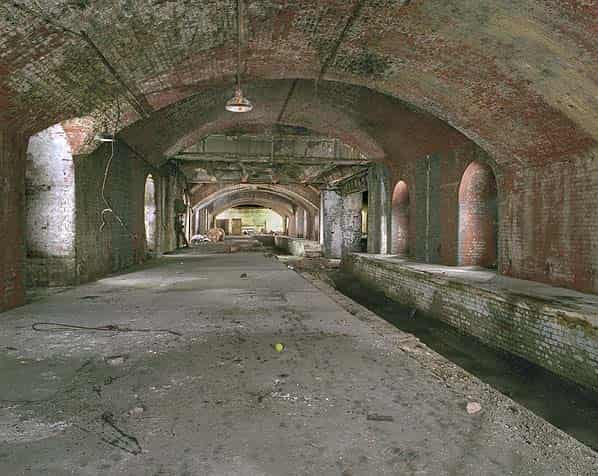
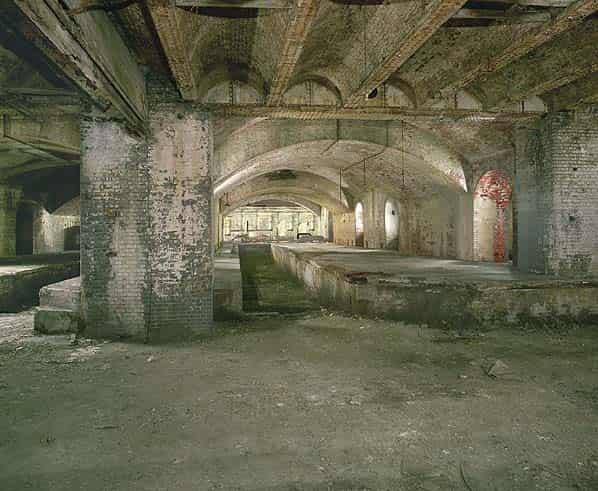
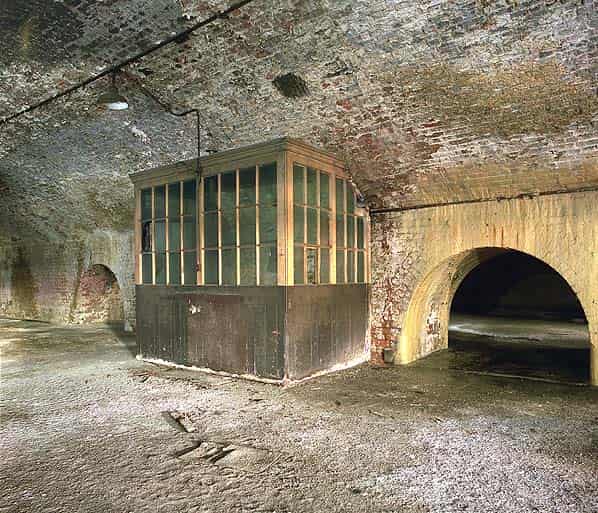
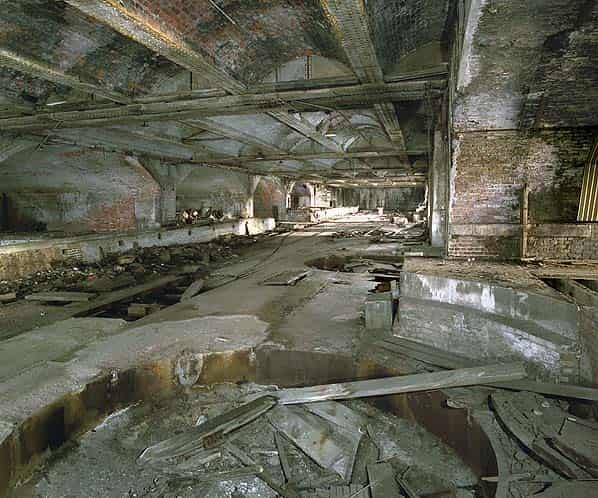
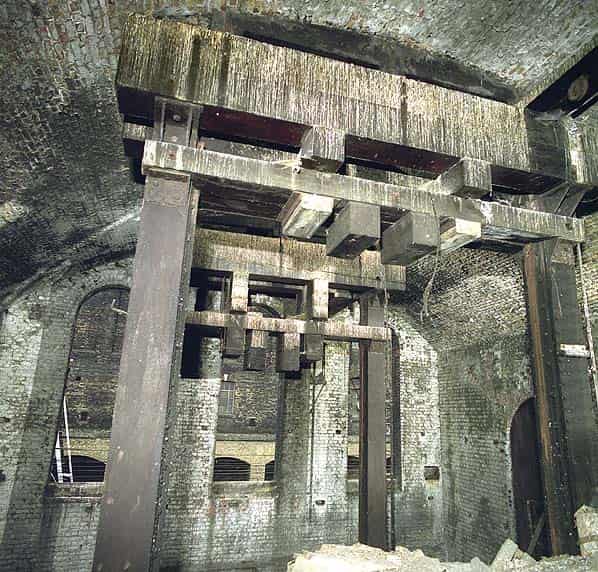
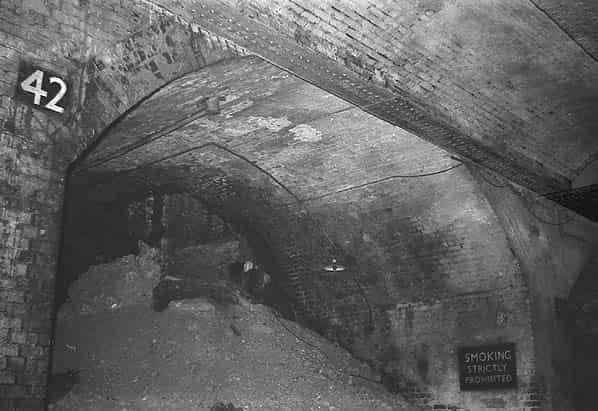
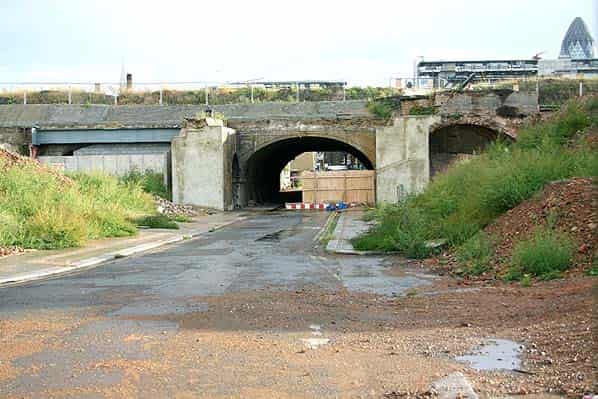
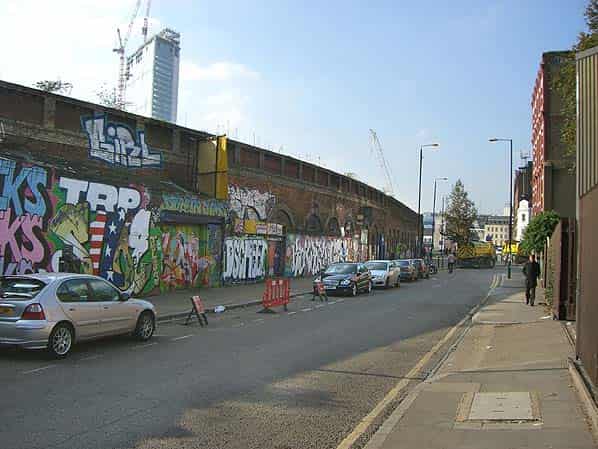
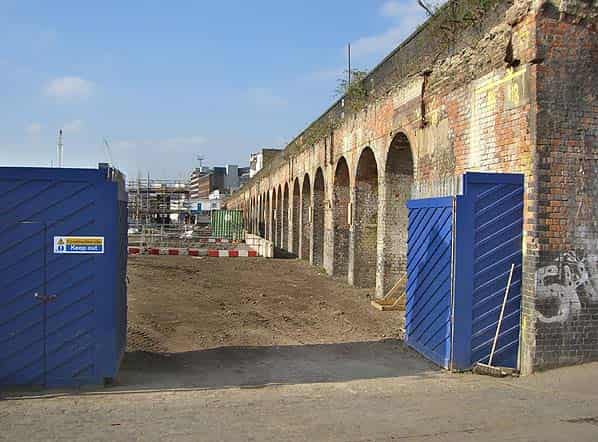
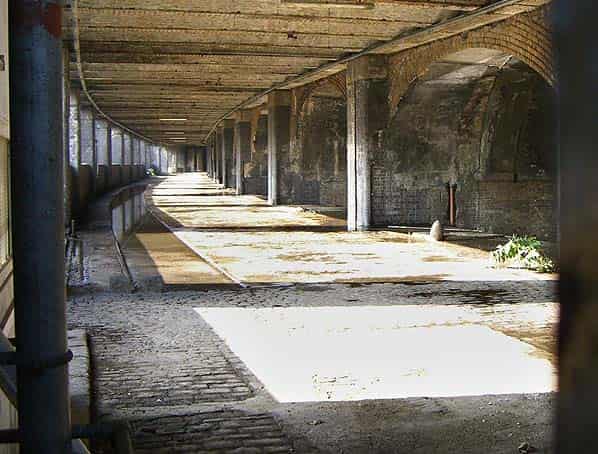
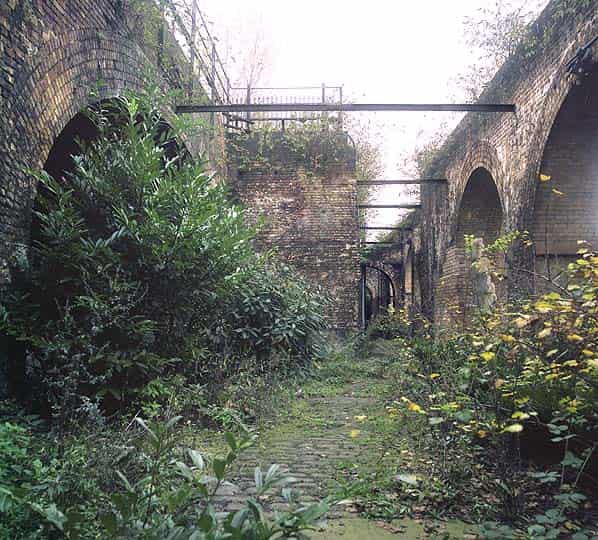
Encapsulated within the extensive 1870s work, between Wheler Street and Brick Lane, is 850 feet of the original viaduct of the Eastern Counties Railway. This is now referred to as the Braithwaite Viaduct, after John Braithwaite, the ECR’s engineer. It has shallow, semi-elliptical brick arches, as do other sections further east, but the width here is greater, 50 feet or so front to back, as the tracks multiplied on approach to the terminus. So the piers are divided by cross-passages, with distinctive two-centred ‘pointed’ arches. Over the years the original viaduct has been successively widened.
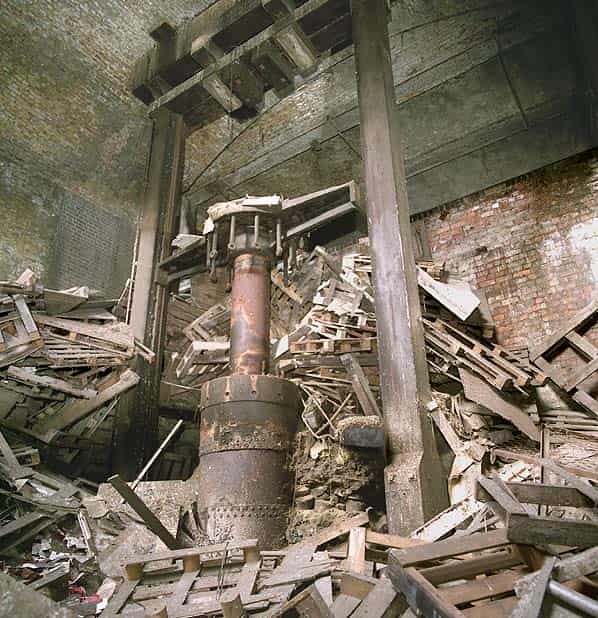
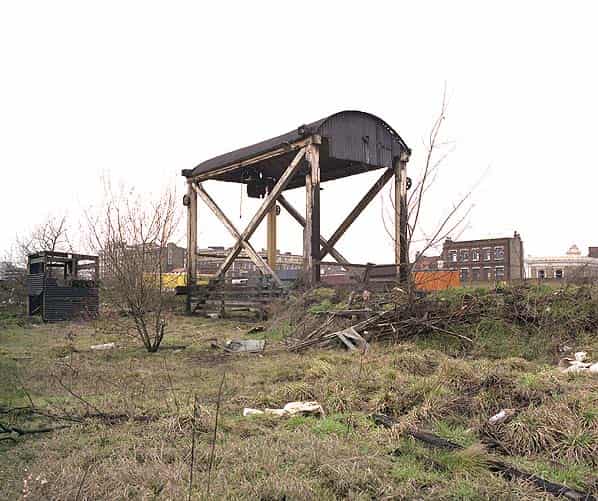
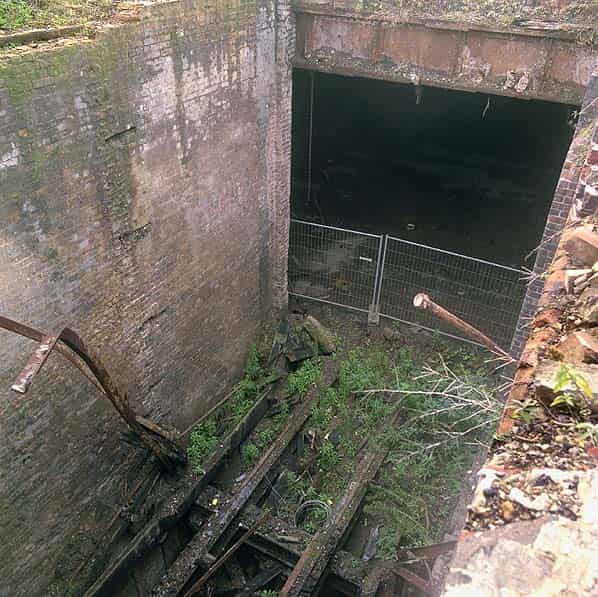
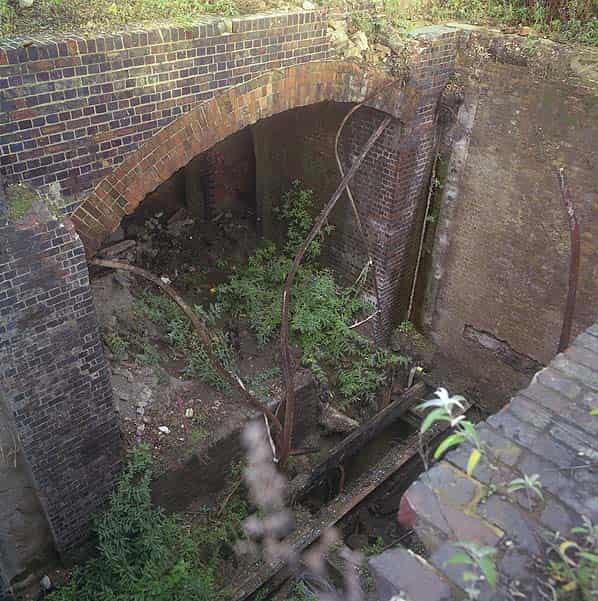
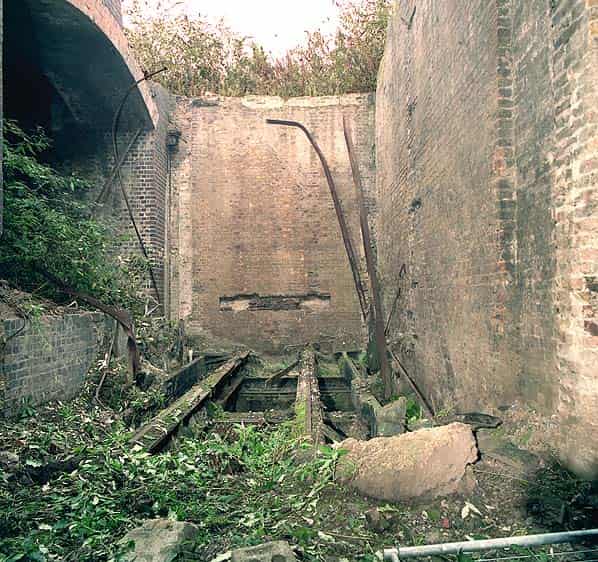
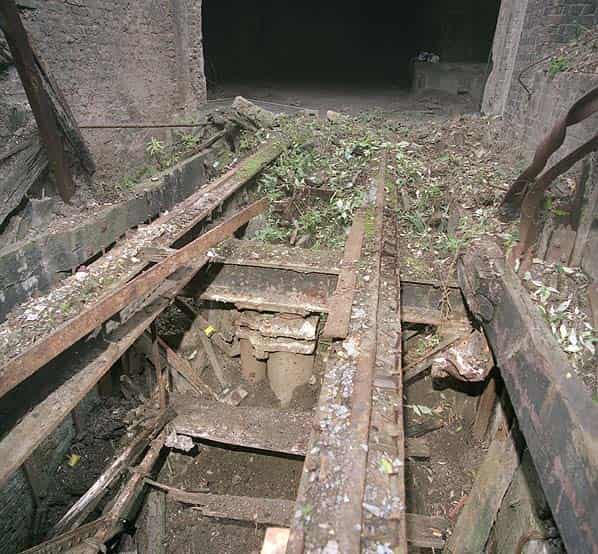
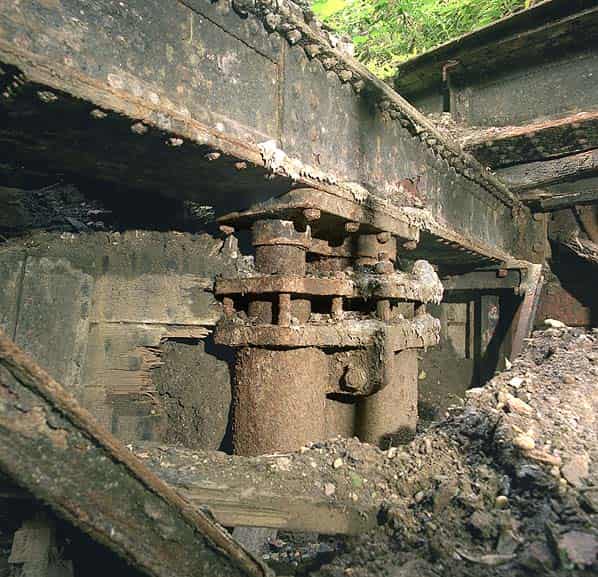
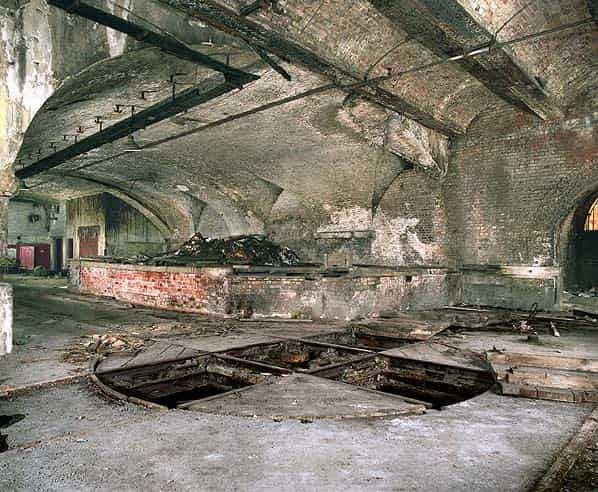
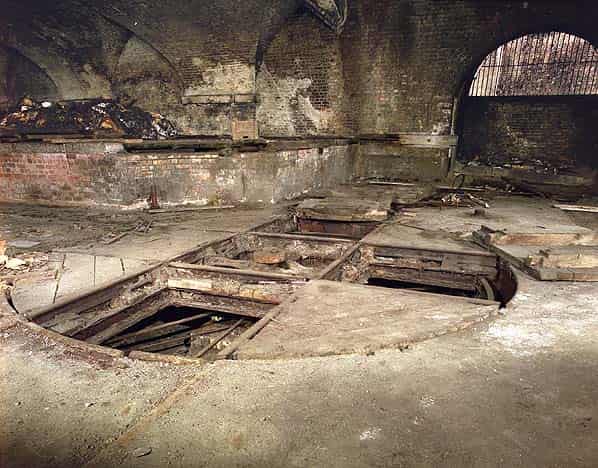
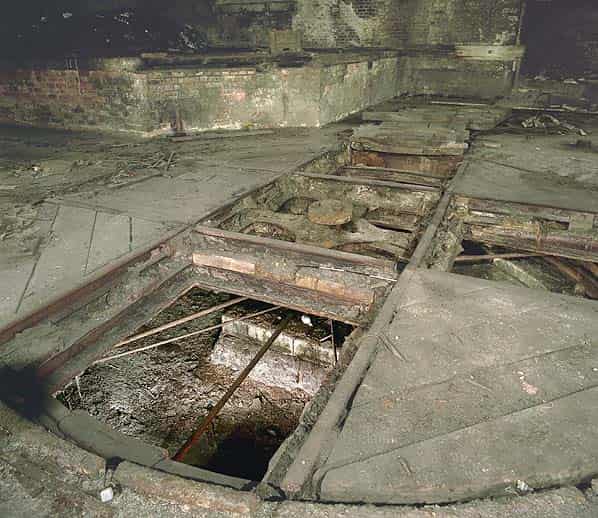
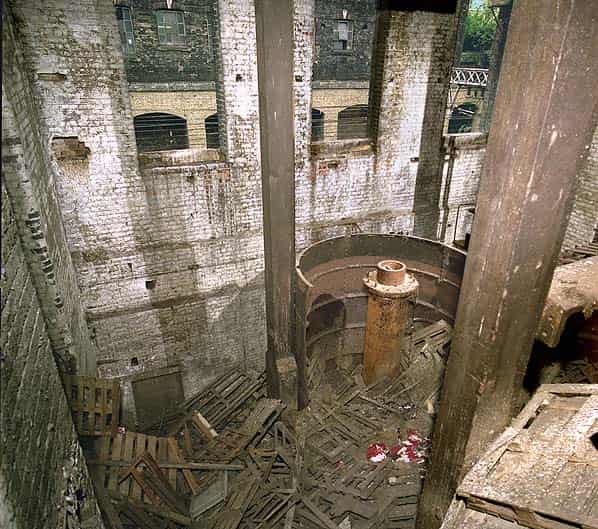
The lower rail level was about 400 feet wide and 1500 feet long and was provided with a longitudinal railway track on the south side and three tracks in the middle, with transverse lines, mostly short, but including several extending the whole width of the station. By means of turntables and capstans, wagons could be shifted as required around the station or moved to or from one or other of the three hydraulic wagon hoists which provided communication with the rail-level lines above. There was no direct rail connection between the lower rail level and the main line, the only way wagons could be moved to the lower rail level was by means of the three hoists which were powered by two large hydraulic accumulators located on the south side of the station. A hydraulic accumulator is an energy storage device; a pressure storage reservoir in which a non-compressible hydraulic fluid is held under pressure from an external source. That external source can be a spring or as at Bishopsgate a raised weight.
There were two road approaches to the station one ascending from Wheler Street, alongside but outside the station, to reach the main entrance over the street-level entrance on Shoreditch High Street; the other ramp ran up adjacent to the street-level entrance, rising to pass round the station premises on the north side and reaching rail level near the west end of the goods shed; this also served the goods yard to the east.
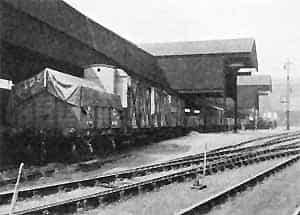
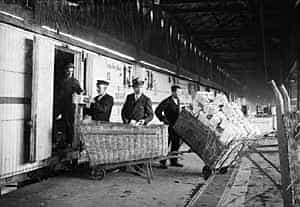
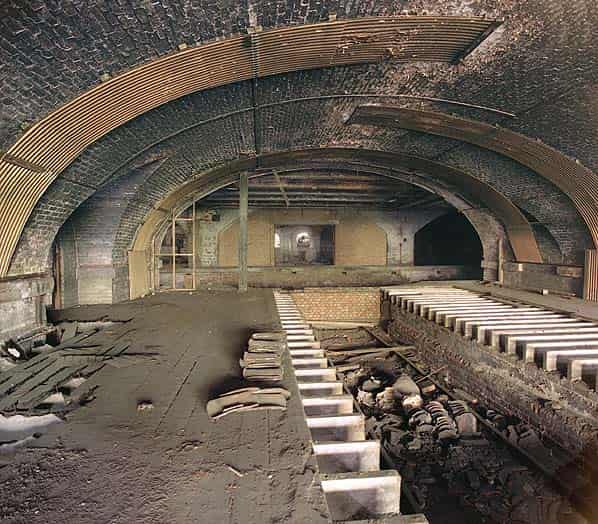
The upper level goods shed had five platforms served by 10 full-length railway tracks, two having short docks let into their outer (east) ends. A wide roadway served the main bank from which the five platforms extend, and there were further roadways on either side, one of them leading to the goods yard where a special Continental shed was located, its roof extending over both the rail track and the space occupied by road vans placed in position for loading and unloading. The other road way served a covered double-sided fruit platform which extended virtually from over the Wheler Street entrance to Brick Lane.
The goods yard was used for the loading or unloading of full wagon-loads and for the making or breaking up of trains. It formed a continuation of the yard of Spitalfields goods depot where two lines being reserved for the movement of trains into and out of Bishopsgate station.
The depot had sufficient covered accommodation for the loading and unloading of 430 wagons; while a further 170 wagons could be dealt with in the open air.
The following statistics are from 1933. In that year the average daily clearance was 550 wagons, though this could increase to up to 850 per day when there were large consignments of fish, fruit and vegetables. On average 30 - 40 trains arrived each day carrying nearly 2000 tons; these included local trains from the various marshalling yards in the vicinity and from the docks.
Outwards traffic sometimes also reached 2,000 tons per day but was usually less. Outwards trains numbered from 22 to 25 per day. The highest daily tonnages recorded by the depot have been, inwards, 3,044 tons, and outwards, 3,353. The record number of packages dealt with at the station in any one day was, inwards, 35,986, and outwards, 37,089.
Inwards traffic is dealt with from 12 midnight until afternoon, and outwards traffic chiefly between 9 a.m. and midnight.
In addition to general package goods, traffic also included also large consignments of fruit, potatoes and other vegetables, fish etc., much of which was dealt with in the yard or at the fruit bank, and then loaded directly to road vans. An important section of the traffic was that arriving from the Continent, via Harwich; of which the Harwich-Zeebrugge Train Ferry brought a good proportion. By arrangement with the Board of Customs, traffic could be received at Bishopsgate in sealed vans and the necessary clearance undertaken in a bonded store specially provided for that purpose, thus avoiding delay at the port.
By far the greater part of both inwards and outwards traffic at Bishopsgate station itself was loaded onto London & North Eastern Railway vans, though in the case of traffic loaded or unloaded in the yard, generally referred to as the ‘field,’ firms concerned largely sent their own vans. The railway (LNER) employed a cartage workforce of about 640 men and boys. On average, about 500 van loads are sent out daily, and about 450 received, excluding vans belonging to other railway companies or private firms.
The same rail approaches served both Bishopsgate and Spitalfields depots. The connections were made immediately adjacent to Bethnal Green station and apart from two through lines giving access to the yard and to Bishopsgate goods station; they include a number of sidings, together with six coal-tipping roads on a branch viaduct constituting the Spitalfields coal depot. Alongside this was the viaduct serving the hydraulic hoist which gave access to low-level sidings linked to the East London line.
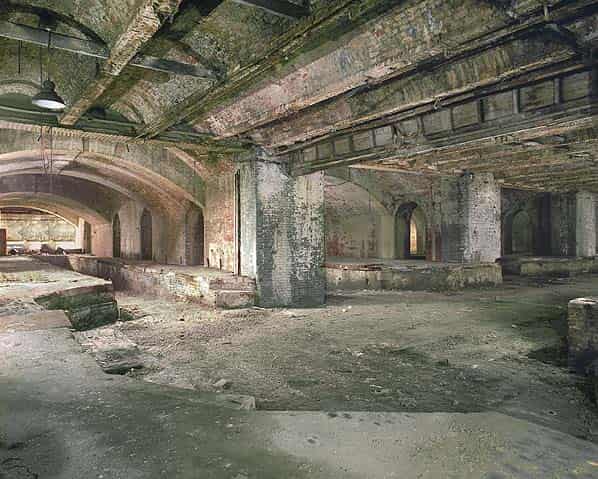
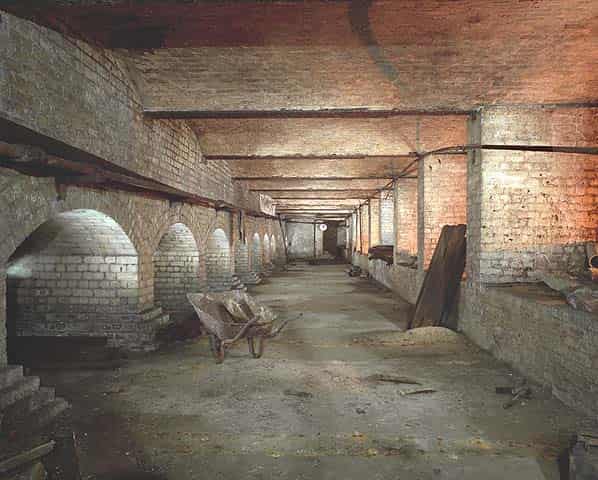
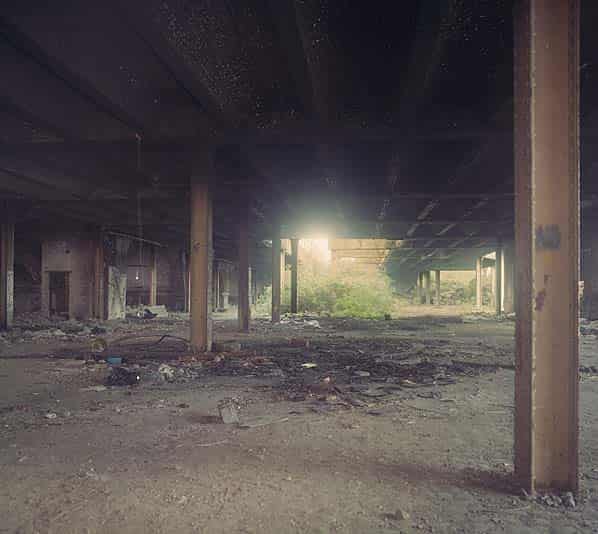
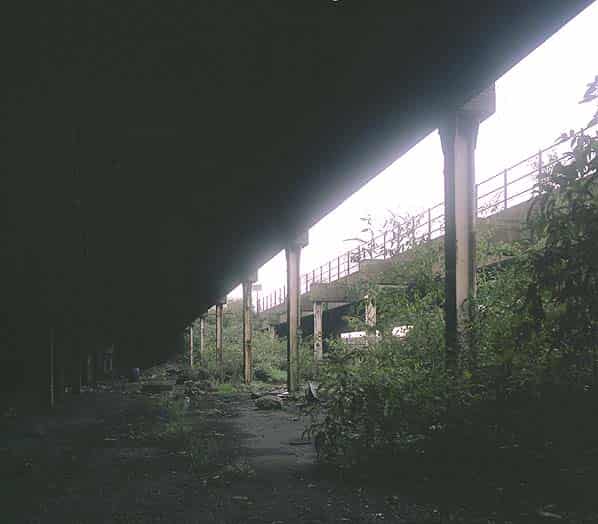
Owing to the fact that from Bethnal Green junction the main line descended on a steep gradient past Bishopsgate Low Level Station (closed 1916) to reach Liverpool Street station, while the goods lines, yard and shed remain on the higher level, there were extensive arches and these were utilised to form the low, or street level premises at Bishopsgate. At one time nearly all these arches had transverse lines, but some of these roads were later taken out.
The general offices were situated inside the main entrance on Shoreditch High Street. The inwards receiving offices, time office and continental offices were located on the upper rail level. At two places hydraulic lifts, capable of taking loads up to 2 tons were provided linking the three levels of the goods station. Six further hydraulic lifts for goods were provided on the platforms together with a number of 2 and 12 ton hand or hydraulic cranes.
One of the three hydraulic track hoists was located in the centre of the station, between the platforms, a second truck hoist was located adjacent to the outer wall alongside the Wheler Street inclined roadway, while the third was in the goods yard.
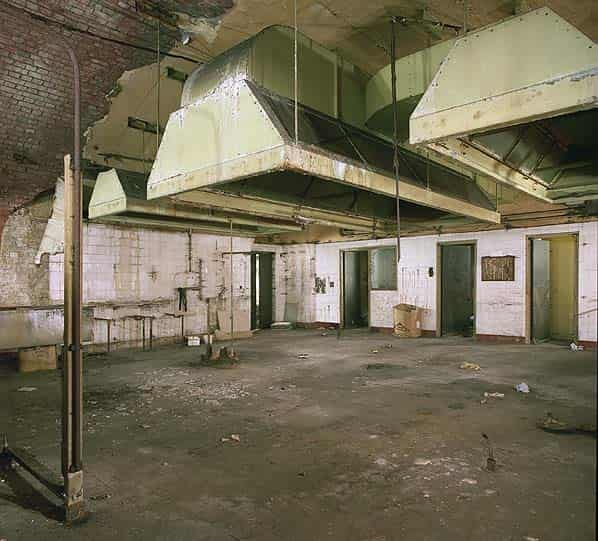
From the main entrance on Shoreditch High Street a road way ran around the outside of the depot emerging at both ends into Wheler Street. Turning left from the entrance a number of offices, stores and domestic rooms were located on the right hand side; these included the police office, goods office, weigh offices, mess rooms and the kitchen. There were further mess rooms to the right. In the central section of this part of the depot there were two central rail tracks linked to one of the hydraulic truck hoists and connected to turntables with transverse lines passing into a number of the arches. There was a further transverse line serving another truck hoist adjacent to the outer roadway on the right. On this side the station is immediately above the disused Bishopsgate Low Level Station which is at a still lower level.
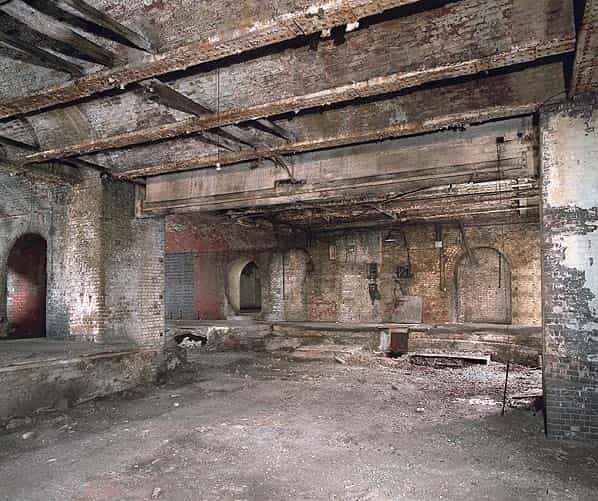
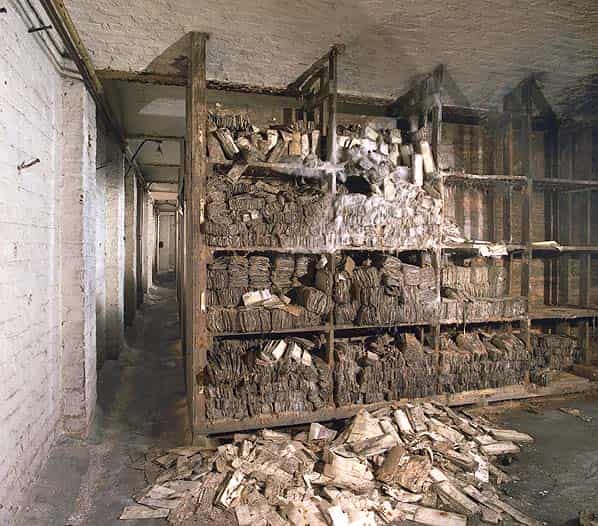
Beyond Wheler Street, the lower rail level was served by a set of three central railway tracks, linked to the third hydraulic truck hoist up to the goods yard above. Again there were turntables leading to transverse sections and at two points to transverse lines providing access to a fourth outer track where goods could be directly loaded or unloaded to or from railway wagons. In addition to stores and offices located at various points, there were workshops for repairs to the building and repairs to road and rail vehicles. Stairways also led down to a number of sub-basement store rooms at the same level as the main line into Liverpool Street Station. Amongst other things one of these sub-basement levels was used for the storage of Great Eastern Railway personnel files, many of which were still there during a survey of the station in 1995.
The upper level warehouse, which extended over the entire covered area of the station, was the most distinctive feature of the depot. It had a floor space of no les than 158,000 square feet and was served by the various bays, these operated in conjunction with an overhead conveyor, on the Commercial Street side. This conveyor also served a roller-way that linked to an incline elevator up from the fruit platform which allowed goods to be transferred to any part of the depot by a combined use of the conveyors and overhead cranes. Four hydraulic lifts also connected the warehouse with the upper rail level below.
In 1933 the total number of staff employed at Bishopsgate was 1,020 with a further 450 at Spitalfields.
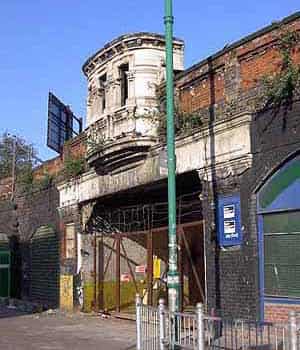
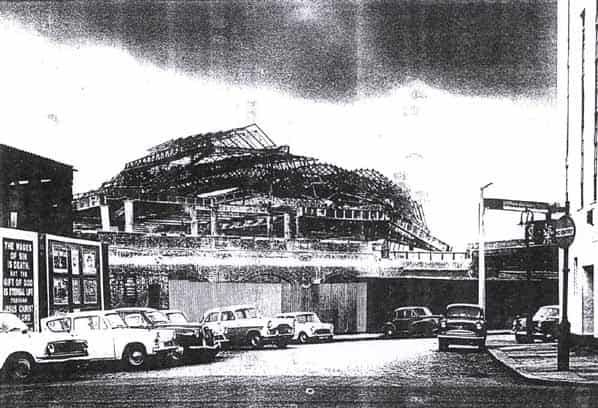
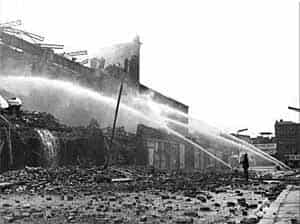
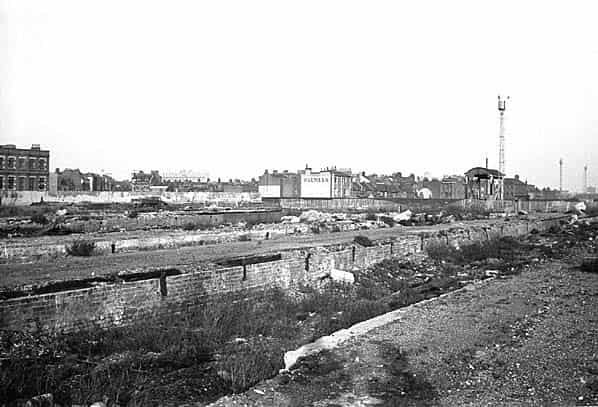
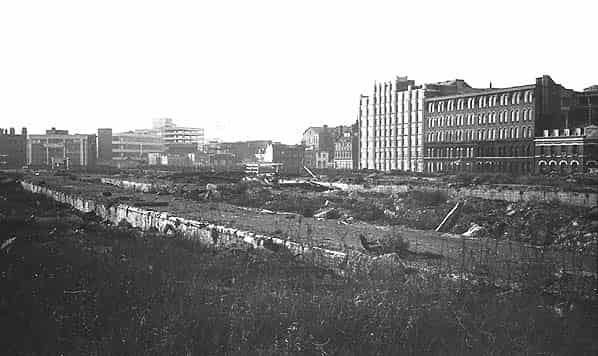
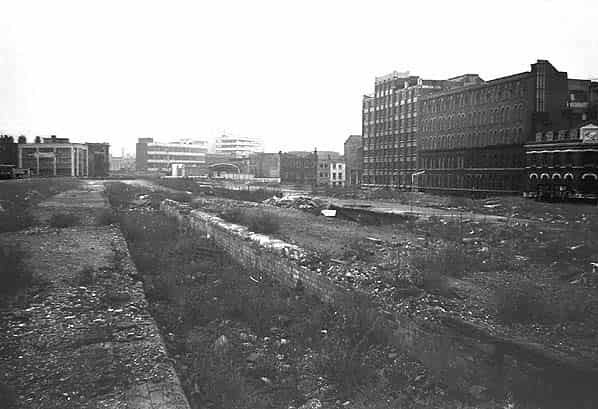
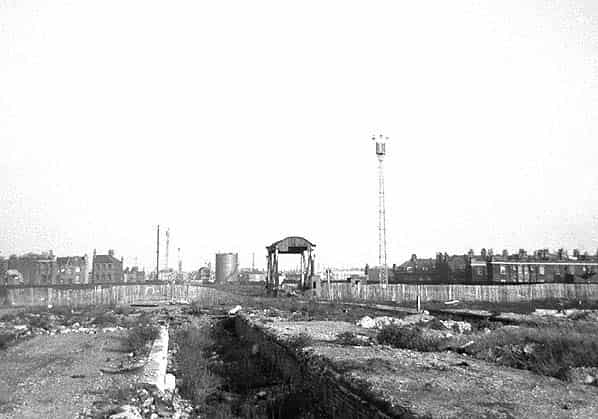
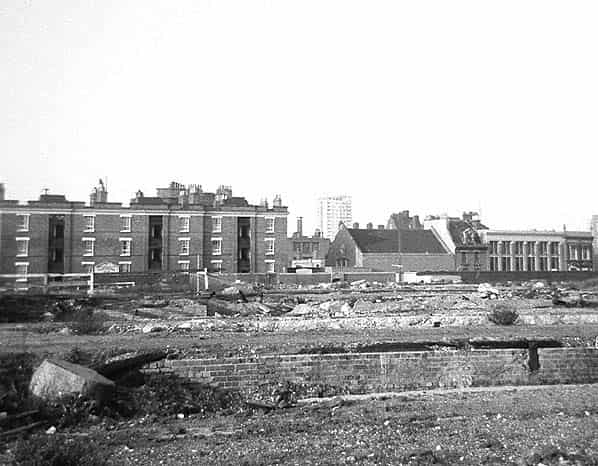
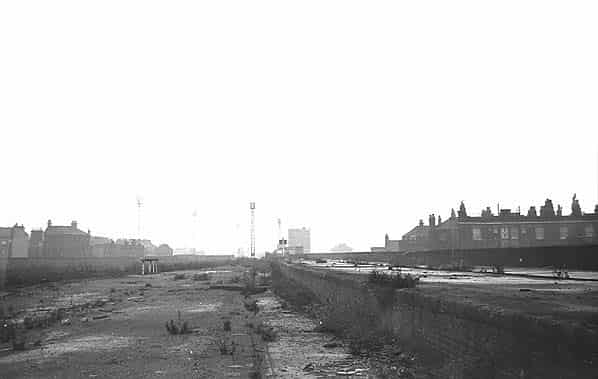
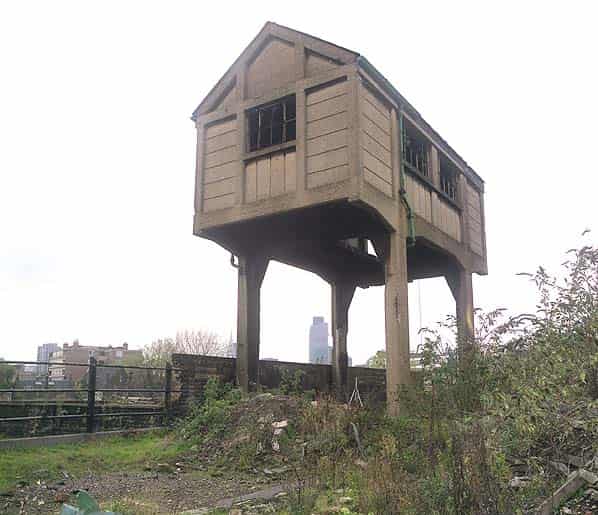
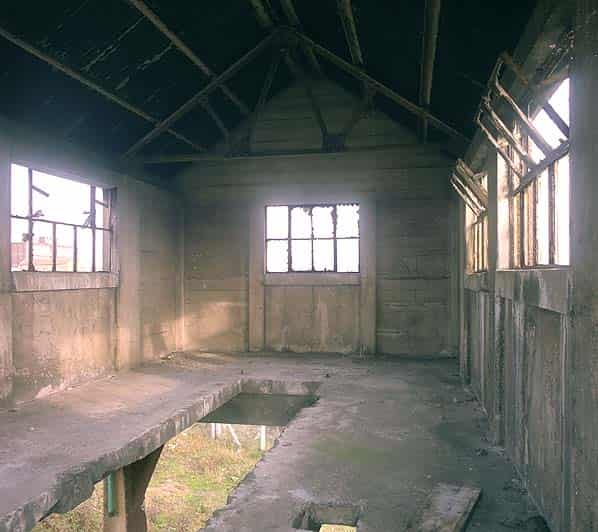
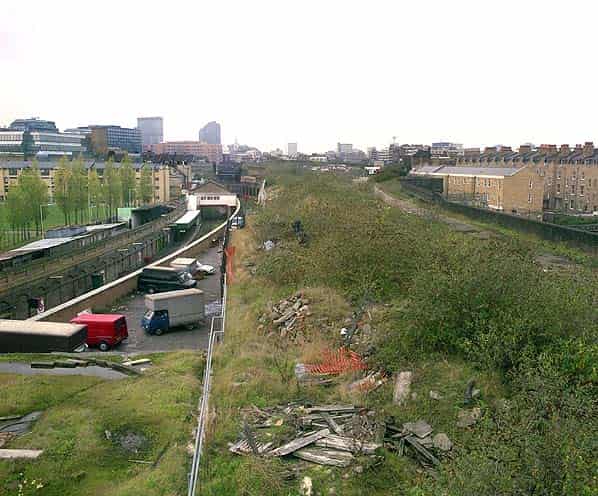
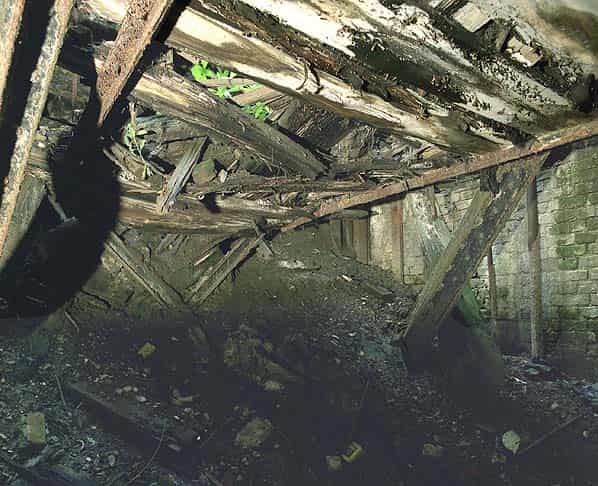
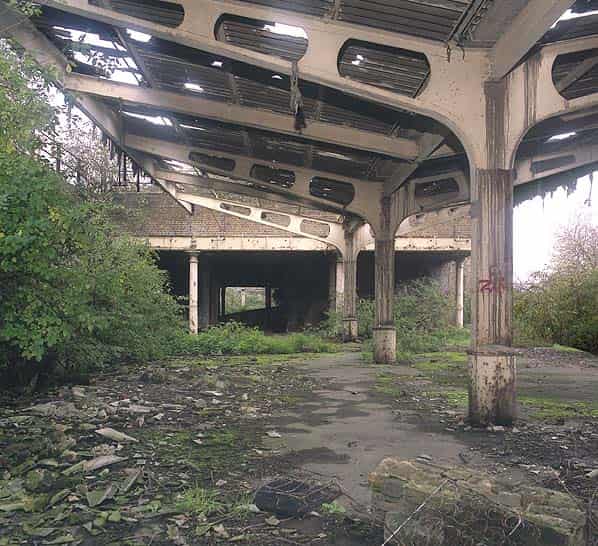
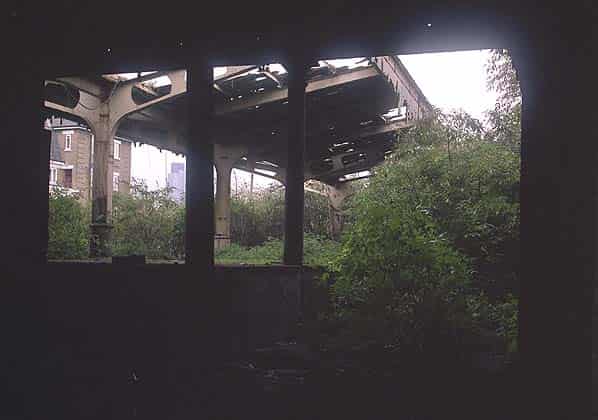
The goods station remained in use until the upper level warehouse was destroyed by fire on 5th December 1964. Following the fire the remains of the warehouse were removed leaving the upper rail level platforms open to the air.
Spitalfields Goods Station, to the east of Bishopsgate, remained open until 1967.
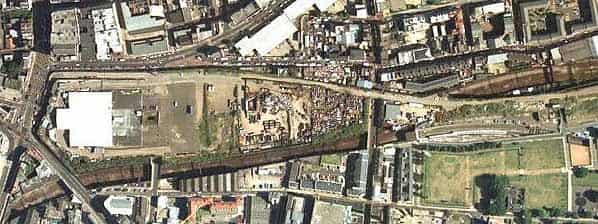
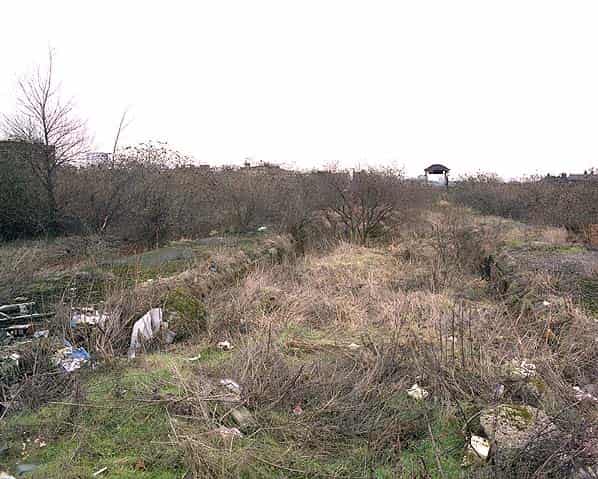
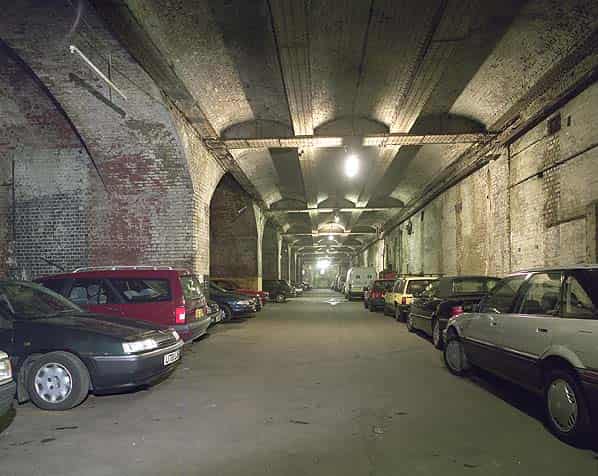
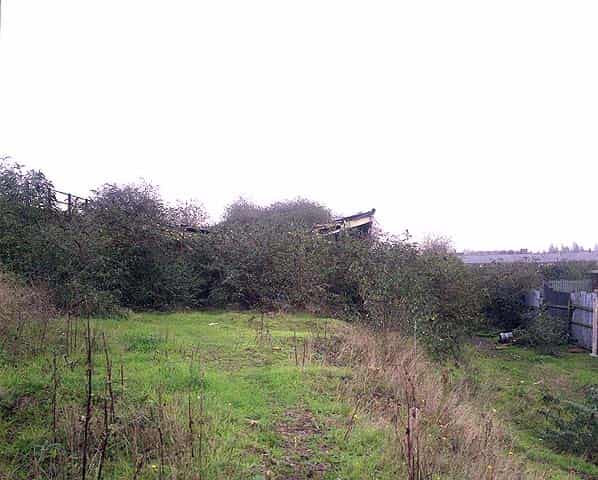
Within a few years of the fire all the track on this level had been lifted and by the early 1970’s the platforms were heavily overgrown and barely recognisable. Eventually some uses were found for the former goods station an unlicenced car breaker set up in business at the east end of the goods yard while the top of the ramp up from Shoreditch High Street was used as a car park. The lower level roadway west of Wheler Street was also adapted as an ‘underground’ car park.
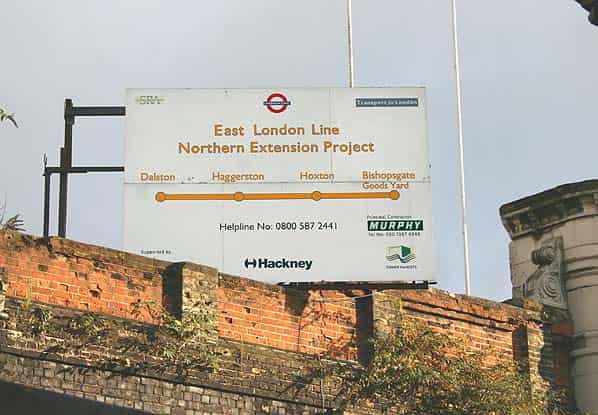
In 1989 a proposal to extend the East London Line was developed by London Underground, to improve access between communities in inner London. There were two proposed extensions to the north and south of the East London Line. Phase 1 of the northern extension would join the current East London Line just south of the existing Shoreditch Station. It would then head up onto a new viaduct on the northern part of the former Bishopsgate Goods Station, cross Shoreditch High Street and head north to Dalston Junction using the disused Kingsland viaduct.
This would include new stations at Shoreditch High Street (to replace the existing Shoreditch station that will close), Hoxton, Haggerston and Dalston Junction. The proposal included the demolition of Bishopsgate Goods Station to make way for the new viaduct. Following a public enquiry in 1994 the government granted the statutory planning powers in January 1997 to enable the construction of the northern extension to start.
Initially English Heritage took little interest in the goods station stating at the earlier Transport & Works Inquiry that “there was ‘nothing of special architectural or historic interest’ other than the gates and screen wall that were already listed (1996) at the time”. There was an immediate public outcry that the demolition of the goods station would lead to the loss of the Braithwaite Viaduct which is one of the oldest railway structures in the world and the second oldest in London. It was designed by John Braithwaite (1797-1870), chief engineer of the Eastern Counties Railway, who with his partner Captain Jon Ericsson, raced George Stevenson’s ‘Rocket’ for the Rainhill trials in 1829.
The viaduct was originally 2km in length but now only 260 metres of the original construction survives encapsulated within the structure of the Bishopsgate Goods Station.
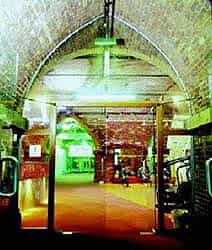
Despite the proposed demolition of the goods station, the remaining part of the lower rail level was redeveloped by Bishopsgate Space Management Ltd during 1999. The development aimed to retain as much of the original character as possible providing light manufacturing facilities, artist’s studios, workshops, leisure facilities, a small swimming pool, fitness centre, office accommodation and restaurants. A Sunday market was also established under part of the brick viaduct.
Within a short time applications for space from other small businesses were heavily oversubscribed. “The Goods Yard Market” first opened Sunday 19th September, 1999, coinciding with London Open House Day.
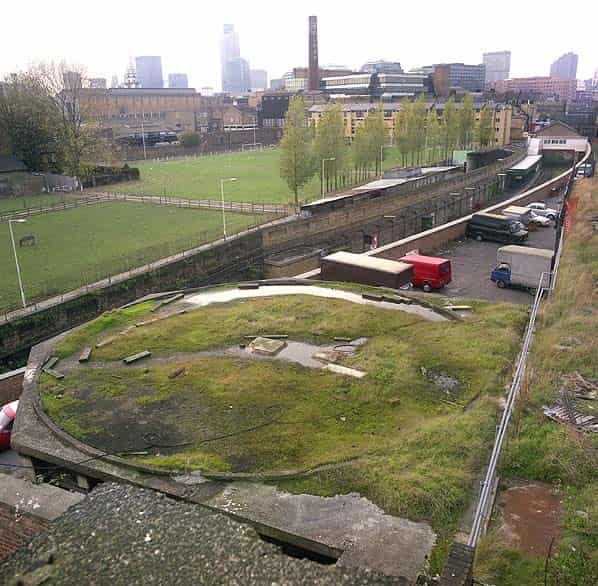
In 2000 Teamworks Karting, who run a network of indoor Karting arenas were looking for a new site in London. Bishopsgate was suggested and a survey by consultants Ove Arup concluded that the old goods station could support a building of up to nine storeys without the need for underpinning or piled foundations. Teamworks Karting planned to utilise a second hand air dome and as this would require no foundations at all Bishopsgate appeared to be the perfect location for the structure.
The company gained possession in October 2000 and work began immediately on the construction of the kart track with associated meeting and catering facilities and a leisure and conference arena. The dome was located on the upper rail level at the western end and necessitated the demolition of the remaining platforms which had remained derelict for 37 years and the removal by eviction order of the car breaker who had set up in business without planning permission. The new arena was opened in 2001 but it was to be short lived
English Heritage reviewed their earlier decision calling for the listing of the Braithwaite Viaduct and the retention of the entire structure; they stated that the whole site was considered to be particularly important as the last major remains of a two-level goods station. The Braithwaite Viaduct was listed Grade II by the Department of Culture Media and Sport in March 2002. Tessa Jowell, who made the announcement, said: “Apart from the Braithwaite Viaduct, I am satisfied that all the other buildings and structures at Bishopsgate Goodsyard do not meet the criteria of special architectural or historical interest”
On the 23rd April 2002, ‘Delivering the good’ a report on the viaduct, commissioned by English Heritage was published.
The report suggested how the entire structure could be developed into an important focus for the local and wider community.
Sir Neil Cossons, Chairman of English Heritage said,
“Bishopsgate Goodsyard is one of London’s forgotten treasures. To reduce it to a pile of rubble with no clear idea of what will replace it would be tragic, generating years of uncertainty and blight.
We commissioned this report because the arguments for retaining and regenerating the Goodsyard are persuasive. It is a key landmark for this vibrant area on the fringes of the City of London. The engineering report confirms that the East London Line extension and a new Shoreditch station can be built over the existing structure. The successful small businesses, which have gathered here over the years, have demonstrated that this slumbering giant has already begun to awaken.”
Key recommendations of the report were:
- The retention of the existing Goodsyard structure and the variety of commercial activities and uses it contains
- Construction of the East London Line and Shoreditch Station on top of the existing Goodsyard
- The creation of sensitive mixed use development above the Goodsyard which reflects the scale and diversity of the surrounding area
- The creation of a ‘park in the sky’ and a pedestrian/ cycle path to surrounding green spaces
- New links to be opened up with the surrounding areas of Brick Lane, Shoreditch, the City and the Boundary Estate
The recommendations in the report were not adopted and the small businesses and occupiers of the goods station were issued with notices to quit on 9th May 2002. The karting arena closed the following month after opening the previous year.
In a last minute attempt to stop the demolition of the unlisted parts of the station a judicial review was brought against London Underground by the London Railway Heritage Society. While this was being heard an injunction was imposed to stop the start of demolition.
On the 7 July 2003 the Court of Appeal finally resolved legal challenges that had been raised against the intended demolition of the non-listed parts of Bishopsgate Goods Station. The Court found in favour of the developers on all counts. The injunction preventing commencement of the demolition of the non-listed viaduct was lifted.
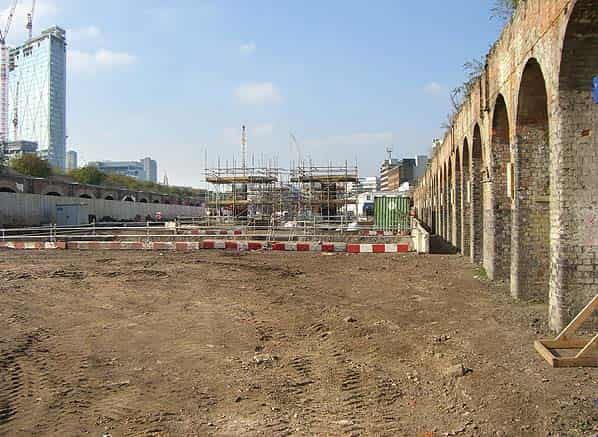
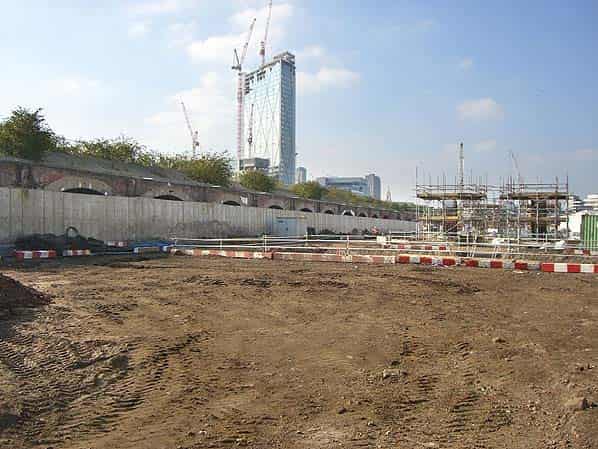
Demolition began on 14 July 2003 to make way for the future Shoreditch High Street station. English Heritage confirmed that they are satisfied that the method of demolition will not threaten the listed Braithwaite Viaduct. The new line will ramp up to a high level east of Brick Lane and will run north of the listed Braithwaite structure will not affect it in any way.
Much of the former Bishopsgate Goods station area has now gone and the Norfolk public house has been demolished. A new bridge is to be built over Shoreditch High Street and the existing Shoreditch station will be replaced by a new one on the north side of the former goods station site.
On completion the infrastructure of the East London railway line will be transferred to Network Rail and metro-style National Rail trains will be operated. The new line will bring trains through Hackney via Haggerston and Dalston Junction to Highbury and Islington. South of the river the former East London line services will be extended to West Croydon and Clapham Junction. There is also a scheme to run trains eastwards from Dalston Junction to Stratford using the North London Railway route. This would be a valuable asset if the proposed Olympic Games are held at Hackney Wick in 2012. Another extension may allow trains to run westwards as far as Willesden Junction
Sources:
- Main historical source Railway Magazine No. 429 March 1933
- Greater London Industrial Archaeology Society
- East London Line Project
- Bob Jenner
- Phil Gyford
- Tim Smith (GLIAS)
- Regional History of the Railways of Great Britain Vol. 3 H P White ISBN 0 7153 5337 3
- ‘Delivering the Goods’ - English Heritage Report