BRIEF HISTORY OF WILTON PARK
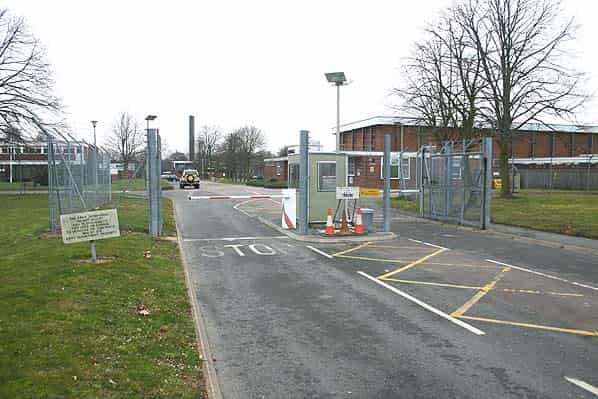
At the start of WW2 the Wilton Park Estate near Old Beaconsfield in Buckinghamshire was leased to the War Office for use as a top secret interrogation centre for prisoners of war.
Initially the Combined Services Detailed Interrogation Centre (CSDIC) was established within the Tower of London, moving to Trent Park at Cockfosters in North London in December 1939. With the increasing number of POW’s passing through the interrogation system, two additional camps were proposed, one at Wilton Park (Camp 300) and the other at Latimer, also near Beaconsfield.
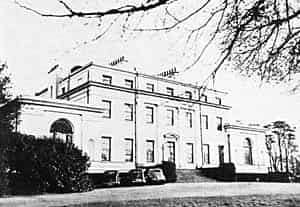
At Wilton Park the ‘White House’ the three storey Palladian mansion built in 1779 by Josias Du Pre, the former governor of Madras was turned into an officers' mess for staff and interrogators.
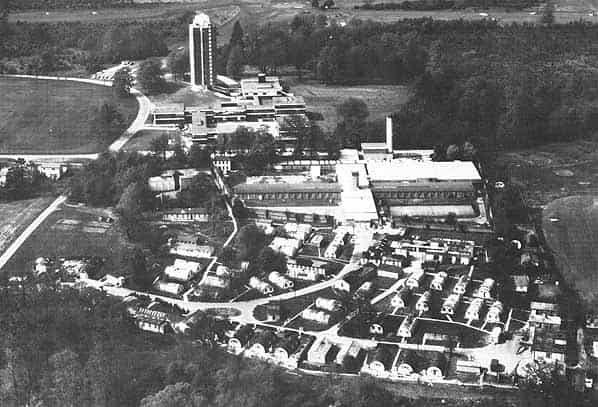
A series of Nissen huts were built for staff of other ranks. Prisoners were housed in a compound comprising low, flat-roofed brick and concrete cells with four interconnecting corridors.
After conversion, Wilton Park was occupied in July 1942 and in the middle of 1943 the first high ranking prisoners began to arrive at Wilton Park. These included Marshall Messe, Field-Marshalls von Rundstedt and Busch and Rudolph Hess.
The CSDIC closed at the end of 1945 with most POW’s being repatriated or moved to other camps. Wilton Park was then taken over by the Foreign Office becoming a centre for the de-Nazification of German POW’s. In 1949/50 the estate became the home of the Army School of Administration with the Army School of Education moving on to the site in April 1950. Shortly afterwards the Foreign Office moved to a new location, taking the name Wilton Park, to Steyning in Sussex. During the 1960’s three language wings were established at the school with Libya’s Colonel Geddaffi studying there in the late 1960’s.
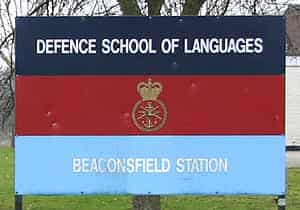
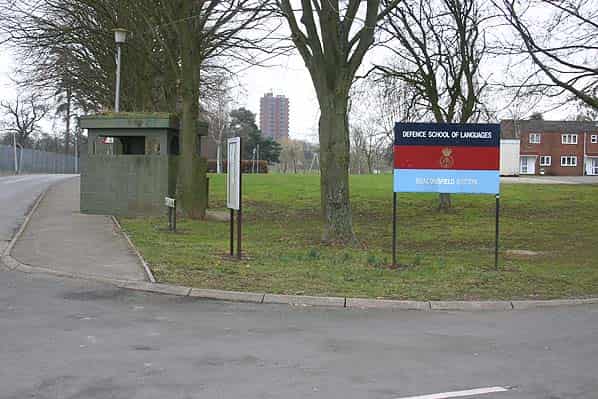
The three language wings merged to form the Army School of Language in 1970 which in turn became the tri-service Defence School of Languages in January 1985.
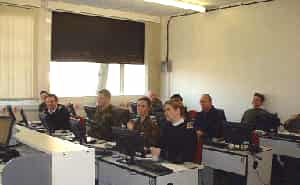
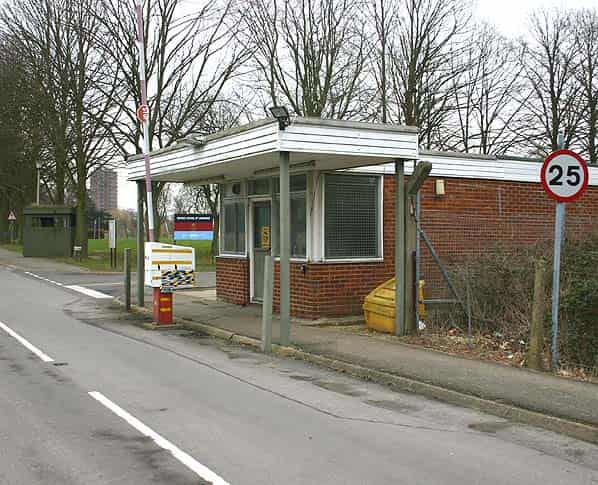
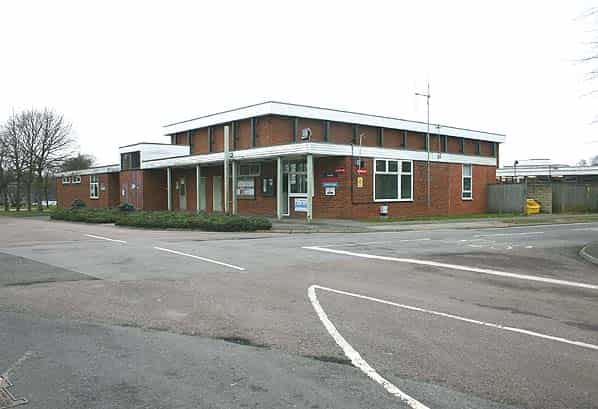
The DSL is a joint-service military establishment with both military and civilian staff. Its main role is to provide foreign language training to the British armed forces and English language training to military personnel from overseas.
It also has over 30 years' experience of teaching languages to civilians, mainly in government service.
The compound in which the cells had been housed was demolished in the mid 1960’s and the White House was demolished in 1968 to make way for a 15 storey accommodation block, the tallest building in Buckinghamshire. This too is now empty and is only used for occasional training exercises. All WW2 buildings on the site have now been demolished.
EASTERN COMMAND WAR HEADQUARTERS & AFHQ 5
In 1950 the United Kingdom Commanders-in-Chief Committee was established at the head of the British military administration. The overall aim of UKCICC was to “defend the United Kingdom so that it can remain a main offensive base for as long as possible and an advanced air base in all circumstances” A protected base for the UKCICC Joint Operational Headquarters was sought. Three sites were examined, Wilton Park, Stanmore which already has a bunker from WW2 and Fort Southwick, Portsmouth, the HQ of the Commander of Naval Home Forces. Eventually Stanmore was picked as the site for the UKCICC HQ.
With the ever increasing threat of a nuclear strike from the Soviet Union there was a proposal in 1951 to provide protected accommodation for the five army commands. In addition protected accommodation on a smaller scale was to be built at the Army District and Sub-District HQ’s.
After WW2 the five army commands were located in non protected accommodation:
- Eastern Command - Hounslow Barracks
- Western Command - Queens Park, Chester
- Northern Command - Imphal Barracks, York
- Southern Command - Wilton Park House, Wilton near Salisbury
- Scottish Command - Craigiehall, Edinburgh
Despite these proposals only one bunker was built; priority was given to Eastern Command which covered London, Aldershot and South East Districts. In 1954 a single storey surface blockhouse was built at Wilton Park as the War Headquarters for Eastern Command which was relocated there from Hounslow Barracks which was within the London target area. The bunker also accommodated the London District War HQ and Communication Centre.
Protected accommodation was also proposed for the other Districts in Eastern Command but the proposed joint civil/military HQ scheme to build protected Regional Seats of Government put paid to this idea by 1957. Wilton Park was retained as the London District Headquarters but the military commanders were relocated to the RSG’s.
In 1965 the RSG’s were abandoned and were replaced by smaller Sub Regional Controls and dispersed regional teams. The military element was replaced by new Armed Forces Headquarters (AFHQ) in each region.
The sites for the AFHQ’s were selected in 1967; most were in unprotected accommodation at the peacetime command or district HQ’s. The bunker at Wilton Park was brought back into use and was designated as an AFHQ. At this time London’s control was divided into five sub-regions and the bunker at Wilton Park became a coordination centre for military command of London by the five Sub Regions. During the 1960’s the bunker was also regularly used by the Royal Observer Corps for training exercises.
In 1971 when the London Civil Defence Region reformed eventually becoming region 5 in 1974. At this time Wilton Park was redesignated as AFHQ 5.
Other wartime AFHQ’s were:
- Region 1 Ouston, Northumberland
- Region 2 Imphal Barracks, York
- Region 3 (not confirmed) Chalfont Drive, Nottingham
- Region 4 (not confirmed) Brooklands Avenue, Cambridge
- Region 6 No AFHQ - several Sub-District HQ’s
- Region 7 Unknown
- Region 8 The Barracks, Brecon
- Region 9 Unknown
- Region 10 Fulford Barracks, Preston
- Northern Ireland - Central HQ, Armagh
- Scotland - Barnton Quarry, Edinburgh
In the 1980’s a refurbishment of AFHQ 5 was planned but evidence within the building and eyewitness account suggests very little was done to update the bunker as the office accommodation on site sufficed as the peacetime HQ, which would only have moved into the bunker in times of tension.
One confirmed use for the bunker was for the Thames Valley Flood Coordination Headquarters with an operations room to coordinate military/police/fire and local authorities in the event of London and the Upper Thames Valley flooding. The bunker was used in 1977 firemen’s' strike and was also used a number of exercises codenamed GIRAFFE. The opening of the Thames Barrier in 1984 saw closing of the flood control centre at Wilton Park and the subordinate GLC flood control centre in the former Kingsway tram tunnel in London.
In 1990 it was proposed to build fully protected AFHQ’s in each region; AFHQ 5 at Wilton Park was to be totally refurbished to full NBC protection standards but the plan was halted by the end of the cold war.
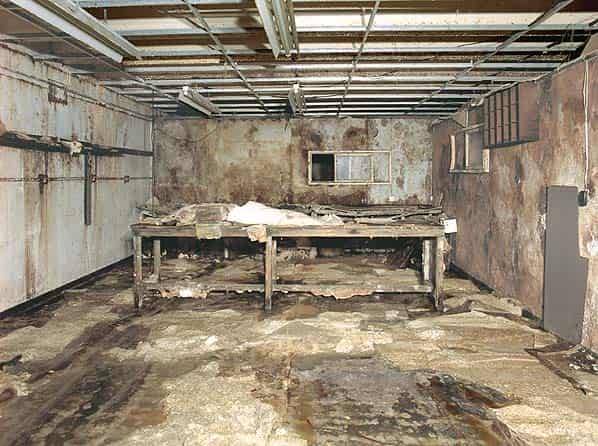
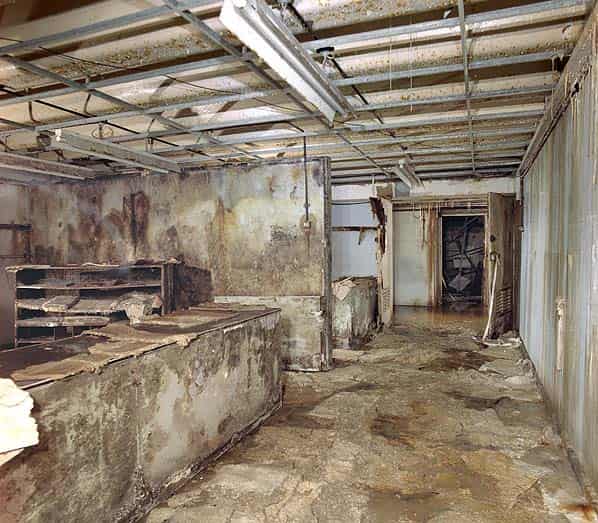
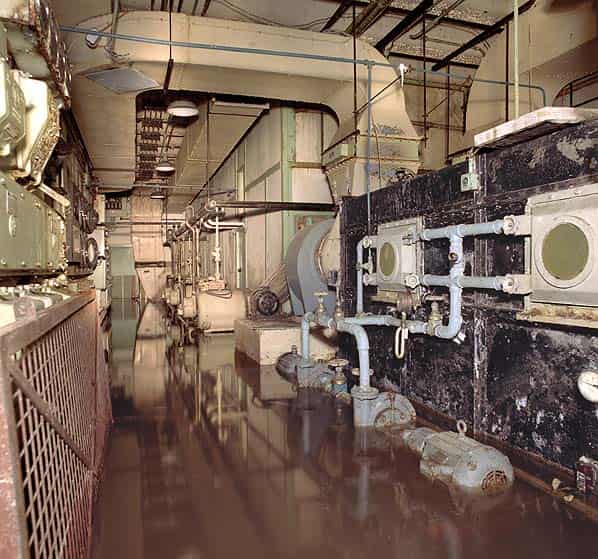
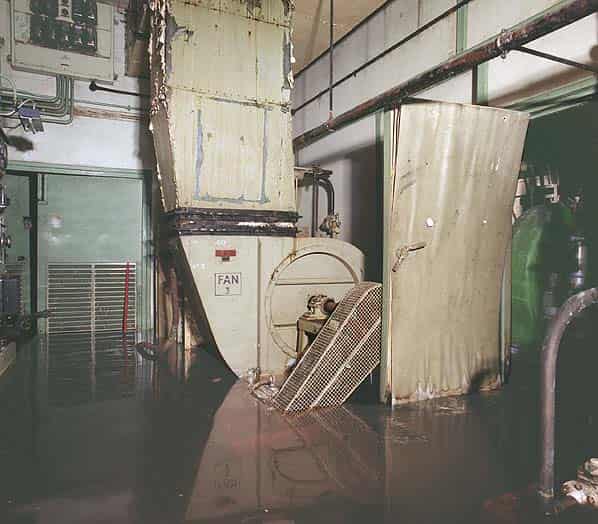
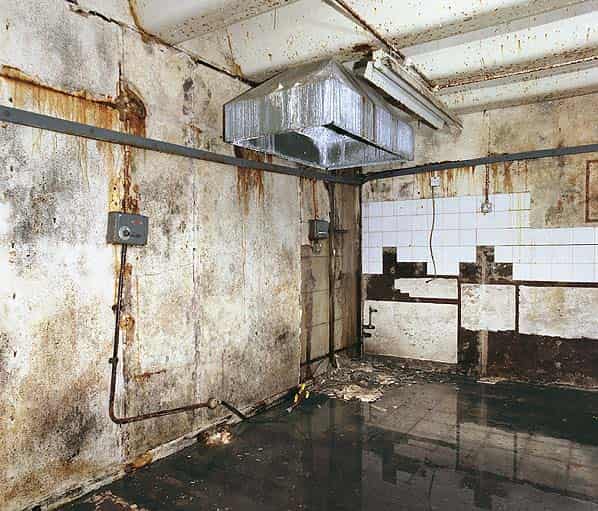
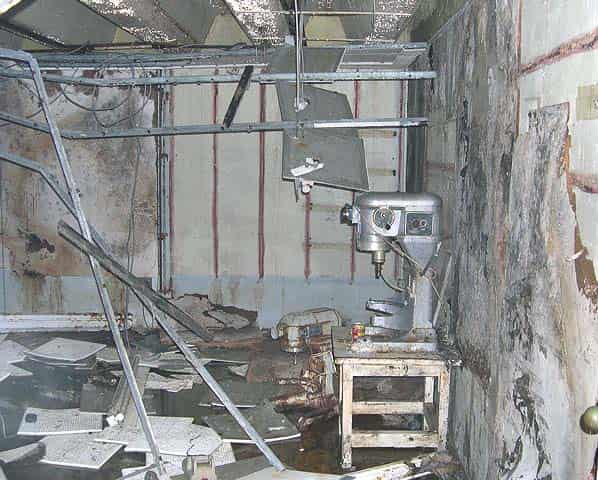
Since that day no use has been found for the bunker and with all services disconnected it is now in a very poor internal condition. The bunker is very damp throughout with standing water up to 18" in the lower plant room area. Some of the internal partition walls have rotted and fallen away and in places the suspended ceiling has collapsed onto the floor.
THE BUNKER TODAY
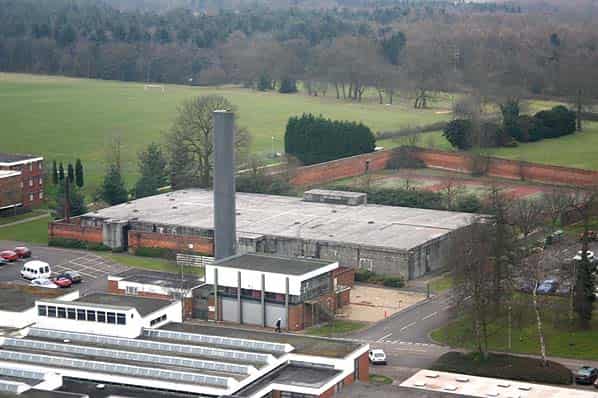
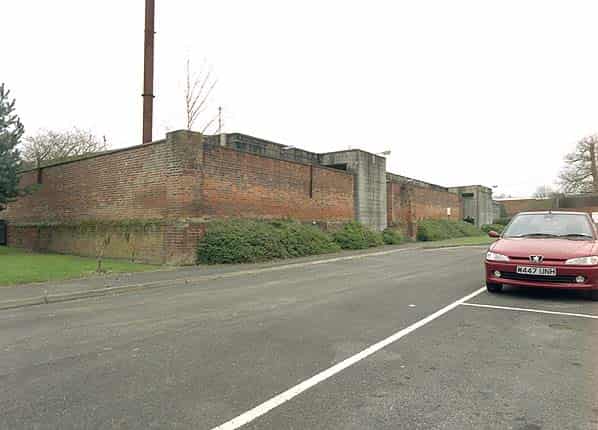
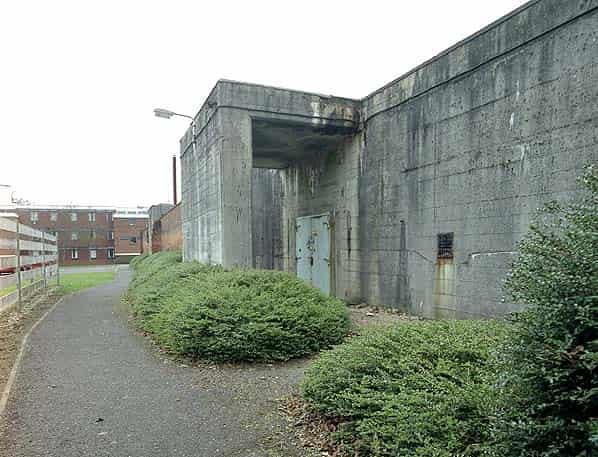
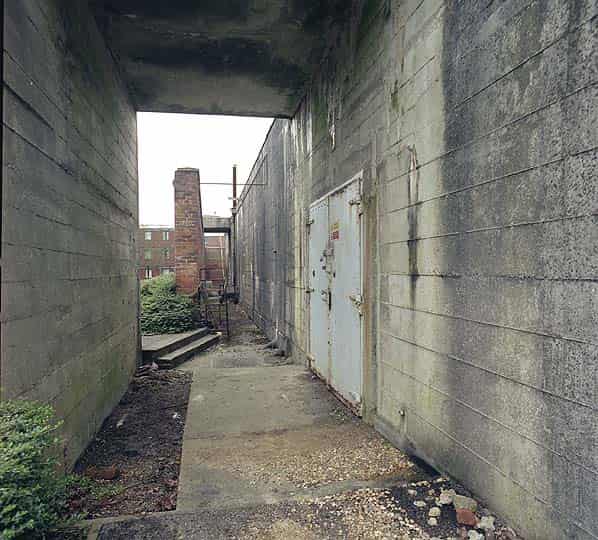
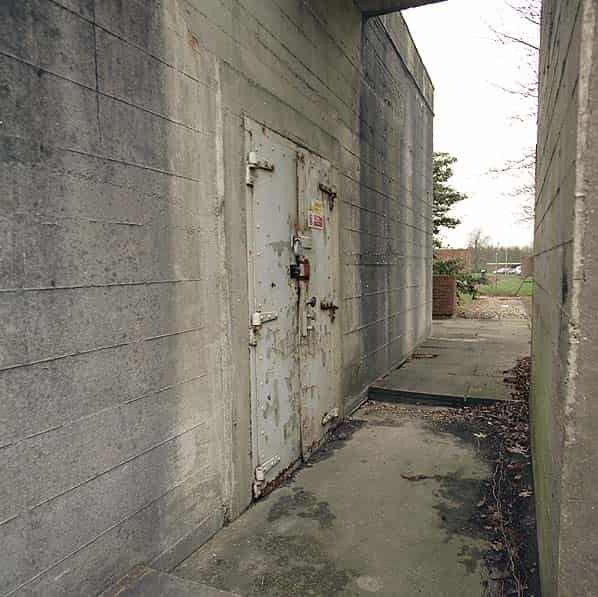
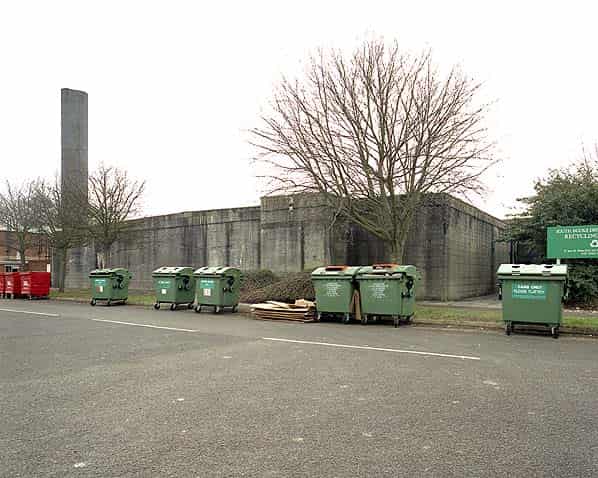
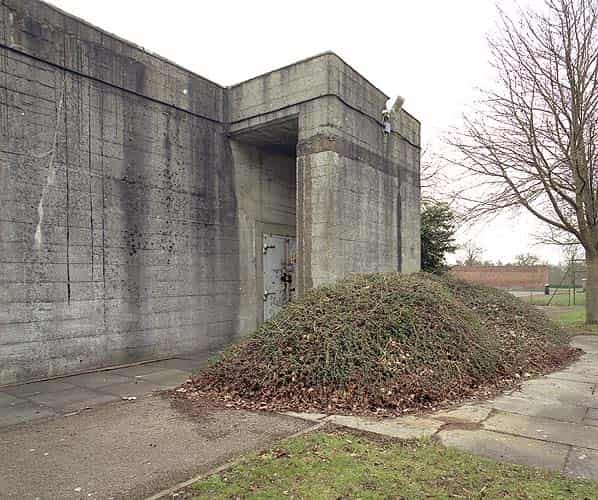
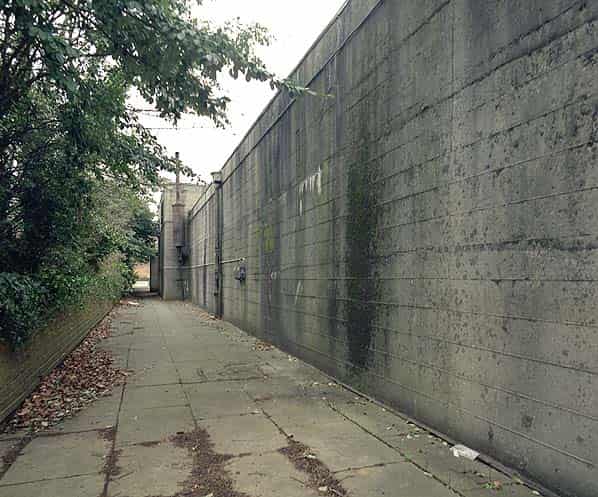
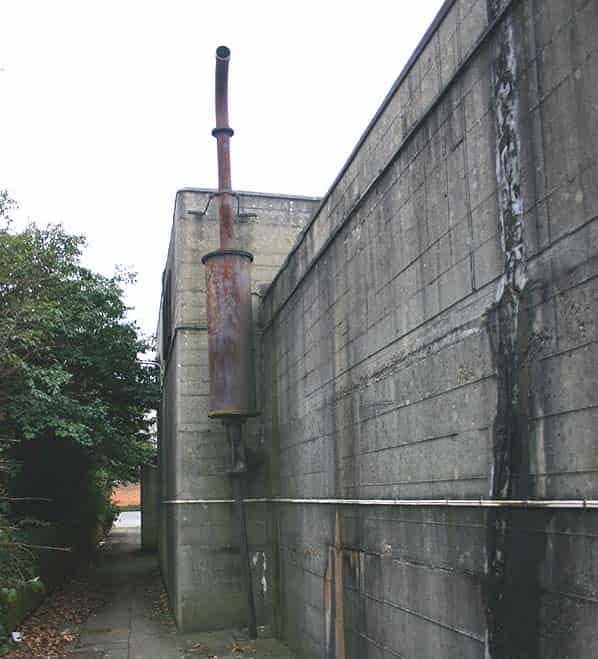
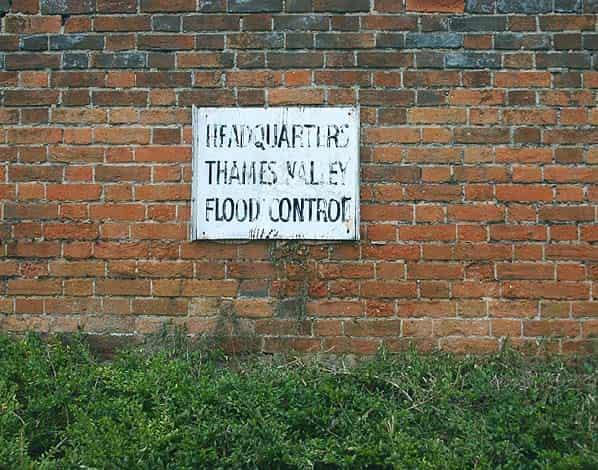
The bunker stands on the site of White House kitchen garden and is surrounded on two sides by a high brick wall which used to enclose the garden. The bunker is similar in size but twice the length of an anti aircraft operations room but there the similarity ends. The main entrance is in the middle of the longer north face with twin steel doors protected by a high porch. At the east end of the north face is one of two emergency exists consisting of two smaller steel doors again protected by a concrete porch. The second emergency exit is located on the west face and is identical. There is a faded wooden notice fixed to the west face which reads ‘Headquarters Thames Valley Flood Control’. An exhaust pipe and silencer from the standby generator project from the south face.
Once inside the main entrance, there is a small lobby giving access to an ‘L’ shaped corridor, to the right are the ‘domestic’ rooms, toilets, kitchen, canteen etc. and straight ahead the communications centre and beyond that steps down to the plant room. There is a second short corridor along the east side; this can only be accessed by walking through the Comcen or one of the other adjoining rooms. The GPO/BT room is accessed from this corridor and at the end of the corridor there are further steps down to the plant room.
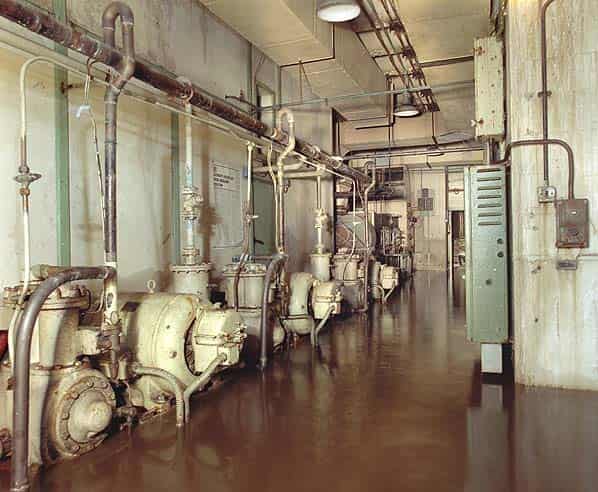
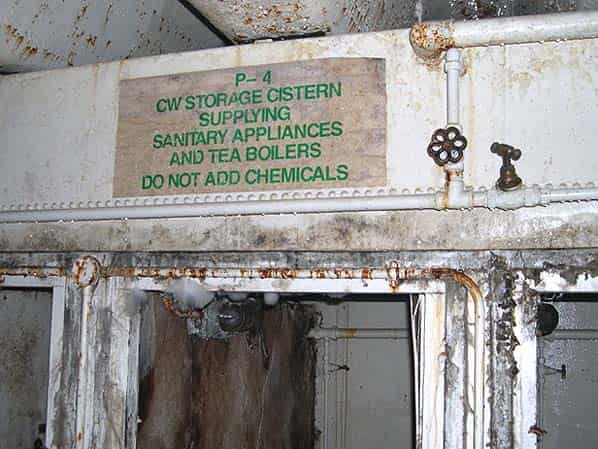
The plant room is at a lower level than the rest of the bunker and is flooded to a depth of 18". It is divided into two long rooms. One room is empty; the other contains air conditioning and filtration plant, pumps, compressors, electrical switchgear, two boilers and the standby generator which is located in a small room within the main plant room. The plant is generally in good condition above the water line.
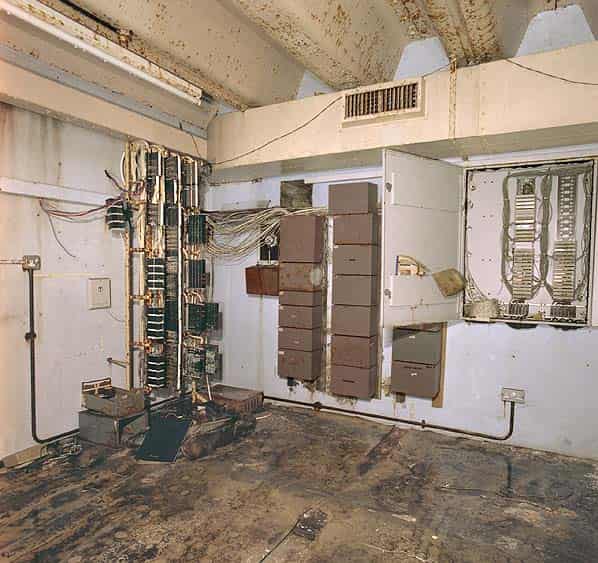
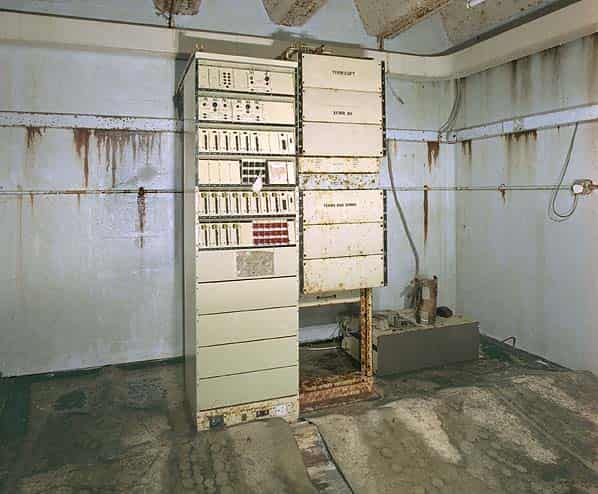
The GPO/BT room is at the southern end of the plant room. There is a traditional style free standing main distribution frame (MDF) and on the opposite side of the room there are two racks of repeater equipment. The communications centre is located opposite the BT room. On the original plan this is shown as a single long room but it has now been partitioned into three open ended bays, two with a counter and an enclosed room. Adjacent to the Comcen there is a large room that must have been an operations room. It originally had a suspended ceiling but this has now collapsed onto the floor. In the middle of the room there is a large Perspex screen similar in size to the A & B screens found in ROC Group HQ’s, this appears to be marked with local districts.
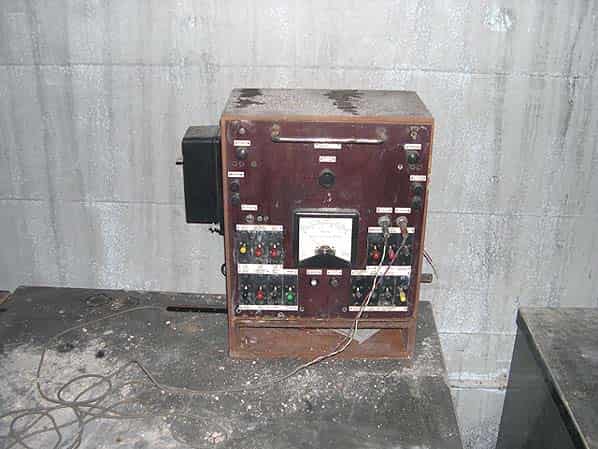
The flood control room has been identified on the far side of the bunker; this has a long bench along one wall with an upright electrical test unit sitting on it. One room in the bunker has clearly been a food preparation room with an industrial food mixer on a small table and a second food mixer on the floor alongside, this is adjacent to the kitchen still has a partially tiled wall and an extractor hood and the adjacent toilets are all intact with WC’s and hand basins. It is impossible to determine what any of the other rooms were used for.
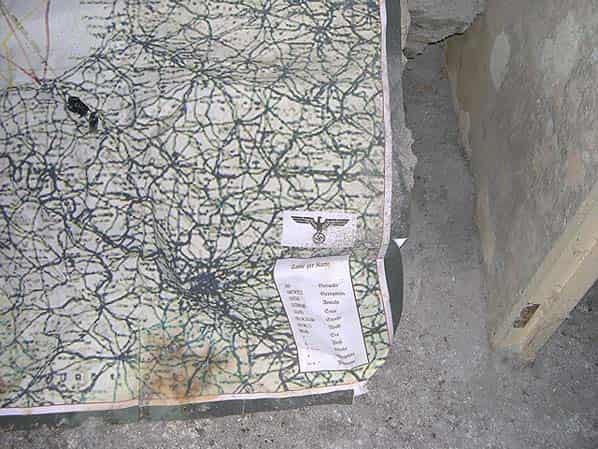
The bunker has clearly been used as a film set at some point portraying a WW2 German bunker. There is a large German map lying on the floor in one of the rooms and at least two of the doors have a Nazi swastika painted on them.
Unfortunately our time at the bunker was limited to little more than 20 minutes which made a full photographic survey impossible; hopefully a return visit to finish the job can be arranged at some time in the future.
Sources:
- After The Battle No. 70 - 1990
- Defence School of Languages
- War Plan UK by Duncan Campbell - Burnett Books 1982 ISBN 0 09 150671 9
- Bob Jenner
- Keith Ward