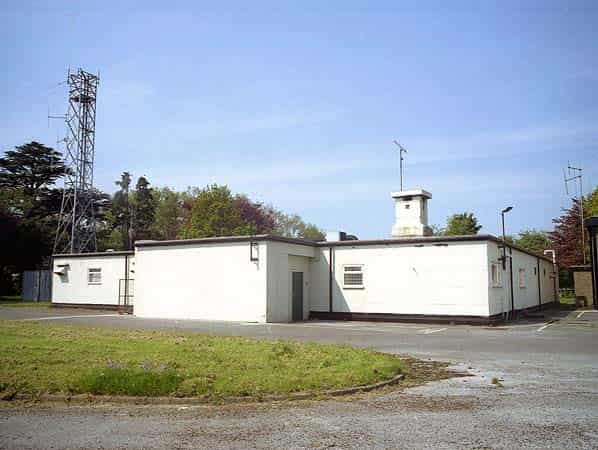
Wawne is a standard design 50’s semi-sunken AAOR similar to Mistley and Vange which is now owned by one of the local authorities but according to the Hull Daily Mail of 13th June 2001 is to be sold. The plan to sell the bunker has been approved by local councillors despite a letter from a local “Action Group” now constituted as a trust asking for a delay while they try to get the building ‘Listed’.
The East Riding Council director of law, administration and property said “I think this is simply hoping to cause a delay on the sale as the developers would then loose interest.” The council’s descision is to sell the bunker to the highest bidder which would exclude the ‘Wawne Bunker Preservation Trust’ bid.
The expected purchasers, “Lakeland Properties Limited” propose to convert the ground floor into two residential units. The lower floor is to be retained and opened to the public several times a year.
The area outside the main blast entrance doors is now fully enclosed and has a standard external door fitted. Entering through this door you meet the main blast door entrance to the bunker on your right. This area is used for storage of gardening equipment.
Entering through the blast doors there are steps down to the lower level immediately to our left and on our right is a window through to what was the reception area when this was in use as an emergency planning centre by the now defunct Humberside CC. Having got the power on and disabled the alarm system we set off to explore and fully photograph the bunker.
In recent times the bunker has been used by the police for training but now it lies empty and unused. We’ll start with the top floor.
Turning right from the entrance area you enter the circular corridor which runs around the top floor. The first room on the right is what was the reception office and this now has a number of windows cut into the walls. There is a fair amount of junk strewn around the floor and virtually everything has been removed.
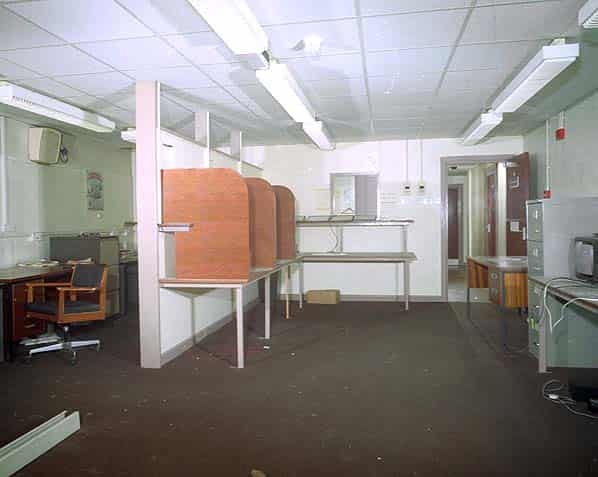
Continuing along the next room on the right was also empty apart from some junk and the remains of some of the EPO files. Moving along the corridor opens out into what was the communications room. Here were a series of individual bays for radio use; many still with aerial connections present. On the walls were a number of radio instructions and call sign details. Part of the telephone system was also in this room and although it appeared to be working was in a somewhat sorry state lying on the floor.
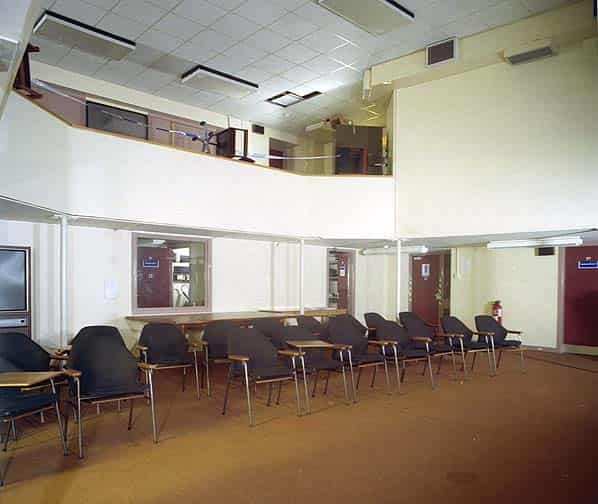
Continuing through this room we rejoined the corridor and forked right. This took us to the male toilets and stairs down to the lower level. Backtracking we went past the bottom of the radio room and continued along. Eventually we came to a door which led onto the balcony of the operations room. Whilst the balcony was intact the curved perspex panelling had been removed and blocked in within the side rooms. For the most part however this room was intact and gave us a clear view into the ops room below. Directly behind the balcony was a room which contained a number of charts etc. on the wall which had obviously been used as a meeting/conference room.
Exiting from the other end of the balcony we came to the kitchen which still had some fittings left in it. Another room on the right was locked and we were unable to locate the key. Continuing round the corridor we passed the entrance to the balcony side rooms and turning a left hand corner were back at the reception area.
Descending the stairs by the entrance doors we come to the generator room which still had a generator in place although it was not the original one. We are now at the circular corridor on the lower floor and turning right we come to the filter room which housed much of the air con plant. This was all intact and the dampers on the intake pipes were still operational. Further along the corridor on the right was the boiler room which still housed the original boiler. Turning sharp left we proceeded down a corridor and on the left came to the old controllers office. This still had a few charts on the wall but was now littered with tables and chairs.
Going through a door adjacent to this office we entered the main ops well. Looking up we could see the balcony where we had just been and the ops room itself was now fitted with a large pull down wall screen and had a number of chairs laid out lecture theatre style.
There were four rooms off this ops room. The first was marked ‘Fire Brigade’ and this room contained all the original wall boards listing available appliances and officers. One of the boards noted that ‘Hornsea Retained 1 appliance 0800 - 1700 Mon/Fri ONLY’. Hornsea is a small town further up the coast which has a part time retained fire station. I am a frequent visitor to Hornsea and know that this is still correct.
Also on the wall in this room was a highly detailed map of the Humberside area behind perspex marked ‘Fire Brigade Use Only’.
The second room was locked and the third was a store room full of various bits of junk left over from the EPD.
The fourth room contained some audio visual equipment including a number of videos, audio cassettes and 16mm films. These proved to be most interesting and included a 16mm film entitled ‘Civil Defence in the Soviet Union’ and a promotional video from the Tom Butler Organisation. Some of the audio cassettes contained recording of sirens etc. A door in this room led into what was once a projection room and here we discovered a set of photographs showing the various local EPO departments.
Leaving the ops room via the door we came in the next room was the BBC Radio Humberside Studio. Whilst all equipment had been removed the door and soundproofing was still in place and this had a small hatch in it for passing announcements to the presenter. We were told that this studio was fully equipped at one time.
Continuing along the corridor a door on the right led into the map room. This still contained a huge number of maps and charts relating to the Humberside area. Also in this area were charts relating to the behaviour of buildings during nuclear explosions and illustration of potential damage at various distances from ground zero.
Continuing along the corridor along the back of the bunker we came to the second entrance. Opening the blast doors this now led into a deserted office that had been created by boxing-in the exterior blast wall.
Moving along the next room was locked but having found the key we entered to find a number of tables and chairs strewn around together with some broken television sets. On the walls carefully preserved behind perspex were 2 sets of ROC post cluster maps and a large scale OS map of the area.
The next room was marked ‘Military Advisors’ and was locked. We were unable to find the key and therefore the contents of this room are unknown. Moving back towards the generator room we pass the second entrance to the ops room and arrive back at the stairs leading up to the entrance.
There was no sign of vandalism or damp within the bunker and in the grounds are 2 large vehicle garages which are currently in use my a medical charity for storage of equipment.
Those taking part in the visit were Nick Catford, Dan McKenzie and Andrew Smith.