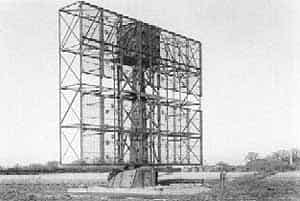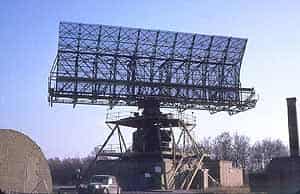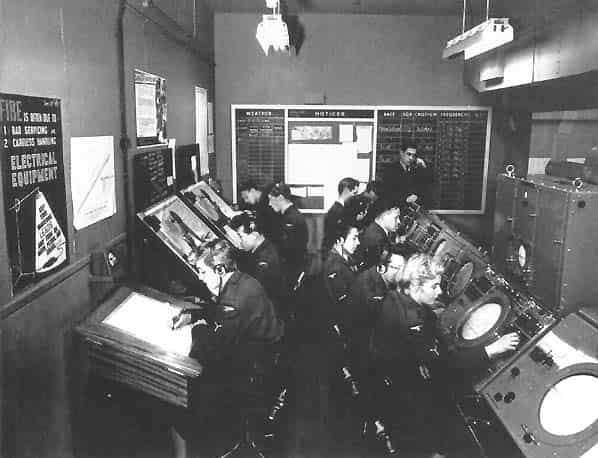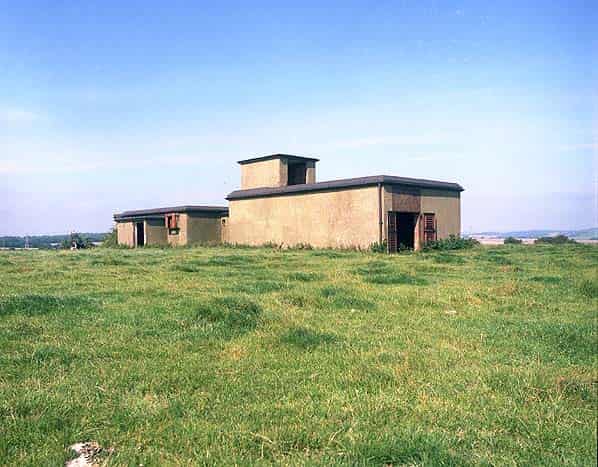
An East Coast Chain Home radar station was built on the Pevensey Levels (now Pylon Farm) in 1939; it was one of the original 20 Air Ministry Experimental Stations. Chain Home was at the forefront of a reporting network resulting in warning data being forwarded to the Fighter Command filter room at Bentley Priory where it was analysed and displayed on the Fighter Command operations table. The information was then told to the Fighter Group HQ’s from where the controller allocated the raids to be intercepted from sector airfields and controlled by the sector operations centre during the day and the fledgling GCI radar stations during darkness
To compliment RAF Pevensey, a new GCI station, RAF Wartling, was built on the opposite side of the road, becoming operational in 1941. RAF Pevensey acted as an early warning station, detecting hostile aircraft. The station reported to the filter room at Bentley Priory and thence to 11 Group HQ at RAF Uxbridge (responsible for the SE corner of England) who would scramble the nearest aircraft for RAF Wartling to control. The Ground Controller working from his PPI (Plan Position Indicator) display screen would be able to talk directly to the pilots of the fighters they were controlling, giving them directions to intercept the enemy aircraft that were within the range of the aircraft’s own intercept radar.
The GCI station was established in three stages: ‘mobile’, ‘intermediate transportable’ and ‘final’. Early stations (from 1940) had equipment on wheeled caravans and temporary wooden hutting; these were replaced by intermediate stations which had the aerial arrays mounted above and below a wooden gantry, with operations carried out from wooden huts.
Final stations, built from 1942, had brick operations blocks, known as ‘Happidromes’.
These stations had a single Type 7 rotating aerial array with the transmitter and receiver housed in a well underneath. The happidrome became fully operational at Wartling in July 1943.
It is recorded that a total of 380 German V1 ‘doodlebug’ flying bombs were tracked and destroyed following interception by RAF Wartling personnel.
By December 1945, RAF Pevensey had been taken off line and was described as ‘caretaking’ (Air 25/686 Appendix A). The GCI station at Wartling remained operational and by 1947 was one of the few remaining GCI stations in the south of England and its Happidrome had been suitably enlarged to enable the station to fulfill this role.
By 1950, the threat of the Atomic bomb had caused a serious rethink in the organisation of air defence and a plan, codenamed ROTOR, was instituted to replace many of the existing stations with new protected underground operations rooms.
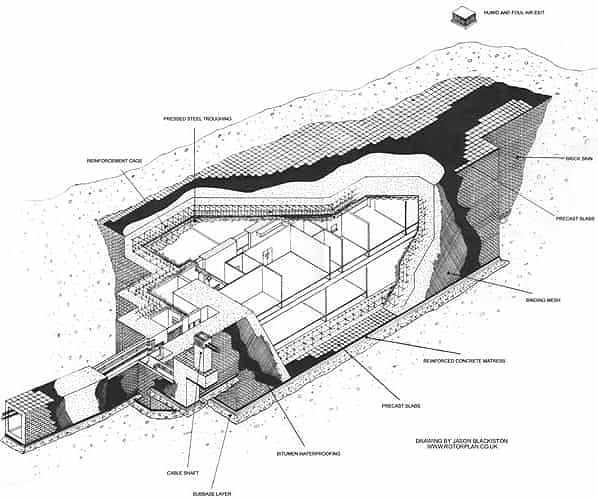
The R3 was never intended to survive a direct hit from a nuclear weapon but was designed to withstand a near miss from Russian pattern bombing with 2,200lb armour piercing high explosive bombs (BRAB) dropped from 35,000 feet. It was decided to rebuild the GCI station at Wartling underground with a new two level R3 operations building alongside the old Happidrome. Due to the location being barely above sea level, the trial test bores sunk to determine the site of the R3 indicated that the building would be liable to serious flooding if this location was chosen.
It would have been too expensive to overcome this problem so an alternative site was found on higher ground with the Type 7 radar scanner remaining at the old site as this was more suited for its performance. This radar was mounted above the underground operations room designated as an R7. During construction of the new station, the Happidrome remained fully operational and RAF Pevensey was reactivated as one of 15 stations promoted to a ‘readiness chain home’. The station’s radar was upgraded as part of the first phase of the Rotor 1 programme.
Construction started over the winter of 1951/2 excavating the hole with a dragline shovel. The hole had to be large enough to accommodate the R3 structure, some 200' long by 120' wide on two levels. It was constructed as a box with walls, floor and ceiling in 10' thick concrete reinforced with tungsten rods every six inches throughout. The contractors were Trollope & Colls who had worked on other MOD sites. Shifts ran throughout the day and night and a regular convoy of trucks took away tons of earth, much of it going to the Crumbles in Eastbourne to reinstate pebble excavated areas.
Following completion of the structure the fitting out phase commenced with skilled ladies employed by Marconi’s W/T Company busy creating the complex wiring loom for the new station. RAF Wartling was not completed until 28th February 1955, two years behind schedule. It would appear that there may have been serious problems with water seepage during construction, which delayed completion. On this date it was handed over to the RAF Signals Sections for four weeks ‘running up’ before becoming fully operational on 28th March when RAF Wartling was transferred over to the underground R3 operations building.
As built the following radars were fitted at RAF Wartling
- 1 Remote Type 7 Mk III above an R7 well with a T79 IFF
- 1 Type 11 (M) Mk VII
- 3 Type 13 MK VII mounted on 9' high concrete plinths
- 2 Type 13 Mk VI mounted on 12' high concrete plinths
- 1 Type 14 Mk VIII on a 25' gantry
- 1 Type 14 Mk IX on a plinth
- 1 Type 14 Mk 9 mounted on a 25' gantry
- 1 Type 54 Mk 3 mounted on a 200' tower
During 1956/1957 a Decca Type 80 Mk. III search radar was installed, replacing the earlier Type 7. The Type 80 was developed in the early 1950’s from an experimental design based on the Type 14 Mk VI under the project code name Green Garlic.
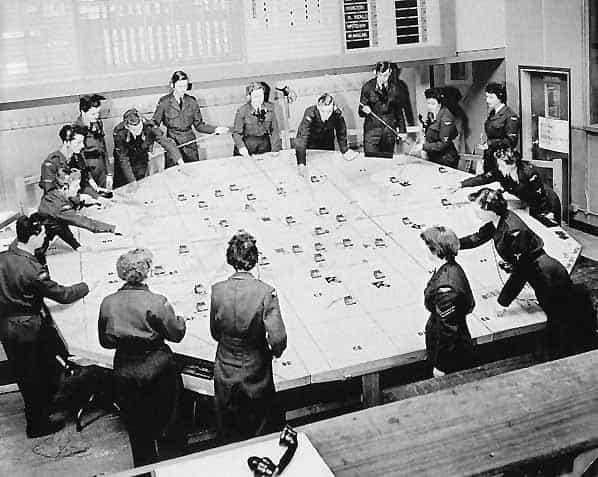
Almost overnight this radar made the ROTOR air defence system redundant. The Type 80 improved the range of the station considerably with a range of up to 320 miles compared to the 90 mile range of the Type 7; this instantly made some of the earlier equipment obsolete. Inside the R3, dramatic changes were also taking place. The large two storey operations room was superseded by a much smaller control room constructed on the top floor at the opposite end of the building.
This included a ‘well’ in the floor for a photographic display unit (PDU) which allowed radar pictures to be projected up into a plotting table above.
This apparatus was a Kelvin Hughes Photographic Projector; consisting of equipment that could record the radar image on 35 mm film, develop, fix and dry the image and then project it up on to the plotting table in the control room on the floor above. The displayed image was one minute behind real time. The PPI image from a high intensity cathode ray tube was projected on to the film through a focusing lens. Each revolution of the radar antenna took 15 seconds and it took this time to expose the film to a full revolution. At the end of the sweep, the frame would be moved on to be developed, whilst the next frame was exposed. When the frame moved on at the end of the next sweep the image was fixed, it then moved on again to be dried.
Finally the frame moved on once more where it was projected, via a mirror, to the underside of the frosted glass plotting table on the floor above. Meanwhile the next frame to be exposed has been following on through the process, so at the end of the next revolution this frame was projected, 15 seconds after its predecessor. As frame after frame was displayed on the map the plotters in the pit could place markers on the map to indicate friendly or hostile aircraft.
Following the installations of the Type 80 the two Type 14 radars were dismantled and removed and a new Type 7 radar was installed following a fire in the WW2 Type 7 well. The Type 7 was kept in reserve in case of breakdown or maintenance of the Type 80.
These advances also reduced the number of radar stations required and as a result the Centimetric Early Warning (CEW) station at Beachy Head (located in an R1 single level operations building) became redundant with Wartling taking over its CEW function. RAF Beachy Head closed around May 1958. With the introduction of the Type 80 all the Rotor CEW stations closed, along with the three level Sector Operations Centres (SOC) with almost the entire ground reporting function being undertaken from the GCI sites.
In April 1958 the GCI at Wartling was upgraded to Master Radar Station (MRS) status and from that date was solely responsible for all UK air space south of the Thames to the border with French airspace. It also had direct links to other radar and command sites within the UK and in West Germany and France.
Further advances in radar technology brought about the installation of newer and higher powered radars in the 1960’s. Of the six Master Radar Stations that existed along the east coast of Britain, all were to be refitted except Wartling. The early 1960’s saw Wartling’s importance reduce until finally its responsibility was taken over by Bawdsey MRS in Suffolk; the station closed on 3rd December 1964 and having been largely stripped out was placed on care and maintenance.
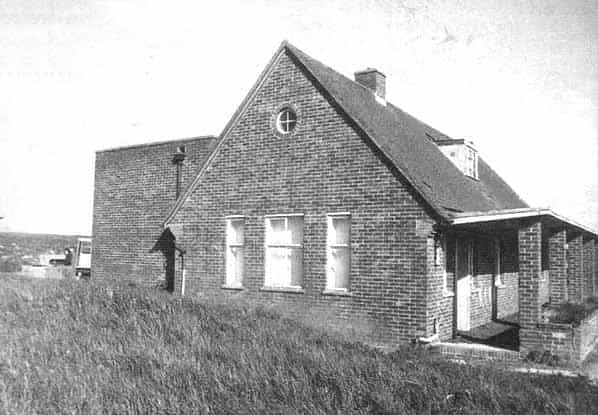
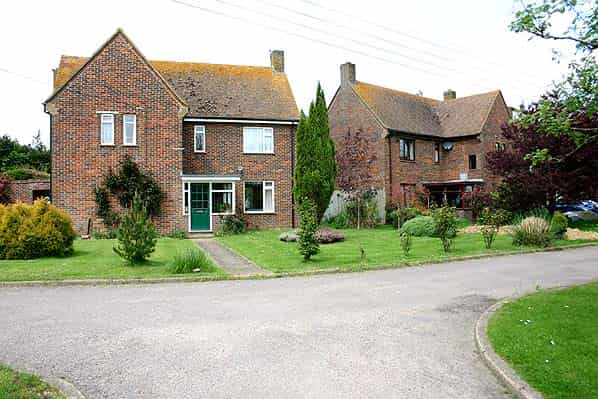
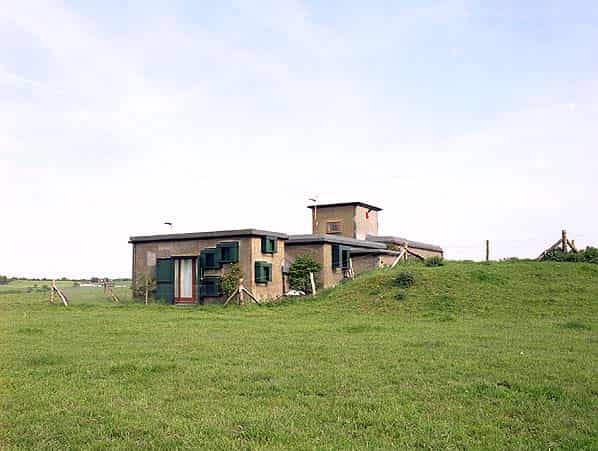
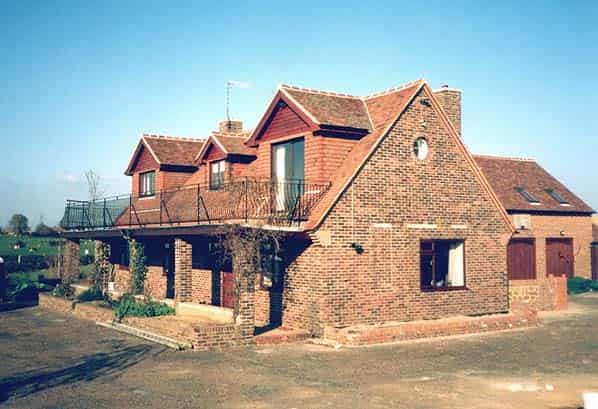
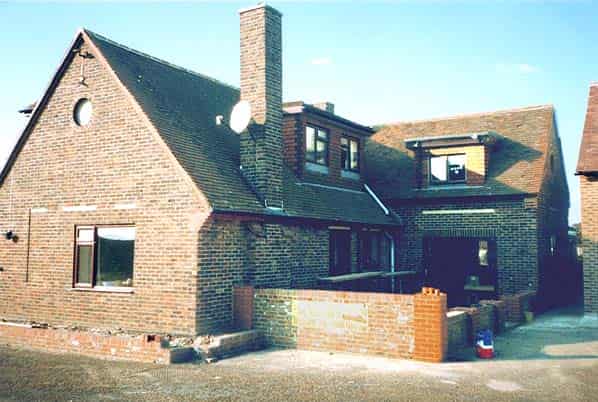
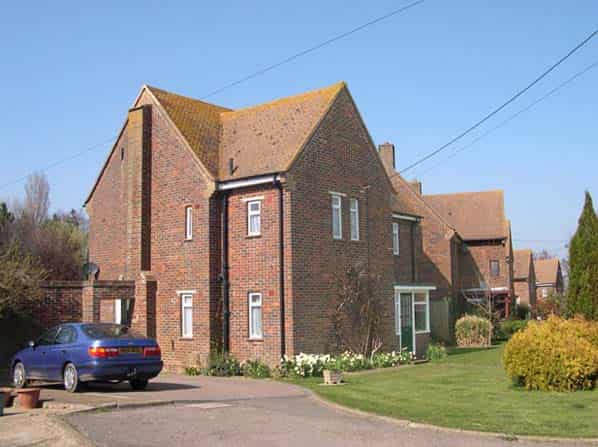
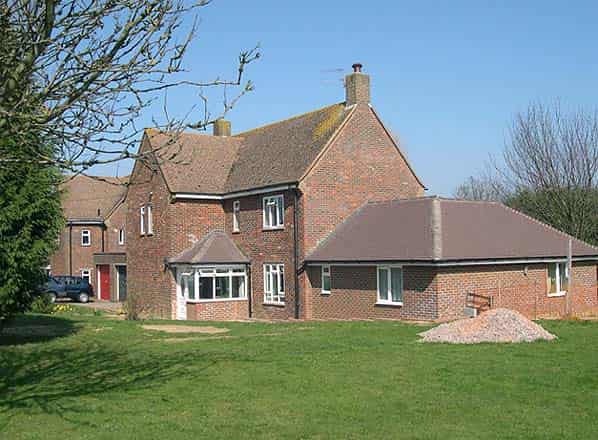
The entire radar complex was sold by the Property Services Agency, acting on behalf of the Ministry of Defence in 1976; ownership then passed to the Marquis of Abergavenny. The ROTOR guardhouse was sold separately and has now been converted and extended into an elegant gabled private house.
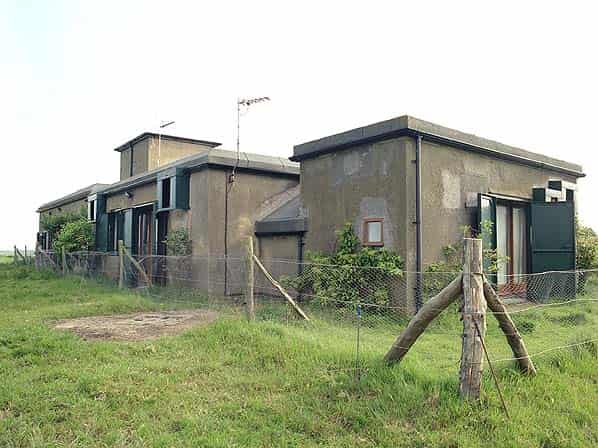
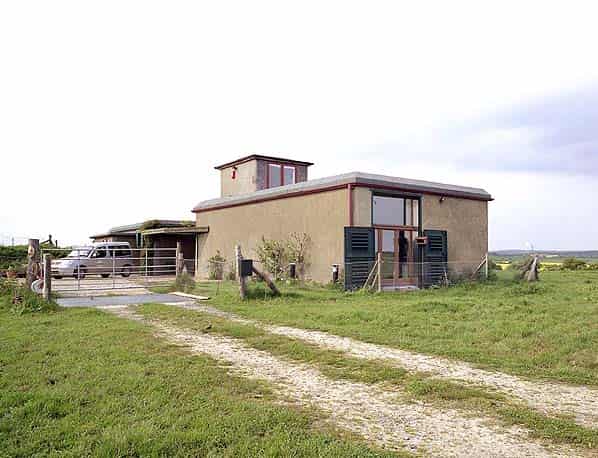
There is no longer a connection between the guardhouse and the underground bunker. The Type 80 modulator building remained derelict for many years but the empty shell was also converted into an unusual dwelling during the winter of 1995/6.
In order to provide communication between the controllers in the R3 bunker at RAF Wartling and the intercepting aircraft, two large VHF/UHF multi-channel radio transmitter and receiver blocks were built at remote sites.
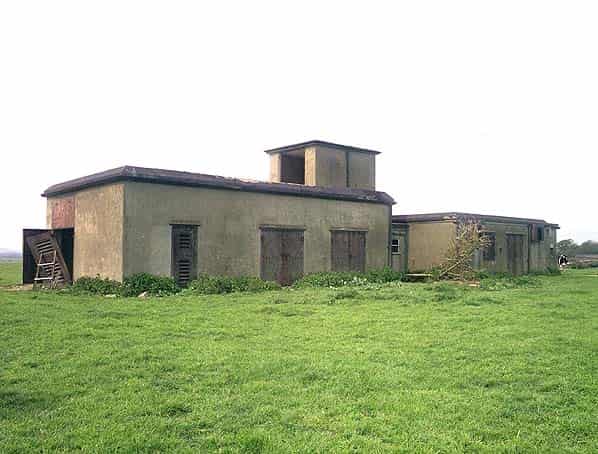
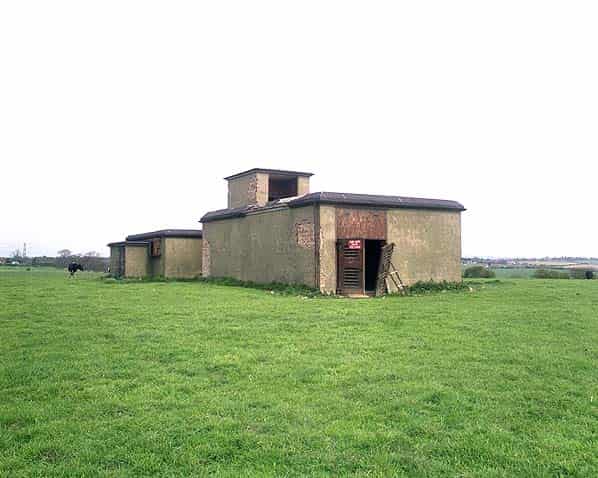
This was done to stop interference and swamping of the radio signals by the radar arrays. The transmitter and receiver buildings for the original GCI station at Wartling were located near Herstmonceux Castle. Because of the close proximity of the Castle site to the new R3 bunker two new transmitter and receiver buildings were constructed at Hooe, 1.5 miles to the east of the technical site.
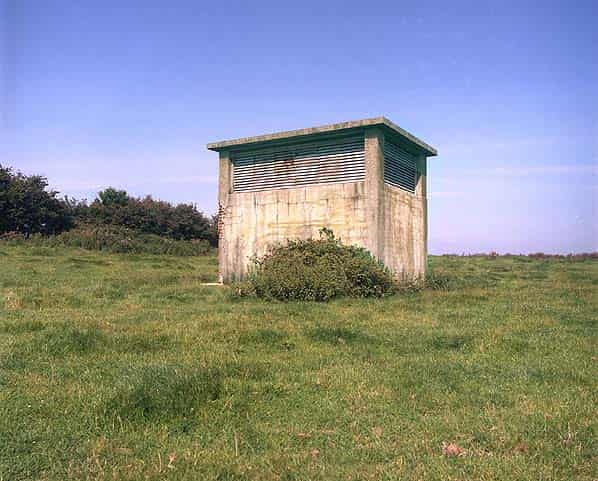
The transmitter building was at TQ69001040; this has now been converted into a private dwelling. The receiver building is at TQ68060972; there have been few external alterations to the building which still retains its steel window shutters. It is now used as a naturists' club house and has a public footpath running through the garden!
The WW2 GCI domestic camp was near Herstmonceux Castle but a new hutted camp was built at Barnhorne, close to the A259 Bexhill Road. Following the closure of RAF Wartling this became a Category C Prison; HMP Northeye. The camp also housed the standby set house for the radar station which was an electricity generating building designed to supply mains power to the R3 in the event of a mains failure.
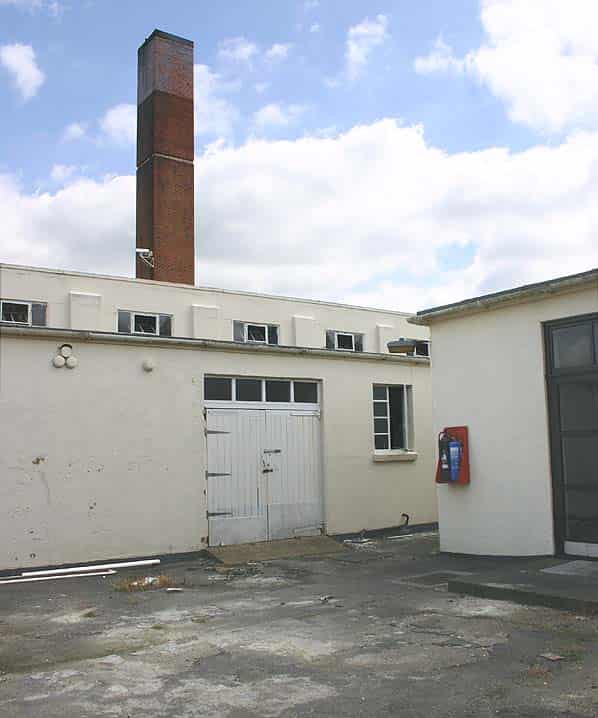
Northeye Prison was seriously damaged by fire during prison riots in 1986; the prison was razed to the ground after rampaging inmates set fire to the main buildings. Northeye Prison remained empty for some years eventually closing in 1992 and the camp has now been refurbished as the United Arab Emirates Training Project Campus. The campus however still resembles a prison with a 20' high security fence. The only original buildings remaining from the ROTOR period is combined standby set house and boiler house.
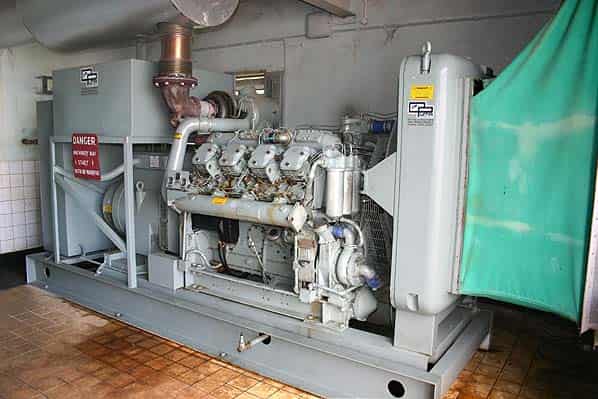
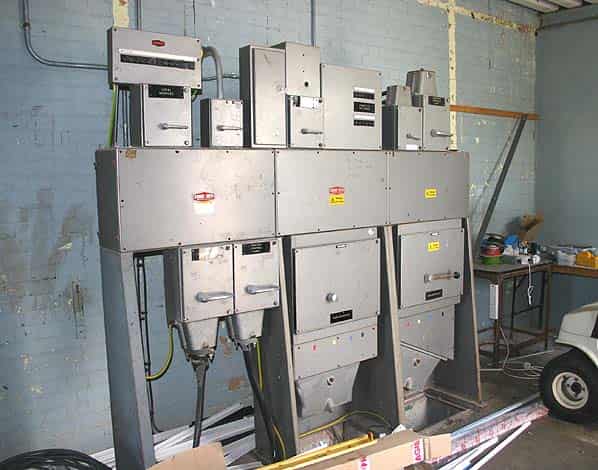
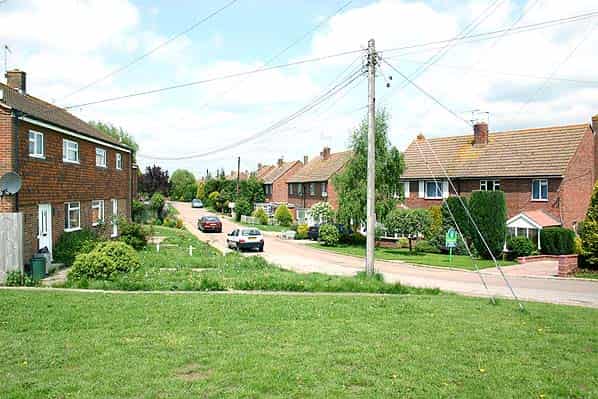
The building is still in use as a boiler house for the training campus although all the boilers have been replaced.. The original generator has been removed and reinstalled in a new generator building along side where it acts as a standby generator for the campus. Some ROTOR switchgear still remains in the boiler house. Outside the prison perimeter the ROTOR married quarters estate still survives. The RAF houses that later accommodated the prison staff and their families but are now all in private occupation.
When Wartling was sold by the MOD in 1976 it was still in excellent internal condition. When inspected in 1970 the power was still connected; the lights worked and although stripped of most of its equipment all the teak flooring was still in place on both levels. There was no water ingress anywhere.
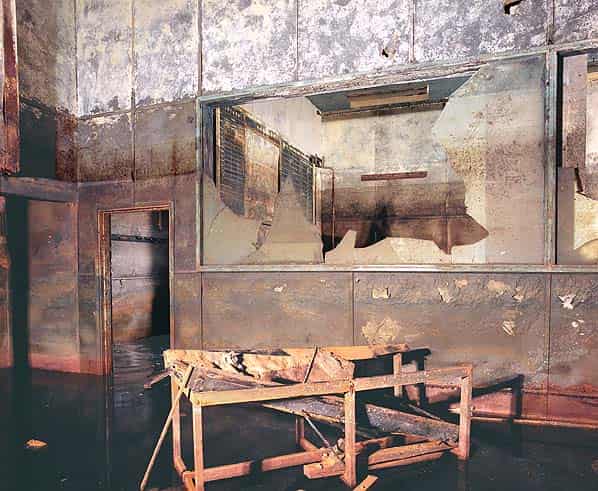
When visited by members of Subterranea Britannica in 1987 the bunker had deteriorated badly in the intervening years. It had been broken into on several occasions and badly damaged by vandals. All the glass windows looking into the two level operations room had been smashed as had all the toilet fittings. A lot of wiring had been stripped out and all the copper had been removed from the mains transformer. All the teak flooring on the upper level had been removed; presumably illegally as second hand teak is valuable.
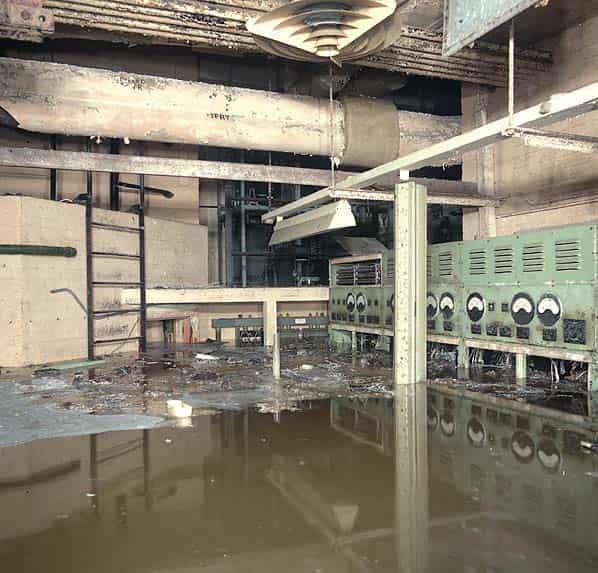
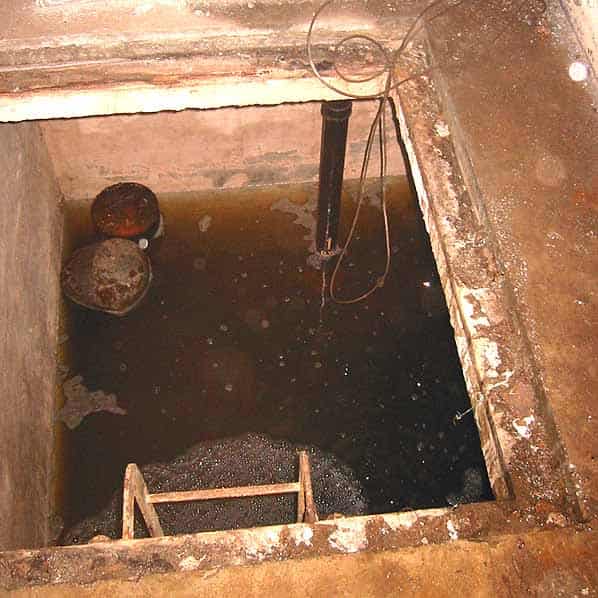
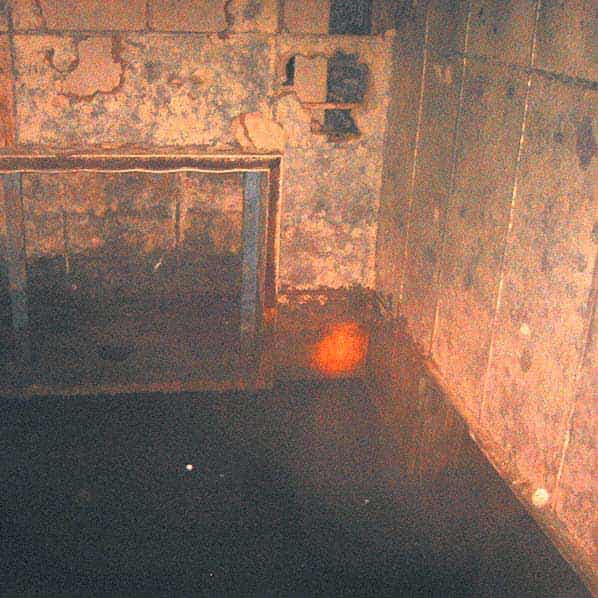
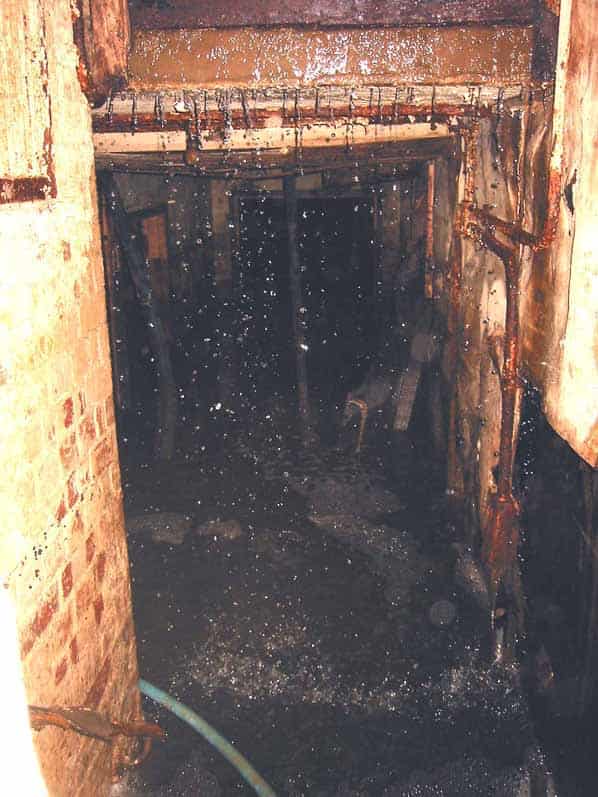
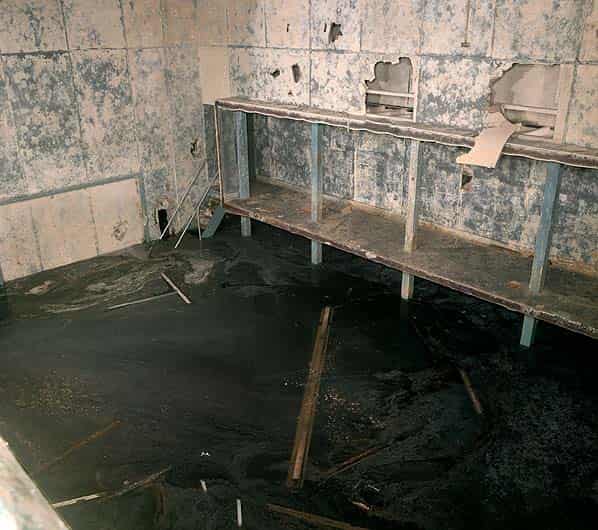
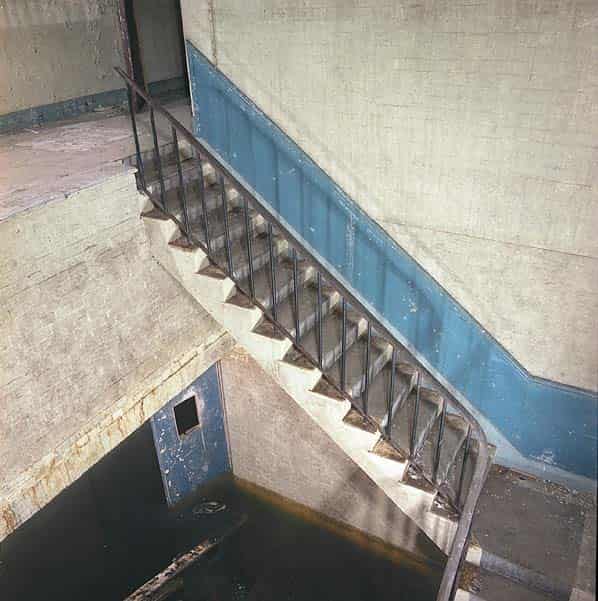
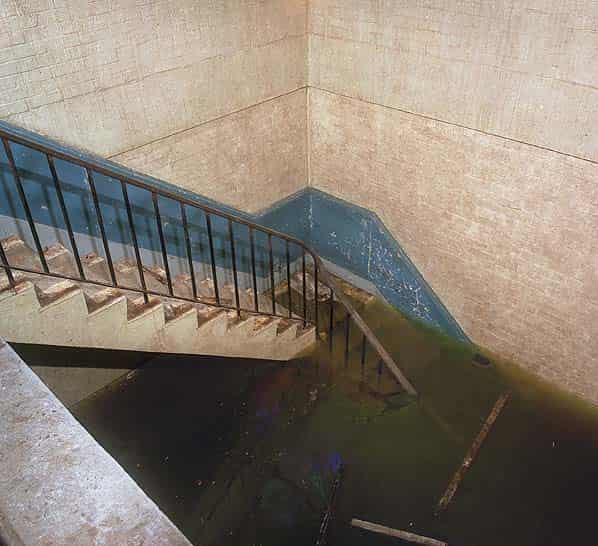
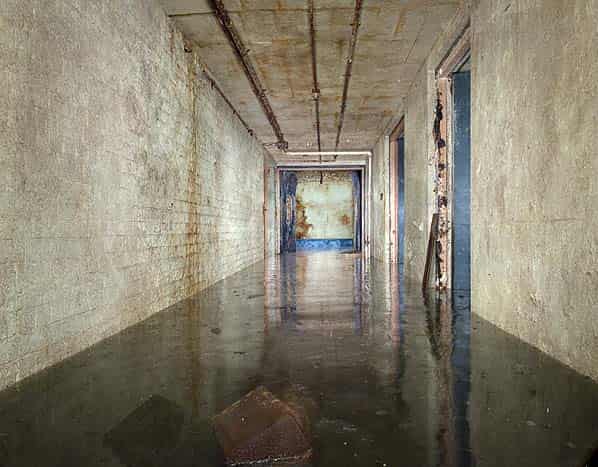
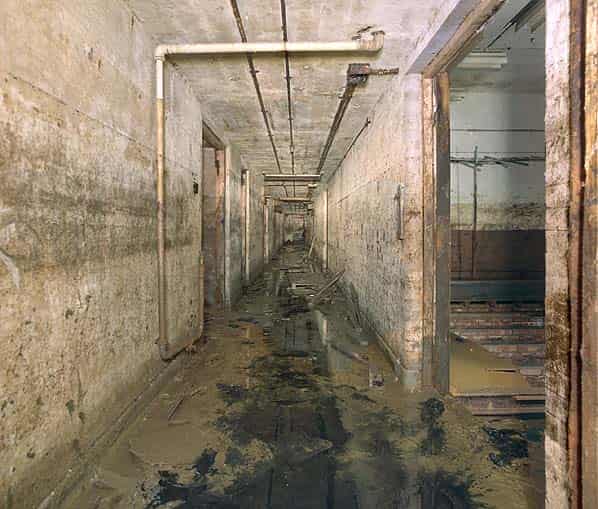
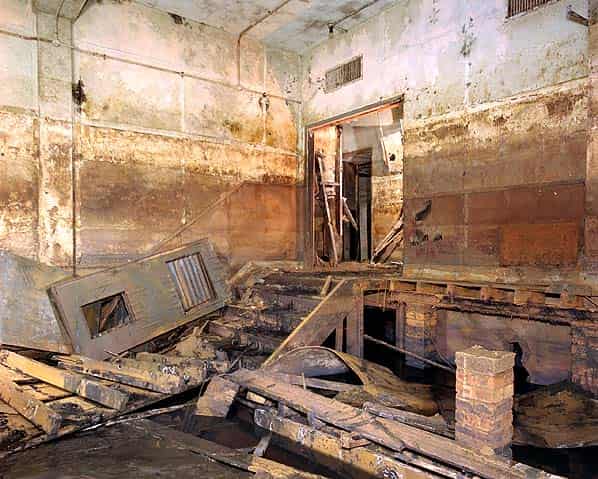
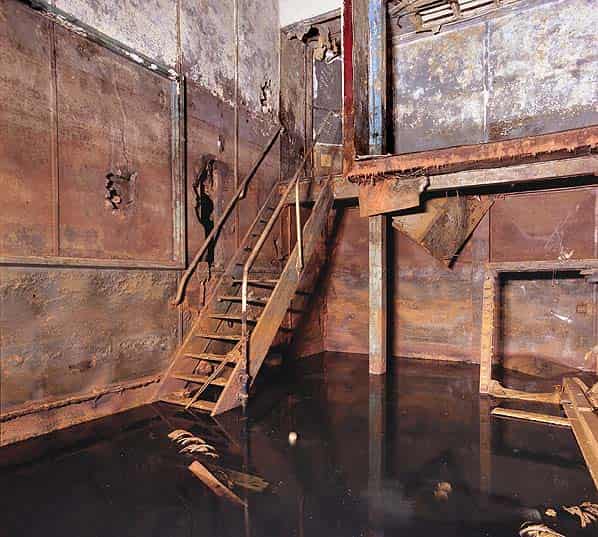
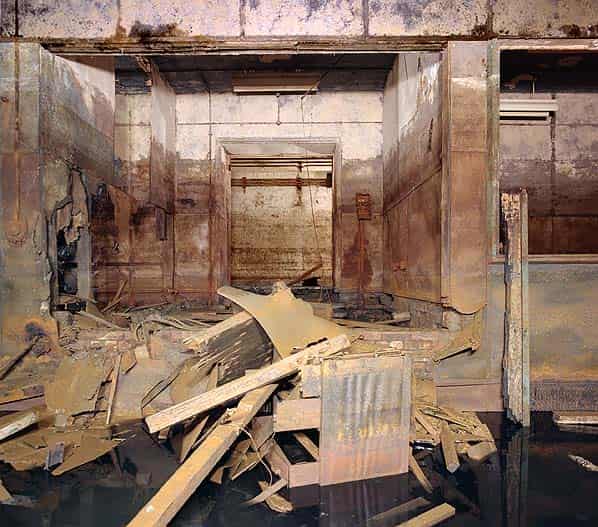
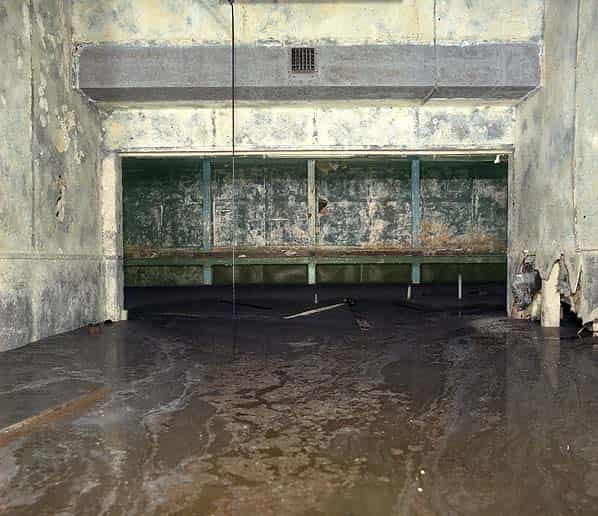
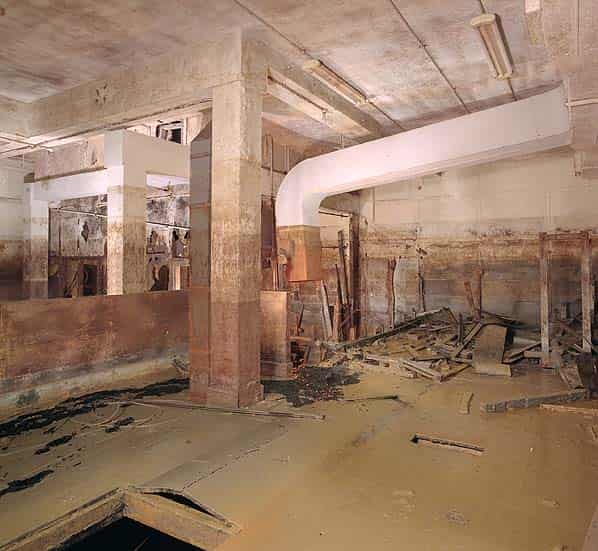
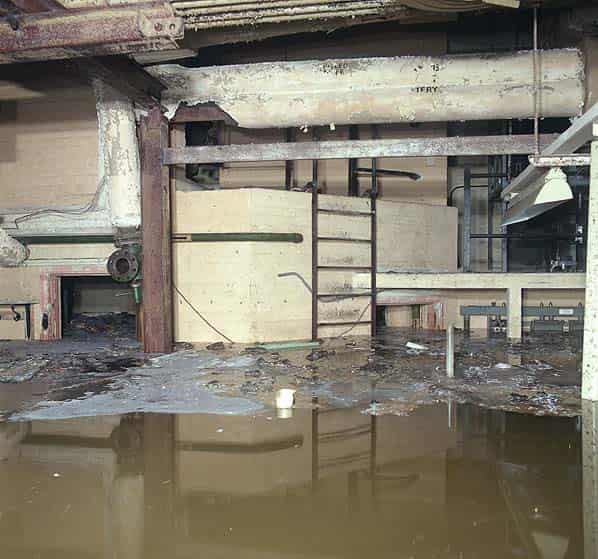
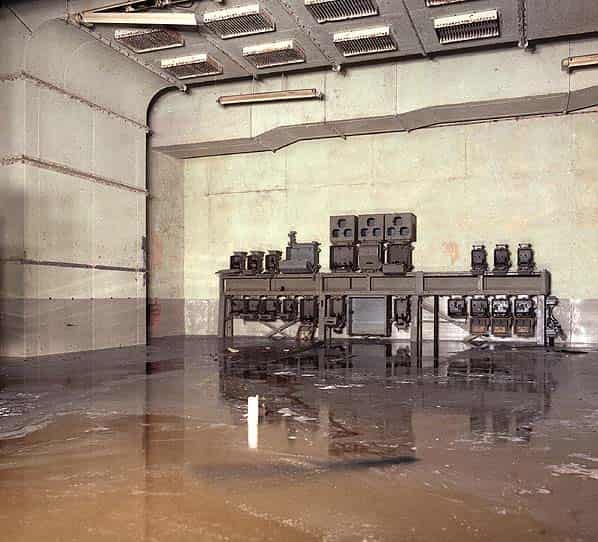
The lower level was flooded to a depth of three feet in the corridor corresponding to a depth of five and a half feet in the AC plant room and operations room neither of which had raised false floors. As it was impossible to determine the state of the floorboards in other parts of the lower level no attempt was made to enter any of the rooms. A photographic survey of the lower level was made from the open doorways. It has subsequently come to light that the floorboards had not been removed from the lower level; when the bunker was eventually pumped out most of the floorboards had collapsed into the void below but in a few rooms they remain in place and in relatively sound condition.
On the upper level, a brick wall had been built across the main access tunnel from the guardhouse to the bunker just beyond the cable shaft.
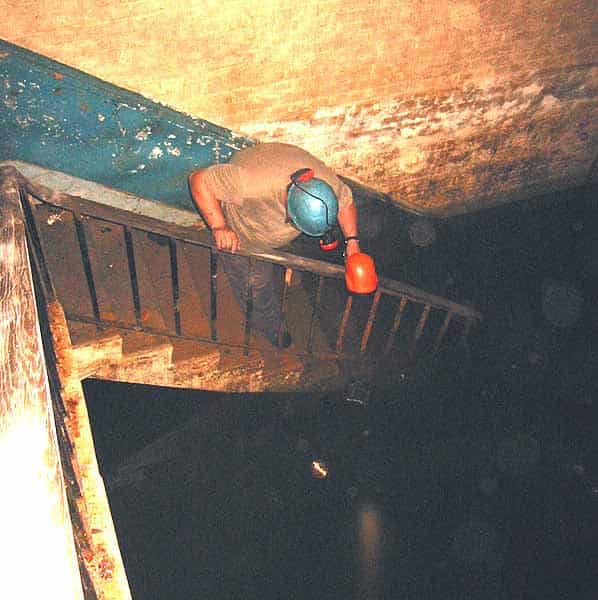
When the bunker was again visited by members of Subterranea Britannica in 1996, the water level in the lower level had risen to seven and a half feet above the level of the lower corridor which was now almost completely submerged.
The bunker and surrounding land was sold for the second time in 1989 but vandalism continued unabated and eventually a new secure steel door was fitted to the emergency exit to prevent further illegal entry.
There were plans to pump the bunker out in 1996 and the water was tested by the Environment Agency and was found to be sufficiently clean to pump directly onto the surrounding land. The water level was reduced by several feet but the pumps were insufficient to reduce the level to much below the 1987 level. The pump out was abandoned and the bunker was once again allowed to flood.
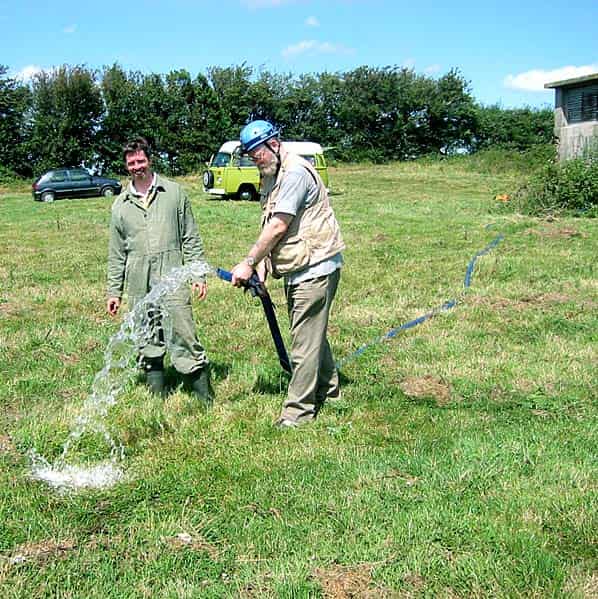
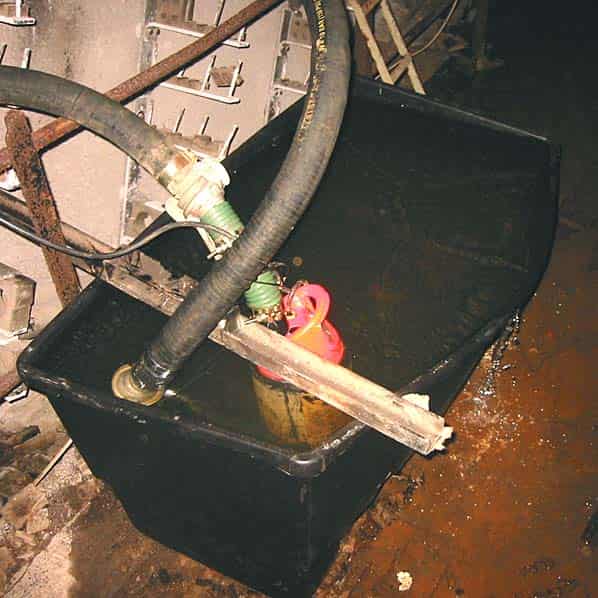
In the later spring of 2004 the owner was approached by Subterranea Britannica and it was agreed that a further attempt should be made to pump the bunker dry. The water was once again tested by the Environment Agency who declared it fit to pump directly on to the land. It was decided to wait until later in the year when the ground would hopefully be at its driest and a start date of 11th of August was set for the ‘big pump’.
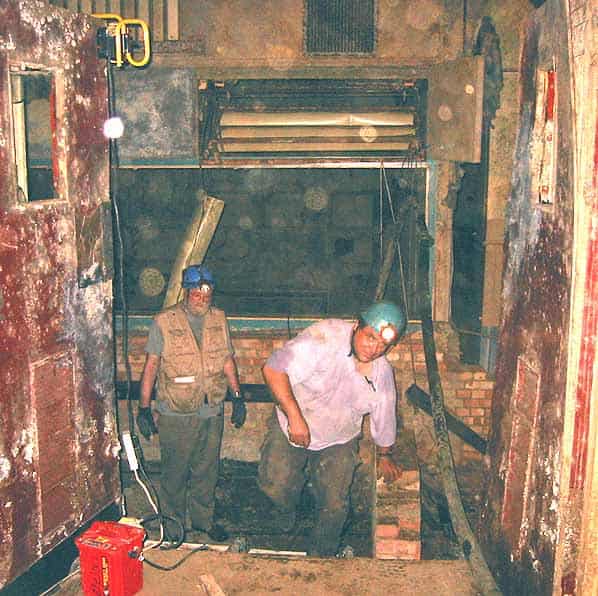
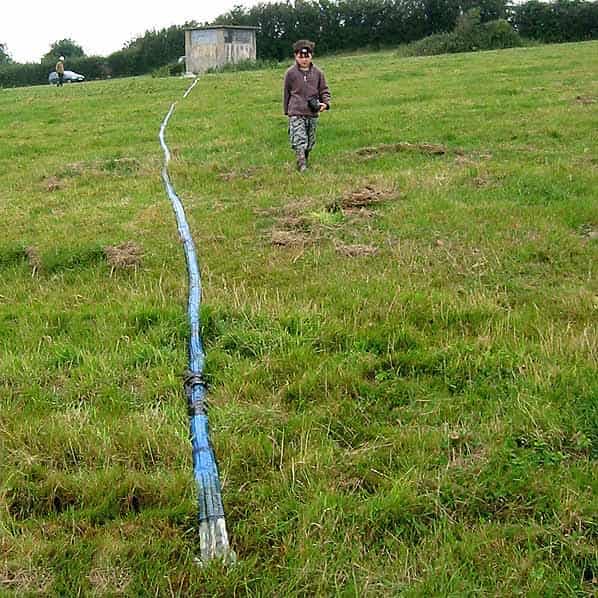
By the time the pumps were turned off on the morning of Sunday 22nd August some 2.75 million litres of water and been pumped onto the surrounding farm land.
The water level had been reduced to no more than 6 inches at the lowest point in the operations room.
The ‘big pump’ had been a huge success and that afternoon the bunker was open to all members of Subtrerranea Britannica who had subscribed to the scheme.
A ROOM BY ROOM REPORT ON THE STATE OF THE BUNKER AND ITS REMAINING ARTIFACTS IN 2004 FOLLOWS
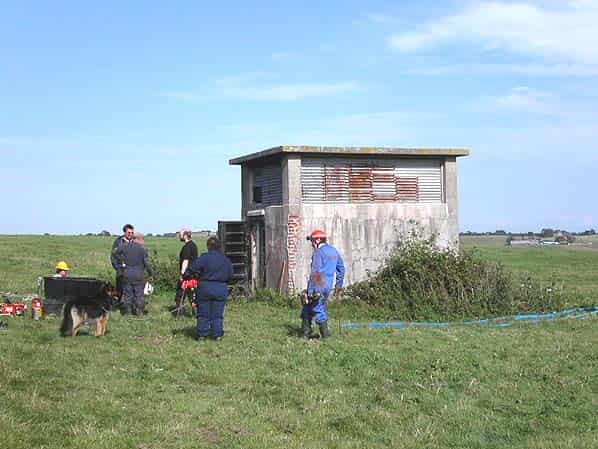
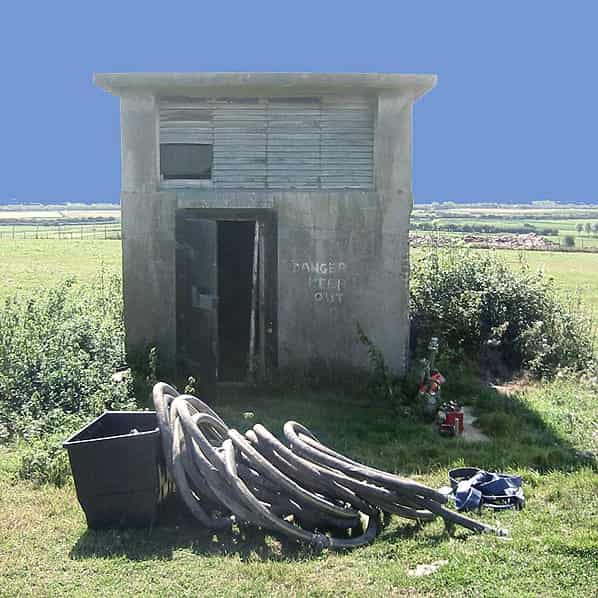
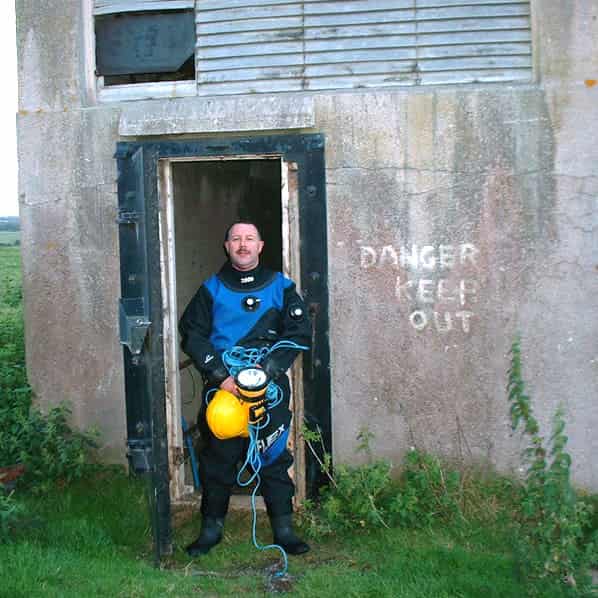
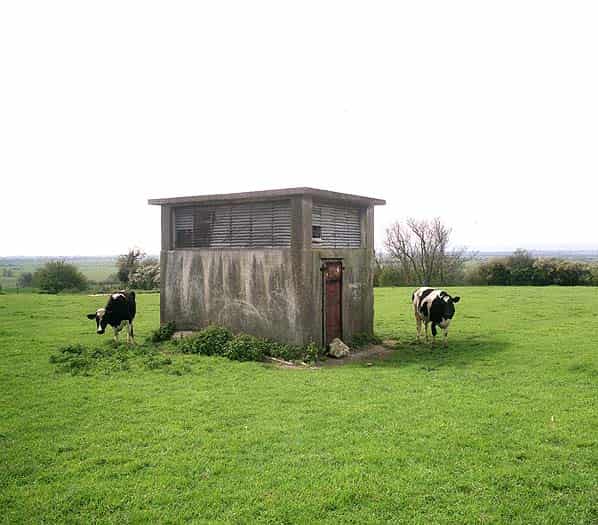
On the main technical site little now remains above ground, both the rotor guardhouse and the Type 80 modulator building have been converted into private dwellings and are not included in this report. All the radar plinths and the Type 14 twenty five foot steel gantry have been removed and have left no trace. The only standing structure is a small square concrete building with louvered vents around four sides with a heavy steel door in the north face. This is the emergency exit and intake ventilation shaft and is now the only way into the bunker. Following the ‘big pump’ the bunker will be allowed to flood once again and the steel door has been welded shut to prevent all future access to the R3.
Close to the emergency exit a small patch of brambles hides the concrete cap to the condenser water discharge shaft and 100 yards to the south a buried septic tank with two lockable hatches can be seen close to the field boundary. There were originally two rotary contactor beds alongside but these have now gone. In Wartling village the small sub station still stands at the end of a row of houses in Boreham Lane; it still had electrical switchgear inside in 1989 but this has gone and the building been converted into a lock up garage.
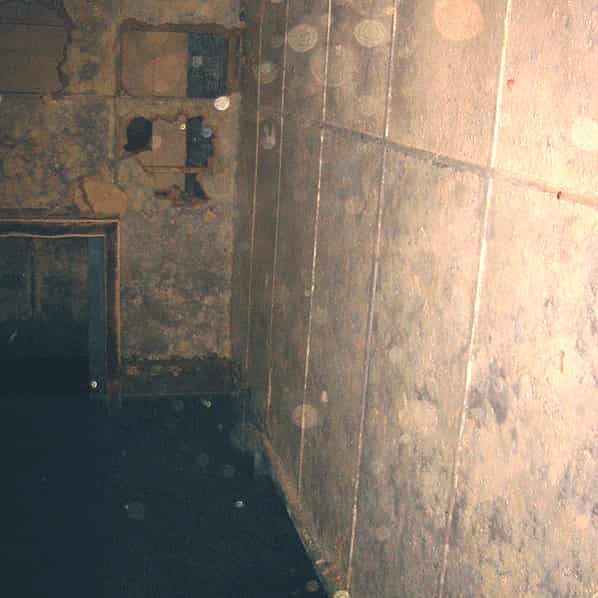
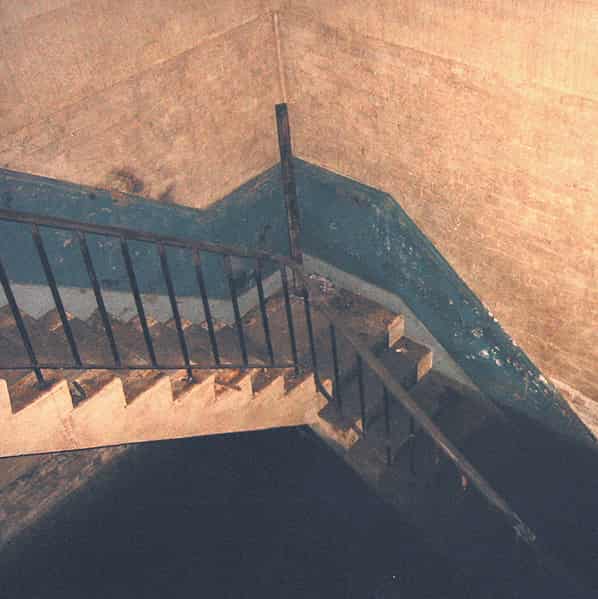
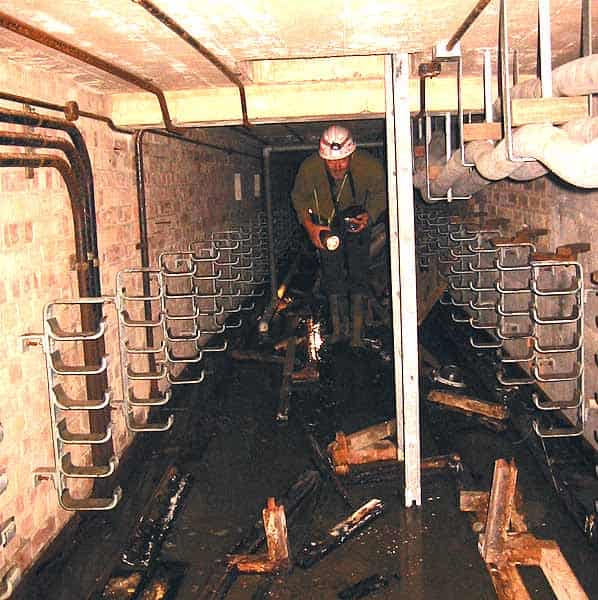
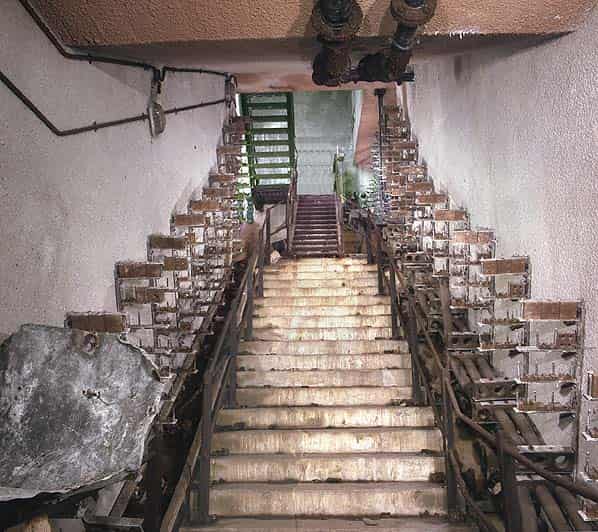
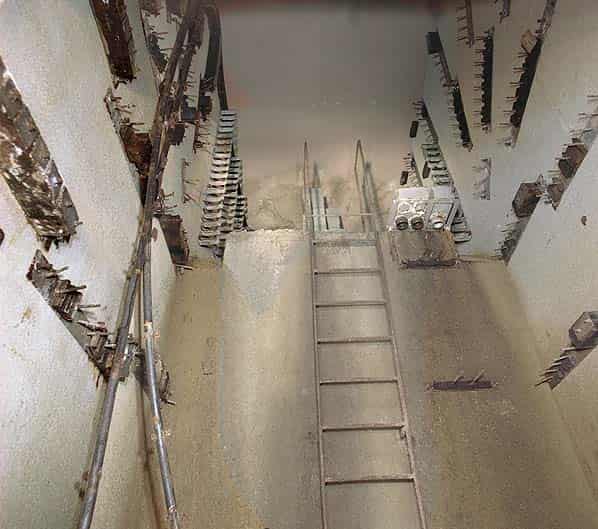
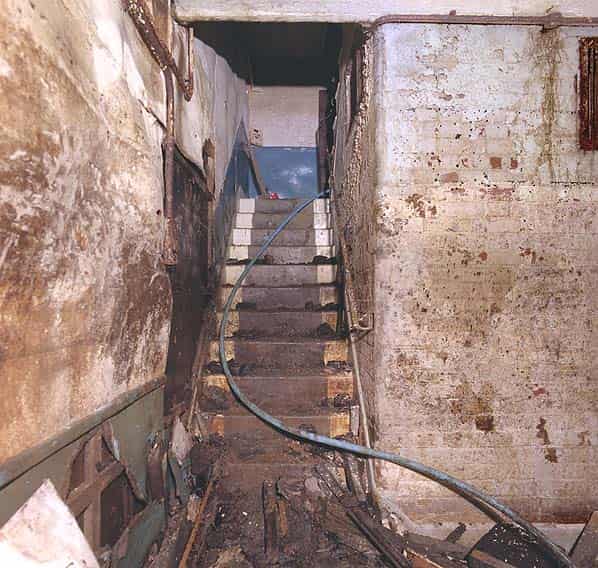
Once inside the main entrance door, there is a cast iron stairway dropping twenty feet down a vertical shaft to a small landing, from there concrete steps slope down to the upper spine corridor, a further thirteen feet below. Alongside the stairs steel cable hangers, now devoid of all cables, are fixed to both walls. At the bottom of the stairs these hangers continue downwards to a five foot high cableway that runs directly below the main upper spine corridor.
Close to the bottom of the stairs, the sewage ejectors are in a small room on the left hand side. There is some electrical switchgear remaining fixed to the wall, two small concrete plinths for compressors on the floor with the ejector pumps in a sump below. The sump is partially flooded but the pumps can still be seen below water level. There was originally a compressed air vessel in the room but this has gone.
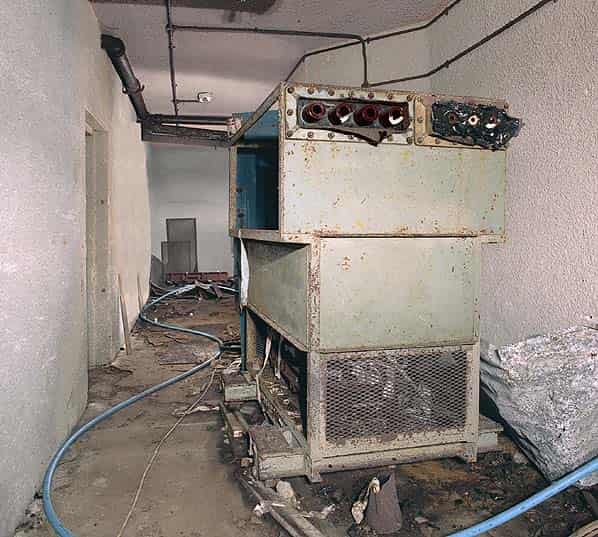
One of two mains transformer sits in the middle of the corridor close to the bottom of the stairs, this has been dragged out of a small alcove with a concertina metal gate at a dog leg in the corridor. It is now little more than a steel frame with porcelain insulators at one end all the copper having been stripped out for scrap.
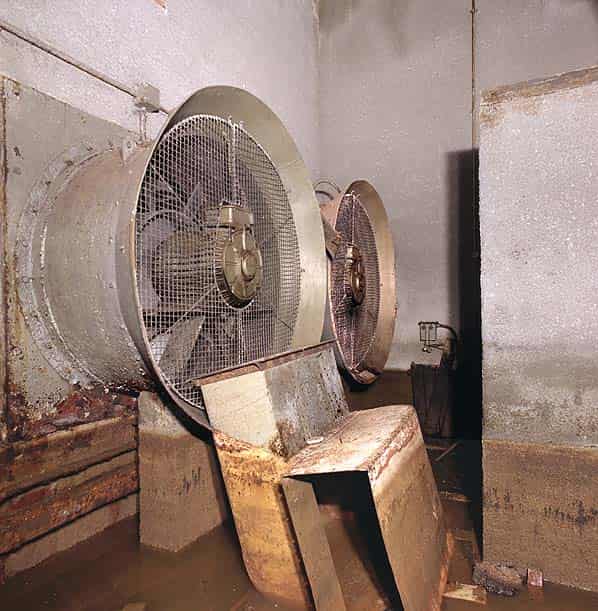
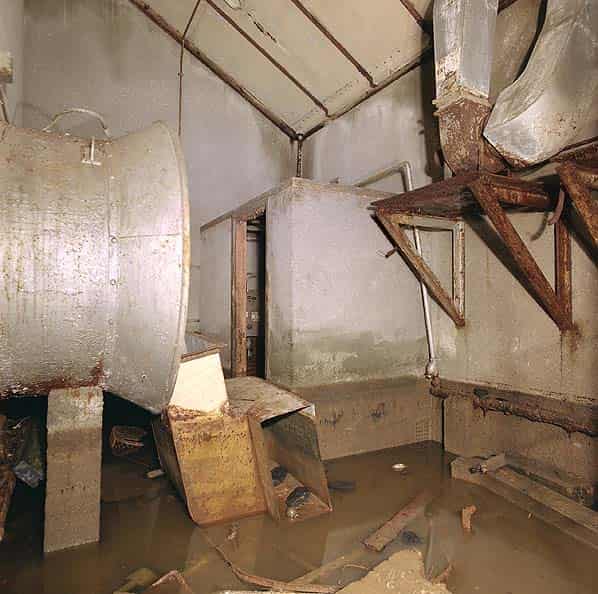
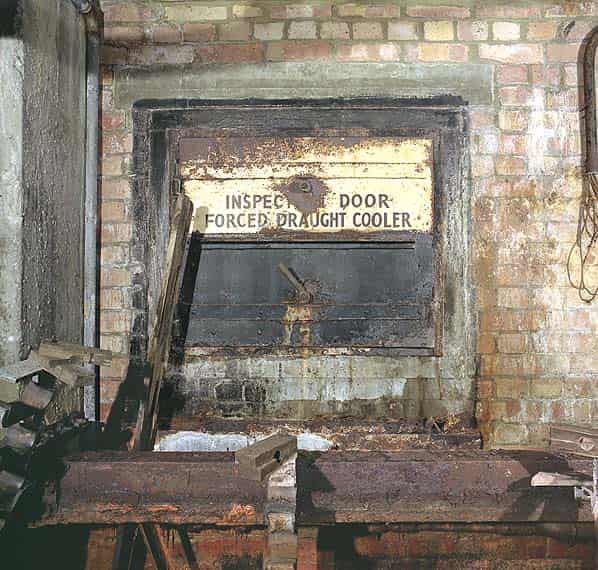
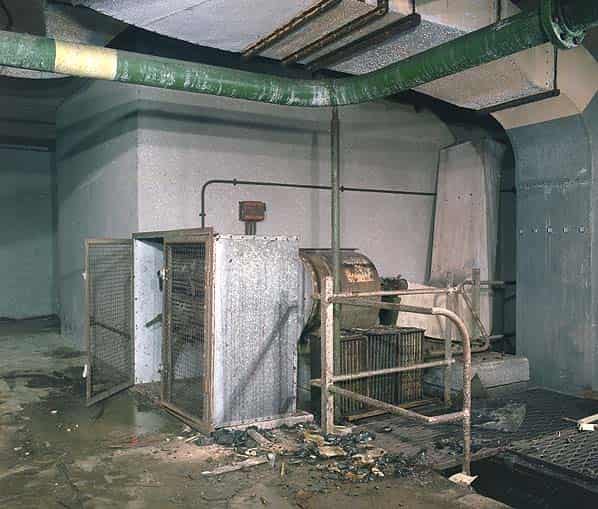
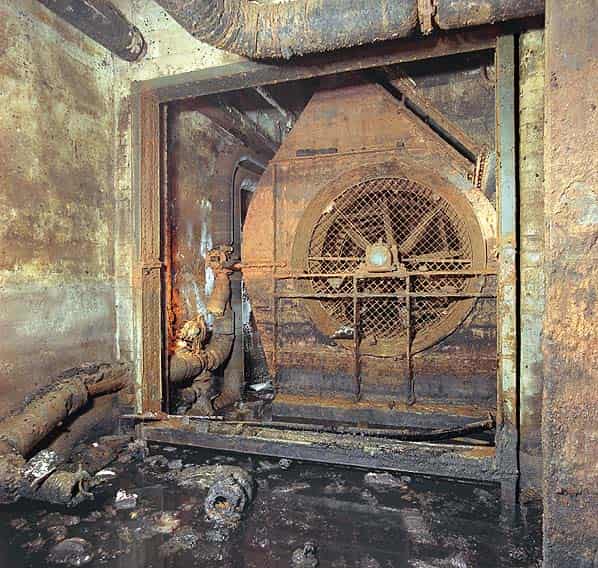
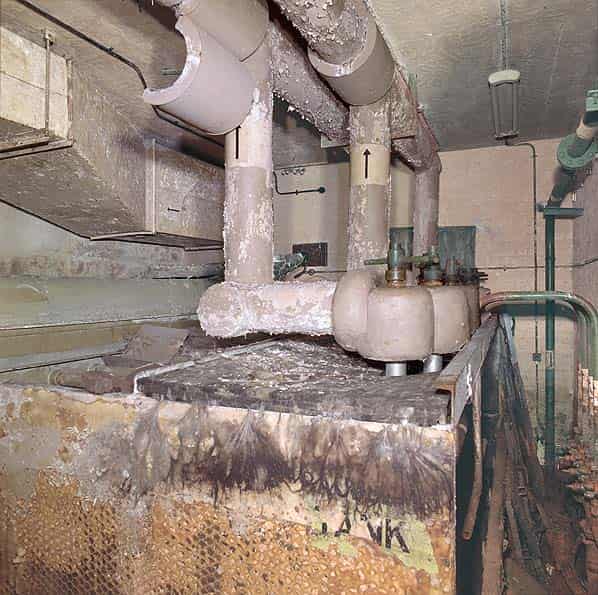
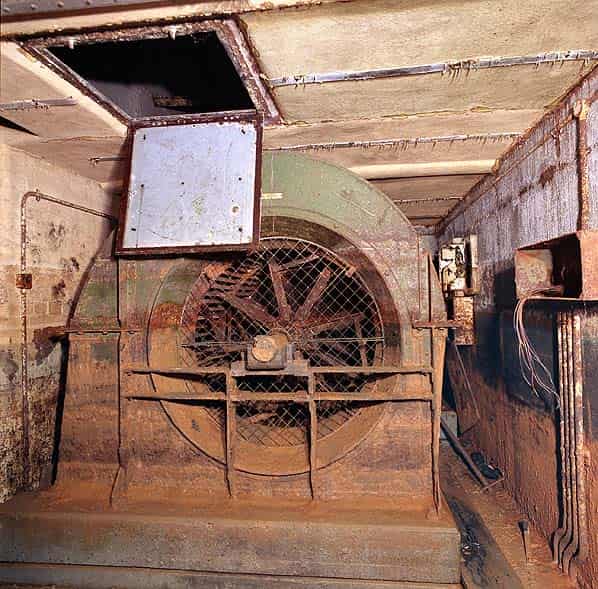
The main corridor doglegs to the right and back to the left. Beyond this dogleg there is an open well on either side with ladders down on each side to the level of the underfloor cableway. On the right hand side there were three axial fans one of which has now been removed. Fresh air was sucked through these fans into the condenser water cooler chamber where it cools a spray of water from the condensers in the AC plant room; two water cooler tanks are mounted above. From this chamber trunking takes the ‘used’ air into a concrete tunnel with a man access point close to the top of the ladder down to the three fans. After a few yards this tunnel turns to the left to the base of the condenser water discharge shaft. This has been capped with concrete at the surface thirty three feet above. Originally there would have been another concrete blockhouse with louvred vents on the surface. In the well opposite the three fans there is a small battery room; the batteries have gone but a large battery charger is still in place. Alongside this room were the extractor fans for the kitchen and toilets; one of these fans and the trunking still remains in place.
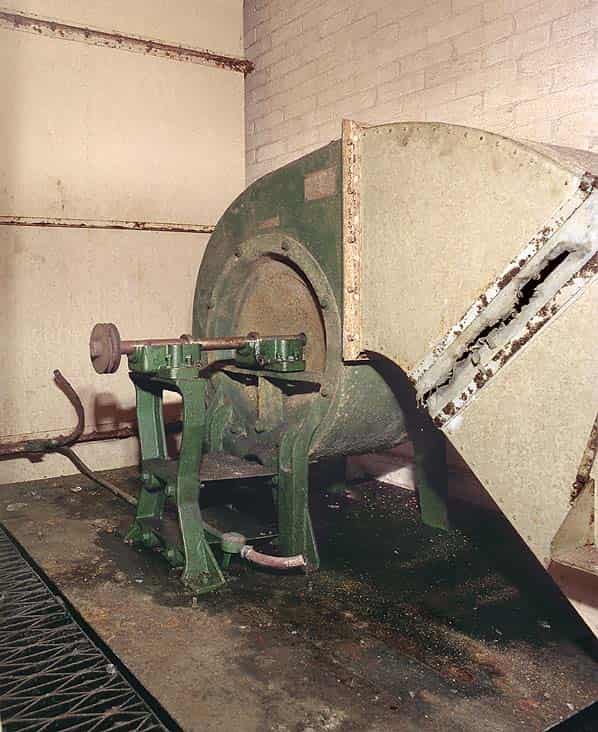
On the opposite side of the corridor is the gas filtration plant room with its gas fan still in place and the fresh air supply fan set in a well below. Air from the intake shaft would have been drawn though this fan and through filters behind it to provide a supply of fresh air throughout the bunker.
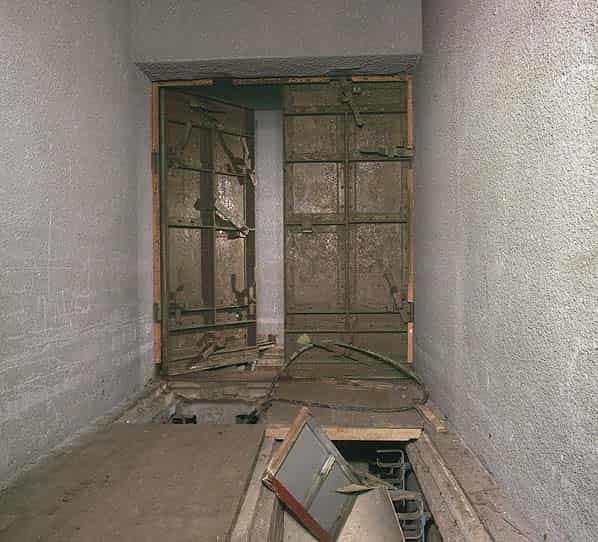
Beyond these two plant rooms gas tight doors have been fitted at the south end of the spine corridor. Although rusted in place and not movable they still retain their rubber gas seal. Once through these doors the narrow back stairs down to the lower level are on the left. All the rooms on the left hand side have a solid concrete floor while those on the right hand side had a wooden teak floor 2' 6" above the concrete floor allowing for cable trunking beneath the floorboards; all these floorboards have been removed.
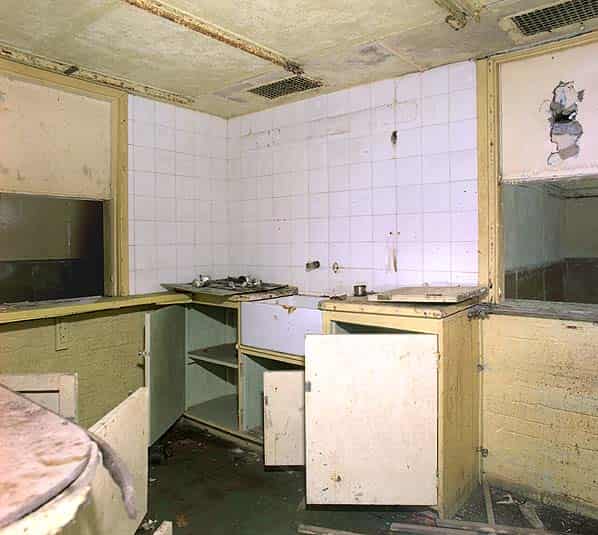
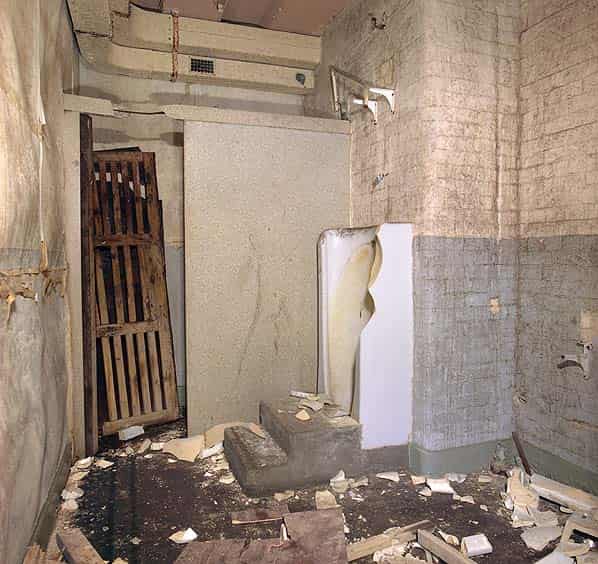
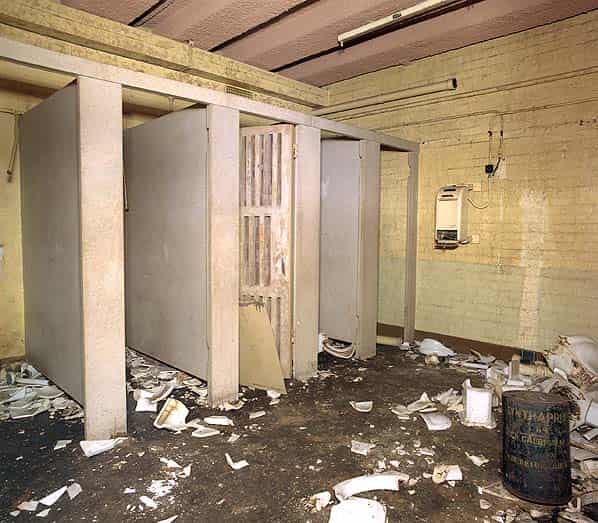
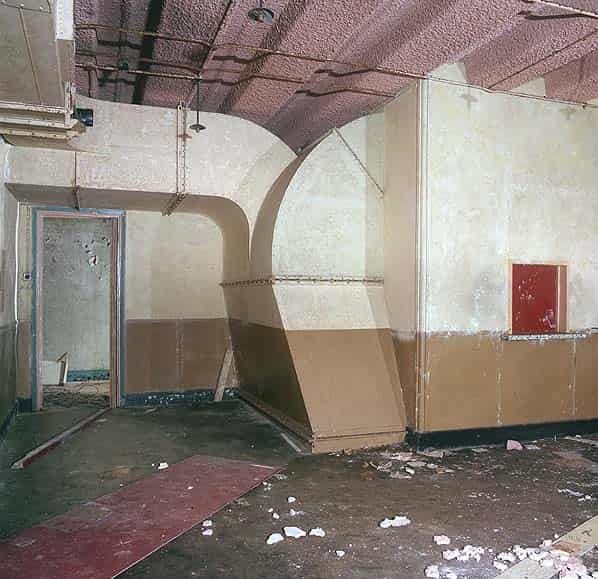
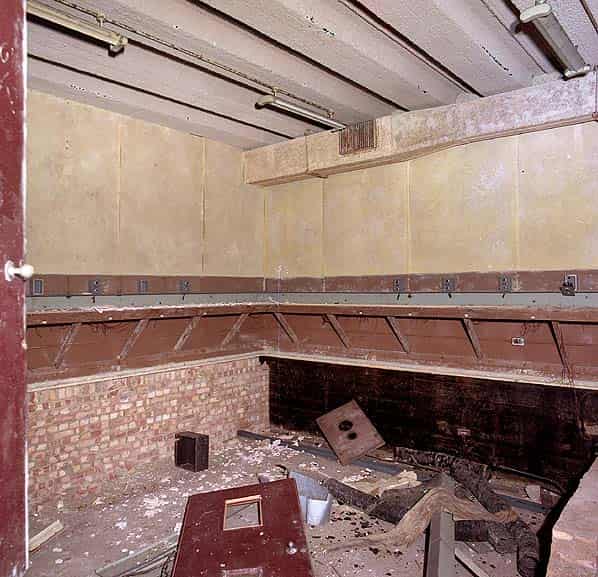
Alongside the stairs there is a further small plant room with a fan, this is immediately above the main air conditioning plant room on the lower floor. Beyond this the ‘domestic’ rooms are on the left comprising RAF and WRAF officers' toilets; the RAF officers' toilet has a single WC cubicle and a raised urinal. The adjacent WRAF officers' toilet has two WC cubicles. Beyond these are the RAF and WRAF rest rooms, cloak rooms and toilets. The WRAF toilet has six WC cubicles while the RAF toilet has two WC cubicles and two raised urinals. All the rooms are empty with some vandalism as many of the WC’s have been smashed and all the hand basins have been removed. There is a small kitchen between the two rest rooms with a serving hatch into each of the rooms; the kitchen still has a white tiled wall, butler sink, cupboards and a food preparation table and serving counter along two walls. In the RAF rest room the ventilation trunking which runs through each room just below the ceiling turns sharply downwards through the floor to the lower level where it fed from the apparatus fan in the plant room below.
The WRAF rest room is noticeably larger than the RAF rest room with a correspondingly larger serving hatch into the kitchen. With 120 RAF personnel working underground on a normal watch, women outnumbered men by 2:1 with 80 WRAF personnel and 40 RAF.
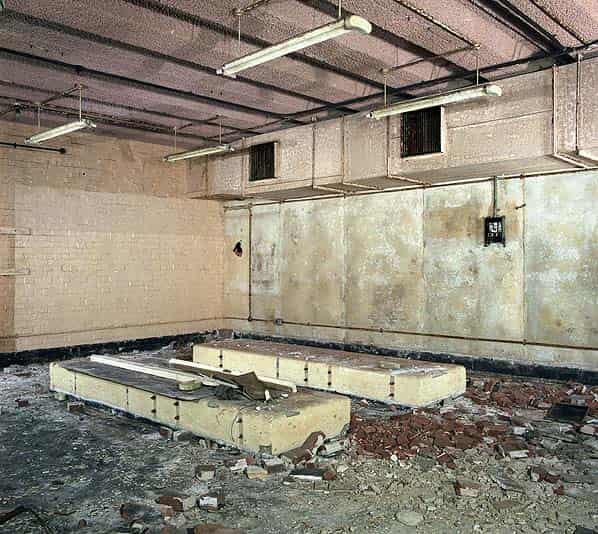
Beyond the domestic rooms is the GPO power room which again is empty apart from two long concrete plinths on the floor where the racks of batteries would have been mounted. As the GPO equipment was powered by lead acid batteries there are Darlington acid proof tiles laid on the floor and there would have been a Butler sink in the corner of the room in case of an battery acid spill.
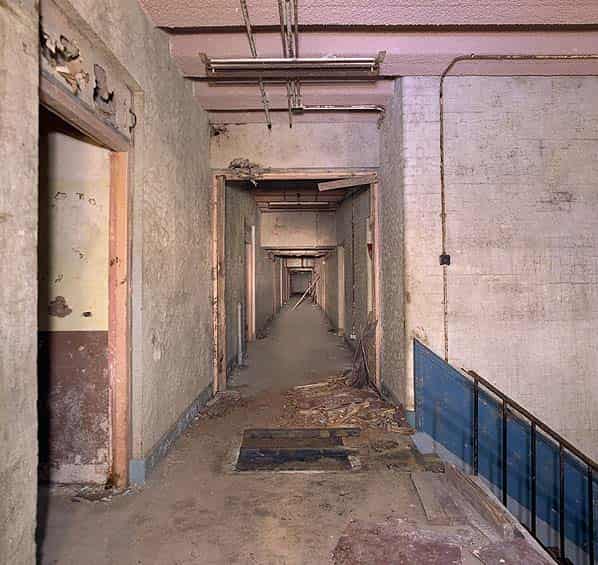
Beyond is the GPO store and the three foot wide main stairway down to the lower level winding round three side of a central stairwell; the winch that was fixed to the ceiling above the stairwell has gone. Beyond the stairs a short corridor to the left leads to the PBX (GPO telephone exchange) rooms which are again empty; when in use there would have been 240 speech circuits and 4 teleprinter circuits. The main corridor then turns to the left through a set of heavy steel blast doors and before turning back to the right again. This section of corridor originally had teak floorboards which have now been removed.
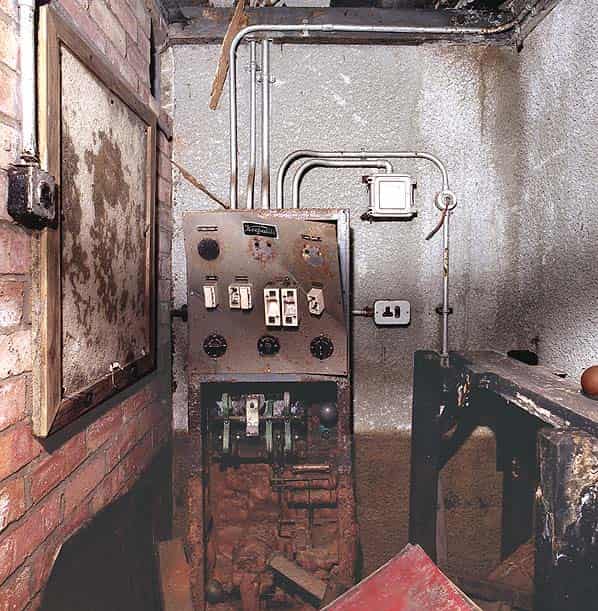
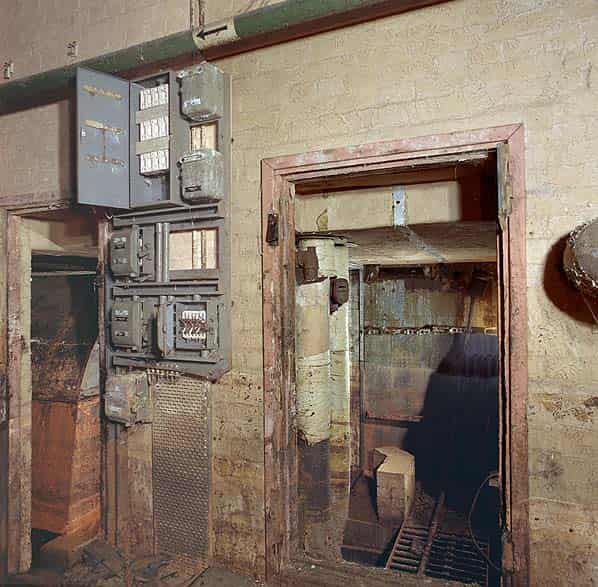
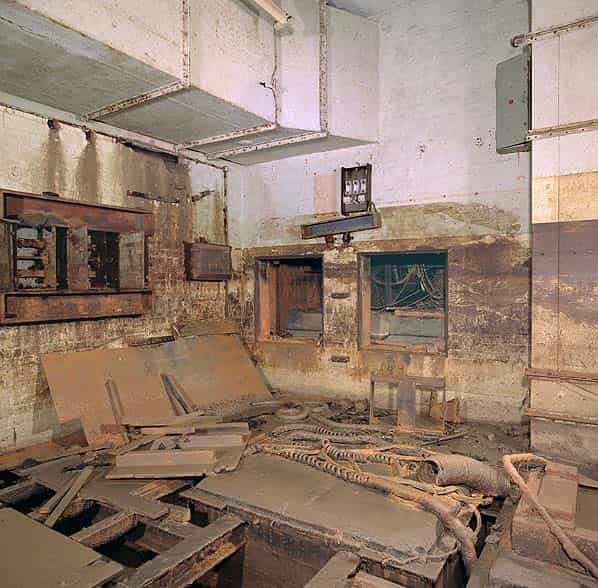
Having passed this dogleg there is another mains transformer alcove on the right; the transformer has gone but some switchgear remains on the back wall. On the left is the cable shaft with a 15' ladder up to a short horizontal tunnel leading to the base of the shaft. The shaft has been filled with concrete to prevent access. Beyond the cable shaft there is a brick wall across the tunnel up to the guardhouse.
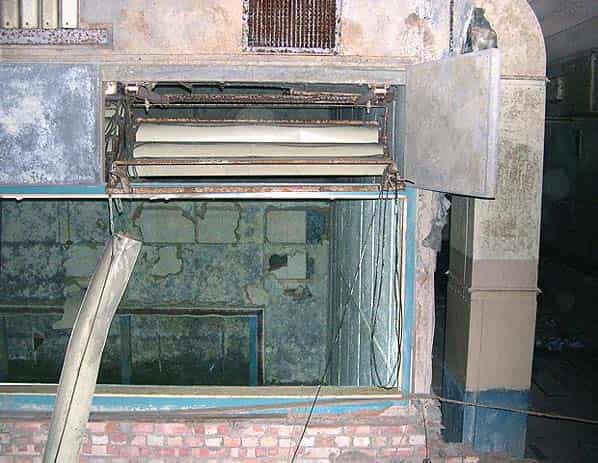
On the right hand side of the spine corridor the first room is the officers' rest room, now empty. Beyond this are three rooms with windows looking down into the well of the two level operations room. The three rooms are ‘Intercept Cabin No. 4’, ‘Chief Controllers Cabin’ and the ‘Fighter Marshall’s Room’. All the floorboards have been removed from these rooms and the glass windows are all smashed. Although fully equipped, Intercept Cabin 4 would not have been used unless we were at war.
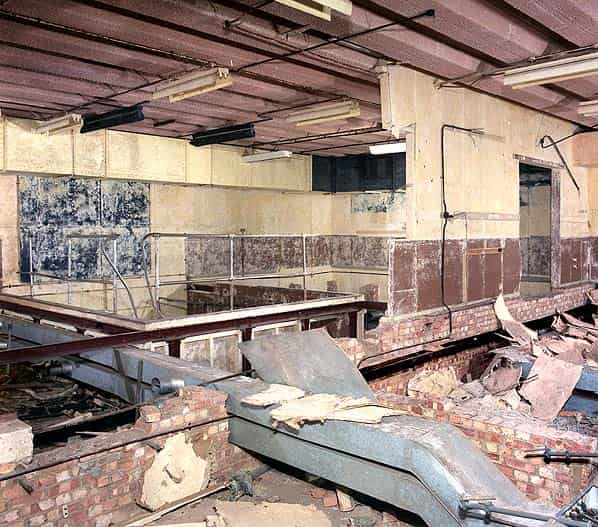
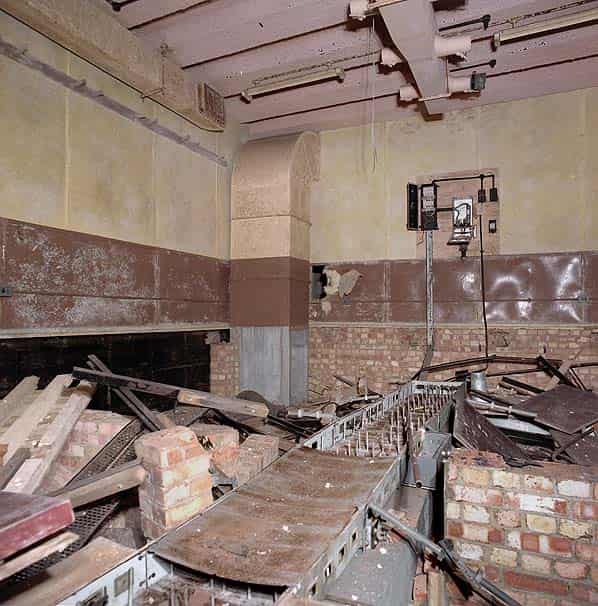
Beyond these, a short corridor on the right leads past four small office, two to the left and two to the right, into the ‘Synthetic Trainers Room’ There would have been three film trainers where film of an intercept could be fed back into the training apparatus. At some stage this room has been partitioned to form two rooms, the right hand room still retains some electrical switchgear mounted on the far wall. Beyond the corridor on the right is the ‘Track Telling Room’ again the floorboards have been removed although the under floor cable trunking remains in place. The partition wall between this and the adjacent ‘new control room’ has largely fallen away.
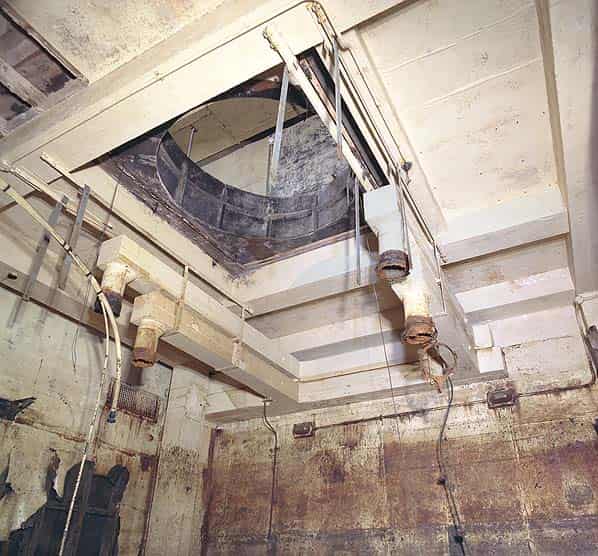
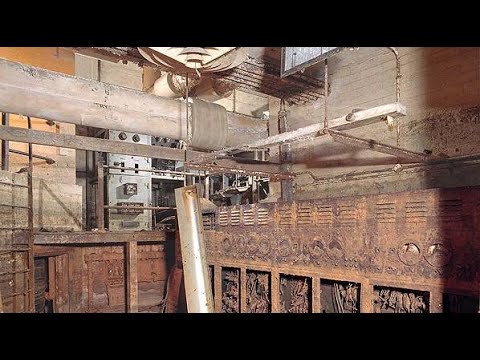
Originally the new control room was designated as the ‘Combined Filter Plot’ (C.F.P), but when built, the Kelvin Hughes projection equipment was already under development so a large gap in the main structural concrete floor was provided ready for mounting the Kelvin Hughes display at a later date. This was boarded over to temporarily support a plotting table. Eventually the Kelvin Hughes projector and display screen was installed and the metal framework of a gallery around frosted glass projection screen still remains in place. The circular framework for the screen also survives in the well with a ladder down from the gallery above. Wartling is the only GCI station known to retain any evidence of the Kelvin Hughes projection system.
There is a five foot high cableway below the upper spine corridor, with two hatches (now removed), one by the main stairs and one half way along the corridor. There is a short ladder beneath each hatch down into the cableway. The cable hangers are still in place along both sides of the wall although the cables have all been removed. A number of truncated cables still run through the wall into this area.
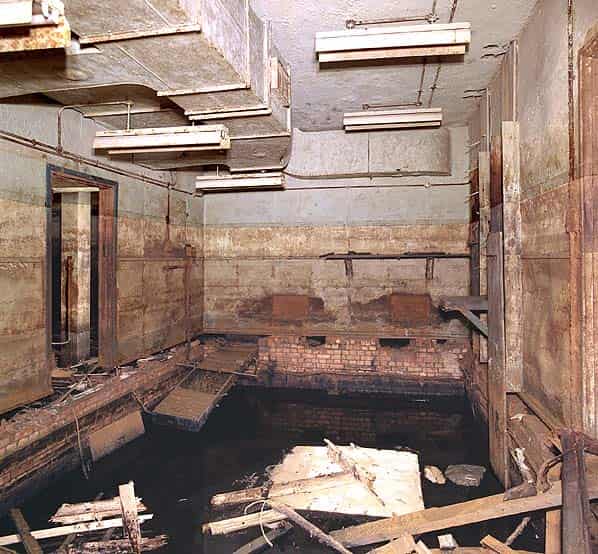
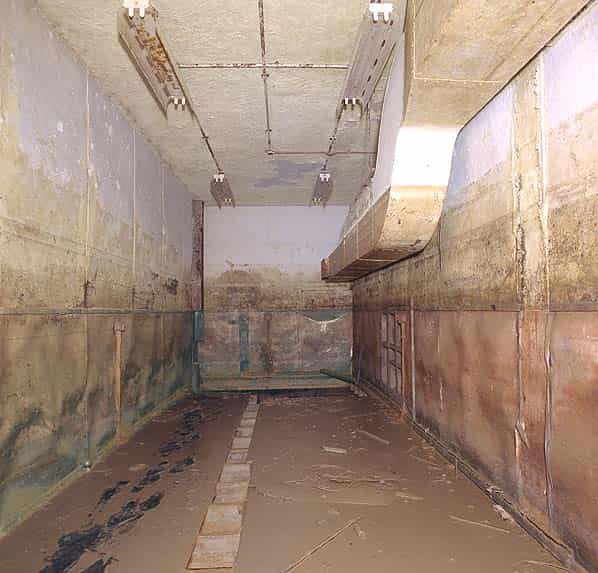
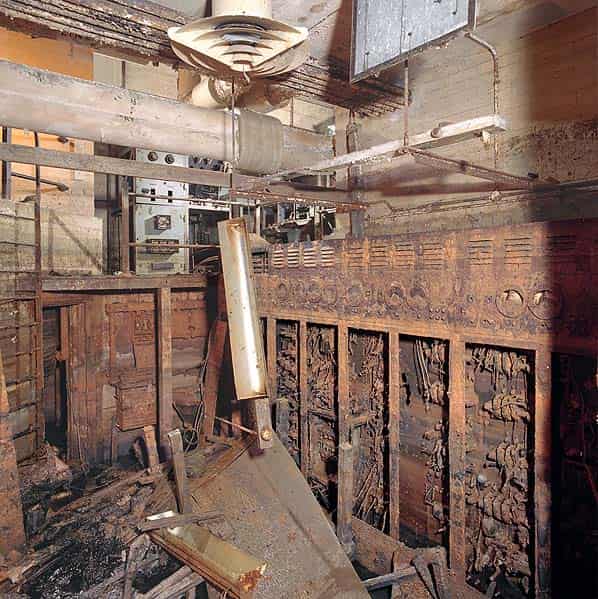
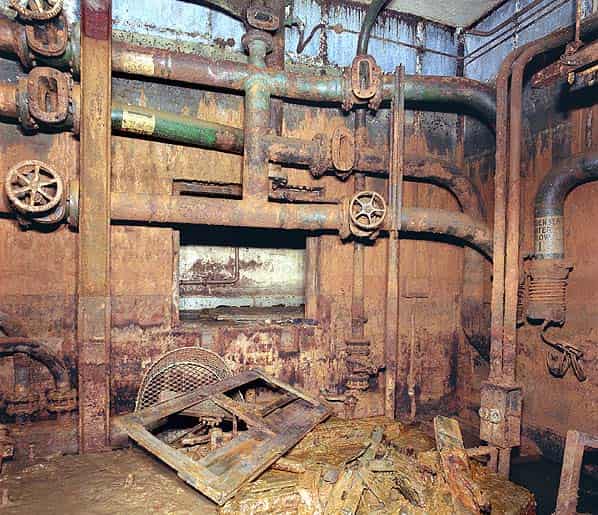
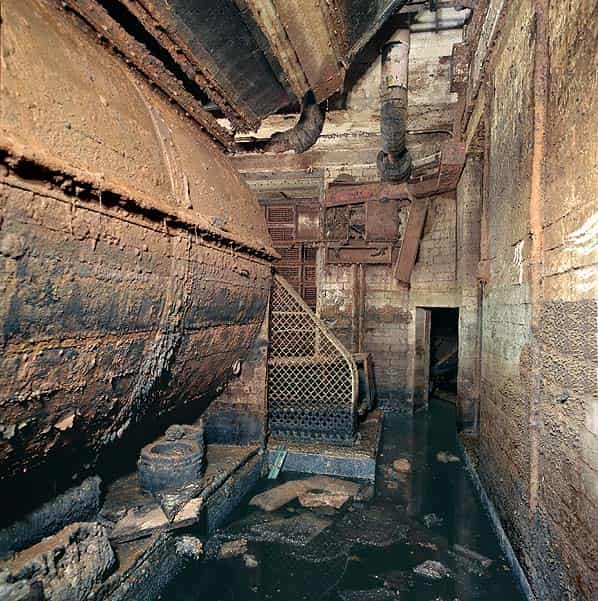
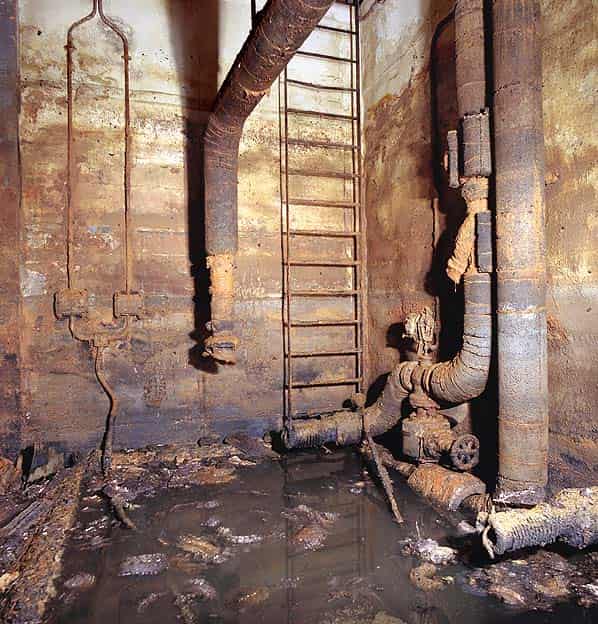
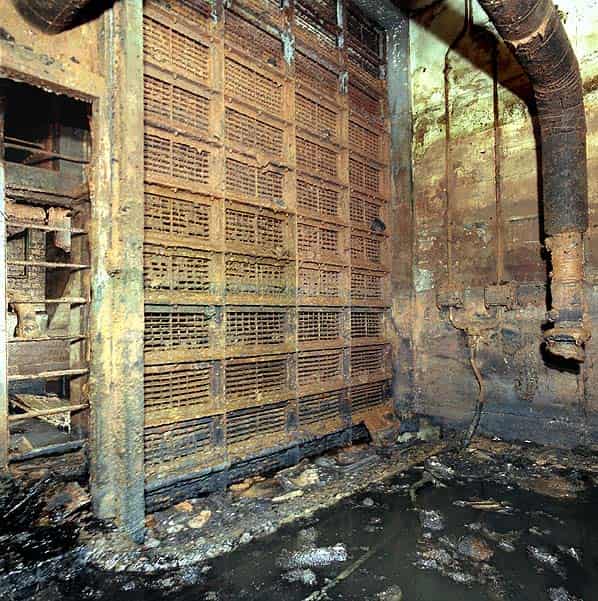
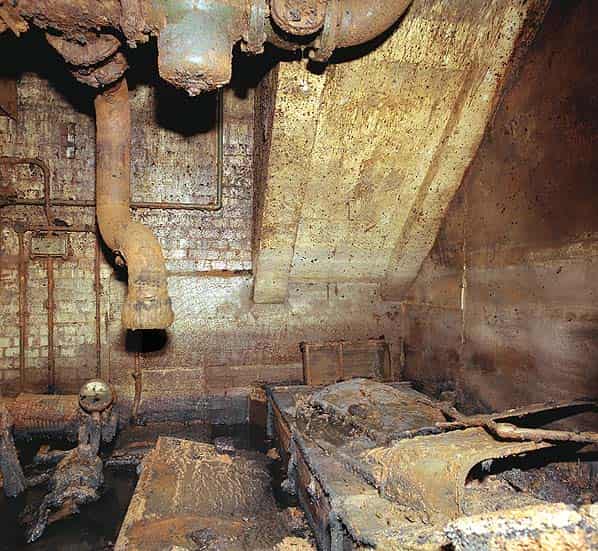
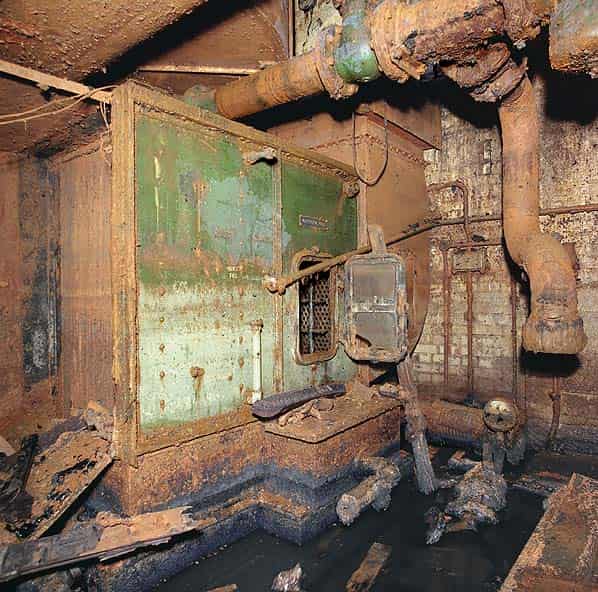
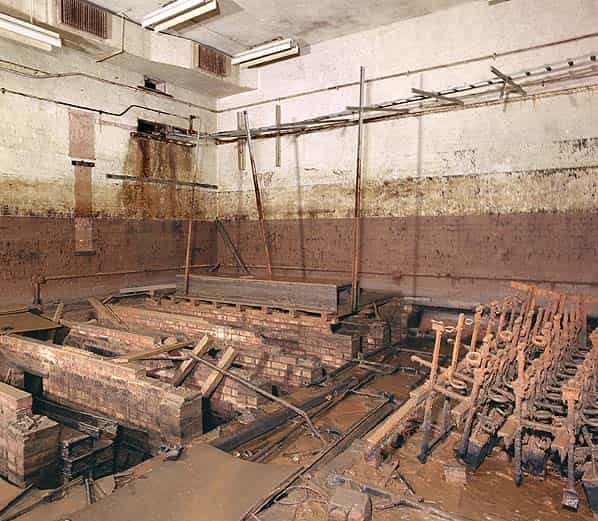
The lower level of the R3 bunker has been almost completely flooded for at least 10 years and partially flooded for more than 20. Although much equipment still remains in place in many of the rooms it has been seriously damaged by the flood water and everything is covered by a red/brown slime. Much of the timber flooring has collapsed into the 2' 6" cable void below which made passage through some of the rooms very difficult. Hydrogen Sulphide gas (toxic) was noted in some of the rooms. Rotting timber under water can give off Hydrogen Sulphide gas when disturbed with its characteristic bad eggs smell.
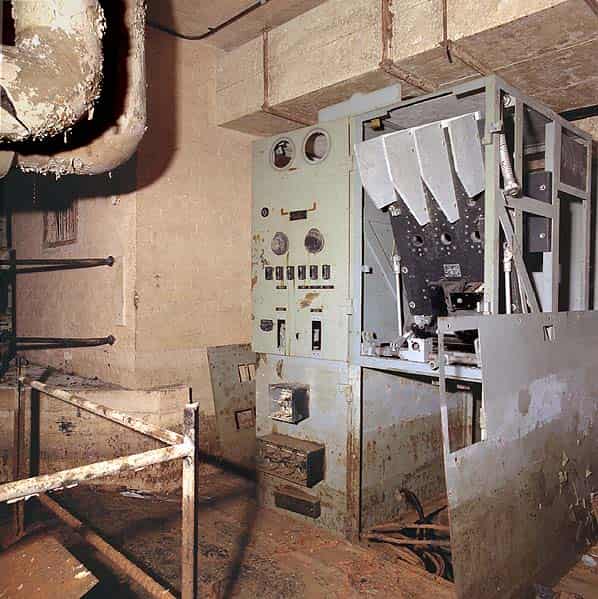
From the bottom of the back stairs the first room entered from the left of the lower spine corridor is the air conditioning plant and switchgear room. This is subdivided into a number of small rooms with brick partitions, there is also a raised area accessed by a ladder from the floor of the plant room, alongside this ladder a low doorway gives access to a small room with a three banks of Vokes ‘Kompac’ filters. The air flow from these goes through another cooler and supplies the apparatus cooling fan. This can also be accede through a small hatch (originally grilled) at the back of the adjacent radar machine room There is also an ventilation grille at floor level in the lower spine corridor.
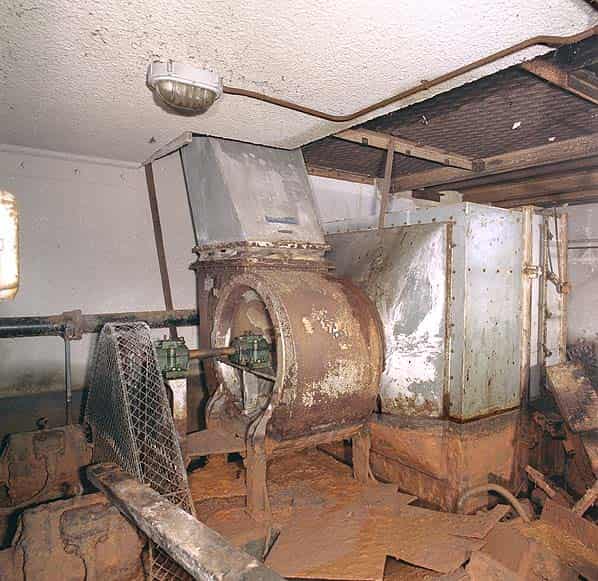
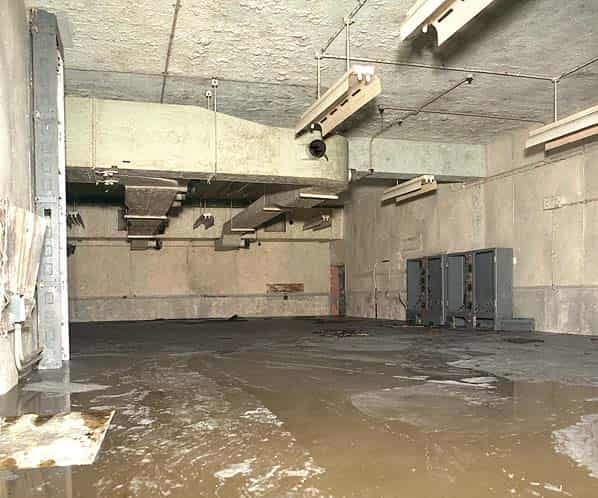
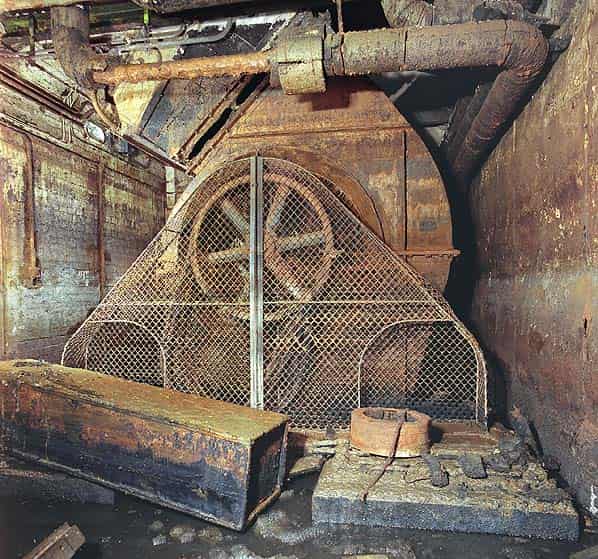
The plant room is accessed through double doors leading onto six wide concrete steps. Two compressors were mounted to the left of the steps, these have been removed with only their concrete beds remaining, two tubular condensers are mounted on the wall above them connected to the three previously mentioned axial fans. Beyond the compressor plinths an electrical panel on the wall indicated temperature and humidity in the plant room and other rooms in the bunker. At the back of the room, within its own room, the main air conditioning fan for the R3 building is still in place and behind it in a separate room another large bank of ‘Kompac’ filters standing floor - ceiling. The ventilation trunking runs up to the fan above adjacent to the back stairs.
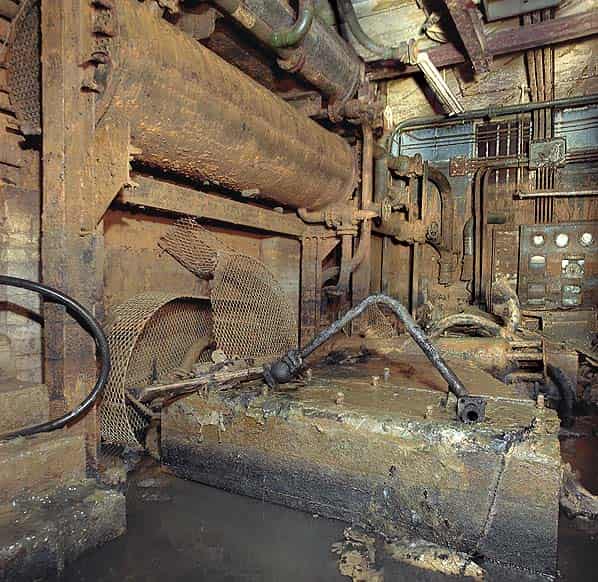
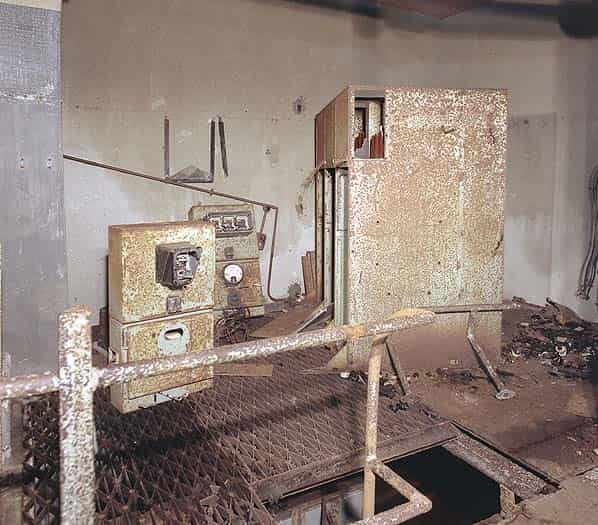
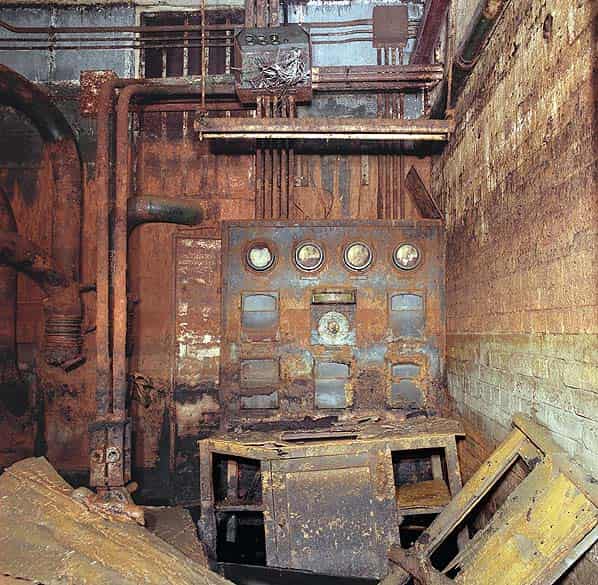
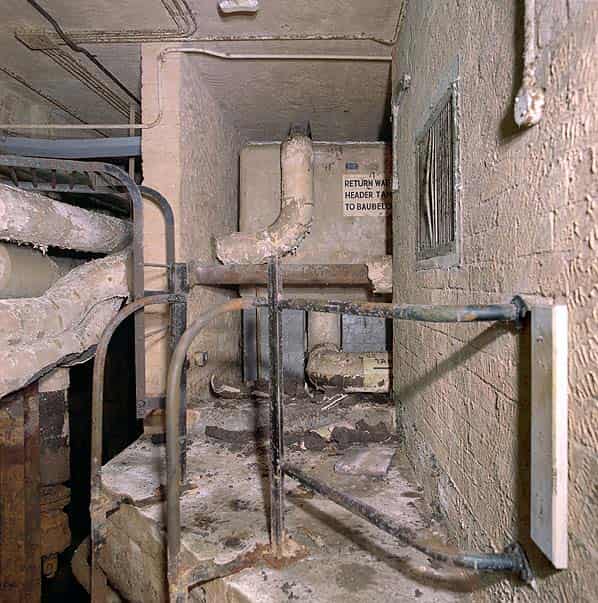
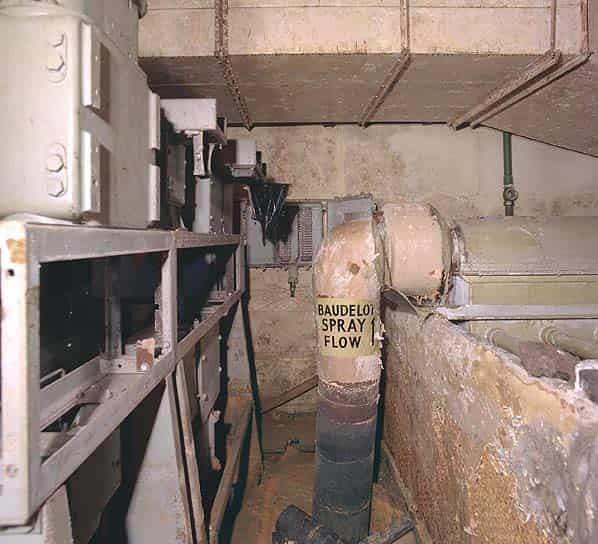
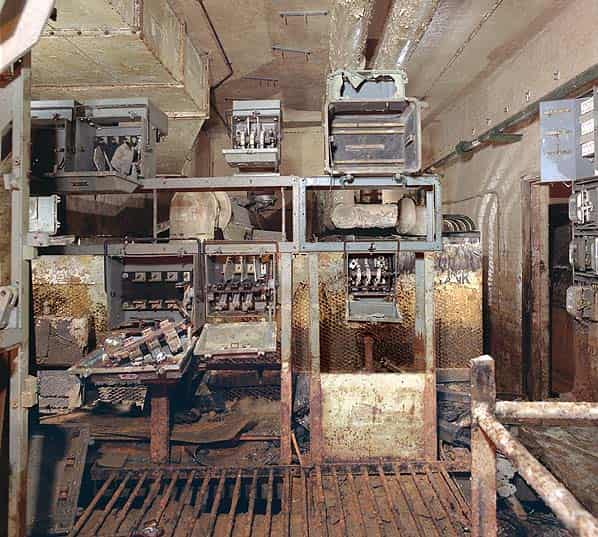
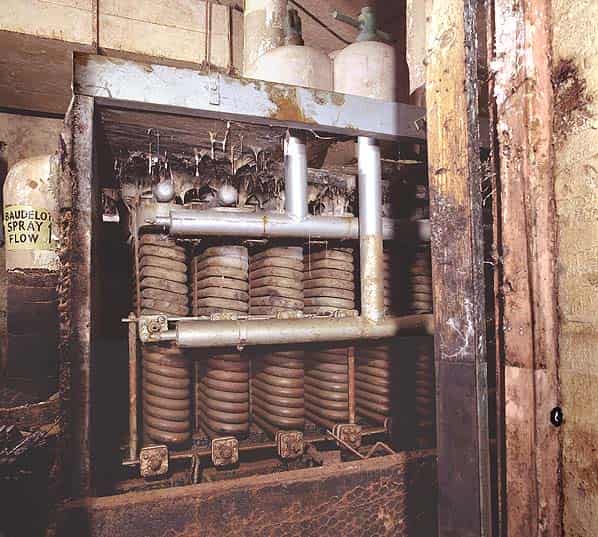
The control cabinets and switchgear stand on the right of the entrance steps. These cabinets are now heavily corroded having been submerged for many years. Opposite the steps is the raised area with the control equipment and pumps for the Baudelot heat exchangers (these circulated water over cold refrigerant [Methyl Choride] lines from the A/C compressors, chilled water being pumped from here to a header tank then, on demand, into various in-line air chiller units in the apparatus air supplies).
There is a control box with five circular dials on it. The heat exchanger unit consisting of coiled metal pipes is mounted behind the pumps. Water would have flowed by gravity over the outside of the pipes. A narrow raised walkway runs alongside with two narrow doorways into the apparatus fan room and the top of the filter room accessed from alongside the ladder. The apparatus fan is still in place; this provided cooling air for all the electrical equipment and machinery in the bunker. The ventilation trunking feeds into the fan from the upper floor.
There are a number of signs still in place on the pumps and fans and one on the water tank for the heat exchangers which says ‘check level of water in Baudelot tank weekly this should not be lower then 2 feet below the overflow when all pumps are static’. Water levels were critical in this type of A/C plant and closely monitored.
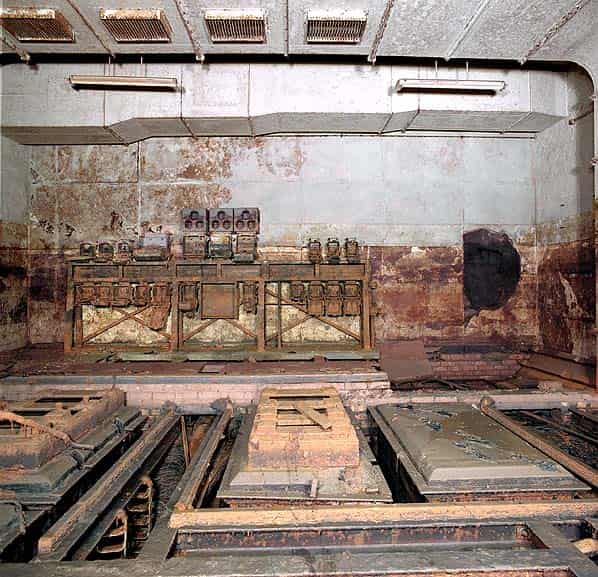
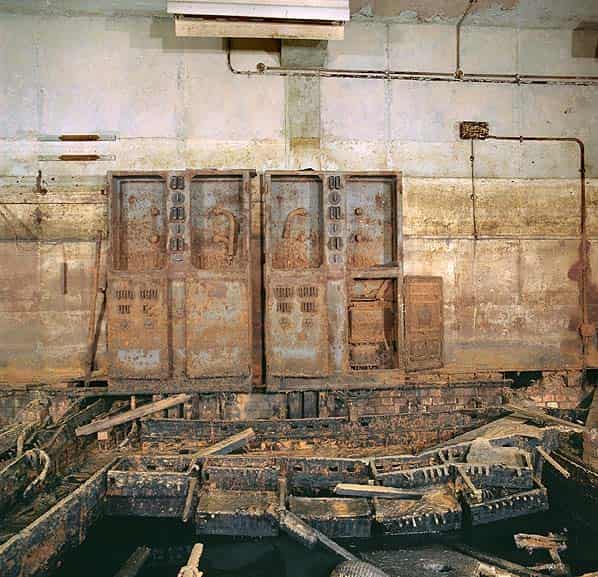
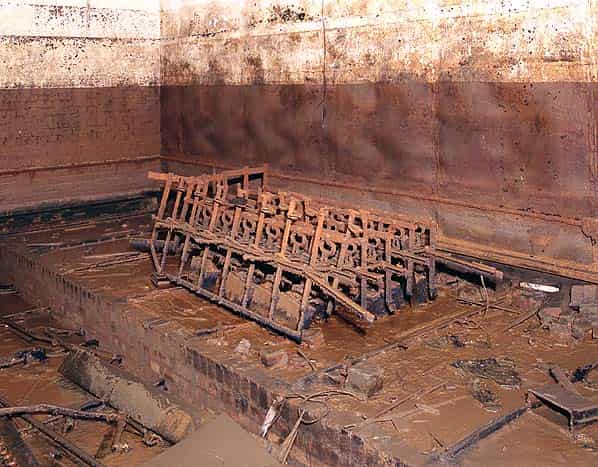
Beyond the plant room is the radar generator room with four large concrete motor beds which mounted motor-alternator ‘motors’ (50/500 Hz rotary converters). Their purpose was to take unregulated (regulated supplies from the main supply transformer being reserved for more critical uses, such as radar consoles and equipment) electric supply and convert it into ‘radar compatible power’ (high frequency and high voltage), the motor-alternators have been removed. Three large racks of electrical switchgear are still in place at the back of the room. Beyond this is the Radar Room and then the GPO apparatus room where a section of the main distribution frame lies on its side.
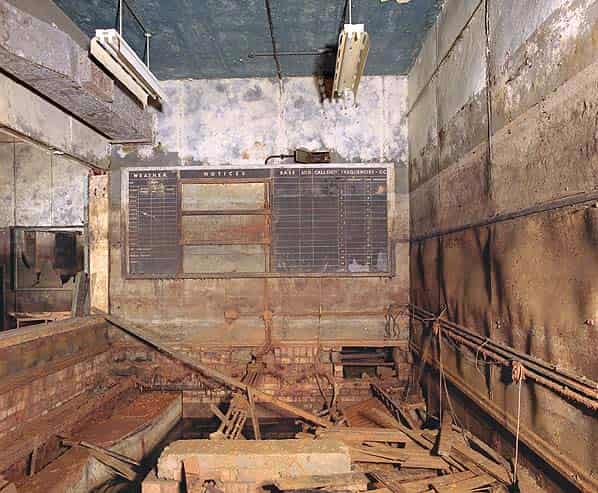
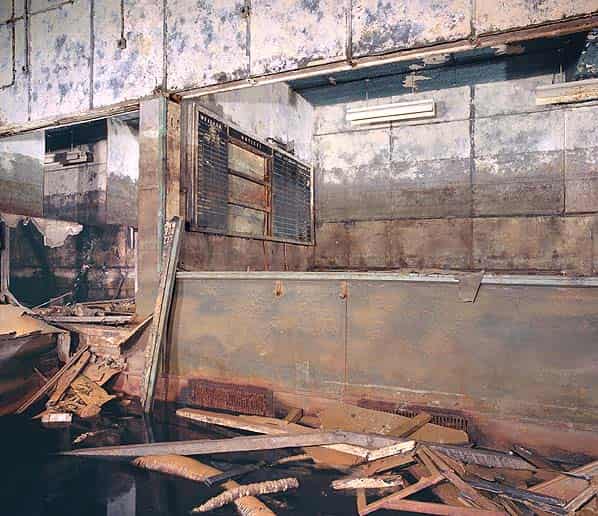
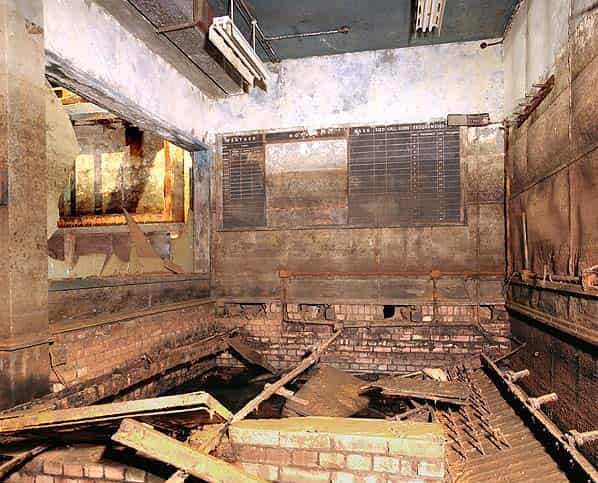
On the right hand side of the spine corridor the first room entered is ‘Intercept Cabin No. 1’ with its smashed glass window (some broken glass still remains) overlooking the ‘Operations Room’. There is a large wall mounted situation board on the back wall consisting of a notice board with blackboards on either side with painted headings. The left hand board is headed ‘Weather’ with sub headings: ‘Date’, ‘Time’, ‘Height’, ‘Wind speed’, ‘Wind Direction’,‘Temp’, ‘Tropopause Height’ and ‘Contrail Height’. The right hand board has columns headed ‘Base’, ‘SQD (Squadron)’, ‘Call sign’ and ‘Frequencies GCI’.
The next room on the right is ‘Intercept Control Cabin No 2’ which has lost its glass window looking into the ‘Ops’ room. The ‘Projector Room’ is next; this always had a glassless window with a counter and wooden steps down into the operations room at one side. The wooden steps are lying on the floor. Images could be projected onto the wall of the ‘Ops’ room wall from here. As planned the central section of the tote would have been a glass screen with a Kelvin Hughes projector in the projection room projecting a general situation map directly onto this screen. This would have been visible to all the intercept officers in their cabins. A new electronic tote was also planned to go alongside it - this equipment was never proceeded with. Instead a vertical Kelvin Hughes projector and horizontal projection table was eventually installed at the opposite end of the bunker.
The final room with a window into the ‘Ops’ room is ‘Intercept Cabin No. 3’. This has a similar situation board to that found in ‘Intercept Cabin No. 1.’
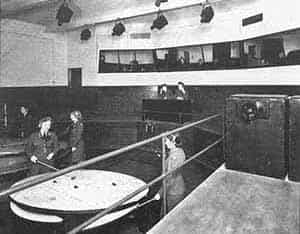
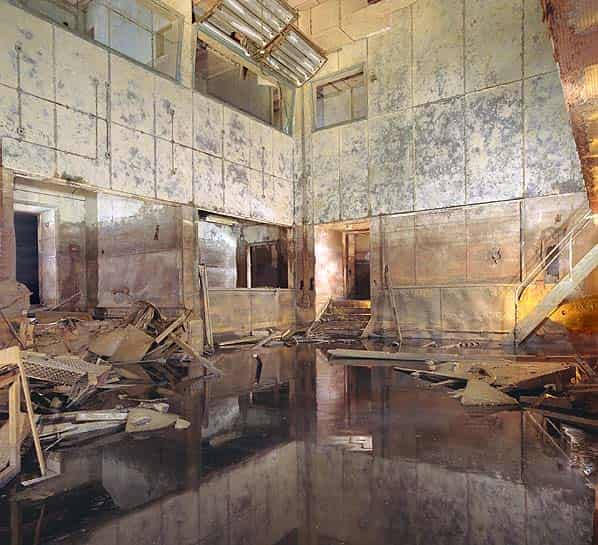
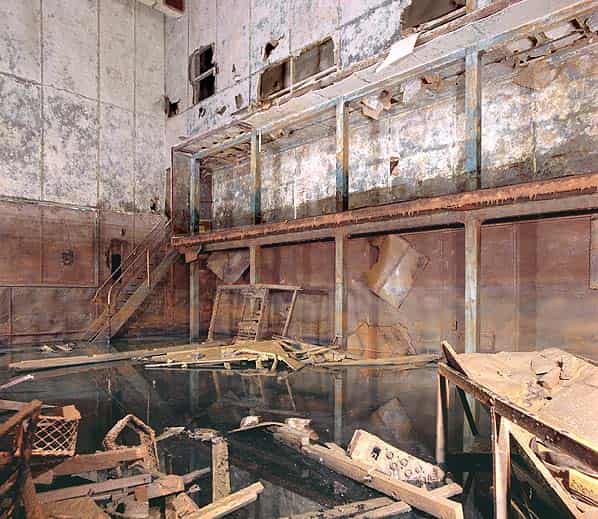
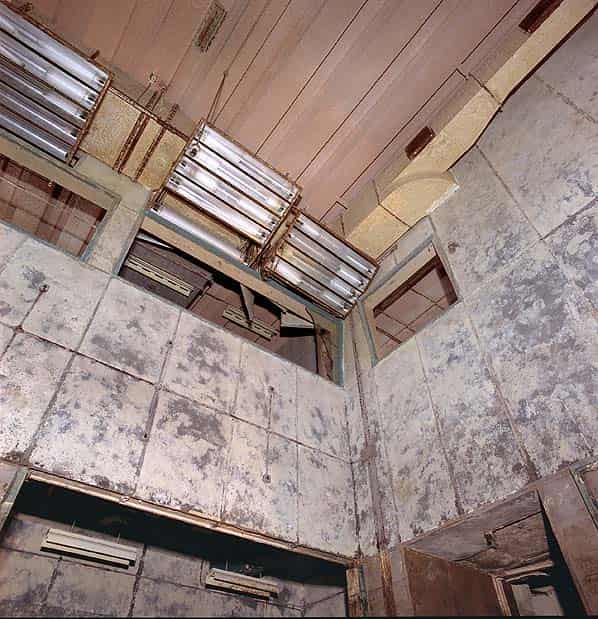
Beyond this a short corridor with a store room at the end leads to a flight of five wooden steps leads onto the floor of the large ‘Operation Room’. The steps are still in place and can be used. This is the largest room in the bunker spanning both floors. 28.5 feet high with windows looking into it from both levels. The wooden tote board frame and gallery is still in place along the left hand wall. The gallery was behind the tote and allowed the operators to change data on the tote. A wooden stairway up to the gallery is still partially intact, the lower steps, which have always been under water, are sound but the upper steps have rotted and were removed for safety reasons before the open day. A small door at the back of the ‘ops’ room was the tote store.
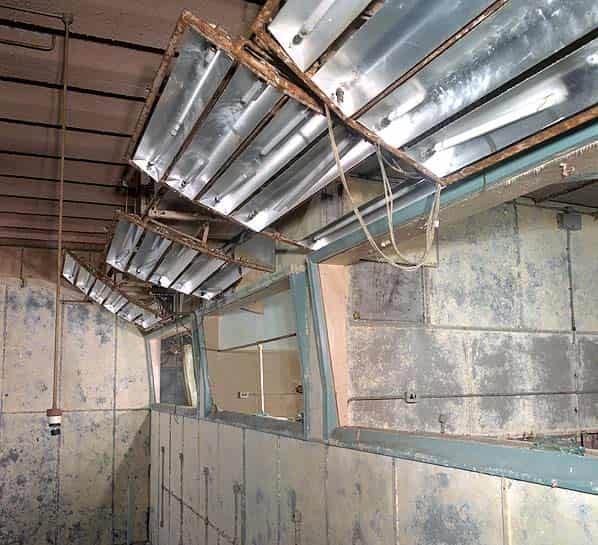
Originally there were two circular sloping tables 8 - 9 feet in diameter. One was the ‘Fighter Table’ and the other the ‘General Situation Table’. Huge floodlights are still in place above the upper intercept cabins. Above the glass windows in the upper cabins there are pivoted fluorescent lamps and reflectors these can be swung into the cabins to enable the tubes to be replaced. This operations room became obsolete after the installation of the Kelvin Hughes display.
Beyond the ‘Ops’ room entrance corridor the next room on the right is the ‘L’ shaped radar office with a radar workshop filling in the ‘L’. In the far right hand corner a single door leads back into the store room. The floorboards have been removed but the under