The Battle of Britain Ops. Room at RAF Uxbridge has now been fully restored as a private museum. Being an operational base, visits have to be arranged well in advance and there is a long waiting list. The Ops. Room was closed in 1958 and locked up until the mid 1970’s when it was restored to its current state. Very little restoration was required.
Before the war, RAF Fighter Command, responsible for the aerial defence of the UK, divided the country into geographic areas named Fighter Groups. No 10 Group covered southwest England with its HQ at Box in Wiltshire. No 11 Group covered London and southeast England and was based at Uxbridge in West London. No 12 Group covered the midlands and was centred on Watnall in Nottinghamshire whilst No 13 Group which then covered the remainder of the country to the north was based at Kenton Bar in Newcastle.
HQ Fighter Command was located at Bentley Priory in Stanmore, which apart from the administration HQ contained the Air Defence of Great Britain (ADGB) Filter and operations rooms. The former filtered incoming information from radar stations, observer corps posts etc to remove duplication, doubt and confusion in order to present the latest and clearest information on the plotting tables at both command and group. The latter allocated ‘threats’ to the various groups for defensive measures to be taken and to maintain a complete oversight of the battle.
11(Fighter) Group HQ was based at Hillingdon House within the grounds of the RAF Depot, Uxbridge, but independant of it. The underground operations room was built also within the grounds nearby.
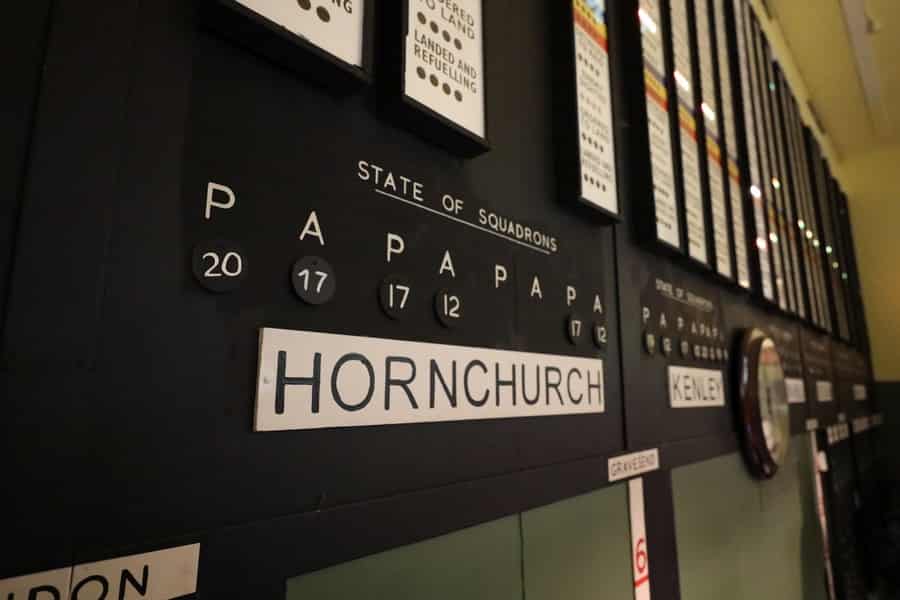
This Group was subdivided into 7 Sectors A or Tangmere Sector Station, satellite at Westhampnett. B or Kenley Sector Station, satellite at Croydon. C or Biggin Hill Sector Station, satellites at West Malling and Lympe. D or Hornchurch Sector Station, satellites at Hawkinge, Manston, Gravesend and Rochford. E or North Weald Sector Station, satellites at Martlesham Heath and Stapleford Tawney. F or Debden Sector Station, no satellite and lastly Z or Northolt Sector Station, no satellite.
Sectors G - Y were in other Group areas and other airfields belonging to other Commands ie Coastal Command, Army Co-operation Command, RNAS etc were within 11 Groups area but not under its command. The other main resource for ADGB within 11 Groups area were the 60 Group administered Chain Home (CH) radar stations at Bawdsey, Bromley, Canewdon, Dunkirk (Kent), High St Darsham, Pevensey, Poling, Rye, Swingate (Dover) and Ventnor with Chain Home Low (CHL) stations at Beachy Head, Dunwich, Fairlight, North Foreland, Truleigh Hill and Walton (upon Naze).
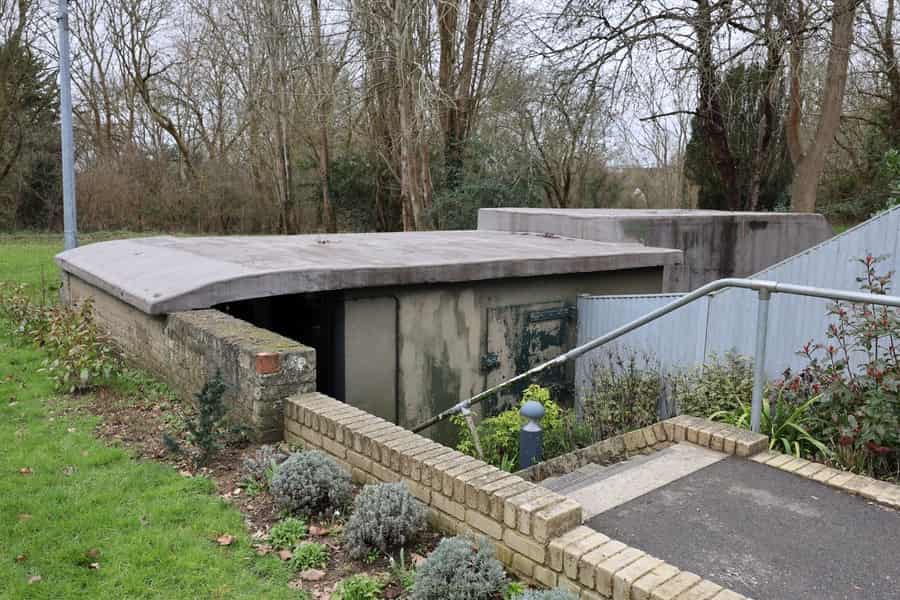
Before entering the bunker, we were able to see the standby set house where the original 1930’s standby generator and associated control equipment is still in place and fully operational, as was demonstrated when the generator was started for us. The building is typical of its type, a brick blockhouse with a brick blast wall around it; it was one of three on the base. From the standby set house we walked the 50 yards to the bunker, an unobtrusive flight of steps down into the ground beside some bushes alongside the road. Apart from two small ventilator stacks alongside nothing else is visible here. The whole area is grassed over.
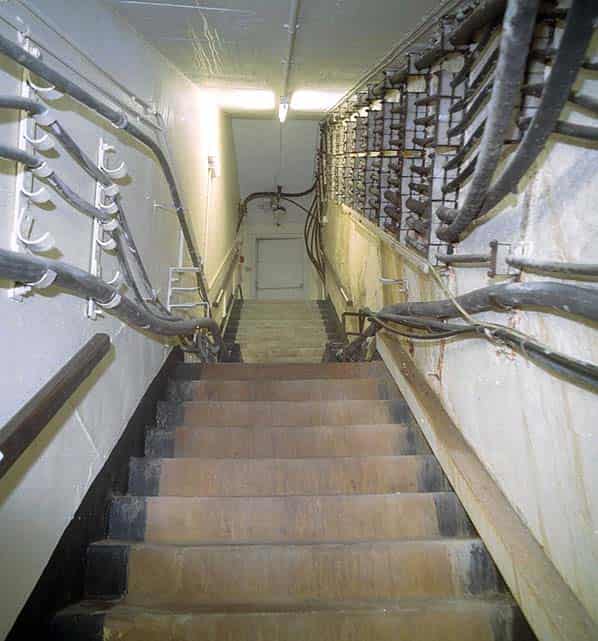
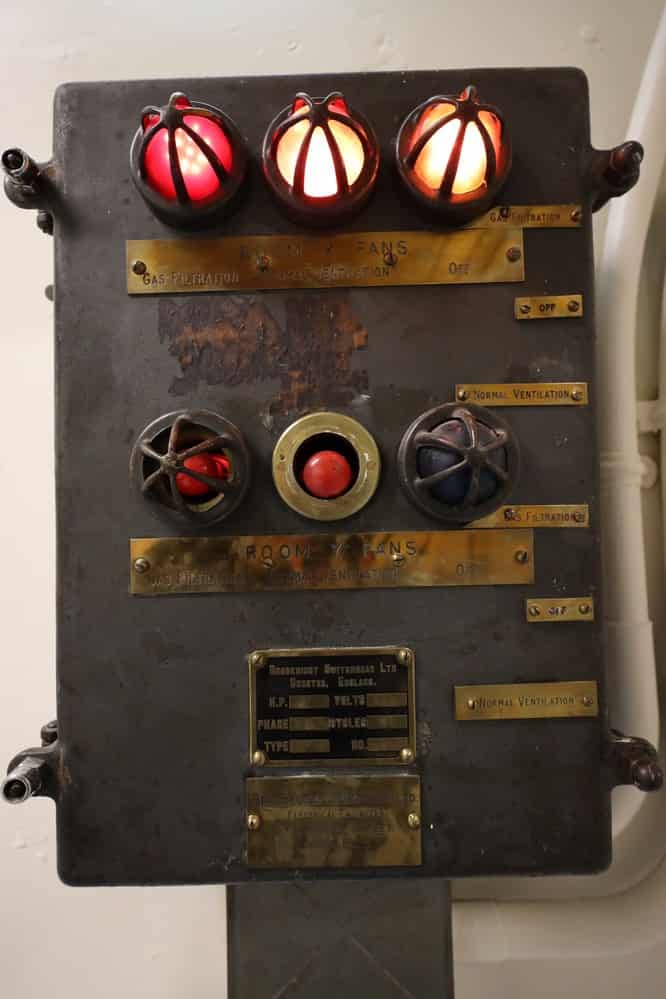
On the far side of the grassed area is a small wood where the emergency exit is located with a rectangular brick pillbox overlooking it. The emergency exit is slightly more substantial with its heavy blast door and two more ventilator stacks behind. The two level bunker is 60 feet below ground accessed by two flights of stairs. Between the two flights is one of two identical ventilation plant rooms (one used only as a back up), these again date back to the late 1930’s when the bunker was built and are fully operational and in use to this day.
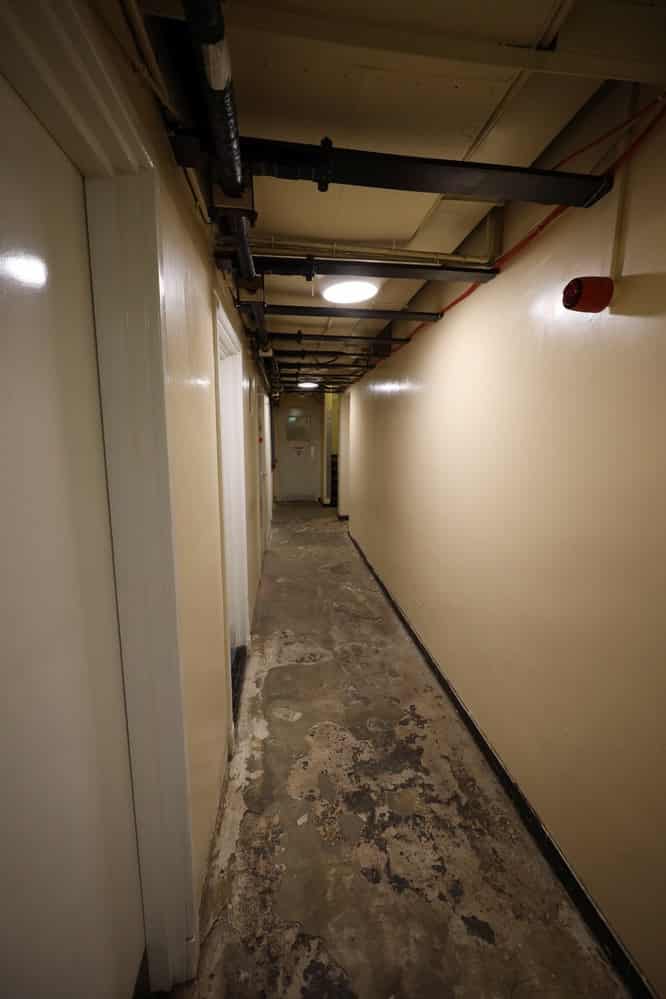
At the bottom of the second flight of stairs we found ourselves in a rectangular ring corridor, with most of the rooms accessed from the inner part of the ring.
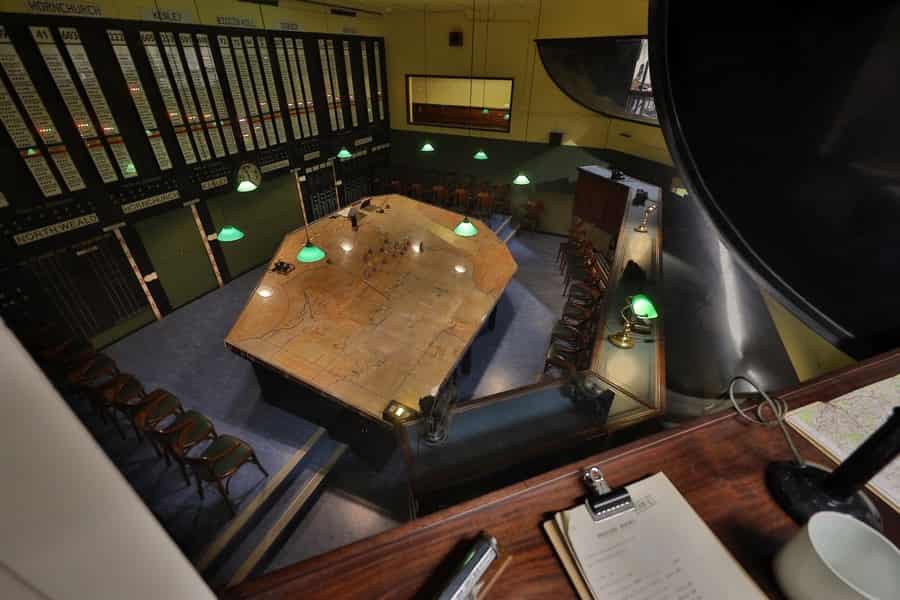
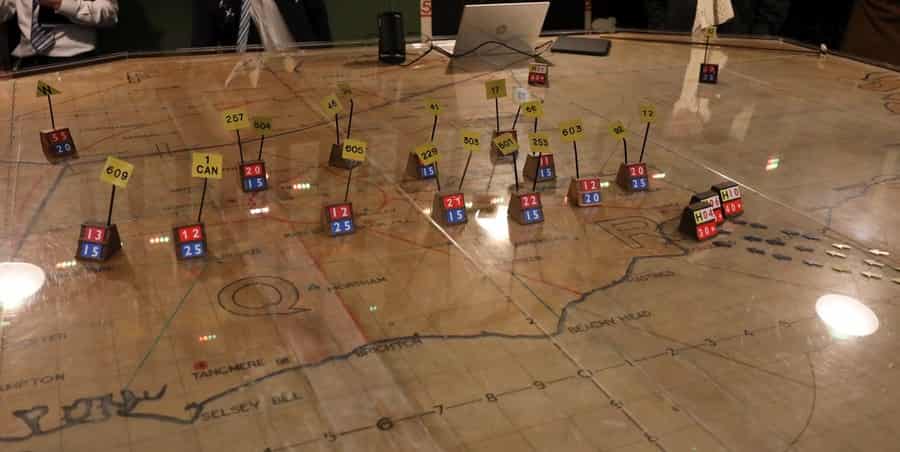
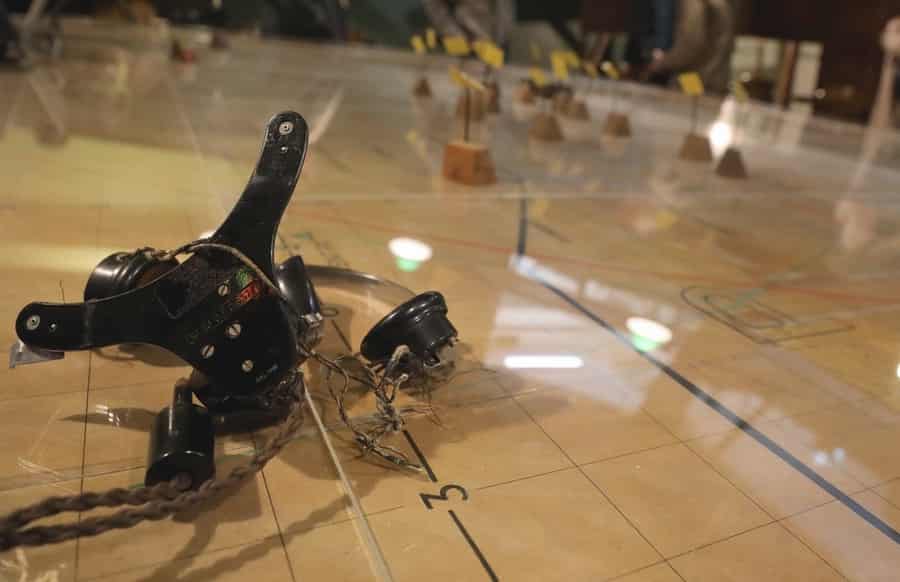
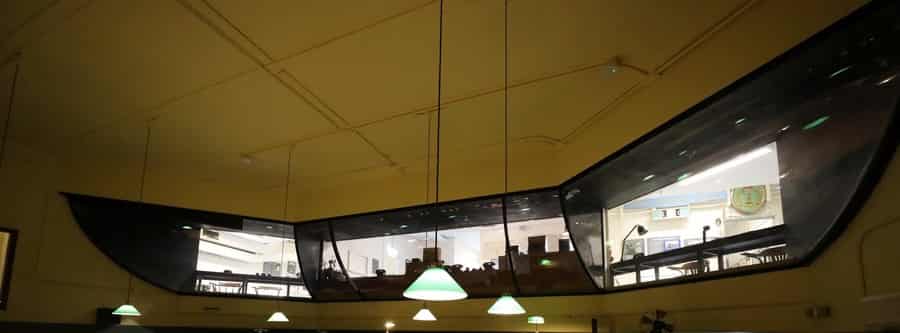
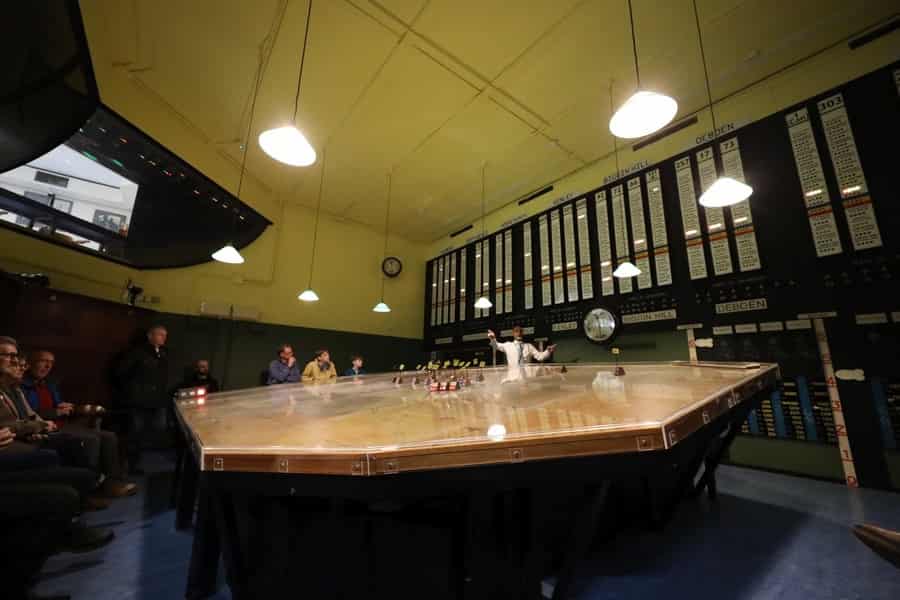
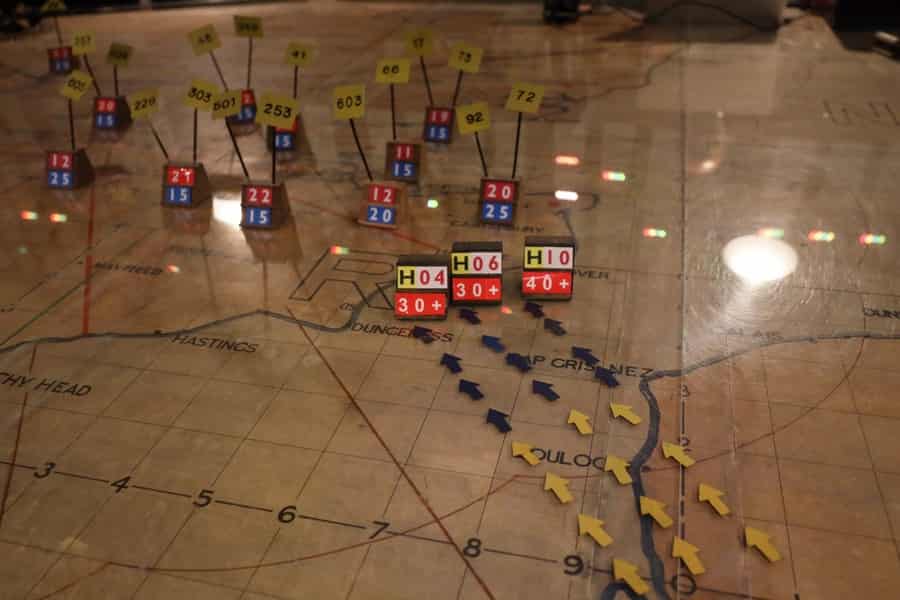
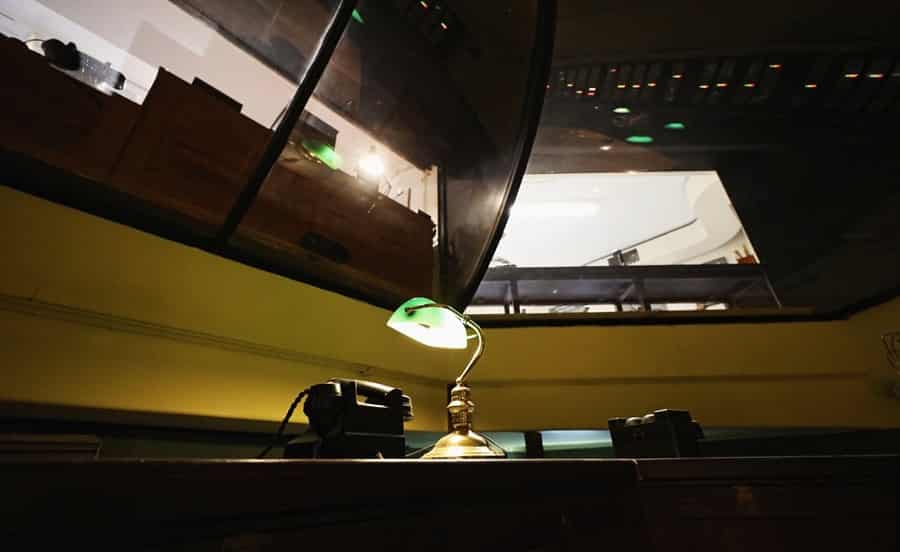
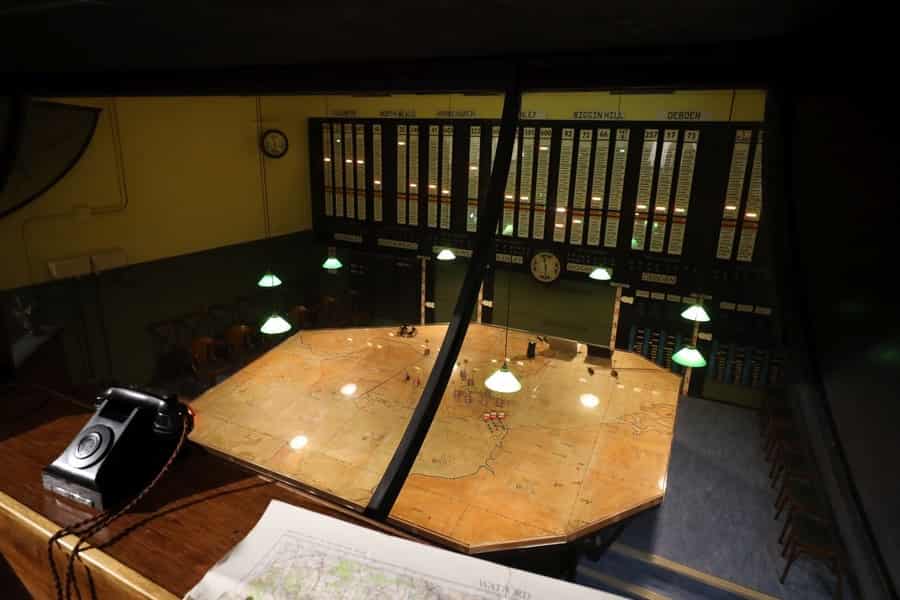
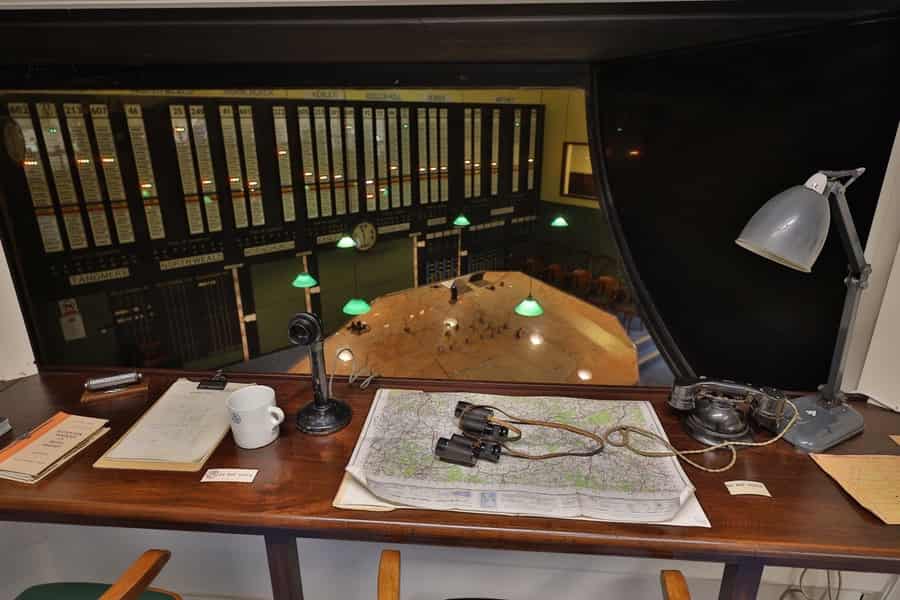
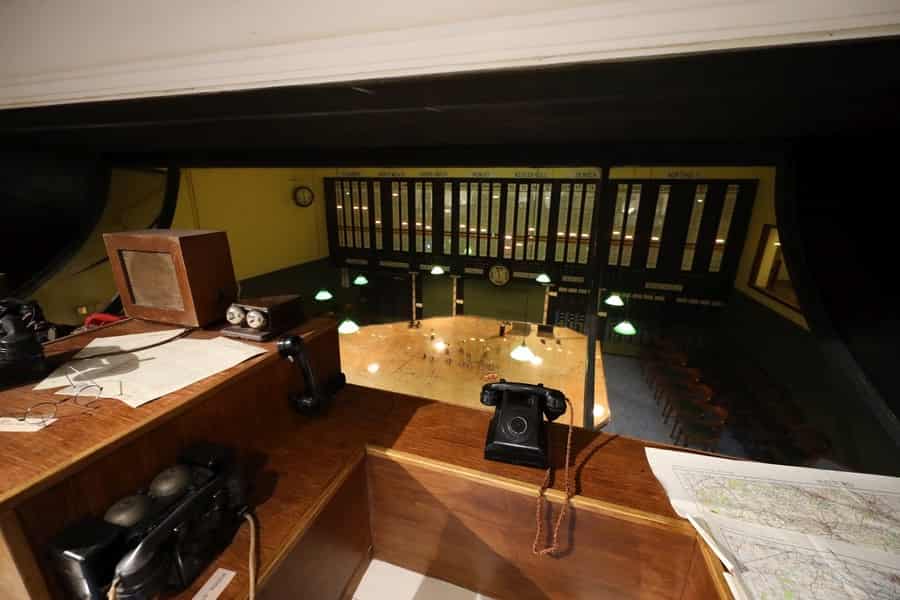
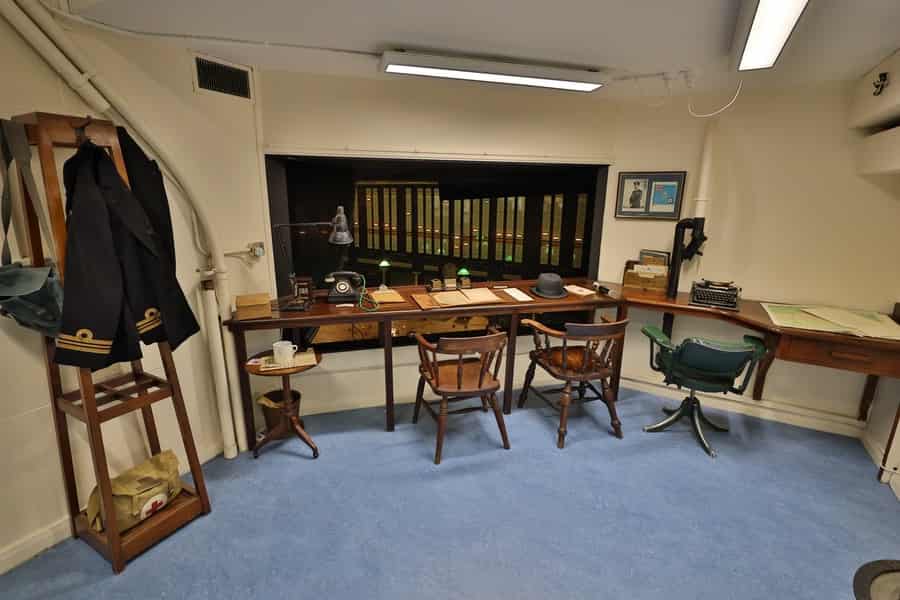
Half way along one of the long sides we entered the Ops. Room at the lower floor. The room is really on two and a half levels. Above is the control room with curved glass panels to cut out reflection and noise, but at the back of the room steep wooden steps lead up to a low balcony overlooking the plotting table. The room has been restored to the state it was in during the Battle of Britain with the large irregularly shaped, angled plotting table taking up much of the floor.
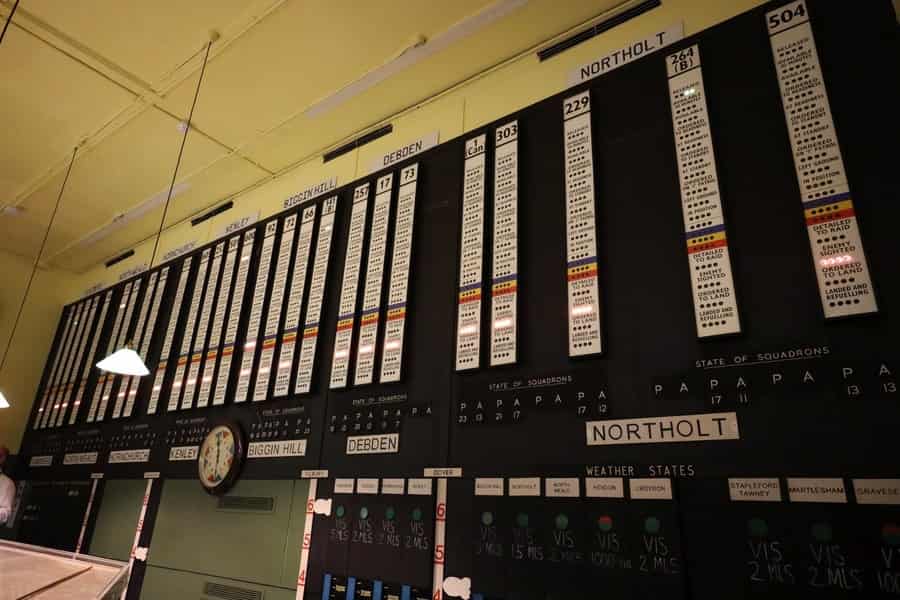
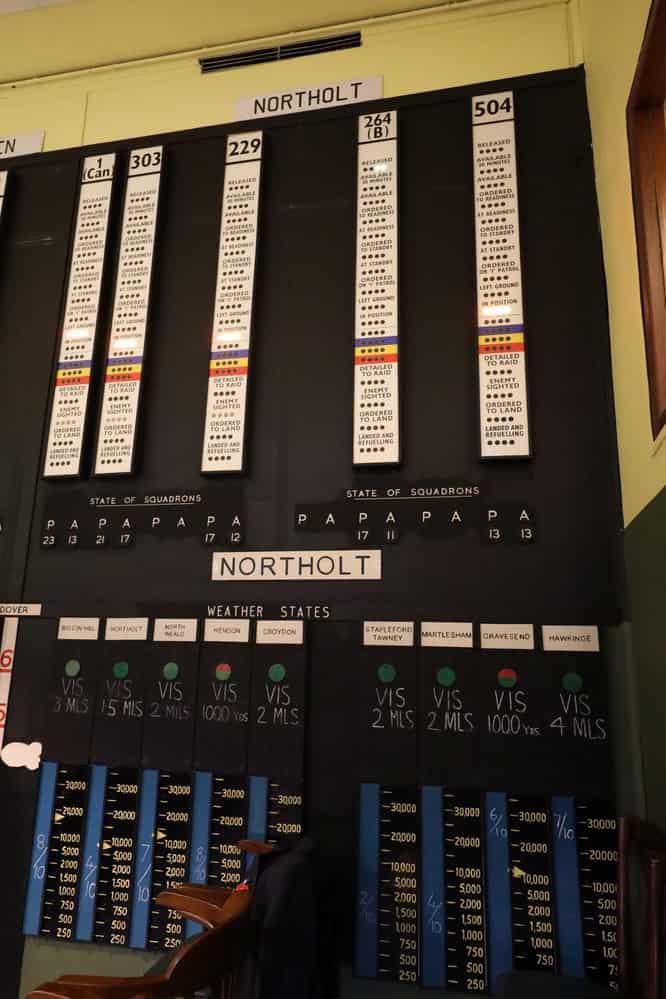
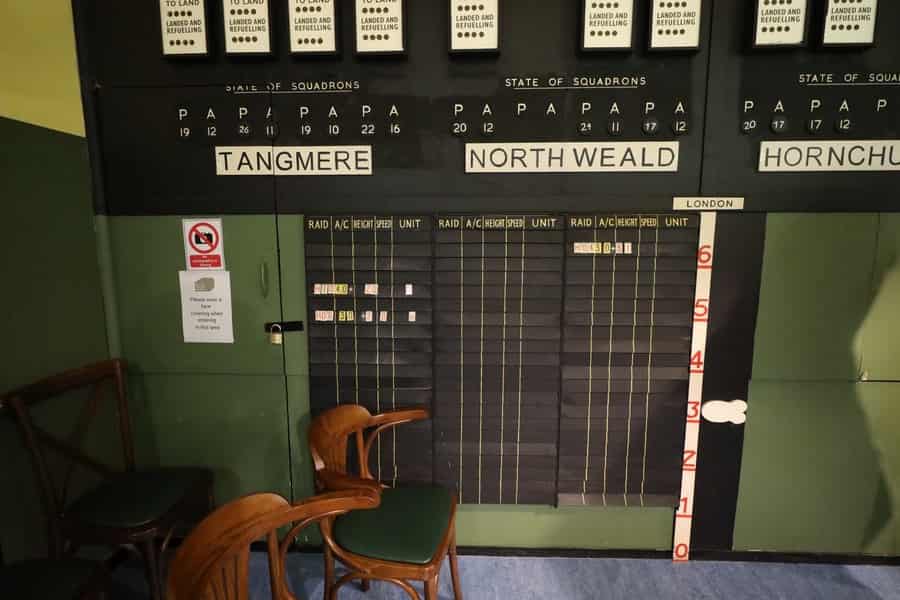
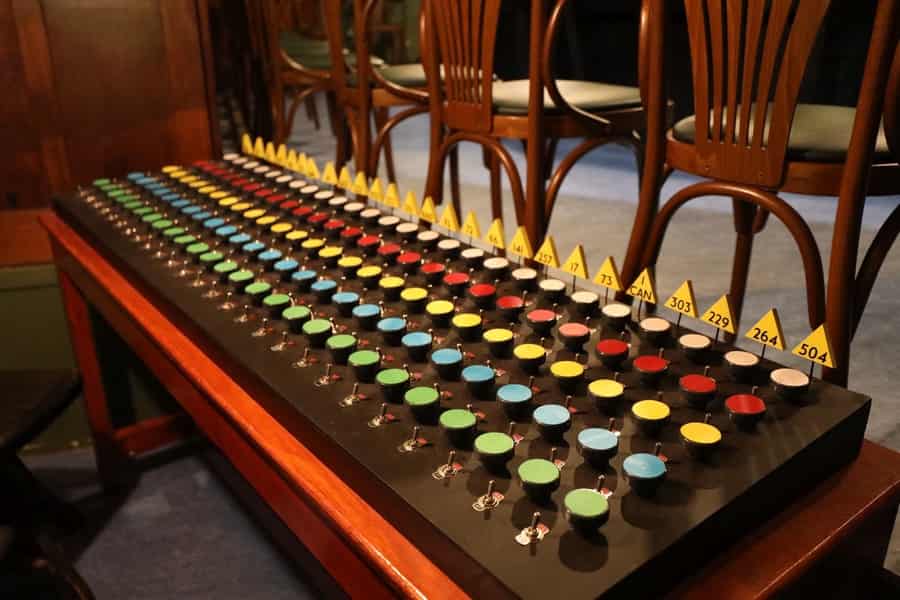
This shows a map of south east England showing the group and sector boundaries and the various airfields. Here small flagged blocks could be pushed into place to show the positions of the various squadrons. At the rear of the room are the tote boards, one for each sector airfield showing the state of all aircraft within the group by means of rising coloured lights.
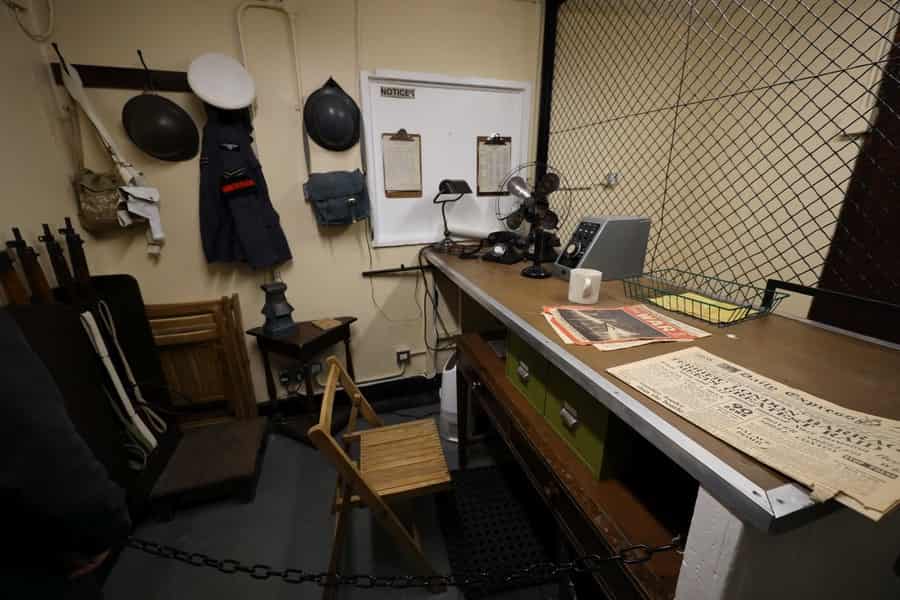
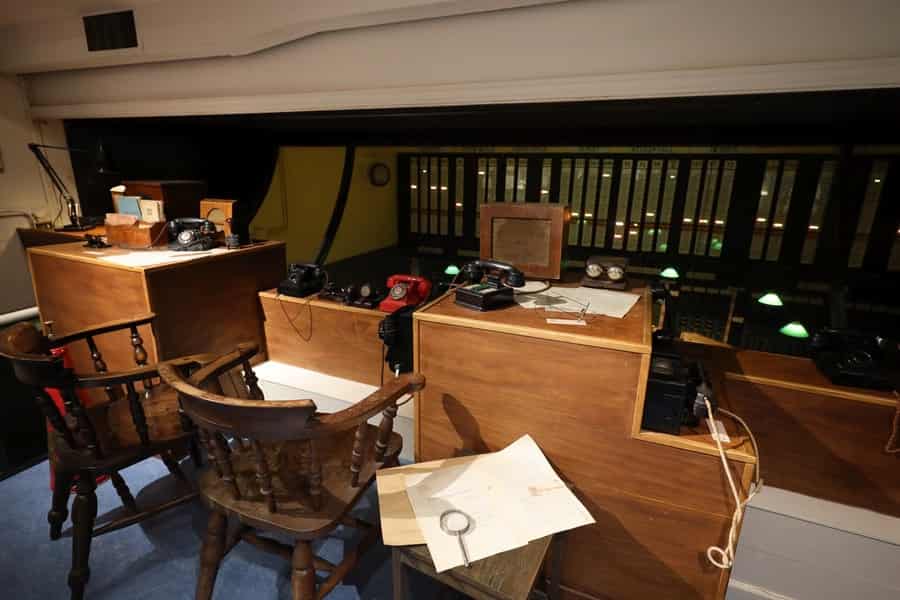
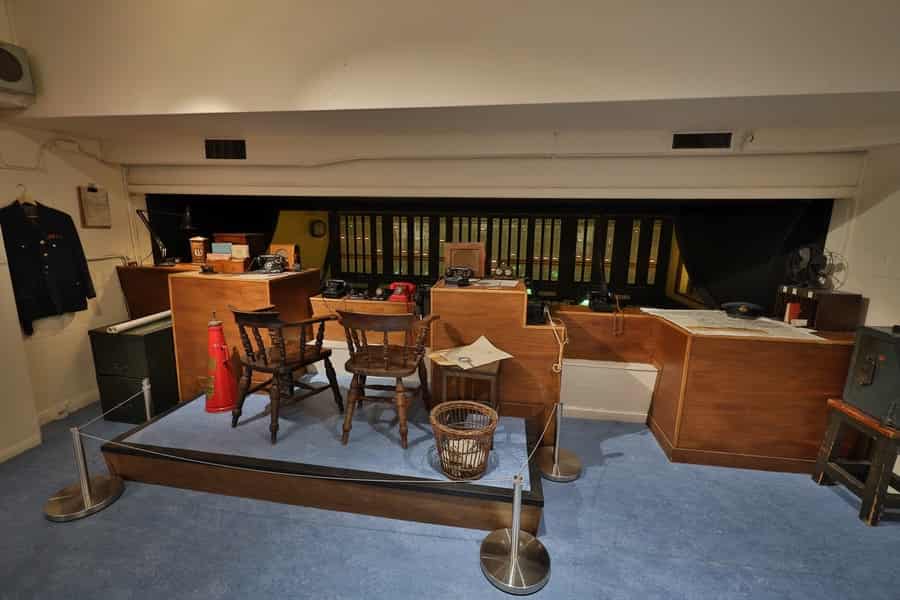
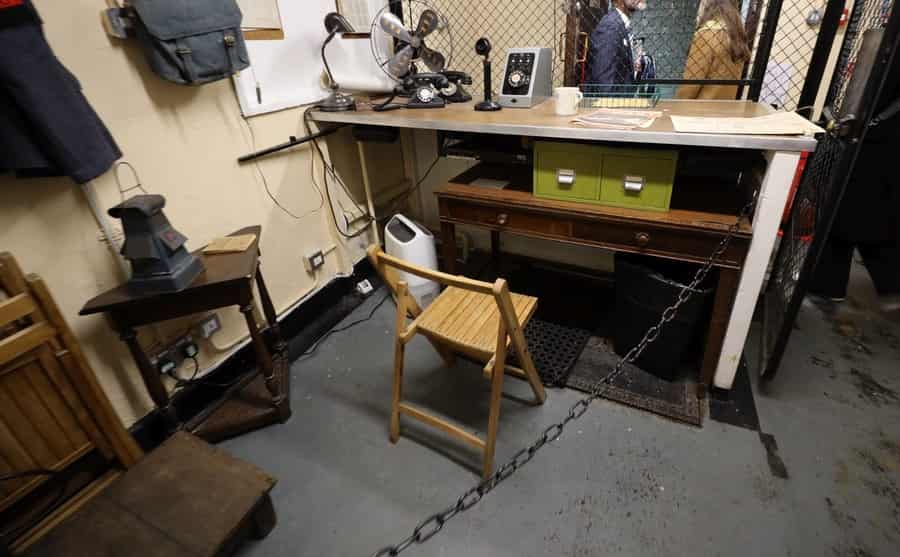
Overlooking the Ops Room to one side is a small observation area that was put in for a visit by King George V1. We were able to enter most of the rooms around the corridor including areas not normally accessible to the public. These included the second plant room and emergency exit, ejector room for the sewage and GPO room where the original 1930’s frame was still in place.
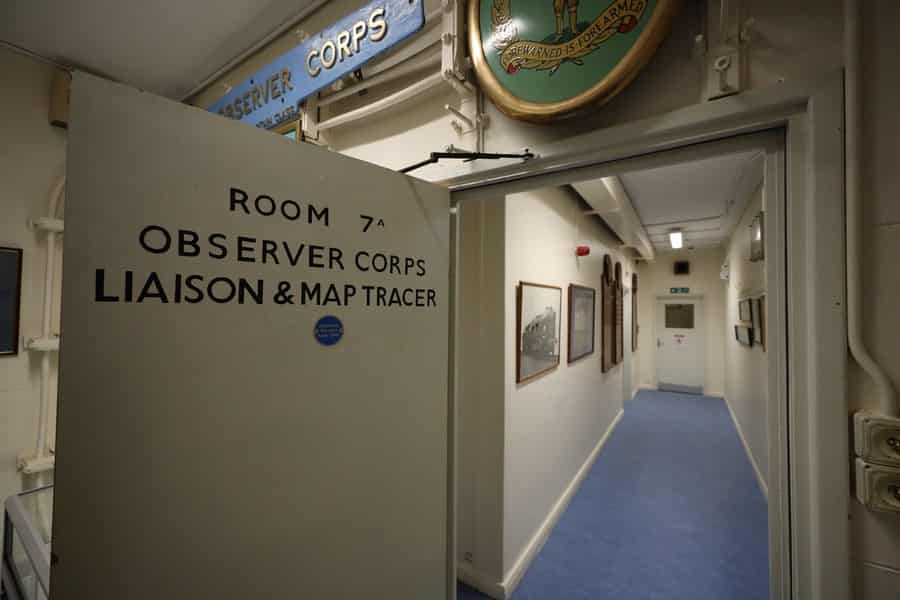
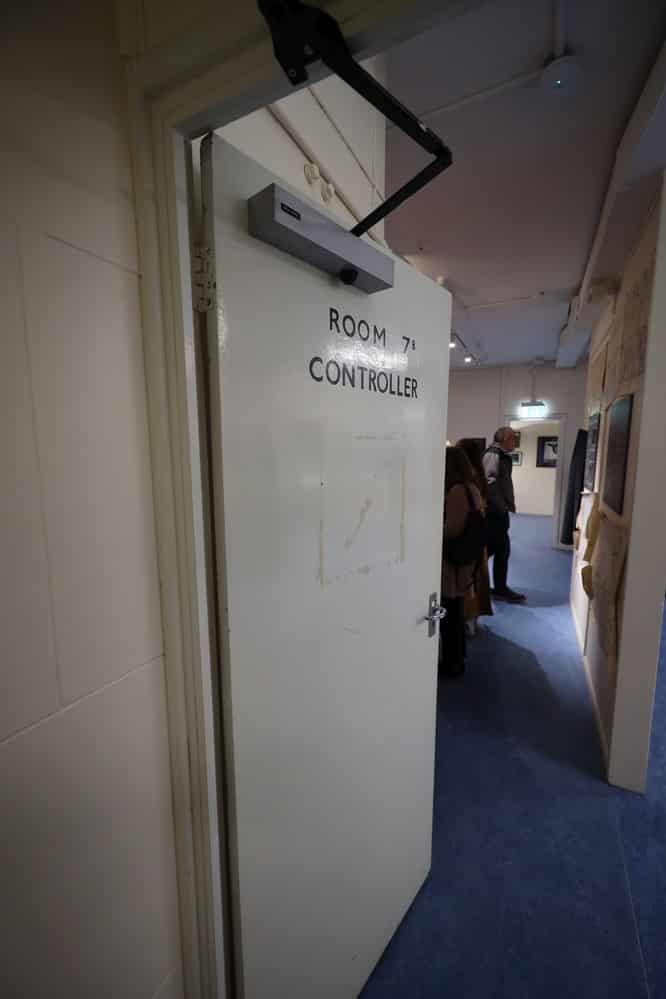
All the original cables are still in place in cable runs along the wall and at the back of the Ops. Room there was a Lamson Tube message handling system. Along the two long corridors are stairs to the upper level with three control rooms, one manned by members of the Royal Observer Corps, these look down into the Ops. Room through curved and tinted glass windows, all original. These rooms now house the museum with a large number of exhibits in glass cases.
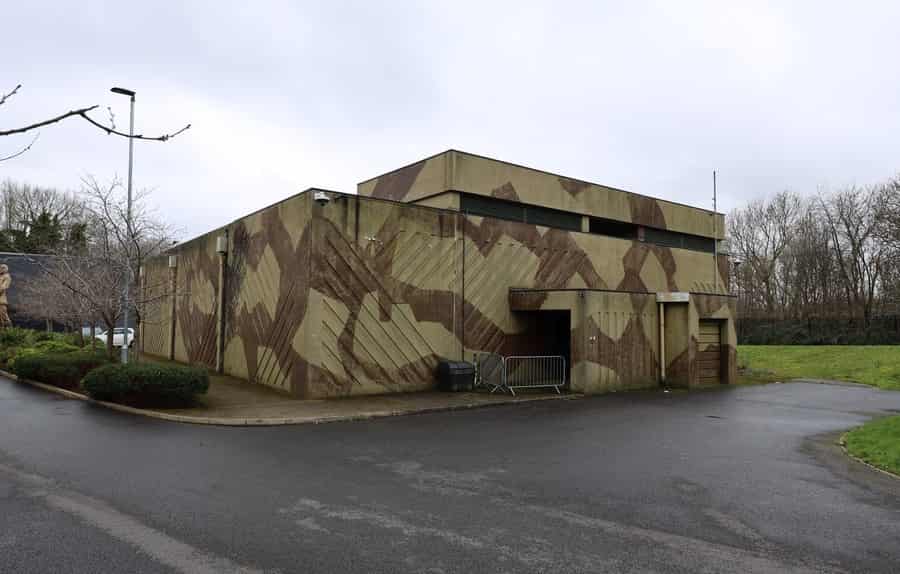
Among many other things, RAF Uxbridge was home to a Royal Artillery Anti-Aircraft Operations Room (AAOR), built in the early 1950s, which covered the London West anti-aircraft zone. This building stil stands and is currently unused.
Those taking part in the visit were Nick Catford, Rob Templeman, Dave Farrant, Dan McKenzie, Jason Blackiston, Martin Sylvester, Caroline Ford, Graham Old, Robin Cherry, Mark Bennett, Richard Challis, Tony Page, Neal Harley, Pete Walker, Bob Clary, Rod Taylor, Duncan Halford, Terry White, Richard Lamont, Ian Walker, Keith Ward.