In February 1940 instructions were issued by the Director of Signals Development at the Admiralty for construction to began on Admiralty Experimental Station (AES) No. 4 on the island of Unst in the Shetland Islands.
The site selected was on top of Saxa Vord, at 950 feet the highest point on the island. Due to delays caused by the weather and RAF requirements for equipment, the station did not become operational until September 1940. Saxa Vord (the Navy appear to have referred to it as a single word, the RAF as two) was equipped with CDU (Coast Defence U-Boat) radar, the Naval version of CHL, and was tasked with tracking submarines and shipping attempting to break out into the Atlantic. It was also able to plot aircraft and was to play a major part in the destruction of several German aircraft in the area. Saxa Vord closed down in July 1945, having been manned by the RN throughout its operational life.
In 1956 construction of a new radar station, on the same site as that which had been used by the Navy, was begun by the RAF.
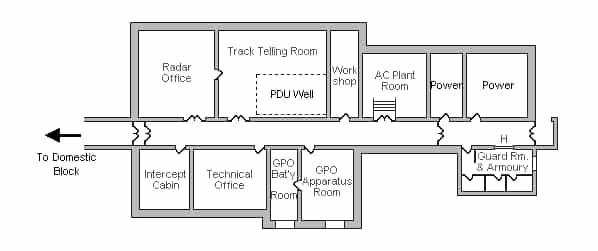
The final stage of the ROTOR Programme (Rotor 3) was to provide radar cover for the north and west of the British Isles which were still exposed to attack and to give low and surface level cover over the Atlantic, the absence of which prevented effective action against low flying enemy aircraft. Three new Centimetric Early Warning (CEW) stations were to be built at Saxa Vord, Aird Uig and Faraid Head equipped with Type 80 Mk 2 and Type 13 radars . The new CEW operations buildings were to be above ground and designated R10, similar in internal layout to the underground R1 bunker.
ROTOR 3 included five new Chain Home Extra Low (CHEL) stations equipped with Stage 1 radar equipment to enable detection and tracking of low flying aircraft. (Stage 1 could comprise of Type 7 Early Warning [E/W] GCI, Type 14 E/W search radar E/W or FC [CEW station], Type 13 H/F and a Type 15 [mobile Type 7]) The proposed stations were at Kilchiaran, Murlough Bay, Prestatyn, Snaefell and West Myne. These were to be brick built operations blocks, designated R11; the above ground version of an R2 bunker.
Two new GCI stations were also proposed as part of the ROTOR 3 programme, each equipped with a Type 80 radar and R8 prefabricated operations block. One at Ballywooden (Killard Point) in Northern Ireland and the other at Wick on the Scottish east coast.
It was hoped that The ROTOR 3 programme would be complete by 1957 and all technical aspects were classified as ‘Super Priority’.
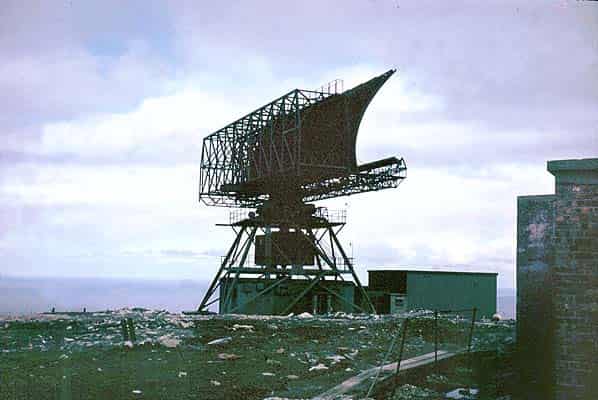
A 1956 Works File (Air 2/12064 - 6) lists the radars and equipment that were to be fitted at Saxa Vord. These include Stage 1A (Type 80) radar on the site of the WW2 Chain Home Low operations block with three Type 13 height finders. All evidence of the CHL was cleared away during the construction work.
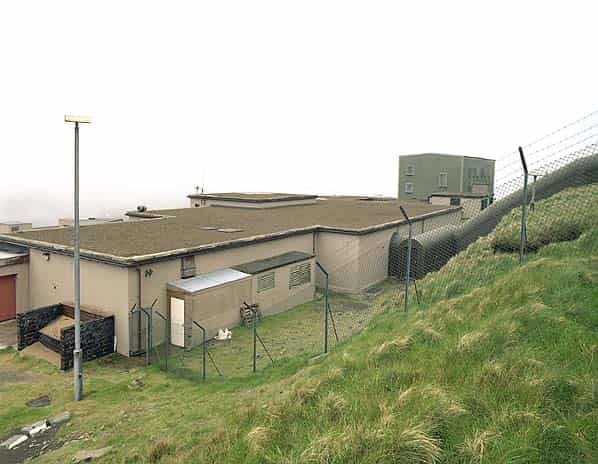
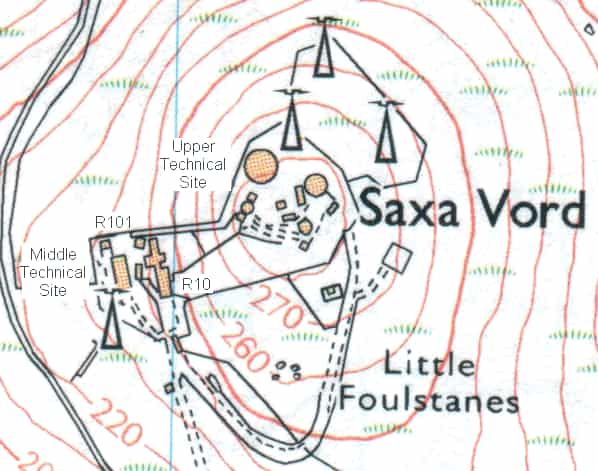
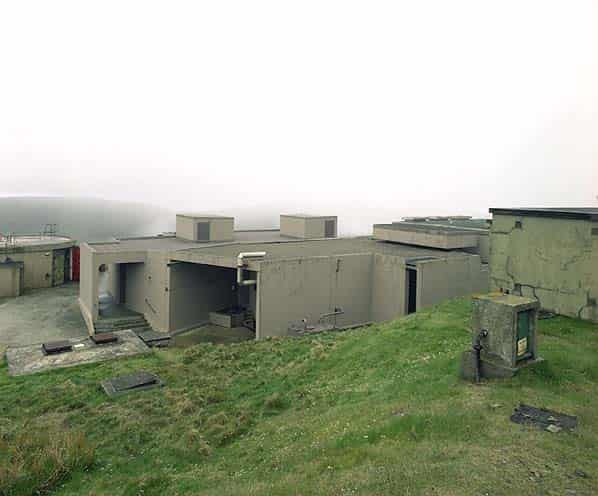
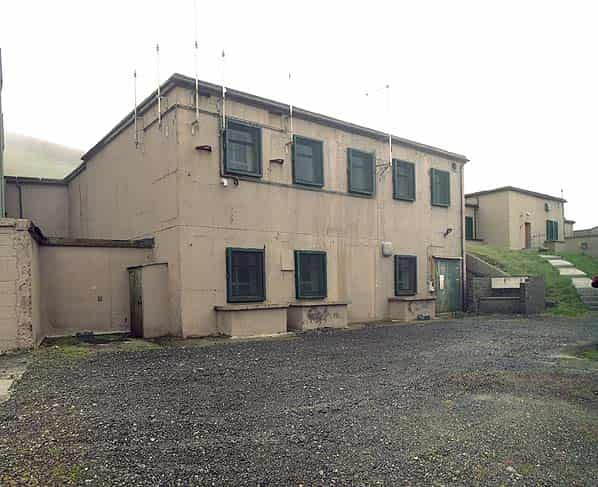
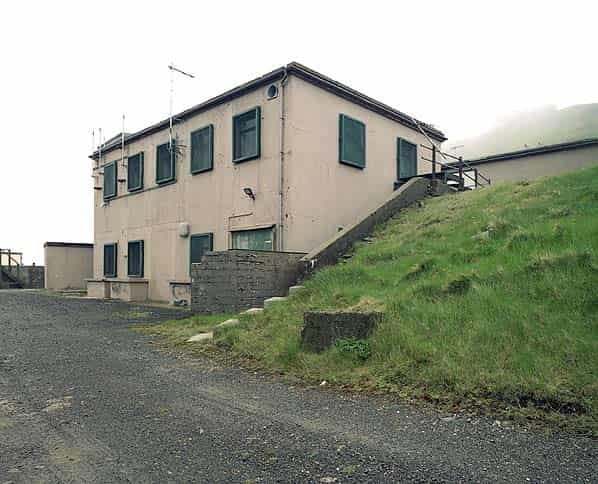
Originally an R8 operations block was planned for the summit of the hill, close to the modulator building but as there was insufficient room this was dropped in favour of a brick built R10 on the hillside below. Other planned installations included a ‘small’ VHF transmitter with a 90' mast located at ‘Ward of Hardwick’ (HP645153); this was to be a modified version of the standard ‘small’ VHF transmitter building incorporating a GPO radio link. The ‘small’ VHF receiver with a 90' mast was to be built at ‘Southers Field’ (HP634153).
As the operations block was to be located 35 metres below the Type 80 modulator building the two sites were to be linked by 200 concrete steps which were later covered over to provide the covered way that is still in use today. There was also to be a Canberra style guardhouse (now demolished) at the entrance to the technical site.
When the installation was completed some changes were made to the 1956 plans and the station was fitted with a Stage 1A (Type 80) radar housed in a modulator building at the summit of Saxa Vord. There was also one Type 13 radar on a Mk VI plinth and one Type 14 radar on a Mk IX plinth.
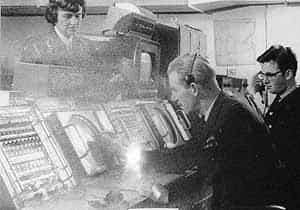
In the R10 operations block there were six Type 64 consoles, two Type 61 consoles, one ‘A’ scope, 3 video mapping units and one VHF radio link.
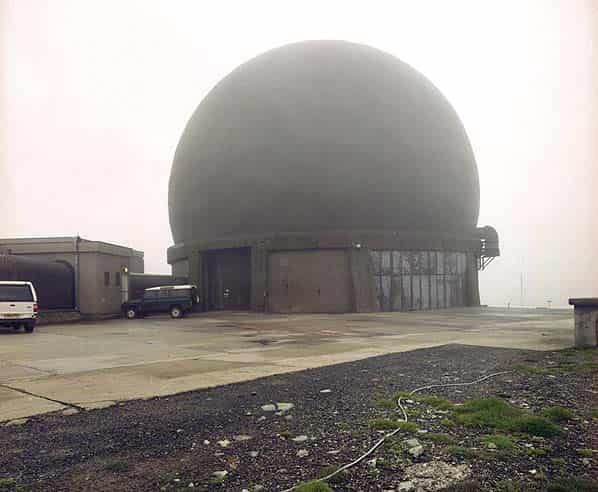
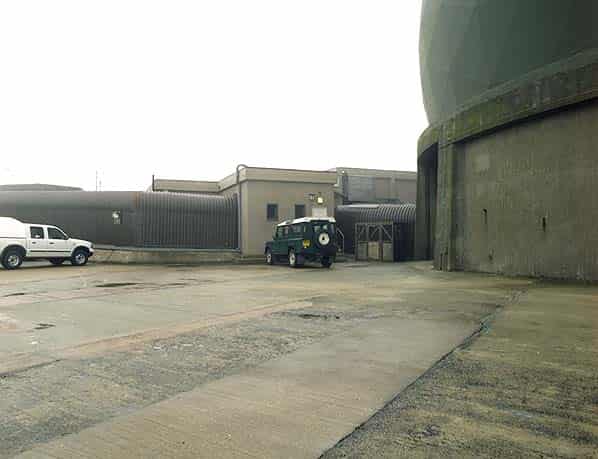
One major problem did, however, have to be overcome. The erection of the Type 80 was seriously delayed when, in January 1956, the aerial array was blown completely off its mounting and ended up 50 yards downwind. The array of the Type 80 had been tested during the design stage and it had been shown that it would continue to rotate in winds up to 80 miles per hour. In winds exceeding that speed the array would ‘weather-cock’ and thereby survive winds up to 120 mph. However, the radar station holds the unofficial British record for wind speed, which in 1962 was recorded at 177 mph; just before the measuring equipment blew away. This was clearly well in excess of the speeds which the aerials were designed to survive. It was decided in view of such weather conditions that a radome should be built over the aerial array and, with Saxa Vord providing cover of value to NATO, the latter organisation provided the radome, while the RAF, in the form of No. 91 Signals Unit, operated the radar from 1957 onwards.
Following the demise of ROTOR the air defence of the UK was reorganized once again. ROTOR gave way to a system of ‘Master Radar Stations’ (MRS) that provided radar coverage of the UKADR, the United Kingdom Air Defence Region. In the mid 60’s MRS’s started to give way to the ‘Linesman/Mediator’ system that was served by radar’s from RAF Saxa Vord in the north of the Scottish Shetland islands, RAF Buchan, near Peterhead, Scotland, RAF Boulmer in Northumberland, England, RAF Staxton Wold in Yorkshire, England and RAF Neatishead in Norfolk, England.
The height finding element of the Linesman system, the HF 200 succeeded the American AN/FPS-6 height finder radars used in the ROTOR system. The HF 200’s (along with the AN/FPS-6) were also known as ‘Nodding Horrors’ and they spewed hydraulic oil everywhere. HF 200 Mk3’s were located at the three main linesman sites at R.A.F. Boulmer, R.A.F. Staxton Wold and R.A.F. Neatishead while a Mk4 was commissioned at R.A.F Saxa Vord in in 1979.
In about 1980/82 during the ‘Plan Ahead’ period, a new surface operations block, designated an R101 was built on the west side and below the R10. Because of the inclement weather at Saxa Vord a covered way was constructed between the operations blocks (the middle technical site) and the radome on the upper technical site. This linked to both the R10 and R101 operations blocks.
RAF Saxa Vord now acts as a reporting post for the The United Kingdom Air Surveillance and Control System. UKASACS is comprised of a number of individual static and mobile units which provide the minute-to-minute information on air activity required to defend the UK and our NATO partners. Manned by officers of the Fighter Control specialization of the Operations Support Branch with the support of airmen Aerospace Systems Operators, the UKASACS is a highly sophisticated computer-based system which gathers and disseminates information on all aircraft flying in and around the UK Air Defence Region - this is known as the Recognized Air Picture (RAP).
The information within the RAP is used by the Air Defence Commander when deciding whether to investigate or perhaps even destroy an aircraft flying in an area without permission. Information is fed into the RAP from the RAF’s ground-based radars and from the air defence systems of our neighbouring NATO partners. However, the UKASACS can also receive information via digital data-links from other ground, air or sea-based units including No 1 Air Control Centre.
This is part of the UK’s Rapid Reaction Force which holds a high state of readiness to deploy worldwide in support of crisis. The United Kingdom Air Operations Centre (UKCAOC) is situated within Headquarters Strike Command at RAF High Wycombe. The UKCAOC is responsible for the overall coordination of the Air Defence, Ground Attack and Maritime Air elements of the RAF together with the air forces and navies of our NATO partners.
The UK ASACS has 2 operational Control and Reporting Centres (CRCs) based at RAF Buchan north of Aberdeen and at RAF Neatishead which is northeast of Norwich. An additional stand-by CRC is found at RAF Boulmer in Northumberland.
The CRCs are supported by a number of Reporting Posts (RPs) across the UK. These RPs are found at RAF Saxa Vord, RAF Benbecula in the Hebrides, RAF Staxton Wold near Scarborough and RP Portreath which is a satellite of RAF St. Mawgan on the north coast of Cornwall.
Saxa Vord remains the most northerly station in UKASACS and is an important part of the local economy, as are all military bases in such rural areas.
In the summer of 1999 is was proposed to run down RAF Saxa Vord which was the mainstay of the island economy. Official figures predicted that total manpower at the base would fall from 193 to just 48 by 2001. Saxa Vord became a satellite of RAF Buchan. In April 2004 this decision was reversed with the station being upgraded to an independent operation once again following the announced draw-down of RAF Buchan.
On the middle technical site the R10 remains although now out of use as is the former Admiralty Experimental Station alongside. The later R101 bunker is still in use, as is the covered way linking the middle and upper technical sites. A Canberra bungalow style guardhouse (the shorter version of the more familiar Rotor guardhouse) stood at the entrance to the middle site but this has now been demolished leaving no trace.
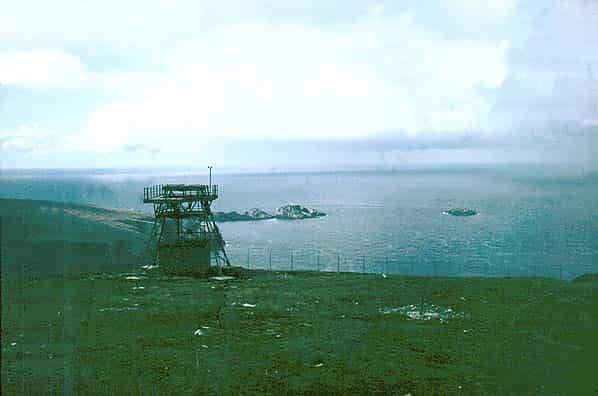
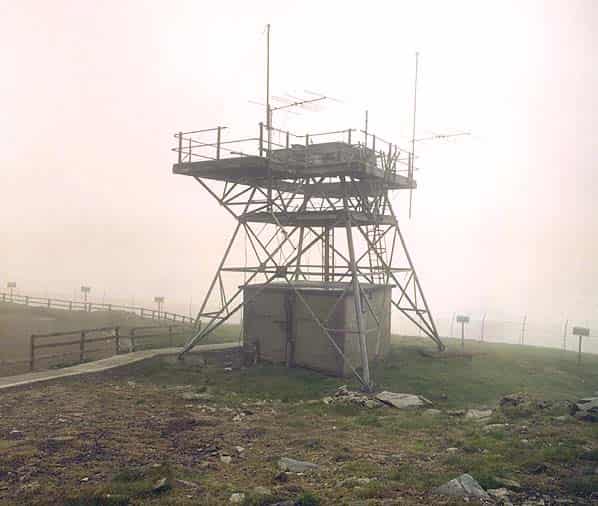
On the upper technical site the Type 80 modulator building has been demolished with a new building standing on its site adjacent to the radome. A Type 13 radar plinth still survives, straddled by a 25' steel gantry, this is believed to be the only surviving example of this style of ROTOR radar gantry.
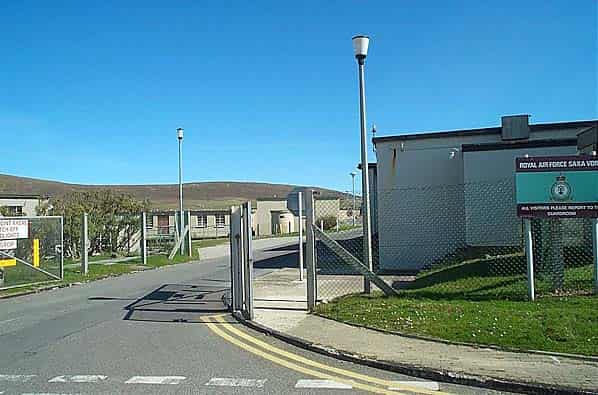
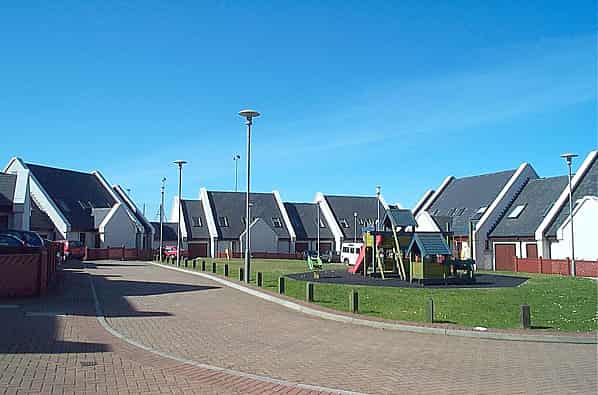
The domestic site in Haroldswick has been almost completely rebuilt with two estates of new married quarters. The only surviving buildings from the ROTOR period are the guardhouse and the boiler house.
The above report was compiled in July 2004. RAF Saxa Vord closed on 1st March 2006 and has been placed on care and maintenance.
Sources:
- Ian Brown Historical Radar Archive
- Radar Pages web site
- Official Royal Airforce web site (Reference to Saxa Vord may now have been removed)
- Bob Jenner
- Keith Ward