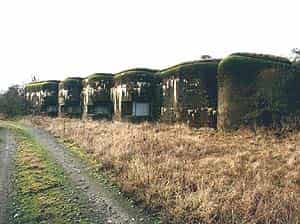
The GROS OUVRAGE OF ROCHONVILLERS is the most northerly fort in the ‘Thionville Fortified Sector’. It’s located 10 kM north west of Thionville on military land close to Angevillers.
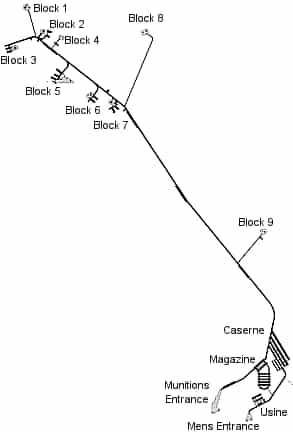
When fully manned the fort had a compliment of 782 troops. Artillery included three 135 mm heavy mortars in retractable turrets and the fort also boasted the largest block anywhere on the Maginot Line, Block 5, which took 6,000 cubic metres of concrete to build it. It was armed with three 75 mm guns and one 135 mm heavy mortar. Although several similar sized casemates were planned no others were built so this one is unique. This is an unusually large fort with 5 artillery blocks and 3 infantry blocks and tunnels stretching 2,500 metres from the munitions entrance.
After the war the fort was retained by the army and during the 1980’s was converted into a nuclear protected underground control centre, remaining operational until 1998. Visits to the bunker have always been declined in the past but on 15th May 2003 a party from Subterranea Britannica were permitted to visit and photograph the bunker which is still under the control of the Metz Garrison.
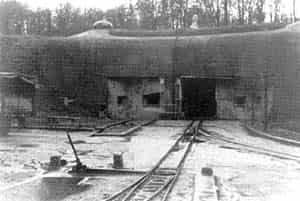
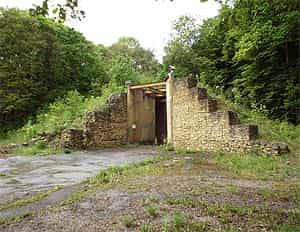
When we first looked at the munitions entrance block from outside the perimeter fence in 2000, the French flag was still flying and there were several cameras trained on the entrance gate to the fenced enclosure. When we drove past two years later the flag had gone and the cameras looked as if they were no longer in use. Our army guide, a Lieutenant from Metz Garrison came into the bunker with us and stayed there throughout the two hour visit, but we were able to wander round freely and photograph anything we saw.
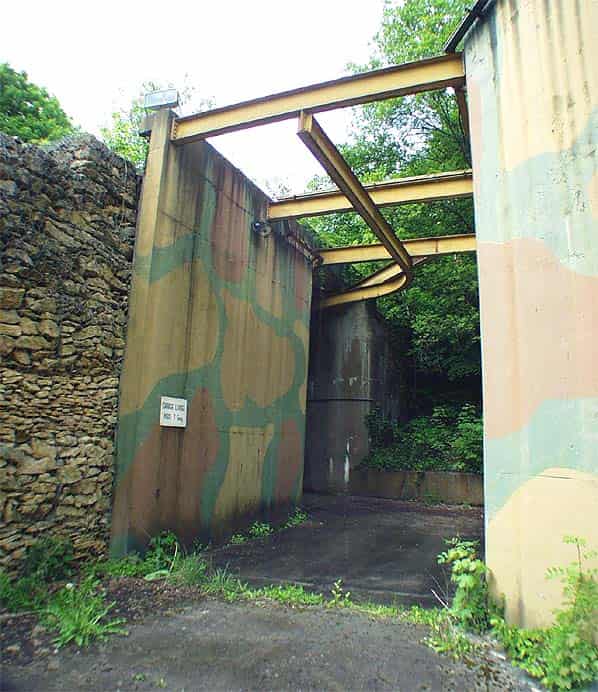
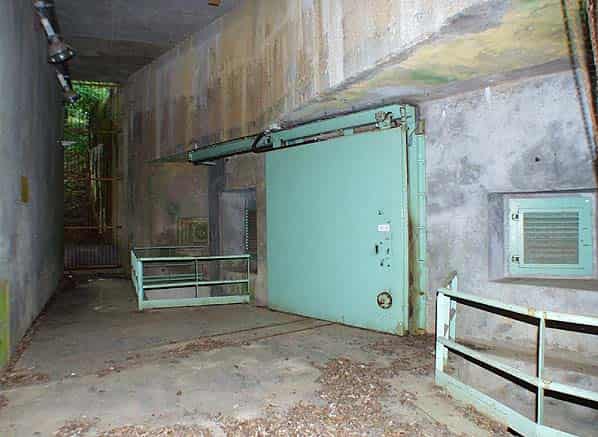
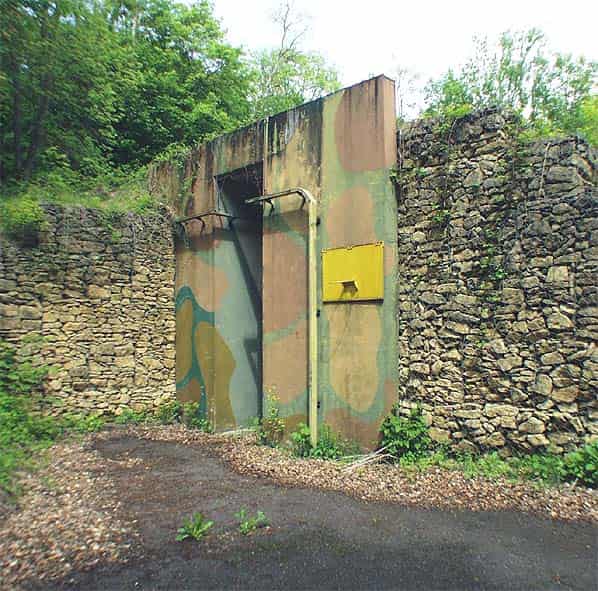
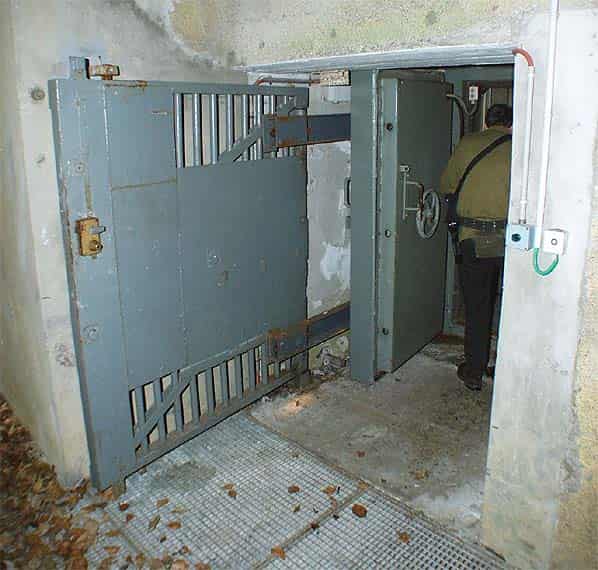
We went in through the old men’s entrance, which was rebuilt during the modernisation with a blast wall added in front of the entrance forming a covered entrance porch. Soil has been piled over the bare concrete of the block and the whole structure has been painted in camouflage colours. The munitions entrance has been modified in a similar way with a large steel blast door allowing vehicles to drive into the block.
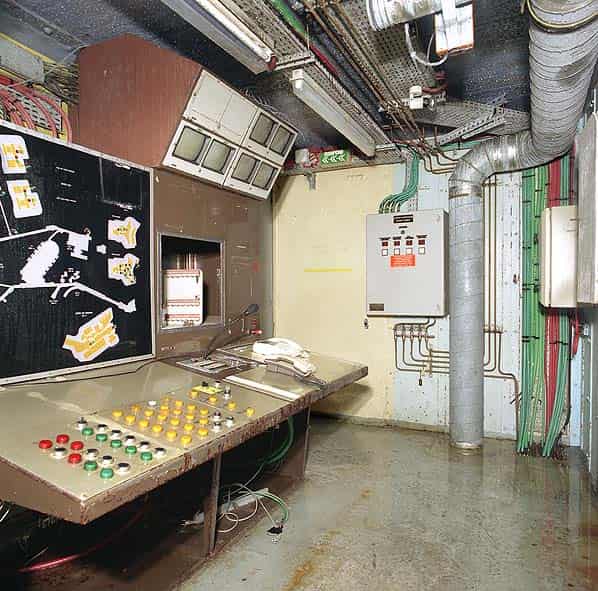
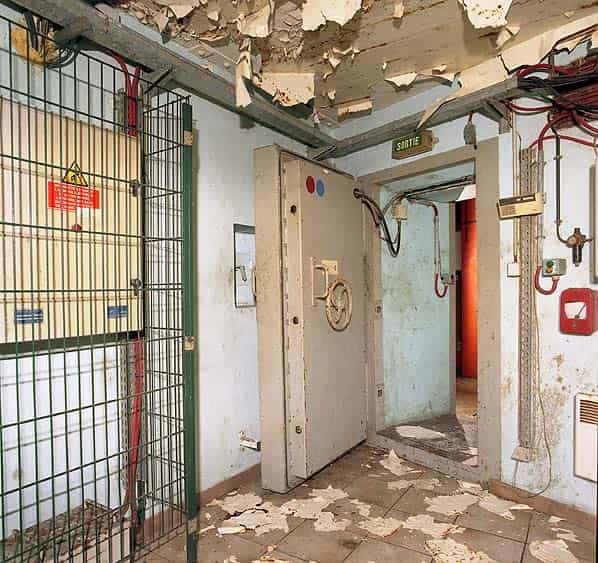
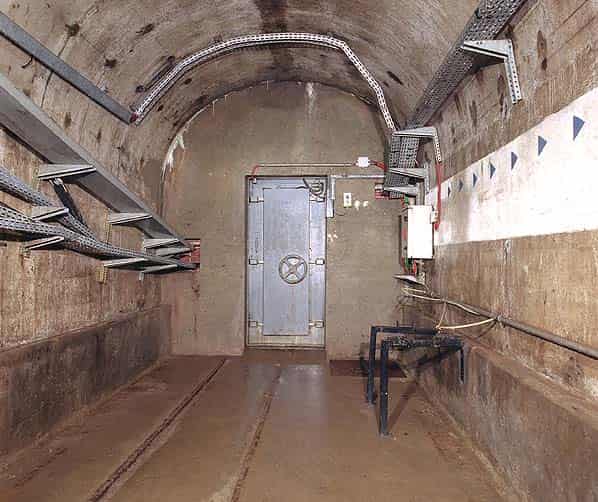
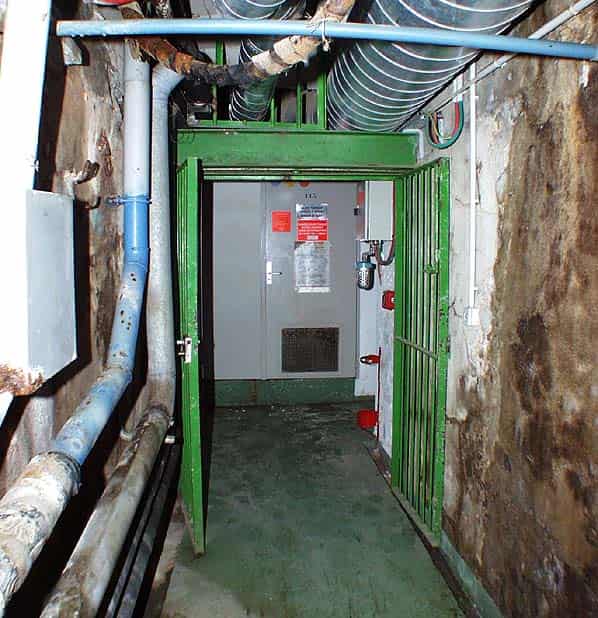
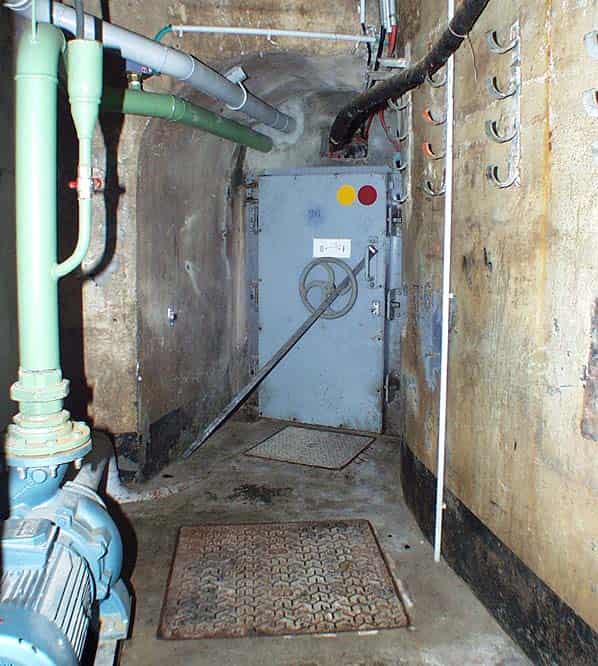
The men’s entrance has a steel grille and behind it a smaller blast door. Once through the door there is a security post with a bank of TV monitors for the CCTV cameras and a large control panel. Beyond this a door on the right leads through an air lock with two blast doors into the decontamination area. This is contained within one of the infantry positions for the old fort.
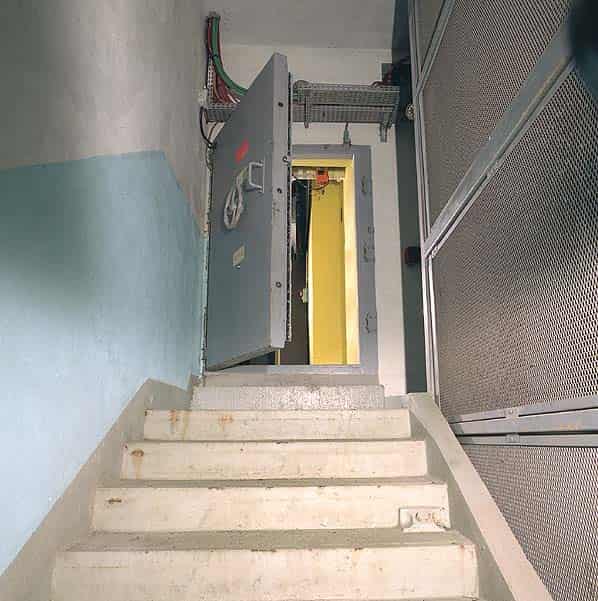
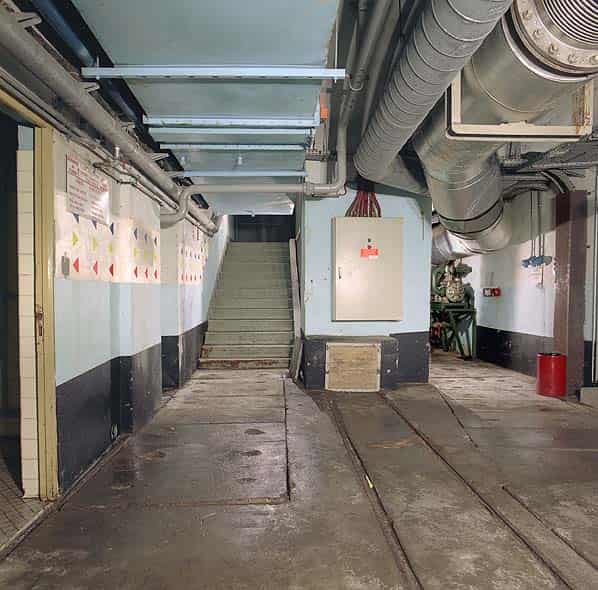
A new lift has been installed in the original shaft and the stairs around it have been renovated. The stairs are now very damp and slippery, as are most of the floors throughout the bunker.
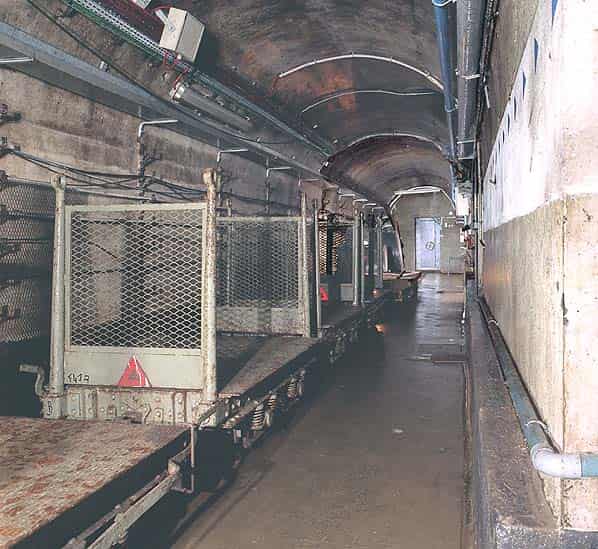
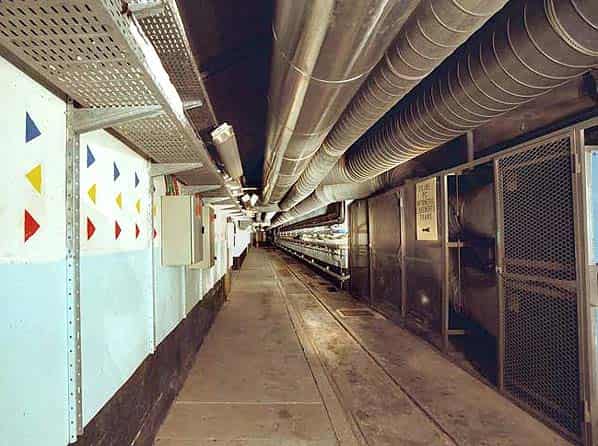
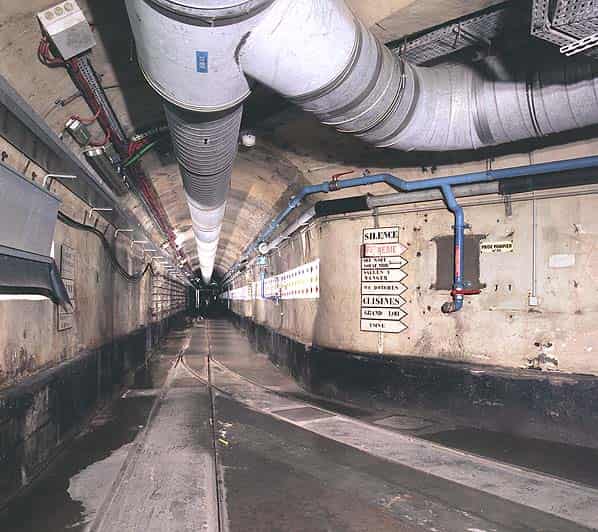
Since the ventilation has been turned off the bunker has been deteriorating and will no doubt continue to do so unless a new owner can be found; the army is hoping to sell the bunker. At the bottom of the stairs the main corridor runs northwards into the bunker. The original narrow gauge tramway is still there but the overhead traction cables have been removed and tubular ventilation trunking now hangs from the ceiling.
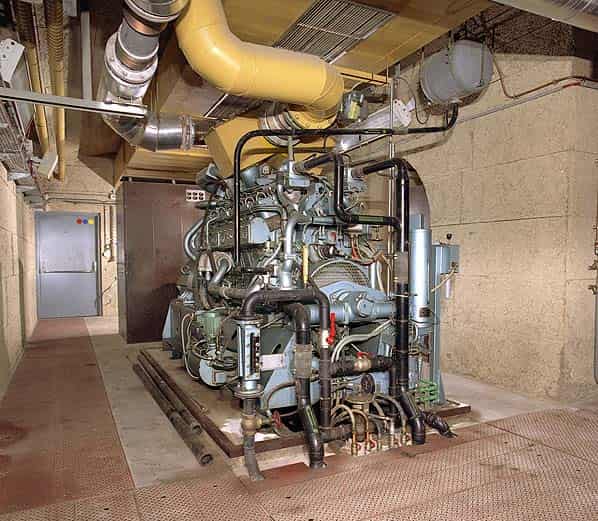
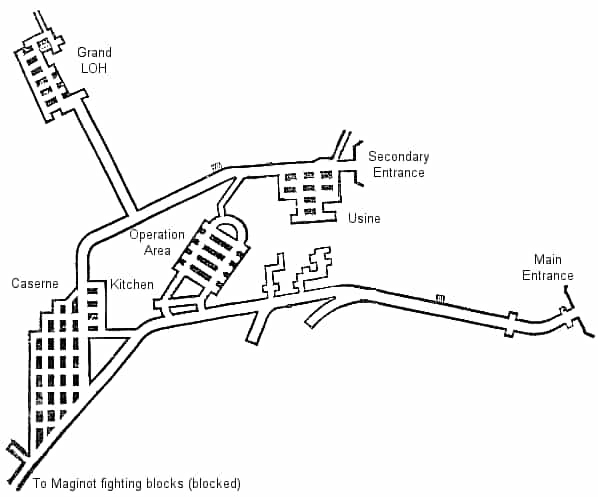
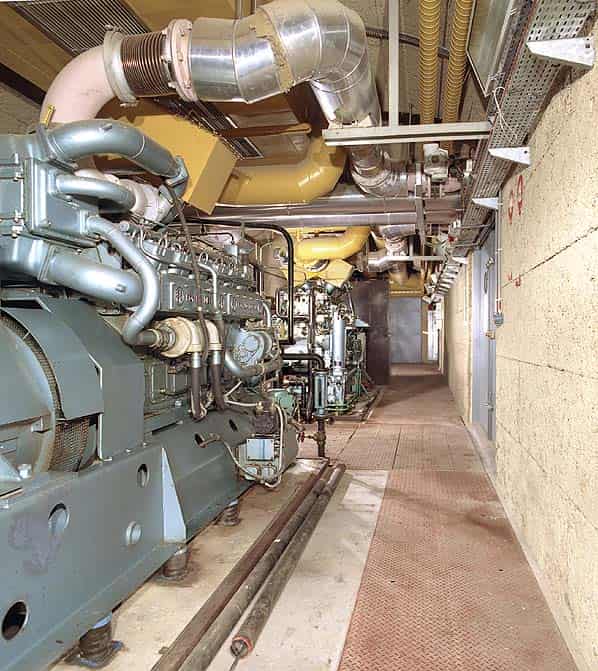
The first door on the left opens into the plant area (Usine). The original generators have been removed and replaced with four gleaming new Poyaud diesel generators with only 467 hours on the clock.
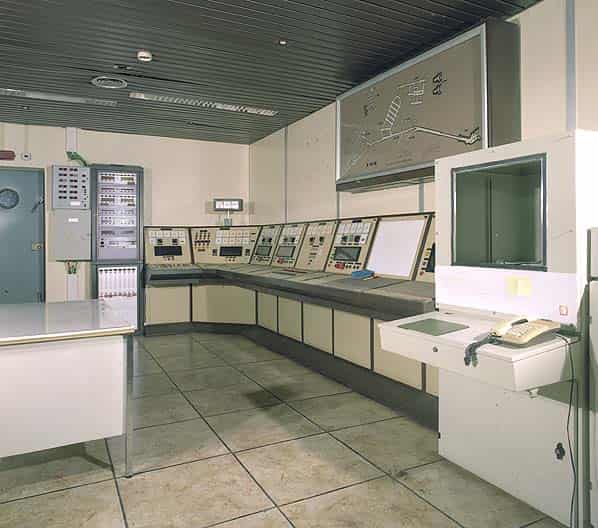
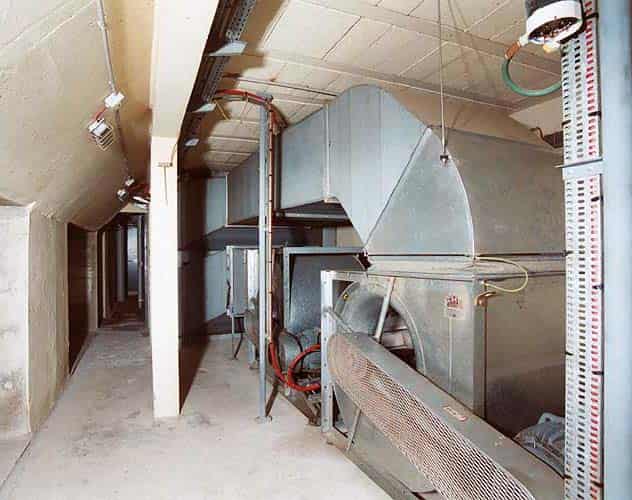
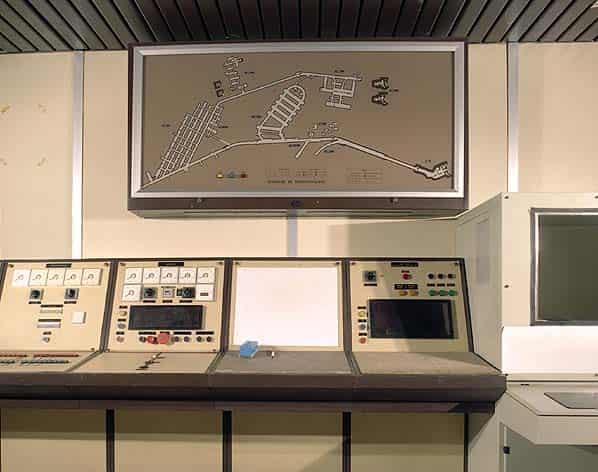
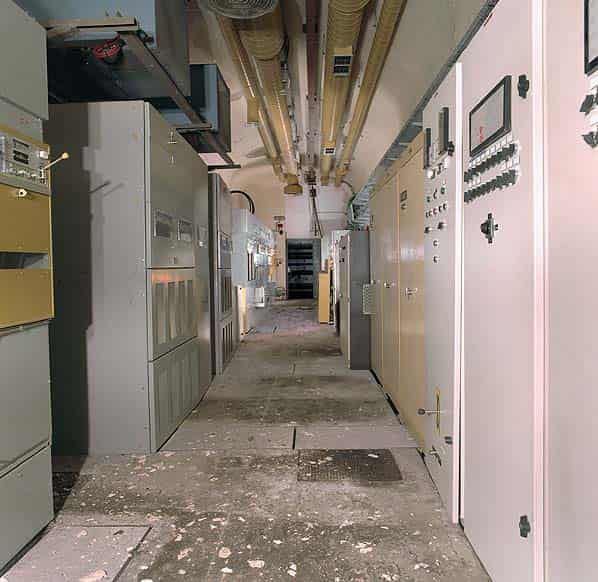
Beyond these is the ventilation plant room, again the original equipment has been stripped out and new fans and ventilation plant installed. Beyond this is the main control room with its impressive operator’s console where all the electrical systems throughout the bunker were monitored and controlled. To the right is a long room with gleaming racks of electrical switchgear along both walls.
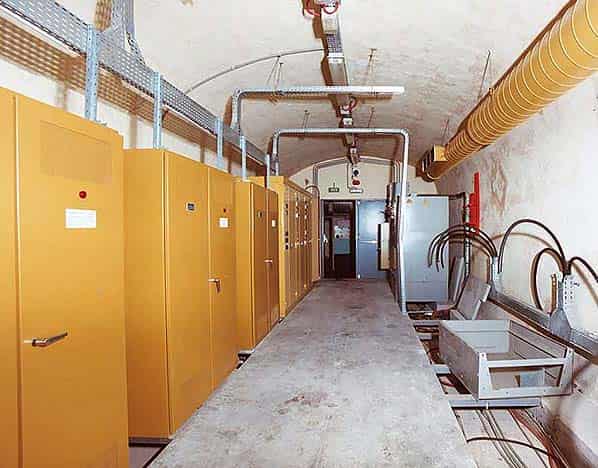
Another chamber houses the HV power equipment with gleaming yellow cabinets lined up along one wall.
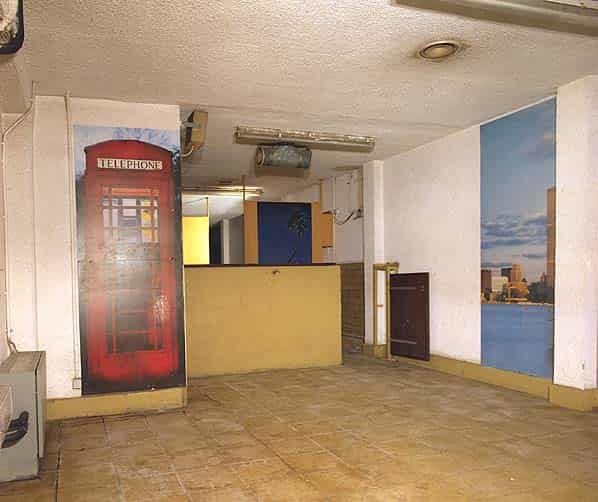
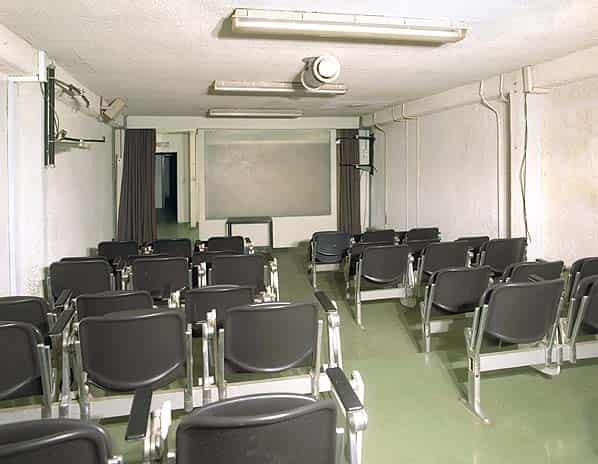
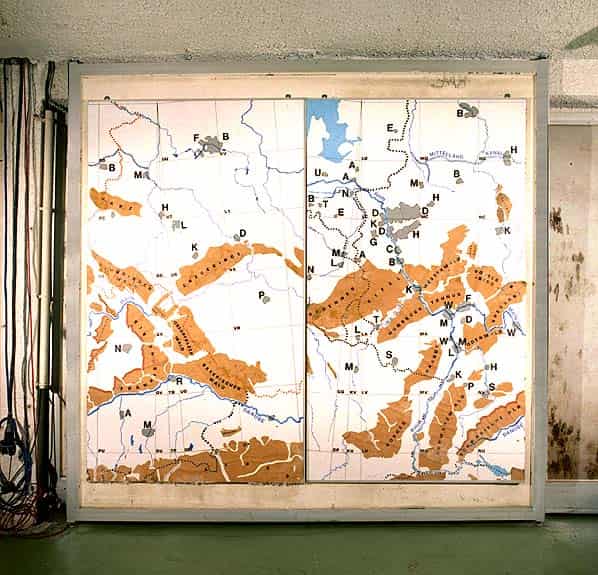
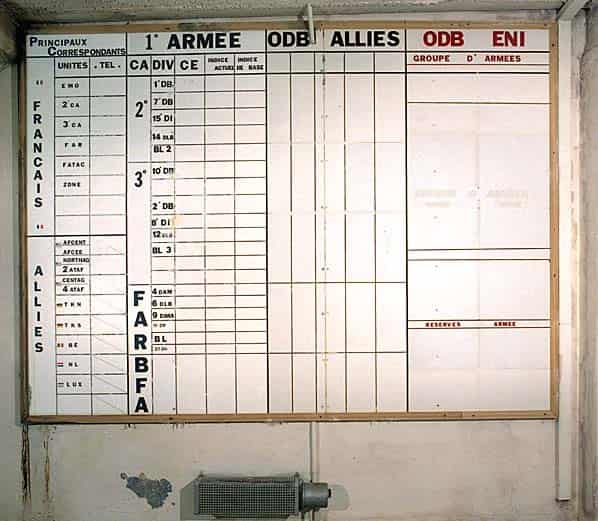
Back in the main corridor, the next turning on the left leads to the old magazines, these have been completely rebuilt as the operational hub of the bunker with numerous offices, a briefing room/lecture theatre with raked seats and a projector screen and various maps and situation boards still in place on the walls. One of these refers to an exercise undertaken by the French Army and its allies; Britain does not feature in this exercise. There is even a bar with two large murals on the walls, one of New York and the other of British red phone box! Most of the rooms in this area are completely empty.
Back in the main corridor there is a door on the right which originally led to an emergency exit but plans on the wall show that a number of rooms have been excavated a short distance along the corridor. On floor plans located at regular intervals around the bunker this area is designated ‘Grand LOH’. Unfortunately the door to this corridor was locked and we were unable to gain access. Beyond this corridor the tunnel swings sharply to the left into the domestic area (Caserne) with the kitchen on the left and the dormitories to the right. The tiled kitchen area consisting of four rooms, have been stripped of all equipment although two rooms still have extractor hoods.
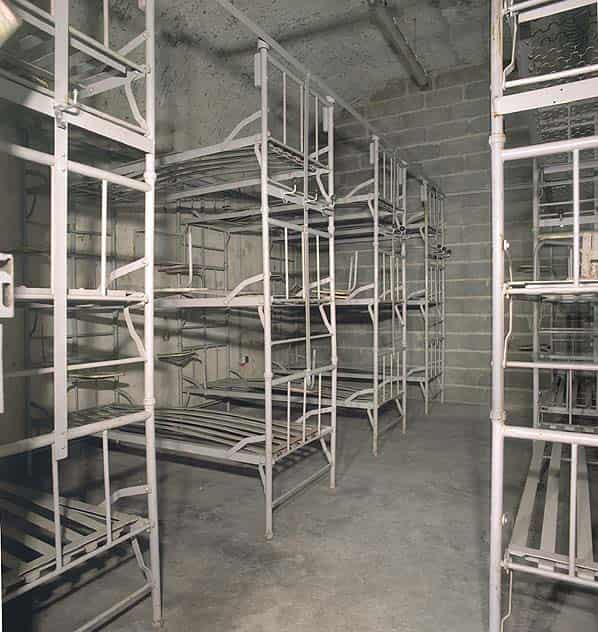
On the right are the dormitories and toilets. The original toilets and wash rooms have been modernised and all the original bunks have been removed and replaced with newer double and triple bunks of a similar design, many of these still remain in place. The tiled infirmary is also located here but this has also been completely stripped. Beyond the caserne there is a junction with the other main gallery back to the munitions entrance.
Turning right towards the fighting blocks, one of the old stations, ‘Gare D’, is soon reached. Here the tunnel widens to accommodate a passing loop on the railway and a number of trucks are still parked on the track at this point. As there is no locomotive it’s unclear if the tramway was actually used after the modernisation.
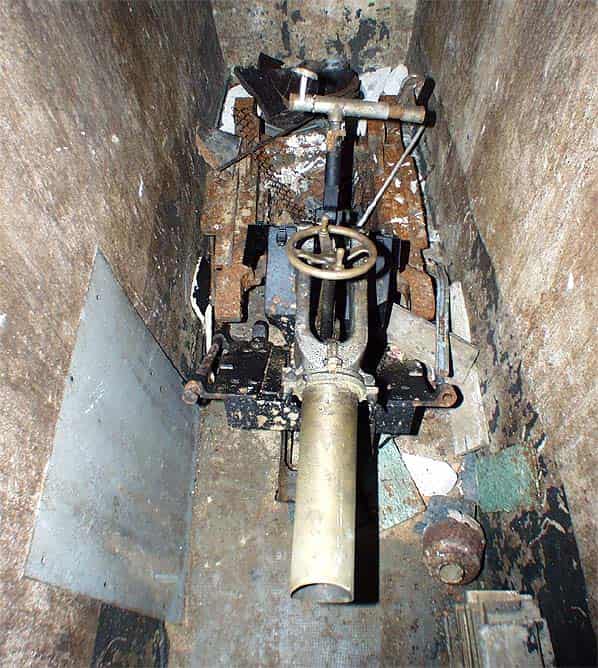
Beyond the station, just before the junction to Block 9, a wall has been built across the gallery. Although there is a door this has been welded shut and our guide explained that there was bad air beyond and the gallery and fighting blocks have been sealed off as they didn’t form a part of the nuclear bunker. Returning to the men’s entrance we noticed an original machine gun in one of the alcoves south of Gare D.
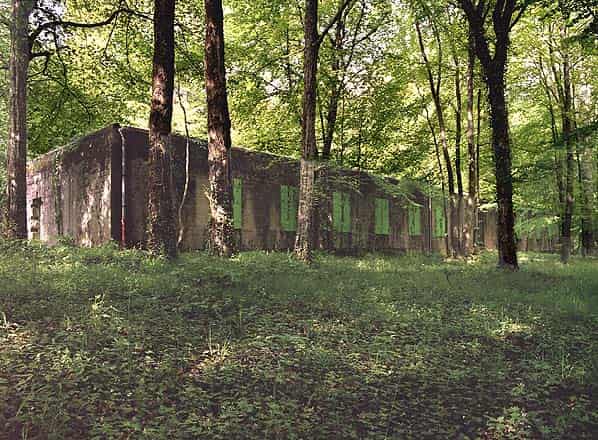
Back on the surface we walked up into the woods behind the two entrance blocks, here there is a large ‘T’ shaped WW2 building that was used as accommodation for the security guards. There are dog kennels and an exercise area in the woods nearby. The building has shuttered windows along all sides, a main entrance at the front and a larger door for heavy machinery and plant at one end.
New toilets and washrooms have been added but the building appears to have been unfinished; in one large room the walls are still bare concrete.
The building was built by the Germans for the Luftwaffe after 1940 but it is also recorded that it was a ‘Fuehrer Bunker’ for Hitler and is known as ‘Anlage Brunhilde’. It seems unlikely, however, that Hitler ever used the bunker although it may have been there for him to use if required. Even that seems unlikely as the building can hardly be described as a bunker. Although it is built of reinforced concrete it has numerous windows. Perhaps it was intended to excavate an entrance into the old Maginot Line fort from the building.
Sub Brit members discovered an identical building at the Osowka complex at Gory Sowie (Owl Mountain) during a visit to Poland in 2002. This too is unfinished and its use is unknown.
Those taking part in the visit were Nick Catford, Mark Bennett, Jason Blackiston, Dan McKenzie, Robin Ware , Richard Challis, Jason Green, Pete Walker, Bob Lawson, Clayton Donnell, John Burgess, Andy Coutanche, Roy Smith, Tony Page and Tony Kemp who organised the visit.