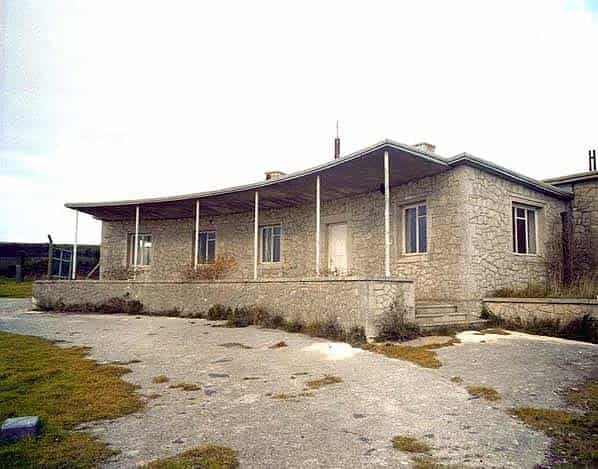
The Portland Centimetric Early Warning (CEW) Radar Station was constructed (Site contractor: Robert McAlpine) in 1950-51. GPO installations began (‘I’ day) on 1st December 1951 with Operational availability (‘O’ Day) achieved by 20th February 1953, the R1 being transferred to the RAF under the command of Squadron Leader NOYES, AFC. It consisted of a single storey R1 operation Block accessed from a nonstandard design guardhouse/bungalow built of local Portland stone.
The station was equipped with the following ‘Stage one’ radar’s:
- 1 x T14 Mk 9 250 prf ‘G’ IFF Low Angle
- 1 x T14 Mk 8 500 prf ‘G’ IFF High Angle
- 2 x T13 Mk 6 250 prf ‘A’ IFF
- 1 x T13 Mk 7 250 prf - Note: original plans show this as Mk 6.
- 1 x T54 Mk3 No IFF on 200 ft Tower
- 9 x 60A Moving Coil PPI ‘G’ IFF
- 3 x 61 - HRI - Displays T13 signals (Elevation Scans)
- 1 x 61A - ‘A Scope’ (Range Signals)
- 3 x Video Marker Units (Detailed in AP 2527R) - T14 Units supplied in Sept / Oct 1955
- 2 x M.R Units - ‘Plug-in’ units for Mobile Reserve
- 1 x UHF R.T Recorder
- 1 x Timing Unit
Initially Type 14 mobile radar’s were brought in to replace the old WW2 Type 54 at the Verne. In addition to the ‘stage one’ radar’s and associated equipment detailed above the station was equipped with a ‘stop gap’ American AN/FPS Type 3 radar (and its associated TPS/10) - which was installed in 1953 and declared fully operational in November of that year. Type 10 IFF replaced Type III IFF in May-Aug 1954 and entered full fighter interceptor trials in September of that year.
With the advent of ‘Stage two’ radar’s (Type 80 Mk1 or ‘Green Garlic’) the stations Trimingham (‘QLE’), St.Margarets (‘AGC’), Bempton (‘RMF’), Ventnor (‘OJC’) and Beachy Head (‘HEB’), were refitted. This entailed internal structural modifications, console layout changes / deletions and substantial remodeling of their original ‘phase 1’ internal layout. Three sites, Cold Hesledon (‘IDW’), Inverbervie (‘LGZ’) and Portland (‘NIB’) were not remodeled with the addition of Type 80 (T80) radar’s, consoles and Photographic Display Systems (the infamous ‘Kelvin-Hughes’ PDS wet-film systems). These three stations were to be reduced to CHEL feeders by the deletion of a number of Plan Position Indicator (PPI) consoles, for which sub-plinths and cabling was to remain, it is clear that the reduction of these stations to CHEL was only slowly adopted (if at all) and was to be overtaken by the development of T80 Mk3.
In the early 1950’s the three CEW stations: Cold Hestledon, Inverbervie and Portland (NIB) thus become the only remaining CEW sites still retaining their original ‘Phase 1’ console and partition wall layouts in the UK. Today (October 2001) only Portland still retains these unique features and although Inverbervie has an exceptional original R1 AC Plant Room, Portland is the last remaining example of its type.
In April 1956 the AN/FPS Type 3 was removed (probably to Ventnor) and the station diminished in importance, by June the T14 and 3 T13’s radar’s were dismantled, and on the 17th June 1956 the station was declared ‘non-operational’. By September the station had been ‘run down’ and at CHEL ‘readiness’ only. In 1958 the station was placed under C&M within the control of 11 Group, finally becoming ‘non-operational’ in 1958.
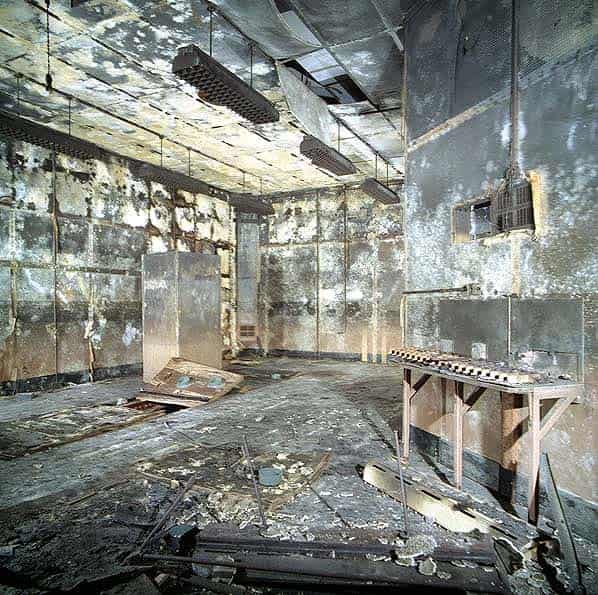
The site was taken over by the US Air Force who built a microwave relay station (forming part of the Troposcatter cross-channel relay link at the old Ringstead CH site) within the fenced enclosure. They did not however use the underground bunker which was damaged by fire in 1969 while the USAF were still present on the site. In recent years the site has been used by the MOD as a dog training centre.
At 70 feet below ground level it was the deepest ROTOR underground facility and instead of the usual steps at the rear of the guardhouse and a long sloping tunnel into the bunker, Portland was equipped with a lift and an iron staircase winding round it. The emergency exit consisted of a standard emergency stairway in two sections joined by a length of solid floor.
In October 2001 the MOD offered the site for sale by auction and shortly before two public open days they stripped out the lift and surrounding stairs (which were perfectly safe), the emergency stairs (which were not safe) and all the wooden flooring. They also filled in any open cableways in the main corridor and installed a 70' caged vertical ladder for access. Most of this ‘safety’ work was totally unnecessary. 6 radar plinths still survive on the surface together with the emergency exit blockhouse (now sealed), a communications mast (+ building), gatehouse, kennels, the old USAF compound and a reservoir built in the 1980’s to serve the dockyard.
RAF Portland’s CFP reported to the Box sector (SOC) for identification along with Hope Cove, Treleaver, Comberton (later deleted) and Beachy Head.