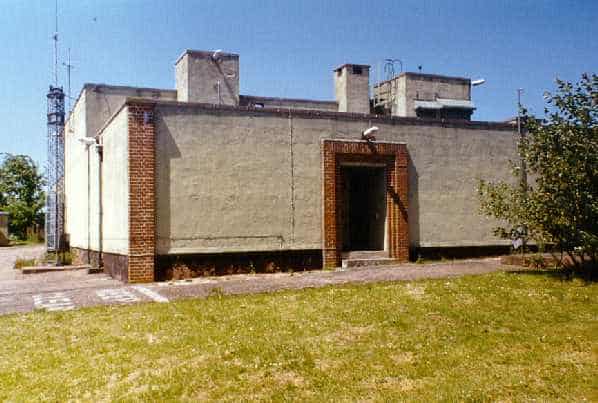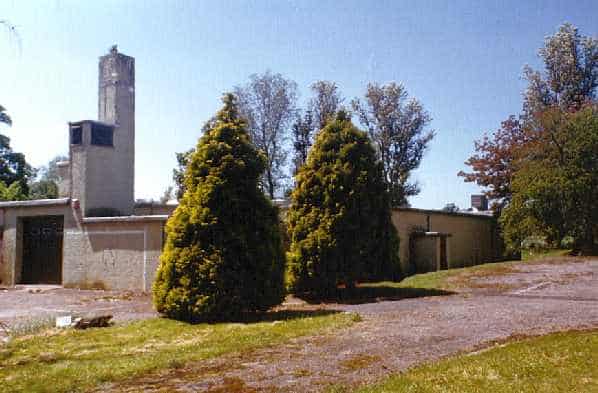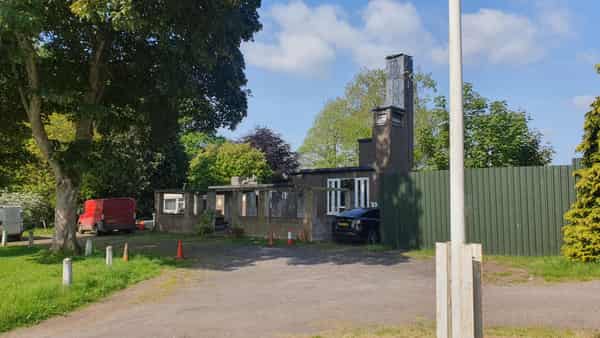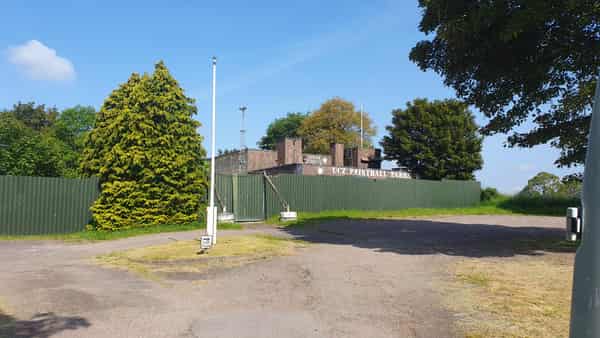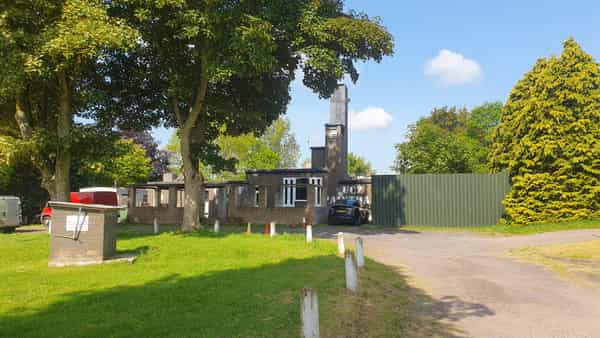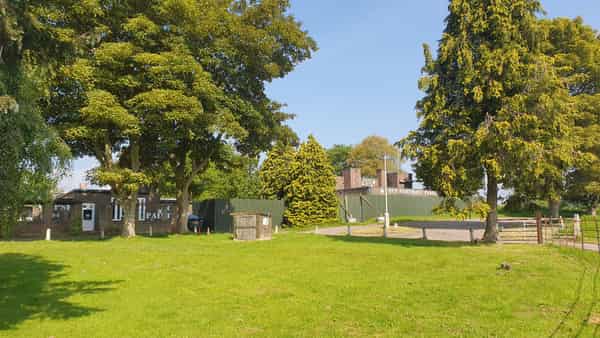
The ROC Group HQ No 10 consisted of a purpose built two level surface blockhouse concrete construction with the administration located within a former WW2 RAF Sector Ops. Room. Externally the buildings are starting to look shabby with weeds and grass growing up through cracks in the tarmac parking area and paths. The blockhouse has two doors set into a small recessed doorway at 90 degrees to the main opening. The door on the right led to the extractor fans and the door on the left entered the bunker. Straight in front was a small room containing a couple of wash basins and marked ‘Small Kit Storage Area’. On the wall on the left just inside the door was a series of mains isolators and fuse boxes.
The corridor turned sharp right where there was a ladder on the wall on the right for access to the roof. Through an internal door, the plant room was on the right through double doors. This was in reasonable condition and contained 2 air circulation fans, 2 compressors and at the back, in a second room, an emergency generator. Notices on the plant indicated that it had all been de-commissioned in 1995 and everything was drained of lube oil and fuel. There were some service manuals for some of the plant. A few back up batteries were scattered on the floor. Continuing down the corridor the first room on the left was the ladies toilets complete with rolls of toilet paper marked ‘Property of HMG’ and liquid soap in the dispensers; the room was painted pink! The main corridor runs the length of the building and almost all rooms were off this corridor. The vast majority of rooms were empty but many had signs on doors including ‘ladies dormitory’, ‘canteen’ and ‘men’s toilets’.
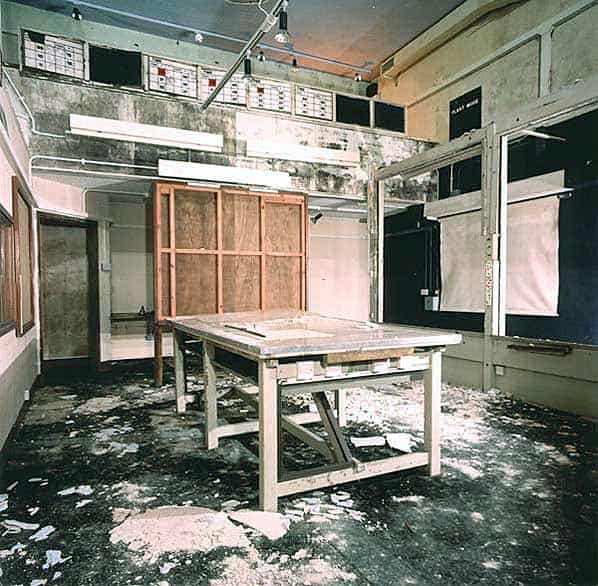
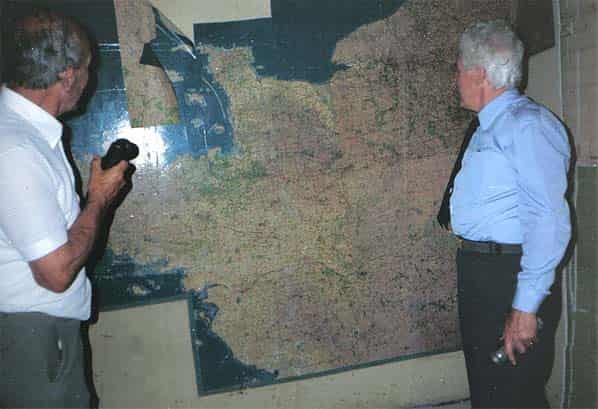
About mid way down the corridor the main ops. room was situated on the right and adjacent to this was the teleprinter room. The main ops. room still had the map holders in place together with the table and tote boards. There was some paperwork in various states of decay. The gallery around this room was reached from stairs just after the teleprinter room. Upstairs the gallery went round three sides of the ops. room and had a mount for a BPI and FSM in the corner by the illuminated map table. There was another small room at this level which had contained communications equipment. Two metal comms. racks and a number of lead acid batteries remained in place. The teleprinter room had the sound deadening panels on the walls and acoustic windows between it and the ops. room.
Further down the corridor were various other rooms and the kitchen which still had the cooker and grill in place as well as some kitchen units. At the end of the corridor was the emergency escape door.
The bunker was very damp and had large amounts of fungus growing in some parts. The flooring was also covered in a white mould in places. The ceiling was down in some areas and there were no artefacts apart from the Perspex vertical map screens which were in a store room. Whilst the structure seemed sound internally it was a bit of a mess although not obviously vandalised.
The WII RAF sector ops room was alongside, and part of this was used for administration. Again this building had a spine corridor and most of the rooms were off the main corridor and were empty.
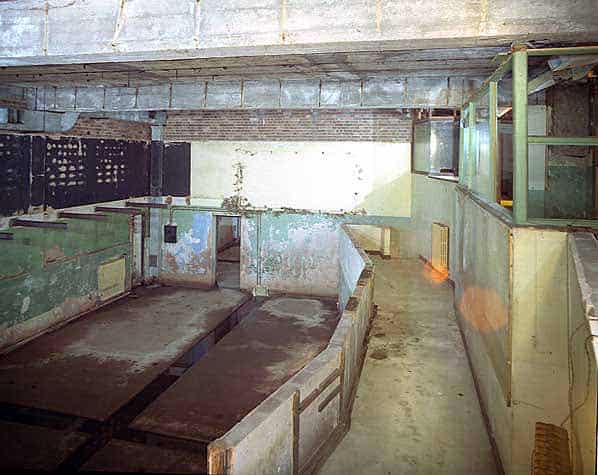
The main WW2 operations room was at the far end of the building and was labelled ‘out of bounds’ (to ROC personnel) and the power to this area was disconnected. The room consisted of a gallery around a large open well, with a mid level balcony. Many of the rooms in this part of the building still had their original WW2 purposes painted on the doors. A good example was the GPO room which had the words ‘Telephone exchange - no admittance to anyone - out of bounds to all ranks except operators on duty.’
The site was sold in September 1999 with no planning permission (and no likelihood of planning permission) for anything other than a house or agricultural use. The site should be retained as a museum . Since closure in 1991 they have been used by BT and the Police but have been empty since 1995. Recently sold by the Home Office to a building firm.
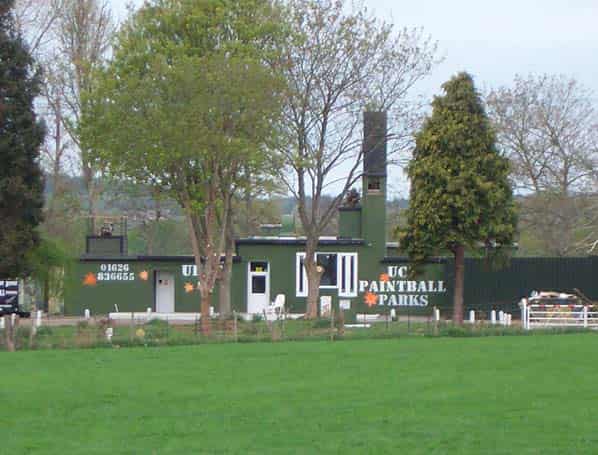
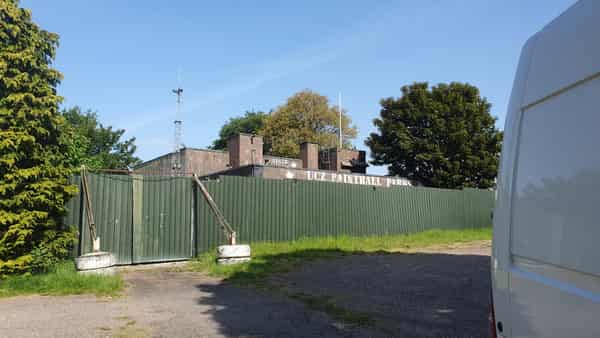
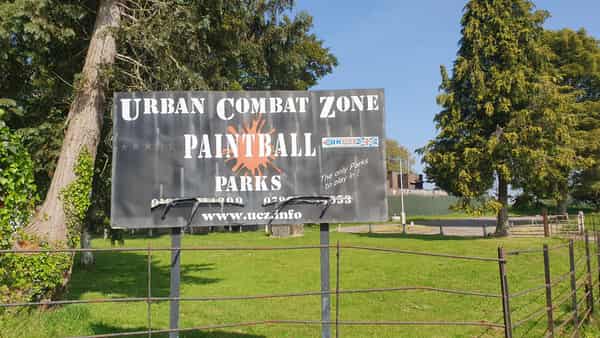
UPDATE 2006: Exeter Group HQ has now been refurbished and is in use as a paintball venue. When it was sold in 1999, East Devon Council were adamant that they would not allow any change of use stating that the building could only be used as a museum or be demolished. They have clearly now made a ‘U’ turn by allowing this change of use.