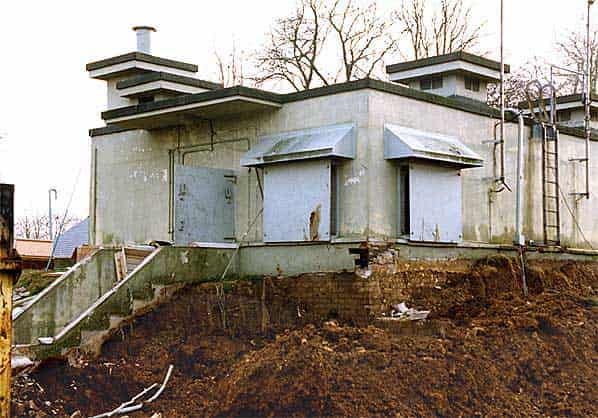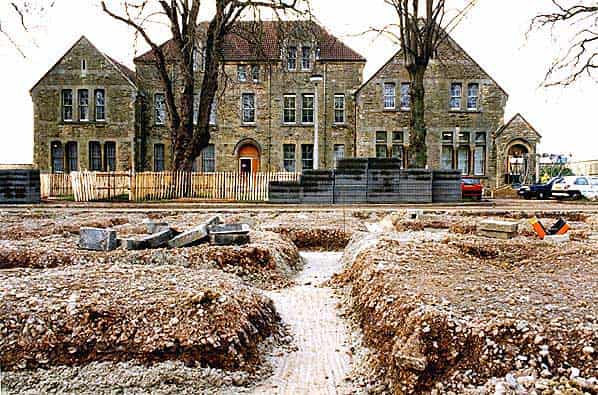

The Group HQ consisted of a semi-sunken protected bunker with a purpose built accommodation block alongside and a converted Victorian barrack block. The area was cleared in 1998 and a student accommodation block for Oxford Brooks University has been built on the site. The bunker however is still largely intact, only the surface entrance level consisting of the decontamination area had been removed, the lower floors now lie beneath a grassed courtyard between two student accommodation blocks.
When entering the site, there is an old stone building on the right. This was originally part of a 19th Century barracks built for the Ox and Bucks Light Infantry. It was completely refurbished in the 1980’s for use as the UKWMO Headquarters. A purpose built administration block was built alongside facing on to James Wolfe Road. This had offices for the full time staff and a large hall that could be split into two which was used for teaching and meetings. There was also a large kitchen as the building was intended for use in local emergencies. The original administration building was a large wooden hut in the rear car park, a driving test centre now occupies this site.
In the car park there is a plan of the site with the bunker clearly marked and accessed through an archway between two three story accommodation blocks. An open slope leads down to what would have been the emergency exit, the end of the bunker containing the rear blast door, dog leg corridor and air lock has been removed and there is now a double wooden door with glass panels leading straight into the main spine corridor on the middle level. There is also an open stairway to a new entrance directly into the control room on the bottom level.
Inside the middle level the first two rooms on the right (the male and female dormitories) have been incorporated into the spine corridor making one long and wide lobby area, beyond this the corridor reverts to its original width, on the right the male and female toilets have been renovated and the officers room has been converted into a disabled toilet. The final room on the right is the ejection room with the pumps still in place and presumably still in use. At this end of the corridor a dogleg originally led to the stairs to the top level. There is now a second pair of wooden doors leading to an open stairway to the grass courtyard above.
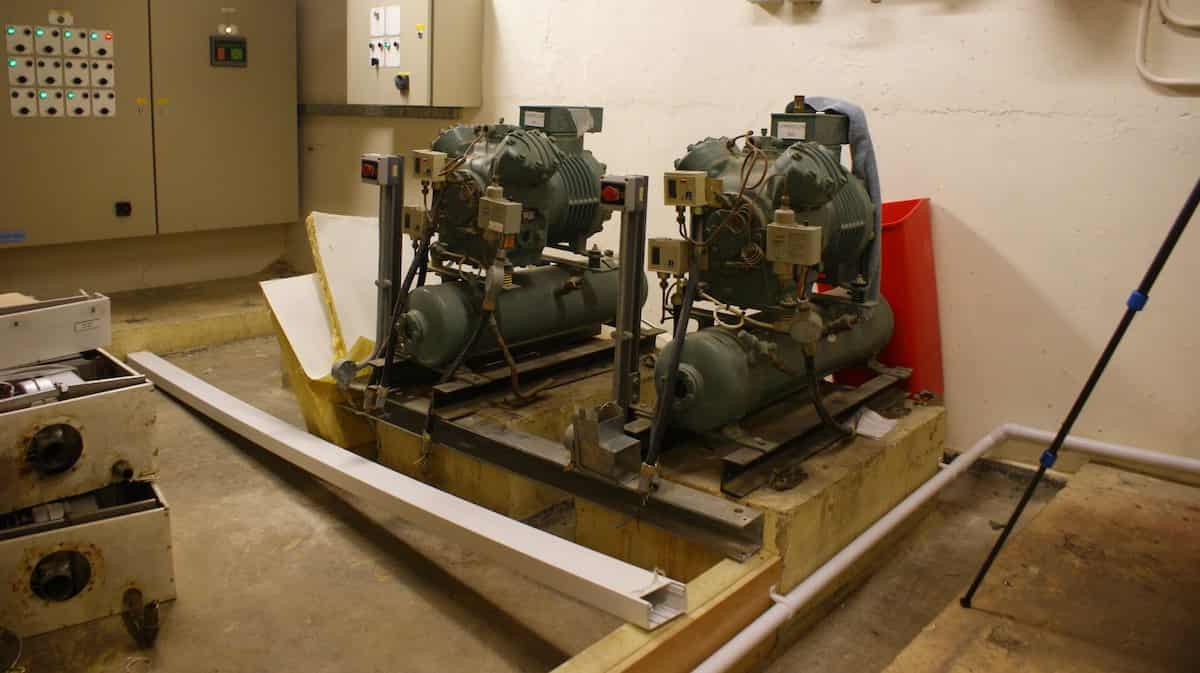
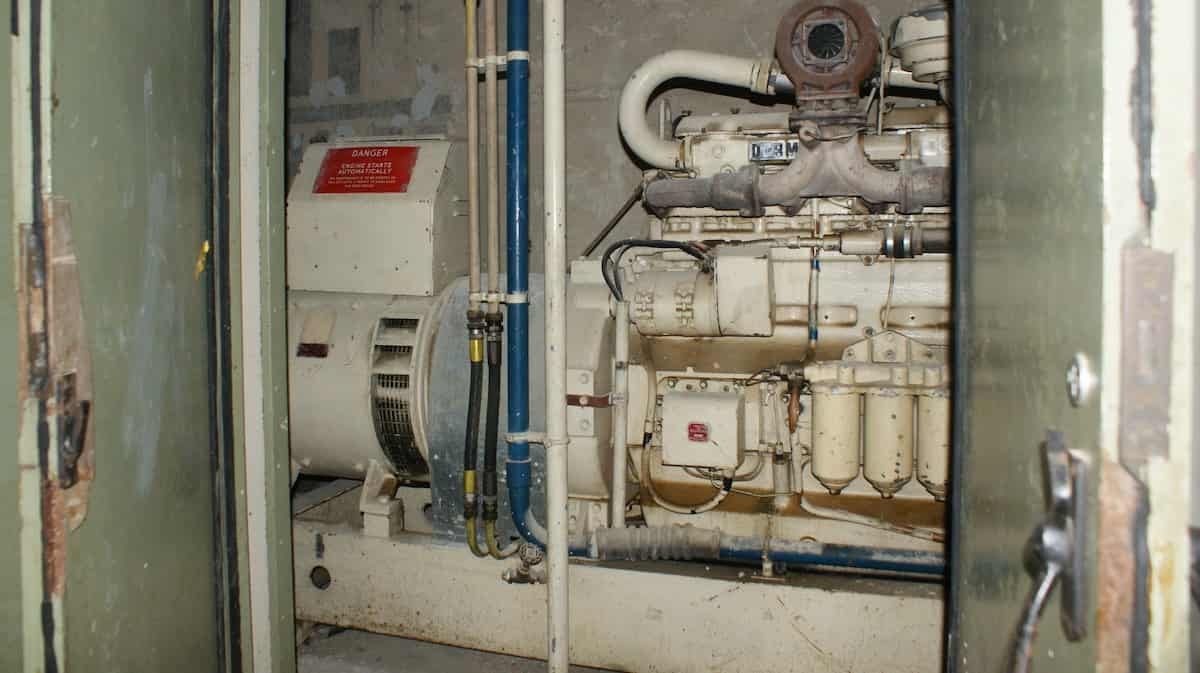
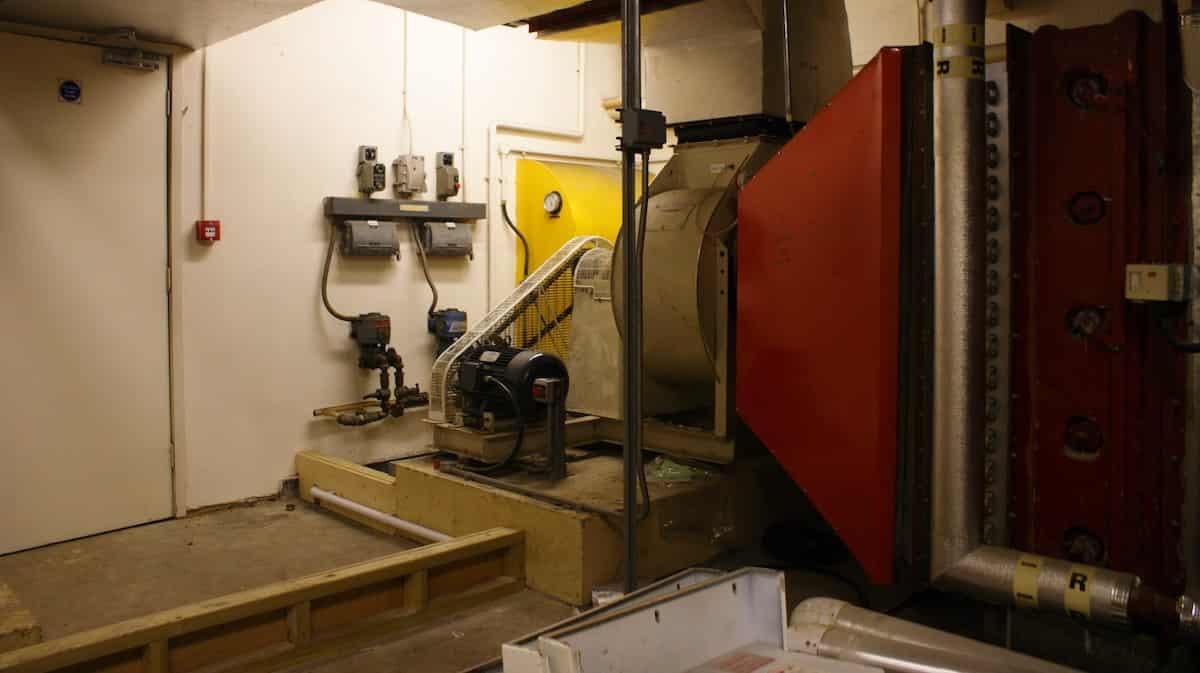
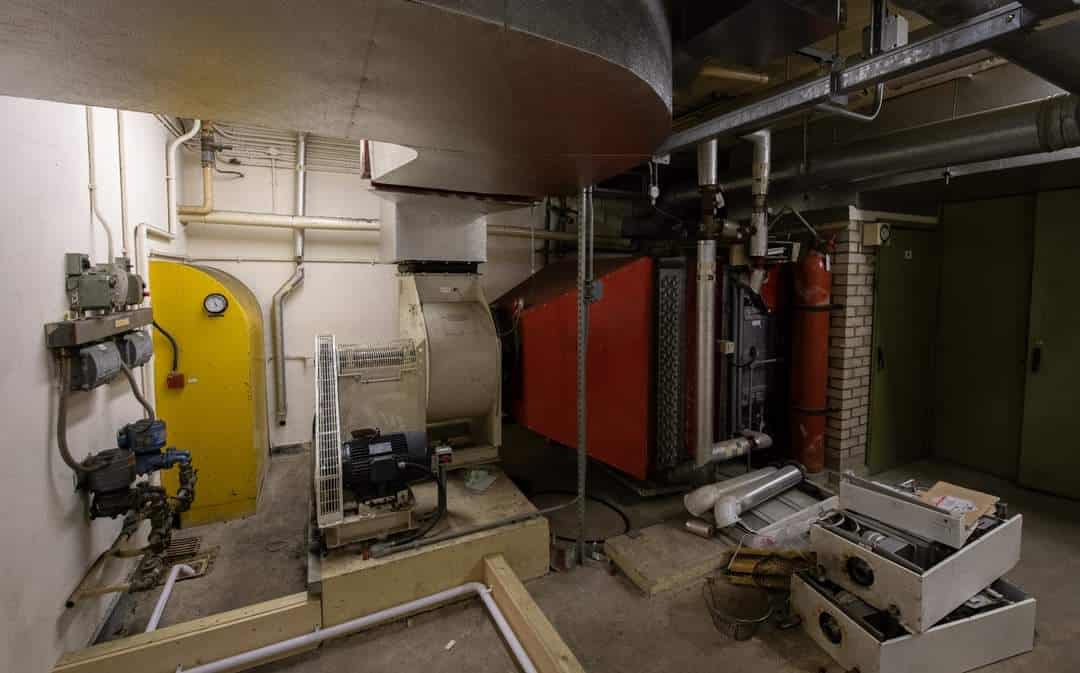
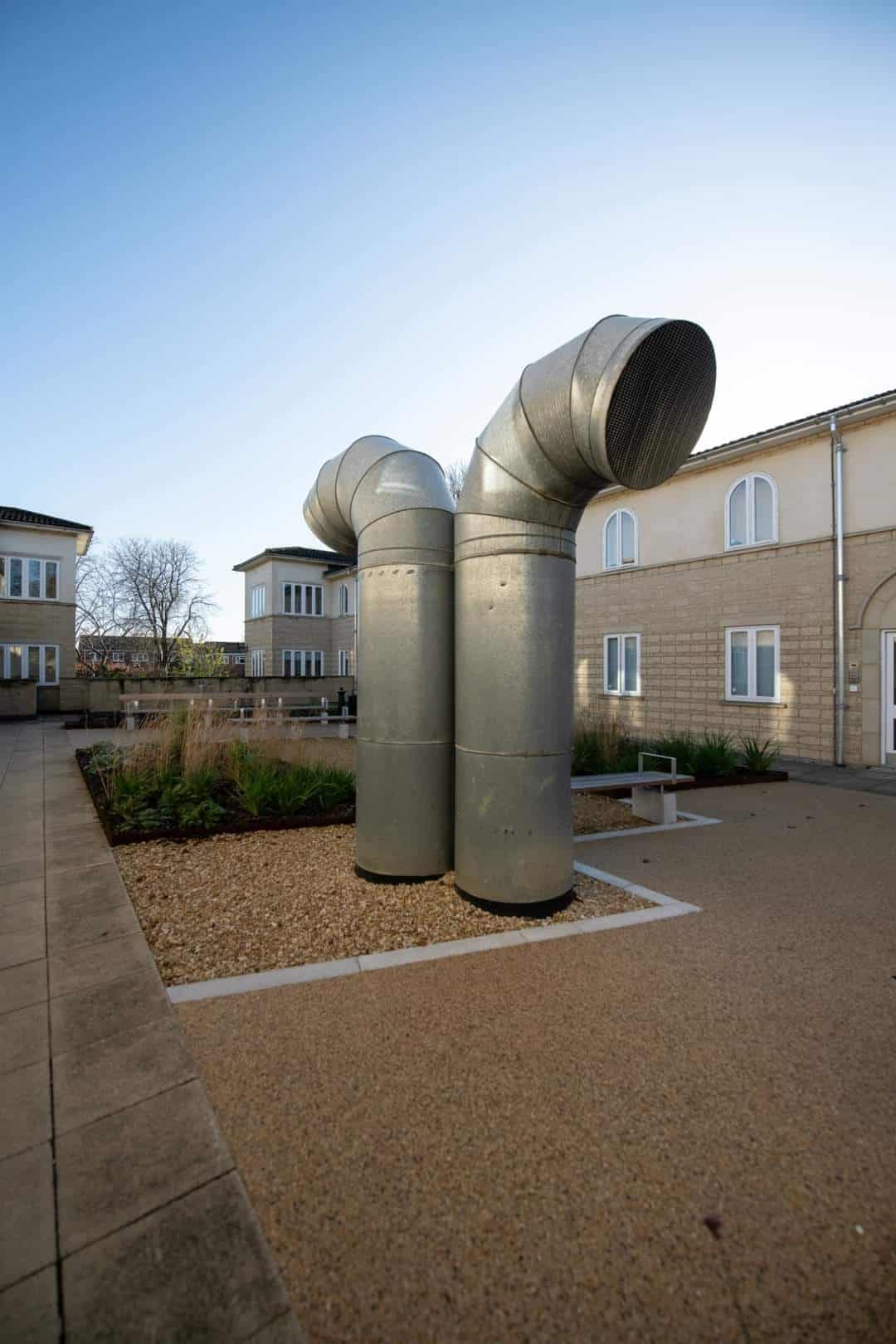
On the other side of the corridor opposite the ejection room is the ventilation and filtration plant room with the standby generator room at the rear of it. All the ventilation plant is intact and in good condition. The compressors were replaced in 1990 as the old ones were leaking gas and were worn out; the entire air handling plant was replaced at the same time. All the ventilation ducting throughout the bunker has been replaced with a large air vent emerging into the courtyard. Although the plant is has been renovated it is not used as the students in the buildings above find it too noisy. There are several electrical boxes on the wall that are in use. It is unclear if these are original but the bunker has been completely rewired and fitted with new lighting, together with emergency lighting which is kept on at all times. The standby generator is still in place together with its twin control cabinets.
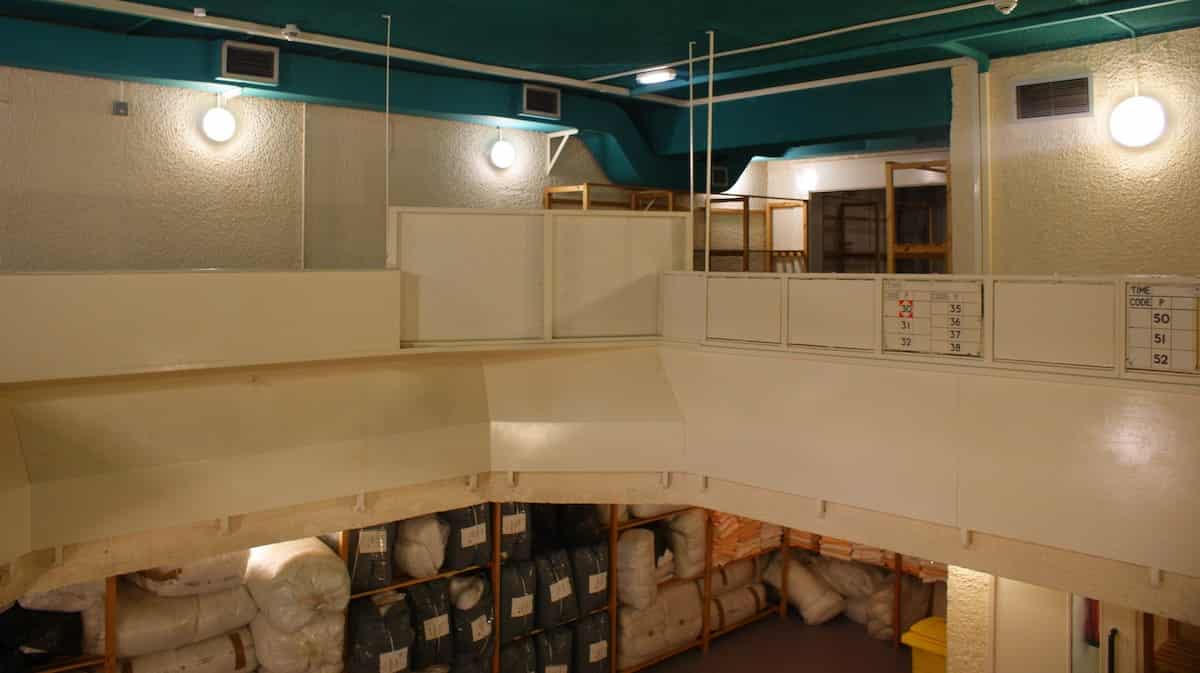
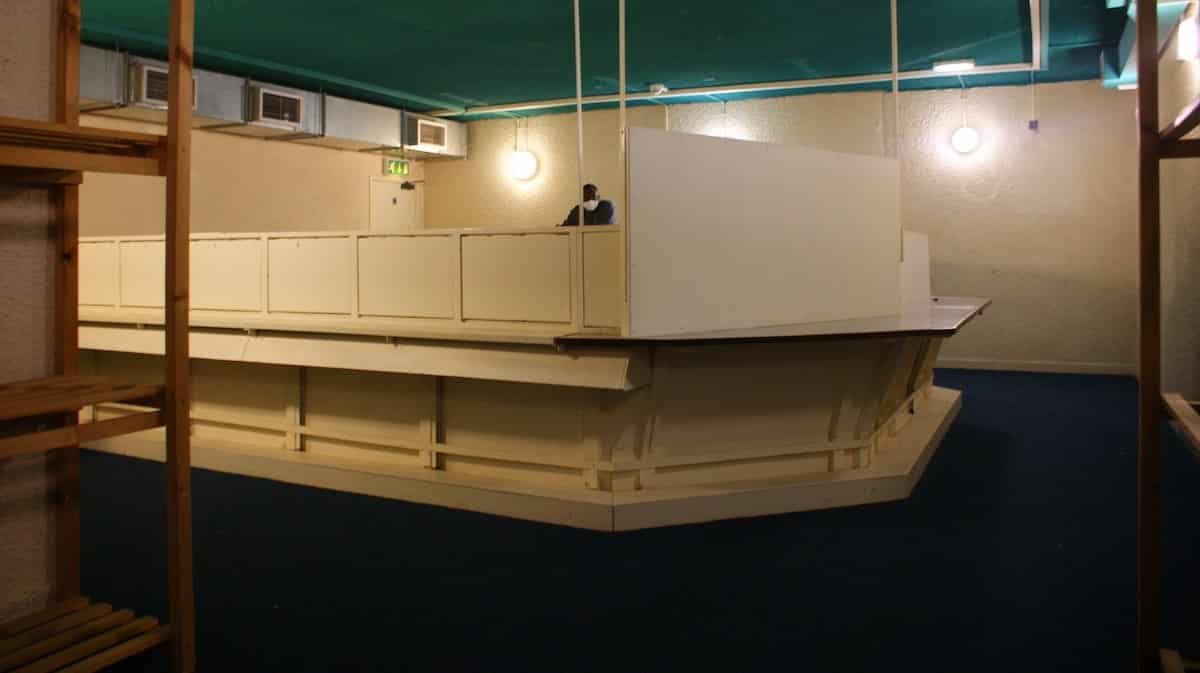
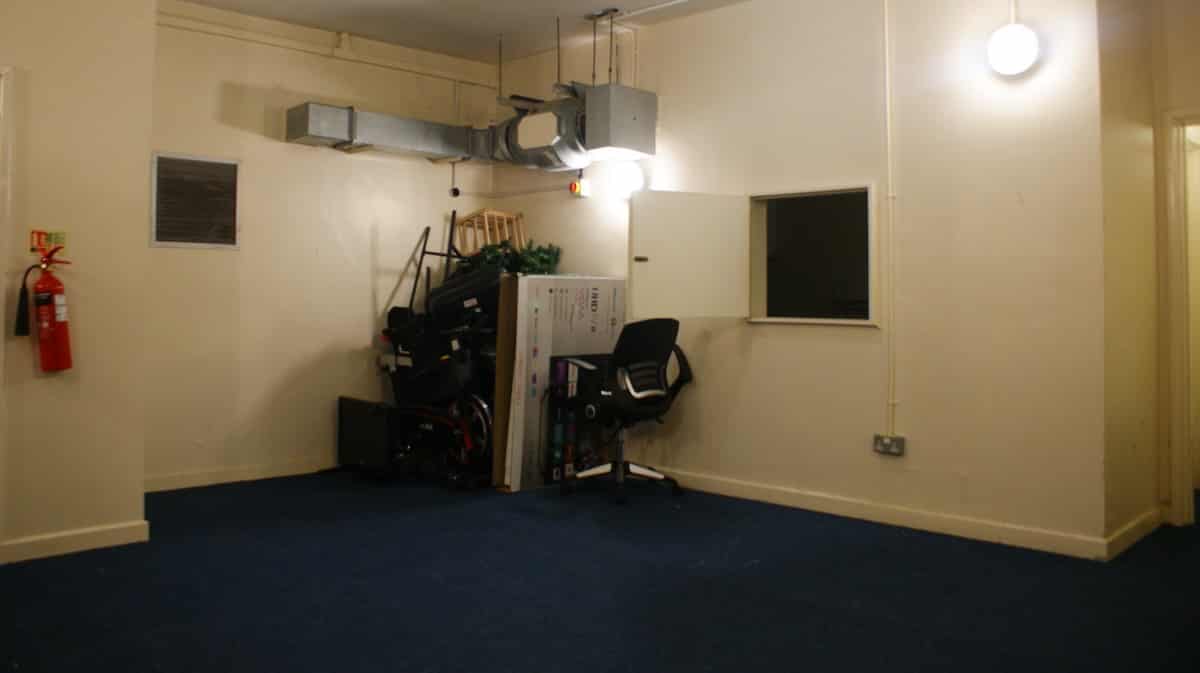
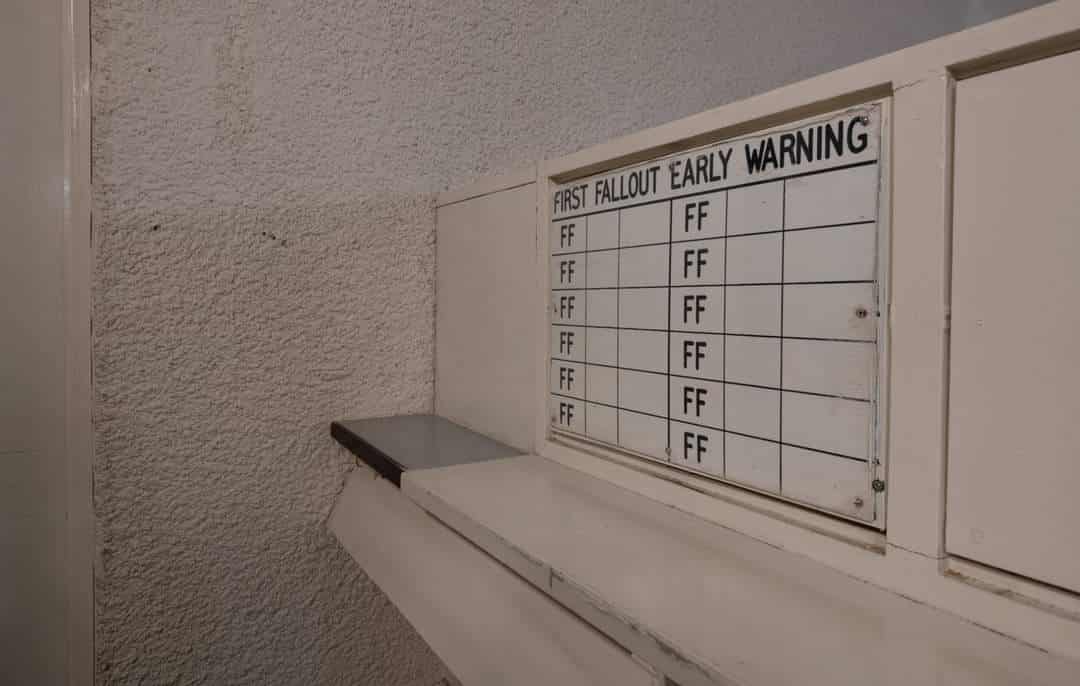
The next room on the right is the canteen at the end of a short corridor with the small kitchen to one side of the corridor and a serving hatch linking the two. The kitchen has been stripped of all its appliances and the canteen is used as a cutlery and crockery store. At the rear of the canteen a large hole has been knocked in the wall through into the BT room next door with another hole in the far wall through onto the balcony around the control room. The BT room is empty but the balcony still retains its original revolving tote boards, unfortunately all but three sides have been painted over. There are doors at each end of the balcony back onto the spine corridor. Between the balcony and the BT room stairs lead down to the control room, which is to the left at the bottom of the stairs with the radio room to the right, this is now used by the maintenance team at the Halls of Residence and has been fitted out as a workshop and store. The control room is completely stripped and the partition wall between it and the communications centre has been removed. A new entrance consisting of two double wooden doors has been inserted on the far side of the control room with open steps up to the surface.
The bunker has been repainted cream throughout leaving only the ceiling of the control room in the original ROC turquoise.
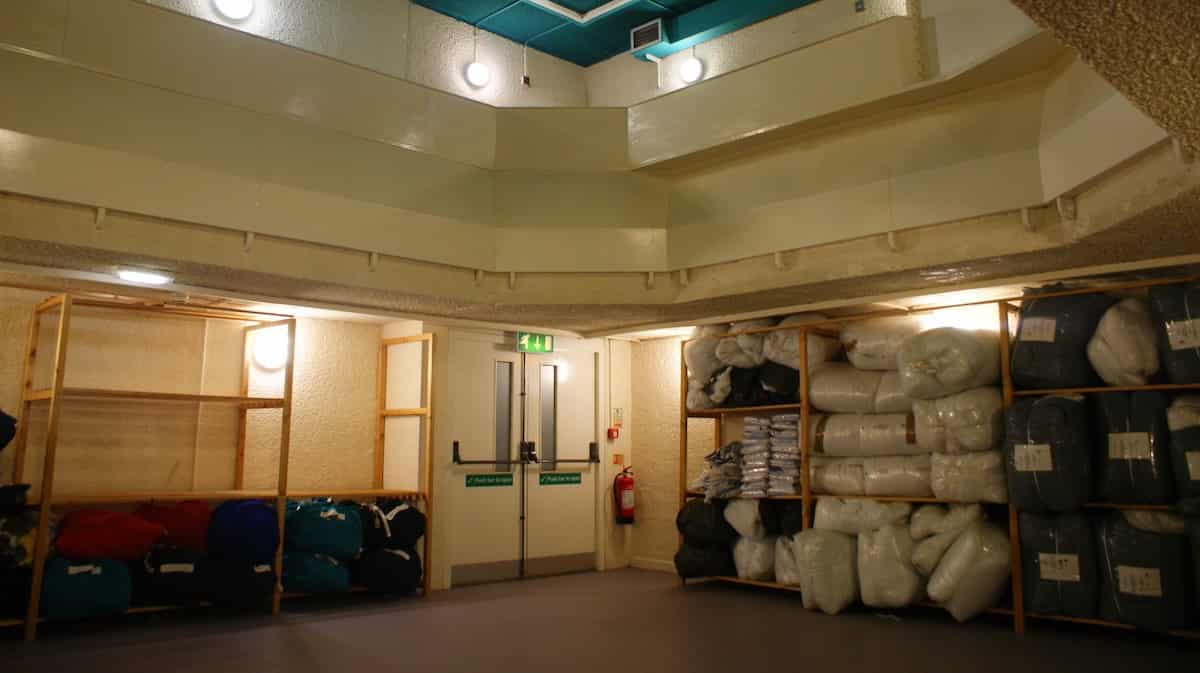
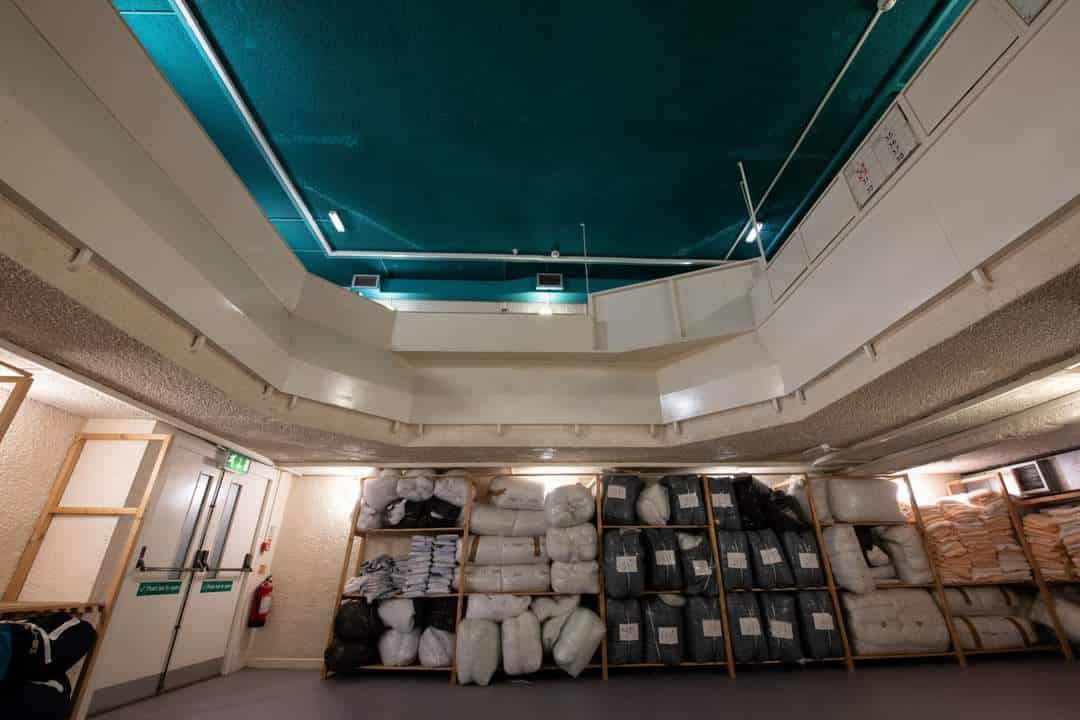
A lot of money has been spent on renovating the bunker but initial plans to use it as a discotheque came to nothing as if it were to have a licensed bar the emergency exits would not be adequate (too narrow). The bunker, which is owned by the student union maybe converted into a games room but at present, apart from the maintenance room it is only used to store crockery and bed clothes. The university now feels that it may have been a mistake to retain it, as it has become something of a white elephant.
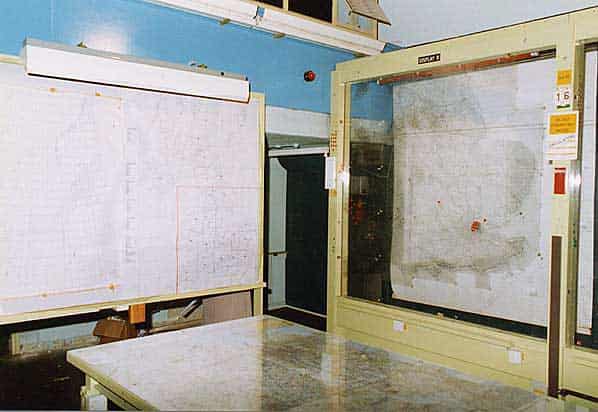
When work started on the site much of the original equipment still remained in place including the Perspex map screens still mounted in their wood frames, plotting tables, maps, displays, triangulation nuclear burst tote board and a red wall mounted telephone labeled ‘Internal bomb threat circuit’. All of this was removed by the builders and destroyed apart from the Perspex screens showing the posts and clusters, which are still leaning against a wall in the control room. The university is now considering mounting a display of ROC memorabilia in one of the rooms but unfortunately most of the artifacts have gone.
Oxford was the Royal Observer Corps' No.3 Group HQ, in the UKWMO Metropolitan Sector. The UKWMO peacetime national HQ was located in an office building adjacent to the No.3 Group bunker.