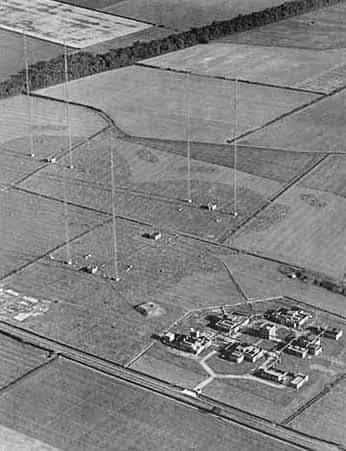
BBC Ottringham was built during the war to provide a high powered medium wave and long wave service (including propaganda) to Europe.
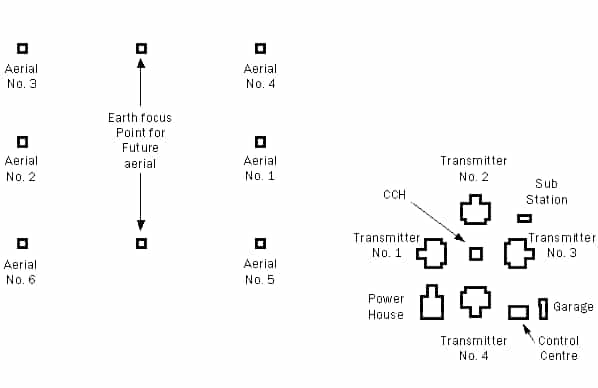
Until then, the BBC had been using their existing transmitter sites at Bookman’s Park, Droitwitch and Daventry but this could only ever be a temporary solution while they developed a new east coast site. This consisted of a 94 acre plot with seven buildings and several 500 foot transmitter masts.
Tests at the site started on 22nd January 1943 and the station finally came on line on 12th February 1943 six months late after two of the 500 foot masts collapsed during construction in August 1942. This late opening had disappointed BBC engineers as they were competing for completion with Aspidistra at Crowborough, which was under construction at the same time. Although used by the BBC, Aspidistra wasn’t owned by the Corporation being owned and used by the government to broadcast black propaganda.
The station, which was known as OSE5, had a maximum power of 800 kilowatts either on long wave or medium wave and at the time this was the most powerful transmitter in the world. 4 200 kilowatt Marconi transmitters were installed in 4 heavily protected surface buildings, possibly with earth revetments. These were driven and fed with programmes from a 5th building (the Control Centre) while the 6th building was the Central Combining House which contained the circuits to combine 200kW at a time for the LF service to a maximum of 800kW output.
Although the station was tested to 800kW output it never run on programme to that level, 600kW being the maximum used. The station was designed to broadcast with 200, 400, 600 or 800 kilowatts with up to four separate programmes simultaneously. The forth transmitter was used to relay the Home Service (Radio 4) to the East Riding and North Lincolnshire. The final building on the site was a standby set house with 3 X 740bhp diesel alternator sets. (There was also a garage and a sub-station).
BBC Ottringham continued in service until well after the war but was eventually closed on 15th February 1953 because neither channels nor funds were available for it continue in service. The site was dismantled shortly after closure; the transmitters were moved to Droitwich where they provided service well into the 1970s, for Radio 1 and Radio 4 on medium wave and Radio 2 on long wave. They were installed in three storey buildings; the water cooling plant was below ground, the modulation and rectifier enclosures were on the ground floor, and the AF and RF stages were housed on a first floor gallery. One of the aerial masts is still in use at Brookmans Park (F1 a replacement for F mast that fell down in 1956 while contractors were working on it), the others are believed to have gone to other BBC HF sites. The site of the aerial masts has now been returned to farmland while the transmitter site has been cleared of all buildings. A new industrial unit has been built at one end of the fenced site while the rest is a storage yard and lorry park. Although the site appeared completely cleared of anything to do with the BBC, one section of the basement of the control centre remains intact.
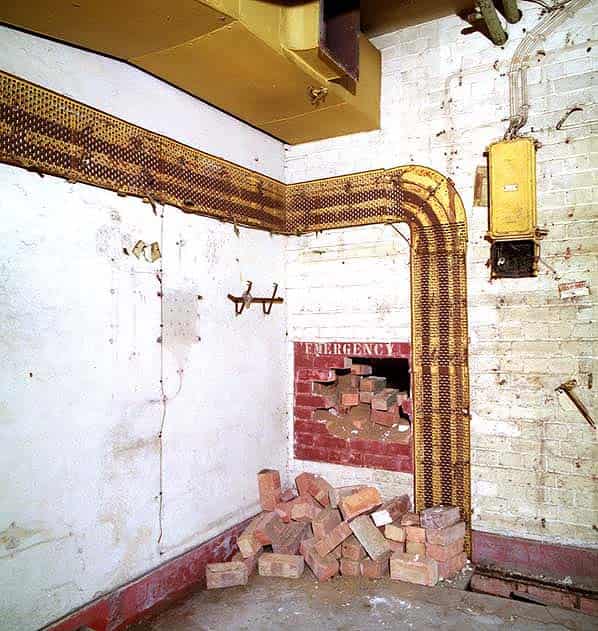
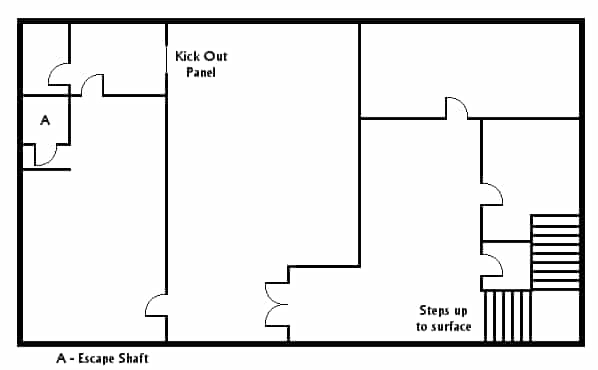
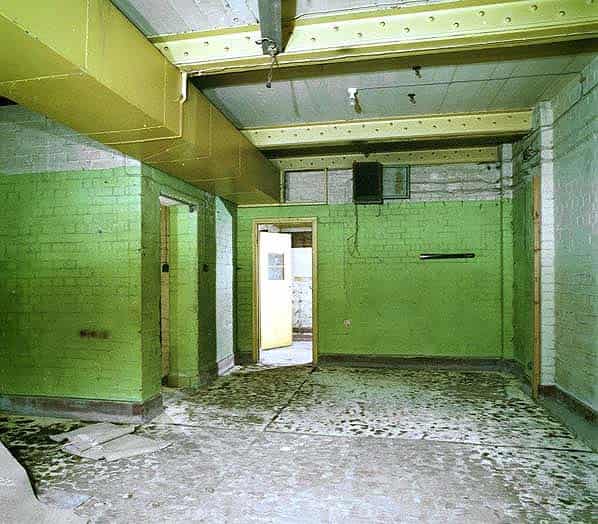
Just inside the front door of the new industrial unit there is a locked door opening onto a flight of steps down into the former basement. At the bottom of the steps there are three large rooms, one leading into another. Two smaller rooms are accessed from the first room with a key cabinet on the wall of one of them. At the far end of the third room is another small room, which includes a ‘kick out’ section of brick wall allowing emergency access into the middle room. Some of the bricks have been knocked out and the word ‘Emergency’ is still visible above the wall. There is also a door in the long side wall of the third room, this opens onto a short corridor with a gas tight door at the end opening on to a vertical shaft up to the building above. This has now been sealed at ceiling level. It is unclear if this was an emergency exit or served another purpose. There is ventilation trunking high on the wall of each room. It is unclear what the building or its basement were used for but, looking at old maps, it was the largest building on the site.