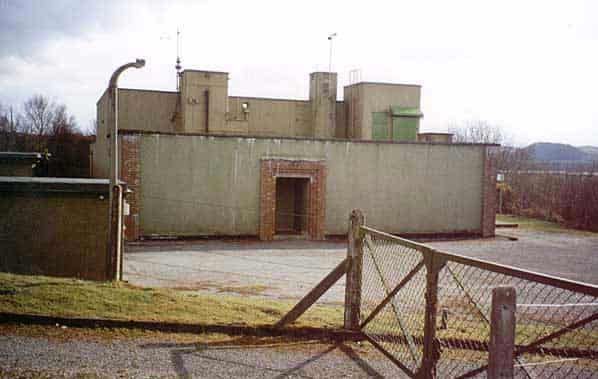
In 1973 the Group was disbanded and all posts were transferred to 30 although Oban Control was retained as a stand-by communications centre for Inverness Group HQ until 1992. It remained in care and maintenance until 1997 and was then re-activated as a helicopter training centre attached to RAF Kinloss. It has trained crews for Kosovo. It is also available as a general training centre for other services, police, fire brigade etc.
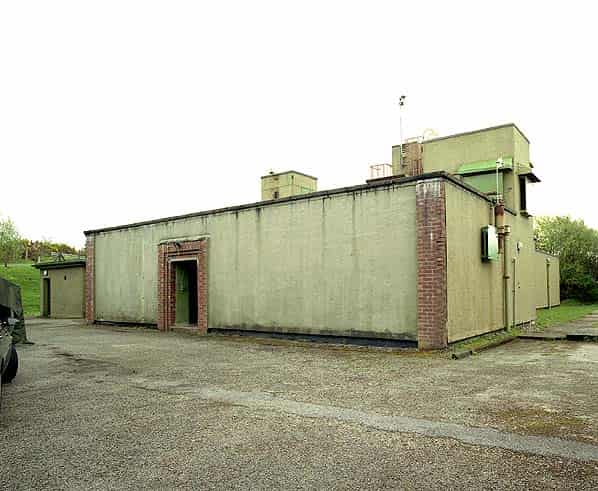
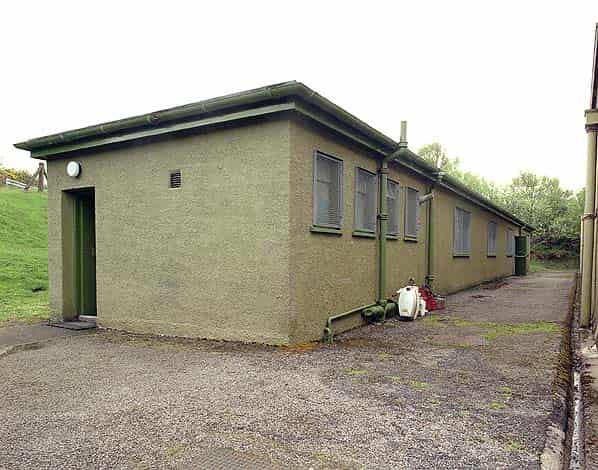
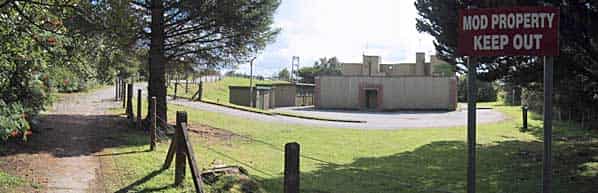
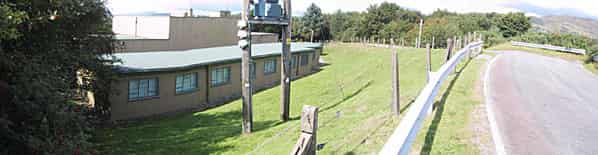
Oban HQ is of the standard surface design and stands within its original compound. Alongside it is the WW2 Sector Operations Centre for RAF Connel which was also used by the ROC for their admin staff. As the building has been in continual use apart from 5 years when it was in C & M it is in excellent condition both externally and internally and still retains many features and artefacts from ROC days.
Inside the entrance porch there are two steel blast doors, that to the right gives access to a filter room which is still intact. That to the left enters the main north - south spine corridor. Immediately inside the entrance door are the two decontamination rooms with their interconnecting door. The first still retains its water tank and sink, the second is empty. Both rooms are now used for storage.
The first room on the right is the plant room with a separate generator room at the back. All the plant is original and in immaculate condition with 2 compressors ventilation equipment, filters and control equipment all fully operational. The plant is run every week to circulate the air in the building although not when the building is occupied. The generator with is associated control equipment is also in good working order and regularly tested. It has 1500 hours on the clock from new.
The next room on the right is the two level control room which still retains wall boards along all four walls from ROC days. These show ‘Forces Available’ and ‘Forces Deployed’, 4 boards listing ‘Damage Status’, ‘Fallout Status’, ‘Contact Established’ and ‘Comms Routing’. Another board lists ‘Rear HQ’, ‘Tactical HQ’, ‘Reserve HQ 1’, ‘Reserve HQ 2’, ‘MOD Normal’, ‘MOD Alternate’, ‘UKWMO Bedford’, UKWMO Lincoln', ‘AFHQ’s 1 - 10’, ‘AFHQ Scotland’ and ‘AFHQ Northern Ireland’.
There is a Comms State board divided into two columns one headed ‘Speech’ and the other ‘Telegraphy’. There is a board depicting ‘Regional Air Squadrons’ and ‘Air Despatch Squadrons’, another showing ‘Available Aircraft for tasking’, another showing ‘Aircraft on task’ and another showing ‘Safe havened aircraft’ &Another board shows ‘Radiation Hazard’ - existing and forecast and another shows ‘Details of Attack Warnings’ - Red, Grey, Black & White. Another board relates to ‘Formal alert’ - 1 Military Vigilance (Yellow), 2 Simple alert (blue), 3 Reinforced alert (Grey), 4 General alert (red).
As well as the ROC wall boards there are a number of maps and charts relating to the current use of the building.
The next room on the right is the GPO/BT room. This still retains some 1980’s BT junction boxes and wiring. The back part of the room has been partitioned off and the door through into the control room bricked up. The room has been used as a mattress store and is now used as a small dormitory.
Beyond the GPO room is a small cupboard and the stairs to the upper level and then the kitchen and canteen. The canteen is entered along a short corridor with a doorway from the corridor into the kitchen. The canteen still retains all its original furniture with tables and chairs laid out in a ‘T’ shape. It is still used as a canteen. The kitchen also retains all its original appliances including a Creda hot plate cooker, dish washer, hot water dispenser, water heater, Creda grill, stainless steel food preparation table, stainless steel sink and draining board and a serving hatch into the canteen. The kitchen is still in regular use with all appliances working.
Beyond the kichen are two wooden doors (forming an air lock) and beyond the emergency exit steel blast door at the back of the building.
On the left hand side of the spine corridor is the officers' room (now a store), male and female toilets, still in use with all their original fittings and the male and female dormitories. These still retain all their original bunk beds and are still used as dormitories.
There are two rooms on the upper floor, the radio room and the gallery around the control room with the triangulation alcove at one end. Standard ROC post instruments would have been mounted in the alcove and the FSM and BPI pipes are still there as is the mounting board for the BPI. There is a 1" Ordnance Survey of the surrounding area on the wall with posts indicated with a pin. The pins are joined together with string indicating the clusters as they were after 1968. Those posts closed in 1968 are also shown, either the pins are still in place or the pin holes are visible.
The radio room has now been converted into another dormitory with 4 ROC twin bunks. There is still a wiring frame on the ceiling with all the cables still in place and copper earth straps around the walls. In one corner there is an old radio/telephone controller with phone and a 19" rack of radio equipment.
The WW2 Sector operations centre alongside is smaller than the bunker and has a single storey. The main entrance is at the north end which opens into a dog leg into the corridor along the west side of the building. At the far end there is a second door out of the building and the corridor enters the largest room which would have been the ‘Ops Room’. With the exception of a small toilet, kitchen and caretakers store close to the entrance door, all rooms have been converted into dormitories and contain beds. Signs on the doors still indicate the use the rooms were put to in ROC days. They say ‘ROC Office’, ‘ROC Store’ and two dormitories.
My thanks to the RAF at Kinloss for allowing this visit. As this is an operational training centre internal photography wasn’t allowed although we were permitted to photograph outside the building. We were given unrestricted access to all the rooms despite the fact the centre was occupied by an army unit at the time. My thanks to Ward and Caroline Westwater of the Civil Defence & Emergency Service Preservation Trust for arranging this visit.
Those present on 15th May were Nick Catford, Robin Ware, Keith Ward, Ward Westwater, Caroline Westwater and baby Caroline Westwater.