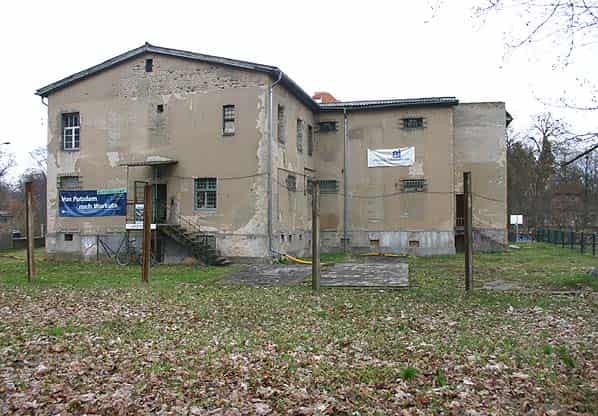
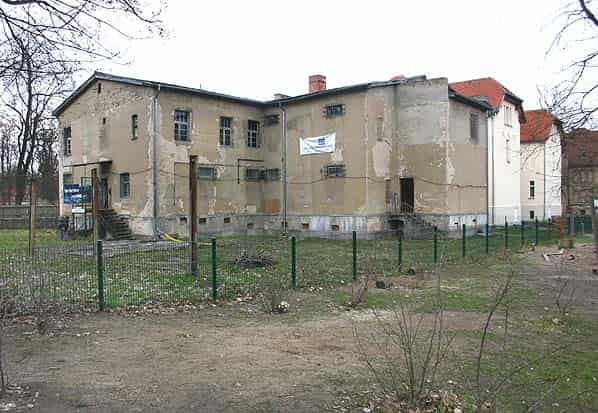
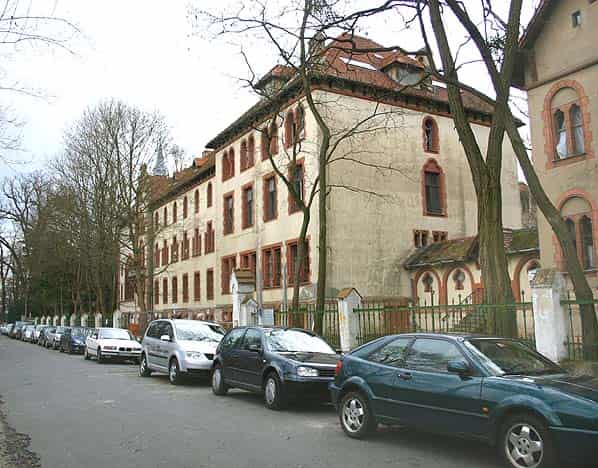
The former KGB Prison at No. 1 Leistikowstrasse in Potsdam is located very close to Cecilienhof, where the Potsdam Agreement was signed in 1945 at the end of the Second World War. The nondescript three-storey building was originally owned by the Evangelical Church, was controlled by the KGB from 1945 to the end of the Cold War and, having been handed back to the church, is now preserved as a memorial and exhibition site by a local group affiliated to Amnesty International.
Leistikowstrasse was formerly completely owned by the KGB. There is a grand, mansion-style house next door which is now being renovated for sale as private housing. At the moment this adjacent house still has barred windows. This was where the prisoners were taken for interrogation and it is said that executions were held there. The buildings on Leistikowstrasse are all older German buildings, but opposite there is a Soviet building in the usual flat-roofed, white-brick style typical of other Soviet sites in East Germany.
HISTORY
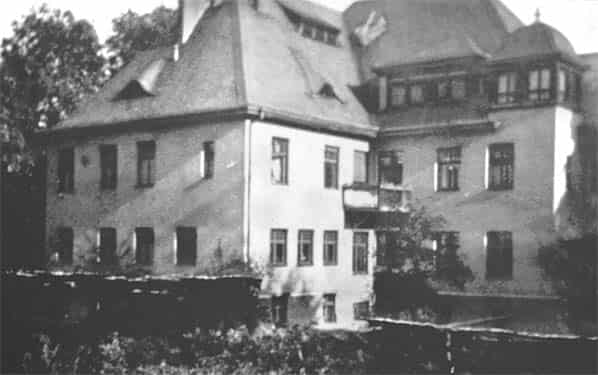
The original name of the street was Mirbachstrasse, and No. 1 house was built in 1916-18 for the central organisation of the Evangelische Reich-Frauenhilfe (Evangelical Women’s Charity Society) which itself was a part of the Charity Society of the Evangelical Church, the Evangelisch-Kirchlicher Hiffsverein. The lower floor was used for parish and ministry work as well as for storage of books and other literature, while the upper floor and attic was a parson’s residence.
At the signing of the Potsdam Agreement, the administration of Germany was divided between the main four Allied nations- a division which would eventually become East and West Germany. Potsdam was in the Russian-controlled part of Germany and thus effectively fell under control of the Stalin-era Soviet Union immediately. Although Potsdam is in the East, it is very close to the border with West Berlin and indeed not far from Checkpoint Bravo. The nearby Glienicke Bridge connected West Berlin with Potsdam and was used for spy exchanges, which also ties in with the prison’s history.
On August 13, 1945, the Soviet occupation forces confiscated the house and converted it into a prison to be used by the KGB. Those suspected of anti-Soviet offences were sent here and incarcerated, being taken next door for interrogations, and were kept here until their trials. Following trial, those unfortunates who were sentenced to death were kept here in the condemned cells, while those who received hard labour sentences were transported into the Gulag system. As well as civilians, Red Army soldiers who were suspected or accused of such offences as desertion, collaboration or even fraternising with the local population, were also held here and indeed, after 1955 they were the sole inhabitants except those being transferred to the Glienicke Bridge for release.
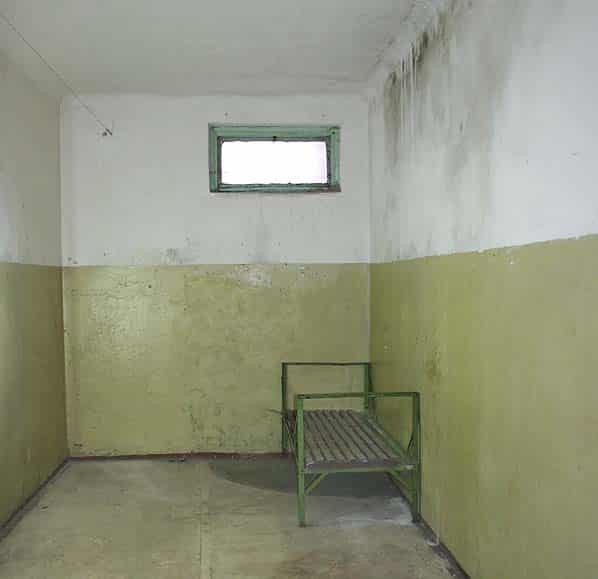
Prisoners were kept in very basic and unhygienic conditions. In the early years some cells were literally bare, without a bed or even lavatory buckets. Inmates were fed meagre rations of bread, soup and cabbage or potato-based dishes. There were no washing facilities and no prisoners were given access to medical care. Mostly they were kept in the cells and had no exercise period, so weight loss and illnesses were very common. Interrogations took place at night, and it was forbidden for prisoners to sleep during the day. The lighting was kept on twenty-four hours daily and was harsh and bright. Trials and interrogation were conducted in Russian, with no translation or interpreter, so many people did not know what they had been accused of. This made it impossible for most to defend themselves.
Cells were unheated and the building is noticeably chilly and damp even in summer. Any bedding provided was usually a piece of sacking, and this was generally only provided to women prisoners. In these early years, the prisoners' drinking water ration was sometimes poured in through the doors- they were given no receptacles to catch it with- and the guards were surprised when the prisoners removed their clothes and washed them in the pool of water as best they could in an attempt to remove the fleas with which they had become infested.
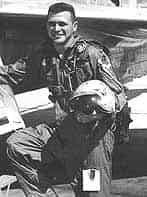
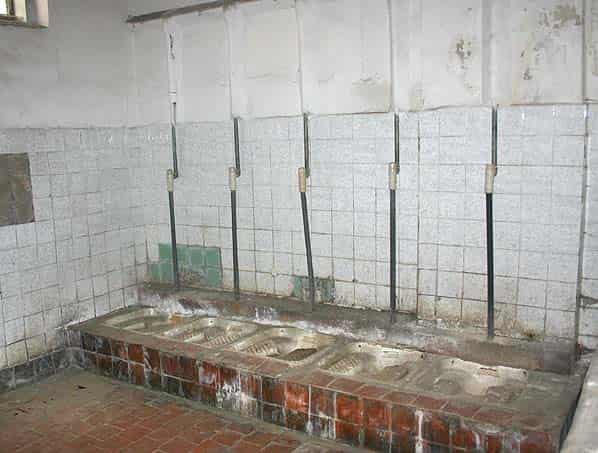
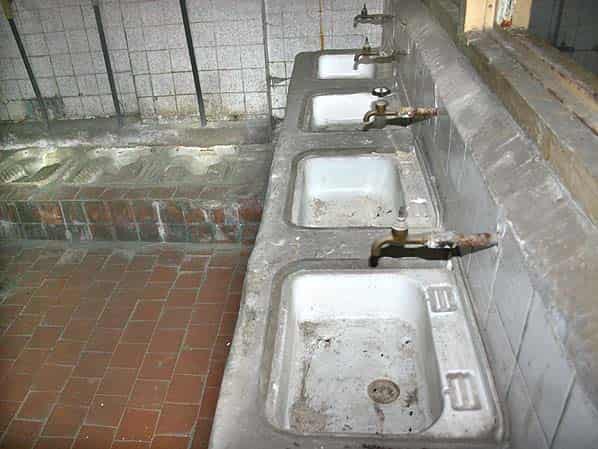
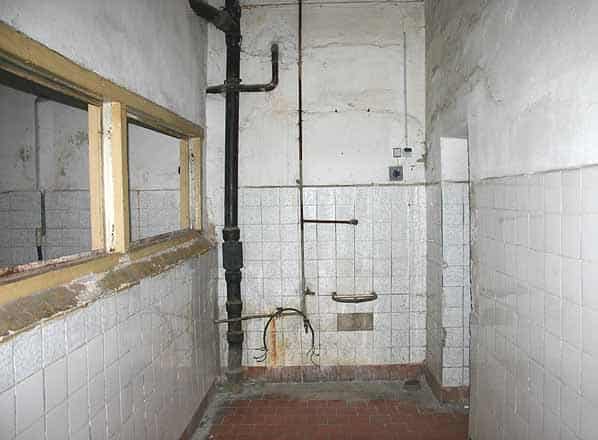
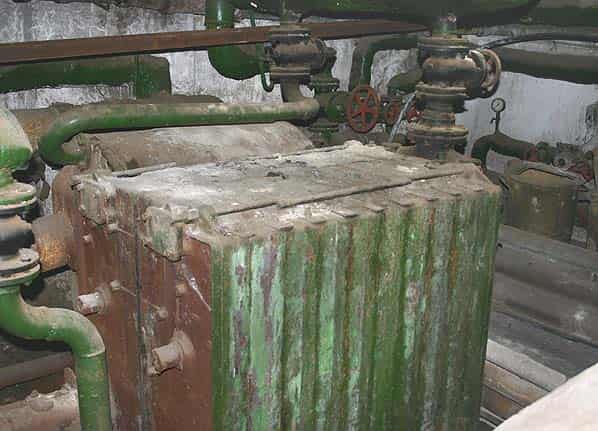
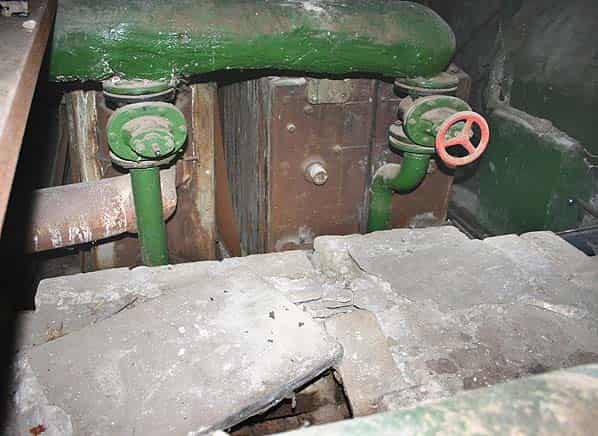
Some very basic facilities, such as buckets in cells, hard beds and squat toilets, were installed in later years. The prison was also used to temporarily hold those individuals who were being released to the West in spy exchanges on the Gleniecke Bridge- the most famous such inmate being Gary Powers, the pilot of the U2 spy plane shot down on 1 May 1960. In the late 1980s the building was used for storage of chemical materials and in 1994- notably several years after the end of the Cold War- the building was returned by the Russian military to its original owners, the Evangelisch-Kirchlicher Hiffsverein.
THE PRISON
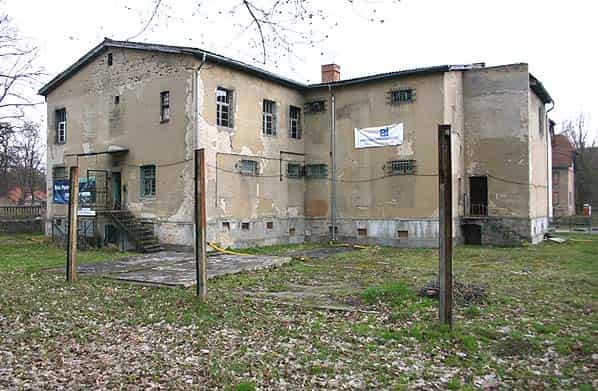
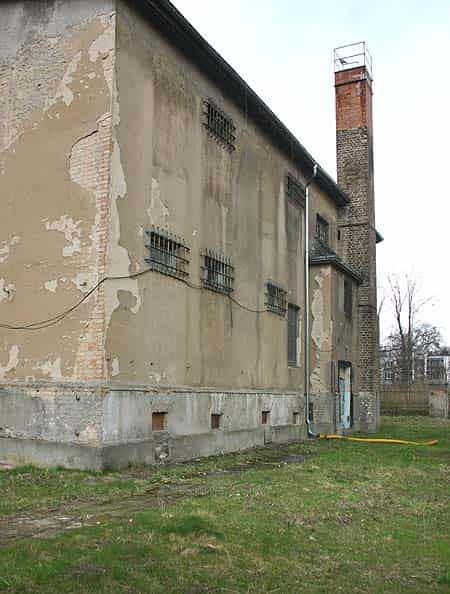
The building is a rendered house with barred windows on the upper floors and partially bricked ones on the ground floor- it is possible to see on the façade where the full-size windows have been blocked up.
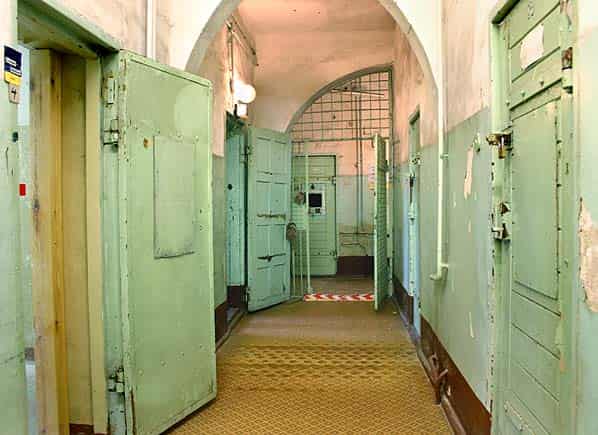
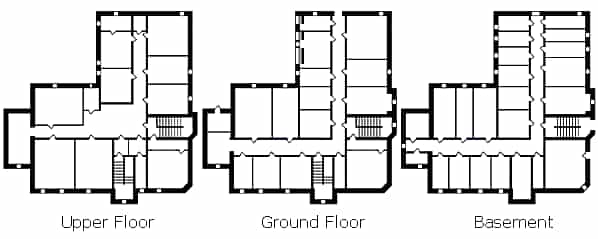
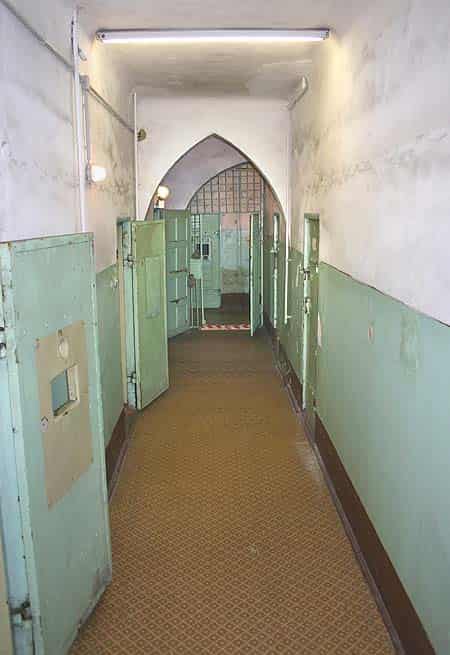
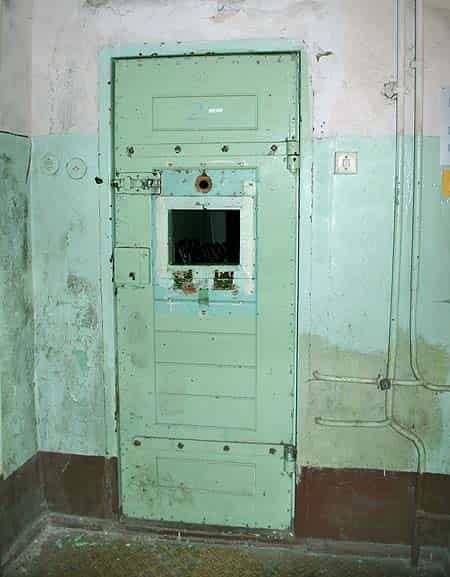
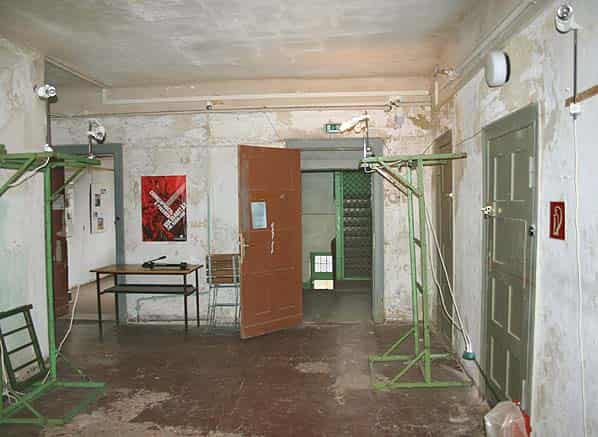
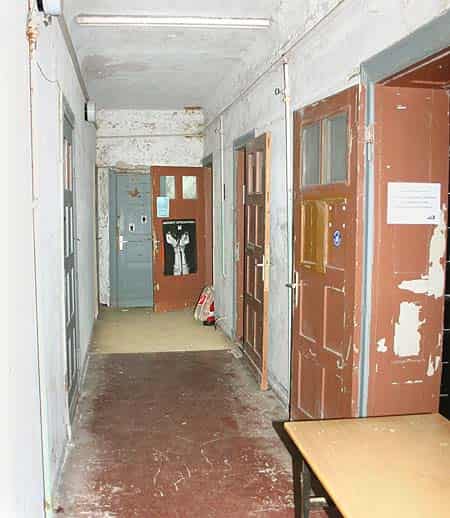
On one side of the main door is a former office now used for book sales and literature, and there are steps down to a spine corridor. Cells open off on both sides of this. The cells have heavy steel doors. The doors do not have spyholes, but there is a small hole in the outer wall of each cell. On the interior, these holes have had surrounding plaster chipped away to provide a surprisingly wide field of vision, a low-tech version of the fisheye lens. The three vertical strip lights on the cell walls are not original- the cells had overhead lighting. Each cell, which held up to ten people, is now used to house small exhibitions telling the stories of some of those who were held here and of the Gulag system itself.
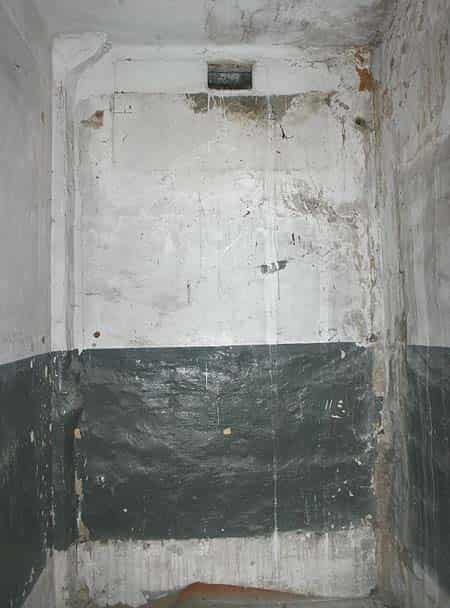
The isolation cells have darker paintwork inside and an almost completely blocked window. The normal cells are fairly wide, but the isolation cells are scarcely wider than a person.
There is a gate across the corridor at the end where there is a stairwell leading upstairs and a right turn to more of the cells.
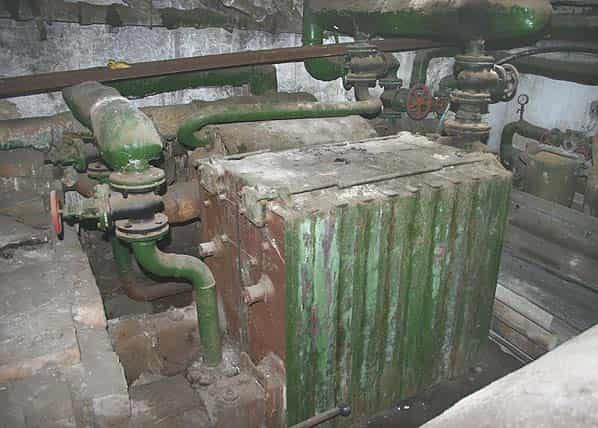
At the end of the corridor is a steel door leading to the basement, which contained the condemned cells. This is closed to the public owing to damage from water ingress which has led to a poor state of repair.
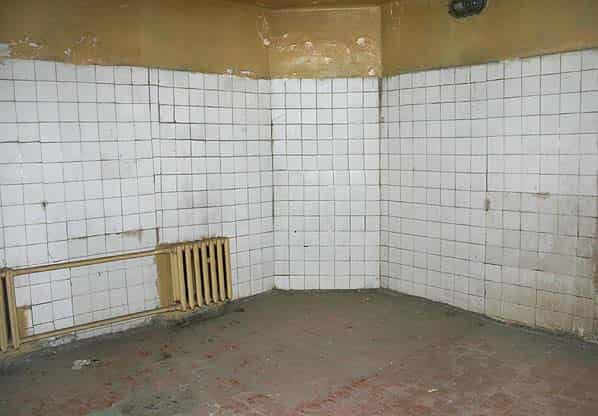
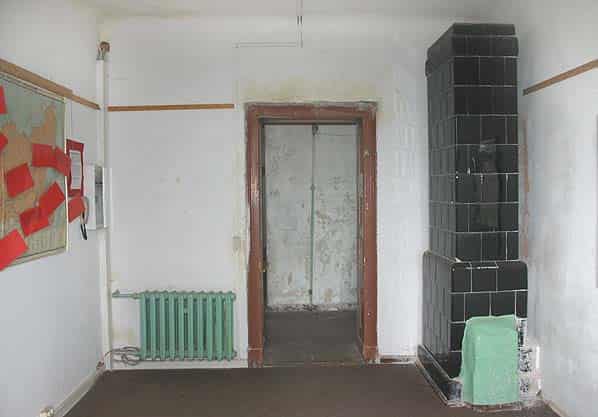
The stairs lead to the first floor. The guards' offices were up here, and have the traditional German tiled stoves in most rooms in contrast to the unheated cells. These rooms have full-sized windows and are used for the exhibitions on the work of Amnesty International.
There are also some slightly better cells, which were used to temporarily house the transfer prisoners, such as Gary Powers, prior to release.
The building stands in its own yard. Photographs displayed at the prison show that there was a fence or sightscreen across the yard obscuring the view to the doors.
The building is in a reasonable state of repair but suffers from damp and much of the paintwork is peeling. It will be maintained, but not restored to perfect condition.
THE SITE TODAY
The owners are determined to preserve the house as both a memorial to those who suffered at the hands of the then regime and also as an exhibition and education centre. There are exhibitions concerning the experiences of the former inmates, other countries in the world where similar prisons still exist, and the work of Amnesty International. Former inmates have helped in this work. The building has suffered from water ingress and decay, and the aim of the owners is to arrest the deterioration, but not to fully restore the site. The house is normally open from the beginning of May and the end of October, but it can be opened upon request for interested parties at any time, and English-speaking guides are available.
Further information is at their website.