The Radar Station at Langtoft near Market Deeping in Lincolnshire was established in 1942 as a ‘final station’ Ground Control Intercept (GCI) station with a brick built operations block or ‘Happidrome’. It was retained after the war and substantially enlarged during the late 1940s. In the early 1950s there was a more drastic remodelling of the site under the ROTOR scheme to renew Britain’s radar stations. The most notable addition at this date was an R6 two storey heavily protected bunker. The new station came on line on 10th July 1953 incorporating the following radars: 5 Type 13 ’s, 2 Type 14’s, 1 Type 11 and 1 Type 7. Modifications continued throughout the 1950s, including the construction of Type 80 radar modulator building, although it is unclear whether or not the radar was ever installed.
The station was relatively short-lived and by March 1958 it was reduced to a care and maintenance role being sold in the mid 1960s to its present owner; since which date the site has been used as a scrap yard.
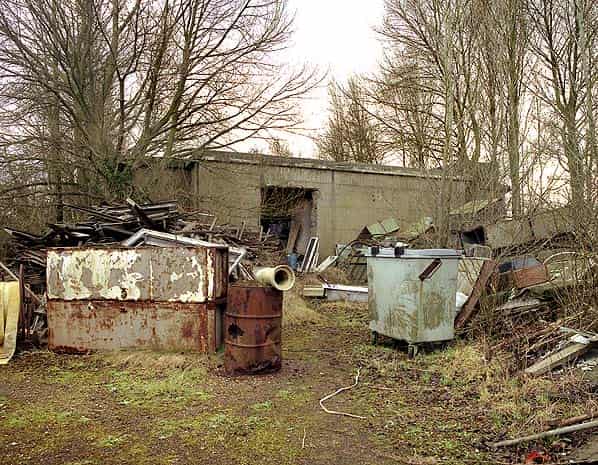
It is unusual for an R6 (like Hack Green and Treleaver) surface blockhouse to be built on the more vulnerable east side of the country where all other similar GCI control centres were entirely underground. Perhaps the low lying nature of the ground and high water table made construction of an underground bunker difficult. To try and disguise the site, the blockhouse was surrounded by trees which have now matured making the building very difficult to see, even in winter.
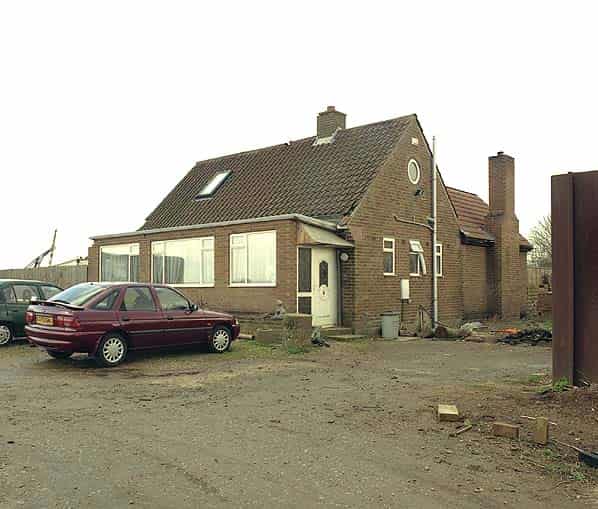
A standard RAF guardhouse stands on the south side of Langtoft Drain (road name). It is slightly shorter than the ROTOR guardhouse found at underground sites and was used at other types of RAF site. In the mid 1980’s it was derelict but has now been restored and externally is largely unaltered apart from filling in the veranda to make an extra room. Internally it has been adapted as a dwelling and the family that own the site live in it.
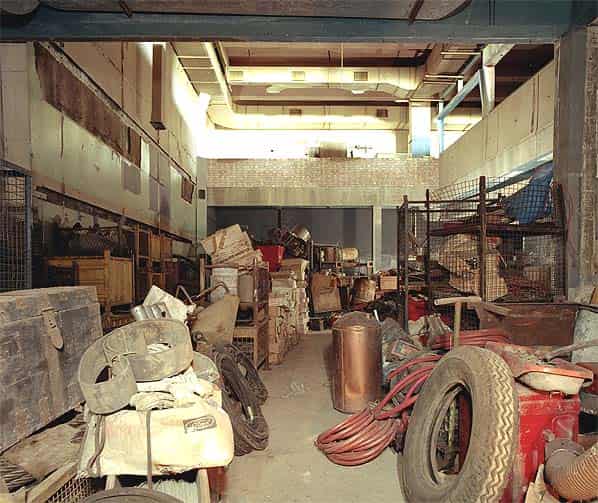
Like other R6 bunkers there is no tunnel linking the guardhouse to the blockhouse which is 100 feet to the south. Only the short north face is clearly visible from the road. Where the original entrance would have been there is now a gaping hole in the wall allowing vehicles to drive straight in to the lower level. The original access would only have been into the upper level and the original entrance stairs are still intact to the side of this new entrance. These give access to the main east - west upper spine corridor. The bunker is now completely filled with ‘scrap’ making examination of most rooms difficult.
To the right of the corridor is the main stairway down to the lower level which retains its overhead winch. The first room on the right is a small store room followed by the GPO battery room which still retains its red tiled floor. Along one wall are a number of floor standing equipment cabinets; these contained ROTOR control equipment but are now empty. The labelling on the front indicates the various radars and other equipment that was operational on the site.
The next room on the right is the men’s cloakroom and toilet and beyond that the supervisors rest room with a small kitchen set into one corner. The kitchen is tiled in white and also has two serving hatches, one into the supervisor’s rest room and the other into the WRAF Rest Room, the next room along the corridor. Beyond this is the ladies cloakroom and toilet which still retains all it’s cubicles intact. The final room on the right hand side of the main corridor is the fan room with ventilation trunking linking to the lower floor plant room. Beyond this is the second stairway down to the lower level.
At the end of the corridor are the two heavy steel entrance blast doors. At the top of the back or emergency stairs out of the building is the transformer room. A large transformer has been manhandled out of the room and now stands in the doorway at the top of the stairs.
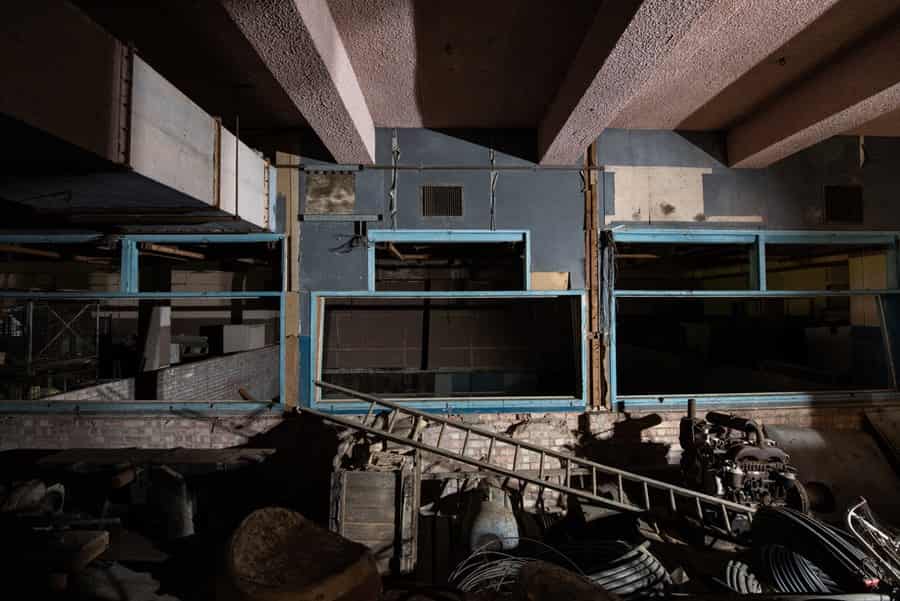
On the left hand side of the upper corridor all the partition walls and teak flooring have been removed forming one large room with, at one end, the two storey operations room which consisted of the main ‘well’ with the control cabins looking down into it. The wooden framework around the top of the well is still in place, with the slanting windows (now glassless) from the ‘Tote Room’, ‘Chief Controllers Cabin’ and ‘No 4 Intercept Cabin’. Other rooms on this level would have been CFP Room, Track Telling Hall, Synthetic Trainer, Chief Controllers Office, Operations Office and Technical Officer.
A trapdoor in the corridor floor leads down into a small intermediate level between the floors this runs the length of the corridor and is about five feet in height. This was the main cable tunnel but now contains white glass bowls, the original light shades from the bunker.
The lower level has been stripped of all its wooden flooring in all the rooms and the corridor. The walls between the corridor and the 3 rooms on the south side have also been removed. These would have been the GPO apparatus room, radar generator room and air conditioning plant and switchgear room.
As on the upper floor all the partition walls on the opposite side of the corridor have been removed making one very large room. A winding path has been left through the scrap. At the northern end was the two level control room that would have been overlooked (through windows) on the lower floor by intercept and control cabins. Other rooms on the north side of the lower floor spine corridor would have included the VHF monitors, teleprinter room, workshop and the radar office.
At the southern end of the corridor, stairs (now removed), led down to voltage regulators and the pump room. These are the only rooms in the bunker that haven’t been filled with scrap. Throughout the bunker all the original ventilation trunking remains in place but there is little else left from the ROTOR period apart from the building itself. There is still an external ladder up onto the flat roof. At the rear of the blockhouse is the air intake and the location of the cyclone fans housed in a large room open to daylight.
There is lighting in some of the rooms although this isn’t original and is now in a dangerous condition. The bunker is home to a pair of tawny owls and a small puma. The cat has been seen by the owner’s children and numerous other people in the locality and it’s been identified from paw prints and droppings.
Externally, most of the compound fence posts still exist around the site although the fencing itself has gone. Some other buildings survive in the grounds amongst the scrap including 3 radar plinths, several buildings from the hutted camp, the Type 80 modulator building, the underground (now partially flooded) Type 7 building and the brick built Happidrome which is in good external condition but, like the R6 bunker, is also full of scrap.
Those taking part in the visit were Nick Catford, Dan McKenzie, Jason Blackiston, Keith Ward , Richard Challis, Robin Ware, Bob Jenner, Stephen Smith, John Duell, Robin Cherry, Tony Page and Sue Bennett.