CHANCERY LANE STATION
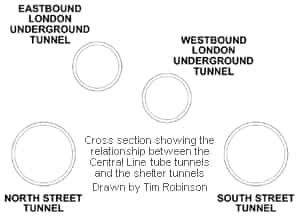
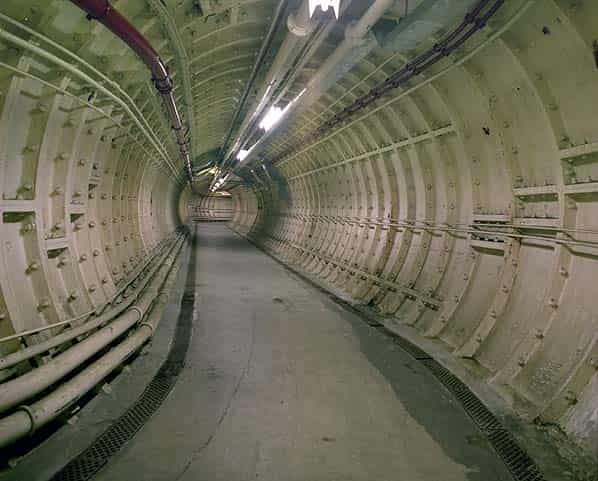
The Central London Railway was incorporated in 1891 to build a tube line between Shepherd’s Bush and Bank. Construction started at Chancery Lane in April 1896 and the line was eventually opened on 30 July 1900 with ten intermediate stations at Post Office (later renamed St. Paul’s), Chancery Lane, British Museum, Tottenham Court Road, Oxford Circus, Marble Arch, Lancaster Gate, Queens Road, Notting Hill Gate and Holland Park. When the CLR excavated the running tunnels it routed them to avoid passing under surface buildings in order to limit the risk to buildings from vibration. At Chancery Lane, the tunnels are placed with the eastbound tunnel 15 feet above and slightly to one side of the westbound.
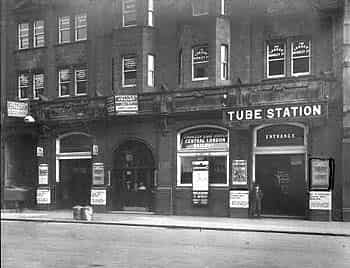
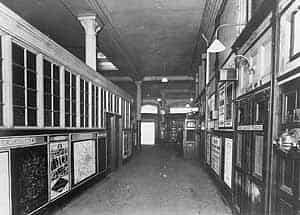
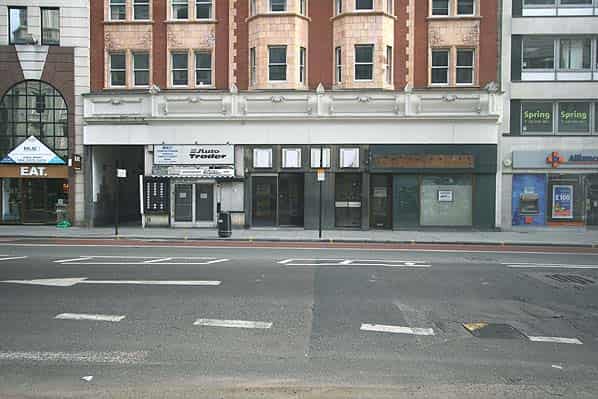
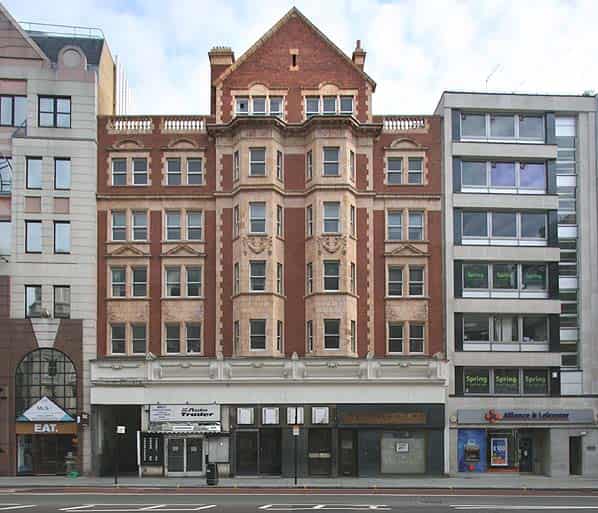
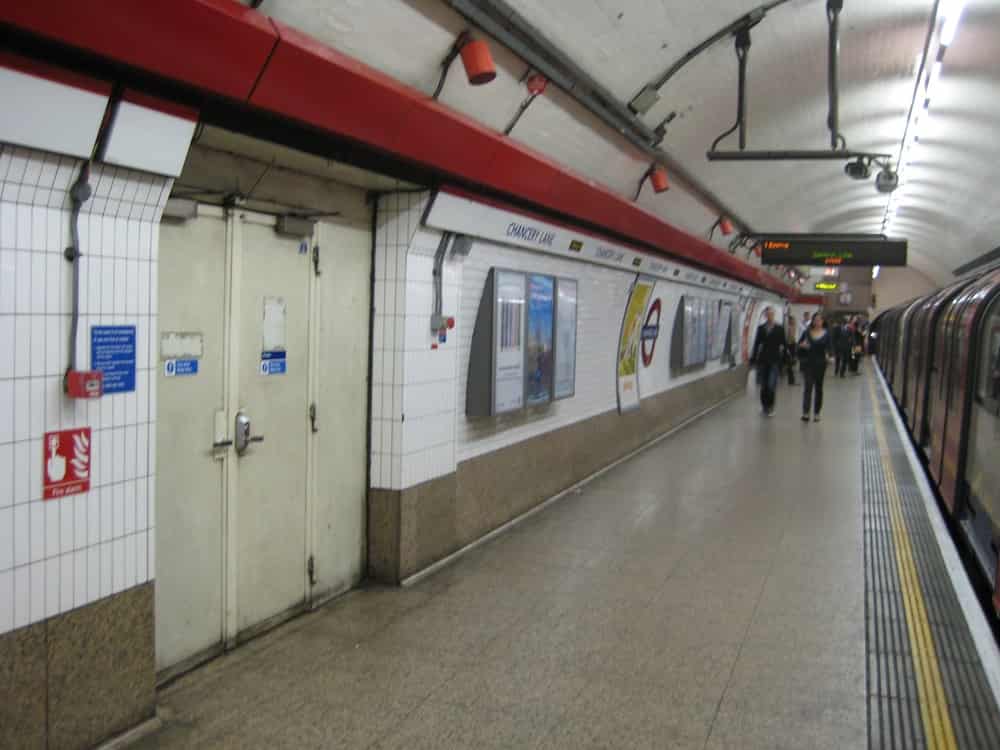
The street level building at Chancery Lane was actually on the north side of High Holborn at nos. 31-33. Originally the station was provided with four lifts in two shafts between ground and platform levels. A general programme of new railways and rebuilding of existing stations was authorised by the London Electric, Metropolitan District, Central London & City & South London Railway Companies Act which received Royal Assent on 4th June 1930. Chancery Lane station closed for rebuilding with three escalators replacing the lifts. It was not possible to construct the inclined escalator shaft between the platforms and the existing entrance, so a new sub-surface ticket hall was constructed 120 yards to the west below the junction of High Holborn and Gray’s Inn Road and the old entrance became redundant. The station reopened on 25 June 1934 and in recognition of the location of the new entrance, the station was renamed Chancery Lane (Gray’s Inn) a month later, although the suffix subsequently fell out of use.
DEEP SHELTERS
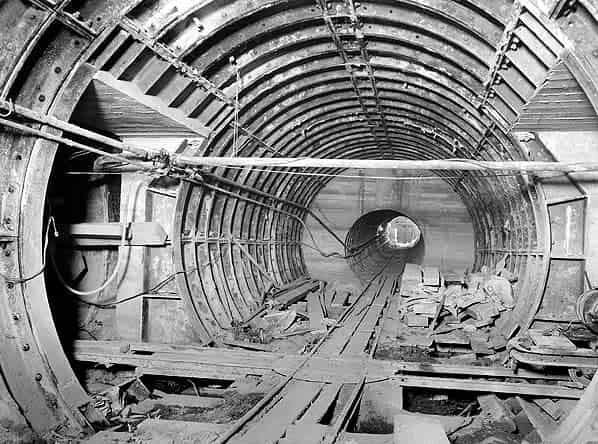
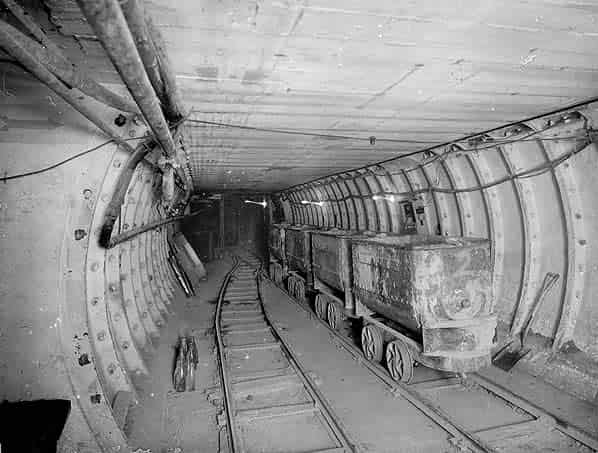
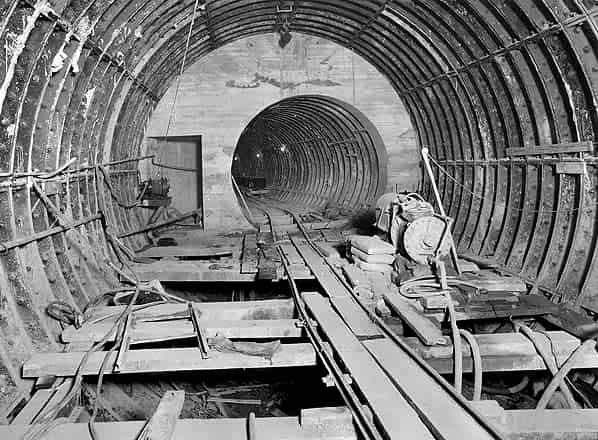
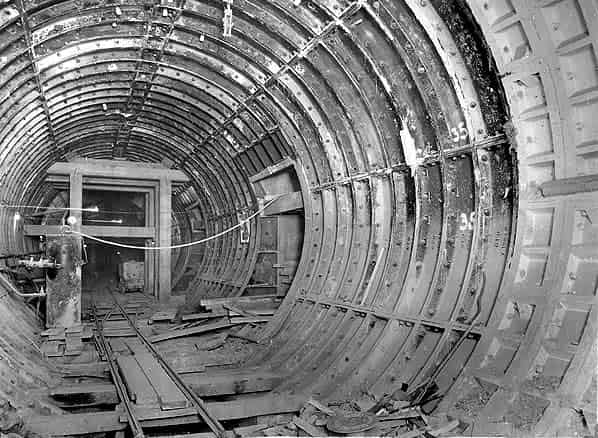
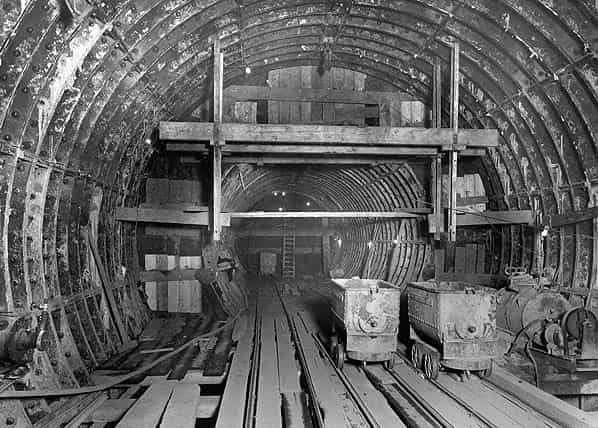
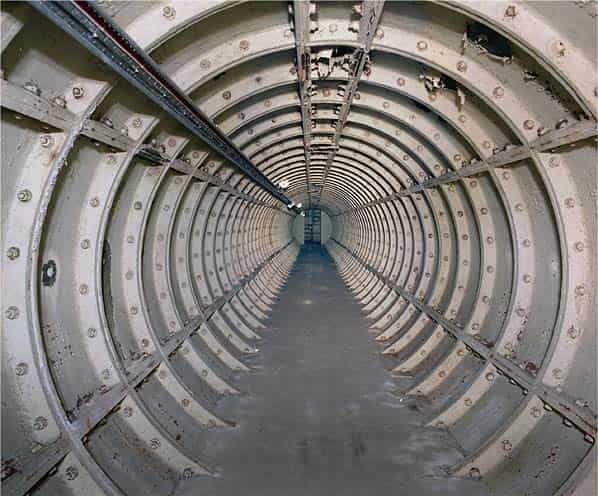
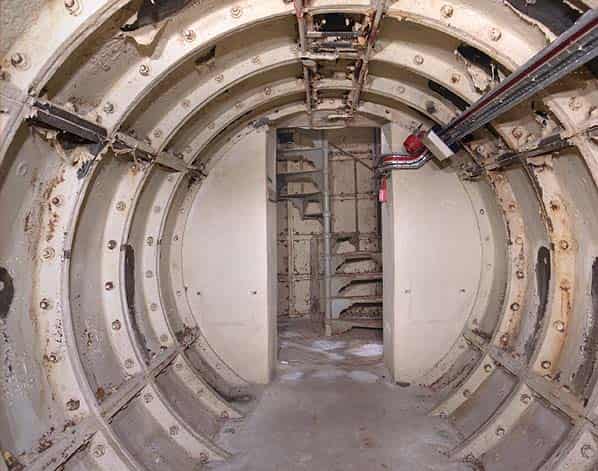
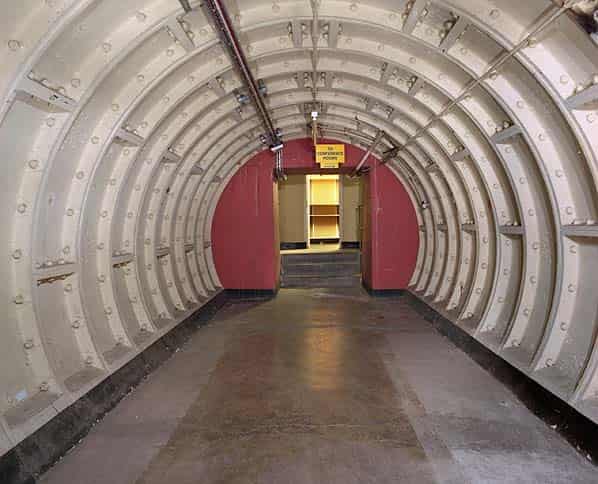
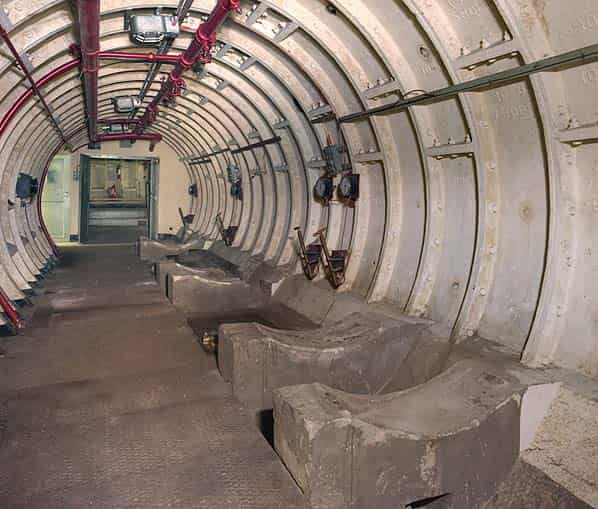
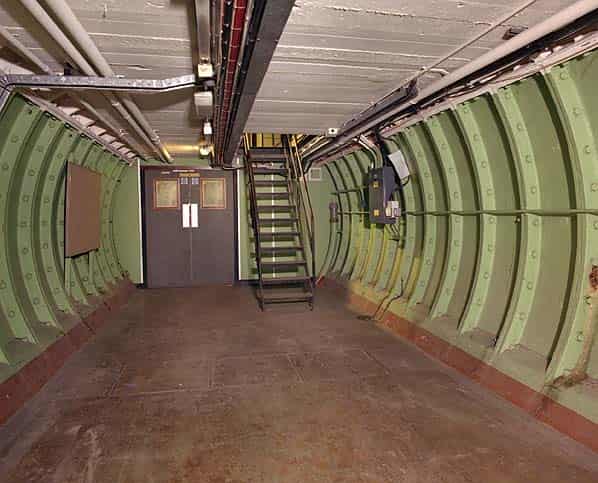
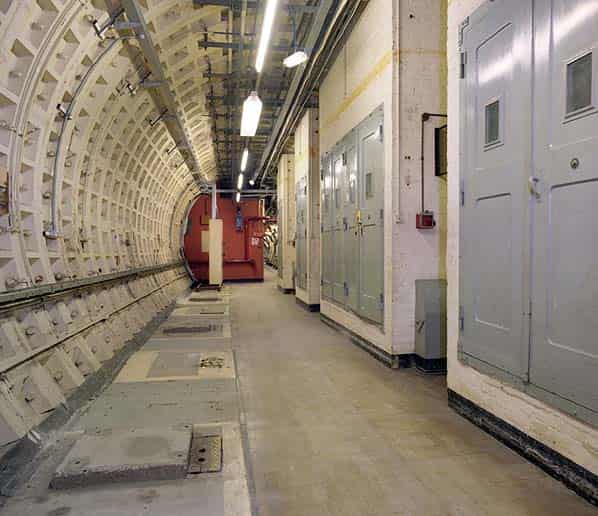
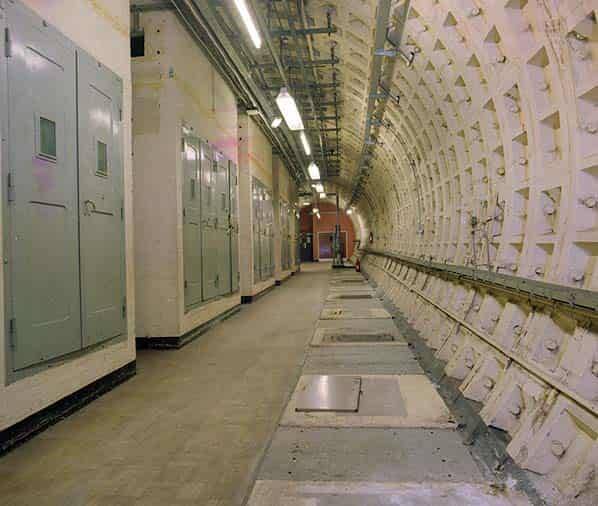
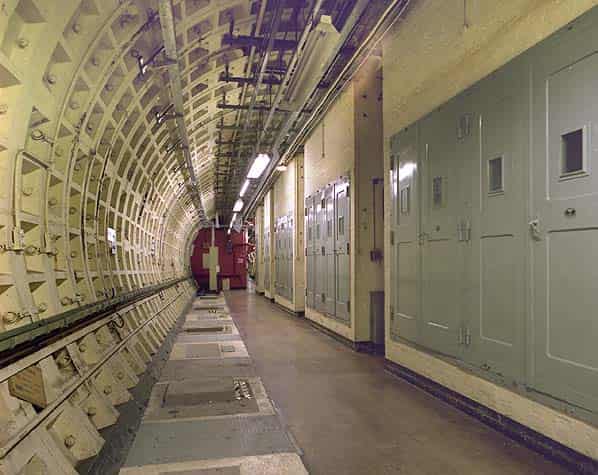
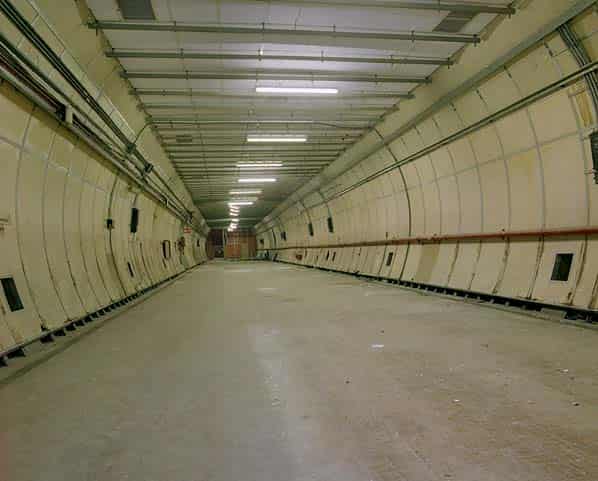
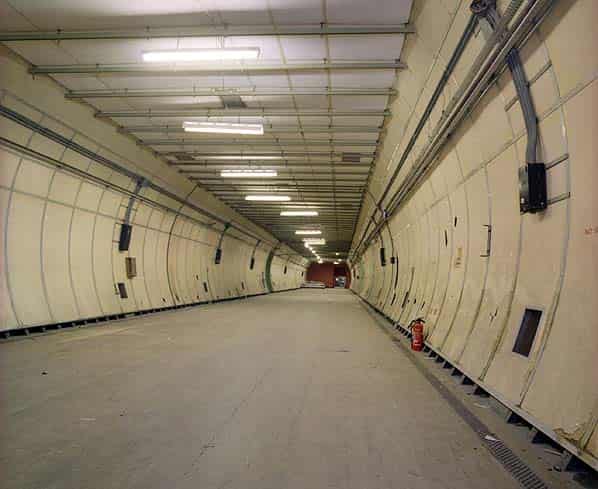
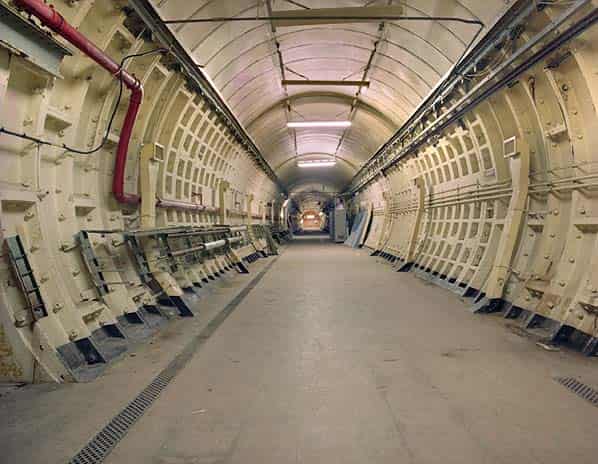
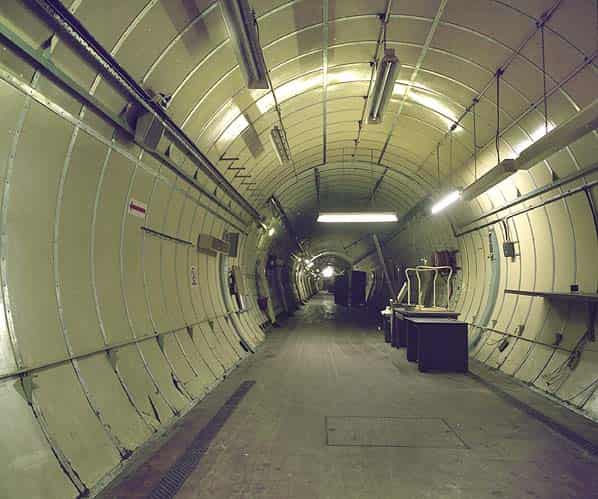
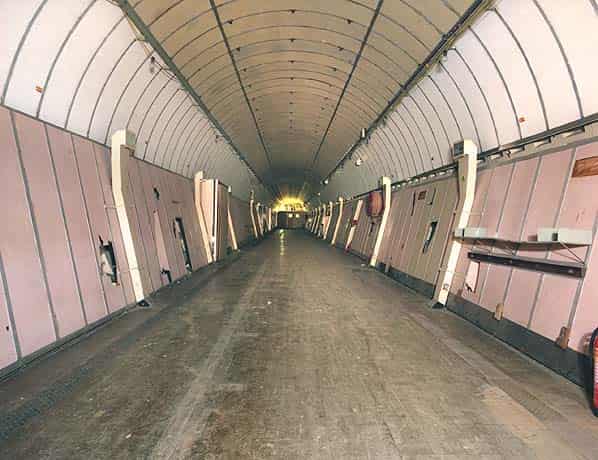
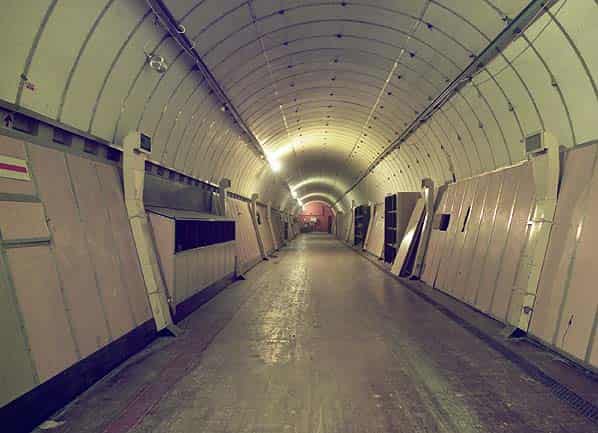
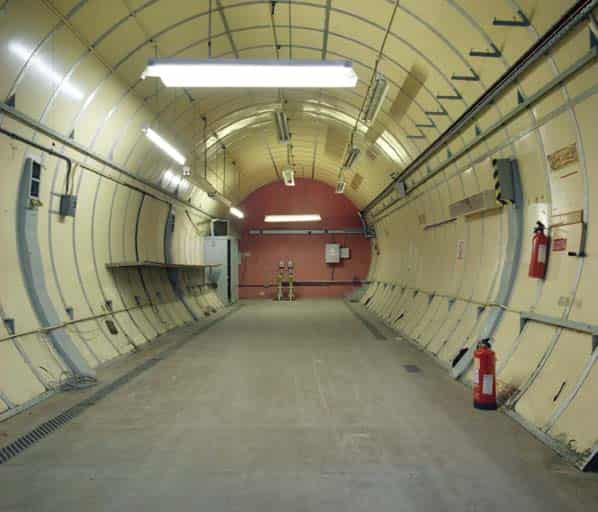
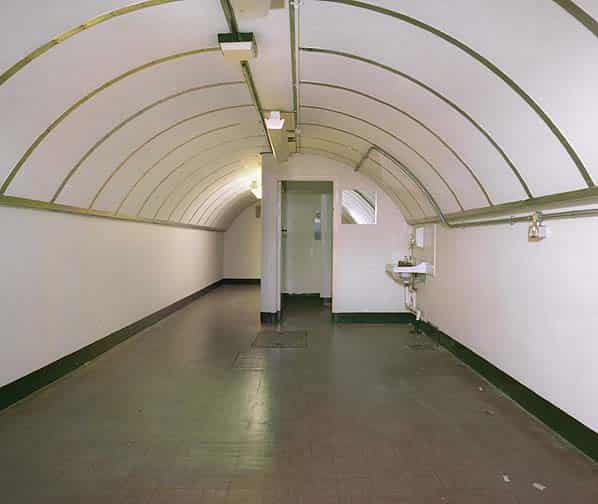
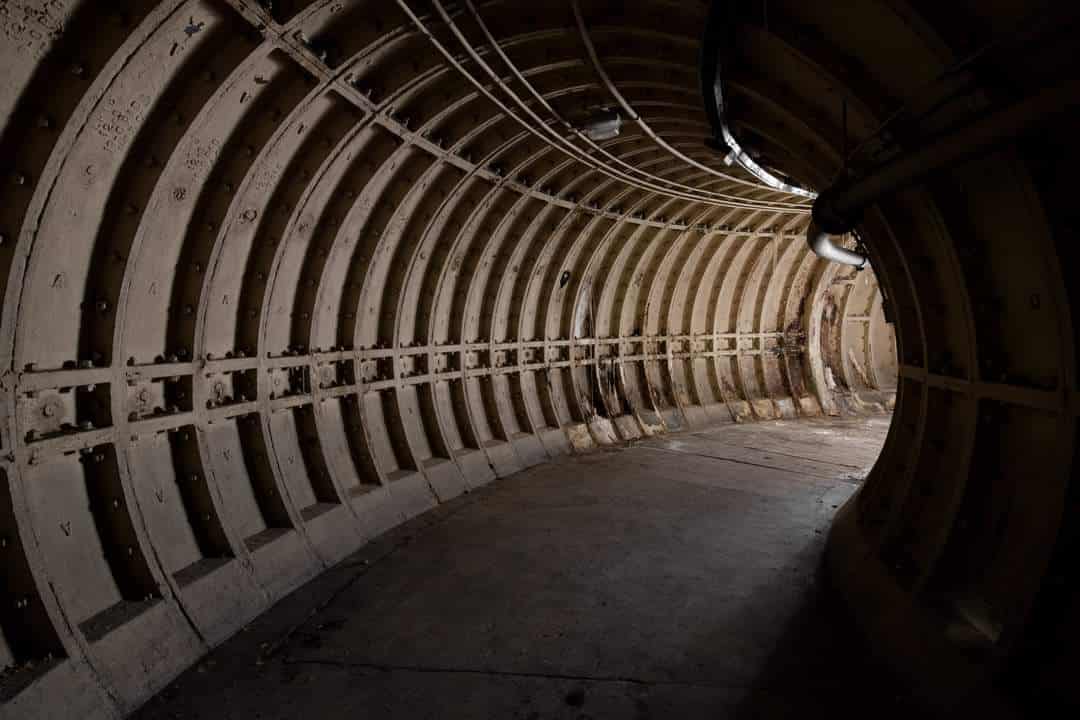
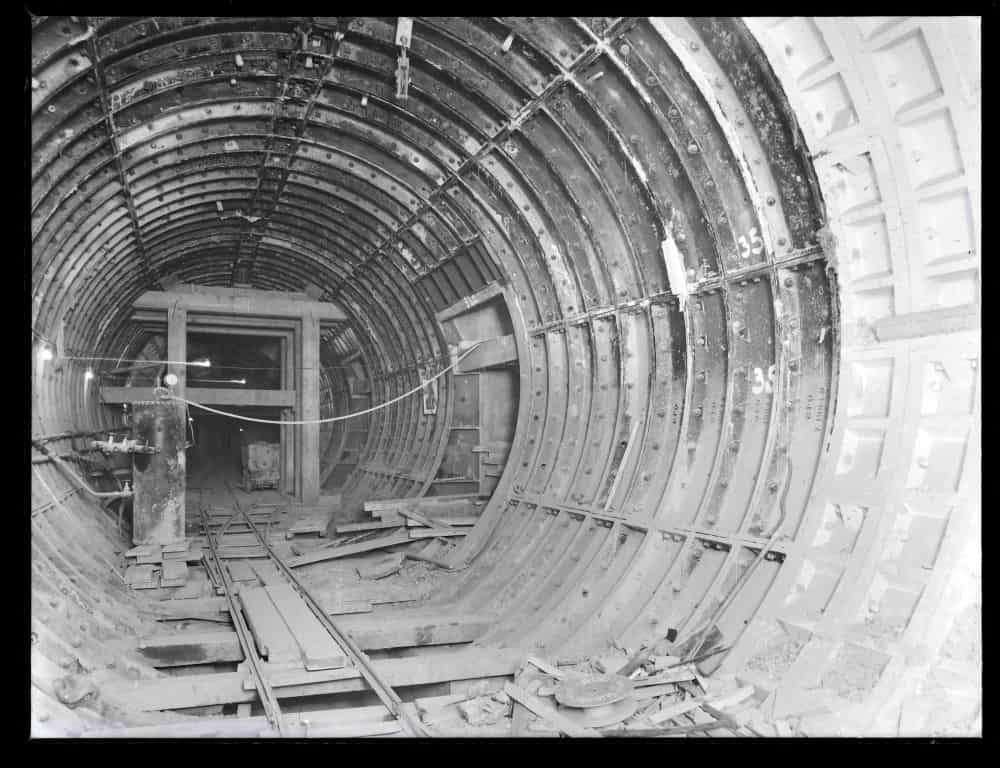
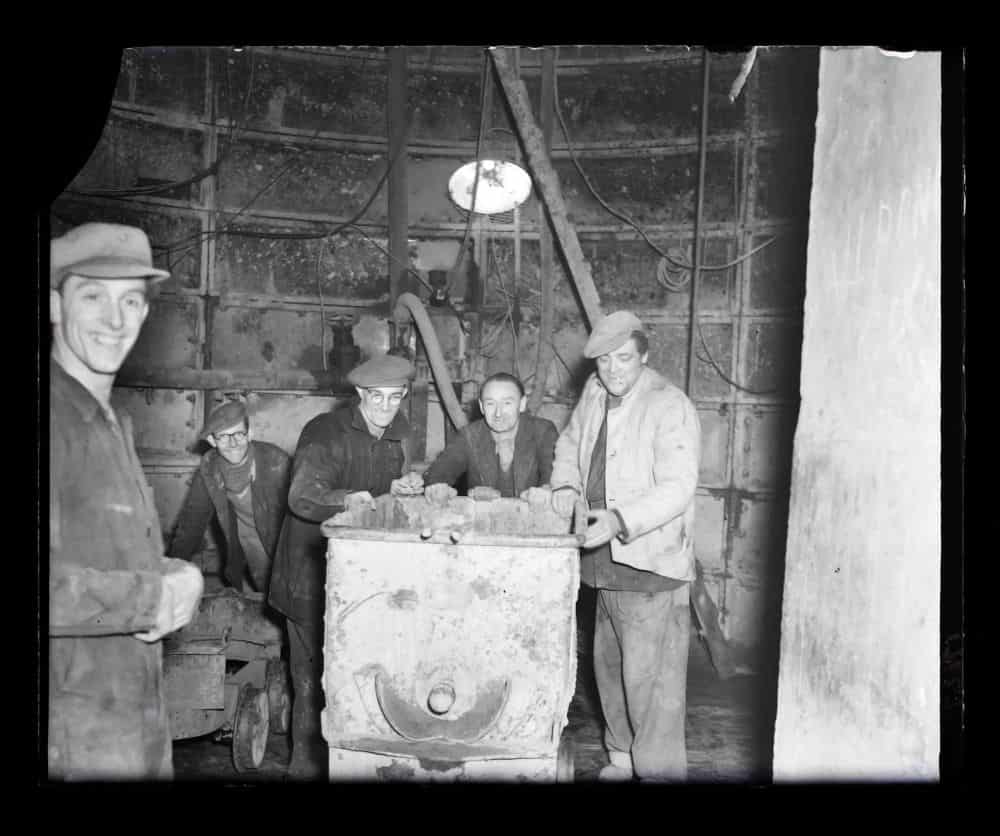
Following the start of the London blitz the Government decided, in October 1940, to construct a system of deep shelters linked to existing tube stations. London Transport was consulted about the sites and was required to build the tunnels at the public expense with the understanding that they were to have the option of taking them over for railway use after the war. With the latter point in mind, positions were chosen on routes of possible north-south and east-west deep level express tube railways. It was decided that each shelter would comprise two parallel tubes 16 foot 6 inches internal diameter and 1,200 feet long and would be placed below existing station tunnels at Clapham South, Clapham Common, Clapham North, Stockwell, Oval, Goodge Street, Camden Town, Belsize Park on the Northern Line and Chancery Lane and St. Paul’s on the Central Line.
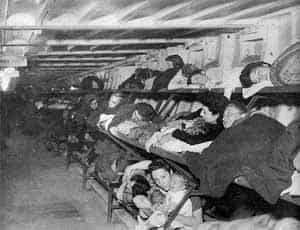
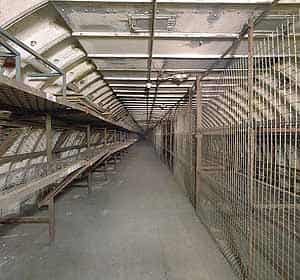
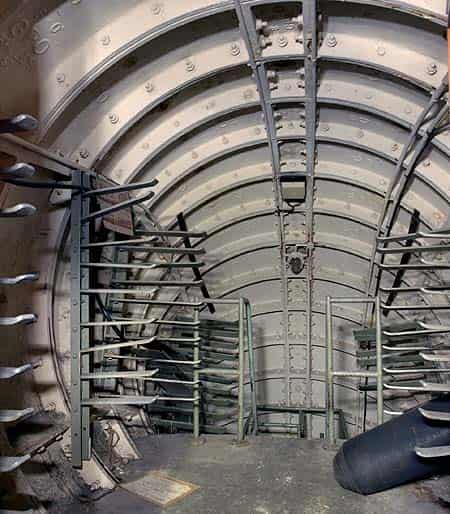
Each tunnel would have two decks, fully equipped with bunks, medical posts, kitchens and sanitation and each installation would accommodate 9,600. This capacity was later reduced to 8,000 as a result of improved accommodation standards. Work began on November 27th 1940 and it was hoped to have the first shelters ready by the following summer. There were great difficulties in obtaining labour and material and when the blitz abated the Government had second thoughts and in the middle of 1941 a select committee on national expenditure recommended that no further deep shelters be built, but those started should be completed.
Work at St. Paul’s was abandoned in August 1941 as it was feared the foundations of the cathedral might be affected. Oval was also abandoned shortly after this as large quantities of water had been encountered. The first shelter to be completed was Chancery Lane which was ready in March 1942 and the other seven were finished later in that year. The Board then urged the government to open the shelters to relieve the strain on the tube stations, but the Cabinet were reluctant due to the high cost of maintaining the shelters once they were opened and decided to keep them in reserve pending an intensification of bombing.
Towards the end of 1942, part of Goodge Street shelter was made available for General Eisenhower’s headquarters. Eventually the shelters at Stockwell, Clapham North, Clapham South and Belsize Park were opened to the public but those at Clapham Common and Chancery Lane were retained and later adapted for Government use. Chancery Lane was used as a troop hostel at this time.
CITADEL ACCOMMODATION
The decision to allocate citadel accommodation at Chancery Lane was taken in January 1944, half to the operational staffs of the London Civil Defence region and Ministry of Works, plus some space for Combined Operations and the Inter Services Research Bureau (alias ISRB).
The structure was adapted to meet these bodies' operational needs and to provide living accommodation for their staff
The precise allocation was:
- London Civil Defence Region
- Report and Control Centre
- Liaison Officers of Government Department
- CD HQ operational staff
- Ministry of Works Engineering Services
- Inter Services Research Bureau
- Combined Operations
- Flag Officer, London
- Movement Control (War Office)
- Port of London Authority
- Government Communications Bureau
Inter Services Research Bureau was a cover name for the research and development section of Special Operations Executive (SOE), itself an offshoot of M16 set up initially to help the Resistance in German-occupied countries and later expanded into a covert organisation of about 10,000 men and women. The Bureau’s use of the Chancery Lane location may explain a reference in Leo Marks’s book Between Silk & Cyanide, which describes his role in agent communication activities. The department known as the Government Communications Bureau was another cover name, relating to the combined signals intelligence (SIGINT) organisation of the three armed services. It later took the name of, and became more familiar as, Government Communications Headquarters or GCHQ.
Needless to say, these arrangements did not meet with universal approval. ISRB indicated the majority of their communications ran northward and Belsize Park would have been more convenient. The Ministry of Works argued this had no influence on cable routes; lines from both locations would run through the same Northern Line tube tunnels and where these surfaced at Golders Green they would lose protection in any case. Nevertheless, ISRB was content to establish a map room, signals room, operations room and sleeping area at ‘Chancery Lane West’, as the file calls it.
In March 1944, it was agreed that staff of the Port of London Authority, Flag Officer in Charge and War Department Movement Control could join those other departments with allocated space in Chancery Lane. For the London Civil Defence Region, Chancery Lane became its ‘reserve war room’ in May 1944, fitted out to handle ambulance provision, casualty service, rescue co-ordination, heavy rescue, research and experiments. The ponderous instructions issued to selected staff made abundantly clear what lay before them:
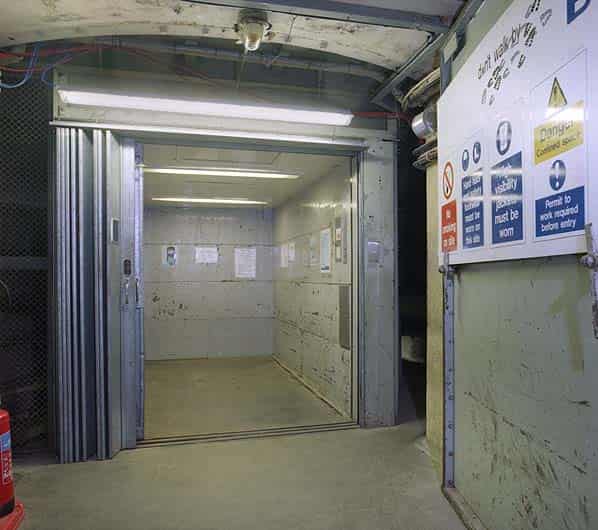
“When operations start on the Continent, or possibly before, the enemy may include London amongst other targets in an attempt to disorganise our military operations. As it is vital that these operations shall proceed with the minimum of interruption the Regional Commissioners, in common with other departments, have made arrangements to carry on in premises and under conditions likely to be impervious to enemy attack. You, as one of the officers needed to undertake this duty, will realise the vital importance of the work and accept any inconvenience to which you may be subjected during the emergency period. A move of this nature may have to be made at very short notice. You should therefore hold yourself in readiness to move … at once.” The personal instructions also dealt with security and housekeeping matters, noting that although entrances existed in Holborn and on the tube station platform, Civil Defence London Region staff should use the “special entrance in Furnival Street”. Also that: “The lift service is not good, there being only one lift which moves very slowly, therefore, it should be used for upward journeys only.
Construction supplies for creating the new accommodation were to have been delivered via the existing Central Line station platforms, which would have restricted public shelter provision in the station. In the event, the LPTB would not allow this, so the street entrances had to be used. After this, work proceeded according to plan at Chancery Lane, the orderliness being broken only on 25th November 1944 when a rocket fell just north of the junction of High Holborn and Warwick Place. Minor damage was caused to the shelter entrance at Fulwood Place, without harming the tunnels or shelter below.
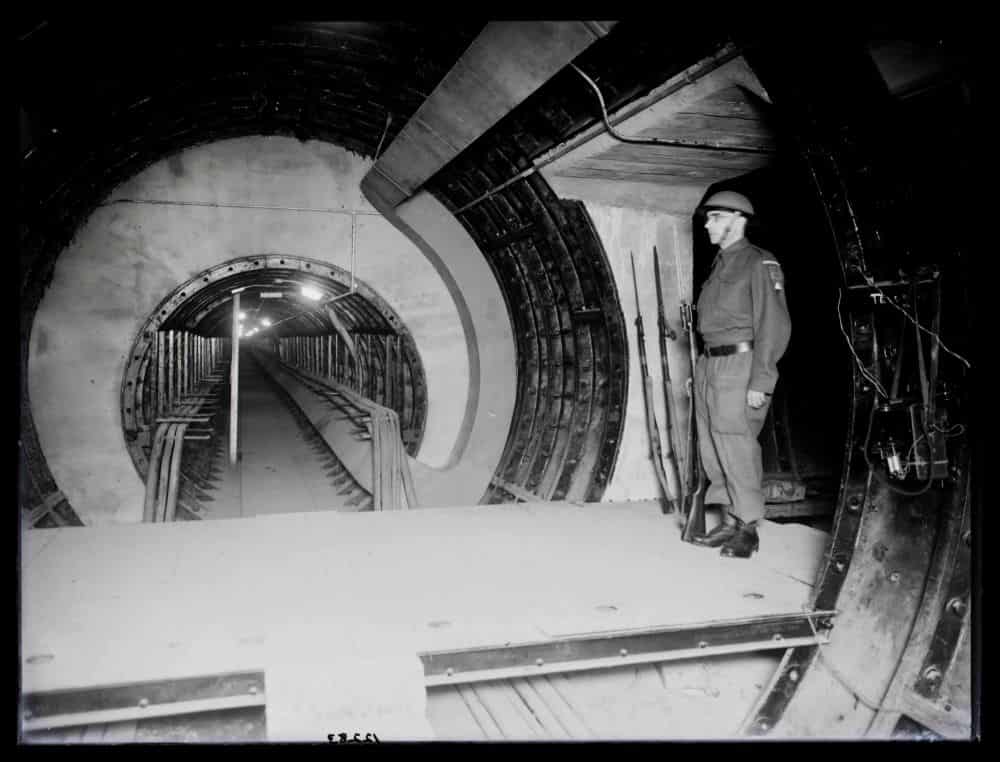
A total of some 1,040 staff positions were reserved in the converted shelter and the army was to guard all entrances. Instructions issued in May and June indicate all staff were to enter by way of the Furnival Street entrance, using the station platform access route in emergency only. In the event it seems that little use was made of the premises and then only by ISRB (which arranged for its telephones, teleprinters and furniture to be removed on 8th May 1945). Four days later the Admiralty advised the Home Office in view of the changed situation the accommodation allocated as an alternative headquarters at Chancery Lane was no longer required.
REPOSITORY FOR PRO
After the war, Chancery Lane attracted new occupiers. In 1945 it came to attract the attention of the Public Record Office, then located nearby in Chancery Lane itself. The PRO were interested in storing 400 tons of documents in the tube if it could be assured of four years' occupation and this was agreed on 27th June 1945, with London Transport agreeing not to exercise its purchase option.
Under the new occupancy, access to the repository was to be solely by the lift shafts and staircases at either end of the shelter, with the doorway from the lower escalator hall of Chancery Lane tube station to be kept permanently shut at the request of both the PRO and the LPTB. In this way “the shelter would be completely isolated from the tube railway systems and should a fire occur in it, the question of penetration of smoke into the tube will not arise”.
An Evening Standard article paints a vivid picture of the shelter and its new occupants:
“For two hours, on January 10, 1946, an Evening Standard reporter trudged around the empty, echoing spaces - now being filled with the Public Records of England. There were 12 of us in the tunnelled labyrinth 200 feet beneath the traffic-jammed thoroughfare of High Holborn; a representative of the Public Record Office, a foreman, five workmen, two watchmen, a liftman, an electrician and myself. Between us we made up the total population of an underground citadel that was built to accommodate 10,000. It was here, during the War, in this top-secret, deep shelter, that thousands of Government executives would have retired to carry on the battle in the event of invasion or super air raids. It was here today that I watched workmen wheeling into the bunk-lined, electric-lit tunnels, loads of Government books and documents which had been ‘evacuated’ to the country during the War. The public records of England are coming back to Town and 500 tons of them will in future be housed in this underground city built to defy bombs. The deep shelter, built at a very high cost, but never required, has been found to be an ideal depository for some of Britain’s most important archives.
When war broke out the Public Record Office had to evacuate from Chancery Lane more than 2,000 tons of official books and documents which had accumulated since the days of the Domesday Book nearly 900 years ago. “It was a colossal task,” I was told today. “Contents of about 20 miles of shelving had to be transported by lorry to the country. But the job was done - not one book, document or paper was lost or damaged throughout the War.” Among the 2,000 tons of documents were 500 tons of modern departmental records, which were first stored in Canterbury Prison. After the fall of France they were transferred to three depositories in safer parts of the country.
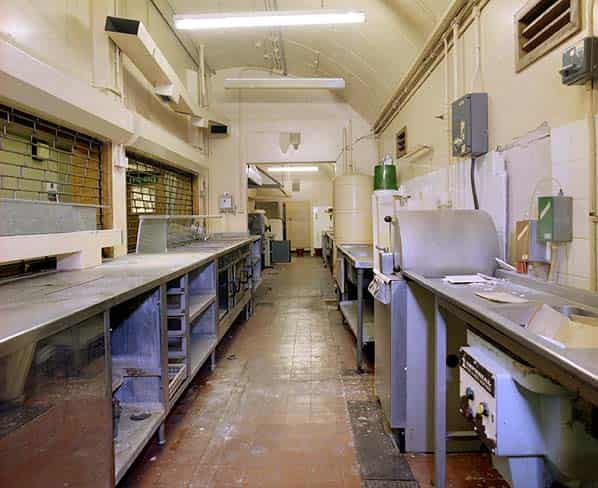
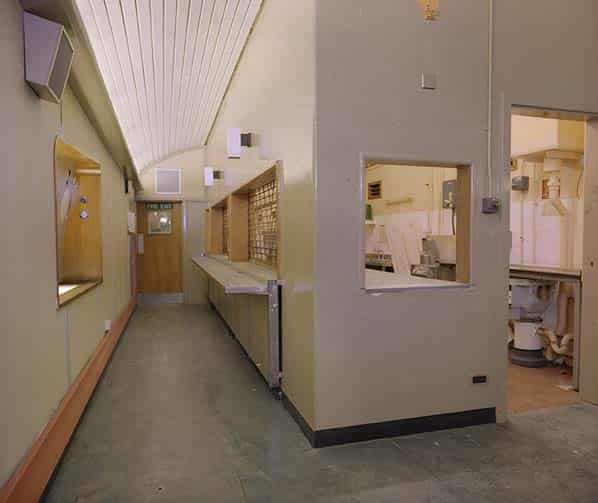
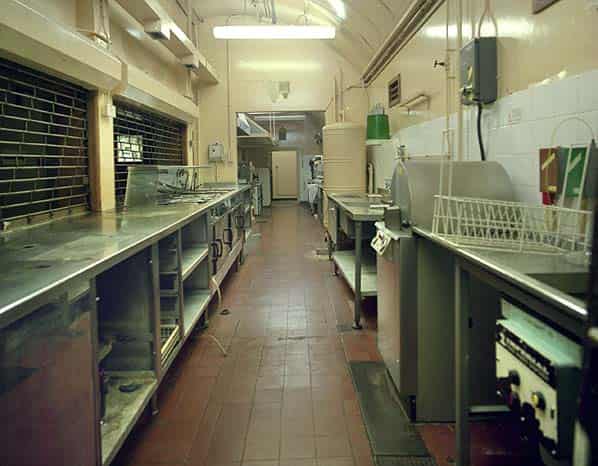
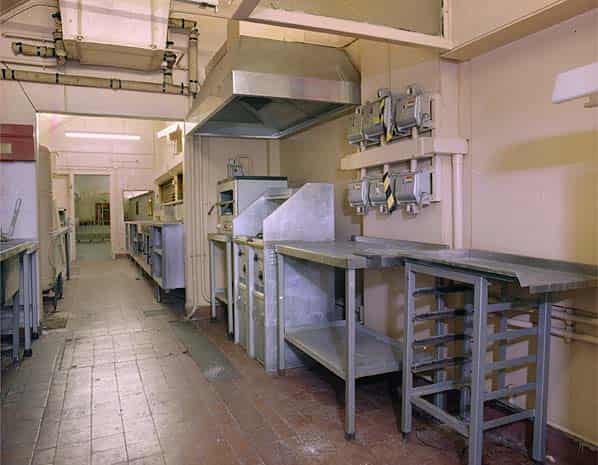
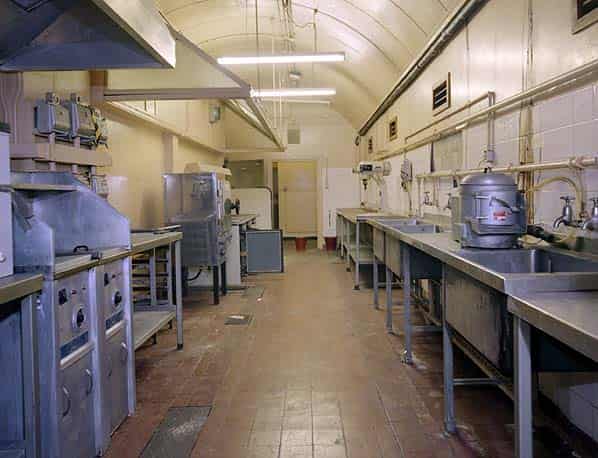
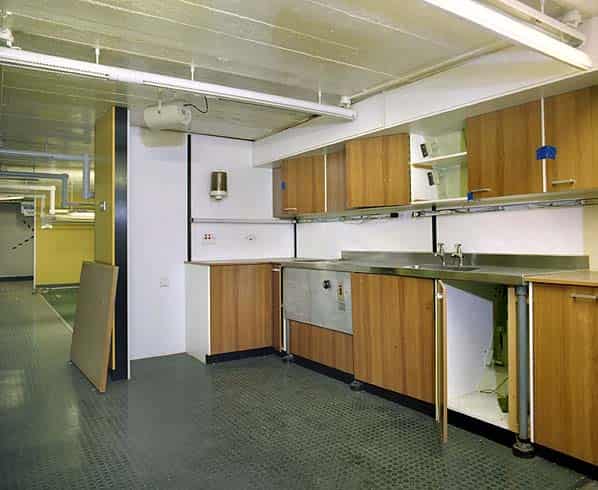
Every day two five-ton lorries, with Public Record Office officials aboard, draw up to the shelter entrance with their loads of records brought from three country depositories - an ecclesiastical training college near Oxford, a ducal castle in the North, and a casualty ward in the Midlands. For two hours today I trudged around the empty, echoing tunnels, 200 feet beneath the road. They seemed to stretch away for miles and possibly they did. I saw the bunk-lined corridors, the control room from which shelterers would have been marshalled, modern kitchens which would have provided hot meals on the cafeteria system, endless rows of stools at the food ‘bar’, and food-storage cupboards which could have stocked sufficient food to withstand a one-year siege.
When fitted with shelving the bunks' steel uprights will make perfect storage receptacles for the official records. Said the Public Record Office official: “We did not choose an underground shelter for safety-first reasons. It is merely that it is available and is ideal for our purpose.” Work on the shelving of the bunks will start soon. It may take months to complete. About 80,000 ft will have to be fitted.”
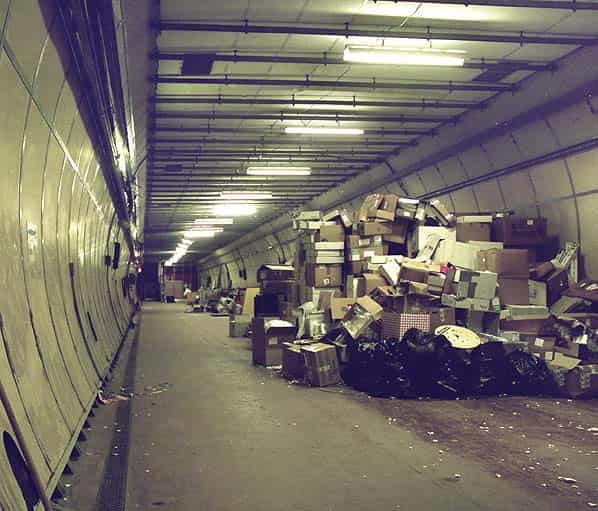
Although the racking mentioned was installed, the PRO soon exhausted the capacity of the accommodation and beginning in November 1947, had to find additional space shared with other government departments at a number of shelters and certain other shelters were also used for storage of government documents. Typical arrangements put upwards of 400 tons of papers into each shelter, delivered by covered vans at a rate of 5 tons daily. A change of policy by the Ministry in 1951 caused the shelter stores to be cleared again, with all records moved to above-ground archiving at ROF Hayes, Middlesex an ex Royal Ordnance factory.
KINGSWAY TRUNK EXCHANGE
Two years before the departure of the PRO a new use for the shelter had been identified. Following the end of WW2, the Government initiated the inevitable post mortem discussions and appraisals of the performance of the Post Office telephone system during the war. Vulnerabilities were recognised and led to an application to the Home Office in 1949 for “special accommodation for the important long-distance terminal apparatus which is the most vulnerable part of the Post Office system and the protection of which would be vital to the country’s communications in time of war”. Out of this were born broad-ranging plans for new hardened installations across the whole country, of which a new protected trunk exchange was one particular element.
As far as London was concerned, the current terminal was Faraday House in the City and this was “not in the best position nor, indeed, sufficiently protected for its important function”. Were this building to be damaged, long-distance communications would be seriously disrupted. The resulting plan was to divert some of Faraday’s cables to another London terminal point having some protection located near the existing east-west Post Office cable tunnel and the only suitable location, said the Ministry of Works, was the extreme westerly section (both levels) of the south shelter of the Chancery Lane deep tube shelter.
This was obviously of interest to all government departments and the Home Office indicated it was in agreement with this allocation. The Home Office concurred on 2nd June 1949 although any proposals to earmark further shelter accommodation for purposes other than operational Civil Defence activities would be resisted except in the most exceptional circumstances. Nonetheless it must have become obvious that 300 feet allocated would be inadequate and the space allocated to the Post Office was doubled to 600ft in July 1949. The Post Office stated its requirements were “so fundamentally important … for a future war that we dare not risk any delay in the protection of this vital plant”.
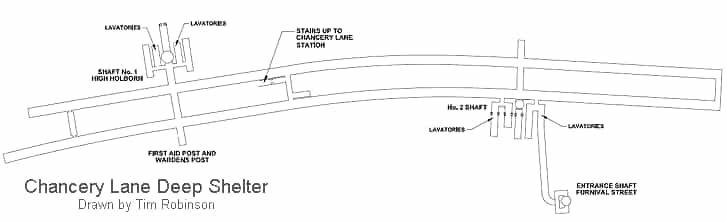
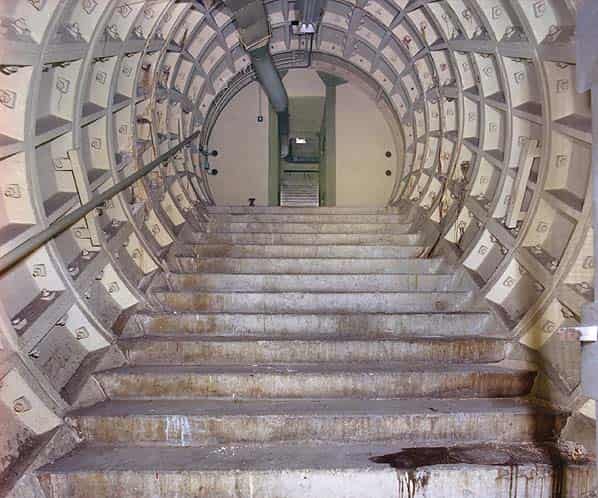
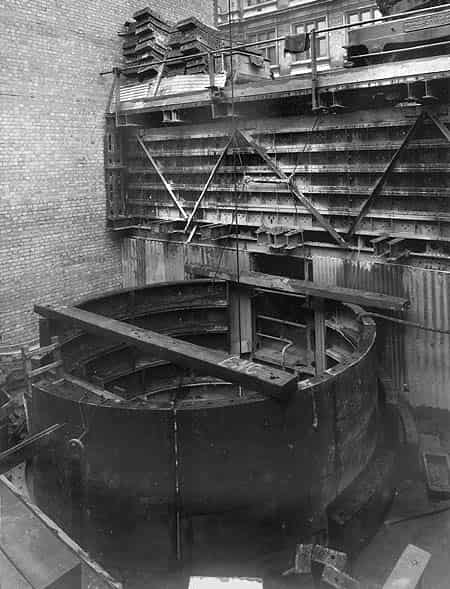
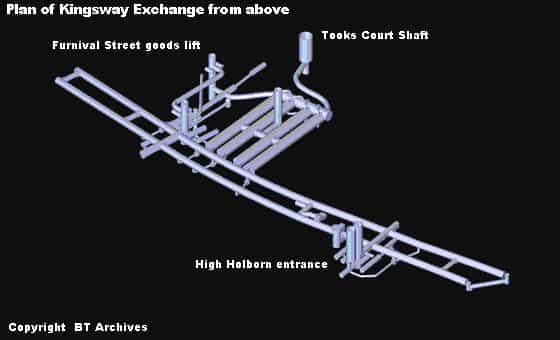
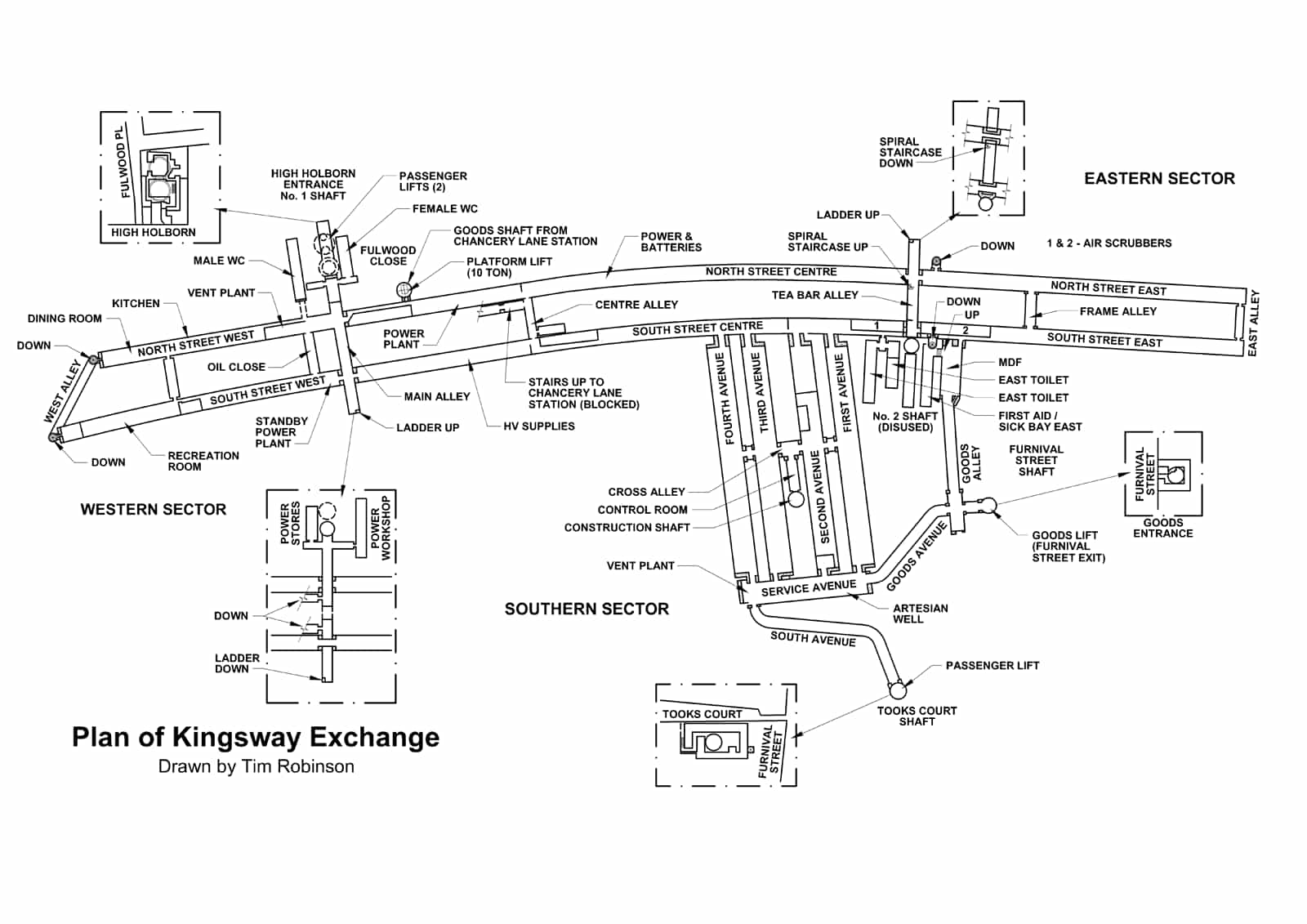
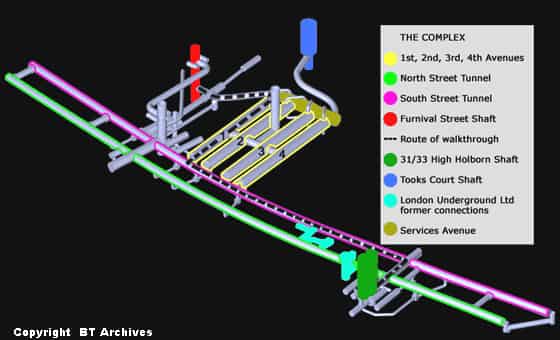
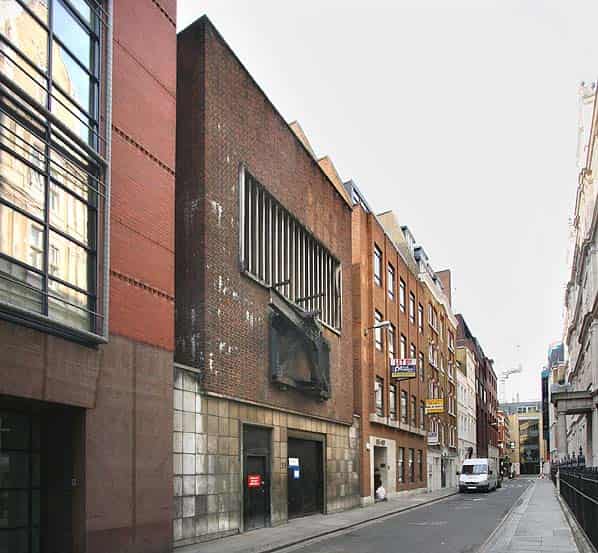
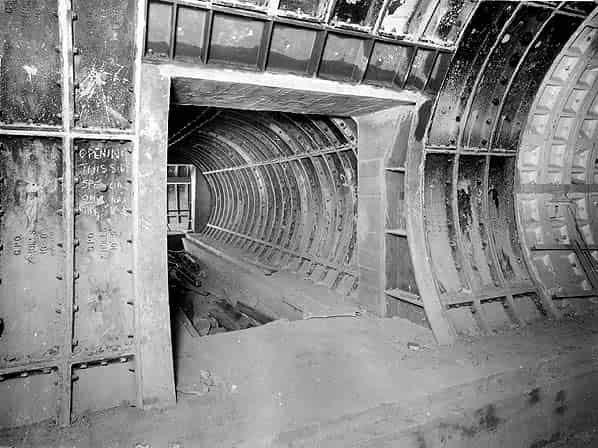
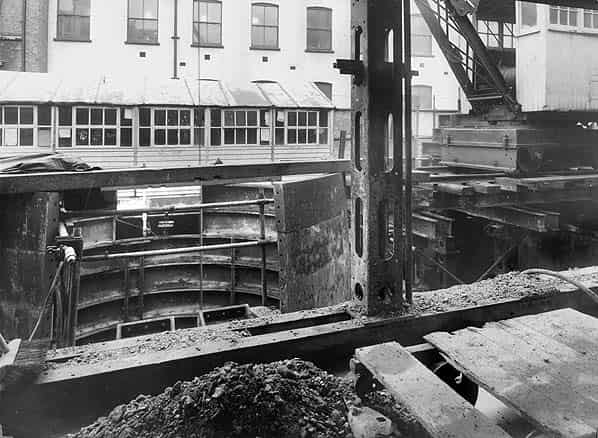
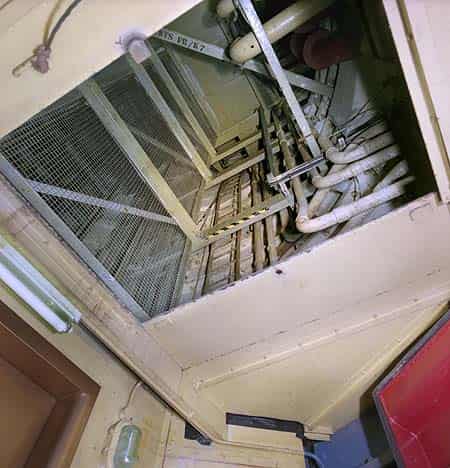
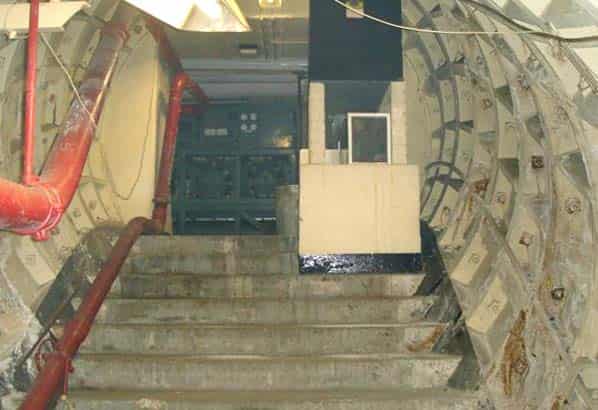
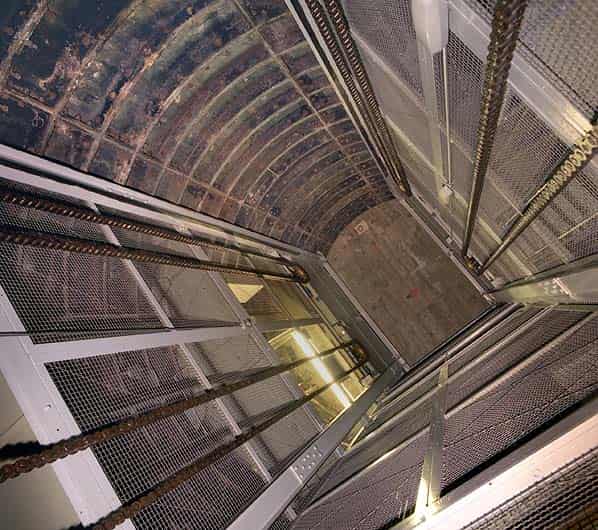
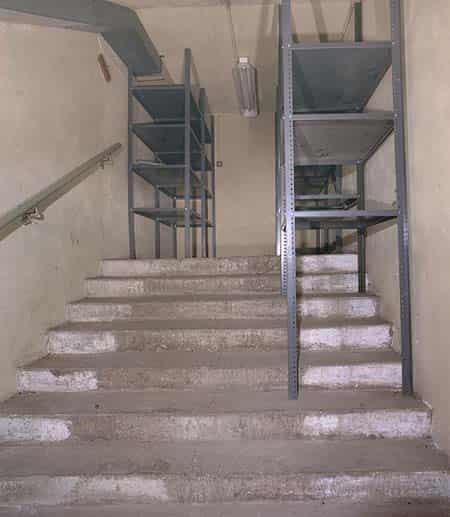
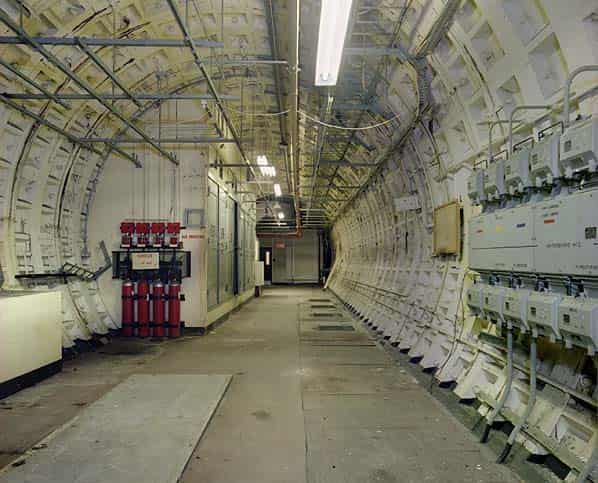
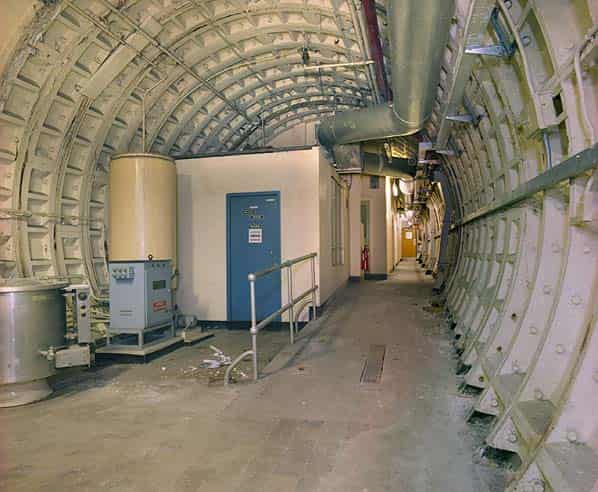
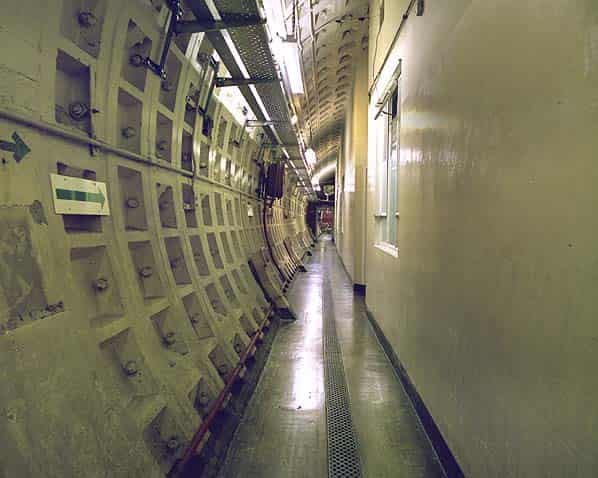
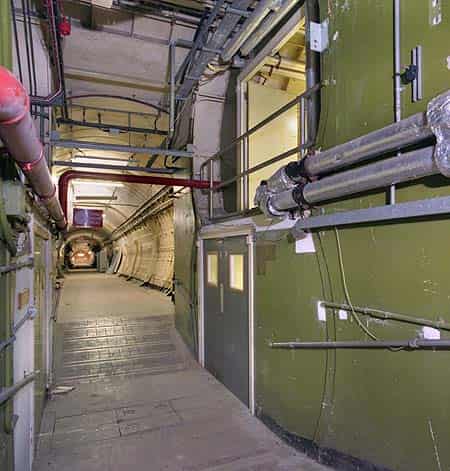
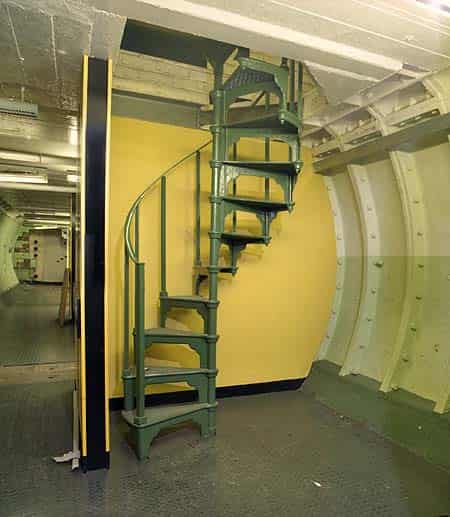
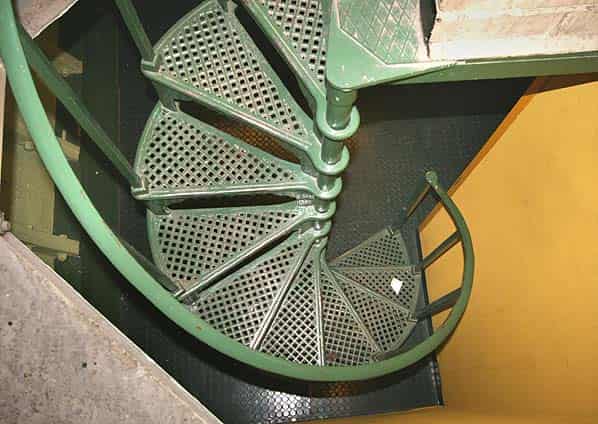
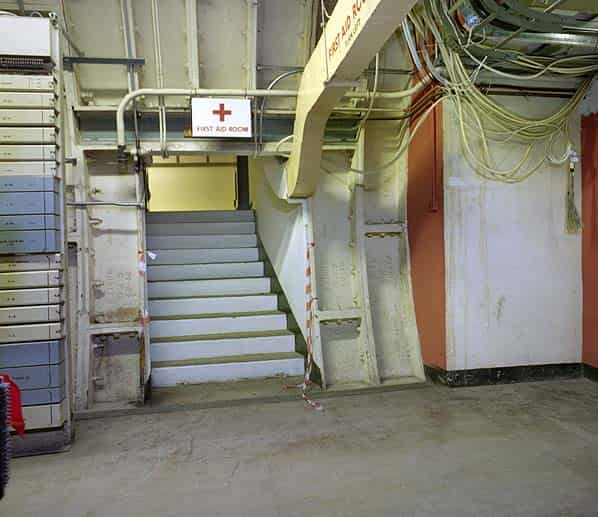
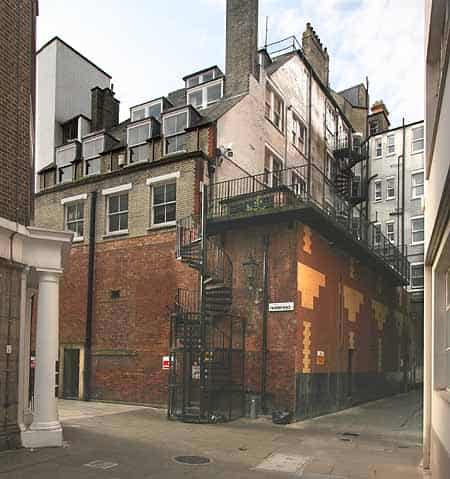
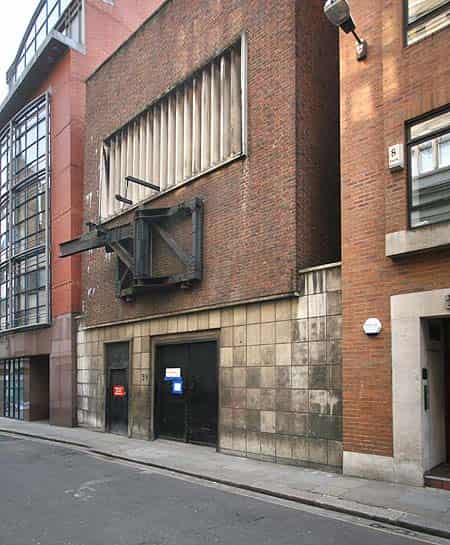
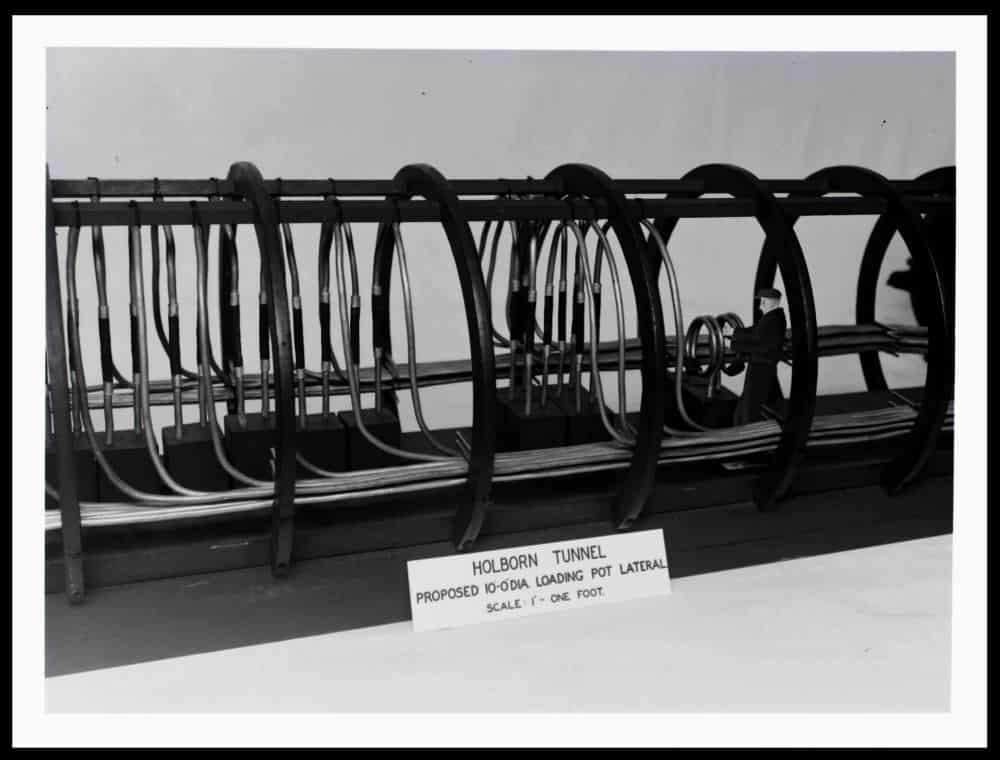
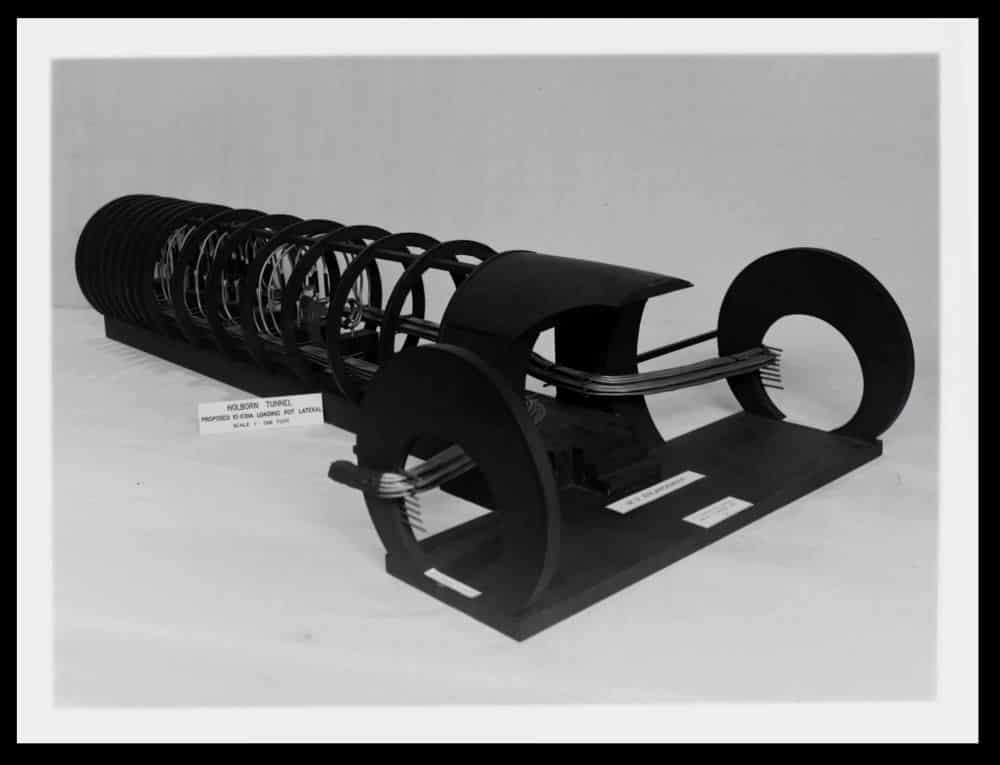
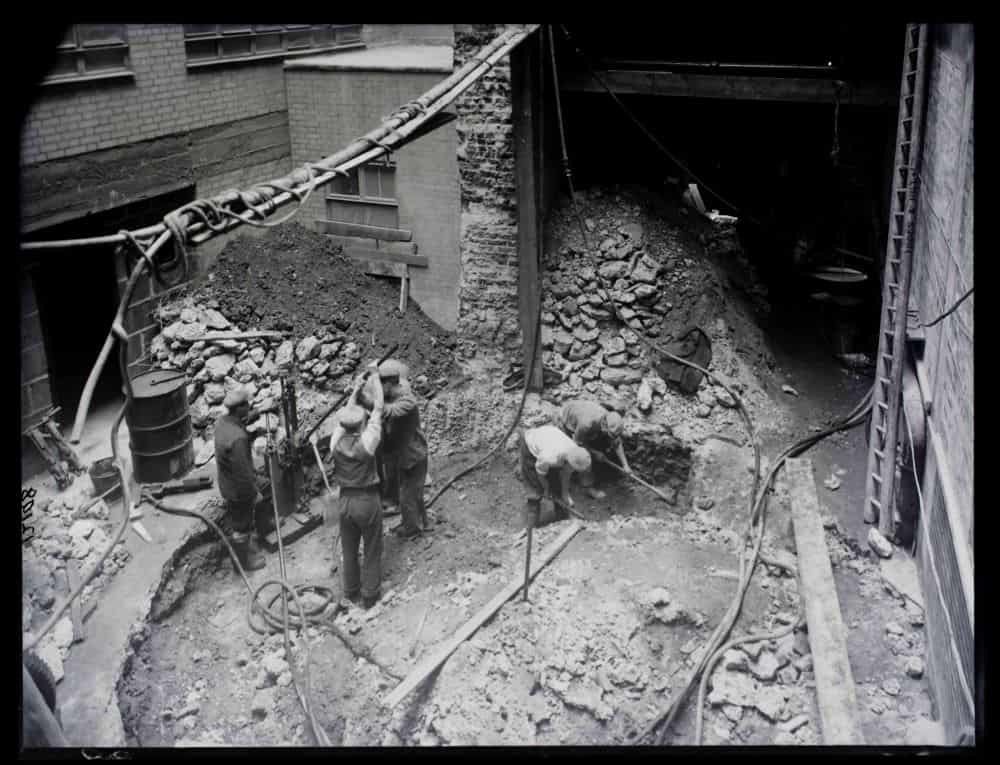
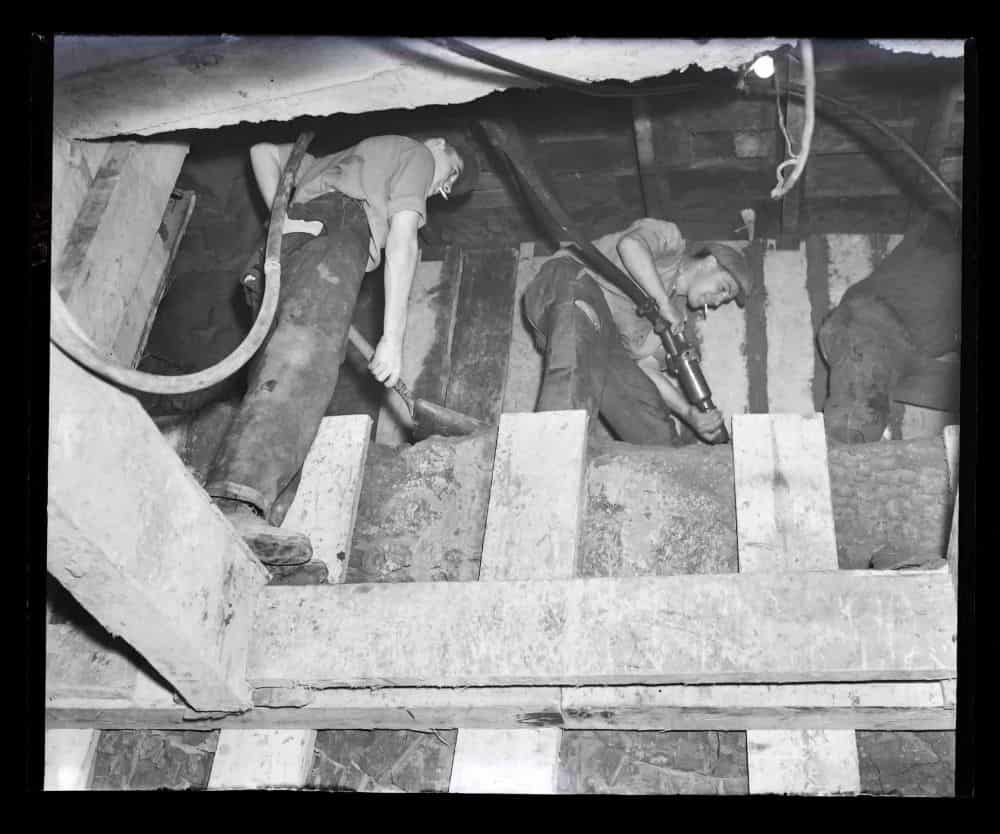
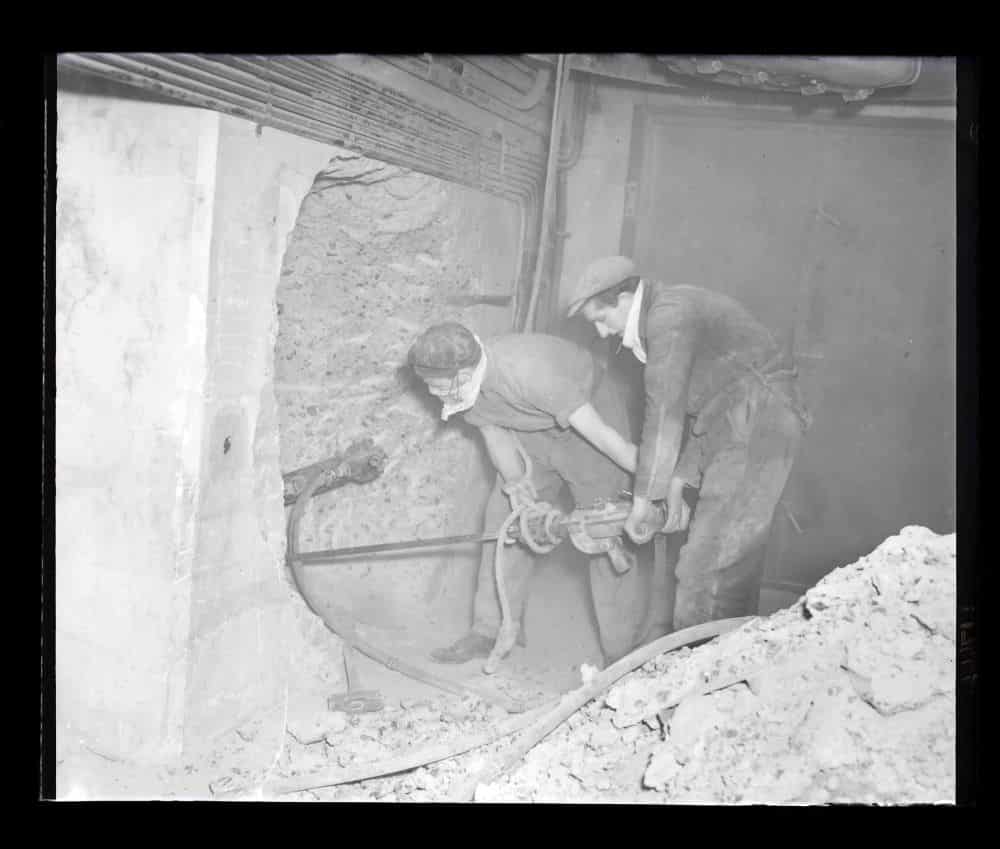
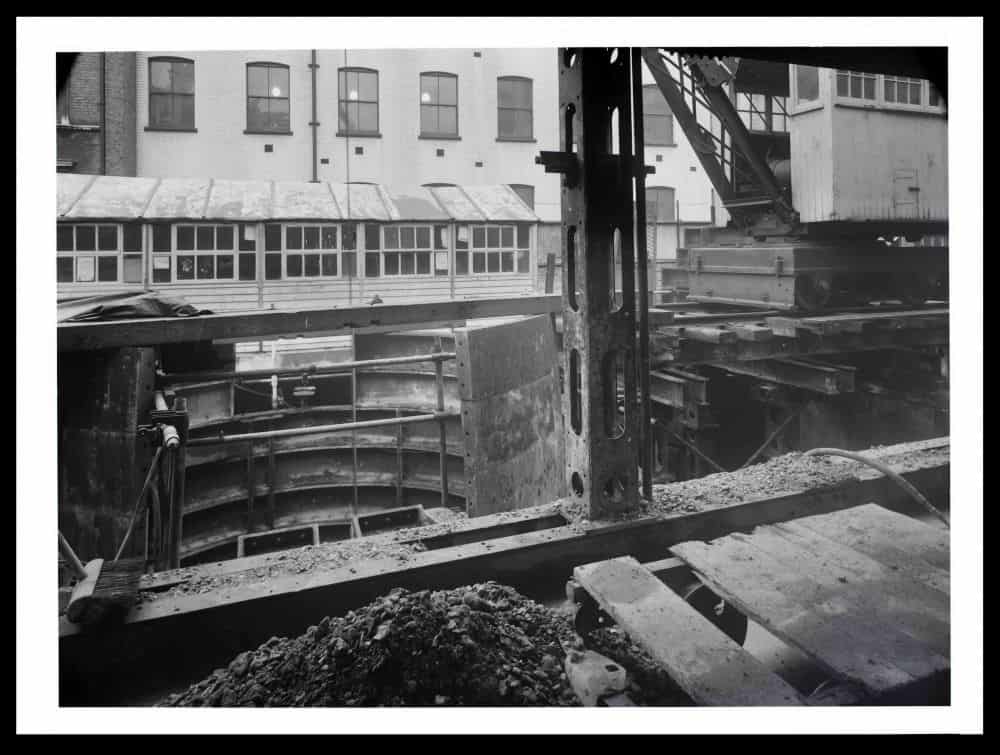
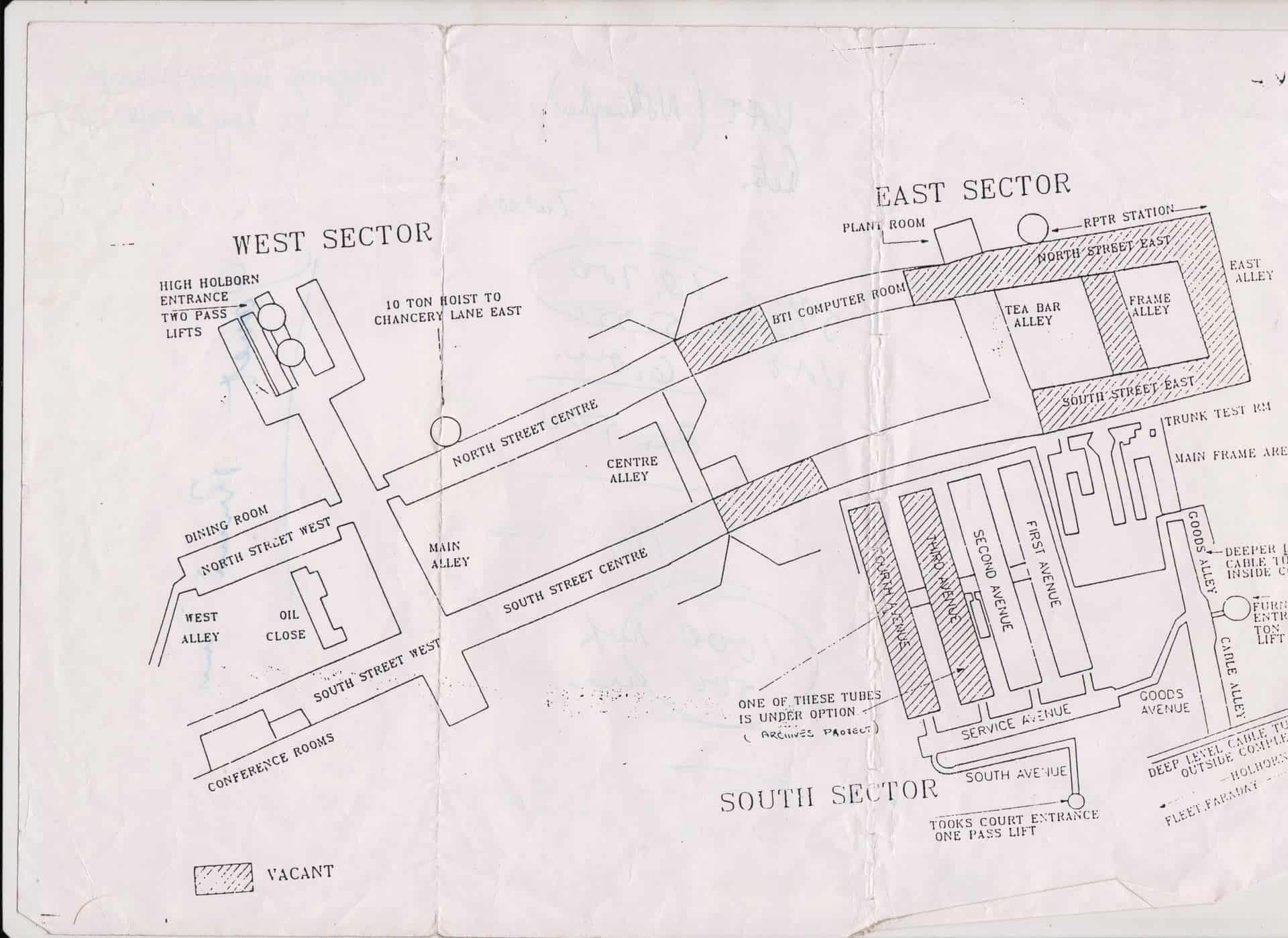
The original layout of the Chancery Lane shelter was of two parallel tunnels with an intermediate floor to provide two levels in each tunnel. Surface access was by lift and staircase shafts emerging in the old tube station at 31/33 High Holborn and at 38/39 Furnival Street where bomb-damaged premises were demolished to make way. A temporary construction shaft had also been opened in the roadway at the corner of High Holborn and Furnival Street. A staircase also led down to the centre of the shelter from the Central Line station platforms. After the site was taken over by the Post Office one of the first tasks was to extend the tunnel area by building four large-diameter lateral tubes under Staple Inn in the southern sector and it was at this time that the most southerly exit in Tooks Court was constructed.
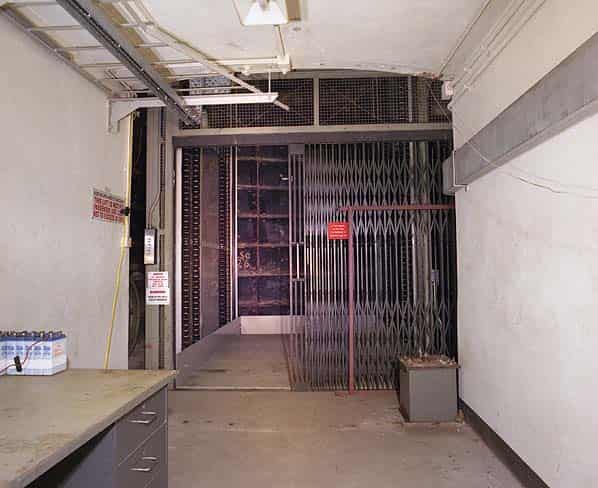
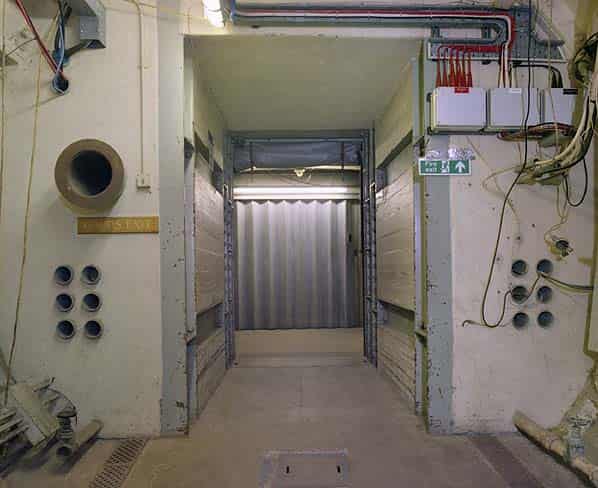
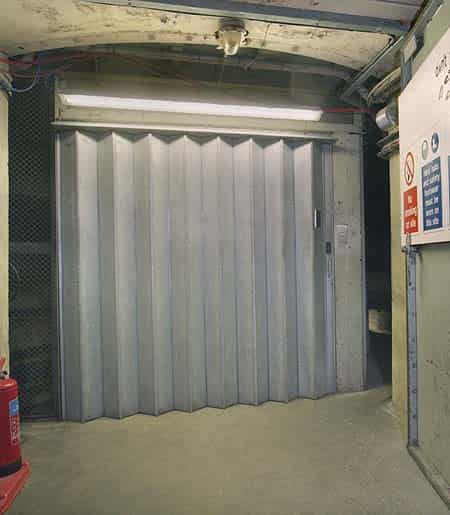
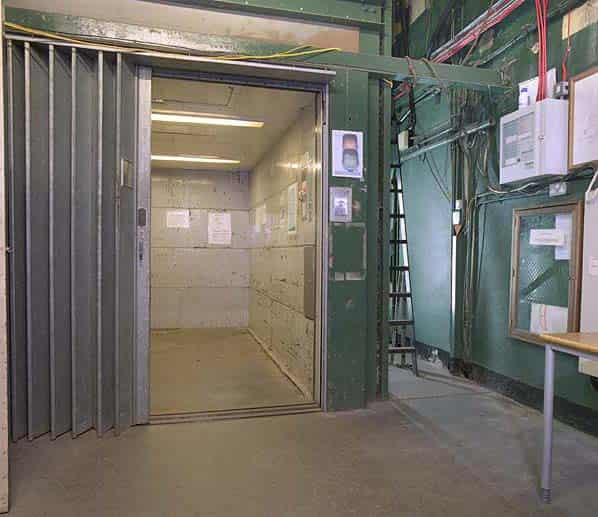
Another activity was the construction of a goods lift in Furnival Street, allowing delivery of large items of apparatus by road. The alternative method, by rail to the platform of Chancery Lane station, would have disrupted train operations considerably. In any case the LPTB had already established in March 1942, in a letter from their chief legal adviser to the Ministry of Home Security, that, “on the termination of hostilities, the right of access to the shelters through the Board’s properties now enjoyed by the Minister and his agents shall cease and access through their properties shall be solely at the discretion of the Board”. The war was now long over.
Planning for the installation operations began in early 1950, with construction work starting a year later following the departure of the PRO. The equipment contractor, Siemens Brothers Ltd, began its own planning and manufacture ready for the time when the full access to the new accommodation was to be ready, on 1st July 1952.
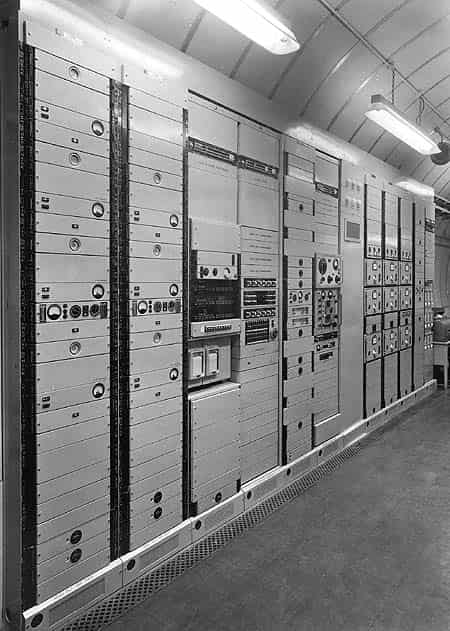
Following installation and commissioning the exchange opened to traffic on 30th October 1954, marking a significant milestone in the progress of inland trunk switching mechanisation in Britain. The new exchange was called Kingsway but known to Post Office staff more generally as TZK (Trunk Zone Exchange Kingsway) or LTK (London Trunk Kingsway).
The exchange was not particularly close to road named Kingsway but this conformed to an established Post Office procedure of giving important facilities names that had a geographical meaning but a deliberately inaccurate guide to their location.
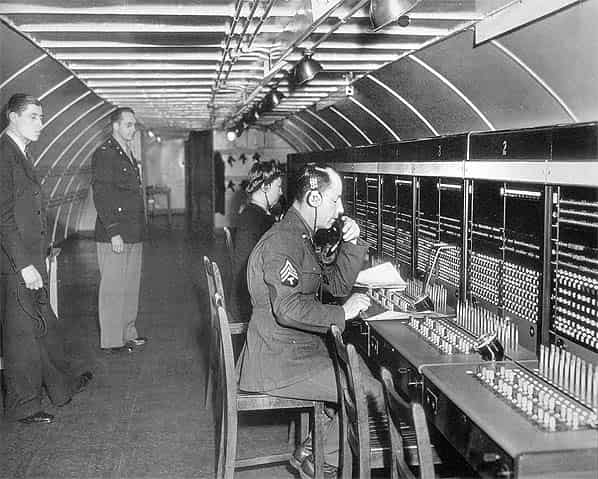
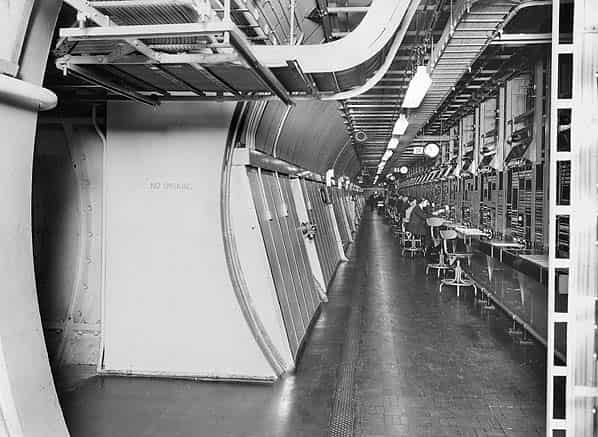
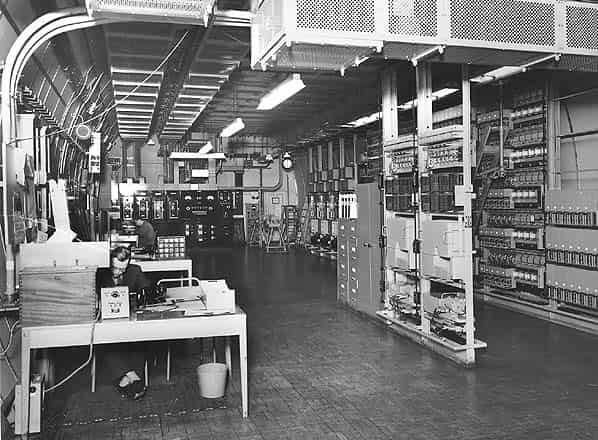
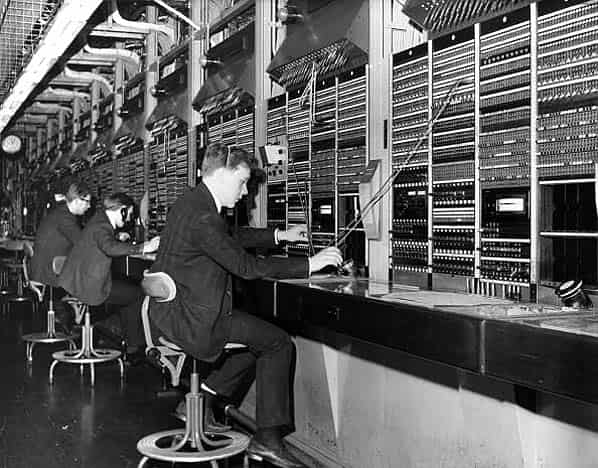
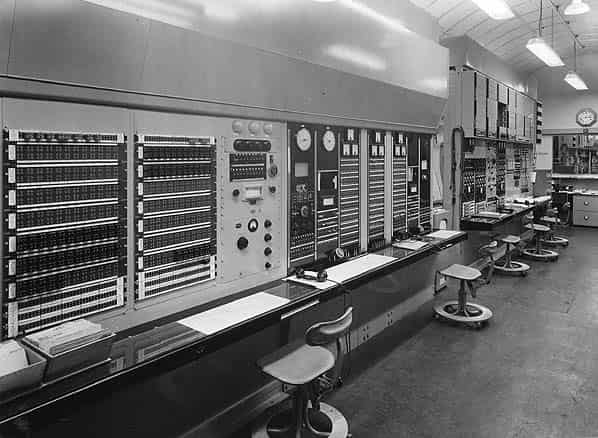
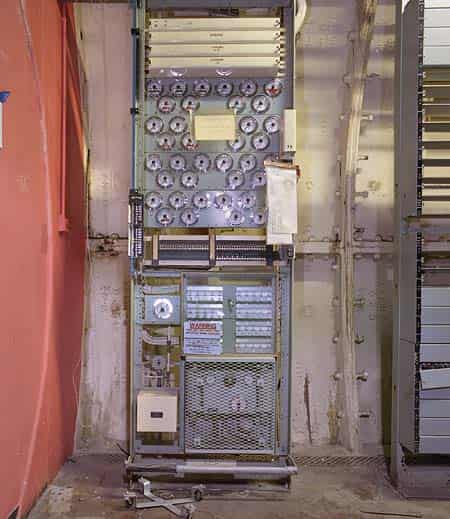
Technically termed a non-director trunk tandem exchange, Kingsway was designed to cater for a maximum of 5,000 trunk circuits and although it was intended primarily as a ‘through’ or tandem unit, part of its capacity was also available for switching calls, referred to as terminal traffic, to and from the London group. In 1956 it gained importance becoming the London terminal of the first Transatlantic telephone cable, TAT 1. This involved a complicated arrangement of equipment at three sites, with several hundred copper ‘pairs’ linking them; the sites were Kingsway itself, the International exchange in Wood Street and the Continental exchange in the Faraday building.
Some notoriety was also gained since the then-famous ‘hot line’ that connected the United States and Russian presidents directly passed through the exchange and this was made a high point of guided tours for visitors.
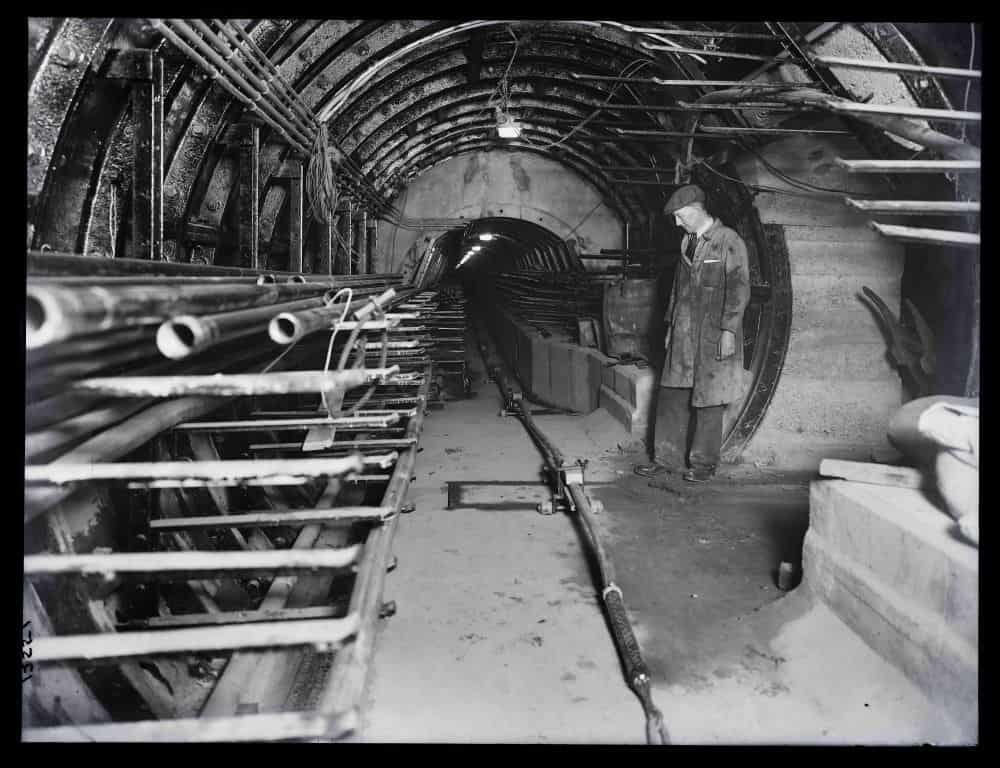
“A telephone city under London” - That was the dramatic title of an article in the November 1969 issue of ‘Courier’, the newspaper for Post Office employees and indeed it told a remarkable tale. Around the same time the Post Office had taken the press to see its subterranean domain, previously shrouded in the gloom of D Notices and the Official Secrets Act and the marvels of this 12-mile tunnel network were revealed to the public in far more detail than had previously been disclosed.
A CITY UNDER A CITY
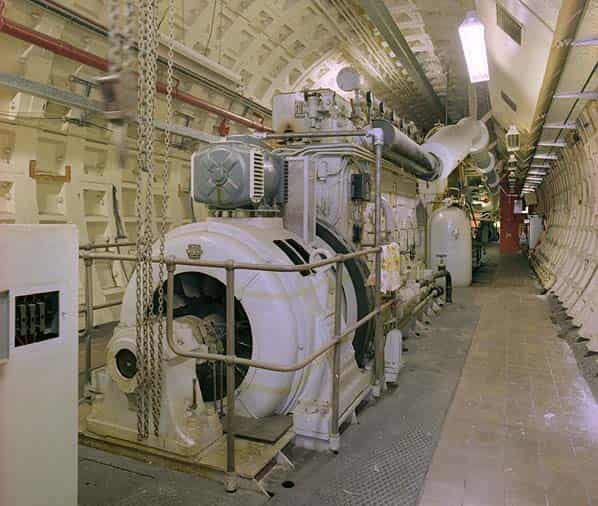
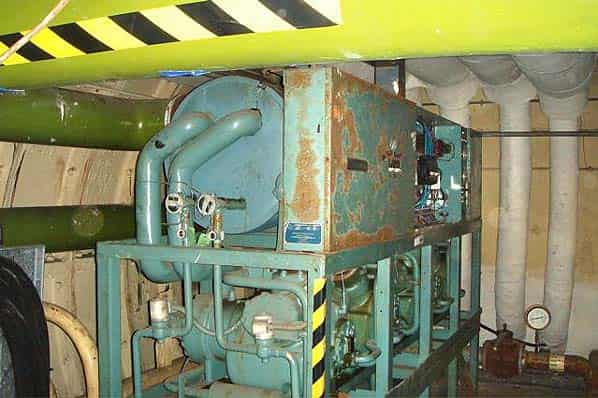
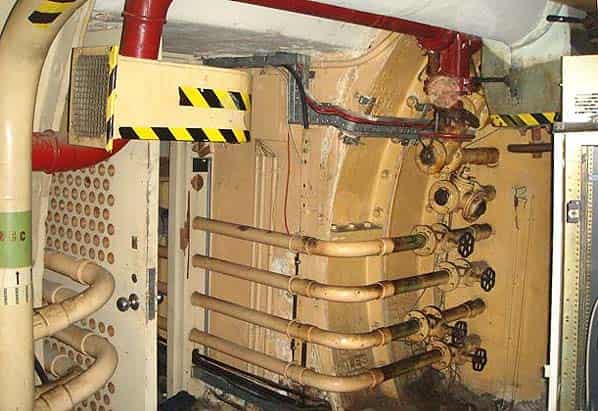
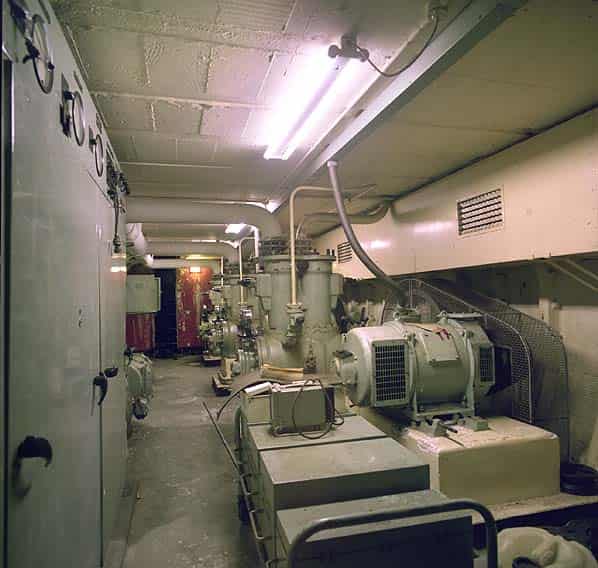
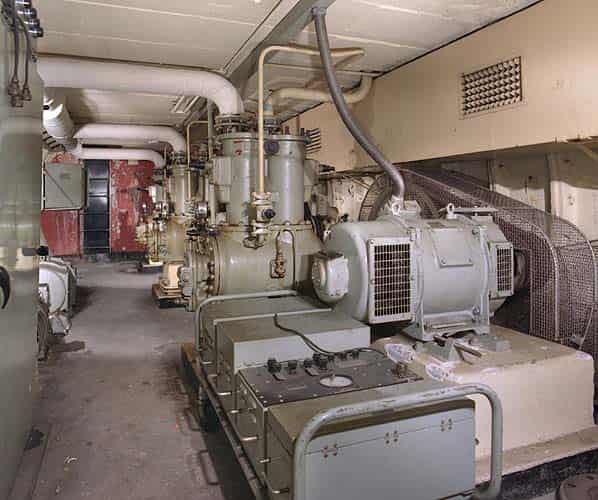
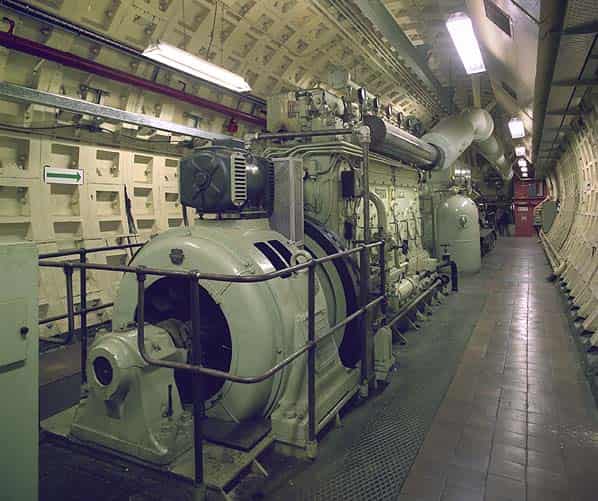
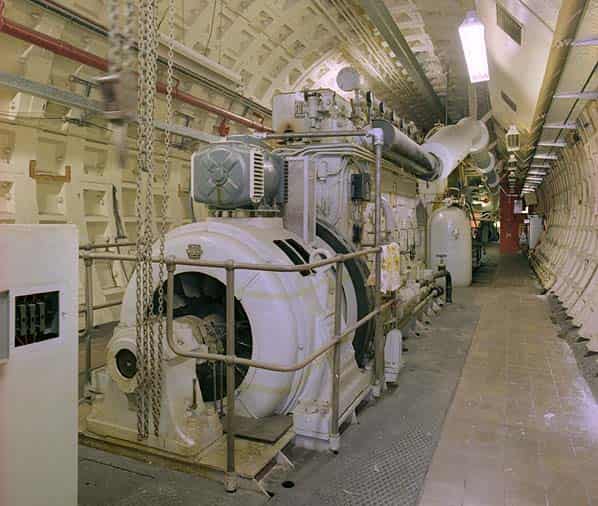
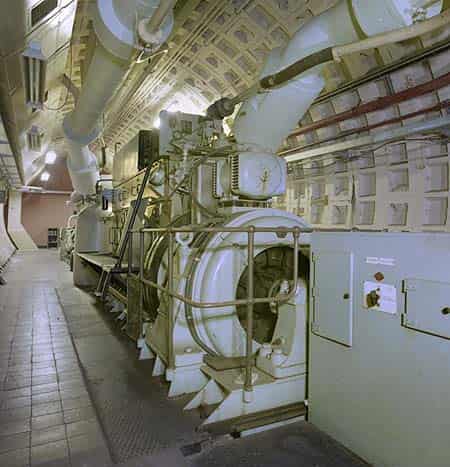
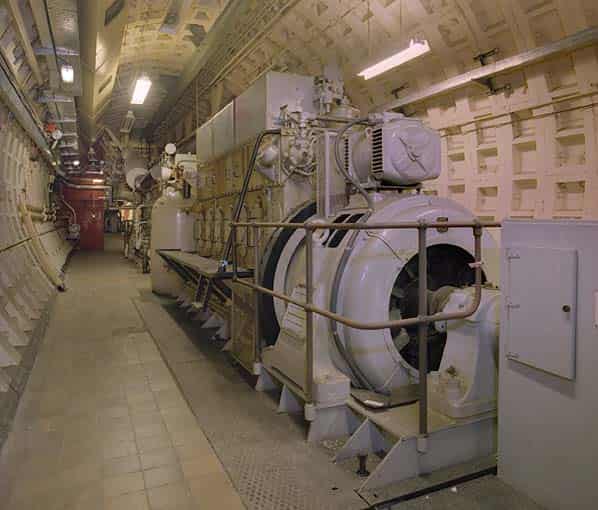
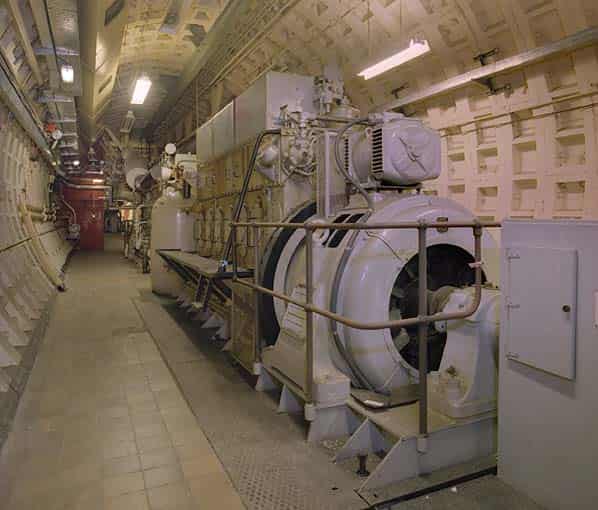
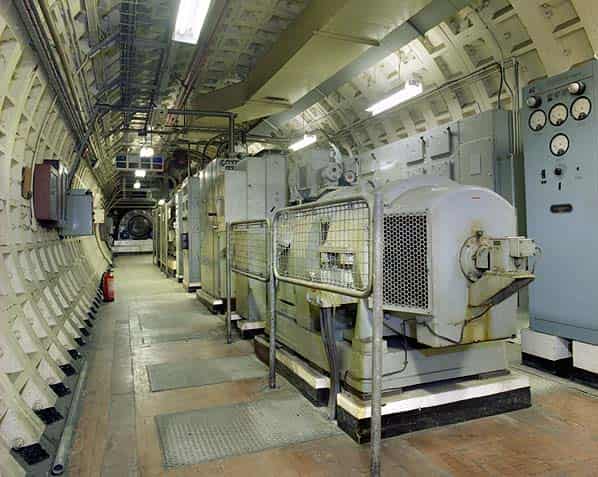
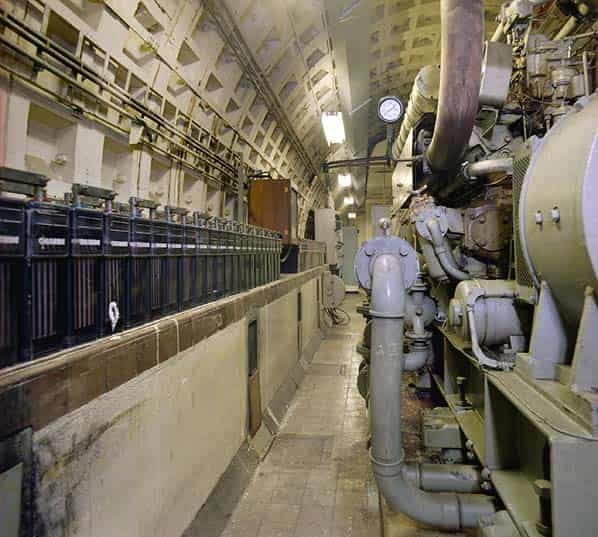
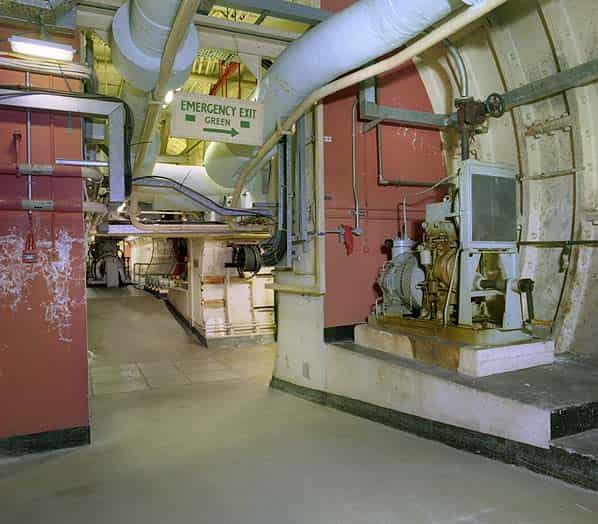
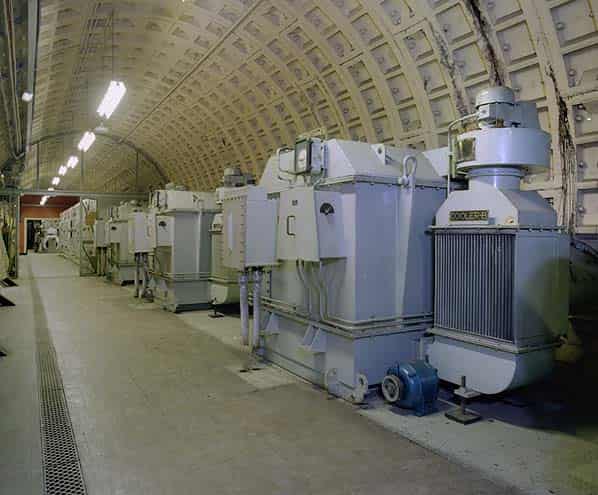
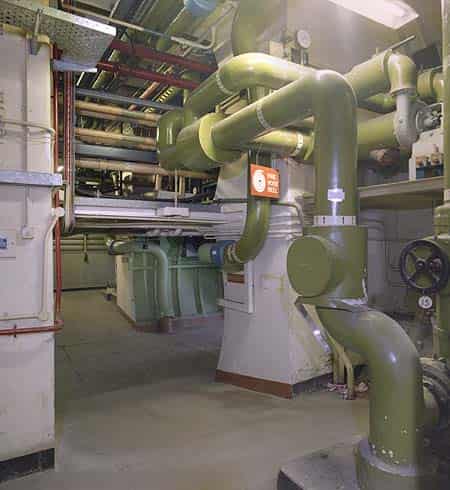
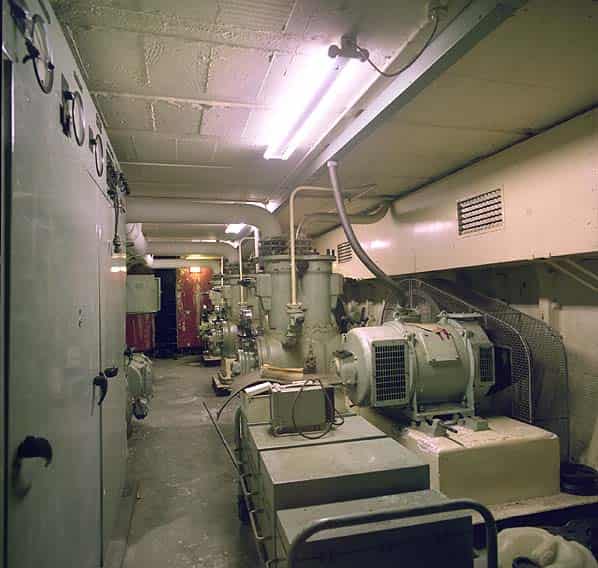
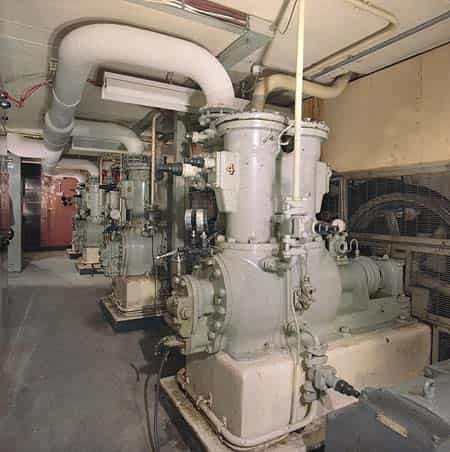
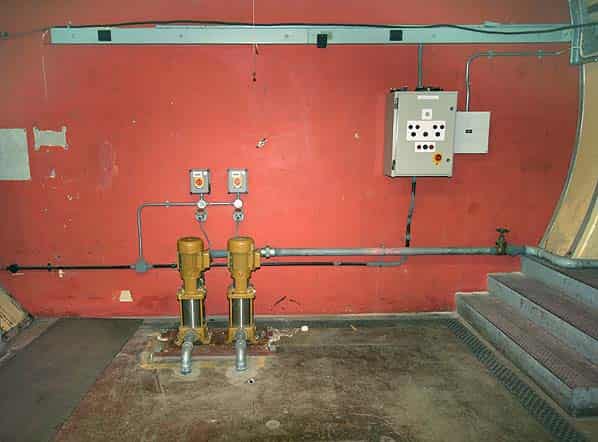
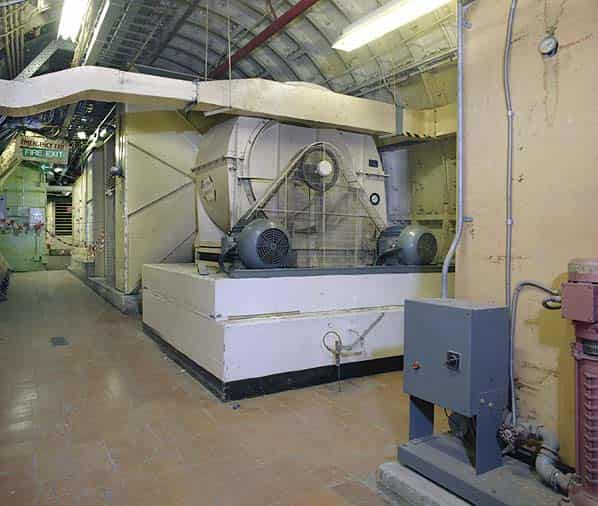
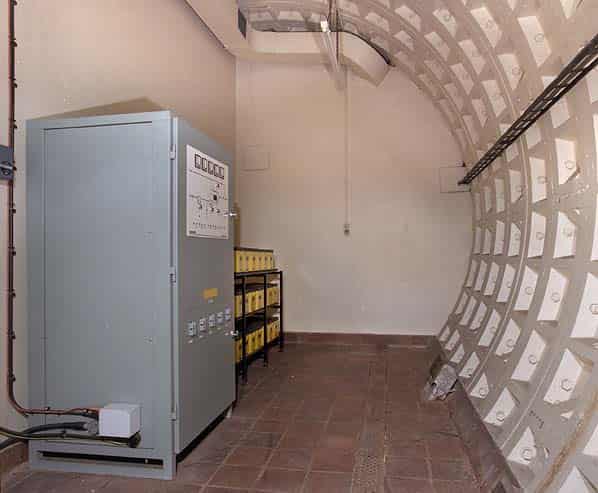
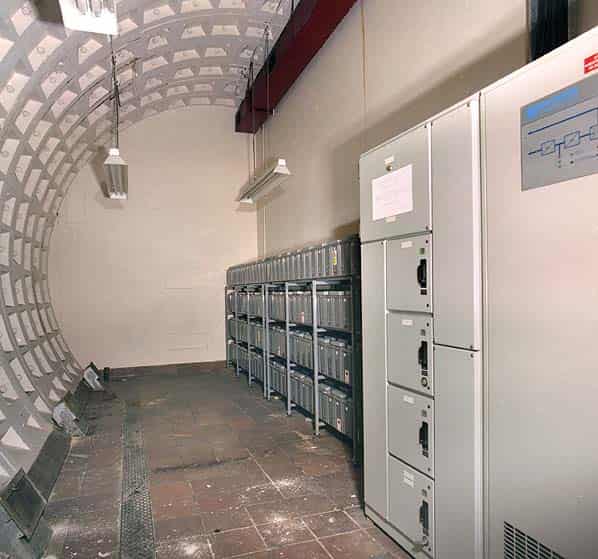
A city under the city - that is Kingsway trunk exchange, 100 feet beneath the Holborn area of London. Fully self-contained, Kingsway could seal itself off from the rest of London and its 200 Post Office staff could go on working there in comfort and safety. The exchange is air-conditioned, has its own water supply from an artesian well and emergency power from four diesel generators. Fuel tanks hold 22,000 gallons, enough to keep the generators going for six weeks.
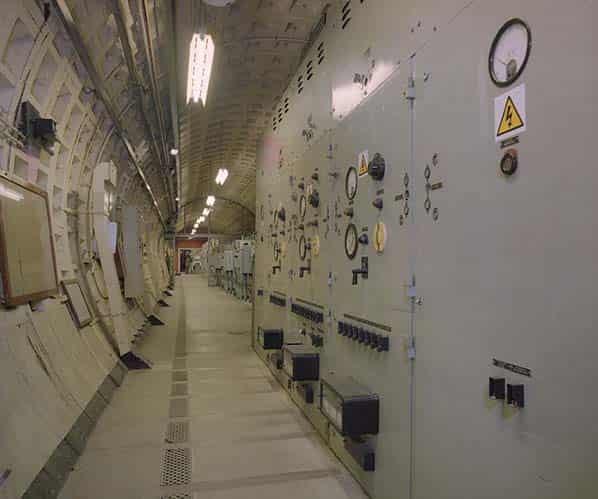
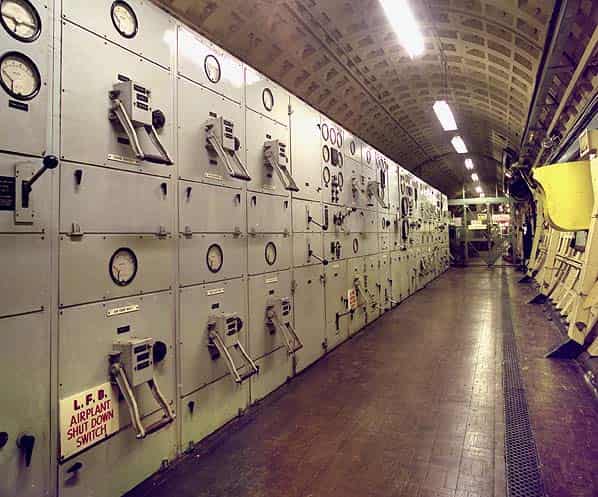
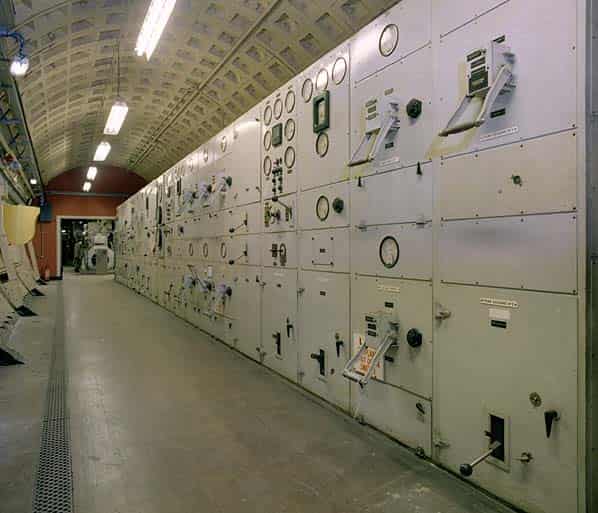
Here is all the equipment needed for the automatic routeing of 6,600 trunk lines between London and telephone centres throughout the British Isles. Kingsway deals with 15 per cent of London’s trunk traffic, handling about 6,000 calls at once and carrying between 1.4 and 2 million calls every week. The exchange, which went into service in 1954, was on the secret list, until three years ago.
Safety is a religion at the exchange itself and even more importantly, in the deep level tubes housing the cables that run into the trunk exchange. The whole system is wired to give immediate warning of fire or flood. Unlike the exchange, the cable tubes are not air-conditioned and must be evacuated if there is a chance of the air in them becoming foul. The Meteorological Office supplies barometric pressure readings every 12 hours and if the pressure falls below 1,000 millibars the engineer in charge of cable tube maintenance operates the ‘clear-out’ warning. Lights flash and hooters sound and everyone working in the tubes must leave immediately.
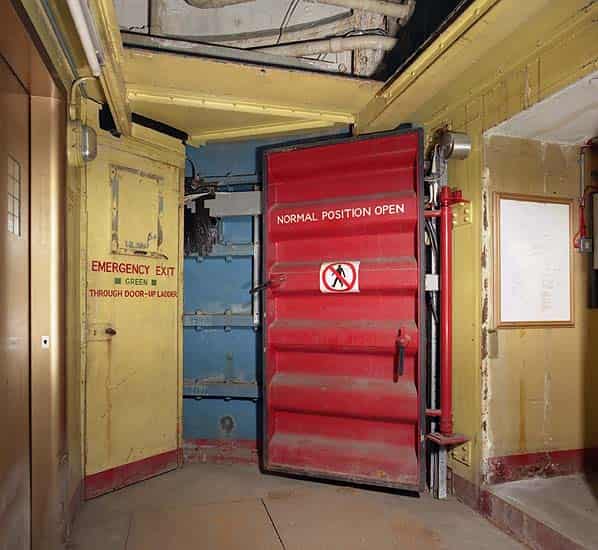
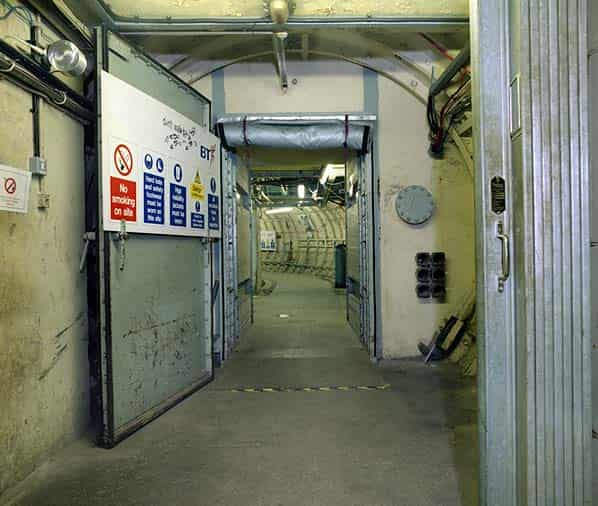
A two-man patrol walks quickly through the tunnels, to make sure no one is left behind. First aid kits and stretchers are in plentiful supply, and there is oxygen breathing equipment on hand. The cable tubes are also evacuated after a Thames flood warning. At Kingsway, the great bulkhead doors leading to the tubes are shut and the underground city, along with its staff, is sealed off from the world. What’s it like to spend your working day, or night, in this underground city? “I’ve worked here since the scheme opened 15 years ago,” said Mr Ken Clark, executive engineer in charge of maintenance. “After a while, you don’t notice the noise of the tube trains rumbling above you.”
Assistant Executive Engineer (AEE) Jim Barrett is another veteran underground man who enjoys the ‘deep’ life. Jim is one of four AEEs who man the trunk area fault control on a 24-hour rota. “Everything’s at our fingertips,” said Jim. “Phones and the tannoy system keep us in touch with the staff and our security board shows us, by a system of flashing lights, which doors are being opened between the exchange and the cable tube network.”
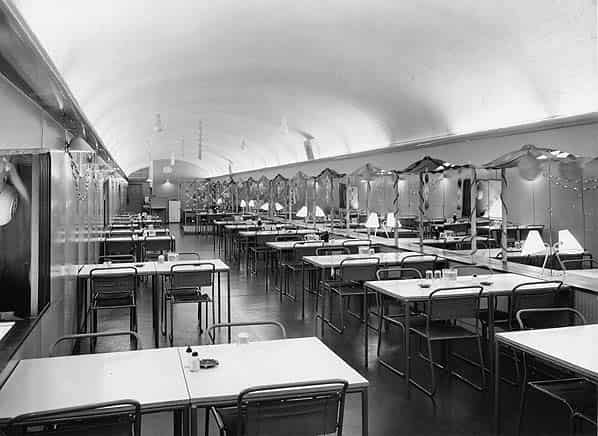
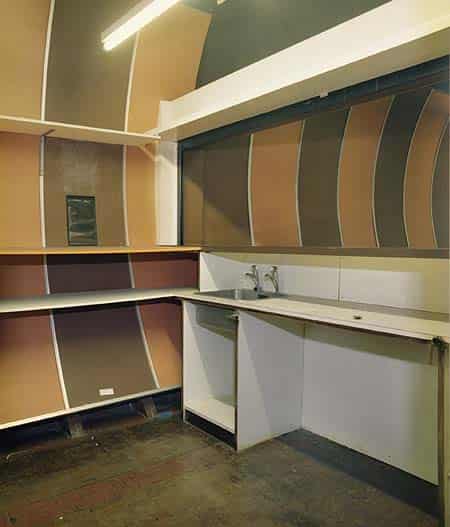
Kingsway is almost an all-male community. There are just three women -, the canteen staff, headed by Mrs Irene Spalding. In charge of the power plant is Ron Clayson, another underground veteran. Ron’s staff of 33 engineers will change a light tube or test one of the huge diesel generators. They also keep the very necessary pumps in good repair. “The air is cleaned and cooled by water,” explained Mr Clayson. “Water has to be constantly pumped along the pipes. As for sewage, that has to be pumped up to the sewers. Everything has been done to cut down any feeling of claustrophobia. The canteen has windows looking out on to colourful landscape paintings.”
Kingsway, built to withstand a siege, protects its citizens better than the walls of Troy. There have been no fatal accidents at Kingsway, nor in the cable tubes, no fires, no floods, no suffocation. Kingsway underground men live a healthier and a safer life than their colleagues 100 feet above their heads in choc-a-bloc London.
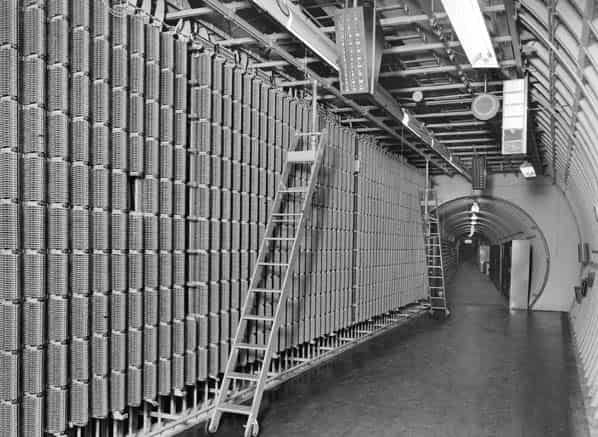
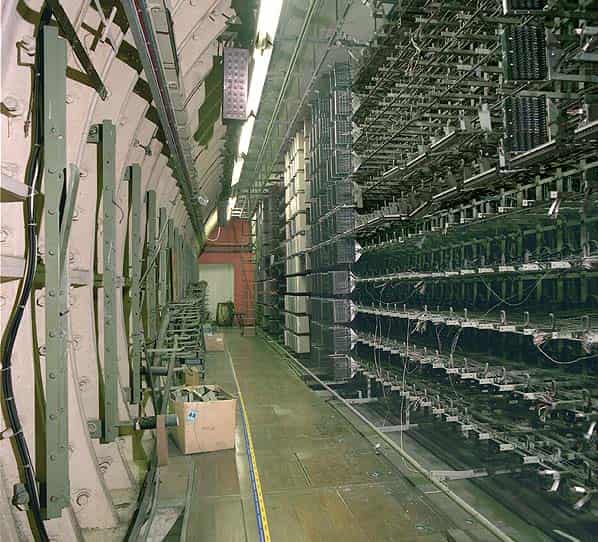
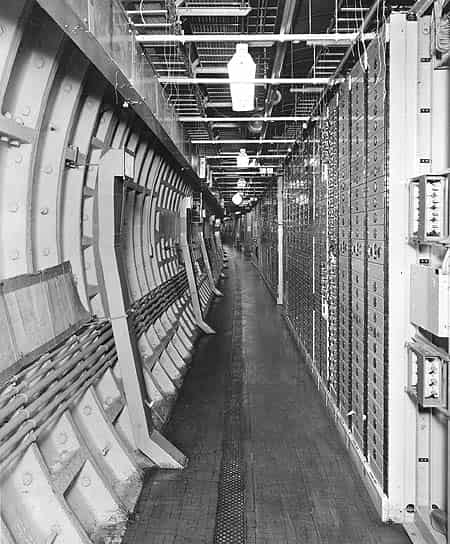
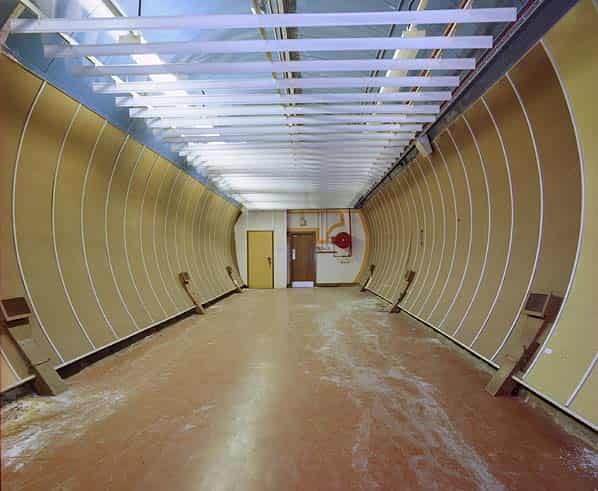
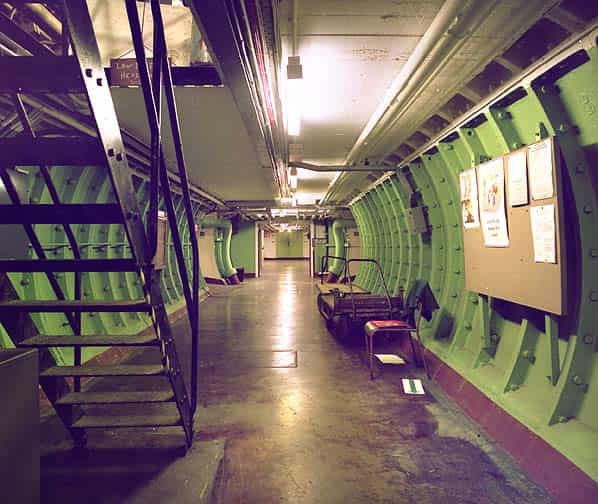
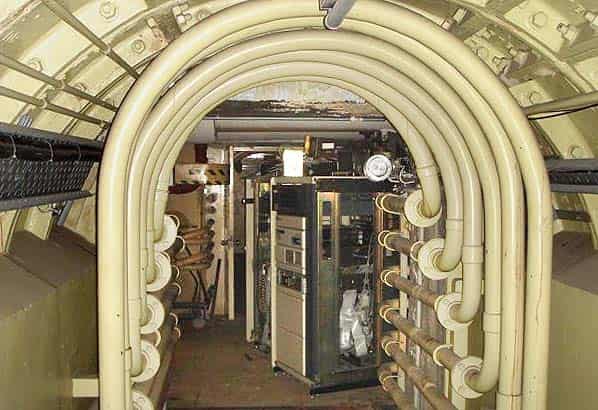
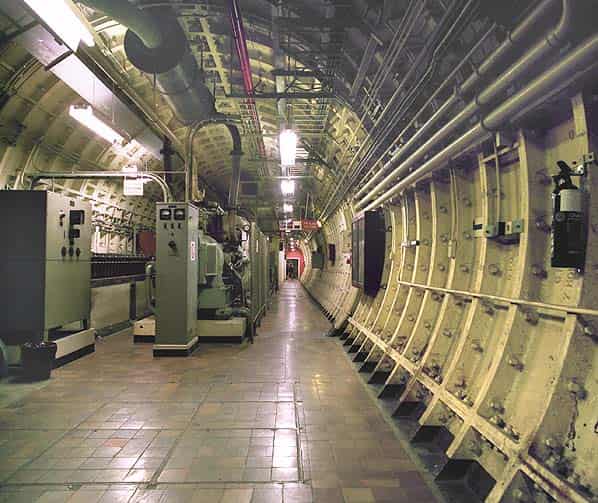
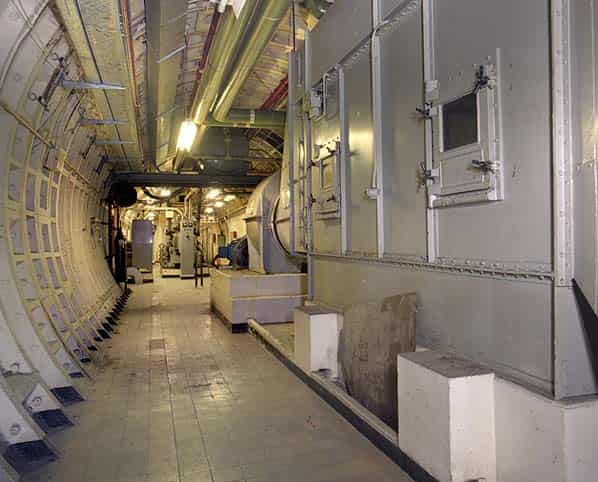
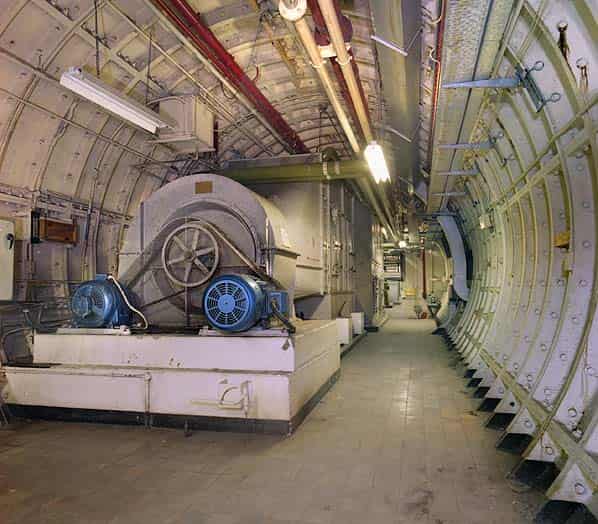
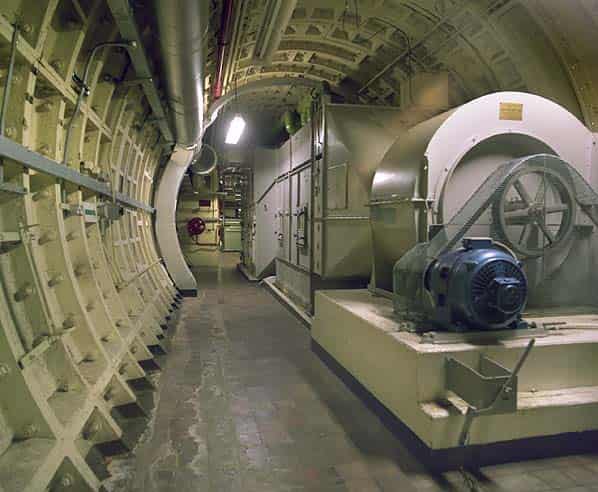
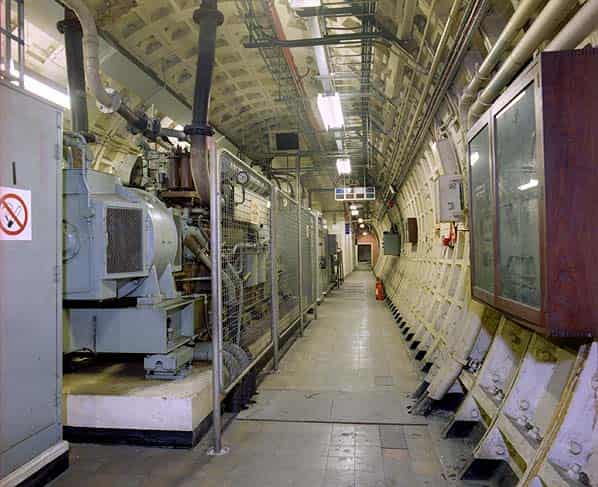
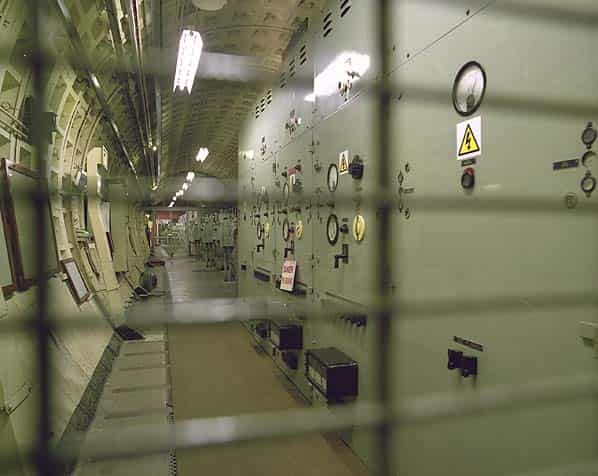
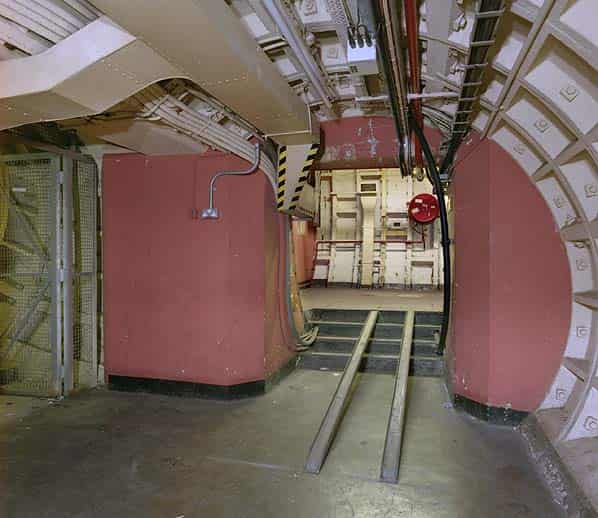
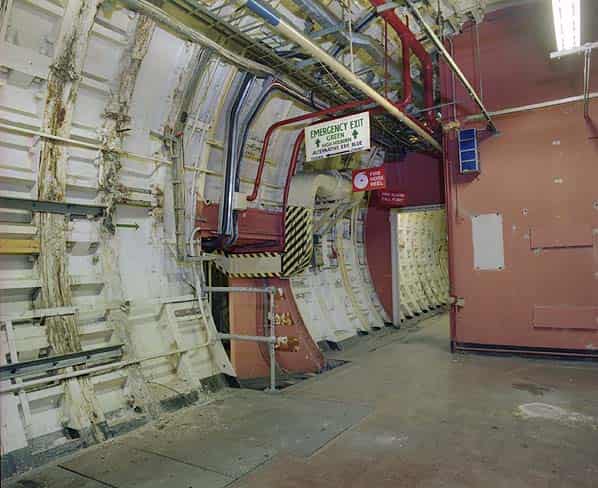
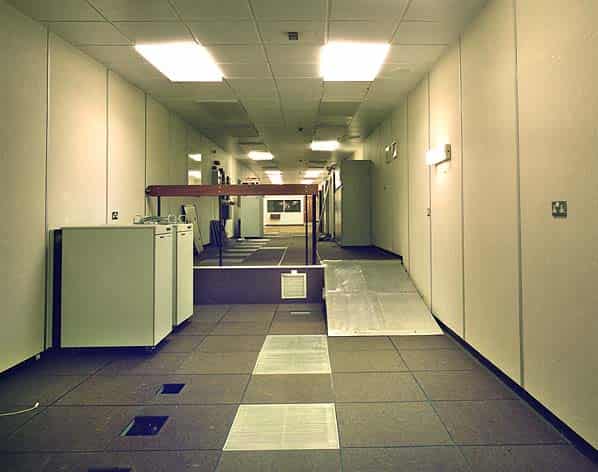
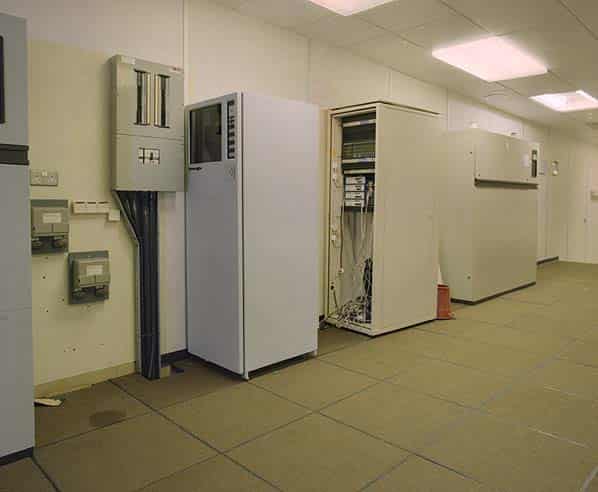
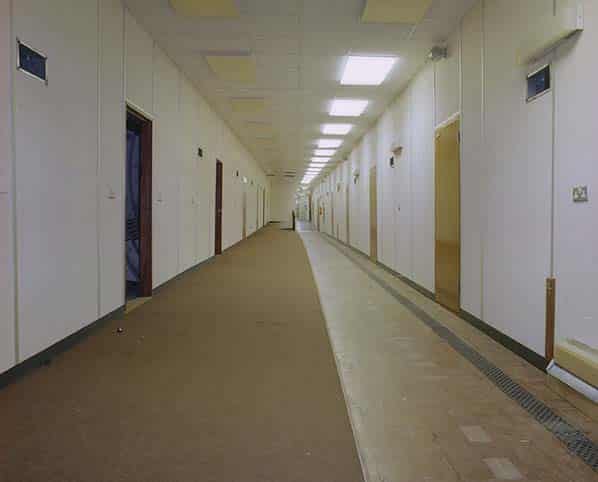
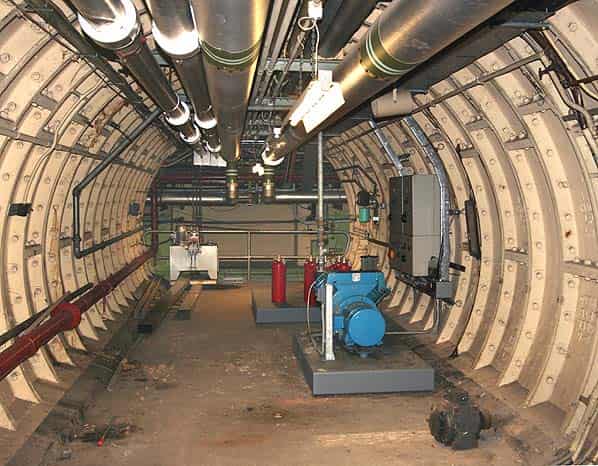
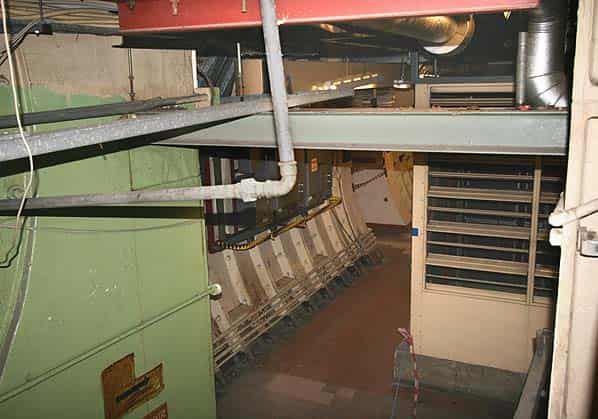
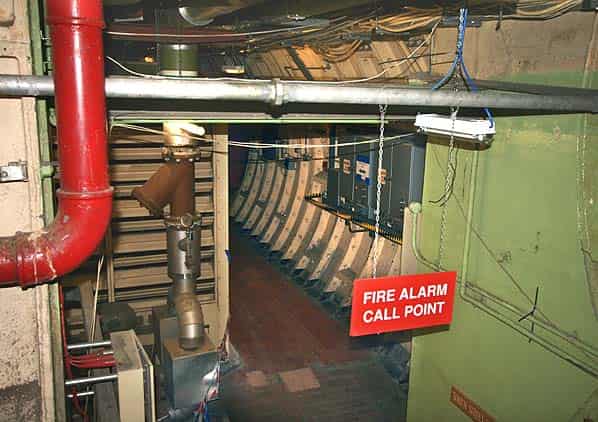
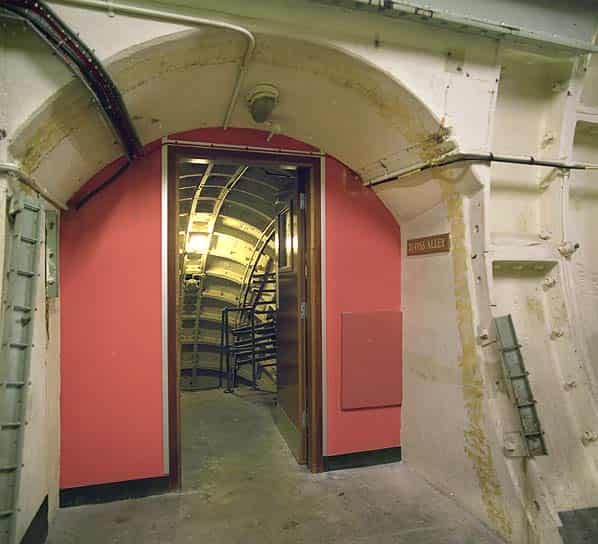
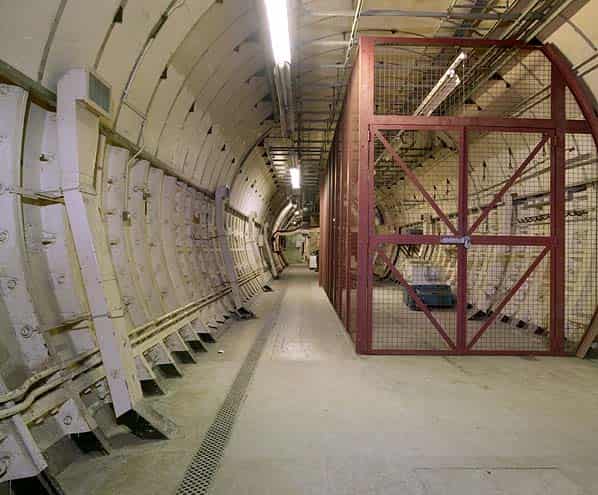
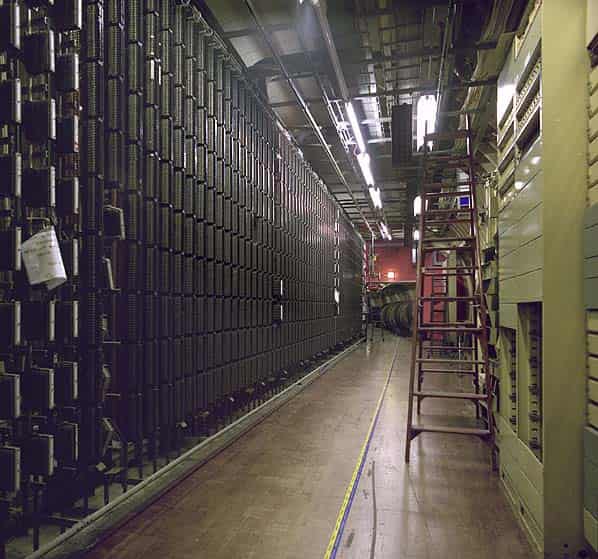
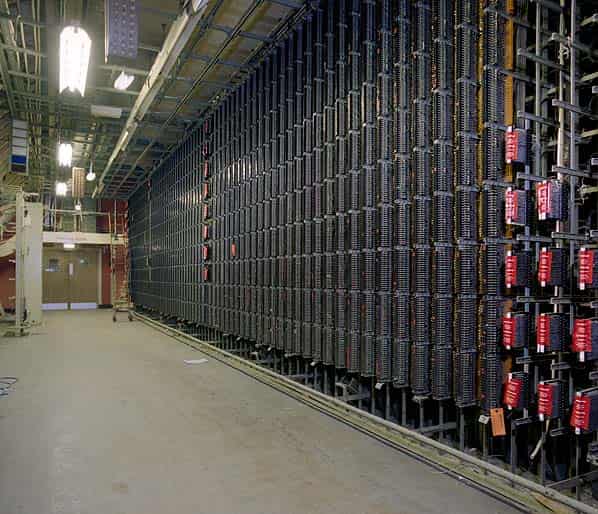
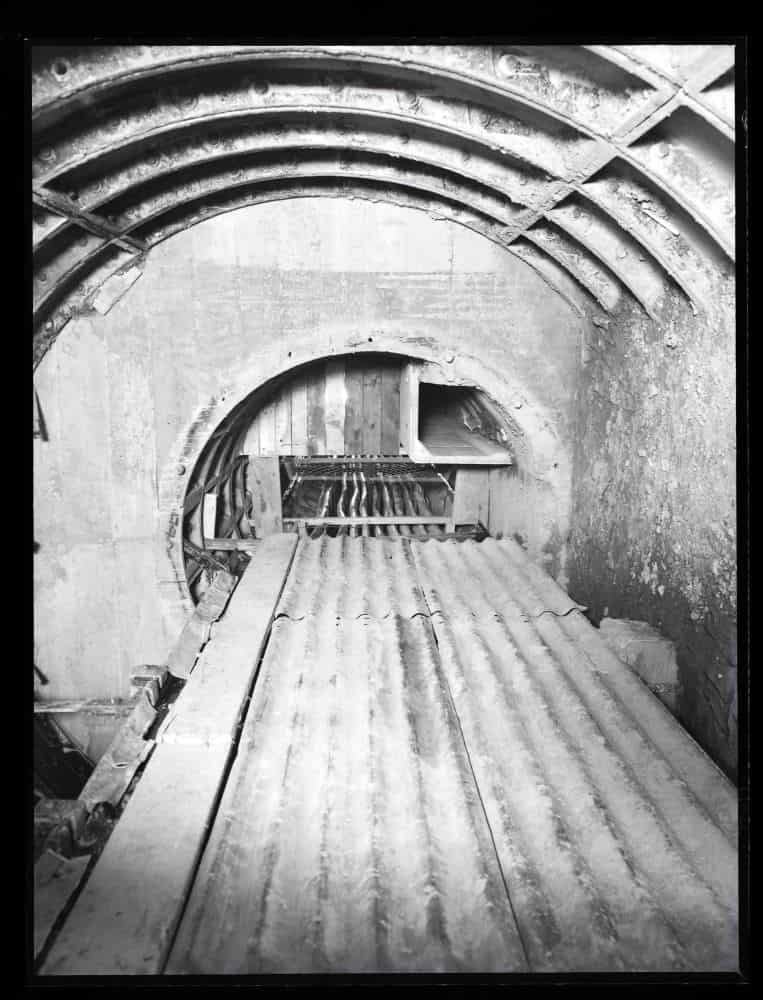
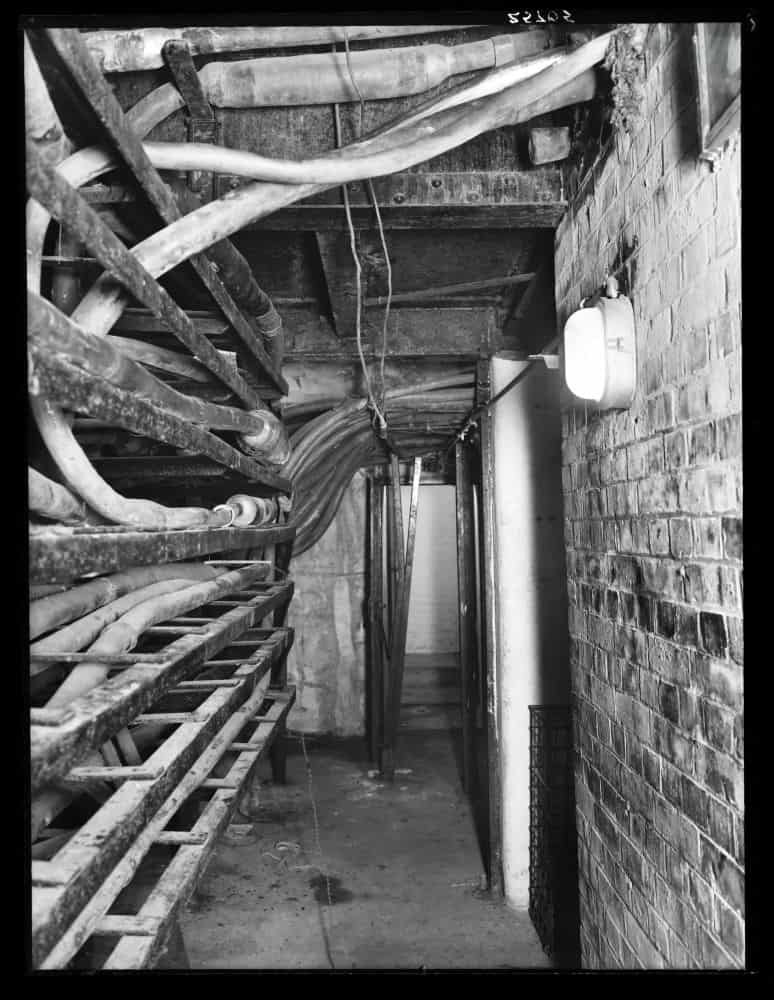
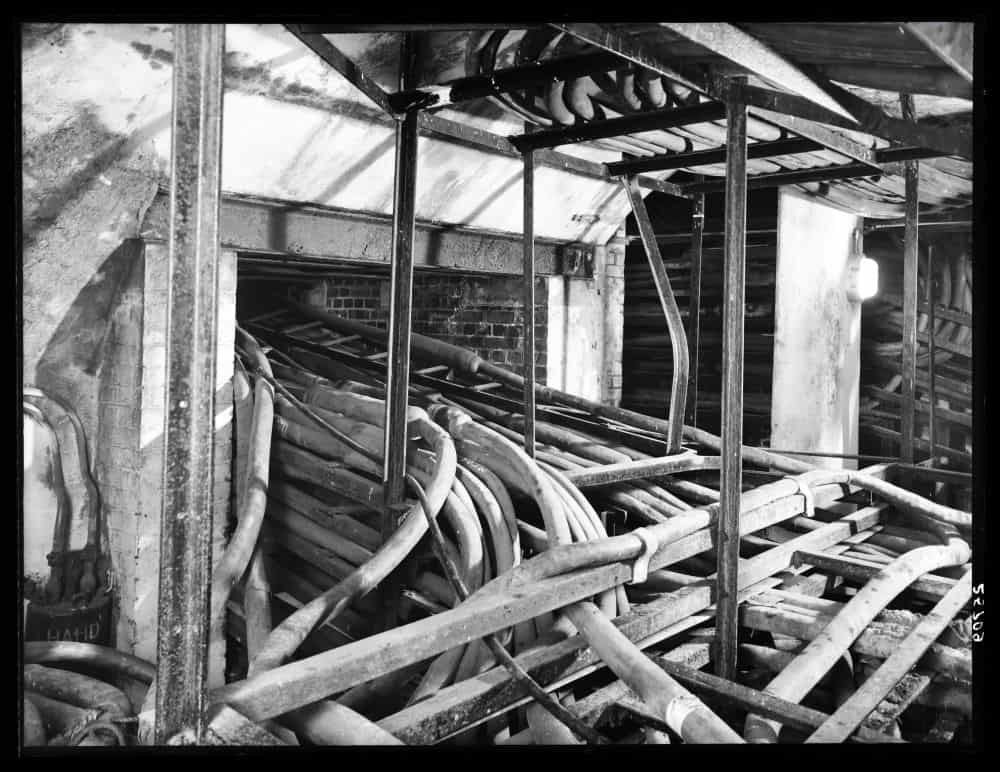
The description of Kingsway exchange as an underground town was not far off the mark, with its unique subterranean population and passageways such as ‘Third Avenue’, ‘By-Pass Alley’ and ‘The Dog’s Leg’. Two parallel tunnels, each a quarter of a mile long and 16' 6” wide, formed the heart of the exchange, housing much of the equipment. Altogether three miles of racking were installed, carrying 337 miles of switchboard cable, along with the 1.5 megawatt generators for standby power generation.
Kingsway exchange had other peculiarities too. Earlier it was stated that no subscribers were connected, but like most large exchanges it did have its own ‘service PBX’ for official telephones around the racks. This had the possibly unique accolade of having not one but two dialling codes, LTK in the London system and also the national code OLTK (0585). The result was that you could reach its numbers by dialling either 01-LTK or OLTK.
The strategic importance of the Kingsway trunk exchange declined after the introduction of subscriber trunk dialling (STD); before this, trunk calls had to be made through the operator, who dialled trunk calls using lengthy and somewhat idiosyncratic dialling codes that took them as necessary through the various trunk switching centres around the country. The significant growth in the number of long distance calls necessitated many new trunk switching centres to handle the additional traffic. A new switching and transmission plan for a new ‘Transit’ network was announced in 1960 and implemented in the late 1960s. This work coincided with the ‘Sector Plan’ for London, which aimed to decentralise the switching of trunk calls in London and supplement the existing trunk switching centres. There were to be new technology ‘sector switching centres’ in the key central sector and in seven locations in outer London serving the suburban areas. A number of writers have noted some significance in the names chosen for some of Kingsway’s replacements, Bastion, Citadel, Fortress, Rampart and Tower but this is probably more bravado than indication of supreme strategic significance, since other replacements were named at the same time after eminent scientists (naturally these new exchanges were also connected to the deep level network).
Whatever the case may be, Kingsway was becoming more obsolete with each successive phase of trunk modernisation and in 1979 it was announced that the exchange would close within a year, its functions being transferred to Cavendish exchange in Houndsditch. The conversion of the trunk network to digital was the final nail in the coffin and towards the end, only the Main Distribution Frame (MDF) was still in service, linking a few circuits between other sites.
The merit of Kingsway’s secure central location ensured its survival for other purposes; during the early 1980s it provided a home for BT’s London area group that serviced closed circuit television. Another part of these tunnels was used for the Kingsway Computer Centre (KYCC) between 1986 and 1990. This housed a secure backup for Icarus, (International Circuit Allocation Record Update System) located in central London, whilst another computer dealt with radio paging. These functions came to an end in 1990, since when the sole use of Kingsway exchange has been for storage.
NEWCOMERS ARRIVE
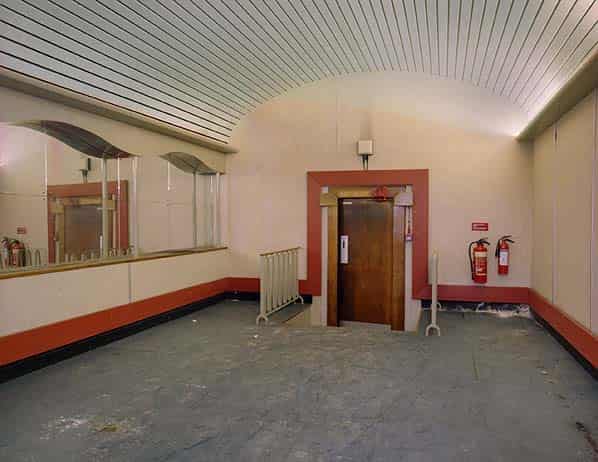
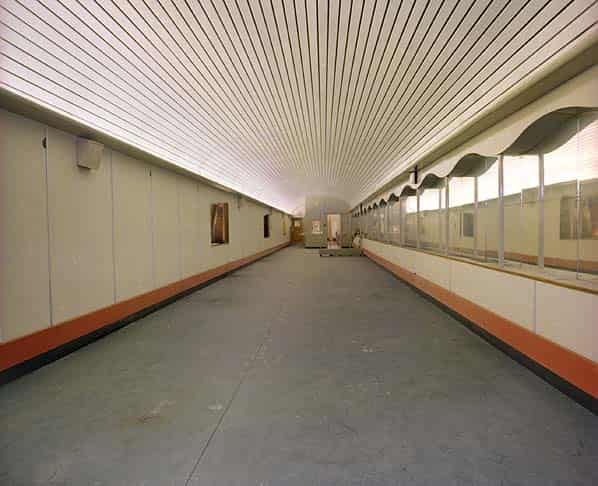
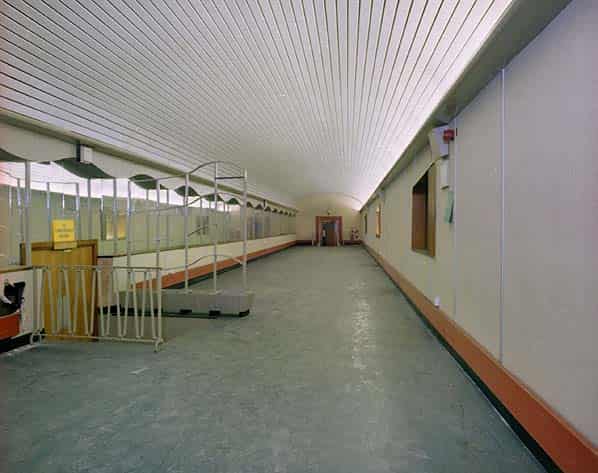
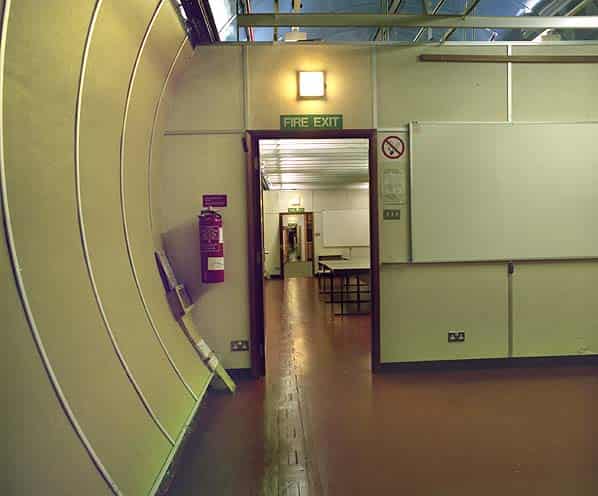
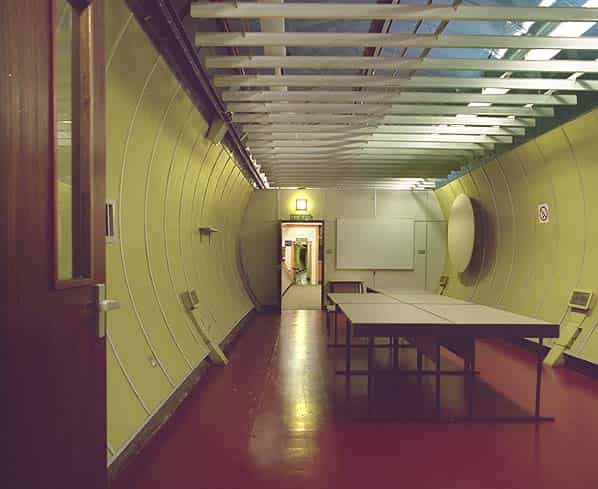
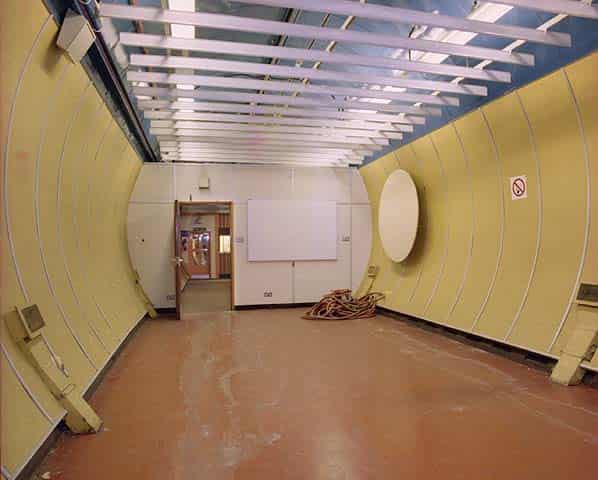
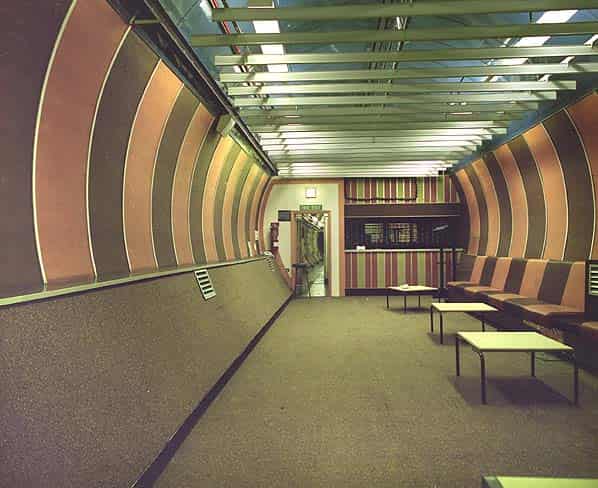
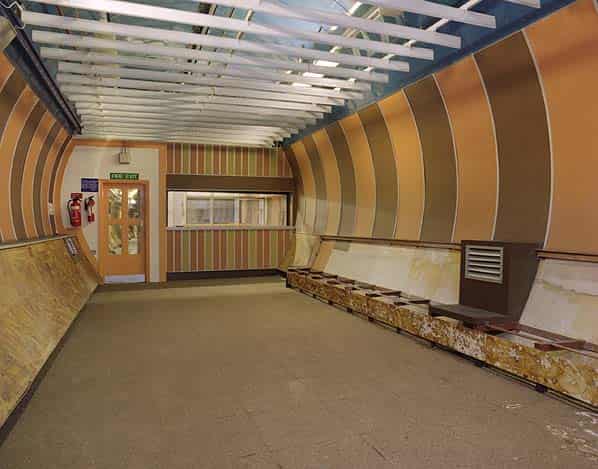
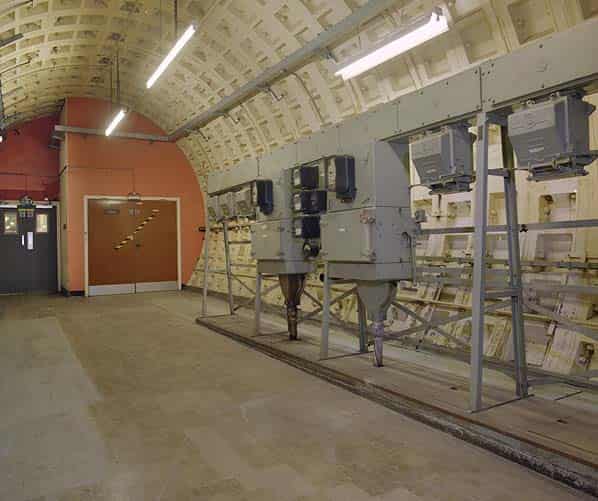
To the public at large none of this activity was common knowledge, however. By the 1980s Kingsway exchange was no longer mentioned or discussed by BT, regardless of previous exposes by Peter Laurie, Duncan Campbell and others and with good reason. For BT’s staff had now been joined by government personnel. The latter established separate accommodation for themselves in the two easternmost of the four main tunnels in the southern sector, some time in the 1980s to judge by the fittings. This accords with BT gossip at the time of Kingsway’s “invasion by men with scrambled egg on their cuffs” as one staffer described it and with the removal from the Headquarters telephone directory of the accommodation group covering Kingsway. Whatever the secrecy concealed then is now laid bare because the facilities have since been fully decommissioned and are no longer confidential.
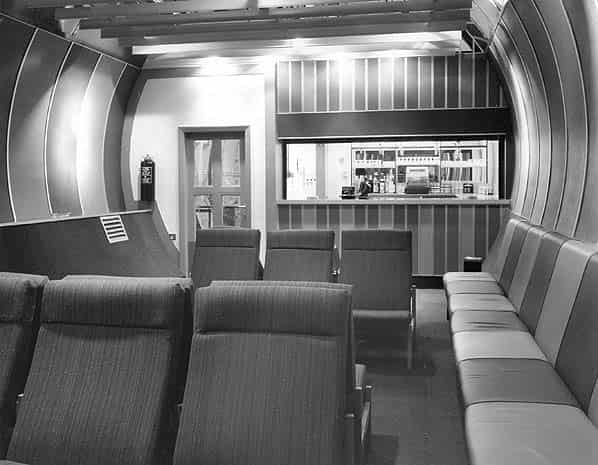
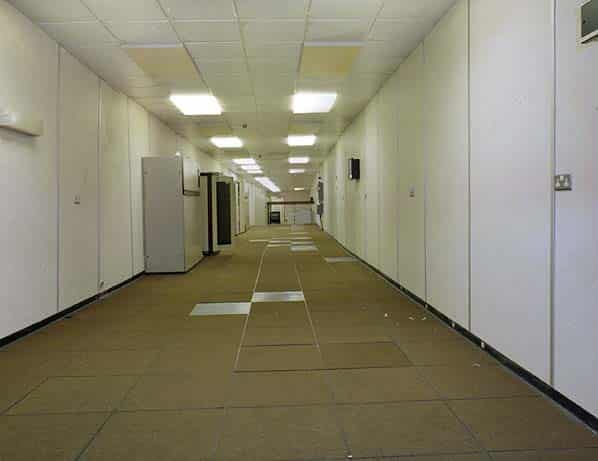
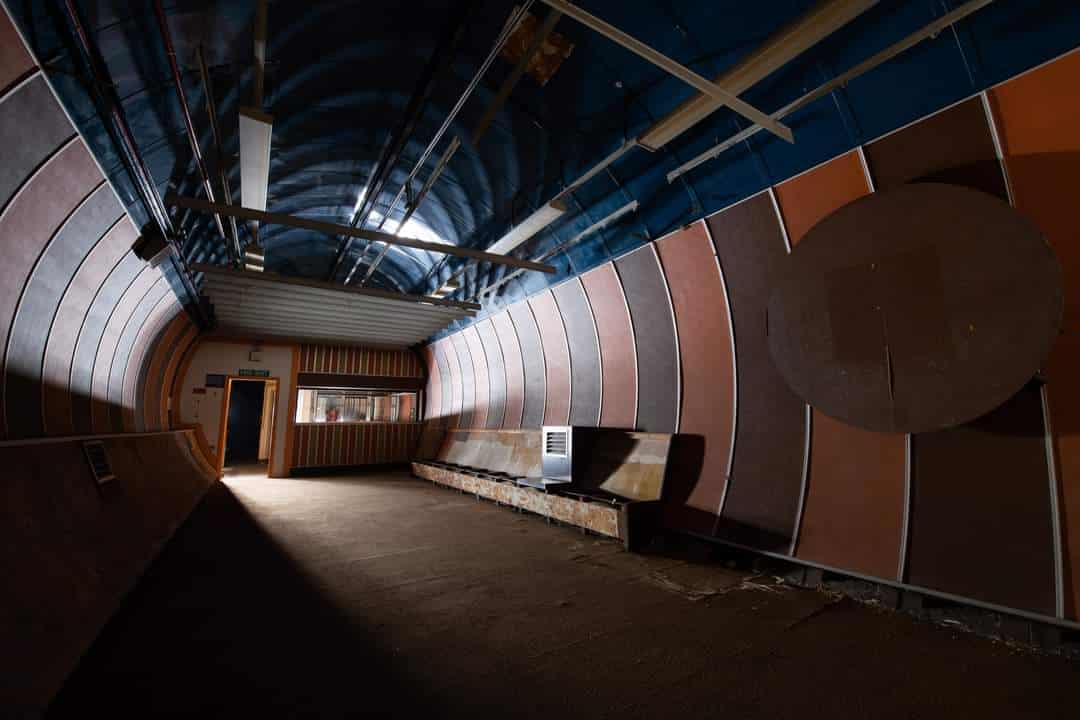
Subterranea Britannica made two visits to Kingsway during the 1990s and on the first foray (4th August 1995) the door to this restricted area had its own bell push and spy hole; the accommodation was declared rather pointedly as being out of bounds. It was also marked as such on the orientation plan that was handed out. On the next visit (13th July 1996), however, members had total freedom to look around what was left of the facility. The heart of the new accommodation appeared to be a briefing room, with seating facing a screen at one end and a projection booth at the back; sleeping accommodation was also provided. According to an article in New Statesman (25th July 1985) this was the back-up site for the war control bunker known as ‘Pindar’, the primary site lying below the Ministry of Defence headquarters building in Whitehall. It is likely that Kingsway acted as temporary home for Pindar during construction of the Whitehall site and it is stated that the Tooks Court entrance (and modern passenger lift) to the Kingsway complex was purely to provide discreet and direct access to this special accommodation.
KINGSWAY’S SHAKY LEGAL FOUNDATIONS
When the Chancery Lane tube shelter was first built the surface sites required were requisitioned by the LPTB and subsequently transferred to the Ministry of Works, as at other shelter locations. Its subsequent takeover by the Post Office made the position more complex and the whole affair offers a fascinating illustration of the problems that occur when a facility is constructed under emergency powers. As an occupant of pre-existing facilities, the Post Office had initially no hindrance in establishing Kingsway exchange in the shelter tunnels at Chancery Lane.
This position altered radically, however, with the approaching expiry of the emergency powers under which the shelters had been built. The independent operational nature of the telephone exchange lent it a status rather different from the remaining deep shelters and whilst ownership of the latter was vested in the Ministry of Works by the Tube Shelters (London) Act, which vested ownership, Kingsway needed an act of its own, the Post Office Works Act of 1959, which vested ownership in the Post Office. The provisions of the act were set out in the Post Office Works bill, which was debated in the 1958/59 session of parliament. The preamble of the bill stated that in the exercise of emergency powers the London Passenger Transport Board had constructed certain underground works situated partly in the Metropolitan Borough of Holborn and partly in the City of London and that the Postmaster-General had entered into occupation of those works and in the exercise of emergency powers had extended them. The same bill stated that in the exercise of emergency powers the Postmaster-General had constructed works in the City of Birmingham (Anchor exchange). In both cases the works were described as “a system of tunnels together with shafts and other means of access thereto from the surface and ancillary works”.
The Bill had its second reading by the Lords on 20th January 1959 and was committed to a Select Committee. Petitions were deposited by five organisations, complaining that no indication of the depth of the works was given (withheld for security reasons), that no compensation was offered for any damage that might be incurred, or for reduced property values and arguing that surface owners should have unrestricted rights to develop their land.
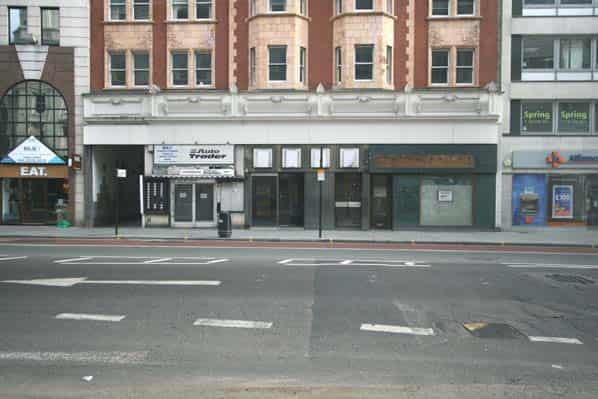
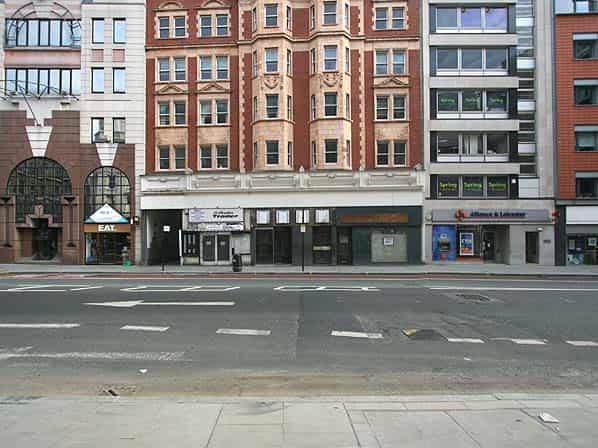
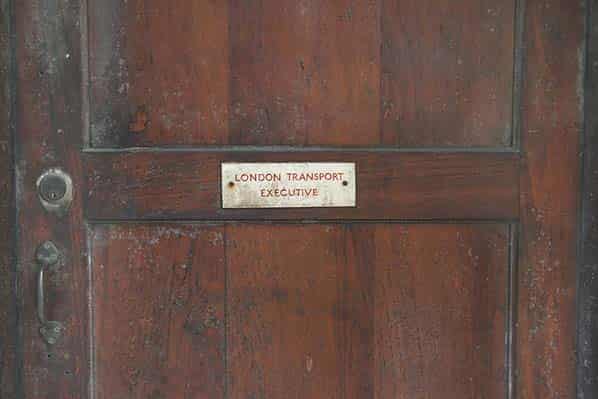
One further complication surrounds the property at 31/33 High Holborn, which is now one of the two points of entry to Kingsway exchange (the other is the goods lift in Furnival Street. London Transport has ownership of the ground floor and basement of this building which was then leased to the Post Office and later, British Telecom.
KINGSWAY TODAY
Following Sub Brit’s two visits in 1995 and 1996 and a visit by the Greater London Industrial Archaeology Society (GLIAS) in October 1995 the doors to Kingsway were once again closed. At the time of our visit there was still a small permanent staff but this was withdrawn shortly afterwards and all requests for access by interested groups were then turned down on health & safety grounds, even BT staff weren’t allowed in.
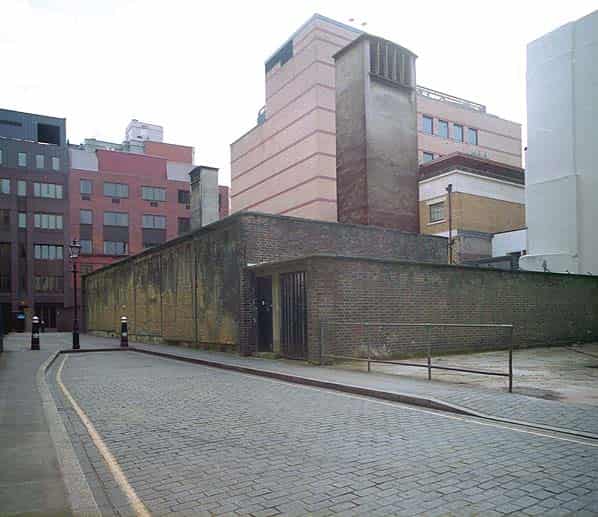
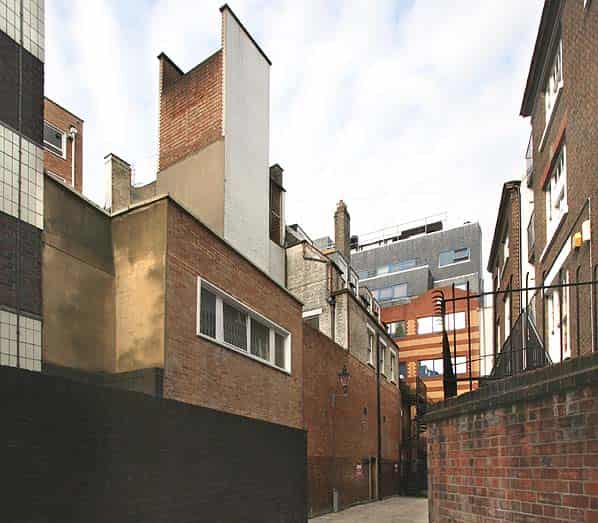
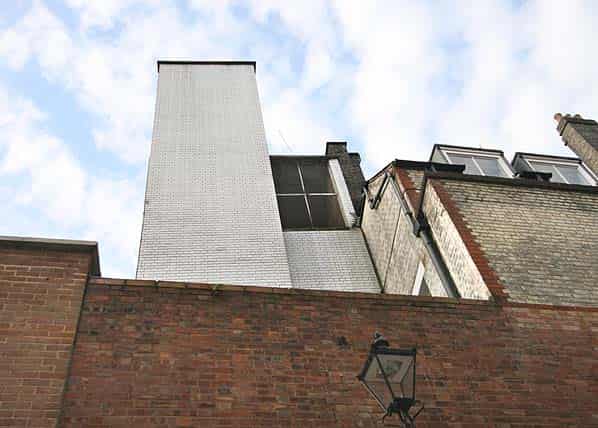
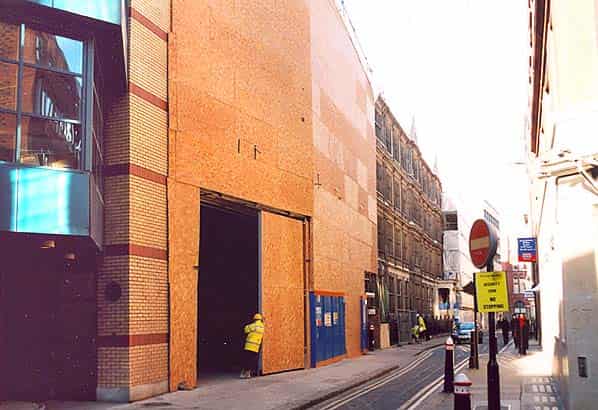
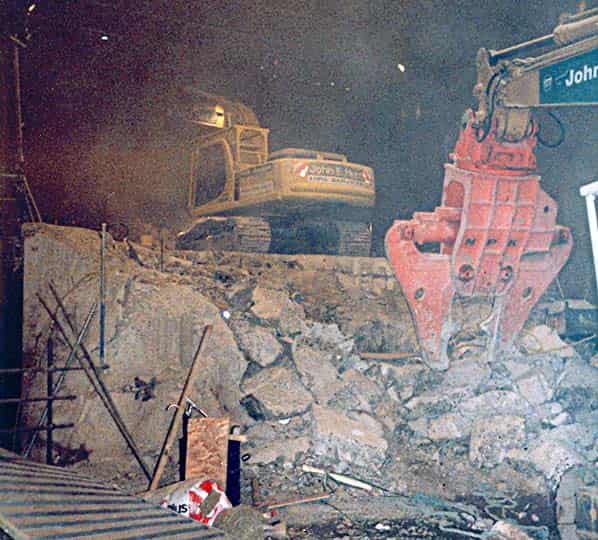
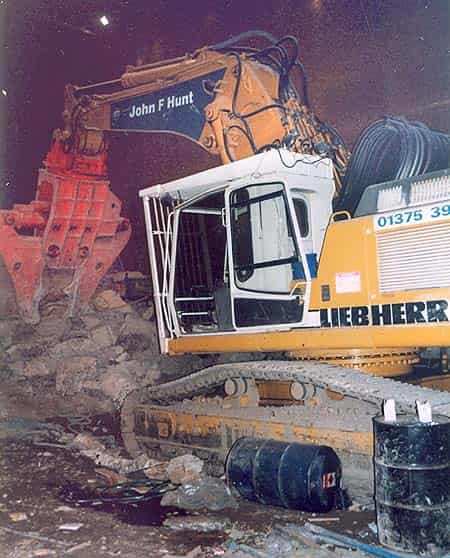
The Tooks court entrance which was contained within a large brick building with two prominent ventilation towers was sold for redevelopment to Tooks Court Ltd. for 2.1.million pounds on 16th October 2001. Once the building had been demolished the shaft was capped and following an archaeological excavation a new office block was built on the site. This is now home to the Government Actuary Department.
As already described, when originally built the shelter had three entrances which is unusual as all the other deep shelters had only two. One entrance (No. 1 shaft) was on the north side of High Holborn and