During the expansion of the RAF during the late 1930s, the command structure of the air defences of Britain was reviewed. New developments in radar technology and the capabilities of the new Spitfire and Hurricane fighter aircraft, together with the changing nature of the threat posed by the modern bomber aircraft used by the Luftwaffe meant that a comprehensive reorganisation was required. In a command network known as the Dowding System, Fighter Command was divided into four operational Groups, under the control of a central Headquarters at Bentley Priory. Each Group had its own geographical area of responsibility: 10 Group, South West England and South Wales; 11 Group, South East England; 12 Group, the Midlands; and 13 Group, north of the Humber and all of Scotland.
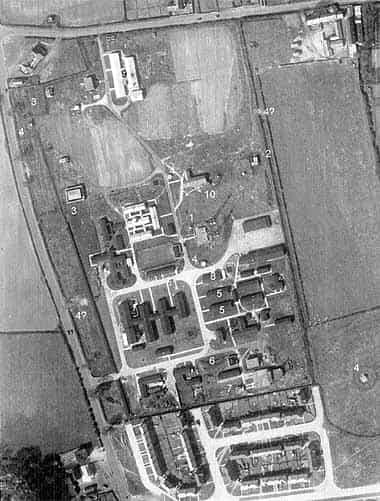
The location of the 13 Group HQ was chosen before the 27th September 1938. Initially there was a temporary above ground operations room brought into use by 24th July 1939 to coincide with the formation of the Group. At this time a permanent underground operations room was under construction, this was completed and was being fitted out by 3rd December 1939 becoming fully operational at 23.59 hours on the night of the 13th of March 1940.
The area controlled by 13 Group was relatively calm during the Battle of Britain, with the brunt of the German assault being borne by 11 and 12 Groups. After the end of the daylight phase of the Battle of Britain, the operational requirements of the air defence system were changed. On the 1st August 1940 Dyce and Wick sectors were transferred from 13 to 14 Group, a new formation covering the air defence of Scotland with a fifth protected Group Headquarters provided at Inverness. On 9th August 1940 13 Group was further reduced in size with the formation of 9 Group at Barton Hall, Preston (later RAF Longley Lane). the defences of Manchester, Liverpool, Birmingham and the Western Approaches.
This was to concentrate the defences of Manchester, Liverpool, Birmingham and the Western Approaches.
In another development following the Battle of Britain, it was recognised that the central command structure was in danger of being overloaded with information from the various radar stations and observation. To overcome this potential problem, each Group Headquarters were provided with a Filter Room to receive all reports of aircraft locations, to assimilate and assess this information in order to provide the most accurate possible picture to the Operations Room.
The Filter Room for Kenton Bar was built on a separate site, in Blakelaw Quarry. This facility was somewhat smaller than the Group Headquarters, but built to a similar pattern. Each Group was also provided with third smaller communications bunker; the location of the Communications bunker for Kenton is not known.
Throughout late 1940 and 1941, the nature of the threat changed again; the Luftwaffe stepped up its night operations against large cities and industrial targets. Through 1941, the majority of German operations seem to be attacks en route to and from Glasgow and Edinburgh and in many ways, the north-East appears to have escaped the worst of the night bombing.
The Operations Record Books from this period are a useful reminder that the role of the headquarters went beyond directing air defence operations. Documents bound in with the operational diaries include combat reports and the development of new tactics, particularly during the switch to night-bombing in late 1940 to 1941.
By 1943, the air defence requirements had changed again, with the increase in offensive actions against occupied Europe and the reduction of massed bombing raids on Britain. 13 Group was amalgamated with 14 Group on the 15th July 1943 and the Group Control was renamed RAF Blakelaw becoming a Sector Operations Room for Catterick and Ouston Sectors in 12 Group.
This change in role meant that the Filter Room apparently became redundant and was taken over by the Military Police in June 1944. The exact role of the Blakelaw bunker at this time is in some doubt; there were proposals to establish a joint USAAF/RAF command centre or even to convert the site into a Maintenance Unit but neither of these appear to have come to anything. In September of that year, the Filter Room was turned over to 321 Squadron, attached to 22 Group.
VJ Day (12th August 1945) marked the end of RAF Blakelaw as an active station. The Royal Observer Corps were stood down, and round the clock manning of the Operations Room was left to a skeleton crew.
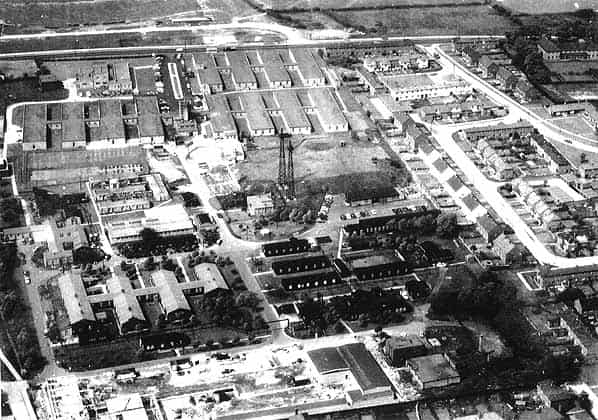
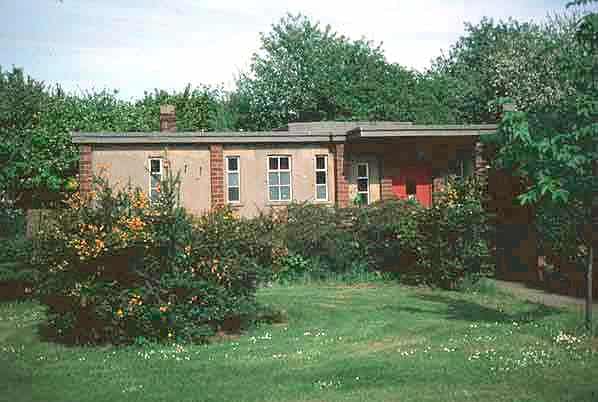
The Kenton Bar site was placed on the surplus list in 1947 and the land surrounding the operations room was used for offices by the Ministry of Agriculture with a number of single storey brick buildings being constructed for the purpose. Many of the above ground buildings associated with the Group Headquarters were demolished at this time.
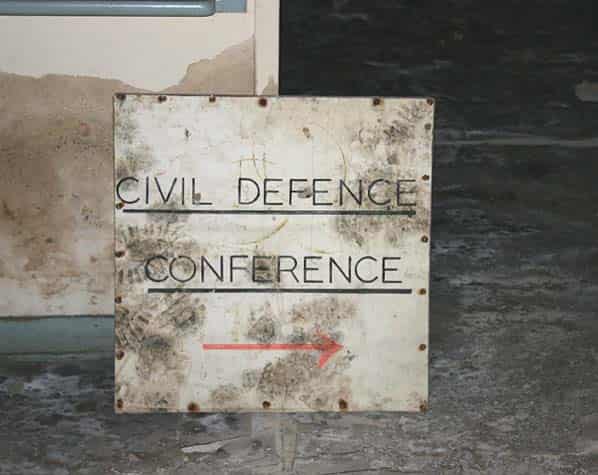
The sites of the two bunkers were subject to intense attention from competing interests. The emergence of the military threat posed by the Soviet Union and its Eastern European satellite states in the late 1940s led to the realisation that the civil defence infrastructure which had been so quickly run down after the end of the war was necessary again. The Civil Defence Act of 1948 and later regulations made under that act, required local governments to make provision for an infrastructure capable of carrying out the functions of the wartime ARP units; at the time, any future war with the Soviet Union was expected to be very similar to the previous war with Germany, though the additional damage caused by atomic bombing was seen as a major new threat.
In 1950 the Kenton Operations Room was proposed as a Sector Operations Centre for the Northern Sector in the Rotor scheme but discarded in favour of purpose built one near York (This was later built at Shipton but at this time only the area of York had been decided). At the same time the former Group Headquarters bunker at Langley Lane Preston (RAF Longley Lane) was refurbished as a Rotor Sector Operations Centre. The Kenton Bar bunker was selected for reuse as the Regional War Room for Region 1
Kenton Bar was unique amongst Regional War Rooms of this period in that it occupied an earlier structure, rather than a purpose-built facility: it seems likely that the existence of two suitable structures with existing secure communications links was too good an opportunity to miss.
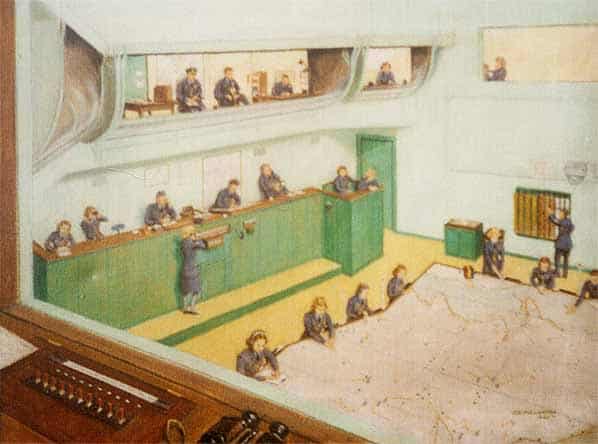
In plan, the purpose-built regional war rooms were very similar to the fighter command Operations Room bunker, being focused on a central two level map room with observation galleries. The life-span of the original Regional War Rooms appears to have been quite short, though details are sketchy.
By the time that most of the purpose-built structures were nearing completion in 1955-6, the advent of nuclear weapons had led to an enormous change in the perception of the threat posed by the Soviet Union, and the needs of Civil Defence.
The threat now was of complete breakdown of central government with the Regional War Rooms being were superseded by Regional Seats of Government, fully autonomous regional command centres, hardened against nuclear attack. Some of the purpose built Regional War Rooms were adapted as Regional Seats of Government, but this was not the case with Kenton Bar which did not have the room for expansion required for the increased number of staff.
The exact date of closure of the regional war room is uncertain although it is thought that most of these facilities had been supplanted by Regional Seats of Government by around 1960.
After its use as war room ceased it was used as a training centre for RSG and later Sub Regional Control staff in Region 1. The presence of materials related to Exercise ARCADE confirms the continued use of the bunker.
It was deemed too near the City centre target area for use as War HQ for the Newcastle Sub Region remaining dormant with occasional staff training until about 1965, after that date it was used for storage for the government offices on site. In 1968 it was considered for use as a temporary Sub Regional Control until a purpose built one could be built in Hexham however nothing came of this.
In 1974 it was designated by the Home Office as War HQ for the new Tyne and Wear County Council. However it was never fitted out as the county which was a left wing stronghold refused to pay rent to the Home Office. They used the sub basement of Sunderland Civic Centre instead. Its final use was for storage for MAFF and other users of the government offices.
In recent years the government offices have been occupied by the Department for the Environment, Food and Rural Affairs (DEFRA), the Driving Standards Authority and the Inland Revenue. Recently the offices were vacated by these government agencies and all the 1950’s office buildings and some later ‘temporary’ buildings, were demolished. At the same time a former Royal Observer Corps underground post in the north west corner of the site was also demolished. The site is being developed for residential use.
The plan is to retain the bunker in a compound, which will form a park for residents of new development; the two bunker entrances will be in secure compounds. There are no funds available to restore bunker, but limited visits will be arranged from time to time. The original plan was for a northern branch of the Imperial War Museum, but the council zoned the area as residential and there was no provision for parking etc which stopped the plan being implemented. It has been suggested that a trust might be formed to finance restoration, but so far nothing has happened.
SITE VISIT
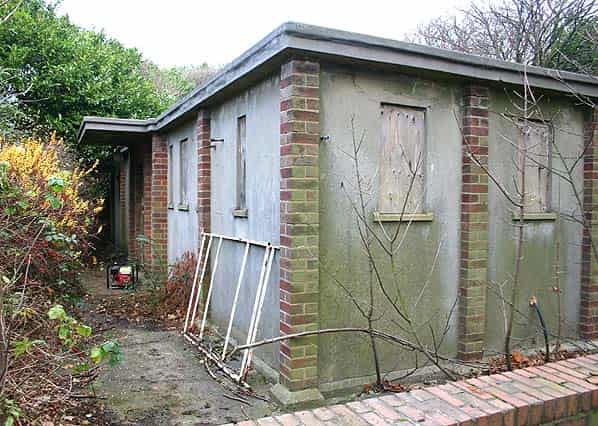
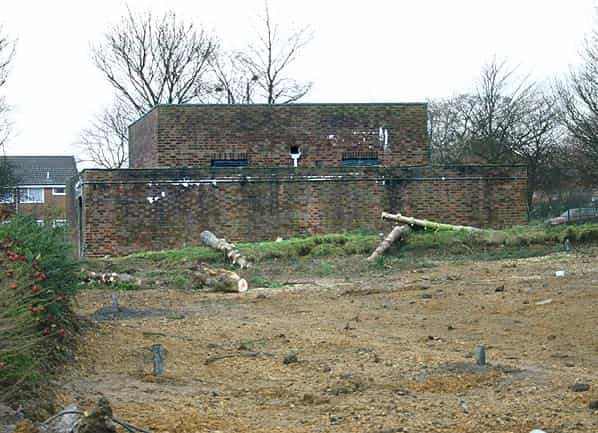
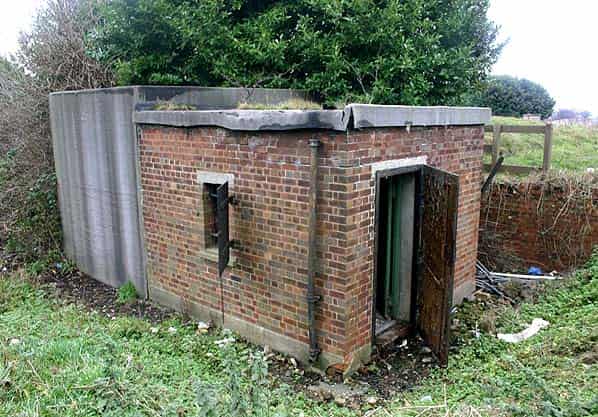
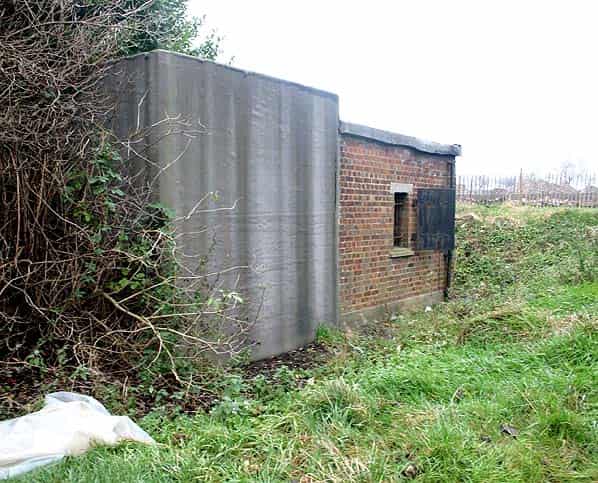
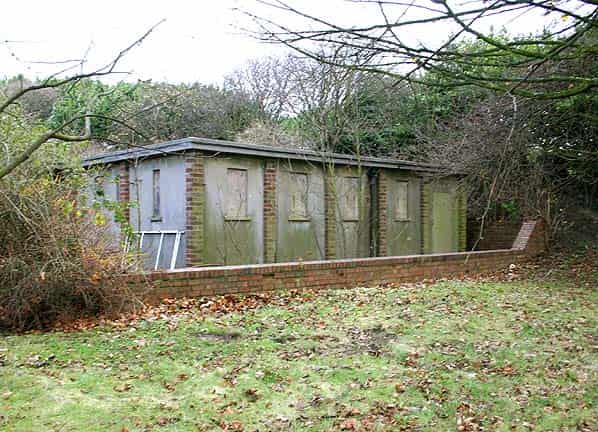
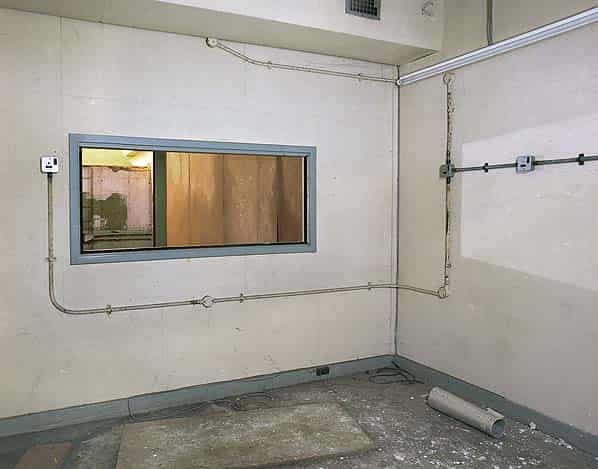
The main access into the underground operations room at Kenton is concealed in a brick and concrete paneled single-storey structure surrounded by a low brick wall on the west side of the bunker. Internally, this building which housed a small guard post has been stripped of most of the fittings related to its military and civil defence use and has been used as a store. Many of the electrical fittings appear to be original and with the exception of the modern temporary lighting, all of the electrical fittings in the bunker are of similar type.
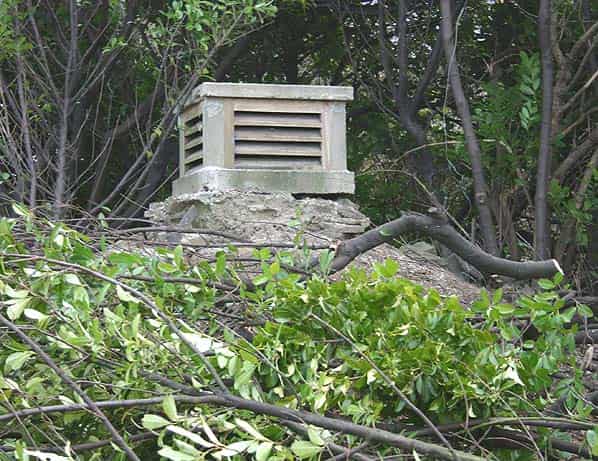
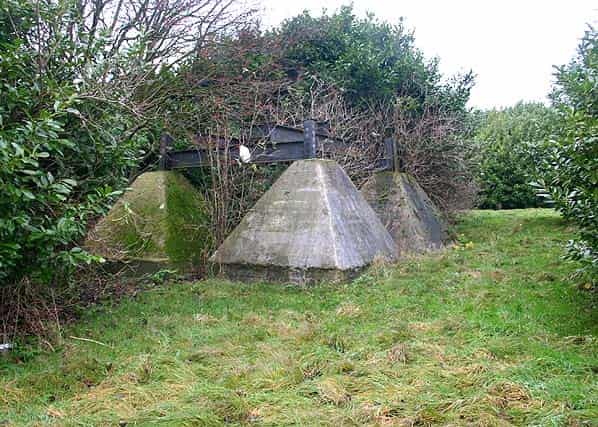
Further surface features associated with the bunker include ventilation shafts and radio mast bases. The ventilators are in varying stages of decay, and some have lost their characteristic louvered openings.
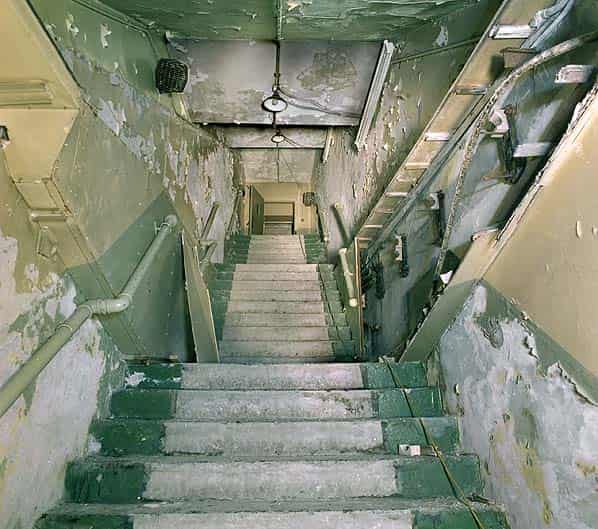
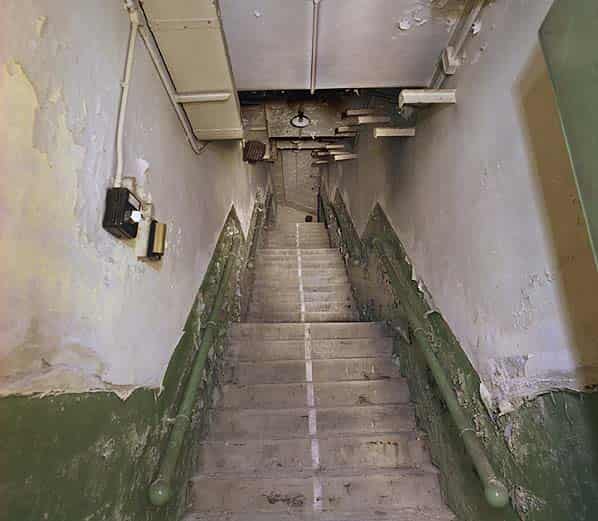
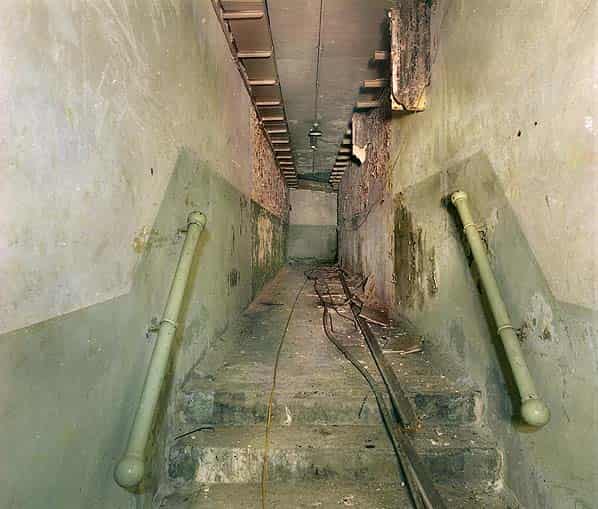
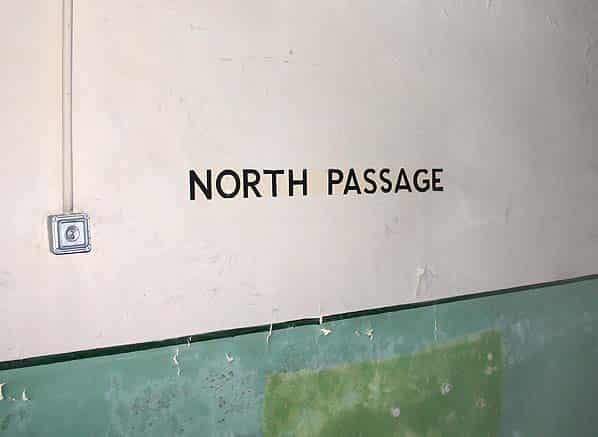
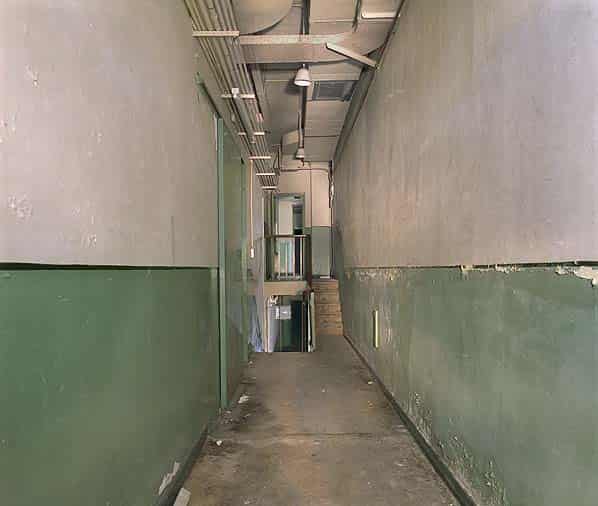
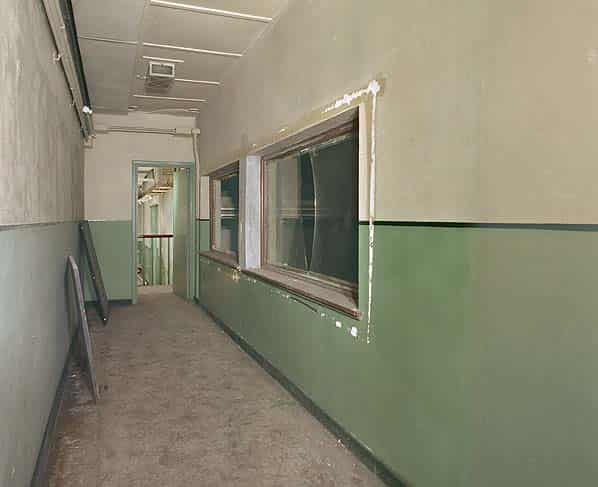
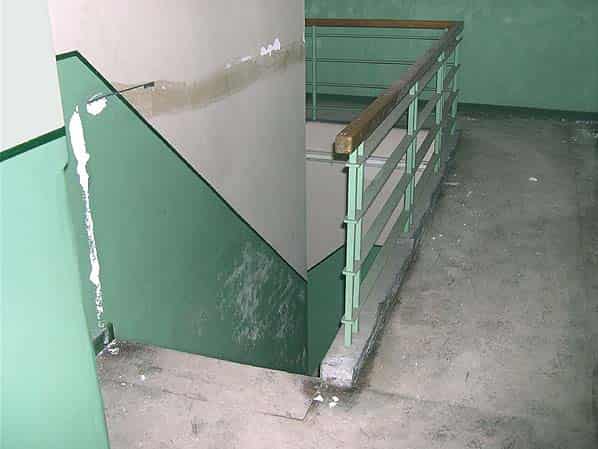
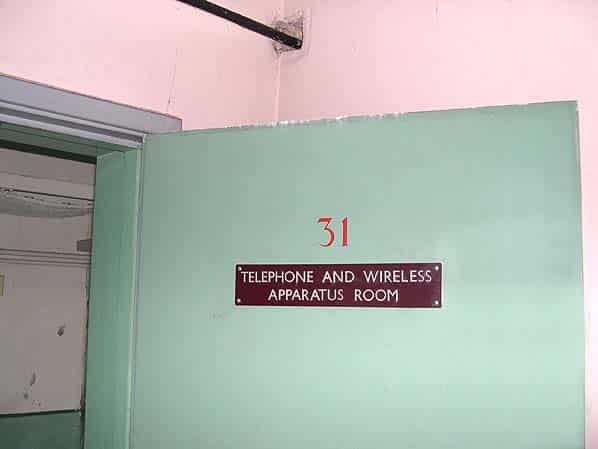
The stairs to the bunker are accessed through a large door with gastight seal. At the top of the stairs is a large fuse and switch-box for the ventilation system. At the base of the staircase is a corridor, with an airlock. Some of the rooms within the bunker are labelled with their post war functions. A corridor runs around three and a half sides of the upper level ending part way along the north side where there is a stairway down to the lower floor. On the south side of the bunker there is a second stairway down at the same point but also a short stairway up to a continuation of the upper level corridor.
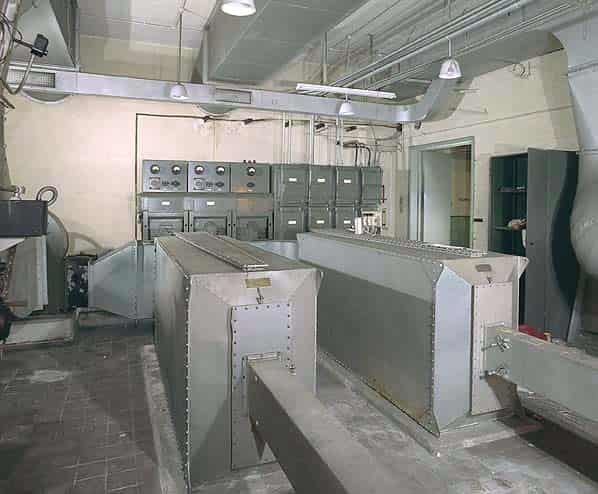
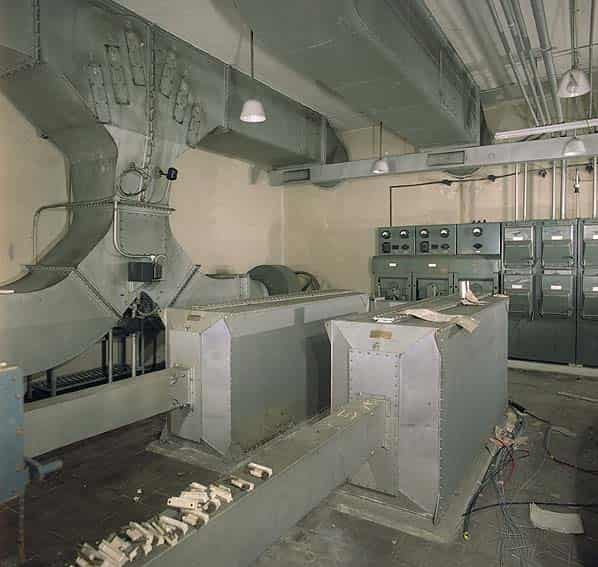
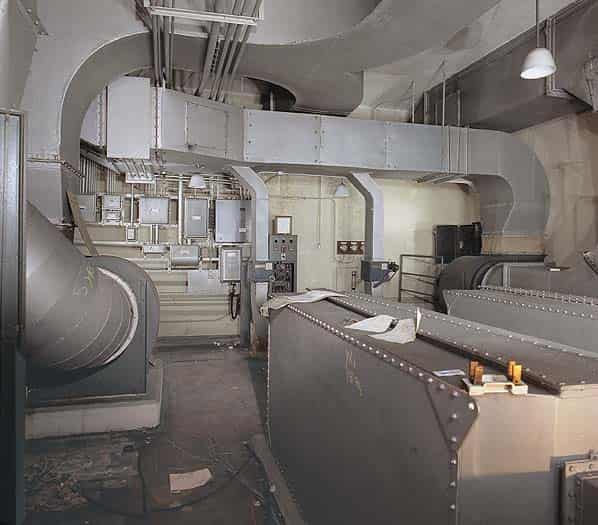
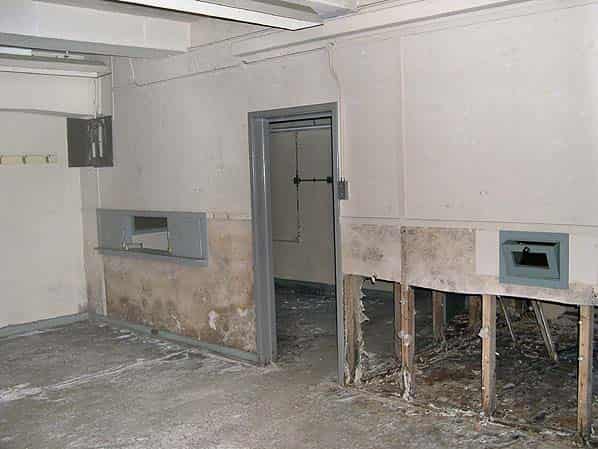
Most of the rooms throughout the bunker have been cleared of all fixtures and fittings and as the room layout does not exactly match that of the standard design war room it is not possible to determine what many of the rooms were used for during this period. The main plant room is at the west end of the upper level, this is still largely intact with the ventilation and air filtration plant required to keep the air in the bunker circulating.
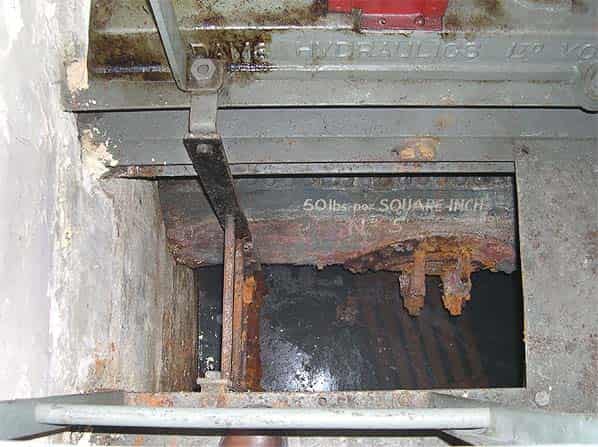
The large Porton Filters are still present and in good external condition, as are the electric pumps and their associated switchgear. The plant appears to date from WW2 being refurbished for the 1950’s war room.
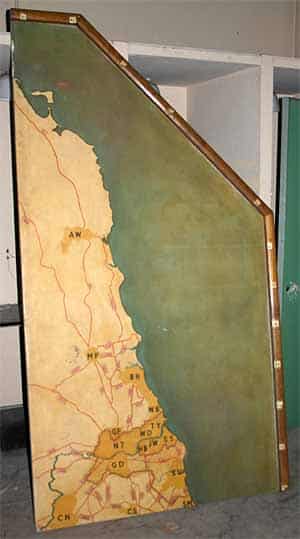
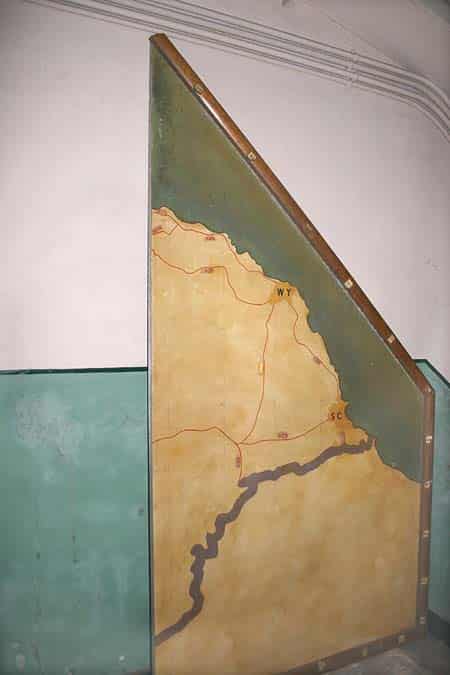
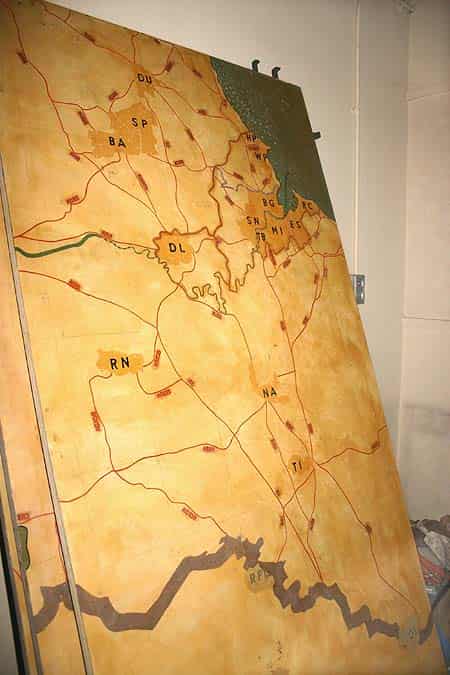
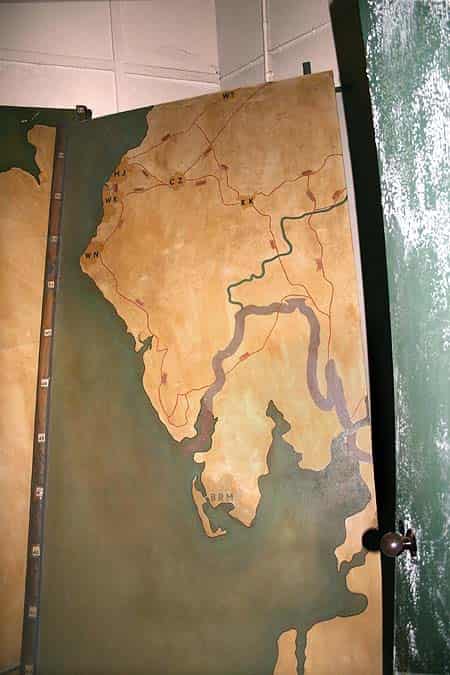
Close to the stairs on the north side two large sections of an operations table with the original edging, covering the area from Holy Island to Seaham, and Whitby to Filey. This is part of the table used in the 1950s Regional War Rooms and does not date from WW2. Other sections of the map table can be found in adjacent rooms.
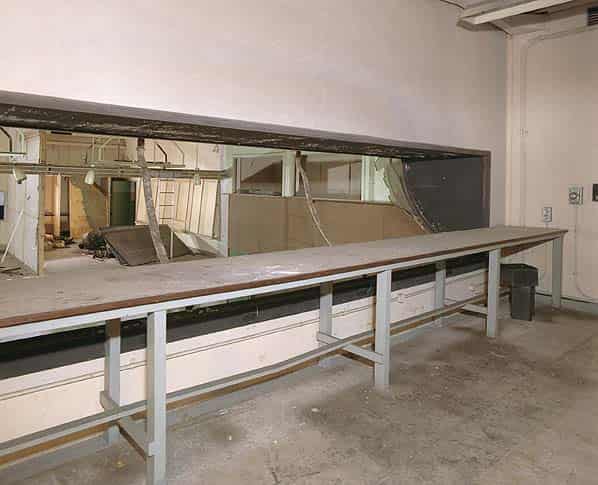
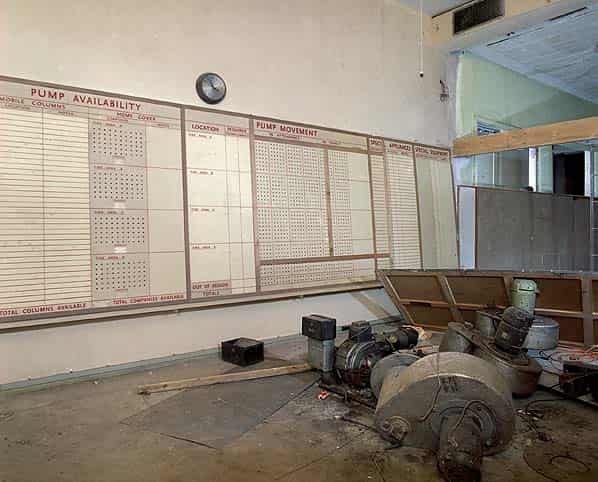
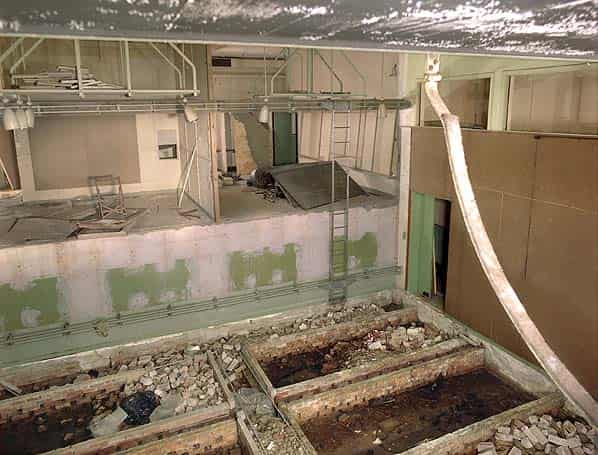
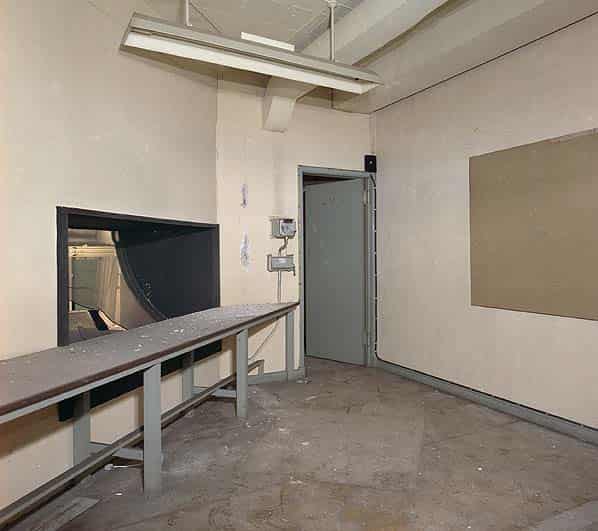
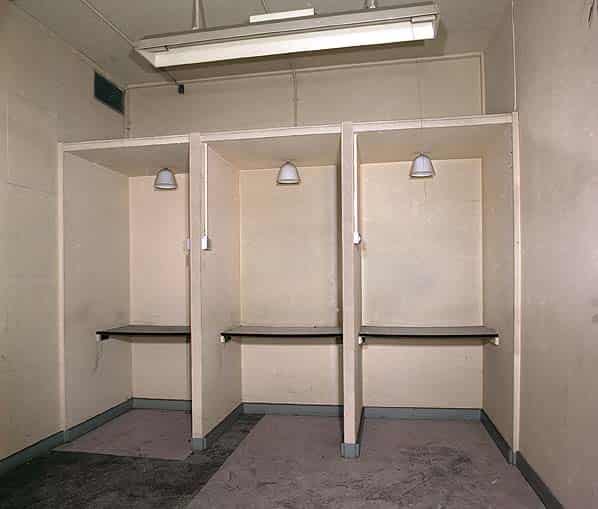
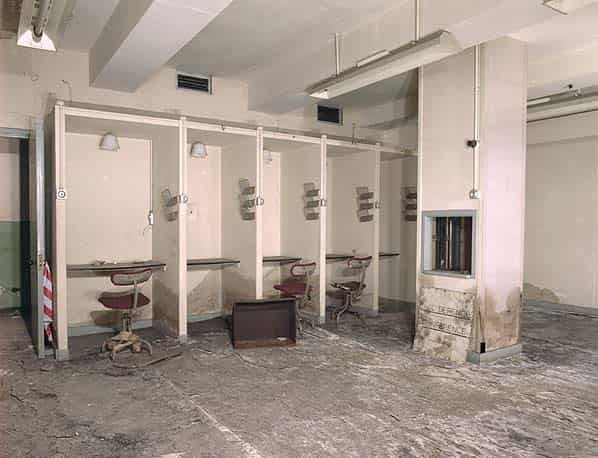
One of these rooms which overlooks the operations well on the floor below has acoustic telephone booths along one wall, the other room has a large fire brigade mobilisation boards on one wall relating to pump availability, pump movements and other equipment. Both of these rooms have no walls on one side overlooking the operations well. As there is no separate tote gallery it is assumed that the totes were in this position and they would have been updated from within these two rooms.
Close to the stairs on the southern side there are two blackboards leaning against the wall. One of these had a sketch map showing the location of assembly points and command centres in East Durham.
The male and female dormitories are at the east end of the upper level one room still being labelled ‘Ladies Sleeping Quarters’. Close by are the male and female toilets. The female toilet has two WC cubicles and the male toilet has one cubicle and an ‘Adamsez’ enamel urinal.
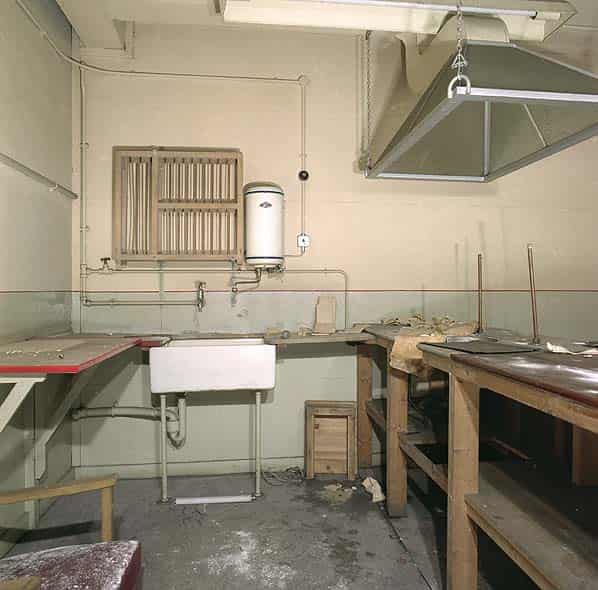
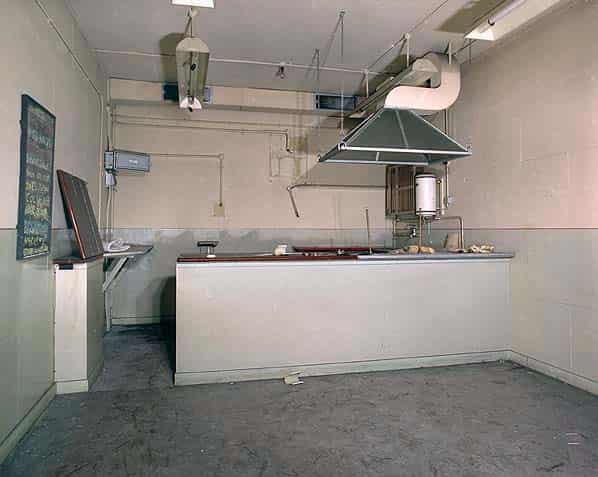
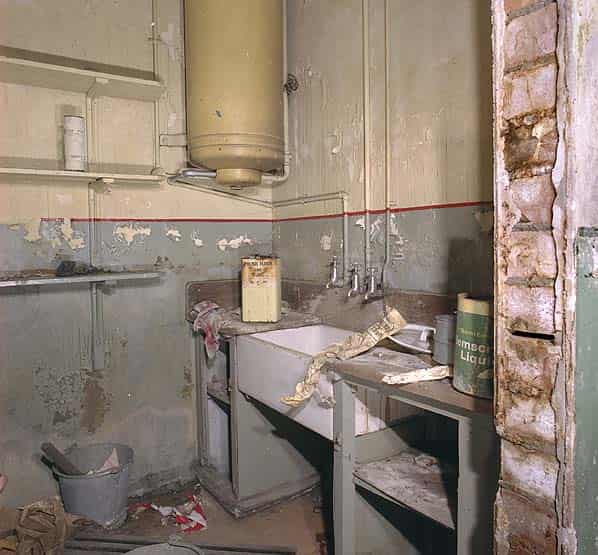
Adjacent to the dormitories is the mess room which still retains its serving counter, food preparation table, Butler sink, water heater and large extractor hood, but had otherwise been cleared of original fittings. A blackboard on the wall recorded the menu of the day, though this appeared to have been altered since the last time it had been used. Adjacent to the mess room was the AOC Office which has further acoustic telephone booths and a small service lift to the lower level.
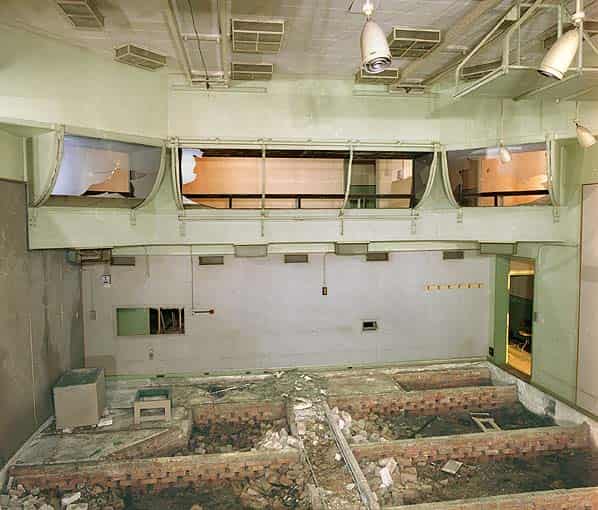
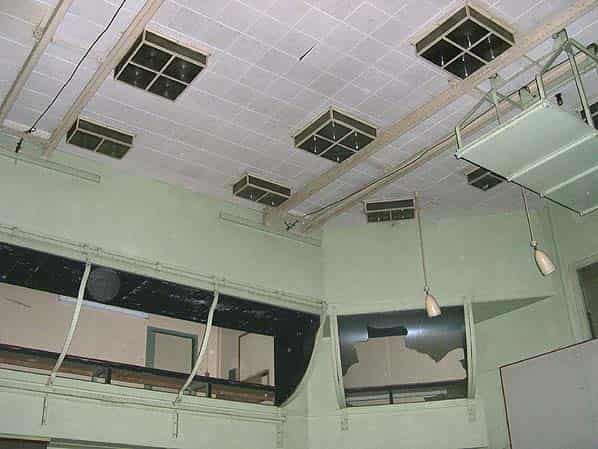
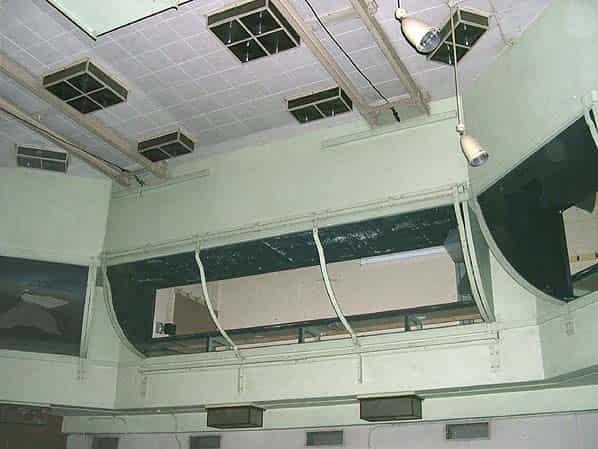
There are three cabins in a line overlooking the operations room well below these originally had curved glass windows, much of the glass has been removed or has been broken. One of these cabins has been identified as the AA liaison officer’s cabin and in the centre was the controller’s cabin. There is a further formerly glass fronted viewing area on the north side of the operations room The lower floor is smaller with a corridor running around three sides.
The heart of the bunker is the two level operations room. This has been stripped of many of its original features, including the floor. The original art deco ceiling lights are still in place which are still accessible via two gantries which run across the underside of the ceiling.
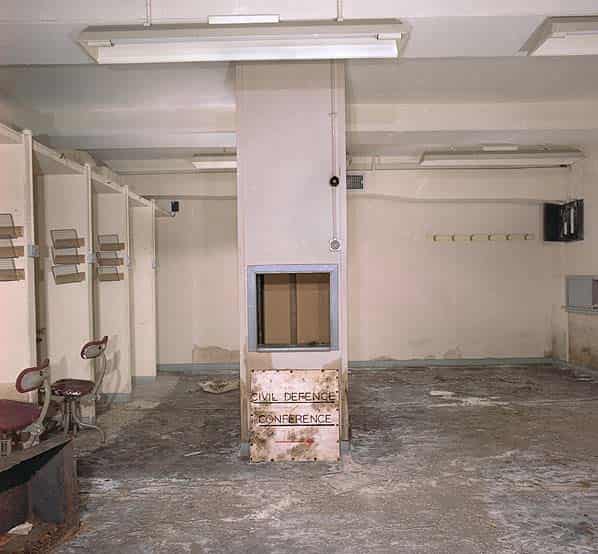
The large room behind the operations room has further acoustic telephone booths to the south wall and a central service lift up to the AOC office above; it also has windows looking into the adjoining rooms and appears to have been a central communications area from which messages could be circulated around the bunker.
There is a further toilet on the lower level with a large Belfast sink with a single WC cubicle. Next to this there is a small room containing the sewage ejectors.
At the north east corner of the lower corridor a stairway leads directly from the lower floor to the emergency exit on the east side of the mound above. There was a pair of gas tight doors at the bottom of the stairs. On the surface the emergency exit consists of a small brick blockhouse with a metal door.
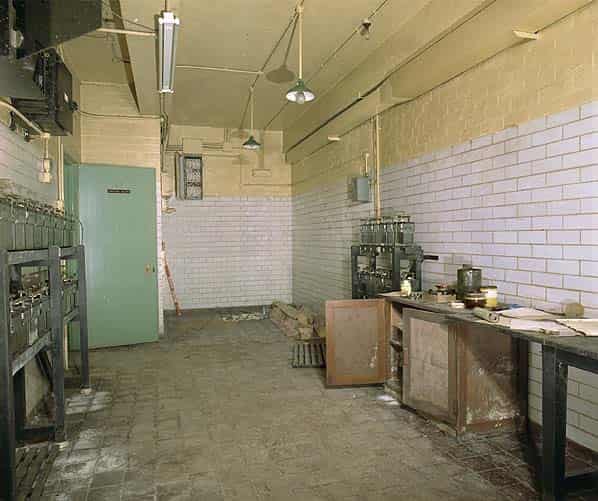
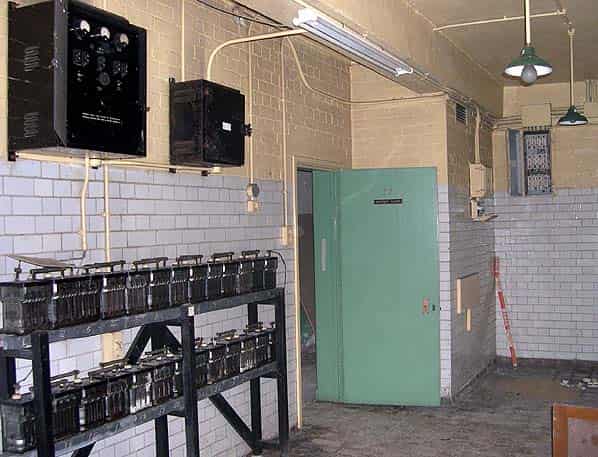
The battery room at the east end of the lower floor is lined with Darlington Tiles throughout in case of an acid spill. The batteries are in position along the east wall, and there are tables and work benches along the west wall. Some maintenance logs for these batteries are still in the room and record the last periodic check of the state of the batteries as having taken place in June 1968.
The normal war room design included the standby generator within air conditioning plant room but as Kenton utilised the former RAF Group HQ the original standby set house was also reused. This stands on the east side of the compound and is now used by Northern Electric Distribution as an electricity substation.
The Kenton Royal Observer Corps post was also located within the complex of governent buildings, this was demolished in 2004 during the redevelopment of the site.
See also: RAF Blakelaw (Bunker 13) Unearthing the Kenton Bar bunker by Air Vice-Marshal Sandy Hunter CBE AFC - Defence Lines No. 5 the magazine of the Defence of Britian Project
Sources:
- Archaeological Report on the Former 13 Group Fighter Command Headquarters Kenton Bar by Tyne & Wear Museums
- Bob Jenner
- Keith Ward
- Air Vice-Marshall Sandy Hunter
- Operational Record Book (PRO)
- Various PRO files
- Various Proceedings of Newcastle upon Tyne Council (1938 - 1954)
Special thanks to Fred Garratt & Julie Parker from Tyne & Wear Museums Archaeology Department who accompanied us on the visit and brought a generator and temporary lighting; their help was invaluable.