HMS Badger was commissioned on 13th September 1939 and was the headquarters of the Flag Officer In Charge, Harwich, originally Rear Admiral Harris and later Rear Admiral Goolden. It was initially a minesweeper base but provided anchorage and refuelling for other vessels. By the end of 1940 it also acquired a destroyer flotilla, submarine squadron and a Coastal Forces MTB base becoming the largest base for small craft in the UK. Upon commissioning, the naval officer in charge (NOIC) and the base captain’s offices occupied the LNER Station Hotel and cargo sheds on Parkstone Quay. In 1940, these moved to Hamilton House, the former Georgian customs house and an underground operations room was opened there in 1941. A ‘Q’ site for Parkstone Quay was sited at East Mersea.
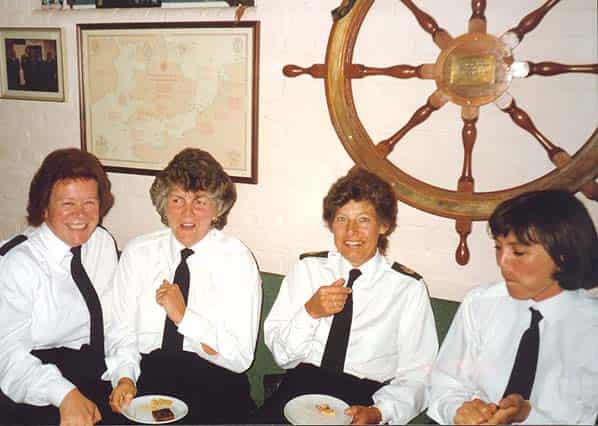
HMS Badger was ‘paid off’ on 21st October 1946 although the underground ‘ops’ room remained in Naval hands and was used as a store by HM Customs between 1946 and the early 1980’s. The RNXS was formed in 1964 and their port headquarters was located in a Martello Tower in Langer Road, Felixtowe between 1976 and 1986. When the role of Port Headquarters was extended to cover defence of Ports and Anchorages in the early 1980’s, this facility became too small and the bunker was refurbished and re-opened as the port control for Parkstone, Harwich, Felixstowe, Ipswich Docks and the River Orwell.
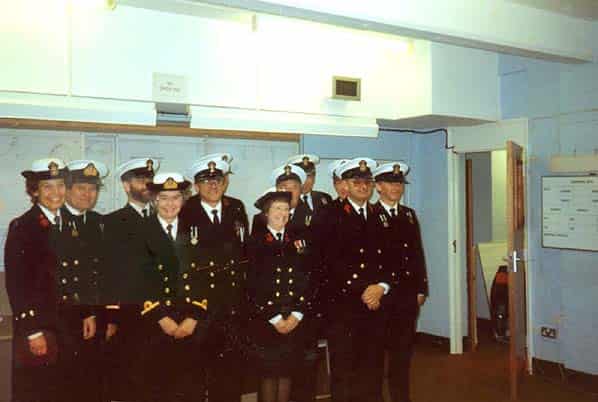
The role of the PHQ was to control shipping movements in time of emergency, including the formation of convoys and the issue of sailing orders. Command was exercised by a Captain RN with the title Naval Officer in Charge Harwich)/Naval Control of Shipping Officer Haven Ports (NOIC Harwich/NCSO Haven Ports). The site doubled as a Training Base for the local RNXS Unit.
In times of nuclear war these port emergency centres would have directed all major shipping out of a danger area and arranged access to and from ports for friendly vessels. Navy presence in the area finished in 1966 when the Wrabness Royal Naval Armaments Depot (RNAD) closed but the RNXS bunker remained operational as an emergency port control until 1993. The site finally closed on 31st March 1994 having been decommissioned over the previous six months.
During it’s use as a PHQ the main entrance was that in the Car Park access through Hamilton House was seldom allowed. Most Rooms had a double role one for Operational and Exercise purposes and the other for RNXS Training.
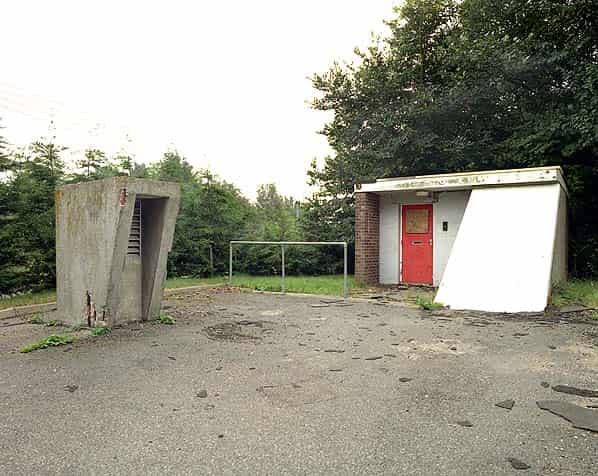
The emergency centre lies mainly under the car park of Hamilton House, an occupational health centre, close to the entrance to the Harwich International Port at Parkstone, a few miles to the west of Harwich. There are three entrances into the bunker, the main entrance is in the car park consisting of a three room surface guardhouse and a stairway down to the bunker; there is a small ventilation shaft close to this entrance. On the opposite side of the car park is the emergency exit consisting of a doorway opening directly onto the staircase down into the bunker. There was a secondary entrance from the basement of Hamilton House.
The entrance from Hamilton House is at the bottom of the basement stairs where there is a gas tight door with a small glass spy hole, beyond that is a second gas tight door forming an airlock. Between the two doors is a room on the right hand side which houses the boiler and standby generator. Through the second door the main corridor is to the right. The first room on the left was the RNXS office which is empty. The next room was the BT room this still retains a number of junction boxes on the wall. Next are the female and male toilets, both are identical with one WC cubicle, a shower and a wash basin.
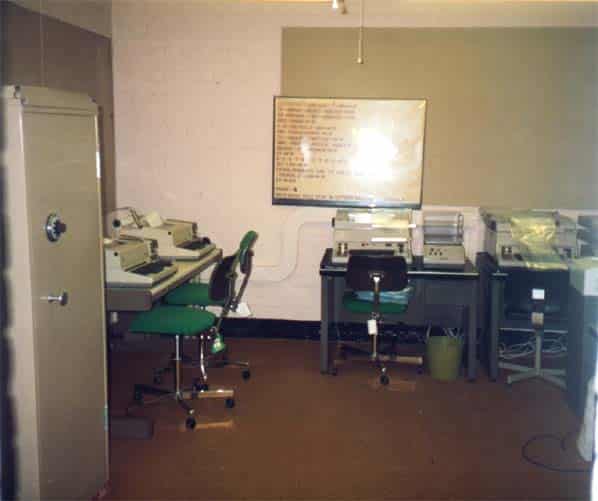
On the right hand side the first room is the galley with a serving hatch into the adjacent canteen/rest room. The galley still has its sink and draining board, wooden units, food preparation table and a tiled wall. From the galley a door leads into the bar with a long counter and shelves behind where a till was located. The spacious rest room is empty. Beyond these rooms a corridor to the right leads to the emergency exit stairs. To the left of this corridor is the ‘communications centre’ consisting of two rooms.
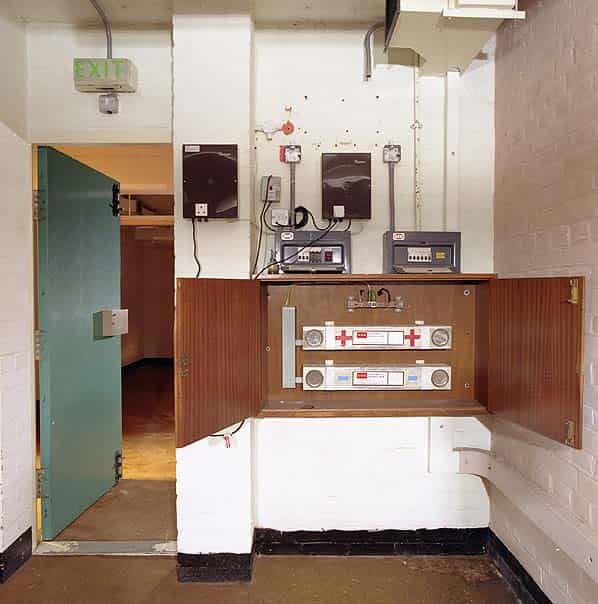
The inner room has a combination lock on the metal door with a notice, ‘This area is part of an electronically secure zone. Electrical equipment must not be added to or resited in this area without approval of NSTA’. Inside this secure room there are a number of fuse boxes on the wall and a small cabinet containing two interference capacitors which would have given the wiring EMP protection. This would have been the coding room.
The main corridor turns left at the end with three small rooms on the left, each linked by a small message window. The first is ‘Staff Office Operation’ (SOO) and ‘Senior Officer Naval Control Service’ (SONCS). The next room is Head of Unit, i.e. the head of the RNXS unit based at Harwich and the final room is the ‘administration office’. On the right hand side of this third corridor the first room is the large ‘Operations Room’ which has a small message window into the communications centre and large windows into the adjacent rooms on either side. On the right hand side of the operations room are two further rooms one has a wooden dais on the floor and this was the ‘seamen’ room, the second room has a large blackboard on one wall and was the ‘engineers’ room. The engineers are the mechanical and electrical engineers on a ship and the seamen are those who run a ship and take it to war. Both these rooms have a recessed escape hatch in the ceiling.
On the left of the operations room is another large room, the same length as the operations room and half the width, this was the ‘boarding room’, new orders for ships would have been issued from here. Beyond the boarding room there is a short corridor to the stairs up to the main entrance from the car park. The final room at the end of the third corridor is the ventilation and air handling room. This is another large room with the main ventilation plant and trunking along one side and the control cabinets on the opposite wall. All the plant is still fully operational and was running at the time of our visit as it also serves Hamilton House above.
The bunker is completely empty and unused with some damp patches on the carpets. Lighting still works in the majority of the rooms and corridors which have all largely been stripped apart from ventilation trunking.
Those taking part in the visit were Nick Catford, Dan McKenzie, Keith Ward, Robin Ware, Bob Clary, Bob Jenner and Robin Cherry
Sources:
- Bob Jenner
- Keith Ward
- Ray West (last Head of Unit at RNXS Harwich)