During the War, Stoke Newington’s ARP Control Centre was in the basement of the Town Hall. This was reactivated after the war (about 1952) but shortly afterwards a new underground control centre was built at the rear of Stoke Newington Town Hall (rear access from Lordship Terrace). It opened in May 1953. In 1964 The Hackney Borough Control was co-located with Stoke Newington as the Hackney bunker was deemed too wet to be used. In 1965 the two boroughs merged and the bunker became the Hackney Borough Control.
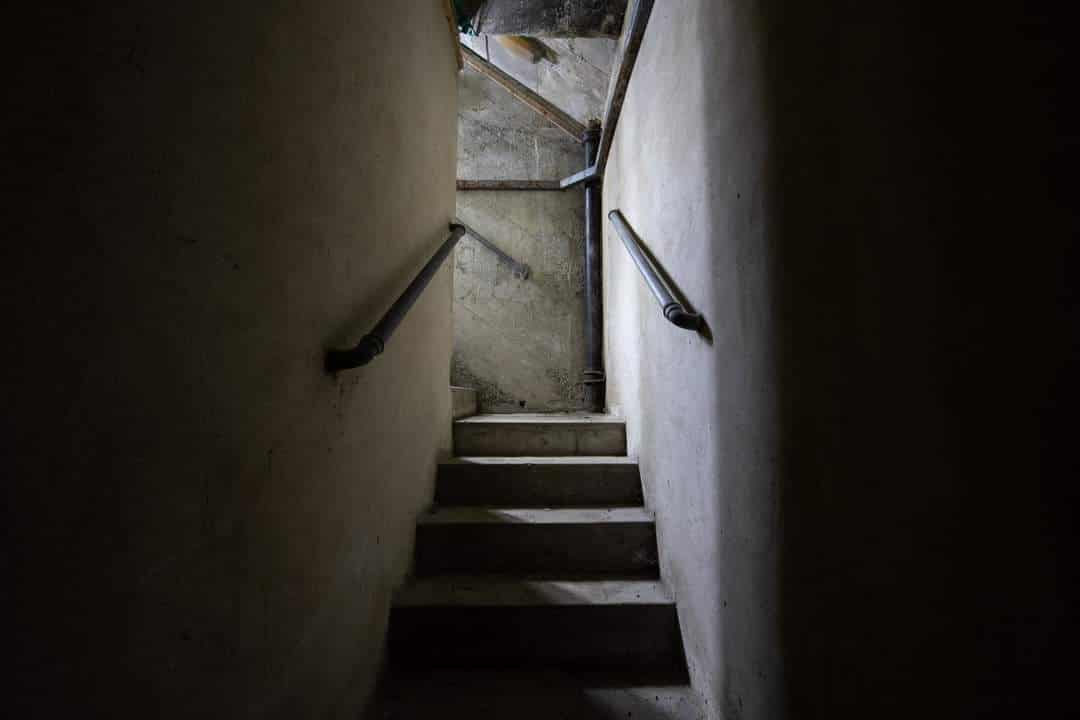
The entrance is hidden between two buildings, one of them a portable two storey building that now stands on top of the bunker. The entrance is similar to Hackney Town Hall consisting of a small surface concrete blockhouse with a single door giving access to a stairway, which turns 90 degrees at the bottom into the bunker. This bunker was part of the network of Emergency War Rooms and although some papers found in the bunker give it the designation Sub Control 42, Duncan Campbell lists it in War Plan UK as ‘Control 51B5’ in the 1980’s reporting to the North East Group War Room at Wanstead Flats.
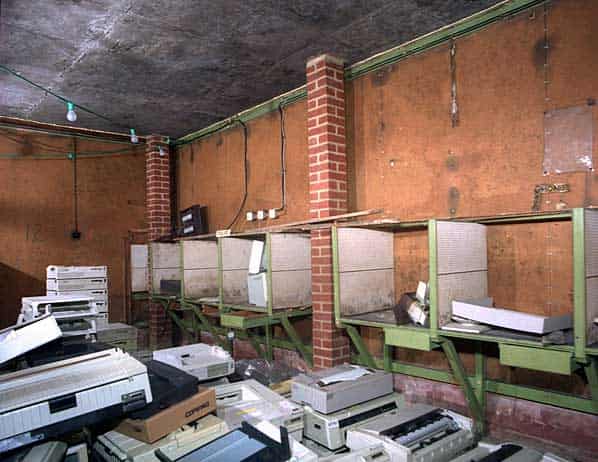
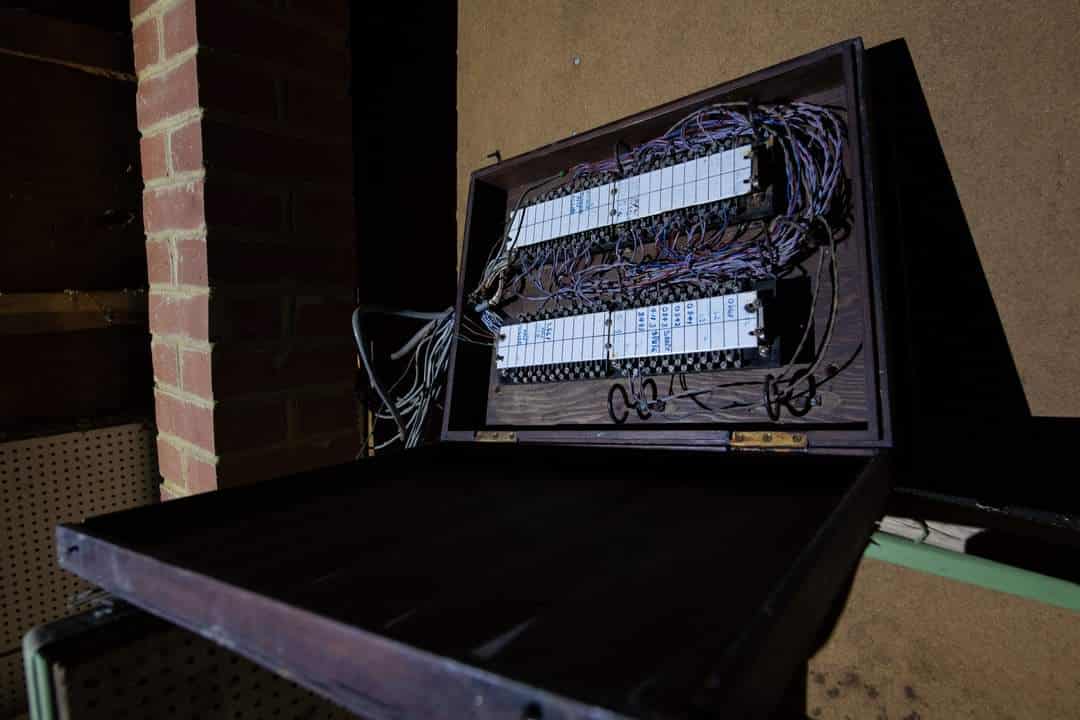
The entrance stairway enters the bunker one-third along the main east - west spine corridor which gives access to rooms on both sides. Starting with the north side of the corridor the first and largest room has ‘Control & Information’ on the door and on one wall there is a rectangular blackboard with painted heading ‘Display board’ and columns ‘Date’ and ‘To be seen by’ In the east side wall there is a large sliding message passing window into the next room, there is also a separate doorway into the next room alongside. The purpose of this room is unclear but it too has a large sliding message passing window into the communications room beyond. This room has acoustic booths along two walls, which would have contained the links to the various agencies. Many of the wooden drawers still contain Civil Defence message pads and Evacuation Warrants. Several copies of ‘Operational Orders for Civil Defence Exercises’ have recently been removed for safekeeping. One of these orders contained a reference to Sub Group 42 and listed staff involved in the exercises.
The final room on the north side is the plant room containing both the standby generator and the ventilation and filtration plant and electrical switchgear. The Ventilation plant is by Woods of Colchester. It consists of two fans, one connected directly to the fresh air inlet, which is fed through filters to ducting around the bunker. The outlet is adjacent to the entrance blockhouse. The generator is dated 1953. There are also two metal-framed bunk bends in the plant room (presumably not their original position). There is an original sign in the corridor outside the plant room which reads ‘In case of fire in plant room 1 Put power switch painted red in off position wearing special gloves provided 2 Use Pyrebe P1 Extinguisher and sand for electrical fires 3 Use Phomeni extinguisher and sand for oil fires’.
On the south side of the spine corridor the rooms are from east to west: The dormitory, this still contains two metal framed bunk beds and at floor level alongside the entrance tunnel to the emergency escape shaft. The next room is the kitchen, which still contains a sink (now lying on the floor) and a water heater. There is a large opening at floor level into some pipe tunnels running the length of the bunker. The next room is the gent’s toilet with two urinals, wash basin and a water heater and a WC in a cubicle, adjacent to this is the ladies toilet with wash basin, water heater and two WC’s in cubicles. Beyond the toilets are the stairs up to the surface, a small room of unknown purpose with the final room being the teleprinter room.
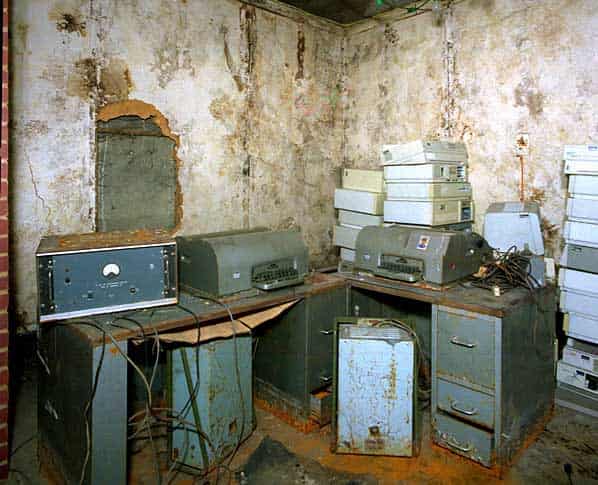
This still contains two teleprinter tables identical to those found at the Southall (North West Group Bunker) unlike Southall which just had GPO Teleprinter cases, the cases here have their teleprinters in them with heavy power supply unit on the floor under each table. There is also a rack mounted electrical cabinet labelled S + DX FM Telegraph System. Although this equipment is rather tatty it all appears to be complete and the council might be prepared to donate it to a relevant museum. At Southall the equivalent room is called the ‘Tape Relay Room’,
The bunker has recently had new electrical lighting installed and is bone dry throughout. It is used to store redundant computer hardware pending disposal. The blast protection at the entrance seems minimal with only a wooden door and there is even a ventilation hatch in the door at the bottom of the stairs. In the larger rooms brick pillars have recently been constructed to take the weight of the buildings above. All but one of the internal wooden doors have been removed.
Those taking part in the visit were Nick Catford, Keith Ward and Andy Wells.