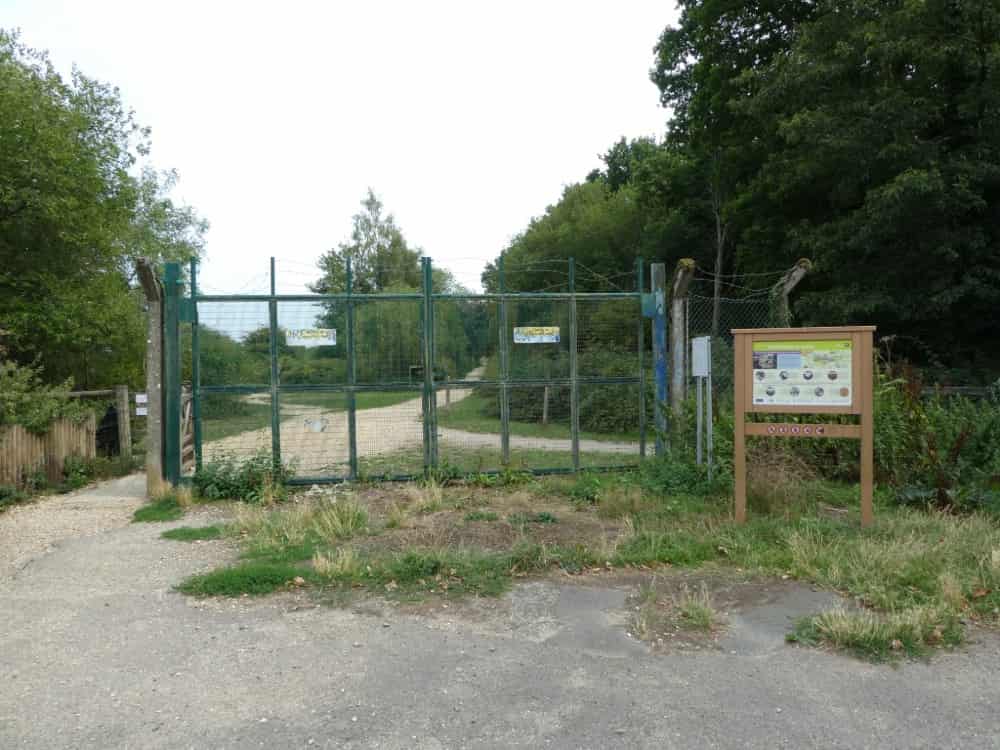
Greenham was abandoned many years ago and the site is now part business park with the rest being returned to common land. The runway has been removed and the last part of the hardstanding area for aircraft was being dug out whilst we were there (22nd Jan 2000). Many new buildings have been built to provide accommodation for a variety of businesses but a large number of the original structures remain.
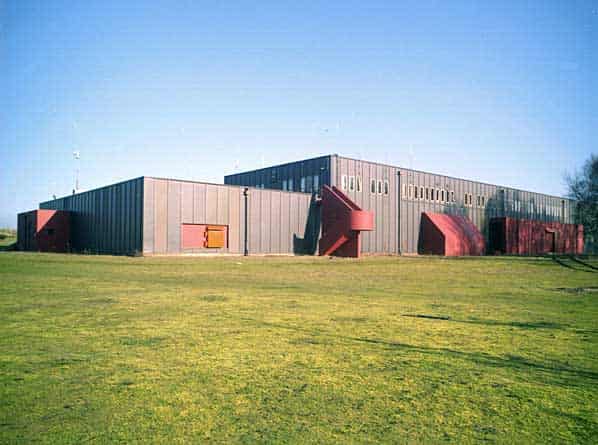
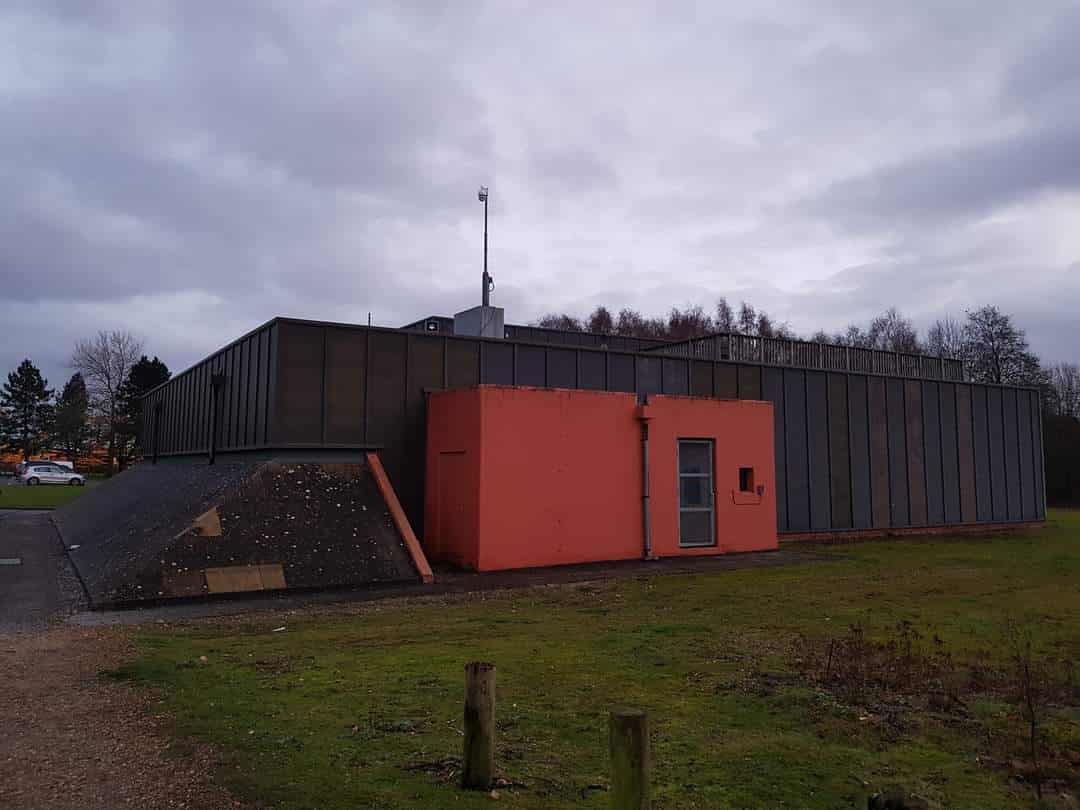
We started at the Command Centre which was exactly the way it was left when the US pulled out all those years ago. The building is part of the IMF Treaty and as such must be left in this condition until May 2001.
We were shown around the building by a member of staff from the Greenham Trust and were free to photograph what ever we liked.
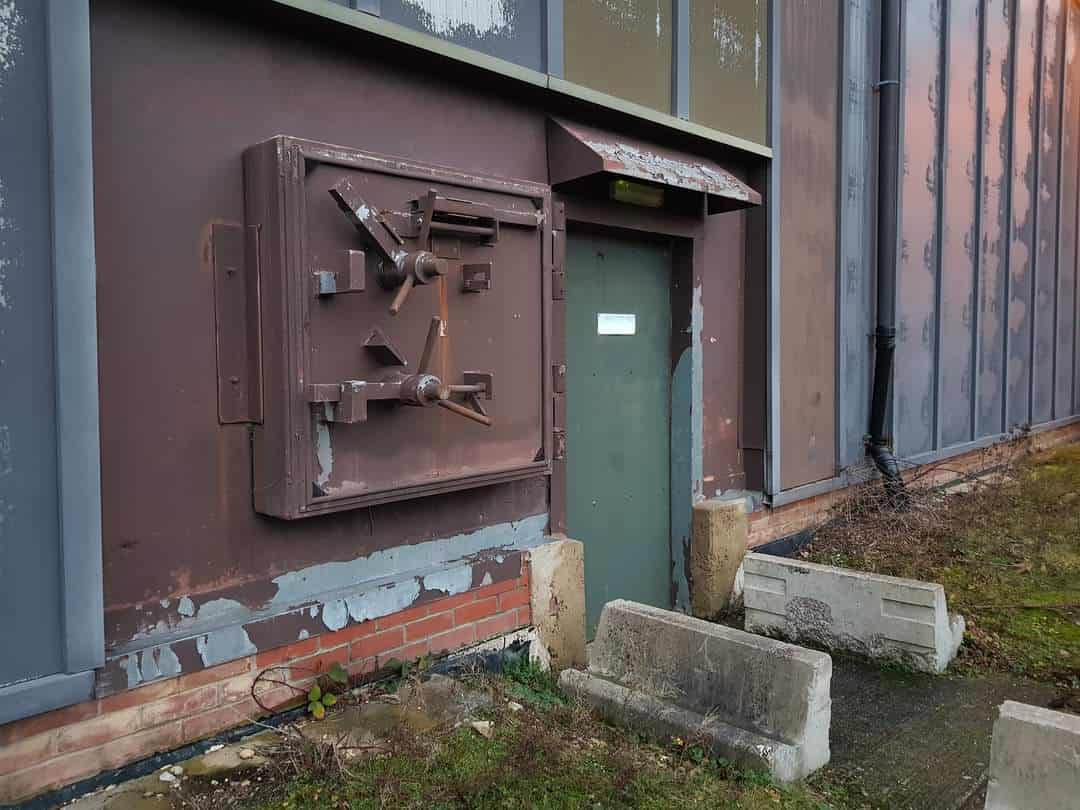
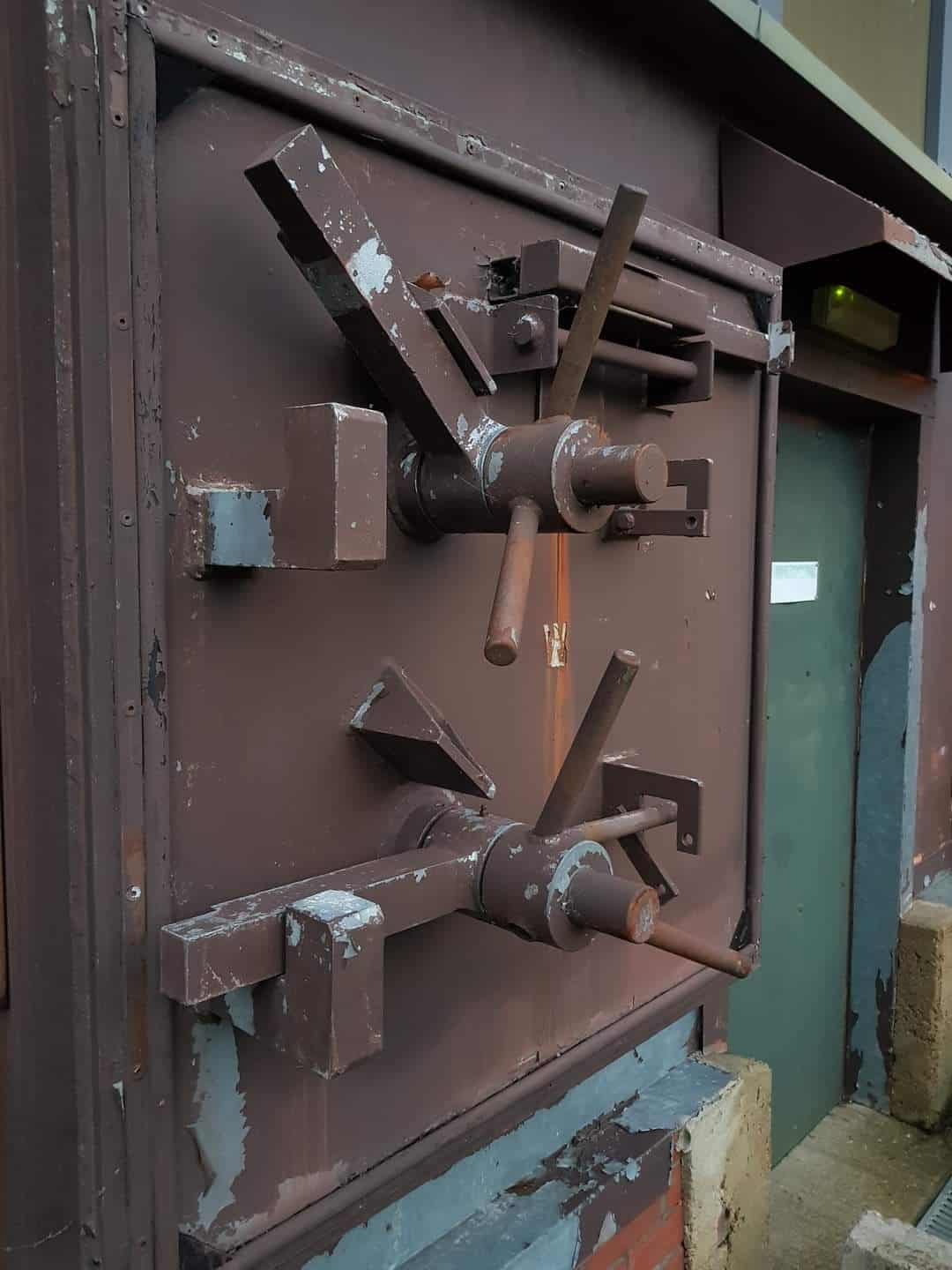
We entered a conventional office building (which was being refurbished) and walking down a short corridor we came to the blast door which was the entrance to the (modestly) fortified part of the building. We were now standing at one end of a very long corridor. All rooms in the bunker were off this corridor apart from the air plant room and decontamination centre. More on those later. We walked to the far end of the corridor and worked our way back.
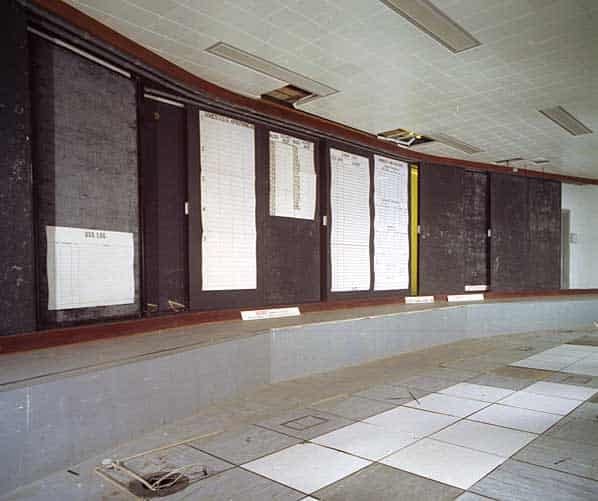
We started in the command room itself (at the far end of the corridor) which still had the moving wall boards in place. The room is rectangular with the boards mounted along one (long) side. The entrance to the room is down a few steps and is directly opposite the wall boards. There are 2 security doors leading into the command area which had 2 rooms behind it which acted as galleries. These doors provided an ‘airlock’ system and whilst strengthened and fitted with toughened glass did not appear to offer much in the way of blast resistance. Entry through these doors was controlled by numeric keypads. At one end of the command room was an escape hatch. This led directly to the outside and demonstrated how the walls were just 2 foot thick offering limited blast protection. Our guide informed us how the sole purpose of this room was to get the final launch codes to the missile trailers once received from the US command. All targets were already programmed into the missiles and the fissile material was (according to our guide) already in the missiles.
The floor throughout the building was a raised computer type and there were lots of cable trays in place. Directly behind the Command Room were 2 smaller rooms which had darkened windows looking out onto the wall boards. Walking back up the corridor the next accessible room was a former telephone room. The US didn’t trust BT and brought in their own telecom equipment which was housed in this room. Some of the racks remained but were stripped of cards etc. The fire extinguishing system was Halon and in many of the rooms were ‘Halon gas abort’ buttons to stop the discharge of Halon in those rooms.
Behind this room was the comms room for the telephone system. There was some paperwork left in this room which indicated that there had been direct telephones to other military bases occupied by the US in Britain and to other British/Nato command bunkers. Some of the flooring was removed in this room and allowed us to see some of the cable trays etc. Along one wall were the mounts for the phone wire looms for patching and routing. Directly off this room was a small room containing a large number of high power lead acid batteries. This was the standby power for the phone system.
Across the corridor was the air plant room and decontamination centre. The air plant room was one of 4 plant rooms and contained the aircon and filtering system for the bunker. This was in reasonable working order (our guide powered a lot of it up - a bit noisy at points) and there were a large number of Oxygen cylinders in a rack. These were for use if the outside vents needed to be closed due to Napalm attack, high levels of radiation etc. and would provide oxygenation for the bunker.
Just down from this plant room was a hot water boiler and storage tank in a small separate room. Then we came to the decontamination centre.
This was a very interesting facility. In the event of war the blast door at the far end of the corridor would have been sealed from the inside and the only way in or out would have been through this facility which led to the outside through a series of blast doors and a turnstile.
At the entrance to this area was a control panel which was fully functioning as indeed were most facilities within this area. The control panel provided remote door operation between the various sections of the decontamination area.
To leave the bunker you would gain access from the control panel area into a secure corridor which led to the room for putting on a NBC suit. From here you would follow the blue arrows painted on the floor to a blast door that led to an airlock. Go through the blast door and there are fold-up benches along one side of the air lock room. Another blast door leads from the airlock to the outside. Directly beyond this blast door is a security turnstile and small guardroom to control access to the airlock.
Our guide informed us that the US had an armed soldier permanently stationed in full NBC gear during exercises in the airlock room with another colleague outside in similiar attire.
To enter the bunker you would pass through the turnstile and enter the airlock room. You would then go through a separate blast door into a foot bath area where there is a large, deep trough in the floor which had a high pressure water jet in it to blast off chemical contaminant etc. from the lower area of the suit. Next was a large bin full of powder which would be sprinkled on the suit to dry up any chemical contaminant. Then it was on to the radiation monitoring room. This had a built in shower for removing dust and contaminant etc. Next came NBC suit removal room where the suit was passed through a steel hatch into a ‘dirty room’ for it to be cleaned and re-used if possible. This room also had radiation monitoring and was equipped with showers for personal washing. Next was the drying room which still had a notice on the wall asking servicemen to ‘take one towel and dry off then dress using available clothes and return to work area.’ The door from this area led back to the control panel. The control panel could fully lock all doors in the decontamination area and intercoms were provided for communication with each room. A full PA system (which still worked) was also available in this part of the bunker.
Returning to the main corridor…..
The next room on the left was a large empty room with an escape hatch and a safe door leading to a strongroom. Purpose of this room is unknown but it was stripped of everything. It could have been a dormitory but there was no evidence of this.
Next on the right were more plant rooms. These rooms were all interconnected and formed the remainder of this side of the bunker. The first was power management and pump control. This seemed to be the main control area for the bunker infrastructure and the panel still lit up. Our guide told us that most of the plant still functioned, but it cost in the region of £800 an hour to run so was only turned over once a month. Off this room was the air intake room which had a large number of ducts and big power fans. Another escape door led to the outside world. Beyond this room was a small plant room containing the emergency generator which could provide 500Kw of power.
On the other side of the corridor were the toilets and an additional plant room with compressors and air circulation units. We were now back at the blast door at the top end of the corridor.
One interesting feature of this bunker was the still working pneumatic tube message-carrying system. From the outside it was difficult to tell that the building was indeed fortified.
Alongside was the old armoury which now houses an archive storage company. We were not able to visit this building.
On the way out we drove past the former VMF (Vehicle Maintenance facility). This is also an IMF Treaty listed building but were were unable to visit it as it is in a locked compound. The key is held under IMF conditions in a locked and sealed bag and we had no authorisation to enter this area.
We then proceeded to the missile silos…..
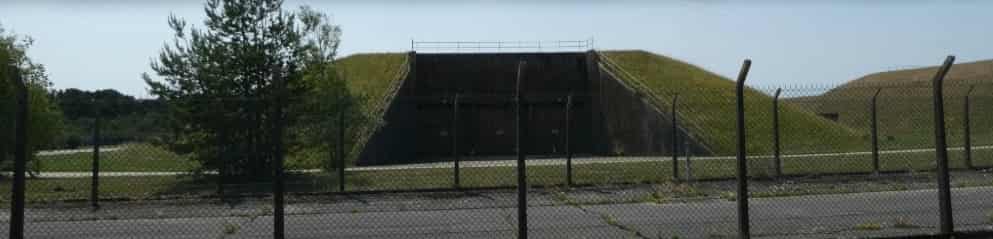
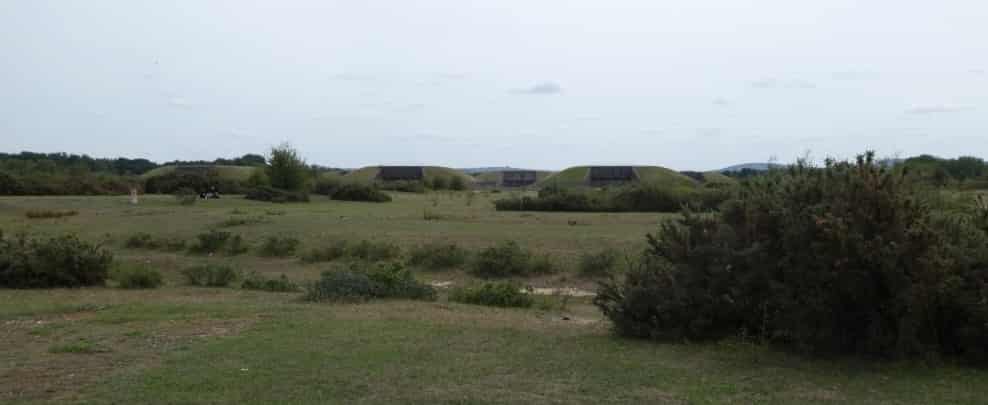
These were in a separate part of the air base and again are listed under the IMF treaty. We were extremely lucky to get to visit them.
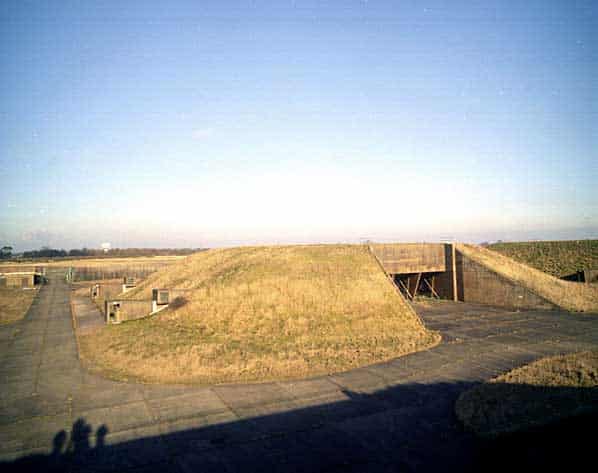
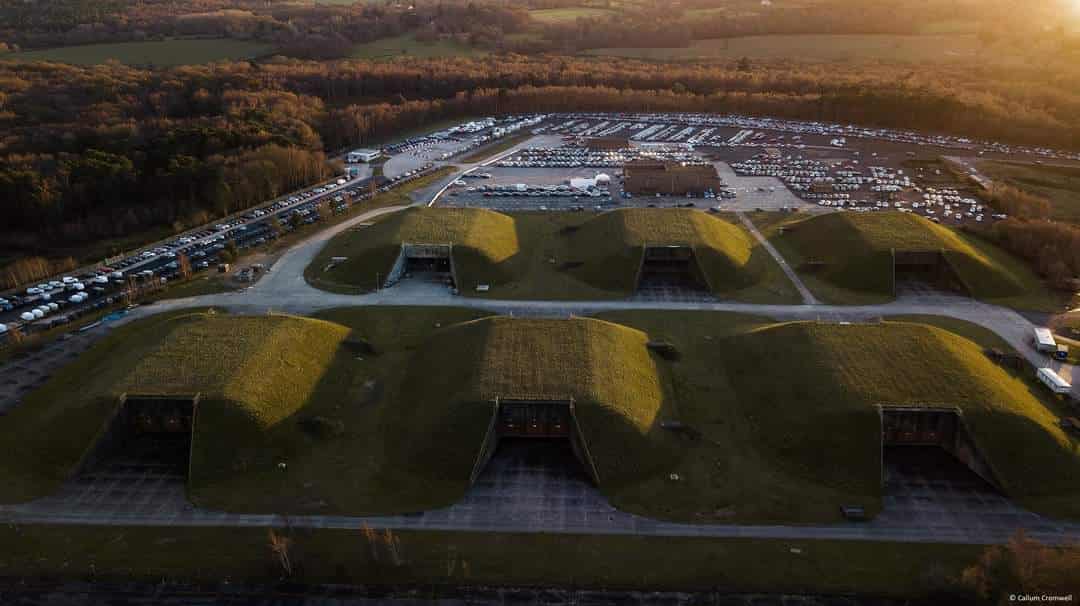
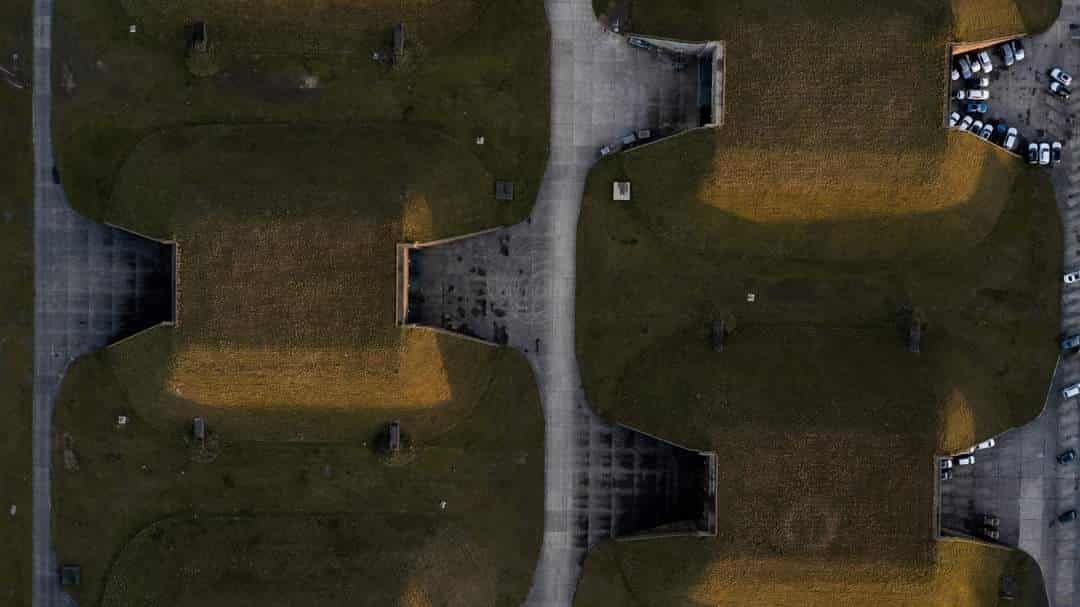
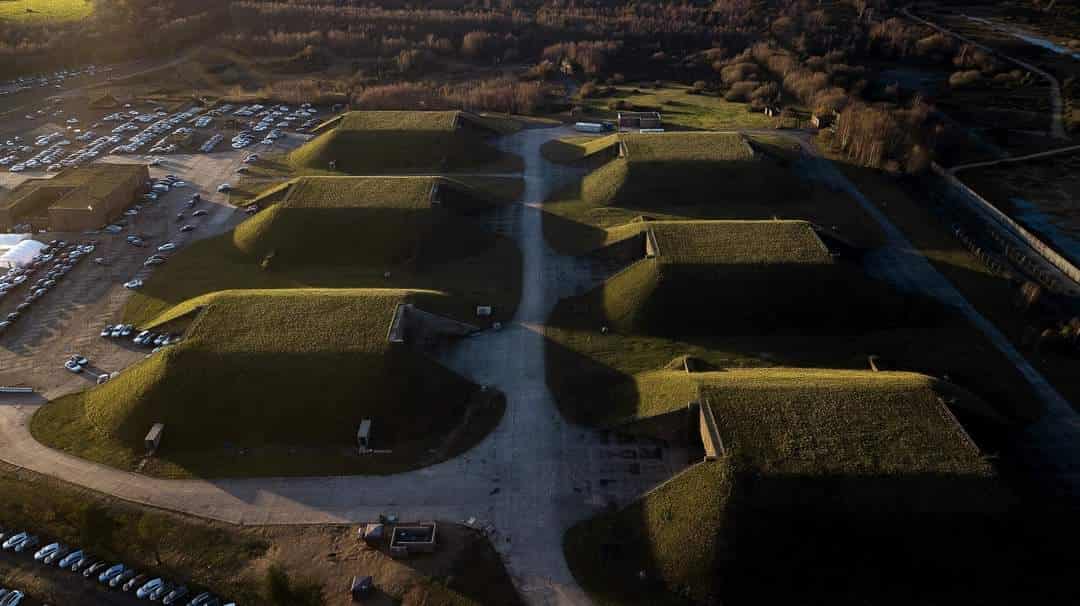
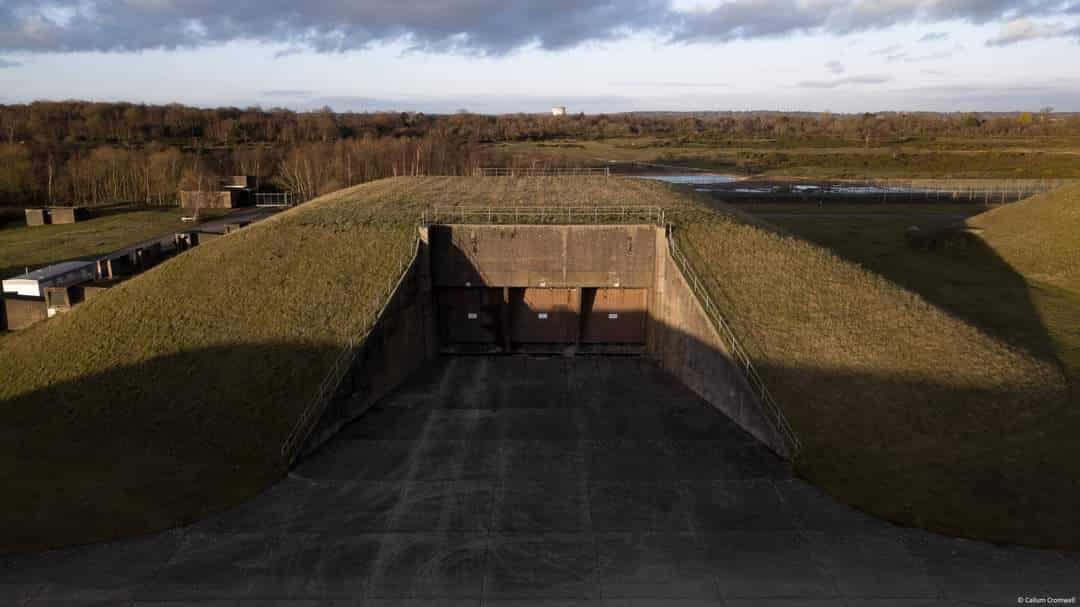
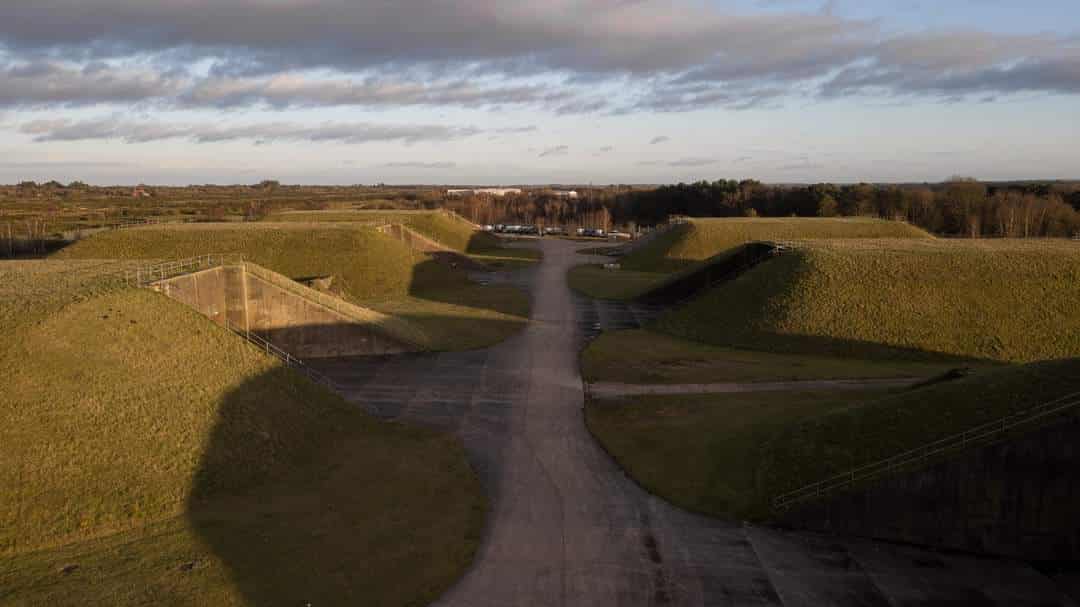
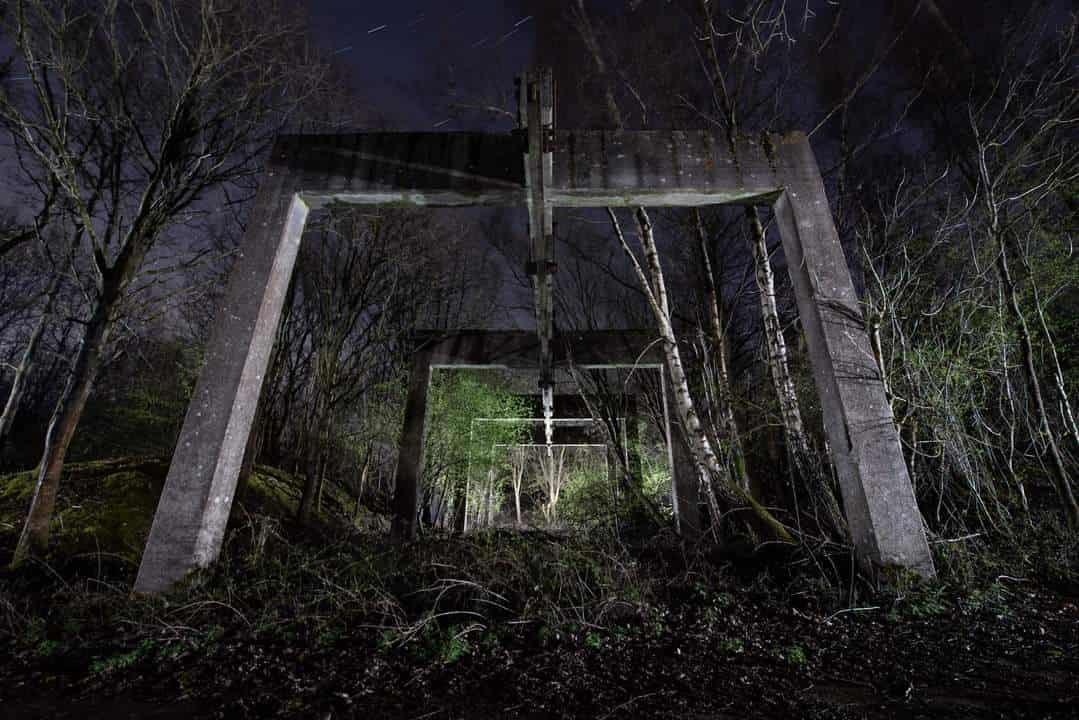
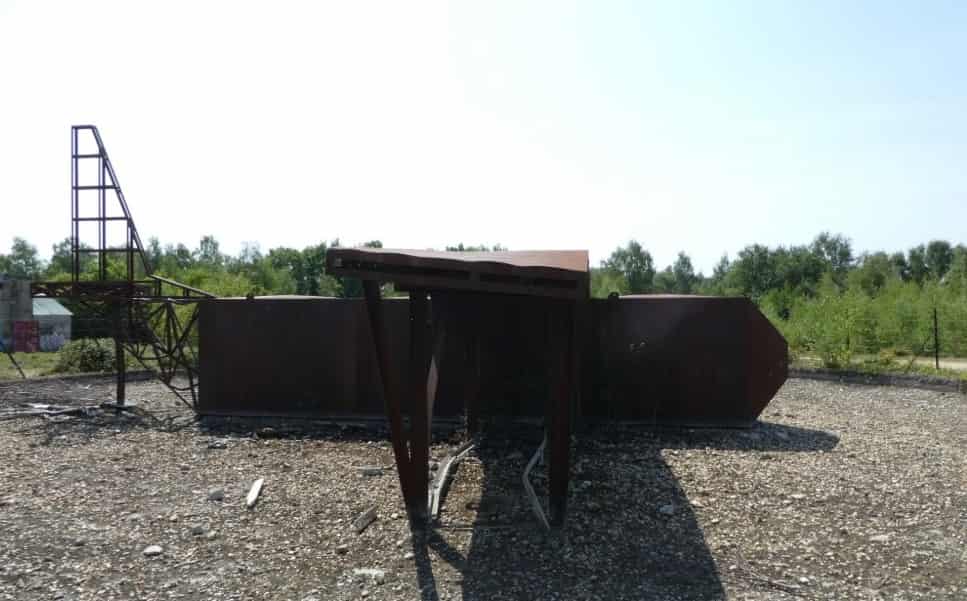
A total of 96 missiles were stationed at Greenham and there were 6 of these silos. The silos are built on the surface and have huge lowering doors which seal the ends of the silos. They are fully drive in drive out. All the doors are now fixed in the down position and apart from one of the silos the hydraulic rams have been removed. We’re not sure why just one set remains but the rams are fully lubricated and protected with bubble wrap and overtubing. This could be something to do with the IMF treaty. The hydraulic system was still in place on all the silo walls together with the instructions for operating them. Many features remain including telephone handset boxes and part of the electrical installation. All silos are identical apart from one which had a different personnel access.
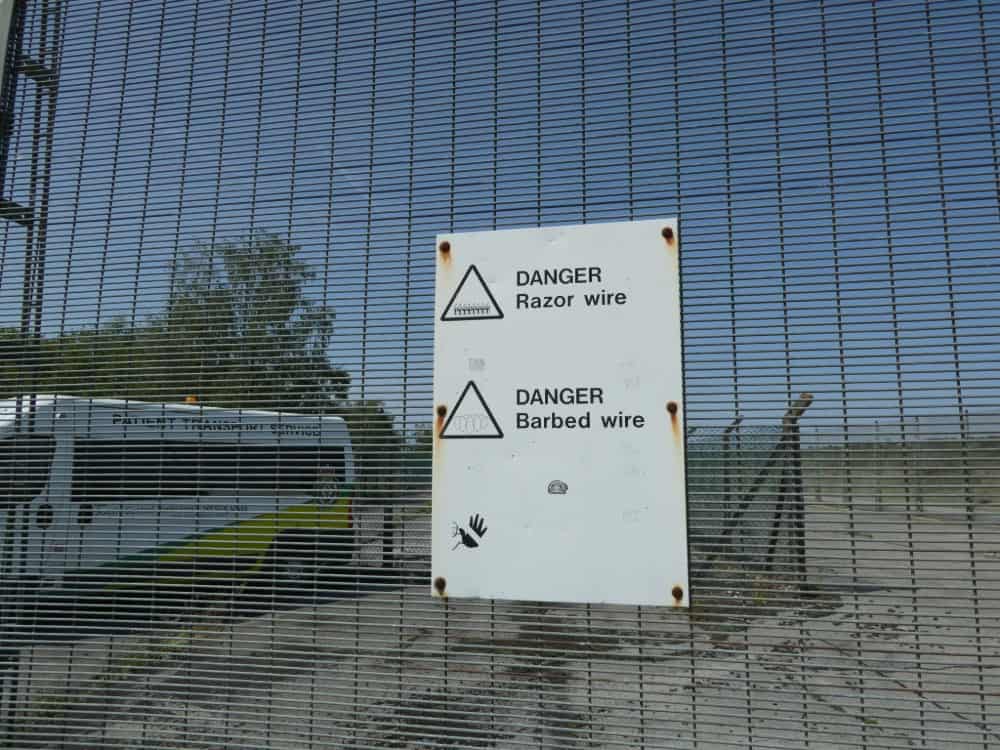
We moved on to the guardhouse which still sits by the multiple gates which were used for entry. This building remains intact but is empty. The windows were heavily reinforced and the building appears to have some blast protection. A personnel turnstile for entry on foot still exists but does not work.
Continuing on we visited the other buildings on the site some of which were open for us to look in. All were empty. Earlier in the day our guide had informed us that the Russians still visit the site a couple of times a year for inspection purposes. One of these buildings had a rack for M16 rifles standing by the door. We were not able to ascertain the purpose of many of these buildings but many were large enough for medium size vehicle access. The internal doors were intact on one of these buildings. We continued back past the silos to where we had left the cars.
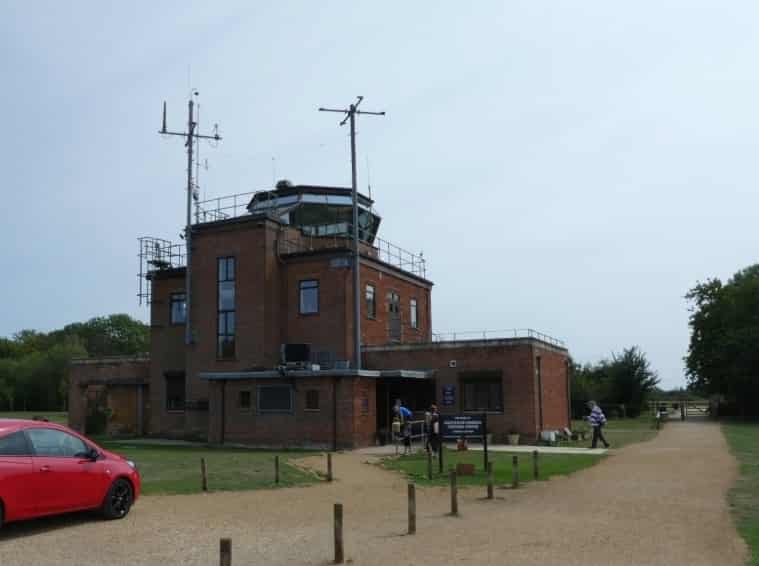
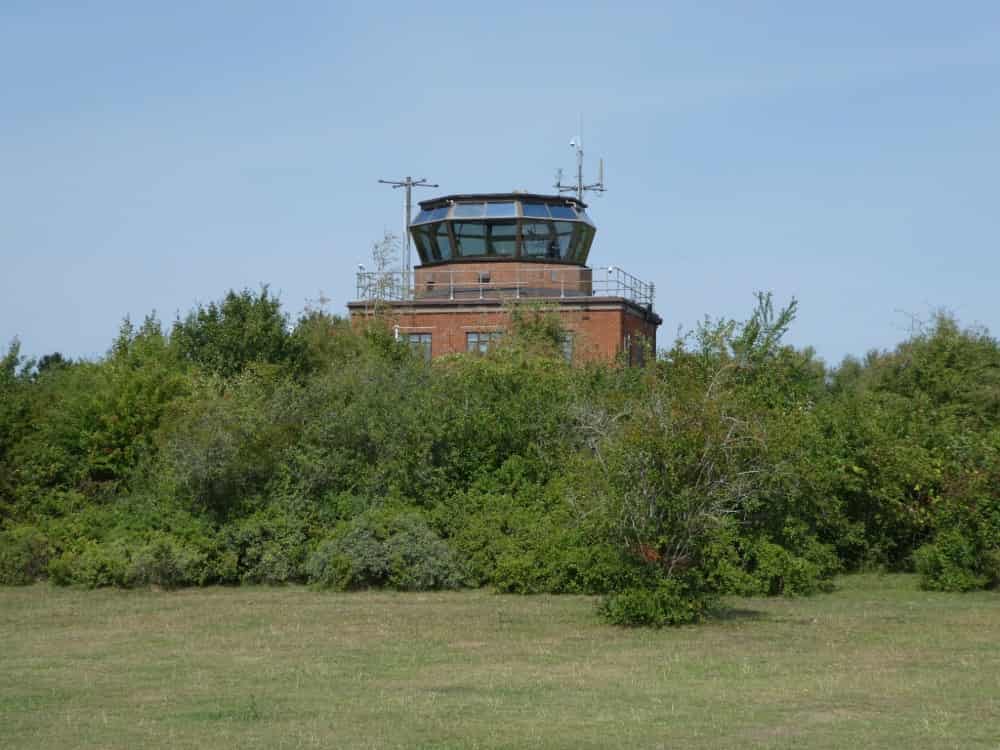
Time was pressing so I had to return to work but the others continued to the control tower. Unfortunately, it was not possible to gain access to this.
I’d like to take this opportunity to thank Dan Mckenzie for organising yet another excellent trip. I should point out that all 3 sites visited are secure and there is security present and CCTV.