Femöre Fort is located at Oxelösund, a coastal city on the Baltic coast of Sweden, 110 km south of Stockholm. Since the late 19th century it has been one of the most important harbours in the Baltic, due to its large iron and steel works. Because of the harbour’s importance, it was decided that a coastal artillery site should be built on the island of Femöre at the start of the 1960s.
The fort is both a Cold War Coastal Artillery Battery, with a protected underground control and command centre and a Radar Post. It is number 3 in the series of 30. Building began in 1961, with the first battery ready for action in 1962; it was completed in 1963. End of service was said to be 1975, whereas battery number 30 was completed in that same year. It was restored in the late 1980’s and used for training until 1994. The last time the guns were used was during training in 1990.
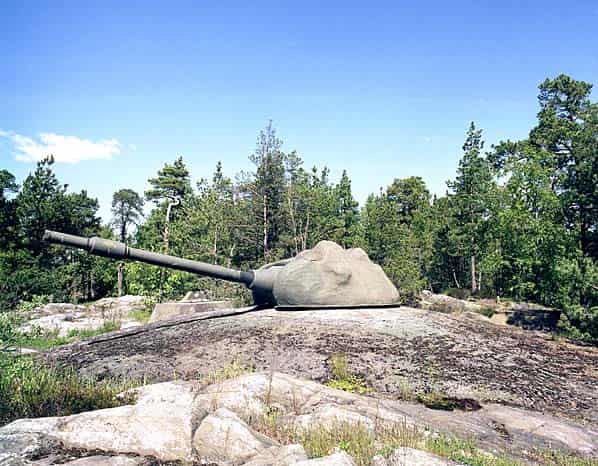
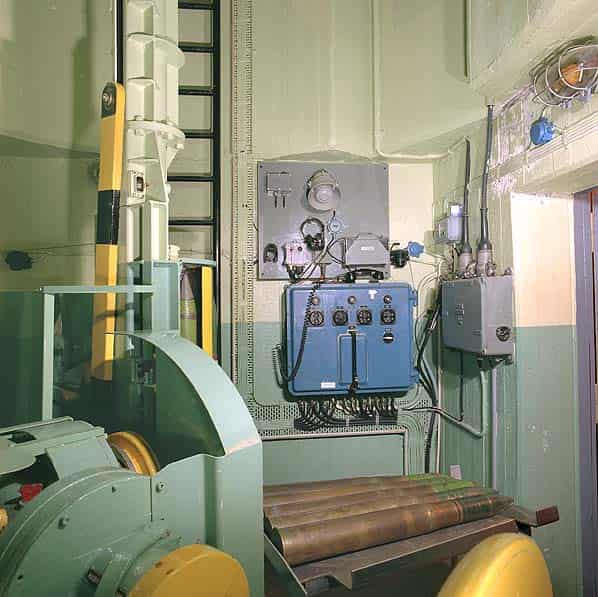
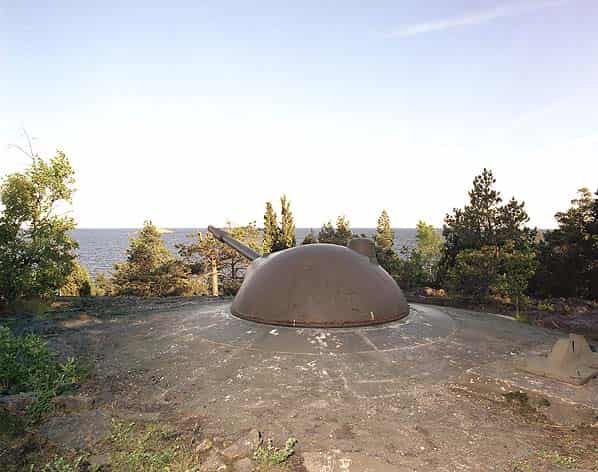
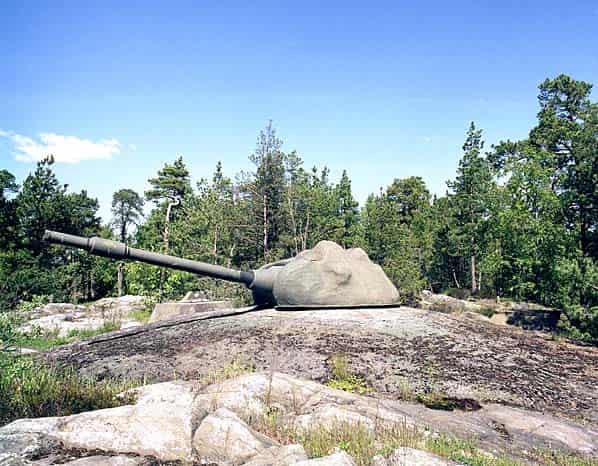
Armaments comprise three 75mm Bofors Type 57 guns specially manufactured in 1957 and designed for Cold war coastal defence. Conventional old-style conflict naval guns have a maximum elevation of 45-degrees; later Cold War guns, 20-degrees, thereby reducing the risk of damage during a nuclear strike. The guns had a range of up to 13 km in a 360 degree arc of fire. Two types of ammunition were available: one for ship targets, with a delayed explosion after the round has penetrated the ship; and conventional ground shells, that exploded at impact or with a timer delay after it was fired. These could be used as air burst rounds, sending shrapnel over enemy troops below.
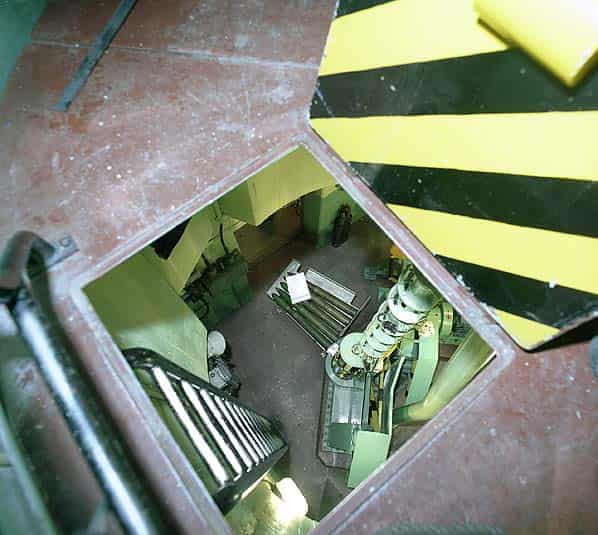
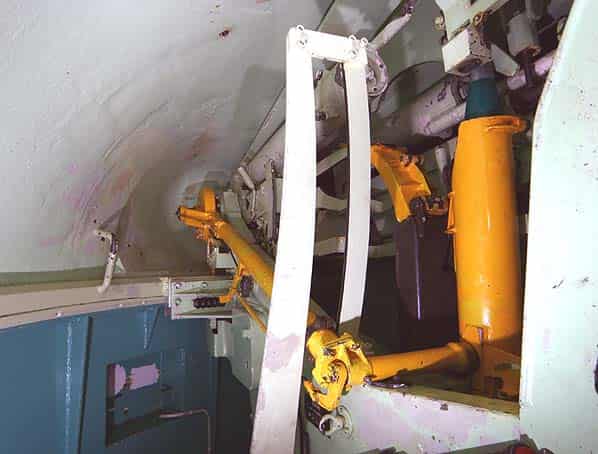
The turrets were protected by 70mm thick steel plate. They were NBC protected as was the rest of the fort. It was built to survive a Hiroshima-power bomb 200 meters away. The turrets had two states of readiness: Battle readiness, when the barrel was pointed out to sea and nuclear readiness if a nuclear attack was likely, in which case the barrel was fixed horizontally onto an anchor point ensuring the turret would not move with the shock wave.
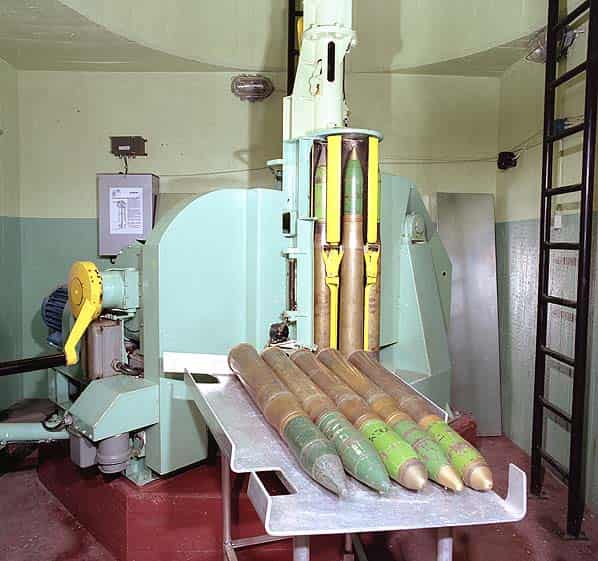
The turret was crewed by three men, with a further four down below with the shell elevator enabling a possible maximum firing rate of 25 rounds per minute. However this was never used, as the tactic was to fire 5-10 shots, evaluate the accuracy and fire again. All three turrets shot at the same target, as controlled from the command centre. The shell lift elevator (bringing the shells up 9 metres) was the only thing needing power; therefore there was a stand-by manual winch also present.
The fort is a self contained unit, with a full contingent of 70; 10 officers and 60 men. It was self- sufficient for 30 days. There were an additional 30 infantry soldiers above ground whose role was to provide all round defence and protect the external parts of the fort from enemy forces.
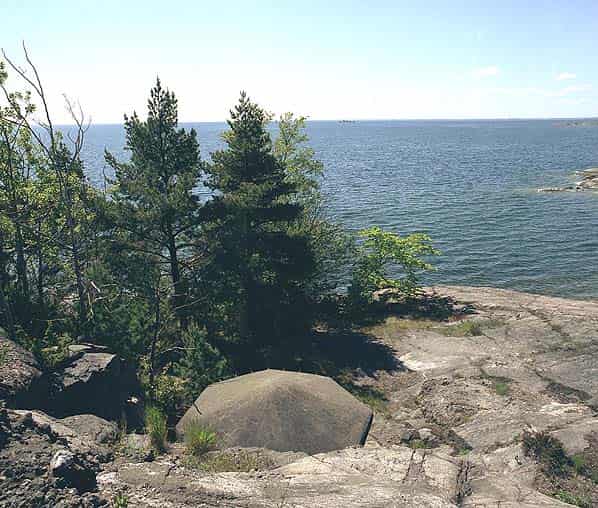
Sited on a small island, within the rock (granite) on the edge of the cliff, the function of this underground fort was to protect the inlet and of course, therefore Sweden from a seaborne assault by Warsaw Pact countries. The fort’s weapons were designed to combat lightly-armoured landing craft should they get within the guns 13km range; they could also inflict minor damage on destroyers and other larger vessels. The guns could be rotated a full 360° and could fire on land targets if required. Other coastal batteries elsewhere on Sweden’s coastline employed larger calibre artillery for use against heavily armoured vessels, with an extended range of 20km.
The fort was one of 30 other 75mm gun installations around the coast. Six were the same as Femöre Fort, and had a central spine tunnel linking all the areas and turrets. The rest had three separated turrets, plus an underground command centre linked only by telephone. Each unit had its own kitchen, generator, sleeping accommodation etc. These six had the designation ‘First Series’, the other 24 ‘Series 2’ and ‘Series 3’.
Sweden and Norway were the only countries that built Cold war Coastal Defence Nuclear Bunkers. Sweden built them from 1961 to 1980. As Femöre Fort was being built (1961-1963), the UK had abandoned all coastal defence. The forts were NBC (Nuclear, Biological, Chemical) proof, and were self-sufficient for up to 30 days.
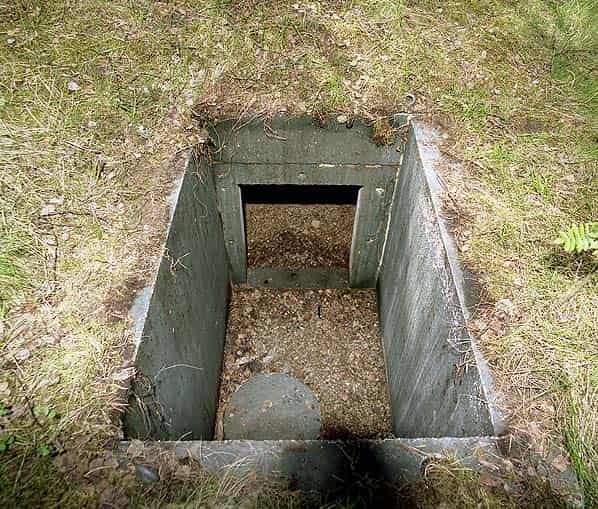
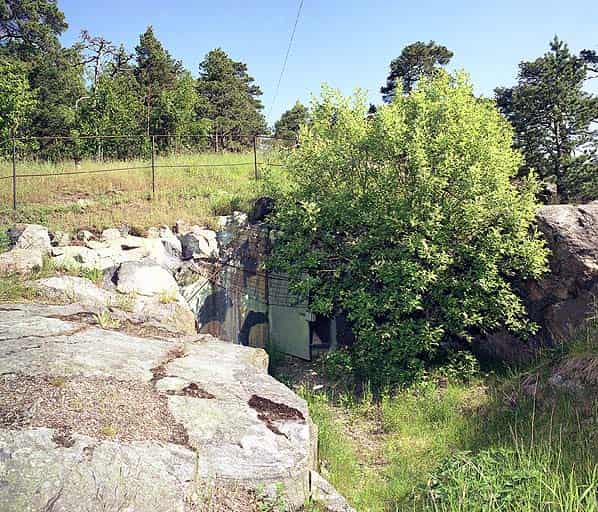
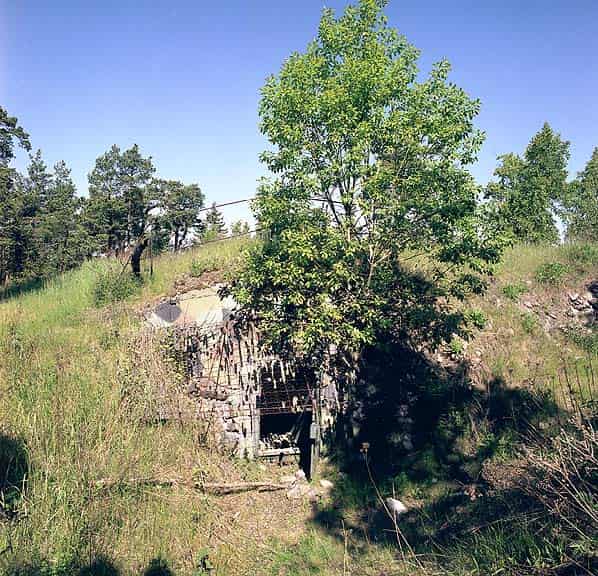
Around, and inside, the perimeter of Femöre Fort are a multitude of two-man fox holes, with an underground shelter attached.
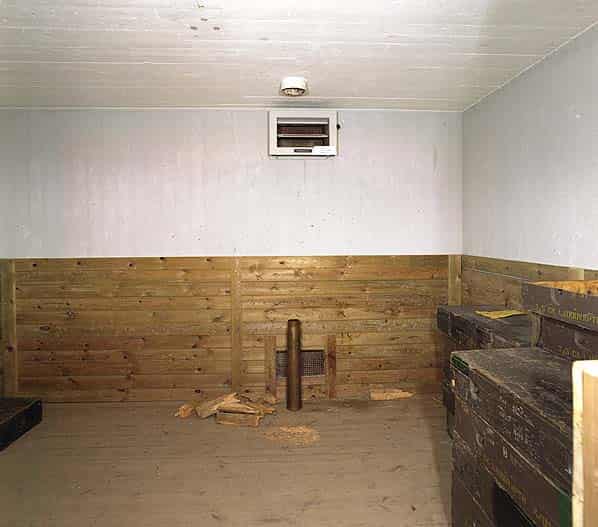
In addition to these, there are two large SK10 shelters; ‘S’ meaning shelter, ‘K’ meaning arch for ‘10’ men. The shelters (bunkers) are large enough for 20 men sitting, or 10 sleeping. They offered protection for the infantry soldiers outside the fort, tasked with defence of the bunker area.
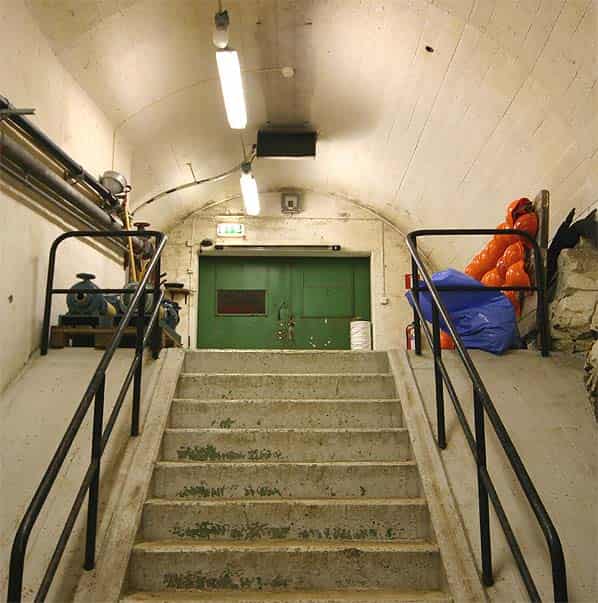
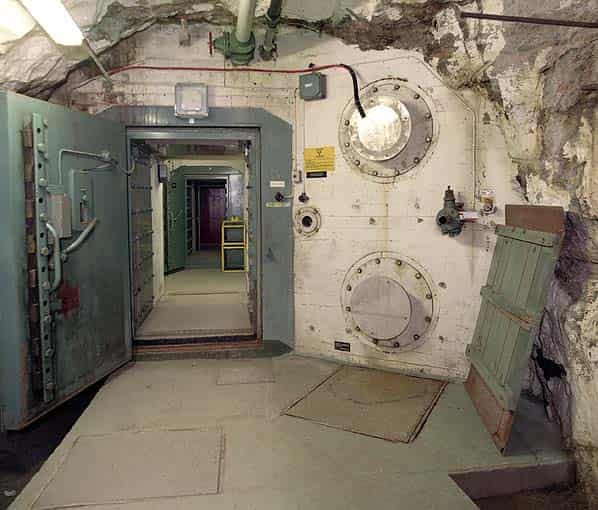
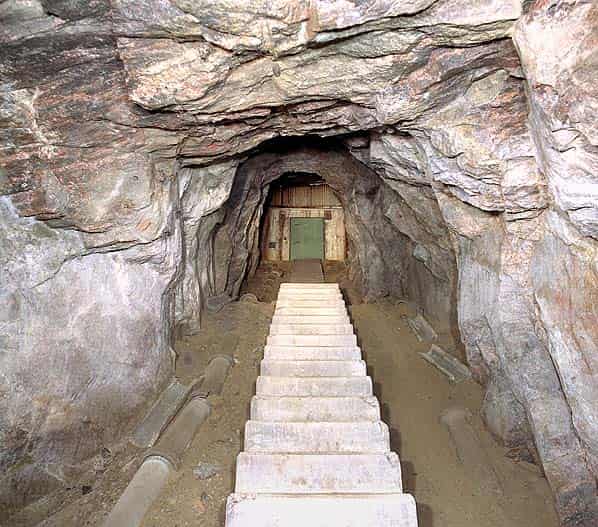
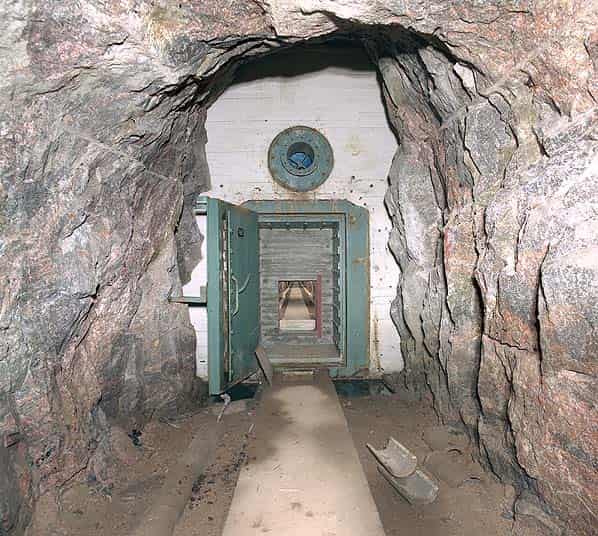
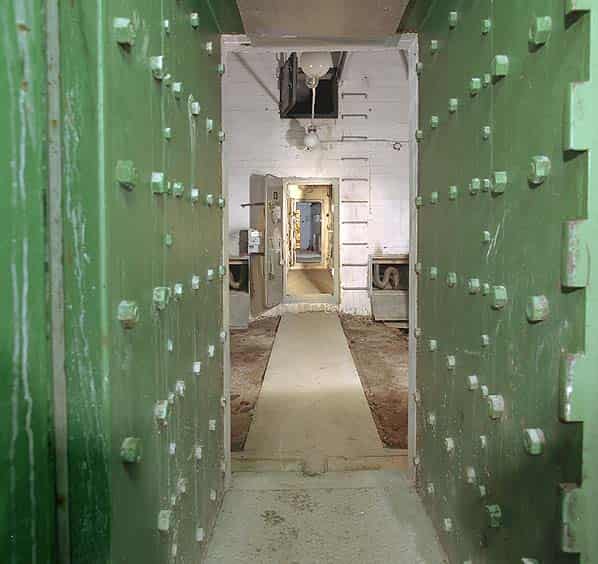
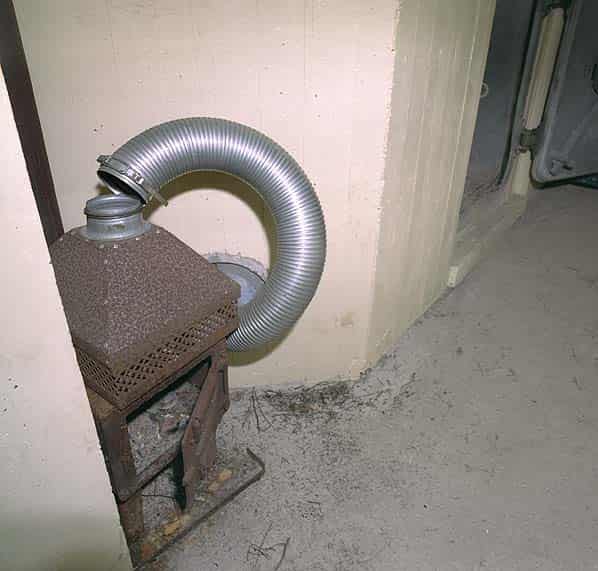
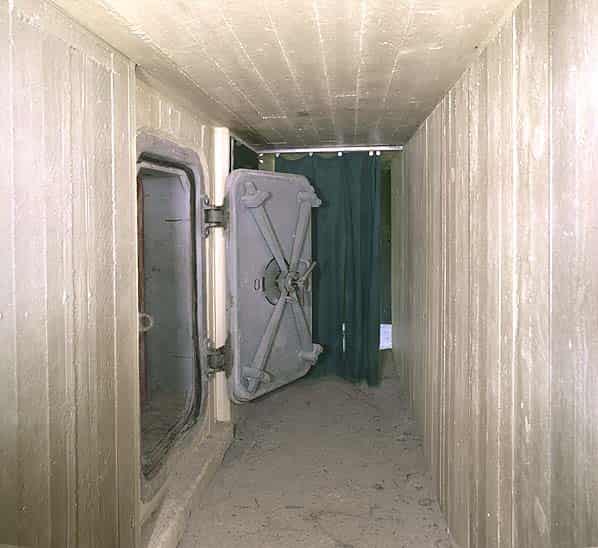
There was a wood/coal heater in each and a curtain across either end of the two entrances in the entrance tunnel to prevent the inside lighting being seen from outside. Normally, the soldiers would use tents - the heavy duty Swedish heated tents necessary in the extreme cold experienced in Scandinavian winters - but in the event of a conflict, the SK10 shelters would come into use. The large underground battery has an entrance tunnel, complete with many heavy blast doors. The tunnel drops down in level instead of a dog-leg for blast damage reduction. There is a glass ‘porthole’ in one of the blast doors in order to see along the corridor.
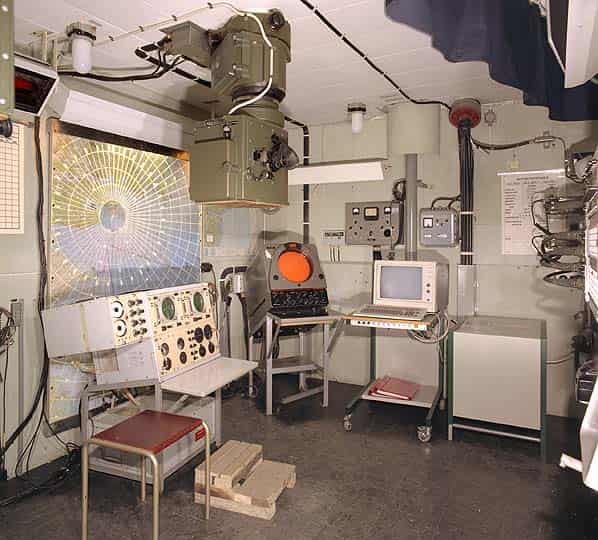
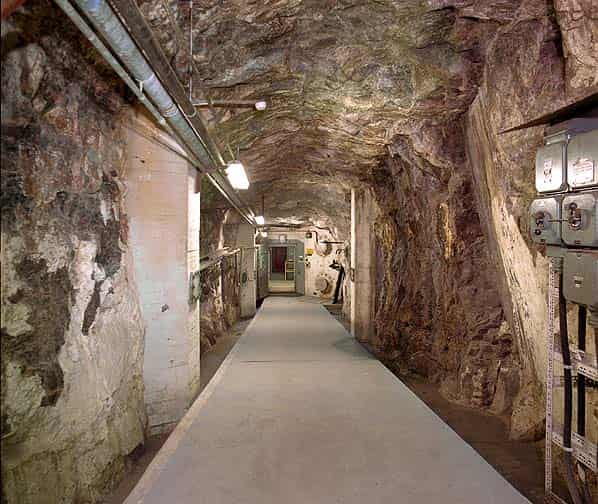
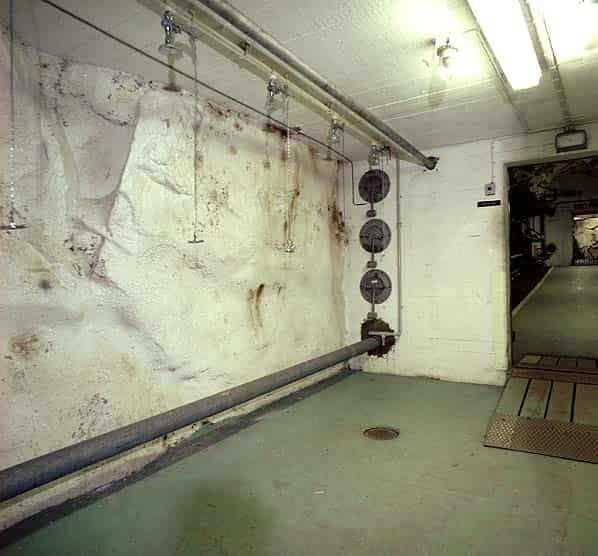
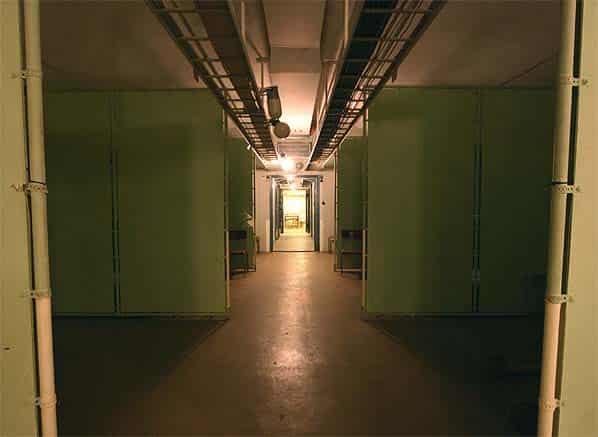
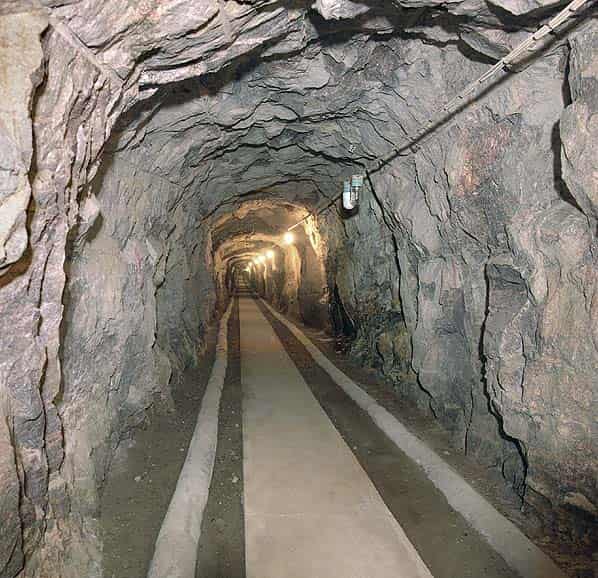
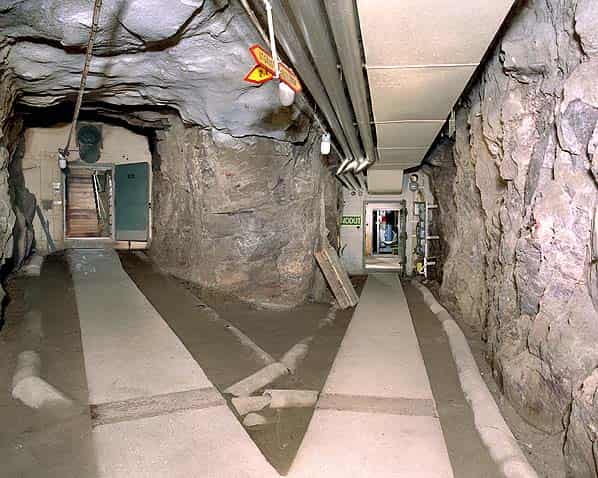
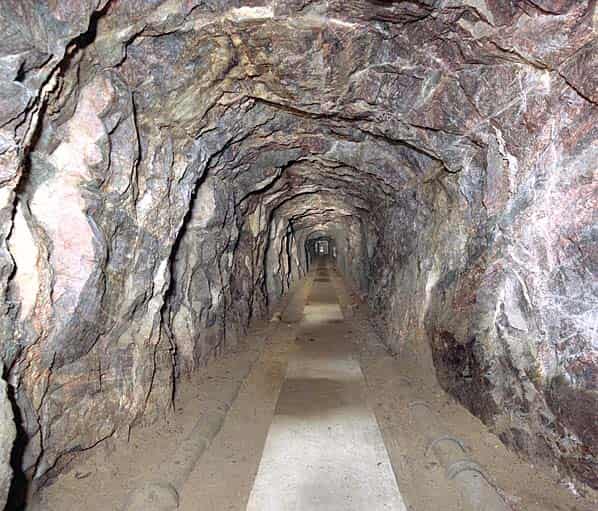
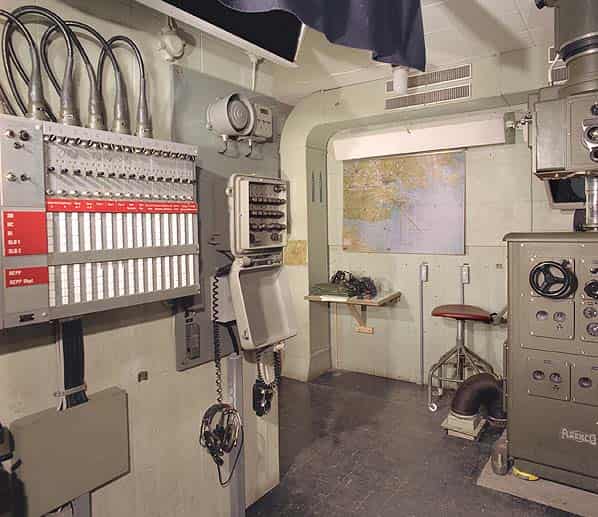
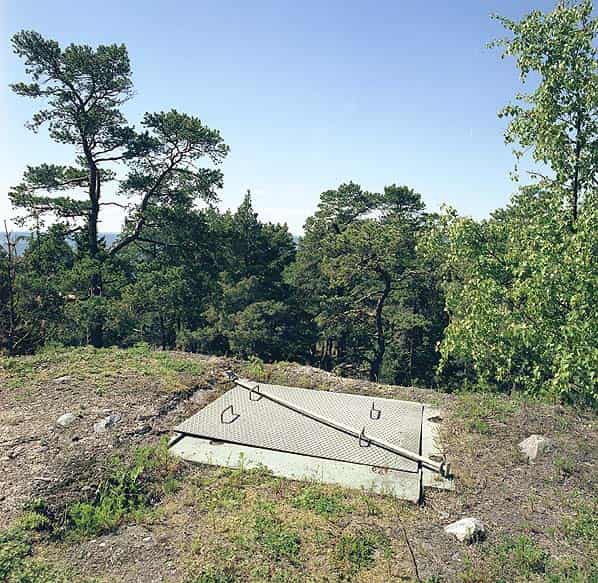
The decontamination showers are located in an airlock within this tunnel. This leads in turn to a 450-metre central tunnel, off of which are the three gun emplacements, radar post, main command centre and reserve command centre at the western end of the fort where the Fort’s Second in Command would operate.
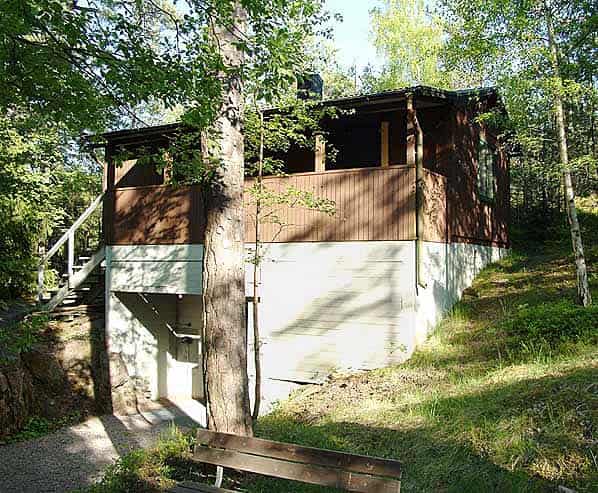
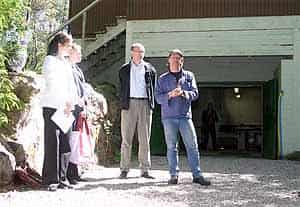
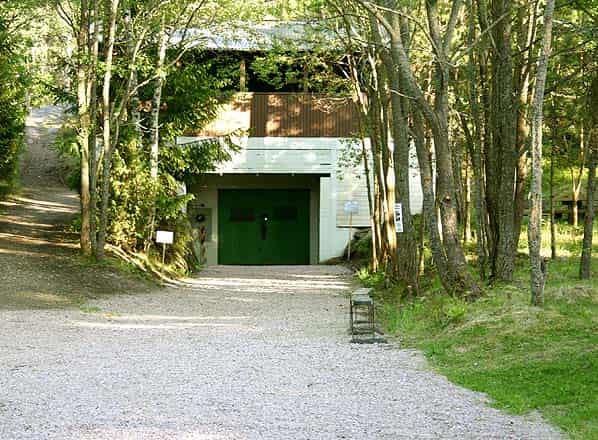
The whole complex was constructed within a granite outcrop, tunneled by civilian mining engineers using standard mining techniques - rock drills and blasting. Work began in 1961 amid great secrecy and continued through to 1963. The area which formerly had been a public access nature reserve was summarily closed during the construction phase. The entire installation is built above sea level, with its main entrance to the underground fort cleverly and convincingly disguised as a house.
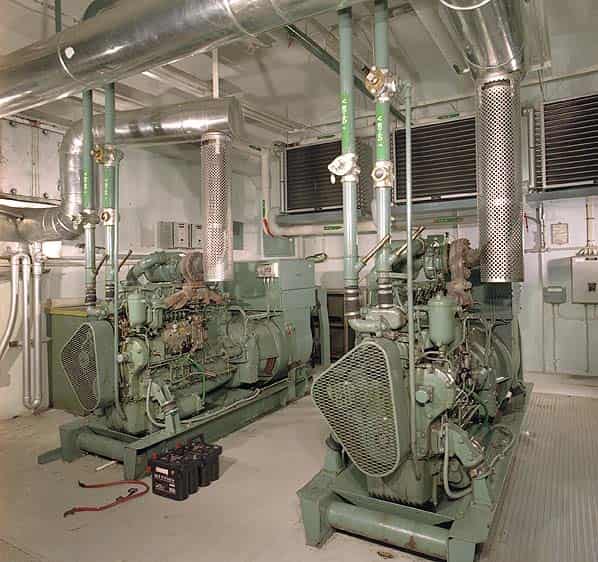
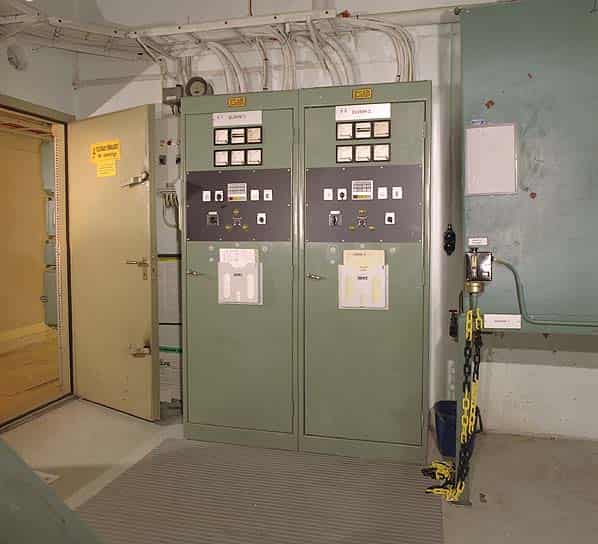
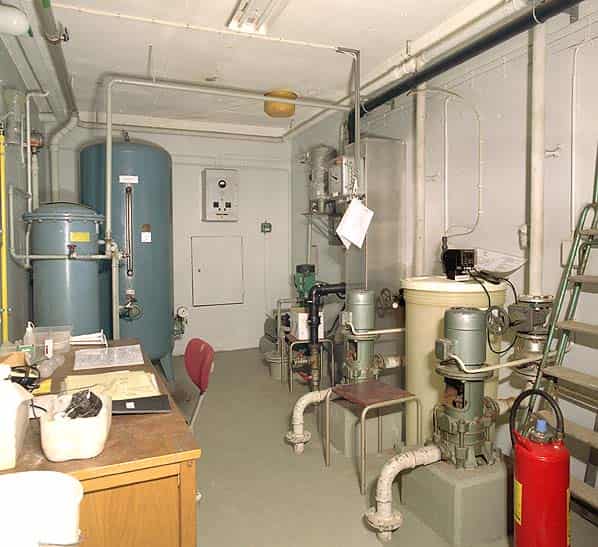
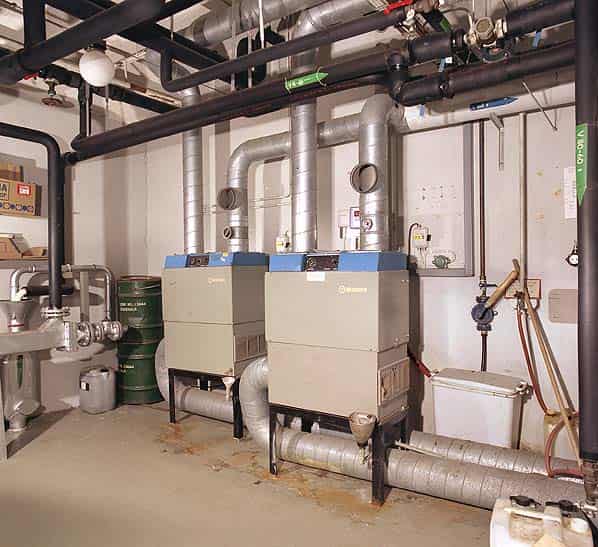
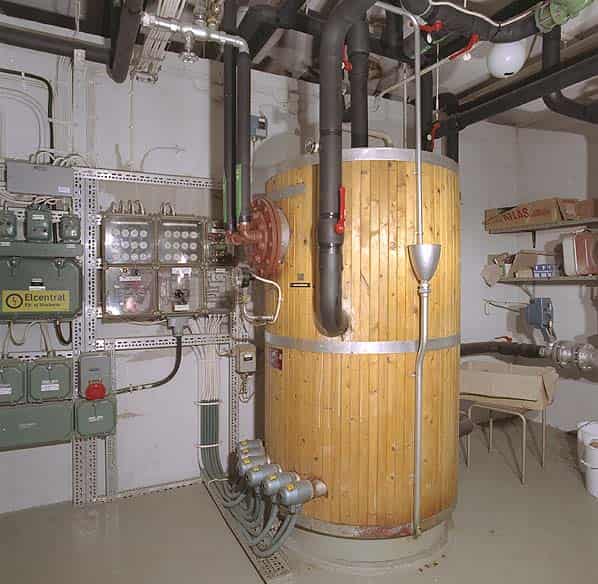
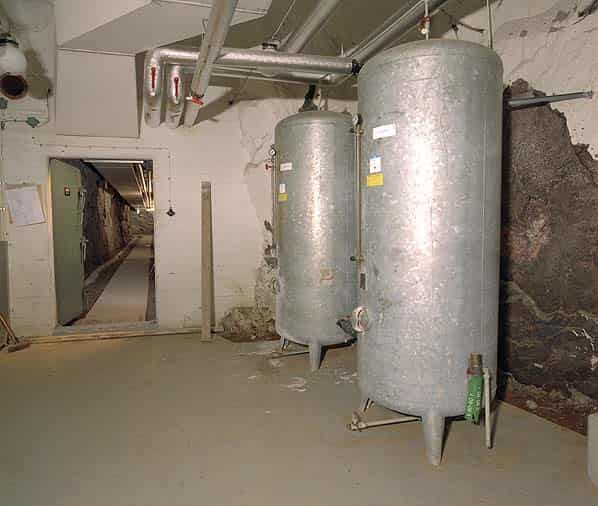
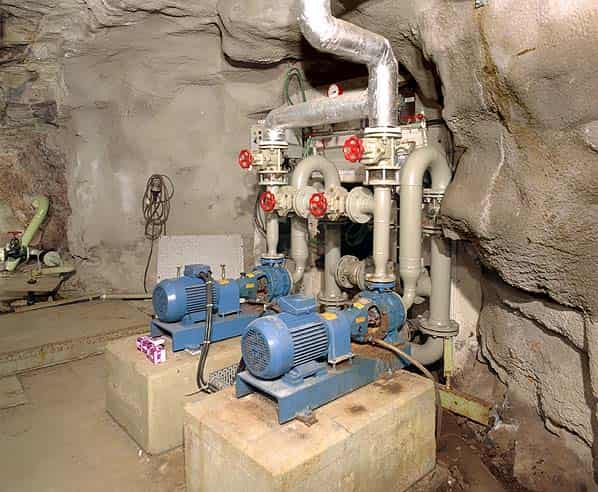
To provide for the basic needs of the occupants, there are two bore holes for water; one for salt water (toilets, and showers in emergency), and one for fresh water. There are two Volvo diesel generators, each with approximately 970 hours showing on the clock, supplied by two 20-cu metre diesel tanks (20,000 litres each) giving 30 days continuous use. They would cut in as a result of a power failure from the grid, and one of the generators could supply all of the fort’s power requirements. They were however to be run in tandem to reduce the load on the generators.
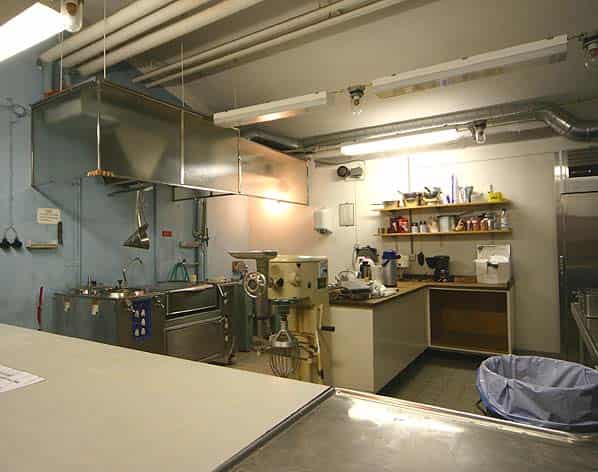
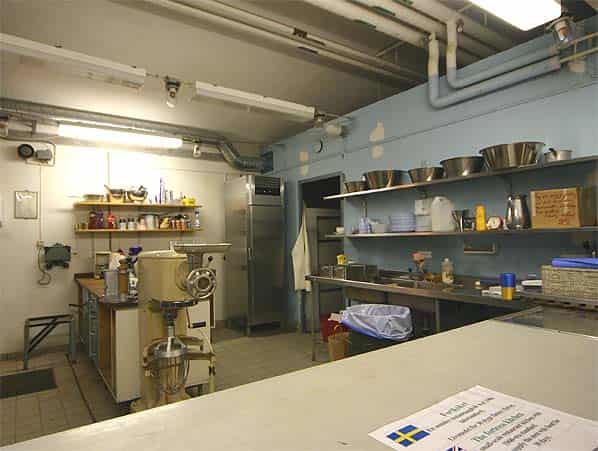
The kitchen could cater for the full contingent, plus the 30 soldiers outside, using a large potato peeler, an even larger food mixer/bread maker, cooker (steam), massive refrigerator, and large larder/food store. There are two toilet blocks (male only) and two shower cubicles; with separate WC cubicle room for kitchen staff, to stop any chance of infections or diseases being passed through the fort.
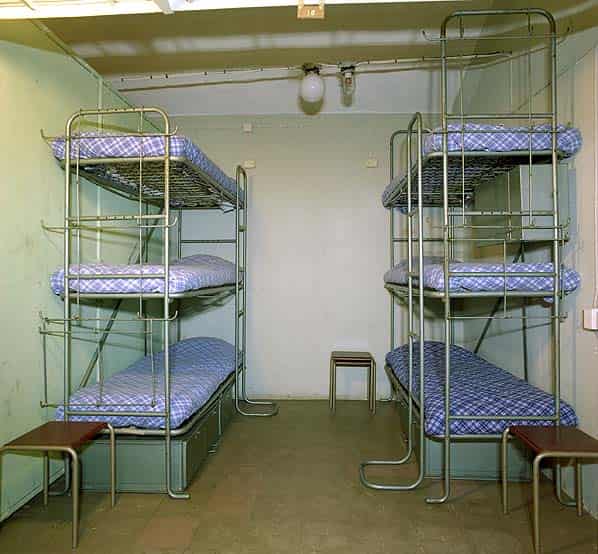
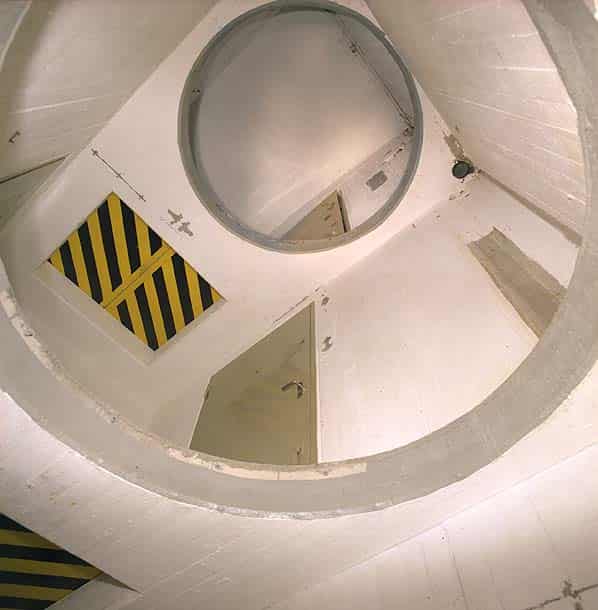
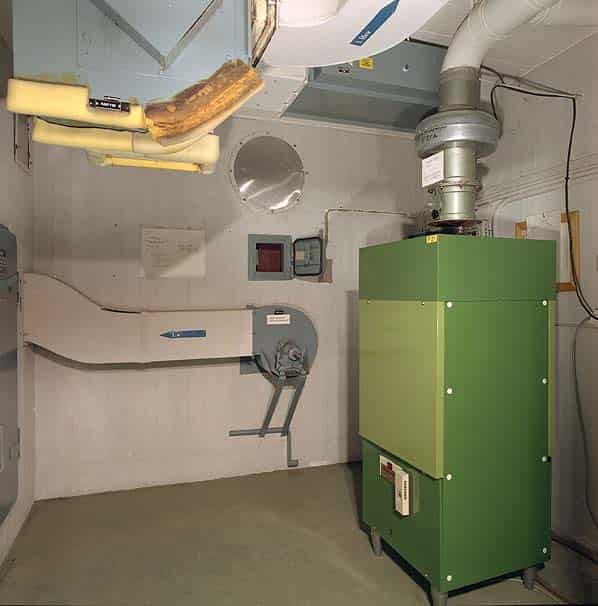
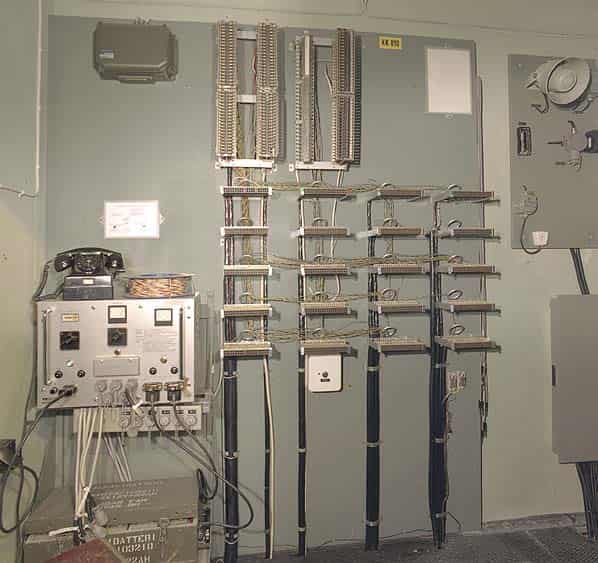
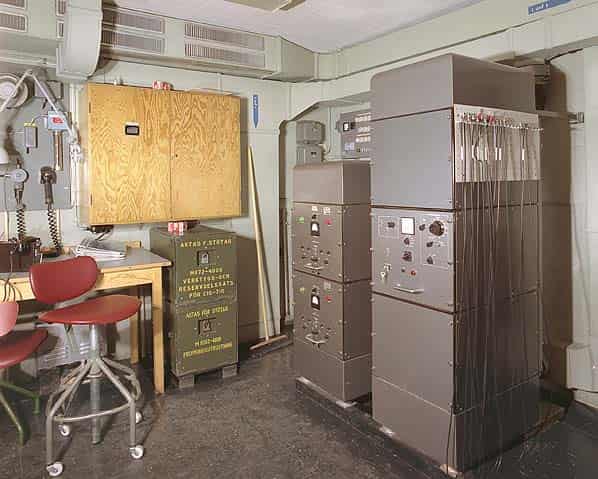
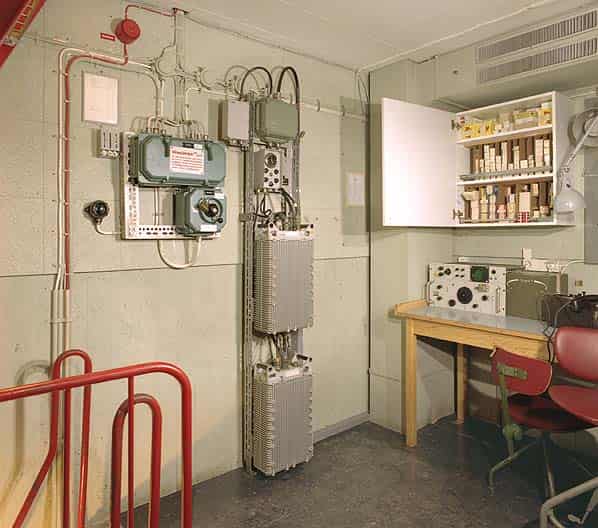
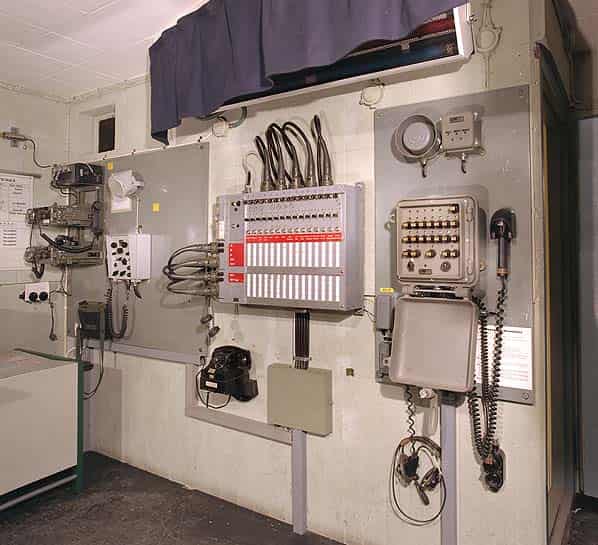
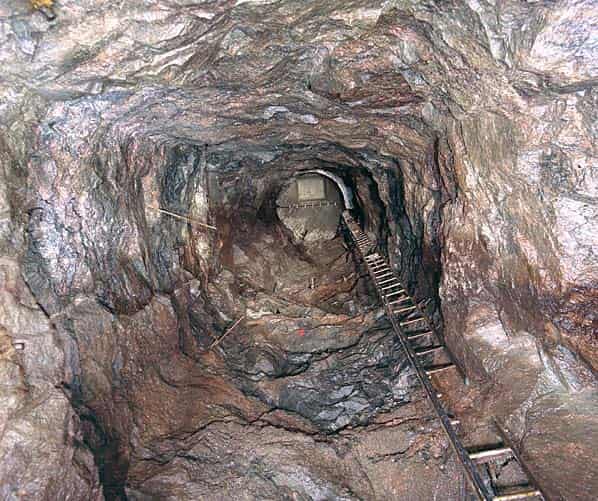
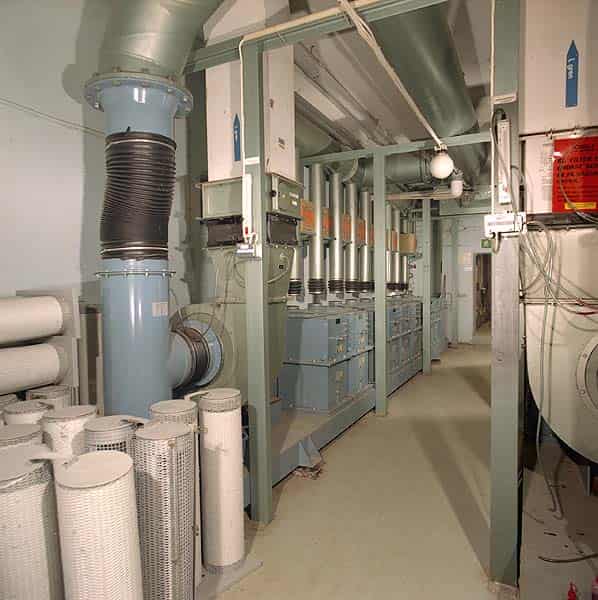
With six bays of ten triple bunks, each man had his own bunk. Within the fort there is a sick bay, officers accommodation, Senior officers room, telephone room, encryption room (next to Senior officers room, with a hatch for passing confidential messages), various storage rooms for food and spare parts, a large common room/dining area is at the centre of the fort, a workshop with machine tools for engineering repairs of the fort and its guns, a full air conditioning and filtration plant room, a drinking water storage and filtration room which also contains the fire detection system. There is an emergency exit leading off of the main spine corridor up to the surface via a spiral staircase and multiple blast doors.
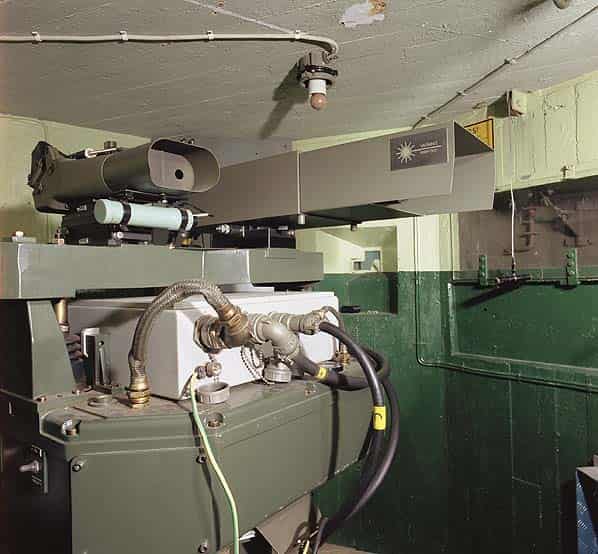
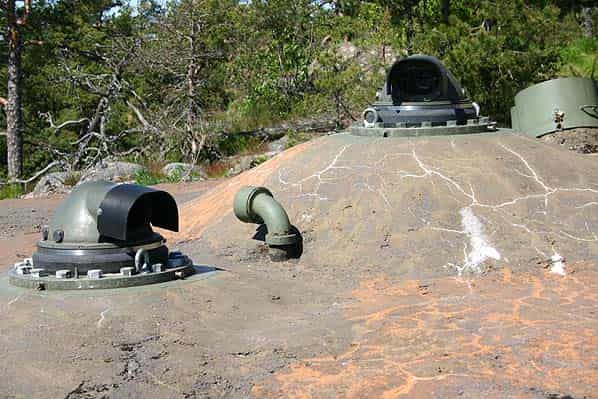
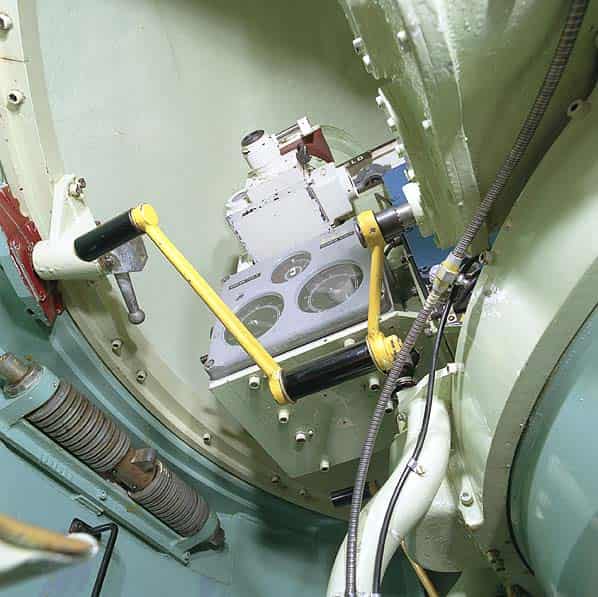
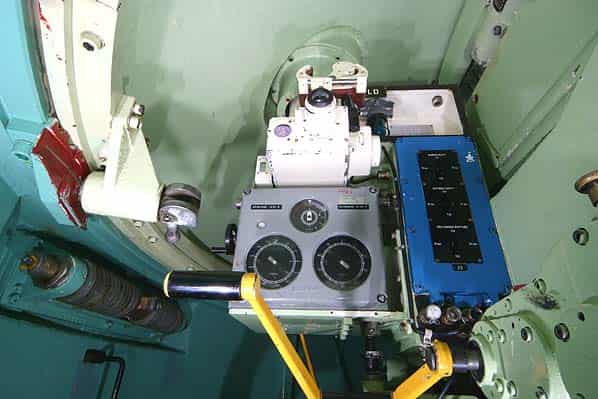
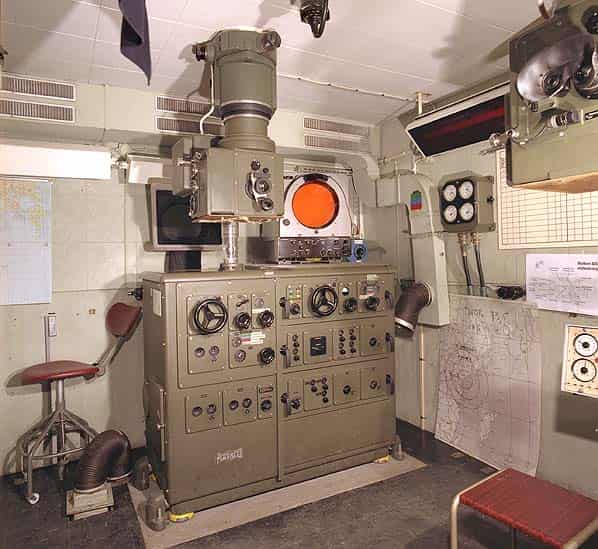
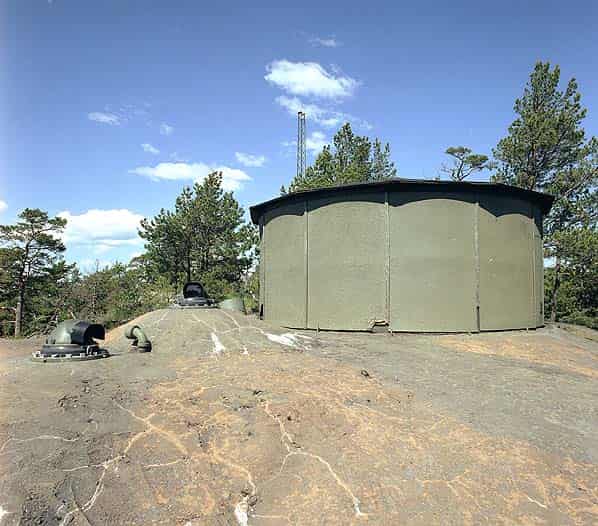
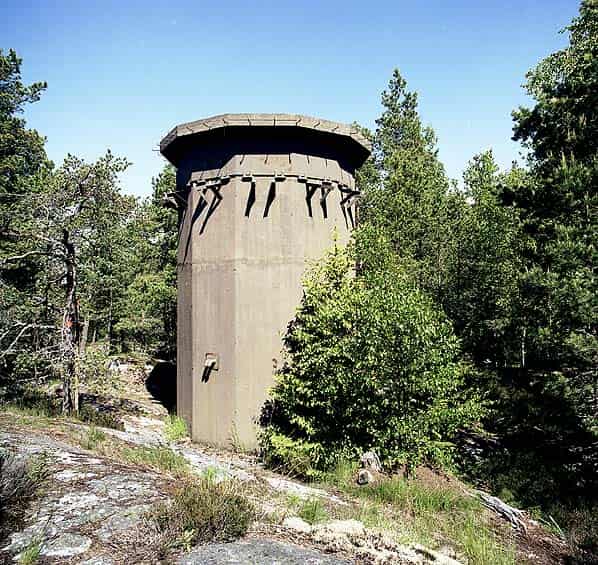
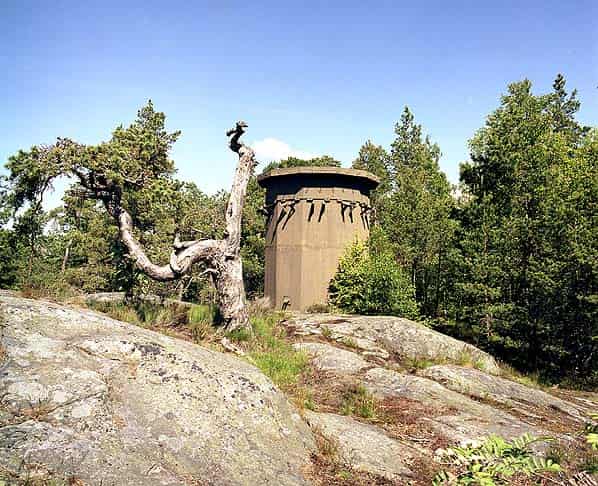
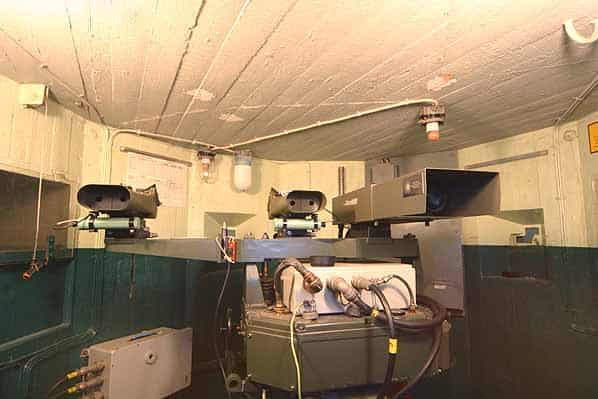
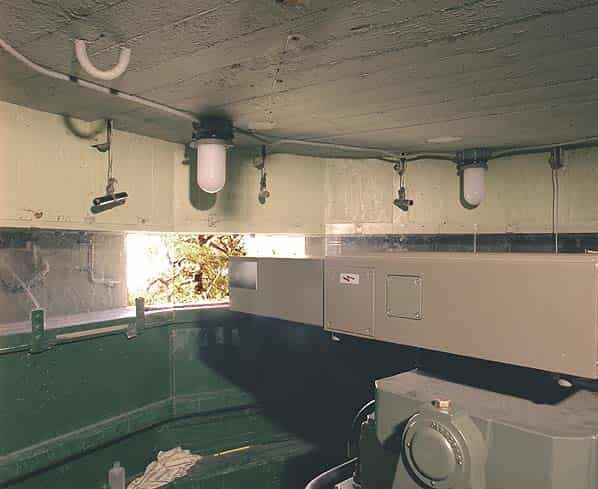
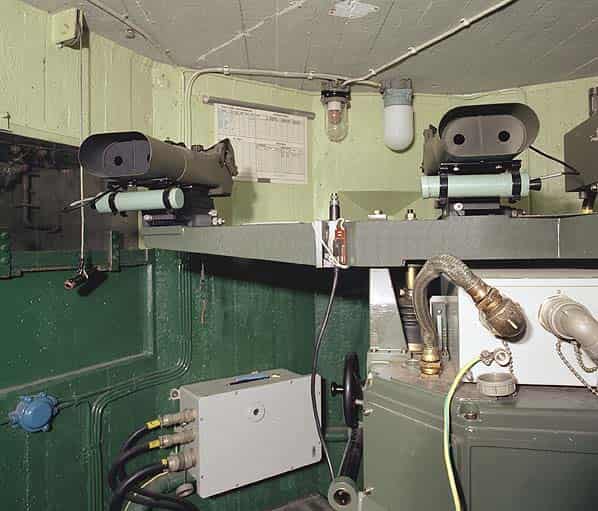
On the surface above the western command post is a protected concrete tower housing a fully functioning laser range finder. The tower was first equipped with a stereobinocular system. In the 1970s a laser range finder was added. This laser range finder would have come into play if the radar was put out of action. In the 1970’s a laser was installed to give an even more accurate distance to target measurement. This tower was the most western part of the fort, and is connected by the long spine tunnel. Here the 2nd in command was placed as a stand-by for the Commanding Officer in the battle control.
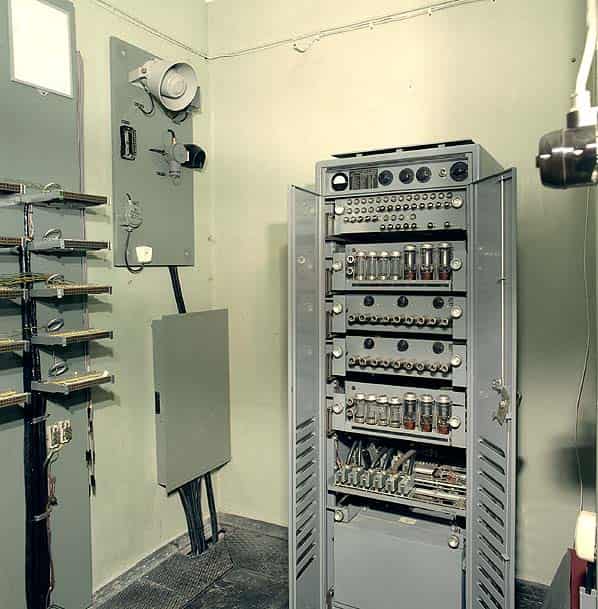
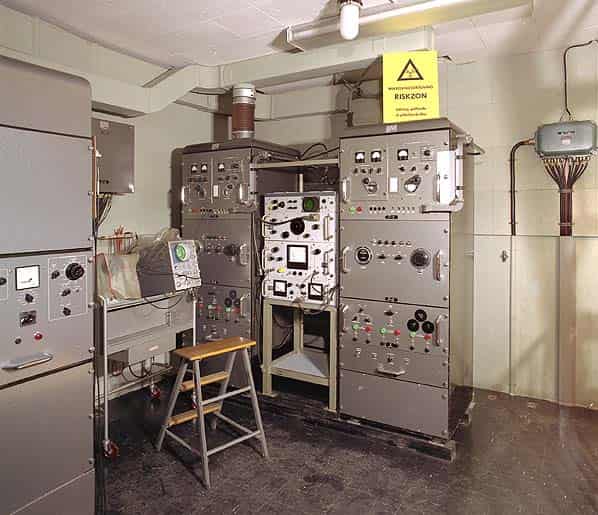
There is also a large wooden ‘shed’ containing the radar for the site. The shed was an original feature of the site as it was needed not only to provide camouflage but also to protect the radar from the harsh winter climate. All the control gear for the radar is still in its original place in the bunker.
The surface turrets had fibreglass camouflaged covers over the guns. The guns were manufactured by Bofors in 1959 and were equipped with newly developed smoke extractors on the barrels. These devices ensured that fumes were extracted to outside rather than pollute the (sealed) air inside. Each of the working turrets was linked by semaphore so that targets could be accurately pinpointed by the range officer.
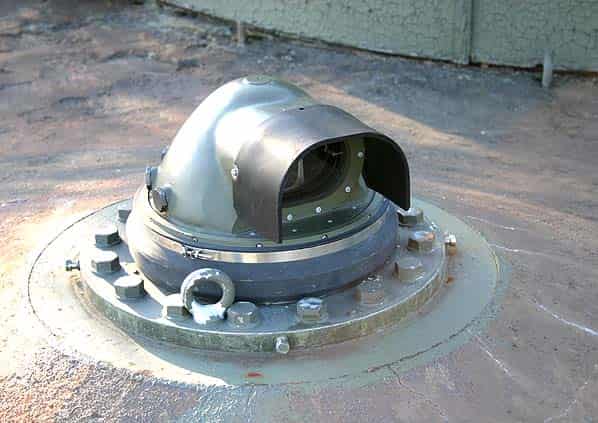
There were also at least two periscopes used on this site, both of which are still fully functional. A common problem in the severe Swedish winters was for the glass on the periscopes to freeze over, thus making them useless, so they were fitted with fine wire heating elements on the internal surface of the glass. There were also various lightweight metal dummy ‘Bofors’ guns, which were heated and could be rotated, sited around the fort to fool enemy satellite cameras and thermal imagers, giving the impression of further weaponry.
There was also a fake radar situated in the nearby lighthouse to draw attention from the real one.
Having laid derelict for eight years a number of local enthusiasts put forward a proposal to develop the fort as a tourist attraction. Although some equipment had been removed by the military authorities the fort was still largely intact so an ‘open house’ weekend was arranged for the local community over the weekend of 17/18th August 2002.
Although there was some opposition to the proposal both from the community and the military, the open weekend proved a tremendous success with the expected 1000 visitors soon exceeded. By the end of the weekend over 2100 people had visited the fort with more than 1200 signing a petition asking for the fort to be saved.
It was agreed that a further series of more widely publicised open days should be arranged for 2003 before the local authority would agree to take on the responsibility for the fort.
Although all three guns remained in place all the machinery below Nos. 1 & 3 turrets had been removed and the rooms stripped back to bare walls. Even the spiral staircases giving access to the turrets had been removed.
The tunnels leading to these two turrets and the standby command centre at the western end of the fort were therefore sealed off by the military authorities and arrangements were made to hold a series of open weekends through the summer of 2003.
Again visitor numbers greatly exceeded expectations and the Föreningen Femörefortet Association that had been formed to run the fort gradually began persuading the remaining people opposing the scheme that the proposal to open the fort to the public was viable.
The local community agreed to buy the fort for a nominal sum but insisted that it would have to be totally self financing with no public money being put into the venture.
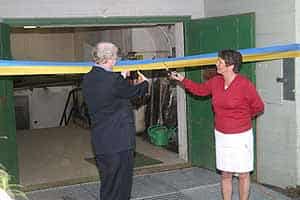
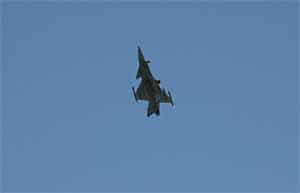
On 1st June 2004 the fort was handed over to the community in a ceremony attended by many local dignitaries, military personnel, two TV crews and four members of Subterranea Britittanica . The highlight of the day was a low level fly-past by a JAS 39 Gripen of the Swedish Airforce which flew 450kM from the airbase at Ronneby, flying over the fort precisely on time at 13.20.
The Association now has access to all areas of the fort including tunnels that had previously been sealed, although these areas have been stripped of all fixtures and fittings and have no lighting and will not be part of the public tour.
If the Association are unable to attract sufficient tourists to pay for the upkeep of the fort the museum will be forced to close and the local community will find other commercial uses for the site.
Judging by early visitor numbers however Femöre Fort could well become one of Sweden’s major tourist attractions.
Further information is available on the fort’s website.
Source:
- Lars Hansson