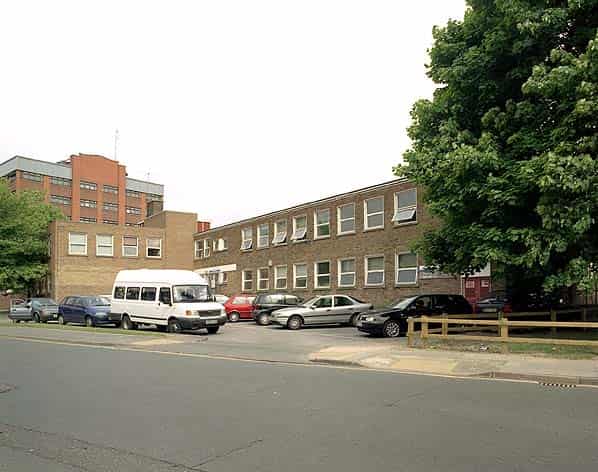
The WW2 Edmonton Civil Defence Centre is located in Churchfield Recreation Ground on the east side of Great Cambridge Road, A10. There are two 100' long brick buildings parallel to each other. The northern building is ‘L’ shaped and was a gas decontamination and cleansing station. It has a 10' square brick tower at one end housing the water tank.
The southern building was the Edmonton Borough Control Centre, which continued in this role into the cold war finally closing in 1958 when a new Control (designated 43B in Region 4) was built in the basement of the new Plevna Road Clinic in Edmonton. In 1965 when Edmonton merged with Enfield this became the London Borough of Enfield Control until the disbanding of the Civil Defence Corps in 1968 when it was placed on care and maintenance. When visited in 1987 the bunker was dry and in good condition, there was proposal to convert the area into a youth club, but the cost of providing a second stairway through the 2 foot thick concrete proved too costly.
In the 1980’s a new Borough Control was established at Enfield Town Hall (designated 51A1) reporting to the North Group HQ at Partingdale Lane, Mill Hill. In 1989/90 there were plans to relocate this Emergency Centre back to a refurbished bunker beneath the Plevna Road Clinic but work was delayed when the bunker was found to be wet and the plans were dropped following the end of the cold war.
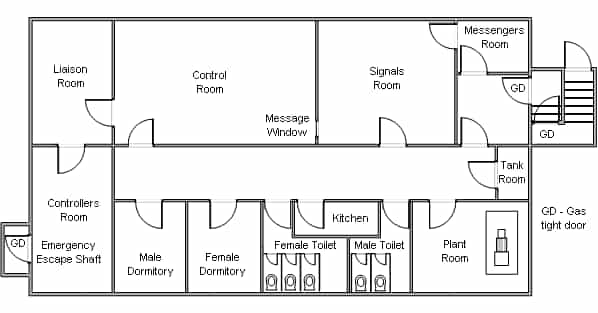
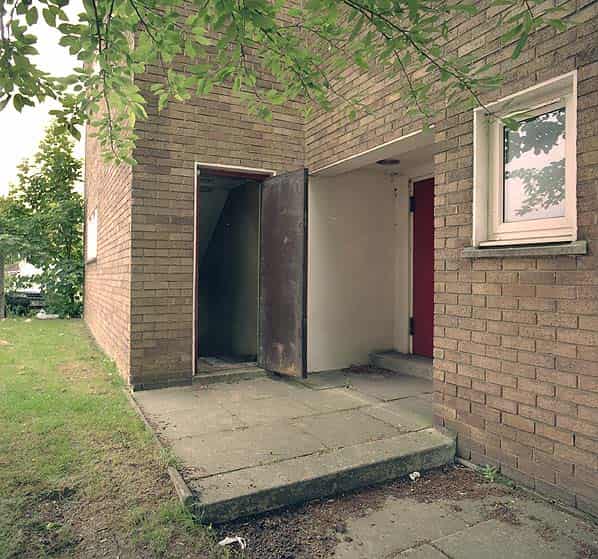
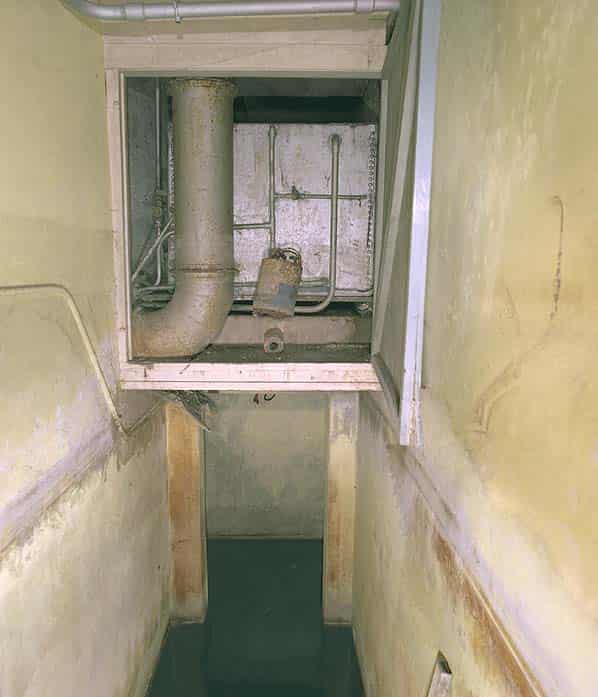
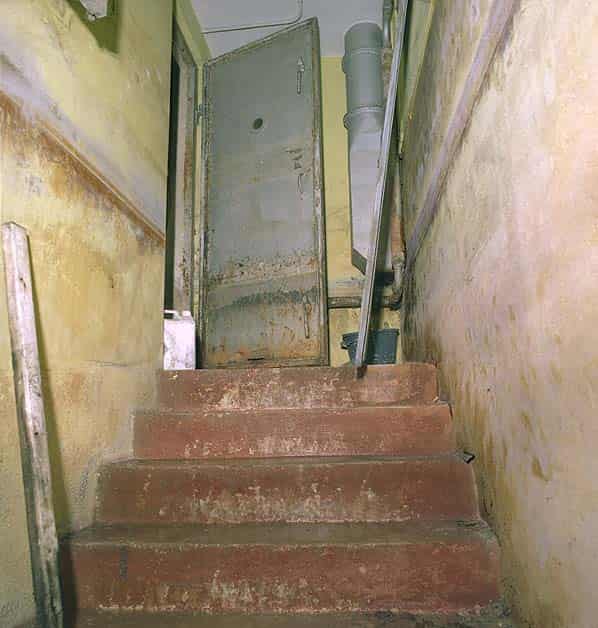
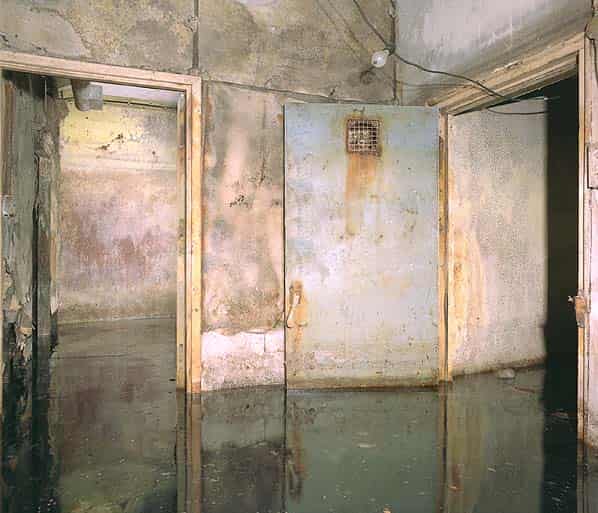
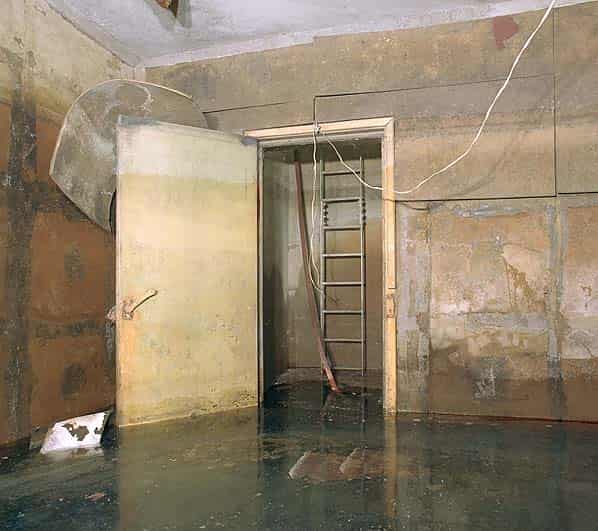
The bunker remains intact and unused and permanently flooded to a depth of two feet. The main entrance is an inconspicuous wooden door at the side of the clinic. This opens onto a flight of stairs that doubles back through a steel gas door with a second gas door at the bottom of the stairs forming an air lock. The last three steps are under water.
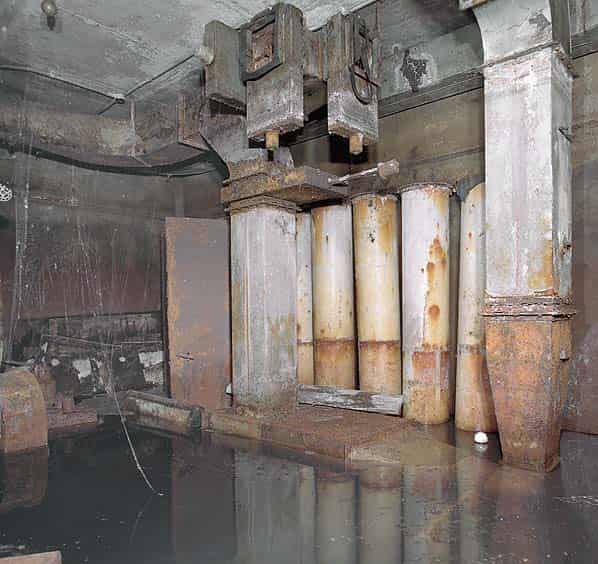
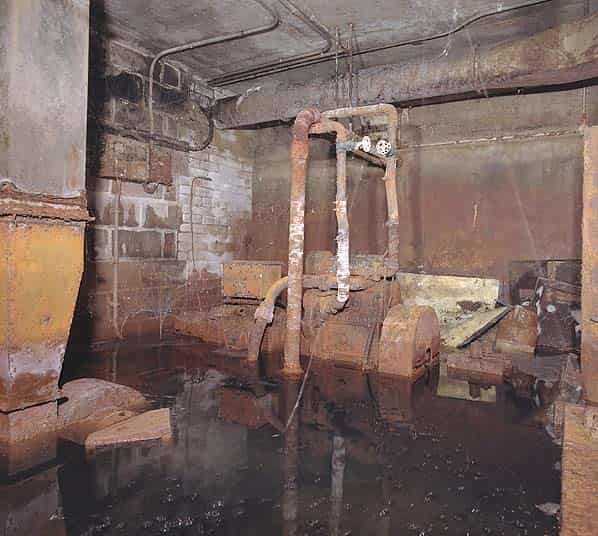
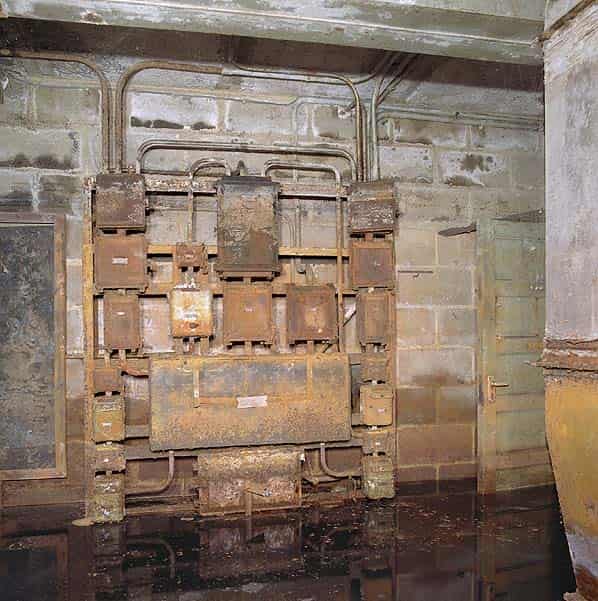
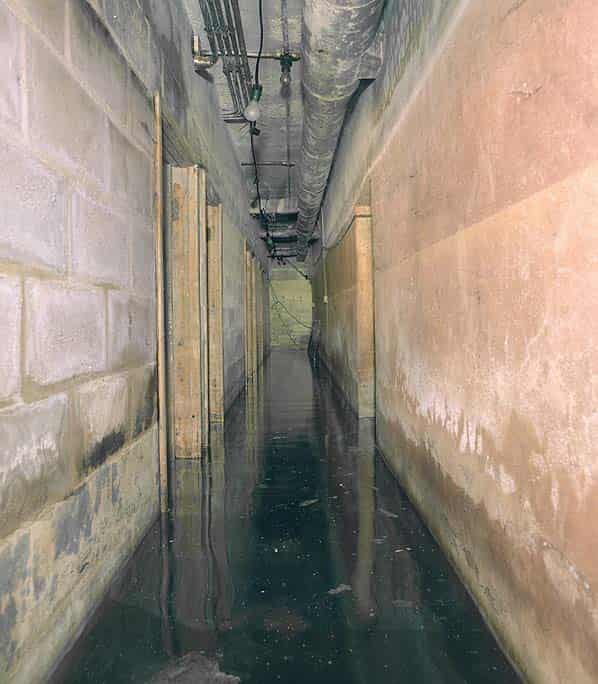
Beyond the 2nd gas door there is a lobby with a door to the right into the ‘Messengers Room’ and from there into the ‘Signals Room’ and to the left into the main east - west spine corridor. There is a cupboard at the western end of the corridor with a water tank and a hand pump. The first room on the left of the corridor is the plant room which still retains a diesel generator, electrical switchgear, filters, and also a fan and filtration plant which feeds metal trunking that runs along the corridor suspended from the ceiling and into each room in the bunker.
The next room on the left is the ‘L’ shaped male toilet with two WC cubicles, two urinals, a hand basin and a paper towel dispenser. The next room is the small kitchen which retains a Butler sink with a small aluminium draining board, water heater, cold water tank and a paper towel dispenser. The two arms of the ‘L’ shaped toilets run behind the kitchen. The female toilet follows with three WC cubicles, two hand basins and a paper towel dispenser. The final two rooms on the left are the female and male dormitories.
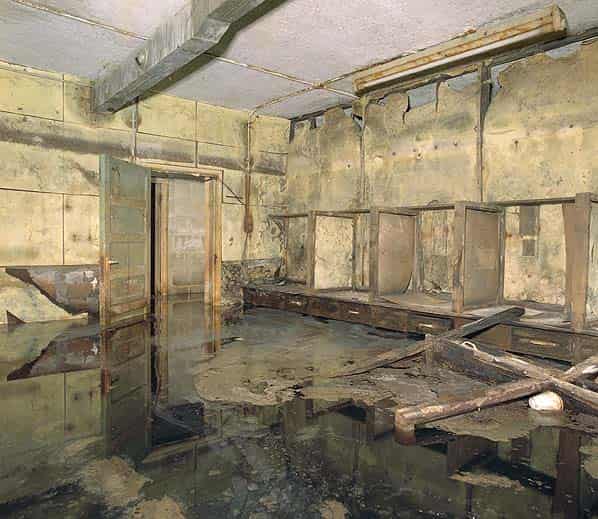
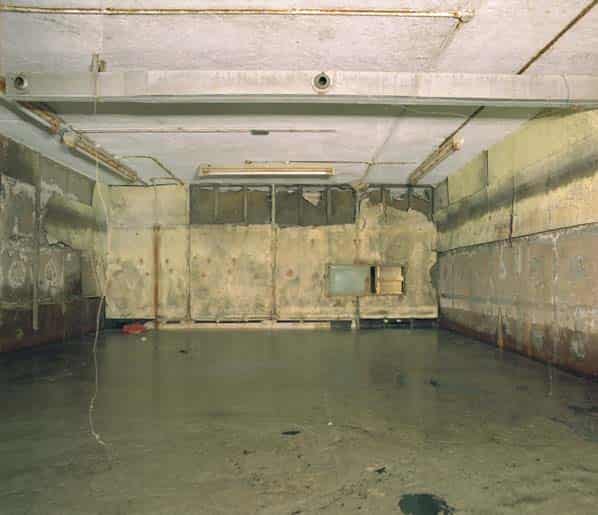
Back at the western end of the spine corridor, the first room on the right is the signals room with five acoustic telephonists booths on the left hand side and four on the right. There is a message window into the adjacent ‘Control Room’ The next room on the right is the ‘Control Room’, this is the largest room in the bunker and is now completely stripped. There is however a large wall board leaning against the wall in the corridor that probably came from this room. Dymo labels on the board read ‘Controller 43B’, ‘Regional Director Region 4’ and ‘London Borough of Enfield 43B’. At one end of the control room a door leads into the ‘Liaison Room’ and from there another door leads into the ‘Controllers Room’; both these rooms are empty. The emergency escape shaft is accessed from the controllers room with a ladder up to a recessed entrance at the rear of the clinic accessed from the adjacent Police Station car park.
Many of the rooms still have names on the doors and a number of white glass round lamp shades still remain in place throughout the bunker. According to the caretaker the bunker has been pumped out on several occasions but it quickly floods again.
This report was written in 2003. The building was demolished in 2008 and an Asda superstore now stands on the site.
Those taking part in this private visit were Nick Catford and Keith Ward.