
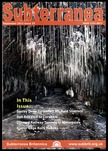
This part of Wiltshire is well known as a source of fine Bath stone, which has been quarried for many centuries. The stone was mainly mined underground. Due to its consistency, the ceilings of the old workings have a considerable span, leaving large galleries and tunnels where the stone has been removed.
In both the first and second World Wars, thoughts turned to the problem of storing a vast amount of ammunition safe from bombing. Underground storage seemed to be the logical method, so existing mines and quarries throughout the country were investigated.
The quarries of Wiltshire were selected amongst others in the country. Storage of ammunition, however, is a complex business. The access to the underground areas needed improvement and waste stone had to be cleared. Irregular workings needed to be engineered into straight roads, and roofs required considerable strengthening.
A further and little considered problem was that of the storage environment. The mines have a fairly constant temperature of 50 °F (10 °C), but the main problem for storage is the very high humidity. This precludes all but very short-term storage of most materials. Some quarries, where conditions were not too bad, had no air conditioning. Ridge Quarry was used both in the first and second world wars with little more than rudimentary engineering to produce the storage bays.
The greatest undertaking was to be the Central Ammunition Depot at Corsham. The name belies the fact that it was anything but central, since mines at Monkton Farleigh and Eastlays were employed, as well as the mighty Tunnel Quarry at Corsham.
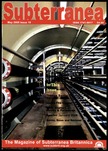
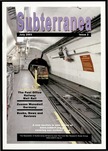
Tunnel Quarry was a vast stone mine adjacent to the famous Box railway tunnel. At the time of adoption it already had the advantage of a railway junction leading underground from a junction alongside the Box tunnel entrance. The mine at Monkton Farleigh was a very different matter, being on the top of a hill just behind Brown’s Folly and with poor road access. Monkton was initially served by an aerial ropeway leading down the hill some two miles to Farleigh Down sidings. Later, a tunnel was constructed to the sidings - a most remarkable engineering work, and materials were loaded from train to the depot by conveyor belts. These belts were then used throughout the depots for internal distribution.
Unlike Ridge, the quarries at Tunnel, Monkton and Eastlays were engineered to a very high standard. The roads were laid in straight lines and were covered with rolled asphalt. Some bays (District 14) were constructed as regularly shaped rooms by a massive underpinning operation. Elsewhere pillars were shaped as regularly as possible and the whole wall and ceiling surface was sprayed with a light coloured paint. Air conditioning of various types was tried and expanded through the life of the establishments and the complexes were well provided with electric lighting and sewerage systems. Each establishment had a large standby diesel generating station.
After de-commissioning in the 1960s, and after a few abortive developments, Eastlays was used as a bonded warehouse and remains thus, largely intact. Monkton was a different matter and had a very complex series of attempted developments. For a few years there was a very good museum. Sadly, as a result of very strange actions by the subsequent owners, the museum was terminated and a period of comprehensive vandalism reduced a fine establishment to a mess. Currently, several districts at Monkton Farleigh have been leased by Wansdyke Security and have thus been rescued from further destruction, but districts 19 and 20 remain derelict.
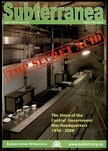
Tunnel Quarry has remained in MoD hands. Part is known as the Corsham Computer Centre and part is used by RAF Rudloe Manor. Adjacent to this and linked underground are Browns Quarry, former RAF Sector Command (Now CDCN) and Spring Quarry. Spring Quarry was a Ministry of Aircraft Production factory and in later years a store for the Royal Navy. Part of Spring Quarry was developed as one of the Hawthorn Central Government (War) Headquarters (CGHQ) sites and this still exists and is maintained on a care & maintenance basis. The rail link into Tunnel was closed when the site ceased to be used for ammunition storage.
For a definitive illustrated history of these sites, see The Secret Underground City by N J McCamley.
