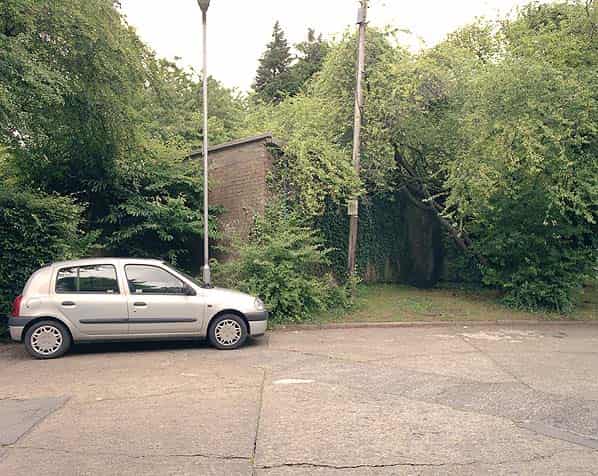
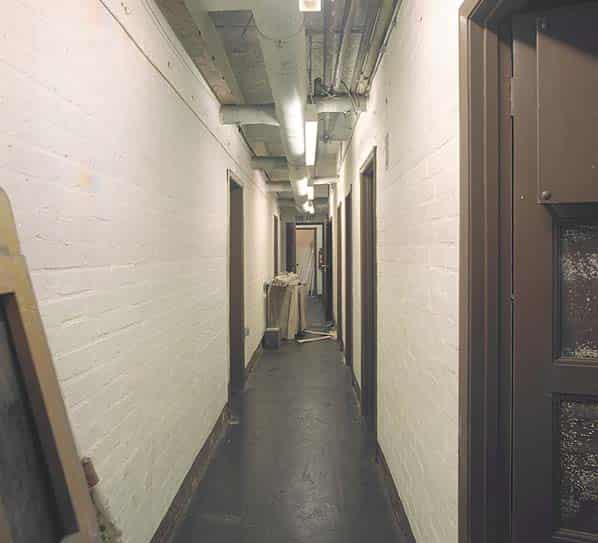
The Cardiff Corporation Landaff Sub Control is located in Vaughan Avenue, Llandaff, at junction with Harlech Road. It consists of a single story surface brick blockhouse, now partly hidden by trees and bushes. The sub-control was built in 1956 remaining operational until the disbanding of the Civil Defence Corps in 1968. After that date it remained in use, manned by Cardiff Corporation’s voluntary Civil Defence Organisation until 1984. It was in theory operational as the Corporation’s County Standby Control until 1991 but in practice it was never used apart from the storage of some radiac equipment. Since 1991 it has remained locked and unused.
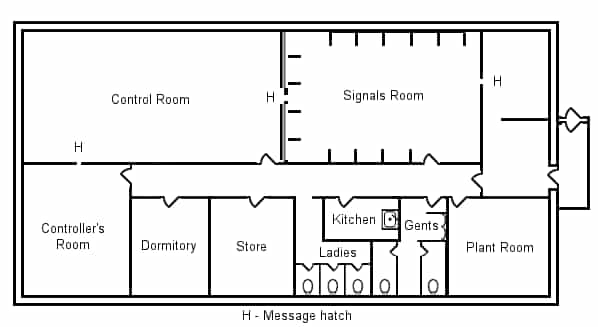
The entrance is through a metal grille and a wooden door, turning right through a second wooden door into the entrance lobby, which has a wooden floor standing cabinet with double glass doors, two notice boards on the walls and a wooden filing cabinet. A door ahead leads into the spine corridor and a door to the right leads into an office with a desk, table, two chairs, filing cabinet and a large quantity of papers. There is also a message passing window into the adjacent ‘Signals Room’.
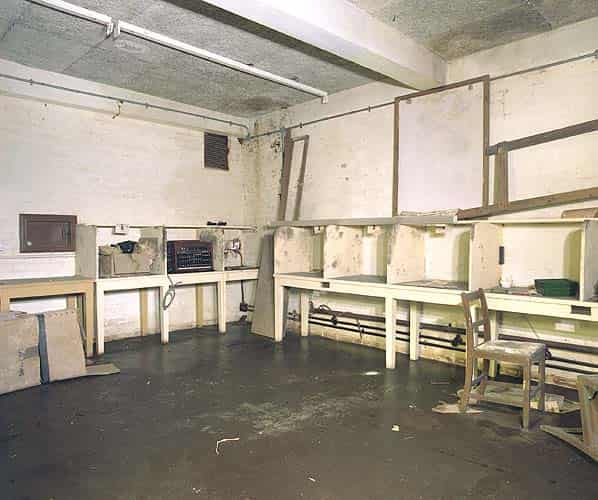
There are only two rooms on the right hand side of the spine corridor, the first being the ‘Signals Room’. This has thirteen acoustic booths around three walls (5, 5 and 3) and a long table along the fourth wall. There is a metal office cabinet and a four-drawer filing cabinet. On the wall there is a wooden GPO junction box and on the table a small wooden GPO switchboard.
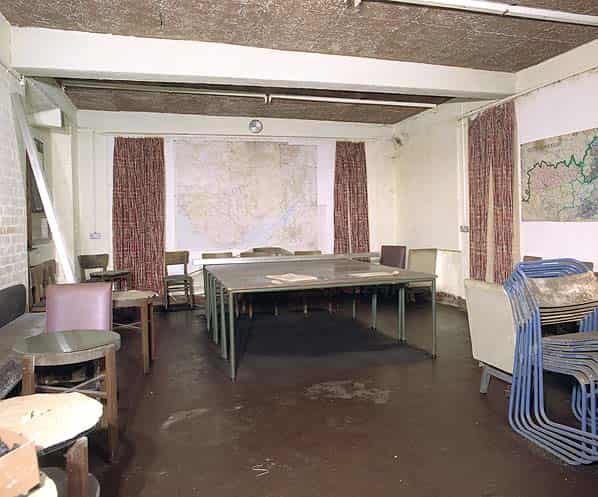
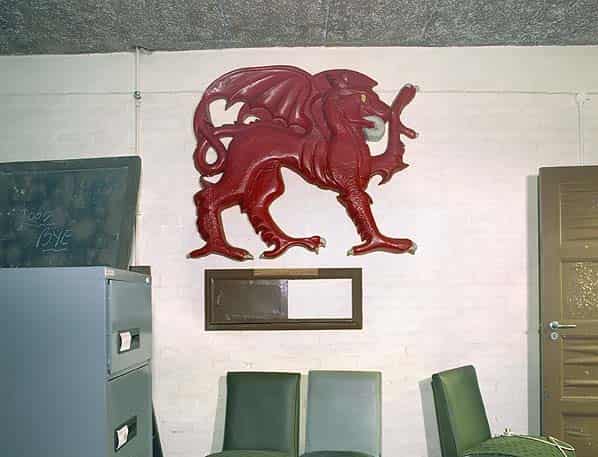
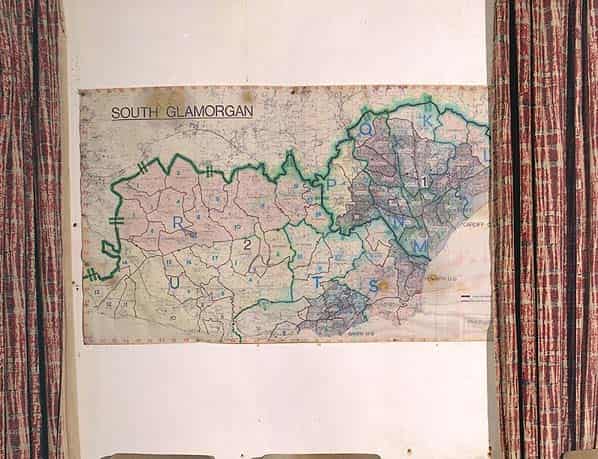
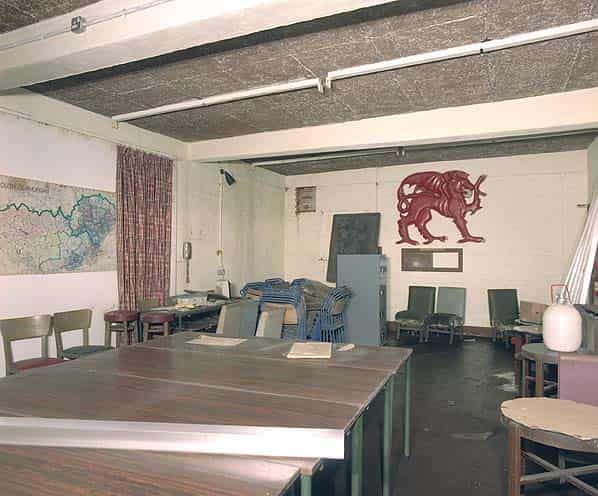
The next room on the right is the control room, the largest room in the bunker. This is dominated by a large embossed Welsh red dragon on the end wall with a message passing window close to it back into the signals room. There is a blackboard and a large number of stacked metal chairs and a number of large rectangular wooden tables placed together in the middle of the room. There’s a map of South Glamorganshire divided into districts on the side wall and on the end wall a large one inch Ordnance Survey map of southeast Wales stretching as far east as Bristol. This map has two curtains that can be pulled across it. At the back of the room there is another message window into the room at the end of the spine corridor.
On the wall there is a board marked ‘Last Game 10.30’; there are also a number of small round tables (similar to those found in a pub) and a 1960’s radiogram indicating that the room doubled as a social club, probably when it was manned by the voluntary CD organisation through the 1970’s.
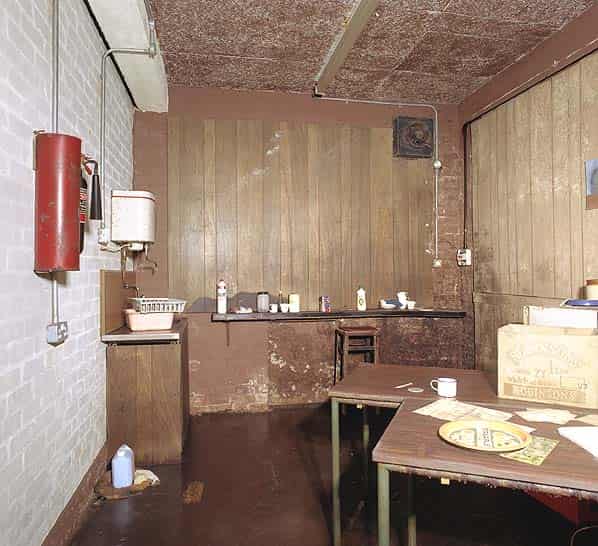
The room at the end of the spine corridor was probably once the controllers room but in later years it was paneled in wood and turned into a kitchen with a stainless steel sink, hot water heater and a Hoover fridge. There is also a large metal office cabinet.
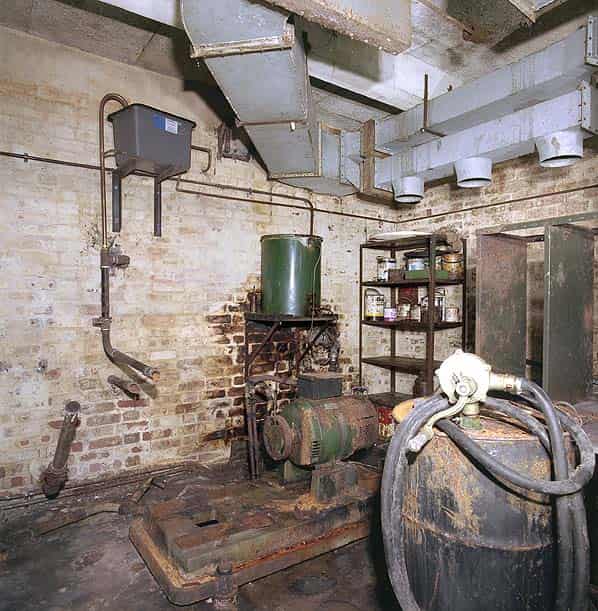
The first room in the left of the spine corridor is the plant room. This still retains its electrical switchgear, fan and ventilation trunking, which runs into all the rooms in the bunker. The electrical section of the standby generator is still there but the motor has been removed, as have the vertical cylindrical filters in the ventilation system. There is a small diesel tank mounted on the wall above the generator.
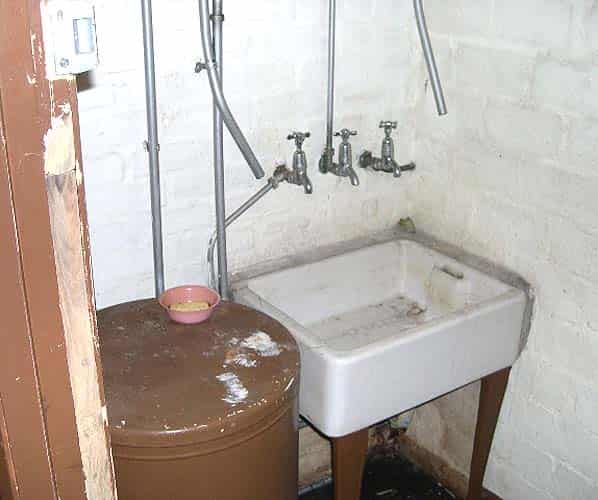
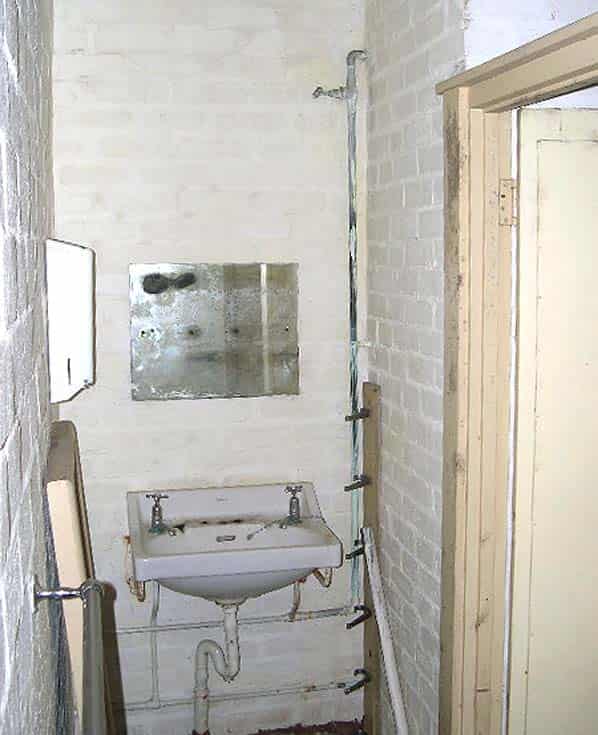
The next room on the left is the ‘L’ shaped male toilet with two WC cubicles, two urinals and a sink. Beyond the male toilet is the small original kitchen, which still has a Butler sink, two water tanks, water heater and a food preparation table above two cupboards. The ‘L’ shaped female toilet is next with three cubicles and a sink.
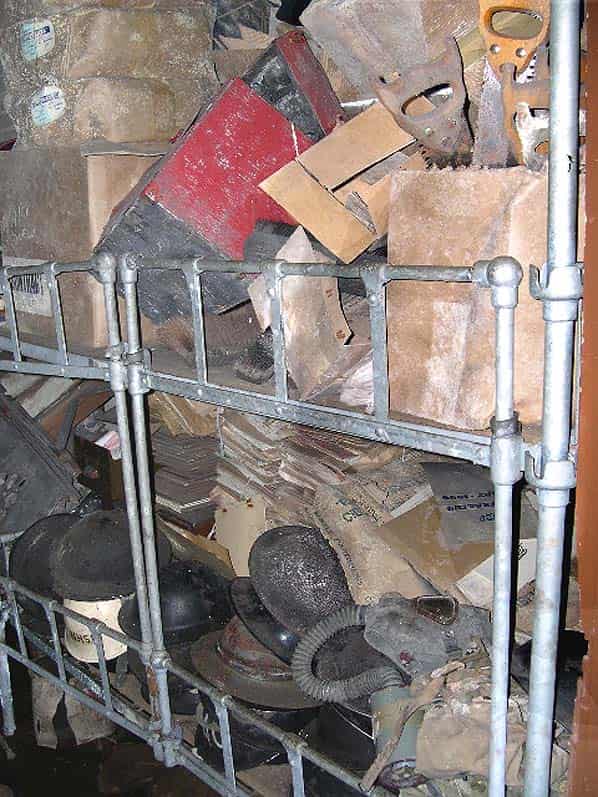
Beyond this is a storeroom with Dexion shelving, still stacked with equipment, much of it dating from WW2. There are a large number of tin helmets, stretchers, gas masks, dustbins, buckets, stacked tables and a large quantity of small wooden blocks (unknown use). The adjacent room is also a store although it was originally the dormitory with bunk beds still in place along two walls. There’s more furniture here plus respirators and a wheelbarrow.
Internally the bunker has changed very little since it was built and feels like a 1950’s bunker as soon as you walk through the door. It is very similar in design and layout to many other sub-controls around the country from this period but a close inspection of the walls both internally and externally showed no evidence of an emergency escape exit, which is unusual. The WW2 Control was located in the adjacent LLandaff Court and the building a civil defence garages are still extant.
Those taking part in the visit were Nick Catford, Robin Ware, Keith Ward, Nick McCamley, Bob Jenner, Bob Clary and Pete Turrier.