The original post war Camden Borough Control was located under a small public park on the north west side of the junction of Highgate Road and Gordon House Road, London, NW5. The bunker was built about 1953 and was part of the North West Group reporting to Mill Hill; it was taken out of use when the Civil Defence Corps was disbanded in 1968.
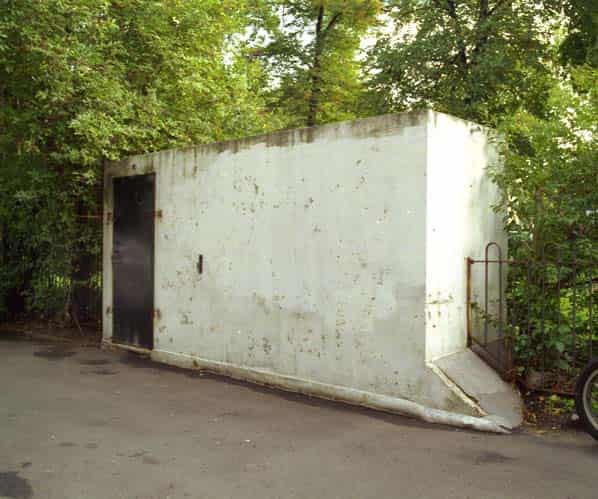
With the revival of the borough controls in the 1980’s a new site was found at the Town Hall in Euston Road when Camden was designated 51A6. The entrance consists of a rectangular surface blockhouse on the west edge of the park approximately 10' X 5'. There is a metal door on one side and at the opposite end it’s just possible to make out the steps descending into the ground.
Within the park there are two metal manhole covers over the two emergency exit shafts and a number of truncated ventilation shafts. The entrance door was welded shut many years ago to stop access by local children but the housing department of Camden Council agreed to grind the welds off in order to give access to the bunker for this inspection and a new lock has now been fitted. At the bottom of the stairs, the passage turns left, through a wooden door and into the north - south spine corridor half way along its length. There are no blast doors, air lock or gas protection. The layout of the bunker is very similar to that at Stoke Newington Town Hall (Hackney Borough Control) which was built around the same time.
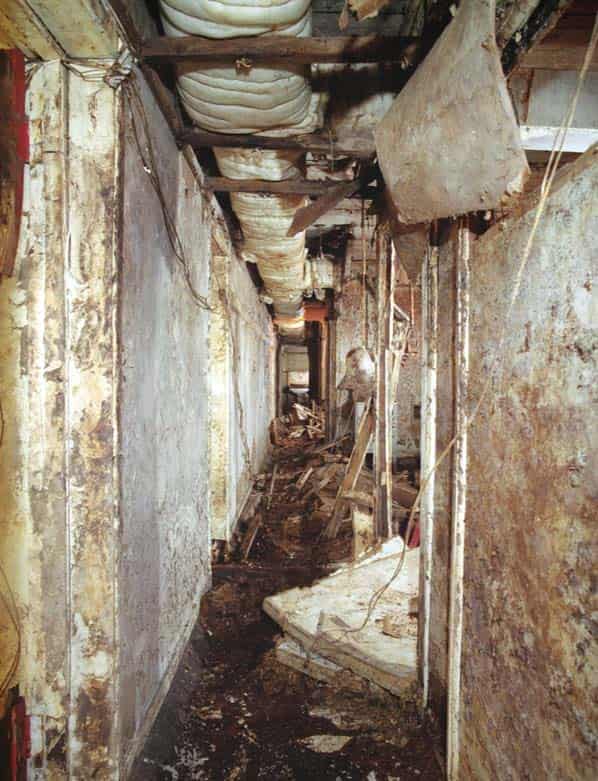
The bunker is completely wrecked not by vandals but by damp. Many of the thin partition walls have collapsed along with doors and door frames: these lie on the floor of the rooms and in the corridor. There are some names remaining on door frames or lying on the floor and these indicate what most of the rooms were used for. The ventilation trunking fixed to the ceiling is still in place throughout the bunker.
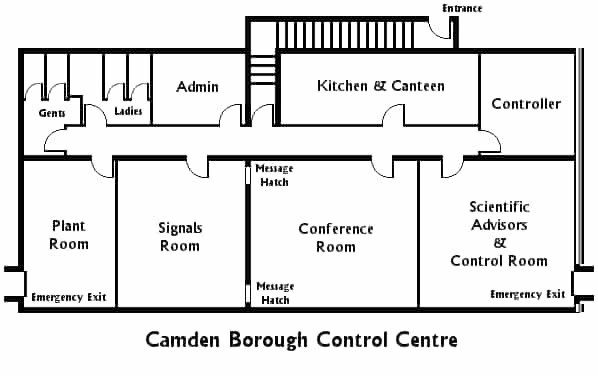
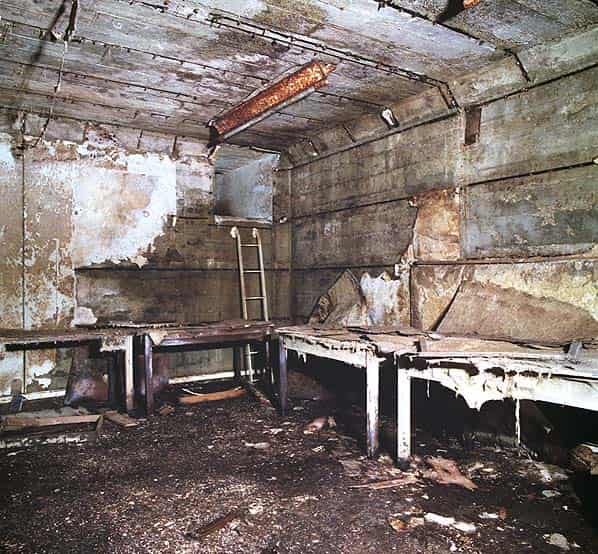
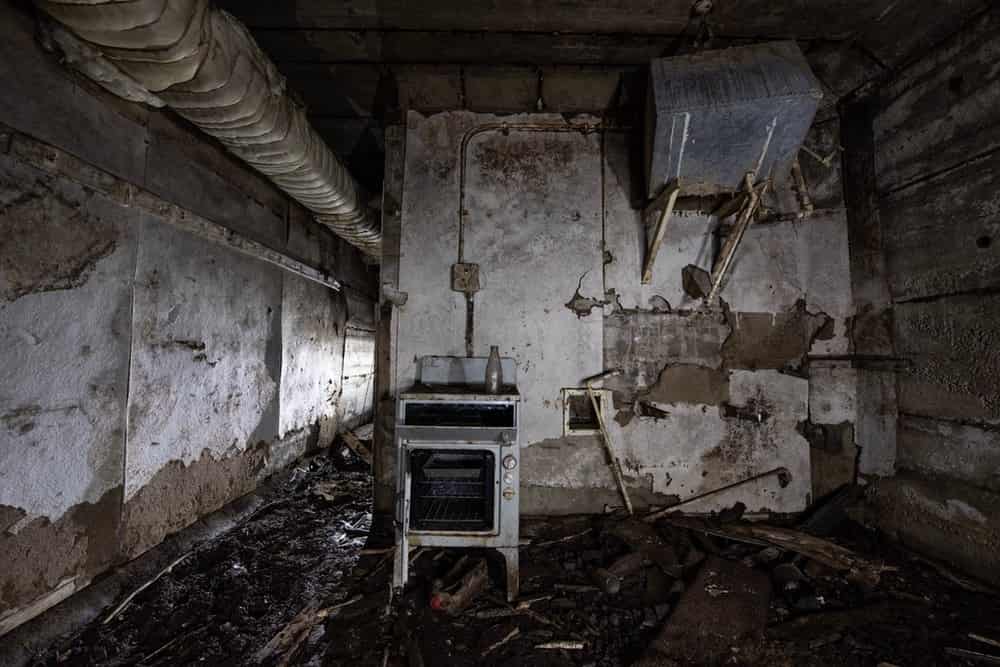
Turning left from the entrance passage the first room on the left is the kitchen/canteen; the partition wall between it and the spine corridor has gone. There is an electric cooker, butler sink with a wooden draining board and a large floor standing wooden cupboard. Two walls of the next room have collapsed and it’s now impossible to work out what it was used for. At the end of the corridor is the ‘Controllers Room’, this is empty although its walls are largely intact. On the opposite side of the corridor is a long room that was originally divided into two although the dividing wall has now gone. The first room is the ‘Control Room’ which still retains five wooden tables and a chair.
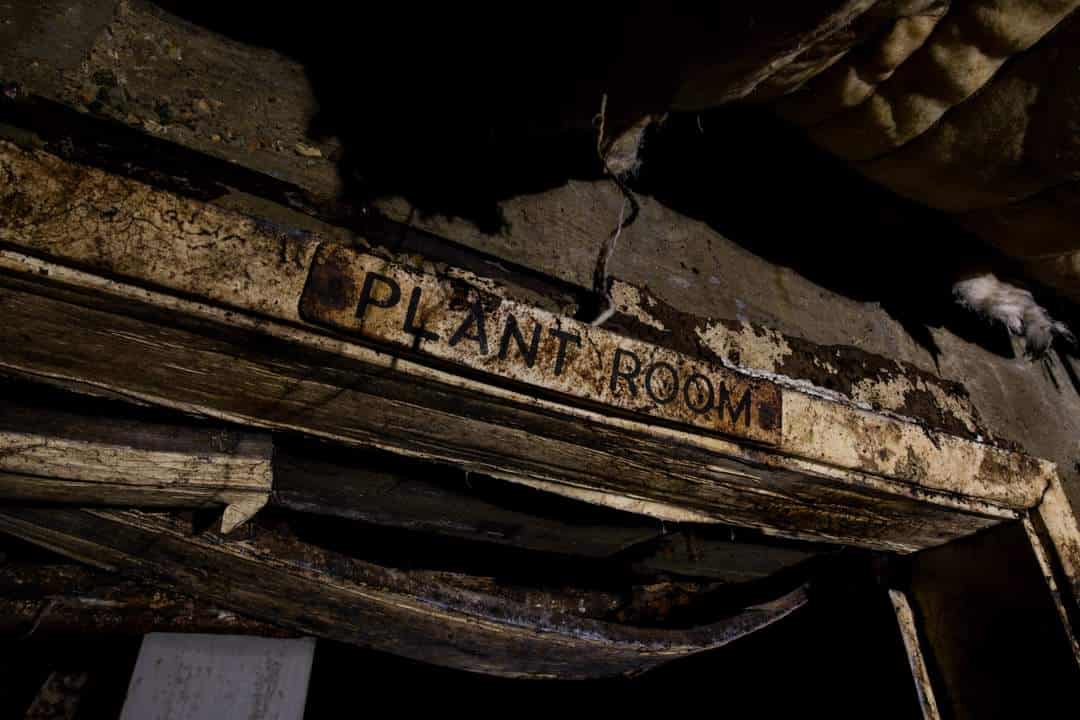
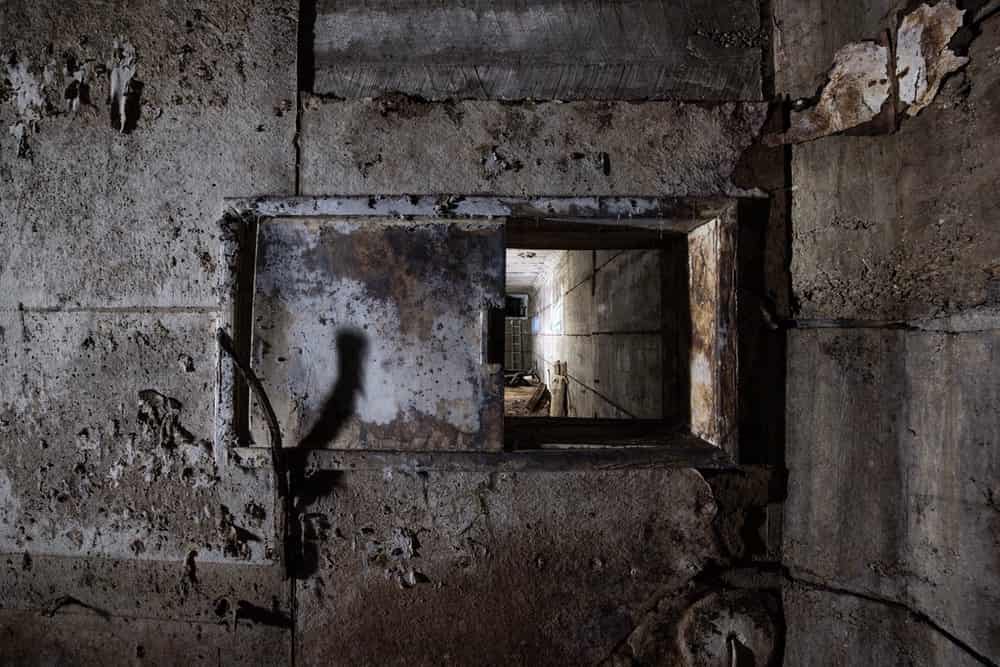
There is a short ladder on the end wall with a small horizontal tunnel half way up the wall. This leads to a vertical shaft to the northern emergency exit. The next room is the ‘Conference Room’ which has two message passing windows into the ‘Signals Room’ beyond. The final room along this side of the corridor is the ‘Plant Room’. The partition wall between that and the signals room has fallen away. All the plant is intact comprising ventilation plant and trunking, standby generator and electrical switchgear. There is also a second emergency exit in the end wall identical to that at the other end of the bunker.
The room at the end of the corridor is the male toilets containing two wash basins, two urinals and two cubicles. Next to the male toilet, back on the west side of the spine corridor, is the female toilet consisting of two cubicles and two wash basins. The final room in the bunker is designated ‘Admin’ and contains one table and chair, a blackboard easel and a large galvanized water tank on the wall. The floor is strewn with rubbish throughout the bunker most of it sections of the fallen partitions walls which have been reduced to a sodden pulp in the plant room. There is fallen wire and cables hanging from many of the walls and a slightly oppressive atmosphere throughout the bunker.