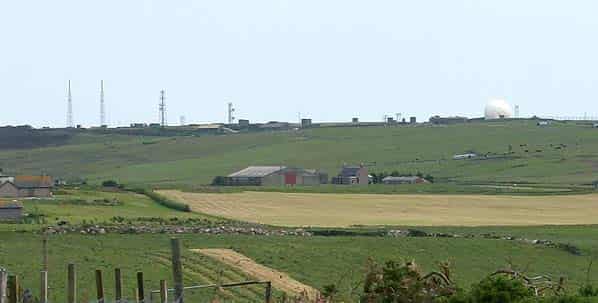
Buchan started its operational life at the beginning of the ROTOR period as a Ground Control Intercept station (GCI). In 1952 construction started to provide Buchan with a standard underground ‘R3’ type operations block. Like all ROTOR stations finalisation of construction was delayed by supply and logistical problems. The tenth quarterly Air Ministry progress report refers to problems negotiating the wayleave for the water main, this made Buchan one of the last GCI stations to be handed over to fighter command.
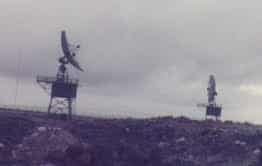
April 1953 saw No. 409 Signals Unit installed on site, after a period of technical familiarisation and testing the site became operational on the 1st August 1953. Buchan later reported to the Sector Operations Control (SOC) at nearby Barnton Quarry, which controlled the Caledonian Sector under No.12 Group Fighter Command. Due to supply and development problems with the introduction of a “home grown” long range centimetric search radar (i.e. Type 80) the station was equipped with AMES Type 7 search radars, one of which was located 2km South of the site, complimented by AMES Type 13 height-finders. Finally the all-new long awaited Type 80 Radar was installed in August 1956 with two American-built AN/FPS-6 height finders replacing the AMES Type 13s. The Type 80 search radar was supplemented between 1973 and 1982 by a transportable S259 search radar. The Type 80 radar remained operational until 1993. Buchan was also equipped with a more unusual set: a Westinghouse TPS-34 twin-beam radar that combined search and height finding radar which replaced the functionality of the AN/FPS-6 height finders from 1979.
Buchan survived the passing of the ROTOR period and the rapid changes in Air Ministry policy and still survives today as a part of The United Kingdom Air Surveillance and Control System (UK ASACS). In 1979 operations moved into interim facilities above ground whilst the ‘R3’ underground operations block was refitted, this involved the excavation of one side of the ‘R3’ and another bunker of similar size was constructed alongside to provide secure facilties for stand by generators, power cleaning and air filtration.
In 1988 a new Type 92 radar was installed, this led to the fitting of the new X-Console Geographical Display (GD). These units cost in the region of £1,000,000 each by 1988 standards. 1992 saw the introduction of the Integrated Command and Control System (ICCS); the stations purpose and mission statement is to “Provide continuous air surveillance to enable optimum aircrew and fighter control training to support NATO and additional air operations”
The UK ASACS has 2 operational Control and Reporting Centres (CRCs), Buchan being one, and RAF Neatishead which is northeast of Norwich being the other. An additional stand-by CRC is found at RAF Boulmer in Northumberland. The CRCs are the linchpins within the UK ASACS, each with their own geographical areas of responsibility, roughly split north and south of Newcastle. Within their own areas, the CRCs receive and process information provided round-the-clock by military and civilian radars to produce the Recognised Air Picture (RAP). In addition to this radar data, the CRCs also exchange information using digital data-links with neighbouring NATO partners, AEW aircraft and ships.
However, the production of the RAP is only one part of the CRCs duties, the second being the control of aircraft. While Fighter Controllers at Buchan and Neatishead provide the tactical control required for our Air Defence aircraft to police the UK’s airspace in peace and war, they are also involved in the peacetime training of the RAF’s Air Defence assets. Moreover, Fighter Controllers also provide support to Ground Attack forces when undertaking training with their Air Defence counterparts.
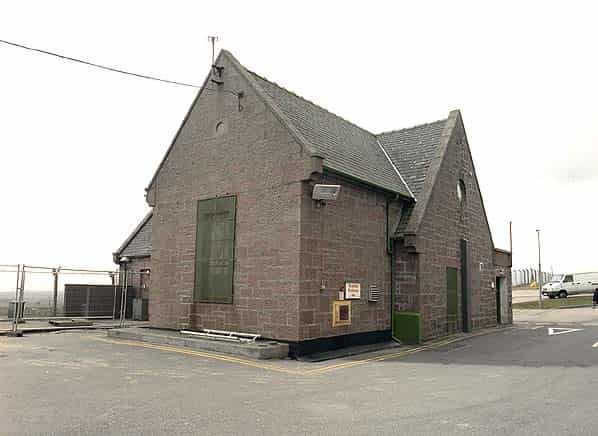
After the briefing we were taken to the Guardhouse, which has been altered from its original design by the infill of the veranda thus providing additional room within. The water tanks in the roof have been removed and dormer windows to the rear have been added to provide new office space. After being checked in by the RAF police who permanently man the site, we were asked to read a list of safety instructions regarding what to do in the event of a fire. We proceeded down the stairs at the rear of the guardhouse to the entrance tunnel. We joined an intersection halfway down that has been created by the additional construction that was part of the 1980’s refit. At this point the tunnel forms a “Y” with the new plant complex to the left and the original ‘R3’ operations block to the right.
Entering the ‘R3’ through a new set of blast doors we passed the original cable shaft covered by a locked wooden door, along this wall folding bunks were evident, the mattresses removed due to fire risk. The area that would have housed the ROTOR period transformers has been converted into office space. Evidence of the old blast doors still remain on the bend in the corridor; negotiating the dogleg we were at the top of the first staircase in the central spine corridor. The original plant hoist over the stairwell still exits.
The major changes to the top floor consist of the removal of all of the floors within the operations room and a new suspended floor constructed in a tiered auditorium fashion, stepping down so a clear view can be obtained from the rear Geographic Displays to the front GD’s. The kitchen has been adapted to provide very basic mess facilities; restrooms are still roughly in their original configuration - the only difference is the level of segregation is not so strict. Many of the other rooms on the upper floor have now been converted to office space.
Moving out through the doors past the stairs at end of the upper spine corridor brought us to another substantial blast door in the position of the original 1950’s doors. Turning the dogleg brought us into the exit passage chamber where the original ‘Cyclones’ (providing cooled water to the AC plant) were once fitted.
A very sturdy 10mm welded steel plate blocked off the bay where the cooling fans (at the base of the ‘Cyclone’) would have sat. The original concrete floor here had been cut through and a mesh floor installed. The current AC cooling towers (3) were accessed by a small flight of steps at the bottom of the concrete stairs for the Emergency Exit. These steps take you to the other side of the steel plate via the original 1.75m high spaces between the upper and lower corridors.
Air is drawn not down the Emergency Exit as originally intended but through a large duct from the roof of the bunker from the filtration system in the plant bunker alongside. Looking up at this duct the thickness of the roof could be seen, as a perfect round hole about 1.5m in diameter had been bored through 10ft of concrete.
The whole bunker has been gutted throughout. Most of the original 1950’s fittings and a whole new air conditioning system and plantroom installed. The lower floor houses the plantroom in its intended place, in which sit three large air-conditioning compressors, heat exchangers and controls. Some walls had been removed from the original layout. We were unable to see the remaining rooms on the lower floor; these would have probably contained communications equipment.
Opposite the plant room is the lower operations room, this has the floor on the same level as the lower corridor. The two control rooms are split into two levels of responsibility (interception & control and identification) The lower operations room is responsible for identifying any plots that come into the relevant sector, this is then coded and passed to the control room above for action, whether this be control within air space or allocation of fighters if the plot is hostile.
We were shown how the Geographic Display System in the upper operations room functions. Identified plots are passed from below and the controllers “manipulate” the aircraft around the busy air lanes that criss-cross the sky. Both civilian and military aircraft are displayed. This room runs at a different tempo to the lower ops room, with instructions being relayed backwards and forwards, by all account things can get a little heated on occasions.
The GD has one central display and two small electronic tote boards to each side, the right hand screen displays a list of aircraft that are in the air and which aircraft are available to the controller. The left-hand screen displayed information regarding airfields and weather status. Operators could select and zoom in on a part of the map with a series of buttons and a roller ball, select a plot and call up any information on the aircrafts intended flight plan.
Finishing in the R3 we made our way back out into the main corridor, to the intersection of the plant bunker. Passing through a substantial blast door we found ourselves in a large plain concrete corridor with a small mezzanine floor above our heads providing access to a ventilation tower that was evident on the surface. Following this corridor down we came across a large chamber with various red painted blast doors to the right and workshops and stores to the left.
Our guide opened one of the doors to reveal a line of 3 Rolls Royce/Dawson Keith 650kw diesel generators. These were in exceptional condition with only test hours on the clocks. The furthest of the rooms housed the main fans that would draw in the large amounts of air required for the operations bunker. Large banks of filters are located between these fans. It seemed that a provision had been made in this room for gas filtration. The bunker appears to have the ability to draw filtered or unfiltered air depending on external conditions. The remaining room housed four motor generators that clean and stabilise the incoming power from the national grid, two of which ran at a time with the other two in reserve. The sheer size of this second bunker is wholly impressive as it is at least as big as the ‘R3’ itself.
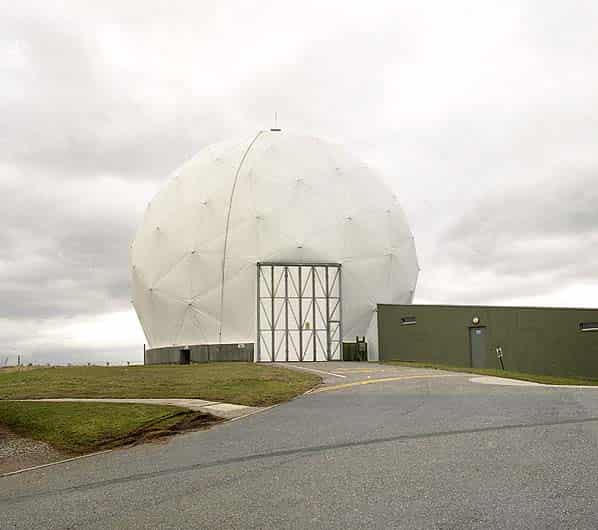
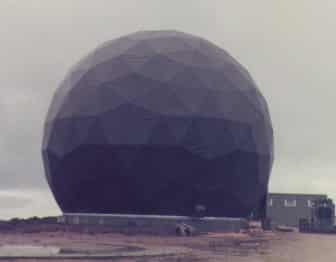
After visiting the plant bunker we all made our way back to the surface via the guardhouse to a wonderful sunny spring day. Here we were allowed to take some limited photographs of the rear of the guardhouse and the pressurized Radome that houses the main Radar Array. After a brief look around the area of the guardhouse we took a trip down to the domestic camp towards the village of Boddam where we had an excellent meal in the officers mess.
We were made to feel most welcome by our hosts at RAF Buchan, they made our visit most enjoyable. My thanks also to Ward and Caroline Westwater of the Civil Defence & Emergency Service Preservation Trust for arranging the visit to RAF Buchan.
Those taking part in the visit were Jason Blackiston, Nick Catford, Keith Ward, Nigel Knapton, Andy White, Robin Ware, Ward Westwater & Caroline Westwater.