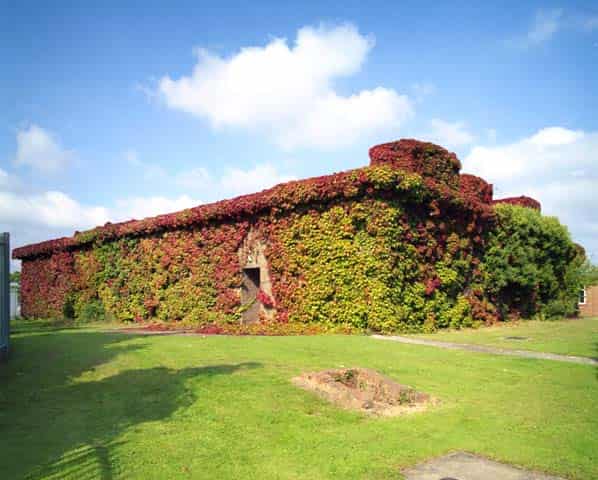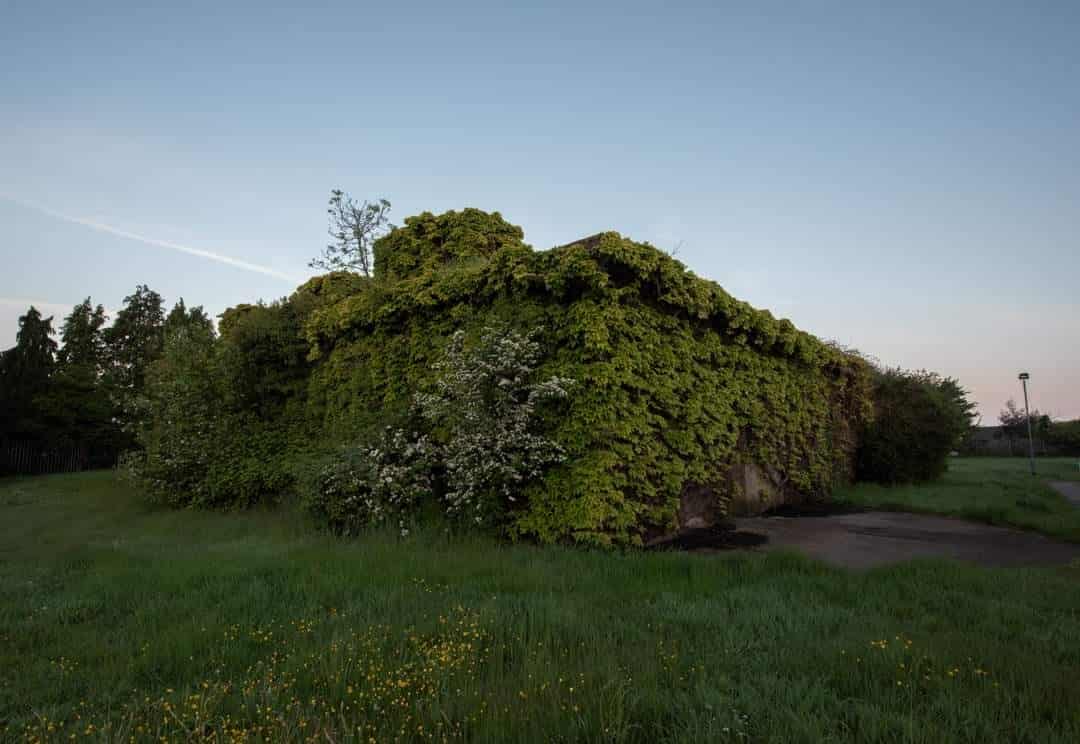
The Brislington War Room is located to the rear of a small government estate housing social security offices and the local driving test centre in Flowers Hill, Brislington, 2 miles south east of Bristol city centre. It is built to the standard two level design and semi-sunken, i.e. the lower level is below ground. Within a few years of opening in the early 1950’s, the regional war rooms became obsolete and the building was rented to Avon County Council. It was used as their County Borough Control until 1981 when the Home Office increased the rent and the County Council refused to pay; since that date it has been unused. The whole site is now owned by a management company and the ‘H block’ offices leased back to various government departments; the bunker however remains derelict and its future is uncertain. The building is now completely covered by Virginia Creeper including the three ventilation towers on the roof.
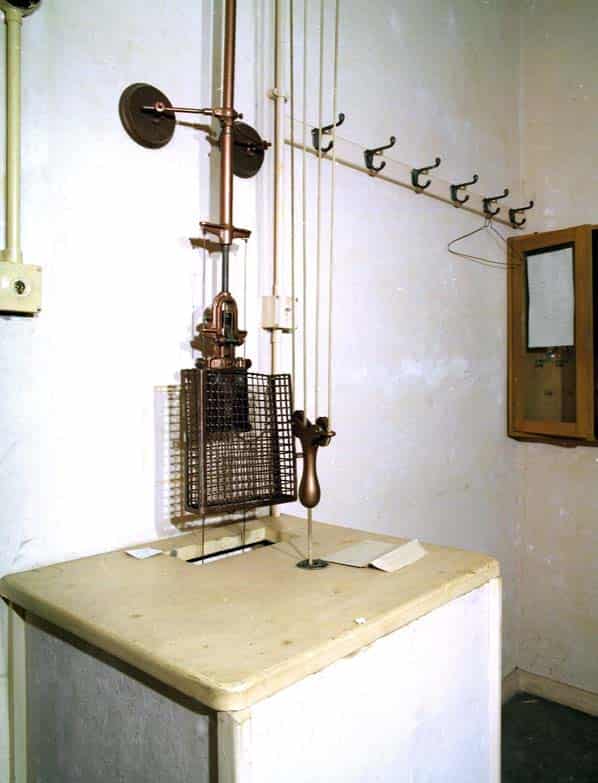
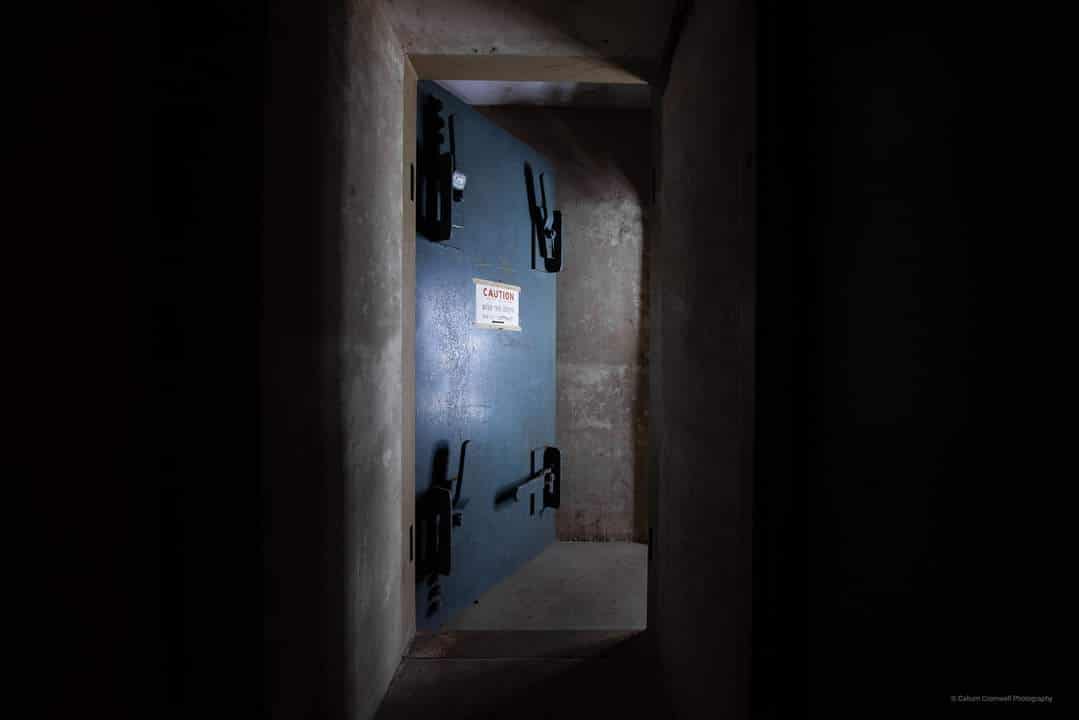
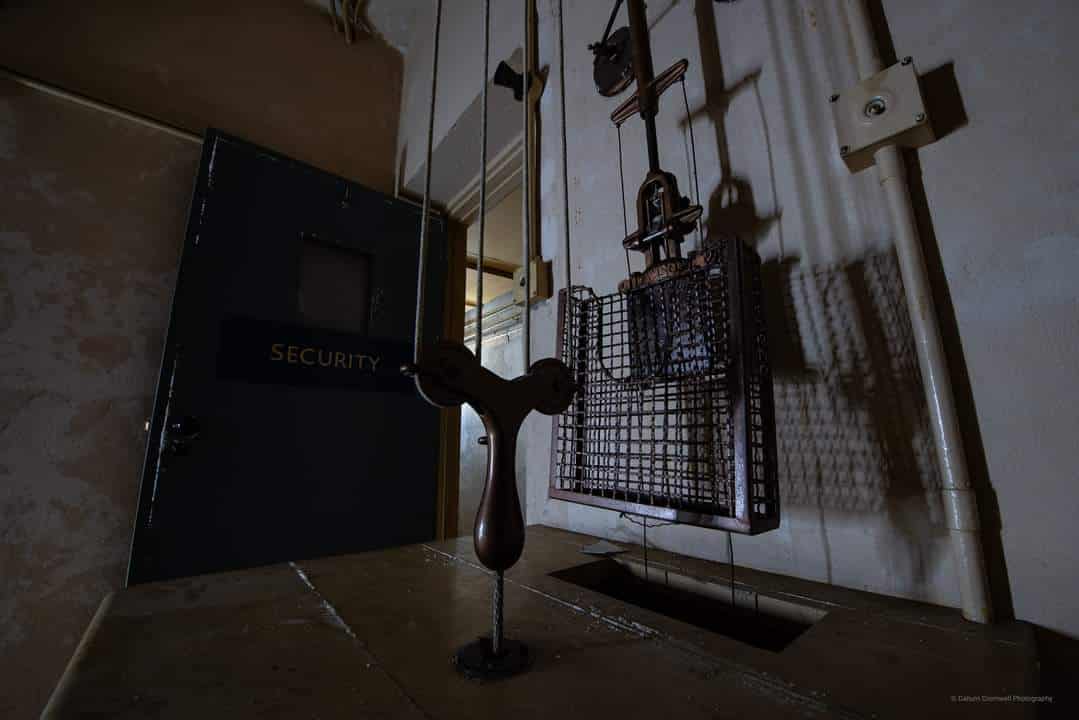
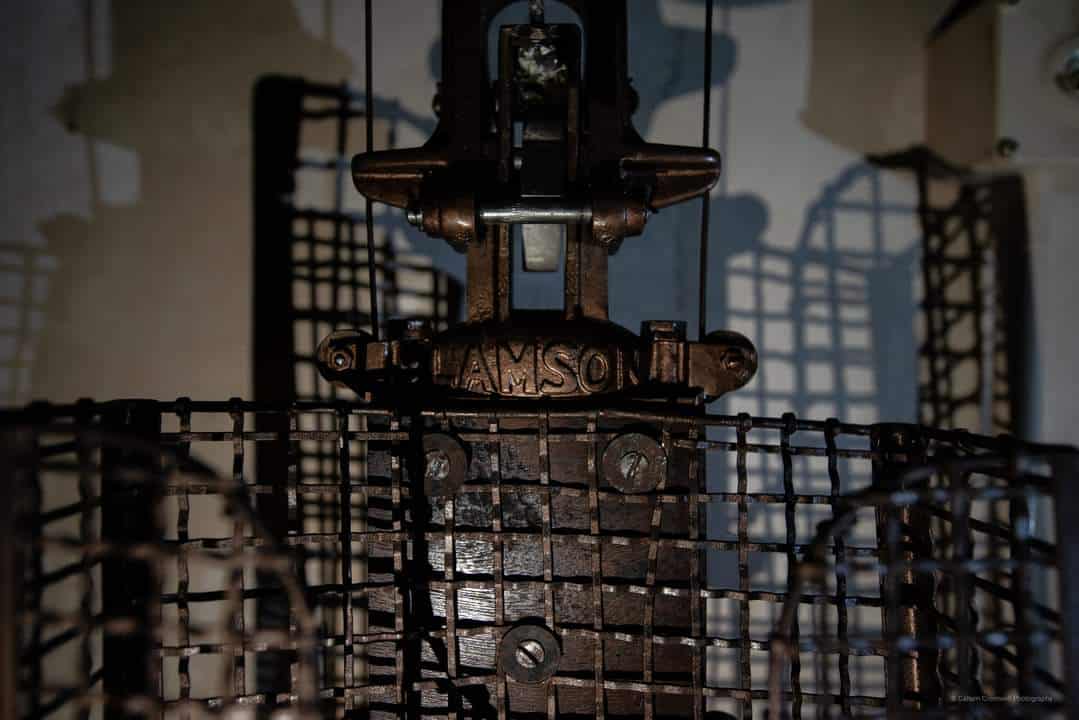
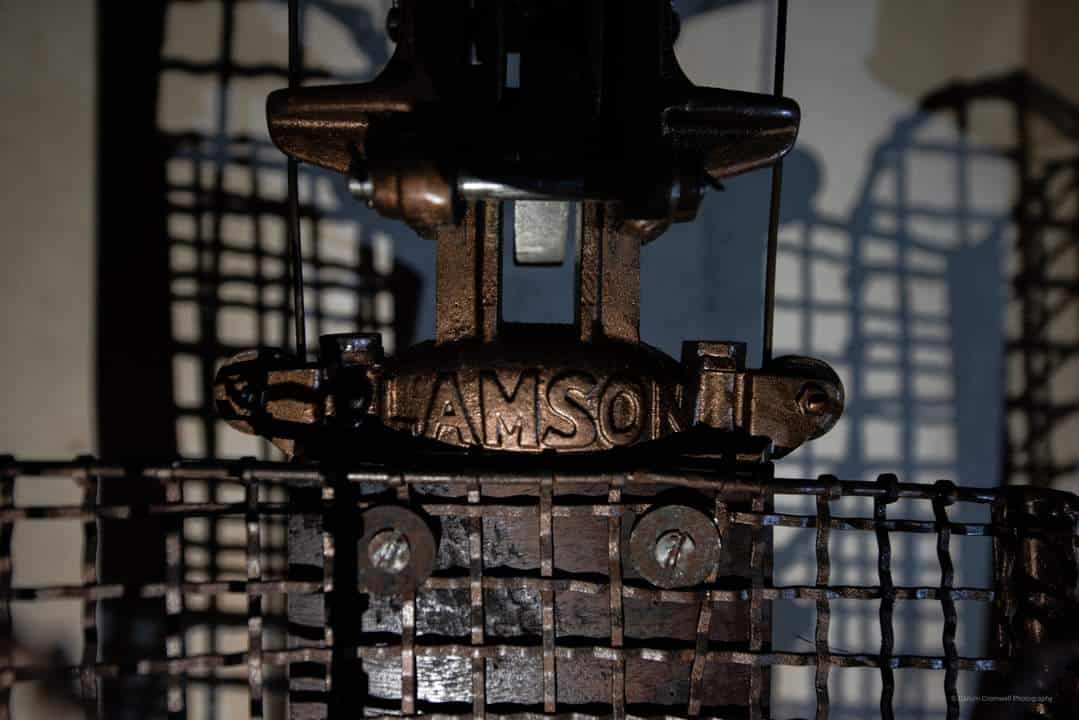
Over the years some of the rooms have been put to different uses and the descriptions in this report refer to their most recent use as a County Borough Control. The main entrance is to the rear of the building against the perimeter fence. There is a wooden door at the back of a small entrance porch with a dog leg to a second wooden door followed by a second dog leg and a heavy steel blast door. Beyond this, the male toilets are on the right and still in original condition. They consist of 4 cubicles (with curtains instead of doors), urinal, shower, three wash basins and two water heaters. Beyond the male toilets the passage enters the upper ring corridor. To the left the there are stairs down to the lower level and the first room along the outer wall (west) is the ‘Security Room’ which has a key cabinet full of keys, a ‘71 Region Circuit State’ board, several posters and an intriguing message handling system for passing paper messages to the floor below. It consists of a wire basket and a system of ropes and pulleys for lowering the basket to the lower corridor. The basket locks in position in the upper room but can be released by pulling on the rope from below. The system is manufactured by Lamson who are better known for the ‘Lamson Tube’ a pneumatic message handling system used in many government buildings and still used in some department stores. A similar basket still exists in the Birmingham War Room.
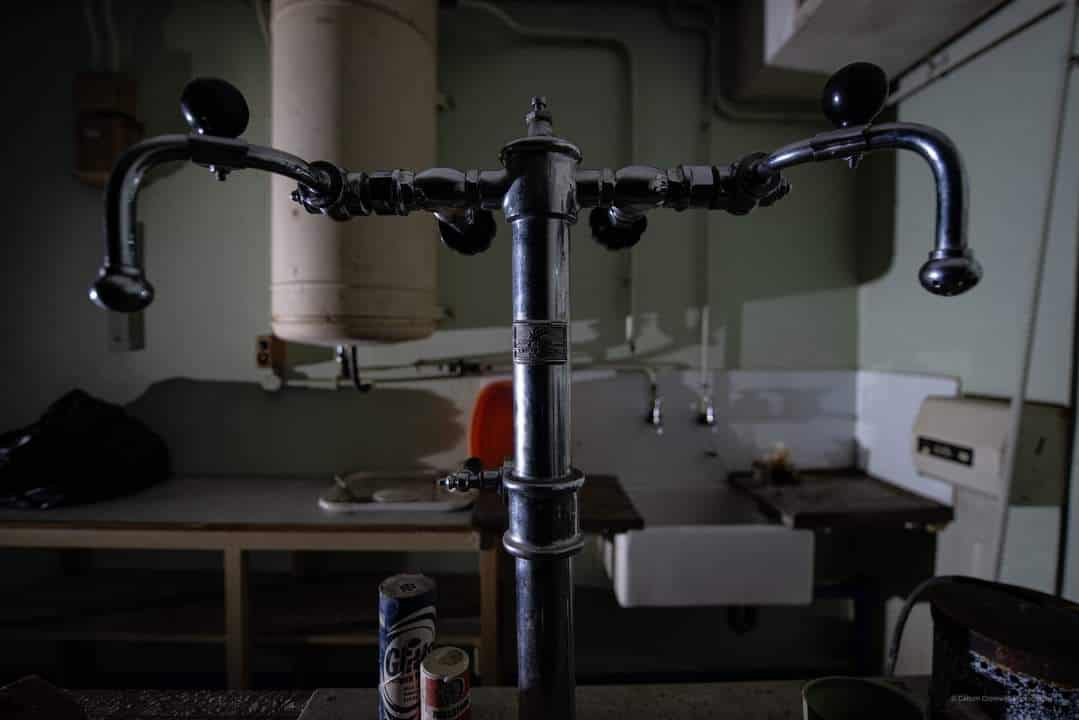
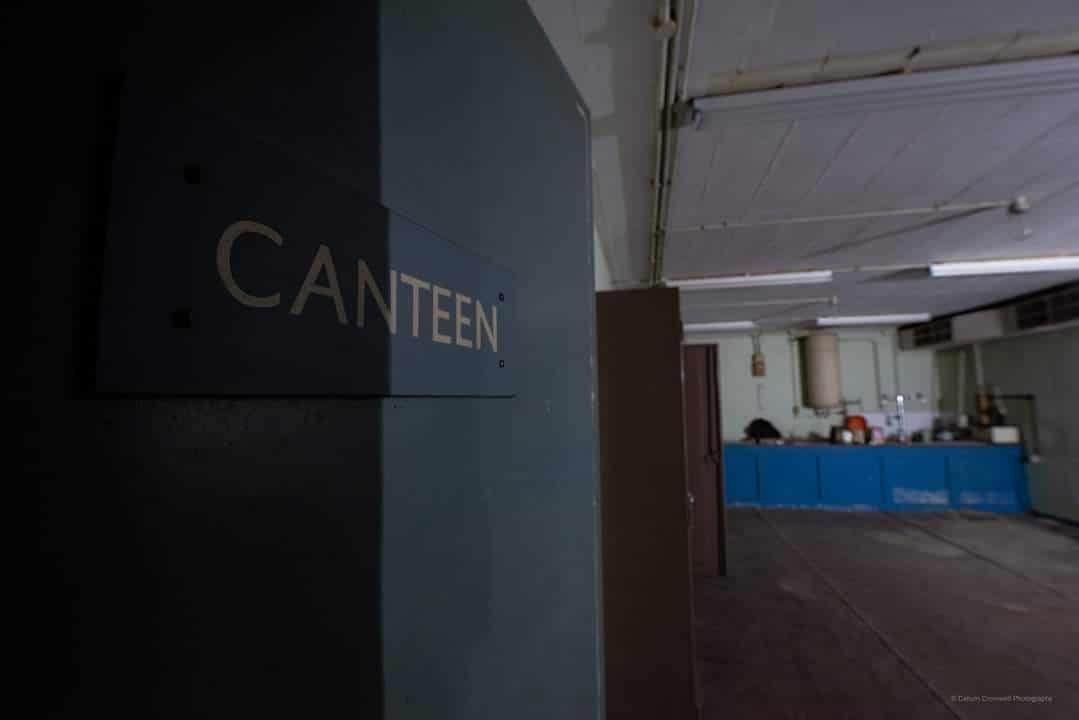
There are three further rooms along this side of the outer corridor, they are all empty apart from a table, one was used by the Public Relations Officer another by the Chief Ambulance Officer and the third by the Medical Officer of Health, the Hospital Board and Cemetery Superintendent. Along the east side, the corridor enters the long kitchen/canteen which still retains a long serving counter with a tea/coffee machine mounted on it. Behind the counter there is a water heater, preparation table, sink, draining board and some crockery. The canteen area of the room is empty apart from a large floor standing cupboard. Passing out of the canteen the ring corridor turns to the right (south) where there are three rooms along the outer wall.
The first room contains Dexion shelving along one wall still full of files. The other two rooms contain redundant furniture and are attributed to the Transport Officer and the Port of Bristol Authority. beyond this room there is a second flight of stairs and the rear exit/entrance which is identical to the front entrance. There is also the ladies toilet which mirrors the male toilet without the urinal; each cubicle also has a tin box on the wall labelled ‘Towel Bin’.
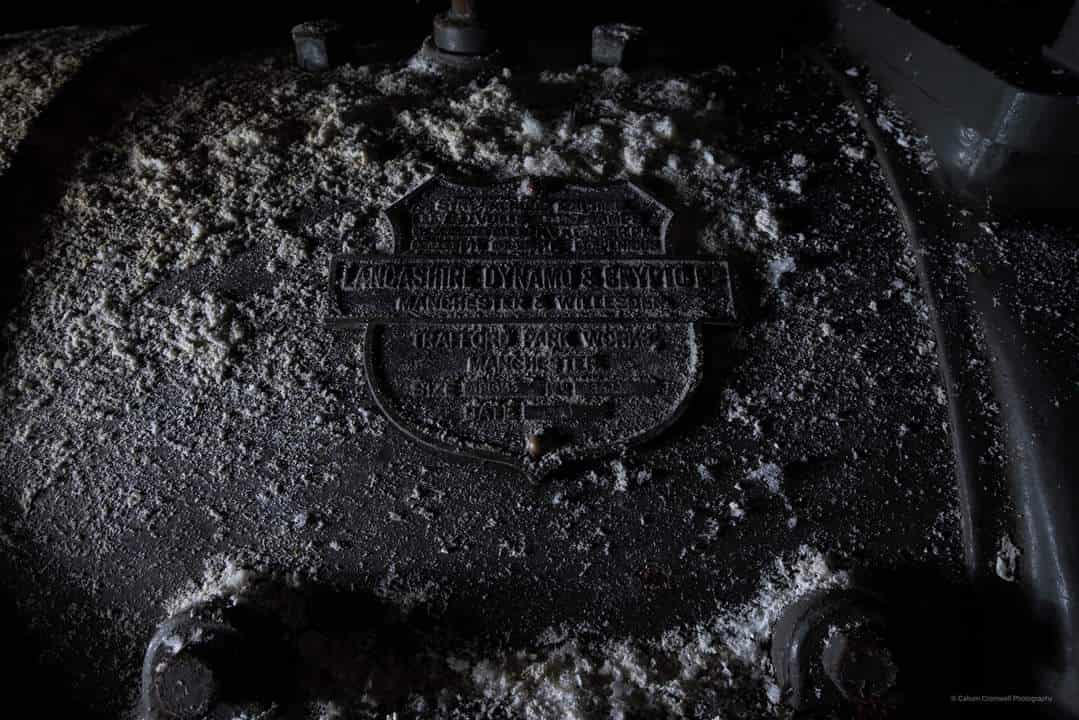
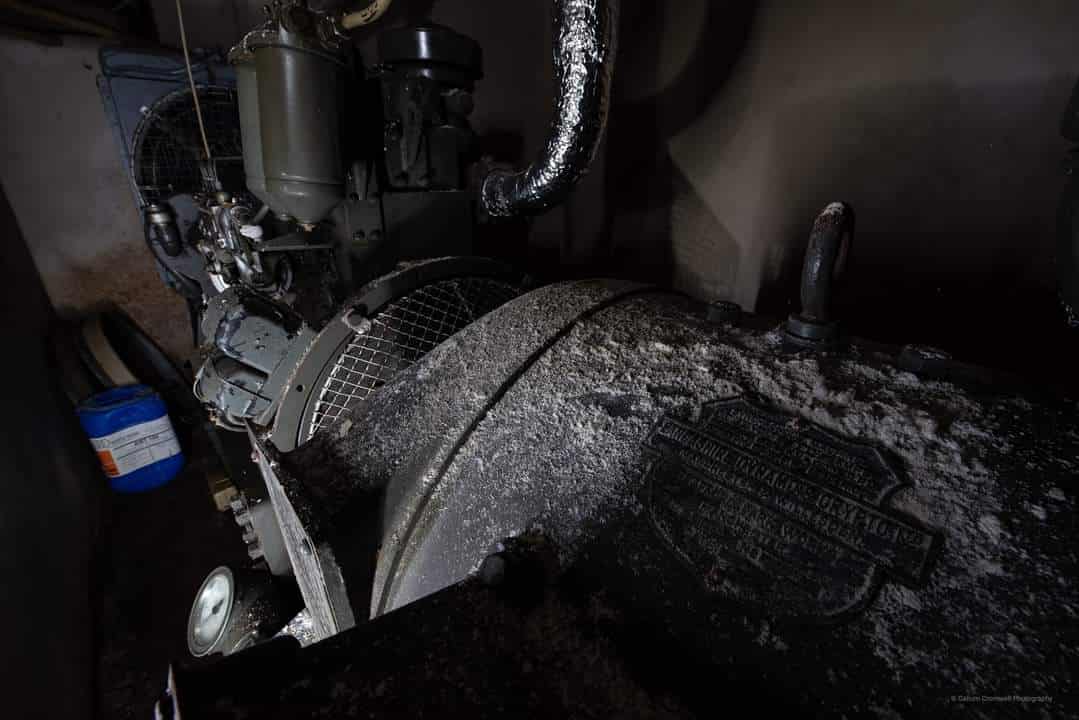
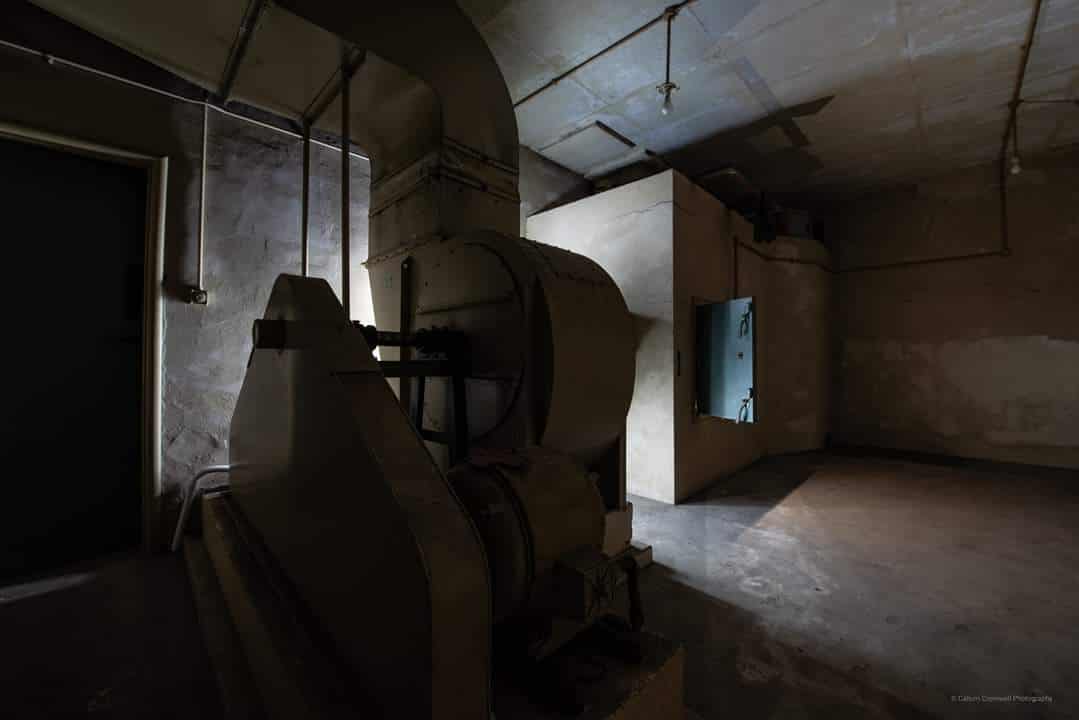
Next to the female toilets on the outer east wall of the ring corridor is the plant room and within it a separate room housing the standby generator. Most of the equipment in the plant room is still in place including various electrical boxes and switchgear, an alternator/regulator panel and a standby battery charger with a separate rectifier cabinet. Although the battery shelves are still in place the batteries have been removed. A door in the far side of the plant room leads into the ventilation plant room and store. The ventilation plant consisting of a fan, filters and trunking is along one wall with Dexion shelves along another wall. Many things are stored in the room including papers, books, various signs from doors, various maps, dummy dosage meters and a wooden model of a nuclear plume. There is a wooden board with the titles ‘County Borough Control’, ‘Sub Control’, ‘Sector Control’ & ‘Control Post’.
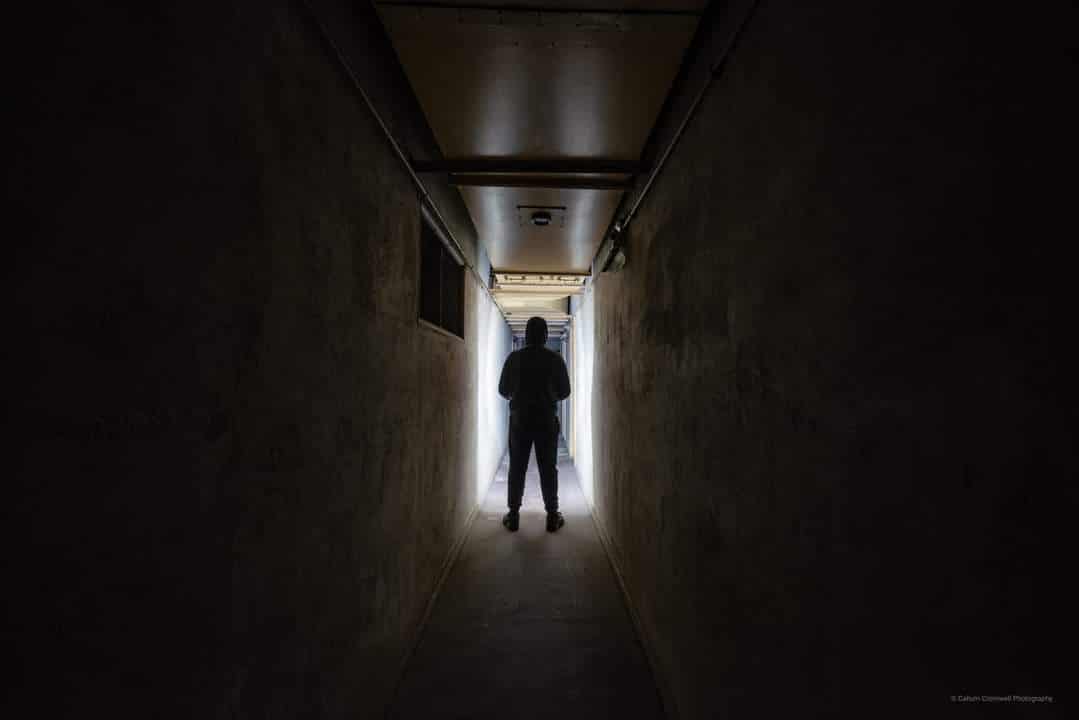
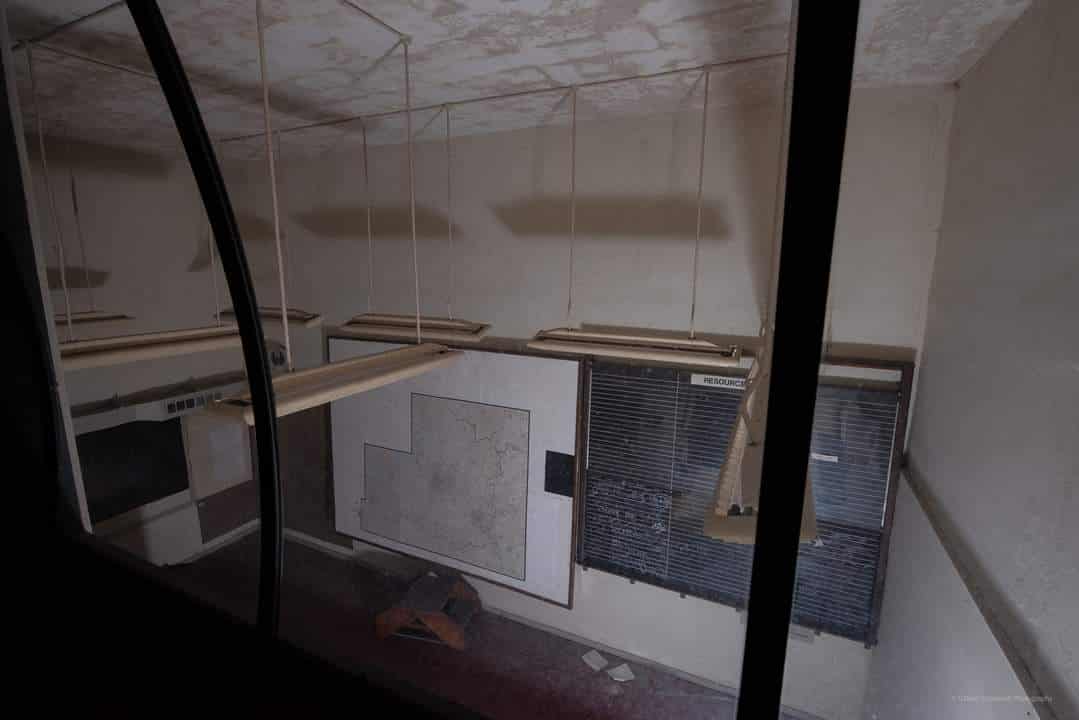
A door at the far side of the plant room leads back into the ring corridor. There are two rooms accessed from the inner east side of the ring corridor; both of them have curved glass windows (to prevent reflection) overlooking the control room in the well below. The smaller room has one window and is attributed to the Civil Defence Officer, it is empty apart from an ‘Availability’ board on the wall. The other larger room has two windows looking down into the well on one door it says ‘County Controller’ and on a second door into the south face of the ring corridor it says ‘Fire Control Room’. This room also has Dexion racks stacked with files. At the bottom of the stairs is the lower ring corridor with the two level control room accessed from the south face.
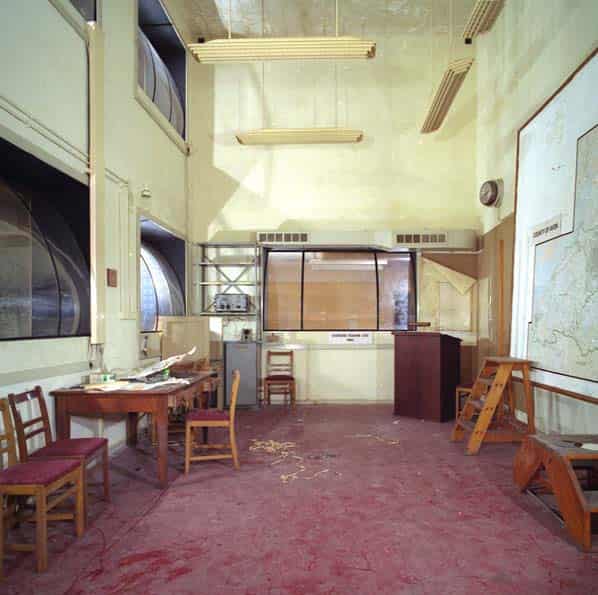
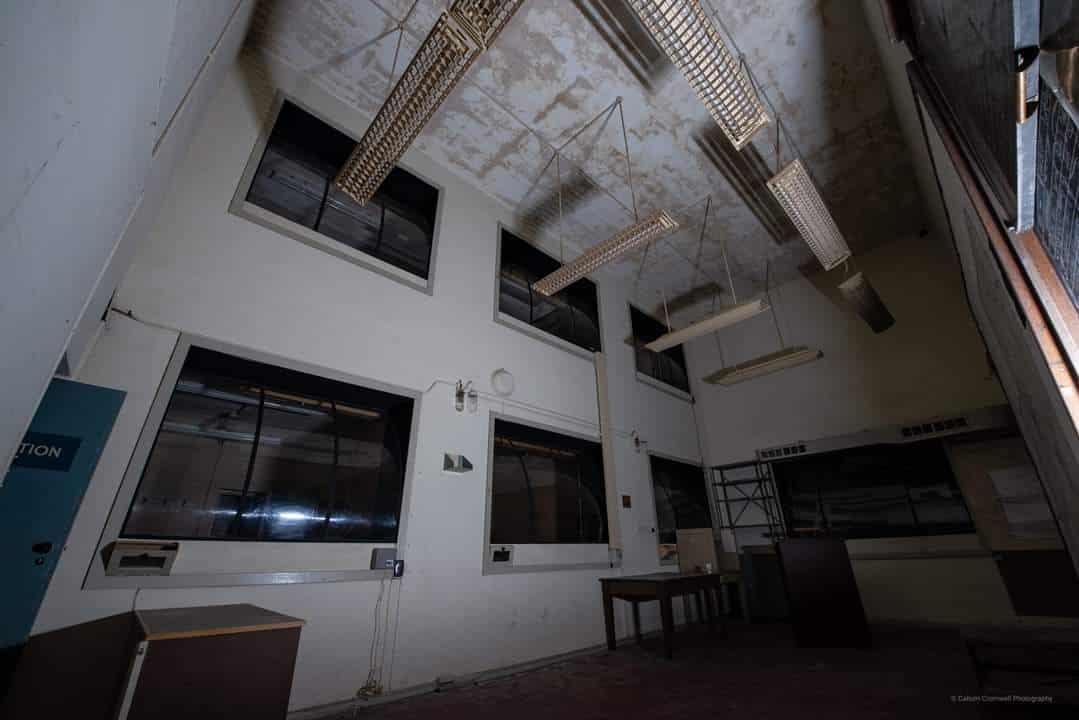
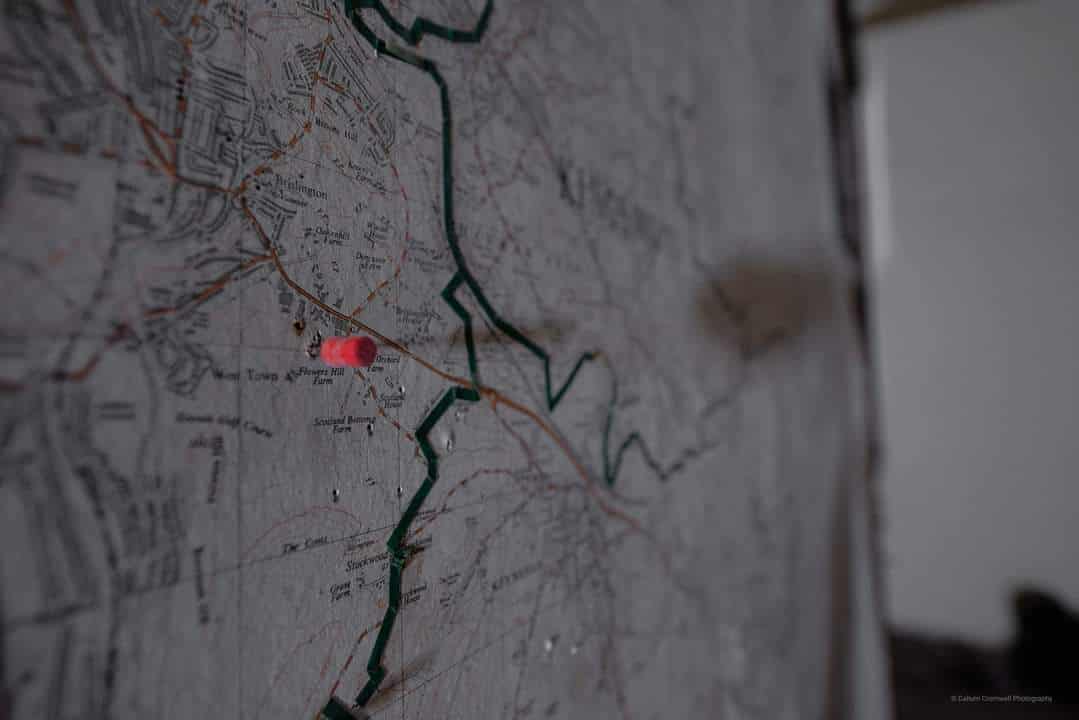
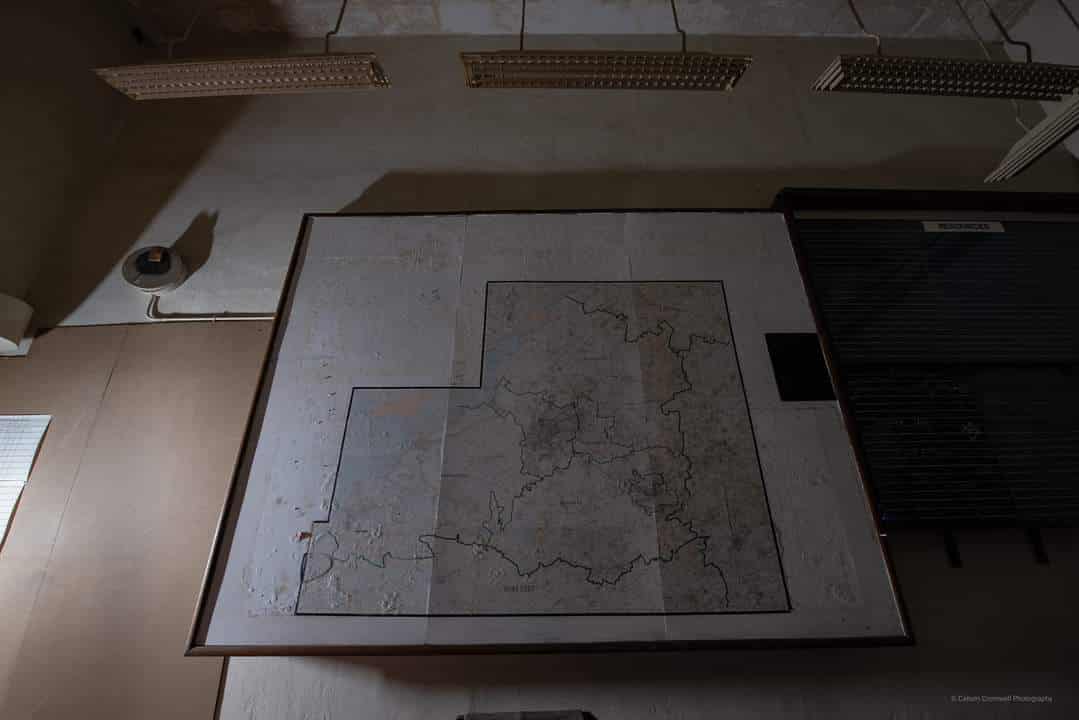
Although obviously used for this purpose, it has ‘Information’ on the door. There is a short counter immediately inside the door, other furniture includes a desk, 9 chairs and a floor standing lectern. There is a large wall map of the Bristol area on one wall dating from about 1980, it shows Avon District Council boundaries and locates the county borough control, sub controls, sector controls and control posts. Below it is a small wooden platform with two steps up on either side and alongside is a four step ladder for reaching higher parts of the map which reaches almost to the ceiling. There is also a large resources blackboard with chalk and a rubber, a control unit for the Tanoy system, several signs relating to Exercise Square Leg and an alert state board showing red, white and black circles. There are small message passing windows into all the adjoining rooms in the corner of each window. As well as the three curved glass windows on the upper level there are four on this level, three into rooms on the east side and one into a room on the north side.
On the inner east side of the ring corridor one room is attributed to ‘Police and Fire Officers’. It has a 1965 map of the Bristol area on the wall showing the county borough control, sector posts, sub controls, control posts and boundaries (a smaller and earlier version of the map in the control room). The next room is ‘Scientific Services’, this has the same map and a 1980’s Ordnance Survey Map showing Avon District boundaries. The final room on this side of the ring corridor was for the ‘Armed Services’ and has two more copies of the 1967 map.
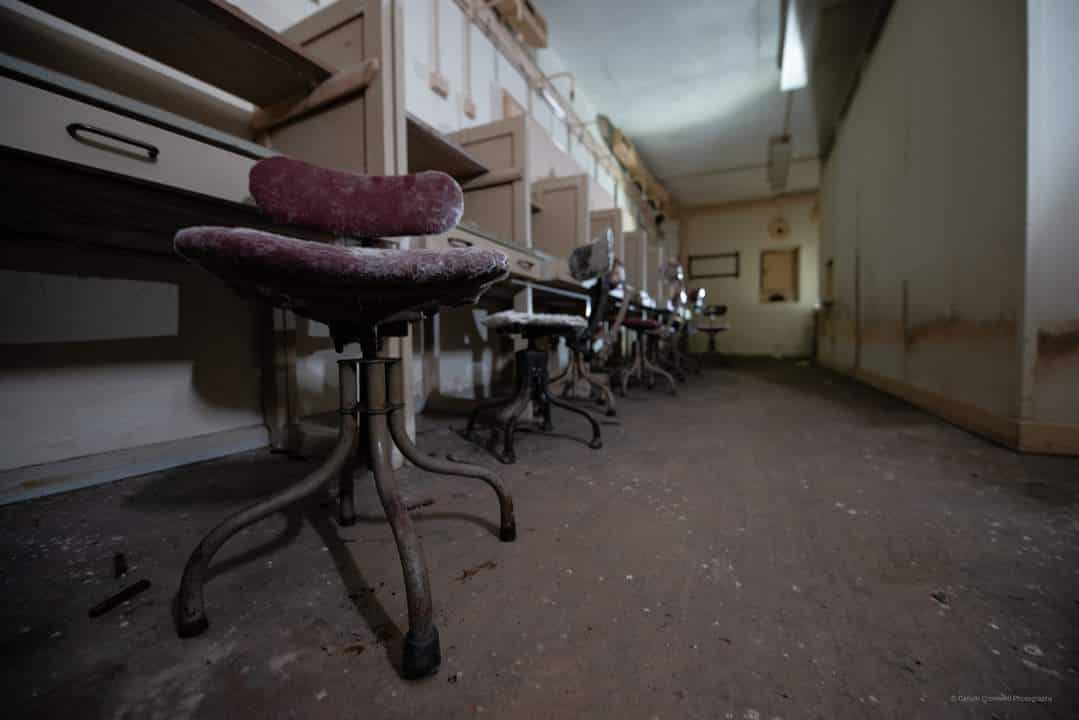
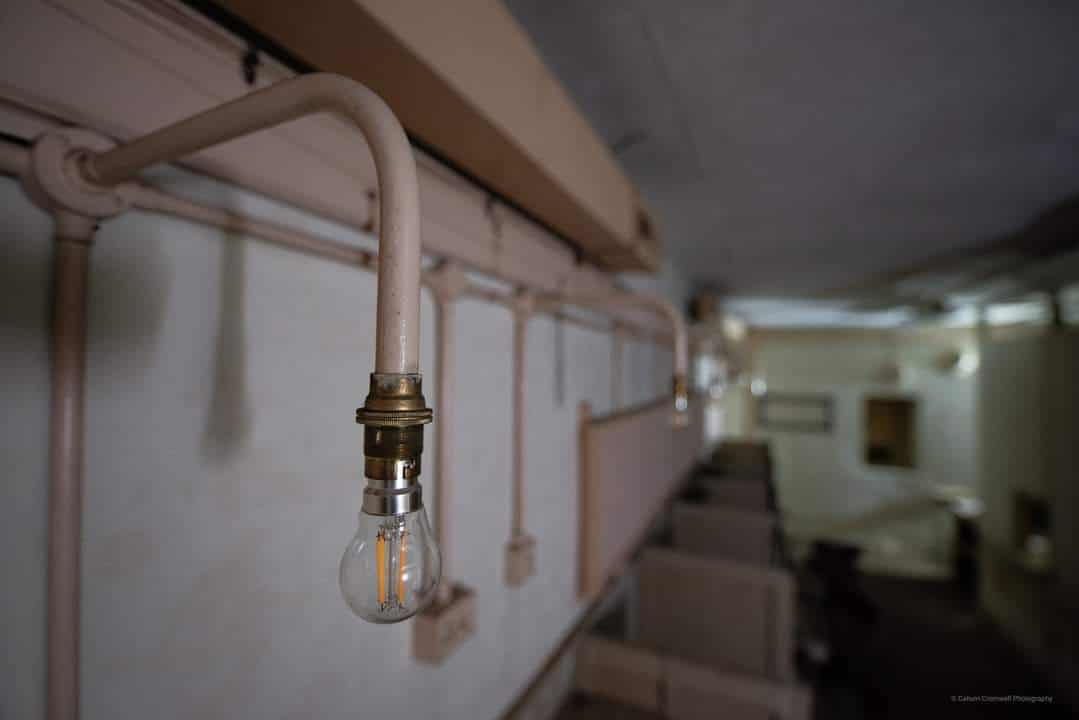
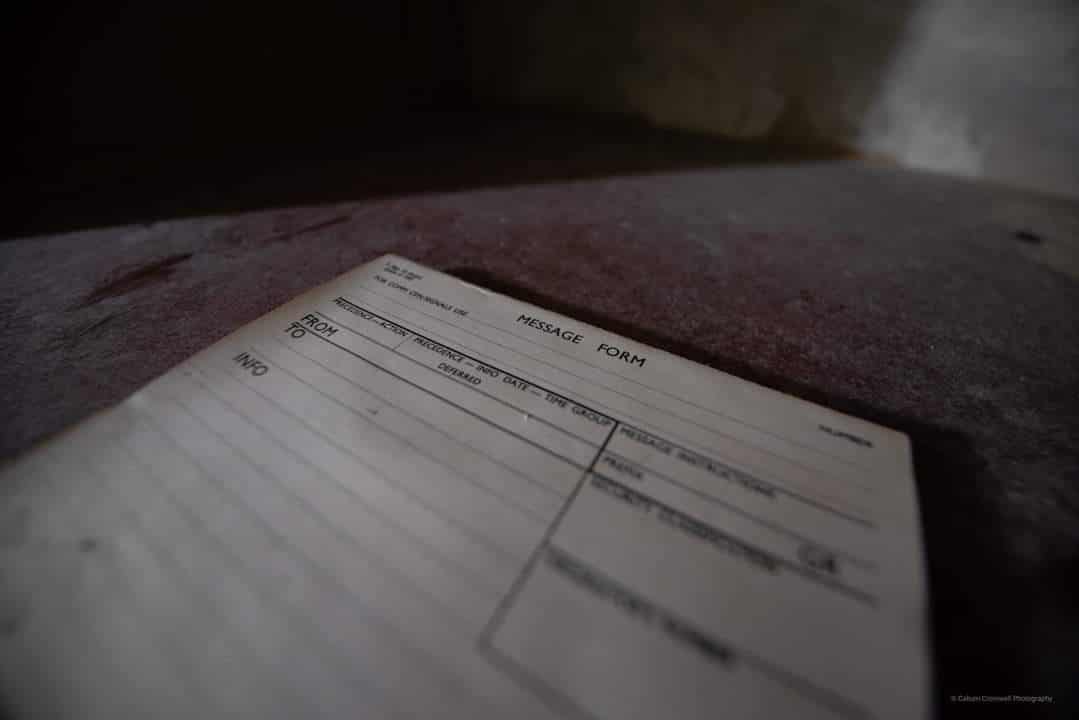
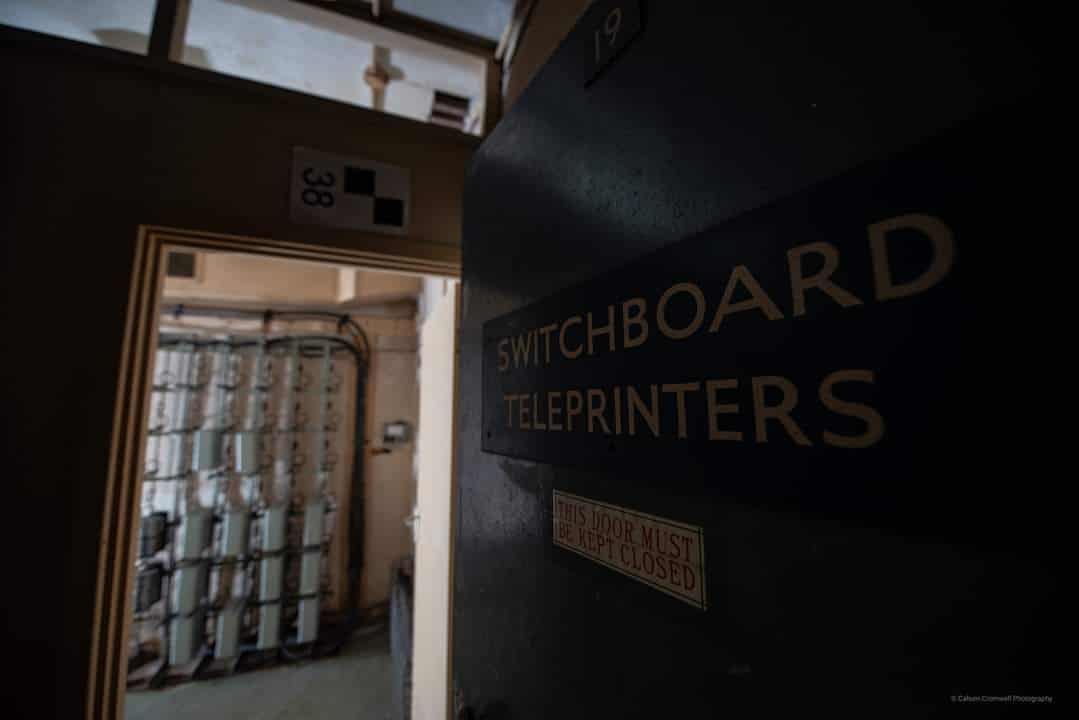
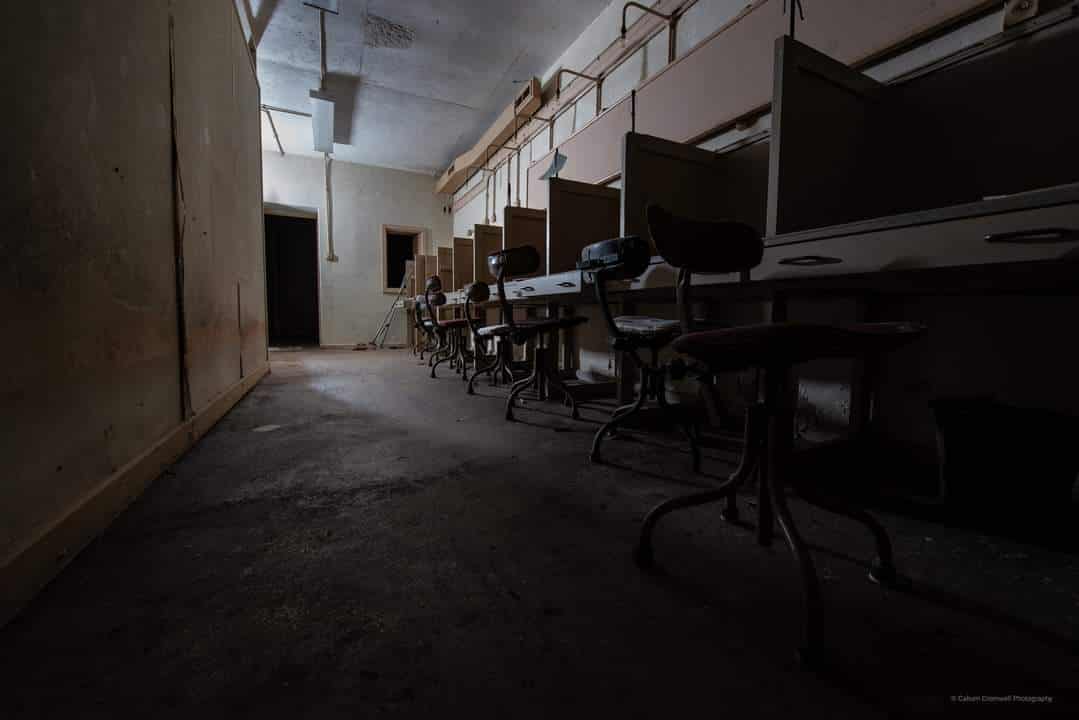
The one room accessed from the north corridor with a window into the control room says ‘CMHQ’ on the door and is attributed to the scientist; it contains a desk and chairs. A smaller room is accessed from this room which was used by the recce officer. The ring corridor enters the signals room along the north side. This has been divided into three rooms, the largest, a long thin room has sixteen acoustic booths, each with a light above, there are also four swivel chairs. One of the other rooms has a large floor standing paper rack still stacked with various papers and forms. There is also a large message passing window into the Switchboard/Teleprinter room (one room accessed from the other) which are accessed from the outer face of the south side of the ring corridor; the switchboard room retains its GPO frame. Next to the switchboard room is the ‘Admin Control Room’ which has a desk another 1967 Bristol map and a small scale Ordnance Survey map of South West England and South Wales. The two rooms on this side are for public relations and one of two tank rooms by the stairs, the other being adjacent to the other flight of stairs.
Although dry at the time of the visit the lower floor is prone to water seepage in wet weather and is known to have had a foot of water on the floor. Although derelict for over 20 years the building is in generally good internal condition and worthy of preservation.