HISTORY
In 1935 Bawdsey Manor Estate in Suffolk was selected as the site for a new research station for the development of radio direction finding and the Manor House, close to Bawdsey Quay was taken over for this purpose. Following this research, the first Chain Home radar station was developed on the site being handed over to the RAF in May 1937, two years later 15 Chain Home stations were available for use around the coast.
Bawdsey continued in the forefront of the expansion of the radar network with an AMES Type 2 Chain Home Low on a 200 foot platform on the southern (No 4 of 4) transmitter mast. (each mast was 350' high). Towards the end of 1941 Coastal Defence Radar was established making Bawdsey the only site in the UK with three types of radar (CH, CHL and CD) in operation. By August 1943 Coastal Defence was changed to an AMES Type 55 Chain Home Extra Low (CHEL), again this was mounted on a 200 foot platform on the northern (No 1) transmitter mast.
Bawdsey is listed as being operational with both CH and CHEL in 1948. In 1950, the station was chosen to participate in the ROTOR programme which should have been operational by January 1952. Work on the R3 two level underground control centre at the northern end of the site began late in 1950. Bawdsey was designated a GCI/E site utilising 1 Type 7 Mk3 on an R7 building remotely sited on Alderton Marshes, 2km north east of the site.
The following radars were planned for the ‘A’ site:
- 1 Remote Type 7 Mk 3 with T79 IFF
- 3 Type 13 mounted on 9' high concrete plinths
- 2 Type 13 mounted on 12' high concrete plinths
- 1 Type 13 on a 25' mounted on a 25' gantry (4 of the above are Mk 6 with IFF the other 2 are Mk 7 without IFF)
- 1 Type 14 Mk 8 mounted on a 9' high concrete plinth
- 1 Type 14 Mk 9 mounted on a 25' gantry
- 1 Type 54 Mk 3 mounted on a 200' tower
There was a transmitter and receiver site at Shottisham and married quarters in Alderton village.
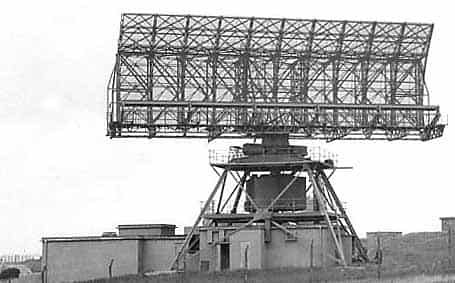
In February 1953 an American (Bendix enginers supervised these UK installations) AN/FPS-3 ‘search’ radar was installed using an air ministry wooden hut as the R3 bunker was not yet complete. The new control centre wasn’t ready until 1954 although the station was already operational. In July of that year links were established between the UK and French reporting systems allowing two way extension of radar cover over Europe.
Bawdsey was manned by 144 Signals Unit from 11 Group and together with 6 other station in the Easter Sector it offered cover from 30 minutes before dawn to 30 minutes after sunset; there was no night cover.
In 1958 an AMES Type 80 Mk 3 (Green Garlic) was installed together with 2 AN/FPS-6 US made ‘Height Finding’ radars. The AN/FPS-3 was retained as a standby as was the Remote Type 7 on Alderton Marshes.
In October 1962 the 1st AMES Type 84 L Band radar came on line.
In January 1963 Bloodhound SAGW (Surface to air guided weapons) were regrouped under Master Radar Station status at Bawdsey and Patrington but in June 1964 Bawdsey lost its Master Radar station Status and became a satellite to Neatishead. This status was regained in February 1966 following the disastrous fire in the R3 control centre at Neatishead.
By 1972 the Type 54 had been removed and a reflector for a microwave link was attached to the tower. The microwave link brought live radar feed from the Type 84 and Type 85 radar’s at RAF Neatishead. In 1974 Neatishead resumed Master Radar Station status from Bawdsey on the completion of the installation of the Standby Early Warning & Control System (SLEWC).
The following March Bawdsey closed and was placed on care and maintenance. In 1977 the ROTOR period plinths, Type 80 modulator building and 200' Type 54 tower were demolished.
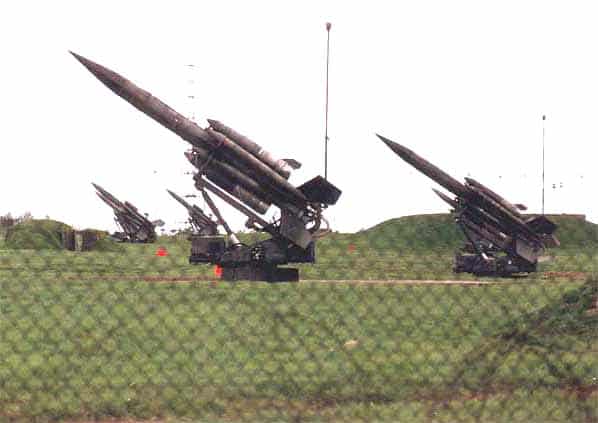
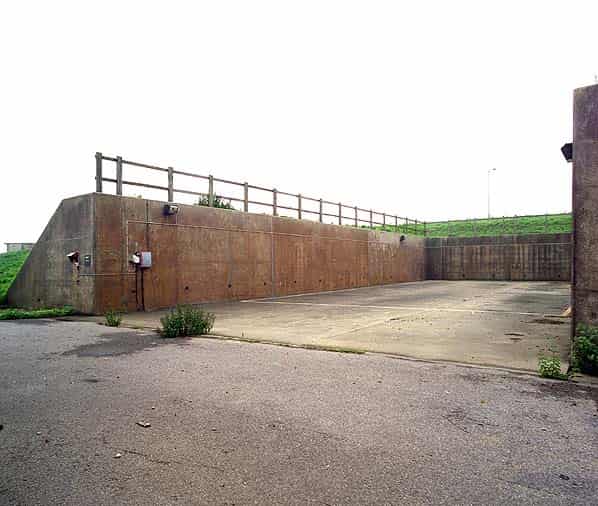
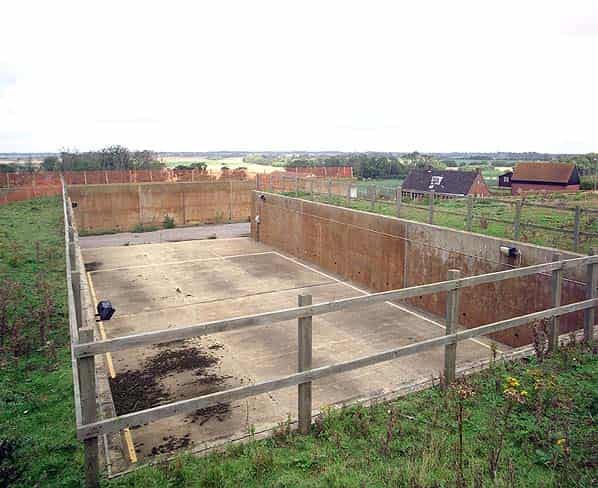
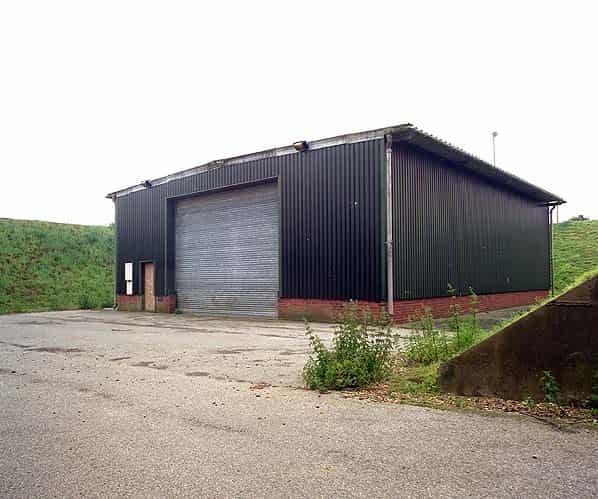
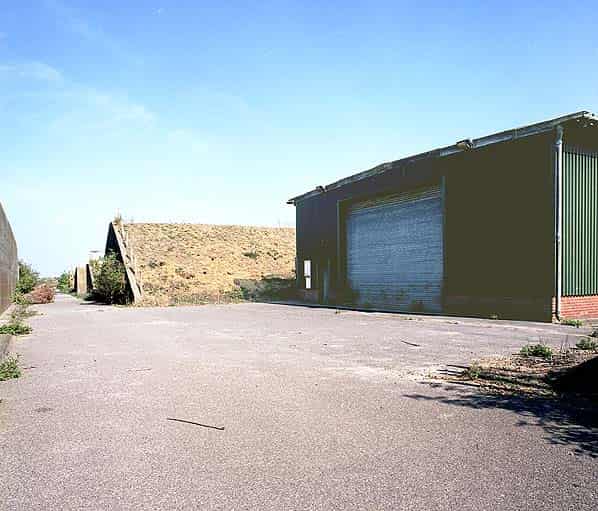
In August 1979 Bawdsey reopened as a Bloodhound Mk2 surface to air missile (SAM) site operated by C flight of No 85 Squadron. It was divided into 2 missile sections, each equipped with 6 launchers and a Type 87 fire control radar. The Type 84 modulator building (R17) was retained as a crew room and store for Bloodhound armament handling flight. A new control room was established in the R3 bunker to administer the missile control site. The new storage sheds and storage bays and protective wall are all of Bloodhound origin.
From 1984 - 85 Strike Command’s (UKAIR) Interim Alternative War HQ was established in the R3 operations block while a new Strike Command Bunker was being built at High Wycombe, during the construction period the bunker at Bawdsey was given a short new lease of life. The R3 was given a refit and much new (temporary) equipment was installed. At this time the central operations room was altered and a new control cabin installed above. When the new bunker at High Wycombe was ready the team pulled out of Bawdsey, their equipment was stripped and the bunker was abandoned.
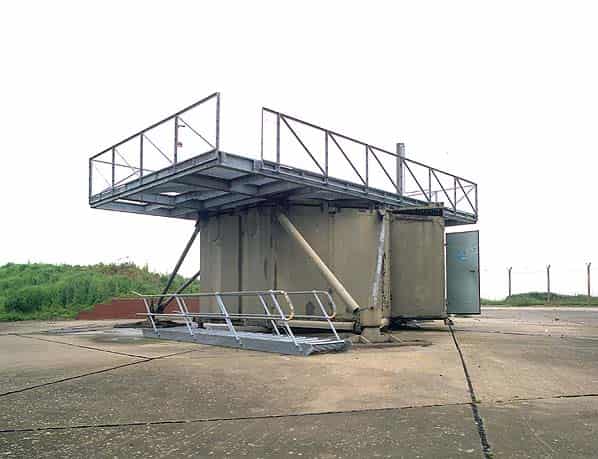
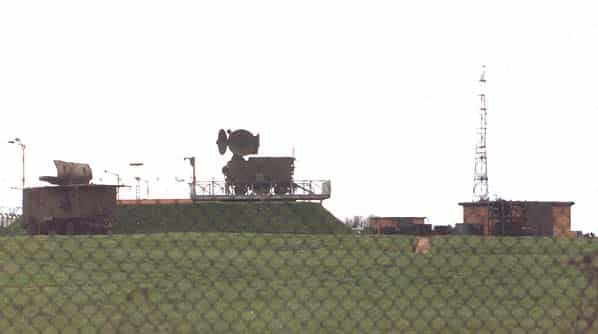
In 1988 two Type 87 radar heads were removed and replaced by 2 Type 86 Radar Caravans mounted on platforms on top of the Type 87 plinths.
On 31st May 1990 the Bloodhound force ceased operations and in June all the missiles were withdrawn to RAF West Raynham. The RAF Ensign was lowered for the last time on the 25th March 1991 and the station closed on the 31st March.
SITE VISIT
Following the closure of RAF Bawdsey in 1990 both the main stairway and the emergency exit stairway were capped with 10" of concrete. The bunker had already been abandoned by this date as both the mains electrical supply and the air conditioning plant was considered unsafe. A notice dated 1989 still displayed in the main plant room states that the plant should not be started as there are refrigerant leaks.
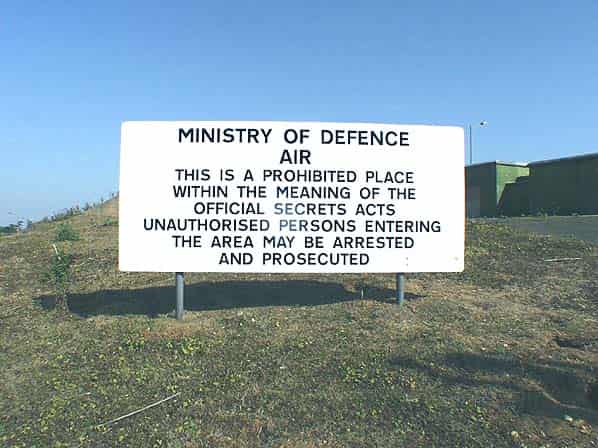
RAF Bawdsey was occasionally used for military training during the 1990’s but was eventually offered for sale by public auction. In late 2000 the MOD land agent unsealed the bunker for an inspection and then sealed it again. It was again unsealed for the sale viewing and then the concrete cap was again reinstated. The winning bidder was A.L Digital who also own the former ROTOR site at Ash marketed as ‘The Bunker’. This has become a high security ‘server farm’ and Bawdsey was acquired for the same purpose. Since buying the site, A.L Digital has also purchased the protected command centre at Greenham Common which better suits their needs. Bawdsey is now surplus to requirements and is to be offered for sale again.
The bunker still remains in exactly the same condition as when A.L Digital took over the site in 2001, there is no mains electricity supply although contractor’s lights have been installed in all the rooms and corridors and these are powered by a portable generator. The bunker is still sealed and when Subterranea Britannica arranged this visit we also had to employ a contractor to break through the concrete in order to gain access into the bunker. The concrete cap was repaired immediately after the inspection. A member of the maintenance staff from A.L Digital was present during the four hour visit.
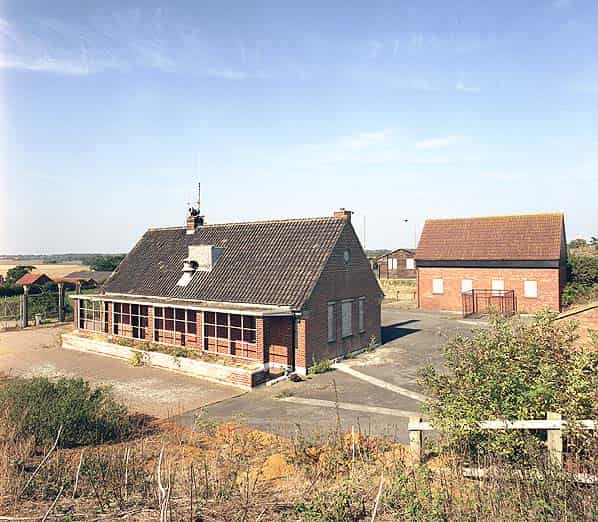
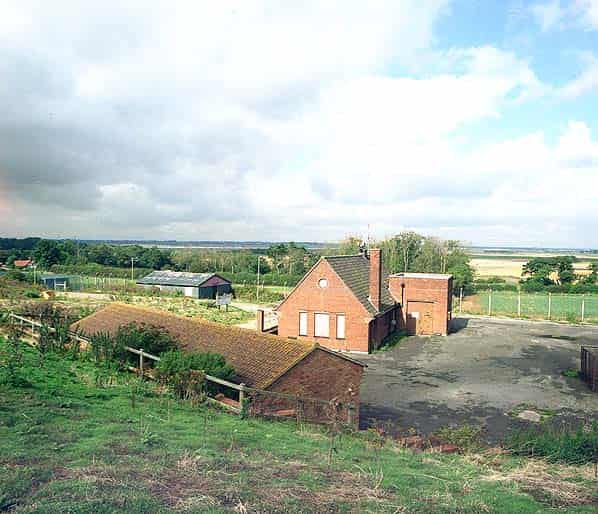
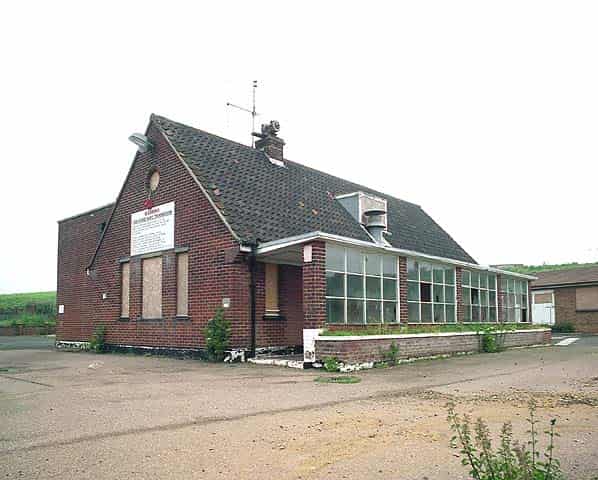
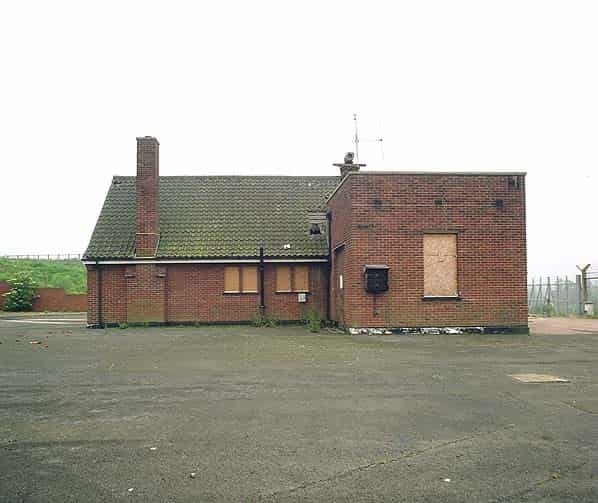
The guardhouse has deteriorated since our last site visit in 1999 when it was found to be open. Since that date, a concrete block wall has been built between the main part of the guardhouse and the machinery entrance at the rear where the capped stair well is located.
All the windows have been boarded up and there is some damage to the roof where people have, in the past, succeeded in breaking in. All the glass panes on the verandah have also been removed or broken since 1999. There has been a lot of vandalism at the site with most of the surface building having been broken into despite regular patrols from a local security firm.
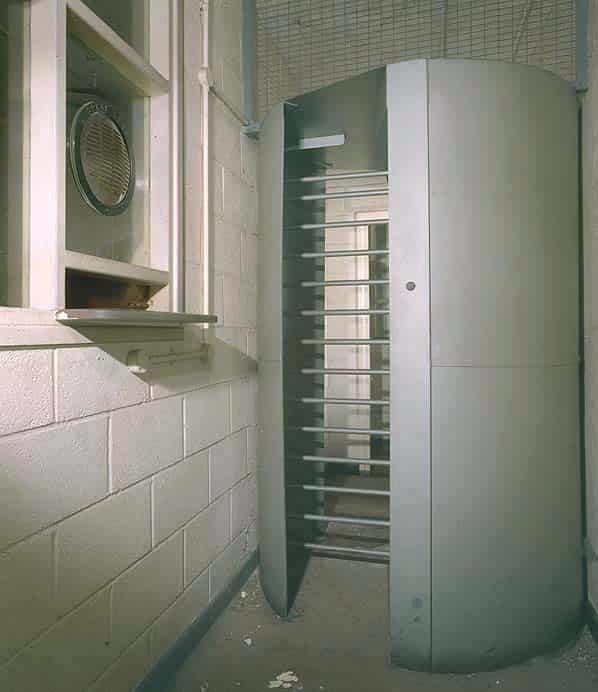
Inside the main entrance to the guardhouse there is a turnstile preventing further access but it is possible to climb through the broken window into the guardroom. This is not an original ROTOR feature and a report in the Evening Standard in 1974 describes a wire grille. The turnstile must date from the stations use as a Bloodhound site after 1979.
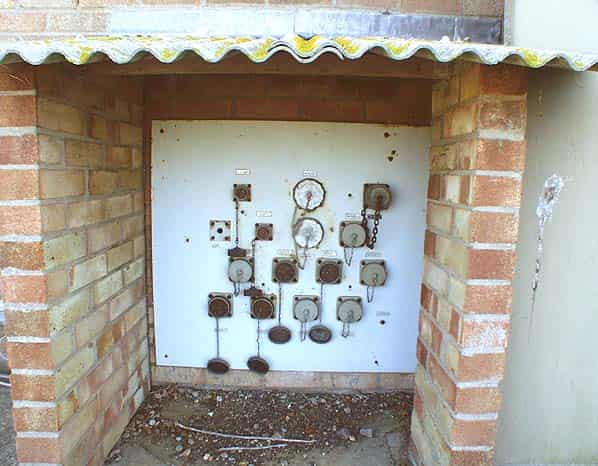
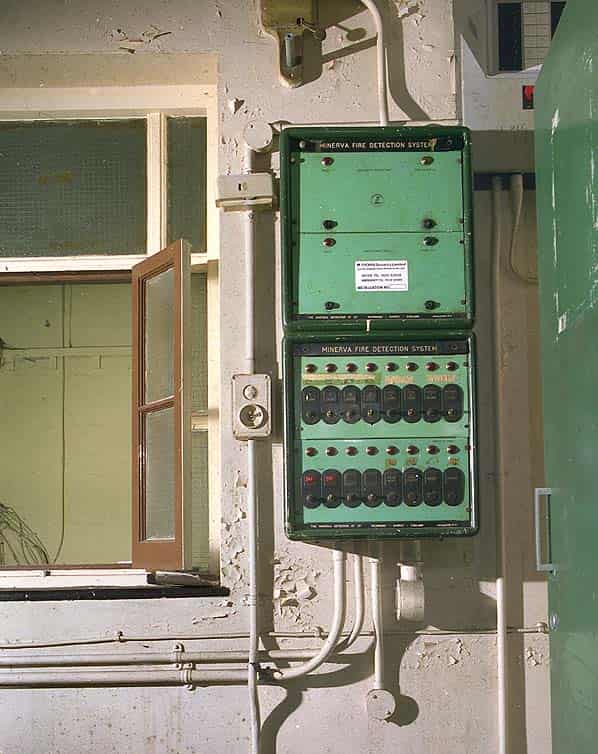
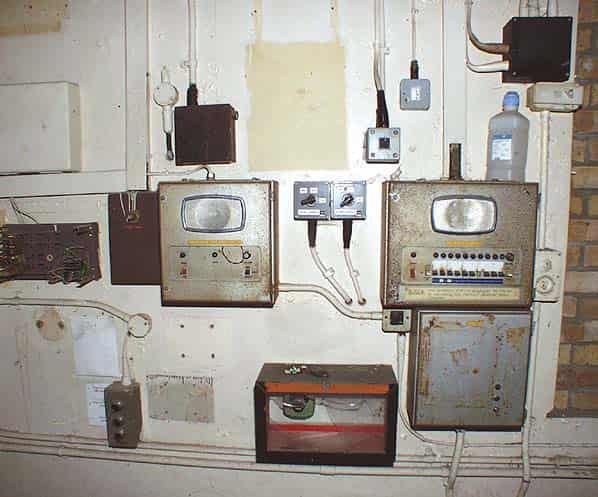
The guard room has been trashed by vandals but it still retains its furniture, a small switchboard, some electrical switchgear and a wall mounted slave unit for the Minerva Fire Detection System, this links to the main control cabinet in the bunker below.
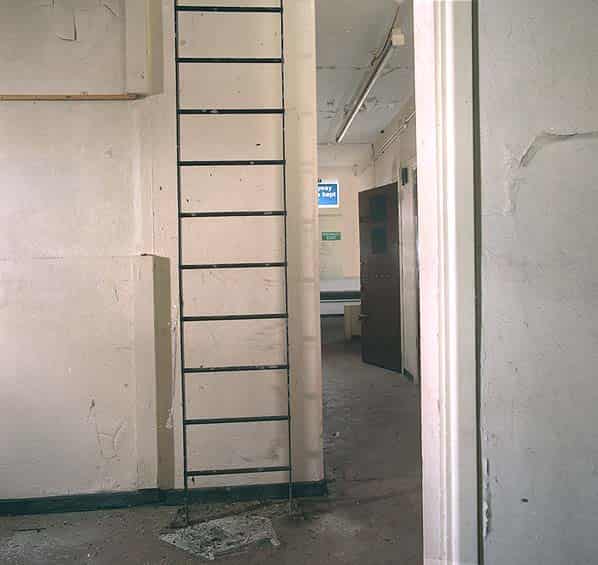
There are hinged metal shutters over the windows and in the corridor there is a ladder fixed to the wall giving access to the roof space where the water tanks were located.
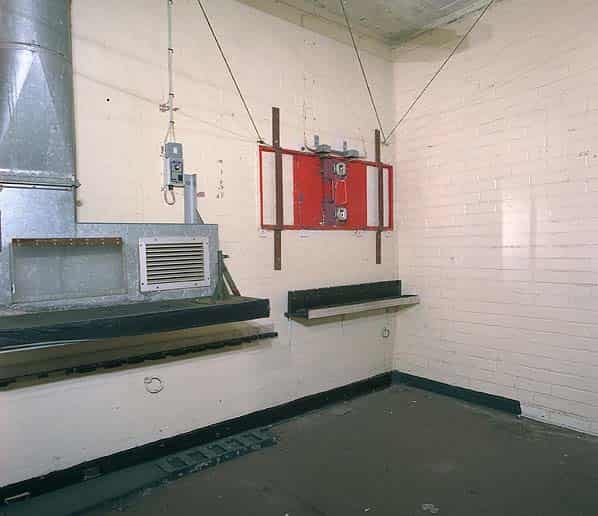
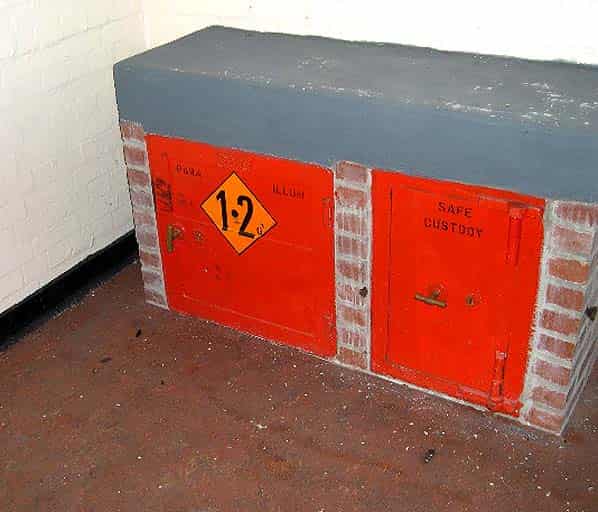
Alongside the entrance corridor, but only accessed from the other side of the turnstile, is the armoury. This still contains several weapons racks for rifles, sub machine guns and pistols. There is also some ventilation trunking and two sliding metal shutters covering a weapons issue hatch. The magazine was in an adjacent room; this still contains two safes, the larger is for ammunition while the smaller is labeled ‘Safe Custody’ and would have been for pay packets and the imprest fund (petty cash).
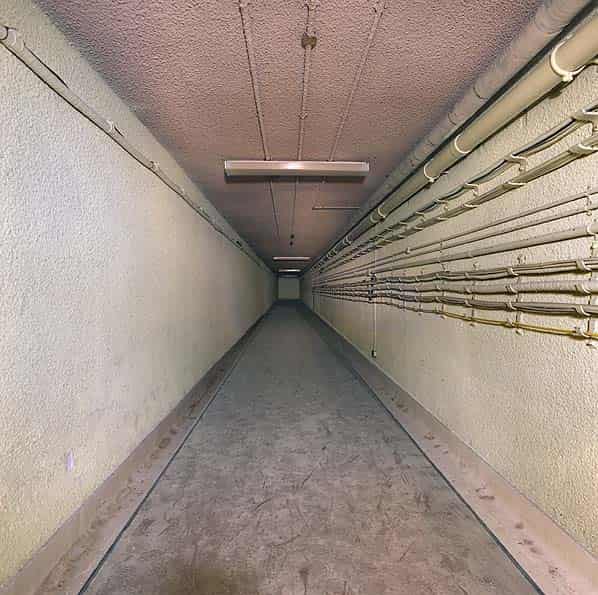
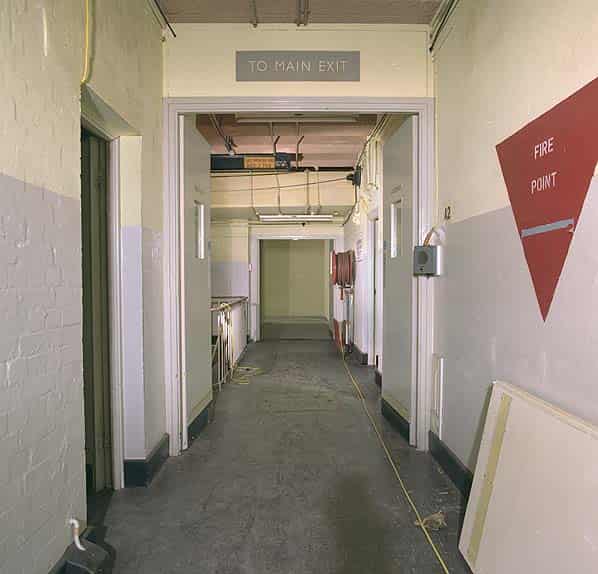
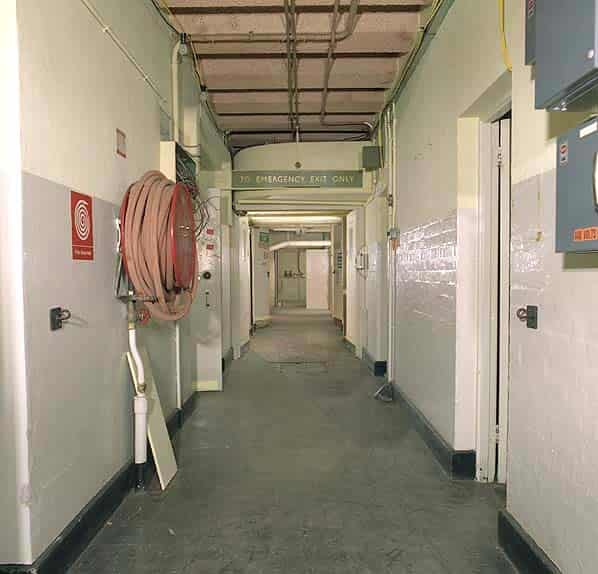
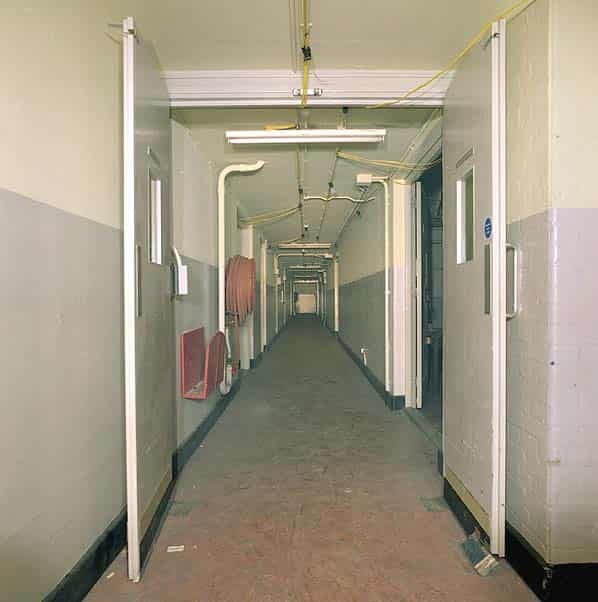
Luckily the vandals haven’t managed to gain access to the bunker and once through the concrete cap we were able to descend the stairwell to the 200 foot long entrance tunnel. This is clean and dry, turning 45 degrees to the east and then another 45 degrees to the north east before entering the R3 bunker.
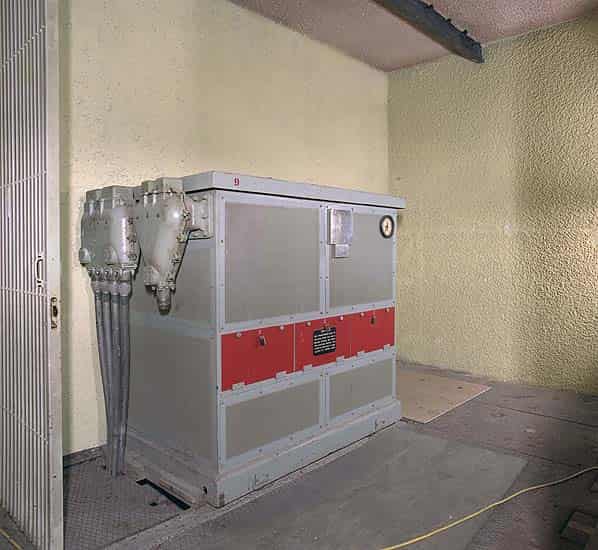
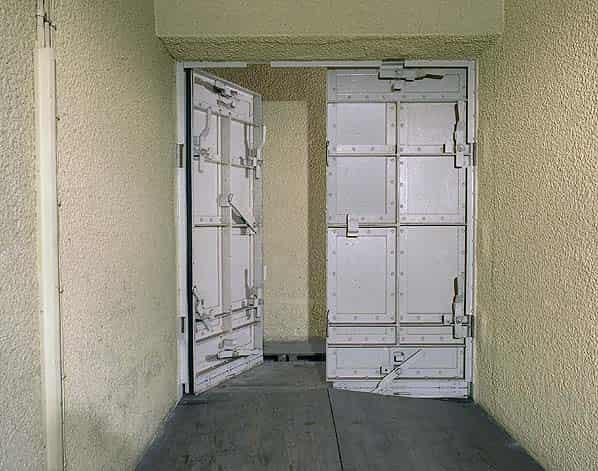
There are two recesses on the right, the first is the cable shaft with a ladder and manhole cover; this has been deliberately concreted over and couldn’t be located on the surface. The second recess contains switchgear. Diagonally opposite the cable shaft is the main transformer. All the incoming electrical cables have been cut and as the transformer was taken out of use due to an electrical breakdown it is unclear whether it could ever be used again. Beyond this there are two heavy steel blast doors and a dog leg into the main north - south upper spine corridor.
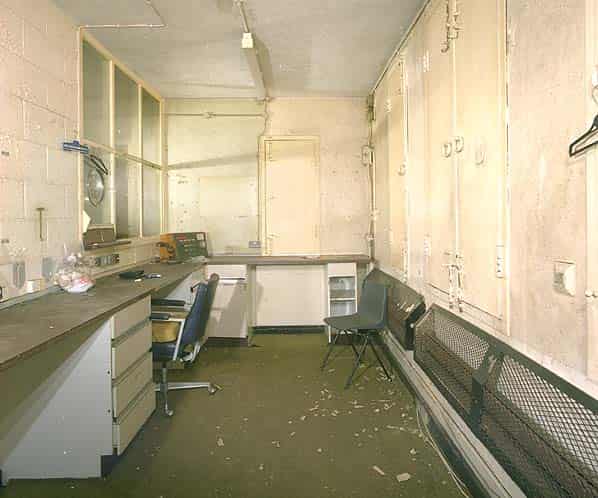
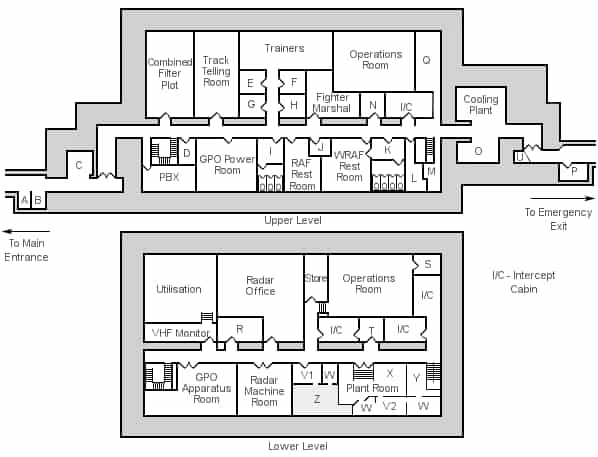
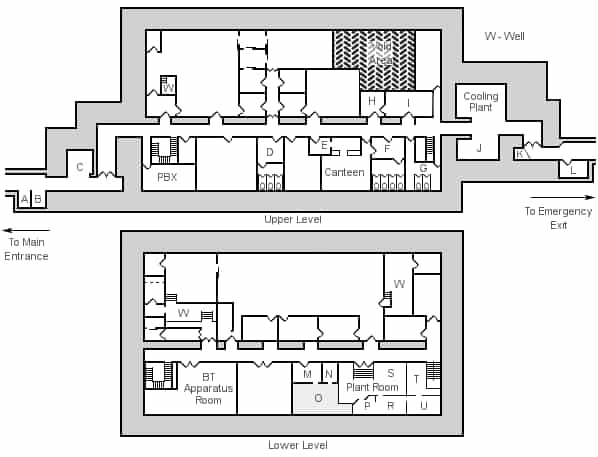
Most of the rooms on the east side of both upper and lower corridors remain largely unaltered from the original ROTOR bunker although the function of some of them has changed over the years. The rooms on the west side of the two corridors have changed fundamentally with many of the internal partition walls being removed and repositioned. Some of the room shapes can be recognized from the original ROTOR layout while other sections of the bunker have changed radically. This work was probably carried out during the stations use as a radar training school and still later as a control centre for the Bloodhound Mk 2 missile site.
In January 1964 RAF Bawdsey also acted as a base for the School of Fighter Control. In June 1940 a controller training unit was formed at HQ Fighter Command using the old Sector Ops. Room at RAF Northolt, moving in 1941 to a private house at Stanmore. This unit transferred to RAF Rudloe Manor in January 1946 and a year later was renamed Fighter Command School of Control and Reporting. In February 1948 the unit transferred to RAF Middle Wallop and in January 1951 was renamed The Control and Reporting School. In September 1957 it was disestablished and the former Fighter Control Squadron transferred to RAF Hope Cove where it was renamed the School of Fighter Control. In October 1958 the school moved to RAF Sopley disbanding in April 1960. In January 1964 The School of Fighter Control was reactivated and based as a lodger unit at RAF Bawdsey with its earlier title of School of Control and Reporting, reverting in October 1968 to the School of Fighter Control. In October 1974 the school relocated to RAF West Drayton remaining until October 1990 when the new school of Fighter Control opened at RAF Bulmer when it currently remains.
It’s impossible to guess what use most of the rooms have been put to post-rotor. The bunker is a little damp but generally in good condition with no vandalism or damage. The teak flooring remains in place although some boards have lifted due to the damp atmosphere. Others have been removed in one of the rooms on the lower floor.
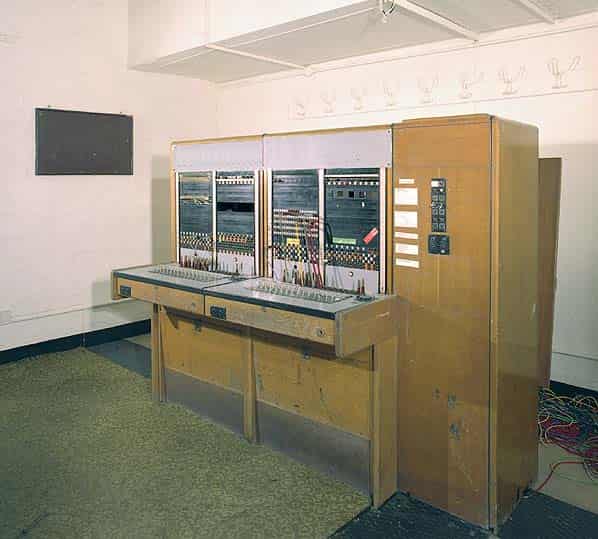
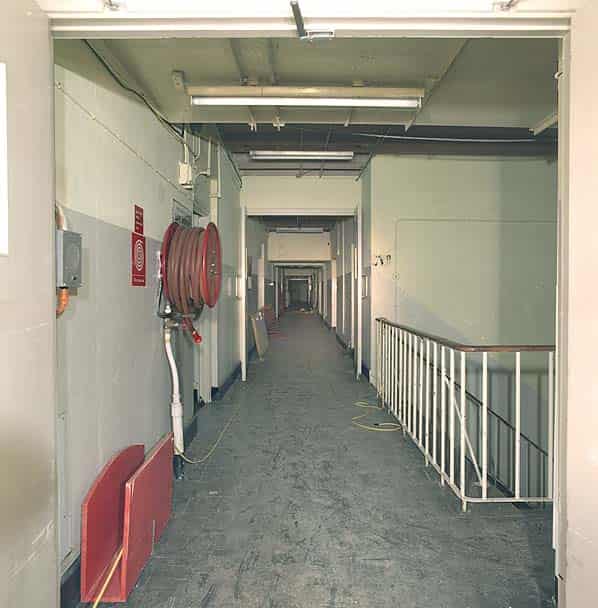
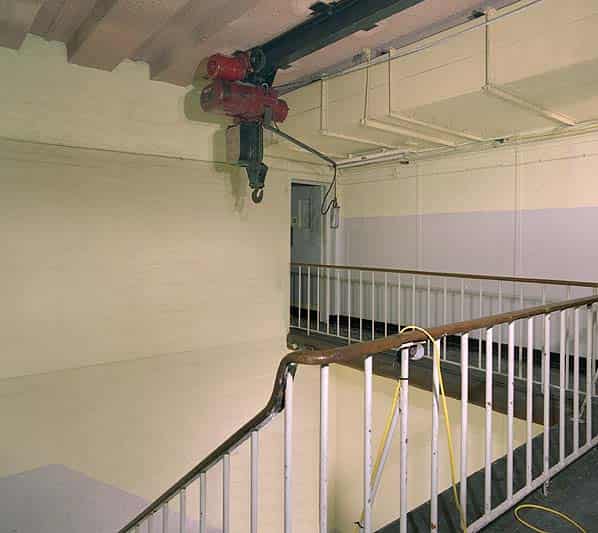
Moving along the upper corridor, the main stairwell is on the right with an equipment hoist fixed to the ceiling above. At the back of the stairwell is the PBX (private branch exchange) room which still contains a two position manual switchboard for a PABX3 exchange. This dates from the 1960’s replacing the original ROTOR period switchboard.
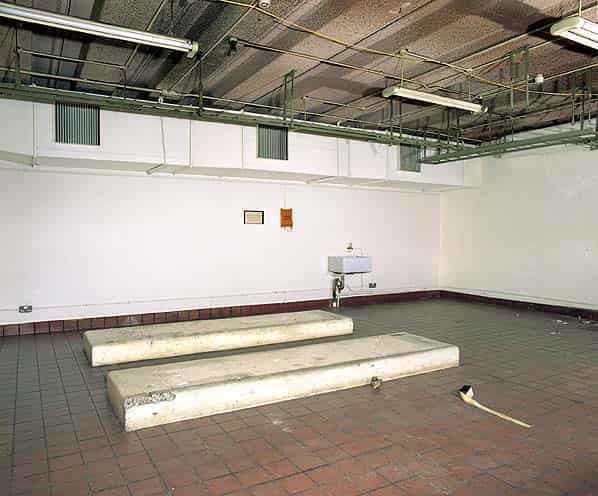
Moving along the corridor there is a GPO store on the right then the larger GPO power room which still has two concrete plinths and a butler sink. This is floored with Darlington anti-acid tiles for the batteries and charger; the sink was there in case there was a battery acid spill. The racks of lead acid batteries would have been mounted on the existing concrete plinths and the metal racking on the ceiling would have supported the DC power cables.
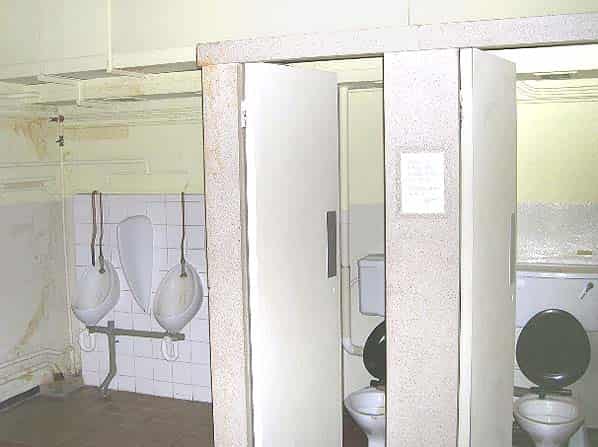
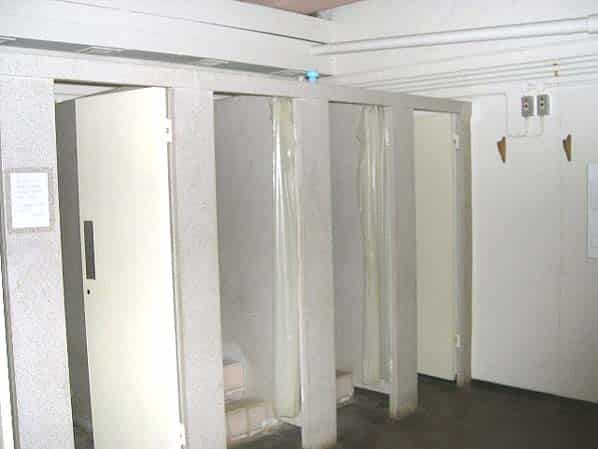
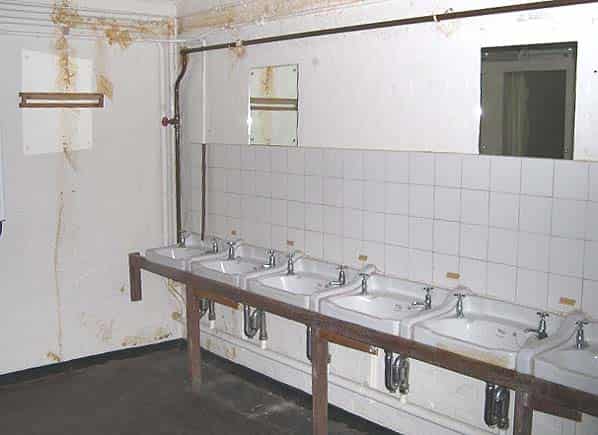
Beyond this room is the domestic area, the first room being the RAF (Male) cloak room and toilets; these have been retained from ROTOR with 3 WC cubicles, 4 urinals and 3 hand basins in the toilet and a fifty gallon water heater in the cloakroom. Beyond this is the RAF (Male) rest room with a serving hatch from the kitchen.
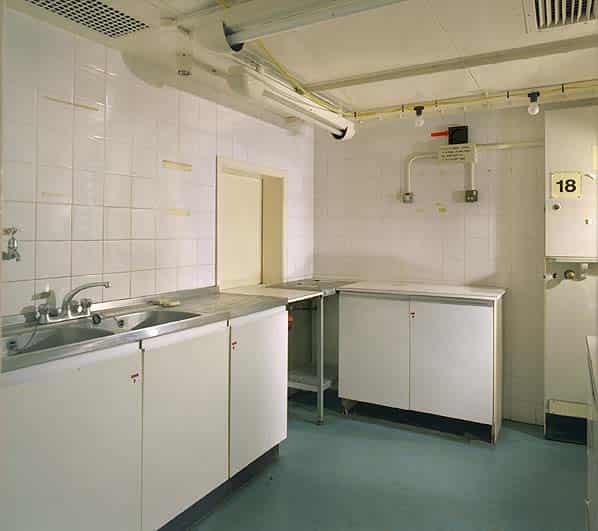
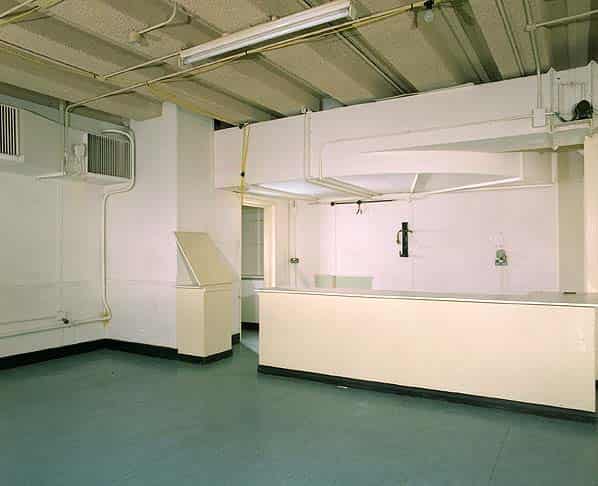
The small kitchen has also been retained and modernized with a white tiled wall and a stainless steel double sink and draining board with cupboards beneath and alongside, all the appliances have been removed. The serving hatch into the WRAF (Female) rest room has been replaced by a doorway and a serving counter has been added along one side of the new canteen.
The WRAF (Female) cloak room and toilets include 3 WC cubicles, 3 WC cubicles converted to showers, 6 hand basins and a sanitary towel incinerator. The next two rooms on the right, either side of the rear stairway were originally the RAF and WRAF officers' toilet. The partition wall between them has been removed forming a new unisex officers' toilet; the two cubicles have been retained and three shower cubicles and two hand basins have been added.
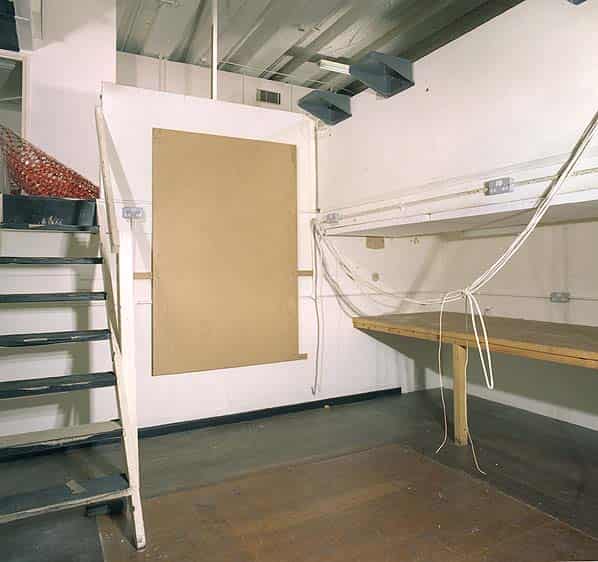
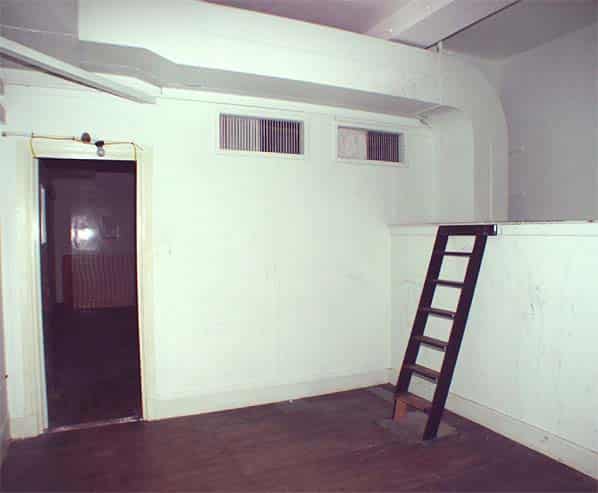
Back at the main stairwell the rooms on the left have been radically altered. The first two rooms (originally combined filter plot and track telling room) have been combined into one large room incorporating two smaller rooms and a sunken well built into the pit that originally housed the display table for the Kelvin Hughes projector which was located on the floor below. There is a step ladder down into the well where there is a long bench slightly undercutting the floor above.
The four small radar offices accessed along a short corridor have been kept. At the end of the corridor was the trainers room, this has also been retained with the addition of two further small offices.
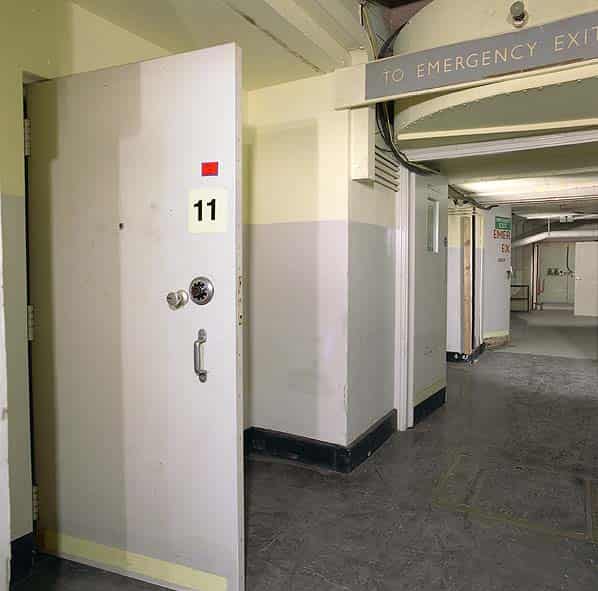
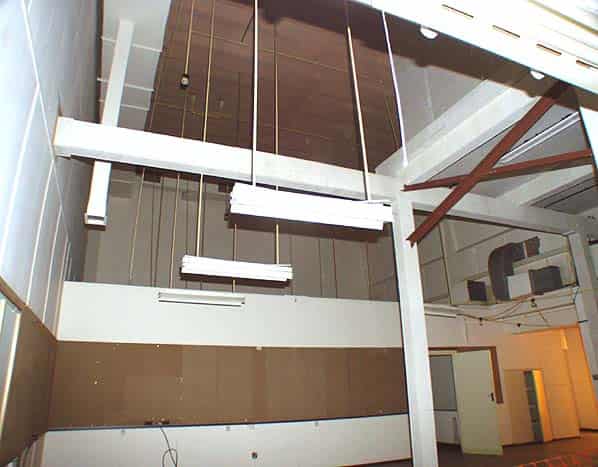
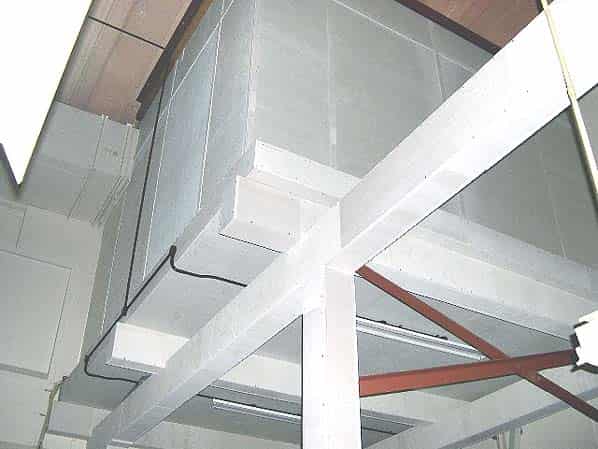
The next three rooms (originally fighter marshal, chief controller and intercept cabin) have also been retained. These originally had windows overlooking the well of the operations room; the Perspex windows are still there but have been painted over. The fighter marshal’s room, which was originally ‘L’ shaped has been altered and is now rectangular with a new section jutting out into the void above the operations room; it is supported on new steel girders and pillars. The two smaller rooms (intercept and chief controller) have been turned into strong rooms with large safe doors with combination locks fitted for access; these were installed in 1984 when the bunker was used by Strike Command. The final room on the left of the upper corridor was the officers' rest room which also retains its original shape and has been converted into a workshop with a long work bench and a tool board still in place.
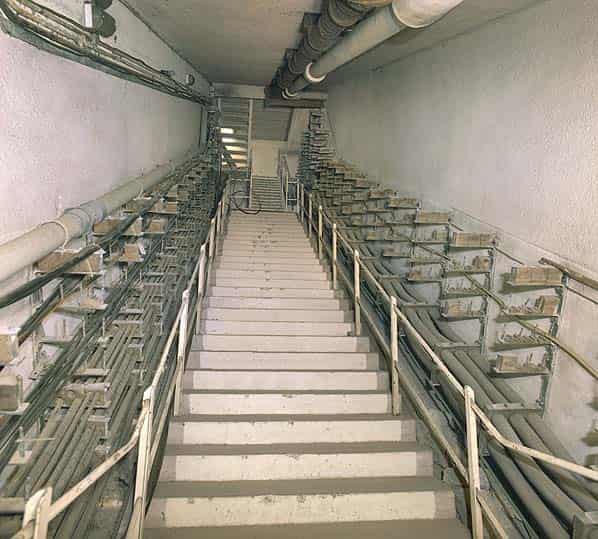
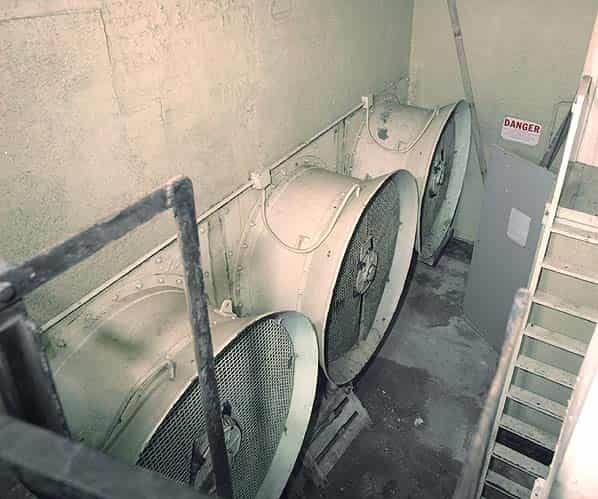
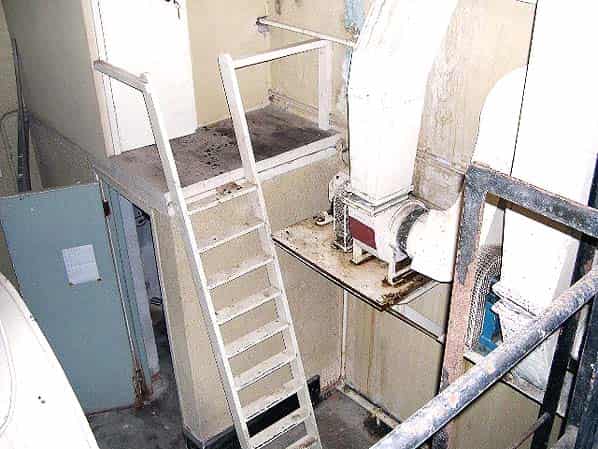
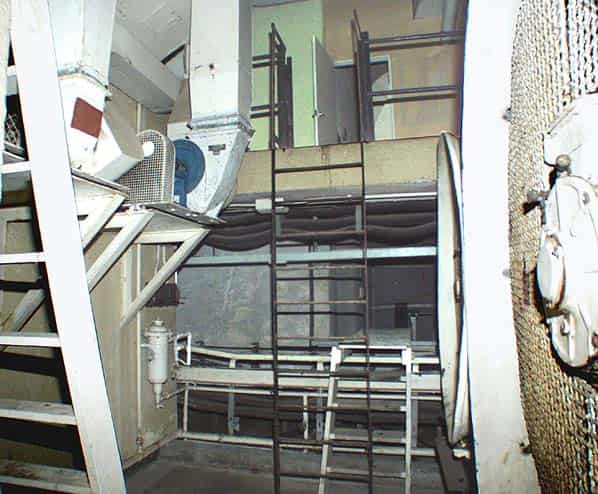
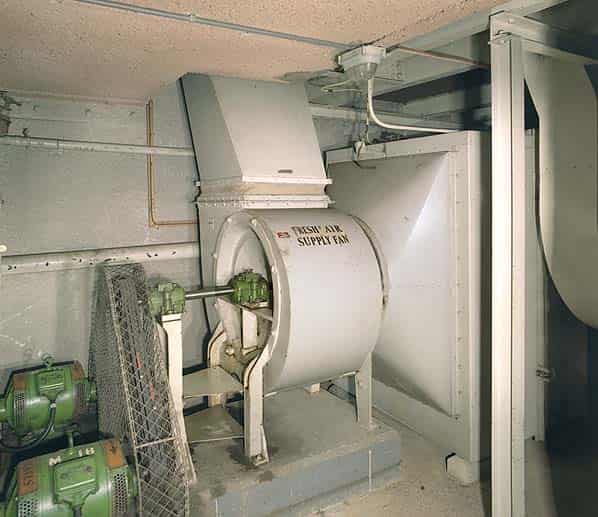
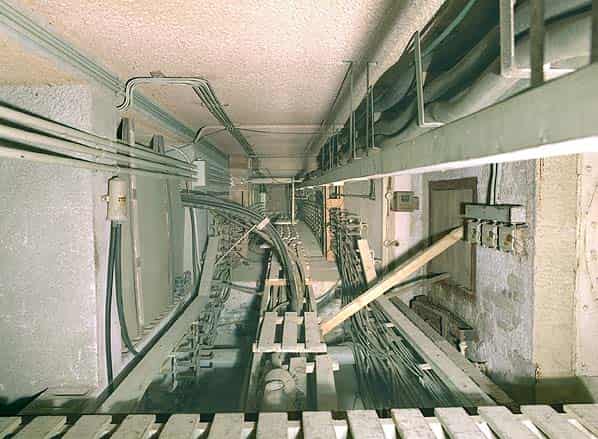
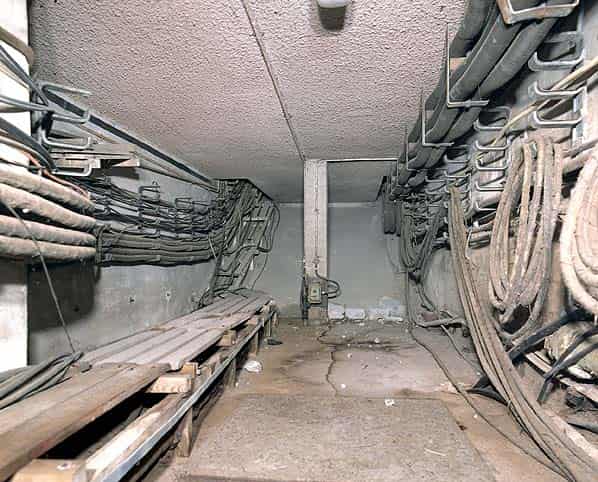
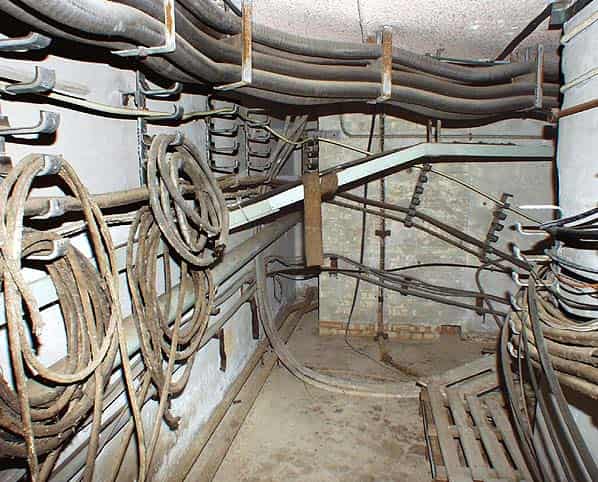
Beyond the operational part of the bunker on the upper level there are two plant areas left and right. On the right is the gas filtration plant room with a motor, fan and trunking still in place and on the left the cooling plant room, this is set in a well accessed by a ladder. Three fans for the condenser water cooler are located in the well, set into the side wall. From the well it is possible to walk under the floor of the upper corridor where a 6 foot high cableway runs beneath the corridor for its entire length. A large number of electrical cables for various diameters are still in place on hangers along both walls. There is a recess on the opposite side of the cable way which contains the fresh air fan. Fresh air for personnel use was drawn through this fan before feeding into the main filter bank and then into the air conditioning system in the main plant room below the fan.
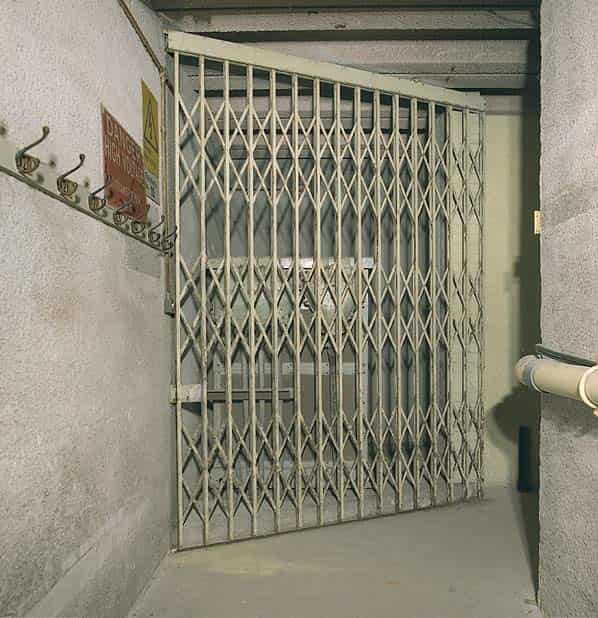
Back in the upper spine corridor there is a dog leg to the right and then a second set of heavy steel blast doors, through these the tunnel once again turns to the left towards the emergency exit stairs. There is a second mains transformer on the right behind a locked wire cage door. There are further cable hangers fixed to the wall along both sides of the stairs which are capped with concrete at the top preventing access. On the bottom of the stairwell on the right is the sewage ejector room with two pumps and a compressed air cylinder still in place.
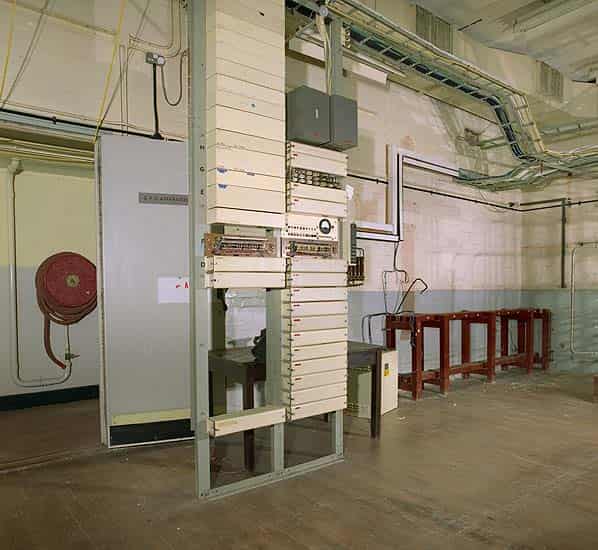
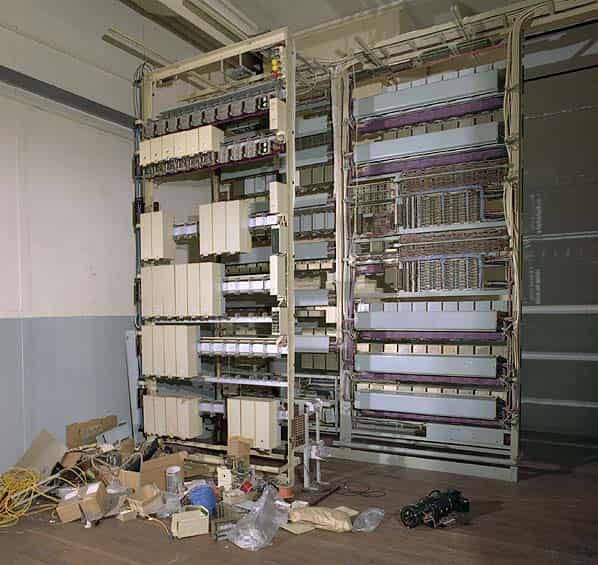
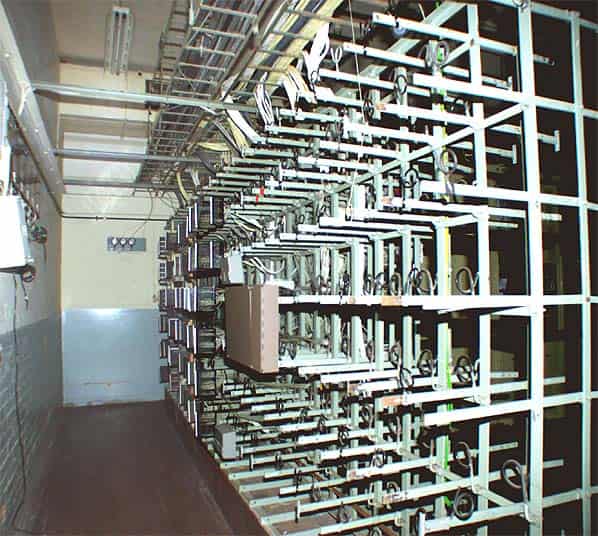
At the bottom of the main stairwell is the lower spine corridor. The first room on the right is the GPO/BT apparatus room. This still contains the main distribution frame and other equipment racking most of which dates from the 1960’s.
There is a rack of transmission (amplifier) equipment in the centre of the room with a relay set rack behind it probably for private wires (direct point-to point circuits). There are also some wooden battery racks against one wall. In one corner of the room there’s a rack of two-motion selectors, part of the PABX3 exchange equipment. There’s also a wooden cabinet fixed to one of the equipment racks from where engineers could test lines.
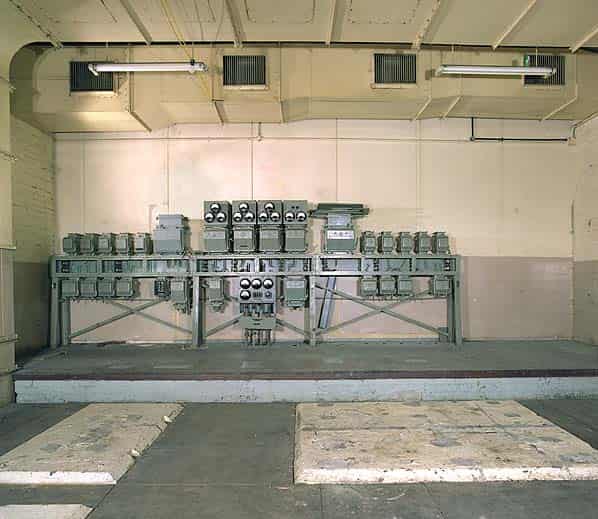
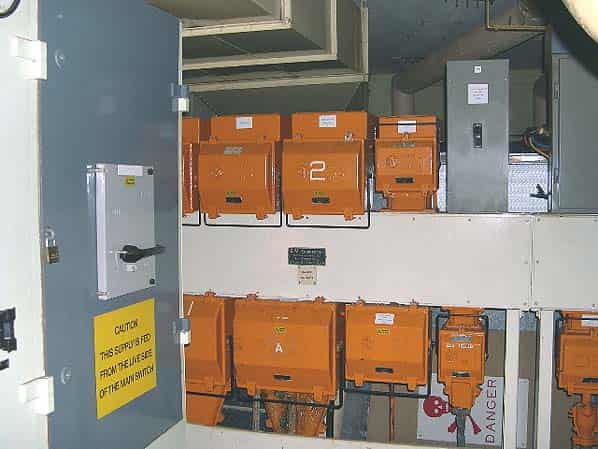
The next room on the right is the radar machine room; this still has a large quantity of electrical switchgear on the end wall. There are a number of concrete plinths on the floor where the radar frequency generators (rotary converters) would have been mounted.
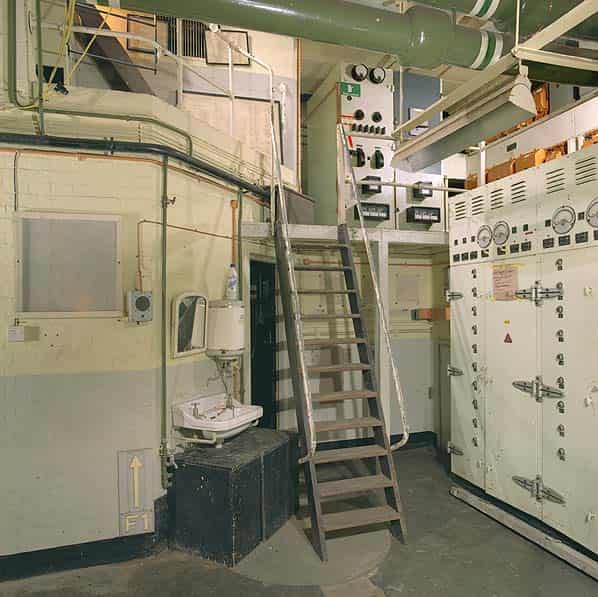
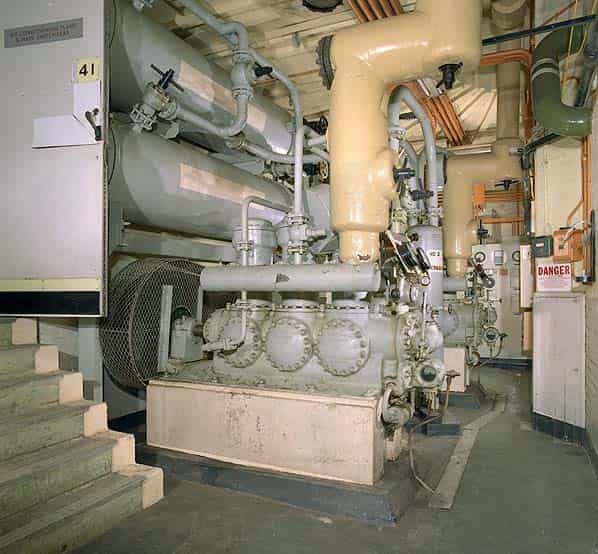
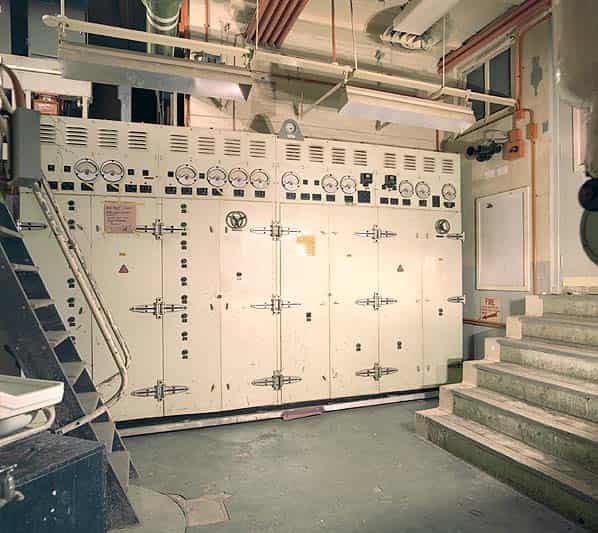
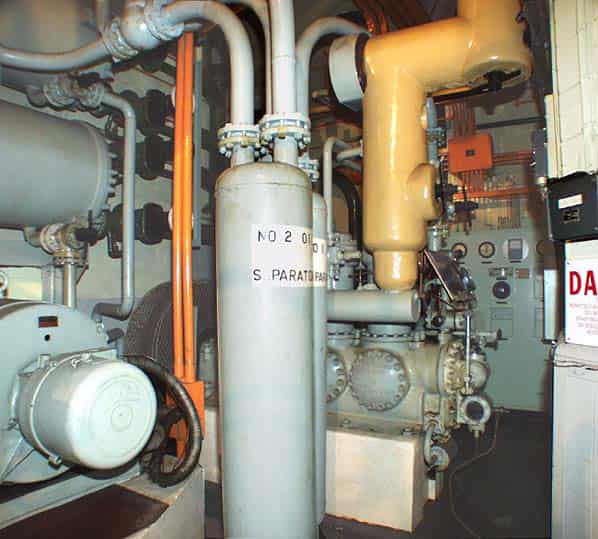
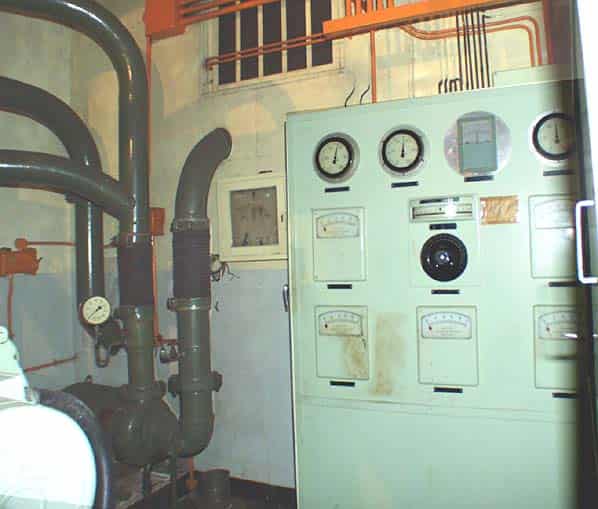
Next on the right is the main air conditioning plant room. This is a very complex room divided into several distinct areas with partition walls. The plant and electrical switchgear is largely unaltered from rotor days and is probably one of the best preserved AC plant rooms, in its original condition in any of the remaining R3 bunkers. Only Sopley (and possibly Patrington) is more complete. The room is entered through double doors and down a short flight of steps. On the right is the control equipment for the air conditioning plant. This takes the form of large electrical control cabinets. On the left are two 3 cylinder compressors. These compress the refrigerant (originally the toxic anaesthetic liquid, Methyl Chloride). Mounted on the wall behind there are two cylindrical horizontal tanks where the cooled water from the air cooled heat exchangers cools the refrigerant.
Between the two compressors are the oil separators Number 1 and 2; these separate the compressors lubricating oil from the refrigerant for compressors number 1 and 2 respectively. At the back of the room there is a panel showing the temperature and humidity in the system and various rooms. There were wet bulb hygrometers for this located in various places in the bunker. In the centre is a black dial this is used this to select what is monitored and the various parameters are displayed on the dials above.
Large diameter brown pipes, each contains the send and return refrigerant lines from the two compressors, these lead into the Baudelot heat exchanger which is located at a higher level and accessed by a ladder. This cools the water which is fed to the cooled water header tank in a small room at the top of the ladder; the air cooler batteries A,B, C and D are fed from here. Air cooling in the ROTOR series bunkers was via water cooled cooler batteries - more modern designs used electric air heaters. The feed to and from some of these water cooled batteries (located in a separate room) are the large insulated green pipes
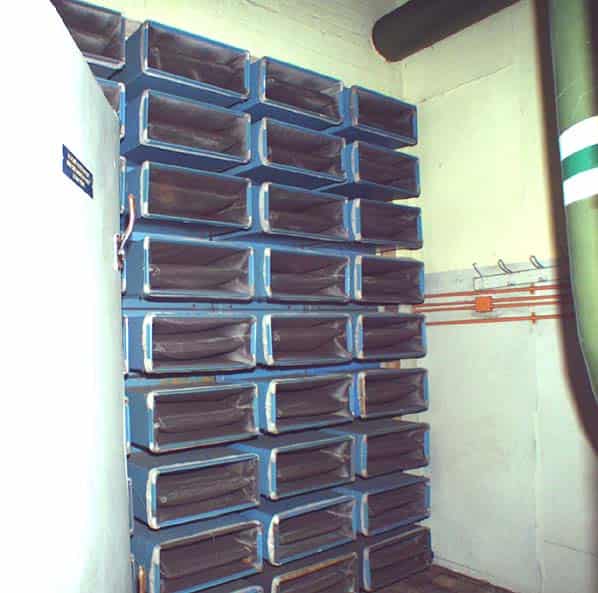
In a partitioned area diagonally opposite the entrance steps is the main air conditioning fan with two sets of filters on either side.
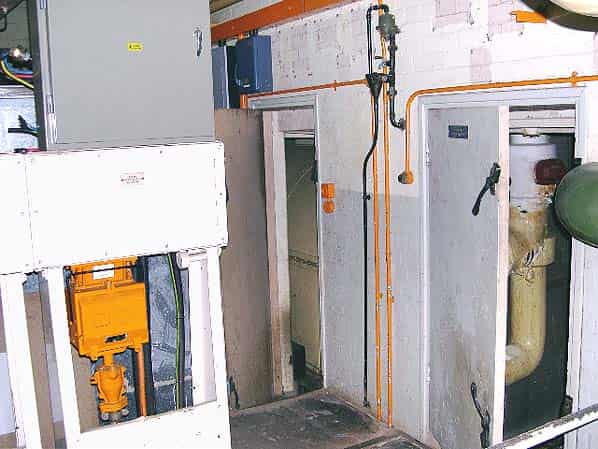
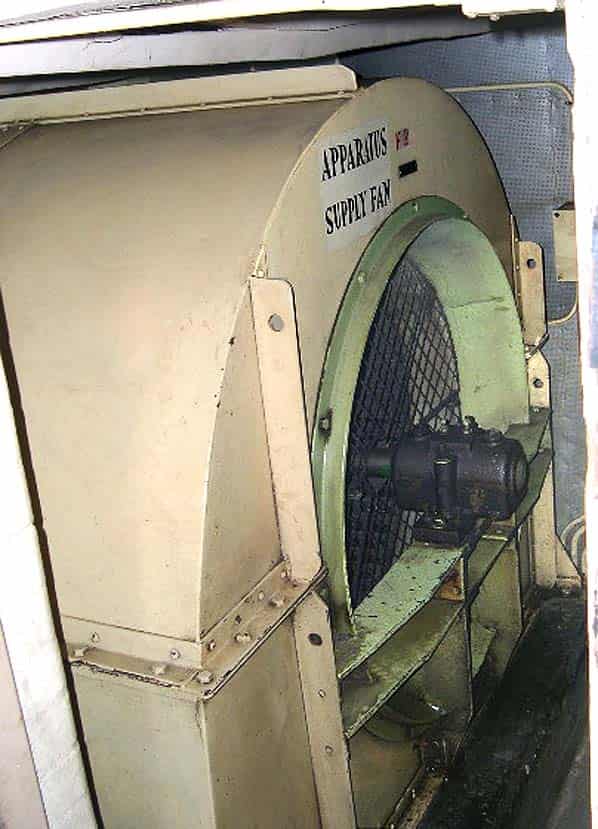
There is also a large floor standing electrical cabinet. This is the only item of apparatus in the plant room that isn’t original. It is the mains electricity control cabinet dating from the 1980’s. To the rear of the Baudelot heat exchanger there are two narrow doorways one leads to the apparatus fan which is used for cooling all the radar equipment and the other doorway opens into another filter room. From this fan there is another door back into the lower spine corridor. Beyond the plant room is the rear stairway to the upper level.
Back at the main stair well the rooms on the left have all changed radically from the original ROTOR layout and it’s impossible to guess to what purpose they have been put during the later uses of the bunker.
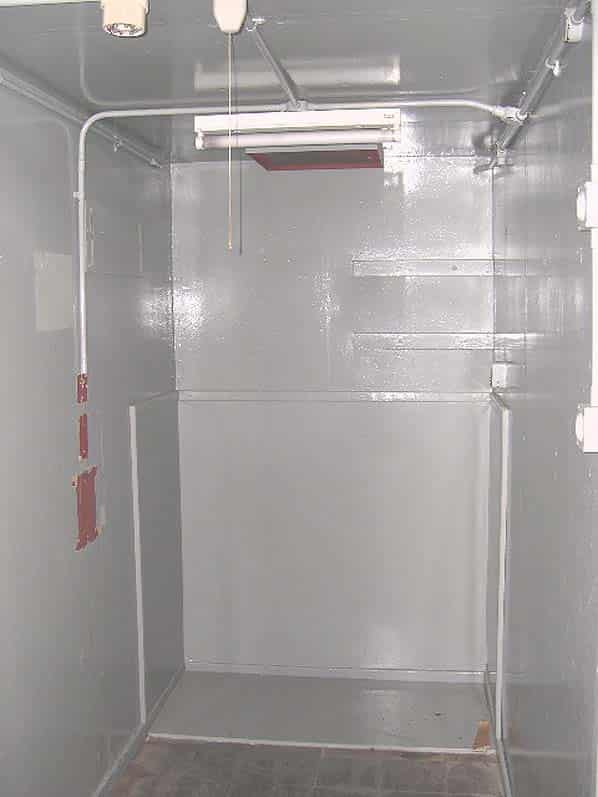
The first room on the left was originally the VHF monitor room with, at the back, steps down to the utilisation room which housed the underside of the Kelvin Hughes projector. The partition walls have been removed with new partitions forming a number of small rooms. The stairway down into what was the utilization room has been kept to allow sufficient head room under the well in the floor above. Beyond this lowered area there is a second set of steps up to the previous level. From this new ‘well’ there is a door into a narrow room that is painted grey all over, both walls and ceiling. This was the photographic darkroom for processing the film from the two Kelvin Hughes projectors. At the top of the steps there is another small room with a ladder at the far end up to a platform which is in fact the ceiling of the darkroom.
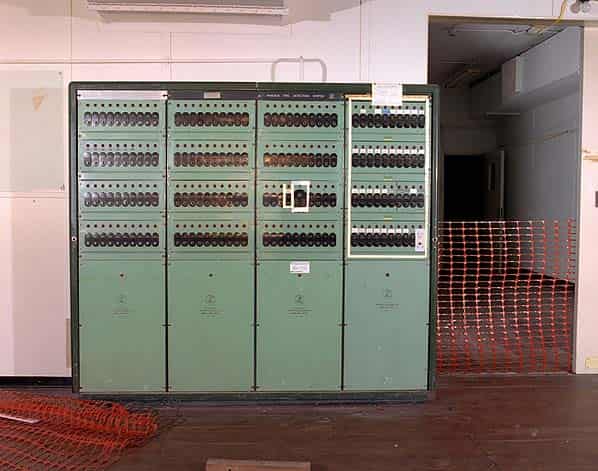
The partition walls dividing the radar room, store and operations room have also been removed leaving one very large rectangular room. The old projector room now forms the entrance into this new room. Some new supporting pillars and beams have been installed to support the extension to the fighter marshal’s room above in what was the old two level operations room. Many of the floor boards here have been removed; some origional ROTOR equipment would have been located here. The missing floor sections are above and below the ROTOR venting system that removes hot air from this equipment. These cold,dry, air supplies and hot air extracts are clustered above the missing floor sections. At one end of the room is the main control cabinet for the Minerva Fire Detection System. This consists of a large floor standing four bay cabinet with a large number of indicators on the four front panels. This is linked to detectors ansd slave units in the guardhouse above, in the remote Type 7 modulator building, receiver and transmitter blocks of the VHF radio station at Shottisham and several of the radar plinths. Although when installed this was a commercially available fire detection system, it was adapted for ROTOR use and this is the only know example still extant at any ROTOR site. At some point the original ROTOR fire detection heads have been replaced with Thorn units, each containing 100 micro curies of radioactivity.
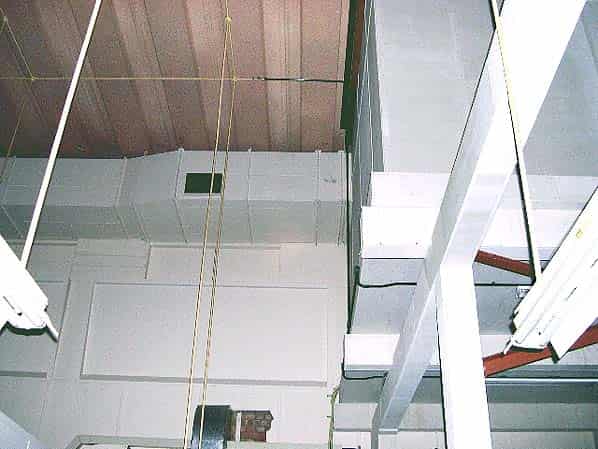
The old two level ops. room has been divided into two with an eight foot high partition wall, above this the room is still open to the original height although this space no longer served any purpose after conversion as the windows in the cabins that once looked down into the well have all been blocked. There is a door in the new partition wall leading down to a lowered floor in the other half of the old ops. room, this has been formed by removing the floorboards and all the under floor ducting.
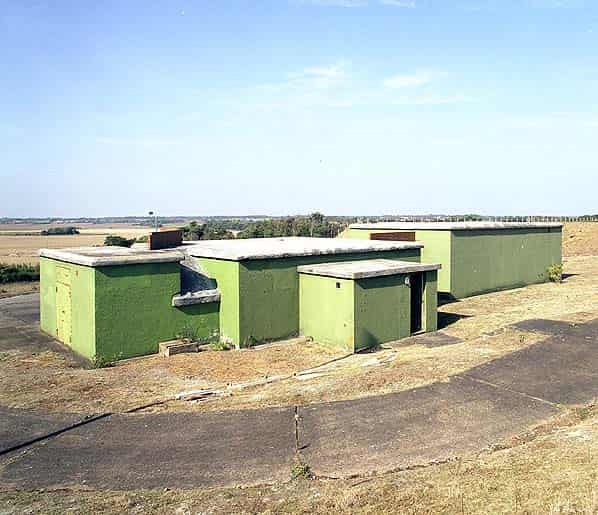
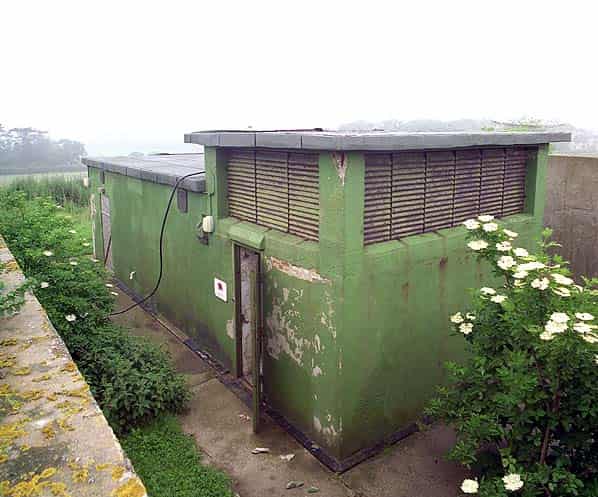
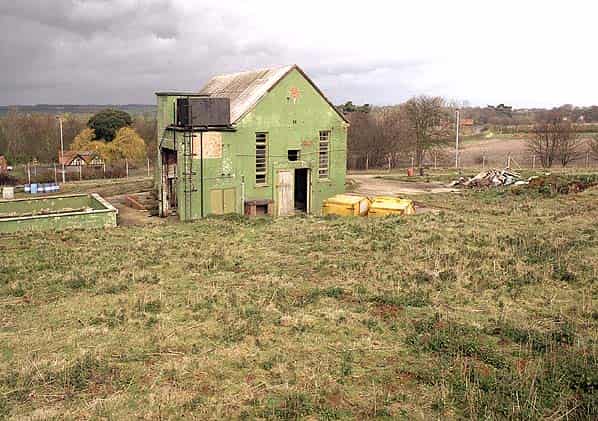
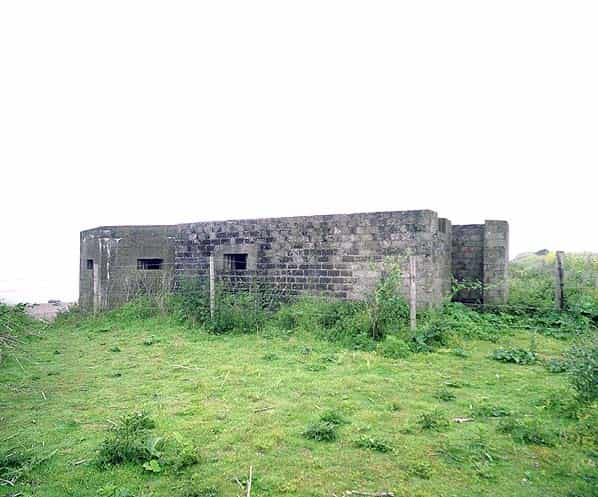
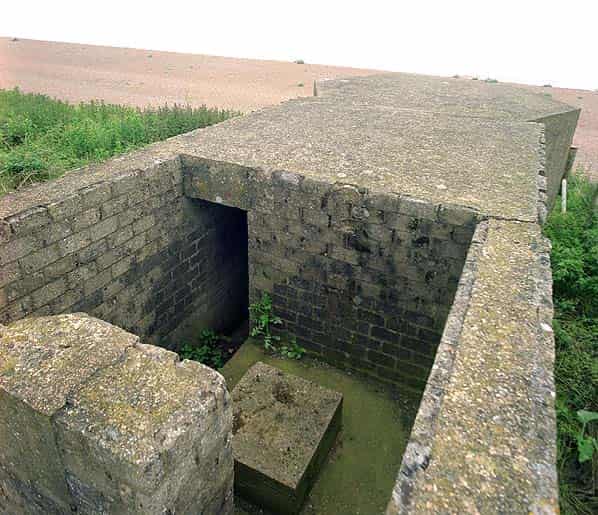
The two intercept cabins on either side of the projector room have been retained although the windows into the operations room have been blocked. One of the rooms has switchgear on the end wall. Externally most of the ROTOR period buildings were removed when Bawdsey became a Bloodhound missile launch site in 1979. The only original buildings remaining are the R3 operations block with its guardhouse and combined emergency exit and sub-station, the police dog compound, the rotating biological contactor (urine filter beds), the Type 84 modulator building and two concrete holdfasts. All the other buildings date from the Bloodhound period.
The Type 84 building is at the southern end of the site, close to the perimeter fence. It has been completely stripped of any original fittings and was used as a crew room and store for the Bloodhound Armament Handling Flight. When visited in 1999 it was locked but has now been broken into and internally vandalised.
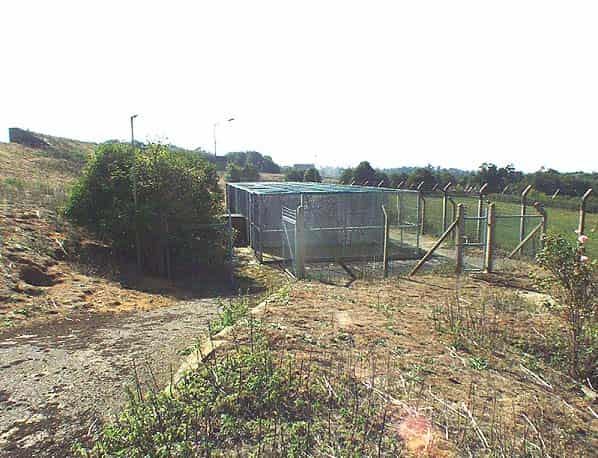
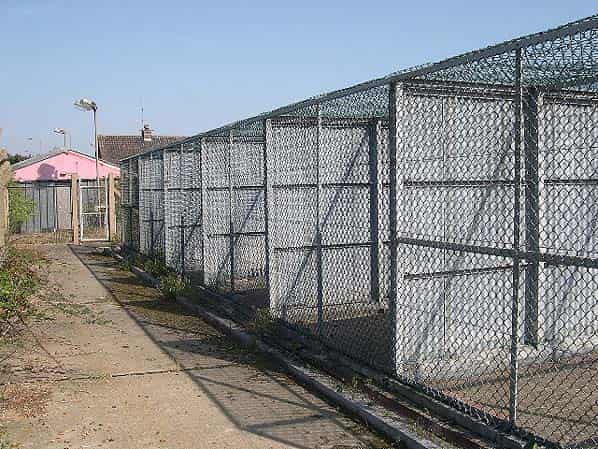
The police dog compound is close to the main entrance gate and consists of a six chain-link fence dog pens. In recent years sections of the fencing have been used to repair holes in the main perimeter fence.
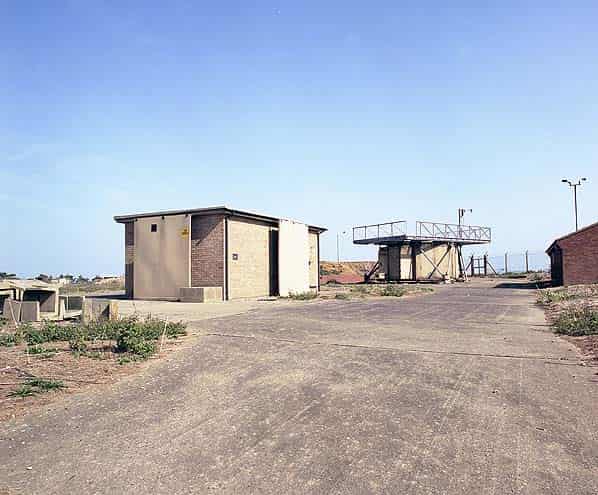
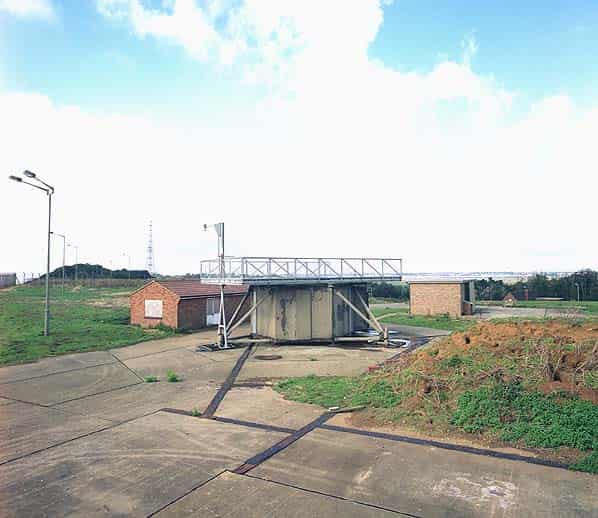
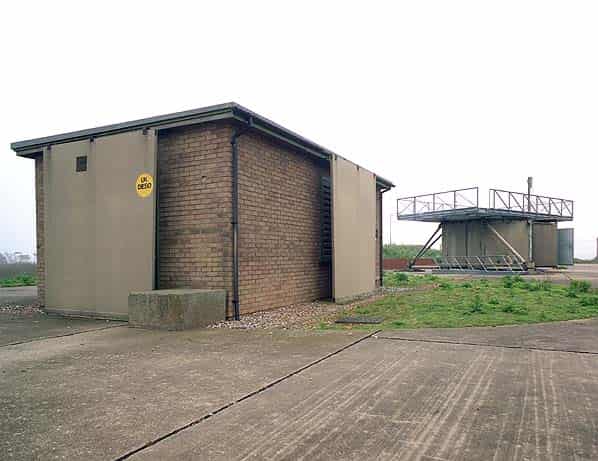
The Bloodhound station was manned by ‘C’ flight of 85 Squadron comprising two missile sections each armed with six Bloodhound Mk 2 missiles. Each section had a launch control post (LCP) and a target illuminating radar (TIR) and a generator house.
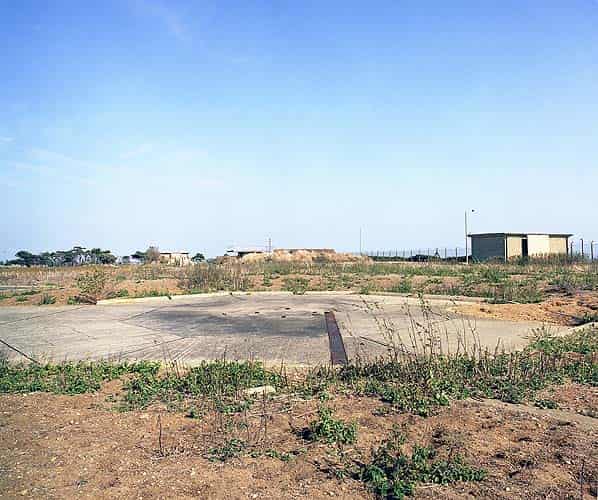
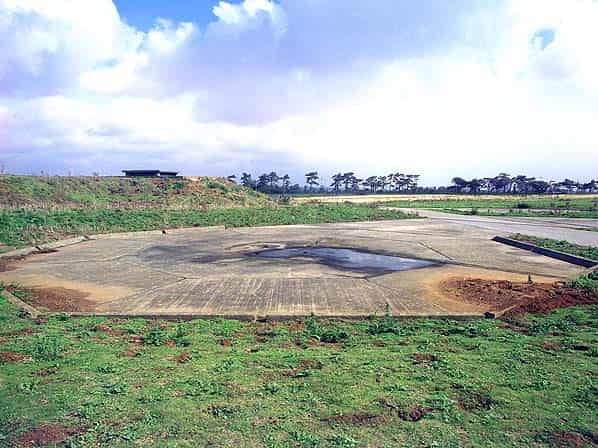
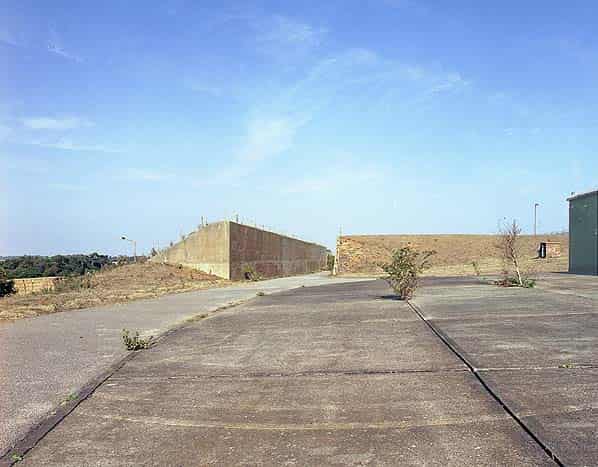
There are two blocks of 6 octagonal missile hard standings with a central four bolt holdfast for the launcher. The launch control posts were originally housed in portacabins but during 1990 these were replaced by the existing brick buildings. The target illuminating radars were originally Type 87’s but in 1988 these were replaced by Type 86 radars mounted on top of a ‘caravan’. To overcome ‘ground clutter’ these caravans were later raised four metres off the ground by placing them on top of galvanized steel platforms fitted to the roofs of the old Type 79 plinths. These structures are still extant.
To the rear of the guardhouse there are two new brick buildings, a motor transport (MT) shed, which was also possibly the fire station and a store; these have also recently been broken into.
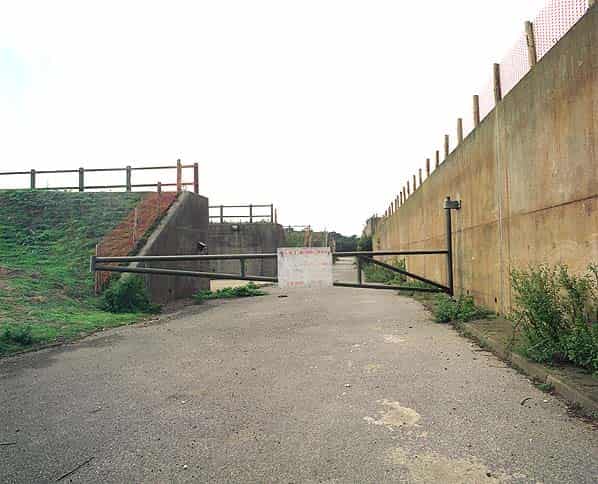
The missile handling facilities are located to the east of the road running from the guardhouse to the Type 84 building. They consist of two rectangular concrete areas with reinforced concrete retaining walls and a grassed bank around three sides; these are ready-use stores (RUS) for side lifting missile transporters. A third rectangular reveted area contains the explosive fitment bay. This consists of a square steel girder frame building clad with corrugated steel sheeting and a corrugated asbestos roof. Again this building was locked in 1999 but is now open and completely empty.
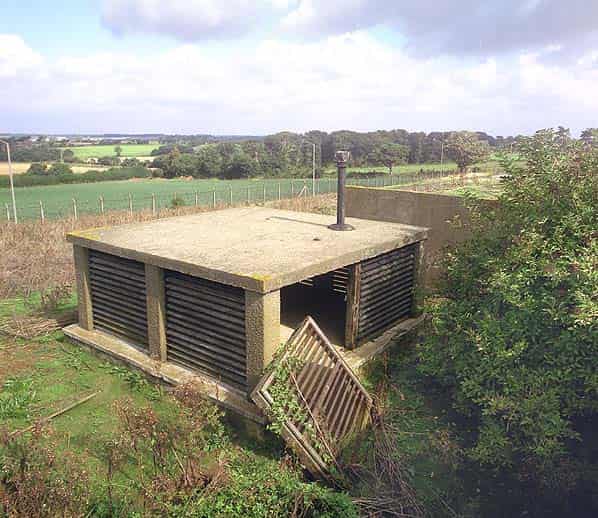
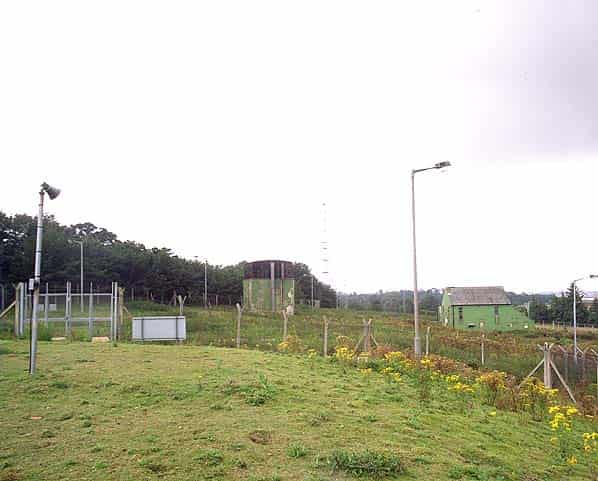
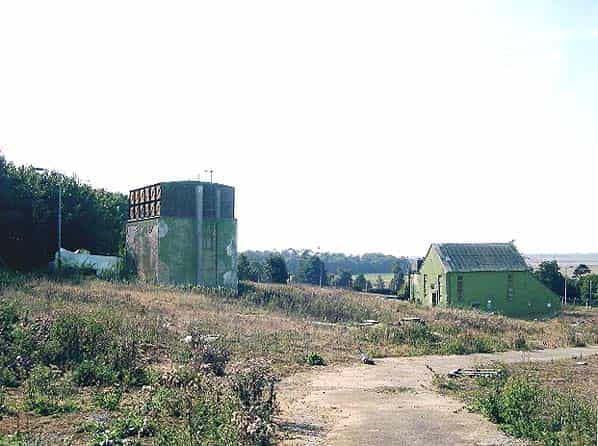
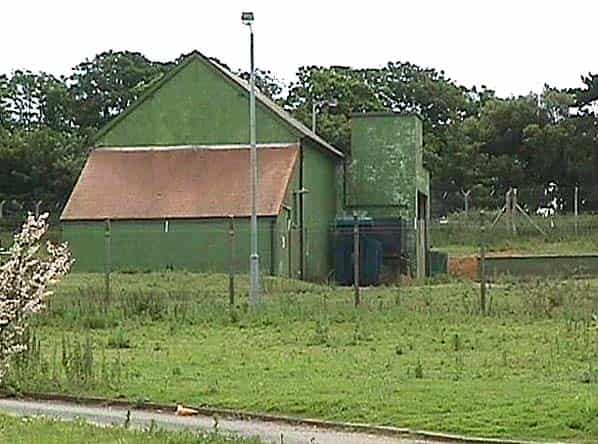
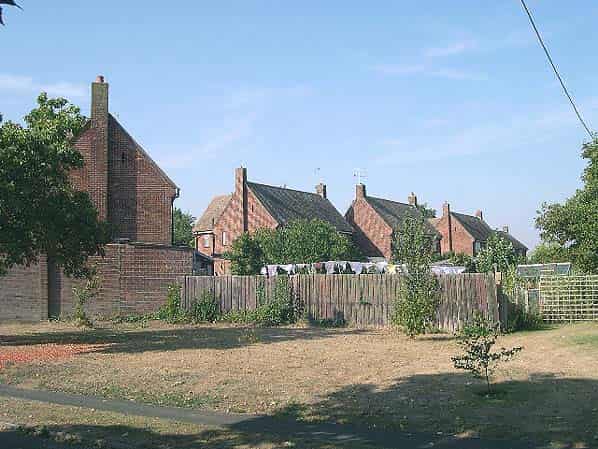
Two original ROTOR buildings stand on farm land just beyond the southern perimeter fence. These are the stand-by set house and a large Braithwaite water tank. In addition the remotely located R7 modulator building still exists 2kM away in a wooded area on Alderton Marshes and the married quarters are now in private ownership in Alderton Village (Watson Way). The transmitter and receiver blocks near Shottisham are also extant.
Those present from Subterranea Britannica were: Nick Catford, Bob Jenner, Mark Bennett, Dan McKenzie, Robin Ware & Keith Ward.
Sources:
- Bob Jenner
- Mark Bennett
- Dr. James Fox
- RCHME Survey Report - RAF Bawdsey (AMES24) October 1995 (fully revised 1999)
- Bawdsey - Birth Of The Beam by Gordon Kinsey, published by Terence Dalton Limited, Lavenham, Suffolk, 1983 ISBN 0 86138 017 7
- Dick Barrett’s ‘Radar Pages’ web site