In the early l950s, the WW2 mustard gas weapons storage depot at Barnham, on the south side of the 94 Maintenance Unit Air Ammunition Park (serving RAF Honington and other airfields), was selected for development as a dedicated storage and maintenance facility for nuclear weapons, in particular for Blue Danube, Britain’s first nuclear bomb.
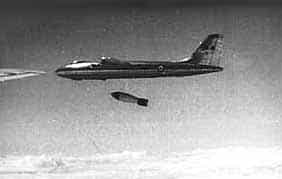
The 10000lb Blue Danube, was delivered to the Bomber Command Armaments School at RAF Wittering in 1953. It was 24ft 2in long and 5ft 2in in diameter. Blue Danube’s fins extended after dropping so that it could be carried inside the bomb bays of Valiants, Vulcans and Victors.
This huge bomb was, in reality, obsolete before it was delivered which resulted in a limited production run.
Blue Danube was supplemented with US Mk-5 atomic bombs in 1958, pending the introduction of smaller tactical atomic bombs and strategic megaton weapons.
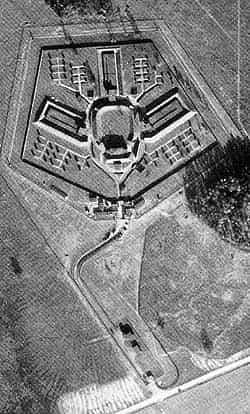
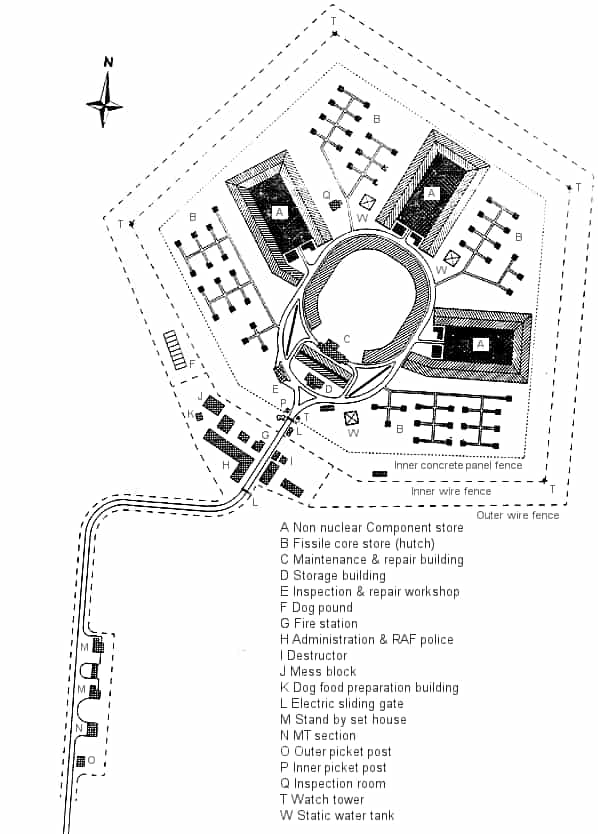
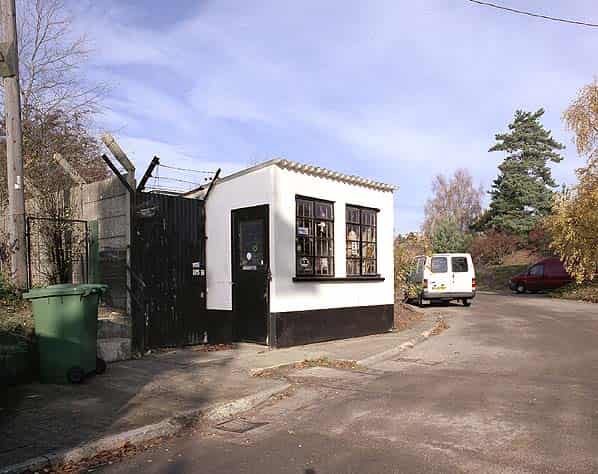
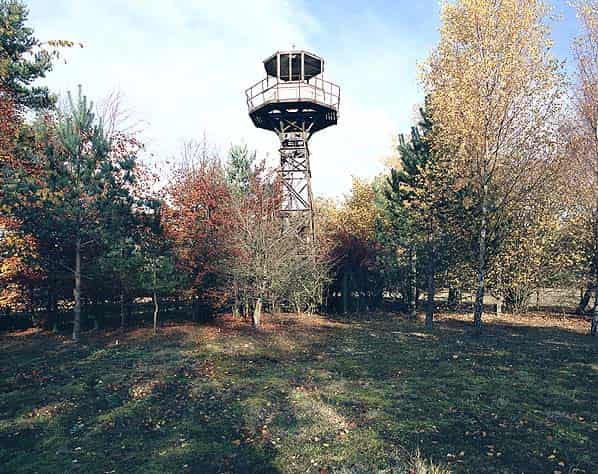
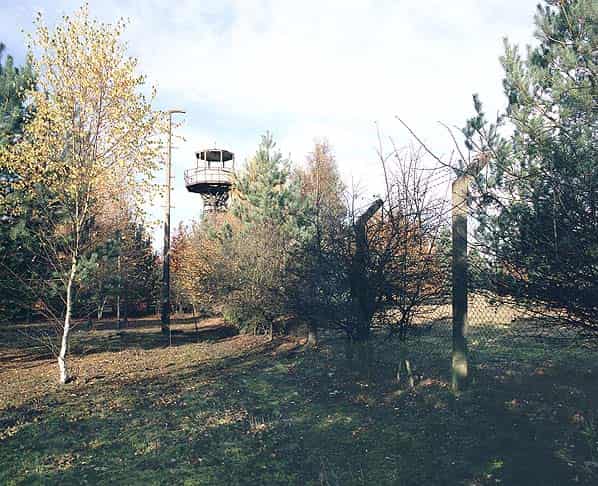
A second similar facility was built at Faldingworth in Lincolnshire. Barnham was completed by 1957 and was able to supply the squadrons at Honnington, Marham, Watton, Wyton, Upwood and Bassingbourn.Barnham came under the control of No. 94 Maintenance Unit and covers 23 acres with a roughly five sided pattern with projecting bastions that allowed the whole of the perimeter to be seen from the internal patrols. Added security was achieved in 1959 by building watch towers at the corners. Inside the perimeter mesh fence which was topped with barbed wire, there was an inner concrete panel wall, also topped with barbed wire. The guardroom and many of the domestic and other buildings were located in a compound between the two wire mesh fences with an electric sliding gate mounted on rails giving access to this area and a second sliding gate into the inner sanctum.
Several new buildings were added a few years after the depot opened, a new maintenance facility close to the entrance gate to the inner compound was added in 1959 and the southern boundary wall was pushed upwards with a second mesh fence erected creating a sterile area where dogs were allowed to run loose.
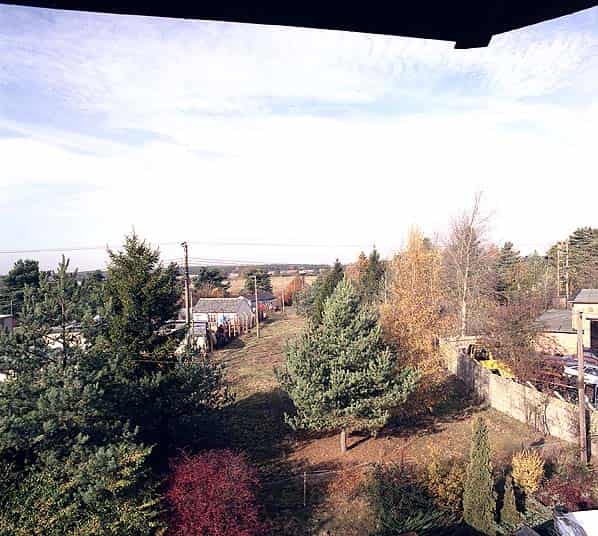
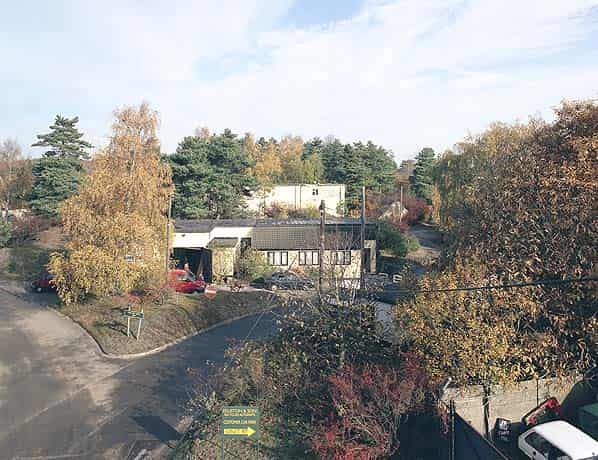
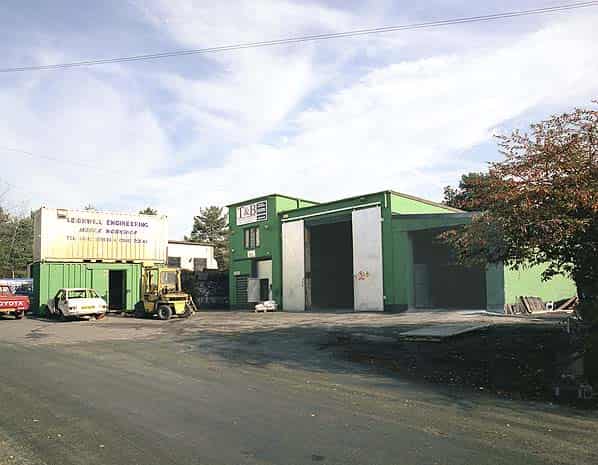
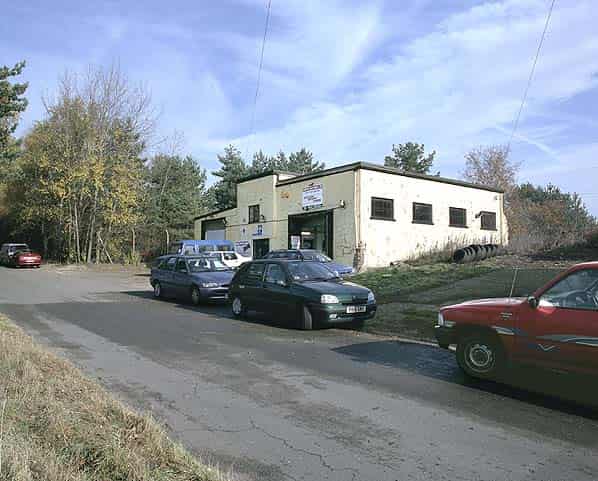
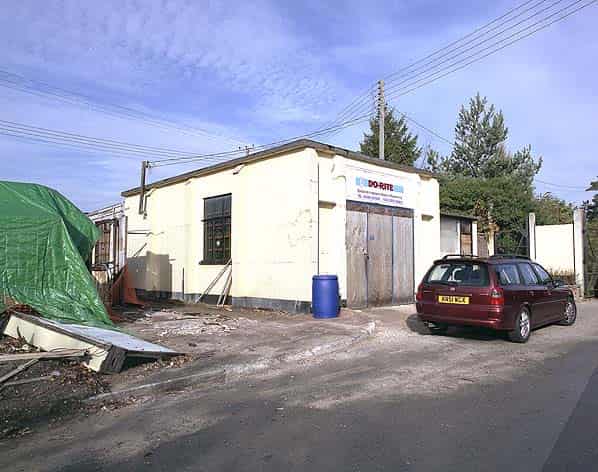
RAF Barnham closed in the early 1960’s and the site was sold by the MOD in 1966 and it now forms the Gorse Industrial Estate. Most of the original buildings are still extant and are let out to various tenants who put them to a variety of light industrial uses. The inner compound has been densely planted with conifers supplementing the lime and poplar trees which were part of the original tree planting programme; it is now difficult to get an overall view of the layout of the buildings.
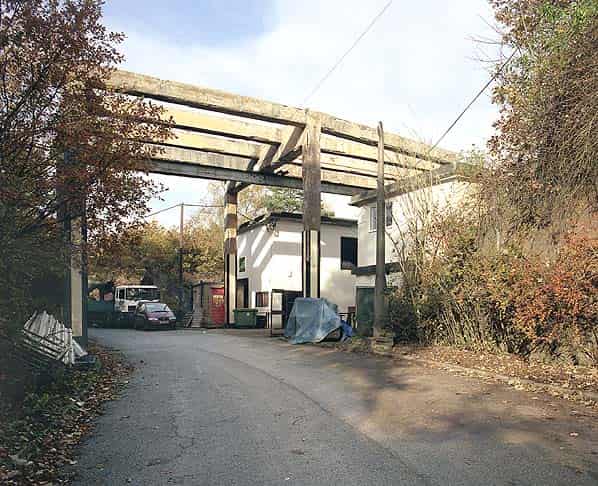
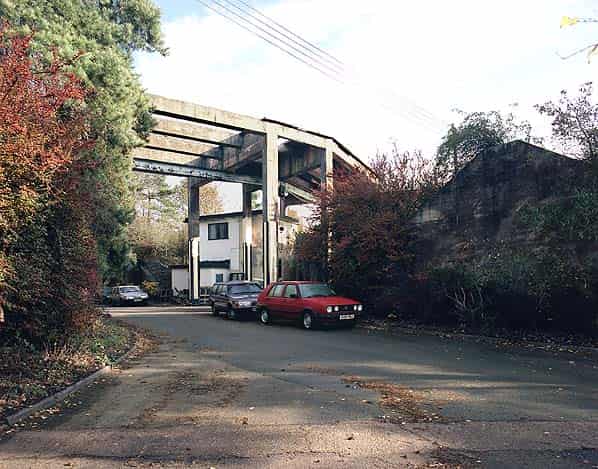
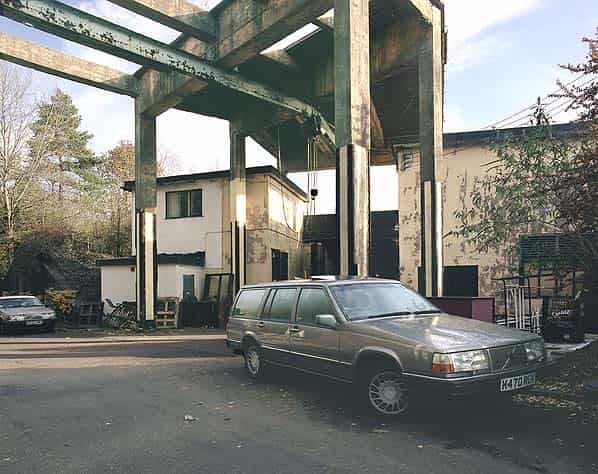
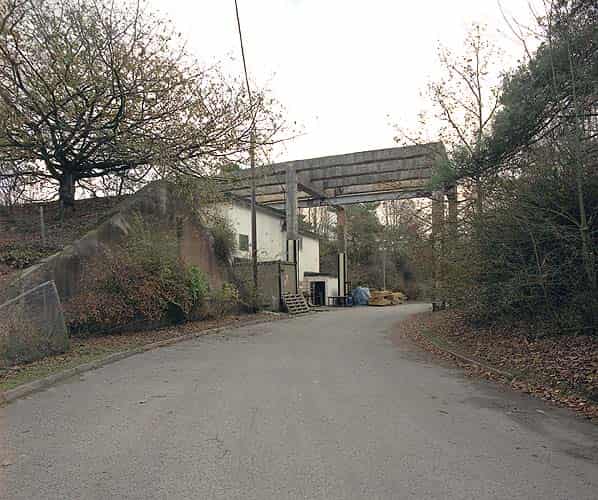
The weapon storage area consisted of three different types of buildings, 3 large protected blockhouses for the storage of the non-nuclear components, these being the outer bomb casings and the high explosive parts of the bomb. The three stores were arranged around an internal loop road with grassed earth banks along three sides of each building. At the entrance to each store there is an overall roof supported on concrete pillars with a gantry crane for lifting the heavy Blue Danube bombs from the large delivery trucks. Rooms to either side of the entrance housed ventilation plant for the blockhouse. Each rectangular storage blockhouse was 58 metres x 18 metres divided into 11 bays long by 3 bays wide with two internal lines of supporting concrete pillars.
Two of the three storage buildings are still standing, the third was demolished after it was gutted by a fire in the mid 1980’s; at the time it was being used by a plastic company. The building immediately opposite the entrance gate faces straight onto the internal loop road while those to the west (now demolished) and east were angled with a cranked concrete canopy. The remaining two canopies have had their metal roof sheets removed as they were beginning to rot and the remaining concrete beams have been wrapped in chicken wire. One of the gantries still retains a hoist although it is unclear if this is original or a later replacement. At Faldingworth the three buildings all face straight on to the loop road.
Internally, the buildings have been altered with new walls being built between the supporting pillars creating a number of individual rooms. Each of the two remaining buildings has a number of different tenants.
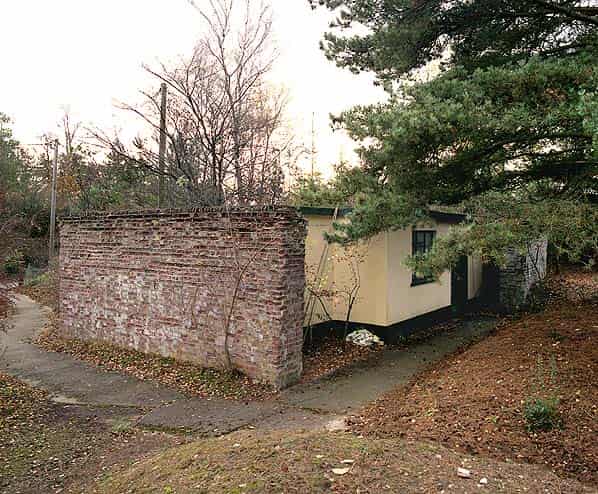
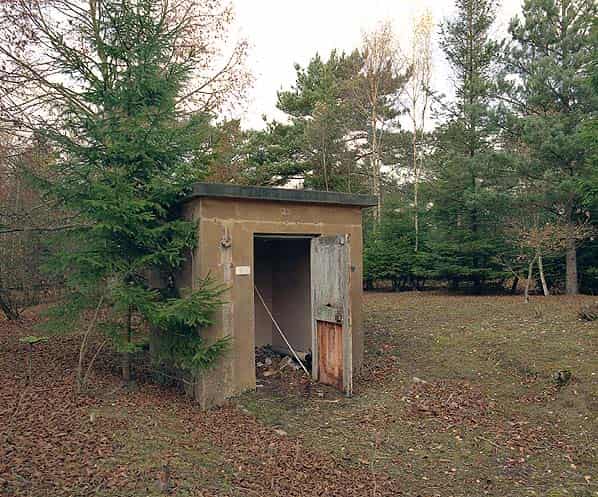
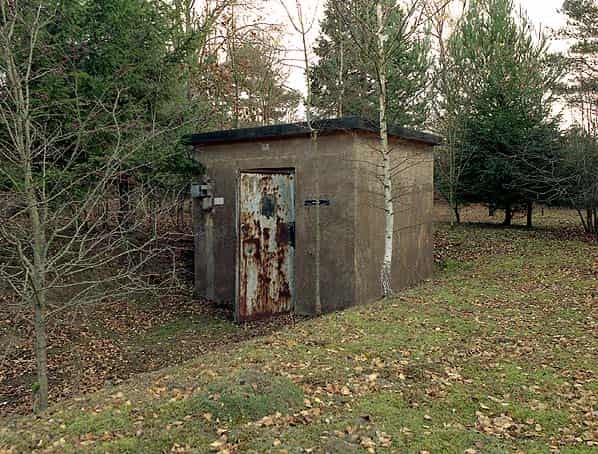
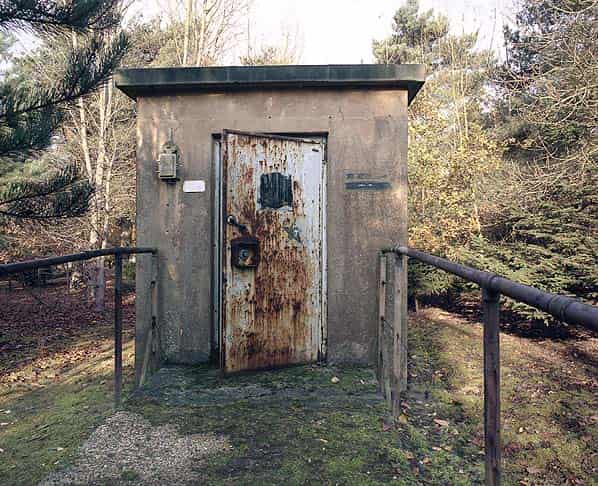
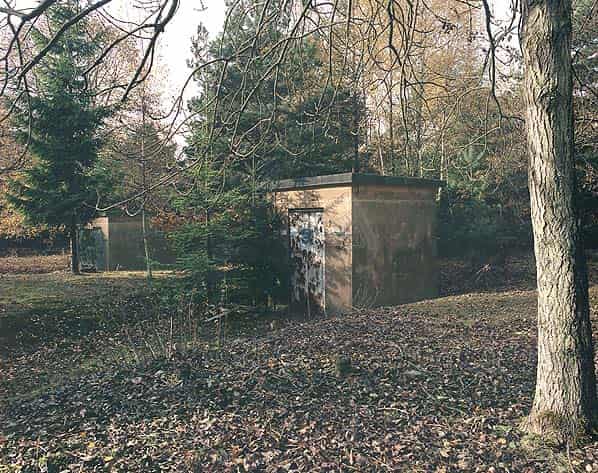
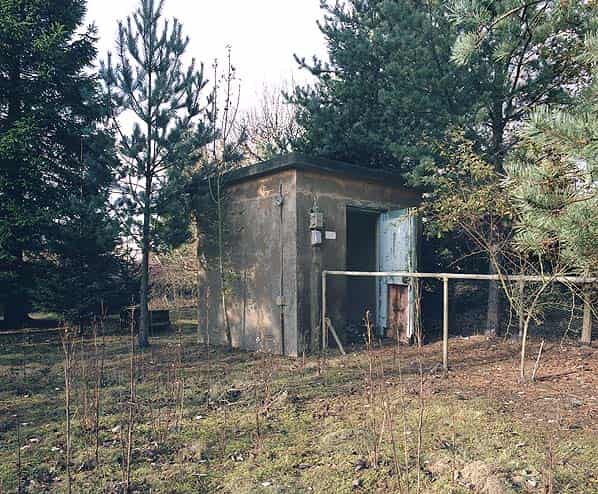
The fissile cores were stored in 57 small buildings known as ‘hutches’, set within the pentagonal revetted area with blast walls and grassed earth banks. The ‘hutches’ were arranged in five groups between the non-nuclear stores with the buildings linked by walkways to the compound ring road.
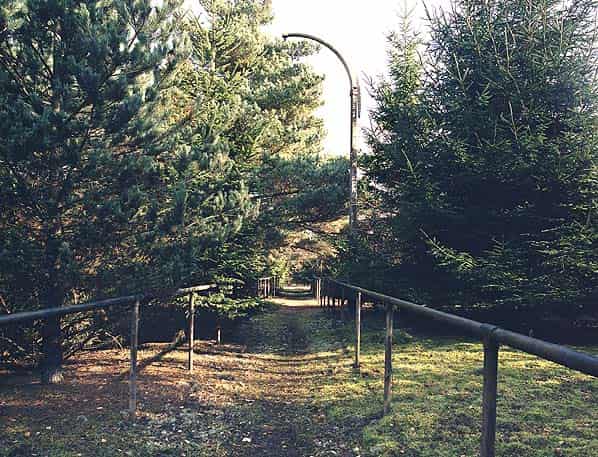
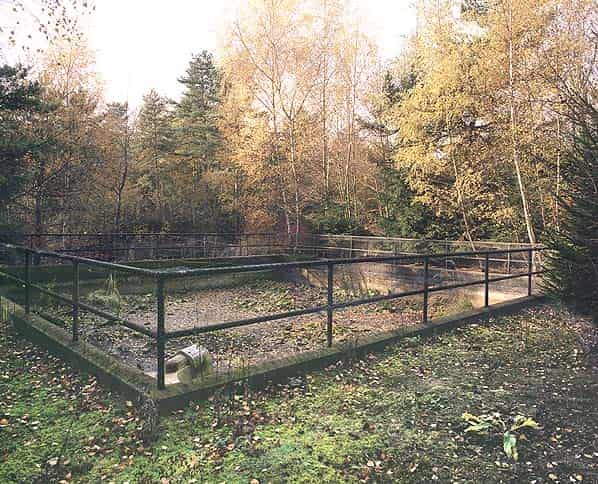
These walkways were defined by steel guide rails to prevent people straying onto the grassed area between them.
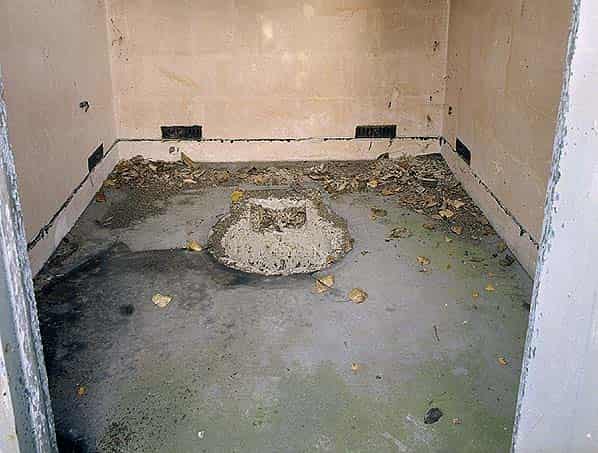
There were two types of buildings, Type A (of which there were 48) buildings would have held a single plutonium core and Type B buildings would have held two cobalt cores. The hutches are built from rendered concrete blocks with a flat concrete roof. The metal faced wooden doors were fitted with combination locks with additional electrically operated bolts that could be operated from the main control room. The cores were held in stainless steel containers mounted in an aperture in the concrete floor.
Added protection was achieved by surrounding the building with copper earth straps. Each hutch had a sealed intrinsically safe bulkhead light in the ceiling and intrinsically safe electrical switches. Barnham had sufficient storage capacity for 132 fissile cores although it’s likely that only a small number were ever stored there as only 25 Blue Danube bombs were ever built at a cost of £1M per bomb.
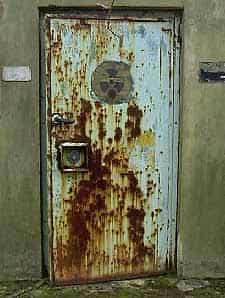
All the hutches are still standing as are most of the railed walkways linking them to the loop road; lamp posts are placed at regular intervals along the walkways. All the buildings are derelict and empty and have been stripped of all their electrical fittings. Some of the hutches still have an aperture in the floor where the stainless steel container for the core was located and some still have a black radiation symbol on the door. The concrete panel fence is largely intact although some panels have been removed to give access to the area between this fence and the outer mesh fencing which is also intact.
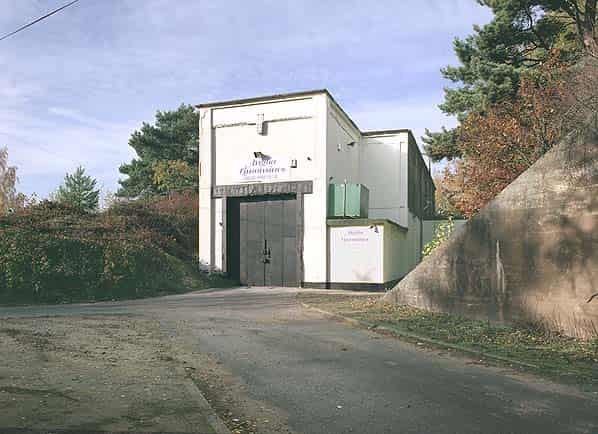
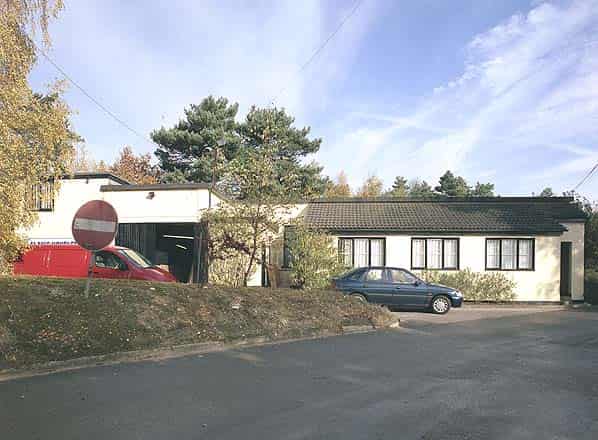
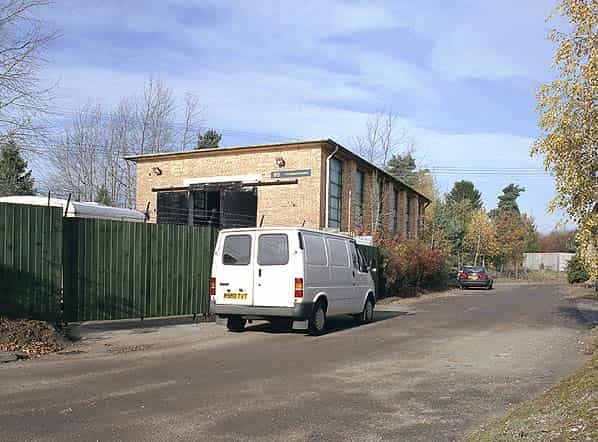
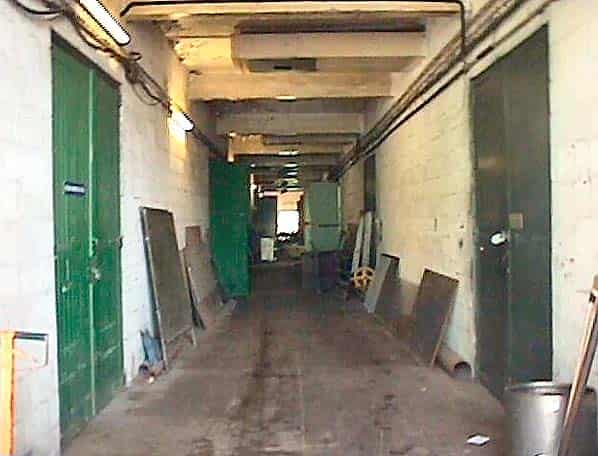
Of the other building in the inner compound, one was for maintenance and refurbishment. This was located just inside the main gate behind a high concrete blast wall; the Blue Danube required a lot of regular maintenance to keep it ready for use. The building could be entered through two air locks, one located at each end. The building immediately behind housed electrical and ventilation plant and a photographic darkroom. This building is still there as is a storage building in front of it.
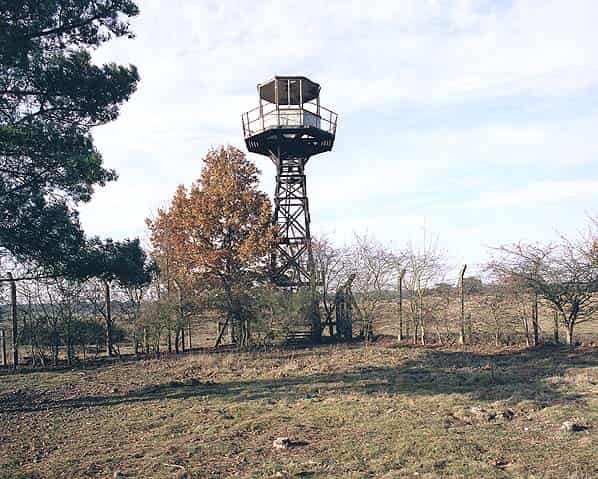
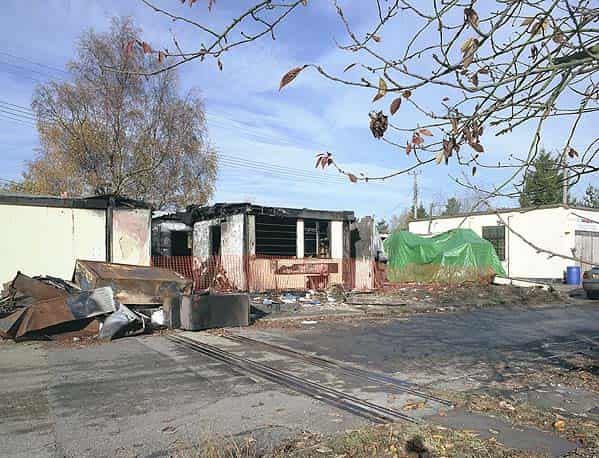
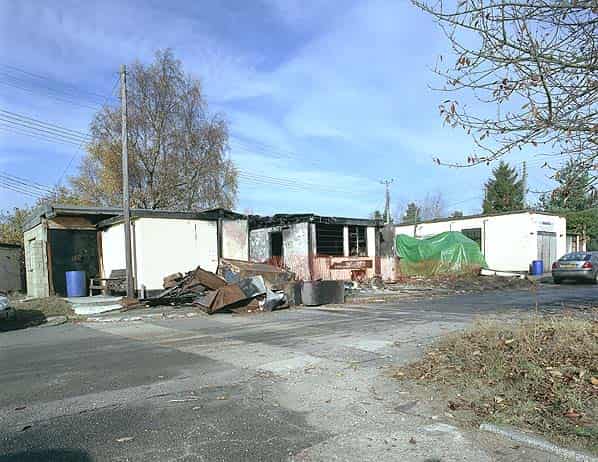
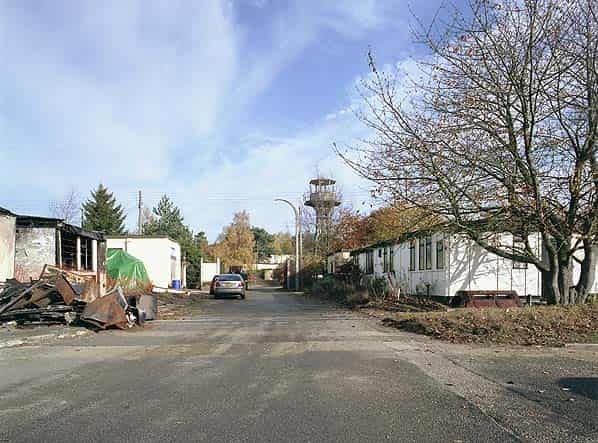
Most of the domestic buildings located between the two sliding gates are also still standing although the main administration building and RAF police building has been gutted by fire. All these buildings are of Seco construction, a prefabricated building system consisting of hollow plywood beams and columns. One of the watch towers is located amongst this clutch of buildings and the others still stand at the corners of the pentagon giving a good view along the perimeter fence. The towers are in good condition and can be climbed although the wooden decking at the top is rotting.
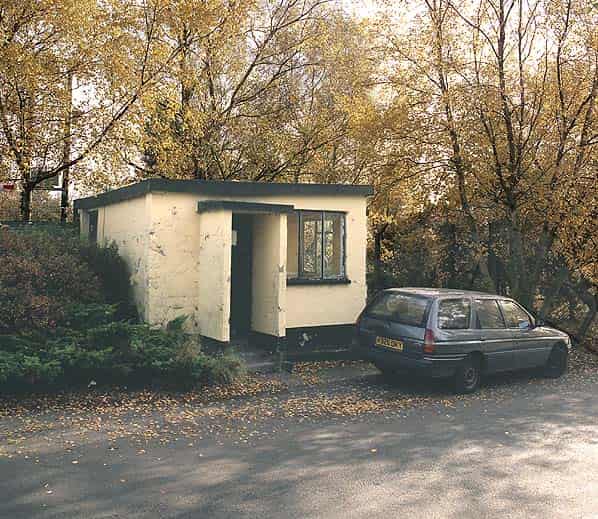
Four further buildings are located alongside the access drive and outside the perimeter fence. The first, close to the road, is the outer picket post, this is derelict. Beyond this the MT section and two two stand-by set houses and between them another building that was probably a fuel store.
The remaining part of the WW2 ammunition depot remains an active military training area although all the high explosive magazines have been demolished and replaced by modern buildings of Barnham Camp. The area is still known as RAF Barnham, a dispersed subsidiary of RAF Honnington. The Little Heath forward filling depot (for mustard gas) was located on the south side of Elveden Road. Most of the WW2 buildings are still standing and now house the East of England Tank Museum.
Sources:
- Bob Jenner
- Cold War - Building for nuclear confrontation 1946 - 1949 by Wayne Cocroft and Roger JC Thomas. Published by English Heritage ISBN 1 873592 69 8
- Airfield Review - journal of the Airfield Research Group