Site Records
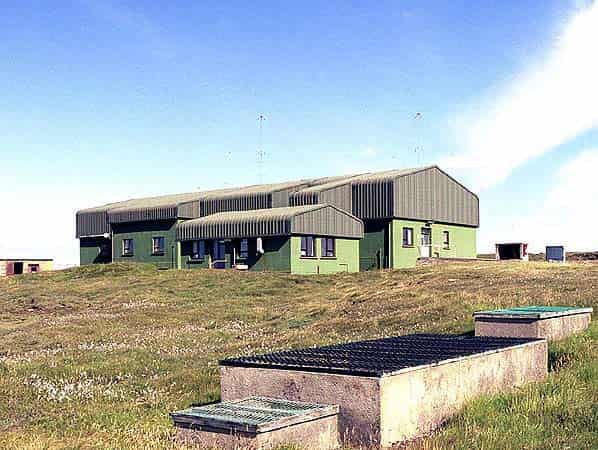
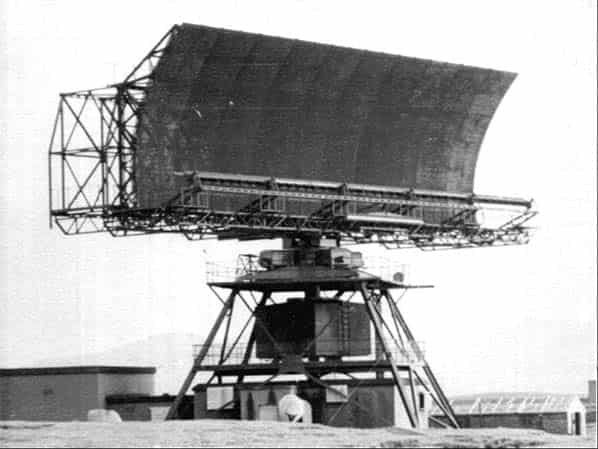
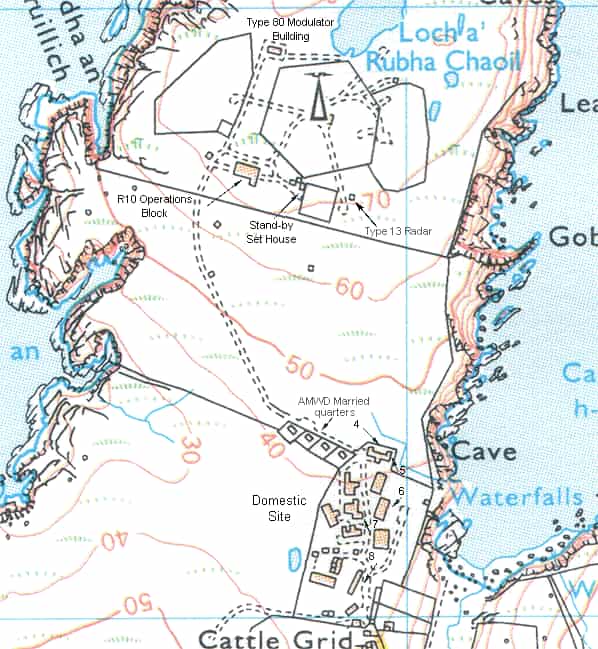
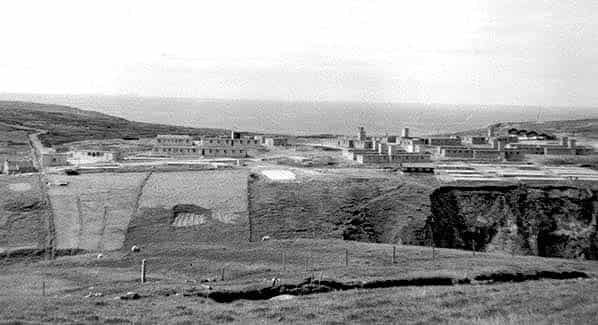
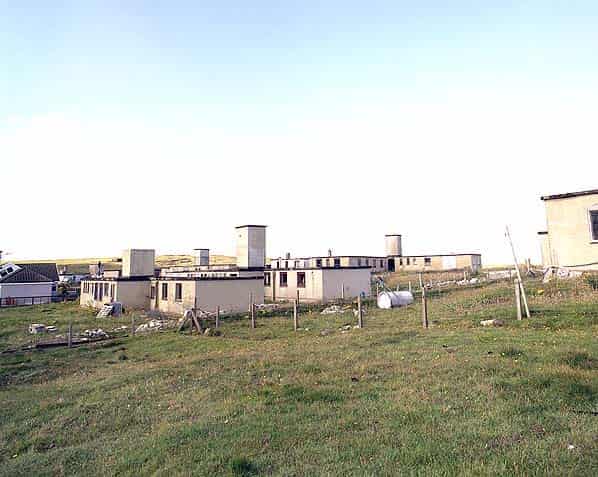
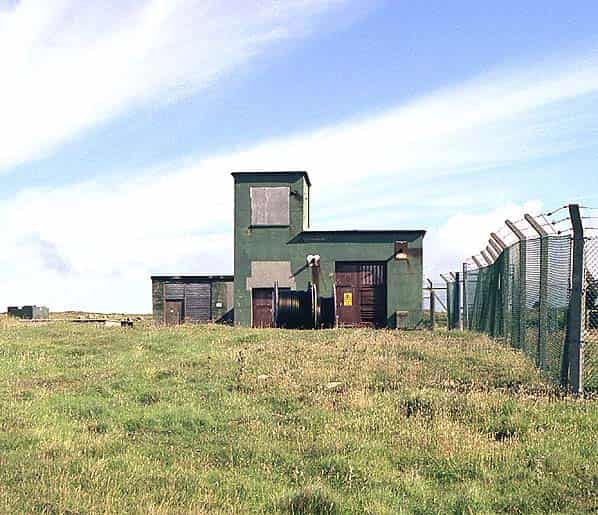
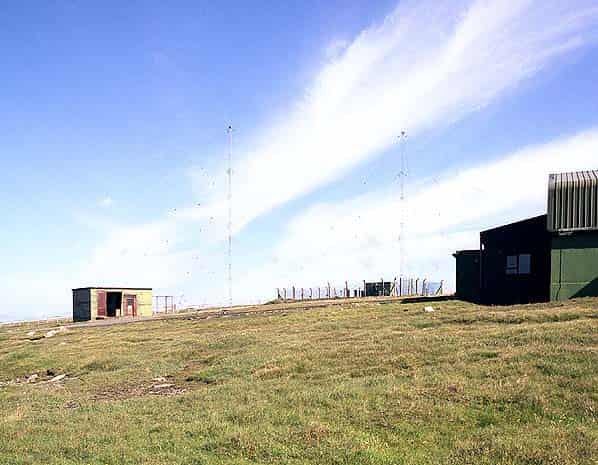
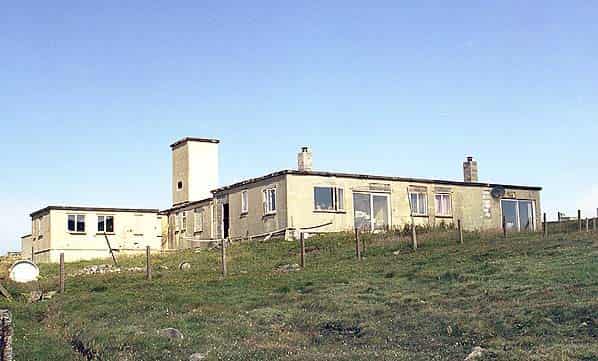
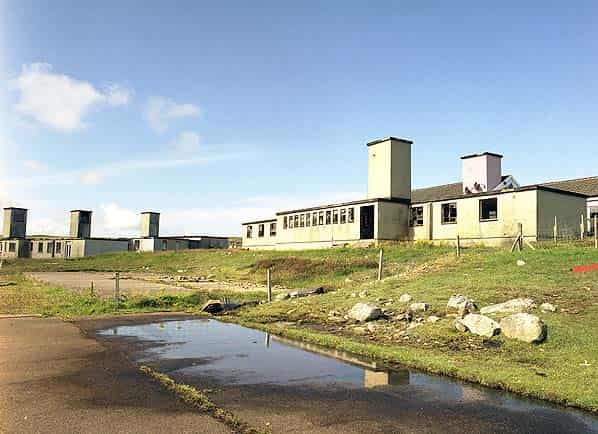
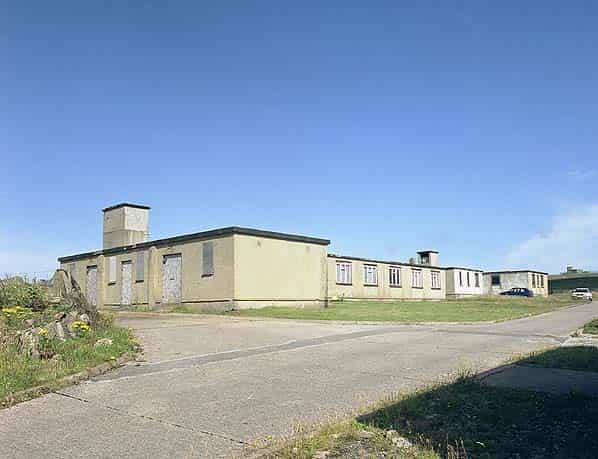
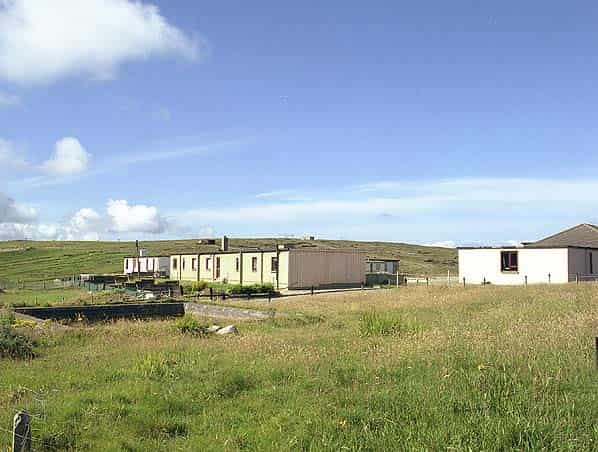
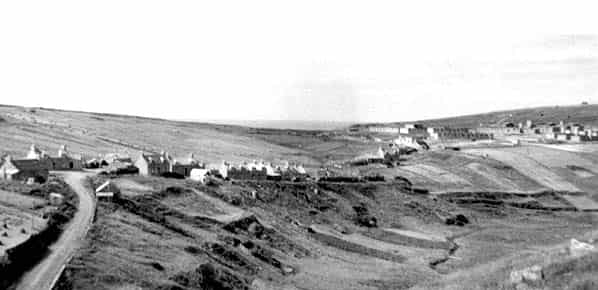
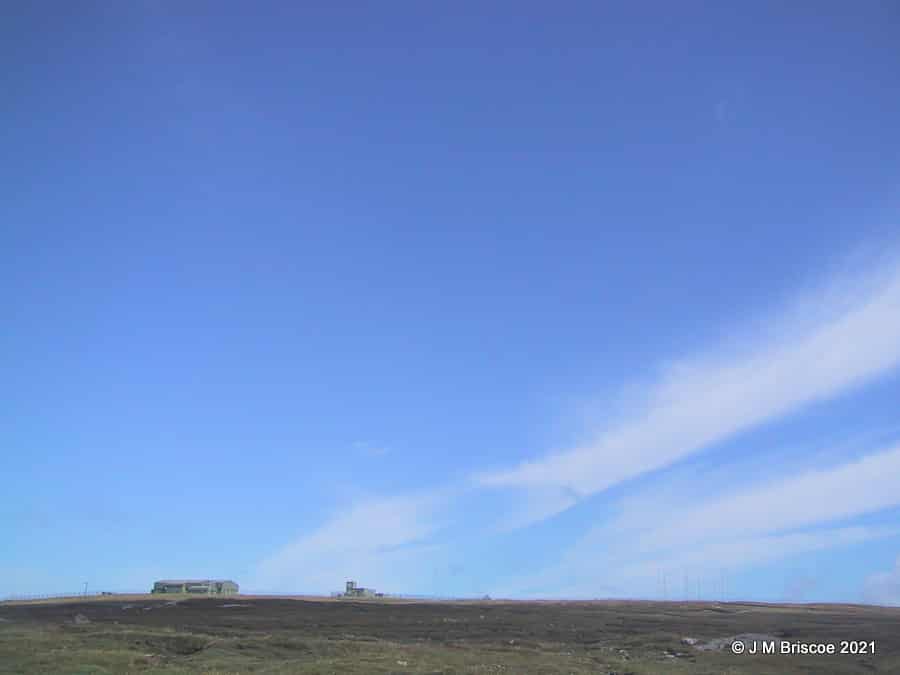
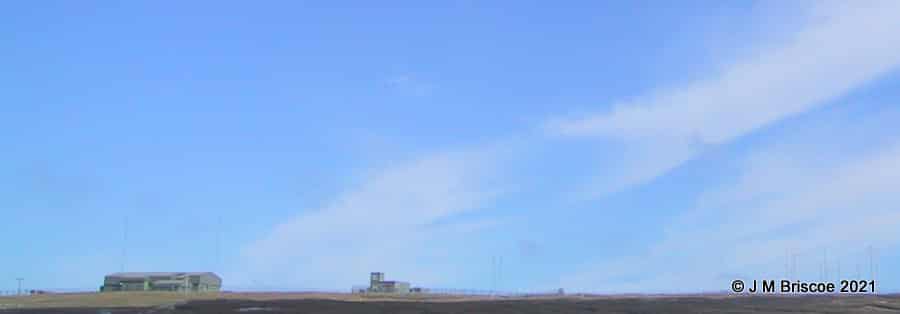
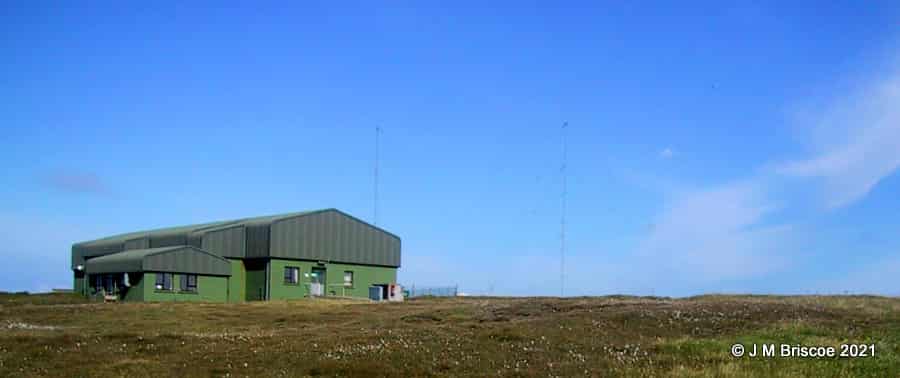
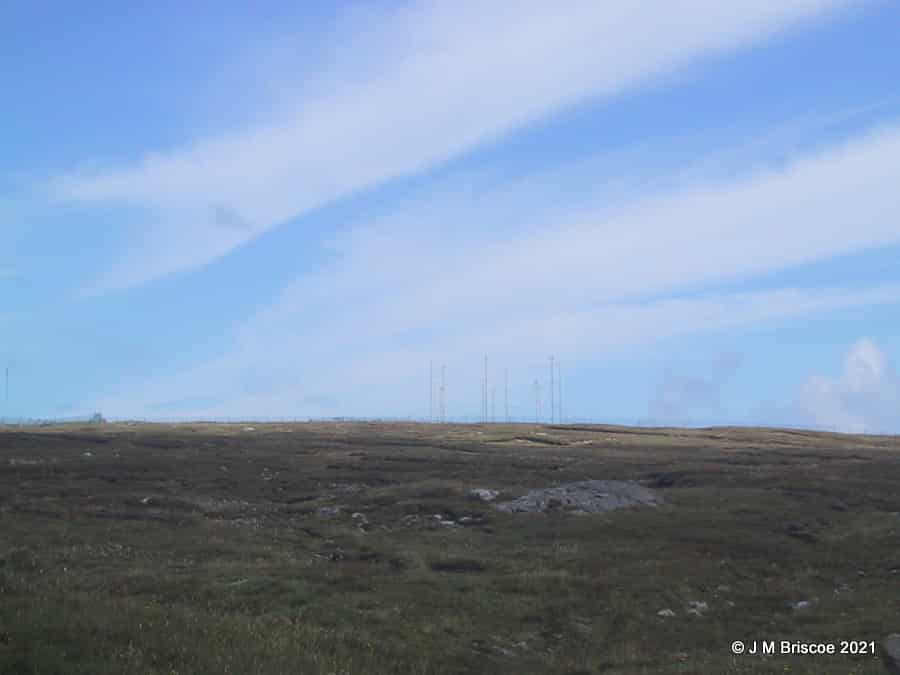
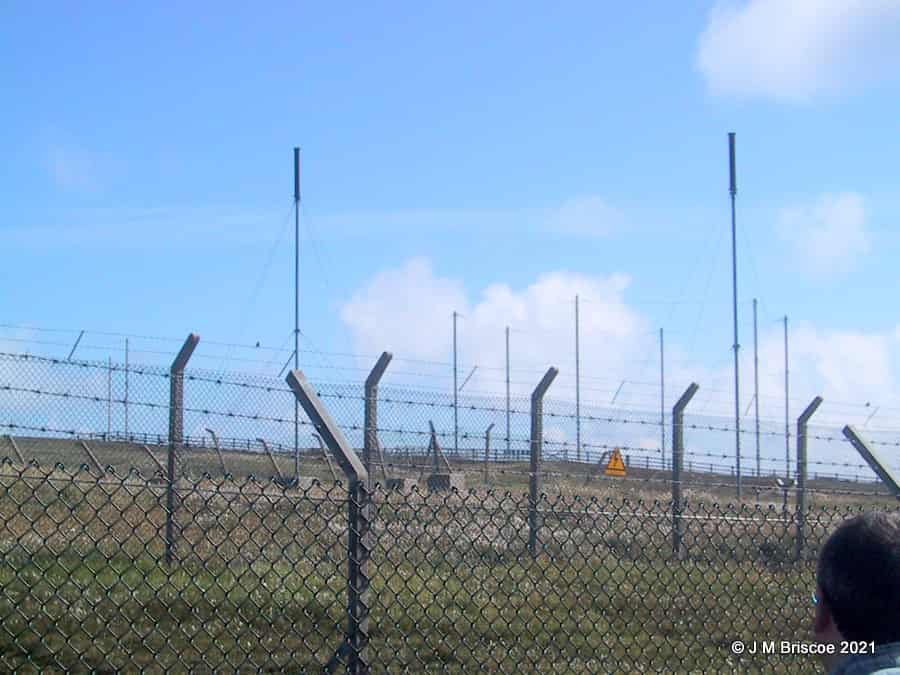
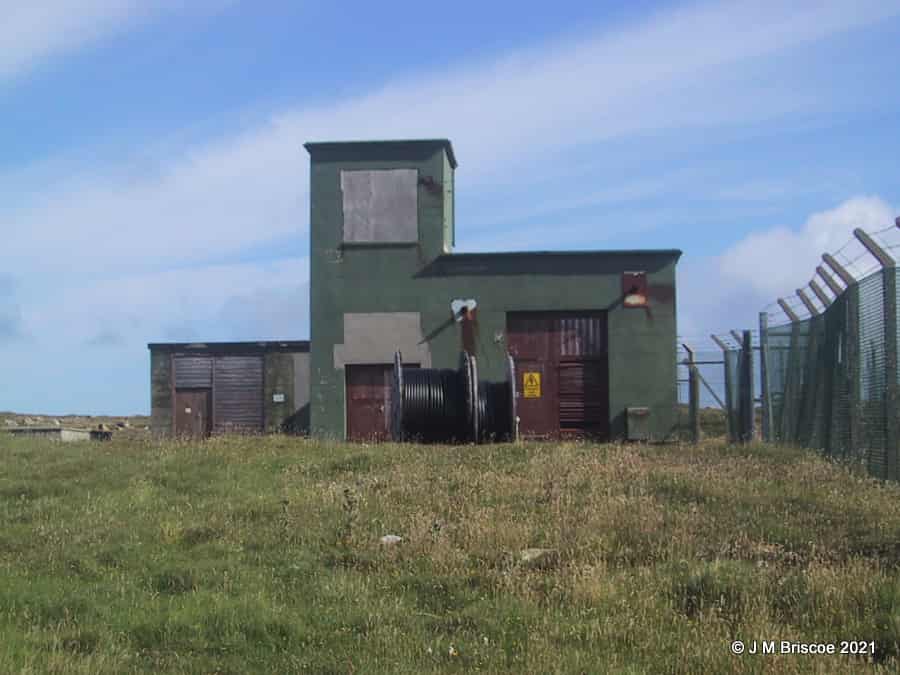
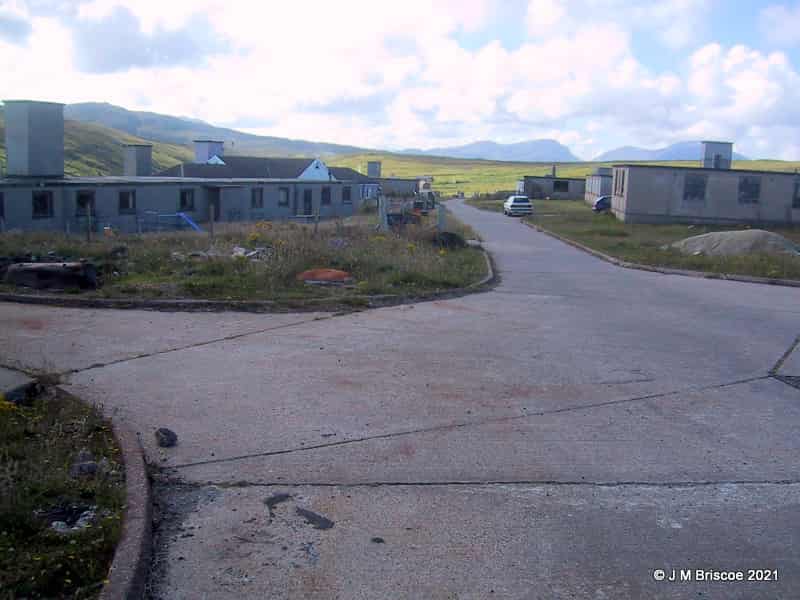
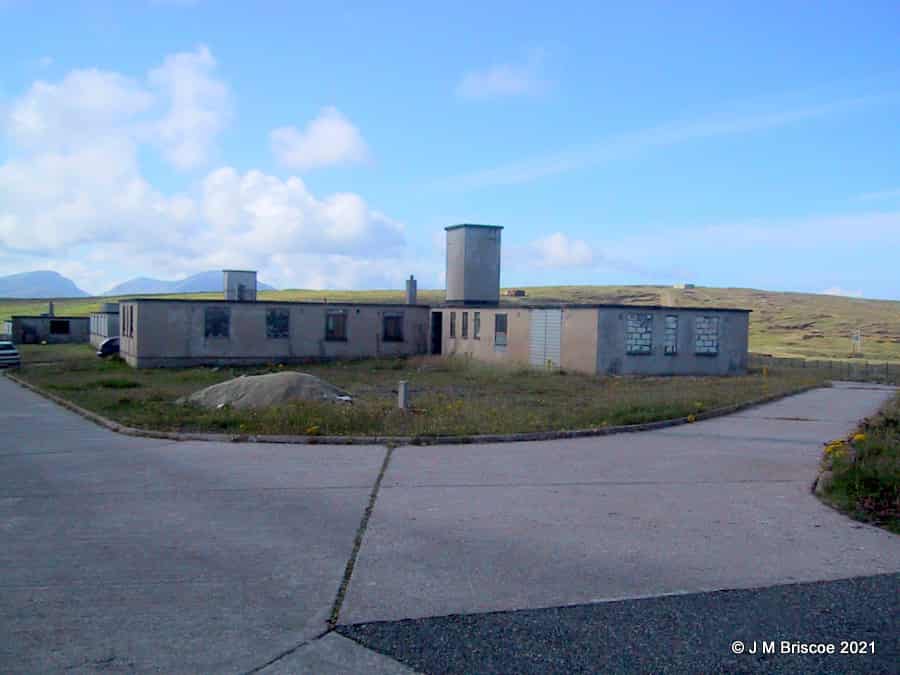
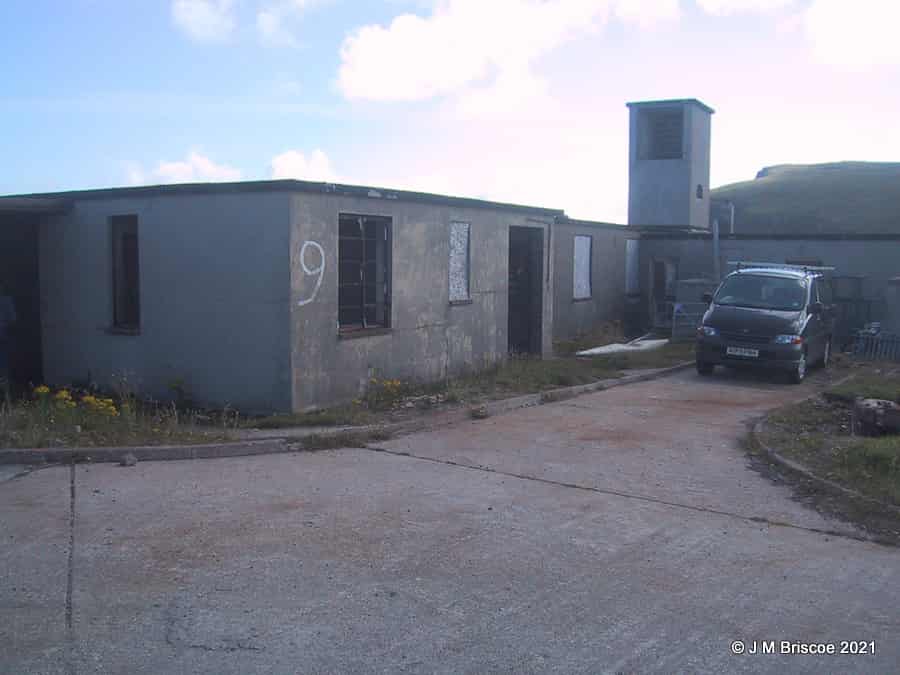
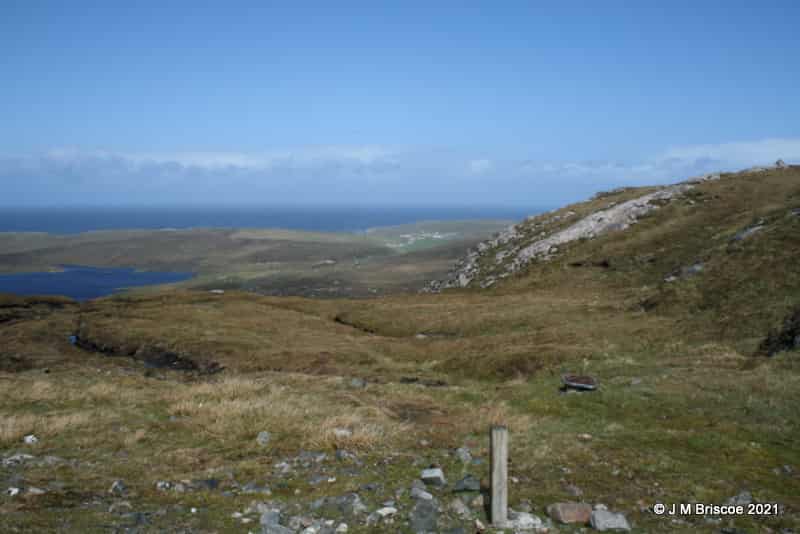
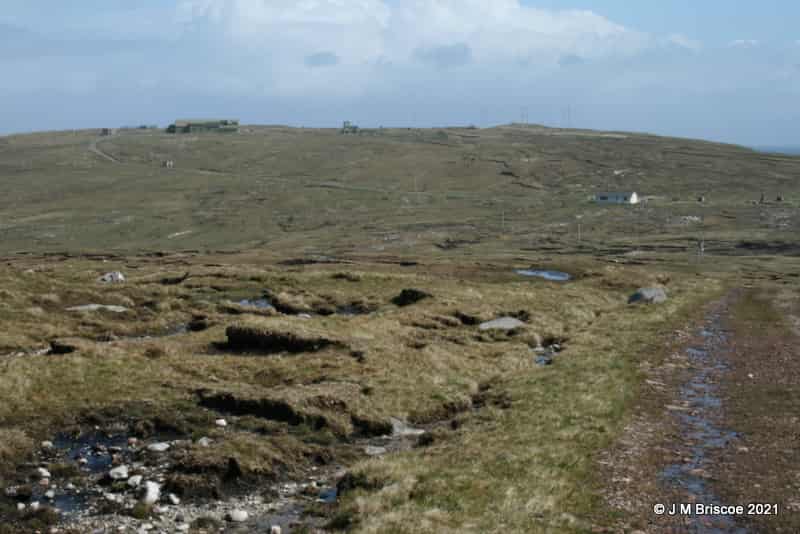
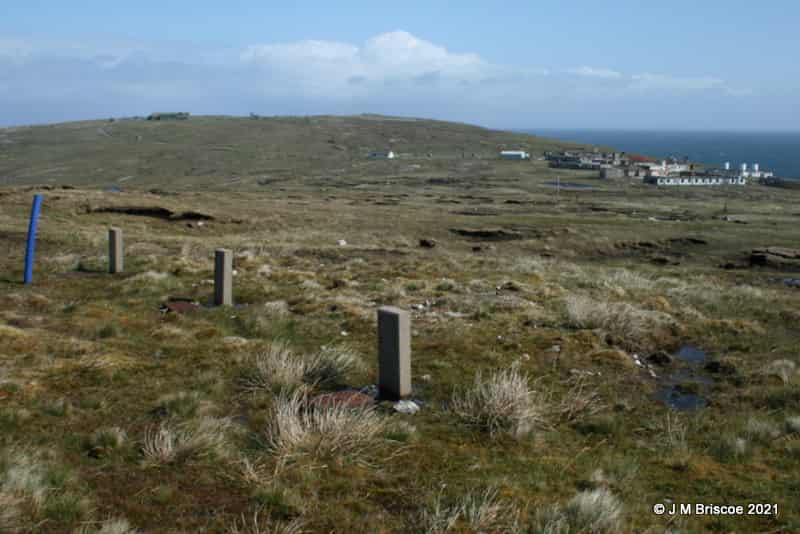
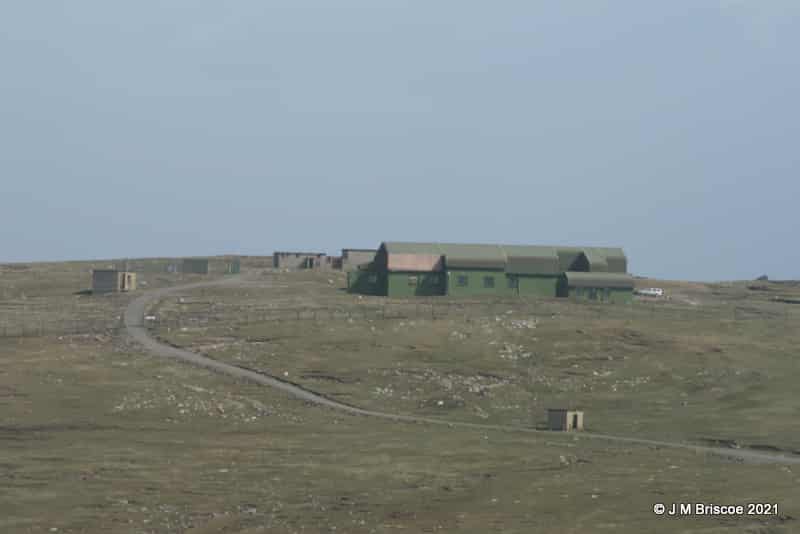
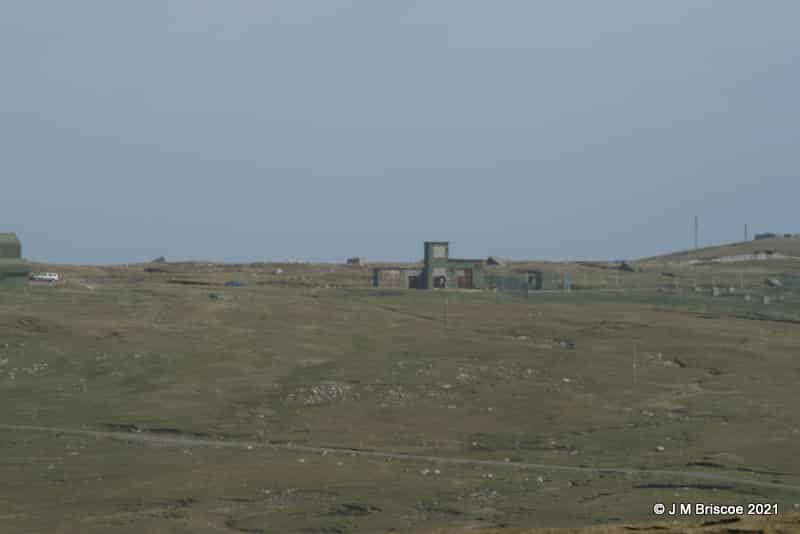
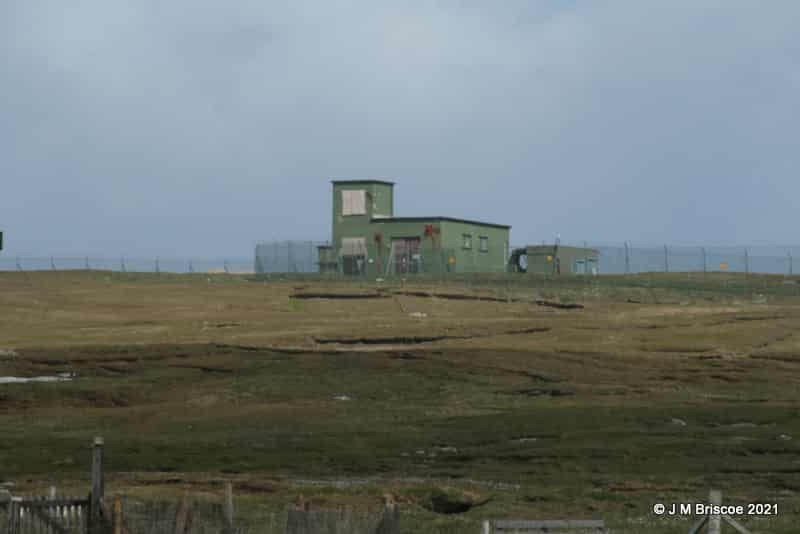
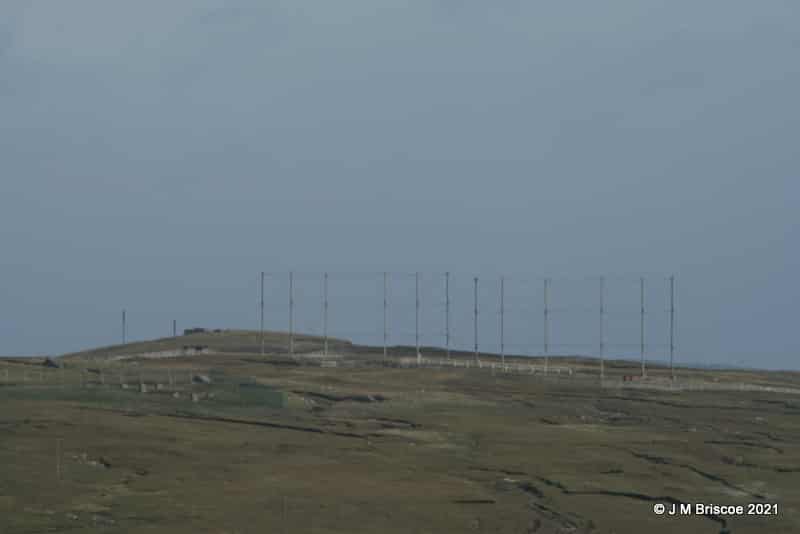
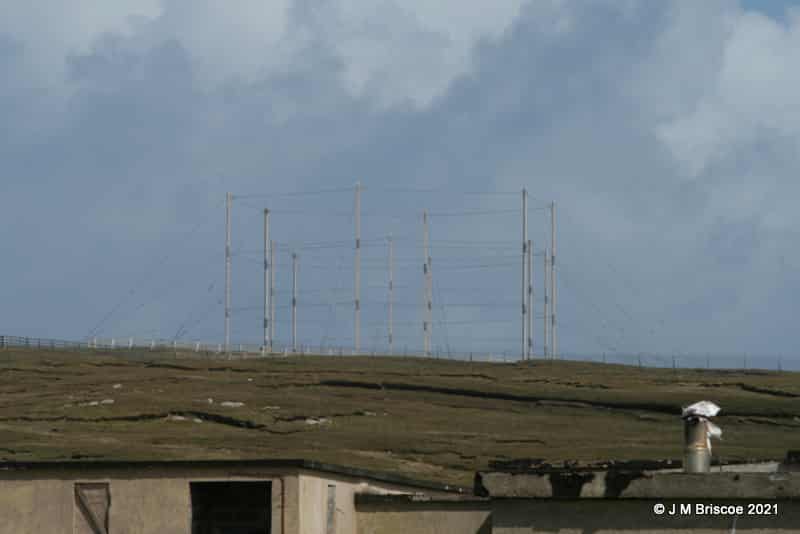
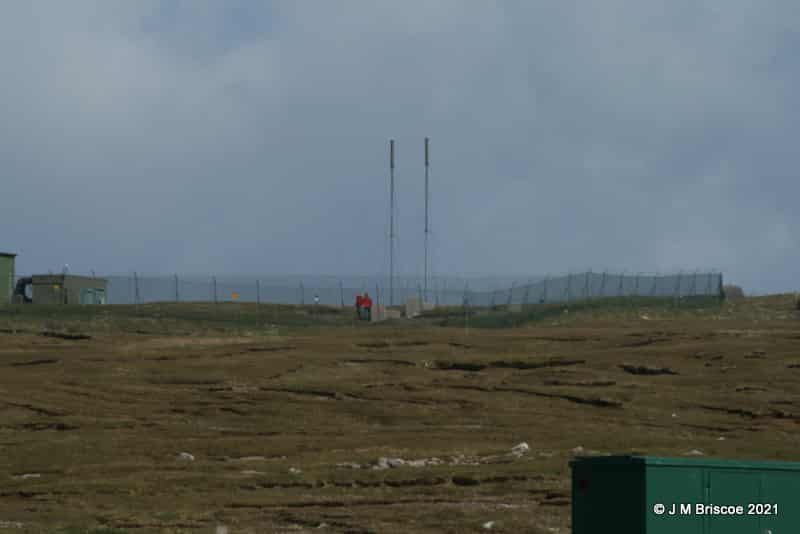
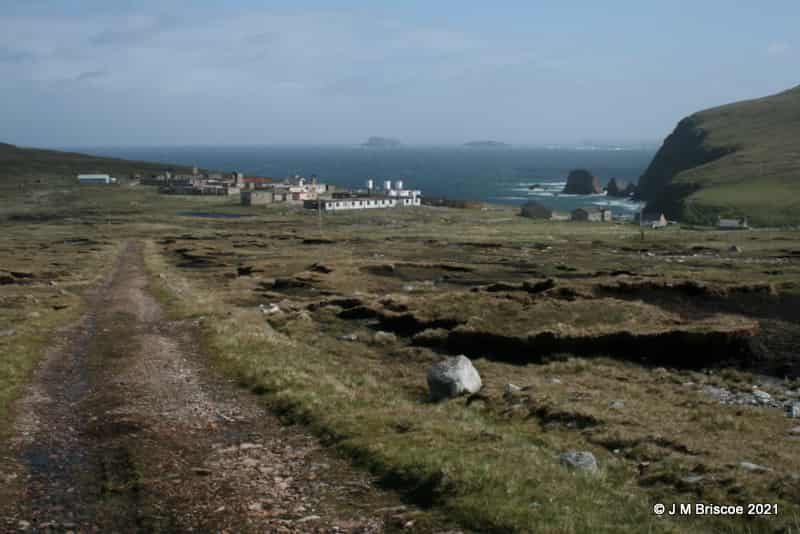
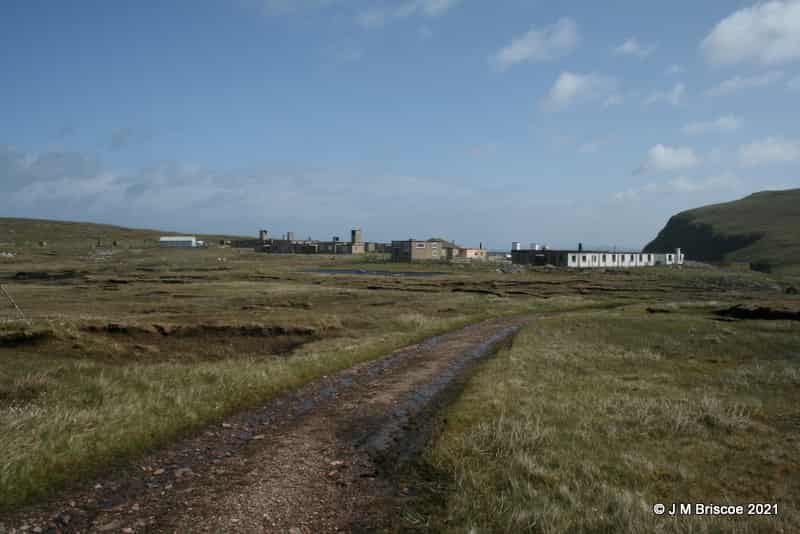
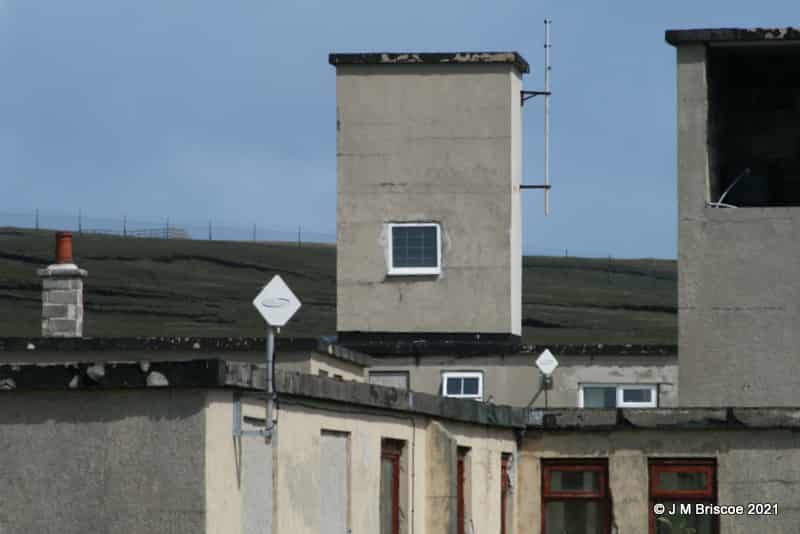
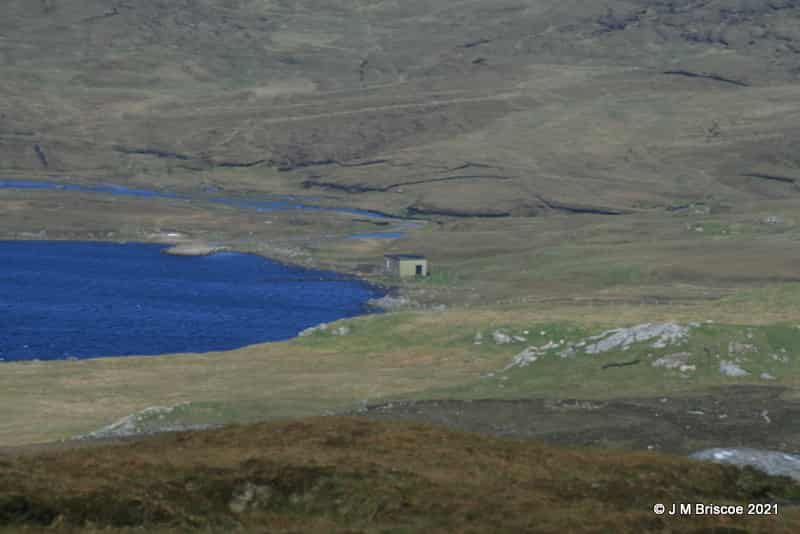
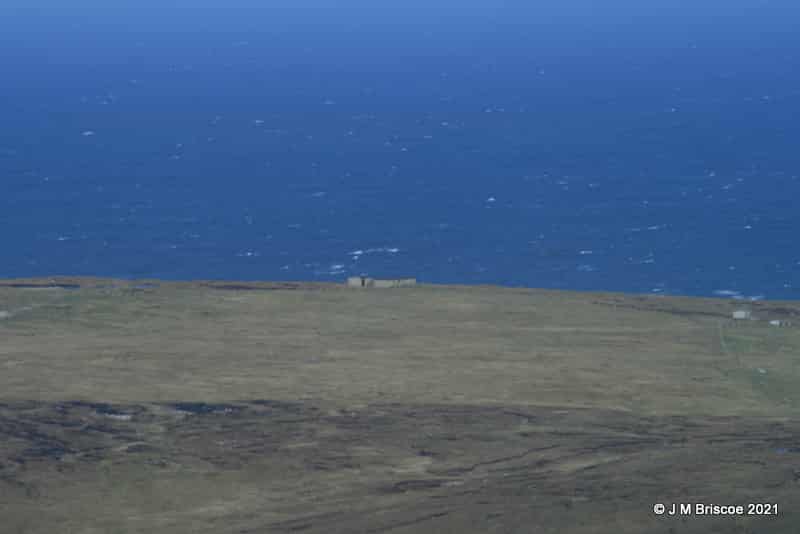
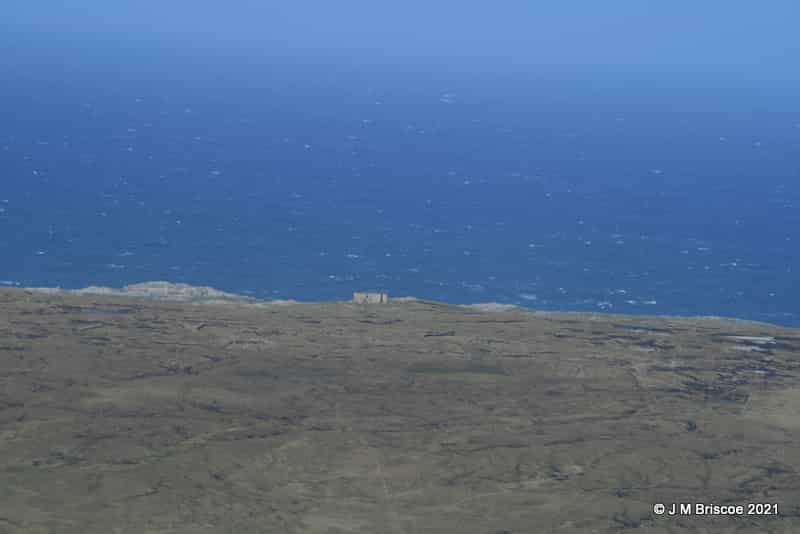
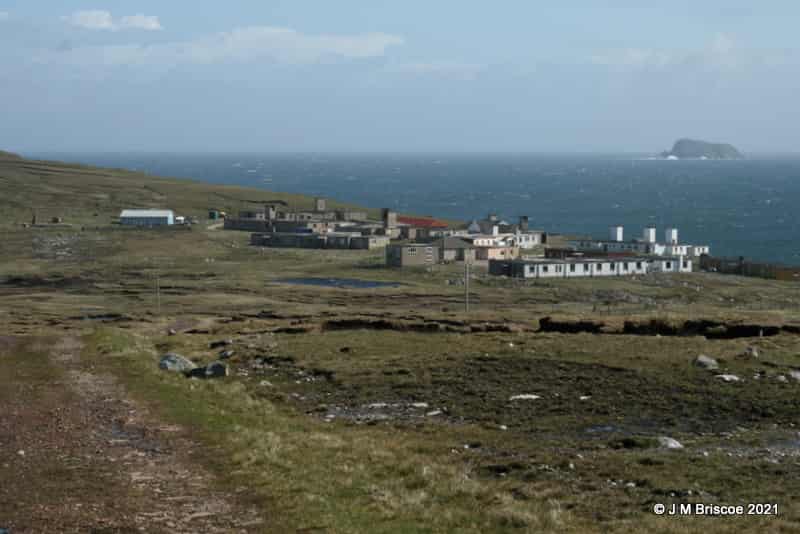
SiteName: 'RAF Aird Uig' ('WIU') CEW R10 ROTOR Radar Station
Aird Uig
Isle of Lewis, Outer Hebrides
OS Grid Ref: NB047390
Sub Brit site visit 30th July 2003
[Source:
Sam Webb]
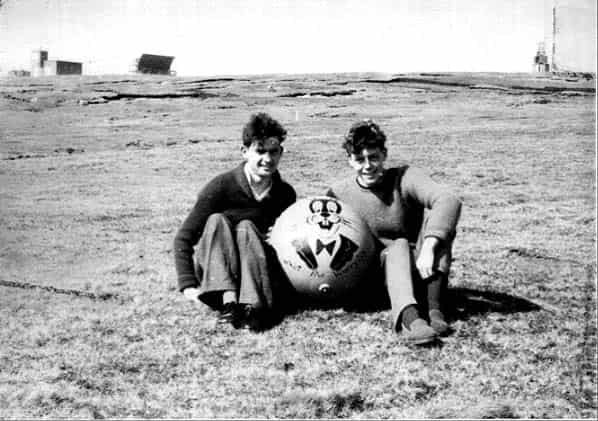
MEMOIRS OF A NATIONAL SERVICEMAN AT
RAF AIRD UIG
Five O Four, Double O, Three Eight.
Today we have naming of parts.
Yesterday,
We had daily cleaning. And tomorrow morning,
We shall have what to do after firing.
But today,
Today we have naming of parts.
Japonica
Glistens like coral in all of the neighbouring gardens,
And today we have naming of parts.
"Lessons of the War" Henry Reed 1939-45
How to sharpen a pencil
In 1954, aged 16 and the proud possessor of six "O" Levels
I left school in North London and went to study architecture at the
Northern Polytechnic in Holloway Road, joining a class of 96 assorted
students consisting of ex bomber pilots, policemen, demobbed national
servicemen and an exotic from the thirties in Paris, called Daphne.
Daphne had long red fingernails and dressed entirely in black except
for her skirt, which she made out of blackout curtains and covered in
appliquéd flowers. She smoked French cigarettes in a long cigarette
holder and lived in Soho. When we went to art classes, or off to the
V&A every Wednesday, Daphne would do a twirl projecting her skirt
out in a circle around her and then crouch down very quickly spreading
all her pencils, paints and sketch books. There she would sit and sketch
away, all the while puffing on her cigarette and flicking ash imperiously
to one side. No one could get near her. It was reputed that she had
slept with Picasso.
Rationing had just ended. The rest of us were dressed in an assortment
of hand me down clothes covered with the all-enveloping army surplus
duffel coat. One soul hung his on the extended wooden finger of a many-armed
India figure in the V&A with predictable results. When the ensuing
letter of complaint arrived on the Principal's desk, T.E.Scott's thoughts
turned to me. It wasn't my duffel coat and I didn't hang it there, but
the Indian sculpture was rare, nay priceless, and so my downward path
continued.
My first step on this path came on the very first afternoon at the
Poly when we trooped up to the Art Room to be presented with a chalk
drawn picture on the board of "how to sharpen a pencil." It
was about 4'0" high, clearly delineated with the point measuring
1" allowing 1/8" for the lead. Before we started to draw Mr
Lodge asked us if we had any questions. "Why didn't we just sharpen
our pencils to show we could do it? My dad had shown me how to sharpen
pencils when I was about five," I asked. Lodge turned with a face
like thunder to his sidekick, "I see we have some kind of troublemaker
amongst us Mr Power."
And so it turned out. By 1956 Mr Scott had called me in for another
little talk. "I think a spell in the forces will instil some discipline
into you. Build some backbone, make a man of you." So after coming
3rd in the Poly 2 mile race at sports day and winning a 7/6- torch,
which caused me some worries about my amateur status, I left my architectural
studies and prepared to wait for call up. "Oh yes," said the
sergeant in the recruiting office in Wembley High Street where I had
to report, "Oh, yes we'll certainly have you in the air force by
the end of August. Then you can restart your studies in September 1958."
It was the first of a series of broken promises the RAF was to make
on my behalf.
Waiting for Godot
My parents owned an off-licence in Kingsbury. Wembley Stadium was my
local football ground. Apart from watching Finchley Football Club I
had never been in a proper football ground. It was only when I went
to watch Finchley play in the semi final of the Amateur Cup at Highbury
that I realised that you were meant to be close to the pitch. Finchley
was the home team of George Robb, the Beckham of his day. In 1952 he
played for Finchley, then England at the Helsinki Olympics, was signed
by Spurs as an amateur, then turned pro and played for the England International
side against Hungary. An outside left of mesmerising skills he scored
more goals in a match than anyone had scored for Spurs and it was quite
normal for George to score a hat trick. He became sports master at my
school. After injury forced his retirement he was replaced by Jimmy
Greaves.
That summer of 1956 my parents went on one of their first holidays
together since they married. My Grandfather, a veteran of the 1914-18
War came to stay. One morning I asked what seemed to me a quite innocent
question, "What was it like in the Great War Granddad?" Out
poured the memories, never before told by him to anyone, not to his
wife and certainly not to his three sons.
I didn't realise it at the time but what he said first was to mark
out my path straight to RAF Aird Uig, an early warning radar station
perched precariously on a windswept promontory called Gallan Head overlooking
the north Atlantic, with nothing between it and North America except
a few ice floes and the lighthouse on the Flannan Islands. Away to the
southwest a small triangle of land would occasionally appear above the
horizon, weather permitting. That was St Kilda, cleared of people in
the 30s and home to an army rocket tracking station. The rockets that
were fired from Benbecula were even rarer than the aircraft we plotted.
"When they take you on the rifle range," he said in that
soft Manx lilt which my grandfather never lost, "never fire at
your own target, always fire at some other buggers." Then came
the next question, "Why?" "Because if they see you are
a good shot they'll pay you 6d extra a day, which will only last for
your recruit training and they'll mark you down as suitable for a sniper
or a shooting party. Snipers never get taken alive. We had one. He was
mad, used to dress up like a tree and lie in no-man's land for days.
Aimed at a cloud of flies over the German lines. Every time they moved
he got in a shot. Then he moved position. He was shooting at the latrines,
when the flies moved that was when a man stood to pull his trousers
up."
In my innocence I thought a shooting party went out to get ducks or
something for dinner. Then he told me about the young underage soldier
who got shot for "desertion." My Grandfather said, "Everyone
knew he was under age
..they shot him just the same." That
summer storm clouds were brewing, Nasser "seized" the Suez
Canal, which was in Egypt anyway, and rumblings were coming from behind
the Iron Curtain. I was oblivious to all of this, but maybe he knew
something I didn't.
What do you want airman?
By the autumn RAF planes were bombing Cairo as Russian tanks wreaked
revenge on Budapest. On Jan 7 1957 my call up papers arrived. I was
sent in quick succession a fortnight later to three new homes. At RAF
Hornchurch, I failed to become a pilot possibly due to my inability
to cross a 20'0" gap with two short planks, two pieces of rope,
two oil drums and 6 men. At RAF Cardington I was, given the number 5040038
and told never to forget it, "fitted out" in an ill assorted
ill fitting set of clothes which passed for a uniform and then sent
to RAF Bridgnorth. Here I learnt how to march, present arms and fire
rifles, all rather badly.
I took my grandfather's advice to heart; after all he had survived
from 1914 to 1919, right up to the Paris Peace Conference. Another thing
he taught me was, "Never volunteer." That was what he did
in 1903 when he joined the Isle of Man Post Office Rifles to get a holiday
on Salisbury Plain with his pals. For the same reason my Dad, who had
no money, joined the Tower Hamlets Rifles in London in 1931 and promptly
found himself in the Rifle Brigade in 1939. Both were called up the
day before the First and Second World Wars started.
The first Saturday at Bridgnorth we were told that a coach was going
to town to the swimming pool, the rest of us were to go running. As
I couldn't swim and liked running I wasn't bothered, but many others,
maybe for the first time, also found that RAF promises were not kept.
About 500 of us lined up by a broken wire fence at the edge of the camp,
while 50 or so splashed about in the municipal baths. Ahead of the runners
was a country lane slowly climbing up a hill. Touches of hoar frost
coated the fields and the road. People shivered.
An officer blew a whistle and the stampede set off. I waited till they
had all gone, "Airman!!! What are you doing?" screamed the
officer. "Waiting." "Waiting WHAT!!! Airman." I
didn't know I was to call him Sir. He blew the whistle in my ear and
so I set off about 100 yards behind the others. I wanted to see what
the opposition was like. But I couldn't tell him. It was a trick I had
learnt from a guy in Shaftsbury Harriers who had run in the 10,000 metres
at the 1936 Olympics in Berlin. We used to train by running up Parliament
Hill on Sunday mornings.
As I ran up the road I passed a series of very unfit youths. It felt
good. I found myself running beside a boy I had been at school with.
"You're not supposed to be able to run," he said as I passed
him. It felt even better. He was a good runner at school.
As we went past the farm at the turn I passed more and more. Some were
having a crafty fag. Gradually I overhauled most, until all I could
see down the road was a handful of runners. As I came to the end I saw
that officer again. Only six had finished so far and I had come in seventh.
It was then I decided to take another leaf out of my grandfather's book,
"Do a sport, and get good at it. It'll get you out of a lot of
things." The officer wrote my name down, this time he didn't scream
in my ear. He was a bit more reverential. The next race I won. So in
the winter of 1957 I became a runner in the RAF Bridgnorth Running team.
It got me out of a lot of square bashing.
The RAF wanted to know, or so they said, what we wanted to do. I quite
liked the idea of learning Russian or Chinese at Cambridge. But the
Air Ministry had other ideas. So I became a radar operator at Compton
Bassett where I discovered cycling was considered a sport on Wednesday
afternoons. I cycled my F.W.Grubb hand built bike down the A4 with a
friend called Denis Suilemann on his bike. It only took us four hours
to cover 80 miles on a deserted A4. No one was on the camp when we arrived
so we went on to Calne, Chippenham, Bath and Bristol where we cycled
over Brunel's Bridge thinking Wales was on the other side! That day
we covered 186 miles. We were as fit as fiddles.
Never stand out in a crowd
Denis was very tall and wore glasses. It was not a good idea to be
tall and wear glasses in the RAF in 1957, if ever. I teamed up with
him on the first night at Bridgnorth. We had been told to clean the
hut and get to bed. We were exhausted having been put on a steam train
at Cardington at 7am which then took until 5pm to arrive. On that journey
I began to realise how people must feel as they were sent to prison.
At Coventry Station we had been ordered off the train with much shouting.
Startled passengers watched from another platform as NCOs screamed at
us. At our backs was the train and in front between us and the platform
edge stood a line of Military Policemen each with their arms behind
their backs, legs apart almost daring someone to step out of line.
We were terrorised on the train and then terrorised by a series of
screaming NCOs into the back of 3-ton trucks when we arrived at Bridgnorth
Station. Worse was to happen when we got off the 3-tonners in a hangar
at RAF Bridgnorth. The journey of about 150 miles had taken over 12
hours.
I found myself standing next to Denis. We were marched off, kitbags
over shoulders, in arbitrary gaggles to a series of huts. Everyone was
trying to look inconspicuous. Bed was at least peace, with only your
thoughts and the assorted sounds of 23 other airmen. I dozed off. Then,
CRASH! BANG! , "On yer FEET! Come On! Look SHARP!! Right you airmen,
you are to go and have a shower. In the morning you will get up at 6.30
and after breakfast there is an FFI Inspection."
No one knew what he was talking about, but off we trooped, pyjamas
under greatcoats, into the freezing Shropshire air. The huts all looked
the same when you got outside. Denis and I found the bathhouse. The
water was cold. Somehow Denis got separated from me and came out of
the wrong door. I got back to the hut. Everyone was back. Of Denis there
was no sign, he was still wandering round trying to find his way to
our hut. I had no idea where he was. The door at the end opened. There
were two doors, one at each end of the hut. One went past the corporal's
room. You were NEVER to go past that. Denis had broken the first rule
of RAF good order and discipline. He came into the room and went to
his bed, which was immediately inside the door he had just come in by.
Being tall he had been chosen to be "senior man." That was
only a few hours before. Suddenly hubris was about to become nemesis.
The door burst open, Denis leapt up on his small locker, which was
just in the corner. He stood stock still as the lights came on. A purple-faced
drill corporal stood, veins standing out on his head, "Who was
that! Who came in past my door?" There was total silence. He turned
round to go and then saw Denis standing like a statue in the corner,
water still dripping from his hair. It was then I realised the truth
of what I already knew from my conversations with my grandfather. Never
make yourself conspicuous; never stand out from the crowd. Poor Denis
had broken everyone of these rules within hours and besides he was tall
and wore glasses.
Denis had been a racing cyclist at Herne Hill. He knew Reg Harris.
I trained Denis as a runner, he encouraged my cycling. When time came
for us to be posted from RAF Compton Bassett the RAF lost all our papers.
Denis and I were not the only ones. A gaggle of us stood in little knots
on this huge square. I said to a boy behind me, "You know we could
walk out of here. Straight out of the gates. They don't know we exist."
And so it proved. They didn't know we existed. But he insisted we go
to the posting office with all the others.
Life in limbo
We were sent to the Transit Camp, a succession of huts at the side
of the camp inhabited by a motley crew. Some had jobs in London; they
had been there 18 months and were soon to be demobbed. There were all
sorts of scams going on and a special pecking order when you went on
parade in the morning. We stood in a line doing "Right Dress"
arms outstretched. We numbered from the left, "One! Two! Three!...."
By the time the line got to about ten, people misheard or forgot to
answer or, answered in the wrong place. They were destined for "Mad
Mary's Kitchen", run by the eponymous horrendous WAAF with a sadistic
streak. Eventually after an idyllic summer cycling around Wiltshire
the father of one of the boys wrote to the CO and asked what his son
was doing, "washing out fire buckets when he would be better off
helping him run his market stall on Petticoat Lane Market every Sunday?"
So it came to pass I ended up at RAF Wartling now a Young Offender's
Institute.
RAF Wartling was on the south coast between Eastbourne and Hastings.
To relieve the boredom we were sent along the south coast to the far
flung reaches of Dover, Folkestone and Fairlight Hastings. At RAF Beachy
Head we would troop up to the radar site and go into a little bungalow
every morning or afternoon. The Eastbourne Bus Company would run special
excursions up Beachy Head so tourists could watch us do this and take
pictures. The aerial hung right out over the open topped bus. After
we had all gone in, another lot arrived blinking into the sunshine as
if by magic like rabbits out of a hat. When tourists asked what we were
doing we said we were looking for sunspots. That's why we blinked we
said.
It was an idyllic summer. All very casual. Demobbed airmen would come
down for weekends or even summer holidays, climbing in through a hole
in the perimeter fence. Every Saturday we would go to Eastbourne station
and watch holidaymakers getting off the trains. Two girls carrying their
cases without their parents were our target. That night we would go
to the dance on the pier and there they would be.
The camp in Eastbourne was housed in King's Parade, a cul de sac of
semi-detached houses arranged around a large central grass oval, part
of which was covered with tarmac, the rest with wooden huts. The houses
had been gutted inside and fitted out as barracks. Holes had been knocked
through party walls.
The CO was a stickler for good order and discipline, which the Station
Warrant Officer was given the task of instilling. The SWO had a voice
like a foghorn. Houses surrounded the camp beyond the obligatory wire.
We were right in the middle of an expensive residential area. One of
the planning conditions for building the camp stated that no drill was
to be carried out. After all people who had paid princely sums in Harold
Macmillan's England wanted some peace and quiet. This passed the CO
by.
We were all assembled on the square, facing the flag. The SWO and CO
came along the lines inspecting buttons. Hair seemed to be the bane
of their lives. The SWO stood in front of one airman and screamed, "AIRMAN!
I can stand on you hair! Why can't you have hair like me!?" With
that he raised his cap and yet another mystery was solved.
No one had ever seen the SWO without his hat. Beneath it hung down
what can only be described as rather strange hair of a dark orange hue.
As he raised his hat high above his head the hair came away with it.
One by one the lines of airmen started laughing. We never saw the SWO
again, or his wig.
The CO had a pig, in fact a number of pigs, on an unmanned RAF radio
transmitting station. Airmen were sent to tend them. One of my friends
at that time was the grandson of Manny Shinwell MP, former minister
in the post-war labour government then an opposition MP. We decided
to get our own back and he composed a letter. The first thing the CO
knew was when the Daily Express turned up in force. Manny had asked
a question in the house. "Was the Minister aware that national
servicemen at RAF Beachy Head were wasting their time and tax payers
money looking after the CO's pigs?" It was all over the papers,
with pictures of the pigs in the Daily Express. More questions were
asked in Parliament and the CO and his pigs vanished overnight.
I had learned another of my grandfather's truths. I had asked him why
he never became an officer in the Great War. He was very clever, came
from a well off family from the Isle of Man. "Officers," he
said, "lasted about three weeks." "What happened to them?"
I asked in innocence. " Well, if the Germans didn't shoot them,
we did." That CO reminded me why. Later I was to meet another who
wouldn't have lasted a day on the Western front, let alone three weeks.
The time on the south coast that summer was idyllic. Sussex by the
Sea was warm, sleepy and sunny. There were distractions like the Eastbourne
non-stop jive contest on the Pier won by a friend who thought he looked
like Robert Mitcham and had the mac to prove it. But it was not to last.
Never fire at your own target
"The following airmen are selected for rifle practice." There
followed a list of names and off we went to the Pevensey Levels. The
range had a road running behind the butts. I was sent up a Martello
Tower with a red flag, which I ran up the flagpole. I was quite happy
and read my book patiently waiting my turn. Eventually I was ordered
down and asked about firing my rounds. "Oh don't worry about that,
that's taken care off."
The comeuppance arrived about two weeks later. As I walked into the
airman's mess for lunch a group of my friends came out. They saw me
and burst out laughing. "What's the joke?" "Go and read
Standing Orders!" On the wall inside the entrance was a huge piece
of paper and on it were the names of hundreds of airmen. At the top
on the left hand side was a red box enclosing half a dozen names. "The
following airmen," said the ominous text, "have been selected
to fire at the National Rifle Championships at Bisley." The top
name had scored 100/100. Mine was second with 99/100, but I hadn't touched
a rifle that day let alone fired it.
The airman who scored a maximum was the armourer who took us to Pevensey.
On his first go he got 99/100. Then without thinking of the consequences
for him he took my rounds and scored 100/100. Of course he couldn't
throw my target away so he wrote my name on it took it back with all
the others to be recorded with 99/100, then sent it as custom demanded
to the Air Ministry.
I went to see him. "Airman!!! What do you want coming in here
without knocking? It's nothing to do with me. Now get OUT!!!" So
off I went to see the CO. I knocked this time. "Come!" said
a posh voice from behind the door. The man inside who met my gaze was
as surprised as I was. He was putting his trousers on. "What do
you WANT?" I explained my predicament. "What is your name
airman? Well Webb, you'll just bloody well have to go to Bisley!"
he said. "But Sir, I can't. Think of the repercussions on you,
it's like asking me to run the 100 metres at the Olympics. I'll be a
laughing stock." "GET OUT OF MY SIGHT AIRMAN!!!"
A couple of days later a posting arrived for me. It was to RAF Aird
Uig. No one knew where it was and all I was given was a travel pass
to RAF Bishopbriggs in Glasgow. I'd never been to Glasgow, never been
further north than Heysham. I have no idea what happened to the armourer.
Maybe he won the Queen's Cup or maybe they posted him to somewhere like
Aden. I never found out. I took all my mates for a grand going away
party at the Fireman's Ball in Eastbourne.
Off to the Hebrides
On the 11.30 pm train from Euston to Glasgow I found a number of other
airmen. There was Ralph Broad from Eastbourne who I knew, Mick Facey
an electrician from Croydon, Brian Winser also from south London and
another guy who ran a launderette. None of us had been to Scotland.
No one knew what to expect. We spent the day mooching around Glasgow
and then made our way to Bishopbriggs where we met up with a whole load
of others. We had no idea where we were going. Ralph said his dad had
said it was, "That place on the weather forecast where they have
all the gales."
At about 4am we were woken, had breakfast in the dark and were taken
in a 3-ton truck to Queen Street Station, put on a train and told to
get some sleep. Two to a compartment we pulled the blinds down and the
train pulled out. Some hours later someone ran along the corridor banging
on the doors, "Look out of the windows!" My first sight of
Scotland that day is something that has lived with me forever. The train
was passing up through Gareloch, there were mountains, hills, water,
down below rusting battleships being taken apart like toys. It was the
most breathtaking scenery any of us had ever seen.
No one did much except gaze out of the windows. We didn't realise at
first but we were on one of the world's most beautiful railway journeys.
The line had been built by MacAlpine and his Fusiliers. We passed signs,
which read Rannoch Moor, and the romantic sounding Soldier's Fields.
In the distance snow glinted on the hills. The heather was bright orange.
There was not a person or a building to be seen. We passed over a high
viaduct and as we looked back we could see the end of the train as it
curled round the bend. In the valley below stood a statue on a column.
Someone said it was Bonny Prince Charlie. The train, which we joined
in Glasgow, had come all the way from King's Cross, but as it wound
through the Highlands it became like the local bus. School kids got
on and off. Women came on with shopping bags. Newspapers were thrown
off here and there. Water was put down in churns. We went for breakfast
and gazed in wonder at the view.
At about 12 o'clock the train, pulled by two engines, arrived in Mallaig.
We got off and boarded the Loch Seaforth. It slowly steamed up between
Skye and the Mainland until we got to the Kyle of Localsh. Some miles
up the coast just off from a small village called Applecross the Loch
Seaforth hove to. Rowing out from the shore was a whaler, it was as
if we were being paid a visit by Ernest Shackleton. A group of stern
faced men, all dressed in black stood bolt upright in the bow. The rowers
hoisted their oars to a vertical position and a rope ladder was let
down from a hole in the side of the ship. "Who are they,"
asked someone. "Och, that's just the Wee Frees." In those
days Applecross had no road to it and the only way to get anywhere was
to go by whaler.
If the scenery before had been wonderful this more than matched it.
At the Kyle we met the train from Inverness with yet more airmen going
to their new posting. Then we put out into the Minch. I had been on
rough crossings before from Liverpool to the Isle of Man. This was in
another league.
The Western Isles
Eventually we reached Stornoway. It was pitch dark, cold and raining.
We climbed into a three-ton truck. The first person I spoke to as I
got off the ferry was a boy I had sat next at school in London during
the war. We sat in the back as it pulled out bumping along past the
cinema, which carried across its frontage a sign, which said, "Just
arrived!! See this years Grand National!!" It was the 16th October
1957. Ralph and I thought we could do better than that.
The three-ton truck wound its way through an inky black night. Not
a house could be seen after we passed the outskirts of Stornoway. Somewhere
in the middle of the Island stood a lone GPO phone box with a 40-watt
bulb grimly burning inside. It was the only sign of civilisation. The
lorry bumped and ground its way, screaming through the gears. Inside
the truck it was cold and wet. Water dripped from the tarpaulin cover
and as the lorry turned with the back facing the wind, rain lashed in
soaking everyone. Eventually after about two hours we arrived and were
taken with our kit to a hut. Thick mist shrouded everything.
We had met up with a sergeant and flight sergeant in Glasgow, both
radar operators, both as mystified as we were as to where we were all
going. The hut we were shown into had water lying 2" deep over
the floor. We found another and slept the sleep of the truly exhausted.
I had been travelling for over two days.
The next morning we woke. Everywhere was shrouded in mist. It was like
living in the clouds. The mist was to remain until November and then
one morning it lifted to a cold clear day with a brilliant blue sky.
In the night it had snowed, there was a light dusting on the ground.
In the distance far out to sea were snow covered humps. "Icebergs!"
said someone. But they were only the Flannan Islands, subject of a poem,
a Scottish mystery to rival that of the Marie Celeste. One night the
light had not come on. Days passed before a boat could get out and when
it did no one was to be found. There was no sign of the lighthouse keeper
or his two assistants. All that was to be found was a table laid for
a meal and a kettle boiled dry. They had been swept away by a freak
wave.
Freak waves were fairly regular off Gallan Head. One afternoon between
watches Ralph Broad and I went for a walk, climbing down the cliffs
and sitting in a cleft in the rocks. "They say," said Ralph,
"that the waves come in sevens. The seventh is always the biggest."
So we sat, counting, smoking and watching, passing the time of day,
talking about what we would do when we finished national service. Suddenly
without warning a wave appeared to grow, and grow until the top was
level with us. It was about to crash over us. Bracing our backs and
feet against the rocks we took deep breaths. There wasn't time to be
frightened. The water crashed over us. Tens of thousands of tons of
the cold green Atlantic fell down over our heads. We were fortunate
if a little wet. Not so a couple of airmen who went walking along the
cliffs near RAF Buchan around that time. They were never seen again.
Christmas 1957
Christmas Eve 1957 was a bright warm sunny day. A group of us went
out for a walk, taking our shirts off in the sunshine as we sat in a
hollow, sheltered from the wind. Far out to sea on the horizon we could
see big cumulus nimbus clouds. They looked grey and ominous. As we watched
they grew bigger and bigger, taking up more and more of the sky. At
the front of the clouds we could see the first flurries of snow. Flakes
etched white against the by now inky black sky. We hurriedly dressed
as the wind picked up. By the time we reached camp the snow lay about
3" deep and was drifting in the wind piling up against sheep huddled
together for shelter.
By the next morning we couldn't see out of the windows on the unprotected
side of the hut. Snow lay ten feet deep, blown up against the unprotected
sides of all the buildings. More snow was forecast. We were cut off
for a week and it was Christmas.
The CO on the camp was a Polish Squadron Leader with the AFC and DFC.
He had flown Spitfires in the Battle of Britain. He dressed in roll
necked sweaters, Wellington boots, and said his door was always open.
He made us welcome. Shortly after we arrived he went down to Stornoway
and bought up every available copy of Reveille Magazine. There was a
special issue from which could be assembled a full size photo of Brigitte
Bardot. Everyone had at least a couple which were stuck with Bostik
behind doors, in cupboards, on walls and ceilings. He offered a prize
for the best decorated billet and the best Christmas tree. Everyone
seemed to win a prize.
The Uig Bioscope
Ralph and I went to see him. "Yes certainly," he said, "I
will see about getting a projector and films." He had ordered our
sheets, we had slept in blankets since we arrived, and there was a bus
coming he said. We had found Ron, a cook who had worked a projector
in the Odeon Tottenham High Road. The projector duly arrived complete
with a film in three spools. We advertised in Stornoway with the Grand
Opening night on a Sunday in November in the deserted NAAFI. There was
to be a bar and we bought four bottles of whisky and urged people to
bring their own glasses.
People were put to making a screen, sewing two sheets together weighted
down at the bottom with broom handles. Seats were put out and we waited
on the first evening for the audience to turn up. Outside it was blowing
a gale, it was almost impossible to stand up. Rain lashed the windows
as we saw first one, then two, then a line of car lights coming over
the hills towards us. Men came in, in little knots, hats pulled well
down, collars turned up, "Och it's you Murdo, you Hamish
."
The locals had arrived. Very quickly glasses were placed on the counter
and the whisky was downed, out came their bottles and when it was all
finished we put the film on.
No one seemed to mind by then that we had been sent, "The Dam
Busters," perhaps the most unpopular film to show a bunch of national
service airmen on a windswept cliff. We showed it twice taking £5
at 6d a seat and as much again on the whisky. We went to see the CO
again. Could we use our profit to open the NAAFI and use one of the
huts as a proper cinema? The answer was a resounding yes.
The Uig Echo
From that point on we never looked back, until that is nemesis in the
shape of a new CO arrived, but that was someway off. A rudimentary Gestetner
printer was found. You typed stencils, put them on a drum and hey presto
we had a newspaper called the Uig Echo. Someone had the bright idea
of going round local shops in Stornoway and getting them to finance
adverts which could be traded in for so much off the bill. Given more
time we could have invented BOGOF.
Driftwood was collected from the shore and Sandy, a joiner from Glasgow,
put it all together to build tiered seating. The cinema moved into its
new hut with a projection room. The screen could be converted to Cinemascope
and instead of getting bigger got narrower but wider. It was amazing
what could be done with some pulleys, wire and painted hardboard. Special
weeks were advertised, Musicals with "Oklahoma!" Big Band
Weeks with "The Benny Goodman Story" and "The Glenn Miller
Story." We showed Humphrey Bogart classics, "The Big Sleep"
and "Casablanca." Then we had French weeks with Monsieur Hulo
films and French Thrillers like "The Fiends," "The Wages
of Fear," and "Riffi".
"Riffi" was Ron's downfall. He had gone to the NAAFI after
he put the first reel on, then he came back put on the next reel and
went back to resume his drinking. People sat waiting for the famous
scene where the umbrella is lowered through the hole in the bank vault
roof to catch the pieces of falling concrete as the hole is made bigger
so the crooks can be lowered head first to collect the gold. It never
came. FIN said the credits. "Where's Ron?" said the audience.
Then he came back and put the second reel on. We decided to train as
projectionists ourselves after that.
The NAAFI
The NAAFI went from strength to strength. We would go out in a boat
in Loch Roag and catch fish from lines left overnight. Thunderflashes
would be removed from who knows where, thrown into lochs and everyone
ate poached salmon. All the canteens were run by our small group. Ralph
and I worked out a five watch system for radar operators which operated
alongside the officer's three watch system. No one ever knew where we
were supposed to be. Then one day came nemesis.
His nickname was "Space" and real name Roland. He had come
up with us from RAF Bawdsey. Sitting in the radar room in front of the
screen he became aware of a man standing in the gloom. "Hi",
said Space. "Hi", said the man who then proceeded to ask all
manner of questions to which Space provided all the necessary answers.
He told him all about the cinema, how we ran the NAAFI and the paper
with its money saving offers. Meanwhile another man was walking up the
corridor towards the guardroom at the end. "Hi" said that
man. "Hi", said the RAF policeman who was sitting with his
boots off, feet on the desk, smoking a fag and listening to Radio Luxemburg.
The Polish CO broke the news. "You've got to get rid of all the
money otherwise the NAAFI will take it. They are opening up here. You
must stop advertising in your paper and locals can't come to the cinema
anymore. And I'm being posted." We had been visited by the RAF
Provost Police. Rumour had it they had scaled the cliffs in the dark.
Probably they had just gone round the end of the wire just like the
shepherd.
We had to act and act fast. We wrote off all debts, wiped the slate
clean as it were, and shared all the money out. Everyone had enough
to buy at least three bottles of whisky and Stornoway saw a party to
rival even that of Hogmany. Space was sick into the harbour and was
seen asking a small boy if he could fish his false teeth out with his
rod. Ray a Geordie passed out in the toilets at the YMCA Dance. He got
left behind and woke in the middle of the night in the pitch dark not
knowing where he was and thinking he had gone blind.
Under new management
The Polish CO who had brought us so much went, and a new one came from
RAF St Athan, a boy entrant camp in Wales. His first task was to make
us scrape the lino floors all over the camp with razor blades and then
polish them. He then got us to gather all the rocks, especially around
his house, and throw them in the sea. Then we planted a lawn. The CO's
house was a wooden prefabricated structure painted green and standing
on concrete blocks. There was short flight of steps to the door and
a couple of small windows front and rear.
He lived in the house with his wife who drank copious amounts of gin.
They both behaved to everyone rather as I imagine slave owners behaved
in the West Indies at the turn of the nineteenth century. One night
the CO's wife fell over a wire hawser that stopped the house blowing
away. There were two of these at each end of the house fixed to four
large rocks. We had put them there the previous winter after the other
wooden houses; homes for the Mullard Technicians had blown over. We
were ordered to remove them even after we gave dire warnings of the
consequences. Well we weren't living in there and if the CO and his
wife were thinking it was always warm and sunny with 24 hours of daylight
they were in for something of a rude surprise.
The previous autumn in November 1957 the wind was so high that the
radar aerial stopped working. We watched in amazement as the trace went
into reverse on the screens. So a group of intrepid airmen, roped together
like nineteenth century mountaineers about to scale the Matterhorn,
went out into the dark, dark and very windswept night to sort it out.
The next week the Air Ministry sent a group of engineers to erect a
steel structure with anemometers. It all swung round in the wind. To
my eyes it looked like it would all end in tears.
Schadenfreude
In the next gale about a week later, first the anemometers blew away
as the wind speed went off the scale at 120mph, torn from their structure
and then the whole contraption keeled over in the wind. With this in
mind we waited with a great deal of curiosity to see what would happen
to the CO's house now the hawsers had been removed at his orders and
thrown off the cliffs into the sea. The Germans have a word for this
feeling. They call it Schadenfreude. It means delight in another's misfortune.
This man's behaviour endeared him to no one. Everyone became united
against him. Sometime later after one of the usual storms with 100mph
winds he may have rued his actions though I doubt it. As we walked up
to relieve the midnight to eight o'clock watch we saw the hut lying
on its side. Sticking out of the top through a window was the head of
the CO's wife. We carried on walking telling her we would phone. Somehow
we forgot. The CO was still inside; maybe she was standing on his shoulders.
They were a thoroughly unpleasant couple who were no doubt posted to
such a remote place as a means of getting rid of them from someone else's
hair'. They were an example of absolute power going to the head. I could
now understand why my grandfather had said that officers got shot by
their own side on the Western Front.
Another example of power going to the head was Ossie. He was a Geordie,
in charge of the sick bay, still an LAC aged about 40 and the only man
in the RAF to have two lots of long services stripes. We said to the
first CO and others that Ossie, who was always bemoaning his lot, should
be promoted to corporal. He was married. So Ossie got his stripes and
the first thing he did was to charge six airmen with throwing tea dregs
on the ground outside the mess.
The first CO took him on one side. No one had ever been charged on
his camp, there wasn't much point and if Ossie didn't cure his ways
he would take Ossie's stripes away and send him to Christmas Island.
Never volunteer
Christmas Island was the sort of posting you didn't want. There was
nothing to do and the last lot of airmen at Aird Uig who had signed
on for an extra year to the their national service two, found themselves
unceremoniously shipped out on the next available transport plane. Those
that did go and witnessed a nuclear test are now suing the Air Ministry.
Those that survived, that is.
We received scary airmails from a couple that went out. One of them
was a brilliant jazz pianist. He wrote of an A-bomb test where everyone
stood with their backs to the mushroom cloud with their hands over their
eyes. As the bomb exploded people could see the bones in their hands,
"just like an x-ray." Then they were ordered to turn and face
the cloud.
The Air Ministry is also being sued by another group. They answered
the call that used to appear on Station Standing Orders. "Volunteers
wanted, research into the common cold." There was extra pay, not
much, but enough to tempt and leave thrown in. Many were tempted, a
temptation they now bitterly regret. There was no research into the
common cold. Sworn to secrecy by the Official Secrets Act they couldn't
tell anyone they had been spayed by nerve gas at Porton Down, even if
they knew what it was. Like the men suffering from Gulf War Syndrome
trying to sue the Government today, officialdom kept very quiet. In
those days they could get away with anything.
The RAF wants me for a Sunbeam
In the summer of 1958 we had a NATO exercise called "Sunbeam"
or some such name. It was then I realised that RAF Aird Uig would be
the first target of any attacking force. We would not be safe in our
hollow block buildings made more prominent by the CO's lawn. We were
just like those dispensable men sent to forward positions in shell holes
in No Man's Land on the Western Front.
Russian ships anchored in the bay just outside the 3 mile limit. Airmen
were told to sit on the roof and watch the ships, particularly the "Mother"
ship through binoculars. One lunchtime during the exercise we were coming
out of the mess when the guy on the roof started waving and shouting
to us. "Come up here. Look at this."
As we looked through the binoculars we could see a line of Russian
sailors standing, waiting to look through their binoculars and watch
us. Someone waved. Soon everyone on our roof was waving and shouting
at the Russians. The CO saw and heard and went predictably berserk.
We were confined to the radar site for the duration. So like ants we
transported beds, chairs, dartboards, armchairs etc up the hill. He
could not enter the site, as he didn't have security clearance.
The radar room had been constructed to have a camera under the floor
which took a picture, developed it, and relayed it 45 seconds later
onto a table on the floor above. When invented in the days of planes
with propellers it no doubt served its purpose but in the era of supersonic
planes which moved 12 miles a minute this was back in the Stone Age.
So were left with a huge room under the floor where the camera had been
planned to go. Hardly anyone apart from us knew about it. All the furniture
went down below. The CO had made a rod for his own back. We lived down
there out of his gaze.
The five-day watch we worked meant no one except us knew where we were
or where we were supposed to be. Life was pretty casual for radar operators.
Virtually everyone was national service and everyone would invent stories
to cover everyone else's absence.
We still managed to run the canteen on the radar site without the CO
or NAAFI knowing. Mick, who had a girlfriend in Stornoway lived with
her, taking up a job in the town. Pay Parades were arranged in the County
Hotel. Although everyone knew what was going on the CO never found out.
It was better that way.
Pilot Officer Henderson, the Hebrides' own Lieutenant Kijé
We used to constantly chat on the RT lines, something that was punishable,
if caught, by a fate worse than death. At about three in the morning,
shortly after we moved to Uig, we heard some girls talking on the line.
They were at Stanmore, HQ of RAF Fighter Command. Slowly but surely
people opened up. Christmas 1957 saw an airman return from leave with
a £15 Decca record player. Someone knew how to operate the lines
so we could link with signal stations outside the UK. Soon we were in
Germany, then Cyprus, from there it was but a simple step to Singapore.
A voice like cut glass came on the line. The squawk box in the corner
started to ring, something that had never happened before. "Go
and answer it!" someone said. But they were all Geordies and Scots.
"You," said someone pointing at me, "You can do a posh
voice. You answer." "Who shall I say I am?" "Henderson-
Pilot Officer Henderson." So a completely imaginary person was
created to cover all ills. "No Wing Commander, certainly not Wing
Commander, no one on my watch would dare to talk down the lines
.."
We invented a whole persona for Henderson, family, girl friend, wedding
bells, the works. He became so real, people phoned him up for a chat.
He used to phone the army in St Kilda and ask them if seagulls were
flying around as he could see echos on the screen. They would go outside,
have a look and come back and chat. Sometimes people would want to meet
up on leave with Henderson and go for a drink. He always declined. We
had invented our own version of Prokofiev's Lieutenant Kijé,
the imaginary Russian Hussar who had sprung fully formed from the brain
of the Czar in one of those royal, misheard, misunderstood mistakes.
Nobody dared correct him. But our Henderson was a real deliberate creation.
Even the NCOs and officers were let in on the act.
Then one afternoon in the summer of 1958 came the moment of truth.
The radar room was so dark as you entered you had to wait for your eyes
to adjust. The door opened. A figure stood framed in the doorway. From
his beret we could tell it was a national service sprog officer. "Hello
chaps, I'm Pilot Officer Henderson." Everyone collapsed in fits
of unstoppable laughter. We let him in on the secret.
But not all officers were like that. A dour Scot called PO Watson arrived
with a propensity for chess and blasting his double barrelled shotgun
out of the windows on the radar site. He would wake airmen up in the
middle of the night while on watch and get them to play chess. One night
he woke me. To my cost I found it was a great mistake to beat him.
Many of the wild animals and birds had no fear of people. Puffins inhabited
the cliffs and would come quite close if you sat very still. There were
wild rabbits on the radar site, which we all used to feed. Watson watched
one from the officer's restroom window hop up for its bit food. There
was a huge explosion as it disintegrated into a bloody mess. Then later
he shot a puffin. Shortly after he too disappeared back from whence
he came, no doubt making other people's lives a misery. He too would
have been a suitable candidate on the Western Front.
Entertainment
Apart from the cinema and NAAFI there wasn't much to do on the camp.
TV had not arrived in the Western Isles and the only receivable radio
station was Radio Luxemburg, home to Horace Batchelor and his Fabulous
Infra Draw Method. This was guaranteed to win the Pools for you. Horace
Batchelor operated from, "Keynsham, spelt, K-E-Y-N-S-H-A-M, Keynsham,
Bristol." He would repeat this after every advert like a mantra,
each word, each syllable exaggerated for added emphasis.
We decided to do the Pools without Horace's method, arguing that if
his method was so foolproof why would he need to advertise. So we just
stuck in pins and chose birthday dates. As I had been deferred for two
years I was older than the others and also most importantly over 21.
I could sign the form. So while those from the south argued over the
merits and demerits of whether Arsenal would draw with Wolves and the
Scots argued over Hamilton Academicals beating Stirling Albion, the
Pools Team blindly stuck pins in numbers.
The following Saturday we clustered around the radio. Reception was
sometimes a bit hit and miss and we may have misheard the end of the
announcement, but from the results we had made we had a second dividend.
Someone said we were rich. There was nothing to do but go out and celebrate.
Money was passed over the counter of the County Hotel, whisky chasers
were downed, and we went off, somewhat unsteadily, to the dance at the
Town Hall. A few days later a postcard arrived announcing that our winnings
would be at the nearest local post office. It would have been easier
if they had said Stornoway 40 miles as the 3-ton truck drove, but it
was lodged in Valtos opened Weds to Thurs if it wasn't raining.
To get to Valtos required a major expedition around the cliffs past
the romantically named Gob Geodha nam Bradan and past Loch Mor. The
first time the post office was closed, "Gone fishing," said
the sign upon the door. Eventually the postal order was obtained. There
was much excitement as the envelope was opened. We had misheard the
announcement. We had won the second dividend in a week when about ten
thousand other hopefuls had. There were twenty-two draws that week.
We got 7/6- each.
There were flourishing card schools where some lost a great deal of
money. One such was Ernie, a cook who stood in debt to the tune of over
£100, an astronomic sum. Ernie worked out a solution. One night
dressed in wellies with a battle dress top over his pyjamas and his
greatcoat over that, Ernie walked out of the camp down the road to Uig
turned right at Timsgarry towards Ardroil and just carried on walking.
The first anyone knew of his disappearance was his empty bed. But that
was normal, he was always playing cards.
After a couple of days people began to go round asking, "Have
you seen Ernie?" Then he was missed. People began to think he might
have fallen off the cliffs. Search parties were sent out. Then the RAF
air sea rescue sent a plane.
The first we knew what had happened was an article in a Scottish paper.
"Lost airman turns up in shepherd's croft." Ernie had walked
to Harris. He was promptly sent to a psychiatric sanatorium in Scotland
and never seen by us again. Someone later met up with him in Glasgow.
He was as right as rain. Ernie had worked his ticket in a most spectacular
way, and besides he didn't have to pay off all his debts.
The Football Team
When we arrived at Aird Uig in 1957 we joined about 12 airmen who manned
the site on a C&M basis. This had been going on since 1945. They
always made a football team which played in the local league against
Stornoway, Carloway and other local teams. With the influx of so many
newcomers it was felt Aird Uig might actually start winning.
So after much training we set off to follow our team. The usual score
for a match was 6-0. We never won as far as I can remember and like
the Barmy Army we followed and cheered their exploits for match after
match before going to the local dance. One memorable match was played
at Ness with a 10.30pm kick off. I think we scored a goal that night.
We finished at midnight, and then went to the dance before being carted
off to a stone bothy to drink illicitly brewed hooch. Clear and straight
from the milk bottle, it tasted like rocket fuel.
Life with the Green Goddesses
Towards the end of the year, when demob loomed, I received a posting
that I was to report to RAF Moreton in Marsh Gloucestershire in December
1958. I was to train as a fireman in the event of a nuclear holocaust.
Who ever thought up the idea of sending about a thousand airmen who
hadn't met since they were called up, onto a camp just outside a town
with a pub on every corner, really didn't understand human psychology.
We all met up on trains going from Paddington for a huge mass reunion
at Stroud Station.
For the next few weeks we charged around the countryside in war time
Green Goddesses, which didn't work then, and certainly don't work now.
Each section had a GG towing an auxiliary pump. I was in charge of one
section even though I couldn't drive. The bells had been removed in
case we woke the locals. We were told under no circumstances were they
to be driven at speed round corners as they could tip over. Then there
was the landrover with its rubber dingy, a 3-ton truck with half a mile
of 6" hose, all full of holes, and a motor cycle outrider whose
job was to go ahead and report back on any blockages.
After some weeks we were called to a huge hangar and lectured on how
good we were and told how we would be notified to report once we were
in Civvi Street. We were asked if we had any questions after being told,
in the event of an atomic bomb dropping on London, that we would be
sent a pre-paid postcard in two halves which would tell us where to
assemble. Told we had to fill this in and post it keeping the other
half, I asked if we replied before, during, or after the four-minute
warning. There was silence from the platform, though not from the hangar.
Which was just as well as I was going home early the next day.
AWOL and demob
I went back late to the camp after New Year 1959, got charged with
being AWOL for 14 days and was demobbed on 20 January 1959. The CO wanted
to give me two weeks, but as he was going skiing and had to catch the
ferry his deputy gave me seven days. The CO could not spare the time
to take what he considered, "This most serious of charges".
After six days everyone got tired of me marching back and forth to the
guardroom for inspections every two hours. So a day early I was expelled
from RAF Aird Uig to resume my life as an architectural student in London.
I went back once again two years later for New Year in 1960/61. Everyone
I knew had left the camp. There was a new set of faces. I drove out
towards Aird Uig with a friend. We sat in the car watching the aerial
high on the cliffs above Gallan Head turning in the winter sunlight.
The scenery was as beautiful as ever and we turned and went back to
Stornoway. I have never been back.
In Scotland and the Hebrides I saw sights, which I had only read about,
mountains covered with snow, the Northern Lights, the midnight sun,
puffins and golden eagles. But if one moment I spent there can be described
as magical it came in the early summer of 1958. A small group of us
were driving to Stornoway in the Landover, when far out to sea, coming
into Lough Roag, we saw silvery flashes like quicksilver in the sunlight.
First a few, then hundreds upon hundreds of flashes breaking on the
waves. We were watching the salmon coming home to spawn. It was one
of the most incredible sights I have ever seen.
In the 1980s I saw a film on late night TV. I had just turned on in
the middle of the programme and suddenly there was that unforgettable
light and scenery. The camera panned up a deserted road lined with concrete
huts and went inside one. The commentator was talking about the national
early warning radar system. Doors flapped in the wind. Suddenly I realised
the cameraman was standing in one of the huts where I had spent part
of my youth. Now it was just a part of history.
Sam Webb
AC2 to SAC 5040038
Revised January 2003
Note: some names have been changed to protect the innocent.
[Source:
Sam Webb]
Home Page
Last updated 24th October 2003
© 2003 Subterranea Britannica
|